Frankenstein (2025)

In the Iliad, Patroclus gives a speech about the two jars that sit before Zeus, and from them he dispenses upon humans either gifts or detriments. I like to imagine Guillermo del Toro sitting in one of the enviable throne-like pieces of film memorabilia that fill his home (which he calls “The Bleak House”) and sitting with two jars before him from which he makes his films. One is labelled “Cool,” and it is from this vessel that he dispenses all of his clever ideas, slick visuals, and fascinating character work. From the other, which is labelled “Corny,” he pours in many of the things that his deriders cite as his weaknesses, which is unfair; the resultant cocktail between the two is what matters, and sometimes the stuff that makes it corny is the stuff that makes it great. Not this time, though. 

When I texted Brandon (who has a more positive take that you can read here) after leaving the theater with a message that was, essentially, “Oh no, I didn’t like it,” that thread continued into the next day as we discussed that eternal del Toro combination of Corny vs. Cool. Brandon likened it to native English-speaking critics have taken note of actors’ tendencies to go broader in Pedro Almodóvar’s films “of late,” whereas Spanish-speaking critics have stated that this is a matter of perception and that all of his films are like that, it’s just not clear when it’s not in English. And he’s not wrong; we had a similar discussion about Bong Joon Ho’s Mickey 17 being a more “obvious” and less subtle picture than Parasite and how we may simply be viewing them through different lenses unintentionally. For me, however, nothing in any of the performances here is a problem, as they’re all appropriately grave. Of special note are Charles Dance and David Bradley, the former essentially playing Tywin Lannister again (and it’s pitch perfect as always) and the latter playing very strongly against type as a kindly old man, rather successfully. For me, it’s the other choices that make this one feel too tonally inconsistent to be as immersive as it ought to be. 

The film is structured as the novel is, with a wraparound story in the glacial north in which a ship captain finds Victor Frankenstein (Oscar Isaac) on the ice and takes him aboard, where the dying man tells his story. Raised by a mostly absent surgeon father (Dance) who was domineering and abusive when he was present, young Victor doted on and was doted upon by his mother (Mia Goth), whose dark hair and eyes she shared with her son and which Victor knew his father despised. When Mrs. Frankenstein dies giving birth to a boy, William, Victor quickly gets relegated to second favorite child, and there’s an abyss between silver and gold, which is exacerbated by Victor’s belief that his father allowed his mother to die; the boys are split up as children following the death of their father and don’t see one another again until adulthood. Victor takes his name literally and seeks to find victory over death, and when we see him as an adult, he is before a hearing at medical school regarding his ghoulish and grisly reanimation attempts. In attendance is Henrich Harlander (Christoph Waltz), whose niece Elizabeth (Goth again) is engaged to William (Felix Kammerer), and who uses this as an excuse to see Victor and offer the virtually limitless resources his war profiteering has given him to fund Victor’s experiments. In all of this, Victor meets Elizabeth and is utterly taken with her, and he begins to engineer reasons to keep her and William apart, and although she is interested in his friendship, she rejects him utterly when he confesses. Amidst this, Victor has been preparing his lab and his patchwork specimen. 

Once the monster (Jacob Elordi) is brought to life, Victor at first seems interested in teaching his creation life, but when the being only manages to learn the word “Victor,” Frankenstein becomes impatient and starts to abuse him. After a chance meeting between the creation and Elizabeth and William, Victor floods his laboratory tower with kerosene and destroys it, his last minute regret and attempt to save his “son” leaving him mangled and in need of prosthetic limbs. Interspersed throughout this narrative, we’re also checking in with the ship that Victor is aboard and where he is recounting this story; although the captain believes that they are safe due to the monster having disappeared beneath the ice following a prolonged attack sequence, he reappears and eventually makes his way aboard, where he begins to tell the story from his perspective, and how he sought his vengeance. 

There was a little too much of this film that feels like it was shot on The Volume, and I was disappointed by that. This makes sense for the opening sequence, wherein a mass of sailors are attempting to break the ice which has frozen their ship to the surface, only to be set upon by an apparently unkillable monster who goes down hard (and not permanently). It makes less sense when we’re talking about the courtyard outside of Frankenstein’s tower, which sees enough use that it would be a great practical location. Get some styrofoam, carve out some clefts, age it to look like stone, and get a little atmosphere up in this place. Worse still is the tower’s entryway/foyer, which would have looked so good if it had been done practically, but instead kind of looks like someone tried to recreate the Valkenheiser mansion from Nothing But Trouble using the software that rendered the barrel sequence from The Hobbit: Whichever One That Was. The reason for this, of course, is that we need to be able to fill that space with dozens, if not hundreds, of kerosene canisters so we can have our big explosion; that is to say, it has to be disposable, and it looks like it. 

It wouldn’t be so out of place if the attention to detail in other places, like Victor’s laboratory filled with previous experiments, which looks like a del Toro dream workshop. The dungeon in which the creation is held is also strikingly imagined, and I like that quite a bit, and we spend enough time in the captain’s quarters that we get to get a real sense of it, and it feels real. Beyond set design (when they bothered), the costume designer went to town on crafting a series of elegant gowns for Mia Goth to wear. They’re all hoop skirts and several have relatively simple sewing designs, but they’re all composed of shimmering fabrics in beautiful patterns like peacock feathers, all in a green hue. Each one is utterly sumptuous, and if there is to be awards buzz about Frankenstein, I hope it’s for this if nothing else. 

Thematically, the film’s structure holds up. The biggest throughline within the film is fatherhood, as one would expect. Victor’s father is a cruel man who thinks himself fair; he married his wife for her dowry and estate and never really thought through what he would do once this was accomplished, other than to attempt to mold his son in his own image through a childhood that is all stick and no carrot. He’s successful, as Victor himself never seems to have given a moment’s thought to what to do with his creation once he bestows it with life, and when his “son” learns slowly, he beats the poor thing just as he was beaten, except with a rage in place of his own father’s placid disappointment. Both sons demonstrate their defiance in exactly the same way, by taking the instrument of “discipline,” Victor taking up the riding crop his father uses while challenging his father to admit to either being fallible or killing his wife, and the creation taking the bar that Victor holds and bending it with his superhuman strength. That’s all well and good, and it works. But what doesn’t are some of the more spectacle-oriented elements. When Victor destroys the tower, there’s a legitimately tense scene of his terrified big baby boy trying to escape, but once he’s out of his chains, it’s all CGI fire and Avatar bodies flying down a 480p chute. It made me think of the “sleigh ride of friendship” that the human lead and the Predator have at the end of Alien vs. Predator (derogatory). Why does it look like this? 

That mixture of corny versus slick is hard to get right. Sometimes, you can get it right in the wrong amounts and make something like Pacific Rim, which gets a mixed response from the general public but becomes an utterly pivotal Defining Work for a subset of diehard fans. Sometimes, you get it right in the right amounts and you get something that’s cheesy but beloved by most, like The Shape of Water. Sometimes you just get it absolutely perfectly right, and Pan’s Labyrinth emerges. Look, I made a (highly subjective and admittedly corny) chart:

This one just didn’t work for me. That doesn’t mean it won’t work for you, though, or that there’s anything wrong with it, objectively. At its length, it might actually function perfectly as a two-part miniseries, split down the middle between Victor and the creature’s stories; it might give you a chance to savor it a little and feel less browbeat by it. It certainly isn’t going to stop me from seeing whichever concoction del Toro mixes next. 

-Mark “Boomer” Redmond
Rumours (2024)

Before things go to hell for the characters of director Guy Maddin’s Rumours, one of them suggests that they get down to the business at hand, citing that the G7 Summit “isn’t a summer camp.” You wouldn’t know that from the way that the so-called leaders of the so-called free world behave. For the most part, they behave like a group of high schoolers assigned to work together on a project and treat the summit with exactly as much gravitas as—or perhaps even less than—an after-school club. These two hooked up last year and one of them wants to get to work on their group statement while the other is still unrequited; one guy is content to sit back and let others put in all the work; another person thinks that they’re doing inspired, powerful work when in fact his contributions are meaningless flim-flam; and there’s the one little weirdo who wants everyone to like him and has cured meats in his pocket. You had one of those at your high school, too, right? 

This year, Germany is hosting the conference, under the leadership of Chancellor Hilda Ortmann (Cate Blanchett). After a few photo ops, the seven adjourn to a gazebo to work on their joint statement about the never-expounded-upon “current crisis,” but not before they stop off to take a look at—and get a photo with—an archaeological discovery on the grounds of the castle at which the conference is taking place. It’s a “bog body,” mummified remains over two thousand years old. Owing to the unique composition of the soil, the flesh remains intact while the body’s bones have completely liquefied. It’s noted that the corpse has had its genitalia chopped off and hung around its neck, and this is specifically mentioned to be a punishment that ancient peoples of the area practiced in rebellion against weak, inept, or otherwise failed leaders. We learn that U.K. P.M. Cardosa Dewindt (Nikki Amuka-Bird) slept with the supposedly charismatic Prime Minister of Canada Maxime LaPlace (Roy Dupuis) at a previous summit, although this time around, she simply wants to focus on the “work,” such as it is. Representing the U.S. is President Edison Wolcott (Charles Dance), a doddering, elderly man whose sleepiness, apathy, and exhaustion are attributes clearly mocking current White House occupying chickenshit Joe Biden. French President Sylvain Broulez (Denis Ménochet) is a vain, self-important man whose greatest desire is to be appreciated as a deep thinker by the others, while Italy’s P.M. Antonio “Tony” Lamorte (Rolando Ravello), for whom this is the first summit, finds easy acceptance among the others through his genuineness, although he comes across as naive as a result. Japanese Prime Minister Tatsuro Iwasaki (Takhiro Hira) is … also there. 

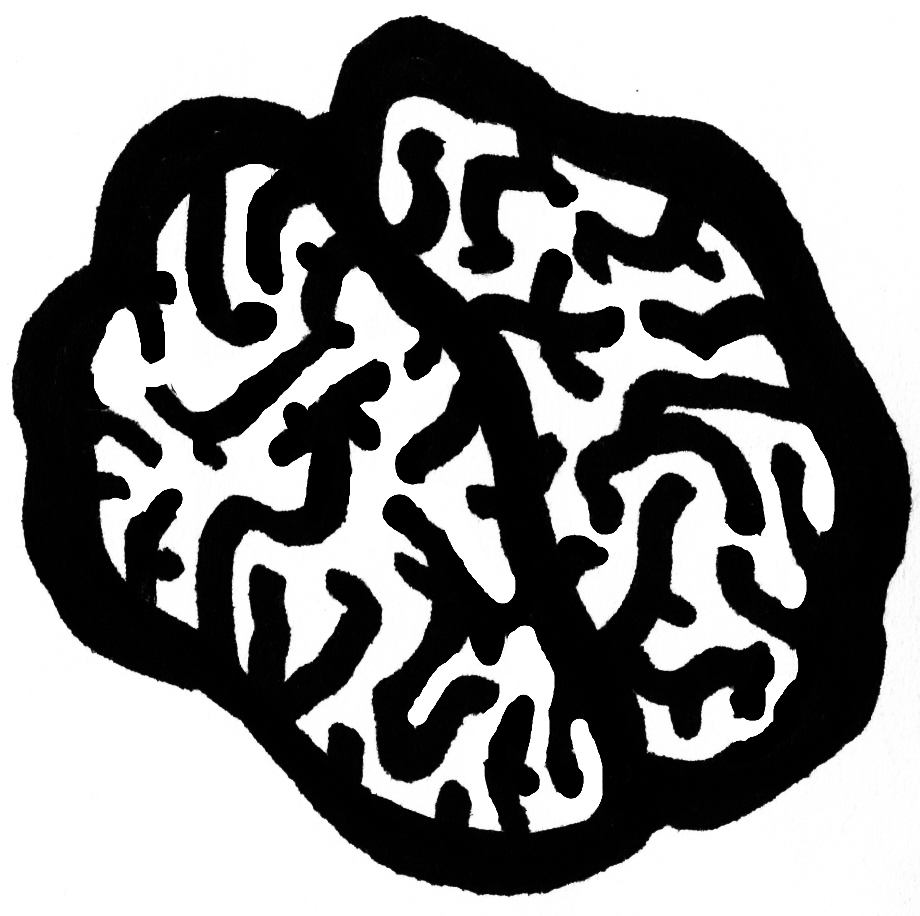
Maxime has an emotional outburst just as the gazebo dinner is finished, and the rest of the group pair off to brainstorm ideas for their statement while he stalks about the woods nearby, calming himself. President Wolcott tells P.M. Lamorte that it’s not worth working on, that no one takes these statements very seriously and that it’s fine to slack off a little, leading him to regaling the newcomer with exactly the kind of “good ol’ days” talks that geriatric politicians love to spout. Broulez and Iwasaki passionately discuss a potentially powerful opening statement, but we later learn their collaboration produced nothing but meaningless buzzwords amid wishy-washy ideology. Ortmann and Dewindt likewise make little progress, as each time one of them makes a statement that expresses any strong ideas, the other cautions for the need to walk this back so as to appear nonpartisan. Things take a turn for the worse when the regrouped seven realize that they are completely alone, and that no staff has appeared for some time. The nearby catering set-up is long vacant and the castle in which all their aides and staff should be is empty, quiet, and locked. From here, things get surreal and bizarre, as the seven try to find out what is happening and make their way back to so-called civilization despite their isolation. More bog bodies start popping up, potential pagan rites are performed and witnessed, there’s a giant brain in the woods, and an A.I. chatbot designed to entrap potential child predators may have gained sentience and decided to destroy mankind. 

If Rumours is only two things, it’s both funny … and toothless. One Gets The Point very early on, and that drum is beaten over and over again. Perhaps this obviousness is the point. After things have gotten very strange and dangerous, one of the characters comments on the potential of viewing each of the world leaders in attendance as a microcosm of their represented nation and that the events playing out before him is an allegory. Of course, this comes at a time when France is being hauled around in the woods in a wheelbarrow, revealing that the film’s Canadian director may have little respect for the boot-shaped nation. That observation doesn’t hold up, however, and this might have been a stronger film if it had gone fully allegorical and used the summit as an opportunity to play out personified international relations, but that’s not what Maddin is aiming to do. What was advertised as a satire is more of a farce. It’s funny that, upon viewing a photo of the hatchback sized brain that Maxime discovered in the woods, three of the male delegates comment that it must be a woman’s giant brain because “it’s smaller than a man’s giant brain would be,” despite this being a completely novel event. We’re meant to laugh at the inherent sexism of the patriarchy, and we do, but it has no bite to it. Characters behave like they’ve reunited for, as noted above, a summer camp getaway, with special attention being paid to everyone being sad that this is likely Maxime’s last summer at camp with them; he’s facing legal trouble for an utterly (and realistically) banal monetary scandal. Tonally, it’s like he’s being punished by his parents and not being allowed to come back next year, and the rest of the leaders treat his serious legal trouble (which is legitimately unethical) with the frivolous dismissal of the kind of low-level mischief that might cause a kid to be grounded from going to camp. 

The comedy works, but ironically, its aim is as broad and meaningless as we are meant to find the film’s characters’ lukewarm politics to be. Again, that may be the point, but that justification doesn’t move the barometer for how much I like the piece in a positive direction. When the humor works best is when it plays a little dirtier. Maxime gets a text message, supposedly from a girl named Victoria, and Dewindt tells him that he may be chatting with an A.I. chatbot that was created in order to ensnare pedophiles by messaging potential sex criminals, citing that people in their positions of power are statistically more likely to be sex pests. Hilda suggests that they play into the scenario, as if they “trip the alarm,” so to speak, the authorities will trace the phone, and they can use this to be rescued. However, on the off chance that they may be speaking with a real child in need of help, they must also play down the creep factor to avoid psychologically harming Victoria. This observation about the frequency with which power overlaps with sexual abuse is one of the only times that the film is really cutting, taking aim not just at the facile nature of empire and its pageantry but at the seductive and corrupting nature of invisibility and immunity. That this leads into a good running gag in which the group must brainstorm messages that are creepy and gross (but not too creepy and gross) seems almost indicative of the fact that if the film leaned harder into the satire and less into the farce, the jokes would land with more punch. 

This isn’t really the kind of film that you can spoil, but this film does end in an apocalypse. There’s a big stew of what might be happening: the bog bodies rise from the earth as (compulsively masturbating) reanimated undead, with the implication that there might be something primal and supernatural at work; “Victoria” may have gained sentience and masterminded a cleansing of the earth in order to start anew; the big brain in the woods and its psychic effect on those around it may be related to the latter or could be another concurrent apocalyptic scenario. It doesn’t really matter if these are connected or not, as the group makes its way back to the castle and, covering themselves in the reflective silver emergency blankets that they find in their G7 gift bags, prepare to give their joint statement. Maxime, using scissors and tape, rejects a statement that “Victoria” has created and covers it with excerpts from the various things that different characters have managed to scribble down over the course of the movie. There’s Biden’s Wolcott’s sleep-talking nonsense about “need[ing] a slip to go to the sleep tank,” dutifully transcribed by Lamorte. There’s sections from another character’s ramblings that begin with a metaphor of marriage for international relations before devolving into a revealing glimpse at an attempt to negotiate for non-sexual physical intimacy with a disengaged partner. Throughout the film, characters express reverence for previous G7 Summits and the “powerful” declarations thereof, citing passages that are perhaps pleasing to the ear but ultimately hollow. As the film ends, they stand on a balcony to make their address to an empty lawn, their blankets reflect an orange sky and distant pillars of smoke, making the mirrored surface look more like translucent plastic that contains nothing of substance. The statement is delivered with gusto but signifies nothing, their drama observed only by the undead, one of whom seems to be mocking them by masturbating over their self-congratulatory nonsense. 

The film is a decent success as a comedy, although it lacks the unusually-expressed but nonetheless palpable sentiment that makes something like My Winnipeg work. I’d call it a cynical meanness, but it’s not nearly cynical or mean enough. As a result, it’s not a success as a satire. You’ll laugh, but it’s unlikely to stick with you. 

-Mark “Boomer” Redmond

Pride and Prejudice and Zombies (2016)

EPSON MFP image

three star

campstamp

The convenience of films with titles like Pride and Prejudice and Zombies is that you pretty much know ahead of time whether or not you’ll be on board with what they’re selling. Do you enjoy costume dramas? Are you not yet completely exhausted by the staggering amount of zombie media out there? Surely there are enough people who sit comfortably in both categories. Just take a random polling of attendees and any Tori Amos or Rasputina concert & you’re bound to find a few.  And you can count me among them. I can enjoy a good, middling costume drama any day of the week & I’m more or less in the same camp when it comes to mediocre zombie mayhem (although that genre tests my patience more every coming year). I never bothered reading the print version of Pride and Prejudice and Zombies (which the film’s opening credits claims is a “Quirk Book series classic”) because it seemed kind of mindless & arbitrary, but luckily mindless & arbitrary are two attributes of genre cinema I can usually get behind. Basically what I’m saying is I knew approximately how I was going to feel about Pride and Prejudice and Zombies before I even got to the theater and I suspect most people are in the same boat. The film itself did little to exceed or subvert expectation, but honestly I was fine with that.

As you might expect with a literary adaptation where zombies are air-dropped into a classical work, Pride and Prejudice and Zombies somehow keeps its Jane Austen plot & its zombie mayhem somewhat separate. Early scenes show young maidens cleaning guns instead of sewing (or something similarly ladylike) & including knives in their garters & corsets dress-up montages, but for the most part its polite society parlor drama & the zombie killing rampages mix about as well as oil & water. The film has fun with genre-bending lines like “Zombies or no zombies, all women must think of marriage, Lizzie” & “I don’t know which I admire more: your strength as a warrior or your resolve as a woman,” but its two plot lines rarely bleed together in a satisfying way. On one hand you have a small gang of unmarried sisters trying to land wealthy beaus while staying true to themselves. Happening almost entirely somewhere else: the zombie apocalypse & an alternate history of England as a country. The film’s line of horror comedy is mostly an occasional interjection that disrupts these dueling plot lines. For a film with such a winking joke of a premise Pride and Prejudice and Zombies takes both ends of its titular mashup surprisingly seriously.

There is exactly one thing that stuck surprisingly  astute with Pride and Prejudice and Zombies as a Jane Austen adaptation. One thing the film does very well is to bring attention to the way Austen’s characters are viciously combative in their hushed, “polite” conversation. During scenes that might’ve played as subtle verbal sparring on the page are accompanied here by not-subtle-at-all literal sparring. For each verbal jab someone throws at their societal opponent a corresponding jab is thrown with a fist. A perpetually slumming-it Charles Dance (who now has a history of working in this realm thanks to Victor Frankenstein & Dracula Untold) plays the girls’ paterfamilias & describes his progeny as “our warrior daughters”. It’s true that the girls were already warriors in the zombieless Jane Austen source material, but their modes of violence & agency were a little less easily detectable. God help any desperate high school student who tries to pass an exam on Pride and Prejudice by watching this film, but the thematically obtuse might get a better understanding of the novel’s modes of societal combat by watching it play out visually on the screen.

That small insight aside, Pride and Prejudice and Zombies is mostly a silly endeavor, never entirely serious about engaging with its source material in any sincere way. It’s also not all that committed to the zombie end of its premise. The monster make-up is solidly on point, but the film shies away from the gore end of the genre that made folks like George Romero & Peter Jackson masters of the form. Hardcore Pride and Prejudice fans and hardcore zombie movie fans are both likely to find plenty to gripe about here, since the film splits its time between both halves without  ever fully committing to either. The ideal audience, then? I’d say folks easily impressed by costume dramas who wouldn’t mind a little zombie mayhem peppering the genre for superfluous flavor are most likely to enjoy themselves. Pride and Prejudice fans are likely to be annoyed by how the novel’s feminist themes are cheapened by being boiled down to sexy women playing with weapons in complicated underwear. Zombie creature feature nerds are likely to be bummed by how the genre’s go-for-broke gore has been mostly supplanted by bodice-heaving romance. Personally, I took perverse pleasure in both of those aspects (especially the part about the complicated underwear; can’t help myself). For me, Pride and Prejudice and Zombies’ worst crimes are being a little overlong & having the gall to flash back to earlier scenes from within its own film in an especially-lazy letter-reading scene. For a film that sets the bar so low & expectations so specific in its very title & premise, those are two faults I’m more than willing to forgive.

Side note: I love how insular casting in the costume drama/fantasy cinema world can be. Besides Game of Thrones‘ Charles Dance & Lena Headey, there’s Lily James of Downton Abbey & Cinderella, Maleficent‘s Sam Riley, Noah‘s Douglas Booth, and (my personal favorite) Boardwalk Empire‘s Jack Huston. I guess you could include Doctor Who‘s Matt Smith in there as well, given that series’ time-jumping aspects. I’m sure for the actors this kind of typecasting can be an annoyance, but as an audience I find it oddly fascinating.

-Brandon Ledet

Victor Frankenstein (2015)

EPSON MFP image

fourstar

“You know their story . . .”

In the press/apology tour for Victor Frankenstein (critics have not been kind), director Paul McGuigan has been quoted as saying that Mary Shelly’s 1818 novel Frankenstein; or, The Modern Prometheus is “dull as dishwater“, not a surprising sentiment in light of how his film approaches its source material. Victor Frankenstein has the same reverence for Mary Shelly’s Frankenstein that Hansel & Gretel: Witch Hunters has for its Brothers Grimm origins. It’s so distanced from the novel, in fact, that I didn’t spot a single mention given to Mary Shelly in the final credits. Not even a “characters by” shout-out. Oddly enough, I think it’s that exact flippant approach to the now classic horror tale that makes the film an enjoyable (and mostly intentional) camp fest. Well, that & over-the-top performances from James McAvoy as the mad scientist Frankenstein, Daniel Radcliffe as the groveling Igor, and Andrew Scott as a soft spoken police inspector on a mission from God.

At first, it seems as though Victor Frankenstein doesn’t bring any new ideas to the table for a property that’s been already adapted for the screen roughly 50,000 times (including last year’s dismal I, Frankenstein). McAvoy’s feverish, spit-flinging performance is inspired in terms of camp value, but the movie’s early declarations like, “Life is temporary, so why should death be any different?” and “The world remembers the monster, but not the man . . , But sometimes the monster is the man,” aren’t particularly fresh, but rather a stitched-together homunculus made of old leftover movie parts. Eventually, however, a clear narrative appears. As the God-fearing police investigator starts butting heads with Frankenstein, it becomes clear that the film is a campy battle between Atheism vs. Christianity, Science vs. Faith. The policeman is incensed that the mad scientist is on a mission “to create life in direct, violent action against God,” claiming that he’s “in allegiance with Satan.” Frankenstein snaps back, “There is no Satan, no God, no me.” This aspect of the film is obsessively explored to the point that is plays as 100% sincere, but ultimately feels just as ridiculous as any of its outright horror comedy gags.

Half-cooked philosophy aside, there’s plenty of goofy charms that make the film surprisingly enjoyable as a camp fest. An early origin story for Igor that features Harry Potter crouched over in heavy clown make-up works as literal bread & circuses. Moving the narrative from a remote castle to the inner city gives it a distinct Tim Burton tone, particularly the movie Sweeney Todd. The film’s costume design is gorgeous (especially in the love interest & Downton Abbey vet Jessica Brown Findlay’s dresses & McAvoy’s vests), but the rest of the imagery is absurdly nasty. Grotesque practical effects surrounding bodily horror like eyes & other organs suspended in jars, steam punk medical tools, abscess fluid, and an early Frankenstein monster prototype (a chimp-esque “meat sculpture” homunculus made of dead animal parts) are all pitch perfect in their absurdity. The actual Frankenstein monster almost feels like a last-minute afterthought, but is ultimately satisfying in its design, looking like a mutant pro wrestler or Goro, the big boss character from Mortal Kombat, except with extra internal organs instead of extra limbs. Ultimately, though, it’s the over-the-top acting of its three heads that sell the movie as an absurdist slice of mindless entertainment.

It’s difficult to say if this was an intentional element to the movie’s  Max Landis screenplay, but the film also has an interesting level of homosexual subtext in the relationship between Igor & his master, which manifests both in subtle moments of body language & romantic jealousy as well as more obvious moments like when Frankenstein shouts about sperm in the only scene where he’s shown conversing with women. Again, it’s difficult to tell if this was Landis’ screenplay or McAvoy & Radcliffe’s performances in action, but it’s just another element in play to a surprisingly enjoyable film with an already-negative reputation due to its indifference for its source material & flights of ugly frivolity. Victor Frankenstein‘s latent homosexuality (which really does stretch just beyond the bounds of bromance), laughable atheism, and grotesque body humor all play like they were written in a late-night, whiskey-fuelled stupor, the same way the film’s monster was constructed by the titular mad scientist drunk & his perpetually terrified consort.  I know I’m alone here, but my only complaint about this film is that it could’ve pushed its more  ridiculous territory even further from Mary Shelly’s original vision, with Victor planting wet kisses on Igor’s cheeks & Rocky Horror‘s “In just seven days, I can make you a man . . .” blaring on the soundtrack.

-Brandon Ledet