The Phantom (1996)

EPSON MFP image

twohalfstar

campstamp

Common wisdom seems to be that the film market is currently flooded with so many comic book properties that mainstream audiences will soon be experiencing a wicked case of “superhero fatigue” and the whole Marvel/DC empire will crumble. So far I seem to be experiencing the opposite effect. All of these rampant comic book adaptations have sent me on something of a superhero tangent and I’ve been finding myself looking back to comic book cinema of the past for smaller titles I might’ve missed over the years. Sometimes this urge is a blessing, like when it lead me to Sam Raimi’s goofily masterful Darkman. In the case of The Phantom, however, I’m not so sure I’m on the right path.

Based on a comic strip that’s been running continuously to this day since the 1930s, The Phantom is a starring vehicle for 90s pop culture artifact Billy Zane. While dressed as his superhero alter ego The Phantom, Zane is decked out here in skintight purple spandex, black leather mask & boots, and a handgun he rarely touches. He also rides an immaculately white horse & keeps a gigantic wolf for a pet. Raised by Mongolian pirates 400 years in the past or some such nonsense, The Phantom is rumored to be an immortal ghost who protects the sanctity of the jungle from white archehologists & businessmen looking to plunder its resources. In the comics he does this through practical real world means (including some martial arts shamelessly designed to show off Zane’s fanny in purple spandex). The movie adds a supernatural element to the mix in some black magic skulls that can be exploited to bring on world domination. This addition threatens to make The Phantom entertaining as a campy trifle with half-assed old-world mysticism backing up its comic strip charm. Nothing significant comes of it, though, and after the novelty of seeing Billy Zane dressed up as a handsome, but deeply odd superhero wears off the rest of the film is a total bore.

The main problem with The Phantom is that it lacks any strong creative voice or soulful eccentricity required to make a comic book movie really work. Just match up your very favorite scene from this film to an 15 seconds of Darkman & you’ll see what I mean. There was a time when the legendary Joe Dante almost helmed The Phantom as a tongue-in-cheek camp fest and another where the delightfully sleazy Joel Schumacher could’ve dragged it down to the same so-bad-it’s-great depths he brought Batman & Robin (the one with the bat nipples & ice puns). Sadly, neither of those versions of The Phantom were meant to be and the film wound up in the dull, uninspired hands of the director of Free Willy & Operation Dumbo Drop. It’s easy to see how The Phantom could’ve swung in a more interesting direction. If nothing else, the slightly off performances of the spandex-clad Zane, O.G. Buffy Kristy Swanson, and a deliciously evil Catharine Zeta-Jones all feel like they belong in a much better movie (or at least a less boring one).

As with everything in criticism, my boredom with The Phantasm might’ve had a lot to do with personal taste. Once the wackier introductions to the film’s central scenario were out of the way, the movie would up playing like a second-rate version of the Indiana Jones franchise, especially in the way it mimicked the “Tune In Next Time!” structure of old, serialized action programs on the radio. There are Indiana Jones junkies out there who might be aching for more similar content to tide them over until the next inevitable reboot and those might be the only folks I’d recommend The Phantom to. Anyone who’s looking for an eccentric comic book movie here is a lot more likely to feel let down. The aspects of The Phantom that wound up fascinating me the most were more or less all related to its comic strip source material. The Phantom is credited as being the first superhero shown wearing the skintight jumpsuit that has become pretty much the standard for the genre and is often seen as a direct precursor to superhero titans like Batman, Superman, and Captain America. The artwork & narrative of the strip also has a distinct echo of the work of madman outsider Fletcher Hanks to it, especially of his character Fantomah, Mystery Woman of the Jungle.

It’s never a good sign when an adaptation is outshined this much by its source material and it seems audiences at the time of The Phantom‘s release shared wholeheartedly in my boredom. The film bombed at the box office and, despite strong VHS & DVD sales, never earned the two sequels in its originally-planned trilogy. I wouldn’t call this effect “superhero fatigue”, however. It’s more of a boring movie fatigue, as the superhero source material was the only interesting thing going for this slog, an effect that fades fast once the novelty of the live action comic strip wears off.

-Brandon Ledet

Darkman (1990)

EPSON MFP image

fivestar

campstamp

I’ve never been much of a Sam Raimi fan. His Spider-Man films felt like the height of superhero cinema mediocrity to me in their heyday. The Evil Dead series was never really my thing, mostly because of the rapist tree & my contention that Bruce Campbell is a second-rate version of Jim Carrey’s worst tendencies. As far as I knew until recently, Raimi’s greatest contribution to the cultural zeitgeist was as a producer on the television show Xena: Warrior Princess, with his directorial work not mattering much to me in any significant way. I appreciated the over-the-top cartoonishness of his aesthetic, but it never connected with me in the same way that the work of, say, Peter Jackson did. Darkman changed all that.

A comic book-inspired noir riding on the coattails of Tim Burton’s Batman, Darkman is a masterfully goofy work of genre cinema. Its comic book framing, over-the-top performances, and stray Ken Russell-esque freakouts were all perfection in terms of trashy entertainment value, pushing the lowest-common-denominator of trash media into the realm of high art. Darkman is not only the finest Sam Raimi film I’ve ever encountered, it’s also one of the most striking comic book movies ever made . . . which is saying a lot considering that it wasn’t even based off of a comic book. Given our current climate of endless adaptations, remakes, and reboots, it’s bizarre to think that Darkman was made from an original idea of Raimi’s & not from bringing a pre-existing character to the screen. The film’s two superfluous, direct-to-video sequels would fit in just fine with our current trend of endlessly returning to the well, but the original Darkman really went out on a limb with its central idea & it’s a risk that paid off nicely.

Tim Burton’s Batman (a film Raimi had actually once been considered for as a potential director) seems like the most obvious point of reference for Darkman‘s cultural context. Released just one year after Batman‘s release, Darkman was a similarly dark, gritty, noir-inspired comic book landscape that even brought longtime Burton-collaborator Danny Elfman in tow for its score. The original idea for Darkman had nothing to do with the Caped Crusader at all, however. It wasn’t even conceived as an homage to comic books. Raimi had first conceived Darkman in a short story meant to show reverence for Universal Studio’s horror classics of the 1930s. It’s very easy to see the mad scientist ravings of characters that would’ve been played by folks like Bela Lugosi or Boris Karloff in an earlier era (or both in the case of The Invisible Ray) in Darkman‘s DNA. The outfit the anti-hero uses to hide his face even more than closely resembles that of The Invisible Man. The combination of this monster movie pedigree & the newfound comic book seriousness of Burton’s Batman were a great start for Darkman as a launching pad. Add Sam Raimi’s particular brand of cartoonish camp to the mix & you have a perfect cocktail of violently goofy cinema.

Liam Neeson stars as Darkman‘s titular anti-hero, a brilliant scientist & kindhearted boyfriend working on the secret of creating new body parts for scratch with the world’s first 3-D printer (of organic material, no less). The doctor’s girlfriend, played by Frances McDormand, inadvertently gets him mixed up with some rough mobster types who burn down his lab with the poor man inside it & through some shaky-at-best comic book/monster movie shenanigans, he emerges alive, but forever altered. Horrifically scarred, unable to feel pain, and freakishly strong due to an increase in adrenaline, the doctor emerges as the masked vigilante Darkman & sets out to exact his revenge on the Dick Tracy-esque mobster villains who destroyed his life. His masks alternate from the Invisible Man get-up mentioned above to temporary organic faces contrived from his pre-mutation scientific research & his revenge tactics go beyond basic vigilantism into full-blown, cold-blooded murder. Instead of struggling with the inner conflict a lot of violent superheroes deal with regarding which side of the law & morality they stand on, Darkman truly enjoys exacting revenge on the goons who wronged him in the cruelest ways he can possibly devise.

It’s not just remarkable to me that Sam Raimi happened to direct a movie I enjoyed. What’s most surprising is the ways that Darkman couldn’t have been made by any other auteur. Raimi’s personal aesthetic is what makes the film work and although he could’ve easily allowed the formula to go off the rails (he really wanted Bruce Campbell in Neeson’s role, which would’ve been a disaster), it’s his own cinematic eye & sadistic sense of humor that makes it such an iconic accomplishment. With Batman, Burton had brought comic book movies out of the dark ages, proving that superhero media wasn’t just the goofy kids’ media of Adam West yesteryear. Raimi combined both those extremes, the gritty & the goofy, in Darkman in an entirely idiosyncratic way (as Burton also would in the similarly masterful Batman Returns). The film indulged in some Batman-esque brooding, especially in its noir lighting & in introspective lines like “The dark, what secrets does it hold?”, but those elements are all so over-the-top in their inherent ridiculousness that there’s never any sense that Raimi is doing anything but having fun.

Although Darkman isn’t technically a comic book adaptation it exudes comic book media in every frame. Darkman‘s onslaught of drastic Dutch angles, 1st person shooter POV, Oingo Boingo circus aesthetic, Alterted States-esque hallucinations, and wild tangents of practical effects gore all feel both like classic comic book imagery & classic Sam Raimi. I can’t speak too decisively on the entirety of Raimi’s catalog since there are more than a few titles I’ve intentionally skipped over, but I can say for sure that the director has at least one certified masterpiece of goofball cinema under his belt: Darkman. It’s a work that not only surprised me by becoming an instant personal favorite, but also by inspiring me to consider giving Raimi’s catalog a closer second look to see if he ever repeated the trick.

-Brandon Ledet

Episode #4 of The Swampflix Podcast: The Devils (1971) & Seven Decades of Batman Cinema

inaworld

Welcome to Episode #4 of The Swampflix Podcast! For our fourth episode, James & Brandon discuss all ten actors who’ve played Batman on the silver screen since the 1940s with illustrator Jon Marquez. Also, James makes Brandon watch the sacrilegious Ken Russell epic The Devils (1971) for the first time. Enjoy!

Production note: The musical “bumps” between segments were provided by the long-defunct band Trash Trash Trash.

-James Cohn & Brandon Ledet

Batman v Superman: Dawn of Justice (2016)

EPSON MFP image

twostar

I’ll start out saying this: I didn’t hate Batman v Superman … as much as I thought I was going to. I certainly didn’t hate it as much as I hated Man of Steel, for starters. Further, despite the fact that I found co-writer David S. Goyer’s script for the final Christopher Nolan Batman flick to be patronizing and transparent in its privileged take on income inequality, this film wasn’t quite so morally bankrupt in its presuppositions about audience attitudes. I even had a few positive takeaways from the flick, although some of those things were probably in spite of the filmmaker’s goals and not because of them.

I’m not a Zack “The Hack” Snyder hater, either. I know that hating on him is popular and easy, and he certainly deserves some of the criticism that is leveled at him. I’ve heard mixed things about Sucker Punch (although never anything that enticed me into watching the whole thing), and I find that the director’s cut of Watchmen is a decent adaptation of the source material. The problem with Snyder is that he knows and understands that film has a language, but he doesn’t know how to make that language work for him. Snyder just doesn’t grasp how to handle pacing and tension, so, instead of having rising action that grows at a steady rate up to a film’s denouement, everything is metaphorically cranked up to eleven at all times. Snyder knows how to make things look “epic,” but he uses that same technique in every shot; as a result, every action has the same dramatic weight, be it people fleeing in terror from collapsing buildings, potential warnings from the future, nuclear deployment, or uneventful board meetings.

Not all of this is Snyder’s fault, really; it’s the audience’s. The general public took 300, a film that revels in its consistently over-the-top nature and (arguably) succeeds as a narrative within that paradigm, and made it Snyder’s first real mainstream success. We taught Snyder the unfortunate lesson that this style was laudable and commercially viable when it’s actually exhausting. He’s like that classmate of yours who misunderstood the definition of a word from context clues and then proceeded to use it incorrectly all the time because it sounds good to their ear. It’s not that Snyder doesn’t have experience; he’s got several films under his belt now, each one more popular (or at least profitable) than the last. Snyder is simply living proof that sometimes a person can create a worthwhile piece of media without grasping the reason that it works. He understands that using a particular visual rhetorical strategy is something that filmmakers do to elicit a response, but he doesn’t seem to know why they do it. As a result, you can’t really say that there are any “quiet moments” here in Batman v Superman, just scenes and sequences that would be treated with some deftness and gravitas in another, more sensitive movie, a film in the hands of a more mature filmmaker.

Ironically, the audience is expected to assume that the immature Superman of the previous film has grown into a true-blue hero after a short montage of him rescuing people in scenes that appropriate the images of real-life disasters. Just as Man of Steel relied heavily on 9/11 imagery, so too does this film co-opt the images we have seen of the victims of Hurricane Katrina waiting for rescue on their rooftops. What’s more, it seems that the criticism of the previous film’s inappropriate use of this visual rhetoric resulted in an increase in it this time around, which is horrible. The audience is supposed to believe that Superman has learned his lesson about accountability and the value of life despite the fact that, metatextually, Snyder certainly didn’t. Further, he couldn’t figure out how to communicate that idea visually; you know, like making Metropolis a warmer looking place, or subtly lightening the blue of the Superman outfit in order to make him stand out as a beacon of hope in contrast to Batman’s more fear-mongering approach.

Of course, just because their names are in the title doesn’t necessarily mean that either Batman or Superman is really the main character in this film; Lex Luthor is. I wasn’t keeping track of the exact number of lines that each says in the film, but I wouldn’t be surprised if Jesse Eisenberg’s character had as many as Henry Cavill’s and Ben Affleck’s combined. Luthor’s actions kick off the plot, Luthor is behind the false flag operation in Nairomi (which provides the final catalyst for Bruce Wayne to come out of retirement), Luthor kidnaps Ma Kent in order to force Superman’s hand, Luthor creates Doomsday, etc. Luthor even collates the data about potential powered individuals for Bruce to later stumble upon. Every other character is reacting to Luthor’s manipulations, but Eisenberg’s performance doesn’t have the requisite gravitas to make the character work. Eisenberg has been in a few things that I’ve enjoyed and a fair few others that I have not. He’s not necessarily a bad actor, but he is one with a fairly limited range, and, in fairness to him, I don’t know that any performer could have played this role and pulled it off. Luthor is framed as some kind of wunderkind, but any menace that he could possibly embody is undercut by the character’s shrill, foppish affectations. I don’t know if that was a character choice made by Eisenberg or on his behalf, but it’s distracting and obnoxious. Overall, Luthor ends up as a non-threatening villain despite the heinousness of his actions.

Clocking in at just under three hours, Dawn of Justice seems interminable at times, and the above-cited problem with a lack of variation in intensity is only one factor. There are abundant issues with pacing as well. Something like 10% of the film’s 166 minutes, including the very first scene, is taken up with dream sequences (and dream sequences within dream sequences, and imagined conversations with dead relatives). I don’t want to go into too many details in case any of you reading this want to maintain some surprise when/if you get around to seeing it, but there’s a prolonged scene that occurs near the film’s climax which interrupts the preparation for battle to focus on a character watching a series of video files. This sequence exists solely for the purpose of planting the seeds for DC’s attempt to create a Marvel-style interconnected film franchise, and its placement  in the film is utterly baffling. There’s a basic misunderstanding of narrative at play here with DC’s embarrassing attempt to play catch up with the House of Ideas. I can’t tell if it’s a blatant attempt to differentiate their business model from Marvel’s or a stubborn unwillingness to take the time and effort to give individual characters the needed breathing room for an audience to get to know them before forcing an Avengers style team-up with the upcoming Justice League (Part I… ugh). Either way, Batman v Superman doesn’t work as a cornerstone for the building of this larger universe or as a notable film in its own right.

There are occasional hints of a better narrative throughout (for instance, having Lex act as both a corrupt businessman and a bit of a mad scientist, as he has been portrayed as both in the past/comics, was a good idea that was poorly executed). I would even go so far as to say that the first half of the film works surprisingly well, especially with Holly Hunter acting circles around every other person onscreen in her performance as Senator June Finch. It’s really all downhill once she’s no longer present, with the second half feeling like a completely different movie. Amy Adams’s Lois Lane spends most of the climax struggling to retrieve a kryptonite spear from an underwater location that she herself threw it into in an earlier scene; that’s a first draft plot problem if I ever saw one. In one particularly noteworthy scripting problem, Lois’s Senator informant tells the President that the monster Bats and Superman are fighting only gets stronger each time that they attack it. This occurs after they attack Doomsday only once; sure, the knowledge that Doomsday gets stronger with every defeat is something that certain parts of the audience will know because of a familiarity with the source material, but why does this character have this knowledge?

I am sure that defenders of this film will find ways to justify the problems with the narrative, just as there were many who bent over backwards to make excuses for Man of Steel and its poor choices. We live in a world where there are people who will look you in the eye and defend the Star Wars prequels, so there’s no possibility that I could ever again be caught off guard by individual tastes and perceptions, no matter how alien they seem to be to me. This is an objectively bad movie, but I’m certainly not here to judge (I’m writing this next to a DVD shelf that contains both Dead Heat and Astro Zombies, after all). I will say, however, that I cannot fathom getting sufficient enjoyment from this movie to merit dealing with the long swathes in which there is nothing that could offer the smallest amount of filmic pleasure.

In the interest of full disclosure, I should cite the film’s good elements. I mentioned Holly Hunter’s strong performance above, but Gal Gadot does good work here with the limited screen time they give her, and there really is nothing quite like finally seeing Wonder Woman on the big screen for the first time (not counting The Lego Movie), and I gave the movie an extra half star for her appearance alone. The guitar-heavy track that serves as WW’s leitmotif is strange, but it does effectively differentiate her musical arrangement from Clark’s and Bruce’s even if it is an unusual choice. I also appreciated that the film trusts the audience to infer that Bruce was once the Batman and has since retired, even though Snyder apparently felt the need to show the Waynes getting gunned down in an alley for approximately the millionth time, complete with falling pearls, as if this wasn’t the most well-known origin story on the planet other than the birth of Christ. There’s a fun cameo from a Major Ferris (i.e. Carol Ferris from the Green Lantern comics) as well as some other Easter Eggs, and I’m always happy to see Lauren Cohan (Mrs. Wayne) getting work.

If you were already planning to see this movie (or not), one more negative review on top of all the others that are floating around isn’t going to make much of a difference to you. Still, even if you (like me) are enticed solely by the prospect of Wonder Woman, don’t waste your money trying to catch this flick in theaters. Like the Luthor character, Dawn of Justice is less interested in being clever than it is in investing time in making itself seem more clever than it really is, and ultimately ends up being incoherent for all its effort.

Random Remaining Questions (spoilers for both this film and Man of Steel):

● In the trailer for the film, we see Bruce getting a piece of hate mail that says “You let your family die,” and we see this same scene in the film. In context, this makes no sense, as no members of the Wayne family were killed during the showdown that ended Man of Steel, just Wayne Enterprises employees. So what was the point of that, other than to mislead people with the trailer?

● At the end of the film, Lois is hanging out in a bedroom in the Kent farmhouse. From the look of it, it seems like it’s supposed to be Clark’s room from before he left for college. So did Ma Kent really have the house recreated so exactly after its destruction in the first film that they duplicated this room, right down to its rural teen aesthetic?

● When will TV and films realize that an atmospheric detonation of a nuclear weapon is exponentially worse than one that occurs on the ground? Heroes got called out for doing this same thing ten years ago at the end of their first season; was no one listening?

● This one was pointed out to me after the fact by my friend who saw the film with me: was Luthor intercepting Wally’s mail for eighteen months before he used him to infiltrate the senate subcommittee? My reading of the situation was that Wally was returning his checks to Wayne Enterprises for all that time and then came to Luthor’s attention following his public arrest for vandalism of that hideous Superman statue, at which point Luthor approached Wally to help him. But later Luthor seems to admit that he sent the final piece of mail to Bruce personally, implying that he was behind the returning of checks this whole time. So which is it?

● I know that the locations of Metropolis and Gotham City are not fixed and as such they sometimes are close to each other and sometimes further apart, but putting them across the bay from each other really bothers me for reasons that I can’t quite put my finger on. I guess I feel that you shouldn’t be able to see one city from the other? Like, if any random person in Metropolis could look toward the waterfront and see the Bat-Signal in Gotham City, it really strains credibility that these two characters would have never interacted previously.

-Mark “Boomer” Redmond

Agents of S.W.A.M.P.F.L.I.X.: Iron Man (2008) & The Rise of the MCU

EPSON MFP image

Superhero Watching: Alternating Marvel Perspectives, Fresh and Longterm, Ignoring X-Men, or S.W.A.M.P.F.L.I.X., is a feature in which Boomer (who reads superhero comics & is well versed in the MCU) & Brandon (who reads alternative comics & has thus far seen less than 25% of the MCU’s output) revisit the films that make up the Marvel Cinematic Universe from the perspective of someone who knows what they’re talking about & someone who doesn’t have the slightest clue.

Boomer: It’s hard to believe now, but there was a time when superhero films were considered box office poison, and Marvel wasn’t even thinking about producing live­action adaptations of its material for the big screen. I won’t get into all the gritty details of the rise and fall of the House of Ideas here, but suffice it to say that political machinations behind the scenes and creative differences abounded, meaning that one of the most recognizable brands in the world nearly went bankrupt many, many times. If you’re looking to take the equivalent of a capstone class in the history of Marvel Comics, I recommend a viewing of Chuck Sonnenberg’s “Rise and Fall of the Comic Empire” video series on his website SFDebris, which offers a fair and concise outlining of Marvel’s corporate shenanigans and infighting over the past four decades, and that series still clocks in at thirteen segments ranging from ten to thirty minutes in length. I’ll try to be more succinct here.

Considering that Marvel consistently has the creative edge over the more staid DC Comics, it’s ironic that DC is usually the first to enter new realms of media. DC put two live action television series on air (the Adam West Batman in the 1960s and Wonder Woman in the 1970s) before Marvel ever got a TV show off the ground, and they beat Marvel to theatres by two solid decades (not counting the Republic Pictures Captain America serials of the 1940s and George Lucas’s 1986 Howard the Duck, which is best forgotten). Richard Donner’s Superman took the world by storm in 1978 and was followed by three sequels and an attempted spinoff. As a result of the increasingly diminished returns on the Superman film series, the general public largely fell out of love with film adaptations of comics, before the genre was briefly reinvigorated in 1989 following the success of Tim Burton’s Batman and that film’s first sequel. That franchise also devolved into garbage, with the DC’s box office domination effectively being murdered in 1997 by the dual death blows of the notoriously terrible Batman & Robin and the stunningly unimaginative Shaquille O’Neill vehicle Steel. Finally, it was Marvel’s turn.

Although the X-­Men were unquestionably Marvel’s most lucrative property in the eighties and nineties, and many people would credit the success of the X-­Men film series (alongside Sam Raimi’s Spider­-Man films) as creating the modern zeitgeist of superhero saturation, bringing Beast, Storm, and Nightcrawler to life in a film was considered prohibitively expensive at the time. The real catalyst for this revolution was the surprising success of 1998’s Blade (budgeted at $45 million but earning over $131 million worldwide). Blade proved that superhero movies didn’t necessarily have to be created by committee to appeal to a wide audience, and that a comic book adaptation could be financially successful even if it eliminated the merchandising potential of toy sales (which tied the hands of the creative teams involved; in order to prevent watchdog and advocacy groups from causing a stink about inappropriateness of toys, films had to be made not only safe for children, but to appeal to them as well). Blade was an R-­rated movie that brought in tons of new fans for Marvel, and kick­started the company’s interest in features. The problem was that, to save itself from going under following the Comic Speculator Bust of the Nineties, Marvel had sold off the film rights to its most noteworthy properties in order to get funding to keep the lights on and the presses printing. Japanese film company Toei produced a (notably ridiculous) live action Spider­Man series in the 1970s, and the character was the most popular Marvel property in that country; as a result, his film rights ended up in the hands of Sony. Twentieth Century Fox ended up with the rights to the X-­Men, the Fantastic Four, and Daredevil. Marvel pictures were making money, but the comic company itself was still struggling.

This diaspora of character rights didn’t leave Marvel many characters or franchises to choose from, and the company made the logically sound but ultimately detrimental choice to make its first foray into film production with Marvel icon The Incredible Hulk. The television series based on the character had run for five successful seasons in the seventies and the gamma­-irradiated antihero had long been a mascot for Marvel as an instantly recognizable figure and a representative of Marvel’s introspective approach to storytelling in contrast to DC’s implacable supermen; investing in a film adaptation seemed obvious. Unfortunately, Ang Lee’s 2003 film Hulk was a mess, and it would take years before Marvel started co-­producing films in a meaningful way again. With the further failures of forgettable fare like 2004’s The Punisher and 2007’s Ghost Rider, it became apparent that a new approach was needed.

Kevin Feige was a Marvel exec who actually cared about the stories and characters, and he came up with a plan of creating a movie franchise that would function in much the same ways as the books did, allowing characters to cross over, team up, and occasionally come to blows. Since Hulk had been such a disaster, the newly founded Marvel Studios (with Feige at the helm) decided to move forward with an adaptation of Iron Man first, hitching the fledgling production company’s wagon to Robert Downey Jr.’s unpredictable star. And the rest, as they say, is history. In the seven years since that film’s release, the studio has moved from co­-producing features with Paramount to releasing directly through Disney (Marvel’s decades of questionable solvency having ended with the decision to allow the media demigod to buy them out) and churned out two “phases” of films, with Phase II having concluded with Ant­-Man, which was my first review for this site. With Phase III set to take off in a few months with the release of Captain America: Civil War, and with Brandon’s Russ Meyer project and my Dario Argento project winding down, we’ve decided to go through all twelve official Marvel Cinematic Universe films in order and review them, from the perspective of an old hand (me) and a newcomer (him). We’re calling it Agents of S.W.A.M.P.F.L.I.X..
EPSON MFP image

threehalfstar

Boomer: I’ll be as upfront about this as I possibly can: I never really cared much for Iron Man as a character. I didn’t dislike him, I simply remained utterly apathetic to him for most of my life. Of all the Marvel cartoons that aired during the nineties, his was the most forgettable and (to my memory) the most cheaply animated. On the Marvel side of the comic aisle, I loved the X­-Men most of all, but I also liked the titular Thor beginning with J. Michael Straczynski’s run, the recently popular (and I love it) Jessica Jones, and Captain America, who represented, to me at least, the purest ideals of true ethical and upright citizenship. Then, in 2006, along came Marvel’s Civil War crossover event, which pitted Steve “Captain America” Rogers against Tony “Iron Man” Stark. To keep it simple, the narrative of Civil War was instigated by a deadly event that led Iron Man and Cap to fall on opposite sides of a political issue, the Superhuman Registration Act; the SRA would be a government mandate requiring all superpowered individuals (which in the comics is a huge but socially vulnerable minority) to reveal themselves to the government and be registered (and basically submit to the superhero version of the selective service, if the selective service had a 100% drafting rate, but I digress). Marvel’s editorial mandate was that Iron Man’s weirdly conservative Pro­Registration side be depicted as being “right,” with Cap’s more individualistic and liberal Anti­Reg side being shortsighted and “wrong.” This was despite the fact that a proposed Mutant Registration Act had been a topic of plots in the X-­Men comics for literally decades, with such a missive being treated (and rightfully so) as a gross civil rights violation. (The trailer for Captain America: Civil War that was released last week seems to show that the film version will have a more balanced approach.) I won’t discuss how that comic arc played out for fear of potentially spoiling the viewing experience for Brandon, but I will say that I found Iron Man’s choices to be unconscionable and eventually came to hate Tony Stark the way that the blogosphere hates Gwyneth Paltrow. Of course, I was super pissed a year later when I read a copy of Wizard Magazine and learned that a character responsible for so much that I hated would be the face of Marvel’s new cinematic initiative.

I still watched it, though. Eventually.

I saw the first fifteen minutes or so of the film while hooked up to a centrifuge at a plasma “donation” center, literally selling part of my blood for an extra $40 a week because I suffered from the distinct but common misfortune of coming of age in Bush’s America and the accompanying recession. The center had a small collection of DVDs they would play in the donor area to pass the time, and someone must have rented Iron Man since it was screened only once (as opposed to the dozens of times I watched their copy of Miss Congeniality, a movie I can recite backwards and forwards, much to my own embarrassment). I have to admit, Iron Man didn’t leave much of an impression on me at the time, but after nearly a decade to get over my sophomoric and hormone­-addled (if well­-founded and still totally justified) feelings about Civil War, I found this viewing to be much more enjoyable, even if it errs on the side of disbelief a bit too often.

By the way, has this review seemed a little overly political to you? That’s intentional. Iron Man is a strange movie in the way that it is paradoxically both steeped in and independent of the politics of 2008, especially with regards to the othered “foreign” antagonists. White businessman Obadiah Stane and his vaguely country accent have a clear narrative arc: Stane likes money, and he wants to keep making money, and if he has to play both sides to keep raking in the dough, he has no moral or ethical qualms about doing so. The motivations of the vaguely Middle Eastern group (who are obviously modeled after Al Qaeda but have an English language group name and live in an unnamed desert country) are never explained and implicitly irrelevant. The script takes great pains to dance around the word “terrorist” when discussing the Ten Rings, instead opting for “warlord,” but it clearly utilizes visual rhetorical strategies to evoke that image. But to what end? Why are they rounding people up? Is Stane complicit in an ethnic genocide? A bloody border dispute? The film expects you not to think too hard about it, or anything else, for that matter, especially not matters of narrative convenience.

For instance, Stane confronts the leader of the terrori—I mean, the Ten Rings, and obtains the suit Tony built “in a cave(!) with a box of scraps(!)”; in the next, Pepper visits Tony and he asks her to go to Stark Industries and steal files using his magic flash drive; in the very next scene, Pepper finds plans for a finalized Iron Monger suit on the desktop before Stane walks in. Everything that happens off-­screen happens instantly. It’s so ridiculous that it would be insulting if the film didn’t make up for its inadequacies by being so much fun. The intermix of horror tropes that seem to come out of nowhere (in the scene of Tony’s escape at the end of Act I, and when Pepper is startled by Stane in the Monger suit, for instance) somehow don’t feel tonally inconsistent, and there are scenes that are, frankly, exhilarating; in fact, I think the fighter jet set piece is probably one of the best sequences that Marvel has done to date, and easily out-paces the finale. A lot of that fun comes from the tightness and polish to the script, which reads like an exemplary if basic lesson in successful planting­-and­-payoff, with regards to things like high-­altitude freezing points, magic nuclear pacemakers, and the sonic paralyzer (I have no idea if that device has an actual name). It’s easy to go along for the ride if you can accept it for what it is: a comic book movie.

EPSON MFP image

onehalfstar­­­­­­­­­­­­­­­­­

Brandon: Full disclosure: A large part of the reason I’ve been avoiding catching up with the dozen or so MCU movies & TV shows I haven’t bothered with is my distaste for Robert Downey Jr.’s Iron Man. The four hours I’ve spent with the character in the two Avengers films has been more than I would’ve ever asked for. He just hits this annoying little anti-hero sweet spot that always gets on my nerves: the “lovable” jerk. The philosophical opposite of characters like Kenny Powers & BoJack Horseman, who ruin everything they touch, the lovable jerk is a character you’re supposed to celebrate for their asshole tendencies. If you want a concrete example just look to just about any character Vince Vaughn has played since Old School. Or, better yet, look to Tony Stark, a womanizing drunk whose reformed bad boy act is never quite as convincing as his grotesquely egotistical beginnings.

I’m admitting to all of this prejudice early because it was highly unlikely that I was ever going to be able to get on Jon Favreau’s Iron Man‘s wavelength. As soon as the dad rock licks of AC/DC play Tony Stark into the frame so he can crack smarmy, chauvinistic jokes in the back of a limousine in the film’s opening scene my worst fears about Iron Man were confirmed  & the next two hours left me with the distinct feeling of taking my medicine so that I can enjoy better MCU titles down the line. Everything from the stewardess-banging to the US-Iraq War context to the throwaway transphobic joke in the airplane hangar to Stark’s horrific Guy Fieri sunglasses & facial hair combo were huge turn-offs for me. By the time our hero suffers the irony of being attacked with the very weapons he pushed as an arms dealer & gets the liberal bug, all of a sudden super stoked about renewable energy sources instead of getting laid, it registers as too little too late. Too much of the film reads as a being-a-rich-dick fantasy fulfillment for me to focus on anything else.

Speaking of which, I’ve  been so wrapped up in ranting about Iron Man’s Lifestyles of the Rich & Douchey aspects that I forgot to mention that it’s also a superhero movie. The few elements of Iron Man I appreciated were distinctly non-Tony Stark related. Jeff Bridges was deliciously evil & barely recognizable in his role as the film’s Big Bad, who was giving off an unignorable daddy bear vibe (especially in a bedtime Skype session). Gwenyth Paltrow had a gloriously uncomfortable surgery scene that has inspired a new fetish in me: chest-fisting. I also liked a good deal of the film’s gadgetry, especially J.A.R.V.I.S. the sassy robot, the car battery heart Stark carries around like a lunch box, and the crude Iron Man suit prototype he builds in a terrorist cave to take advantage of the gullibility of his unintelligent brown people captors (ugh). And, you know, there’s always plenty of mindles surface pleasures to be found in watching two dudes in mech suits fighting it out. By the end of the film, even the flying-through-the-air superhero antics were exhausting to me, though, especially in the relentless suiting up montages & the empty spectacle of the climactic battle.

I’m promising myself & anyone else who’s interested that I’ll be more open-minded about future MCU outings, especially since the select few I’ve already seen (the two Avengers films, Ant-Man, and Guardians of the Galaxy) were all very enjoyable, Tony Stark content notwithstanding. I just couldn’t commit to what Iron Man was selling me & I expect that it’ll probably stand as one of my least favorite entries in the MCU franchise. I also suspect that it’s probably a crowd favorite among George W Bush & his supporters, since it feels distinctly tied to the tail end of their era of American thinking.

Lagniappe

Boomer: As to where Iron Man fits into the rest of the MCU, I have to say it’s a pretty good place to launch, and it was probably a smart decision to focus the first Marvel pic on an entirely human character whose gimmick is combining wealth and mechanical genius, rather than going straight for the Norse gods, sentient robots, and super soldiers. Regarding plots left to unfold, I think the fact that this film was only responsible for sowing a few seeds of the larger universe contributed to the movie’s more laid­back feeling. As someone who spent his childhood obsessing over Star Trek and his adolescence reading comics and Kurt Vonnegut books, I’m used to the idea of maintaining an elaborate, intersectional fictional universe in my head; I don’t generally think too much about accessibility, but, looking back, Iron Man is refreshing in its simplicity in this regard. S.H.I.E.L.D. is present throughout but only tangentially, with the first appearances of fan favorite Phil Coulson and Nick Fury’s post­-credits scene comprising the organization’s entire role in the plot. It actually made me a little nostalgic for the early days of the MCU, when things were less complicated and not all villainy had to link back to Hydra somehow. But I’m getting ahead of myself.

Brandon: When I was watching Jessica Jones last month I found nearly every element of the series enjoyable except for its gestures to tie itself into the MCU at large. Fans already tuned into the MCU were likely tickled by offhand references to the Hulk & the loose ends of Luke Cage’s storyline, but I found they were mostly wasted efforts, weakening some of the the series’ strengths as a self-contained property. Iron Man’s Nick Fury & S.H.I.E.L.D. nods work sort of in the same way. I get the feeling that the MCU’s formula is going to play out the same way as pro wrestling or soap operas or, hell, comic books: always promising to deliver on the next spectacle instead of focusing all efforts on the task at hand. I’m not entirely opposed to letting the story arcs build toward a larger goal, but as a moviegoer unfamiliar with the comic book source material, it can be a little frustrating to not know where this whole thing is going or if it even has a final destination to begin with.

Combined S.W.A.M.P.F.L.I.X. Rating for Iron Man (2008)

EPSON MFP image

twohalfstar

-Agents of S.W.A.M.P.F.L.I.X.

The Peanuts Movie (2015)

EPSON MFP image

three star

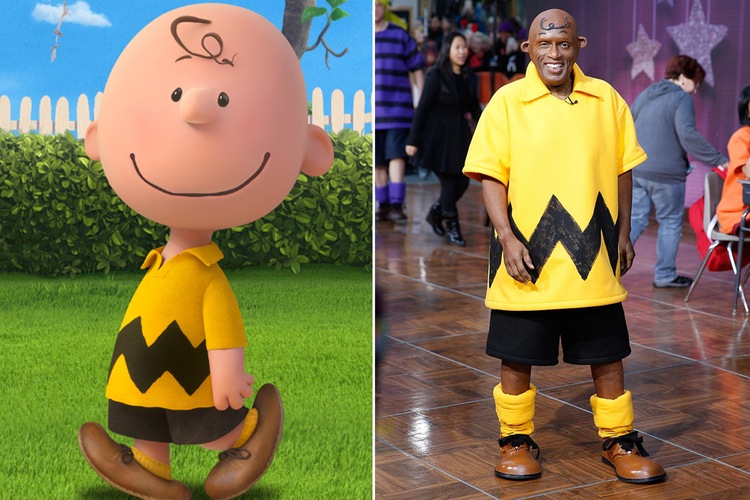
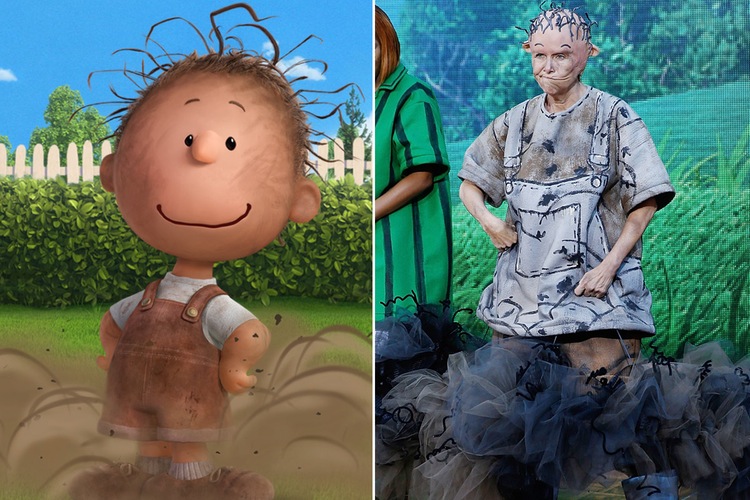
The ad campaign for The Peanuts Movie has been kind of a nightmare for me. I have a long history of being turned off by modern CG animation (yes, that includes most Pixar features; no, I’m not proud of that), so seeing a beloved property like Charles Shulz’s classic comic strip adapted to the format in the early teasers was jarring to say the least. The worst part of the conversion was that they interpreted the curl of hair on Charlie Brown’s forehead (which I’ve always seen as representative of at least a tuft) as a single, distinct pube. An endless barrage of awful-looking CG animated features like Angry Birds, Alvin & The Chipmunks IV: Road Chip, and the dismal-looking Rob Schneider Is A Polar Bear picture Norm of the North playing before the movie in the theater did little to ease my concerns. To get an idea of how horrified I was by this incarnation of The Peanuts, check out these nightmare images of Today Show anchors dressed up as characters from the the film. They’re barely made me more queasy than the film’s trailers did.

al-roker-charlie-brown-today-halloween-peanuts

carson-daly-today-show-halloween-peanuts-linus

meredith-viera-today-halloween-peanuts-pig-pen

It turns out, thankfully, that The Peanuts Movie isn’t quite as bad as the horrific shitshow I initially imagined. At best, the film feels like a decent compromise between the cynical corporate cash grab it could‘ve been & the loving tribute to an artistic institution it should‘ve been. The CG animation that initially bothered me so much was fairly easy to get used to, especially since it was accented by hand-drawn hearts, squiggles, and re-creations of the original black & white comic strip source material. For every cringe-inducing turn-off (horribly out-of-place pop music, new characters who don’t add much to the formula, over-long Snoopy-vs-the-Red-Baron asides, etc.) there’s a greatest-hits style throwback waiting to appease. Lucy’s 5¢ psychiatric help stand, Marcie’s eternal suffering at Peppermint Patty’s indifference, off-screen adults’ trumpet voices, Charlie’s kite-flying mishaps, plentiful utterances of “Good grief!” & “blockhead”, the gang’s iconic dance moves: it’s all here. And while the parents in the audience are chewing on the nostalgia, their kids are treated to a collection of timeless sight gags. Everyone wins . . . sort of.

The reason I came around to the idea of watching The Peanuts Movie in the first place was an interview in which producer Paul Feig (who I greatly respect) said he signed onto the project just to keep an eye on it, to make sure it wasn’t the cynical mess I expected. And that’s exactly how The Peanuts Movie came out as a finished product. It feels like a project that could’ve gone south at any minute, but was kept in check by a few voices of reason. There was certainly plenty of aspects of the film that I enjoyed. I was particularly relieved that the gang was allowed to remain true to themselves, just as gross & melancholy as ever. The voice acting work from the non-actor children cast was surprisingly true to past animated adaptations (Linus’ voice is eerily accurate, even) & it’s just as satisfying as ever to hear children fret over emotional crises like “coming down with a serious case of inadequacy” or having “the face of a failure, a classic failure face.” Even though “the little red haired girl” the film introduces is a largely wasted effort, I did appreciate that The Peanuts Movie stuck to a comic-strip-simple conflict in its Charlie-has-a-crush plot, detailing the embarrassment of falling in love instead of mucking up the formula with an origin story about how the gang all met or an out-of-place grand adventure. Still, I get the feeling that there will be very few people entirely won-over & in-love with what The Peanuts Movie delivers. At best, it feels like a disaster narrowly avoided, an acceptable compromise of the best & worst possible outcomes, which is something I’m actually grateful for, given my most fearful expectations.

-Brandon Ledet

People, Places, Things (2015)

threehalfstar

With a little tweaking People, Places, Things could easily pass as the third Noah Baumbach black comedy of the year (following Mistress America & While We’re Young). The film’s mix of understated indie quirk with pitch-black dialogue like “Happiness is not a sustainable condition,” & “I’m fine. I’m just having a bad life. It’ll be over eventually,” fits right in with the typical Bambauchian formula. This doesn’t feel like a direct, intentional nod to the director’s work, however. It’s rather a side-effect of attempting to adopt the often dark humor & lightheartedly sullen tone of modern art comics & graphic novels. Featuring original artwork from comic book artist Gray Williams, People, Places, Things uses the comic book medium as a form of inner monologue to tell the story of the protagonist’s emotional state as his external, romantic life crumbles at his feet. Fans of Fantagraphics-leaning artists like Daniel Clowes & Charles Burns will probably get a lot of satisfaction from that storytelling device. The rest of the film’s entertainment value is largely dependent upon your interest in dark humor, romantic comedy, and Flight of the Conchords vet Jemaine Clement.

Clement plays the film’s protagonist, Will Henry, a super-bummed graphic novelist/art school professor having a toned-down sort of mid-life crisis. After catching his longtime girlfriend cheating during their twin daughters’ 5th birthday party, he spends a full year in a state of depression-laden stasis before reluctantly re-entering the dating game. After a tense first date with a surprisingly age-appropriate literary professor that had the two passionately arguing over the supposed merits of graphic novels as a legitimate form of literature, he finds himself torn between a new love interest who finds him snobbish & the leftover fragments of his love for the mother of his children. It’s a classic tale of arrested emotional development. Honestly, because Henry is in such a reflective state of depression & self-loathing, he comes across as the only properly-developed character in the film. As a result, none of People, Places, Things’ romantic detangling hits quite as hard as Clement’s portrayal of a broken man, which works perfectly in tandem with Gray William’s sullen comic book art. There’s obviously a great deal of humor in Clement’s performance, especially in the way he interacts with his daughters (for instance, on their 6th birthday he tells them, “It feels like just yesterday you were 5,”) & in the way he allows his lectures to devolve into topics like “Why Does Life Suck So Hard?”. Humor comes naturally for Clement, though, so it’s much more of a treat to see him showing off his dramatic chops here. The movie asks him to carry a hefty load of emotional weight & he seems to pull it off effortlessly.

As enjoyable as People, Places, Things is as an understated black comedy, it doesn’t break the mold in any significant way. It’s not even the best dark comedy about a comic book artist in a state of emotional crisis to be released this year. That distinction belongs to The Diary of a Teenage Girl. As with all of Jemaine Clement’s work, though, it is an exceedingly charming film in a way that feels natural & unforced. The movie even works in some Understanding Comics-type lectures on basic comic book concepts like the function of “the gap between the panels” without compromising its tone. I also liked that as fervently as the movie defends comics as an artform, it doesn’t hesitate to poke fun at the fine art of improv comedy in a dismissive way. Besides Clement’s exceptional performance as the lead, the best trick People, Places, Things pulls off is in exploring comic books as a form of storytelling while simultaneously adapting its techniques to the medium of film. It works surprisingly well & feels remarkably genuine, which is an important attribute for this Bambauchian sort of depressive indie comedy quirk. It’s not something you need to rush out to see, but it is currently, conveniently streaming on Netflix for whenever you’re in the mood for what it’s laying down.

-Brandon Ledet

The Diary of a Teenage Girl (2015)

EPSON MFP image

fourhalfstar

There was something about the laughter in the audience I saw The Diary of a Teenage Girl with that really freaked me out. Yes, the movie is funny, but it’s funny in an uncomfortable way that recalls difficult works from Todd Solondz like Welcome to the Dollhouse & Happiness moreso than any laugh-a-minute yuck ’em ups. The Diary of a Teenage Girl is a rare picture that manages to incorporate effective black comedy into its beautiful visual artistry & the brutal, unmitigated honesty suggested by its confessional title. Adapted from a graphic novel by the same name, The Diary of a Teenage Girl is the story of a vulnerably naive 15 year old comic book artist who gets wrapped up in a sexual affair with her mother’s much older boyfriend in 1970s San Francisco. It’s a difficult film to stomach at times, but it’s one told with an intense attention to verisimilitude & vivid incorporations of top notch comic book art, all held together by a career-making performance from Bel Powley, who plays the exceedingly endearing, but deeply troubled protagonist Millie. I’m willing to chalk up a good bit of the laughter from the theater where I watched the film to discomfort with the subject matter, something I’m more than sure was intended by first-time writer/director Marielle Heller, but I often found my own reactions to what was happening onscreen to be far more complicated than mere ribald laughs. It almost felt transgressive to watch the movie with a large group of vocal strangers, as if I were actually hearing the private diary of a complete stranger being read aloud in public. It’s a starkly intimate work.

The Diary of a Teenage Girl opens with a leering shot of Millie’s denim-clad butt as she struts through a public park populated with 70s San Fransiscan hippies, weirdos, bellbottoms, and mustaches. Amidst this time warp fashion show, Millie proudly declares, “I had sex today. Holy shit.” We soon learn that her newfound sexual exploration isn’t quite as positive of a development as she believes. Not knowing the full extent of what she was getting herself into (how could she?), Millie intentionally seduces her mother’s boyfriend Monroe (Alexander Skarsgård), initiating a longterm affair that eventually drives some irrevocable wedges between her & her mother (Kristen Wiig). Her reasoning for acting out on her lust for Monroe? “I was afraid to pass up the chance because I may never get another.” Millie is full of these self-deprecating, sadly funny “truisms”. After sleeping with Monroe, she asks “Is this the way it feels for someone to love you?” She later yearns, “I want someone to be so in love with me that they would feel like they would die if I were gone,” and makes ridiculous declarations like “I want to be an artist so school actually doesn’t matter that much for me,” & “Hookers have all the power. Everybody knows that.” Her naiveté can be amusing when she gets teen-deep in her sexual philosophizing, but it also indicates a terrifying vulnerability that Monroe was a monster to take advantage of.

While Millie pines over Monroe in a typical “he loves me, he loves me not” fashion, he treats her more like a younger sister, incorporating an uncomfortable amount of childish horseplay in their flirtation. She’s a shameful fling in Monroe’s mind. She’s also, according to him at least, completely to blame for the affair. The movie does little to sugarcoat the realities of its mid-70s setting, establishing a very specific cultural mindset with references to the Patty Hearst kidnapping controversy (which Wiig’s flower child mother refers to as fascist misogynistic bullshit”), the rise of sexually androgynous milestones like Iggy Pop & The Rocky Horror Picture Show, the omnipresence of Fruedian psychology (represented onscreen by Christopher Meloni), depictions of teens freely ordering drinks in barrooms, the drugged out loopiness of H.R. Pufnstuf, and era-honest inclusions of casual racism & homophobia. It’s tempting to say that an affair with a 15 year old in that context would not have been as big of a deal as it is now, it being “different times” & all, but c’mon . . . Monroe feels intense guilt for the affair, because he knows it is wrong. Still, he blames Millie for his own transgression, as does every other person who learns of the affair (another indication of the times). When Monroe becomes increasingly frustrated with Millie’s adolescent behavior, he explodes “You’re a fucking child!” Well, he’s not wrong there, which is a large part of why he should’ve known better & why he’s so much at war with his own conscious.

To her credit, Millie is often blissfully unaware of just how detrimental her affair with Monroe actually is. Convinced that Monroe is only continuing to sleep with her mother to avoid suspicion, Millie mostly worries about whether or not he loves her back, not how much longterm damage he’s causing her psyche. In a lot of ways, Monroe is just one part of Millie’s coming of age story, which also involves experimentation with ditching class, hard drug use, bisexuality, self body image, skinny-dipping, prostitution, running away from home, and attempts to connect with her favorite comic book artist, Aline Kominsky (a real life talent & real life wife of Robert Crumb). Stuck halfway between an older man who can’t keep up with her overactive libido & her teen sexual partners who aren’t nearly as good in bed (not to mention often freaked out by her pursuit of her own orgasms), Millie is alone in a crowd. She both makes intentionally provocative statements like “I hate men, but I fuck them hard, hard, hard, and thoughtlessly because I hate them so much,” & hypocritically shames friends who are struggling with the same pursuits of sexual & personal autonomy.

The Diary of a Teenage Girl pulls no emotional punches as Millie perilously navigates these deeply troubled waters, often lightening the mood both with its protagonist’s endearing sense of humor & teen-specific lack of self-awareness, but never letting its characters off the hook for their often-cruel transgressions. All of this heft is backed up by a vivid visual collage format that allows ink drawings to come to life, wallpaper to transform into a jungle, and a bathtub to suddenly expand to an ocean, making great use of that concession without it ever outwearing its welcome. What results is an incredibly adept debut feature for Marielle Heller & an remarkable display of range for actress Bel Powley. I’m just as excited to see where their careers are headed in the future as I am to revisit this film as soon as I can get my hands on the novel (and experience it with a more intimate, on-my-wavelength audience).

-Brandon Ledet

Avengers: Age of Ultron (2015)

EPSON MFP image

threehalfstar

At this point in the evolution of the MCU, there are nearly a dozen (!!!) films, three television shows, several DVD-exclusive shorts, and an untold amount of tie-in comic books worth of content. Holy shit, that’s daunting. Honestly, I’m just not the right kind of comic book dork to find that amount of MCU content exciting. If there were a Fantagraphics Cinematic Universe you could bet I’d be at the theater for every new release, but that much Marvel content sounds more like work than play to me. Of the eleven MCU films released so far I’ve seen exactly three: Avengers, Guardians of the Galaxy, and Avengers: Age of Ultron. To me, the draw of tuning in for these films was that they felt like a highlight reel instead of having to watch all MCU content, which at this point would take days on end.

This approach worked out fairly well with the first Avengers film, which had only(!!!) five preceding films of build-up, whereas I had felt totally left behind at the beginning of its sequel, Age of Ultron. Starting with an in medias res action sequence in the snow and quickly followed by some sciencey montages & well-needed (I’m guessing) R&R, the Avengers team had now left me, the casual viewer, far behind and was struggled for a near 40-min stretch to me back to the table. It took almost the entire first third of the film for me to get invested in the story while all the loud things were going boom, but once I was brought up to speed, I was just as on-board as any other giddy child in the theater. For what it’s worth, I think the exact moment was sometime around when Iron Man was trying to punch The Hulk to sleep or maybe only a few minutes before.

Once Age of Ultron gets rolling on its own merit, disconnected from its place in the MCU, it’s a fairly exciting action spectacle. Cities are destroyed, superhumans run around doing their superhuman things, good triumphs over evil, etc. I just wish it didn’t take so long to get there. The MVPs of distinguishing this movie from its MCU brethren are the newest characters. Not the genetically modified twins introduced in the opening scenes, but the man-made characters that come later in the film, Vision & Ultron. Especially Ultron. As the title hints, the film doesn’t really stand out on its own until Ultron hijacks the plot from the ten preceding movies. He’s such an arrestingly odd, smarmy villain, expertly voiced by James Spader, that he makes all the work that it took to get to him feel worthwhile.

Despite the shaky start, I eventually found myself giving into Age of Ultron’s ridiculous spectacle and even had a few moments where I completely nerded out (particularly in a well-teased moment involving Thor’s hammer) and felt like part of the participatory audience. I’m just wondering how long Marvel can keep pulling off this trick for the casual viewer. According to their current release schedule, Avengers 3 will have at least sixteen films preceding it. Avengers 4 is likely to have nearly two dozen. If it already takes 40min of exposition to rope the casual viewer into these film’s storylines, I’m wondering if they can even continue to take us along at all or if they’ll (smartly) choose to leave us behind.

-Brandon Ledet