Closely Watched Trains (1966)

At the time of posting, the social media platform TikTok is back online after briefly being banned in the United States over some vague Red Scare surveillance paranoia involving the app’s ownership by a Chinese company. Despite having called for this ban during his first presidency, Trump has found an executive-order workaround for the Supreme Court’s decision against TikTok’s fate in the US, retroactively pinning the unpopular decision to the recently concluded Biden administration. The brief banning of the app inspired US TikTok users to flock to an alternative platform to alleviate their #content addiction (including the Chinese-owned app RedNote, which spiked in American usership), and it also had me reflecting on what TikTok has contributed to Online Film Discourse. Like with all platforms, there are both good & bad data points that color TikTok’s character, from the shameless shilling for corporate media that the app’s Influencer class indulge for red carpet access to the stray surges of interest one out-of-nowhere video could draw to obscure works like Żuławski’s On the Silver Globe. Overall, though, when I think of what “MovieTok” (which I would happily rename “FlikTok” if I had the power) brings to Film Discourse, my mind goes to the trend of slagging art films as purposefully inscrutable puzzles that cinephiles only pretend to appreciate in order to appear smart. Anytime a celebrity lists a European art film during their “Letterboxd Top 4” interviews on the platform, a TikToker mocks their supposed pretention in a parodic video listing fictional titles.  Instead of expressing curiosity in any film outside the bounds of the MCU (or their more recent Major Studio equivalents), they make up a “4-hour black and white film about the Serbian government through the eyes of a pigeon.” It’s a stubbornly ignorant way to approach unfamiliarity with art, and I personally hope it dies with the app.

For any younger audiences doubtful that black & white European art films can be accessible & entertaining, I’d recommend checking out the 1966 Czech New Wave classic Closely Watched Trains, which was accessible enough to American audiences in its initial release that it won the Academy Award for Best Foreign Language Film. Closely Watched Trains is a shockingly light entertainment for a black & white Czechoslovakian art film about making sure the trains run on time under Nazi occupation. Its historical circumstances and its final scene are tragic, but structurally it’s a 90-minute boner comedy packed with prurient goofball schtick. While the MovieTok commentariat would have you to expect a Czech New Wave art film about Nazis to be a non-stop misery parade, Closely Watch Trains mostly plays out like one of those coming-of-age comedies about a teen’s sexual misadventures while working their first summer job … except it’s set at the edge of a frosty, war-torn Prague. There’s even a little “Welcome to my life” narration track at the start, as if you’re watching the original foreign-language version of Ferris Bueller instead of a project that was passed over by Věra Chytilová for seeming too difficult to adapt from page to screen. Sure, its final beat is deadly serious about the violent circumstances of Nazi rule, but its scene-to-scene concerns are refreshingly honest about what a teen working their first job outside the house would be paying most attention to: getting laid. It’s a shame that the MovieTok platform isn’t used to introduce younger viewers to a wilder world of cinema through accessible gateway films like this and instead tends to dismiss the entire concept of European Art Films outright for an easy punchline. Or, more likely, the more dismissive responses are the ones that reach a wider audience thanks to the algorithm’s bottomless love for Rage Bait, which is exactly how it works on my own evil #content app of choice, Twitter.

As a coming-of-age story, Closely Watched Trains keeps things simple. A scrawny sweetheart named Miloš attempts to follow in his father & grandfather’s footsteps by apprenticing as a railroad dispatcher. The circumstances of the job might have become a little more strained now that the trains are under Nazi command, but he’s told that if he sticks it out long enough he’ll get to retire with a pension. At the start of the job, he’s offered a crossroads of three different priorities: work, politics, or women. Unsure of which direction he wants his life to go, he tries his hand at each – flirting with rigid professionalism, flirting with a plot to bomb a Nazi supply train, and flirting with a cute train conductor who’s his age and eager to become his girlfriend. His physical urges overpower his higher mind for most of the runtime, leading to a series of proto-Porky’s sexual escapades that include train car orgies, ink-stamped butt cheeks, and a lot of vulnerable discussion of premature ejaculation. As silly as some of these sexual encounters can be in the moment, Miloš has Big Teenage Feelings about them that occasionally raise the stakes of the story into more traditional War Drama territory, sometimes under Nazi threat, sometimes under threat of self-harm. It would be reductive to present the film purely as a comedy, given its political & historical context, but for the majority of its runtime it’s more adorable than grim. Even its more overt indulgences in the art of the moving image are less challenging that they are cute. Wide-shot frames arrange the actors & trains with dollhouse meticulousness, which combined with the dark irony of the sex & romance recalls the work of Wes Anderson – maybe art cinema’s most widely accessible auteur.

I do not have much at stake in the ultimate fate of TikTok, but I do have something to say to the art-phobic influencers of MovieTok. There is no reason to be intimidated by the Great Works of European Cinema just because they’re initially unfamiliar. No matter how artsy, The Movies are ultimately just as much of a populist medium as TikTok #content; you can handle it.

-Brandon Ledet
The Cassandra Cat (1963) 

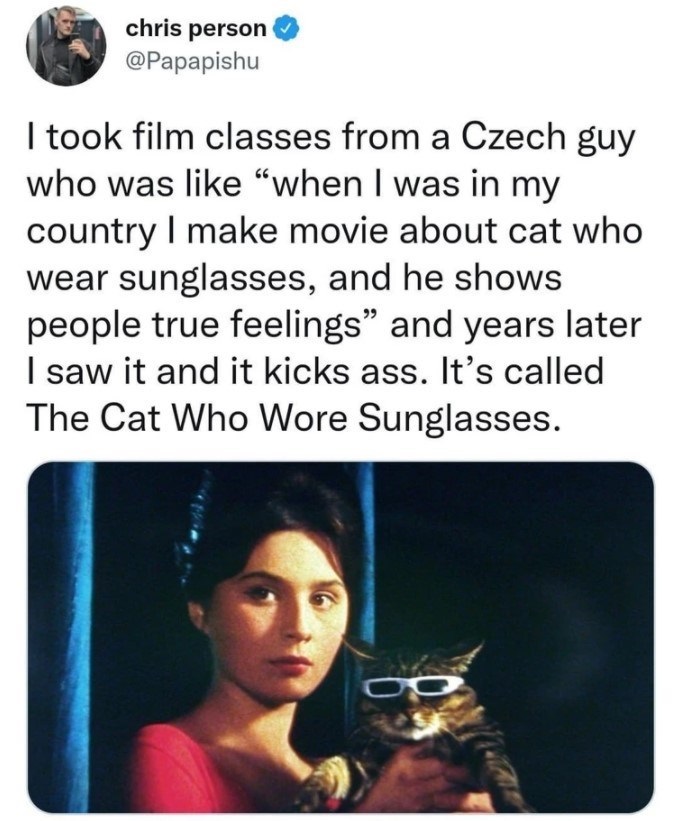
One of the sharpest reminders that the Internet is not real life that I’ve gotten recently was the sparse attendance at a local screening of The Cassandra Cat.  Also distributed under the English titles When the Cat Comes and That Cat, The Cassandra Cat is best known (to me) as the subject of a viral tweet, recommended by a film student whose Czech professor bragged about making a movie about a cat who wore sunglasses called The Cat Who Wore Sunglasses.  I certainly didn’t expect that one tweet would exalt The Cassandra Cat up to the level of household Czech New Wave standards like Daisies or Valerie and Her Week of Wonders, but it is one of those tweets that rattle around in the back of my mind the same way serious film scholars can quote lines of criticism by Kael, Sarris, and Godard.  So, when there were fewer than ten people in attendance for The Prytania’s afternoon screening of its recent restoration, I was shocked.  I could not believe so few people showed up to see a half-century-old Czech film about a magical cat that I’ve only ever heard about via Viral Tweet.  So weird.

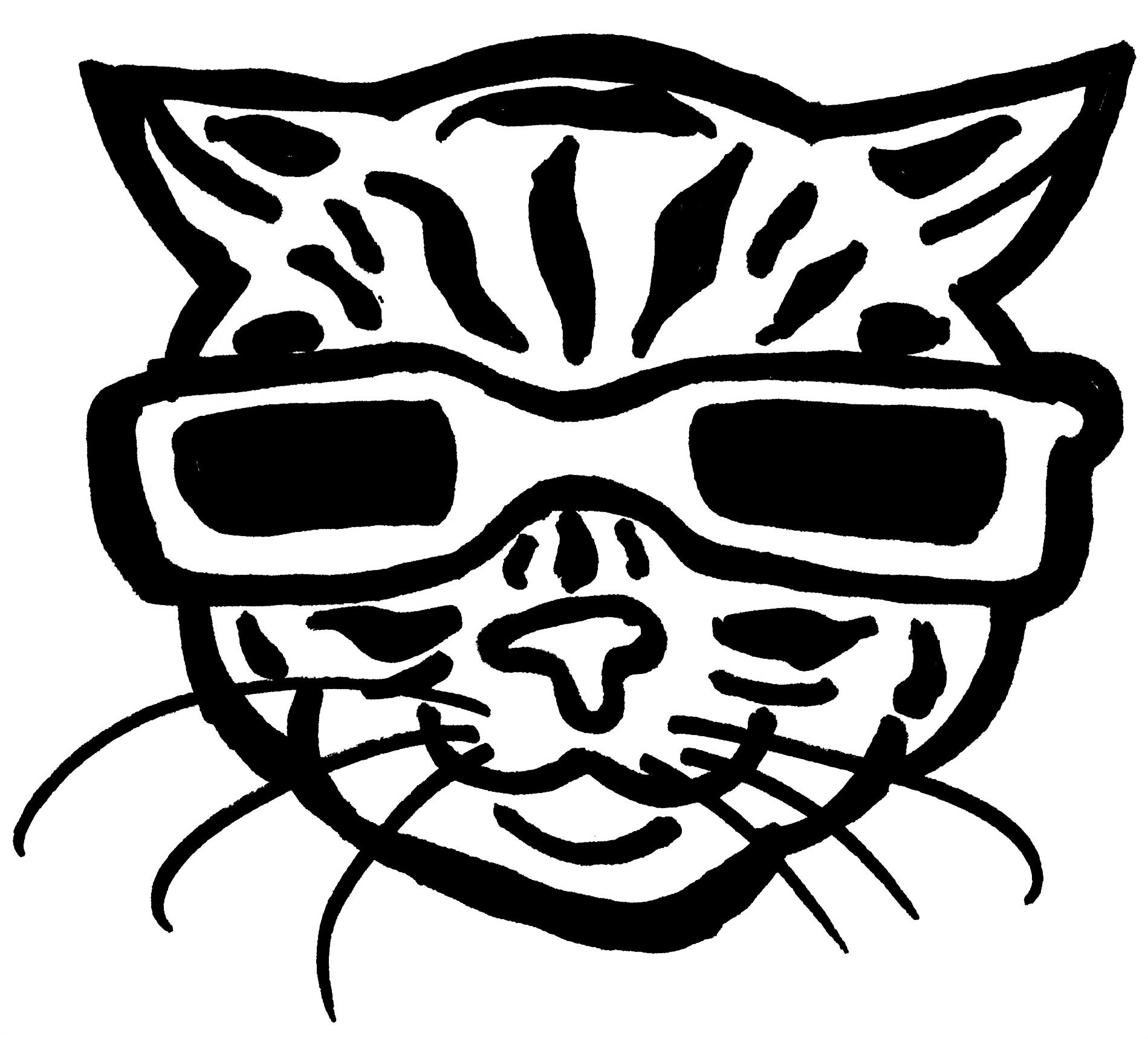
Y’all missed out.  The Cassandra Cat is a wonderfully imaginative children’s film about collective action, holding adults accountable for being liars & cheats, and about how cats are excellent judges of character.  The titular cat is a trained circus performer who arrives to a small Czech village with an army of talented coworkers: a ringleader magician, a gorgeous trapeze artist, and a legion of faceless, supernatural puppeteers.  Their act initially goes over well with the townspeople until the final routine, in which the trapezist takes off the cat’s sunglasses so he can stare his naked cat eyes into the audience.  It turns out that the cat’s direct gaze has the magical power to expose people’s true nature by making them glow like mood rings (an effect achieved through body paint & gel lights).  Adulterers glow yellow, revealing secret affairs hidden from their spouses.  Selfish careerists glow violet, exposing their greed to higher-minded comrades.  Lovers glow red, revealing their pure, earnest hearts as artists & true friends among their careerist counterparts.  This, of course, causes a riot among the adults, who spend the rest of the film attempting to banish & discredit the cat in front of the children who witnessed their secret selves.

There is some political allegory to The Cassandra Cat that might not entirely translate to modern audiences unfamiliar with the day-to-day complexities of the Czech Republic pre-Prague Spring.  Mostly, though, it’s fairly easy to follow as the Czech New Wave version of “The Harper Valley PTA”.  That’s what makes it such a great children’s film, especially once the magical cat is weaponized by the town’s schoolchildren, who stage a mass classroom walkout until he’s surrendered to their care & use.  It’s also a great children’s film because of its vintage sense of magic & whimsy, recalling other psychedelic children’s media of bygone eras like H.R. Pufnstuf, The Peanut Butter Solution, and The 5,000 Fingers of Dr. T.  There were no actual children present at that afternoon screening at The Prytania, just a few stray adult weirdos who had nothing better to do in the breezy sunshine outside.  At this point, The Cassandra Cat is a film exclusively for weirdo shut-ins, the kid who file away hit tweets in the back of their minds in case the forgotten Czech films referenced therein happen to pop up on the local repertory schedule.  Maybe that makes us losers, but if like to think that if a cat stared at us that day we’d at least glow red.

– Brandon Ledet

Lagniappe Podcast: Prefab Story (1979)

For this lagniappe episode of The Swampflix Podcast, Boomer, Brandon, and Alli discuss the Czech New Wave whatsit Prefab Story (1979), an experimental ensemble-cast drama about infinite urban construction from Věra “Daisies” Chytilová

00:00 Welcome

02:30 Until the Light Takes Us (2008)
09:27 The Last Starfighter (1984)
20:12 The Volcano: Rescue from Whakaari (2022)
25:53 Arrietty (2010)
26:53 Grosse Pointe Blank (1997)
31:50 The Flash (2023)

39:57 Panelstory, or Birth of a Community (1979)

You can stay up to date with our podcast through SoundCloudSpotifyiTunesStitcherTuneIn, or by following the links on this page.

-The Lagniappe Podcast Crew

Lagniappe Podcast: Loves of a Blonde (1965)

For this lagniappe episode of the podcast, BoomerBrandon, and Alli discuss breakout Czech New Wave director Miloš Forman’s classic romantic dramedy Loves of a Blonde (1965).

00:00 Welcome

02:30 Possessor (2021)
03:30 Millennium Actress (2001)
05:45 The Green Knight (2021)
11:22 Greener Grass (2019)
14:40 A Classic Horror Story (2021)
18:20 The Suicide Squad (2021)
28:08 Sound of Violence (2021)
31:10 In the Earth (2021)

34:30 Loves of a Blonde (1965)

You can stay up to date with our podcast through SoundCloudSpotifyiTunesStitcherTuneIn, or by following the links on this page.

– The Lagniappe Podcast Crew

Adele Hasn’t Had Her Supper Yet (1977)

I often talk about how there’s no movie more difficult to enjoy than a comedy that isn’t funny and about how comedy is the genre that translates the least well across cultural barriers. That’s why I’m surprised to find myself so fascinated with the 1970s curio Adele Hasn’t Had Her Supper Yet – a corny, unfunny broad comedy that relies heavily on Czechoslovakian cultural tropes to sell its humor. Usually, when a comedy isn’t funny there just isn’t much else to chew on; the genre is almost entirely reliant on eliciting laughter from its audience to justify its existence. Adele Hasn’t Had Her Supper Yet is an unusual beast, though, as it pours just as much effort into its visual artistry as it does into delivering zany Jokes. Even though it isn’t the hi-larious good time it so desperately wants to be seen as, the artful visual craft of its buffoonery makes the experience totally worthwhile. The movie plays more like a comedic tangent from the tail end of the Czech New Wave than it does the Czech equivalent of Paul Blart: Mall Cop, even if its humor is on the same broad frequency.

Adele admittedly does attempt to bridge the cultural divide for American audiences by spoofing our own nationalistic sensibilities. The movie stars “America’s greatest detective from America’s greatest city” (NYC), throwing back to a macho Dick Tracy-style dime store crime novel archetype straight out of American pulp fiction. This modern Yankie cad version of Sherlock Holmes is hired by a Czech noblewoman to pursue a missing-person case in Prague. The only thing is that the missing person is her dog. And all the local Prague cops are good for is escorting him to local pubs with the best sausages and beer. Cue the Benny Hill-level musical jaunts to constantly remind the audience “This is hilarious!” at every step, even though the jokes themselves feel like Mel Brooks on one too many sleeping pills. There’s almost something adorable about the “Americans are like this, Czechs are like that” structure that guides film’s sense of humor, but the actual gags delivered through that apparatus are only really worth an occasional eye-roll and a “woof.” It’s cross-cultural Dad Humor.

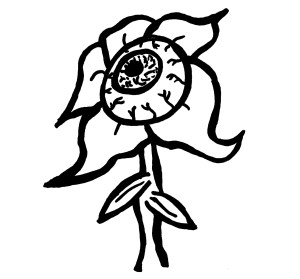
Where the movie gets interesting is in the visual splendor of its mad-scientist villain’s evil deeds. You see, the noblewoman’s dog wasn’t kidnapped at all; it was eaten by a mad scientist’s carnivorous plant, which he trained to eat flesh on command to the sound of classical music. We visit the wicked doctor in his lab where he plays violin to woo mutant eyeball plants, who in turn weep at the beauty of the music. It’s all very Little Shop of Horrors, right down to the giant carnivorous plant being named Adele, which is not too far off from Audrey. It’s just so goddamn beautifully rendered, though. A mixture of traditional puppetry, hand-drawn animation, and stop-motion trickery (contributed by visual wizard Jan Švankmajer) is conjured to animate the plant-monsters as they perform the scientist’s commands, so that the central conflict feels more like it belongs in an surreal dream more than a broad, pre-ZAZ comedy. As the American detective catches onto the mad scientist’s evil deeds, he has to escalate his own crime-fighting tactics, which involves an exponentially complex array of Seussian steampunk contraptions. Their final showdown together eventually does reach the sense of comedic mania the film attempts to achieve via its Jokes throughout, and the movie ends on its strongest, funniest imagery as their rivalry gets increasingly out of hand.

The only movie I can think to compare Adele Hasn’t Had Her Supper Yet to is the Russian sci-fi comedy curio Ivan Vasilievich Changes Profession. Both films suffer a little of the cultural & contemporary disconnect of being comedies out of their place & time (at least from a modern American perspective) but overcome those barriers through a surrealist sense of visual whimsy. It’s that kind of overcompensating visual artistry that makes the corny jokes it’s in service of feel more adorable than unendurable. I can’t say that the film had me genuinely laughing, but I can say that I was thoroughly amused from start to end. My only real complaint is that I would’ve preferred to spend more time with the plant-monsters than with the cunning detective, but I suppose that’s what we have Švankmajer’s directorial outings for.

-Brandon Ledet

Episode #107 of The Swampflix Podcast: Kolya (1996) vs. The Czech New Wave

Welcome to Episode #107 of The Swampflix Podcast!  For this episode, Britnee & Brandon survey the major cornerstones of Czech cinema.   They start with the mainstream Oscar-winner Kolya (1996), then compare it to the furthest extremes of The Czech New Wave of the 1960s.  Enjoy!

You can stay up to date with our podcast through SoundCloud, Spotify, iTunes, Stitcher, YouTube, TuneIn, or by following the links below.

-Britnee Lombas & Brandon Ledet

The Maries of Daisies (1966) vs The Merrye Girls of Spider Baby (1964)

EPSON MFP image

Daisies is a well-respected surrealistic art film from the Czech New Wave. It’s been discussed at length for its important status as a feminist film. Spider Baby, on the other hand, is a cult favorite, an oddball movie that, sadly, has mostly been forgotten. Despite those pretty major differences, there’s a key similarity that deserves discussion: the main pairs of characters in both films are almost the same people, right down to one being a brunette and the other a blonde. Both pairs are immature, mischievous, and have very little concept of real life consequences.

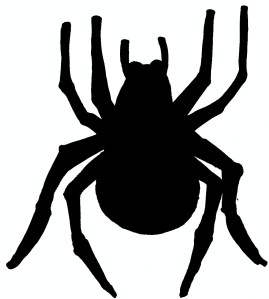
Spider Baby focuses on the Merrye family, which is so inbred that they suffer from a terrible condition which causes individual members to mentally regress as they age until they become savages. The Merrye clan lives in seclusion, and once a member of the family has fully regressed they get isolated further until they become such a threat to everyone that they get moved to their own section of the basement. Virginia and Elizabeth are two of the three remaining family members of their dying line, not yet old enough to be shoved into the basement. Being isolated from society gives them a dark, sprite-like quality. Due to their regression they have no knowledge of circumstances for their actions. Together they wantonly romp about the house, taking in pet spiders, eating bugs and suspicious fungi from their yard, and bickering almost constantly. Elizabeth is as volatile as a three year old on a bad day. Virginia regularly “plays spider,” which is a handy euphemism for murder. In their isolation, they act outside of society, with unkempt hair and make-believe games gone too far.

Daisies is a critique of Czechoslovakia under communist rule and the laws and regulations within. Marie and Marie are bored and disgusted with society. They decide one day to “go bad”. They turn into savages in flower crowns. The Maries of Daisies act stuntedly, but rather than being isolated, they’re wanton and disrespectful in public. They rip through the town, taking advantage of men, getting drunk, stealing, and eating to excess every time they get the chance. Despite their quirky destruction ultimately being intolerable, they never quite progress to murder, (though in their lawless chaos, killing doesn’t seem that far away). It is actually because of that chaos and anarchy the film was banned in its own country and from export at the time of it’s release, which resulted in Věra Chytilová being prohibited from filmmaking for 7 years.

Daisies is pointed to as a landmark of feminist cinema. Part of that distinction is that it’s an arthouse film directed by woman, but the other part comes from its idea of agency. The two Maries of Daisies are immature, “unladylike”, and savage by choice. They relish in the idea of bucking society, no matter how despicable they become. It’s no real surprise that Spider Baby would be neglected in a conversation of feminist films (or really any critical conversation about cinema), even though it features two distinct, disturbed women presented pretty sympathetically. One thing that discounts it from being a feminist film is that Elizabeth and Virginia are not given agency. They inherit their savagery via a family curse. They can’t help how wretched and impulsive they are. This makes them an object of pity and even demotes them to a damsel status resulting in them needing to be saved from society. Also, Spider Baby is directed by a man, so there’s that.

From a filmmaking standpoint, Daisies in an arthouse masterpiece and Spider Baby is a low budget horror-comedy that brings to mind the best moments of any Ed Wood film. From a character standpoint, they’re surprisingly similar. Marie and Marie don’t have a demented family in the basement, but that doesn’t stop them from being regressively chaotic like Elizabeth and Virginia. There’s a similar theme of chaos in both films that comes from presenting women who actively and violently don’t conform. Especially when, in the end, nonconformity is both sets’ downfall.

-Alli Hobbs