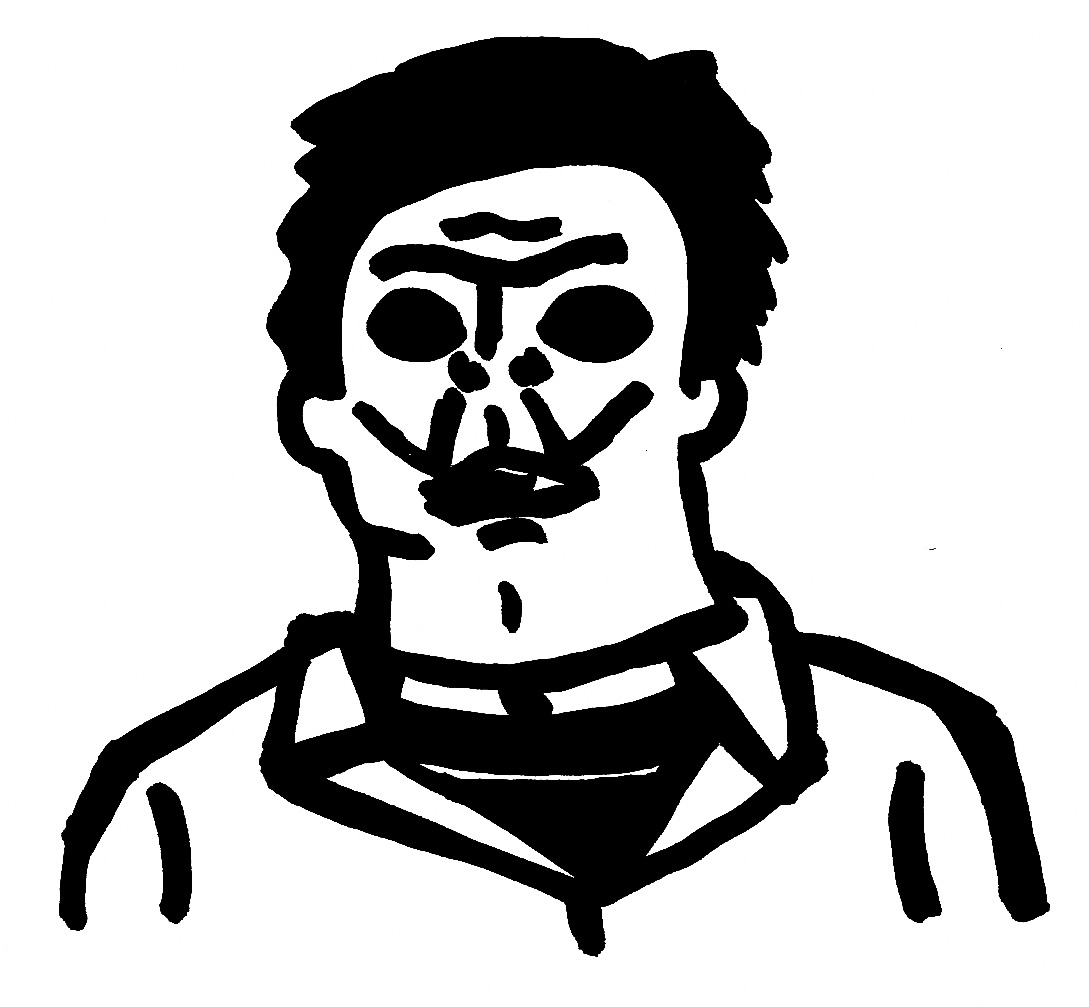
David Gordon Ween

Just like all other major entries in decades-running horror franchises, David Gordon Green’s Halloween was sharply divisive among genre fans as soon as it hit theaters in 2018.  Even so, its reputation has only declined in the five years since, especially as it has become the go-to, defining example of mainstream horror’s current “legacy sequel” trend.  Not only does the Halloween reboot have to answer for its own revisions of Laurie Strode & Michael Myers lore, but it also now carries the weight of horror nerd complaints against more recent offenses like 2019’s Child’s Play, 2021’s Candyman, and this year’s Texas Chainsaw Massacre.  It’s also been reduced to a scapegoat trendsetter for the Trauma Metaphor Horror wave that has followed in its wake, while artsier, standalone titles like Hereditary & The Babadook have maintained much steadier, more prestigious reputations in the same context.  It doesn’t help, of course, that Green has diluted his Halloween legacyquel with two follow-up films that have only alienated the Michael Myers purists even further as the series stumbled along.  I opted out of the David Gordon Ween discourse when Halloween Kills opened to white-hot angry reviews last year, but now that his theatrical mini-series is over and the online vitriol has been directed elsewhere (mostly at Olivia Wilde’s Don’t Worry Darling, which is practically a legacy sequel to Stepford Wives), it finally felt safe to return to Haddonfield to see how his take on Halloween has evolved.

Personally, I was really impressed with Green’s “original” Halloween in 2018, and I still think it holds up well when considered in isolation.  Regardless of its role as a harbinger for the next five years of mainstream horror trends, it still a really scary movie about self-fulfilling prophecies and obsessive thought spirals.  Okay, yes, Laurie Strode is haunted by the same metaphorical Trauma Monster that stalks most modern horror heroines (this time in a road-worn William Shatner mask), but that doesn’t mean there isn’t any dramatic complexity to how that internal battle with trauma plays out.  We’re told that in the 40 years since Laurie was hunted by the infamous killer Michael Myers in the John Carpenter original, she’s been mentally stuck in the events of that one night in a way that has defined & limited every other minute of her life.  Faced with senseless violence from a heartless, near-catatonic killer, Laurie has attempted to make sense of her life’s story by convincing herself it’s fate that she will have a final showdown with Michael once he inevitably escapes captivity.  It’s the same way that doomsday preppers always appear to be looking forward to the apocalypse they supposedly fear.  So, when Michael does escape, Laurie (along with other Michael-obsessed weirdos like “The New Dr. Loomis”) does everything in her power to make sure she & Michael have their “final” showdown in her D.I.Y. death-trap compound at the outskirts of Haddonfield, even though that’s exactly what she’s been dreading for decades.  Michael just mindlessly kills whatever’s in striking distance; Laurie is the one that makes the confrontation happen, totally unaware that she’s willing the fight into existence.  It’s chilling.

Green’s Halloween trilogy loses its way in the 2021 sequel Halloween Kills, which zooms out the scope of Michael’s function as a Trauma Monster from his effect on Laurie to his effect on Haddonfield as a community.  I choose to interpret the word “kills” as a noun here, since this second entry is a feature-length montage of Michael slashing his way through the streets, homes, and pubs of Haddonfield while Laurie recovers from their “final” showdown on a hospital bed, listening in from the sidelines.  Michael proves the point of the 2018 film’s self-fulfilling prophecy arc by making no effort to visit Laurie’s hospital room; he just lumbers from kill to kill in the most mindless fashion ever seen from a slasher villain.  If Halloween Kills is “about” anything outside the monotonous rhythm of those murders, it’s in how the community of Haddonfield tries to make sense of Michael’s senseless violence by making themselves the collective hero of the “story.”  I very much appreciate Halloween Kills‘s disgust with small-town America’s fetish for gun-toting vigilantism, given how many ordinary, ill-equipped Haddonfieldians approach Michael with deadly weapons—the same way real-life gun freaks dream of personally intervening in active-shooter crises—and are immediately destroyed for their trouble, either by Michael’s knife or their own petard.  It’s just a shame the movie is spread too thin across Michael’s hometown to ever truly feel scary.  Its larger scope means that it keeps intercutting between the tension of individual scenes so that we’re never properly immersed in any one of them.  It doesn’t really matter that its political assessments of small-town America are goofily unsubtle; it could have easily gotten away with that if it weren’t so scatterbrained.

After the frantic scrambling of Kills, the more sincere, dramatic approach of Halloween Ends can’t help but feel like a relief.  With his final entry in the series, Green returns to the low-key indie dramas that first earned him name recognition before he started making major studio slasher sequels & stoner comedies.  Halloween Ends may not be as Great as the first film in its trilogy, but it’s at least coherently structured and (mostly) functions as its own standalone movie, which is an embarrassingly low bar that Halloween Kills does not clear.  It’s also custom-designed to alienate & infuriate die-hard horror fans the same way that Halloween III: Season of the Witch was when Carpenter was still actively involved in the franchise, since it also does not focus on the senseless killings of Michael “The Shape” Myers.  Instead, we follow an equally iconic horror villain: Cory, the lonely mechanic with a troubled past.  Cory is dubbed “the new Michael” by the surviving citizens of Haddonfield, who essentially radicalize him into becoming a mass murderer in their continued attempts to make a clear, sensical narrative out of Michael’s mindless violence.  Meanwhile, Cory keeps The Old Michael as a pet in the sewers below Haddonfield and “feeds” his bullies to the hibernating killer the same way little Jamie feeds his bullies to the “tra-la-logs” of The Pit.  I’m sure there are plenty of people who are frustrated by the tonal & narrative inconsistencies between each of Green’s Halloweens, but I do love that there’s still room in a post-MCU world for individual movies in a big-budget franchise to take unique directions from each other – even if it’s strange to get that from a series with a consistent creative team at its core.  Cory’s story isn’t nearly as compelling nor as scary as Laurie’s, but at least Green & company found a way to make Halloween intimately personable again after the aimlessness of Kills.

The bigger problem is not the inconsistency across this series; it’s that it didn’t need to be a series at all.  Laurie Strode’s story is so neatly contained & emotionally impactful in the 2018 Halloween that there’s no reason for her to return for two more entries.  Kills feels lost by comparison, aimlessly wandering the streets of Haddonfield in search of a new emotional hook.  To its credit, Ends finds that new hook (by conjuring a new central character out of thin air), but it has no chance of fully standing on its own, since Laurie is still hanging around Haddonfield, distracting from its new sense of purpose.  After Cory’s own storyline is neatly wrapped up, Laurie steps back in for another “final” showdown with Michael, as if they’re ultimate fight to the death was meant to be, undoing all the good work of Green’s “original” Halloween.  After two entire films of Laurie hanging around a hospital room (Kills) and absentmindedly narrating her memoir (Ends), that last minute return to her vendetta with Michael can’t help but feel like an afterthought that dilutes the impact of both her story and Cory’s.  That’s largely what makes Halloween ’18 a great film and Halloween Ends an okay one.  And the purposeless ambling of Kills only makes them both look stronger by comparison.

-Brandon Ledet
Halloween (2018)

The David Gordon Green-directed, Danny McBride co-written, Blumhouse-produced Halloween is colloquially being framed as the Force Awakens of its respective series. This makes total sense from a franchise storytelling POV. It’s a decades-late sequel to a widely beloved classic that’s meant to reinvigorate interest in its brand by both wiping out the taste of lesser franchise entries of the past in a nostalgic return to basics and setting up a foundational storyline that can excite new fans for future installments, box office willing. However, Halloween (2018)’s context as the Force Awakens of its franchise is ringing true to me in other unexpected, even blasphemous ways. Like with The Force Awakens’s relationship to A New Hope, I found this soft-reboot to be an improvement on the original Halloween film through thoughtful, purposeful revision – although one indebted to nostalgic homage. More enthusiastic appreciators of the John Carpenter original are likely to have a drastically different relationship with Halloween (2018), but that seminal 1978 work has never been a personal favorite of mine. I much prefer the later, weirdo outliers it helped inspire: The Final Destination, Slumber Party Massacre II, Sleepaway Camp, The House on Sorority Row, Halloween III: Season of the Witch, etc. Carpenter’s score for the film and the visual design for serial killer Michael Myers are undeniably iconic, but the overall effect of the barebones horny-teens-hunted-by-a-masked-killer slasher is never as interesting to me as the stranger, more outrageous mutations of the formula that followed. I’m appreciative of Halloween (1978)’s influence on the horror genre, but skeptical of most after-the-fact academic assessments of the film that explain Michael Myers to be the embodiment of pure, senseless Evil as if that were that were a mythology it fully defined. Beyond lip service to philosophical ponderings on the nature of Evil provided by crazed psychologist Dr. Loomis, what’s mostly onscreen in the original Halloween is hot teens being punished for behaving badly (like a decades-late update to the 1950s “road to ruin” pictures where sex = death). The philosophy behind its supposed explorations of Fate & Evil have become part of its lore in the decades since its release, so that this 2018 update to its formula has much more to chew on subtextually, growing from those early seeds of ideas through focused revision.

Halloween (1978) co-writers John Carpenter & Debra Hill rationalized Michael Myers’s targeting of young, wayward teens by explaining him to be the Shape of Evil itself (even billing him as “The Shape” in the end credits), but in the text itself he effectively acts like a typical human serial killer with both prurient & prudish interests. The original sequel to Halloween, Halloween II (1982), attempted to ascribe logic to his targeting of Original Final Girl Lorie Strode (Jamie Lee Curtis) by making him her brother instead of a random violent stranger. Halloween (2018) ditches that sibling explanation entirely and does more with the Shape of Evil rationalization than what’s enacted in the original. 40 years after the Halloween-night serial murders of the first film, Laurie Strode is a traumatized wreck. She has alienated her family by morbidly obsessing over the murders, still attempting to make sense of Michael Myers’s impulses all these years later, preparing (read: looking forward to) his return for a “final” bout of bloodshed & closure. True crime podcasters, obsessive criminal psychologists, and a few superstitious locals share this belief that a showdown between Michael Meyers & Laurie Strode is Fate – an inevitable, momentous event. This stubborn belief in Fate and the impulse to ascribe meaning to senseless, random cruelty & chaos only leads to more personal tragedy. Laurie Strode, in her need for closure, and others obsessed with understanding the mind of the killer artificially orchestrate this final showdown with a perverse glee, like how Doomsday Preppers not-so-secretly look forward to the Apocalypse instead of approaching it with a healthy sense of dread. When Michael does eventually escape police custody to go on another killing spree (there wouldn’t be much of a movie if he didn’t), he just sort of stumbles around, indiscriminately stabbing at anything. It’s Laurie who insists on reliving her past trauma at his hands because she’s stuck in it, putting her whole family at risk as a result. She gets the supposedly fated showdown with Michael she’s been preparing for at her doomsday compound, but only because she & others obsessed with her case make it happen. In the decades since the original Halloween, people on & off the screen have been attempting to rationalize The Shape’s chaotic, emotionless enacting of Evil. No film has actually made use of that theme in a clear, substantive way as well as Halloween (2018).

The brilliance of this conceit of artificially orchestrated “Fate” is that it allows Halloween to split itself into two separate narratives that satisfy two entirely different appetites. One narrative follows Laurie Strode as she (along with other Michael Myers obsessives) endangers her family in her struggles to process her decades-later Final Girl trauma. The other follows Michael Myers indiscriminately doing his thing, completely unconcerned with the Strode Family drama. It’s in that latter thread where the film has its fun as a nostalgic slasher genre throwback, both gleefully referencing callbacks to previous Halloween films and reliving the horny-teens-punished-for-their-supposed-transgressions formula of the genre Carpenter helped establish (for better or for worse). The payoffs in the Michael Myers murder spree “plot” are much more muted than those of the Strode Family drama. You can only derive so much pleasure from spotting the latex Halloween masks from Season of the Witch or hearing Michael’s original murder spree referenced as “The Babysitter Murders” (the 1978 film’s working title), which I suppose is the less forgiving implication when you refer to this soft-reboot as the series’ Force Awakens. The murders themselves, although they leave a grotesquely contorted body count in their wake, also have a limiting entertainment value; they’re deeply indebted to the usual tones & methods of the traditional slasher. When considered in isolation, the two separate plot threads of Halloween (2018) – the Strode Family drama & the Michael Myers killing spree – feel woefully incomplete. One is too brief in screentime to land with full emotional impact, while the other is too reference-heavy & genre-faithful to feel memorable or distinct. The film’s brilliance lies in the way these separate tracks work in tandem. Cutting between Laurie’s conviction that Michael is staging a showdown with her specifically and Michael’s entirely unconcerned, indiscriminate killing spree in seemingly an entirely different movie creates a fascinating narrative tension. It becomes increasingly tragic as Laurie gets what she wants by artificially forcing the two threads to converge as if it were her Fate.

Like with The Force Awakens, this Halloween sequel/remake/reboot has the impossible task of pleasing everyone, ranging from devotees of the original who want to know how Laurie Strode’s doing 40 years later to first-weekend horror-gobbling teens who just want some jump scares & interesting kills. I believe it did an excellent job of satisfying the most extreme ends of that divide by treating them as separate tracks, then giving them a substantive reason to converge. Fans of the franchise with sky-high standards & hyper-specific requirements of how the Laurie-Michael story should be told (Star Wars-type fans, if you will) are going to be the most difficult to please, since their beloved property has to cede so much screentime to roping in newcomers who needed to be won over for this gamble to work. For me, it’s that exact tension between the original Halloween’s storyline’s need to logically seek closure & the slasher genre’s need to propagate random, senseless violence that makes this film one of the best examples of its franchise – one that has something substantive to say about Fate & Evil in a way the original only motioned towards. And it managed to do so while still playing reverent homage to that seminal work’s iconic sense of style.

-Brandon Ledet
