Nocturama (2017)

I’m not sure the world necessarily needed a movie that makes acts of terrorism look sexy & cool, but with so few transgressive places left for cinema to go you’ve got to respect Nocturama for finding a way to push buttons in the 2010s. Nocturama is certain to ruffle feathers & inspire umbrage in the way it nonchalantly mirrors recent real life terror attacks on cities like Paris & London. That incendiary kind of thematic bomb-throwing is difficult to come by in modern cinema, though, considering the jaded attitudes of an audience who’ve already seen it all. It helps that the film is far from an empty provocation; it’s a delicately beautiful art piece & a hypnotically deconstructed heist picture, a filmmaking feat as impressive as its story is defiantly cruel. Its shifting perspective & out of sync editing style estimates a kind of cinematic Cubism, amounting to a picture that deserves to hang in an art gallery, yet quietly lurks on Netflix in a haze of streaming platform anonymity. It’s weird to see such a politically jarring & visually arresting art piece slip so quietly into the streaming deluge of #content, but there’s also no other place for Nocturama exist peacefully in the modern word; it is not a peaceful picture.

The major wrinkle in Nocturama‘s claim as a transgressive work of fine art is that it requires a massive amount of patience. The film is not only over two hours long, but its dialogue-free first half is very slow to explain its plot or the relationships between its characters. If Nocturama partially functions like a heist film, it disrupts the typical flow of that genre by starting with the climactic heist. In the film’s disorienting first hour, nearly every teen in Paris silently navigates the city’s public transit system and trades knowing glances as they move with mysterious purpose from building to building and accomplish small, seemingly unrelated tasks. We later understand these kids to be orchestrating a city-wide terror arrack, the planning of which is gradually revealed in after-the-fact flashbacks. Targeting the destruction of institutions & monuments, not people, and never explicitly stating their motivation for this violence beyond vague economic unrest & cultural ennuii, the brand of terrorism depicted in Nocturama resembles the political philosophizing of the German indie The Edukators far more than anything relevant to real life. Still, depicting the allure of the hip-hop & techno-scored gang of teens in leather jackets & tight jeans blowing up a city to make an ambiguous political statement & inspire general chaos is at least somewhat irresponsible & dangerous. That’s not a point that’s lost on Nocturama, as the second half of the film dwells in a what-have-we-done fallout as the kids watch the world crumble around them from the vantage point of an empty shopping mall (recalling a dystopic horror like Night of the Comet or Dawn of the Dead). Still, the discomfort of its highly stylized, teenage acts of mass terror is a major reason why the film sticks to the ribs.

Although the puzzling rush of its opening terror heist sequence is sure to steer the conversation around it, Nocturama doesn’t truly reveal its full nature until the extended denouement of that act’s shopping mall fallout. These kids play video games & stage techno dance parties with the same intensity that they plant explosives & ditch burner phones. With the exception of a stray familiar face like Rabah Nait Ofella (Raw, Girlhood) & Adele Haenel (The Unknown Girl), the film mostly boasts a cast of unrecognizable teenagers, so that it feels vividly real watching them blast pop music acts like Chief Keef & Willow Smith or “shop” for free clothes off the store’s infinite army of creepy mannequins. Driven mad by a lack of contact with the world outside the mall and the wait for a new day, the paranoia and guilt resulting from the first hour’s transgressive act begins to weigh heavily on their minds. There’s a myriad of visual pleasures in Nocturama that can intoxicate & mystify: a golden Joan of Arc statue aflame, a lipsynced drag routine set to “My Way,” a city in chaos, a gold-plated mask, etc. What cuts through those surface pleasures, though, is the existential frivolity of these kids, scared of their own actions, as they essentially wait for the world to end. As with the real world political implications of its opening half, Nocturama pulls no punches there either and ends on a silently methodical, Cubist conclusion of fractured, meaningless violence. The entire experience is puzzling, hypnotic, and requires both immense patience & amoral political philosophy. It might be one of the most challenging films of the year, which is odd to say of something so flashy in its violence & youthfulness, but it’s also one of the most rewarding in the way it stimulates complex reflections on life in the modern world.

-Brandon Ledet

Landline (2017)

Obvious Child, the first collaborative feature from director Gillian Robespierre & actor/comedian Jenny Slate, was a wolf-in-sheep’s clothing bomb-thrower of a film. Robespierre snuck a realistic, formally honest drama on addiction & abortion into American theaters under the guise of a safe, by-the-books romcom. Slate’s persona in the film as an aggressively juvenile stand-up comedian made the experience even more sharply pointed, as it at least vaguely mirrored her own life & art. Unfortunately, I cannot report that their reunion for an Obvious Child follow-up is anywhere near that striking in concept. Detailing the lives of a family in crisis in the mid-1990s, Landline sidesteps the deeply personal politics of Obvious Child to tell a much more familiar, universal story. Slate’s natural persona is still allowed to inform her character, but it’s also diluted by a larger ensemble, including turns from indie scene notables John Tuturro, Jay Duplass, and (MVP) Edie Falco. There’s no real hook to Landline the way Obvious Child’s “the abortion romcom” elevator pitch is immediately distinctive, but Slate & Robespierre still manage to extend the fiercely honest sensibilities of their first collaboration into this less thematically confrontational territory.

A frustrated NYC teen (Abby Quinn) struggles with her idealistic sense of home life & self-identity when two dual acts of adultery disrupt her familial structure. Just when she discovers her playwright father (Tuturro) is likely cheating on her eternally stressed mother (Falco), her adult sister (Slate) also begins an affair behind the back of her fiancée (Duplass). The two sisters & their mother form a solid trinity of female perspectives that dominate this narrative, but the heart of the film lies mostly in the teen’s struggle to negotiate the balance between the ideal of honesty and the fact that the truth could destroy someone. She acts out in frustration, turning to recreational drug use & delinquency to enact a sense of control and starting petty name-calling bouts with both her her sister & mother. These insult trades can range from the harmless (“tattle tale,” “irritant”) to the bitterly harsh (“Fuck you, cunt!”), but order is gradually restored to their dynamic as the two romantic affairs naturally work themselves out. Huge, life-changing mistakes are made impulsively & with fervor and the teen at the center of the storm is petrified of repeating earlier generations’ follies at the expense of people she loves. (Honestly, introducing this family to Christine “Lady Bird” McPherson would be super beneficial in dispelling her fantasies about the private, romantic lives of East Coast intellectuals). Ultimately, though, familial bonds prove stronger than short-term resentments and everyone emerges a stronger, more forgiving person on the other end.

The most striking choice for Landline, stylistically, is its story’s 1995 setting, which thankfully extends beyond nostalgia markers like floppy discs & Oprah to touch on the historical drug addiction issues & limited forms of communication that shaped the era. The tagline “1995 – When people were hard to reach” is much tidier than the movie’s treatment of internal, familial conflicts of communication & honesty, but at least points to how the setting was integral to tapping into the film’s themes. The 1990s timeframe also allows for a wildly varied soundtrack ranging from Steve Winwood’s embarassing “Higher Love” to The Breeders’ delicate delight “Drivin’ on 9.” You can tell Robespierre employs the same cinematographer as she did for Obvious Child (Chris Teague), since interior spaces in both films visually share a kind of lamp lit intimacy, even if Landline is less thematically aggressive in its treatment of adultery as Obvious Child is in its politically casual look at abortion. There are moments in Landline that register as emotional devastation (“I’m flailing,”) and others that aim for broad, dark comedy (a Jewish character receiving head during a weepy drama about Nazis). The temporal setting & Robespierre’s tendency towards brutal honesty set the stage for both ends of that divide to hit with full impact, although they’re contained in a much more familiar, well-worn story than the one told in her debut.

-Brandon Ledet

Damascene (2017)

The democratization of filmmaking technology has meant that it’s now affordable for anyone to have a voice in modern cinema, whether or not they have properly funded distribution or production values to back them up. Films like Creep, Primer, and Tangerine, while benefiting from traditional modes of distribution, have been exciting reminders of just how much a no-budget indie can accomplish with the right players & screenplay. The recent found footage dark comedy Damascene, which saw its world premiere at this year’s New Orleans Film Fest, isn’t nearly as high profile of a release as those shining examples of minimalist digital filmmaking, but is just as worthy to be lauded for the effect it accomplishes with severely limited, available-to-anyone means. Detailing a single, hour-long conversation shot on two bike helmet-mounted GoPros, Damascene boasts the bare bones storytelling of a one act stage play. It makes the best of its limited resources it can, though, reaching into the discomforting dark humor and emotional trauma typically reserved for deep-cutting stage dramas. It’s an exciting reminder that a great film doesn’t necessarily require a great budget, that a handful of people and a commercially-affordable camera are enough resources to produce top tier cinema in the 2010s.

Two old lovers reunite by accident after a long absence while biking to a mutual friend’s party. They film each other in conversation with their own helmet-mounted GoPros while cruising the streets, parks, and back allies of a sunshine-drenched London. The conversation starts amicably enough. The woman is guarded & perhaps even annoyed by the intrusion of her old boyfriend on what was a solo bike ride, but they find enough common ground to casually discuss as they leisurely make their way to the party: making fun of their friends for treating romance like a social media meme, reminiscing over half-remembered anecdotes and a shared political interest in war-torn Syria, pop culture touchstones like Friends, Event Horizon, Bukowski, etc. Thiis protective shield of social niceties eventually corrodes, however, and their rapport takes a dark turn. Picking at the barely-healed scabs of their failed romance uncovers a long-buried trauma and an unresolved act of violence that can’t remain undiscussed forever. The darkness at the heart of Damascene gradually creeps in with a casually tossed-out sexist joke or an alcoholism-blurred memory of an nonconsensual public groping, chipping away at the pair’s apparent camaraderie. Once the guard wall is fully breached there’s a full, unstoppable catharsis in the film’s tragic streak that poisonously overpowers any kindness or illusion of healing that came before it.

It’s initially tempting to view Damascene as a Before Sunrise descendant, if not only for its structure as a single conversation contained mostly between two romantically-linked characters. The film is so much more caustic than Richard Linklater’s melancholic romance series, however. Its thematic explorations of unchecked privilege, toxic masculinity, and lingering trauma sit heavy on the audience’s conscience, especially as they’re brushed aside with playfully dark social humor. It makes total sense that one of the two main players is a former playwright, since this mix of comic & tragic tones combines with the conversational storytelling to amount to a very distinct stage play aesthetic. Staging this conversation through hydraulic-smoothed GoPro footage makes this dialogue-based work feel inherently cinematic, though. The camera operators build tension by squeezing between cars in London traffic and offer an eye-level version of drone footage of the city that feels unique to its productions style. Better yet, it’s often easy to forget you’re watching GoPro footage at all, once the dread & mystery of the dark places the conversation is going commands the back half. Damascene is proof in itself that there are great films to be made out of less than ideal equipment, even if it is never distributed wide enough for most audiences to see that proof for themselves.

-Brandon Ledet

Wallay (2017)

A somewhat common narrative from recent European indies has been detailing the lives of the massive immigrant communities that live in the large housing block projects at the fringes of cities like London & Paris. Titles like Girlhood, Swagger, and Attack the Block have found an unfathomably wide range of stories to tell within that context, but remain confined to those insular communities in a kind of stationary, immersive experience. The recent French indie Wallay offers a take on the housing block immigrant experience I haven’t seen before by transporting its subjects to a drastically external, literally foreign setting. Wallay is worthy in its own right as an endearing coming of age story about a second-generation French immigrant learning small scale lessons about responsibility, romance, and identity, but those are familiar story beats we’ve seen many times before. It feels much more unique & revelatory in the way it details the cultural limbo immigrants occupy between the European cities that keep them at arm’s length & the African villages they left for economic opportunity by thoughtfully profiling both ends of that divide.

A second-generation, teenage French immigrant butts heads with his exasperated father who cannot control his behavior. A little badass in a bucket hat, the teenage delinquent commits minor acts of small scale rebellion in his Parisian housing block for payoffs as glorious as black market tennis shoes & appearing in YouTube-upload rap videos. He runs into trouble when he’s caught committing one of his more egregious schemes, siphoning off funds from the money orders his father sends back home to their extended family in West Africa. As punishment, he’s sent to the African village where his father was raised to live with the family he stole from, where he is tasked with paying back the money through months of manual labor. As a spoiled brat, he of course initially refuses to participate in this lesson in humility, scoffing in horror at his new “home’s” infrequent power supply & lack of indoor plumbing, His struggle to adjust to & learn from his mistakes is especially apparent in his relationship with his new caretaker & would-be employer, a harsh authority figure of an uncle. The language & cultural barriers between the mismatched pair eventually break down in the exact ways you’d expect them to, but Wallay finds plenty of delicate moments of humility, romance, familial love, and personal growth in the struggle, with many of them being solidly, endearingly comedic.

Berni Goldblat’s directorial debut saw its American premiere at this year’s New Orleans Film Festival. Outside a few scenes of its bratty teen protagonist struggling to trek through African wilderness or listening to hip-hop in headphones inside a mosquito tent, Wallay is only about a visually striking as you’d expect from a mini-budget indie with those means of distribution. The film finds its own tonal groove elsewhere, though, especially in its minimalist, plucked cello score & its circumcision-obsessed cultural humor, which can be much cruder than you’d expect from this kind of story. Teen actor Makan Nathan Diarra also elevates Wallay with genuine character moments as the lead grows into a better, more empathetic person. Mostly, though, the film feels significant in the way it adds a new wrinkle to the European housing block narrative by giving that community an external perspective. These kids really are caught halfway between two identities and I haven’t seen that cultural limbo represented onscreen quite like this before.

-Brandon Ledet

Black Girl (1966)

Ousmane Sembène’s 1966 feature Black Girl is mostly known for its historical context as the first film from a black filmmaker from Sub-Saharan Africa to achieve wide critical acclaim. Sembène adopted the black & white, handheld “immediacy” of the French New Wave to boost the likelihood of French audiences & critics taking note of his breakthrough/debut feature, a gamble that paid off immensely and solidified his legacy as an artist. What that legacy might not immediately convey until you actually engage with the film as an isolated work is just how deeply, unapologetically angry Sembène was as an artist & a political mind. Black Girl may be most remembered for its historical significance, but what makes it an exceptional work is how it uses its French cinema aesthetic & international attention to punch Sembène’s newfound audience in the gut with an angry political screed about modern colonialism & racial subjugation. Black Girl is important not only for the previously unseen wide reach it was able to achieve for African cinema on the world stage, but also for the fiery political message it delivers on that scale.

Diouana, a young Senegalese woman, is recruited by white, French tourists to nanny their children while on vacation. This short-term gig evolves into a full-time career as the woman emigrates to France to live permanently as the family’s employee. Her drive from the international steamship that dumps her into a sea of white faces is the last she’ll see of seaside France’s beautiful buildings, beaches, and leisure culture. Expected to confine herself to the few rooms of the family’s condo for a 24/7 work schedule with essentially no pay, Diouana finds herself to be less of an employee and more of a prisoner or a slave. The French family she serves are “cultured” yuppie colonizers who collect African people the same way they collect African art & travel stories. They cut Diouana off from the outside world with a promised fantasy of what life in France could be like, then gradually strip her of her identity & self-worth until all she has in the world is her uncompensated duty to serve and the often-repeated question, “Why am I here?” They talk about her like she’s not in the room, declaring her “useless” & “lazy” for not immediately obliging every whim. Their guests forcibly kiss her cheeks and vocally estimate her to be “like an animal.” Instead of giving in to this subjugation, Diouana protests with the only means that are available to her: allowing her body & soul to tragically break down so that she is no longer useful to her modern day slave owners.

I greatly respect Sembène’s choice to adopt the cinematic aesthetic of French intellectuals in his political screed railing against the colonialism of French intellectuals. However, Black Girl‘s seething anger steers its take on the French New Wave away from an imitation of the genre to something much more fiercely unique for its time. The dangerous-feeling voyeurism of French New Wave technique would later be adapted to the cheaply produced, often exploitative horrors of 1970s American grindhouse pictures; Black Girl is just rough enough around the edges to feel prescient of that cultural shift. It’s wobbly enough in its shocking jabs of sex & violence and overall political anger to feel predictive of the onslaught of violent horrors that would emerge from New York City just a few years later (which was likely more of a mutation of the erotica subgenre “roughies” than anything, admittedly). Black Girl is saturated in voice-over narration (almost to the point of functioning as a diary) that provides it a sense of well-behaved structure, but there’s an overriding D.I.Y. punk sensibility in its political anger that makes it feel more like an intrusion & an act of rebellion than a simple French New Wave devotee. At just an hour in length and entirely unconcerned with playing nice once it gets a foot in the door, Black Girl is much more in line with the political anger of a punk messaging piece like Born in Flames than it is with the artsy fartsy ennuii of a Jules and Jim or The 400 Blows. It’s a historically significant work both for its achievements in breaking through cultural/critical barriers and for setting political fires once those barriers were breached.

-Brandon Ledet

Lady Bird (2017)

Greta Gerwig’s debut feature as a writer-director (after several notable collaborations with eternal sourpuss Noah Baumbach) has quickly become something of a smash hit, even though it’s only screening in a few hundred theaters in its initial, slowly expanding release. Lady Bird currently has the highest per-theater average attendance for any film in 2017, which is remarkable for a work so formally & tonally unassuming. Essentially telling the story of a deeply flawed teen brat navigating her own newly-forming identity & impulses towards selfishness over the course of a single year, there isn’t much on the surface of Lady Bird that would suggest why it’s being watched & rewatched with such veracity and topping so many early drafts of Best of the Year lists. It’s when you get into the details of the picture that its resonation & mass appeal makes more sense. Having graduated from a Catholic high school my parents could barely afford in the early 00s, I felt as if the picture were made specifically for me. Growing up in Sacramento, California before moving away to the opposite end of the country at a young age, the person I watched the movie with more or less felt the same: Lady Bird was made specifically for them. I’ve been reading similar accounts in many of the film’s early, elated reviews as well. Obviously, not every single person who watches the picture is going to be able to personally relate to its characters & setting in that way, but Gerwig packs the picture with enough meticulously distinctive details that when you see a familiar location or sign of financial struggle or complicated relationship that reflects something in your own life, you’ll feel as if she made a film for you alone and no one else. I have to assume that personal recognition of individual details has to directly affect its apparent universality, as self-contradictory as that may sound.

Saoirse Ronan stars as a disenchanted high school senior “with a performative streak” who dreams of moving far away from her suburban home town of Sacramento as soon as she graduates. Like in many coming of age stories told in that framework, she mostly struggles with her self-identity and what horrors or pleasures her future might hold. She gives herself the alias “Lady Bird” as a pretentious expression of independence. She daydreams along with her theater kid peers of futures in romantic locales like Paris & New York. Her reality is much more limited than that fantasy suggests, a conflict that weighs heaviest on her relationship with her mother, an overworked psychiatric nurse played by Laurie Metcalf. Lady Bird rebels unnecessarily against many people & institutions who don’t deserve it: caring nuns, her best friend, her older brother, Sacramento as a concept. None are as giving or as frustrated with her as her mother, though, and the movie is just as much about the intricacies of their uneasy bond as it is about Lady Bird learning empathy & autonomy. The way they can argue bitterly about how money & class affect their status in the community in one breath and mutually break down over an audiobook in the next feels true to life, so it’s rewarding that there are no easy solutions or revelations within their dynamic as the movie wraps up its year-in-the-life plot. Lady Bird barrels through her final year under her mother’s & her Catholic high school’s roofs, hurting everyone in her path to escape like the clumsy teenage monster that she is (and we all were). Sometimes these wounds can be repaired. Sometimes the relationships remain fractured, but endure anyway. Mostly, Lady Bird dares to test every boundary she’s fenced within and (hopefully) learns who she is as a newly-formed person in the process of making many, many mistakes.

It’s initially difficult to pinpoint exactly what distinguishes Lady Bird as a high school comedy and Gerwig as a filmmaker, considering how many times this narrative has been told before. The recent coming of age sleeper The Edge of Seventeen already re-invigorated the high school teen comedy by being honest about how unlikable & flawed most people are at that age. There’s also major echoes of works like Rushmore & Ghost World that were actually released when Lady Bird was set in the early 00s (although with significantly cooler soundtracks; Lady Bird has a much worse taste in music than Enid or Max Fischer, hilariously so). Not all of Gerwig’s strengths as a filmmaker result from the intimate specificity of her writing, however. What’s most formally impressive about Lady Bird is not necessarily that it captures so many intimately specific moments of early 00s teen rites of passage (getting stoned & microwaving junk food to third wave ska, awkwardly slow dancing to Bone Thugs-N-Harmony at a high school dance, ungodly awful theater auditions/exercises, etc.), but that they hit the screen so rapidly & with such confidence. Lady Bird is a feat in editing room craft, summarizing an entire, pivotal year in its protagonist’s life through deftly-detailed montage. The movie is resonating personally with so many individual audience members because it is so tightly packed with isolated images & exchanges in an onslaught of free flowing montages. The way time passes in these stretches plays both as a laugh-a-minute comedy and an emotionally devastating drama, especially when moments are unexpectedly cut short or drastically extended for emphasis. In one of the film’s more defining exchanges, Lady Bird pleads with her mother to break her angry silence in what feels like a scene pulled from a harshly acidic stage play, but is caught between two much lighter, brighter sequences of small-scale triumph. Lady Bird’s editing techniques are deceptively simplistic, but immensely impactful in summarizing an entire year in a life not yet fully-defined.

It’s by no means one of the flashier filmmaking feats of the year, but there’s a pretty solid chance that something (if not everything) in Lady Bird will resonate with you on a personal level. Although a massive number of people respond to the picture by insisting Gerwig made it specifically for them, they can’t all be wrong. She’s speaking to her audience on a distinctively personal level, especially on issues of teen identity exploration and familial struggles with selfishness & class. The rapid fire editing and believably genuine performances from Ronan & Metcalf only serve to drive that vision home and make room for a memorable, personalized emotional response. Lady Bird initially appears to be a continuation of a well-worn type of story we’ve all seen before, but once you’re immersed in its defining details, there’s something remarkably individualistic about it that worms its way into whatever’s left of your frustrated teenage heart.

-Brandon Ledet

Wexford Plaza (2017)

Sometimes, the best a small-scale indie can do is surprise you. It’s always impressive that any film ever gets made at all, so when a micro budget indie feature with an ambling narrative & blatantly non-professional actors even makes it to a festival run in a completed form, it’s impressive to me than it even exists. The stories told on that scale can be predictable & routine at best, though, which is understandable when considering the limited means that produced them. What I most appreciated about the micro budget indie Wexford Plaza is the way it surprises its audience by playing directly into that predictability and then completely subverting expectation. It’s not an impressive feat of slick, hyper stylized filmmaking craft, but it is an impressive act of small-scale storytelling made fresh.

A young, bored 20something white girl picks up a go-nowhere security guard job at a desolated strip mall. Listless, she drifts through the endless summertime doldrums of the job in the exact way you’d expect someone just leaving their teens to: wolfing junk food, playing on her phone, drinking, smoking pot, masturbating, wasting time. A misinterpreted sexual pass from a coworker eats up a lot of her time on the job, as she fails to flirt back and eventually ends up making herself vulnerable & hurt. This all sounds like a typical no budget indie comedy narrative, except that the same story is then inverted & retold from the perspective of the older, PoC coworker our listless antihero failed to flirt with in the first half. Things get much darker from there, shifting from a small-scale stoner comedy to a smartly calibrated gut punch focused on the tension between privilege & economic desperation.

At its heart, Wexford Plaza is a dark comedy about the difference between treating menial service labor as a consequence-free playground in your 20s and the way it becomes an escape-free economic rut you depend on for sustenance in your 30s & beyond. The movie can be frivolously funny in the aimless stoner comedy moments of its opening half, but evolves into a much more surprising, rewarding watch as its story unfolds onscreen. There are probably more stylistically impressive examples of this humorous service labor drama to be found out there (Patti Cake$ & Party Down come to mind). The movie’s absence of a proper budget also shows at the seams (especially when the blatantly green actors are tasked with comically playing drunk or high), but the movie does manage to surprise & subvert expectation, which is no small feat given the scale of its production.

-Brandon Ledet

Tom of Finland (2017)

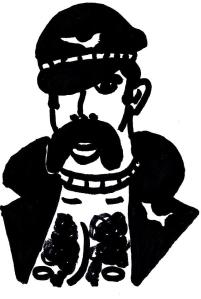
I can probably count on one hand the number of biopics that have struck me as phenomenal, formally impressive cinema. Stray examples like Ed Wood & Kinsey leap to mind as I attempt to recall biopics I’ve instantly fallen in love with, but for the most part the genre feels like an endless line of passable-but-unremarkable exercises in filmmaking tedium. Tom of Finland has joined the ranks of biopics that have transcended that mediocrity for me. Depicting the adult life of the Finnish illustrator/pornographer Touko Valio Laaksonen as he drew his way into queer culture infamy, Tom of Finland excels as a kind of filmmaking alchemy that turns an unlikely tonal mashup of Cruising & Carol into the feel-good queer drama of the year. Its high class sense of style & lyrical looseness in narrative structure feels like the best aspects of Tom Ford’s features, but without his goofy storytelling shortcomings. While its sexuality isn’t quite as transgressive as the leather daddy-inspiring art of its subject, it’s still a passionate, celebratory work that sidesteps the typical pitfalls of queer misery porn dramas, yet still manages to feel truthful, dangerous, and at times genuinely erotic. It’s hard to believe the film is half as wonderful as it is, given the visual trappings of its subject & genre, but its leather & disco lyricism lifts the spirit and defies expectation. The only disappointment I have with Tom of Finland is that most audiences don’t seem to be on its wavelength, dragging my enthusiasm down with bafflingly unenthused reviews.

Part of the reason Tom of Finland is so impressive in its transcendence of biopic tedium is that it entirely forgoes the birth-to-death trajectory of that genre’s traditional narrative structure. Glimpses of the artist as a successful older man, a reluctant young soldier, a closeted adman living with his sister, and a smitten middle age romantic who happens to generate pornography, mix in a cyclical, sublimely lit intersection of vignettes that play like sardonically funny paintings in motion. The domestic softness of Laaksonen’s home life mix with the transgressive, leather-clad brutes of masculine sexuality that define his pornographic artwork and invade his daydreams as horny, in-the-flesh hallucinations. War-related PTSD becomes inextricable from the erotic, as he fetishizes a handsome soldier he killed in battle as a young man. Orchestral sweeps find divine beauty in the danger of cruising men in public & producing illegal, sexually charged art. Tom of Finland jumps time & skims consequences, trusting its audience to follow along without being held by the hand. It’s a delicately sweet portrait of an artist that’s often interrupted by queer disco reveries & seas of hairy men posing in the leather getups that turned Laaksonen on so much that his depictions of them inspired an entire spectrum of sexual fetish. If arranged in a linear order or stripped of its playfully hallucinatory erotic fantasies, Tom of Finland could easily be the middling biopic its critical consensus reports it to be. Instead, it’s a gorgeous, dreamlike drift through the life of an artist with one of the mostly highly dedicated, specialized cult audiences imaginable.

I might understand the complaint that Tom of Finland isn’t brutish or sexy enough to fully convey the transgressive spirit of its subject’s work if it at all seemed like Laaksonen was as wildly over the top as his drawings. The tension between his mild-mannered demeanor and the over-sexed aggression of his art is one of the film’s more rewarding charms. He’s far from a sexless character, shamelessly flirting with men and discussing his work in blatantly honest terms like, “My cock is the boss. If I have a hard-on I know it’s good.” Like most people, though, Laaksonen is portrayed to be not nearly as wild as his sexual fantasies might suggest, which makes it all the more amusing when he’s delighted/dazed to see his work come to life in the “heavy leather” queer kink communities they inspired in New York City & San Francisco. The sudden deluge of this dedicated fandom hits the audience with the same jolt of surprise, its accompanying disco soundtrack feeling just as surreally out of place as the imagined sexual fantasies that intrude on the physical spaces of his daydreams. The contrast between this playfulness and the high art cinematography & production design make for one of the more exquisite biopic experiences I can ever remember having in my lifetime. Normally, I’d worry if the fact that I saw this at a New Orleans Film Fest screening made me more enthusiastic because of the excitement of the environment, but a faulty stop & start projection and a fussy late night audience was actually more of a distraction than an enhancement. Given the less than ideal screening where I watched this beautiful film, it’s a miracle I enjoyed at all, much less instantly fell in love. Now I just need to figure out exactly why so few people seem to be on the same wavelength.

-Brandon Ledet

Young and Innocent (2017)

When Gus Van Sant attempted a shot-for-shot remake of the Alfred Hitchcock proto-slasher Psycho in the late-90s, he found it frustrating that recreating exact moments from the original frame by frame zapped the magic from the horror he was staging. Early on in the process of remaking Psycho, Van Sant had to abandon the shot-for-shot gimmick to allow his actors more freedom to perform and his film more room to stand on its own. It was a smart decision, as the more interesting aspects of the 1998 Psycho were where it strayed furthest from the Hitchcock original: the vibrant colors, the in-stereo Danny Elfman score, the surrealist dream imagery that invades the various kill scenes, etc. The main problem with Van Sant’s Psycho is that it didn’t deviate further from Hitchcock, that it was precious about being blasphemous to its source material. The no-budget indie Young and Innocent plays much, much looser with the Hitchcock roadmap in its own Psycho revisionism, to the point where it even transforms the original’s genre from horror/thriller to lowkey romcom & coming of age drama. Young and Innocent obviously can’t compete with the slickness of Van Sant’s production, considering the scale of its financing, but its willingness to play around with the basic components of their shared source material instead of letting them be is much more artistically admirable & worthwhile.

Although it cribs its title from an entirely different Hitchcock thriller, Young and Innocent’s debt/homage to Psycho is apparent fairly early in its first act. A teenage girl named Marion is spurned by a summertime fling, who happens to be a counselor at her Emily Dickinson writing camp. Miffed, she makes off with the camp’s debit card and takes the first available bus out of town. If you’re not already seeing the Psycho parallels while Marion listens to imagined catty criticism of her character & her poetry on this rebellious bus ride to nowhere, they should be unignorably blatant by the time she rents a motel room from a young weirdo named Norman, who makes incessant small talk about his mother & offers her dinner in his office (this time pizza delivery instead of sandwiches). The movie keeps you guessing from there, teasing the infamous shower scene & heavily implying that Norman might just be the murderer you’d expect, but allowing Marion to live far longer than she did when she did when she was played by Vivian Leigh. A lot of the same elements from the original Psycho persist even as Marion continues to be alive, including investigations from her sister & local law enforcement. Mostly, though, Young and Innocent plays like a summertime hangout film that finds awkward comedy in an unlikely romantic spark between Norman & Marion, so it’s actually not like Psycho at all.

Young and Innocent is a little stilted by its student film production values & depends heavily on audience familiarity with Hitchcock’s original film, but it plays so loosely with Psycho’s basic DNA that it generates a tense sense of mystery & dread all of its own. More clever than outright hilarious, Young and Innocent’s awkward romantic tension is endearingly cute, while still maintaining the original film’s sense of impending doom through surrealistic violence in its dream imagery and the basic vulnerability of following a runaway teen protagonist through a series of risky decisions. It’s interesting to see how much it differs from 1998’s much higher-in-profile Psycho remake, especially in terms of tone & genre, while still capturing the spirit of certain details from Hitchcock’s original more accurately. Gideon Shil’s Norman Bates stand-in, for instance, is much more convincing as a nervous weirdo than Vince Vaughn’s estimation of the same Anthony Perkins role, despite his status as a crazed killer being much more of an open-ended question. By dwelling on Marion’s vulnerability in a world full of potentially dangerous men for a much longer stretch of time, the film also feels more revelatory of Hitchcock’s original intent than the more faithful carbon copy of Van Sant’s efforts. Young and Innocent finds endearing, quirky coming-of-age humor in a classic work that should not be able to support that light of a tone, which is a very admirable distinction for a film with its undeniably meager means.

-Brandon Ledet

Mudbound (2017)

Dee Rees’s latest feature is a perfect example of why we should mourn the death of the mid-budget Hollywood film for adults. Made for just $10 million and barely turning a profit in its sale to Netflix, Mudbound tries its best to convey an Old Hollywood epic on an “online content” scale & budget and does an admirable job of it. If it were made a few decades ago it might have had the mid-range budget needed to fully capture the literary adaptation scope of its look at race relations in the post-WWII American South (it also would almost certainly have been directed by a white man instead of a black woman, so I guess not everything is changing for the worse). Instead, Rees has to be careful about where she spends money to hit with full force even if the grand scale spectacle can’t deliver what’s promised. Mudbound is the story of two families divided by racial barriers in 1940s Mississippi, but it’s also the story of a talented director not getting the full resources needed to properly do their job in the 2010s.

Jason Mitchell (Straight Outta Compton) & Garrett Hedlund (Tron: Legacy) star as two Southern men on opposite ends of the racial divide who struggle to readjust to American life after fighting in World War II. Both soldiers suffer PTSD from the war & flirt with alcoholism to cope, but only one has to deal with what it feels like to be a second class citizen after their brief period as a war heroes, thanks to the violent racial bias of 1940s Mississippi. Their respective stories are told in the larger context of two families, one white & one black, who share the same failing farmland (with matriarchs played by Carey Mulligan & Mary J. Blige). Mudbound explores the way post-slavery servitude continued in the Jim Crow South, the tyranny of racial privilege, the weight of war atrocities on the human psyche, the routine disappointments of an old-fashioned loveless marriage, and all kinds of other issues more befitting of a novel or a movie twice its length & budget. At the foundation of this mountain of historical dramas, though, is the horrific connection made between the two ex-soldiers who shared a common traumatic past but lived in two entirely different worlds because of their race. It’s a connection that can only end in misery, a tragic inevitability the film does not shy away from when it counts most.

Mudbound is at its weakest when it’s tasked to convey a sense of grand scale scope it can’t deliver on an Online Content budget. The voiceover narration and scenes of tank & airplane warfare are where the seams of the limited budget show most egregiously. Rees still delivers a powerful punch whenever she can afford to, though, making sure that the muddy & blood details of Mudbound’s smaller moments hit with full, unforgiving impact. Both families at the heart of this story are physically & metaphorically weighed down by the oppressive terrain of 1940s Mississippi farmland. Their lives are literally sinking into the endless mud that surrounds them, inextricably molded by the violence & history of their surroundings. This becomes especially powerful in intimate moments where a flash flood nearly drowns a white man digging up an anonymous slave’s grave or where the sounds of a black man getting kicked in the ribs overpower the soundtrack with the whaps of a baseball bat driving into a punching bag. When the impact of its imagery actually matches the scope of its budget, the movie is an undeniable powerhouse.

Mudbound should have been a $30-50 million adult drama with wide theatrical distribution and a genuine Oscars push. Instead, it’s a third of its appropriate production scale and heading straight to Netflix, where it’s in danger of being promptly forgotten. Considering the resources Dee Rees was afforded to tell this historically & culturally expansive story, she did an impressive job in delivering powerful details in the small, aggressively uncomfortable moments that make the movie work better than it should. She should have never been put into that position, though, and the movie would have been so better if she were afforded the freedom of full, appropriate funding.

-Brandon Ledet