Rumours (2024)

Before things go to hell for the characters of director Guy Maddin’s Rumours, one of them suggests that they get down to the business at hand, citing that the G7 Summit “isn’t a summer camp.” You wouldn’t know that from the way that the so-called leaders of the so-called free world behave. For the most part, they behave like a group of high schoolers assigned to work together on a project and treat the summit with exactly as much gravitas as—or perhaps even less than—an after-school club. These two hooked up last year and one of them wants to get to work on their group statement while the other is still unrequited; one guy is content to sit back and let others put in all the work; another person thinks that they’re doing inspired, powerful work when in fact his contributions are meaningless flim-flam; and there’s the one little weirdo who wants everyone to like him and has cured meats in his pocket. You had one of those at your high school, too, right? 

This year, Germany is hosting the conference, under the leadership of Chancellor Hilda Ortmann (Cate Blanchett). After a few photo ops, the seven adjourn to a gazebo to work on their joint statement about the never-expounded-upon “current crisis,” but not before they stop off to take a look at—and get a photo with—an archaeological discovery on the grounds of the castle at which the conference is taking place. It’s a “bog body,” mummified remains over two thousand years old. Owing to the unique composition of the soil, the flesh remains intact while the body’s bones have completely liquefied. It’s noted that the corpse has had its genitalia chopped off and hung around its neck, and this is specifically mentioned to be a punishment that ancient peoples of the area practiced in rebellion against weak, inept, or otherwise failed leaders. We learn that U.K. P.M. Cardosa Dewindt (Nikki Amuka-Bird) slept with the supposedly charismatic Prime Minister of Canada Maxime LaPlace (Roy Dupuis) at a previous summit, although this time around, she simply wants to focus on the “work,” such as it is. Representing the U.S. is President Edison Wolcott (Charles Dance), a doddering, elderly man whose sleepiness, apathy, and exhaustion are attributes clearly mocking current White House occupying chickenshit Joe Biden. French President Sylvain Broulez (Denis Ménochet) is a vain, self-important man whose greatest desire is to be appreciated as a deep thinker by the others, while Italy’s P.M. Antonio “Tony” Lamorte (Rolando Ravello), for whom this is the first summit, finds easy acceptance among the others through his genuineness, although he comes across as naive as a result. Japanese Prime Minister Tatsuro Iwasaki (Takhiro Hira) is … also there. 

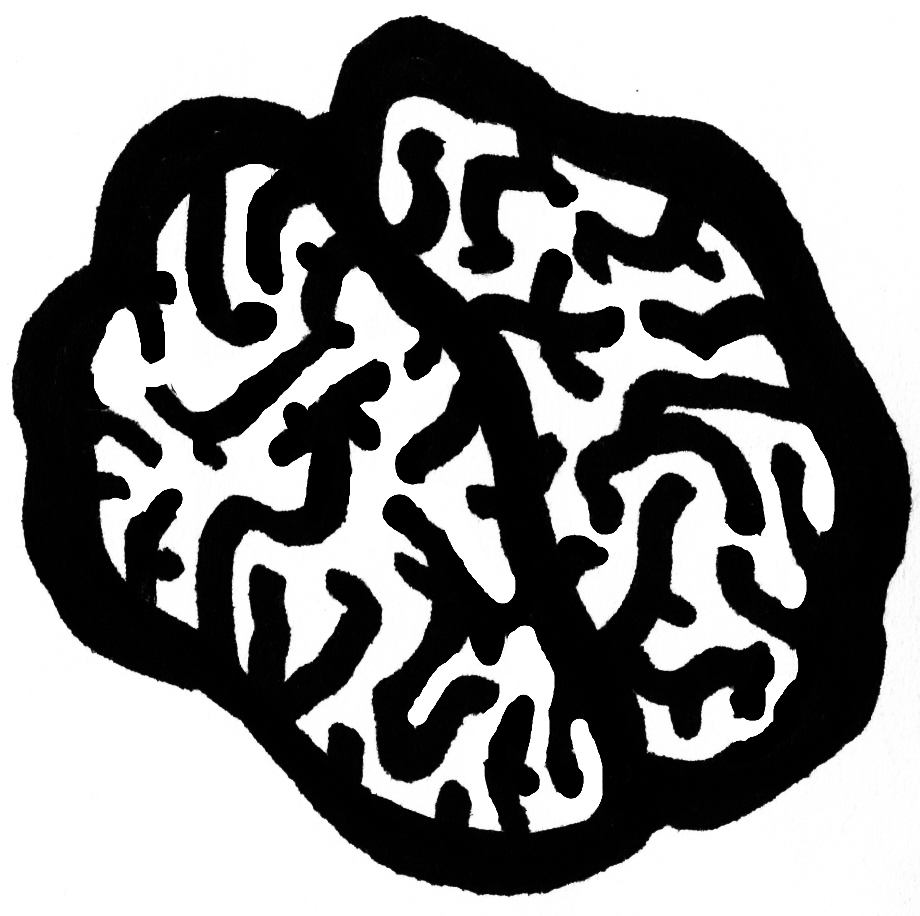
Maxime has an emotional outburst just as the gazebo dinner is finished, and the rest of the group pair off to brainstorm ideas for their statement while he stalks about the woods nearby, calming himself. President Wolcott tells P.M. Lamorte that it’s not worth working on, that no one takes these statements very seriously and that it’s fine to slack off a little, leading him to regaling the newcomer with exactly the kind of “good ol’ days” talks that geriatric politicians love to spout. Broulez and Iwasaki passionately discuss a potentially powerful opening statement, but we later learn their collaboration produced nothing but meaningless buzzwords amid wishy-washy ideology. Ortmann and Dewindt likewise make little progress, as each time one of them makes a statement that expresses any strong ideas, the other cautions for the need to walk this back so as to appear nonpartisan. Things take a turn for the worse when the regrouped seven realize that they are completely alone, and that no staff has appeared for some time. The nearby catering set-up is long vacant and the castle in which all their aides and staff should be is empty, quiet, and locked. From here, things get surreal and bizarre, as the seven try to find out what is happening and make their way back to so-called civilization despite their isolation. More bog bodies start popping up, potential pagan rites are performed and witnessed, there’s a giant brain in the woods, and an A.I. chatbot designed to entrap potential child predators may have gained sentience and decided to destroy mankind. 

If Rumours is only two things, it’s both funny … and toothless. One Gets The Point very early on, and that drum is beaten over and over again. Perhaps this obviousness is the point. After things have gotten very strange and dangerous, one of the characters comments on the potential of viewing each of the world leaders in attendance as a microcosm of their represented nation and that the events playing out before him is an allegory. Of course, this comes at a time when France is being hauled around in the woods in a wheelbarrow, revealing that the film’s Canadian director may have little respect for the boot-shaped nation. That observation doesn’t hold up, however, and this might have been a stronger film if it had gone fully allegorical and used the summit as an opportunity to play out personified international relations, but that’s not what Maddin is aiming to do. What was advertised as a satire is more of a farce. It’s funny that, upon viewing a photo of the hatchback sized brain that Maxime discovered in the woods, three of the male delegates comment that it must be a woman’s giant brain because “it’s smaller than a man’s giant brain would be,” despite this being a completely novel event. We’re meant to laugh at the inherent sexism of the patriarchy, and we do, but it has no bite to it. Characters behave like they’ve reunited for, as noted above, a summer camp getaway, with special attention being paid to everyone being sad that this is likely Maxime’s last summer at camp with them; he’s facing legal trouble for an utterly (and realistically) banal monetary scandal. Tonally, it’s like he’s being punished by his parents and not being allowed to come back next year, and the rest of the leaders treat his serious legal trouble (which is legitimately unethical) with the frivolous dismissal of the kind of low-level mischief that might cause a kid to be grounded from going to camp. 

The comedy works, but ironically, its aim is as broad and meaningless as we are meant to find the film’s characters’ lukewarm politics to be. Again, that may be the point, but that justification doesn’t move the barometer for how much I like the piece in a positive direction. When the humor works best is when it plays a little dirtier. Maxime gets a text message, supposedly from a girl named Victoria, and Dewindt tells him that he may be chatting with an A.I. chatbot that was created in order to ensnare pedophiles by messaging potential sex criminals, citing that people in their positions of power are statistically more likely to be sex pests. Hilda suggests that they play into the scenario, as if they “trip the alarm,” so to speak, the authorities will trace the phone, and they can use this to be rescued. However, on the off chance that they may be speaking with a real child in need of help, they must also play down the creep factor to avoid psychologically harming Victoria. This observation about the frequency with which power overlaps with sexual abuse is one of the only times that the film is really cutting, taking aim not just at the facile nature of empire and its pageantry but at the seductive and corrupting nature of invisibility and immunity. That this leads into a good running gag in which the group must brainstorm messages that are creepy and gross (but not too creepy and gross) seems almost indicative of the fact that if the film leaned harder into the satire and less into the farce, the jokes would land with more punch. 

This isn’t really the kind of film that you can spoil, but this film does end in an apocalypse. There’s a big stew of what might be happening: the bog bodies rise from the earth as (compulsively masturbating) reanimated undead, with the implication that there might be something primal and supernatural at work; “Victoria” may have gained sentience and masterminded a cleansing of the earth in order to start anew; the big brain in the woods and its psychic effect on those around it may be related to the latter or could be another concurrent apocalyptic scenario. It doesn’t really matter if these are connected or not, as the group makes its way back to the castle and, covering themselves in the reflective silver emergency blankets that they find in their G7 gift bags, prepare to give their joint statement. Maxime, using scissors and tape, rejects a statement that “Victoria” has created and covers it with excerpts from the various things that different characters have managed to scribble down over the course of the movie. There’s Biden’s Wolcott’s sleep-talking nonsense about “need[ing] a slip to go to the sleep tank,” dutifully transcribed by Lamorte. There’s sections from another character’s ramblings that begin with a metaphor of marriage for international relations before devolving into a revealing glimpse at an attempt to negotiate for non-sexual physical intimacy with a disengaged partner. Throughout the film, characters express reverence for previous G7 Summits and the “powerful” declarations thereof, citing passages that are perhaps pleasing to the ear but ultimately hollow. As the film ends, they stand on a balcony to make their address to an empty lawn, their blankets reflect an orange sky and distant pillars of smoke, making the mirrored surface look more like translucent plastic that contains nothing of substance. The statement is delivered with gusto but signifies nothing, their drama observed only by the undead, one of whom seems to be mocking them by masturbating over their self-congratulatory nonsense. 

The film is a decent success as a comedy, although it lacks the unusually-expressed but nonetheless palpable sentiment that makes something like My Winnipeg work. I’d call it a cynical meanness, but it’s not nearly cynical or mean enough. As a result, it’s not a success as a satire. You’ll laugh, but it’s unlikely to stick with you. 

-Mark “Boomer” Redmond

Lagniappe Podcast: My Winnipeg (2007)

For this lagniappe episode of the podcast, Boomer, Brandon, and Alli discuss Guy Maddin’s My Winnipeg (2007), a “docu-fantasia” homage to the director’s Canadian home-city Winnipeg.

00:00 Welcome

07:44 Together Together (2021)
09:50 The Dry (2021)
11:10 Flashback (2021)
14:10 Rare Beasts (2021)
16:50 The Matrix Resurrections (2021)
21:08 The French Dispatch (2021)
24:40 Spider-Man: No Way Home (2021)
25:30 Plan B (2021)
27:44 Cryptozoo (2021)
30:03 The House (2022)
32:42 Belle (2022)

36:36 My Winnipeg (2007)

You can stay up to date with our podcast through SoundCloudSpotifyiTunesStitcherTuneIn, or by following the links on this page.

– The Lagniappe Podcast Crew

Cowards Bend the Knee (2003)

In retrospect, I was being redundant when I described last year’s The Twentieth Century as feeling like “watching Guy Maddin direct an especially kinky Kids in the Hall sketch that stumbles out into feature length in a dreamlike stupor.”  That assessment still rings true, but I could’ve lightened my wordcount by just saying it felt like “watching a Guy Maddin movie”.  I’m used to seeing playful flashes of violence & vulgarity in Guy Maddin’s work, but something about Matthew Rankin’s kink-soaked debut doubled down on both in a way that really spoke to my juvenile sensibilities.  It turns out my oversight was in comparing The Twentieth Century to the statelier, well-respected Maddin of recent years, the one who’ll interject a Sparks music video about a man’s addiction to “derrieres” in the middle of his narratives but will stop short of fixing his camera on an ejaculating cactus for a minutes-long visual gag.  Guy Maddin was once a young button-pusher himself, though, something that should have been obvious to me even before I made the time to watch his own early-career kink comedy Cowards Bend the Knee.  It turns out I was just a few years too late in my Guy Maddin appreciation to catch him in his prime as a juvenile provocateur.

In Cowards Bend the Knee (or The Blue Hands), Guy Maddin reimagines (and improves!) the silent horror classic The Hands of Orlac as a kinky sex comedy about hairdressers, prostitution, abortion, hockey, and revenge.  Instead of a morally simplistic body horror about a concert pianist who becomes murderous when his hands are surgically replaced with a serial killer’s, Maddin abstracts his version in a Russian nesting doll story structure that’s long been familiar to his features.  We start with scientists examining a sperm specimen under a microscope, revealing in close-up that the sperm cells are hockey players competing on ice.  The star player is Guy Maddin as “Guy Maddin,” the team captain and son of the distinguished announcer who calls the games.  He’s pulled aside from his championship victory celebrations by a distraught girlfriend who’s just discovered she’s pregnant, which leads the couple to a hair salon & brothel that triples as an illegal backroom abortion clinic.  Maddin leaves his girlfriend mid-abortion for the madame’s beautiful daughter, who will not let him touch her body until her father’s death is avenged.  Her plan for retribution, of course, involves her father’s severed hands being surgically attached to her new lover’s body to guide his way.  Also, his old girlfriend is now a ghost who works at the salon.

Like all of Guy Maddin’s movies, Cowards Bend the Knee is deliberately aged & battered to look like an authentic curio from the earliest years of silent cinema.  Images often stutter & repeat in harsh jags as if the projector is struggling to feed the deteriorating film from reel to reel.  That antiqued image quality offers a great contrast to the shameless sexual fetishism of the film’s winding Greek tragedy plot.  Despite its title’s mention of legs, this is a film that’s fixated on the perversity of hands in particular.  From the more obvious kink acts like incest, fisting, and female-dominant wrestling to the unexpected eroticism of a haircut, the film presents the shape & use of hands as if they were the filthiest appendages on our bodies.  And maybe they are.  Maddin even accentuated the film’s sexual transgressions by premiering it as an art instillation where viewers watched each six-minute chapter as individual vignettes through key holes, as if peering into a bedroom (or a sex dungeon).  It’s all very silly and tongue-in-cheek, but it’s also surprisingly thoughtful & genuine in its presentation of sexual fetishism and the way its magnetic pull can lead you to making desperate, self-destructive decisions.

The Saddest Music in the World taught me that Guy Maddin is a goofball prankster despite his work’s formalist exterior.  Dracula: Pages from a Virgin’s Diary taught me that he’s a bit of a luddite with a loving eye for the tones & textures of German Expressionist horror.  The Forbidden Room taught me that he works best in short-form vignettes that pulls the audience deeper into exponentially smaller worlds.  All of those aspects of his work were already firmly set in stone as early as Cowards Bend the Knee, but that one still taught me something about him that made me fall even further in love with his art: he’s also a filthy pervert.

-Brandon Ledet

Episode #134 of The Swampflix Podcast: Vertigo a Go-Go

Welcome to Episode #134 of The Swampflix Podcast. For this episode, Britnee, James, Brandon, and Hanna discuss Alfred Hitchcock’s list-topping classic Vertigo (1958) and its varied homages from cheeky provocateurs Guy Maddin, Brian De Palma, and Lucio Fulci.

00:00 Welcome

02:00 Becky (2020)
03:55 Citizen Ruth (1996)
06:36 Mortal Kombat (2021)
11:20 Clockwatchers (1997)
13:56 The Mitchells vs The Machines (2021)
16:30 Psycho Goreman (2021)
17:35 Barb and Star Go to Vista Del Mar (2021)

19:28 Vertigo (1958)
43:00 Perversion Story (1969)
1:01:11 Obsession (1976)
1:17:40 The Green Fog (2017)

You can stay up to date with our podcast by subscribing on  SoundCloudSpotifyiTunesStitcherYouTube, or TuneIn.

– The Podcast Crew

Dracula: Pages from a Virgin’s Diary (2003)

EPSON MFP image

fourstar

Director Guy Maddin is a weird little cookie. Admittedly I’ve only seen a small sampling of his work, but I’ve yet to fall in love with another one of his features quite as hard as I did with his beer-themed black comedy The Saddest Music in the World. His films are always interesting, though, if a little exhausting. Last year’s The Forbidden Room was a beautiful set of interconnected, humorous vignettes that worked really well for me as isolated short films, kind of like high art sketch comedy, but were especially tiring as a full-length collection. Looking a little further into Maddin’s catalog, though, the director has plenty of full-length experiments dedicated to a single idea; his ballet horror Dracula: Pages from a Virgin’s Diary, for instance, is a much more focused & disciplined effort that matches his trademark visual aesthetic to its most logical genre structure. By fully committing to a single narrative & matching Maddin’s deliberately aged visuals to a silent horror era aesthetic, Dracula: Pages from a Virgin’s Diary proves to be a much more digestible exhibition of the director’s peculiar talents than any of his vignette-structured works. This is a film with extremely limited commercial appeal and it’s one that might take the full context of his career to fully appreciate what he’s doing with the material, but it’s just as beautiful and amusing and flippantly high brow as anything he’s ever accomplished. I love seeing him indulge a single idea at a feature’s length and Pages from a Virgin’s Diary exemplifies exactly why that kind of extended focus is ideal for his directorial style, even when the main conceit is so narrowly minded.

Pages from a Virgin’s Diary is not a ballet-themed horror so much as a horror-themed ballet. The film finds Maddin shooting a straightforward ballet production of the Dracula story in a cinematic context. Instead of hanging back to display the dancers’ full bodies & artistry, he cuts the frame in very tightly and adds silent film era intertitles to advance the plot instead of conveying story entirely through dance. The playing-to-the-back-row stage play expressiveness of the ballet works really well in tandem with Maddin’s style, though, which requires a broad physical performance to recall the vaudevillian days of early cinema. Often, Pages from a Virgin’s Diary plays like a high art horror comedy. It makes a weird joke out of the details of Dracula lore: drowning the frame in cartoonishly large piles of garlic, mirroring Love & Friendship‘s character introduction gags with details like “Eater of Bugs,” playing the bumbling hubris of men for humor (like when Van Helsing performs the most inefficient & smugly disgusted gynecological exam of all time on Dracula’s prime victim). Maddin’s sly humor is contrasted with the dead babies, decapitations, and sexual violence of the source material to make for a truly horrifying, but strikingly flippant viewing experience, one that’s sex jokes & vampire kills are made oddly delicate by its very nature as a ballet. Dracula: Pages from a Virgin’s Diary might be the kind of high faulting art film pretension that rolls eyes & changes channels at first glance, but it’s also playfully subversive in its prankster humor & genuine horror thrills, making for a very worthy entry in the director’s catalog, despite its deceptively slight premise.

Of course, as with all Guy Maddin projects, the flashiest aspect of Pages from a Virgin’s Diary is the director’s dedication to visual craft. Deliberately degraded film, tinted color changes, a screen segmented into tight parallel lines: Maddin seems to be working in a digital medium here, but his trademark throwback to ancient cinema past matches the material exceedingly well, making me desperately curious about what a high budget version of this movie would look like. The ballet aspect of the film is the only dynamic that distinguishes it from a genuine silent horror, but that aspect does feed into Maddin’s aesthetic as a traditionalist. I also had great appreciation for the way he played with the film’s pacing, speeding up comedic bits to a movie trailer tempo for greater humorous effect and slowing down certain ballet flourishes for moments of lyrical contrast. You won’t find many horror comedies this visually interesting or poetically minded, with giant pipe organs spewing green gas & perverted sex demons filling the frame between subtle gags about modesty & desire. Even if it isn’t his best film, you also won’t find a much more concise argument for Maddin’s distinct talents as a director, as he transforms traditional mediums like ballet, silent film, and Bram Stoker’s Dracula into something entirely new & oddly fresh. I’d love to dig up more of his features that are dedicated to exploring a single concept for the entirety of their runtimes. He seems like a director who has too many ideas at once and too little time or funding to follow them all at length, so I should probably be exceedingly grateful for the times such as this, when he finds inspiration to break out of his usual short film format and follow one spectacularly weird idea (say, a traditional ballet shot as a high art horror comedy) to a feature length. It’s his best self.

-Brandon Ledet

The Forbidden Room (2015)

EPSON MFP image

threehalfstar

Ever since I saw director Guy Maddin’s dark absurdist comedy The Saddest Music in the World in the mid-2000s I’ve been trying to make sense of his visual aesthetic, which is a strange form of collage that uses intentionally-degraded film & analog effects to create an ancient world of “lost”, “forgotten” cinema that probably never existed. Last week, the simple act of Netflix browsing helped me break the code. After watching animator Don Hertzfeldt’s Oscar-nominated short World of Tomorrow in close proximity with Maddin’s latest work, The Forbidden Room, I feel like I’ve finally found a point of reference for where Maddin’s coming from as an auteur. Both Maddin & Hertzfeldt seem to be operating in similar realms of visual collage, just ones separated by the live-action/animation divide. Both directors also have a propensity for mixing highbrow technical achievements with surprisingly childish (or at the very least absurdist) humor that undercuts any potential pretension. Thinking of Maddin as the live-action Hertzfeldt opened a lot of doors for me in understanding his work, as Hertzfeldt’s early works Rejected & Billy’s Balloon made a huge impact on me in my high school years & have stuck with me ever since.

Understanding a basic context or comparison point for Maddin is one thing, but trying to get a full grasp on his work in any particular sense is a much more futile exercise. The Forbidden Room is, in a lot of ways, pure Maddin aesthetic with little to no consideration given to purpose or accessibility. The film is funny, strange, visually astonishing, but purely there to amuse itself with its very existence. The Forbidden Room is High Art with a prankster’s spirit, a feast for the eyes much more interested in juvenile humor than any specific narrative. Its a story within a story within a story within a story story structure is a pure down-the-rabbit-hole adventure, a dizzying mess of dueling timelines that individually hold less & less significance as they multiply. The film opens with the instructional short “How to Take a Bath”, a how-to guide hosted by “Marv”, who might be the least mysterious man in the world. From there the camera is flushed down the bathtub drain where it finds a submarine full of men who’re sustaining their oxygen supply by consuming the air pockets in flapjacks. It gets more convoluted & silly from there. By the time you’re in a cave inside a forest inside a submarine inside a bathtub, making sense of the film’s setting or Inception-esque narrative becomes entirely superfluous, especially since the walls dividing their individual parts become increasingly thin in the film’s second hour.

The best way to enjoy The Forbidden Room is to look for solace in its visual treats & remarkably silly humor. It’s probably wise not to worry, for instance, about why the bathtub submarine men are “protecting the blasting jelly”, but rather to have a good laugh at the purple prose of the title card that introduces them as “Four frightened men forty fathoms deep, embedded in silence, hidden from God behind the face of the sea, behind the waves that sing and flirt of the face of the sea.” And that’s one of the more highbrow gags. Another title card exclaims, after the suggestion of cunnilingus, “Within the deep pink of a cave – boggling puzzlements!” Because of its frantic visuals & silent era horror weirdness, The Forbidden Room is the kind of film destined to be projected behind some anonymous stoner metal band at a dive bar or a house party, but treating the film that way would severely undercut its weirder strains of humor. It’d be a shame, for instance, to miss the treat of hearing new wave pranksters Sparks perform an ode to the wonder of derrieres (or at least a fetishist’s love of them). The film demands to be seen with full attention at least once through. There’s nothing else quite like it.

As fascinating & as funny as The Forbidden Room can be, it’s also a grand test of patience at a whopping 130 min. I feel like Hertzfeldt’s main advantage over Maddin’s in terms of accessibility is that he works almost exclusively in short films. Even Hertzfeldt’s wonderfully twisted mental illness comedy feature film It’s Such a Beautiful Day was pieced together from a series of shorter works. Maddin’s feature-length work films might be less daunting, or at least a little easier to digest, if they came in ten minute tangents, and the director indeed mostly works within a short film format, much like Hertzfeldt. Any of The Forbidden Room‘s story within a story vignettes could’ve thrived as a standalone short film & might’ve stood as tighter, more vivid pieces with that kind of runtime limitation. Still, it’s wonderful that we have a craftsman experimenting in this kind of entirely unique (to live-action cinema, anyway) dream logic & absurdist humor visual collage. Maddin is a treasure even if his feature-length films require a great deal of work on the audience’s end. He’s worth it.

-Brandon Ledet
