Sinister 2 (2015)

EPSON MFP image

three star

In the first Sinister film children were often seen, but not heard. This is because Ethan Hawke’s protagonist lived in a house crawling with ghosts of the silent, but murderous tykes and kept this most unsavory detail to himself, struggling with the kids’ fucked up pasts on his own instead of involving his family. The film took a long time to get its mythology nailed down, but by the end it established that there was a real life “Boogieman” that recruited kids to murder their parents & join him in some sort of vague, blood-soaked otherworld. Part of what made the movie work was that the details of this set-up were kept vague & mysterious, revealed one at a time to an increasingly freaked out Hawke until he himself was confronted with one of The Boogieman’s pint-sized foot soldiers. Of course, it’s difficult to keep up this air of mystery in a sequel once the beans have already been spilled & the more Sinister 2 tries to flesh out the details of its predecessor the more it makes itself out to be an amusingly goofy slice of schlock by comparison.

Taking an exact opposite approach to the first film, Sinister 2 depicts The Boogieman’s recruitment tactics from a child’s POV instead of an academic one. This is a world where The Boogieman is very real, actually in your closet, and referenced in ancient texts “across all cultures” (sometimes known as Bughuul to his friends). The first film presents the idea that The Boogieman mayhem spreads when people living in a house where a family was once murdered by one of his child sentinels move to a new place. The first film also made it seem that this was a linear progression, that The Boogieman hopped from House A to B to C without ever looking back. Well, that idea’s thrown out the window here & apparently all the old Boogieman haunts are eligible for new victims. On top of that development, he’s now also able to haunt laptops through creepy computer viruses, because why not? There was also no indication in the first film as to why little kids were filming themselves brutally murdering their own families in the first place except that super 8 video looks really cool & grainy and it drove the too-curious protagonist crazy. Here, it’s given a purpose: the kids are filming their bloody deeds as gifts to The Boogieman, a sadistic sort of sacrificial offering, an “aesthetic observance of violence”, “murders captured in art”. For a thousands year old demon who manipulates children into becoming murderers & dresses like a Industrial Goth jackass, you gotta admit that his penchant for collecting art at the very least affords The Boogieman some cool points. At least his mayhem has some sort of a purpose (although it worked perfectly well in the first film without one).

The super 8 films are, of course, the main draw of the Sinister franchise and, as I stated in my review of the 2012 original, they sort of pose the series as a kind of throwback anthology horror with an extensive narrative wraparound. Sinister 2‘s super 8s open with a bang. An especially creative ghost kid, formerly a real kid, shows off a fishing trip where he tied up his family & fed them to a gator. I’m going to repeat that. This vile little tyke fed his entire family to a fucking gator. It’s a gnarly image & although there’s some really gruesome, inventive deaths involving electrocution, crucifixion, and ancient dental tools elsewhere in the film, I feel like the gator entry really drives home the half goofy, half . . . umm, sinister vibe the film achieves on the whole. The super 8s are where the movie’s terror is most effective & otherworldly, relying heavily on a grindhouse-era sound design & some meta reflections on the nature of the horror film as an artform. It’s also where the film is most enjoyable in pure surface pleasures.

Although there’s also some thought given to the cycles of domestic abuse & how the patterns of physical violence can be learned & passed down in a family here, it’s somehow still very apparent that there’s a lighter, goofier tone at play in Sinister 2 than there was in the original. A lot of credit for that tone goes to actor James Ransone (who’s had some wonderful turns as Ziggy Sobotka on The Wire, the pimp Chester in Tangerine, and Dingy Dave in John Waters’ A Dirty Shame) for being able to balance the sillier lines of thought with the distinct horror of occult-style massacres. Partial credit for keeping the tone light also goes to Shannyn “A Knight’s Tale” Sossamon’s awful Southern drawl for helping me remember to not take the film too seriously. This balance between goofy horror movie & something more affecting is also reflected in the film’s two distinct kinds of scares: the cheap jump scares & the legitimately creepy vibes of the grainy super 8s. Sinister 2 has its cake & eats it too. It’s not nearly as tasteful or artsy as the first movie, but it sort of goofs its way into earning just as much horror movie goodwill through its lighter tone & the fact that all we really wanted to see as an audience was more of those super 8s, anyway. I mean, that kid fed his entire family to fucking gator. How cool is that?

-Brandon Ledet

Burying the Ex (2015)

EPSON MFP image

onehalfstar

Joe Dante is, without question, one of my favorite directors. Just a genuinely fun filmmaker. Where would my childhood have been without the subversively satirical live-action cartoons of Small Soldiers & Gremlins II: The New Batch? I shudder to think. As I got older, self-aware genre titles like Piranha & The Howling revealed themselves to be well within my wheelhouse and the genre-defiant fare of Explorers, The Hole, and Matinee have won my heart even as recently as last year. That’s why it hurts me so much to admit that Dante’s latest work, Burying the Ex, is such a crushing disappointment. At a mercifully short 90min, the film is a grueling test of patience, never even coming close to satisfying either the horror or the comedy side of its horror comedy genre. Worse yet, it dabbles in some light, MRA-type misogyny that suggests that Dante has transitioned from the youthful prankster role he’s filled for decades into some unbecoming grumpy curmudgeon territory. It’s truly sad to witness.

As suggested by the “burying the axe” pun from the title, Burying the Ex centers around a troubled romantic relationship that just will not end until the protagonist schlub puts his love & their differences to rest (literally). Max, played by a hoarsely bland Anton Yelchin, finds it difficult to end a longterm relationship with the beautiful Evelyn (Ashley Greene), despite their glaring, irreconcilable differences. This dilemma is complicated even more by Evelyn’s sudden death by speeding bus, which preempts Max’s final attempt to break it off. Somewhere in there is the cool nerd Olivia (Alexandra Daddario) who offers Max a glimpse into what a relationship with someone who shares his geeky interest in oldschool horror films could possibly be like. In comparison, Olivia makes Evelyn look like a megabitch. Evelyn’s violent mood swings, rampaging jealousy, disregard for Max’s monster movie memorabilia, and self-satisfied conviction that she’s saving the world through “green” blogging all make her out to be some kind of a monster, a position that’s only slightly amplified when she rises from the grave to reveal herself as Max’s crazy, undead zombie (ex)girlfriend. Olivia, on the other hand, is more or less just one of the guys.

Zombies as a metaphor for romantic relationships that just won’t die is not only a somewhat unoriginal idea, it was one that one done much better as recently as last year’s Life After Beth. However, the lack of an original concept could’ve been easily overcome if Dante’s typical zaniness had run the show instead of the faintly sexist “Aren’t women just crazy?” vibes that spoil the fun. That’s not even taking into account the nerd fantasy fulfillment that two beautiful women (undead or not) would be fighting over the protagonist Max, who is hopelessly mediocre in both looks & personality (I’ve enjoyed Yelchin elsewhere, just not here). The only part of Burying the Ex that does work is its loving references to older, better monster movies, including shout-outs to The Brain that Wouldn’t Die, Plan 9 from Outer Space, I Walked With a Zombie, Cat People, and the list goes on. When Max explains that horror films are important because they “challenge us to stop accepting the world & face our inner monster & find strength to conquer it,” you really want to find common ground with the film if not only to fulfill that admirable sentiment. However, Burying the Ex never faces its inner misogyny monster, thoroughly misidentifying the enemy as Crazy Women & Their Crazy Ways. All that’s left, then, is cheap, unfunny gags & some last second gore. Whoopee. It’s a highly undignified position for Dante to be in & I hope that this isn’t the part of a larger downward trend in quality for the director, who really should’ve known better than to make this film in the first place.

-Brandon Ledet

The Visit (2015)

EPSON MFP image

three star

The only way I can think to summarize my thoroughly conflicted feelings about The Visit is to recreate The Simpsons‘ take on the shopkeeper scene in Gremlins. The Visit had a surprisingly amusing trailer, but a lot of the best gags were included in the ad. Ooh, that’s bad. But the last half hour is a riot! That’s good. The hour leading up to it is a snooze. That’s bad. But the film ends in a plot-summarizing rap song, one of my all-time favorite movie tropes. That’s good! It’s also a found footage horror movie directed by M. Night Shyamalan . . . That’s bad. Can I go now?

Besides the automatic groans induced its by-the-numbers found footage format, part of what makes The Visit so frustrating is its annoyingly precocious leads. A fifteen year old documentarian & her younger white rapper brother eat up almost the entirety of the film’s runtime, testing my patience in every scene. The pint-sized white rapper is obviously the easier target to pick on here, especially when he’s displaying his cringe-worthy craft for the camera. He boasts to his clueless grandmother, “Do you know who Tyler the Creator is? People say I’ve got that kind of sound,” (Fuck this kid.) but the truth is that he’s a decade-late Aaron Carter at best. Thankfully, his sister calls him out on his bullshit fairly often, calling him “ethnically confused” & describing his art as “songs of misogyny” (he’s particularly fond of punctuating songs with the words “bitch” & “ho”), but the truth is she’s not much better. More arrogant poser than accomplished auteur, she’s prone to saying things like “I hate sappy movies. I find them torturous,” that remind me way too much of the asshole, know-it-all personality I’m glad (or I hope) that I left behind in my teens. It’s a fairly insufferable combo.

The good news is that they’re punished for their shortcomings . . . eventually. Hurting from an early separation from their father, the kids suffer from some crippling neuroses: the documentarian has a disgust with her own self-image and the lil’ rapper struggles both with germophobia & a tendency to freeze under pressure. In an attempt to heal old wounds in their mother’s life & to fill the familial void left by their absent father, the kids decide to document a week-long visit with their estranged grandparents. Subverting the old hat horror trope that kids are usually the creepy ones (something exploited as recently as the Sinister franchise), the grandparents’ “sundowning” & dementia make them out to be a horrific threat that gets increasingly dangerous as the week drags on. The grandparents honestly don’t say too much for the first two-thirds of the film, which is a damn shame, because they’re infinitely more interesting than their would-be victims. What starts out as warning signs like catching them naked, scratching door jams like a cat sharpening its claws & hoarding used diapers in a locked toolshed eventually escalates to A Big Showdown worthy of an 80’s slasher flick. In the movie’s last minute chaos, the kids’ debilitating nueroses are literally thrown in their faces as they’re confronted with mirrors & germ-infested feces in way that finally, finally delivers on some of the potential of a immensely promising premise.

In a lot of ways it’s the typical Shyamalan plot structure that makes the full experience of The Visit so conflicting. The tyranny of The Last Minute Twist drags the film down so hard, evoking far more boredom than tension as you wait for the hammer to finally fall. There’s a little fun to be had before the twist, like when the grandmother chases the kids through a crawl space like a wild animal only to cheerily announce “I’m making chicken pot pie!” when she catches them. Speaking of food, her constant offerings of cookies, bread pudding, cheddar biscuits, and whatever else give the film a distinct Hansel & Gretel vibe, one intentionally landed by her insistence that one of the kids climb into the oven “to clean it”. There’s also some laughable horror movie tropes, like the fact that they’re trapped in an isolated, one cop town with no Wi-Fi or cellphone reception. By the time the film finally devolves into geriatric mayhem, which includes divine moments like the lines “I have the deep darkies. You have to laugh to keep the deep darkies in a cave,” & “I see the veiny, deformed face of the world,” as well as the world’s most tense game of Yahtzee (“We picked teams! Young vs. old.”), I find myself wondering why it couldn’t have been that fun the entire time. Shyamalan’s dedication to springing a surprise on his audience in the final act is needlessly frustrating. Why not have The Twist arrive earlier in the sparsely populated runtime to make room for more senior citizen terror? Why not give the people what they want early & often?

I left my visit with The Visit firmly on the fence with how I felt about it. Although I wished more of the film was like the bonkers final half hour, that type of non-stop old folgey mayhem was already delivered decades ago in the straight-to-VHS gore fest Rabid Grannies. Although the film suffers under the Tyranny of the Twist, Shyamalan knowingly alludes to how frustrating that plot structure can be & teases possible out-there twists like underwater aliens & “the white thing with the yellow eyes” in a admirably prankish attempt to screw with audience expectations. Although I found the main characters to be unbearably dull & precocious (far beyond what I believe was intended), I also found their character arcs to be sufficiently satisfying by the film’s conclusion. It wasn’t until I was standing outside the theater, overhearing a stranger complain, “We’ll that’s two hours I’ll never get back” that my opinion instantly became slightly more positive than my initial indecision. Out of pure spite & pettiness for that offhand comment, I thought to myself “You know what? I’ve seen way worse. It was alright.” You could probably attribute half a star of my rating to that little bit of vindictive eavesdropping. Otherwise, I’d still be exactly divided on how I felt.

-Brandon Ledet

Tenebrae (1982)

EPSON MFP image

fivestar

Ironically, the more Dario Argento I consume, the more novel I find his seemingly obsessive repetition of concepts and ideas to be. When I discussed Profondo Rosso, I talked about how it represented the apotheosis of his metaphorical color pallette, a brand new story done up in the same “shades” as his other gialli but narratively perfected; Tenebrae (aka Tenebre, although this is less of a translation of the title as it is a miscommunication about promotional material from day one), released in 1982, is Argento’s first picture to be filmed in the eighties and is the definitive giallo of that decade, despite being less well known than his preceding films in that genre. Most importantly, however, this is the first time I’ve really felt that Argento had a thesis with his movie. His previous gialli ranged from good to bad, but one thing they all had in common was that they were first concerned with cinematography and mystery, with meaning and metaphor playing inconsequential roles in the overall structure. “Here’s a mystery, and it twists a lot! And everything is beautiful!” with occasional “Here’s a mystery, and there’s witches, because why not,” essentially. Here, however, Argento addresses criticism of his work and its themes as well as what he perceived to be a rise in random acts of violence in his contemporary world.

Peter Neal (Anthony Franciosa, doing his best, worst, Shatnerest Shatner) is an American thriller novelist who travels to Rome to promote his latest work, Tenebrae, a book told from the point of view of a deranged serial killer who murders those he considers sexually or socially “aberrant.” He meets with his agent, Bullmer (John Saxon, here credited as “Saxson”), and attends a meet and greet with the press, including beautiful lesbian reporter Tilde (Mirella D’Angelo), an old friend who accuses his work of being misogynistic, surprising him. Also present is Channel 1 afternoon talk show host Christiano Berti (John Steiner), who stalks about quietly. Neal then reunites with his secretary Anne (Daria Nicolodi) and meets Gianni (Christian Borromeo), an intern with his publisher who will be his driver and gopher during his time in Rome. Arriving at his temporary apartment, the three meet Detectives Giermani (Giuliano Gemma) and Altieri (Carola Stanaro). It seems that, just before Neal’s arrival, a shoplifter (Ania Pieroni, who last appeared as the beautiful Mater Lachrymarum in Inferno) who bribes her way out of an arrest with the promise of sexual favors is murdered in her apartment: Elsa was slashed, with crumpled pages torn from Tenebrae stuffed in her mouth.

Tilde and her polyamorous lover Marion (Mirella Banti) are murdered by the slasher, and Berti’s intense interest in Neal’s work makes him suspicious. His landlord’s young daughter, Maria (Lara Wendel), is also murdered, after she coincidentally makes her way to the killer’s home while fleeing from a vicious dog. His time in Rome is further complicated by the apparent sudden appearance of Neal’s disturbed ex, Jane (Veronica Lario), although his glimpses of her are so transient he can’t be certain. Giermani and Neal work together to try and figure out who the killer is. Every time you think you know who the killer is, that person ends up dead. Also, the villain has recurring nightmares about being sexually humiliated and abused by a woman in red heels, then later stabbing her to death. There are quite a few twists that all work quite well in this movie, so I won’t spoil the reveal here, but suffice it to say, this is probably the best mystery plot so far, rivalling or perhaps even surpassing Profondo rosso.

As a basic plot sketch and in some of the details, there doesn’t initially seem to be anything new on display here. The protagonist is again an artist (as seen in Four Flies on Grey Velvet, Profondo rosso, and even Suspiria and Inferno), specifically a writer (as in The Bird With the Crystal Plumage and Cat o’ Nine Tails), assisted by a lady sidekick (BCP) played by Daria Nicolodi (PR). The police initially suspect him of guilt but later enlist his assistance in the investigation (BCP, PR). A death is staged using a prop knife that squirts fake blood (FFGV), and a character learns about the killer’s fascination with taking snapshots of victims (FFGV again) by discovering a photographer’s development studio (C9T, although that was actually a crime reporter’s collection of pics of dead folks). Mirrors hold clues and significance (PR, Suspiria), and, like clockwork, a character witnesses something important but struggles to resolve its relevance (BCP, C9T, and PR, with the “struggling to effectively pair partially heard dialogue with the memory of moving lips” lifted directly from Suspiria, although this is the first time that this clue is witnessed by a secondary character and not the protagonist). The killer’s descent into madness is caused by the revisitation of an earlier trauma, recalled and brought on by dark imagery (BCP). And, of course, the film ends completely abruptly once the villain is dispatched (literally all of them, even The Five Days). Hell, Neal’s apartment even has some creepy statues from the gallery in Plumage sitting in the entryway.

The mystery plot here is very polished and precise. Detective Giermani jokes with Neal that, despite solving crime during the day, he can never figure out “whodunit” in the novels he reads, name-dropping Agatha Christie and Arthur Conan Doyle as well as, to my amusement, Ed McBain (only a movie that came out in 1982 would reference good ol’ Ed so reverently, during the height of his popularity and before he all but vanished from the public consciousness). Every time I knew who the killer was, that person was slashed or axed in the very next scene, and I never saw the twist coming. There were certain points in the film that initially irritated me, but which I realized were subtly ingenious clues after I had time to let the impact of the movie marinate in my mind for a minute. The cast is great, and it’s a lot of fun to get to see Nicolodi play against type as long-suffering, vaguely smitten survivor for once.

Although this may be one of the more overlooked Argento films, it’s also one of the most influential. Although I didn’t mention it in my review, Argento is credited with being the first director to use a high-speed camera to follow the trajectory of a bullet in Four Flies; here, Argento uses several long one-shots, including one which goes around and over Marion and Tilde’s house, said to have inspired the similar scene in The Untouchables. There’s also a scene in which Detective Giermani bends over and out of the frame, revealing the killer directly behind him and perfectly silhouetted by the lawman, and Tenebrae is generally considered to be the originator of that particular image, which has been imitated and given homage innumerable times by directors like Brian De Palma and Wes Craven. This, incidentally, ties into Argento’s recurring reflection imagery, more present here than ever before. When Giermani is introduced, he stands as a mirror image of Neal, both of them flanked by their respective partners, who are of similar build and hairstyle. Two typewriters are placed side by side as if they are twins, and Neal has two reflections: Giermani, as the real-life equivalent of Neal’s fictional avatars, and the killer, as the twisted reflection of the darker parts of Neal’s own psyche that give birth to his novels.

This reflection has been the subject of no small amount of film scholarship, as has the way that Neal’s work elicits similar criticism to that of Argento’s own (in fact, the plot was partially inspired by a series of harassing phone calls that Argento received from a fan in California who threatened to exact revenge on the director for the having caused the fan emotional distress brought on by watching Suspiria). More interesting to me is the fact that so much of the film depends upon circumstance, unplanned encounters, and apparently unmotivated violence. Doomed shoplifter Elsa is accosted and assaulted by a vagrant before she arrives home, where the killer is waiting for her. Tilde’s jealousy of her (verbally abusive) lover leads to a thrown vase and the opening salvo of a domestic dispute. Maria ends up in the home of the murderer, not because she was an intended victim, but because she was fleeing heedlessly from a tireless and aggressive pitbull (after she herself antagonized the animal out of anger that it scared her). While waiting at a bench in a plaza, a character sees a fistfight break to his right and an unrelated couple arguing violently to his left just before he himself is stabbed; his slashing goes completely unnoticed by anyone until he physically grabs a person walking past. While in reality most crime is committed by an assailant the victim knows, when this is not the case, it’s simply a matter of being in the wrong place at the wrong time, and Argento seems to be arguing that, in the eighties and the decades to follow, the wrong place was potentially anywhere and everywhere, and the clock was going to be stuck on the wrong time perpetually.

There’s a lot to recommend this movie. There are some things that are recycled from other movies that probably should not have been, and the sterile aesthetic of the film, which Argento has said was meant to be evocative of television procedurals, is a disappointment after the sumptuous visuals of Profondo rosso and especially Suspiria. Still, Argento reunites with (three quarters of) Goblin here, and the score is absolutely fantastic as a result; I can’t put my finger on it for certain, but I have the feeling that I’ve heard it sampled many times. Although not a perfect film, it’s a near-flawless giallo, and I highly recommend it.

When I went to rent this movie, I attempted to also rent Phenomena, planning to watch both and do two Argento reviews in the same week. Unfortunately, the fine folks at Vulcan Video informed me that it was already rented out, and was in fact already overdue. When I returned Tenebrae last night, whoever rented my favorite Argento still had it, meaning that I stood in the aisles of the video store for what felt like hours, trying to decide what to do. Should I skip Phenomena and go straight to Opera, and then double back later? Should I put the Argento retrospective on hold until I got my hands on Phenomena? Should I review a film by one of Argento’s contemporaries or apprentices? After much deliberation and hesitation, I decided to skip ahead to 2007 and watch The Mother of Tears, the long-delayed concluding chapter of the Three Mothers trilogy. So for those of you out there who were disappointed by how distant that conclusion was, congratulations. If you’re the witch who magically caused this chain of events to occur so I’d have to complete the trilogy faster, kudos to you, and please e-mail me; I will trade cash for hexes.

-Mark “Boomer” Redmond

Wes Craven’s Crown Jewel: New Nightmare (1994)

EPSON MFP image

Just two weeks ago, we lost a cinematic great who was often overlooked for his accomplishments as an auteur, perhaps due to his extensive work in genre films. Wes Craven may have made an occasional goofy trifle like a Shocker or a Swamp Thing, but his more accomplished films have unmistakably reshaped the horror landscape in a significant way. I don’t have much of a stomach for them myself, but his early works The Hills Have Eyes & The Last House on the Left rang out like the enraged, too-believable battle cries of a deeply disturbed mind eager to unleash its violent cravings upon the world at large. Honing in that anger for something more purposeful & universally palatable, Craven later scared the every living shit out of mainstream audiences with A Nightmare on Elm Street, which did for the simple act of falling asleep what Jaws did for nightswimming. Craven’s instantly infamous Freddy Krueger creation, brought to disturbingly vivid life by actor Robert Englund, would’ve been enough to coast on for the rest of the director’s life, but instead Craven broke out into more surreal territory with The Serpent & The Rainbow, political satire in The People Under the Stairs, and the very nature of horror as a genre in the meta franchise Scream, among other projects. Craven was an inventive fella, to put it mildly. He was enthusiastic about exploring new, strange ideas that would allow his demented id to escape from his mild-mannered exterior, scaring his audience while simultaneously challenging them in unexpectedly intellectual ways, the latter being something a lot of horror peddlers don’t bother with often enough.

My personal favorite Wes Craven film is 1994’s New Nightmare. It’s not his scariest, nor his most tightly-controlled work, but it is an incredibly smart picture that manages to bridge the gap between the dream-logic horror of A Nightmare on Elm Street with the meta genre reflection of the soon-to-come Scream franchise. Wes Craven’s New Nightmare is a perfect way to remember the filmmaker for all he accomplished, not only because it marries those two defining moments of his career in a single picture, but also because he plays a role in the film as a fictionalized version of himself. The Scream franchise introduces its meta context by having the typical bonehead slasher victims be atypically self-aware of classic horror film tropes that usually lead to violent deaths, allowing for them to make commentary on the very film that they populate (eventually with their lifeless bodies). However, thanks to the dream logic of A Nightmare on Elm Street, New Nightmare allows itself even more free rein with its meta context. The movie itself is about the making of another Freddy Kruger picture, a cursed production that blurs the lines between reality & nightmare and free will & scripted fiction to the point where it’s near impossible to tell the difference between a character being awake, getting trapped in Freddy’s playground of the subconscious, or, worse yet, living out one of Wes Craven’s screenplays.

Set on the 10th anniversary of the original Freddy Krueger picture, New Nightmare stars Heather Langenkamp, who played the protagonist Nancy in the original Nightmare on Elm Street, as Heather Langenkamp, who played the protagonist Nancy in the original Nightmare on Elm Street. As the anniversary of the film draws near, threatening phonecalls (often accompanied by Earthquakes) that impossibly seem to be from Freddy Krueger himself torment the poor actress, establishing a mood of dread very early in the picture. The strange thing is that Langenkamp is good friends with Robert Englund, her colleague who portrays Krueger in the movies. Englund, playing himself (and Freddy, of course), is portrayed as a genteel dude here, spending his days idly painting in the sun room of a mansion undoubtedly funded by the success of the Elm Street films, a far cry from the undead homicidal maniac he embodies with Freddy. As mentioned above, Wes Craven also plays himself in New Nightmare. He explains to Heather that he’s been working on a script (or a “nightmare in progress” as he calls it) for a new Elm Street picture as a means to stop Krueger from becoming “real”. According to Craven, because Freddy was killed off in the 6th installment of the franchise (Freddy’s Dead: The “Final” Nightmare), he has been set free like a genie from a bottle, now able to manifest in real life, causing real havoc. The only way to stop Freddy, Craven explains, is to make another picture, an ordeal Heather is very reluctant to suffer.

There is so much to enjoy in New Nightmare & the film really does at times feel like all of the best elements of Wes Craven’s aesthetic conveniently gathered in one package. Striking an unnerving artificiality from the get go, the whole film feels like a constant dream state, a feeling that’s only amplified as the walls between the conscious & the subconscious, as well as the walls between the movie & the movie within the movie, begin to break down into a mess of Freddy Krueger themed chaos. As for Krueger himself, he actually doesn’t appear in his full form for much of the film. He’s more of a disembodied idea than a physical threat, often appearing solely as a clawed glove & at one point literally becoming larger than life by appearing in the clouds above a freeway. Heather’s horrified reaction to Krueger’s new, true-life form & his adoring fans’ gushing at his publicity appearances call into question Craven’s own thoughts on his creations & their fandom, particularly with the rougher work of films like The Last House on the Left. Otherworldly landscapes of bedsheets & subconscious dungeons recall the POV of a child’s imagination Craven so well captured in The People Under the Stairs. Although the dream state reflections of The Serpent & The Rainbow and the original Elm Street as well as the meta reflections of the Scream movies may have been more thoroughly solidfied in his other pictures, it’s nice to see those two worlds bounce off each other in such a satisfying way here.

Wes Craven’s New Nightmare might not be his most technically accomplished film & it’s doubtful that it’ll be the one he’s most remembered for, but it holds a special place in my heart as a sum of the accomplishments of a director I grew up loving & fearing. When I heard the recent news that the incredibly gifted director had died, it was the first film I thought to revisit as a means of remembrance. It only helps that the director himself makes an appearance in the film to weigh in on the magical nature of filmmaking, directly referencing his personal compulsions to create, the often hellish compulsions that drive anyone to create, and the ways art can take on a life of its own outside its creator’s will or control. Besides being a great film as well as a reflection on the nature of horror as a genre & art as an enterprise, New Nightmare is a solid means to commemorating the accomplishments of a great director who is unfortunately no longer with us. He will undoubtedly be missed, but we’ll always have great films like New Nightmare to remember him by. Much like his creation Freddy Krueger, Craven lives on.

-Brandon Ledet

Shock ‘Em Dead (1991)

EPSON MFP image

threehalfstar

campstamp

Traci Lords has had one of the strangest careers in Hollywood. How often do you hear about a person transitioning from porn to an actual acting career? Sure, Ron Jeremy may be a household name (in certain households, anyway), but he never became a legitimate actor, and his appearances in films and on television are usually in cameos or roles that reference his fame as one of the most prodigious and well-endowed performers in the realm of “blue” movies. Recently, porn actor James Deen attempted to make the transition to mainstream(ish) cinema in director Paul Schrader’s The Canyons, a terrible erotic thriller penned by shoulda-known-better novelist Bret Easton Ellis, a movie that is only differentiated from poorly plotted direct-to-video softcore erotic thrillers of yesteryear by the presence of a nude Lindsay Lohan (and whose sole redeeming feature was three minutes of Nolan Gerard Funk in a glistening Speedo). But Traci Lords is something altogether different; after being one of the most sought-after porn actresses of the eighties, it was discovered that a great deal of her work had been made while she was underage, resulting in an infamous scandal that saw the adult film industry spending millions of dollars on recalls and withdrawals. Lords then enrolled to study legitimate method acting at the Lee Strasberg Theater Institute, before establishing herself as a legitimate actress by appearing in John Waters’ Cry-Baby in 1990, although I will always remember her as a late addition to millennial sci-fi series First Wave, having been born in 1987 and having no real frame of reference for her career before that.

That’s a bit of a long-winded introduction, but it does help explain how Traci Lords came to be in the schlocky 1991 love(?) letter to metal that is Shock ‘Em Dead (aka Rock ‘Em Dead), a horror comedy featuring some of the best examples of the worst sartorial mistakes in music history. I’m not here to pass judgement on Metal as a genre—after all, as far as devotees to a particular musical style are concerned, metalheads are some of the most aggressive, fanatical, defensive, and insular, and I’m not looking to get my head bashed in by a guy (and let’s be clear, it would be a guy) who has willingly and purposefully refused to listen to anything that came out after the demise of Vinnie Vincent Invasion. Metal fandom is a mostly misogynistic miasma of guttural throats, thrashing, and toxic masculinity, devoted to a musical subculture that was most successful during a decade where everyone was coked out of their fucking minds, but it’s also the genre that features some of the most amazing and mindboggling musical feats ever performed on guitar, and that fact is not lost on me. Still, even the most devoted headbanger has to admit that the metal of the 1980s was performed by talented dudes who all dressed like they had wandered away from the saddest gay pride parade in the history of Marion, Iowa—all jeweltone lycra and neon jungle prints. It was a time of great musicianship, but at what cost?

Shock comes to us from 1991 as the directorial effort of Mark Freed, cofounder of StarLicks, a video production company that released instructional musical videos in which notable musicians detailed their personal stylings, which amateurs and interested parties could learn to imitate or build upon. According to the cover of the VHS tape (and the cast list on Wikipedia), the film stars Traci Lords and only Traci Lords, but this is not the case; the main character is villain protagonist “Angel” Martin, a “hideous,” mouth-breathing “young” nerd turned guitar god played by handsome, almost-40 Stephen Quadros, and the protagonist of the movie is actually uberbabe Greg Austin (Tim Moffett), boyfriends of Lords’s Lindsay. Aldo Ray and Troy Donahue, both in the twilight of their careers, make appearances as well, unfortunately, and Michael Angelo Batio makes a brief appearance as the Lord of Darkness playing a double-headed guitar as well as acting as hand double whenever the script calls for Angel to do something stunning.

Marty (Quadros) is a nobody, a terrible person going nowhere in life. He lives in a trailer park, where his shitty and never-improving guitar practicing is the bane of his landlord (Yankee Sulivan)’s life. His boss at a nondescript pizza eatery, Tony (Ray), is a verbally abusive micromanager, but Marty is also lousy at his job, licking his fingers before spreading cheese and spying on his nude female co-worker through a locker room peephole. Across town, metal band Spastique Kolon, fronted by Johnny (Markus Grupa), is having trouble finding a decent guitar player at an audition. Johnny’s getting impatient, because there’s a “big showcase” in just two days, and they have to have a guitar player by then! And, as we all know, most bands form and sign up for showcases before they have a guitar player. The band’s manager is Lindsay Roberts (Lords), girlfriend of Greg Austin (Moffett); she thinks it might be time for him to hang up his bass and take a job working construction for her dad in some backwater. Greg’s understandably not thrilled about that potential future, but he goes on a douchey ramble about how he knows he’s going to be somebody and he has the talent and “believe in me, baby,” etc. Johnny asks some random guy who happens to be there (I can’t figure out the character or actor, as less than a third of the people in this movie have photos on their sparse IMDb pages) if he knows any guitarists, and he mentions that his dad is always complaining about a guy living in the trailer park that he manages.

After getting the phone call from Random Guy, Marty ditches work and is fired by Tony. He auditions, performs terribly, and is laughed out of the studio. When Tony refuses to take Marty back and the trailer park manager evicts him from the property, effective at sundown, Marty is approached by the neighborhood “Voodoo Woman” (Tyger Sodipe), who offers him his heart’s desire in exchange for his soul. He agrees, and wishes to be the most technically proficient and famous guitar player in the world. She does some magic with an athame and potion and stabs him in the chest, leading to a dream sequence featuring zombies and the King of Hell himself, and when he wakes up, he’s got an over-sprayed mane of jet black hair, cowhide bedding, a boringly suburban McMansion, and a closet full of black leather vests, pants, and strategically ripped cotton shirts. He’s also got a “family” of hot ladies to tend to his every whim, and they are by far the best thing about this movie. Every single one of them has more character and understandable motivation than Marty, and they also have some of the best lines.

All three also sold their souls for something, with a price (other than being Marty’s reward, that is). Michelle (Karen Russell) was born disfigured and Marilyn (Gina Parks) was scarred in a horrible fire; they see their mangled visages in every mirror, and others can see them when reflected in silver. Monique (Laurel Wiley) had cancer, and she went to the Voodoo Woman for a cure, but the Voodoo Woman took her life immediately and turned her into a ghoul (as she has done to Marty), forcing her to kill and feed upon the green life forces of victims to stay alive, as normal food is toxic. Marty auditions for the band again and, naturally, gets a spot, ultimately pushing Johnny out of the band and getting Spastique Kolon a record deal, all while murdering his former tormentors and innocent groupies alike to feast on their souls. He becomes obsessed with the idea of possessing Lindsay and making her a part of his harem, which involves a Voodoo baptism ritual, but her love for Greg and Greg’s possessiveness of love for her ultimately saves the day. So, yeah, metal music + misremembered elements of Dracula + wish fulfillment for proto-MRA dorks = Shock ‘Em Dead.

This is a fun little movie, although it could have been much funnier if there had been more focus on some of the likable (if evil) supporting characters and less on the rechristened Angel Martin, guitar superstar. Lords’s character, who exists almost entirely for no other reason than to be a living McGuffin for Martin and Greg to fight over, would seem like more of an afterthought than a character in a better movie, but she and the demon girlfriends are the most interesting characters here, with backstories and desires that make sense, especially when compared to Marty’s motivations. I can’t tell if that’s part of the joke or not, but I tend to lean towards “not,” if only because Marty is too much like a real metalhead, with delusions of sex and guitar godhood in spite of reality, and this seems to be more of a spoof than a satire of that mindset. The two major songs performed by Spastique Kolon in this movie are “I’m a Virgin Girl” and “I’m in Love with a Slut,” which is pretty much a textbook case of the Madonna/Whore Complex, and I just can’t force myself to conceptualize the creators of this movie as deserving credit for that level of self-awareness. At the end of the day, that subculture and that era were dominated by socially irresponsible sexism and misogyny, and that comes across more clearly and overtly in this movie than anything else, if for no other mitigating factor than the number of undulating breasts displayed throughout. Still, it got a decent number of laughs from me, and it’s definitely worth watching on a rainy afternoon.

-Mark “Boomer” Redmond

Sinister (2012)

EPSON MFP image

three star

Horror is one of those genres where you honestly don’t have to try too, too hard to succeed. Yes, it’s of course preferable that any film would stand out as a unique property that breaks all expectations of its context & genre, but it’s never that big of a deal when a horror film shrugs off that kind of ambition. With its own set-in-stone tropes & built-in audience, horror allows a lot of breathing room for films to just sort of coast on the long line of work that came before them. Innovation isn’t entirely necessary for each individual horror picture as long as they deliver a few basic elements: suspense, some good scares, maybe a memorably creepy creature or two, etc. As long as they play by the rules, all a passably decent horror film really needs to do is not drop the ball. In a lot of ways, Sinister is such a film.

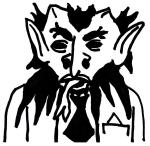
There’s nothing really too special about Sinister. Ethan Hawke plays a “true crime” journalist who moves into the house of a slaughtered family in order to research his new book, some kind of In Cold Blood derivative. Of course, the house is haunted. Of course, the project drives him mad. Of course, there’s a Boogieman-type demon helming the entire horrid affair. Well, the film actually takes that last part quite literally. Known to historians as Bughuul & to possessed, homicidal little demon children as “Mr. Boogie”, The Boogieman is a real character in the film, orchestrating all of the haunted goings on from the protective distance of some super 8 films mysteriously discovered in Hawke’s attic. It’s curious that, since he exists largely in the imaginations & drawings of little children, Mr. Boogie isn’t represented here as I would’ve drawn him in my youth (a man-sized booger in a trenchcoat) but instead appears as some sort of Industrial Goth enthusiast in corpse paint. No matter. Despite Bughuul’s prominence in Sinister‘s mythology, he’s entirely nonverbal and doesn’t do much besides makes some guest cameos in the haunted super 8 films to look all goth-like & mean. The children under his spell do most of the heavy lifting & are much more effective at producing some great onscreen scares.

The haunted super 8 films that drive Ethan Hawke’s true crime journalist mad depict The Boogie Man’s child army calmly, methodically executing their respective families for the benefit of home video in a variety of unsavory ways: drownings, fires, lawn mowers, etc. These films are where Sinister excels most as a unique property, almost functioning as an old-fashioned horror anthology. There’s a lot of visual care that goes into depicting the projection equipment that screens the films and in other minute details (such as throats being slit in the reflection of Hawke’s glasses as we’re watching him watch a projection) that’s otherwise missing from the film’s more run-of-the-mill haunted house & creepy children formula. During these screenings the film’s sound design also takes on a special importance (including a kickass soundtrack) , reaching for some deeply unnerving vibes that can’t be accomplished simply through gore makeup & jump scares. Sinister may take a while to build up its own mythology & its central Nine Inch Nails Superfan villain may be a little underwhelming, but its haunted films concept is satisfying enough to make for a decent horror picture once the ball is finally rolling. Besides, creepy, murderous children are always an easy sell for fans of the genre, which allows the film to more or less coast.

-Brandon Ledet

Inferno (1980)

EPSON MFP image

threehalfstar

After the surprising international success of Suspiria, Twentieth Century Fox offered to help co-fund Argento’s next project, a sequel of sorts to that film titled Inferno. The conceit of Inferno (and, later, Mother of Tears) is that Helena Markos, aka Mater Suspiriorum (“The Mother of Sighs”), the villian of Suspiria, was only one of a trinity of powerful witches. According to the supporting materials, these witches use their great power to manipulate events “on a global scale.” I place those words in quotation marks because, although they appear frequently in the Argento apocrypha, neither of these stories feels global; Suspiria was a relatively confined story, as most haunted house plots are, and Inferno, despite featuring a narrative that takes place in both New York and Rome, also fails to feel like it takes place on a significantly larger scale. This isn’t meant to disparage either film, necessarily, but it does imply that Argento was shooting for something here that he doesn’t quite pull off.

Suspiria took its name from the title of an unfinished work, Suspiria de Profundis, by Thomas de Quincey, best known as the author of Confessions of an Opium Eater. Although the book was never completed, the section entitled “Levana and Our Ladies of Sorrow” was, and its concept, that there are three Sorrows just as there are three Fates and three Graces, was the initial inspiration for Suspiria, although you wouldn’t know that simply from watching the movie. After all, Suspiria was a largely self-contained story, with nothing to imply that Markos was one of these three Sorrows, or that her power reached far beyond Freiberg, or that her influence did not begin and end with her coven. Even if this was always intended to be the case, an audience who is not familiar with this idea can’t help but feel that Inferno is attempting to graft new plot elements onto Suspiria retroactively, in a way that cheapens the earlier film’s nigh-perfection; Inferno feels like a cheat and a knock-off at the same time.

The film opens with Rose Elliot (Irene Miracle, who was hired for her ability to hold her breath for a long time—no kidding), a poet living in the most baroquely Old World apartment building in New York. She reads in a book titled The Three Mothers that there are three evil sisters who rule the world with tears, sorrow, and darkness, and that the book’s author, an architect and alchemist named Varelli, was hired by the sisters to build a home for each one: in Freiberg, Rome, and New York. Rose has become obsessed with the idea that the building she lives in was one such home, based on clues left in the book. She writes a letter to her brother Mark (Leigh McCloskey), a musicology student living in Rome, asking him to visit her. Mark is distracted by a beautiful woman (Anna Pieroni) in his classroom who is mouthing words at him* and loses the letter, which is collected and read by his friend Sara (Eleonora Giorgi).

After reading the letter, Sara tracks down a copy of the book but is attacked by a strange figure who recognizes the tome. Sara narrowly escapes this person and returns to her apartment building, where she asks her neighbor Carlo (Gabriele Lavia, who previously appeared in Profondo rosso as Carlo, although they cannot possibly be the same character) to stay with her while her nerves settle, only for both of them to be murdered by an unseen figure. Mark arrives at her apartment and finds their bodies, before seeing the same woman from his class leaving the area in a taxi. He calls Rose, who begs him to come to New York before she is murdered herself.

Mark arrives in New York and meets the building’s caretaker Carol (Alida Valli, previously Miss Tanner in Suspiria), elderly and infirm tenant Professor Arnold (Feodor Chaliapin Jr), Arnold’s nurse (Veronica Lazar), Rose’s rich but sickly friend and fellow tenant Elise van Adler (Daria Nicolodi, Gianna Brezzi in Profondo rosso and Argento’s wife and writing partner at the time), van Adler’s creepy butler (Leopoldo Mastelloni), and neighboring antiques dealer Kazanian (Sacha PitoËff), who sold Rose The Three Mothers in the first place. Each of these people come to a tragic end, save for the nurse, who turns out to be Mater Tenebrarum, Our Lady of Darkness, as revealed to Mark by Professor Arnold, who is actually the ancient Varelli. The apartment building burns to the ground (accidentally, which says more about the nonsensical nature of this plot and the irrelevance of all intentional character action than I ever could), and Mark escapes while Tenebrarum seems to be crushed by falling rubble.

Inferno is… not a very good movie. It has too many good moments in it to be a bad movie, but the overall structure leaves much to be desired and the experimental approach to narrative is rather frustrating. Like Suspiria, Inferno has an intentionally dreamlike ambience, but lacks the former’s vivid color and narrative intensity and is (somehow) an overall less coherent movie, despite the fact that there are parts of Inferno that are superior. Inferno feels like a series of vignettes, each one designed to exploit a particular fear; devoid of context, they are actually scarier, creepier, or more unsettling than analogous scenes in Suspiria, save for the fact that each one goes on just long enough that the impact is diminished, and that they are held together with a narrative so flimsy that it ultimately does a disservice to the dark imagery and mood contained within itself. Argento’s decision to forsake the previous film’s focus on witchcraft for an investigation of alchemy is ironic, given that even he could not turn the disparate, good parts of this film into a cohesive whole.

The score, composed by Keith Emerson, is particularly awful, especially when compared to Argento’s collaborations with Goblin; it features terrible rock organ music paired with Omen-esque Latin chanting, and the result is far too silly to be effectively unsettling. The sets, some of which were designed by the great Mario Bava himself, are fantastic, however. As for other elements that are effective, Rose’s underwater scene near the start of the film is a particular highlight, as is every scene with Nicolodi (who contributed to the story for this film as she had for Suspiria, but she had to fight so hard for her on-screen credit in that film that she decided not to bother to do the same here). The death of Sara and Carlo is extremely well done, as the record Sara is playing cuts in and out along with the lights as the electricity flickers. The scene in which Kazanian attempts to drown a bag of cats (evil cats which do the bidding of Tenebrarum, it should be pointed out, although it is still horrifying) only to be eaten by hundreds of rats is also well-done despite the scene’s inexplicable conclusion. If anything, “inexplicable” is the watchword here, as much of the narrative is clunky and scenes fail to flow organically from one to the next.

This is perhaps best evinced in Rome: Sara, inspired by Rose’s letter, goes to an unidentified building for some reason. There, in a library, she finds the copy of The Three Mothers, and then descends into the building’s basement for some reason, rather than checking the book out or coming back the next day. She somehow finds a room where, like, potions are being made, and she tries to communicate with the misshapen person tending the pots for some reason. Apparently she knew that this library would be the place to find this book, and that this library was also (maybe) the home of the third sister, somehow? It’s creepy and effectively unnerving, but it doesn’t hold up to even the most passive narrative scrutiny, which is the best description of the film as a whole as well. There are elements here that work very well, but this is more of a clip show of ideas Argento couldn’t put anywhere else than a movie. If you do choose to check it out, make sure to rent/buy the Blue Underground DVD release, which features Italian audio and English subtitles, as well as interviews with Argento, Miracle, and assistant director Lamberto Bava, son of Mario.

*I can’t decide if this is an effective misdirection or the vestigial remnant of a cut subplot. If you know how Argento works, this first seems like one of his giallo trademarks–the misunderstood early clue that is later explained, much like the unheard words said by Pat at the beginning of Suspiria. Even if you’ve never seen an Argento movie before, the focus on and attention paid to these unheard words seems like a clue. Regardless, nothing ever comes of it, and this character does not reappear after Mark leaves Rome, although it can be inferred that she might be Mater Lachrymarum. We’ve got nearly three decades of Argento movies to get through before we reach Mother of Tears, though, so I wouldn’t expect an answer soon.

-Mark “Boomer” Redmond

Suspiria (1977)

EPSON MFP image

fivestar

I first became aware of Dario Argento during my freshman year of college. At the time, television channel Bravo was still transitioning from the arts-oriented channel that it was when it was first incepted into the reality-TV landfill that it is now; I was visiting home and caught the re-airing of their 2004 miniseries 100 Scariest Movie Moments. It’s a smart list, even if the ascending algorithm of fright is contentious (I adore Nightmare on Elm Street, but scarier than Jacob’s Ladder or Rosemary’s Baby? Please.), and it was from that list that I learned the name “Suspiria.” It ranked relatively high, coming in at number 24, and was the second-highest rated non-domestic feature on the roster (Japan’s Audition claimed the number 11 spot), which also included thrillers like Deliverance and Night of the Hunter, films that wouldn’t normally fall under the banner of “horror” per se.

Thus, I didn’t begin my journey into the Dario Argento oeuvre with his earliest work, I started with Suspiria. In fact, before beginning this project, I had not seen Argento’s films that preceded this, his most well-known picture. I Netflix’d the DVD of Crystal Plumage sometime in 2008, but never got around to watching it before sending it back, a casualty in my mad, gluttonous rush to consume every episode of Veronica Mars. The other films of his that I did uncover and watch, like Phenomena and Opera, all came from the middle of his career, after he had forsaken pure giallo and before he moved on to making the mediocre miscellanea of his later career. And, at the risk of sounding cliche, Suspiria was a revelation to me then and a revelation to me now.

The story follows young American ballet student Suzy Bannion (Jessica Harper), who has been accepted to a prestigious dance academy in the Black Forest of Germany. She arrives during a torrential downpour, and makes her way to the school just in time to see another young student flee into the woods, screaming about secrets. This same young woman is later murdered, brutally, and the friend with whom she took refuge is also killed. The following morning, Suzy meets school’s vice-directress, Madame Blanc (Joan Bennett in her final film role), and dance instructor Miss Tanner (Alida Valli), who appear to be strict but matronly. She also befriends Sarah (Stefania Casini), who was friends with the murdered girl and continues her investigation into the strange goings-on about the academy. Strange events begin to happen: Sarah experiences an unusual fainting spell that forces her to relocate to the school’s dormitories from an off-campus apartment, maggots rain from the ceiling after having infiltrated “spoiled food” being kept in the attic, and disoriented bats fly into open windows while faithful service dogs turn on their owners. It’s hard to describe the film’s plot without it sounding like a standard haunted house movie, but it’s so, so much more than that.

What is a movie? Or, perhaps a better question, what should a movie be? In the West, we have been trained to have certain expectations of films, to be receptive to a particular cinematic style with a mostly-linear structure, to recognize certain constants and feel secure in them. As a comparison, think about how you were first introduced to poetry as a student: poems were words arranged in a particular pattern, with meter and rhyme. You were likely given something palatable to read, something not too dissimilar from nursery rhymes, with an easily-identifiable structure. Then, you were introduced to something completely different, something that wasn’t recognizable as a “poem” within the limited context that you were taught. Films are much the same, as studios make the majority of their money from regurgitating the same kind of mediocre pablum over and over again across all genres: Meg Ryan is a relatable career-oriented everywoman who doesn’t realize that there’s something missing from her life, every superhero has to learn the hard way that with great power blah blah (I won’t even bother finishing that thought because you’re already ahead of me), and every generation has a raunchy sex comedy to mislead them about the birds and the bees. But sometimes, a movie comes along that doesn’t just repeat the same ABAB CDCD EE rhyme scheme of other movies you’ve seen before. Auteurs earn their credibility by taking the same things we’ve seen over and over again and tearing them to pieces, or forsaking them altogether, or using them in a transcendent way by playing with or manipulating audience expectation.

All this is a roundabout way of saying that movies which forego some element of cinema in order to exalt another aspect of film can be a worthwhile endeavor, and that putting narrative consistency on the backburner in order to focus on aesthetics or mood doesn’t necessarily make a film less successful than the median anymore than ee cummings was a lesser poet than Robert Browning. Suspiria is a movie that does just this, by honing in on atmosphere and tone rather than plot, and the film is well-served by this attention to detail. That’s not to say that the plot is irrelevant (this isn’t The Five Days, after all), but color and immersion are much more important here than they are in a lot of other films from the same period (or today). Contemporary critics took issue with the film’s plot structure, apparently failing to realize that Suspiria is intentionally dreamlike, influenced by fairy tales and nightmares more than monomyth. Even the opening narration, which others consider to be out of place and somewhat silly, contributes to the film by acting as a kind of horror-tinged “once upon a time.”

Daria Nicolodi, who has a co-writer credit on the film, stated that she based her contribution on stories her grandmother had told her as a child, like the misadventures of Lewis Carroll’s Alice and, supposedly, the elder woman’s discovery that the faculty of a school she attended was secretly into occultism. Argento has claimed that this story is false, but I prefer her whimsical lie to his pragmatic honesty, as it’s a fun and intriguing fiction that’s better than the truth; that’s one of the things art is for, in my opinion. Argento has also said that he initially wanted the film to star adolescents, but that this was quickly nixed (watch that first murder scene and imagine that the victim is twelve years old, and you can see why this change was necessary); to maintain that viewpoint, the set was designed with all doorknobs at eye level so that the subconscious recognizes the actors as being smaller and more childlike. This kind of set detail, along with the omnipresence of bright, vivid colors, contributes to the film’s overall surreal ambiance. It’s a movie that’s experienced and felt more than it is one which is interpreted, and it’s all the better for it.

This is perhaps best encapsulated by the experience of the main character, Suzy. Suzy spends a great deal of her screentime being sedated each night while the heavy-lifting of the mystery is largely performed by others around her. Pat, the girl who flees the school in the opening, kept notes about the faculty’s suspicious behavior and practices; Sarah listens to the steps being taken by the teachers at night and records them so Suzy can use this information to discover the coven later; Suzy’s disappearance leads Sarah to Dr. Mendel (Udo Kier, of all people), who introduces her to exposition-laden Professor Milius (Rudolf Schundler). Suzy is a character who is acted upon more often than she is one who has agency, but isn’t that so often the case with dreams? In another movie, this would be a detraction, but here it’s actually a feature. If you haven’t seen this movie already, what are you doing here? Stop whatever you’re doing and go watch it, right now.

Additional notes:

  • I can’t believe I didn’t address this above, but this was prog-rock band Goblin’s second time collaborating with Argento, and the movie’s score is absolutely phenomenal. Anchor Bay’s DVD release of Suspiria includes a copy of the soundtrack, which has long been out of print but must be heard. It’s like the apotheosis of what a horror film score should be, at once delicate and disquieting, unsettling but eerily beautiful and vaguely mystical. Halloween’s may be the best-known horror score, but Suspiria‘s is technically and thematically superior and one of the best scores of all time.
  • When I first saw this movie, I had never seen any previous Argento films, so I didn’t know what his recurring motifs were. Although this is not a giallo film in the strictest sense of the word (obviously, the “mystery” here is much less important than visuals and mood), his trope of a character witnessing something at the beginning of the film that they struggle to comprehend is present here. As in Deep Red, a mirror holds an important clue and plays a key role in the resolution of an investigation. Most amusing to me, however, was the fact that Suzy’s ultimate defeat of the evil coven queen requires her to use a crystal-handed dagger that is part of a sculpture of a peacock, presumably the same genus as titular Bird with the Crystal Plumage.
  • He doesn’t factor into the film all that much, but Suzy’s love interest Mark (Miguel Bosé) is a total babe. Yowza.
  • A minor quibble: Why do the witches even care to bring Suzy into the school in the first place? In a more standard Hollywood film, they would probably be looking to use her in some way (see: Rosemary’s Baby) or convince her to join the coven, but there’s no real reason given or explored here, further adding to the dreamlike atmosphere. We never get an answer, but if this frustrates you, you may be missing the point.

-Mark “Boomer” Redmond

Pet Sematary (1989)

EPSON MFP image

twostar

(Viewed 9/2/2015, available on Netflix)

I hate to come down so harshly on a movie screen-written by Stephen King as an adaptation of his own book. It’s possible that I’m coming at it from a bad perspective, like attempting to watch 2001: A Space Odyssey after seeing all of the derivative works. Maybe after years of fast-cut digital movies, I don’t have the attention span to appreciate the pacing. Maybe having read the book first, I’ve ruined my shot at enjoying the movie.

Honestly, I just don’t think it’s a very good movie, following the general trend of Stephen King films. Pet Sematary comes with enough elements to make it truly terrifying, but it never quite gets off the ground. There’s a beautiful young family whose perfect life goes terribly wrong in a perfectly real-world way. Ancient, evil Powers Beyond Human Comprehension bring back the beloved, but brings them back . . . wrong. A rational man of science is driven to acts of madness. A possessed child kills everything in sight. Gory special effects are, well, effectively gory. All of these things should come together to take the viewer on a creepy descent into madness and metaphysical uncertainty. It just never gets there. The characters just sort of wander through the movie.

I truly enjoyed Fred Gwynne’s performance as the old Mainer Jud, which is no surprise because I loved him as Herman Munster. He’s easily the best and most believable actor in the movie, and I would have loved to have seen more of his relationships with the other characters.

I can recommend Pet Sematary to anyone merely looking for a Stephen King film or anyone interested in the Fred Gwynne’s post Munsters work. However, I wouldn’t recommend it for most viewers, simply because it’s not very good, and not bad enough to enjoy.

-Erin Kinchen