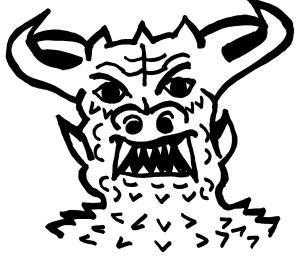
Daikaijû Gamera (1965)

EPSON MFP image

fourstar

campstamp

I’m far from an expert in kaiju cinema, but recently catching a couple outliers in the genre, Reptilicus & Pulgasari, has sparked my interest a great deal. I’ve sen a good number of films that feature Godzilla & King Kong, who seem to be the top brass of kaiju fare, but there are so many other giant monsters of creature feature past that I’m missing out on between those borders. You can’t only listen to The Beatles & The Stones and claim to know the totality of rock n’ roll, right? As many times I’ve seen drawings or action figures of kaiju like Gamera, Mothra, and Mechagodzilla, I don’t think I’ve ever given their originating films a solid, up-close look, which feels like a blind spot in my horror/sci-fi film education.

Daikaijû Gamera (literally translated Giant Monster Gamera and re-cut & released in the US as Gamera: The Invincible) doesn’t do much to buck the idea that once you’ve seen one kaiju film you’ve seen them all. It plays remarkably like the original Godzilla film (which was then a decade old) in terms of tone, production, and plot. The most crucial difference between the two works, of course, is the design of their titular monsters. Yes, Daikaijû Gamera is essentially a too-soon remake of Godzilla, but it’s a Godzilla remake that features a gigantic, fire-breathing turtle that can turn its shell into a flying saucer. I don’t think I need to explain any more than that to get the film’s basic appeal across. It’s a concept that pretty much sells itself.

Illegal Cold War nuclear activity in the Arctic frees an ancient beast known a The Devil’s Envoy, Gamera. Yes, The Devil’s right hand demon is a gigantic, fire-breathing turtle that once plagued the lost continent of Atlantis (according to the Eskimo tribes that witness his rebirth, at least). Scientists expect that the nuclear fallout that freed Gamera from his icy prison will be the creature’s very undoing. That is not the case. Gamera not only breathes fire. He inhales it. All weaponry, industry and nuclear destruction thrown in his path only make him stronger. Nations must put aside their potential World War III tensions to peacefully plan Gamera’s undoing, calling into question the way the unnatural power of nuclear war can loosen & anger forces of Nature like typhoons, dead aquatic life epidemics, and fire-breathing turtles the size of mountains. At one point an observer asks, “Something must really be wrong with Earth, huh?” The answer is a resounding yes and a lot of anxieties about the destructive nature of modern life is clearly on display here in the guise of giant monster mayhem.

Although Daikaijû Gamera is a direct echo of Godzilla & in many ways feels like a standard issue kaiju flick (on the sillier side of the genre), it also did a lot to establish that standard in the first place. There’s a brief scene involving a beatnik surf rock band & a major storyline about a little boy obsessed with turtles (and turtleneck sweaters, apparently) that telegraph a lot of the winking camp tone in kaiju films to come. At this stage of kaiju cinema the monsters are supposed to be majestic & terrifying, but Giant Monster Gamera hints at a future world where they function as heroes of children & monsters with a sense of humor. Godzilla may be the most looming influence over the entire spectrum of kaiju as a monster movie subgenre, but Gamera‘s impact is a lot more readily recognizable in the DNA of the genre’s goofy, 70s future in titles like (my personal favorite) Godzilla vs The Smog Monster.

Again, though, there’s really no need to sell Giant Monster Gamera as an innovator or a historical landmark to make its genre thrills feel worthwhile. You can get its basic plot in any number of 1960s kaiju movies, but where else are you going to get a giant, fire-breathing turtle that occasionally functions as a flying saucer (besides its eleven sequels)? This is a genre that survives on the strength and/or novelty of its monsters & Giant Monster Gamera did not disappoint on that end, not one  bit.

-Brandon Ledet

The Phantom Carriage (1921)

EPSON MFP image

fourhalfstar

Have you ever completely forgotten that you’ve seen a film before until you’re in the middle of watching it? I ran across a couple posts recently that compared Stanely Kubrick’s masterful horror landmark The Shining to a 1920s Swedish film named The Phantom Carriage. There was one .gif in particular that mirrored the two works’ infamous axe scenes that really caught my attention while scrolling through Tumblr posts. I made a point to bump the Criterion-restored version of The Phantom Carriage to the top of my Hulu queue only to discover about five minutes into the film that I had seen it once before, years & years ago, and already really enjoyed it.

tumblr_o3bxmi2bmh1qfifrno1_400

A silent film that combines horror & dramatic tragedy, The Phantom Carriage tells a similar story as works like It’s a Wonderful Life & A Christmas Carol with an intense focus on the supernatural aspect of that framework. In the movie’s mythology whoever dies last on the last day of the year must drive Death’s carriage for a full year. Each day feels like 100 years as the titular phantom carriage’s driver makes their rounds like a mail room clerk, collecting souls from the recently deceased on Death’s behalf. The horse & carriage are always the same, but the driver is different each year, almost like a morbid version of the Tim Allen comedy The Santa Clause.

On this particular New Year’s Eve the newest phantom carriage driver-elect is one David Holm, a boozy sinner who’s spent most of his life abusing anyone who dares to love him. Before David’s (literally) given the reins, however, he’s forced to take a remorseful journey through his own past, bearing witness to each horrifically shitty thing he’s done to his fellow man. David is forced by Death’s previous servant to watch as his past self abandons his family in favor of booze, shames the charitable for caring about his well-being, and intentionally tries to spread consumption among the innocent out of pure malice. He can barely stand to watch himself act like such a destructive ass & that discomfort is a large portion of his punishment as Death’s new servant.

Outside the obvious homage in the axe scene pictured above, there isn’t much to The Phantom Carriage‘s connection to The Shining except on a very basic thematic level. The Phantom Carriage is a ghost story about alcoholism & familial abuse in which the temporary caretaker of a supernatural, cursed establishment is driven to cruelty, so yeah, it does telegraph a lot of the basic structure of where Kubrick would take his Steven King adaptation over 50 years later. However, Kubrick is far from the first director who comes to mind while watching The Phantom Carriage, which is likely why I didn’t remember seeing the film before when prompted by those social media posts.

It’s Ingmar Bergman who pulled the most readily recognizable influence from the silent classic. As soon as Death’s servant arrives in the iconic hooded robe & sickle get-up, Bergman’s version of Death in The Seventh Seal immediately comes to mind. Before I even read this film’s Wikipedia page I could’ve told you Bergman watched The Phantom Carriage religiously and, indeed, the director claimed to have viewed it at least once a year. It’s possible to argue that The Shining would’ve been a very different work without The Phantom Carriage‘s influence, but what’s an even more immense question is just how different Bergman’s entire aesthetic would be without the seminal work. It’s crazy to think of the massive influence Bergman’s image of Death has had across pop culture, from The Last Action Hero to The Independent to Bill & Ted’s Bogus Journey (naming a few personal favorites), and that its seed was actually planted in the silent era.

The Phantom Carriage is well worth a watch even outside its massive influence on the likes of Kubrick & Bergman. The film was noteworthy in its time for innovations in its ghostly camera trickery and its flashback-within-a-flashback narrative structure. Those aspects still feel strikingly anachronistic & forward-thinking today, especially the gnarly phantom imagery, but you don’t have to be a film historian to appreciate what’s essentially a timeless story of brutally cold selfishness & heartbreaking remorse. I also like the movie’s gimmick of trying to make a non-Halloween holiday spooky (the film was set, plotted around, and released on New Year’s Eve), something schlock horror would do with Valentine’s Day, Christmas, and whatever else for decades to come. It’s a shame that at one point I forgot I watched The Phantom Carriage in the first place. It’s a great slice of horrific silent cinema & innovative filmmaking history.

-Brandon Ledet

Pulgasari (1985)

EPSON MFP imagefourhalfstar

campstamp

There’s a fascinating-looking book I’ve been meaning to read about the true life story of a couple who were effectively held hostage by now-deceased North Korean dictator Kim Jong-il and forced to make big budget propaganda films at his whim (A Kim Jong-il Production:The Extradordinary True Story of a Kidnapped Filmmaker, His Star Actress, and a Young Dictator’s Rise to Power). South Korean director Shin Sang-ok and his ex-wife/actress Choi Eun-hee worked against their will to create North Korean versions of films Kim Jong-il, a huge movie buff, was obsessed with, except with a government-positive message at their center. This concept is already difficult enough to wrap my mind around in the abstract, but it’s even harder to reconcile with the reality of the one Shin Sang-ok movie I’ve seen from the era, the 1985 Godzilla knockoff Pulgasari.

Even without its exceedingly surreal context as a document of unlawful imprisonment under Kim Jong-il’s thumb, Pulgasari would still be highly recommendable as a slice of over-the-top creature feature cinema. I’m far from an expert in the hallmarks of kaiju cinema, but the film felt wholly unique to me, an odd glimpse into the way the genre can lend itself to wide variety of metaphors the same way zombies, vampires, and X-Men have in American media over the years. The titular monster ranges from cute to terrifying, from friend to enemy over the course of the film, which is a lot more nuanced than what I’m used to from my kaiju. Most of all, though, Pulgasari is fascinating in its self-conflicting nature as both a brutal tale of political unrest and a cheap thrills indulgence in goofy monster movie camp. The film’s bewildering backstory aside, I can honestly say I’ve never seen anything quite like it before.

Just like how the size of its titular kaiju grows exponentially throughout its runtime, the budget of Pulgasari surprisingly expands as the plot trudges along. Beginning with an isolated village not unlike the bare bones sets of Yokai Monsters: Spooky Warfare, Pulgasari first appears to be a dirt cheap production. Its story is consistently engaging even through these humble beginnings, however. A small farming community on the brink of starvation due to a bad harvest & governmental over-taxing sees many of its young men taking up arms among mountainside bandits to raid government storehouses for survival. The government does not respond well to this transgression. The village is seized, its farm equipment melted down in order to forge military weapons & all suspected mountain bandits cruelly jailed. The oldest, widest member of the village prays with his dying breath for the gods to save the human race from government cruelty & the gods send Pulgasari. The demonic savior first appears as a miniature threat, but eventually balloons monstrously large, as does the film’s budget. Huge, large scale battles loaded with expensive special effects & tons of extras take over what initially feels like a limited scope fairy tale and ultimately blooms into a full-blown epic.

Let’s take a minute to discuss the awesomeness of Pulgasari himself. When he’s first brought to life through dying prayers & blood magic, he’s small enough to fit in the palm of your hand and is so ridiculously cute. Pulgasari’s costume is a little more flexible than Godzilla’s, so when he moves around he looks like a dancing toddler in a lizard’s costume & his miniature set includes the oversized props of films like Attack of the Puppet People. He grows from there by eating iron, taking bites directly out of government weapons, establishing himself as a hero of the people despite his demonic visage. Pulgasari grows large & terrifying, eventually looking like a cross between a lizard & a bull, and proves to be impervious to all weaponry. The visual charm of the monster wears of by the time he’s mountain-size and a scene where the government attempts to set him on fire stands as one of the most hellish, metal images I can remember seeing on film in a good while. Eventually, Pulgasari grows too large for his own good, unfortunately, and starts to strain the people he once protected’s limited resources with his unquenchable thirst for iron.

You might think that the way Shin Sang-ok made this film subversive was by portraying an evil, totalitarian government that drained the life out of its people, but that idea actually belonged to Kim Jong-il. The dictator saw that message as a warning of the dangers of capitalism when it goes unchecked. Okay. Shin Sang-ok, instead, stabbed at his captor’s legacy by likening him to Pulgasari, a hero to the people that would eventually betray them by growing too large & too greedy. Either way you read the film, it’s fascinating that that it was ever made under North Korean watch & I’m now all the more curious to read A Kim Jong-il Production as soon as I get the chance. Pulgasari doesn’t need that context to stand as a remarkable work, however. If you went into the film blind there’d still be plenty of spectacle & clashing tones to stick with you in a way more generic, non-Japanese kaiju novelties wouldn’t. This is not the by-the-numbers vagueness of Reptilicus. It’s something much more essential & idiosyncratic.

-Brandon Ledet

Madhouse (1974)

three star

campstamp

One of the most depressing questions I encounter in everyday conversation is “Who is Vincent Price?” It comes up more often than you’d expect. I got it when I dressed as Price’s version of The Red Death last Mardi Gras. I got it when I was working at a movie theater with a bunch of skateboarding goofballs over the past year. It’s far from cool of me to have Kids These Days moments like this when I’m still just shy of 30, but what is the deal with kids these days anyways?  What are they teaching these whippersnappers in school? Surely there’s room in the curriculum for a little Vincent Price 101. Also, I remember the days when Vincent Price movies cost half a nickel and get off my lawn.

Madhouse would be far from my first choice for titles to show the young & curious who Vincent Price was, but it is an interesting addition to the horror giant’s resume because it’s explicitly about his own celebrity. Basically playing a fictionalized version of himself, Price appears here as the aging star of a horror series centered on the wicked Dr. Death. Relying on old clips mostly pulled from Price’s collaborations with Roger Corman in the B-movie legend‘s infamous Poe Cycle (which shared a producer in Madhouse‘s Sam Arkoff, naturally) the meta horror of this film is a little weak in that it constantly reminds you of the superior work Price made in his heyday. There’s a lot of interesting details in the film’s set-up, including Hollywood satire & the idea of a masked killer framing the “real” Dr. Death by recreating kills from his various films, but that novelty eventually wears off (in favor of a Brannigan-esque trip to London) and large stretches of the movie ultimately feel punishingly dull. Anyone with a vested interest in Vincent Price’s career (or meta horror in general) might get a kick out of Madhouse, but that appeal is unlikely to be universal.

That’s not to say that the film is stylistically lacking. Madhouse seems to intentionally ape the style over substance mentality of the giallo genre, even daring to lift images directly from the works of folks like Dario Argento & Mario Bava. A gloved hand enters from off screen wielding a shiny knife intended to slash a young woman down. The faceless mannequins of Blood & Black Lace appear for an odd jump scare. A trench coat, fedora, and mask combo shroud the identity of the killer to make for a sort of murder mystery where the murder is obviously more important that the mystery. Like the giallo it mimics, Madhouse exists as a sort of proto-slasher that would predict many horror trends of the late 70s & 80s to follow. It’s just unfortunate that the space between the kills feels so dull, especially once the Hollywood satire & meta horror fade to the background.

As much as I feel deeply dispirited when one of These Damn Millenials™ doesn’t know who Vincent Price is by name, here’s where I have to admit that I don’t know much of anything about the actor outside his onscreen roles. For instance, I always assumed that he was exclusively homosexual, based mostly on his campy, fey way of performing. Although a public ally to the gay community, Price apparently was married to several women & fathered multiple children. As a fan not previously in the know about this aspect of his personal life, my favorite parts of Madhouse were the ones showing Price’s fictional surrogate interacting with women, who are driven absolutely mad with lust for him. At the beginning of the film he’s depicted as an aging, wealthy actor engaged to marry a young porn star. Late in the proceedings he develops a weird sort of domesticity with an insane woman who raises hordes of spiders as her “babies”. In between these connections there’s several young groupies fighting for the chance to be near him. What’s odd about this is aspect is the way the film criticizes the film industry’s misogyny problem while also participating in it (as most slashers do by nature). In one breath Madhouse will criticize the way young women are left by the wayside at the wrong end of slut-shaming or mere aging. In the next the film will follow that sentiment up with wonderfully bitchy exchanges like “You scared the pants off me.” “Who hasn’t?” It’s an uncomfortably compromised balance, but it does reveal aspects of Price’s personality/sexuality that I was previously unaware of, a detail I appreciated greatly.

I enjoyed Madhouse well enough as a silly little meta horror with taglines like “Lights, Camera, Murder” & as a reflection of who Vincent Price was as an oddball celebrity, but I don’t think the film would hold the same level of interest for those not already predisposed to enjoy the actor’s work/aesthetic. For folks seeking a better introduction I’d recommend checking out pretty much any one of the Roger Corman classics this film tries to pass off as Dr. Death flicks (except for maybe the incomprehensibly inept The Raven; yikes!). The man had a massively impressive career with dozens of titles that help define the best classic horror has to offer as a genre. Unfortunately, Madhouse is more of a distant echo of those works than an active participant, interesting context or not.

-Brandon Ledet

The Flesh Eaters (1964)

jack reacher

fourhalfstar

campstamp

“There’s something in the water that eats flesh! I said ‘eats flesh’! People!”

The 1980s were undeniably the glory days of gore in horror cinema, but they weren’t necessarily the root of extreme on-camera violence. George Romero is often credited as being the godfather of gore, ushering in the era of special effects that paid great detail to exposing the insides of horror’s actors/victims. Romero’s seminal work, The Night of The Living Dead, was released as early as 1968, well before onscreen gore reached its Reagan-era fever pitch. Before The Night of the Living Dead hit the theaters, however, it was originally titled The Night of the Flesh Eaters and subsequently changed its moniker to avoid confusion with a film simply titled The Flesh Eaters released just four years prior. The Flesh Eaters shares no resemblance with the zombie-centric plots of Romero’s Living Dead series in even the vaguest sense, but it does beat the director to the punch somewhat in terms of onscreen gore, so it’s somewhat appropriate that they almost shared a name.

The Flesh Eaters is horrifically violent for a mid-60s creature feature, paying great attention to the special effects of its blood & guts make-up. Many credit the film as being the very first example of gore horror & it’s difficult to argue otherwise. The anachronistic-feeling intrusion of extreme violence in what otherwise feels like a standard Corman-esque B-picture is beyond striking. Although I’ve seen far worse gore in films that followed in its wake, the out-of-place quality the violence has in The Flesh Eaters makes the film feel shocking & upsetting in a transgressive way. I don’t know for sure if Romero was at all inspired by The Flesh Eaters or if he even had seen it before making The Night of the Living Dead, but his work certainly wasn’t the first gore-soaked spectacle in town, not by a long shot.

A drunk movie starlet, her overworked assistant, and a cocky airplane pilot are temporarily marooned on a small, mysterious island. It’s there that they encounter a creepy scientist fella experimenting with a microscopic, weaponized life form that greedily eats human flesh clean off the bone. At first the only evidence of these tiny mutant bastards is the washed-up skeletons that arrive picked-clean on the shore. Soon they reveal themselves as tiny spots of nuclear glow that can only be described by their potential victims in the vaguest of terms: “that shiny stuff”, “that little silver stuff”, etc. Without revealing too much, I can promise that these tiny, evil, glimmering somethings eventually snowball into a much bigger, stranger problem that a small crew of shipwrecked amateurs stand very little chance of surviving.

Directed by the guy who voiced Papa Racer on the 60s Speed Racer cartoon (Jack Curtis) & partially funded by his winnings on a long-forgotten television game show, The Flesh Eaters is largely a labor of love. There are some details to what it delivers that relegates it to a camp cinema context: some nonsensical asides about Nazis, a beatnik caricature that would’ve made even the extras in Corman’s Bucket of Blood blush, some bathing suit oggling, a William Castle-style distribution gimmick in which audiences were armed with “instant blood” to feed the flesh eaters in case of attack, etc. As goofy as The Flesh Eaters can be in moments, however, what truly makes it unique is the ahead-of-its-time attention paid to its special effects. Holes are poked into film strips themselves to indicate the flesh eaters at work. Blood & gore ooze out of victims in a horrifically stark black & white. The scale of the third act mayhem far exceeds what you’d reasonably expect based on the budget. The Flesh Eaters suffered many setbacks, including years-delayed distribution & a hurricane disrupting production, but it was well worth the effort. It eventually stood as a must-see landmark of horror cinema that would in its own way predict where the genre was headed in the decades to come and it still plays remarkably fresh today because of that grotesque innovation.

-Brandon Ledet

Scott Valentine’s Other Over-Sexed Demon Feature: To Sleep with a Vampire (1993)

EPSON MFP image

As Boomer mentioned in our Swampchat discussion of April’s Movie of the Month, the romantic horror comedy My Demon Lover, the film’s star Scott Valentine had struck it somewhat big as a bad boy heartthrob on the televised sitcom Family Ties, but mostly failed to convert that success into a long term film career. It wasn’t for lack of trying, though. Valentine had a long string of starring roles in minor titles throughout the 80s & 90s, but his turn as the titular monster in My Demon Lover would mark the high point of a career that never truly took off. Topping out with My Demon Lover might help explain why the actor later returned to the antiheroic position of romantic love interest/supernatural threat in the straight-to-VHS oddity To Sleep with a Vampire six (six six) years later. To Sleep with a Vampire & My Demon Lover are two vastly different films working in two entirely separate genres (the erotic thriller & the romantic comedy, respectively), but Scott Valentine’s starring roles as the dangerous, titular love interest in both works serve as a clear connecting piece between them.

Some of the genre markers of To Sleep with a Vampire are seemingly at war with themselves. The film opens with Scott Valentine stalking back alley as if he were the brooding antihero in a self-serious neo-noir, immediately announcing himself as a vampiric threat. Once the film shifts gears, Valentine does his brooding in a cheap strip club, revealing the film’s true nature as a sleazy erotic thriller. To Sleep with a Vampire commits a little too earnestly when it reaches the strip club, indulging in so many passionless strip teases that it started to feel like a strange, vampiric modernization of the Ed Wood-penned “classic” Orgy of the Dead. Thankfully,the film eventually moves on and blossoms as being . . . actually pretty great? Valentine’s vampiric sex demon materializes at a sleazy strip club not only to oggle, but to search for a potential victim, one he finds in a down-on-her-luck stripper who is hopelessly suicidal due to an estranged relationship with her young son. The stripper, who’s essentially hit rock bottom on this particular night (and, thus, more attractive to her vampire predator, since killing someone suicidal is justifiably more ethical), is convinced to follow the bloodthirsty beau back to his bachelor pad (lair?) to discuss the delicacies of mortality until he plans to feast on her blood just before sunrise. Eventually, they bone.

A straight-to-VHS triviality produced by Roger “The Best There Ever Was” Corman, To Sleep with a Vampire is far more entertaining than it has any right to be. At times threatening to devolve into a deeply misogynistic masturbation fantasy for immature man-children, the film gradually reveals itself to be something much more poignant. Its all-in-one-night plot structure eventually morphs the film into something of a glorified stage play (from way, way, way, way off Broadway) akin to Steve Guttenberg’s passion project PS Your Cat is Dead. It’s far from the vampiric romance of titles like The Hunger, Near Dark, Only Lovers Left Alive, Innocent Blood, or A Girl Walks Home Alone at Night in terms of quality, but there’s still an interesting back & forth in the film’s understanding of gender politics through a vampiric lens & Scott Valentine’s monstrous heartthrob really does have great chemistry with his sex worker victim (Charlie Spalding) despite the predatory aspect that relationship dynamic implies. This is an atmospheric work where the gloomy, horny atmosphere is often undercut by an overbearing sense of camp, but it’s a compromised formula that works surprisingly well. In particular, the objectively bad acting of the two leads makes their overwrought characters seem all the more “human”. In a more tongue-in-cheek work, the exchange “Tell me about the daylight. How does the sun feel on your skin?” “How the hell should I know? I work nights,” might’ve been worthy a hearty eye roll, but the deadpan performances sell it wholeheartedly here.

That’s not to say that To Sleep with a Vampire is anything more than a campy trifle. There’s plenty to scoff at here: the black & white vampire cam, the titular antihero’s oversensitive concern with vampire stereotypes, weird exchanges where the mismatched protagonists become physically a combatitve & then immediately make out, an inevitable love-making scene that nearly outdoes The Room in sheer audacious cheese, etc. However, the movie still has a surprising emotional weight to it, especially in its exploration of the vulnerability in following a complete stranger home for casual sex. Scott Valentine also shows a surprising amount of range here. His two portrayals of sex-obsessed demons could not be more different. In My Demon Lover he’s pure cartoonish id, not unlike a murderous version of Rik Mayall’s performance in Drop Dead Fred. In To Sleep with a Vampire he goes full Batman in his performance (this was the Tim Burton era of the character’s popularity spike, mind you): gruff, brooding, misunderstood, conflicted. Again, it’s difficult to discern which is the better film out of To Sleep with a Vampire & My Demon Lover because they are so artistically disparate (and so politically regressive in their own unique ways), but both are transgressively entertaining in an odd way & both do their best to showcase Scott Valentine’s talents as a dangerous bad boy sex symbol. My Demon Lover is more readily recommendable to potential Scott Valentine fetishists in its (minor) cultural significance & its commitment to let the actor run wild, but To Sleep with a Vampire features the 80s semi-icon wearing only a pair of leopard print bikini briefs on a moonlit beach, so who’s to say which is more essential in that regard? Either way they compliment each other nicely & they’re both worth a watch for the shlock-inclined.

For more on April’s Movie of the Month, the 1987 romantic horror comedy My Demon Lover, check out our Swampchat discussion of the film, this look on how it reflects the work of director Ate de Jong, and last week’s unlikely, uncomfortable look at how it compares with Harold Ramis’s 2000 remake of Bedazzled.

-Brandon Ledet

Bedazzled (2000) as the Gender-Swapped My Demon Lover (1987) of My Nightmares

EPSON MFP image

During our Swampchat discussion of April’s Movie of the Month, the romantic horror comedy My Demon Lover, I proposed than a potentially interesting way to remake the film for a modern audience would be to swap the genders of its protagonists. In the 80s version there’s something really off-putting about the idea of a crass man who turns into a literal, life-threatening demon every time he becomes horny. When the film tries to make you root for this demonic loverboy’s romantic connection with a schleppy, single woman trying to make it on her own in The Big City all you can do as an audience is scream for the love interest to run for her life. There’s a predatory aspect to this gender dynamic that I think could be entertaining in the context of a raunchy modern comedy if the two leads’ genders were swapped. I’m picturing an Aubrey Plaza or an Ellie Kemper transforming into a murderous demon every time they’re turned on and I’m chuckling instead of fighting back the urge to call the police.

The problem is that I have seen a similar concept play out on the screen before in the 2000 Harold Ramis comedy Bedazzled. A remake of a darkly funny Dudley Moore classic, Ramis’s Bedazzled changes up the formula of its predecessor by casting The Devil as (gasp!) a woman, supermodel Elizabeth Hurley to be exact. The plot lines of My Demon Lover & Bedazzled don’t exactly run parallel, but both films do tell the stories of lovelorn losers shaken out of their romantic ruts by the supernatural intervention of eternally-horny demons. Instead of seducing her schleppy victim over the course of several balloon-themed montage dates in Central Park, however, Elizabeth Hurley’s Devil is much more metaphysical in her intervention. She’s not a devil, but The Devil, after all. When recent MOTM vet Brendan Fraser’s geeky office drone wishes of a fellow coworker “Dear God, I would give anything to have that girl in my life,” Hurley’s Princess of Darkness takes him up on the offer. She pressures the foolish wimp into signing a contract that cedes his very soul in exchange for several wishes designed to win his crush’s hearth through magical coercion. Each wish, of course, blows up in the dolt’s face and The Devil takes full advantage of his hubris & naivete.

There’s a little more to the difference between these two films’ central premises than gender-swapped leads & a third party romantic interest. There’s also a major shift here in terms of character likeability. In My Demon Lover the lovelorn schlub Denny is instantly endearing in her down-on-her-luck romantic struggles & the demonic Kaz is revolting in his attempts to woo her. Bedazzled works sort of in the opposite way. Brendan Fraser’s self-absorbed, Nice Guys Finish Last nerd is unlikely to inspire anyone to wish for his happiness and Elizabeth Hurley’s large than life antagonist is, well, devilishly fun to watch. If the two characters had also swapped their allotted screen time, Bedazzled might’ve actually been a campily fun romp with an occasional mean streak. Hurley has a blast here, going through more costume changes than a millionaire drag queen (nurse, meter maid, fashion bitch, etc.) & cheekily intoning lines like, “Most men think they’re a god. This one just happens to be right,” and [in response to the indignation of “You can’t have my soul!”] “What are you, James Brown?” The problem is that nearly every minute without Hurley is an eternity of agony. Only the most devoted of Brendan Fraser fanatics could possibly stomach all seven or so versions of him on display here. As he cycles through personalities like dimwitted basketball player, oversensitive poet, and Colombian drug lord, each more broad than the last, it’s easy to see why in his heyday his comedic stylings were mostly relegated to children’s media where he could find reasons to wind up shirtless.

There’s a lot more going against Bedazzled than just the imbalance of Hurley & Fraser screen time. As soon as several racist, offensively lazy gags play over the opening credits, its easy to tell that this isn’t the young, inspired Ramis of Ghostbusters & Groundhog’s Day yesteryear. The film only gets lazier & more insensitive from there and when Fraser appears in brownface as a Colombian drug lord in the first wish segment, I was in shock that I actually saw this piece of shit movie in the theater with my parents as a kid. I don’t think Bedazzled exactly stands as a warning against my desire for a gender-swapped My Demon Lover, though. If anything, Elizabeth Hurley’s horny demon antagonist was the sole bright spot in a film that could’ve used a whole lot more of her sinful charm. Bedazzled is more of a warning that gender-swapping My Demon Lover‘s central characters isn’t enough of an instant fix to patch all of the film’s moral pitfalls. There’s plenty of room for the premise to stumble without the right creative minds to steer the ship. In other words, be careful what you wish for or the results could be a nightmare. Bedazzled taught me that, but perhaps not in the way it intended to.

For more on April’s Movie of the Month, the 1987 romantic horror comedy My Demon Lover, check out our Swampchat discussion of the film, and last week’s look on how it reflects the work of director Ate de Jong.

-Brandon Ledet

The Monster Maker (1944)

EPSON MFP image

three star

campstamp

After being remarkably impressed by the ahead-of-its-time meta horror of 1958’s How to Make a Monster I was curious to know if there were any previous films that similarly depicted movie set horror mayhem. Turning to the very similarly titled 1940’s work The Monster Maker turned out to be a complete dead end in that regard. Despite what you might assume given their near-identical monikers, The Monster Maker is less of a precursor to How to Make a Monster than it is a distant echo of the Bela Lugosi classic The Raven. Both The Monster Maker & The Raven feature mad scientist types with Eastern European accents lusting after young women they meet at concerts who happen to closely resemble their long-deceased wives. If there were any doubt that this connection were a mere coincidence, consider that the wicked Dr. Makoff (aka The Monster Maker) is indicated through close-up shots of his eyes to have hypnotic powers (a Lugosi trademark from the horror legend’s Dracula days) & that his deceased wife’s name was Lenore, the same as Lugosi’s in The Raven & the narrator’s in its Poe-penned source material. I went into The Monster Maker expecting a groundbreaking work of meta horror & ended up watching a photocopy of a far superior work I had already seen.

Derivative or not, The Monster Maker gets by just fine as an old school creepshow. The dastardly Dr. Makoff, inevitably spurned by the woman who resembles his wife, hatches a wicked plan to steal her hand in marriage by any means necessary. Namely, he injects the poor girl’s concert pianist father with “Formula x54” (or some such nonsense) that rapidly debilitates him with a glandular disease with horrific disfigurement of the head & hands among its chief symptoms. As Makoff is the sole expert in the field of this particular disease, all medical roads lead the girl’s now visibly-deformed father back to the wicked doctor’s “care” so he can negotiate for her hand in marriage in exchange for an experimental cure. Makoff does his best to accelerate the severity of the situation, explaining “For a professional pianist, it’s fatal . . . that is, for his career I mean,” and only his morally adept assistant has the power to set the record straight and limit his villainous power. It all amounts to a kind of non-starter of a climactic confrontation, but the film’s “monster” make-up & villainous cruelty make for a suitably entertaining example of classic horror spookiness.

I can’t laud The Monster Maker as a “lost classic” or any other kind of hyperbolic praise, but I will way that the film’s 3% score on the Tomatometer is vastly unjust. The film has its campier flourishes, like when a vicious “gorilla” (read: actor in a gorilla suit) attack materializes out of nowhere in the third act or when Makoff is experimenting with very sciency science equipment in his sciency science lab, but for the most part it works as a grim, small cast horror. Critics at the time of its release complained that the film lacked action in its monster mayhem, but I think what’s much more interesting is the abhorrent behavior of the film’s villain rather than the violence of his “creation”. Makoff has a fascinating, horrifically bleak backstory similar to a Don Draper scenario that wonderfully complicates & darkens his quest to reclaim his connection with his deceased wife that really elevates the film above its campier tendencies in certain moments. If The Monster Maker were released today it would undoubtedly face claims of being “problematic” for the way it treats physical deformity & disability as a source of terror, but given the time of its release I believe those sins can be reasonably forgiven. I went into the film expecting an entirely different kind of monster than what the evil Makoff delivered, but I still enjoyed the inhumane cruelty of its central conflict for what it was as a derivative work of genre cinema.

-Brandon Ledet

How to Make a Monster (1958)

EPSON MFP image

fourstar

campstamp

I had previously complained in a recent review that the film I Was a Teenage Frankenstein had moved away so far from the original formula of its predecessor I Was a Teenage Werewolf that the two films had almost no reason to share a title at all (except, of course, for the former to make a quick dollar off the latter’s notoriety). I Was a Teenage Werewolf was a huge financial & cultural success largely due to its first-ever depiction of a teenager transforming into a murderous monster, a basic concept it’s near-impossible to imagine modern horror without. I Was a Teenage Frankenstein was then rushed out within five months of that film’s release and, although it boasted an impressively cruel villain & killer monster design, the film featured no actual teenagers to speak of, completely missing the point of its predecessor’s success. The bridge that actually connects these two disparate works wasn’t to come until a year later.

1958’s How to Make a Monster combines the monsters from I Was a Teenage Werewolf & I Was a Teenage Frankenstein into a single picture, but not in the way that you’d expect. Much like how the second film in the series moved away from the Teenage Werewolf original’s formula for success & originality, How to Make a Monster ventured even further out to sea and somehow found its own legs to stand on as a unique work of meta horror. Instead of staging a logical physical altercation of the Teenage Werewolf & Teenage Frankenstein from the previous pictures, How to Make a Monster instead depicts a movie production of that altercation. Set on the American International Pictures movie lot, the film centers on the make-up artist who created the look of the Teenage Werewolf & Teenage Frankenstein and his mental unraveling during the production of a film where the two monsters meet onscreen. It’s the exact kind of meta horror weirdness I was a huge sucker for in Wes Craven films like New Nightmare (except maybe a little cheaper & a little goofier) and it works like gangbusters.

Much like with the first two films, the only narrative through-line How to Make a Monster holds with its loosely-connected franchise is the idea of a mad scientist exploiting innocent teenagers in their experimental medicine.  Instead of trying to save the world through treacherous experimentation like in the first two pictures, however, this mad scientist is a make-up artist trying to save the monster movie as a genre. Once he discovers that he’s been laid off by the studio due to the decline in monster movie popularity, our dastardly mastermind applies hypnosis through homemade experimental make-up to turn his two latest creations, Teenage Frankenstein & Teenage Werewolf, into literal monsters that “scare” studio heads into changing their minds . . . by murdering them. There’s a lot of industry talk in How to Make a Monster about the artistry of monster movie make-up, the cycles of genre films’ popularity, typecasting among horror actors, and the “therapeutic” qualities of horror films for audiences that all make the movie feel like a love letter to the industry. A lot of the movie works like a pretty standard monster movie genre piece, but the rest holds such a high reverence for cheap horror as a finely-crafted artistry that its reliance on the genre’s basic tropes actually serve the film well.

If you’re going to watch just one film in this franchise I highly recommend sticking with I Was a Teenage Werewolf. It’s a rare example of a cheap drive-in monster flick that actually finds high art in its genre trappings & taps into the subconscious fears that spring from puberty in an oddly authentic way. However, How to Make a Monster does a great job of molding that past success in horror filmmaking into an entirely new format. It’s a standard monster movie in terms of its monstrous thrills, but it repurposes those tropes into a meta, self-reflective work that genuinely surprised me in its genre innovation. The film functions nicely as a connector between the Teenage Werewolf & Teenage Frankenstein flicks that came before it, but it also stands firmly on its own as a unique work in the 50s drive-in horror genre, especially in the way it reflects on what that genre is & what it means to the American movie-going public.

-Brandon Ledet

Cooties (2015)

EPSON MFP image

threehalfstar

campstamp

I’ve become increasingly fascinated with Rainn Wilson’s career choices in recent years. Every now & then he’ll put in great dramatic character work (like in last year’s excellent psychological horror The Boy), but for the most part Wilson’s choices in movie roles seem to amount to almost Dwight Schrute levels of misanthropic nerdiness.He played a low-rent superhero in James Gunn’s Super, a megalomaniac supervillain in the AI sci-fi cheapie Uncanny, a depressed schlub in the metalhead-oriented dark comedy Hesher, etc. It’s possible that Wilson is being offered roles on the nerd spectrum because of his years as Dwight Schrute, but either way his non-Office work has been fascinating if not only to watch him build a King Nerd catalog of niche projects. Wilson is a great actor I’d love to see get put to bigger purpose in high profile dramas from auteur directors (a Paul Thomas Anderson project would be a perfect fit, to be honest), but for now I genuinely enjoy seeing what niche, nerdy indie production he’ll pop up in next.

To that point, I was delighted to see Rainn Wilson star as a romantic foil in last year’s child zombie horror comedy Cooties. Wilson fills a role that’s more or less legally reserved for David Koechner in these kinds of productions. A small town hick with an ego that’s outsized only by his pic-up truck, Wilson’s villainous cad is a perfectly-casted alpha male counterpoint to Elijah Wood’s diminutive coward novelist protagonist. While working his way through the manuscript of a hilariously inept-sounding novel, Wood’s intellectual weasel protagonist returns to his home town of Fort Chicken, Illinois. Known more for its chicken farming industry than its mental facilities, Chicken Fort is sort of a professional step back for our lowly hero, who has been pursuing a career as a literary author in New York City. He takes a summer job as a substitute teacher along with a cast of eccentrics who most certainly don’t belong in front of children (including among them Jack McBrayer, Nassim Padrad, Allison Pill, and, yes, Rainn Wilson). This comedic setup is a little awkward & labored in away that can be distracting, but Cooties eventually finds a rhythm when it introduces its true bread & butter: zombie mayhem. An infected chicken nugget from one of Fort Chicken’s less-than-stellar food processing plants leads to an outbreak of juvenile mutation that claims all children in sight into its murderous army & dismembers every adult who dares exist in its general vicinity. Lots of gore & viscera ensue, as does grade school-themed horror comedy.

What best separates Cooties from the 10,001 zombie horror comedies of the last decade is its gleeful exploitation of its grade school setting. Its tiny child terrors are foul mouthed monsters before they’re infected by a rotten chicken nugget & turned into bloodthirsty cretins. They eat boogers, rough house, and bully each other with teasing like “If my butthole had a butthole, that’s what you’d look like.” When the titular cooties epidemic first spreads across the playground it’s almost mistakable for typical childhood play. It’s only until you squint closer that you realize the kids are using as severed head for a tether ball, eyeballs for marbles, intestines for jump rope, etc. Cooties may be a dirt cheap horror comedy, but it finds a downright lyrical, disorienting visual language in the spread of its central epidemic. You feel like a little kid who just spun too fast while playing ring around the rosie watching the film’s violence unfold. It’s fun to watch as a horror fan, but it must’ve been even more fun to film for the little kids who got the chance, given how much of the film’s violence resembles typical playground activity.

I could single out almost any performance in this film as being of interest, as its small cast of oddball comedic personalities are an eternally underutilized crew of talents. Elijah Wood in particular has been building just as much of a nerdy career & even cosigned this film as a producer. Still, I think Rainn Wilson’s role as the brutish alpha male romantic foil is the film’s most significant addition to the cast in terms of his career. There’s a point in Cooties when Wilson suits up in Turbo Kid-style armor using gymnasium equipment (directly referencing the action film suiting-up montages of classic titles like Commando) that pretty much seals his position as the films’ most interesting player. Wilson brings a highly specific form of hearty enthusiasm to the screen here is less like Dwight Schrute than it is like his horror geek victim in House of 1000 Corpses. I like to think that the reason he keeps popping up in these genre pics is that he’s a genuine fan & is more than merely collecting paychecks. Given the limited artistic & financial scope of films like Cooties, it’s doubtful that he’s in the nerd market for the money, but it does look like he’s having fun.

-Brandon Ledet