
Pelts (2006)

EPSON MFP image

three star

campstamp

When I wrote my review of Jenifer, I noted that it was unique among Dario Argento’s body of work in a few ways, for better or worse. Jenifer herself was imagined by Argento as an alien life form, even if that wasn’t explicit in the text itself, making her the only extraterrestrial in his canon (unless I’m in for the shock of a lifetime when I get to Dracula 3D); further, the effects work on Jenifer was grotesque and monstrous, with the only similar prosthetic work in his films that I can recall being the monstrous child in Phenomena. Argento’s second Masters of Horror episode, Pelts, is also quite unlike his previous work, although not in the way that is frequently referenced. Nearly every review of Pelts mentions the short film’s “political message,” especially given the generally apolitical nature of all of Argento’s work, but I don’t really think that there is one, at least not in the way the uninitiated interpret the word. As a composition scholar, I am obliged to perceive and interpret all forms of composition and creation as inherently political, as all creation is an act of expressing individuality and thus is a political act in and of itself; by choosing what to include and what to exclude in the created thing, be it a poem, speech, or painting, the author/composer makes a de facto “political” statement. And, yes, the fact that Argento focused this film on the fur trade does lend itself to the assumption that the director is making a capital-P “Political” statement, but I don’t think that was Argento’s goal, nor do I think that decrying fur played a larger role in the inception of this plot than wanting to show a man skinning himself of his own flesh and then working backwards to create parallelism did. But I’m getting ahead of myself.

Jake Feldman (the one and only Meat Loaf Aday) is a fur trader who lusts after Shanna (Ellen Ewusie), a stripper who is disgusted by Feldman’s possessiveness and the fact that, as a furrier, he constantly reeks of dead flesh. She has made it clear that she will dance for—but never sleep with—him, no matter how pathetic he is. One of his suppliers, Jeb Jameson (John Saxon, who previously worked with Argento in Tenebrae), is an old drunk who takes his son Larry (Michal Suchánek) into the woods to check the raccoon traps he set earlier. Larry expresses some concern when he realizes that his father is taking him beyond a warning fence, onto the land of Mother Mater (Brenda McDonald), but the elder Jameson scolds his son for his superstition. The two come upon stone ruins, which Larry notices are carved with the faces of raccoons, while his father instructs him to crush the windpipes of the animals they have trapped, apparently in abundance, and to take a baseball bat and crush the skulls of any raccoon that does not die instantly. Jeb calls Feldman to tell him that he has secured a large number of pelts, the most beautiful he has ever seen. Later, after the two have skinned the animals and their pelts are drying, Jeb heads to bed while Larry ecstatically examines the animal hides with a spiritual reverence. Moved by their beauty, he goes upstairs to his father’s room and crushes his skull with the baseball bat before gleefully setting up a trap and then killing himself with it.

Feldman and his lackey find the two in this position and, thinking quickly, take off with the raccoon skins. Various workers in Feldman’s shop begin to self-harm in ways that are reminiscent of their interactions with the furs in the coat-making process, until the coat is finally completed. In the meantime, Feldman visits Mother Mater, who warns him that the nearby fenced-off woods are protected by the “pine lights,” which he laughs off when he realizes she means raccoons. Feldman presents the coat to Shanna, who sleeps with him in exchange for it. He excuses himself to the restroom, where he proceeds to skin himself, cutting off his own flesh in roughly the shape of a tank top and then attempts to gift this flesh to Shanna, who flees from him. Feldman pursues her to the elevator, where her hand is trapped and then torn off (symbolic of the animal that gnawed its own foot off to escape the trap), and then they both die. The end.

I remember watching Tenebrae and being shocked by how unusually violent it was in comparison to the (comparatively) understated violence of the films that preceded it; Pelts gives that film a run for its money. Argento brought back Howard Berger, who had done the make-up and visual effects on Jenifer, and he was again interviewed on this DVD. Berger, who has worked with director Quentin Tarantino numerous times, recalled in his interview for this project that Tarantino’s directions on the set of Kill Bill largely consisted of “make it bloodier than Tenebrae.” He felt he had come full circle by contributing to this project, citing that it was the goriest thing he had ever worked on, and I can’t argue with that. There’s not a lot to engage an audience here on a philosophical level (and certainly nothing on a political level), but there’s more than enough to satisfy even the sickest fans of gore. I consider myself to have a fairly strong constitution, steeled by many a midnight horror flick, but some scenes were almost too much for even my stomach. The scene in which Feldman flays himself is horrifying in all the best ways, and the scene in which the younger Jameson serenely plunges his face into a bear trap carefully combined tension and the grotesque in perfect measure. That’s a real feather in the cap of the people who worked on the short’s practical effects, but it also highlights the poor quality of much of the CGI work. The worst offender in this arena has to be the scene in which one of Feldman’s employees sews her eyes, mouth, and nose shut; there’s no real reason why this couldn’t have been done practically using a dummy head, especially given Berger’s talents, and it looks terrible and rushed in the final product.

Although Meat Loaf is most well known as a musician and his most memorable role since The Rocky Horror Picture Show was a supporting one in Spice World as the Girls’ driver, he has a willingness to completely immerse himself in a part the way that many actors who are more “legitimate” or noteworthy do not. Feldman is an utterly vile person, and any humanization that he has is as a result of Meat Loaf’s surprisingly nuanced and careful performance. Saxon is the only other actor of note in the production, and he does the opposite, playing up the campiness of the Jameson character; it’s a bit of a relief to see him killed off so early, as that frees Saxon from sullying himself too much. The rest of the cast is largely comprised of nobodies; each of them has an IMDb page full of “Man #3,” “Bouncer,” “Tough Guy,” and “Stripper #4” credits, and there’s not much to say about any of them. Ellen Ewusie really gets the worst of this, however, as her interview (like Moran Atias’s in the supplemental materials for Mother of Tears) illuminates her as a woman saddled with attempting to discuss building the background and motivations of a character who exists solely for titillation, and I wish I could see her in a role that requires more than that.

Overall, this was an experience that I neither loved nor hated. The message is less “fur is murder” and more “selfishness is self-destructive,” which is all well and good but not very groundbreaking. The acting is a mixed bag, and there’s so much gore packed into this short run time that it is worth a watch if you’re into that sort of thing. It’s by far the better of Argento’s two Masters episodes, and while it’s not very good, it is an unusual part of the director’s canon that gives some insight into his mind that is lacking in his other works.

-Mark “Boomer” Redmond
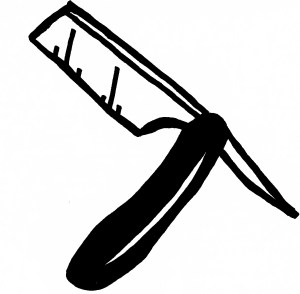
Tenebrae (1982)

EPSON MFP image

fivestar

Ironically, the more Dario Argento I consume, the more novel I find his seemingly obsessive repetition of concepts and ideas to be. When I discussed Profondo Rosso, I talked about how it represented the apotheosis of his metaphorical color pallette, a brand new story done up in the same “shades” as his other gialli but narratively perfected; Tenebrae (aka Tenebre, although this is less of a translation of the title as it is a miscommunication about promotional material from day one), released in 1982, is Argento’s first picture to be filmed in the eighties and is the definitive giallo of that decade, despite being less well known than his preceding films in that genre. Most importantly, however, this is the first time I’ve really felt that Argento had a thesis with his movie. His previous gialli ranged from good to bad, but one thing they all had in common was that they were first concerned with cinematography and mystery, with meaning and metaphor playing inconsequential roles in the overall structure. “Here’s a mystery, and it twists a lot! And everything is beautiful!” with occasional “Here’s a mystery, and there’s witches, because why not,” essentially. Here, however, Argento addresses criticism of his work and its themes as well as what he perceived to be a rise in random acts of violence in his contemporary world.

Peter Neal (Anthony Franciosa, doing his best, worst, Shatnerest Shatner) is an American thriller novelist who travels to Rome to promote his latest work, Tenebrae, a book told from the point of view of a deranged serial killer who murders those he considers sexually or socially “aberrant.” He meets with his agent, Bullmer (John Saxon, here credited as “Saxson”), and attends a meet and greet with the press, including beautiful lesbian reporter Tilde (Mirella D’Angelo), an old friend who accuses his work of being misogynistic, surprising him. Also present is Channel 1 afternoon talk show host Christiano Berti (John Steiner), who stalks about quietly. Neal then reunites with his secretary Anne (Daria Nicolodi) and meets Gianni (Christian Borromeo), an intern with his publisher who will be his driver and gopher during his time in Rome. Arriving at his temporary apartment, the three meet Detectives Giermani (Giuliano Gemma) and Altieri (Carola Stanaro). It seems that, just before Neal’s arrival, a shoplifter (Ania Pieroni, who last appeared as the beautiful Mater Lachrymarum in Inferno) who bribes her way out of an arrest with the promise of sexual favors is murdered in her apartment: Elsa was slashed, with crumpled pages torn from Tenebrae stuffed in her mouth.

Tilde and her polyamorous lover Marion (Mirella Banti) are murdered by the slasher, and Berti’s intense interest in Neal’s work makes him suspicious. His landlord’s young daughter, Maria (Lara Wendel), is also murdered, after she coincidentally makes her way to the killer’s home while fleeing from a vicious dog. His time in Rome is further complicated by the apparent sudden appearance of Neal’s disturbed ex, Jane (Veronica Lario), although his glimpses of her are so transient he can’t be certain. Giermani and Neal work together to try and figure out who the killer is. Every time you think you know who the killer is, that person ends up dead. Also, the villain has recurring nightmares about being sexually humiliated and abused by a woman in red heels, then later stabbing her to death. There are quite a few twists that all work quite well in this movie, so I won’t spoil the reveal here, but suffice it to say, this is probably the best mystery plot so far, rivalling or perhaps even surpassing Profondo rosso.

As a basic plot sketch and in some of the details, there doesn’t initially seem to be anything new on display here. The protagonist is again an artist (as seen in Four Flies on Grey Velvet, Profondo rosso, and even Suspiria and Inferno), specifically a writer (as in The Bird With the Crystal Plumage and Cat o’ Nine Tails), assisted by a lady sidekick (BCP) played by Daria Nicolodi (PR). The police initially suspect him of guilt but later enlist his assistance in the investigation (BCP, PR). A death is staged using a prop knife that squirts fake blood (FFGV), and a character learns about the killer’s fascination with taking snapshots of victims (FFGV again) by discovering a photographer’s development studio (C9T, although that was actually a crime reporter’s collection of pics of dead folks). Mirrors hold clues and significance (PR, Suspiria), and, like clockwork, a character witnesses something important but struggles to resolve its relevance (BCP, C9T, and PR, with the “struggling to effectively pair partially heard dialogue with the memory of moving lips” lifted directly from Suspiria, although this is the first time that this clue is witnessed by a secondary character and not the protagonist). The killer’s descent into madness is caused by the revisitation of an earlier trauma, recalled and brought on by dark imagery (BCP). And, of course, the film ends completely abruptly once the villain is dispatched (literally all of them, even The Five Days). Hell, Neal’s apartment even has some creepy statues from the gallery in Plumage sitting in the entryway.

The mystery plot here is very polished and precise. Detective Giermani jokes with Neal that, despite solving crime during the day, he can never figure out “whodunit” in the novels he reads, name-dropping Agatha Christie and Arthur Conan Doyle as well as, to my amusement, Ed McBain (only a movie that came out in 1982 would reference good ol’ Ed so reverently, during the height of his popularity and before he all but vanished from the public consciousness). Every time I knew who the killer was, that person was slashed or axed in the very next scene, and I never saw the twist coming. There were certain points in the film that initially irritated me, but which I realized were subtly ingenious clues after I had time to let the impact of the movie marinate in my mind for a minute. The cast is great, and it’s a lot of fun to get to see Nicolodi play against type as long-suffering, vaguely smitten survivor for once.

Although this may be one of the more overlooked Argento films, it’s also one of the most influential. Although I didn’t mention it in my review, Argento is credited with being the first director to use a high-speed camera to follow the trajectory of a bullet in Four Flies; here, Argento uses several long one-shots, including one which goes around and over Marion and Tilde’s house, said to have inspired the similar scene in The Untouchables. There’s also a scene in which Detective Giermani bends over and out of the frame, revealing the killer directly behind him and perfectly silhouetted by the lawman, and Tenebrae is generally considered to be the originator of that particular image, which has been imitated and given homage innumerable times by directors like Brian De Palma and Wes Craven. This, incidentally, ties into Argento’s recurring reflection imagery, more present here than ever before. When Giermani is introduced, he stands as a mirror image of Neal, both of them flanked by their respective partners, who are of similar build and hairstyle. Two typewriters are placed side by side as if they are twins, and Neal has two reflections: Giermani, as the real-life equivalent of Neal’s fictional avatars, and the killer, as the twisted reflection of the darker parts of Neal’s own psyche that give birth to his novels.

This reflection has been the subject of no small amount of film scholarship, as has the way that Neal’s work elicits similar criticism to that of Argento’s own (in fact, the plot was partially inspired by a series of harassing phone calls that Argento received from a fan in California who threatened to exact revenge on the director for the having caused the fan emotional distress brought on by watching Suspiria). More interesting to me is the fact that so much of the film depends upon circumstance, unplanned encounters, and apparently unmotivated violence. Doomed shoplifter Elsa is accosted and assaulted by a vagrant before she arrives home, where the killer is waiting for her. Tilde’s jealousy of her (verbally abusive) lover leads to a thrown vase and the opening salvo of a domestic dispute. Maria ends up in the home of the murderer, not because she was an intended victim, but because she was fleeing heedlessly from a tireless and aggressive pitbull (after she herself antagonized the animal out of anger that it scared her). While waiting at a bench in a plaza, a character sees a fistfight break to his right and an unrelated couple arguing violently to his left just before he himself is stabbed; his slashing goes completely unnoticed by anyone until he physically grabs a person walking past. While in reality most crime is committed by an assailant the victim knows, when this is not the case, it’s simply a matter of being in the wrong place at the wrong time, and Argento seems to be arguing that, in the eighties and the decades to follow, the wrong place was potentially anywhere and everywhere, and the clock was going to be stuck on the wrong time perpetually.

There’s a lot to recommend this movie. There are some things that are recycled from other movies that probably should not have been, and the sterile aesthetic of the film, which Argento has said was meant to be evocative of television procedurals, is a disappointment after the sumptuous visuals of Profondo rosso and especially Suspiria. Still, Argento reunites with (three quarters of) Goblin here, and the score is absolutely fantastic as a result; I can’t put my finger on it for certain, but I have the feeling that I’ve heard it sampled many times. Although not a perfect film, it’s a near-flawless giallo, and I highly recommend it.

When I went to rent this movie, I attempted to also rent Phenomena, planning to watch both and do two Argento reviews in the same week. Unfortunately, the fine folks at Vulcan Video informed me that it was already rented out, and was in fact already overdue. When I returned Tenebrae last night, whoever rented my favorite Argento still had it, meaning that I stood in the aisles of the video store for what felt like hours, trying to decide what to do. Should I skip Phenomena and go straight to Opera, and then double back later? Should I put the Argento retrospective on hold until I got my hands on Phenomena? Should I review a film by one of Argento’s contemporaries or apprentices? After much deliberation and hesitation, I decided to skip ahead to 2007 and watch The Mother of Tears, the long-delayed concluding chapter of the Three Mothers trilogy. So for those of you out there who were disappointed by how distant that conclusion was, congratulations. If you’re the witch who magically caused this chain of events to occur so I’d have to complete the trilogy faster, kudos to you, and please e-mail me; I will trade cash for hexes.

-Mark “Boomer” Redmond