Motion Stopocalypse

One of the bigger trends of the 2022 movie calendar was the prominence of stop-motion animation as a medium.  Netflix’s cheeky horror anthology The House was the first Great film of the year, and that early stop-motion triumph rolled into the wide, acclaimed release of so much direct competition that it now feels distant & puny in retrospect.  Rolling into awards season, Marcel the Shell with Shoes On and Guillermo del Toro’s Pinocchio are formidable contenders for best animated film of the year against the more typical Disney-funded CG mediocrities that have earned that prize by default since Toy Story put Pixar on the map.  And then there was Phil Tippet’s magnum opus horror show Mad God, which pushed the stop-motion medium to the outer limits of what animated cinema can achieve.  Usually, I’m on top of all stop-motion feature films as soon as they’re released, but this year offered so many varied, prominent titles in that category that I let a couple slip through my fingers until now.  Neither The Old Man Movie nor Wendell & Wild completely blew my mind as I caught up with them for Best of the Year listmaking season, but that was mostly a result of them joining such an already crowded field.  In a more typical year, these would have been the only two stop-motion releases of note, and I likely would have been much more ravenous for what they have to offer.

The more disappointing title of this late-entry pair is Wendell & Wild, since it’s the one with the highest pedigree behind its production.  Not only does it reunite the iconic comedy duo Key & Peele as a pair of wisecracking demons, but it’s also the comeback film of legendary stop-motion animator Henry Selick, who has not directed a film since 2009’s Coraline.  As a recently converted Monkeybone apologist, it brings me no pleasure to report that Wendell & Wild is, by far, Henry Selick’s worst film to date.  The good news is that it’s still pretty great, as long as you only pay attention to its mall goth art design & vintage Black punk soundtrack.  Story wise, the film is a sprawling, unresolved mess in a way a lot of blank-check Netflix productions have been for directors like Scorsese, Baumbach, Fincher, and The Coens, who have been putting in some of their career-weakest work on the platform with no one to push back on or hone their ideas.  Out of the pair, Netflix was smart to give del Toro’s Pinocchio the bigger Oscars Campaign—it is the better film—but it’s also far from del Toro’s best work either.  If anything, the two films could have borrowed and swapped a lot of their shakier qualities: Wendell & Wild should have been a punk rock musical, since its charms rely entirely on its soundtrack & visual spectacle, and Pinocchio should not have been a musical at all, since its entire songbook is limp & forgettable.  They’re both decently entertaining movies about rebellious youth, though, with Wendell & Wild falling somewhere at the Hot Topic end of that spectrum.

If the story of a high school punk rocker teaming with a pair of wisecracking demons to resurrect her dead parents with magical hair cream (and to avenge the wrongful deaths of the family’s condemned root beer factory while they’re at it) is a little overly complicated, maybe The Old Man Movie has a leg up on Wendell & Wild.  In The Old Man Movie, three siblings have to recapture & milk their grandfather’s escaped cow before its udder explodes, nuking their entire village in a milky “lactocalypse”.  Those are pretty clear, cut-and-dry stakes even if they are ridiculous ones, and the movie even provides a helpful 24-hour deadline before that udder catastrophe strikes.  The Old Man Movie also enjoys the benefit of nonexistent expectations. Henry Selick’s previous films Coraline, The Nightmare Before Christmas, and James and the Giant Peach rank highly among the most beloved stop-motion films of all time.  By contrast, The Old Man Movie is the most profitable animated film ever exported from Estonia, but it’s likely most audiences outside that country have never heard of it.  That might hint at its comparatively limited appeal, since Selick makes mildly spooky movies that are still friendly enough for children, while The Old Man Movie looks like it was made for children but would likely psychologically scar any who wander into the room.  It performs the shrill gross-out humor of Ren & Stimpy in the once-wholesome visual language of Wallace & Grommet.  It’s teeming with grotesque milk monsters, mile-high piles of pig shit, and unstoppable killer kratts – pushing it more into Phil Tippet nightmare territory than Henry Selick’s goth kid starter packs.

Some of The Old Man Movie‘s one-off gags offend, especially when it singles out hippies & women as targets for mockery.  Other gags deliver enormous laughs that make the eyerolls worthwhile, especially in its visible disgust for the gnarlier details of daily farm work.  While Wendell & Wild pushes the boundaries of stop-motion as an artform into the technological marvel territory of a Laika film, The Old Man Movie scales it back down to a handmade claymation style that feels a little like serial killer bedroom art.  It was refreshing to see a film so volatile in its moods & humor after the more cumbersome, plot-fixated machinations of Wendell & Wild felt so weighed down by its own enormity.  That’s not to say Wendell & Wild isn’t shocking or over-the-top in its own ways; it’s especially bold to see a children’s film about a rebellious youth’s team-up with demons get a major-platform release in a year when online Evangelicals are obsessed with the ways Satan is “grooming” children into cannibalism & debauchery through “hidden” messages in popular media.  What’s most incredible, though, is that neither The Old Man Movie nor Wendell & Wild qualify as the wildest, most outrageous stop-motion release of the year – a title that has a shocking amount of competition (and still belongs to Mad God).  There has been enough of a wealth of anarchic, ambitious stop-motion feature films that I can be a little bratty and brush both of these movies off into the “Pretty Good” pile instead of the “Saviors of Modem Animation Pile.”  I want to live in a world where I’m this spoiled every year.

-Brandon Ledet
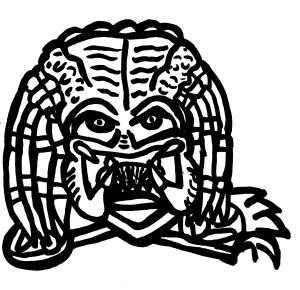
The Predator (2018)

Everything about The Predator makes it sound like it’s exactly My Thing. Director Shane Black’s most recent feature, The Nice Guys, is one of my favorite comedies in recent memory. His 1987 collaboration with screenwriter Frank Dekker, The Monster Squad, was a personally formative introduction to classic horror tropes & monsters for me as a young child. The original Predator film (in which Black appeared as an actor in a minor role) isn’t exactly my favorite Arnold Schwarzenegger classic, but is still a wonderfully tense, over-the-top sci-fi creature feature with an incredible monster design. Black’s latest sequel to that action-horror milestone even participates in a suburban-invasion monster movie trope that I’m always a sucker for, making me far more forgiving than most audiences for little-loved films like The Lost World: Jurassic Park, Strange Invaders, and even Alien vs. Predator: Requiem. That’s why it’s so baffling that The Predator is likely the worst experience I’ve had with a movie all year, a total letdown.

After the laugh-a-minute slapstick violence of The Nice Guys, the last thing I expected from The Predator was to relive my discomfort watching the Deadpool movies. The same performatively #edgy, coldly sarcastic, Gen-X throwback humor that makes Deadpool so exhaustingly unfunny is rampant here, with Black & Dekker indulging in their worst impulses as provocateur humorists who believe they’re pushing the envelope of Political Incorrectness but at this point are only reinforcing the status quo. The difference is that watching Deadpool with a live audience is an alienating experience where everyone in the room Gets The Joke but you, whereas The Predator’s humor falls flat with the entire room. Jokes about “Assburgers,” Tourette’s, “loonies,” and men named Gaylord play to laughless, stony silence. An extensive bit where Olivia Munn must strip naked to escape death is only made more uncomfortable by extratextual reports of the actor’s anger over been tricked into working with an undisclosed sexual predator in the cast (in a since-deleted scene). The problem isn’t that this style of juvenile shock humor is too offensive or tasteless to be enjoyed in public. It’s that it has become so old-fashioned that it’s too hacky to be funny.

A UFO crashes, releasing a Predator at the edge of the suburbs. The government attempts to cover it up. Escaped mental patients feebly attempt to kill it. A precocious child (played by Jacob Tremblay, who might need the talent agent equivalent of Child Protective Services at this point of his career) saves the day through his autistic superbrain. It’s all wacky, disconnected nonsense barely edited together with any sense of linear coherence in service of franchise-minded worldbuilding. Some of the franchise set-up is admittedly fun – namely in the film’s conceit that the Predators are intergalactic travelers that purposefully merge their DNA with various species, leading to hybrid specimens like dog-Predators & gigantic mega-Predators. Mostly, though, it makes The Predator feel like an inconsequential episode in a franchise looking to reinvigorate itself for future follow-ups. In true Deadpool fashion, Black & Dekker even joke about that franchise-wide storytelling style in the dialogue, having a government goon explain that the Predators have arrived on Earth before in ’87 & ’97, “but lately visits have been increasing in frequency,” a blatant dig at projects like the Alien vs. Predator crossovers and 2011’s (totally fine, but mostly forgotten) Predators. The problem is, though, that like most of the film’s humor, the joke falls flat and only serves to question what we’re even doing here, why we’re even bothering – both as creators and as audience.

Not everything about The Predator is horrendous. Olivia Munn & Trevante Rhodes mostly escape with their reputations intact. Sterling K Brown is, despite the material, genuinely fun to watch as a scenery-gnawing government goon, making even the emptiest phrases like “Fuck yeah,” land with surprisingly satisfying humor. Jacob Tremblay & Keegan-Michael Key fare the worst, but can’t be blamed for the idiocy they were employed to recite, dialogue where phrases like “Shut the fuck up!” are considered the pinnacle of verbal quipping. Some of that failed humor is softened by the cheap-thrills payoffs of the film’s hard-R gore & creature feature delights, which are admirably dedicated to practical effects. Speaking as a shameless gore hound & a lover of over-the-top monster movies, though, there’s no amount of practical splatter or space alien badassery that can fully cover up the stink of a comedy that fails this disastrously to be funny. The jokes are plentiful here, but plenty unamusing – sucking all of the fun out of the room with each #edgy punchline. There have likely been worse releases this year, but none I would have seen on purpose, none with this amount of unfulfilled promise.

-Brandon Ledet

Don’t Think Twice (2016)

EPSON MFP image

fourstar

It’s tempting to say that you won’t get much out of stand-up comic Mike Birbiglia’s latest film, the improv comedy scene indie Don’t Think Twice, unless you’re the kind of comedy nerd who finds yourself regularly reading Splitsider, religiously awaiting the next episode of Comedy Bang Bang, and fostering a lifelong love-hate relationship with Saturday Night Live. I do believe that’s selling the film’s merits a bit short, though, especially since it’s more of a drama than an outright comedy. It just happens to be a drama that centers on characters immersed in that comedy world nerdom, a culture Birbiglia & his stacked cast of up & coming greats (Gillian Jacobs, Chris Gethard, Keegan-Michael Key, Kate Micucci, etc.) seem to know intimately well. Much like how the recent Jemaine Clement comedy People Places Things structured its story around a formal, art school lesson on comics & the graphic novel as artistic mediums, Don’t Think Twice offers a history lesson & a crash course instruction on the basic tenets of improv comedy theater. Underneath that specificity of setting, though, lies a heartfelt drama about a tight knit group of friends at an insurmountable impasse. Most of the film’s actual laughs come from a truly dark, black soul sense of humor that contrasts itself sharply with its more crowd-friendly improv sketches, which, like a lot of improv, aren’t really all that funny. It’s kind of a you-had-to-be-there artform. Birbiglia knows how to make that real world melancholy clash nicely with the stage show artificiality in a way that’s both emotionally revealing & intellectually engaging. Don’t Think Twice smartly plays into the strengths of small stakes filmmaking instead of the appeal of improvisational comedy, which is an elusive spirit that evades strict documentation.

Don’t Think Twice details the lives of the fictional improv troupe The Commune as they struggle to hold themselves together in the face of two modes of impending doom: imminent financial ruin & the jealousies that arise when one of their own gets called up to “the big leagues.” The same way their comradery shifts into seething anger when one member finds mainstream success, Don’t Think Twice morphs the comedy institution Saturday Night Live into a nasty fictional surrogate named Weekend Live, a weekly ritual The Commune & other comics treat like a sports event (if you’re the kind of sports fan who mostly like to get drunk & heckle). The film does a great job of contrasting the thrill of watching the live sketch comedy show in person vs. the lifeless bitterness of watching it broadcast at home, especially if you’re resentful that someone “made it” on the cast when you feel you deserved their spot. There’s a Party Down vibe at work here where writers & comedians are stuck in the rut of working menial service industry jobs while their peers find their paths to success seemingly with ease. The Commune and its individual members aren’t able to break this bitterness cycle until they realize that there’s more than one definition of success and that a place on Weekend Live, a very limited window of opportunity, is not necessarily the thing that would make each & every one of them happy. Watching these comics deal with personal & professional jealousy is only the beginning of the journey; the rest is nested in seeing them find their own place in a broad spectrum of comedy outlets, whether that means pursuing a new medium or it means staying put in the less-than-lucrative world of improv theater.

There’s an incredible, knowledgeable attention to detail in Don’t Think Twice’s portrayal of improv comedy, both in capturing the feel of Weekend Live’s obvious source of inspiration & in its depiction of backstage ritual, but what the film nails particularly well is the specificity of its comedy scene personalities. Much like the nasty Tim Heidecker vehicle The Comedy, the film depicts the darkness & discomfort of hanging around with comedians who turn everything into “a bit” instead of dealing with their own emotions in a direct, genuine way. The difference is that Don’t Think Twice’s characters are empathetic & human in a way that makes you want to root for their success, even when they’re mocking a friend’s dying father or, worse yet, “yes-and”ing during sex. In this world characters mask their malice & aggression with an unapologetic, after-the-fact cry of “It was a bit!” There’s a lot of deconstruction of craft at work here that captures how working on an impression can look a lot like madness or how improv survives on the strength of groupthink, but comedy is mostly used as  vehicle to mask pain in what’s most essentially a coming-of-middle-age drama about a once-close group of friends seemingly meeting their communal end. Don’t Think Twice is both cruelly truthful about how that dynamic can tear a group apart and hopeful about how it can pull a backs-to-the-wall community together to create exciting art. The film values genuine sincerity over “It was a bit!” sarcasm, but also recognizes why a wounded animal comedian would use that emotional distance as a protective shield. There’s a great empathy at work here for each of the film’s characters, no matter where they are spiritually or emotionally & no matter how much or how little empathy they have for each other at any given moment.

In the Apatow & McKay era of ensemble cast comedies the tendency has been to unravel the scripted work to a sprawling, improv-driven looseness. Don’t Think Twice reverse engineers that alchemy and turns an artform built on spontaneity into a tightly controlled narrative where recurring bits & motifs gain new meaning & significance each time they reappear. Mike Birbiglia accomplishes a lot here that speaks directly to my tastes: he delivers the year’s third unofficial SNL film (after Popstar & Ghosbusters); he provides space for yet another showcase of Gillian Jacobs’s immense wealth of dramatic talent;  he finds new modes of promoting the value of sincerity over arm’s length sarcastic engagement, etc. I don’t think you need to be plugged into any of those niche interests or the improv comedy scene at large to enjoy what Don’t Think Twice has to offer, though. Its charms as a small stakes drama hoisted by gallows humor & a uniquely talented cast should be near universal. And if you end up not liking the film at all, it still should be fun to heckle.

-Brandon Ledet

Keanu (2016)

EPSON MFP image

fourstar

It’s been a good while since I’ve seen a film in theaters and actually laughed out loud (at least for films that are actually meant to be comedies). I can’t even remember the last time I saw a comedy that would be considered a new release. I guess it would be Krampus, but Krampus is considered to be a horror-comedy and not just a straight up comedy. Recent funny films that have hit theaters would be The Boss, The Brothers Grimsby, and Meet the Blacks, just to name a few. Maybe the movie trailers and reviews didn’t do these films justice, but nothing about these films made me want to make my way to a theater and drop ten bucks to see them. Keanu was a different story. Knowing my love for cats, a friend of mine sent me the movie trailer for Keanu via text message. At first, I thought this was a silly trailer for a fake movie that was part of the Key and Peele sketch comedy show. Well, I just about exploded with joy when I found out that this was going to be a real movie. A real movie that was going to actually be in real movie theaters. A film about an adorable kitten mixed up in a drug cartel that included tunes from music legend George Michael was something I wouldn’t miss for the world. Yes, I definitely shelled out ten bucks for this one.

Keanu has a strong, action-packed start. Two assassins, known throughout the film as the Allentown Brothers (actually played by Jordan Peele and Keegan-Michael Key), massacre a buttload of people in a drug lair housed by a church. A cute little kitten that goes by the name of Iglesias escapes the madness and ends up on the doorstep of Rell (Jordan Peele), who is going through a terrible breakup. Iglesias, renamed Keanu by Rell, brings Rell out of his depression and becomes the most important thing in his life. His world falls apart again when Keanu is kidnapped from his home. With the help of his straight-laced cousin Clarence, Rell sets out to find Keanu. The two end up going undercover as the infamous Allentown Brothers to get Keanu back with the nicknames of Tectonic (Peele) and Shark Tank (Key). Tectonic and Shark Tank join a gang with a leader that goes by the name of Cheddar (Method Man) as part of their plan to get Keanu back. The duo quickly finds themselves teaching teambuilding exercises to gang members and selling drugs to The House Bunny actress Anna Faris, among other things.

What I found to be very interesting about this film was that it was actually very violent and gory. The shooting scenes are brutal but funny at the same time. It’s a strange feeling for sure. Key and Peele really pushed the envelope by having all that violence in a comedy starring a super cute kitten. Also, one part the really stuck out to me was towards the end of the film when Clarence and Rell actually get arrested after taking down a major drug operation. It was so surprising because it was so realistic. Usually when the good guys in movies steal cars and deal drugs to ultimately take down the bad guys, they’re let off the hook and the film concludes to a silly happy ending.  In Keanu, our main comic stars go straight to jail after they save the day because, well, they actually broke a ton of laws throughout the movie.

Peele is by far the star of the show. He was absolutely hilarious consistently throughout the film, and I was laughing during just about every moment he was on the screen. He gets especially funny when he takes on the role of Techtonic. Unlike Key, he doesn’t rely on overacting and ridiculous Dane Cook-like humor to have a funny performance. I know that it sounds like I’m being harsh on Key, and I don’t really mean to be. He did bring a good bit of humor to Keanu, and he starred in one of my favorite scenes in the movie: while on a drug trip, he imagined himself in the video of George Michael’s “Faith,” tight jeans included. Clarence, like myself, is a huge George Michael fan, and there are some insanely hilarious parts in the film (other than the “Faith” drug trip) which involve his love for George Michael that I completely adored. Key’s style of comedy just doesn’t a-Peele to me as much as Peele’s, so I can’t help but compare the two.

Once the film was over, my cheekbones were sore from laughing so much, but then a more serious feeling came over me. I realized that I would probably do the same thing Rell did if my cat was in Keanu’s situation. Keanu’s adorable little kitten meow tugged at all my heart strings, and hopefully, other viewers had the same reaction. Keanu was like an Air Bud for adults. In a world filled with animal abuse and abandonment, it’s nice to see a film that promotes human/animal bonds. Give your fur babies lots of kisses and hugs and catch Keanu before it leaves theaters!

-Britnee Lombas

Hotel Transylvania 2 (2015)

EPSON MFP image

three star

I’m usually pretty harsh on the kind of computer-animated children’s features that’re flimsy excuses for ensemble casts to earn a relatively easy paycheck doing voiceover work. I am, however, also very weak to the powers of pandering. For all of the Madagascar 2‘s, Angry Birds: The Movie‘s, and Minions films I’ve skipped (and will be skipping) over there’s always one or two CGI animations that drag me to the theater. I checked out Pixar’s Inside Out earlier this year, for instance, because its inner-world design looked fascinating in a dream-logic kind of way. That, however, was actually a pretty good movie. What’s much more shameful is that I couldn’t resist the recent Adam Sandler cartoon Hotel Transylvania 2. By all accounts Hotel Transylvania 2 is the exact kind of hokey CGI ensemble cast animation dreck I typically avoid. Still, I was too weak-willed to pass up a famous monsters-themed comedy featuring several SNL alumni, not to mention Steve Buscemi as a werewolf & Mel Brooks as an aging Borscht Belt Dracula. I am admittedly powerless against that formula, regardless of the film’s quality.

It’s hard to say for sure if Hotel Transylvania 2 is better or worse than its predecessor. Its lack of ambition in terms of storytelling are pretty much on par with the first film, which was centered on a *gasp* human being winning his way into the heart of Dracula’s daughter & finding his place in a social circle consisting entirely of famous monsters. That small bit of world-building already taken care of, the second film at least has a lot less leg work to do, which is a blessing. There are some interesting ideas at play here about how the young lovebirds are treated as a “mixed couple” in both of human & monster societies (despite both being blindingly white) and the ways their first child together struggles to find a sense of identity in one of the two worlds. The rest of the film is sort of a loose jumble of disconnected thoughts on gentrification, social media addiction, a Luddite’s place in the modern world, and so on. The race metaphor in the human-monster relations is half-cooked at best and doesn’t amount to much more than ludicrous statements like, “Maybe you’ve let humans into your hotel, Dad, but I don’t think you’ve let them into your heart.” Whatever. Let’s be honest, I was mostly there for the former SNL staff & the monster-themed puns, something that the film was obviously also more invested in as well.

As far as former-SNL cast members go, Hotel Transylvania 2 hosts voice performances from the likes of Adam Sandler (duh), Andy Samberg, Molly Shannon, Dana Carvey, Chris Katan, David Spade, Chris Parnell, and Jon Lovitz. The movie was also co-written by TV Funhouse creator/all-around comedy genius Robert Smigel (not putting in his best work, but still). That’s not even mentioning contributions from non-SNL comedians Nick Offerman, Megan Mullalley, Rob Riggle, Keegan-Michael Key, Steve Buscemi, and, of course, Mel Brooks. As these things generally go, it’s a fantastic cast put to minimally effective use. The movie may be monster-themed, but it definitely tends more towards cute than scary. The bats look like kittens & a baby vampire with bright red curls for hair isn’t likely to appear in any child’s nightmares. The most horrific the film gets is in the (humorously) blank expressions of the hotel’s zombie staff. I appreciated a couple of the film’s isolated punchlines, like a version of “Twinkle Twinkle Little Star” that goes, “Suffer, suffer, scream in pain. You will never breathe again,” calling back to the first film’s “Hush little baby, don’t say a word. Papa’s gonna bite the head off a bird.” For the most part, though, the jokes are worth maybe an occasional light chuckle (whenever they’re not vaguely homophobic, an unsavory line of humor Sandler can’t seem to resist even in his children’s media). Even the decades-old Al Lewis travesty Grampire: My Grandpa is a Vampire has a better grasp on portmanteau than this film’s less satisfying concoction “Vampa”. It’s no matter. I got what I wanted out of Hotel Transylvania 2: former SNL staff, hokey monster puns, and a werewolf Steve Buscemi. If that’s not enough to hold your interest for a feature (and it really shouldn’t be; I’m weak), I highly recommend instead tracking down the much-superior-in-every-way 2012 Laika production ParaNorman for all of your animated monster movie needs.

-Brandon Ledet