Pom Poko (1994)

EPSON MFP image

fourhalfstar

The Japanese animation empire Studio Ghibli (most closely associated with the brilliant work of Hayao Miyazaki) is an intimidating force from the outside looking in. I’m familiar with the bigger works like Spirited Away & My Neighbor Totoro that dominate the studio’s branding, but there’s dozens of Ghibli titles I’ve never taken the time to approach partly due to the intimidation factor of the studio’s staggering output, despite the fact that most of their work seems to be of impossibly high quality in the medium of hand-drawn animation. If there’s just one Studio Ghibli film I wish I had seen years & years sooner it’d be the raccoon eco-warrior mockumentary Pom Poko. The small-community-vs-the-empowered-hegemony political tone, harsh mix of tragedy & black comedy, and ungodly amount of raccoon testicles that shape the story of Pom Poko would’ve made it a perfect fit for a movie night favorite in my younger, punker years. It’s all too easy to see how young anarcho-punks could empathize with the raccoons fighting the impossible-to-topple enemy of an encroaching housing development & even if they couldn’t align with the creatures politically, they’d still be able to draw a great deal of humor from the creatures’ ever-present, comically oversized testicles. Because it was a film we all grew up with, the movie that filled this niche when I was actually young & angsty was Ferngully. Pom Poko offers a much more beautiful, well-crafted, crass, and ultimately pessimistic version of the Ferngully sentimentality, though, and would’ve made a much more appropriate choice for repeated drunken viewings in my salad days.

The plot of Pom Poko is a fairly straightforward one, though its kookier details gradually escalate to heightened degrees of insanity over the course of its runtime. As a massive housing project threatens to level the forested area where a large tribe of magical raccoons reside, the woodland creatures decide to fight back through their limited means. Think of the guerrilla Ewok resistance on Endor in Return of the Jedi & you pretty much get the picture. The major difference, of course, is that these woodland creatures are not only cute, they’re also magically transformative. They can shapeshift from their natural raccoon shapes to look like supercute cartoon raccoons or an average human being or everyday inanimate objects or anything, really. Some use this skill to scare humans from encroaching on their territory. Some use to live among the humans to escape persecution. Some use it to transform their testicles into gigantic weapons to punish/kill human intruders, a move that positions Pom Poko as the premiere children’s film that deals in testicular homicide. As a small crew of wisened elders join the raccoons’ ranks, the transformations get more complicated & mythical from there, leading to stunning recreations from Japanese folklore (the exact kind you’d find in Yokai Monsters: Spook Warfare). The ethereal display is supposed to intimidate the humans from encroaching any further, but any & all actions taken to protest the impending housing development seems doomed to fail. Business as Usual sees no threat big enough to discourage a potential profit & stopping the housing development proves to be a Sisyphean task.

Much of Pom Poko feels as is it may have been lost in translation from Japanese culture & language to its Western, English-speaking version. Firstly, despite what the English dub labels them, the tanuki portrayed here aren’t truly raccoons at all, although the two species do look remarkably similar. Tanuki also have a long history in folklore that justifies the excessive presence of their magical testicles in a children’s movie. The English translation (which features voice work from J.K. Simmons, Brian Posehn, Jonathan Taylor Thomas, and at least three Futurama vets) does its damnedest to soften the oddity of its testicular content by translating “testicles” to “pouches” as if kids would mistake the creatures for being marsupials, having never seen themselves or anyone else naked. The yokai folklore on display in the film’s visually stunning third act might also fail to fully translate for Western audiences as well, even though it’s easy to tell from the outside looking in that there’s a rich history backing up its exquisite artistic craftsmanship. The film obviously didn’t have too hard of a time traveling to Western markets, though, since it was submitted for consideration for the Academy Award for Best Foreign Language Film in 1994 (not that it won any accolades or even an official nomination). That kind of pedigree is not too shabby for a children’s cartoon drowning in a sea of furry testicles.

What easily breaks through the language & cultural barriers in Pom Poko is the flm’s anarco-punk spirit. As a radical community uniting against a much larger, better-equipped enemy, the racoons of Pom Poko have many philosophical discussions about the acceptable levels of violence & the effectiveness of non-violent protest in their tactics to combat the housing development, which is a never-ending debate among young progressives, I assure you. Their youthful spirit is also a detriment to their cause, as they’re prone to celebrate small victories long before achieving any longterm goals. The little creatures just love to party. They’re all too easily distracted by beer, pizza, pro wrestling, sex, cheeseburgers, and all sorts of hedonistic temptations that also often distract human punks from organizing & enacting a significant socio-economic change. If you’re looking for proof that this metaphor holds any water, just look to the political chants the raccoons use to rouse their ranks in times of depression or distracted partying. With the right guitar & percussive backing track any one of their chants could easily pass as a song from the seminal anarcho-punk band Crass. The film even addresses the concerns of what happens when these kinds of communities grow up, give in, die off, or decide to join the enemy, which is pretty much the plot of every 00s mall punk’s cinematic handbook, SLC Punk.

Besides the incredible level of skill in the film’s hand-drawn craft, the aspect that makes all of this work in Pom Poko is in its matter-of-fact storytelling style. The film is presented as a documentary & a collection of oral histories, which saves it from delving into the broad, slapstick frivolity of its spiritual cousin, Ferngully. The film can be cartoonishly humorous, sure, but it also aims to break your heart with depictions of death & defeat that a lot of modern children’s films (unfortunately) avoid at all cost. It’s an all-the-more rewarding film because of this detached tone, too, since you not only accept that racoons for who they are & cheer for their victory, but you also fear the idea that it’s a fight they can never possibly win.

-Branodn Ledet

40 Indignities I Suffered to Watch John Waters’ Cameo in Alvin & The Chipmunks: Road Chip (2015)

EPSON MFP image

John Waters is my favorite director of all time. He may even be my favorite human being of all time. His own personal sense of irony & self-amusement knows no bounds, though, which is how I ended up in a movie theater in the middle of the afternoon watching the fourth live-action Alvin & The Chipmunks feature, Road Chip, despite having never seen a Chipmunks movie prior. Much of the Internet was freaking out over the weekend about Star Wars: The Force Awakens, which is an undeniable phenomenon, but there was also a lot of confused excitement about John Waters, who is his own kind of phenomenon, appearing in the latest Chipmunks feature.

At first the John Waters/Chipmunks connection may seem a bit arbitrary & absurd, but the two entities aren’t entirely unrelated. For instance, I’ve never seen a Chipmunks movie before, but I do remember a trailer for one of the earlier entries (possibly the first?) involving a gag in which one of the Chipmunks eats a turd (because who wouldn’t love to see one of their favorite childhood cartoon characters do that?). Of course, this gag parallels one of Waters’ more infamous stunts: the time he filmed Divine eating dog shit at the end of his gross-out trashterpiece Pink Flamingos. I could’ve saved you the gruesome details of that connection just by informing you that Waters is an outspoken fan of the Chipmunks & probably simply requested to appear in a cameo for the franchise, but where would be the fun in that?

I am going to save you the emotional turmoil of actually watching Alvin & The Chipmunks: Road Chip by describing here the entirety of John Waters’ brief scene in the film. He appears as himself, flying first class alone on a flight to Miami. Alvin, the star chipmunk, sloppily eats a plate of spaghetti or some such next to Waters, who feigns being disgusted. Alvin asks something to the effect of, “What’s the matter, you’ve never been on a flight with a chipmunk before?” Waters scoffs, “Actually, I was on on a flight with the Chipettes [more on them later] and they were ladies.” Alvin then closes the exchange with the punchline, “Don’t you judge me. I’ve seen Pink Flamingos.”

And that about wraps it up. In order to witness this brief exchange, which is admittedly pretty cute, I suffered through a 90 minute Alvin & The Chipmunks feature I could’ve happily died without ever seeing. There were too many indignities to count haunting this embarrassment of an experience, but I’ll do my best to list as many that come to mind below. Please do not repeat my mistake. Love yourself.

1. Purchasing a ticket for Alvin & The Chipmunks: Road Chip. I currently work at a movie theater, so my ticket was comped, but still. It was mildly embarrassing to have to ask for one adult ticket for Alvin & The Chipmunks: Road Chip in the middle of a rainy afternoon. Funnily enough, in Waters’ interviews about his cameo in the film, he expresses his delight about when he’ll be able to see the film in the theater, since he’ll have the perverse delight of requesting one senior ticket for Alvin & The Chipmunks: Road Chip. I guess it’s a pleasure that improves with age.

2. Watching Road Chip alone among parents & young children. This sometimes feels awkward for me in children’s movie screenings, especially as an adult male. I feel like I’m always giving off at least low-level creep vibes when I watch kids’ movies alone in the theater. It was especially undignified this time, though, because the movie was for a very young audiece. Like, babies.

3. Watching two advertisements for Road Chip prior to the film beginning. In ads for the Road Chip soundtrack & a Road Chip-themed gift card, scenes from the film I resigned myself to sitting down & watching were sadistically warning me of what was soon to come. It was redundant at best, hopelessly cruel at worst.

4. A young child’s forced laughter. Okay, this one kinda makes me out to be a monster, but hear me out. Since the pint-sized audience at my screening was so young, just barely outside of baby range, I ended up seated near a super young child who had no business being in a movie theater. Instead of really watching or interacting with the movie, the kid was faking loud laughter at very odd, arbitrary moments in order to get a reaction out of their very patient, willing-to-please father. I’m not faulting the kid at all for trying to have a good time, but there was something about their loud, forced, fake laughter that rang a little too true to my own experience of desperately trying to find some amusement in a film I also had no business watching.

5. The Chimpunks’ awful voices. I mean, there was a reason I avoided the first three Alvin & The Chipmunks features. Their auto-tuned helium voices are annoying enough in the short-form ads. Experiencing them for an entire full-length feature was near torturous.

6. Feminized versions of Alvin & The Chipmunks. For some reason, this franchise (and possibly its animated source material?) decided it needed female versions of each of the Chipmunks just to wear cute clothes, suggestively gyrate their hips to dance music, and flirtatiously remind you of the meaningless of existence & the random cruelty of life & the universe.

7. A “music by” credit for Mark Mothersbaugh. It’s not enough that my favorite director of all time has a cameo in this film, I also have to deal with the fact that the front-man for my favorite band of all time was even more heavily involved? I know Mothersbaugh has been doing this kind of thing for decades,  but that’s still rough.

8. A cameo from LMFAO’s Redfoo. I can’t tell if this cameo makes Waters’ contribution more or less subversive, but it hurt too watch either way.

9. Urban line dancing.

10. Country line dancing.

11. A fart joke about “pizza toots”.

12. The Chipmunks butchering Gloria Estefan’s “Conga”

13. The following line [delivered by a Chipmunk to their “dad” Dave]: “Any girlfriend of yours is a girlfriend of ours.”

14. The multiple weird insinuations about whether Dave is The Chipmunk’s “real” father or adoptive father.

15. A Chipmunk butchering Sir Mix-a-Lot’s “Baby Got Back”

16. Being tricked into watching American Idol.

17. Having suffered through the film’s ad campaign frequently enough to recognize that there were gags from the trailer missing in the film.

18. “Dave liked it & he’s gonna put a ring on it.”

19. Watching comedy greats Retta, Jennifer Coolidge, and Tony “Buster Bluth” Hale slum it in larger-than-cameo roles. Hale easily got the worst of it on that front, as he thanklessly plays the film’s antagonist & The Chipmunks’ ever-thwarted foil.

20. The implication that Alvin has watched Pink Flamingos.

21. “I have a very particular set of skills.” Can we retire this reference now?

22. The Chipmunks butchering The Dixie Cups’ [and many others’] “Iko Iko.” This one actually hurt the most out of all the auto-tuned karaoke in the film. It’s a New Orleans classic, a song I grew up loving. And now it’s been soiled.

23. An extended tangent filmed in New Orleans. This included a cleaned-up version of Bourbon Street busking, off-season Mardi Gras beads, a “New Orleans jazz parade”, and a thick-accented local yokel in a mumu demanding that the out-of-towners drink her moonshine.

24. A second-line themed cover of “Uptown Funk”.

25. A gag in which Hale takes a nut shot.

26. A gag in which a parrot shits on Hale’s shoulder.

27. Beats by Dre ad placement.

28. Chuck E. Cheese ad placement.

29. An honest-to-God Santigold song on the soundtrack. Her last record, Master of My Make-Believe, was really fantastic stuff, but it was released over 3 years ago and I feel like I’m just starting to hear her songs in various movies & advertisements. I’m glad Santigold’s getting paid for her legitimately awesome music, but I had no interest in hearing songs I actually like in this film.

30. “Teens today” social media shaming.

31. A false death crisis following a car accident. Oh man, that character totally died, which is a bummer. Except that they’re fine, which is awesome! It’s a common trope in a lot of recent media, one I can’t help but dwell on thanks to critic Tasha Robinson’s excellent piece on The Disney Death.

32. A “Turn Down for What” dance break.

33. A mostly-wasted Taylor Swift archetype.

34. An original song sung at the climax that included a rap breakdown.

35. “Does this look like a face that would survive prison?”

37. A who-cares romantic subplot.

38. A legal proceeding conclusion that recalls the gloriously idiotic conclusion to Mac & Me, except way, way less fun.

39. Finding myself oddly compelled to stick around for scenes playing in tandem with the final credits to receive closure on Tony Hale’s storyline.

40. Three separate incidents of Dave screaming, “Alvin!”. One would’ve been a decent callback. Two is an understandable indulgence in excess. Three is cruel. There’s no need for three “Alvins!”, just as there’s no real need for four Alvin & The Chipmunks movies, but here we are.

I love John Waters with all of my heart, but I can’t say that the emotional toll of these 40 indignities were worth the comedic payoff of his brief cameo. I hope he had fun filming the scene & I hope he has even more fun ordering his senior citizen movie ticket as soon as he has the free time. That’s the only good thing that could’ve come from this. I had no business being there.

-Brandon Ledet

The Good Dinosaur (2015)

EPSON MFP image

twostar

Pixar released two feature films this year: one that made me question my typical lukewarm attitude toward their output & one that confirmed my usual indifference. Inside Out was a remarkable example of effective world-building, establishing a clear, concise visualization of the abstract concept of emotion & inner conflict. It wasn’t a particularly great looking movie, but it was so committed to its high-concept premise that the flat, simplified look of its CG animation didn’t matter all that much. The Good Dinosaur, on the other hand, goes skimpy on both visual intensity and narrative & world-building. It’s not much of a surprise given the film’s years-in-the-making troubled production, but The Good Dinosaur is frustrating as a finished product, as so much of the film is hopelessly bland, but there are flashes of brilliance trapped in the muck begging to be employed in a much better film.

The most glaring shortcoming in The Good Dinosaur is in its cutesy character designed. The film’s backgrounds are hyper-realistic , an incredible feat in CG animation. Its campfires, running water, and swaying tree branches are all so tangibly real-looking that they seem like nature photography. Even small, unimportant-to-the-plot creatures like bugs, birds, and lizards are visually well-defined, fitting in remarkably well with the background work. That’s why it’s such a shame that the dinosaurs themselves, the stars of the show, are such vague, babyish cartoon nothings. I get that it probably wouldn’t have been a good idea to have hyper-realistic dinosaurs running the show & scaring the crap out of children, but surely there was a better compromise to be had between the two extremes than what was delivered.

That said, it’s not just that the dinosaurs look vague & uninteresting. It’s also that their personalities are generically human in a too-predictable, clichéd way. The couple of times in the film where dinosaurs act like wild creatures instead of civilized people are genuinely entertaining, but they’re few & far between. The film’s Dinosaurs Are People Too approach to storytelling honestly isn’t worth much more than an eyeroll or two. Its depictions of dinosaur farmers & dinosaur cowboys are exhaustingly hokey to me, barely a step above the polar bear political lobbyist Rob Schneider voices in the dire-looking Norm of the North trailers. This isn’t helped at all by the detail that human beings are feral “critters” in this dino world, a corny bit of Now That’s What I Call Irony emptiness. There are a couple dinosaurs-acting-like-dinosaurs moments in the film. A couple vicious carnivores have their time to shine & there’s a particularly . . . trippy scene where the two main characters get intoxicated from a stockpile of fermented fruit (a scene that reminds me of the documentary Animals Are People Too, funnily enough), but most of their behavior is so human that they might as well have had desk jobs  in the 2010s instead of farm work 65 million years ago.

The Good Dinosaur gives off the distinct feeling of being a Pixar knockoff instead of the real deal, the same way Don Bluth productions used to feel like leftover Disney scraps a couple decades ago. The problem is that The Good Dinosaur is less Land Before Time (which told a human story, but still echoed believable dinosaur behavior) and more Rock-a-Doodle (which thought that a rooster Elvis was a kooky enough idea to carry an entire feature). The film isn’t a total shitpile. I kind of appreciated its Gravity-style plot structure where the central dinosaur is just beaten to shit by life & has to navigate a relentless gauntlet of problem solving. There are also some tear-jerking moments dealing with loss, mourning, and learning to let go, as well as a worthwhile overall message of “Sometimes you gotta get through your fear to see the beauty on the other side” that all could’ve belonged in a much better film. Unfortunately none of these moments amount to much more than  3 or 4 quick run-ins with intimidating antagonists & some familial tragedy borrowed wholesale from The Lion King.

The Good Dinosaur is ultimately of no consequence, a feature film not worth the emotional weight of its most admirable moments. It goes without saying that if you’re only going to see one Pixar movie this year you should make it Inside Out. I could probably go a step further, though, to say that if you’re going to watch two Pixar films this year, you should maybe consider watching Inside Out twice.

-Brandon Ledet

The Peanuts Movie (2015)

EPSON MFP image

three star

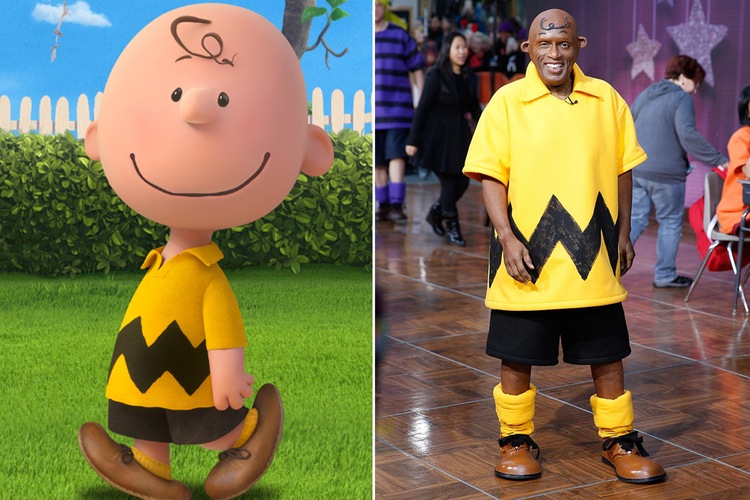
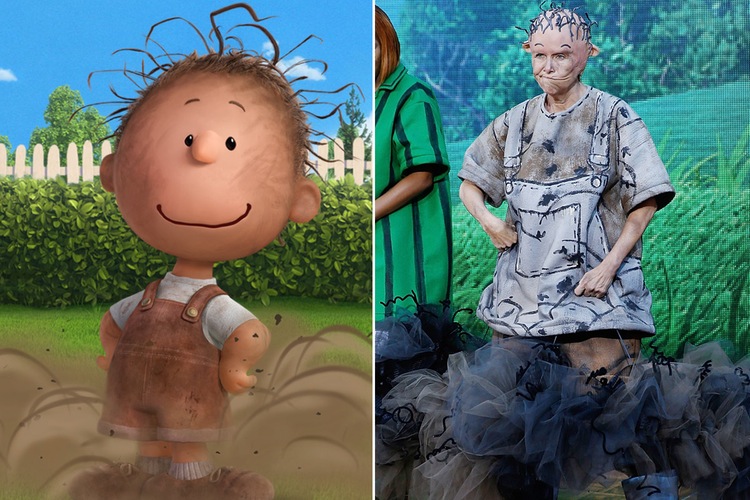
The ad campaign for The Peanuts Movie has been kind of a nightmare for me. I have a long history of being turned off by modern CG animation (yes, that includes most Pixar features; no, I’m not proud of that), so seeing a beloved property like Charles Shulz’s classic comic strip adapted to the format in the early teasers was jarring to say the least. The worst part of the conversion was that they interpreted the curl of hair on Charlie Brown’s forehead (which I’ve always seen as representative of at least a tuft) as a single, distinct pube. An endless barrage of awful-looking CG animated features like Angry Birds, Alvin & The Chipmunks IV: Road Chip, and the dismal-looking Rob Schneider Is A Polar Bear picture Norm of the North playing before the movie in the theater did little to ease my concerns. To get an idea of how horrified I was by this incarnation of The Peanuts, check out these nightmare images of Today Show anchors dressed up as characters from the the film. They’re barely made me more queasy than the film’s trailers did.

al-roker-charlie-brown-today-halloween-peanuts

carson-daly-today-show-halloween-peanuts-linus

meredith-viera-today-halloween-peanuts-pig-pen

It turns out, thankfully, that The Peanuts Movie isn’t quite as bad as the horrific shitshow I initially imagined. At best, the film feels like a decent compromise between the cynical corporate cash grab it could‘ve been & the loving tribute to an artistic institution it should‘ve been. The CG animation that initially bothered me so much was fairly easy to get used to, especially since it was accented by hand-drawn hearts, squiggles, and re-creations of the original black & white comic strip source material. For every cringe-inducing turn-off (horribly out-of-place pop music, new characters who don’t add much to the formula, over-long Snoopy-vs-the-Red-Baron asides, etc.) there’s a greatest-hits style throwback waiting to appease. Lucy’s 5¢ psychiatric help stand, Marcie’s eternal suffering at Peppermint Patty’s indifference, off-screen adults’ trumpet voices, Charlie’s kite-flying mishaps, plentiful utterances of “Good grief!” & “blockhead”, the gang’s iconic dance moves: it’s all here. And while the parents in the audience are chewing on the nostalgia, their kids are treated to a collection of timeless sight gags. Everyone wins . . . sort of.

The reason I came around to the idea of watching The Peanuts Movie in the first place was an interview in which producer Paul Feig (who I greatly respect) said he signed onto the project just to keep an eye on it, to make sure it wasn’t the cynical mess I expected. And that’s exactly how The Peanuts Movie came out as a finished product. It feels like a project that could’ve gone south at any minute, but was kept in check by a few voices of reason. There was certainly plenty of aspects of the film that I enjoyed. I was particularly relieved that the gang was allowed to remain true to themselves, just as gross & melancholy as ever. The voice acting work from the non-actor children cast was surprisingly true to past animated adaptations (Linus’ voice is eerily accurate, even) & it’s just as satisfying as ever to hear children fret over emotional crises like “coming down with a serious case of inadequacy” or having “the face of a failure, a classic failure face.” Even though “the little red haired girl” the film introduces is a largely wasted effort, I did appreciate that The Peanuts Movie stuck to a comic-strip-simple conflict in its Charlie-has-a-crush plot, detailing the embarrassment of falling in love instead of mucking up the formula with an origin story about how the gang all met or an out-of-place grand adventure. Still, I get the feeling that there will be very few people entirely won-over & in-love with what The Peanuts Movie delivers. At best, it feels like a disaster narrowly avoided, an acceptable compromise of the best & worst possible outcomes, which is something I’m actually grateful for, given my most fearful expectations.

-Brandon Ledet

Spy Kids (2001)

EPSON MFP image

fourhalfstar

campstamp

I’m not always on board with what Robert Rodriguez is selling, but when he’s firing on all cylinders, his particular brand of of B-movie absurdity can be quite endearing. I think it might be a question of earnestness. he same intentional throwback-camp aesthetic that can be somewhat tiresome in titles like Planet Terror & Machete Kills work perfectly fine in more original-leaning material like The Faculty. In some ways, then, children’s media might be the perfect arena for Rodriguez’s schtick, since it requires a certain lack of ironic detachment. His first foray into the genre, 2003’s Spy Kids, is a case-in-point example of Rodriguez’s live-action cartoon hijinks & intentional genre send-ups working best without this usual hard-wink irony gumming up the magic. In a lot of ways Spy Kids plays like a feature-length cereal commercial (complete with ad placement for fictional cereal) that takes more than a few dark turns every time it can get away with it. For a quick glimpse into what I’m getting at here, check out htis clip of Alan Cumming singing the barnburner “Floop’s Dream” in one of the film’s more sublime moments. What the what?

In the film, the aforementioned Floop (played by Cumming) attracts the attention of international superspies/sexy parents through the children’s show/criminal operation Floop’s Fooglies. Floop’s evil deeds mostly revolve around genetic manipulation that turns former spies into horrific clown monsters he dubs “fooglies” & similarly ineffective world domination plots & extreme wealth eccentricity. When he abducts the parent-spies & threatens to turn them into fooglies, it’s up to their oblivious children to take up the family business & spring into action. The movie has a great deal of fun pulling humor from the spy industry’s goofier gadgetry (like an underwater SUV or an unwieldy jetpack), but for my money almost all of its best features revolve around Floops’s horror show of a lair. A virtual reality room that’s equal part’s Dodo’s Wackyland, Star Trek‘s holodeck, and the nightmare sequences of Ken Russell’s Altered States gives the movie a nice, surreal touch. Then there’s strange details like the “thumb thumbs” (humanoid flunkies made entirely of thumbs) and the fact that the Floop’s Fooglies theme song, when played backwards, is “Floop is a madman! Help us! Save us!”. And if you have any question of just how weird this movie gets, I’d like to direct you again to the “Floop’s Dream” clip. Go ahead. Watch it a second time. I’ve been practically running it on loop.

What I like most about Spy Kids is how the Floop’s Fooglies horror show is thoroughly mixed with its regular kids’ movie fare, as if it weren’t a nightmare vision of a saccharine hellscape. Regular old kids’ movie standards like poop jokes, McDonald’s ad placement, and goofy one-liners like “My parents can’t be spies! They’re not cool enough!” fit in very inconspicuously with the Floop-flavored terror as if the latter weren’t going to wake the pint-sized target audience screaming in the middle of the night. It’s an absurd, endearing combo that makes for  much more challenging children’s feature that what you’d typical expect from a movie with such heavy reliance on CGI & fake-looking, sanitized sets. I really should not have waited to watch Spy Kids as long as I did. Not only does it stand as an example of Rodriguez at his finest,  but it also gave the world the gift of “Floop’s Dream”, a clip I’m just going to leave right here just in case you haven’t watched it yet. It’s a beautiful thing.

Bonus Points: Besides the Floop insanity, I think Spy Kids is noteworthy for being a high profile film that not only gathering Latino greats Antonio Banderas, Danny Trejo, and Cheech Marin all in one feature, but also for writing in two Latino children as its leads (even if one of the actors they cast’s heritage wasn’t quite in line with that detail in reality). That’s a rare treat indeed. There’s also a great deal of implication that the “Machete” character Danny Trejo plays in the film is the very same Machete he plays in Rodriguez’s Machete franchise. That feature is no “Floop’s Dream”, but it’s a fun little tidbit to chew on, if nothing else.

-Brandon Ledet

Goosebumps (2015)

EPSON MFP image

fourhalfstar

I say this with total sincerity, friends: the Goosebumps movie is pretty damn great. The same way films like The Monster Squad, Hocus Pocus, Witches, The Worst Witch, and (on a personal note) Killer Klowns from Outer Space have introduced youngsters to the world of horror (and horror comedy) in the past, Goosebumps is an excellent gateway to lifelong spooky movie geekdom. The Scholastic book series & 90s television show of the same name are now far enough in the past that their original pint-sized audience are old enough to have children of their own, which means that the film could’ve easily coasted on nostalgia to sell tickets & not given much thought to a longterm shelf-life. Instead, Goosebumps strives to stay true to its half-hokey, half-spooky source material, resulting in a film that’s genuinely funny from beginning to end, but still packs a sharp enough set of teeth that it might just keep a tyke or two awake at night. It’s a horror comedy for youngsters that resists the temptation of talking down to its audience the way lesser, similarly-minded films like Hotel Transylvania 2 would. The only film from the past decade that I could think to compare it to is ParaNorman, another well-balanced kids’ horror that I hold in high regard for universal enjoyability that allows for children & adults alike to bond over a love of famous monsters & spooky laughs. What could be more admirable than that?

The story at the heart of Goosebumps isn’t all that important, which is in its own way an important lesson for children to understand what to expect from their monster movies. A Regular Dude, his crush The Girl Next Door, and an annoying Third Wheel Nerd named Champ/Chump accidentally release an epidemic of horror movie creatures on the small town of Madison Delaware (which may as well have been Eerie, Indiana) when they tamper with R.L. Stine’s original Goosebumps manuscripts. The film is genuinely enjoyable before the monsters’ arrival (the first pleasant surprise), establishing a world of dumb small-town cops, single mothers trying their best, high school principals hell-bent on outlawing twerking (“If anyone is caught dancing with their butt facing their partner, they will be sent home immediately. Immediately!”), and kooky aunts with Etsy shops & relationship issues.

The only detail out of place in this well-manicured suburbia is the hermetic “Mr. Shivers”, a reclusive, nerdy creep who soon revealed to be the R.L. Stine. In a way, this detail itself is an intro to the meta horror of films like In the Mouth of Madness & Wes Craven’s New Nightmare, but it’s just a single facet of a larger crash course in horror as a genre. The film’s deep cast of spooky creatures include ghosts, aliens, zombies, werewolves, mummies, abominable snowmen, evil dogs, gigantic killer bugs, killer toy robots that would make Charles Band proud, (Wu-Tang) killer bees, and the list goes on. The only glaring absences I noticed were of vampires & Frankenstein monster types, but they honestly could’ve easily slipped by in the midst of the mayhem. The film also aims to collect classic monster movie settings as much as it does the creatures, making sure to hit up spooky graveyards, empty supermarkets, abandoned amusement parks, and The Big Dance in a sequence that recalls films like Prom Night & Carrie. It’s incredible how much ground the film manages to cover in its relatively short, remarkably tidy runtime.

Goosebumps holds an obvious reverence for its source material, a series of novels for horror-minded young’ns that the movie explains aren’t kids’ books, because “Kids’ books help you fall asleep. These books keep you up all night.” Although the film hosts some great work from lovely people like Jillian Bell, Ken Marino, and Danny Elfman (whose theremin & violin-heavy score is pitch-perfect), it’s Jack Black who stands out as the physical embodiment of that child-adult bridge. Black is a hoot as R.L. Stine, portrayed here as a dastardly nerd so intense in his reclusiveness that his imaginary creations became real (the monsters take shape from black swirls of ink when released from their manuscript prisons). I particularly like his situational one-liner “I have a deadline . . . literally,” and his indignation with being compared to Steven King. Black is also given the opportunity to cut loose in his secondary voice performance as an animatronic ventriloquist doll named Slappy (who appeared in no less than ten novels). Most outright “bad” jokes in the film are attributed to the dummy, which makes total sense logically,  but also further solidifies Black’s central role as Goosebumps‘ hokey-scary vibe personified, thanks to the fact that dolls are effortlessly creepy & just the worst.

If there are any longterm Goosebumps fanatics out there who remember the specific details of the dozens of title in the catalog, I’m sure that there pare plenty of in-jokes and winking references ready to delight you. Certain details (like a levitating poodle & an invisible prankster) went way over my head, but the titles I did remember from my schoolchild, such as The Haunted Mask & The Abominable Snowman of Pasadena, were also prominently featured in the movie. There’s also a concluding credits sequence that pays loving homage to the series’ wonderful cover art. What’s more important than Goosebumps‘ fielty to R.L. Stine’s past, however, is its loving reflections of the past of horror at large.

Obviously, mileage may vary based on individual kids’ personalities & tastes, but I have no doubt there will be large swaths of young children growing up with fond memories of this film the same way my generation fondly looks back at The Monster Squad as an early horror favorite. I noticed at least five walkouts during my screening of Goosebumps (not to mention that the film is sadly struggling to earn back its budget), but there were plenty of other kids in the audience intensely invested in the goofy mayhem. Of course, I personally would’ve preferred if  Goosebumps had been anchored more by practical effects rather than its somewhat tiresome CGI (although there were some genuinely effective visual cues like a beautiful funhouse mirror sequence & a sad little box labeled “Dad’s Stuff” in the film) but the younger generation of kids in the audience are highly likely not to care about that distinction. For them, the film is more or less perfect as a primer for horror & horror comedy as a genre, CGI warts & all and, honestly, that’s all that really matters.

-Brandon Ledet

Hotel Transylvania 2 (2015)

EPSON MFP image

three star

I’m usually pretty harsh on the kind of computer-animated children’s features that’re flimsy excuses for ensemble casts to earn a relatively easy paycheck doing voiceover work. I am, however, also very weak to the powers of pandering. For all of the Madagascar 2‘s, Angry Birds: The Movie‘s, and Minions films I’ve skipped (and will be skipping) over there’s always one or two CGI animations that drag me to the theater. I checked out Pixar’s Inside Out earlier this year, for instance, because its inner-world design looked fascinating in a dream-logic kind of way. That, however, was actually a pretty good movie. What’s much more shameful is that I couldn’t resist the recent Adam Sandler cartoon Hotel Transylvania 2. By all accounts Hotel Transylvania 2 is the exact kind of hokey CGI ensemble cast animation dreck I typically avoid. Still, I was too weak-willed to pass up a famous monsters-themed comedy featuring several SNL alumni, not to mention Steve Buscemi as a werewolf & Mel Brooks as an aging Borscht Belt Dracula. I am admittedly powerless against that formula, regardless of the film’s quality.

It’s hard to say for sure if Hotel Transylvania 2 is better or worse than its predecessor. Its lack of ambition in terms of storytelling are pretty much on par with the first film, which was centered on a *gasp* human being winning his way into the heart of Dracula’s daughter & finding his place in a social circle consisting entirely of famous monsters. That small bit of world-building already taken care of, the second film at least has a lot less leg work to do, which is a blessing. There are some interesting ideas at play here about how the young lovebirds are treated as a “mixed couple” in both of human & monster societies (despite both being blindingly white) and the ways their first child together struggles to find a sense of identity in one of the two worlds. The rest of the film is sort of a loose jumble of disconnected thoughts on gentrification, social media addiction, a Luddite’s place in the modern world, and so on. The race metaphor in the human-monster relations is half-cooked at best and doesn’t amount to much more than ludicrous statements like, “Maybe you’ve let humans into your hotel, Dad, but I don’t think you’ve let them into your heart.” Whatever. Let’s be honest, I was mostly there for the former SNL staff & the monster-themed puns, something that the film was obviously also more invested in as well.

As far as former-SNL cast members go, Hotel Transylvania 2 hosts voice performances from the likes of Adam Sandler (duh), Andy Samberg, Molly Shannon, Dana Carvey, Chris Katan, David Spade, Chris Parnell, and Jon Lovitz. The movie was also co-written by TV Funhouse creator/all-around comedy genius Robert Smigel (not putting in his best work, but still). That’s not even mentioning contributions from non-SNL comedians Nick Offerman, Megan Mullalley, Rob Riggle, Keegan-Michael Key, Steve Buscemi, and, of course, Mel Brooks. As these things generally go, it’s a fantastic cast put to minimally effective use. The movie may be monster-themed, but it definitely tends more towards cute than scary. The bats look like kittens & a baby vampire with bright red curls for hair isn’t likely to appear in any child’s nightmares. The most horrific the film gets is in the (humorously) blank expressions of the hotel’s zombie staff. I appreciated a couple of the film’s isolated punchlines, like a version of “Twinkle Twinkle Little Star” that goes, “Suffer, suffer, scream in pain. You will never breathe again,” calling back to the first film’s “Hush little baby, don’t say a word. Papa’s gonna bite the head off a bird.” For the most part, though, the jokes are worth maybe an occasional light chuckle (whenever they’re not vaguely homophobic, an unsavory line of humor Sandler can’t seem to resist even in his children’s media). Even the decades-old Al Lewis travesty Grampire: My Grandpa is a Vampire has a better grasp on portmanteau than this film’s less satisfying concoction “Vampa”. It’s no matter. I got what I wanted out of Hotel Transylvania 2: former SNL staff, hokey monster puns, and a werewolf Steve Buscemi. If that’s not enough to hold your interest for a feature (and it really shouldn’t be; I’m weak), I highly recommend instead tracking down the much-superior-in-every-way 2012 Laika production ParaNorman for all of your animated monster movie needs.

-Brandon Ledet

Anna to the Infinite Power (1982)

EPSON MFP image

fourhalfstar

I’ve mentioned before, in my review of The Legend of Boggy Creek, that I used to look forward to reading Maitland McDonagh’s “Ask FlickChick” column each week with great anticipation as a preteen. Some movies, like Boggy Creek, were perennial favorites, movies half-remembered by children of the seventies and eighties from repeated airings on late-night cable or watched secretly at mostly-forgotten sleepovers. One such film that stuck in the minds of that generation’s children was a film about a young girl who discovers that there are other girls who share her face; McDonagh was often happy to inform them that they were remembering the made-for-TV children’s thriller Anna to the Infinite Power, which premiered on HBO in 1982 and on home video in 1983.

The film’s plot follows Anna Hart (Martha Byrne), the brilliant but bratty daughter of scientist Sarah (Dina Merrill) and piano teacher Graham (Jack Ryland). Anna is a genius, but she has a history of stealing and misbehaving, prioritizes her scientific studies to the extent that her artistic accomplishments are mechanical and uninspired, is afflicted with migraines caused by flickering lights, and is openly disrespectful to her teacher (Loretta Devine, who unfortunately doesn’t get much to do here). Graham doesn’t understand why Sarah is always so defensive about Anna’s brilliance, but he chooses to let it go. The couple also have an older son, Rowan (Mark Patton, star of A Nightmare on Elm Street 2: The One with the Homoerotic SubText), who is studying music as well. Rounding out the main cast is Donna Mitchell as Michaela Dupont, another piano teacher who has moved in across the street from the Harts at the time that the film opens.

One night, Anna has a dream about being on a rough flight and being comforted by a woman who seems to be her mother, but isn’t. When she awakes the next morning, she finds that there has been a plane crash in Philadelphia and a girl who looks like her is interviewed by a reporter at the scene. Rowan, who is initially sceptical, finds a photo of this other Anna in the newspaper and agrees to help his sister figure out what’s going on. The two track down the home of the second Anna, but when her mother answers the door, she claims to have no daughter; when they leave, they are attacked by a biplane piloted by someone who has seen North by Northwest one too many times. They escape this murderous pilot and are found by their mother, who tells them the truth: Anna is just one of many girls who were cloned from a scientist named Anna Zimmerman, a girl who was the daughter of a scientist and a musician and lived through the Holocaust to become a scientist in her own right, but died just as she was on the verge of finalizing her designs of the “replicator,” a food generating device that would end world hunger. An unnamed genetics company devised a plan to clone Zimmerman and raise these clones in a similar family structure with the goal of one day recreating an Anna who can complete the replicator device.

For a movie ostensibly made for children, this is a dark but engrossing and ambitious feature with a great premise that paints the world in ambiguous colors. The reveal that the flickering lights cause Anna pain because Anna Zimmerman’s sister, a composer, was well liked by a Nazi commandant who forced her to play her trademark sonata (which is also the film’s main musical leitmotif) by candlelight is particularly grim; in an interview on the 2010 DVD release of the film, Patton talks about how he is still recognized on the street for his role in this movie, and that he has heard from many people that they first learned about the Holocaust as children by watching this film. The horrifying, soul-crushing truth about the extent of the historical event is only alluded to here, but I can’t remember the last time I saw a kid’s movie that explicitly referenced concentration camps, outside of those narratives that are based on the lives of real survivors.

In contemporary children’s media, we rarely see stories that explicitly tell children to question authority, or which suggest children should be given agency in the decisions which affect their future life. Here, Anna is exposed to the cruel fact of life that adults make terrible decisions, that parents lie to their children and to each other (Sarah volunteered to be a mother in the Anna program, but Graham knew nothing about it), and that grown-ups can be as easily manipulated as children, or choose to do immoral things because they, like children, are trapped within the horizon of their own beliefs. Most importantly, Anna comes to realize that companies (and governments) can and will sacrifice innocents in the pursuit of a “greater good,” although the ends—be it a stronger, independent Germany, as was the case for the regime that nearly killed Anna Zimmerman, or the end of world hunger, as was the goal of the experiment that created and nearly destroyed Anna Hart—do not justify the means. By the time a youngster watching this movie learns that the organization that created Anna is completely unethical and evil (Michaela is actually the only escapee/survivor of a previous batch of Annas, who were killed along with their families when they were unable to recreate Zimmerman’s work, a fate that is planned for Anna Hart’s fellow clones and their respective families before Michaela intervenes), they’ve probably learned more about human nature than they could have imagined. Life is cheap, trust is a commodity, and blind faith in a higher order of authority can lead to destruction of the highest and most disturbing caliber.

Anna is not a perfect movie. The production values are very low, and this shows in a lot of the scenes, particularly early in the film. Still, the movie is an exercise in economical filmmaking both monetarily and within the commodity of time; not a single frame or note is wasted, and all of it builds towards an ambiguous ending that, judging by the sheer number of people who wrote to McDonagh about it, left an impression on an entire generation of kids who were lucky enough to grow up with HBO. I hate to sound like an old fart, but the 1980s and 1990s were a glorious time for children’s media; animated films did not shy away from being somber and occasionally frightening or macabre, and television was more open about the fact that adults didn’t know everything. Today, we live in a world where children’s media underwent a massive shift in the first part of the new millennium, as American culture moved from inquisitive outspokenness to enforced jingoistic patriotism and adherence to authority in the wake of 9/11, and the TV programs and movies produced for children followed suit, turning into a pablum of trite, cheery shows with little reflection of reality. Although the tides of this anti-intellectual movement have finally started to turn (most notably in the popularity of The Hunger Games, which I find laudable because of its themes that the government can’t be trusted and that media is intentionally manipulated to prevent criticism of toxic institutions), parents would be well served by looking back to the late twentieth century for realistic heroes and important messages about society and its ills. Anna to the Infinite Power is definitely something I intend to show to my (future, hypothetical) children, and I would recommend you do the same.

-Mark “Boomer” Redmond

The Little Mermaid (1989)

EPSON MFP image

fourstar

(Viewed 8/21/2015)

The Little Mermaid is a movie that I’ve carried with me for my whole life. I can’t remember the first time that I watched it . . . it must have been as a two-year-old on the VCR in living room, embraced by the blue-gray arms of the La-Z-Boy. So perhaps writing a review of this movie is unfair in a way. I’m certainly filtering it through the lens of nostalgia.

By way of review, there’s not much to say that hasn’t been said. The Little Mermaid is gorgeously animated, the songs are catchy, and the plot and pacing are sprightly. This movie is good enough to have resurrected Disney’s animation empire after decades of decline. It won two Oscars.

Watching the movie as a kid, The Little Mermaid was a beautiful fantasy. My guess is that you couldn’t get a little girl near a body of water without a reenactment breaking out. I seriously considered becoming a mermaid when I grew up.

It turns out that there are in fact a handful of professional mermaid gigs in the United States.

For adult audiences, The Little Mermaid presents some food for thought and entertainment. Ursula’s vampy, campy brand of evil, performed with oodles of moxie by Pat Carroll, draws from Divine’s drag performances. Ursula oozes through her lair, winking at the audience over her Faustian deals and feminine wiles. King Triton is actually doing his best to protect and discipline his teenage daughter, and is in fact an old softy under all of the yelling. Ariel is scrappy and adventurous, but learns no lesson from her risky choices and gets a fairytale ending handed to her by her pops. Prince Philip, in an interesting inversion of cinematic gender roles, is almost an empty character and more of a plot device to allow for Ariel’s growth as a character.

The Little Mermaid as a whole is entertaining. The music is catchy and fun, the animation is luscious. I can recommend this movie in good faith to anyone looking for a break from Frozen . . . but you might check in with your kids about things like consequences of your actions and expectations about romantic relationships.

-Erin Kinchen

Babe is the Undisputed King of Cinematic Talking Pigs, but Who are the Pretenders to His Throne?

EPSON MFP image

It’s fairly well established that the Babe franchise is height of live-action, talking-pig children’s media. If you ask someone, “Hey, what was that movie with the talking pig?” it’s highly likely that Babe will be the response. The technical achievements of the first Babe film alone (which include animatronic puppets designed by Jim Henson’s Creature Shop & an Academy Award win for Best Visual Effects), mark it as the height of quality in talking pig media. That sense of movie magic wonder is backed up by a fantastic, effortlessly affecting script (adapted from a 1983 novel called The Sheep-Pig), as well as a intense fever dream of a sequel, our current Movie of the Month, George Miller’s Pig in the City. Babe is an impossibly cute little swine with an angel’s singing voice & a heart of gold that unites even the most disparate of beasts across species lines. In short, he is talking pig perfection.

Of course, being the king of any genre is going to attract some pretenders & Babe has more than his fair share. Starting as soon as the first Babe film’s 1995 release date, there have been multiple live-action piggies looking to wean off some of its swine-adoring audience. I’ve found four pretenders to the Babe throne, all of varying quality. None were fit to shine the king’s hooves, but a couple were at least mildly enjoyable.

The four Babe pretenders are listed below in order of their release dates, hopefully serving as a guide for which ones to avoid in the case that two perfect Babe features weren’t enough to satiate your talking pig needs.

Gordy (1995)

EPSON MFP image

twostar

Gordy, the original pretender, is a movie so slick in its Babe-usurping ambitions that it even beat the first Babe film to the theaters by a few months in 1995. Considering the length of Babe‘s production & the high-profile nature of its visual effects vs. the all-around lackluster quality of Gordy, I feel it’s pretty safe to assume that the latter was a mockbuster rushed into production in order to beat Babe to the punch, delivering shoddily-constructed cute pig antics before the true king arrived. Gordy is the most blatant Babe imitator & also one of the least enjoyable. It’s just an absurdly empty picture, relying on a cutesy, seemingly made-for-TV farm life aesthetic complete with line dancing & a honky tonk soundtrack. Even Gordy‘s visual effects pale in comparison to Babe‘s, relying on an ancient, possibly peanut butter-aided Mr. Ed effect to simulate its talking farm animals.

The best thing Gordy has got going for it is its titular piggy, which I’ll admit is a cute little bugger. As the film awards Gordy front-page publicity as a “hero pig” (for saving some rich dude’s grandson from drowning in a swimming pool of all things) & dresses him up in adorable costumes for a photoshoot (as a scuba diver, a professor, a surfer, etc.) it become increasingly apparent that the pig’s natural cuteness is all the film had in mind. As I mentioned in my exploration of the horror film Pigs, there’s a narrative focus on makeshift families that feels oddly ubiquitous in all pig media (perhaps due to the inherent domesticity of farm life) and both Gordy & Babe participate in that angle. Like with everything else, Gordy’s journey to unite two single parent families (including one headed by an uncomfortably creepy country singer) is much less satisfying than Babe’s struggle to fit in on his own farm. The only entertaining aspects you’re likely to find here is a couple chuckles in seeing Gordy in the scuba gear & in scenes where he teaches human children to understand pig talk, which apparently is a talent reserved for “people who take the time to understand animals, especially the pure of heart.” Blech.

My Brother the Pig (1999)

EPSON MFP image

onestar

As thoroughly empty as Gordy is, it still doesn’t represent the depths of live-action pig cinema. Things get much worse. The straight-to-DVD 1999 comedy (in name only) My Brother the Pig offers even less than Gordy in the way of entertainment and calls into question exactly how films this terrible make it to completion, especially considering the volume of them that are made for pint-sized audiences. Do we really hate children this much? The movie’s only saving graces are in the odd sensation of watching a teen Scarlett Johansson & Eva Mendes starting their careers in hopelessly mindless dreck.

In My Brother the Pig a 13 year old ScarJo struggles to live with her rascal little brother & pristine co-ed nanny, all the time believing that she doesn’t get the love & attention that she deserves. In all honesty, she deserves shit. Her brother may be annoying but at least he does mildly interesting things from time to time (like hosting food fights set to late-90s ska) instead of endlessly complaining like a spoiled brat. Anyway, the mischievous little bro activates some magic crystals through some kind of spilled ice cream spell and is unexpectedly transformed into a pig. This prompts a road trip to Mexico in order to visit Mendes’ family, who happen to be “keepers of the animal spirits.” I promise you it’s a lot less exciting than it sounds. My Brother the Pig only barely even reaches the basic “talking pig” requirements of this genre thanks to the transformation (which “amusingly” leaves him with a pig’s tail) and a particularly silly rendition of “Old MacDonald Had a Farm”. It’d be more than forgivable if you skip this one entirely.

Animal Farm (1999)

EPSON MFP image

three star

Just one month after My Brother the Pig‘s home video release, 1999’s Hallmark adaptation of Animal Farm aired on cable television. Unlike Gordy & My Brother the Pig, Animal Farm is actually pretty decent. It’s far from the technical achievement of Babe, but it does feature a nice mix of talking animal techniques, including all three approaches in the genre: animatronics, CGI, and the good, old-fashioned Mr. Ed trick. Just like with Babe, the animatronic puppets featured in Animal Farm were provided by Jim Henson’s Creature Shop. And they look pretty great, especially for a made-for-TV production. The sheep, collies, pigs, geese, and horses also call into mind a similar scenario as Babe, but it’s a more-than forgivable similarity, especially considering those animal’s real-life ties to farm life as well as the fact that Animal Farm‘s source material outdates The Sheep-Pig by nearly four decades.

One of the immediate differences you’ll notice between Babe‘s talking pig & those of Animal Farm is that George Orwell’s creations are much more grotesque & realistic than cute. Instead of the adorable voice work provided by the immensely talented (and, unfortunately, recently deceased) Christine Cavanaugh in Babe, the pigs in Animal Farm boast intense, booming voices. They pose themselves as intellectuals, authority figures, and (as the story goes) cruel bullies that are worlds away from Babe’s loveable personality. The kind wisdom of Kelsey Grammar’s voice work softens the portrayal of swine just a tad in the picture, but for the most part pigs are terrifying monsters here with their own authoritarian brutality as well as black & white propaganda footage. I’ll give Hallmark a lot of credit there: they actually put a lot of effort into preserving Orwell’s well-known story for the screen, not at all softening its violent edges for young audiences. For instance this is the only film in the genre where threatened trips to the butcher’s block for pigs are actually fulfilled. Overall, Animal Farm‘s a pretty decent adaptation of an important, but perhaps too-familiar work, far better than what I was expecting based on its pedigree.

Charlotte’s Web (2006)

EPSON MFP image

threehalfstar

Speaking of surprisingly well-executed adaptations with source material that predates Babe’s The Sheep-Pig origins, Nickelodeon’s 2006 take on E.B. White’s novel Charlotte’s Web is actually pretty great as well. It’s hard to say exactly why this version of Charlotte’s Web works so well on its own, but it does feel the most distinguished from Babe in terms of the talking-pig genre, so it at the very least it sidesteps a lot of comparative scrutiny. Even the state-of-the-art puppetry of Babe is entirely avoided here, replaced by the omnipresent use of CGI that has dominated children’s media in the past decade. I am usually turned off by this kind of CGI-dependent kids’ media, but I still ended up finding Charlotte’s Web to be the most enjoyable live-action, talking-pig film that didn’t feature Babe, the genre’s undisputed king.

I’m willing to attribute Charlotte’s Web success to the casting just as much as the inherent charm of the source material. Dakota Fanning plays Fern competently & the “humble”, “terrific”, “radiant” piggy Wilbur was voiced by relative unknown Dominic Scott Kay. It’s the rest of the animal personalities that really makes the movie work. Julia Roberts is greatly cast as the gentle, titular spider, as is John Cleese as a pompous sheep. Other voices include Oprah Winfrey, Robert Redford, Reba McEntire, Kathy Bates, Andre 3000 & Cedric the Entertainer. That’s quite a ridiculous crew. What really holds the film down, though, is the all-too-perfect decision in hiring Steve Buscemi to voice Templeton the Rat. There’s some corny “children are better listeners” bullshit echoed from Gordy here (which most likely borrowed that sentiment from White’s novel) as well as some lame humor in the film’s repetitive fart jokes & lines like “What the hay?!” & “I guess the yolk’s on me”, but Buscemi’s turn as Templeton as well as the decision to remain faithful to the source material made the film an enjoyable little diversion, just barely more entertaining & distinct than 1999’s Animal Farm. And a lot less creepy.

There might be something to be said about the fact that the best three live-action, talking pig films were all adaptations of pre-existing novels. The narrative slightness of Gordy & My Brother the Pig at the very least prove that a cute pig alone is not enough to carry a film (duh). Still, there’s something special about Babe & Pig in the City that the other two enjoyable adaptations listed here don’t even come close to touching in terms of quality & rewatchability. Babe is the king. No matter how enjoyable, the film versions of Charlotte’s Web & Animal Farm are merely the best among the pretenders to his throne.

For more on August’s Movie of the Month, George Miller’s Babe 2: Pig in the City, check out our Swampchat discussion of the film, our exploration of how it serves as a key to understanding Miller’s strange oeuvre, and last week’s look at its companion in live-action, pig-themed horror, Pigs (1972).

-Brandon Ledet