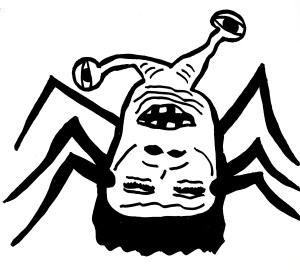
The Thing (1982)

EPSON MFP image

fivestar

I’ve greatly enjoyed every John Carpenter movie I’ve ever seen, save maybe a couple nu metal-era misteps like Ghosts of Mars. As much as I love the director’s landmark films & his soundtrack work, though, there are still a few major titles from Carpenter that I haven’t yet made the effort to catch up with. That’s why it was a godsend that the Prytania Theatre is dedicating the October schedule for its Late Night movie series to Carpenter’s work, culminating at the end of the month, of course, with a screening of Halloween. As I mentioned in my recap of the theater’s recent screening of Cinema Paradiso, The Prytania is a century-old New Orleans institution, the oldest operating cinema in the city, a fine venue for seeing great films for the first time. It was where I first saw Jaws, their frequent selection for America’s favorite holiday: Shark Week. When Robin Williams passed away last year it was where I first saw Terry Gilliam’s The Fisher King. And, most recently, it was where I finally watched John Carpenter’s masterful monster movie The Thing, screened on the first truly cold night of the year (how’d they plan that?), so that you could feel a fraction of the chill of the film’s Antarctica setting in your bones. Technically, it’s still fall outside, but when Kurt Russell gripes in the film, “First goddamn week of winter,” it was easy to empathize. All that was missing was a shape-shifting alien & a bottle of Jim Beam.

The Thing is essentially a 1950s Roger Corman monster movie taken to its most logical & most pessimistic extremes. In fact, the short story the film is based on had been previously adapted into an actual 1950s creature feature (and would later be resurrected for an episode of The X-Files & a cheap CGI trifle of a remake). A practical effects masterwork, The Thing‘s titular creature is just as ambiguous in form as it is in name. It’s a grotesque, rapidly evolving mess of undercooked biology, calling into mind the hot mess of vaguely defined monsters in the back half of 1981’s psychological horror Possession. The thing arrives on Earth via a disc-shaped, Millennium Falcon-esque UFO in the opening credits with very little detail provided for its origins. A complicated “organism that imitates other life forms,” the thing is alien in every sense of the word. It transforms in ways that are shocking & disgusting because they don’t make sense in the context of anything we’ve ever seen or understood in biology. Even in cinema, we’ve seen dogs used to create tension or terror, but never by splitting their faces open to reveal a mass of spider-like tentacles. We’re used to monsters killing for sport or nourishment, but not so much a creature that infiltrates a species through physical imitation, like a disease. Cellular activity found in corpses, blood that actively avoids extreme heat, half-cooked human imitations that look just about almost right except for long claw-like hands that resemble gigantic, deep-fried softshell crabs: the thing is far beyond human comprehension of basic biology, constantly opening compartments of itself like horrific Russian dolls to reveal more & more layers of ambiguous terror. Too often sci-fi horror models the designs of its creatures around what we already know. The Thing‘s creature might be the most alien alien to ever grace the screen.

Finding themselves face to face with this unknowable threat is an all-male crew of scientific researchers isolated in Antarctica for the winter. Even as scientists our protagonists have a difficult time making sense of the thing. Kurt Russell’s character exclaims early on, “I don’t know what the hell’s in there, but it’s weird & pissed off, whatever it is.” Once the thing infiltrates their ranks & starts imitating human lifeforms (a computer model helpfully explains, “Possibility that one or more crew members are infected: 75%”), everyone becomes suspect. The group of goofs, once prone to drunkenly playing computer chess, rollerskating to Stevie Wonder, and smoking six-paper joints in the lab, soon has to ask of each & every team member, “How do we know he’s human?” The notorious scene of extensive, pointless, paranoid violence in Carpenter’s They Live (“Put the glasses on! Put ’em on! “) is drawn out here to a full length narrative. Nearly every member of the crew is an affable goof, so it’s a very tense atmosphere in which at least one of them is not what they seem, but instead is a shape-shifting mess of mismatched body parts & gore.

I’m not sure of the exact reason The Prytania is spotlighting John Carpenter this month (not that I would complain if they did so every October), but it does feel like kind of the perfect time to do so. After scoring his own films for decades, the director just released his first studio album, Lost Themes— complete with his first music video & live concerts. Screening They Live earlier this month was a fitting tribute to the recently deceased “Rowdy” Roddy Piper, as it was easily his best work outside the wrestling ring (and I’m bummed to say I missed it). Even in a more general sense, the current cinematic climate is adoringly looking back at the Carpenter aesthetic & it’s all too easy to see echoes of his work in films as recent as The Guest, It Follows, and Cold in July. In other words, everything’s coming up Carpenter.

If I only catch one film during this mini-Carpenter Fest, I’m glad I at least got to experience The Thing for the first time on the big screen. The movie’s visuals are on par with the best the director has ever crafted. The strange, rose-colored lighting of emergency flares & the sparse, snow-covered Antarctica hellscape give the film an otherworldly look backed up, of course, by the foreign monstrosity of its titular alien beast. The film’s creature design  is over-the-top in its complexity and I sincerely hope every single model made for the film is preserved in a museum somewhere & not broken into parts or discarded. Also up there with Carpenter’s best work is the film’s dark humor, not only in Kurt Russell’s drunkenly cavalier performance, but also in the absurdity of the film’s violence & grotesqueries. It played very well with a midnight, BYOB audience. The only thing that’s missing here from Carpenter’s typical masterworks is one of his self-provided, glorious synth soundtracks, but with a pinch hitter like Ennio Morricone stepping in to fill the void, it’s near impossible to complain. The Thing is a perfectly crafted creature feature, one that even satisfies art cinema tastes with a resistance to tidying up its ambiguity in a bleak, mostly open conclusion. It’s by no means a stretch to rank it among the best of Carpenter’s works & I’m grateful to The Prytania for providing the opportunity to see it large, loud, and (in the spirit of the film’s isolated crew of scientific researchers) more than a little drunk with a live audience at a late hour. It was special.

-Brandon Ledet

Masters of the Universe (1987)

EPSON MFP image

threehalfstar

campstamp

I was a huge He-Man fan as a kid. Huge. The biggest. My light-up, plastic He-Man sword that made electronic clashing noises when you banged it against imagined enemies & inanimate objects was a prized possession. That is, until I moved onto the next well-marketed obsession: Teenage Mutant Ninja Turtles, Power Rangers, WWF, whatever. It’s curious that although I watched the cartoon religiously & loved my plastic sword that bellowed “By the power of Greyskull!” when you pressed the right button on the handle, I somehow never watched the He-Man movie (not that I can remember, anyway). Promised by infamous schlock producers Golan-Globus to be “the Star Wars of the 80s”, 1987’s Masters of the Universe bombed. Hard. Critics hated it. It failed to make a profit. It still, nearly three decades later, holds a mere 17% on Rotten Tomatoes’ Tomatometer. In short, the film was & remains a failure.

Well, at least Golan-Globus & the Canon Group got the Star Wars claim partly right. Sure,  the film was far from the technical marvel, financial goldmine, or cultural landmark that Star Wars was, but Masters of the Universe at least made its best effort to mimic the visual style of the George Lucas classic. While the film was at it, it was also keen to borrow some visual ideas from Jack Kirby. And the covers to oldschool fantasy novel paperbacks & story records. The resulting aesthetic is a fascinating mix of bleep-bloop sci-fi machines & the medieval sorcery of skulls, magical crowns, and wizard staffs. Masters of the Universe excels most in costume in set design. Yes, you can see constant Star Wars reminders in the format of the opening credits & costuming (“These soldiers aren’t Star Trooper knockoffs! They’re uniforms are black! They’re different!”), as well as Skeletor’s irrefutable Darth Vader vibes, but there’s oh so much more going on. Besides the medieval wizardry adding an extra layer of visual cool (I’m serious!) to the Star Wars appropriation, the film is also bold enough to take the freakshow on the road. He-Man (played by a perfectly cast Dolph Lundgren) & his three intergalactic cohorts take a trip through a portal (somewhat resembling God’s anus) that results in their arrival in 1980s California. By the time Skeletor & his cronies arrive in a morbid parade procession in downtown Los Angeles, bent on world domination, the film reaches its full potential as a goofy trifle trying to modernize/cash in on that Star Wars magic.

The reasons why large stretches of the He-Man movie are set in America, even outnumbering the scenes set in the fictional land of Eternia, don’t really matter. There’s a MacGuffin called “The Cosmic Key” (presumably the same one that provides motivation for pro wrestler Stardust) that lands He-Man & his crew in California, but it honestly doesn’t amount to much significance. Masters of the Unvierse is far more entertaining if you clear your mind of plot-related concerns & focus on the ridiculous visual feast laid before you. For instance the question of why He-Man would bring a sword to a laser fight isn’t nearly as satisfying as the cartoonish spectacle of He-Man weilding a sword in a laser fight. The exact reasons why Skeletor’s third act acquisition of grand galactic power would transform his costume into a golden, intergalactic, imperial ensemble that feels like the best Jack Kirby knockoff to ever grace the silver screen don’t matter nearly as much as the image itself, which is a wonder to behold, however brief.

Similiarly, it would be smart for dedicated fans of the He-Man cartoon (if they’re still out there) to disregard all plot & character details they remember from the television show. Instead of the all-powerful Sorceress’ gigantic eagle headdress, she wears a complex crystal crown. There’s no mention of He-Man’s gigantic feline sidekick Cringer/Battle Cat. Nor is there any mention of He-Man’s “true” identity, Adam, which is really just He-Man wearing more clothes than usual (not that his own parents can recognize him in his skimpy costume). Gone also is He-Man’s awful Prince Valliant haircut. It’s kind of interesting what elements do remain of the original cartoon, however accidental. Many of the episodes of the original show consist largely of He-Man & pals searching for one thing or another instead of actually battling Skeletor & his evil gang. In the movie, this search happens to be a pursuit for the Cosmic Key. Curiously, what also remains from the show is the oddball sexuality seeping through the characters’ skimpy costumes & penchants for sadomasochistic torture. Very early in the film it becomes apparent that Masters of the Universe is just as interested in He-Man’s pectoral muscles as Russ Meyer would’ve been if they happened to be gigantic breasts. There’s also a scene where our hero (who Liz Lemon would almost certainly refer to as a “sex idiot”) is getting beaten at Skeletor’s command that I’m pretty sure has inspired a new fetish in me: laser whips.

However, a lot of what makes Masters of the Universe a fun watch, besides the surprising high quality of its set & costume design as well as its visual effects, is when it disregards its source material & basic reason completely. For instance, once The Cosmic Key is in the hands of a bonehead Californian musician, its keys are revealed to have musical tones to them that allow it to be played like a synth. Because of this detail, it’s rock & roll that saves the day just as much as, if not more than, He-Man. With some goofy rock & roll/medieval space wizard culture clashes like this, combined with roles filled by Lundgren, Billy Barty, and Courtney Cox, as well as some super cool villains that include a humanoid lizard, a werewolf-looking beast thing, a humongous bat, and their space age Rob Halford friend, Masters of the Universe makes for a really goofy picture. The visual accomplishments occasionally elevate the material, but it’d be untruthful to sell the film as being good for anything but a lark. Fans of shoddy Star Wars knockoffs, 80s cheese, and Jack Kirby cosplay are all likely to find something of value here. I wasn’t quite as enthusiastic about the He-Man film as I used to be about my toy He-Man sword (how could I be?), but I ended up enjoying it far more than I expected.

-Brandon Ledet

The Invisible Ray (1936)

EPSON MFP image

three star

campstamp

One thing Universal Pictures definitely got right in their series of Boris Karloff & Bela Lugosi collaborations was allowing the two actors to stray from their legendary roles as the Frankenstein monster & Count Dracula. Unfortunately for Lugosi, the 1936 picture The Invisible Ray only allowed him to stray as far as the role of a mad scientist, something he had played almost as often as he portrayed the world’s most famous vampire. Fortunately for the audience, the film made enough room for two mad scientists, so Karloff & Lugosi could continue living their offscreen professional rivalry in meta, fictional contests. Karloff always gets top billing in these pictures, which I’m sure drove Lugosi mad, but in their first few movies together they typically traded the narrative spotlight back & forth. In The Black Cat they shared it. In The Raven Lugosi stole the show. In The Invisible Ray Karloff actually earns his top billing, playing the more interesting, omnipresent mad scientist of the pair.

The best The Invisible Ray has to offer is in the spooky mad scientist sci-fi horror in the the two segments that bookend the duller half of the film. The promise of this antiquated sci-fi horror glory is apparent as soon as the film’s “Forward”: “Every science fact accepted today once burned as a fantastic fire in the mind of someone called mad. Who are we on this youngest of planets to say that the INVISIBLE RAY is impossible to science? That which you are now to see is a theory whispered in the cloisters of science. Tomorrow these theories may startle the universe as a fact.” So what “science fact” are we to look forward to in the future? Apparently an alien element known as Radium X, delivered to Earth via a “few thousand millions of years” old asteroid crash has been discovered by Karloff’s maddest-of-all scientist. Karloff has a million & ten different uses for Radium X that range from curing blindness to the creation of a sort of death ray. Too bad exposure to the element causes his skin to glow in the dark & the gentlest of his touches to kill on contact. Lugosi’s less-mad scientist wants to use Radium X to help prove his vague theories about how “the Sun is the mother of us all,” and although the two men work together on the element’s discovery & procurement, they disagree on its practical applications, something that gives Lugosi’s dissenter the moral high ground once Karloff’s touch becomes luminous & deadly. In a lot of ways this reflects their real life professional rivalry, seeing how they both had a distaste for one another, but worked on eight feature films together anyway.

I’ve skipped over a lot of the film’s second act shenanigans, which involve a lengthy expedition to Africa in the quest to harvest Radium X from the asteroid crash site. This being a 1930’s film, there’s a lot of unseemly representation of black characters in these scenes as subservient, easily frightened native tribesmen, but if nothing else this is the first instance I’ve seen of a non-white character having a speaking role in any Karloff/Lugosi collaboration so far. There’s also some thought given to how women’s contributions to the scientific community, represented here in Karloff’s much-suffering wife & mother, are often attributed to men. Of course, these instances of non-white, non-male representation are a little thin & undercooked. At best, it’s a modest start & not much more. As I said before, the best The Invisible Ray has to offer is in its mad scientist spookiness. Early scenes featuring a Frankenstein-esque castle being repurposed as a planetarium provide some great, oldschool outer space weirdness, which combined with Karloff’s transformation into The Very Visible Man supplies The Invisible Ray with its most memorable elements. Karloff is particularly captivating in the film, whether he’s donning a stunning welding mask & cape combo (complete with rubber gloves), glowing like a nightlight, or dispensing of his enemies with the simple act of a genteel handshake. By comparison, Lugosi’s presence is far more understated, distinguished only by a goatee that makes him look like a mid-90s alt bro. The Invisible Ray was far from the pair’s best collaboration at the time of its release (that would be The Black Cat), but it’s also far from their nadir. In short, it’ll do.

-Brandon Ledet

Turbo Kid (2015)

EPSON MFP image

fourhalfstar
campstamp

Functioning as an unassuming but surprisingly elegant eighties nostalgia vehicle, Turbo Kid is a New Zealand-Canadian co-production starring Munro Chambers (formerly Eli of Degrassi TNG) as “The Kid,” an otherwise-nameless survivor of a nondescript apocalypse fighting to stay alive in the distant, irradiated future year of 1997. His hero is comic book character Turbo Blaster, master of the Turbo Punch, and he obtains water (which is becoming less drinkable by the day) by trapping and trading mutant rats. His life changes when he meets and reluctantly befriends Apple (Laurence Leboeuf), a strange girl who comes from the other side of the wasteland, and discovers an underground bunker containing the Turbo Blaster’s real armor and weaponry. The master of this domain is the implacable Zeus (Michael Ironside, because of course), a warlord who is attended by his masked lieutenant Skeletron (Edwin Wright), a voiceless monster with a metal skull mask and razor-studded football pads. When Apple, the newly christened Turbo Kid, and renegade cowboy Frederic (Aaron Jeffery) are captured by Zeus to compete in his murderous bloodsports, the trio learns that the water they’ve been drinking is made of the same stuff as Soylent Green; they escape and begin to take the fight to Zeus.

This is an eccentric movie, and it’s definitely not for everyone. Simon Abrams of RogerEbert.com refers to the film’s aesthetic as an “infantilizing vintage fetish,” which isn’t inaccurate but fails to account for how much joy a properly attuned viewer can derive from the film’s strange blend of innocence and gore, born from nostalgia for a time when films like this were more commonplace. The late eighties and early nineties were a strange time, when R-rated films like Robocop, Police Academy, and Rambo were made for adults but marketed to children in the form of action figures and cartoon adaptations, and the peculiarity of that idiosyncratic time acts as a kind of unstated thesis or leitmotif at the core of this film. So much of the movie plays like something that a group of kids would make in their backyard, with the prominence of playground equipment in the areas where Kid spends his time, his eighties kid dream bedroom in the underground station where he has made a home, and the fact that the only apparent mode of transportation is by bicycle (presumably due to a lack of fuel); with this in mind, it would be easy to assume that the movie would feel like it was made for children as well, until the ludicrous blood squibs start popping off.

The film’s darker comedy elements come from the fact that this flick is very, very violent. And bloody. Underneath the primary colors of the Turbo suit and the Punky Brewster by-way-of Caravan of Courage: An Ewok Adventure sartorial choices, there’s gore to satiate even the most bloodthirsty viewer. At one point, a person’s body is blown in half, and his torso and head land atop another person’s shoulders, effectively blinding him and turning the 1.5 men into a human totem pole; it’s so over-the-top that it crosses a line… until the bottom half of said mauled fighter also lands on yet another person’s shoulders, and skips right back across the line to be bloody hilarious once more. Skeletron’s weapon of choice is a gauntlet that shoots saw blades (like the makeshift weapons from Blood Massacre), which provides plenty of opportunities for fountains of blood, and even Turbo Kid’s overpowered gauntlet causes people’s bodies to burst like giant hemoglobin balloons. And I forgot to mention–these are practical effects, at least for the most part. That’s dedication that you don’t see often anymore, and it’s best to appreciate it when the opportunity arises. It’s silly and farcical and oh-so-wonderful, and I can’t recommend it enough.

From the throwback rock & roll music that Kid listens to on his walkman (when he can scavenge some batteries) to the sound effect cues and overall usage of color and depth of frame, this is a movie that made me so happy that I immediately watched it a second time on the day following my first viewing. As noted above, it’s not a movie that everyone can love; you have to be of a certain mindset and have a certain fondness for films of yore. It’s a solid film predicated upon a familiarity with films of the Cold War, featuring homages to Terminator, Star Wars, Mad Max, and everything else your Muppet Babies-loving heart has dreamed of combining into one narrative. The only potential problem that I can foresee for this film is that it could become a surprise indie hit that crosses over into mainstream saturation; check it out now before the Napoleon Dynamite-like hype and inevitable backlash destroys your capacity to love it for what it is.

-Mark “Boomer” Redmond

The Martian (2015)

EPSON MFP image

threehalfstar

I don’t know if it’s just a mood I’m in or a reflection of the kind of studio films that get released this time of year, but The Martian is the third in-the-theater experience I’ve had in a row where I enjoyed what I was watching without ever being super impressed. Black Mass was a serviceable 70s gangster pastiche made entertaining by a long list of great performances from incredible actors putting in above average work. Sicario was a decent war (on drugs) film that survived mostly on the strength of its intense action sequences & striking cinematography. Going for the hat trick, The Martian was pretty good, but nothing out of the ordinary in terms of structure or narrative in the context of hard sci-fi cinema. In this case, what saves the movie from genre-related tedium is a depiction of believable people (read: nerds) engaging in practical problem solving in an impractical scenario: rescuing an astronaut/botanist who’s been stranded on Mars with limited resources for survival. The movie loses a good bit of steam when it gets mired in NASA politics & the logistics of making physical contact with the MIA astro-botanist, but for the most part the recognizable humanity in its extraordinary extraterrestrial situation makes for an interesting watch.

Matt Damon is asked to hold down a lot of the film’s weight as the titular astro-botanist Mark Watney, who might as well be considered a ghost as well as a Martian, as he has been assumed dead by his colleagues (with good reason). I almost hate to say it, but it’s the found footage aspects of his early post-abandonment screentime that holds most of the film’s charms. Despite facing almost certain death in The Martian‘s first act, Watney logically explains the details of exactly how/why he’s fucked as well as the practical day-to-day details other films would usually skip over, such as the bathroom situation in a Martian space lab. Speaking of the scatological, there’s a surprising amount of poop in this film. You could even say that poop saves the day, which is certainly more interesting than whatever control room shenanigans solve the conflict in Apollo 13 or other similar fare. Besides his poop-related resourcefulness, Watney has an entertaining sense of humor that distinguishes him from typical space rescue heroes, exemplified in lines like “Mars will come to fear my botany skills,” “Fuck you, Mars,” “I’m going to have to science the shit out of this”, and constant tirades against his captain’s love of disco that remind me of the iconic “No more fucking ABBA!” line in The Adventures of Priscilla, Queen of the Desert.

The problem with The Martian, if there is one, is that every other actor in the film is completely wasted. Heavyweights Jessica Chastain & Michael Peña are given essentially nothing to do. Kristen Wiig is mostly present to look skeptical. Jeff Daniels is a run-of-the-mill business dick. And so on. Only Donald Glover’s performance stand out among the supporting cast, but not in a good way. Glover’s king nerd is distractingly awful in his attempts to outnerd his nerdy colleagues, providing the film’s sole representation of uncrecognizable human behavior. Glover is an island of falsehood in a film that generally feels believable. If I could ask director Ridley Scott one question about The Martian it would be what the hell was he thinking allowing Glover to embarrass himself/everyone else with that performance. It’s spectacularly awful.

Speaking of Ridley Scott, The Martian often feels as if it were a direct response to the backlash against more fanciful sci-fi like Scott’s own Prometheus & Christopher Nolan’s Interstellar. If that’s the case, my lack of unbridled enthusiasm for the film may be a simple matter of taste. I loved Prometheus. Loved it. Also, Interstellar was my favorite movie last year. The practical problem solving & believably nerdy behavior of The Martian is likely to win over those two films’ naysayers, though, and believe me, they are in no short supply. A lot of people are really going to like this movie, but it lost me a little in the second half once the logical, step-by-step rescue process had larger political implications that extended beyond Watney’s immediate needs, such as growing crops & performing self-surgery. I know it makes me a cinematic philistine, but if The Martian had stuck to its found footage format or introduced some kind of The Angry Red Planet-esque space monsters to its believably human/nerdy aesthetic, I’d probably be singing its praises right now. Instead, I simply think it’s pretty good. Not Prometheus good, but pretty good.

-Brandon Ledet

Star Wars Episode I: The Phantom Re-Edit (2001)

EPSON MFP imagetwostar

Science fiction fans are a notoriously easily-riled bunch. This year’s Hugo Awards–the speculative fiction equivalent of the Oscars–was an unequivocal debacle, as a contingent of MRAs and their acolytes, impotently infuriated by what they perceived to be a rise in “SJW issues” in their genre literature, attempted to rig the voting system to prevent any work with pro-women, pro-minority, or LGBTQIA issues from being awarded the prestigious award. Considering that SF is the genre that has always been at the forefront of exploring issues of oppression and intersectionality, this is completely absurd. The machinations of these ignorant folk, who can best be referred to as “fake geek guys,” resulted in five separate categories receiving “No Award” this year, including Best Short Story and both long and short form Best Editor categories. And this was just the contentious babblings of a vocal minority of cisgender, white, heterosexual males who apparently have no concept of sci-fi history.

Much less controversial was the near-universal hatred for the first of the Star Wars prequels, The Phantom Menace. Although that hatred has died down in the sixteen years since the film was released (in no small part due to the fact that anyone born after 1994 doesn’t remember a world where there were only three near-perfect Star Wars movies instead of a mixed bag of six), The Phantom Menace is still widely regarded as a failure on both an artistic and a fandom level. The complaints about the film are endless, and I could never hope to create as in-depth and exhaustive exploration of the film’s flaws as RedLetterMedia did, but here’s a short summation of issues that fans and mainstream film-goers despised:

  • (Most notoriously) the introduction of original character Jar Jar Binks, a person-sized CGI space rabbit that engaged in presumably child-pleasing comedy antics throughout the film.
  • The racist caricature of Jar Jar as an ignorant simpleton who spoke in a conglomeration of Jamaican slang and antebellum slave dialects, as well as the Jewish stereotypes applied to hook-nosed greedy slave owner Watto and the Asian stereotypes (largely embodied in an accent that confuses “l” and “r” sounds) represented by the Trade Federation.
  • The pacing of the film is terrible: characters spend seemingly endless time in needlessly complicated and redundant political debate; other than in action sequences, characters simply wander around aimlessly in a (vain) attempt to give dialogue scenes some sense of motion.
  • The revelation that the mystical Force that binds all life together was caused by germs known as midi-chlorians.

I never really had much of a horse in that race; I was twelve the summer that the movie came out, and I thought it was mediocre at best then. I was always more of a Star Trek fan, and although I think the rivalry between the fandoms of those two franchises is exaggerated and instigated by the aforementioned Fake Geek Guys, I was young enough to be less discerning than others. I didn’t like Jar Jar, but I also didn’t think of Star Wars as an unimpeachable work of staggering genius the way that so many sad middle aged men with basements full of memorabilia do. I appreciate the franchise much more now than I did as a kid, although I pity people whose lives revolve around it. I mean, come on, the original trilogy is a lot of fun and has some really great ideas, but it’s still a fairy tale at its core: a farm boy meets a wizard who tells him he has a magical destiny, and he then teams with a pirate to rescue a princess from an evil wizard.

The problem of Jar Jar was expressed almost immediately, as was fan frustration regarding the Midi-chlorian concept, with complaints about the film’s pacing problems coming later. So it’s no surprise that fans of the era immediately set to work trying to “fix” it. The Phantom Edit, initially credited to “The Phantom Editor” who later revealed himself to be film editor Mike J. Nichols, was not the first fan edit of an established work, but it was one of the first to be noteworthy for its popularity in the mainstream, receiving coverage from news outlets as varied as Salon, NPR, PBS, and the BBC in 2000 and 2001. Notable changes to the source material included reduction and deletion of dialogue from the annoying battle droids, removal of the more immature dialogue from Anakin’s scenes, reduction of expository and political dialogue, and the severe trimming of Jar Jar’s appearances on screen, removing his slapstick elements. Also removed were all references to the midi-chlorians.

The Phantom Edit was later edited even further, into the more streamlined The Phantom Re-Edit, which also circulated as a bootleg tape or download; the earliest reference to it that I can find is a review released in June of 2001, meaning that it was created no later than May of that year. This edit also extensively alters other problematic features of Menace, most notably by getting rid of the English dialogue for Jar Jar and his people as well as the Trade Federation, and many conversations between characters on Tatooine are also altered to sound alien; this dialogue is then subtitled. To a large degree, this works strongly in the film’s favor. The Trade Federation are no longer as stereotypical and actually seem threatening in this version, the racist accents of Jar Jar and the other Gungans is also done away with, and the replacement subtitle dialogue presents them as being competent and politically savvy. Moreover, Jar Jar’s dialogue has been replaced completely, making him a character who is surprisingly wise and sage (although the cartoonish hand movements are still present in many scenes–can’t get around that).

So, is Star Wars: The Phantom Re-Edit a good movie? Well… not really. To use an apropos cliche, you can’t make a silk purse out of a sow’s ear. Menace was still full of stilted dialogue and wooden acting, and no amount of editing will magically turn those dreary performances into something more watchable. Obi-Wan and Qui-Gon still spend a lot of time expositing to each other over the phone in scenes that now remind me of all the times Don Draper called Betty and told her he would be late coming home. The scene in which Qui-Gon takes a blood sample from young Anakin is still present for no real reason, simply cutting away before the infamous midi-chlorian conversation. The edits are necessarily abrupt, but that doesn’t mean they’re not jarring and alienating. All told, it’s a better movie than Menace, but that’s not saying much. Hardcore fans who are still mad, fifteen years later, that George Lucas “ruined their childhood” might get some satisfaction from the re-edit, but that’s about it.

The Phantom Edit and The Phantom Re-Edit fail to address the larger problems of how the prequel trilogy relates to the franchise as a whole. In Star Wars (I’m not about that “A New Hope” nonsense), Ben Kenobi wears robes because he lives in a desert, not because that’s some kind of Jedi uniform like the prequel trilogy reinterprets it to be. Darth Vader is a lonely weirdo without much real clout; the members of the imperial military treat him with deference only because of his relationship with the Emperor, all while making fun of his religion behind his back and to his face. Vader even goes out and flies around in a tiny little fighter ship like all the cannon fodder pilots; he could have been killed pretty easily out there–which doesn’t make any sense if he was supposed to be some kind of prophesied Force savior. The glorification of his character in the prequel trilogy exists for one purpose: brand name recognition (and thus a higher profit margin).

I have no doubt that this is the reason that Vader’s corpse gets a cameo in the trailer for The Force Awakens, due out this Christmas. I have to confess my overwhelming excitement for the film, but I also hope there’s no nonsensical revisitation (or, Force forbid, a revitalization) of his character. I have my doubts; it’s been a decade and a half since we stood on the precipice of new Star Wars movies, and it remains to be seen whether or not Episode VII will also demand a fan edit. Here’s hoping the answer is “no,” but we’ll find out soon enough.

-Mark “Boomer” Redmond

Lost Soul: The Doomed Journey of Richard Stanley’s Island of Dr. Moreau (2015)

EPSON MFP image

threehalfstar

I don’t really remember much about John Frankenheimer’s 1996 Island of Dr. Moreau. My parents rented it the summer it came to VHS, and, presumably ignorant of how mature it was, allowed me to watch it with them (of course, my father was and is the kind of person who really only objected to profanity and sex, while violence was ignored most of the time; it’s telling that they allowed me to watch this movie, but Miss Congeniality was banned in our house years later due to Sandra Bullock’s “foul” mouth). Most of what I remember is that Fairuza Balk, who I knew from Return to Oz, was in it, as was some hideous wheezing monster named Marlon Brando, whom my mother tried unsuccessfully to convince me was once a handsome movie star. This was a movie that had hyena monsters and a horribly graphic scene of a beast person giving birth, but I don’t remember those elements at all while Brando’s white-painted face haunted me for years.

But we’re not here to talk about that movie; we’re here to talk about what that movie could have been, or, more accurately, about the documentary about the movie that could have been, had original director Richard Stanley not been fired from the project, and all the myriad ways that fate conspired to destroy his vision. In Lost Soul: The Doomed Journey of Richard Stanley’s Island of Dr. Moreau, director David Gregory delves into Stanley’s fascination with H.G. Wells’s novel from early childhood and his lifelong pursuit of giving the book a film adaptation that lived up to the story’s potential. Following the successes of his cyberpunk post-apocalypse horror flick Hardware and his sophomore follow up Dust Devil, Stanley found himself in talks with New Line about directing a film for them. Due to his lifelong love of Dr. Moreau, he successfully pitched the adaptation; it was all downhill from there.

Lost Soul covers a lot of ground, with interviews from sources as varied as Balk, Stanley, New Line founder and president Robert Shaye, Moreau animal behavioral consultant Peter Elliott, and actors Marco Hofschneider, Temuera Morrison, Neil Young (no, not that one), Fiona Mahl, and Rob Morrow (who took over for Val Kilmer in the Prendick role when Kilmer’s insistence on fewer shooting days meant that Kilmer was shifted into the role of Montgomery, initially filled by James Woods; Morrow would also eventually bow out and be replaced by David Thewlis). Beginning with Stanley’s upbringing as the child of a single mother who was fascinated by occultism both academically and personally and following through to Stanley’s current career (spoiler alert: it’s not pretty), the documentary details how Stanley, a young indie director whose pet project suddenly became a multi-million dollar picture when Brando expressed interest in the title role, was eventually fired from the production when he found himself in over his head and beset by problems. The literal hurricanes that destroyed many sets were nothing compared to the setback caused by Brando’s daughter’s suicide during pre-production, making it impossible to film significant portions of the film for several weeks. Worse still were the mind games that Kilmer used to undermine and belittle Stanley; the actor was going through a nasty divorce at the time, but that doesn’t begin to cover a fraction of the horror stories of intimidation tactics and threats the cast and crew recall from their time working on the film.

Stanley was ultimately fired as the result of many things that were outside of his control, and this story is a tragic one. It’s not the most engaging documentary I’ve seen, and lacks the warmth and nostalgia of, say, Best Worst Movie, which also tackled the making of a notoriously bad feature. Still, it’s a fascinating look behind the curtain of one of the biggest box office and critical flops of the 1990s, and it serves as a reminder of how an artist can be destroyed by concerns, commercial or otherwise, that are outside of his or her hands. Stanley was propelled far beyond what he was suited and prepared for too early in his career and his talent and drive weren’t enough to save him or Dr. Moreau.

-Mark “Boomer” Redmond

Anna to the Infinite Power (1982)

EPSON MFP image

fourhalfstar

I’ve mentioned before, in my review of The Legend of Boggy Creek, that I used to look forward to reading Maitland McDonagh’s “Ask FlickChick” column each week with great anticipation as a preteen. Some movies, like Boggy Creek, were perennial favorites, movies half-remembered by children of the seventies and eighties from repeated airings on late-night cable or watched secretly at mostly-forgotten sleepovers. One such film that stuck in the minds of that generation’s children was a film about a young girl who discovers that there are other girls who share her face; McDonagh was often happy to inform them that they were remembering the made-for-TV children’s thriller Anna to the Infinite Power, which premiered on HBO in 1982 and on home video in 1983.

The film’s plot follows Anna Hart (Martha Byrne), the brilliant but bratty daughter of scientist Sarah (Dina Merrill) and piano teacher Graham (Jack Ryland). Anna is a genius, but she has a history of stealing and misbehaving, prioritizes her scientific studies to the extent that her artistic accomplishments are mechanical and uninspired, is afflicted with migraines caused by flickering lights, and is openly disrespectful to her teacher (Loretta Devine, who unfortunately doesn’t get much to do here). Graham doesn’t understand why Sarah is always so defensive about Anna’s brilliance, but he chooses to let it go. The couple also have an older son, Rowan (Mark Patton, star of A Nightmare on Elm Street 2: The One with the Homoerotic SubText), who is studying music as well. Rounding out the main cast is Donna Mitchell as Michaela Dupont, another piano teacher who has moved in across the street from the Harts at the time that the film opens.

One night, Anna has a dream about being on a rough flight and being comforted by a woman who seems to be her mother, but isn’t. When she awakes the next morning, she finds that there has been a plane crash in Philadelphia and a girl who looks like her is interviewed by a reporter at the scene. Rowan, who is initially sceptical, finds a photo of this other Anna in the newspaper and agrees to help his sister figure out what’s going on. The two track down the home of the second Anna, but when her mother answers the door, she claims to have no daughter; when they leave, they are attacked by a biplane piloted by someone who has seen North by Northwest one too many times. They escape this murderous pilot and are found by their mother, who tells them the truth: Anna is just one of many girls who were cloned from a scientist named Anna Zimmerman, a girl who was the daughter of a scientist and a musician and lived through the Holocaust to become a scientist in her own right, but died just as she was on the verge of finalizing her designs of the “replicator,” a food generating device that would end world hunger. An unnamed genetics company devised a plan to clone Zimmerman and raise these clones in a similar family structure with the goal of one day recreating an Anna who can complete the replicator device.

For a movie ostensibly made for children, this is a dark but engrossing and ambitious feature with a great premise that paints the world in ambiguous colors. The reveal that the flickering lights cause Anna pain because Anna Zimmerman’s sister, a composer, was well liked by a Nazi commandant who forced her to play her trademark sonata (which is also the film’s main musical leitmotif) by candlelight is particularly grim; in an interview on the 2010 DVD release of the film, Patton talks about how he is still recognized on the street for his role in this movie, and that he has heard from many people that they first learned about the Holocaust as children by watching this film. The horrifying, soul-crushing truth about the extent of the historical event is only alluded to here, but I can’t remember the last time I saw a kid’s movie that explicitly referenced concentration camps, outside of those narratives that are based on the lives of real survivors.

In contemporary children’s media, we rarely see stories that explicitly tell children to question authority, or which suggest children should be given agency in the decisions which affect their future life. Here, Anna is exposed to the cruel fact of life that adults make terrible decisions, that parents lie to their children and to each other (Sarah volunteered to be a mother in the Anna program, but Graham knew nothing about it), and that grown-ups can be as easily manipulated as children, or choose to do immoral things because they, like children, are trapped within the horizon of their own beliefs. Most importantly, Anna comes to realize that companies (and governments) can and will sacrifice innocents in the pursuit of a “greater good,” although the ends—be it a stronger, independent Germany, as was the case for the regime that nearly killed Anna Zimmerman, or the end of world hunger, as was the goal of the experiment that created and nearly destroyed Anna Hart—do not justify the means. By the time a youngster watching this movie learns that the organization that created Anna is completely unethical and evil (Michaela is actually the only escapee/survivor of a previous batch of Annas, who were killed along with their families when they were unable to recreate Zimmerman’s work, a fate that is planned for Anna Hart’s fellow clones and their respective families before Michaela intervenes), they’ve probably learned more about human nature than they could have imagined. Life is cheap, trust is a commodity, and blind faith in a higher order of authority can lead to destruction of the highest and most disturbing caliber.

Anna is not a perfect movie. The production values are very low, and this shows in a lot of the scenes, particularly early in the film. Still, the movie is an exercise in economical filmmaking both monetarily and within the commodity of time; not a single frame or note is wasted, and all of it builds towards an ambiguous ending that, judging by the sheer number of people who wrote to McDonagh about it, left an impression on an entire generation of kids who were lucky enough to grow up with HBO. I hate to sound like an old fart, but the 1980s and 1990s were a glorious time for children’s media; animated films did not shy away from being somber and occasionally frightening or macabre, and television was more open about the fact that adults didn’t know everything. Today, we live in a world where children’s media underwent a massive shift in the first part of the new millennium, as American culture moved from inquisitive outspokenness to enforced jingoistic patriotism and adherence to authority in the wake of 9/11, and the TV programs and movies produced for children followed suit, turning into a pablum of trite, cheery shows with little reflection of reality. Although the tides of this anti-intellectual movement have finally started to turn (most notably in the popularity of The Hunger Games, which I find laudable because of its themes that the government can’t be trusted and that media is intentionally manipulated to prevent criticism of toxic institutions), parents would be well served by looking back to the late twentieth century for realistic heroes and important messages about society and its ills. Anna to the Infinite Power is definitely something I intend to show to my (future, hypothetical) children, and I would recommend you do the same.

-Mark “Boomer” Redmond

Ejecta (2015)

EPSON MFP image

onehalfstar

campstamp

I’ll be the first to admit to having a list of certain topics & genres that always lure me in, no matter what the apparent quality of the individual pictures may be. If a film has something to do with one of my pet obsessions, such as pop music, witchcraft, pro wrestling, etc. I’m highly likely to tune in no matter what. One of the absolute easiest ways to get my butt in a theater seat, for instance, is to slap a sci-fi tag on a film. Just this year alone I’ve been burned by the likes of Jupiter Ascending, Alien Outpost, and The Lazarus Effect all because they promised sci-fi content & I couldn’t resist.

And now you can go ahead & Ejecta to the list of 2015’s shoddiest sci-fi movies that hold promise solely in the potential of their genre, delivering nothing of interest once they get you sitting in front of the screen. Getting pulled in this way has also introduced me to some great pictures that’ll stick with me for a long time coming, such as Spring, Ex Machina, and Predestination, but every now & then a slog like Ejecta will make me question whether or not those rewards are worth the pained efforts required to find the gems among the trash. The film declares its shitty quality early, opening with an on-screen blog post that reads “Tonight the universe is no larger than my head. It’s time to make room for visitors,” & following that empty sentiment with an angsty prologue about how “We’re all so stupid” (meaning we Earthlings) and so on & so forth. Well, I did continue watch Ejecta after the one minute mark, so I guess that last part is actually fairly accurate.

A found footage sci-fi horror cheapie with a framing device in which one interview flashbacks to a second, earlier interview, Ejecta is a thoroughly frustrating exercise in weak storytelling. While being interrogated by some government suits about a possible encounter with “advanced life forms”, our protagonist Bill tells his side of the story by flashing back to the day before, when he was interviewed for a documentary called Extraterrestrial Territory: Things Beyond Our Atmosphere, an exposé only the most dedicated Coast to Coast AM fans could love. As the government bullies start torturing Bill with some Disturbing Behavior-esque headgear in order to coax more information out of him, it’s all too easy to sympathize with the tormentors more than the victim. Tell us what happened, Bill! Show us some aliens already! Bill himself, played by an emaciated Julian Richings (who was much more fun playing villain in the recent Cabbage Patch horror flick Patch Town), is easily the most alien thing we’re shown onscreen for much of the film’s run time. Tormented by some kind of Freddy Krueger-like extraterrestrial invasion that occupies his mind instead of a physical space, Bill only allows himself several hours of sleep every few days or so & he totally looks it.

A competent, strange-looking lead actor can hardly support a feature film on its own, though. As much as Ejecta reaches for every out-there sci-fi idea it can think of (including alien autopsies, UFO crashes, and body snatching), watching a freaked out Julian Richings dispense one piece of info at a time without actually showing us any of the action (outside of a very brief shot of a Humanoids from the Deep-type alien filmed through wooden slats) just doesn’t cut it. The movie promises all & delivers nothing. It’s genuinely hard to believe that it only ran for 82 minutes, adding a meta layer of audience-participatory time travel to an otherwise mundane experience that I swear dragged on for several hours. It’s a terrible film & trying to piece together details of it now makes me feel just as ragged & tortured as Bill looked trying to remember his extraterrestrial experience onscreen. It’s not a sensation that I can recommend.

-Brandon Ledet

The Angry Red Planet (1959)

EPSON MFP image

threehalfstar

campstamp

On the surface the sci-fi adventure cheapie The Angry Red Planet (aka Invasion of Mars & Journey to Planet Four) is the exact kind picture you’d expect from a 50s creature feature known by three separate titles. There’s plenty of antiquated cheese in the film’s space age bleep bloop machines, its hokey dialogue in lines like “Hey! Two moons! What a place for romance,” and in visual tricks that pull off “movie magic” such as making a rocketship “land” by showing its takeoff in reverse. Beyond its schlocky surface pleasures, though, there’s an oddly prescient & psychedelic film at the heart of the movie aching to bust out of its meager means.

It’s tough to say for sure if The Angry Red Planet was an influence on Mario Bava’s Planet of the Vampires and, thus, Ridley Scott’s Alien, but it at the very least telegraphs their basic structures, foreboding senses of dread, and literally otherworldly landscapes . . . just on a much cheaper scale. It not only pre-empts their tense, atmospheric stories about desolate alien landscapes; it also attempts to compete with their visual intensity in its own adorable way. The Angry Red Planet achieves the bizarre look of its Martian surface by abusing an absurdly saturated red filter that not only masks some of the shoddiness of its hand-drawn “CineMagic” backgrounds, but also provides the film a disorienting effect that’s almost painful to stare at directly for extended periods of time.

Visual eccentricities & tense atmosphere aside, this is by all means a monster movie that happens to be set in space. Before we even see Mars’ surface the ship’s crew is shown reading pulpy sci-fi serials and pontificating empty thoughts like “Mars . . . Martians. Monsters,” “Mars . . . The god of war,” and of course, “Mars . . . The angry red planet.” When they first arrive on the surface & don’t immediately spot an alien creature (which don’t appear until a half-hour within the film), they even joke about the possibility of invisible Martians, which is especially funny because it had been done before in Invisible Invaders. Once the movie delivers on its creature feature promises, though, it’s immensely satisfying. Carnivorous plants with tentacle arms, hideous space whales with rotating googly eyes, and an especially righteous bat spider complete with giant claws & blood-curdling screams all populate the startlingly red, inverted look of the movies’ version of a Martian surface.

If the film’s practical effects monsters and “CineMagic” visual techniques are a little laughable as campy oddities, it may have something to do with the fact that Danish-born director Ib Melchior was reportedly only afforded ten days & $20,000 to complete the picture. Sometimes the cheapness overpowers the proceedings, like in a dopey scene in which the obviously stationary space explorers are “rowing” a boat on a Martian lake or when the ship is attacked by killer psychedelic soap suds. It’s much more interesting to me, however, when the formula actually works. This is a surprisingly successful & bizarre sci-fi monster picture for something that was slapped together in little more than a week, not only standing out as a visual oddity for its time, but also reaching into the future to leave its mark on more substantial art films like Alien & Planet of the Vampires.

-Brandon Ledet