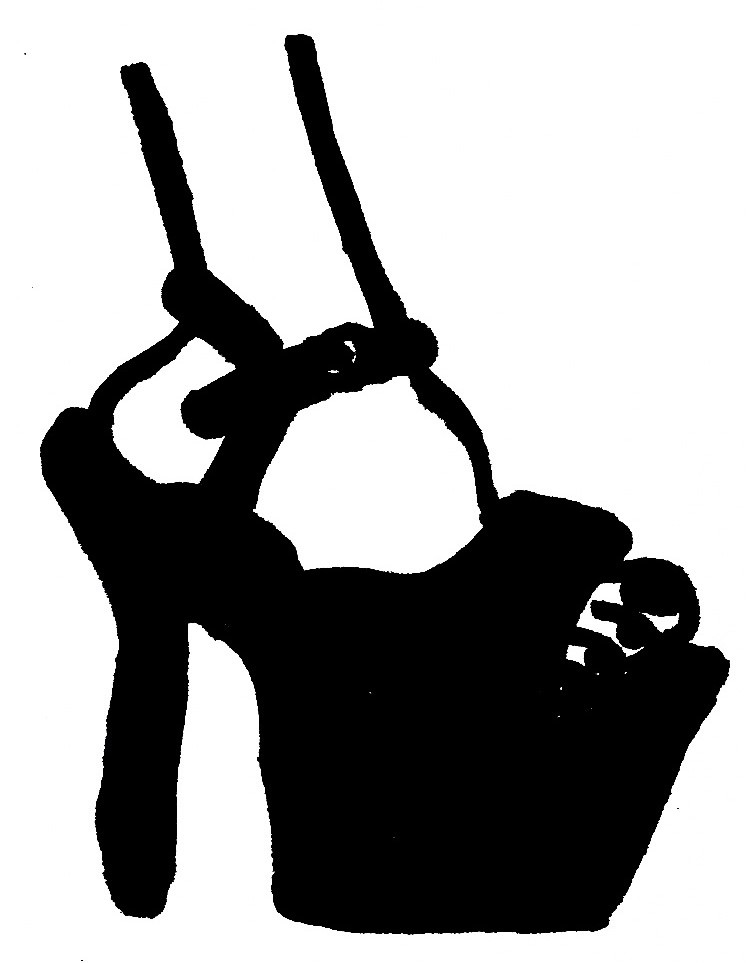
Audition (1999)

Between all the tradwife influencers, anti-feminist slanderers, anti-Choice Evangelicals, and pro-Trump merchandise bots that flood your doomscrolling app of choice, you don’t need me to tell you that old-fashioned Conservatism is back in a big way.  President-elect Donald Trump’s popular-vote victory this week was a sharp reminder that, in majority, we are a nation that yearns to turn the clock back to a made-up Leave It to Beaver 1950s at the expense of minor, inconvenient details like personal freedom & autonomy – especially for women.  There is no victory to be had over the ghouls who’ve funded & bulldozed our path to this new Conservative hellscape, since the election results indicate that they’re supplying exactly what the people demand: political & moral regression.  That’s why it can be such a relief to fantasize about victory & retribution through art, the only place left where the bad guys lose and our stories can be understood through lenses like progress, meaning, and justice.  At least, that’s what’s on my mind as I think back to watching Takashi Miike’s 1999 cult thriller Audition the week before the election.

If I can dial my own mental clock back a couple decades to when I first saw Audition in the mid-2000s (during a previous popular-vote-sanctioned Conservative hellscape), I believe my thoughts were less political.  They were more like, “Wow, this is boring,” followed by “Whoa, this is fucking sick.”  Audition is the kind of slow-burn horror that tests the patience of twentysomethings who are overeager to get to the gore, with much of its first hour playing more as a domestic drama than a serial killer thriller.  We follow a single-father widower (Ryo Ishibashi) who hopes to bring home a fresh new wife to help maintain a traditional domestic life for his teenage son, since, “A man needs a woman to support him, or he will exhaust himself.”  After sneering at a group of women who dare to have fun in public at an audible volume, he starts to doubt whether there are any demure, mindful women left worth wifing in all of Japan.  That’s when his gross filmmaker business partner steps in to introduce the titular conceit of The Audition, wherein they will host a casting call for young women to play the role of a traditional, submissive wife.  The women think it’s a fictional role for a movie, but the men know it’s for real life.

A Japanese production made to cash in on the popularity of Ring, Audition was obviously not speaking to the American political landscape.  The men who hope to entrap an unsuspecting actress in domestic servitude pine for an older, more conservative Japan.  When they overhear boisterous women daring to enjoy themselves in a public bar, they complain, “Japan in finished.”  The way the movie calls them out for indulging in the Japanese filmmaking industry’s casting couch culture obviously has its own echoes in Hollywood sexual abuse scandals, though, to the point where it’s amazing that the film wasn’t remade as a Good-For-Her Horror revenger in the #metoo era.  The widower is, of course, cosmically punished for his moral crimes by targeting the exact wrong actress from the casting call (Eihi Shiina): a torture-happy serial killer who poses as a wispy loner who’s too shy to make eye contact, when she’s really just waiting for the right time to pounce on her prey.  Men are her prey.  Yes, all men, as she explains, “All men are the same,” even if they’re using the casting couch to find a loving wife instead of a one-time hookup.

It’s easy to forget all of this patient set-up to Audition‘s hyperviolent conclusion.  The bone-sawing, needle-plunging imagery of the final act is so unnervingly grotesque that it obliterates most of what comes before it, at least as the movie lingers in memory.  That effect unfortunately influenced a lot of mainstream American horror filmmaking throughout the torture porn phase of the Bush era, but movies like Saw & Hostel did not echo the more nuanced touches of what Miike accomplished.  I was particularly struck during this rewatch by how the basic perspective and reality of the ending doesn’t fit into any one tidy interpretation.  When the killer reveals herself as a violent avenger of all abused women against the men who sexually exploit them, she doesn’t do so in a direct, declarative monologue like a Bond villain.  She speaks softly, mostly to herself, while the dipshit widower drifts in & out of consciousness (from both paralyzing drugs and unbearable pain), witnessing detailed reveals of her past experiences that he could not possibly know about, mixed with his own warped dreams & memories.  Meanwhile, she’s not treated as the moral hero of the story so much as a tragic figure who’s dangerous to those who happen to waltz into her trap, and there’s little relief or catharsis to be found for either combatant in her little self-waged war of the sexes.

Audition does not aim to make you feel better about modern culture’s longing for an over-idealized, unjust Conservative past.  It mostly aims to upset & disturb, leaving behind stabs of horrific imagery that you’ll clearly recall even as the plot details fade: pornographic camcorder footage, a ringing telephone, a smirk, a writhing burlap sack, etc.  Still, it can be comforting to know that there are other people out there who find our great cultural Conservative yearning to be grotesque, alienating, and worthy of violent retribution.  The only problem is they apparently do not represent the majority, who’d rather oppress than evolve.

-Brandon Ledet

Cure (1997)

New Orleans is currently enjoying the best repertory cinema programming it’s had in my lifetime.  I may have missed the healthy art-cinema scene that was obliterated by the arrival of the AMC “Palace” multiplexes in the city’s suburbs in the 1990s, but something beautiful & exciting has sprouted from that rubble in the 2020s.  Looking back at the older movies we’ve covered on the blog over the past ten years because they happened to be screening locally, it’s immediately clear that local programmers are getting more adventurous & esoteric in their tastes.  It used to be that you could only catch rep screenings of Hitchcock classics like To Catch a Thief & Strangers on a Train on Sunday mornings at The Prytania’s ongoing Classic Movies series.  Now every Wednesday night is a head-to-head battle to see who can screen the hipper, edgier title between the Gap Tooth Cinema series at The Broad (formerly known as Wildwood) and the Prytania Cinema Club at Canal Place (former host of Wildwood).  That competitive battle has resulted in a robust local slate including hard-to-see titles like Entertaining Mr. Sloane, On the Silver Globe, and Coonskin as well as celebratory screenings of true cult classics like Pink Flamingos, Blue Velvet, and House.  And that’s not including the one-off barroom & coffee shop screenings and the week-long restoration runs of other weirdo classics around town.  The New Orleans repertory scene is still nowhere near matching the behemoth breadth of a New York, a Los Angeles, or even an Austin, but it’s at least better now than it was when we first started this blog ten years ago, and you can clearly see that progress charted on this Letterboxd list of what we’ve been able to cover because of it.

According to that list, the 100th local repertory screening I’ve attended in the first ten years of Swampflix was the hypnotic Japanese horror film Cure, thanks to the aforementioned Prytania Cinema Club.  An early calling card film for the still-working, still-thriving Kiyoshi Kurosawa, Cure arrived during the serial killer thriller era of the post-Silence of the Lambs 1990s.  Kōji Yakusho stars as a Tokyo police detective working to connect a series of vicious murders in which victims’ throats are slashed in the same meticulous “X” pattern but were executed by different killers, found dazed at the scene of the crime.  The common link between these parallel domestic killings is an amnesiac drifter and former psychology student played by Masato Hagiwara, who appears to be weaponizing an old-fashioned form of Mesmerism to incite the murders.  While the detective struggles to pin these surrogate acts of violence on a man who can barely remember information told to him earlier in a single conversation, let alone his own life story or name, the mesmerism starts to infect the cop’s intrusive thoughts, interrupting the normal flow of a serial killer movie.  His mentally ill wife mutates from a patient in his care to the obvious next victim in the hypnosis-induced murder spree, and all he can really do to stop it is to feebly threaten violence against a dazed, checked-out slacker who only offers middle-distance stares and vague philosophical questions in response.  It’s a horror movie about an infectious idea, which is always a creepier enemy to fight against since there can be no physical, decisive victory.  Attempts to diminish or punish the killer mesmerist only bring him into the presence of even more dangerous men higher up the law-enforcement food chain, spreading the threat instead of squashing it.

I loved getting the chance to see Cure for the first time in a proper theater, fully submerged in its eerie, icy mood without the trivial distractions of home viewing.  It’s the kind of movie that asks you to pay attention to the roaring hums of machines—fluorescent lights, car engines, washing machines, ocean tide—and the jarring silence of their sudden absence.  The blink-and-miss-them flashes of the unreliable detective-protagonist’s hypnotic visions of his own domestic violence could easily be missed with a cell phone or a house pet or passing traffic competing for your momentary attention at home.  It’s an extraordinarily creepy film but also a subtle one.  At the same time, it made me question whether this entire enterprise of lauding repertory programming can be detrimental to the way we watch and think about contemporary releases.  At least, I left Cure a little skeptical about why so many movie nerds are willing to give into the pure-evil vibes of vintage Japanese horrors like this, Suicide Club, and Perfect Blue but get hung up on the supposed plot incoherence of their modern American equivalent in Longlegs.  All four of those works warp the familiar beats of the traditional serial killer thriller into new, grotesque configurations by dredging up the supernatural menace lurking just under the genre’s real-world surface.  Only Longlegs hasn’t had the benefit of multiple decades of critical analysis and cultural context lending additional meaning & significance to the events of its supernatural plot, so that discerning cinephile audiences get tripped up on whether its story makes practical sense instead of focusing on what really matters: its atmospheric sense, its evil vibes.  Cure has long since let go of that baggage.  It’s been canonized as a great work, so its ambiguity is taken as an asset instead of an oversight.

What I’m really celebrating here is the gift of access.  To date, I had only seen one other Kurosawa film: his atypical sci-fi comedy-thriller Doppelgänger, which has largely been forgotten as a lesser work.  That film’s DVD just happened to fall into my lap at my local Goodwill, which is how I find a lot of older movies outside the taste-making curation of streamers like The Criterion Channel, Mubi, and Tubi.  Having that curation spill out of my living room and into proper cinemas in recent years has been a wonderful, welcome change of pace.  I might’ve kept Cure on the watchlist backburner for another decade or two if it weren’t screening a couple bus stops away from my office cubicle.  I also likely would have missed one of its eerie, intrusive flashes of violence had I watched it alone at home, where I’m always one phone notification away from zapping a movie of all its sensory magic.  I hope The Prytania Cinema Club and Gap Tooth Cinema keep competing for my patronage every Wednesday into eternity to keep that magic alive.  Or, better yet, I hope one of them gives up their Wednesday slot for a different night so I don’t have to make an either/or choice every week.  I missed a screening of the Rowlands-Cassavetes collab Opening Night so I could finally check out Cure instead, even though it would have been a lovely way to commemorate the recent passing of an all-timer of a powerhouse actor.  Having that either/or choice is a privilege that I didn’t have just a few years ago, when the majority of local rep screenings were our weekly Sunday morning visits with Rene Brunet.

-Brandon Ledet

Strange Darling (2024)

The critical decorum for writing about the new high-style serial killer thriller Strange Darling is that you’re supposed to recommend audiences see the movie without reading a full description or review, which benefits the movie in two ways.  One, it preserves the surprise of discovery as the movie walks the audience through various What’s Really Going On plot twists like a puppy on a leash.  More importantly, it also saves the movie from having its themes & ideas discussed in any detail, so that critics are instead encouraged to gush over its candy-coated hyperviolence (“shot entirely on 35mm film”, as the first title card goofily boasts) without fretting about the meaning behind those striking images.  That second benefit is crucial, since the actual substance protected by Strange Darling‘s candy shell is rotted hollow.  There’s no color saturation level high enough nor any needle drop ironic enough to cover the taste of the misogyny molding at the core of this empty entertainment vessel, despite director JT Mollner & cinematographer Giovanni Ribisi (yes, that Giovanni Ribisi) trying their damnedest at every turn.  So, go ahead and swallow it down without reading the full ingredient list if you like, but be prepared to walk away feeling ill.

Kyle Gallner & Willa Fitzgerald star as a pair of beer-buzzed hedonists who meet in a roadside motel room for a kinky one-night stand.  Several false-start openings (to bookend the several fake-out conclusions) tease the audience with awareness that a serial killer is afoot, which casts Gallner in an unsavory light as a macho brute who gets off on strangling women.  But wait, it turns out the editor is not the only shameless tease warping the picture.  The more time we spend in the motel, the more Fitzgerald’s strangulation victim is revealed to be a huge tease herself, goading Gallner into playfully abusing her according to a roleplay script they agreed to before booking the room, then repeatedly pulling back the exact moments when the violent foreplay is about to naturally spill over into consensual sex.  There’s some hack Pulp Fiction chapter shuffling in how the story is ordered that maintains her innocence for as long as possible, at first characterizing her as a frustrating hookup who triggers misogynist violence in her date through unintentional sexual teasing.  Eventually, though, it can’t hold back its condemnation of her as a “crazy bitch” and a “cunt” who deserves any violence Gallner exacts upon her in revenge, since she uses the general assumed victimhood of women in heterosexual partnerships gone awry to her advantage, so that she can get away with murder.  The entire motel hookup kink scenario was a setup, you see, because you’re watching a Promising Young Woman remake that coddles Tarantino-obsessed MRAs.

Pushing the movie’s thoughts on consent, kink, and rape aside for as long as possible really does benefit its value as stylish entertainment.  Its pride in shooting on film is a little corny in presentation, but the colors are gorgeously rich enough to excuse the faux pas.  Ribisi has fun playing with his traditionalist camera equipment, delivering the kind of vintage genre throwback that’ll have movie nerds hooting & hollering at multiple split-diopter shots like salivating dogs.  Barbara Hershey & Ed Begley, Jr. briefly drop by to lend the production an air of credibility as aging sweetheart hippies who are unprepared for how violently the War of the Sexes has escalated since their heyday.  Car chases, shoot-outs, and intimate stabbings keep the adrenaline up once the motel tryst fully falls apart, spilling the intimate violence of that room into the 2-lane highways of rural America.  The whole thing is pretty exciting, excitingly pretty, and then pretty atrocious as soon as it starts rebutting cultural assumptions about who’s the real victim when men & women fight.  I’m usually not in the business of judging a movie entirely by its moral character—especially not as someone who regularly watches the vintage schlock this pulls direct visual inspiration from—but I couldn’t help but feeling like if Strange Darling were a person and not a feature film it would have some really specific, fucked up opinions about The Amber Heard Situation.  Its vibes are just as rancid as its visuals are immaculate.

-Brandon Ledet

Trap (2024)

My best friend constantly teases me about how I rate and rank movies, and how sometimes I’ll describe what seems to her to be the worst movie she’s ever heard of, but which I’ll find something to praise about and then wind up giving it 3.5 stars. For weeks in advance of the premiere of Trap, while she predicted (accurately) that I’d give this one that rating, we speculated about what the major twist would be. I put my money on the premise being that Josh Hartnett’s character was actually kidnapping people because his daughter was some kind of vampire creature, which may simply have been because I saw the trailer for this in conjunction with the one for Abigail so many times that it incepted me a little. In reality, there’s no “big twist” in this one, with the portioned revelations coming not in the form of a huge rug pull but like actual ongoing narrative reveals. I know that what I’m describing is just “a movie” but when you’re talking about a director whose early career was so defined by his whiplash endings that, (A) if you remember Robot Chicken mocking him with the quote “What a twist!”, then congratulations, it’s time to schedule that colonoscopy—that episode aired in 2005—and (B) something this relatively straightforward seems like a novelty. 

Tweenage Riley (Ariel Donoghue) has been having a tough time at school lately, entering that period of adolescence where friend groups start to change and ostracization can be at its most emotionally damaging. She still got good grades this semester, so, as promised, her father Cooper (Josh Hartnett) is taking her to see her favorite pop star, Lady Raven (Saleka Shyamalan). Upon arrival, however, he starts to note that there’s a massive police presence at the arena where the concert is being held, and he discovers that the police learned that a serial killer known as “The Butcher” would be attendance that evening and have turned the entire place into a, well, Trap in order to put an end to his reign of terror. That’s bad news for Cooper, since The Butcher is him. Of course, if you saw the trailer, then you already know that, and you might even assume that this will be the film’s entire premise (I did), but this reveal comes very early in the film and the movie eventually spills out of the arena and into the streets, with quite a lot of plot left to go. I was delighted to see Alison Pill’s name in the credits, and flabbergasted to see the name “Hayley Mills” appear before my eyes. She’s in far less of the movie than one would want, as she plays the FBI profiler who has helped to create the titular trap; the film does play with this, however, as she frequently explains over the radio (one of which Cooper has pilfered) what the Butcher’s next most likely action will be while Cooper is doing it, forcing him to have to reverse and rethink his actions on the fly. Although her role is small, it’s omnipresent and pervasive, and that was fun. 

This feels like M. Night Shyamalan doing his version of a Hitchcock plot. We’ve got a dangerous man stuck in a situation that was devised specifically to entrap him and use his own psychology against him, using his quick thinking (and a lot of luck) to stay one step ahead of his pursuers. It’s as if Roger Thornhill from North by Northwest actually was George Kaplan, and Kaplan was a murderer. Like Norman Bates, Cooper is a man that we know is guilty, and for whom we can’t help but hope that his plan succeeds, because we’re with him every moment — trying to get away from the overly apologetic and invested mother of one of Riley’s friends-turned-mean-girls, watching nervously as other men are pulled out of the crowd for questioning, and being directly questioned by an officer after having learned the codeword taught to stadium staff, but not realizing that he would need to present additional documentation. All through it, Hartnett’s choice to play Cooper as ever-so-slightly off is incredibly effective; he seems superficially charming, and Josh Hartnett’s natural good looks go a long way to explaining why no one seems to notice that there’s something wrong. There’s a real juggling act going on in this performance, as Cooper’s mannerisms seem practiced and artificial every time that he has to interact with another person, like he’s spent a long time imitating human behavior but still hasn’t quite gotten it down, like he’s fluent in being normal, but it’s unmistakably accented. The only time he seems to be himself and not putting on the character of “Cooper” is when he’s alone and calculating his escape route, or when he’s with Riley, which does a lot of work humanizing him. 

One really noteworthy thing here is that this empathy we naturally have for our primary viewpoint character takes a strange turn at about the midpoint, when Lady Raven becomes aware that Cooper is The Butcher and thinks quickly and cleverly in order to stick with him in a way that he can’t prevent without revealing himself. She briefly becomes the heroine of the story, as she manages to get Cooper’s phone away from him and use it to get more information about where his latest victim is being held and then going on Instagram live to ask her massive group of fans to help her find and save the man. The trailers would lead you to believe that the pop superstar arena show is just set dressing, or a means to justify having all of the action take place in a stadium for the novelty of the location, but Lady Raven actually ends up being central to the plot and even emanates a bit of Final Girl energy. Surprisingly, I also found Raven’s music, which Saleka Shyamalan composed and performed herself, to be a lot of fun. Not every one of the tracks that she performs hits the same, but there were a few legitimate bops in there; not since Josie and the Pussycats or Popstar: Never Stop Never Stopping have I enjoyed a movie’s representation of in-universe popular music as much as this, and both of those were comedies. If this movie was a backdoor into springboarding a larger music career for her, I’d say she has a decent chance, and it got me out of the house and into a place where I witnessed shirtless Josh Hartnett (he’s still got it, in case you were wondering) get tased by Hayley Mills (she does too), larger than life. 

There are, of course, some issues. The fact that all of Cooper/The Butcher’s victims are talked about in glowing terms about what great parents/teachers/children/community members they were got a bit of an eyeroll out of me; I don’t need the victims of a serial murderer to be paragons of heteronormative virtue in order to think that their deaths are tragic. If anything, heaping that much praise on them early in the film made me think that the big Shyamalan Twist™ was going to be that Cooper was some kind of vigilante picking off people whose apparent moral perfection belied their true, evil natures. Further, nitpickers will find a lot to complain about here, as there are a number of instances in which Cooper eludes the law’s grasp through pure luck rather than through any ingenuity. This starts first when he manages to find himself in the good graces of an arena employee (Jonathan Langdon) mostly because of his handling of a situation in which Riley and another girl have conflict over the last tour shirt in their shared size, which feels like a reach. Later, however, Cooper dons an apron to pose as staff while attempting to escape to the roof and is stopped by security, who ask him to present a card in conjunction with the codeword, and he just so happens to have grabbed an apron in which the real employee left their wallet, “I’m not The Butcher” card and all. It’s a narrative necessity, but you already know how the people who treat the enjoyment of the cinematic art as some kind of argument to win are going to beat this talking point to death whenever the social media algorithm figures out how to spin Trap discourse into your timeline. I hate to side with them at all, but by the time that Riley gets pulled on-stage to dance with Lady Raven, I had to concede that there were some “conveniences” that might have been spackled over with just one more draft of the script. The fact that Cooper has OCD and that this is something that is only barely hinted at (when he folds his napkin very precisely when he and Riley grab food at the concert) before it becomes a major part of his profile, which ends up seeming a little underbaked, but otherwise, the planting and payoff is effective. 

This is a pretty good time. Nepotism aside, Saleka Shyamalan is a welcome screen presence with musical talent that makes this one work in a way that it absolutely wouldn’t if the concert that the characters were attending felt as artificial as they often do in movies and TV. (There’s actually a cute moment in the early part of the film wherein Riley is singing along to Lady Raven in the car and missing many of the notes, then says to her father that she might want to be a singer one day, and he politely goes along with this dream, which is very funny in the context of said singer being the director’s daughter.) Hartnett is always a welcome addition to any cast, and although seeing the heartthrob of The Faculty and Halloween H20 playing the father of a middle schooler aged me like I had just stepped onto the beach that makes you old, he was great here. I honestly didn’t really realize that Hayley Mills was alive, but seeing her here made me realize how much I’ve missed her, and I hope that this emergence from retirement is long lived and that I get to see her again soon (she also really classes up the joint). It may not be worth running out to the theater to see, but this is one I’d recommend checking out for a nice, low stakes movie night when it comes to home video. 

-Mark “Boomer” Redmond

Longlegs (2024)

We’re Oz Perkins fans around these parts. Brandon gave both The Blackcoat’s Daughter and Gretel and Hansel four-star reviews. While the director’s first feature, I Am the Pretty Thing That Lives in the House, got a cooler reaction from him, it remains my favorite of his works. (Admittedly, part of that might be the fact that I find Ruth Wilson to be one of the most utterly watchable and magnetic performers currently working). Or it was my favorite … until Longlegs came along. 

Set in Oregon sometime during the Clinton administration, Longlegs is the story of Lee Harker (Maika Monroe), a young FBI field agent whose preternatural hunches catch the attention of her superiors, resulting in her reassignment to a decades-long hunt for a serial killer known as “Longlegs” (Nicolas Cage) based upon Zodiac-like notes that he leaves behind at the scenes of brutal murders of entire families. As she spends time working on the case, she concludes that Longlegs’ targeting of families of young girls whose birthdays all fall on the fourteenth of the month is Satanic in nature, and that when plotted out on a calendar, it becomes clear that Longlegs is creating an image of an inverted triangle, which Harker finds in occult literature. Her boss, Carter (Blair Underwood), is impressed by her initiative and insight, and after a night of bonding, he gets drunk and asks Harker to drive him home, where she meets his family: wife Anna (Carmel Amit) and precocious daughter Ruby (Ava Kelders). Their relationship is slightly complicated when Carter discovers that on Harker’s ninth birthday, her mother Ruth (Alicia Witt) filed a police report about a strange man approaching the young Lee when she was home alone. Ruth, with whom Lee is in frequent contact, lives in a dilapidated farmhouse that is choked with hoarder ephemera, and when she directs her daughter to take a look through some Polaroids that are still in a box in her childhood bedroom, Lee suddenly remembers the day that she—barely—managed to avoid becoming one of Longlegs’ victims. Of course, why that is the case turns out to be much more complex (not to mention sinister) than is immediately apparent. 

The biggest influence on the film, and the one that is most often cited in criticism, is The Silence of the Lambs. That much is apparent, from the setting to the choice of a young female FBI agent as the lead, all the way down to Longlegs’ not-quite-Buffalo-Bill basement lair, where instead of making suits out of women’s flesh he crafts lovingly faithful doll reproductions of the young girls who, along with their family, are killed at his hands. There’s also a bit of other Thomas Harris Lecter-containing media in play here; the walk-through of one of the crime scenes is straight out of Manhunter (or Red Dragon, if you prefer), and Underwood seems to be channeling a bit of Laurence Fishburne’s portrayal of Jack Crawford from the Hannibal TV series. 

Outside of that franchise, what I was most reminded of while watching the film were two separate novels by South African writer Lauren Beukes: The Shining Girls and Broken Monsters. The former is about an early twentieth century serial killer and drifter who happens upon a house that is itself a nexus of evil, allowing him to exit into any time between 1929 and 1993 and directing him to seek out and murder certain women (the titular “shining girls”) for unknown purposes. When he brutally stabs a teenage girl named Kirby Mizrachi in 1989, he leaves her for dead, but she survives and, years later, she seeks her still unidentified attempted murderer. That 1990s setting, a killer who targets specific young women based on direction from a malevolent entity, and a main character has an encounter with her would-be killer in her youth and becomes the impetus behind his demise in her adulthood are all details that Longlegs shares, although the stories are markedly different in almost every other way. 

The connection to Broken Monsters is a little more oblique, as the narrative of that novel features an ambitiously (and fruitfully) large net of point of view characters, but of whom one is a serial killer who creates “art” out of body parts of humans and animals alike, not unlike several of the killers from the aforementioned Hannibal series. When with other characters, the narrative is alternatively a straightforward urban crime drama (the homicide detective), a little bit Hard Candy (her daughter), an ironically voiced view of Detroit’s art scene that provides important context for the killer’s motivation (the aging hipster journalist), etc. When we are in the killer’s point-of-view chapters, their point of view includes being forced/inspired by an ominous force that the reader assumes is a manifestation of the killer’s broken mind … until the same thing appears in a chapter that’s focused on one of their victims, revealing that the demonic entity is, in fact, very real. That happens here as well, as Longlegs shifts from an unconventional homage to Silence of the Lambs with the slightly supernatural narrative conceit that the lead character has preternatural insight into a horror that all-but-literally goes to hell.

I haven’t really engaged with the discourse about the movie, so I’m not sure whether this is being cited elsewhere, but it’s worth noting that this film was very funny. Underwood is a natural charmer, so Carter’s interactions with the stoic, reserved, and frankly spooky Harker are fun to watch, and this moved into outright laughter for me when Harker meets young Ruby and she asks her parents if she can show Harker her room. As the two awkwardly sit next to one another, Harker notes that Ruby has one those canopies that some kids have and asks her, stiltedly, “Do you … go … in it?” I saw this with a very responsive audience, and this got a big laugh. There’s also a great scene with the flamboyant administrator of a mental facility where the sole survivor of one of Longlegs’ family slayings resides, and a forensics nerd who gets far too excited about a strange doll that’s found hidden at one of the previous murder sites. I’ve heard reports that some screenings have had people laughing in response to Nicolas Cage, but I’m happy to say that this didn’t happen at my screening, and I found his performance terrifying. It’s the overcorrection to Harker’s stoicism, which I think is played for laughs at certain points; I can see people finding it too much, but it worked for me. I’ll also say that Alicia Witt is phenomenal here; as a longtime defender of Urban Legend, she’s one of my favorites that I feel like we never get to see enough of. I did spend a chunk of the movie thinking that Ruth was being played by Samantha Sloyan, but I’ll let you Google that yourself and tell me if you think I’m that far off the mark. 

Over on the podcast, we often talk about when a film “Does That Thing I Like,” which is when a horror movie features up a deliberately ambiguous premise that could conclude with either a rational explanation for events or a supernatural one, and, instead of going the well-worn route of concluding with “[the devil/witchcraft/possession/ghosts/whatever] [is/are] real!” (I’ll admit that if the ratio of demonic-to-scientific rationales were reversed, movies would be both a lot more boring and most of them would end exactly like an episode of Scooby-Doo, but I still appreciate it when it happens.) Unfortunately, there are so few of these movies that mentioning any of them would spoil them, especially given how often the twist is simply that there’s a boy living in the walls. Longlegs is like the platonic ideal of how to “Do the Thing I Think Is Tired” but make it fresh, new, exciting, and scary. I am a person who has lived alone for most of his adult life and who can count the number of nightmares he has had in that time on just two hands, but the night after I saw this movie, I got up and went to the bathroom in the night, I had to turn the light on, not because I needed it to find my way, but because I needed it to dispel the shadows before I could get out of bed. The reason why The Thing I Like is The Thing I Like is because I live in the real world; I’m not afraid of ghosts or demons or swamp monsters (other than alligators, obviously), so they don’t scare me in the movies, either. Your Ghostfaces, your various Thomas Harris serial killers like Hannibal Lecter and Buffalo Bill, even that home invasion scene in Fargo—slapstick as it is—those are things that get my anxiety up; those are the reason that I occasionally have to pull the shower curtain back or check my closets. When we briefly discussed the film on our recent podcast episode about Planet of the Vampires, Brandon noted that Longlegs is a movie that feels evil. And that’s as succinctly as I can put it. Nothing in this film is something that I am afraid of in real life, but its evil is so palpable and real that I had to turn on the lights in the middle of the night. I don’t know that I can give a movie higher praise than that. 

-Mark “Boomer” Redmond

M (1931)

For a moment, I considered not opening this review with a reference to Laurence Sterne’s novel The Life and Opinions of Tristram Shandy, Gentleman, thinking to myself, “Surely, I’ve referenced it enough already.” Then I double checked and realized I’ve only brought it up twice previously (in my reviews for Beau is Afraid and The Love Butcher), so here we go! Tristram Shandy was published in multiple volumes, the first of which was released in 1759, not even two decades after the publication of the first novel of the English language, Samuel Richardson’s Pamela, or Virtue Rewarded, in 1740. Shandy has long been a fascinating point of study not just because it’s one of the first novels in our language, but because despite being one of the earliest examples, it already demonstrated many stylistic and literary characteristics that we associate with postmodern fiction. Novels went from a complete, well, novelty to something that could be deconstructed within an astonishingly short time, with Shandy featuring a stream of consciousness narrative, a playful interaction with the nature of the printed word on the page (including several pages left intentionally blank to demonstrate a story that the narrator does not know), and various other elements first-time readers are often shocked to find in something so old. 

Fritz Lang’s most famous work, the pioneering silent science fiction film Metropolis, premiered in 1927; just four years later, his first sound picture M was screened for the first time. Within the short period between them, Lang had already developed some of the basic elements of what we would consider keystones of narrative filmmaking and used them in an effective way that’s the equal of any film that’s been produced in the intervening nine decades. In many ways, the introduction of “talkies” was like the building of a cinematic Tower of Babel (quick note here—I started writing this before seeing Metropolis and learning that the biblical Babel story is actually a big part of that text), necessitating a foundational re-evaluation of the language of the art down to its very core. But I’m getting ahead of myself. 

M is the story of a Berlin in terror, as several children have been found murdered in a way that demonstrates they share the same killer. As the film opens, a woman scolds the kids in the courtyard of her building for singing a nursery rhyme about a killer of children as she sets the table for her daughter, who never appears, despite her mother’s increasingly plaintive shouts of the daughter’s name into an empty street. The girl, Elsie Beckmann, has already fallen beneath the dark shadow of Hans Beckert (Peter Lorre), who lures the child to accompany him by purchasing her sweets and a balloon from a blind street vendor. Her eventual fate is implied as we see her beloved ball bounce into a ditch, and the balloon she was given drifts in the wind, abandoned. This sets off a fury in the city, as angry parents demand that more be done to apprehend the child predator, and this creates a domino effect. First, Inspector Lohmann (Otto Wernicke) of the police begins to crack down on various underworld activity, including harassing the patrons of a seemingly legal drinking establishment. That leads, in turn, to a meeting between various capos—led by a man known only as “The Safecracker” (Gustaf Gründgens)—for different criminal elements around the city to convene so that they can start their own manhunt so that the investigation will end and they can get back to racketeering, prostitution, and the like. 

While Lohmann’s men set out to find the murderer using then-novel forensic science like fingerprints, handwriting analysis, and behavioral studies, Safecracker’s boys set up an organized city-wide network of informants among the unhoused. Both end up finding Beckert at roughly the same time, as the killer’s habit of whistling “In the Hall of the Mountain King” during his compulsory episodes leads the blind balloon vendor from the beginning to identify Beckert to one of Safecracker’s men, and they tail him and even manage to tag him (with a white “M,” hence the title) before he realizes he’s being followed and ends up trapped in an office complex. The criminal underworld sets out searching the entire building where Beckert has gone to ground, while Lohmann’s men lay in wait at Beckert’s home, having discovered where he lived through methodical search and the discovery of red pencil shavings that matched the letters Beckert had written to the police. With Beckert now in their hands, Safecracker and company hold a kangaroo trial for the man, one in which he must plead his case for mercy, leading Lorre to give one of the greatest monologues in cinematic history. 

One of the truly great inventions that Lang gives us here is the narrative montage. In a silent film, narrative has to be displayed entirely through image and action, with dialogue and the occasional expository interstitial card, while M takes advantage of the opportunity to deliver information through audible dialogue and visuals at the same time. There’s a point in the film where Inspector Lohmann explains the methodologies that he and his men are using to try and locate the murderer, and as he describes various departments and what they do, we’re able to “visit” those people and places without a break in his monologue and without having to create interstitial expository cards (the closest we come is to a sign that identifies the homicide department). It’s such a common part of contemporary film language that its use is invisible to us now but is a quantum leap in filmic storytelling that we shouldn’t take for granted. Germany’s first “talkie” was The Blue Angel starring Marlene Dietrich, appearing at the movie theater only a year before M, and yet Lang had already created something that’s as integral to the nature of film as we know it as the letter “e” is to our language. And this could have been catalyzed in just about any movie, but it just so happens to have happened in one of the true masterpieces. 

That’s not the only thing that makes it feel so ahead of its time. So much of what we talk about when we talk about a film’s morals and ethics in the present is a discussion of the clarity of the value that the text espouses, but M is less concerned with blame than it is with prevention. That’s demonstrated in two ways: one that’s clearly intentional and is core to the reading of the film, and the other that’s a little more ambiguous and may have been unintentional. First, Lorre’s Beckert is one of the most compelling depictions of a compulsive evil on film. His utter fear at being trapped like a hunted animal pleading for mercy and compassion making him almost pitiable, in spite of the fear we know he inspires. At first appearing solely as a menacing figure, his terrified screaming about how he lives in a constant state of mental agony and that he can only quiet the voices when he commits these heinous acts, one can’t help but pity him, even while affirming that his afflictions don’t justify his crimes. Although there are several minutes of footage that are missing and the abruptness of the ending implies (at least to me) that there may be some frames missing from that final reel, the film that exists is the text that we have and so we must interpret from it. We never hear the verdict of Beckert’s trial; we cut away from the doors of a courtroom to find a few weeping mothers on the bench outside. “This won’t bring back our children,” is all that they have to say, and then “We, too, should keep a closer watch on our children.” Beckert is certainly to blame for his crimes, but he is not the only one responsible, and the only thing that we can exert influence over is ourselves and the company we keep, so that’s where our energy should go. Secondly and more subtly, it’s worth noting that although the police and organized crime figure out Beckert’s identity at roughly the same time, the police go about arresting Beckert by waiting for him in his home while Safecracker’s men catch Beckert when he already has his next victim in hand. Their methodology may not be “just,” but if this had been left entirely to the law, they would have only apprehended him after he had already slain another child, while community action prevented another death. The depiction of a kangaroo court makes it clear that we’re not supposed to see the summary execution of this guy as “justice,” and that the state’s justice should prevail (even if Beckert’s fate is ambiguous), but it’s still inarguable that one more little girl would have died if those same people hadn’t taken the law into their own hands in the first place. Prevention supersedes responsibility. 

M has been so beloved for so long that it’s difficult to say anything new about it. It’s the kind of classic film urtext that has been dissected, contextualized, and decoded nearly to death in nine decades since its release. That also makes it the kind of urtext that has so much discourse that most people are intimidated by the sheer amount of scholarship surrounding it or think that it’ll be outside of their grasp to understand, or they think it falls into the category of impenetrable artsy-fartsy stuff that culture snobs are always going on about. None of that is true. This movie is extremely accessible, not to mention scary, beautiful, and bewitching. There’s a reason that it’s stood the test of time.

-Mark “Boomer” Redmond

Death Dancers (1993)

It wasn’t until decades after the genre’s American heyday that French critics coined the term “film noir”.  Meanwhile, noir’s younger, hornier dipshit cousin the erotic thriller was immediately self-labeled as a real-time marketing term instead of as a posthumous critical marker.  The recent documentary We Kill for Love is an excellent, exhaustive rundown on the erotic thriller boom of the 1980s & 90s, with specific attention paid to the cheaper, direct-to-video end of the genre.  There are some great insights throughout the doc, from how the bulk of the genre takes direct inspiration from Brian De Palma’s Dressed to Kill more than any of the more obvious Joe Eszterhas reference points to how its popularity was greatly aided by video rental stores’ desperate need to stock their shelves with off-brand substitutes for more popular studio titles that were in greater demand than supply.  For instance, someone who was disappointed that they could not rent a fresh copy of Basic Instinct might be tempted to take home the dominatrix-themed, Troma-distributed serial killer erotica Death Dancers instead until the shelves could be restocked.  There’s a vast difference in budget & quality between those two pictures, but the video store shelf was a great equalizer that presented them on the same level, with Death Dancers self-labeled as “An Erotic Thriller” on its cardboard sleeve to attract browsers’ attention.  That announced genre distinction might actually be somewhat of a misnomer, since Death Dancers shamelessly crosses the line from erotic thriller to softcore porno, featuring multiple scenes of fully nude actors grinding their pelvises together in rhythmic pantomime.  Given how gleefully vulgar mainstream players like Showgirls were at the time, though, I suppose the distinction is mostly meaningless.

Do you know what else is mostly meaningless?  Practically everything that happens in Death Dancers.  We open in the sunny, beachfront apartment of our central dominatrix figure (Deborah Dutch), as she wistfully whispers to the world outside her window about her past trauma, apparently eroticizing the memory of a forced miscarriage as she writhes in ecstasy on a kitchen chair.  She’s dressed in full goth drag in the middle of a sunny afternoon: black wig, black satin gloves, black stockings, black soul.  Despite the physical abuse she suffers in black & white flashbacks, her breathy narration is horny nonsense, including the titular tangent “Come dance with me. Come death dance with me.  Come, oh god, come death dance with me.”  Gradually, we gather enough info to piece together her M.O.  She’s the madame for a small army of female submissives whom she pimps out to male clients, luring in customers with phone-sex promises of total servitude.  Those customers quickly become victims, though, as her submissives are ordered to immediately murder anyone who physically harms them, even within a consensual kink scenario.  You see, our antiheroine dominatrix is fed up with the abuse she’s suffered from the men in her life, so she’s gotten into the serial-murder racket through the kink scene as a way to exact her revenge on the entire gender.  Meanwhile, an undercover cop who’s hot on her tail has similar flashbacks to trauma of his own. As images of the volatile pair’s pasts become increasingly entwined, the audience is eventually clued into how they found themselves locked into the never-ending death dance of their opposing professions in the first place.  It takes a minute to get there, but thankfully S&M strippers frequently mime group sex configurations in the background to help keep the energy up in the meantime.

Death Dancers is more music video than feature film.  Sleazy synth & sax numbers drone constantly as nude actors model whips, chains, sunglasses, breast implants, and high-waist panties under nightclub stage lights & bubble machines.  It’s just as much a relic of MTV-era music video artistry as it is a video store shelf-filler from the erotic thriller boom.  It’s pretty amusing as a Skinemax-flavored screensaver, especially once it pretends that it has a Hitchcockian mystery worth solving when it’s really just a horny mood piece.  I can’t claim to have seen all of the hundreds of titles referenced in We Kill for Love as the bulk of the direct-to-video erotic thriller genre (at least not until I clear them from my disgustingly overstuffed Letterboxd watchlist), but I still recognized this as an exceedingly generic entry in the canon despite the S&M angle of its premise.  Death Dancers only made an impression on me in that it had me thinking, “This is fun & all, but it’s no Stripped to Kill 2: Live Girls” and then, naturally, “I need a new hobby.”

-Brandon Ledet

Lagniappe Podcast: Tightrope (1984)

For this lagniappe episode of The Swampflix Podcast, Boomer, Brandon, and Alli discuss the New Orleans-set Clint Eastwood thriller Tightrope (1984).

00:00 Welcome

01:15 Columbo (1971 – 2003)
03:45 The Not-So-New 52
07:22 American Fiction (2023)
13:20 Stalker (1979)
24:45 Party Girl (1958)
29:55 White Heat (1949)

35:45 Tightrope (1984)

You can stay up to date with our podcast through SoundCloudSpotifyiTunesTuneIn, or by following the links on this page.

– The Podcast Crew

Manhunter (1986)

I recently filled in a pretty big blind spot in my mental library of the film canon: I had never seen The Silence of the Lambs, despite it being one of the biggest films of the nineties and occupying a massive place in the American pop culture landscape of the past thirty years. Every single part of the film has been parodied, homaged, recreated, dissected, and interpreted musically; its influence loomed huge, and looms still to this day. I’ve also seen virtually everything else in the Thomas Harris adaptation canon, as I was a fan of the Hannibal TV series and I’ve seen all of the other film adaptations of the Lector works other than Lambs. I was inspired to finally seek it out and watch it after recently seeing two works that referenced it: I’m finally getting around to watching The X-Files, and early Dana Scully is very clearly based on Clarice Starling (even the X-Files wiki has a page about this), as well as the introductory scene of Betty Cooper in the first posts-timeskip episode of this season of Riverdale, in which Betty runs the Quantico course that Clarice does at the beginning of Lambs. All this hype is well-deserved; that Jodie Foster has delivered a lifetime’s worth of fantastic performances makes her portrayal of Starling no less fantastic, Anthony Hopkins’s Hannibal is delightfully creepy, the mystery elements of the plot are perfectly constructed, and it’s a movie that earned its place in pop culture. My biggest complaint, really, is in regards to the workmanlike quality of Jonathan Demme’s directorial work.

To put it simply, Lambs just isn’t very stylish, and a lot of the storytelling is in the (admittedly great) performances. That’s typical of how I feel about Demme’s work; a few years back, one of the weekly summer specialties that the Alamo Drafthouse ran was called “Un-Hitched,” featuring films inspired by Alfred Hitchcock. I saw all four features that ran as part of the specialty program and wrote about three of them: Body Double, Special Effects, and (as a submission for Movie of the Month) Who Can Kill a Child? Even though I disliked Special Effects, I still had something to say about it, but Demme’s Un-Hitched contribution, The Last Embrace, left me completely apathetic. His productions are substantial but lack a quintessential auteurism, and that shows though in Lambs, despite it having a fairly long-lasting legacy. There are a few moments that stand out: the nightvision stalking of Clarice in Jamie Gumb’s basement is inspired, and the shooting of Clarice’s initial interviews of Lector place him behind glass while the camera (and the viewer) stays outside of his cell, then having her final scene with him in Memphis show with the camera in his cell while Clarice paces on the other side of the bars is a great depiction of the inversion of their power dynamic. Overall, however, what Lambs made me want to do was revisit my favorite Harris adaptation, the oft-overlooked Michael Mann flick Manhunter, which was released in 1986, just five short years after the publication of its source material, Red Dragon.

When it comes to the general public’s interest in the Hannibal Lector character, the story with the greatest staying power and most mainstream recognition is Silence of the Lambs, but to my mind, the plot of Red Dragon is the Hannibal Lector story. It’s certainly had the most adaptations, with Manhunter coming first in the eighties, then getting a second adaptation under its original Red Dragon title as a Lambs prequel in 2001 and starring Edward Norton as Will Graham, before finally being adapted as part of the third season of NBC’s Hannibal TV series helmed by Bryan Fuller. Although the last of these was a Tumblr darling and had a devoted following which praised the show’s visual flair, Manhunter is also no slouch in the visuals department. When I think of the quintessential eighties neo-noir (neon-noir?), Manhunter is the film that I think of.

Surprisingly, the Red Dragon plot outline is pretty consistent across all three adaptations: some time prior to the “current” events, FBI profiler Will Graham was investigating a series of serial killings by a man named Garret Jacob Hobbs. During the course of that investigation, Graham partnered and coordinated with well-regarded psychoanalyst and psychiatrist Hannibal Lector. Graham shot and killed Hobbs in self defense, and Graham was himself grievously injured by Lector while attempting to escape the doctor upon the realization that Lector was also a serial killer and cannibal. While recovering, Graham’s injuries are photographed and published by sleazy tabloid reporter Freddie Lounds, and although he heals physically, his mind takes longer to recover. The very thing that allows Graham such great insight into the mind of the killer, his empathy, also makes him susceptible to the same pathological tendencies of the killers he pursues. Now, with the emergence of a new prolific serial killer nicknamed “The Tooth Fairy,” Will comes out of retirement to consult with Lector once more in order to catch him. The Tooth Fairy is in fact one Francis Dolarhyde, a bodybuilding film development specialist with a slight facial deformity about which he is extremely neurotic.

Dolarhyde has an obsession with the William Blake Revelatory poems/paintings about the Red Dragon, and he believes that he is transforming his victims in his murders of them, as they “bear witness” to a transformation that he calls “The Great Becoming.” Graham attempts to bait Dolarhyde into a trap by leaking false, inflammatory information about the Tooth Fairy/Red Dragon to Lounds, but an enraged Dolarhyde captures and kills Lounds instead of Graham. It is discovered that Lector and Dolarhyde have managed to send each other messages via personal ads in Lounds’s newspaper, and Lector provides Dolarhyde with information that endangers Graham’s wife and stepson. The Red Dragon aspect of Dolarhyde’s personality is temporarily pacified when he strikes up a relationship with his blind co-worker, Reba McClane, but his jealousy regarding an innocent interaction with another co-worker leads the Dragon to reassert itself. The only major narrative deviation from the source material and the other adaptations here is that, in Manhunter, Graham attacks and kills Dolarhyde in his home to save Reba; in the Red Dragon and Hannibal TV series adaptations, as well as the original novel, Dolarhyde stages his death so that he can pursue Graham’s family in vengeance without interference, only to be killed by Graham’s wife Molly when invading their home.

Manhunter is a great movie, one of the best neo-noirs ever made. Not to throw a fantastic movie like Silence of the Lambs under the metaphorical bus, but Lambs has nothing on Mann’s sense of style and his cinematic eye. Every frame of Manhunter is gorgeous, even when it’s shocking, disturbing, or creepy; at this point, audiences have seen three different versions of Francis Dolarhyde take three different versions of Reba to pet three different sedated tigers, and although neither Tom Noonan’s Dolarhyde nor Joan Allen’s Reba are the best or most interesting versions of those characters, this is still the most visually striking interpretation of that scene (for the record, Ralph Fiennes in Red Dragon is the best Dolarhyde, and Hannibal’s Rutina Wesley is the best Reba). Manhunter’s various tableaux run the gamut from oppressive institutional white spaces to vibrant, almost violently purple sunrises, to stunning salmon sunsets, neon blue night scenes in Graham’s beachside Florida home, and moody shots of Graham inspecting his reflection in various darkened windows. This is used to great effect; when we first meet Brian Cox as Dr. Lecktor (as it is spelled in this film), he’s clothed entirely in white and housed in an all-white cell. When we see reverse shots of Graham from Lecktor’s point of view, the white lines of the cell bars blend into the background of the walls, there’s an impression of Graham, metaphorically fractured into pieces in a white void. That same whiteness is mirrored in the home of the family that was most recently slain by Dolarhyde, which shares that same ascetic aesthetic, other than the Pollock-esque splatters of arterial spray. In an early scene, Graham’s wife Molly (Kim Greist) sits with FBI behaviorist Jack Crawford (Dennis Farina) in a lovely silhouette against the sunset over the ocean, and you think to yourself, “God, this is a gorgeous shot,” and then that shot is succeeded by another beautiful diorama, and another, until the film ends.

Cutting the final Graham home invasion scene and killing Dolarhyde early is a strong choice, but I think it works well here, giving the film a cleaner (and more expedient) resolution. Like most Harris adaptations, this one clocks in at a pretty significant length—120 minutes, alongside Lambs’ 118, Red Dragon’s 124, and Hannibal (2001)’s 132—and omitting the final scene allows for earlier sequences to “marinate” a bit more, last a little longer, and have a greater impact. If there’s anything that it stumbles with, it’s Dolarhyde. Both Red Dragon and the TV version of Hannibal weave the Dolarhyde point of view into their texture a bit more evenly, while Manhunter takes perhaps a little too much time before getting to him. As a result, the back half of the film contains long periods of screentime with the focus shifted to Dolarhyde and Rita with very little Graham, which makes for a slightly uneven, but still very rewarding, viewing experience.

There’s so much to love and praise here: the occasional giallo-esque score, the dream sequences, the lingering shots of stillness that create tension, the palate, the acting choices, but it really needs to be seen to be enjoyed. Although Manhunter is older than I am, it’s not streaming for free anywhere, but I guarantee it’s worth the rental price.

-Mark “Boomer” Redmond