Bonus Features: Torch Song Trilogy (1988)

Our current Movie of the Month, 1988’s Torch Song Trilogy, is Harvey Fierstein’s big-screen adaptation of his own stage play about a drag queen’s life, loves, and heartbreaks in 1970s New York.  The film’s greatest accomplishments lie less in its queer political advocacy than they lie in its dramatic approximation of a full, authentic life for Fierstein’s protagonist – something gay men were rarely afforded onscreen at the time, even the cis white ones.  By all accounts, the original stage play version of Torch Song Trilogy approximated an even fuller, more authentic record of gay life in 1970s NYC, since it was twice as long as its movie adaptation.  One of the producers’ only contractual obligations for Fierstein’s screenplay was that the movie could be no longer than two hours, which meant a lot of tough-choice editing of a play that ran for four.  Instead of narrowing in on a few key moments in his life (through the fictional avatar of Arnold Beckoff), Fierstein decided to maintain the full breadth of the play’s story for most of the runtime, so that an inopportune bathroom break means that you could miss a half-decade of love & loss.

Torch Song Trilogy was unique but not alone in its no-big-deal dramatization of everyday gay life for a 1980s audience.  In general, independent filmmaking was a relatively robust industry in that era, which means there were plenty of gay filmmakers in that era who were eager to flesh out representation for their own demographic on the big screen.  If you’re curious to see other 1980s dramas about gay life in the big city, here are a few more titles to check out in addition to our Movie of the Month.

Buddies (1985)

Torch Song Trilogy is notably one of the few gay 80s classics that doesn’t touch the communal devastation of AIDS, since it’s set before the darkest days of the epidemic.  It opens with a shot of a graveyard at the outskirts of New York City that visually acknowledges how cultural circumstances had changed between the film’s 1970s setting & 1980s production, but the mission of the story that follows is mostly to show an adult gay man living a full, healthy, normal life . . . filtered through the wry humor of Fierstein’s hyper-specific personality.  Arthur J. Bressan’s 1985 landmark Buddies does not sidestep the horrors of its time in the same way, but it does take similar interest in fleshing out its central characters’ lives & personalities, so they don’t register only as statistics.  The opening credits of Buddies scroll over a computer printout of deceased AIDS patients’ names to establish the scope of the illness’s death toll, but it then focuses on just two onscreen characters to humanize those names as full, real people.  Everyone else with a speaking role is a disembodied voice, heard from just off-screen.  The only people who matter are a man dying of AIDS-related health complications and a volunteer “Buddy” who’s been assigned to keep him company after he’s been left to die alone by family & friends.

Self-billed as “the first dramatic feature about the AIDS crisis”, Buddies has all of the furious politics of a Tongues Untied presented with the endearing tenderness of a Torch Song Trilogy, almost cleanly split between its only two onscreen characters.  Geoff Edholm stars as the dying man: a gay-rights activist whose commitment to communal advocacy proved to be no match to his community’s fear of transmission in the early, hazy days of AIDS research.  David Schachter is his assigned, volunteer buddy: a shy assimilationist who’s content to live a quiet domestic life with his boyfriend without any public acknowledgement of his sexuality.  Through lengthy stage-play conversations voicing their opposing views, they reluctantly learn from each other and become vulnerably intimate despite their opposing politics and lifespan expectancy.  It’s a painfully emotional watch, of course, especially after you learn that the actors’ real lives almost exactly mirrored the respective arcs of their characters.  Bressan’s own personality as an auteur is also just as clearly visible in the picture as Fierstein’s in Torch Song Trilogy, given that his two central characters bond by watching his earlier films together in a hospital room (from the political activism documentary Gay U.S.A. to the age-gap porno Forbidden Letters) and that Bressan himself soon lost his life to the AIDS epidemic as well as Edholm.

Parting Glances (1986)

Released just one year after Buddies, 1986’s Parting Glances offers a tempered middle ground between Bressan’s confrontational politics and Fierstein’s heart-on-sleeve melodrama. Unlike Torch Song Trilogy, it does contend with the unignorable presence of AIDS in contemporary urban gay life, but unlike Buddies it relegates AIDS to being just one aspect of modern gay life, not the totality of it.  Steve Buscemi plays the HIV+ character who bears the burden of that vital representation: a new wave musician with a once bustling social life who’s been shunned by his own community out of knee-jerk fear & stigma.  He remains defiantly playful & energetic despite being treated as if he were already dead by his chosen family, quipping his way through cramped-apartment cocktail parties and video-art recordings of his will.  Curiously, though, he is not the main character of the film; that designation belongs to his happily-coupled bestie who lives the quiet, assimilated domestic life that Fierstein craves in Torch Song Trilogy and Schacter starts to question in Buddies.  Both characters bounce their understandably jaded world views off friends, neighbors, and potential sexual partners while hopping around NYC social spaces, living a full life.  The contrast in the way they’re received by that community is drastically different, though, depending on their disclosed HIV status.

I may not have spent decades living in the big city like Harvey Fierstein, but I can name at least two things that were beautiful in 1980s NYC: the independent filmmaking scene and Steve Buscemi.  Parting Glances can’t help but feel a little restrained watching it so soon after its more confrontational precedent in Buddies, but every scene featuring Buscemi as a defiantly sardonic man with AIDS is electric. It says a lot that he’s not the main character but he’s the only face on the poster, affording the film the kind of strong, singular personality Fierstein impressed on Torch Song Trilogy and Bressan impressed on Buddies.  Like with Buddies, its open, honest discussion of AIDS during the violent silence of the Reagan regime only gets heavier knowing the history of the artists involved who also died of AIDS-related illnesses, including promising young director & playwright Bill Sherwood in this case, who did not live to make another film.

My Beautiful Laundrette (1985)

Believe it or not, not all urban gay life in the 1980s was confined to New York City.  They even had gay men across the pond back then, as dramatized in 1985’s My Beautiful Laundrette.  While gay men in America were fighting to survive Reagan, gay men in England were fighting to survive Thatcher, and the cultural circumstances on either side of that divide were remarkably similar.  So, My Beautiful Laundrette has to dig a little deeper into cultural specifics in order to stand out among gay independent cinema of its era, notably doing so here as the only film on this list with a non-white lead (albeit a closeted one).  Gordon Warnecke stars as a young Pakistani man who works his way up his uncle’s small-scale crime network until he can carve out a money-maker of his own by running one of the mobsters’ few legitimate businesses: a kitschy, old-school laundromat.  In order to help with the day-to-day operations (and to manufacture opportunities to have sex in the back office), he employs a childhood friend & potential future lover played by Daniel Day Lewis, who has betrayed their intimate bond by joining the ranks of some racist, fascist street punks. 

My Beautiful Laundrette takes so long to establish its premise that you forget you’re watching a Gay Movie until the leads start making out.  Decades later, it still feels remarkable to see a drama that treats that identity marker as background texture instead of it informing every single character decision & line of dialogue. There were infinite hurdles to surviving Thatcher; being a gay man was just one of them.  In that way, this is the film that best lives up to Torch Song Trilogy‘s presumed mission to depict a gay character with a full, fulfilling life.  It’s not exactly a healthy life, though, given that he has to navigate the racism of his community, the homophobic violence of the crime world, and his own internal questions of identity as a second-generation immigrant whose family hates the “little island” where they’ve raised him.  That doesn’t mean the movie is shy about his sexuality though.  If anything, it has the hottest sexual dynamics of any film listed here, with Daniel Day Lewis’s punk reprobate licking his employer’s neck, spitting champagne into his mouth, and playing into a class-divide role play dynamic that touches on all of the film’s hot-wire political issues at once. 

-Brandon Ledet

Ed and His Dead Mother (1993)

Ed Chilton (Steve Buscemi) is a mama’s boy; he may, in fact, be the mama’s boy to end all mama’s boys. See, her voice is still ringing in his ears, a year after her death. The late Mabel Chilton (Miriam Margolyes) went to her grave a full twelve months ago, leaving her hardware store to Ed, where he employs the kindly (Gary Farmer) and fields phone calls from the murderous Reverend Paxton (Rance Howard), who has frequent questions about what hardware would be best to kill his adulterous wife. On an otherwise normal day, Ed finds himself visited by A. J. Pattle (John Glover), a salesman peddling resurrection for the late Mabel, payable on delivery. Ed agrees, much to the chagrin of his live-in uncle, Benny (Ned Beatty), the exact kind of peeping tom horndog that pegs this movie to 1993. The object of Benny’s desire is next-door-neighbor Storm Reynolds (Sam Sorbo credited under her maiden name), who, in fairness, parades around intentionally, trying to attract attention. Uncle Benny is even further perturbed when his sister reappears in the flesh, little worse for wear. She and Ed both have something to fear from the unstable Rob Sundheimer (Jon Gries), a former employer who was convicted by Mabel’s testimony and who’s out on parole with vengeance in his mind. 

There’s something very familiar about Ed and His Dead Mother. It’s very tonally inconsistent in a way that really pigeonholes it as something that could only be created at a certain time; it felt a lot like My Boyfriend’s Back and Stepmonster. And wouldn’t you just know it, all three films were released in 1993 (there’s also a little hint of 1991’s Don’t Tell Mom the Babysitter’s Dead).  There’s some played-for-laughs not-quite-body-horror here that’s very reminiscent of Boyfriend; for one thing, a distinction is made between bringing someone back to life and bringing someone back from the dead, and as Pattle notes while upselling Ed another product, only latter was promised, not the former. As such, Mabel is forced to consume “life,” meaning living things (mostly roaches), but she isn’t above considering a neighborhood dog, or worse. We never have to see Mabel eat roaches like it’s Fear Factor, nor are we confronted with the image of a canine in distress; like Boyfriend and Don’t Tell Mom, there’s no real gore (at least until the end, where it’s still not very realistic), and there’s very little real sense of menace. Like Stepmonster, it places itself in a very specific time when someone can peep on their hot lady neighbor and the film acts like this is perfectly acceptable behavior that doesn’t soil our protagonist’s character, and here, this goes beyond simple safe-for-TV underwear shots, but a full-on bare-assed striptease and even frontal nudity, a little more than you’d expect from a PG-13 flick and especially something that you wouldn’t expect in a film where the humor feels as juvenile as the aforementioned movies. The sex factor is too high for kids in this movie, but the jokes are either too heady or too obvious for a more upper-teen demographic. It is still darker than any of those, however, as none of the end in a cemetery in which a man must bury his mother’s head in one corner and her body in another, lest she rise again. 

There are a lot of bits here that are quite good. The increasingly unhinged Reverend whose rage at his wife’s infidelities (with all of the church council no less, even the women — all at once!) is a lot of fun, and when we get to see another side of Pattle, whom we’ve only seen as a hectoring salesbully with Ed, sheepishly being lectured by upper management about draining Ed of every cent that he got from his mother’s insurance instead of giving so many discounts. Margolyes is clearly having a lot of fun chewing the scenery as Mabel, especially when she’s cartoonishly grinding meat, chasing dogs, and locking herself in the fridge. Glover is always fun, especially when he’s getting to push people around, and Buscemi carries the thankless lead role of the feckless Ed effortlessly. I just wish it was funnier, that it made me laugh a little more. Maybe I’m just not in the target demographic, but then again, I don’t know who is.

-Mark “Boomer” Redmond

Vibes (1988)

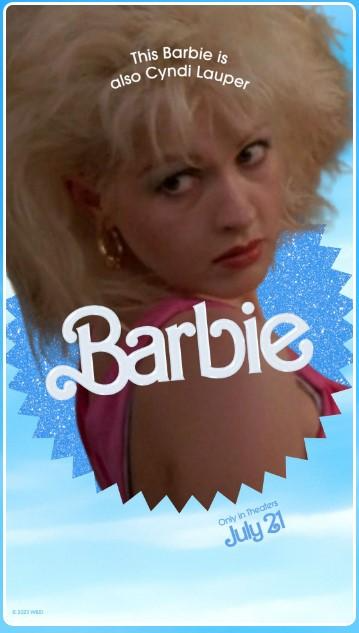
As is often my wont, I was recently extolling to a friend about the virtues of our local library, and declared I would purchase said friend an inexpensive DVD player the next time I saw one at an estate sale (there’s a one-in-four chance there will be, in my experience) so that he could enjoy some of the more obscure picks that are available. This was perhaps days before the announcement that Netflix would be discontinuing its DVD-by-mail service, which was very close to my heart and which flung wide the doors for me to discover a plethora of movies and shows that had been out of my reach before. I couldn’t afford to have internet in my home when I was in college, but even at nineteen I could spare $8 a month for a constant stream of discs into my apartment, and although my local library can’t boast that it has a copy of everything (and for some reason doesn’t do interlibrary loans for media), there are thousands of things that are otherwise inaccessible now. My friend joked (I hope) that everything is streaming now, and that there’s no reason to own such a thing; I pointed out that I have been watching a lot of episodes of Ebert & Roeper at the Movies recently and that it’s opened my eyes to a huge number of movies that I never would have known existed otherwise. Every episode, the boys discuss 4-5 movies, with two of them usually being films that have remained in the public consciousness or otherwise has some kind of name brand recognition (your Top Gun, your Beauty and the Beast, a Silence of the Lambs), one or two movies that fall into the moderately obscure “oh, yeah,” category, (Uncle Buck, for instance, or She-Devil, or Major League: Back to the Minors; anything that you’d watch at a hotel when you’re on vacation and it’s raining on a Saturday afternoon), and then one or two movies that have, for all intents and purposes, vanished from the face of the earth. Is it worth listing those? We Think the World of You from 1988 and 1994’s BackBeat aren’t the kinds of titles you drop when you’re trying to impress someone. Buried among these episodes, I stumbled across their review of Vibes that sparked my interest and, having finally seen it (thanks, libraries!), has also stolen my heart. 

Ostentatious but insecure Sylvia (Cyndi Lauper – yes, really) meets staid museum curator Nick (Jeff Goldblum doing the platonic ideal of a Jeff Goldblum performance) under strange circumstances; they and several others are guests of Dr. Steele (Julian Sands), a parapsychologist. They’re both psychics; he’s a psychometrist, meaning that he can read the history of an object and even information about the people who have touched it, while she gained clairvoyance via a psychic guide named Louise, whom only she can see and hear. Louise, via Sylvia, warns Nick that his long-term girlfriend has been unfaithful while he’s been away, and although he doesn’t believe it, he’s confronted with the truth when his powers inadvertently reveal her deceit. Sylvia, meanwhile, meets her occasional flame Fred (Steve Buscemi) at the racetrack, where she is cajoled into using her powers to pick a winning horse on his behalf, only to be unceremoniously ditched for another woman moments later. Returning home, she finds a man named Harry (Peter Falk) in her kitchen, where he offers her $50K to help find his son, who has gone missing in Ecuador. Sylvia then enlists Nick to go along as well, since two psychics are better than one, and he opts to go rather than continue to spiral out and stew over the failure of his relationship. Once they arrive, Nick deduces with his powers that Harry has deceived them, and the older man admits that he’s actually seeking a fabled room of gold in the mountains, which was previously discovered by his business partner, but the latter man has since been hospitalized in a persistent vegetative state. The two psychics reluctantly agree to go, falling in love while being pursued the whole way by Steele, fellow psychic Ingo (Googy Gress), and a sexy assassin (Elizabeth Peña). 

I mentioned above that Gene and Roger reviewed this movie; I didn’t mention that they both hated it. Not hated hated hated it, but neither was very impressed. In fact, most critics seem to have felt this way, as it’s sitting at 13% on Rotten Tomatoes. I’ve never considered that a perfect metric for a movie’s actual quality, but as a measurement of critical favor, it’s very telling. About halfway through this movie, my best friend, after several chuckles aloud, asked me how the film could have been reviewed so poorly, and neither of us could believe it. Unfortunately, it wasn’t that long after this that the film’s quality dipped, to the point where I could understand how a general audience may have been turned off by the pacing issues in the film’s third act. We can’t really go any further without noting, however, that Lauper is incredibly charming here, and a delight to watch. 

I can’t remember the last time I watched one of these kinds of movies—you know, where a non-actor performer (or sports star) is trying to break into pictures—and the non-traditional actor really disappears into the role. She has great comedic timing for someone with no real background in that field, and she and Falk have amazing chemistry. She and Goldblum are a delight to watch together as well; according to her autobiography, they didn’t get along, but you wouldn’t be able to tell from how well they play off of each other here. Goldblum’s decision to go full Goldblum matches her energy perfectly, as even though Lauper’s hair, make-up, and sartorial choices are always completely over the top, her vibe (sorry) is much more subdued than the man standing next to her, eyes bugging and stams stammering. 

The first few scenes in Ecuador are fun, as the trio arrives there to head for the mountains, albeit there’s some All in the Family-era racism from Falk’s character that doesn’t pass the sniff test these days. At first, these seem like mannerisms of the character Harry is playing, of the terrified father of a missing boy, but he spouts off a few other Bunkerisms even after the reveal that are jarring in an otherwise very goofy movie. Travelogue scenes set prior to the cresting of the mountain are gorgeous, capturing the natural verdant beauty of the Ecuadorian mountains, like something out of a movie with a much higher budget. Unfortunately, once Sylvia, Nicky, and their pursuers get to the mountaintop where Harry’s partner found a small, glowing pyramid in the film’s cold open, the plot drags considerably. All of this takes place on a set, which is fine, but the effect of being at the top of a high peak with nothing in the background makes the whole thing feel like it’s taking place in a void. Right before they arrive, we’re treated to a gorgeously rendered matte painting, but once on the actual mountaintop set, characters move around and make choices that feel like shuffling the deck before the denouement. This goes some way to explain why contemporary critics may have turned on the movie when the third act trended toward boredom, but I’m more forgiving, especially when there’s so much charm and appreciable humor on display. 

The film manages to run the gamut of different comedic styles. When the trio first arrive in Ecuador, Sylvia teases Nick for bringing so much luggage, assuming that he’s overpacked. He reveals that one of the suitcases contains an entire month’s worth of dehydrated rations; when Sylvia points out that it’s normally the bacteria in the water that caused travellers of the time to become ill, Nick reveals that another suitcase is full of giant jugs of water, which he also brought along. Later, after Harry’s deception has been revealed, he and Sylvia find themselves at the tiki-themed hotel bar, where he is drinking directly from one of the jugs, which has a festive paper umbrella embellishment. It’s a good visual gag, one among many, including one in which the 5’3” Lauper and the 6’4″ Goldblum perform a tango that ends with her arms around his shoulders, essentially being carried, with her legs dangling back and forth. It all leads one to believe that the contemporary audiences and critics of the time may simply have misunderstood that the film understands that its zany, sometimes cartoony plot is intentional, not the result of poor writing or direction. 

The real crime here is that the public reaction pushed Lauper to abandon film business, albeit not completely. She’s effervescent here in a very real way, like she’s trying some things out. At one point, when Nick rejects her because he misunderstands the reasons that she’s expressing interest, Lauper shifts into an affected Transatlantic accent and mockingly blurts “I want you bad all right. I dream about you and me and a house in Long Island. I’m only half a woman until I make love to you.” For someone who’s not really part of the business, she’s making interesting acting choices that reveal a talent range that most people wouldn’t assume. Reportedly, Dan Aykroyd was first interested in the project (which makes sense, since he’s a big believer in the paranormal in real life) but left because he refused to be in a movie with Lauper, which is both absurd and for the best, since Goldblum’s take on Nick is a much more believable match for Sylvia than I could imagine Aykroyd providing. As a fun bit of fluff, this is one worth tracking down. 

-Mark “Boomer” Redmond

Episode #141 of The Swampflix Podcast: My Dinner with Andre (1981) & Conversation Pieces

Welcome to Episode #141 of The Swampflix Podcast. For this episode, Britnee, James, Brandon, and Hanna discuss four one-long-conversation dramas, starting with My Dinner with Andre (1981).

00:00 Welcome

01:35 Free Guy (2021)
06:18 A Quiet Place Part II (2021)
09:00 Queen Bees (2021)
11:11 Hello Again (1987)
12:12 Diary of a Mad Housewife (1970)
13:30 Mommie Dearest (1981)
15:35 The Swimmer (1968)
18:44 Nine Days (2021)
24:14 The Green Knight (2021)

28:40 My Dinner with Andre (1981)
51:11 Before Sunrise (1995)
1:09:50 What Happened Was . . . (1994)
1:27:54 Interview (2007)

You can stay up to date with our podcast by subscribing on  SoundCloudSpotifyiTunesStitcherYouTube, or TuneIn.

– The Podcast Crew

Nancy (2018)

Andrea Riseborough was one of last year’s clear standouts as a breakthrough performer, although she’s been steadily working for years. Between her haunting presence as the titular role in Mandy and her farcical incredulousness in The Death of Stalin (combined with my personal years-late chance viewings of Oblivion & Never Let Me Go), I feel like I had been bowled over by her talent from several drastically different directions, yet had very little grasp on who she is in the real world. Riseborough is a kind of personae chameleon, always impressive but rarely recognizable in her wildly varied roles & costumes. It was wonderful, then, to find a movie where she was front & center as the POV-commanding protagonist. Mandy may be the higher profile work for the still-rising actor, but she isn’t as spotlighted in the narrative as the title might imply. In Nancy, however, we never lose sight of Riseborough’s titular character, who drifts along through a quiet personal crisis with a wide-eyed stare as the audience tags along in a similar stupor. It’s an excellent showcase for the shapeshifting actor – not only because of her uncharacteristically increased screen time, but also because Nancy herself is an unknowable, unrecognizable enigma.

Nancy is a depressive pathological liar who lives at home as a caretaker for her disabled, verbally abusive mother. We’re introduced to her as she drifts between low-level temp jobs & seemingly meaningless grifts – faking pregnancies, Photoshopping fictional vacations to North Korea, and blogging under imaginary personae. These aren’t money-hungry con jobs either (even though she could really use the money). They came across as desperately hollow attempts to form human connections with strangers, whether or not they’re hinged on complete fabrications. The central conflict of the film is in the audience’s unease with how much we’re willing to believe her motivations & her reliability as a POV anchor. The biggest meaningless grift of her life falls in her lap as she’s watching late-night TV news and a little girl who’s been missing for 30 years is aged through computer simulation to look exactly like her. Shocked, Nancy contacts the missing girl’s parents and suggests that she might be their daughter, recounting half-remembered stories of being abducted as a child. We have no idea whether to believe Nancy, whether she believes herself, or whether her presence in the still-grieving couples’ home is a positive or negative impact. Nancy mostly remains an unrecognizable, haunted-looking enigma to us – the perfect Andrea Riseborough role.

In most ways, Nancy offers little more than what you’d expect from a low-budget film festival release. Ann Down, Steve Buscemi, and John Leguizamo all put in grounded, well-considered performances in the exact kind of supporting roles that attract notable actors to these kinds of projects. Peter Raeburn (who frequently collaborates with Jonathan Glazer) fortifies the atmosphere with a chilling, otherworldly score that underlines Nancy’s permanently lost stasis with a distinct sense of menace. The plot has some strong Lifetime Original Movie energy to it, but it’s no more outlandish or sensational than real-life accounts like Three Identical Strangers. The film’s only shortcoming in quality control is the state of Riseborough’s wig, which looks as if it might spin like a helicopter blade and fly the fuck away at any second. Riseborough has no trouble putting in an excellent performance despite her terrible wig, however, singlehandedly elevating the material from standard indie film fodder to puzzling character study. By the end of Nancy I’m not sure I got any more insight into who Riseborough or Nancy are as people, but I did find their mysterious magnetism to be perfectly matched in a way that made for a great movie regardless.

-Brandon Ledet

Blank City (2010) and Lizzie Borden’s Place in No Wave Cinema

One of the most difficult things to grasp about Lizzie Borden’s no-budget bomb-thrower Born in Flames, our current Movie of the Month, is what cultural context could have possibly birthed it. The movie is in a temporal haze in its relation to the past, present, and future of political activism & D.I.Y. punk culture. Its dystopian sci-fi setting of an American revolution gone wrong is a warning of a plausible political future even if the good side “wins.” Its D.I.Y. punk aesthetic & political organization tactics feel as relevant to the present state of counterculture as any film I’ve ever seen, even though it was first released 35 years ago. Its vision of a grimy, nearly lawless NYC overrun by artists & radicals before Giuliani Disnified the city also could have been captured in a long gone past, solidifying the film as any kind of historical document. The past, present, and future of punk culture somehow being contained in a single picture is a lot of what’s impressive about Born in Flames’s accomplishments as a dirt-cheap game-changer. It also makes the film exceedingly difficult to contextualize, especially as its director, Lizzie Borden, has been left behind & deliberately forgotten in the decades since its release by a film industry that did not know what to do with her.

For a crash-course history lesson on Lizzie Borden & Born in Flames’s historical place in cinema, I recommend seeking out the “No Wave” documentary Blank City. While the documentary Kill Your Idols covers much of the No Wave scene’s musical projects, Blank City is an excellent, convenient primer on the scene’s cinematic output. The two mediums are impossible to fully separate, as the late 70s/early 80s reprobates who populated NYC’s No Wave movement attempted their best to be well-rounded artists in all fields available to them: painting, writing, filming, making music, etc. (no skill required, or even encouraged, for any one in particular). That means there’s a lot of overlap in the two docs’ subjects, but Blank City is especially useful as a crash course in the filmmaking end of No Wave’s accomplishments, as opposed to Kill Your Idols’s hagiography of acts like Sonic Youth, Suicide, and Teenage Jesus & The Jerks. Blank City is essentially a Letterboxd list in motion, assembling early clips from No Wave scene filmmakers like Amos Poe, Jim Jarmusch, Lydia Lunch, Bette Gordon, Richard Kern and, just-for-fun, Multiple Maniacs-era John Waters. Buried somewhere in that sky-high pile of D.I.Y. filmmakers is Lizzie Borden herself, who is interviewed briefly about Born in Flames in particular. Since Borden’s only a small part of an ever-expanding ensemble, the documentary doesn’t fully satisfy as an autopsy on Born in Flames’s time & legacy, but it does help place Borden’s work in a clear historical context by profiling the art & artists that surrounded it.

As much as Blank City aims to document No Wave as an art movement, it’s also just a document of NYC when it was cheap living. The haggard leftovers of the first wave of CBGB-era punks had free rein of a crumbling city where rent, food, and (if you didn’t do too much) drugs were affordable in a way New York will likely never see again. The first film considered to be of the No Wave cinema era was born directly of this grimy, drugged-out punk scene Amos Poe, picking up a second hand Super 8 camera, slapped together a dirt-cheap documentation of local bands like Blondie, Television, and The Patti Smith Group he appropriately titled The Blank Generation (inspiring Blank City’s name by extension, naturally). Suddenly, artists who could never afford the production values of a “legitimate” movie, but wanted to dip their toes in every available medium, saw an opportunity to turn grainy Super 8 home movies into cinema. Inspired by the handheld immediacy of the French New Wave and rejecting the plotless art house experimentation of the Andy Warhol crew that preceded them, No Wave artists filtered straight-forward, narrative filmmaking through the no-budget, aggressively D.I.Y. means available to them. Like the stubbornly unpolished sounds of the No Wave music scene that followed first-wave punk, the movies coming out of the scene were deliberately amateur & unpolished. Against all odds, they often told coherent stories, but in a way that made the audience feely like anyone could do it (which was entirely the point).

Lizzie Borden arrives later than most in both No Wave & Blank City’s runtime. Like Susan Seidelman’s Smithereens (which is scheduled to get a nice Criterion spit shine this summer), Borden’s Born in Flames is framed in the doc as part of a secondary push within the No Wave movement to include more femme creative voices. That context as a feminist corrective makes total sense on Borden’s case, as Born in Flames is itself an explicitly feminist text. In Blank City, Borden briefly explains her agenda behind the film to be bringing women together across all class, race, and sexual divides together in unity, something that needed to happen within the No Wave scene just as much as in the political world at large. She isn’t afforded much screentime otherwise, except to bring up something we wrestled with in our own Born in Flames discussion: the film’s ending. Borden both recounts how exploding (part of) the World Trade Center was accomplished with miniatures & rudimentary fireworks on a slim $200 budget and admits her own mixed feelings on that conclusion in a post-9/11 climate. Born in Flames is largely passed over in Blank City except for its significance as a feminist corrective and the shock value of that World Trade Center footage, but hopefully that was enough to make it stand out for people who had not yet seen it, lest it get buried under the mountain of other titles mentioned in the doc. It’s a significant work within or without its No Wave cinema context, which makes it seem worthy of much more attention.

Much of Blank City is a mind-blowing reminder of how many no-budget films there are out there worthy of the restoration treatment recently afforded Born in Flames & Smithereens. The documentary (smartly) fixates on the stars who made it out of the scene like Debbie Harry, Steve Buscemi, Vincent Gallo, Ann Magnuson, and Jim Jarmusch, as selling points for its subject’s significance. All I could focus on really, though, was the unlikelihood that I’d ever see the majority of the films on display in any proper format. It’s a shame too, because the material product appears to be surprisingly rich for an arts scene that sneered at gatekeeping requirements like training & talent. Even in its brief screentime, though, Born in Flames does appear to be a cut above most of the films detailed in Blank City’s loving portrait of a dead arts scene. It was helpful to see that its D.I.Y. aesthetics had a very specific context within a historical moment in punk culture & D.I.Y. cinema, but also reaffirming to know that it’s still a very special specimen within that context. There’s nothing quite like Born in Flames, even within the scene that birthed it.

For more on July’s Movie of the Month, the D.I.Y. feminist screed Born in Flames, check out our Swampchat discussion of the film.

-Brandon Ledet

The Death of Stalin (2018)

The Death of Stalin is a historical comedy about a small contingent of serial rapists & mass murderers jockeying for power after its titular Russian political shakeup. Like the British comedy Death at a Funeral, much of its humor is derived from the tension of buffoons fumbling in their duties amidst a dead-serious crisis that requires putting on a stoic, sober face for the public. Every major player in Stalin’s (semi) loyal gang of power-hungry monsters are stripped of any & all mythic mystique in the process, depicted onscreen as dangerous nitwits who are scrambling for a plan (by comedic actors like Steve Buscemi, Michael Palin, real life shithead Jeffrey Tambor, etc.) instead of some strategic masterminds who know exactly how to achieve their goals.  Humanizing these revolting fascists thorough goofball humor is a tonal risk that might invite audience sympathy to people who do not deserve it, but somehow The Death of Stalin achieves the opposite effect. By interpreting Stalin’s cronies as real people, a recognizable boy’s club, the film makes their millions of executions & untold numbers of rapes even more of a shock & a horror. There’s a comedic tension in watching violent buffoons getting in over their head in a tense political crisis, but we always see them as the walking, talking grotesqueries they actually were in the process, perhaps even more so than ever before.

It helps that The Death of Stalin takes its duties as a period film seriously. Its grim color palette & orchestral score recall the Nazi bunker drama Downfall. There’s humor in how Stalin’s kill lists can have names added by one false joke or comment and how they’re casually issued out like office lunch orders, but the brutality they signify is never treated lightly. The film thankfully doesn’t dwell on on-screen depictions of sexual assault, but it’s coldly honest about that evil’s wpervasiveness in this fascist culture. Mass protests recall the incredible large-scale crowd scenes in big budget epics like Doctor Zhivago. When Stalin dies, he soils himself the way any fresh corpse would. The recent German comedy Look Who’s Back was admirable for drawing parallels between Hitler’s fascist ideologies and the recent far-right political swing on issues like immigration, but it was a satirical mode achieved by resurrecting the dictator in an outlandish sci-fi plot and transporting him to modern times (and modern comedic sensibilities). The Death of Stalin reverses that dynamic by exporting modern sensibilities to the historic context of a period drama. Actors speak in their own American & British accents, treating the farcical humor as if it were an (especially violent) exercise in sketch comedy. The atmosphere & dramatic circumstances surrounding those performances are a dead serious contrast that drives the comedic tension by not being comedic at all, a brilliant choice in aesthetic.

You wouldn’t have to squint too hard to draw a parallel between the mass firings & buffoonish disfunction in the current Trump administration and the political chaos left in the wake of Stalin’s death in this film, but I’m not convinced that was entirely its point. If anything, The Death of Stalin is refreshing in its honesty about how much worse the modern-day Trumps, Putins and Kims of the world could potentially be if they continue to drift in their current direction. If there’s any commentary on specific current politics in the film’s central conceit it’s tethered to the idea that the dynamics of men in power never change and only get more dangerous the longer they’re allowed to go unchecked. As amusing as it is to watch these violent dolts assert their authority in a situation where their authority is at best vaguely defined, it’s also outright harrowing to see that recognizable humanity result in so much abuse & bloodshed. The Death of Stalin is a darkly funny historical comedy with political implications that will remain relevant long beyond current, topical concerns. It’s not exactly classroom-friendly material (it’s loaded with “locker room talk,” to borrow a parlance), but it is a great educational tool in establishing the universal, pedestrian traits of the people (as opposed to the mythic figures) who commit the world’s most devastating atrocities

-Brandon Ledet

Armageddon (1998) Doesn’t Contrast the Small Scale Apocalypse Narrative of Last Night (1999), It Explodes It

EPSON MFP image

When Last Night played the festival circuit in 1998, critics made a big deal about how its small scale, intimate depiction of the Apocalypse was entirely antithetical to Michael Bay’s massive explosion orgy of the same year, Armageddon. Almost a decade later, it’s still an interesting point of contrast. There are obvious ways that an indie budget Canadian black comedy wouldn’t match up to a massive Hollywood special effects spectacle, mostly in terms of scale. Armageddon is packed to the gills with recognizable faces (Bruce Willis, Billy Bob Thornton, Ben Affleck, Liv Tyler, Steve Buscemi, Owen Wilson, so many more), while Last Night boasts the muted star power of niche Canadian indie superdarlings like David Cronenberg & a before-she-was-minorly-famous Sarah Polley. Last Night saves money & energy by not at all addressing the mechanism for the world’s end, instead focusing on the personal reactions of a small group of people to the grief it inspires; Armageddon dedicates more than half of its bloated 150min runtime to blowing up an asteroid “the size of Texas.” Last Night limits its scope to the city of Toronto, while Armageddon attempts to span the entire globe (or at least a version of the globe where the USA eats up 60% of the terrain) and utterly destroys three major cities in the process. These financial & genre differences are to be expected from the get go, though. What’s really interesting outside the two doomsday films’ sense of scale is the relative blackness of their souls.

For all of Last Night‘s Gen-X cynicism & neurotic existentialism, it’s above all else a humanist story. We join the world well after it has accepted its impending communal death and although the film often chooses to laugh through the pain, it makes a point to celebrate the way characters, often strangers, comfort each other in their shared moment of grief. Armageddon is an entirely different kind of beast. The Apocalypse depicted in Michael Bay’s film is not a crisis that must be accepted & emotionally processed; it’s an obstacle that can be overcome by a tough son of a bitch American badass who blows stuff up real good. We first meet our supposed hero (Willis) launching golf balls at oil spill protestors & chasing an employee around his rig with his adult daughter. The black-hearted conservative fantasy continues when he & his rag tag crew of “roughnecks” (who at one point, no joke, self-describe as “a bunch of daddies”) are recruited to blow up the Texas-sized asteroid, because the pansy nerds at NASA just could not get the job done. So much of Bay’s film is outright despicable. Steve Buscemi’s asked to charmingly deliver a torrent of pedophile humor. Every depiction of a foreign country (who apparently all sit on their hands while America saves the day) is cartoonish in its culture-gazing, especially in the comic relief of its Chinese businessmen. One of the film’s many climactic crises is solved when a man violently tosses aside a trained female astronaut (with practically no dialogue) to bang on a machine with a wrench & yell at it until it works. Thousands of lives are lost as entire cities crumble, but less thought is given to casualties than to finding more space for yet another Aesosmith song or a lengthy assembling-the-team montage. Armageddon doesn’t muster one ounce of the compassion or the empathy of Last Night and often feels actively deplorable in its views on humanity, both political & spiritual. Still, I can’t shake the feeling that the film is worthwhile in its own right.

As ugly as Armageddon‘s hostile, conservative soul in its terms of narrative & dialogue, it’s an absolutely gorgeous film to behold. With the low attention span of a Hausu or a Beyond the Valley of the Dolls, Bay’s camera carefully considers each kinetic set-up and somehow turns a succession of beautifully crafted shots into a rapid fire assault on the senses & sensibilities of its audience. The way Last Night understands basic human fears & intimacies and the way they galvanize in timed of widespread crisis is impressive, but I don’t think the film ever approaches Armageddon‘s attention to filmmaking as a craft. It’s not even a question of budget, either. Even when you ignore for a minute all of the CGI buildings and hand-built miniatures Bay can’t resist gleefully exploding every few narrative beats, he has a distinct touch as a stylist. I’m not sure McKellar can claim the same in Last Night. The intense colors, framing, and rhythms of Armageddon are far above the film’s intelligence level in terms of plot & dialogue and it’s fascinating to watch something so smartly beautiful used for such an ugly, evil purpose.

I don’t mean to imply that Armageddon needs to be reassessed as some kind of overlooked masterpiece. If anything, it’d full-blown camp spectacle. Details like the opening narration about dinosaurs and the unfathomably awful animal crackers seduction scene had me howling with laughter, when I’m fairly sure that was far from their intent. Last Night‘s joke about the world’s biggest (and presumably final) guitar jam playing Bachman Turner Overdrive’s “Taking Care of Business” was the only gag that got that big of a laugh out of me, even though I’d say that film is the one that “deserves” to be championed as a lost classic. Armageddon is much more firmly in the so-bad-it’s-good side of that divide. It takes everything touching, mysterious, and humanist about Last Night and explodes it into a mean-spirited spectacle of jingoistic hero worship & casual misogyny. And yet, I found myself floored by Bay’s disaster epic for the entirety of its impossibly bloated runtime, a reaction I certainly did not expect on this revisit. Last Night is the more artful, empathetic portrait of humanity in crisis and fulfils every desire you’d have for a small budget indie about the Apocalypse. Armageddon, on the other hand, refuses to be ignored as a remarkable achievement in its own right, even if it is the exact polar opposite of McKellar’s black comedy and, arguably, a loud exemplifier of the worst aspects of modern Hollywood blockbuster filmmaking. As deplorable as Armageddon is as a Death Wish-style conservative fantasy piece, I’ll never sarcastically deride its inclusion in the Criterion Collection again. I get its appeal now, despite my better judgement.

For more on December’s Movie of the Month, the apocalyptic black comedy Last Night, check out our Swampchat discussion of the film & last week’s look at its studio comedy equivalent Seeking a Friend for the End of the World (2012).

-Brandon Ledet

Hotel Transylvania 2 (2015)

EPSON MFP image

three star

I’m usually pretty harsh on the kind of computer-animated children’s features that’re flimsy excuses for ensemble casts to earn a relatively easy paycheck doing voiceover work. I am, however, also very weak to the powers of pandering. For all of the Madagascar 2‘s, Angry Birds: The Movie‘s, and Minions films I’ve skipped (and will be skipping) over there’s always one or two CGI animations that drag me to the theater. I checked out Pixar’s Inside Out earlier this year, for instance, because its inner-world design looked fascinating in a dream-logic kind of way. That, however, was actually a pretty good movie. What’s much more shameful is that I couldn’t resist the recent Adam Sandler cartoon Hotel Transylvania 2. By all accounts Hotel Transylvania 2 is the exact kind of hokey CGI ensemble cast animation dreck I typically avoid. Still, I was too weak-willed to pass up a famous monsters-themed comedy featuring several SNL alumni, not to mention Steve Buscemi as a werewolf & Mel Brooks as an aging Borscht Belt Dracula. I am admittedly powerless against that formula, regardless of the film’s quality.

It’s hard to say for sure if Hotel Transylvania 2 is better or worse than its predecessor. Its lack of ambition in terms of storytelling are pretty much on par with the first film, which was centered on a *gasp* human being winning his way into the heart of Dracula’s daughter & finding his place in a social circle consisting entirely of famous monsters. That small bit of world-building already taken care of, the second film at least has a lot less leg work to do, which is a blessing. There are some interesting ideas at play here about how the young lovebirds are treated as a “mixed couple” in both of human & monster societies (despite both being blindingly white) and the ways their first child together struggles to find a sense of identity in one of the two worlds. The rest of the film is sort of a loose jumble of disconnected thoughts on gentrification, social media addiction, a Luddite’s place in the modern world, and so on. The race metaphor in the human-monster relations is half-cooked at best and doesn’t amount to much more than ludicrous statements like, “Maybe you’ve let humans into your hotel, Dad, but I don’t think you’ve let them into your heart.” Whatever. Let’s be honest, I was mostly there for the former SNL staff & the monster-themed puns, something that the film was obviously also more invested in as well.

As far as former-SNL cast members go, Hotel Transylvania 2 hosts voice performances from the likes of Adam Sandler (duh), Andy Samberg, Molly Shannon, Dana Carvey, Chris Katan, David Spade, Chris Parnell, and Jon Lovitz. The movie was also co-written by TV Funhouse creator/all-around comedy genius Robert Smigel (not putting in his best work, but still). That’s not even mentioning contributions from non-SNL comedians Nick Offerman, Megan Mullalley, Rob Riggle, Keegan-Michael Key, Steve Buscemi, and, of course, Mel Brooks. As these things generally go, it’s a fantastic cast put to minimally effective use. The movie may be monster-themed, but it definitely tends more towards cute than scary. The bats look like kittens & a baby vampire with bright red curls for hair isn’t likely to appear in any child’s nightmares. The most horrific the film gets is in the (humorously) blank expressions of the hotel’s zombie staff. I appreciated a couple of the film’s isolated punchlines, like a version of “Twinkle Twinkle Little Star” that goes, “Suffer, suffer, scream in pain. You will never breathe again,” calling back to the first film’s “Hush little baby, don’t say a word. Papa’s gonna bite the head off a bird.” For the most part, though, the jokes are worth maybe an occasional light chuckle (whenever they’re not vaguely homophobic, an unsavory line of humor Sandler can’t seem to resist even in his children’s media). Even the decades-old Al Lewis travesty Grampire: My Grandpa is a Vampire has a better grasp on portmanteau than this film’s less satisfying concoction “Vampa”. It’s no matter. I got what I wanted out of Hotel Transylvania 2: former SNL staff, hokey monster puns, and a werewolf Steve Buscemi. If that’s not enough to hold your interest for a feature (and it really shouldn’t be; I’m weak), I highly recommend instead tracking down the much-superior-in-every-way 2012 Laika production ParaNorman for all of your animated monster movie needs.

-Brandon Ledet

Babe is the Undisputed King of Cinematic Talking Pigs, but Who are the Pretenders to His Throne?

EPSON MFP image

It’s fairly well established that the Babe franchise is height of live-action, talking-pig children’s media. If you ask someone, “Hey, what was that movie with the talking pig?” it’s highly likely that Babe will be the response. The technical achievements of the first Babe film alone (which include animatronic puppets designed by Jim Henson’s Creature Shop & an Academy Award win for Best Visual Effects), mark it as the height of quality in talking pig media. That sense of movie magic wonder is backed up by a fantastic, effortlessly affecting script (adapted from a 1983 novel called The Sheep-Pig), as well as a intense fever dream of a sequel, our current Movie of the Month, George Miller’s Pig in the City. Babe is an impossibly cute little swine with an angel’s singing voice & a heart of gold that unites even the most disparate of beasts across species lines. In short, he is talking pig perfection.

Of course, being the king of any genre is going to attract some pretenders & Babe has more than his fair share. Starting as soon as the first Babe film’s 1995 release date, there have been multiple live-action piggies looking to wean off some of its swine-adoring audience. I’ve found four pretenders to the Babe throne, all of varying quality. None were fit to shine the king’s hooves, but a couple were at least mildly enjoyable.

The four Babe pretenders are listed below in order of their release dates, hopefully serving as a guide for which ones to avoid in the case that two perfect Babe features weren’t enough to satiate your talking pig needs.

Gordy (1995)

EPSON MFP image

twostar

Gordy, the original pretender, is a movie so slick in its Babe-usurping ambitions that it even beat the first Babe film to the theaters by a few months in 1995. Considering the length of Babe‘s production & the high-profile nature of its visual effects vs. the all-around lackluster quality of Gordy, I feel it’s pretty safe to assume that the latter was a mockbuster rushed into production in order to beat Babe to the punch, delivering shoddily-constructed cute pig antics before the true king arrived. Gordy is the most blatant Babe imitator & also one of the least enjoyable. It’s just an absurdly empty picture, relying on a cutesy, seemingly made-for-TV farm life aesthetic complete with line dancing & a honky tonk soundtrack. Even Gordy‘s visual effects pale in comparison to Babe‘s, relying on an ancient, possibly peanut butter-aided Mr. Ed effect to simulate its talking farm animals.

The best thing Gordy has got going for it is its titular piggy, which I’ll admit is a cute little bugger. As the film awards Gordy front-page publicity as a “hero pig” (for saving some rich dude’s grandson from drowning in a swimming pool of all things) & dresses him up in adorable costumes for a photoshoot (as a scuba diver, a professor, a surfer, etc.) it become increasingly apparent that the pig’s natural cuteness is all the film had in mind. As I mentioned in my exploration of the horror film Pigs, there’s a narrative focus on makeshift families that feels oddly ubiquitous in all pig media (perhaps due to the inherent domesticity of farm life) and both Gordy & Babe participate in that angle. Like with everything else, Gordy’s journey to unite two single parent families (including one headed by an uncomfortably creepy country singer) is much less satisfying than Babe’s struggle to fit in on his own farm. The only entertaining aspects you’re likely to find here is a couple chuckles in seeing Gordy in the scuba gear & in scenes where he teaches human children to understand pig talk, which apparently is a talent reserved for “people who take the time to understand animals, especially the pure of heart.” Blech.

My Brother the Pig (1999)

EPSON MFP image

onestar

As thoroughly empty as Gordy is, it still doesn’t represent the depths of live-action pig cinema. Things get much worse. The straight-to-DVD 1999 comedy (in name only) My Brother the Pig offers even less than Gordy in the way of entertainment and calls into question exactly how films this terrible make it to completion, especially considering the volume of them that are made for pint-sized audiences. Do we really hate children this much? The movie’s only saving graces are in the odd sensation of watching a teen Scarlett Johansson & Eva Mendes starting their careers in hopelessly mindless dreck.

In My Brother the Pig a 13 year old ScarJo struggles to live with her rascal little brother & pristine co-ed nanny, all the time believing that she doesn’t get the love & attention that she deserves. In all honesty, she deserves shit. Her brother may be annoying but at least he does mildly interesting things from time to time (like hosting food fights set to late-90s ska) instead of endlessly complaining like a spoiled brat. Anyway, the mischievous little bro activates some magic crystals through some kind of spilled ice cream spell and is unexpectedly transformed into a pig. This prompts a road trip to Mexico in order to visit Mendes’ family, who happen to be “keepers of the animal spirits.” I promise you it’s a lot less exciting than it sounds. My Brother the Pig only barely even reaches the basic “talking pig” requirements of this genre thanks to the transformation (which “amusingly” leaves him with a pig’s tail) and a particularly silly rendition of “Old MacDonald Had a Farm”. It’d be more than forgivable if you skip this one entirely.

Animal Farm (1999)

EPSON MFP image

three star

Just one month after My Brother the Pig‘s home video release, 1999’s Hallmark adaptation of Animal Farm aired on cable television. Unlike Gordy & My Brother the Pig, Animal Farm is actually pretty decent. It’s far from the technical achievement of Babe, but it does feature a nice mix of talking animal techniques, including all three approaches in the genre: animatronics, CGI, and the good, old-fashioned Mr. Ed trick. Just like with Babe, the animatronic puppets featured in Animal Farm were provided by Jim Henson’s Creature Shop. And they look pretty great, especially for a made-for-TV production. The sheep, collies, pigs, geese, and horses also call into mind a similar scenario as Babe, but it’s a more-than forgivable similarity, especially considering those animal’s real-life ties to farm life as well as the fact that Animal Farm‘s source material outdates The Sheep-Pig by nearly four decades.

One of the immediate differences you’ll notice between Babe‘s talking pig & those of Animal Farm is that George Orwell’s creations are much more grotesque & realistic than cute. Instead of the adorable voice work provided by the immensely talented (and, unfortunately, recently deceased) Christine Cavanaugh in Babe, the pigs in Animal Farm boast intense, booming voices. They pose themselves as intellectuals, authority figures, and (as the story goes) cruel bullies that are worlds away from Babe’s loveable personality. The kind wisdom of Kelsey Grammar’s voice work softens the portrayal of swine just a tad in the picture, but for the most part pigs are terrifying monsters here with their own authoritarian brutality as well as black & white propaganda footage. I’ll give Hallmark a lot of credit there: they actually put a lot of effort into preserving Orwell’s well-known story for the screen, not at all softening its violent edges for young audiences. For instance this is the only film in the genre where threatened trips to the butcher’s block for pigs are actually fulfilled. Overall, Animal Farm‘s a pretty decent adaptation of an important, but perhaps too-familiar work, far better than what I was expecting based on its pedigree.

Charlotte’s Web (2006)

EPSON MFP image

threehalfstar

Speaking of surprisingly well-executed adaptations with source material that predates Babe’s The Sheep-Pig origins, Nickelodeon’s 2006 take on E.B. White’s novel Charlotte’s Web is actually pretty great as well. It’s hard to say exactly why this version of Charlotte’s Web works so well on its own, but it does feel the most distinguished from Babe in terms of the talking-pig genre, so it at the very least it sidesteps a lot of comparative scrutiny. Even the state-of-the-art puppetry of Babe is entirely avoided here, replaced by the omnipresent use of CGI that has dominated children’s media in the past decade. I am usually turned off by this kind of CGI-dependent kids’ media, but I still ended up finding Charlotte’s Web to be the most enjoyable live-action, talking-pig film that didn’t feature Babe, the genre’s undisputed king.

I’m willing to attribute Charlotte’s Web success to the casting just as much as the inherent charm of the source material. Dakota Fanning plays Fern competently & the “humble”, “terrific”, “radiant” piggy Wilbur was voiced by relative unknown Dominic Scott Kay. It’s the rest of the animal personalities that really makes the movie work. Julia Roberts is greatly cast as the gentle, titular spider, as is John Cleese as a pompous sheep. Other voices include Oprah Winfrey, Robert Redford, Reba McEntire, Kathy Bates, Andre 3000 & Cedric the Entertainer. That’s quite a ridiculous crew. What really holds the film down, though, is the all-too-perfect decision in hiring Steve Buscemi to voice Templeton the Rat. There’s some corny “children are better listeners” bullshit echoed from Gordy here (which most likely borrowed that sentiment from White’s novel) as well as some lame humor in the film’s repetitive fart jokes & lines like “What the hay?!” & “I guess the yolk’s on me”, but Buscemi’s turn as Templeton as well as the decision to remain faithful to the source material made the film an enjoyable little diversion, just barely more entertaining & distinct than 1999’s Animal Farm. And a lot less creepy.

There might be something to be said about the fact that the best three live-action, talking pig films were all adaptations of pre-existing novels. The narrative slightness of Gordy & My Brother the Pig at the very least prove that a cute pig alone is not enough to carry a film (duh). Still, there’s something special about Babe & Pig in the City that the other two enjoyable adaptations listed here don’t even come close to touching in terms of quality & rewatchability. Babe is the king. No matter how enjoyable, the film versions of Charlotte’s Web & Animal Farm are merely the best among the pretenders to his throne.

For more on August’s Movie of the Month, George Miller’s Babe 2: Pig in the City, check out our Swampchat discussion of the film, our exploration of how it serves as a key to understanding Miller’s strange oeuvre, and last week’s look at its companion in live-action, pig-themed horror, Pigs (1972).

-Brandon Ledet