Cronenberg, Luxury Cars, and the End of the World

EPSON MFP image

I’m going to try to keep this short & reductive, so as not to get unnecessarily mean. There was a weird detail to our December Movie of the Month, the apocalyptic Canadian black comedy Last Night, that reminded me to finally check out a work I’ve been putting off for years. However, much like how our conversation around the Laura Dern black comedy Citizen Ruth lead me to finally pulling the trigger on David Lynch’s Inland Empire only to find it an exhaustingly ugly, empty exercise in art film pretension, Last Night similarly lead me astray. In the film, cult Canadian director David Cronenberg plays a distressed business man who spends his (and everyone else’s) last day alive at the office, making sure things run smoothly in the world’s final moments before its mysterious doomsday mechanism arrives. It’s when Cronenberg’s character, conveniently named David, leaves the office that Last Night‘s scenario begins to feel eerily familiar. David calmly navigates the world-crumbling chaos & riotous hooliganism taking over Toronto from the comfort of his expensive-looking luxury car. Watching this unfold, I thought I had accidentally entered some kind of time loop, as it’s this exact scenario that Cronenberg directs Twilight vet & honorary Death Grips member Robert Pattinson through in his 2012 film Cosmopolis. The major difference there is that in Last Night this is a single detail in a large, thematically fulfilling tapestry, while in Cosmopolis it’s the entire exhaustingly cold, empty journey.

I’ve had a DVD copy of Cosmopolis lurking in my to-watch pile since the mass Blockbuster Video close-out sales of 2013. I was smart to stay far away as long as I could resist. I’m not at all hostile towards the basic idea of a feature length film about Robert Pattinson venturing across town in a limousine solely to get a haircut. After all, I was fairly ecstatic about the film Locke, in which Tom Hardy makes a series of phone calls to orchestrate a concrete pour from the driver’s seat of a car. Cosmopolis had a lot more going on than Locke in terms of set pieces & range of characters; Pattinson occasionally leaves the relative safety if his “office” limo to visit a basketball court or a bookstore or, of course, a barber shop. The purpose of the film’s dialogue is much more difficult to pin down, though, aiming more for philosophical musings on existentialism and capitalist vampirism than any linear narrative. It was all white noise to me, recalling the empty-headed speculation of Southland Tales without the energy or humor. With the detached coldness of an absurdist stage play or a going-through-the-motions table reading, Cosmopolis provides very little for its audience to hold onto. It has some interesting cultural context, considering how it’s dead rat-brandishing protesters that surround the all-important office limo mirror the time’s Occupy movement and I’ll admit that Pattinson is entertaining enough to carry his beyond-demanding lead role. It just ultimately signified nothing to me, despite the fact that I was very much positive on Cronenberg’s similarly detached Hollywood satire Maps to the Stars. Don’t ask me why that is, because I honestly have no clue.

I’m not sure that Cronenberg’s apocalyptic car ride in Last Night influenced his choices in directing Cosmopolis in any way. Not only was the latter film adapted from a Don DeLillo-penned novel, there are some pretty major differences between his character’s business man coldness and Robert Pattinson’s. Last Night‘s business dude seems to be a kind, gentle man despite the emotionless way Cronenberg portrays him. Cosmopolis‘s protagonist, by contrast, is a heartless brute & a money-grubbing sociopath, making the film feel like Gossip Girl’s Chuck Bass: The Movie. In that case, the world is crumbling because of a man-made financial crisis; in Last Night we don’t know why the world is ending, just the humanist ways it’s many characters grieve its loss. When Last Night ends we see strangers comfort each other & fight through personal insecurities to achieve intimate, emotional connections in their final moments. When Robert Pattinson finally reaches the barber in Cosmopolis, he gets a terrible, asymmetric haircut. I’ll leave it to you to guess which result I found more satisfying and to draw connections on why Cronenberg would be attracted to two disparate, dialogue-heavy projects in which wealthy businessmen calmly drive through a crumbling society in the comfort of a luxury vehicle. In the mean time I’ll be trying to forget the frustration & boredom I suffered when I finally pushed play on Cosmopolis . . . or eagerly awaiting the end of the world. Whichever comes first would be fine.

For more on December’s Movie of the Month, the apocalyptic black comedy Last Night, check out our Swampchat discussion of the film, this look at its studio comedy equivalent Seeking a Friend for the End of the World (2012), and last week’s gaze into the bright explosions of its Michael Bay contemporary, Armageddon (1988).

-Brandon Ledet

Jackie (2016)

EPSON MFP image

threehalfstar

I was recently praising Jeff Nichols’s muted drama Loving for putting a realistic, knowable face on history & not chasing the broad showiness of typical Oscar bait productions. In a lot of ways Jackie upstages Loving at its own game. An intimate portrait of Jackie Kennedy in the days immediately following her husband’s assassination, Jackie is a loose, dreamy indulgence in sights, sounds, and character quirks instead of the broad dramatic beats we usually associate with our historical fiction. The quiet grief Natalie Portman brings to the titular role is supported by the fuzzed out color saturation of Carol and an unnerving score by Mica Levi (of Under the Skin & Micachu and the Shapes) to subvert what you’d typically expect from an Oscar season costume drama profiling one of history’s most important First Ladies. Here’s where I get hypocritical, though. As much as I admire Jackie‘s search for small character beats over broad dramatization, I think it could have benefited from the campy touch of a drag queen in the lead role. Jackie is delicately beautiful & caustically funny as is, but I’m convinced that with a drag queen in the lead (I’m thinking specifically of Jinkx Monsoon) it could have been an all-time classic.

Natalie Portman is perfectly suited for the lead role as Jacqueline Kennedy. She brings the exact kind of delicate caution & building anger to the role that she used to convincingly sell a difficult to balance performance in Black Swan, except now with a quietly crazed confidence that only comes with age. I don’t mean to detract from her performance in any dismissive way. I just think this is the exact kind of material that needs a drag queen’s touch. Jackie is a conversational work, a disjointed story told through various interviews: one with a reporter, one with a priest, one with her brother-in-law, and the famous televised one where she gives a tour of the White House. As Jackie navigates these multiple lines of inquiry, especially in the ones where “the whole country would like to know what she’s going to do next,” she’s trying desperately to control her own image, keeping a cool face during her First Lady PR duties, even when speaking her mind. This kind of detached personal caricature, where a woman intentionally creates a fictionalized, cartoonishly genteel version of herself, is already a sort of a drag routine. Imagining Jinkx Monsoon in the role, reviving the heavy East Coast accent she brought to her impersonation of Grey Gardens‘s Little Edie on RuPaul’s Drag Race, adds a whole other layer to that poised style of self caricature. While Jackie drinks, smokes, cries, and verbally jabs her way through the painful days following her husband’s death, I felt as if I were watching a delicate carbon copy of a low-key drag routine, when in all honesty I would have preferred to see the real thing.

I greatly respect a lot of Jackie‘s stylistic choices, especially when they push the film into unfamiliar art house territory. Its nonlinear format (in which you hear gruesome detail about the assassination before you ever see it), combines with its hazy digital photography (designed to match America’s memory of the televised footage of the events depicted) to amount to a singular aesthetic-over-accuracy experience I found fascinating & consistently striking. I just think this portrait of an image-conscious woman defiantly refusing to hide from the public in the days following her husband’s death could have been vastly improved by drag queen artistry, particularly of the Jinkx Monsoon variety. Drag queens doing Jackie O routines date at least as far back as Divine in 1968’s Eat Your Makeup (just five years after the assassination, yikes) and I feel like Jackie is only going to fuel that fire more once some modern & future queens get a chance to absorb what Natalie Portman’s doing in the role. I honestly don’t think it’s too late to make a second cut of the film with a drag queen shoehorned in, either. Jackie makes a point to Forrest Gump its star into some archival television footage from the real life events and after the CG actors brought back to life in Rogue One: A Star Wars Story, we’re officially living in a post The Congress society where we can plug whatever actor we damn well please into films they never even signed up for. I nominate Jinkx Monsoon to be digitally imposed into the titular role in Jackie: The Redux. I like the film a lot as is, but there’s no way that minor alteration wouldn’t make for a much more memorable picture.

-Brandon Ledet

Captain Fantastic (2016)

EPSON MFP image

fourstar

Six kids wielding knives, late-night gravedigging, and skinning animals all sound like elements to a rather disturbing horror movie, but, surprisingly, all exist in Matt Ross’s latest comedy-drama, Captain Fantastic. Those with a slightly darker sense of humor will get a kick out of this film, but it really has something to offer everyone, such as family values, brief nudity, religious humor, and a heart-wrenching love story. I had no idea who Matt Ross was, and I was surprised to see that he directed less than a handful of movies because he did such a “fantastic” job with this one. After a few minutes on IMDB, I realized that Matt Ross was the super creepy brother (Alby Grant) on the HBO series Big Love. That’s when all the dark humor in Captain Fantastic started to make sense.

The film follows the journey of a recently widowed father and his six motherless  children who live in the wilderness. The children are extremely intelligent and have above par survival skills, but because they live so separately from the rest of the world, they don’t have the best social skills. The father, Ben (Viggo Mortensen), and his wife,  Leslie, were disgusted with capitalist America and decided to live off the grid and start their own family far away from modern society. Leslie becomes diagnosed with bipolar disorder and commits suicide while receiving treatment. When Ben receives news of Leslie’s death, he finds out that Leslie’s parents plan on giving her a traditional Christian funeral, which is something that she didn’t want at all. She wanted to be cremated and have her ashes flushed down the toilet. Ben loads up his Partridge-family bus with his six kids, and they head out to New Mexico to make sure that Leslie gets her final wishes granted. A bus full of hippie kids chanting “Power to the people! Stick it  to the man!” is just as good as it sounds. Needless to say, they all get a good dose of culture shock.

On their way to New Mexico, the family stops at Ben’s sister Harper’s home, where the children meet their obnoxious, electronics-obsessed cousins. Harper has issues with the way Ben raises his children, and she attempts to convince him to put his kids in school. The siblings go back and forth arguing about what is the best way to raise children. This is the one part of the film that really got me thinking. What is the best way to raise children? Should they be raised to be self-reliant “philosophers” (as their mother Leslie called them) without social skills or should they be socially competent but lacking intellectuality? The thought of trying to figure out how to raise a child in order to shape them into mentally stable human being is absolutely terrifying, and I think Captain Fantastic really sheds a light on this issue.

Captain Fantastic was simply a beautiful, heart-warming movie with just enough humor to make it comfortable to watch in front of others. It’s such a thought provoking film that really made me question many of my lifestyle choices, and, in my opinion, that’s always a sign of a great film. I don’t think many folks will find themselves wanting to live off the grid or anything that extreme, but I think many will be more aware of the importance of living their best life.

-Britnee Lombas

Episode #20 of The Swampflix Podcast: The Hitchhiker’s Guide to the Galaxy (2005) & The Battle of 1998’s Celestial Apocalypses

inaworld

Welcome to Episode #20 of The Swampflix Podcast! For our twentieth episode, the last of 2016, Brandon & CC discuss two films from 1998 about Americans blowing up a celestial body before it blows them up first: Armageddon & Deep Impact. Also, CC makes Brandon watch the irreverent sci-fi comedy The Hitchhiker’s Guide to the Galaxy (2005) for the first time. Enjoy!

-CC Chapman & Brandon Ledet

Cross-Promotion: Double Team (1997) on Crushed Celluloid’s Jean-Pod Van Damme Podcast

EPSON MFP image

I was recently invited to join in on an episode of Jean-Pod Van Damme, a podcast that, as you’d likely guess, is solely dedicated to the cinematic wonders of the Muscles from Brussels, JCVD. Hosted by Marcus Jones of the movie blog Crushed Celluloid (which has an eponymous flagship podcast as well), Jean-Pod Van Damme is a irony-free celebration of one of action cinema’s more unlikely stars, a meathead European martial arts expert who stumbles in convincingly delivering his laugh lines. Crushed Celluloid as a whole, including their two podcasts & periodic film articles, participates in the exact earnest approach to typically undervalued genre cinema that we strive to achieve here at Swampflix and I’m proud to have been asked to contribute to what they already do so well.

In this specific episode of JPVD, Marcus & I discussed the 1997 Van Damme/Dennis Rodman team-up action comedy Double Team.  In my own review of the film, I described it as “gloriously half-cooked” & “a mid-90s camp relic most notable for its inclusion of a gender-defiant fashion prankster with some highly questionable political affiliations who apparently used to play basketball or something.” It was a lot of fun, then, to dissect something so frivolous at length with someone who’s a huge fan of its top-billed star and, honestly, I was more than a little flattered to even be asked, since I had only ever guested on a podcast once before (when I discussed the Vincent Price version of The Fly with the folks at We Love to Watch).

Give a listen to Jean-Pod Van Damme’s episode on Double Team below! And if you like what you hear, you can find Crushed Celluloid on Facebook, Twitter, YouTube, and their regular ol’ homepage for more enthusiastic takes on fringe genre cinema.


-Brandon Ledet

Nocturnal Animals (2016)

EPSON MFP image

threehalfstar

There’s no doubt in my mind that fashion-designer-turned-director Tom Ford has a masterpiece in him somewhere. His 2009 debut A Single Man was an interesting work that suggested that maybe his intense vision as a meticulous stylist wasn’t exactly suited for an intimate, small cast drama. Ford took the note and his follow-up, the gleefully trashy Nocturnal Animals, makes much more deliberate strides to match the arty perfume commercial pretension of the his visual obsessions to a more appropriately detached work of cinematic abstraction. In its best moments, Nocturnal Animals nearly touches the transcendent modes of exquisite trash that wins me over so fully in titles like Phase IV, Beyond the Black Rainbow, and The Neon Demon. Ford has seemingly accepted his role as an art curator & visual stylist here, aiming more for a well-constructed image than an emotionally engaging narrative. Nocturnal Animals still feels oddly restrained, though, and the director hesitates to follow through on the film’s more exciting, disorienting impulses, restraining it from becoming the soaring cinematic achievement Ford will surely make someday. Hopefully, it’ll be someday soon.

Amy Adams stars as an art gallery curator struggling to hold onto a flailing marriage with an indifferent business dick, played by Armie Hammer. Their imperfect, handsomely tailored reverie is disrupted by a package containing a manuscript for a new novel from the curator’s first husband, played by Jake Gylenhaal. This framing device sets up three competing storylines: the narrative of the novel, flashbacks to the bickering that dissolved the first marriage, and an endless parade of shots of Amy Adams thinking & reading in bed. All three of these narrative threads are dripping with melodrama, but only one of them is consistently entertaining to behold. The novel, which plays almost like a parody of macho fiction scribes like Bret Easton Ellis & Cormac McCarthy, follows a family who are derailed from a road trip by some West Texas hooligans who rape & murder all but one surviving member.  After a years-long pursuit with the help of a grizzled law man, an absurdist terror brought to life by a top of his game Michael Shannon, those hooligans are brought to a justice of a kind, but at a devastating cost. There’s some kind of parable here about the flawed nature of revenge, but the point Ford’s trying to make doesn’t really matter all that much in the end, given how little attention the “real” world drama of the art curator’s love life is given in comparison to the crime novel’s sensationalist violence & self-doubting masculinity. I like how the novel’s years-long search for retribution mirrors the frustration of constantly performing mental autopsies on a past failed romance, including the incessant impulse to return to the scene of the crime in both cases. However, I’d rather that the art curator’s half either match the novel’s narrative significance so that both halves are equally strong or for the film to not try to make a point at all. As is, their connection feels a little thin considering the effort they take to merge thematically.

The one thing the Amy Adams end of this fractured narrative does accomplish is to contextualize Nocturnal Animals as a work of Art, rather than a conventional feature film. The opening credits are a stunning, immersive gaze into a gallery exhibit where flabby erotic dancers shake their naked bodies in a Twin Peaks void of sparklers, confetti, and tiny American flags. At a fancy cocktail party between artsy types, Adams rattles on about “junk culture, total junk” and a swishy Michael Sheen chides her (along with the audience) to “Enjoy the absurdity of our world. It’s a lot less painful when you do.” Gyllenhaal’s frustrated novelist even laments at one point about how painful & vulnerable it is to make divisive art that seemingly no one likes. Nocturnal Animals feels most alive when Ford drops the pretense of trying to make a point and instead lovingly shoots his beautiful sets & impeccable costumes without any semblance of making them narratively significant. His art curator framing device works best as an instruction manual on how best to appreciate what he’s trying to accomplish in the film, rather than a participation in its thematic goals. I have very little interest in the way Ford’s narratives clash fragile artsy types against the unhinged threat of dangerously macho hicks, but any abstracted moment where he carefully posed naked bodies before blinding red fabric voids on top of a classical music score had me drooling in my chair. I’m not convinced Nocturnal Animals has anything useful or novel to say about the frivolity of revenge or the human condition, but it often works marvelously as an art gallery in motion (when it’s not hung up on watching Amy Adams think & read herself through another lonely night).

I’m loving the new weird territory Tom Ford explores here; I just think he can afford to get a whole lot weirder. There’s a third act shift into audience disorientation in Nocturnal Animals that I found far more exciting than any of the film’s various moral dilemmas and moments of bitter melodrama. Ford cuts from one reality to the next in jarring transitions where you sometimes aren’t even sure if you’re watching a scene or a still photograph. If this narrative jumble between its various storylines lead to some kind of a psychological break along the lines of a Persona or a Mulholland Drive, I might be singing its praises (the way I have been with its fellow exquisite trash pieces Tale of Tales & The Neon Demon) as one of the best films of 2016. It instead leads to a much more pedestrian narrative about revenge & bruised emotions: a hollow, although beautiful, shell of what could have been. I doubt Ford would be interested in doing so, but I’d love to see the director move into an even trashier genre than a pulpy crime story in the future. If he left behind his impulse to make a narrative point about life & humanity and instead applied his stylist skills to a horror of sci-fi genre pic, where the stakes are lowered from the heights of an intimate drama & the thrills are more or less predetermined, he’d feel way more free to let loose & deliver that weirdo masterpiece I’m convinced is in his imminent future. Nocturnal Animals very nearly gets there and it’s fascinating to watch him reach for it in his own carefully meticulous way, but he needs to loosen up just a little bit to arrive at that accomplishment.

-Brandon Ledet

How the Star Wars Holiday Special (1978) Nearly Destroyed The World’s Most Popular Film Franchise in Its Infancy

EPSON MFP image

We’re living in a pretty incredible time to be a Star Wars nerd right now. In the past year, we’ve seen two of the franchise’s best entries, The Force Awakens & Rogue One, bring its battered ghost back to the heights of its Empire Strikes Back & New Hope pinnacle. Now that enough time has passed and most of the bitter taste has been washed away, we’re collectively forgetting the nightmare regime of young Anakin & Jar Jar stepping on the throat of the world’s most popular film franchise, threatening to exterminate Star Wars forever into a CG oblivion. Jar Jar & Hayden Christensen weren’t the first threat to Star Wars‘s legacy, though. Nor were they the worst. A year after the unfathomably popular premiere of the franchise in A New Hope and two years before its sole masterpiece in Empire Strikes Back, Star Wars sank far lower than any line readings of “Meesa people gonna die?” or CG Hayden Christensen force-ghosts ever brought it. The Star Wars Holiday Special is the darkest chapter in the Star Wars saga, a 90min eternity of embarrassment & shame for a series that might not have survived it in the age of internet chatrooms or, even more recently, turbulent Twitter storms. The Star Wars Holiday Special luckily flew under the radar, surviving only as a ghost on the world’s least-watched VHS cassettes instead of being consistently torn apart in a public forum. If released in a more modern era, it might’ve been a death blow.

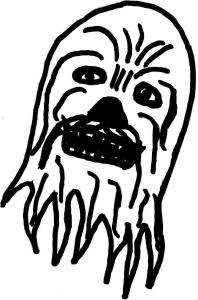
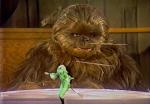
A variety show holiday special in the vein of a Bing Crosby or a Pee-wee’s Playhouse seasonal broadcast, this fanboy nightmare centers on the inane & vaguely defined Wookie celebration of Life Day. Along with Bea Arthur, Art Carney, Jefferson Starship, and a few other stray celebrities most children wouldn’t give two shits about, not even in the late 70s, most of the original Star Wars crew makes an appearance here. Mark Hamill & Carrie Fisher get off light, appearing only in brief video conference scenes, never having to appear on set in their respective Skywalker roles. David Prowse & James Earl Jones escape even more responsibility for this crime against decency, as Darth Vader’s brief scenes are mere overdubs of clips from A New Hope. It’s truly Harrison Ford & Peter Mayhew who suffer the biggest loss of dignity here. The entire special’s narrative is structured around Han Solo helping Chewbacca avoid Imperial capture on his path home to his Wookie family in time for their all-important Life Day celebration. That’s right; Chewbacca has a non-canonical family created just for this prestigious holiday special. His father Itchy, his son Lumpy, and his wife Malla are no doubt the three most ill-conceived and poorly designed characters of a franchise that, again, was also responsible for Jar Jar Binks. Most of The Star Wars Holiday Special features Chewbacca’s ugly, shrill, unlikable family as they hang out in their mat painting treehouse condo, whining, roaring, and grumbling until their hirsute paterfamilias arrives. It’s borderline unwatchable, even with the occasional respite of a Han Solo line reading or a half-cooked comedy sketch from Mel Brooks collaborator Harvey Korman. It’s probably not fair to pick on the quality of 1970s children’s media from this decades-late hindsight, but this truly is one of the most unpleasant and, frankly, boring 90min stretches of sci-fi media I’ve ever endured. I’m honestly surprised Star Wars escaped it unscathed.

Not every moment in the special is agony. There’s a Heavy Metal-style animation sequence that’s an especially welcome moment of competence & effortless cool, one that serves as the first introduction of space mercenary Boba Fett as a character. Given my own nature as a gleeful garbage-gobbling goon, I also found some occasional touches of worthwhile camp hiding amidst the shrill Wookie whines. A bartending Bea Arthur sings a Kurt Weill number to a cantina full of unruly customers at closing time because she’s being shut down by the series’ de facto Space Nazis. Itchy, everyone’s favorite Wookie grandpa, has dirty video conference phone sex with Diahann Carroll in the same living room where his daughter in law is preparing a traditional Life Day meal. I also got the strange feeling that several characters were flirting with Chewbacca’s wife Malla and, although admittedly hideous, there’s something truly amusing about the look of his own son Lumpy. It’s better experienced in still images rather than in actually watching the special, but I’m just glad I how have something besides the Baby Grinch to post pictures of during my Yuletide shitposting.

maxresdefault tumblingandbumblinglumpy

However, nothing in The Star Wars Holiday Special is excitingly campy enough to make up for the fact that overall the film feels like watching human muppet Bruce Villach, one of the special’s credited writers, narrate a 90min YouTube supercut of goats screaming. The special manages to reach a rare kind of awful that’s both boring and abrasive. It offers so little reward for the great leaps of faith it requires to stomach it’s incessant Wookie whines & stale comedy routines that I’m honestly shocked the Star Wars franchise survived it intact. This was a time before the series’ home video availability, so besides story records & tie-in picture books, The Star Wars Holiday Special was the first way you could take George Lucas’s populist classic home with you. The Empire Strikes Back eventually destroyed any lingering resentment this television broadcast could’ve generated, but if something this awful were released in the same intense scrutiny era of Jar Jar Binks’s moment in the flamewar sun, it might not have bounced back so quickly. As you’re preparing to celebrate yet another Life Day with your family this year, consider taking some time out of your holiday to revisit the beloved institution of Star Wars‘s creative lowpoint, or at least as much of it as you can stand. It might bring you nothing but pain & regret, but it’ll at least make you more appreciative of the heights the series has returned to in its post-Disney buyout era. You might even learn to cut Jar Jar some slack now that he’s got Lumpy & Itchy to compete with as the franchise’s ultimate lowpoint in terms of taste & annoyance.

wookie

-Brandon Ledet

Armageddon (1998) Doesn’t Contrast the Small Scale Apocalypse Narrative of Last Night (1999), It Explodes It

EPSON MFP image

When Last Night played the festival circuit in 1998, critics made a big deal about how its small scale, intimate depiction of the Apocalypse was entirely antithetical to Michael Bay’s massive explosion orgy of the same year, Armageddon. Almost a decade later, it’s still an interesting point of contrast. There are obvious ways that an indie budget Canadian black comedy wouldn’t match up to a massive Hollywood special effects spectacle, mostly in terms of scale. Armageddon is packed to the gills with recognizable faces (Bruce Willis, Billy Bob Thornton, Ben Affleck, Liv Tyler, Steve Buscemi, Owen Wilson, so many more), while Last Night boasts the muted star power of niche Canadian indie superdarlings like David Cronenberg & a before-she-was-minorly-famous Sarah Polley. Last Night saves money & energy by not at all addressing the mechanism for the world’s end, instead focusing on the personal reactions of a small group of people to the grief it inspires; Armageddon dedicates more than half of its bloated 150min runtime to blowing up an asteroid “the size of Texas.” Last Night limits its scope to the city of Toronto, while Armageddon attempts to span the entire globe (or at least a version of the globe where the USA eats up 60% of the terrain) and utterly destroys three major cities in the process. These financial & genre differences are to be expected from the get go, though. What’s really interesting outside the two doomsday films’ sense of scale is the relative blackness of their souls.

For all of Last Night‘s Gen-X cynicism & neurotic existentialism, it’s above all else a humanist story. We join the world well after it has accepted its impending communal death and although the film often chooses to laugh through the pain, it makes a point to celebrate the way characters, often strangers, comfort each other in their shared moment of grief. Armageddon is an entirely different kind of beast. The Apocalypse depicted in Michael Bay’s film is not a crisis that must be accepted & emotionally processed; it’s an obstacle that can be overcome by a tough son of a bitch American badass who blows stuff up real good. We first meet our supposed hero (Willis) launching golf balls at oil spill protestors & chasing an employee around his rig with his adult daughter. The black-hearted conservative fantasy continues when he & his rag tag crew of “roughnecks” (who at one point, no joke, self-describe as “a bunch of daddies”) are recruited to blow up the Texas-sized asteroid, because the pansy nerds at NASA just could not get the job done. So much of Bay’s film is outright despicable. Steve Buscemi’s asked to charmingly deliver a torrent of pedophile humor. Every depiction of a foreign country (who apparently all sit on their hands while America saves the day) is cartoonish in its culture-gazing, especially in the comic relief of its Chinese businessmen. One of the film’s many climactic crises is solved when a man violently tosses aside a trained female astronaut (with practically no dialogue) to bang on a machine with a wrench & yell at it until it works. Thousands of lives are lost as entire cities crumble, but less thought is given to casualties than to finding more space for yet another Aesosmith song or a lengthy assembling-the-team montage. Armageddon doesn’t muster one ounce of the compassion or the empathy of Last Night and often feels actively deplorable in its views on humanity, both political & spiritual. Still, I can’t shake the feeling that the film is worthwhile in its own right.

As ugly as Armageddon‘s hostile, conservative soul in its terms of narrative & dialogue, it’s an absolutely gorgeous film to behold. With the low attention span of a Hausu or a Beyond the Valley of the Dolls, Bay’s camera carefully considers each kinetic set-up and somehow turns a succession of beautifully crafted shots into a rapid fire assault on the senses & sensibilities of its audience. The way Last Night understands basic human fears & intimacies and the way they galvanize in timed of widespread crisis is impressive, but I don’t think the film ever approaches Armageddon‘s attention to filmmaking as a craft. It’s not even a question of budget, either. Even when you ignore for a minute all of the CGI buildings and hand-built miniatures Bay can’t resist gleefully exploding every few narrative beats, he has a distinct touch as a stylist. I’m not sure McKellar can claim the same in Last Night. The intense colors, framing, and rhythms of Armageddon are far above the film’s intelligence level in terms of plot & dialogue and it’s fascinating to watch something so smartly beautiful used for such an ugly, evil purpose.

I don’t mean to imply that Armageddon needs to be reassessed as some kind of overlooked masterpiece. If anything, it’d full-blown camp spectacle. Details like the opening narration about dinosaurs and the unfathomably awful animal crackers seduction scene had me howling with laughter, when I’m fairly sure that was far from their intent. Last Night‘s joke about the world’s biggest (and presumably final) guitar jam playing Bachman Turner Overdrive’s “Taking Care of Business” was the only gag that got that big of a laugh out of me, even though I’d say that film is the one that “deserves” to be championed as a lost classic. Armageddon is much more firmly in the so-bad-it’s-good side of that divide. It takes everything touching, mysterious, and humanist about Last Night and explodes it into a mean-spirited spectacle of jingoistic hero worship & casual misogyny. And yet, I found myself floored by Bay’s disaster epic for the entirety of its impossibly bloated runtime, a reaction I certainly did not expect on this revisit. Last Night is the more artful, empathetic portrait of humanity in crisis and fulfils every desire you’d have for a small budget indie about the Apocalypse. Armageddon, on the other hand, refuses to be ignored as a remarkable achievement in its own right, even if it is the exact polar opposite of McKellar’s black comedy and, arguably, a loud exemplifier of the worst aspects of modern Hollywood blockbuster filmmaking. As deplorable as Armageddon is as a Death Wish-style conservative fantasy piece, I’ll never sarcastically deride its inclusion in the Criterion Collection again. I get its appeal now, despite my better judgement.

For more on December’s Movie of the Month, the apocalyptic black comedy Last Night, check out our Swampchat discussion of the film & last week’s look at its studio comedy equivalent Seeking a Friend for the End of the World (2012).

-Brandon Ledet

A Christmas Carol Five Ways

EPSON MFP image

For this holiday, I decided to watch five different versions of A Christmas Carol. Despite the anti-semitic subtext (the main character is a stingy money lender with a big nose, and the name Ebenezer, who finds the meaning of Christmas), it’s a story that 173 years later still feels relevant: a ruthless, old rich man who hates Christmas being scared into human decency.

I’m going to give an overview here in chronological order along with my choice for favorite ghost.

Scrooge (1951)

This is the version considered to be the best classic. It’s easy to write it off as just a straightforward telling of the book, but there’s a lot of stylistic fun. The ghosts have some cool fadings in and out, the lighting and atmosphere are spooky, and this film seems to have set the rules for how A Christmas Carol movies should look and feel. Not to mention the iconic way they present Tiny Tim’s famous line.

Alastair Sim is a really great Scrooge. He plays both sides of the character’s nature well: the detestable penny pincher and the pitiful old man. Not to mention that he makes a bunch of fantastic faces. His ending transformation is absolutely manic and almost more terrifying than how he starts out.

Favorite Ghost: I think the Ghost of Christmas Past here is actually really cool. In a lot of ways, I think this is the hardest ghost to get right, which is a shame because it’s the one that usually gets the most screen time.  I like this guy’s Greek robes. He’s soft spoken yet authoritative, which I guess makes sense, since the past speaks for itself.

Scrooge (1970)

I was really surprised with how much I really enjoyed this one. It might be my second favorite and I’m considering adding it to the household tradition watch list. It’s very solidly British, with very solidly British humor. It’s a musical, and one of the first songs you hear is “I Hate People.” If you’re not sold after that number, I don’t know what to tell you. But if you make it through enjoying nothing else, it gets really ’70s weird near the end, with a trippy scene where Scrooge actually goes to Hell.

Albert Finney is by far the grubbiest Scrooge. There’s a few close-ups of his very grimy hands with dirt under the finger nails. Scrooge’s house reflects that and  is the most convincing Scrooge house. It’s this elaborate mansion, but Scrooge is so stingy that he only uses a small, filthy section of it. The rest is cobwebs and decay.

Favorite Ghost: Jacob Marley is my favorite ghost in this one. He’s played by Alec Guinness (hey, he plays a ghost at least twice in his career), who pantomimes ghostly floating by bobbing up and down. Second place to the Ghost of Christmas Past for having a really great hat!

Scrooged (1988)

This take on A Christmas Carol is very different. If you’re not already familiar with it, it’s about Bill Murray who is a television executive. He’s ruthless and bizarre. As he’s producing a live TV version of A Christmas Carol, he gets visited by the three ghosts (I guess four if you count Marley) who are just as updated and bizarre. It’s the very cynical Network-esque take on the story.

Bill Murray is great as a rich asshole. He’s exactly the kind of rich asshole a modern audience knows about. The boss who will fire someone for bringing up reasonable concerns and will ignore when a single mom needs to take her child to the doctor.  As a Scrooge type character he’s half as old but twice as mean, and despite the surreal world that surrounds him, he’s quite believable, which in a lot of ways makes him seem like he’s past redemption. Luckily the ghosts are ruthless and sadistic.

Favorite Ghost: It’s really hard to say no to Carol Kane as bubbly fairy punching Bill Murray in the face, but I actually really like the take on Christmas Yet to Come here. Its entrance, just appearing, looming on the television monitors, is just so creepy and amazing.

A Muppet Christmas Carol (1992)

This version is my personal favorite and has been since childhood, and despite the presence of The Muppets, it’s actually really close to the book. There are many, many lines lifted straight from the page. I’m kind of a big Jim Henson/muppets fan in general (which you may remember from my article about The Dark Crystal), but I think what really gets me about this movie are those Paul Williams melodies. I don’t really think it’s Christmas without them (especially since my other favorite Christmas movies is Emmett Otter’s Jug Band Christmas, another Henson production with more of Williams’s music). This movie came out after Jim Henson died and was directed by his son, but all the other muppet players are there: Frank Oz, Dave Goelz, and Steve Whitmire (who now voices Kermit after Henson’s death).

Gonzo is Charles Dickens here and narrates the whole thing with the help of Rizzo the Rat. Following that pair’s misadventures through the story keeps the muppet whimsicality throughout the whole movie. Not to mention the appearances by other notable muppet characters like the Swedish Chef or Sam the Eagle. Michael Caine as Scrooge delivers the “they better do it and decrease the surplus population” line with so much darkness and grit, but at the same time has such good chemistry with his furry castmates. As I’ve said already that this is my favorite version of the story, he’s also who I think of as Scrooge.   Also at the end, he busts out some of the most awkward moves I think I’ve seen a grown man do, and in his night gown to boot!

Favorite Ghost: I’m going to have to go with Marley here. Except in this version they created a second Marley, Robert Marley. These two Marleys are played by Statler and Waldorf, who are known for being the hecklers. They get a pretty good musical number complete with singing money chests.

Disney’s A Christmas Carol (2009)

Out of all the versions I watched, this was the most mediocre and also the most frightening. It’s a Robert Zemeckis animated feature done in a very similar style to Polar Express, which means uncanny semi-realistic people, but beautiful backgrounds. There are so many adaptations of this work, though, that I don’t think I really understand why this one was even necessary, since it’s very close to the book and other than some impressive animation it’s pretty unremarkable. Nor do I understand why a family movie has a couple unnecessary jump scares. Despite the jump scares and creepy animated people, it just seems to drag on.  There’s so many scenes of Scrooge getting dragged along and knocked about all of them screaming, “We released this in 3D!”. It gets so old so quickly. There’s also some really bizarre and troubling imagery worked throughout. Jacob Marley’s jaw gets detached. The Ghost of Christmas Past goes through a freaky face morphing thing. A woman gets snatched away by a straight jacket. It’s just very dark. I wasn’t especially impressed with Jim Carrey as Scrooge, either. Albeit, this was animated, so I’m going off the voice acting for the most part, despite the film using motion capture heavily in it’s animation.

Favorite Ghost: I didn’t think they were interesting at all, but I guess I’ll go with Marley again, but only because he’s a grotesque, decaying corpse.

Interestingly, 3 of the 5 titles are some variation on Scrooge. All of them are agreed on what the Ghost of Christmas Yet to Come looks like, 4 out of 5 have similar ideas of the Ghost of Christmas Present, but none of them can agree on what the Ghost of Christmas Past looks like.

-Alli Hobbs

The Spirit of Christmas (2015)

ghost

three star

campstamp

It’s that time of year! That joyous time when we try to keep out cats from knocking over Christmas trees, drink double our body weight in hot chocolate, and watch really bad Lifetime Christmas movies! I rightfully chose to start with a ghostly romance.

The Spirit of Christmas is a lighthearted story about a no nonsense lawyer who falls in love with a ghost. Jen Lilley plays Kate, a lawyer trying to work up the ladder in her practice. She doesn’t believe in or have time for love. An inn owner dies and she has 12 days leading up to Christmas to get it appraised. Daniel (Thomas Beaudoin) has haunted the inn for the last 97 years, but for the 12 days before Christmas he gets his human form back.  During those 12 days, he and Kate butt heads and eventually fall for each other. There’s also a mystery shoehorned in. They have to figure out who killed him so he can pass on, and also there might be a second ghost. If that sounds familiar, you’ve probably seen the classic The Ghost and Mrs. Muir, which while set not during Christmas, has the same idea of a living woman falling in love with an attractive ghost tied to a specific location. Mrs. Muir is far more revered than any of its derivatives, but that’s probably just due to small things like film quality and better acting.

Other things about this movie that warrant appreciation, other than the contrived lines and suspect acting: In the flash backs, all the old-timey men have such unrealistically impeccable haircuts; the soundtrack is that soft, sparse piano music that all cheesy Christmas movies have; and the rules about how ghosts and hauntings work make no sense! The Spirit of Christmas is cheesy and trashy, but dammit it’s my kind of cheesy and trashy. I love the human-ghost relationship trope, and by the end I’m left wondering, can they make it work?

-Alli Hobbs