
A late-70s Japanese folk horror about a demonic dragon that lurks underwater, threatening to drown a nearby village that won’t do its bidding, sounds like film bro catnip — the kind of zany, go-for-broke genre freak-out that the smelliest twentysomething in your life makes their entire personality for a couple years before moving on (see: 1977’s House). In practice, 1979’s Demon Pond is much more delicate than that. Its titular demon is a whispered-about, metaphorical presence that never graces the screen. Its vintage Moog score lilts and swells instead of hammering the audience with analog synth coolness. Its heroic fights against the otherworldly spirits that haunt the human world are staged as the ceremonial ringing of a bell. It yearns more than it burns, getting more wrapped up in doomed romance than doomed society. If you want the zany, go-for-broke genre freakout version of Demon Pond, check out something like Yokai Monsters: Spook Warfare. Here, the yokai are quiet observers of human longing & misery, their supernatural antics held at bay by calm waters & a ringing bell. The film gingerly holds the audience in its palm like a flower petal, until it crushes us in the vengeful fist of its climax.
Although adapted from a traditionalist kabuki stage play, Demon Pond structurally mimics the basic story template of folk horror cinema like The Wicker Man, The Wailing, and The Last Wave. These are stories in which a Big City outsider stumbles into a rural town with its own mysterious, supernatural traditions that ultimately leads to his demise (and often to the wide-scale destruction of everyone around him). In this case, a schoolteacher on vacation pretends to be studying the small village he’s visiting as a casual tourist, when he’s in fact searching for a dear friend who disappeared from his life three years prior. He finds that friend married to an alarmingly delicate, ethereal woman who’s so childlike in her innocence that she seems alien to the human world. Indeed, her earthly presence is reflected in a magic-realm doppelganger that only the audience can see: a spiritual priestess who lords over the local yokai, bound to an ancient agreement that they will not flood the nearby village as long as the humans on-site ring the temple’s ceremonial bell three times a day. An academic collector of local folk tales, the teacher’s lost friend has taken up the lifelong duty of ringing said bell to save the thousands of villagers who would drown if the area floods. Meanwhile, the villagers have long dismissed the bell business as ancient superstition, but they’re starting to suspect that the strangers at the edge of town are the reason they’re suffering the unreasonably long drought that’s threatening their livelihoods. The race to see which superstition will win out (i.e., whether continuing to ring the bell or slaughtering the outsiders will fix the village’s water woes) is a one-track race to doom, inevitably leading to the village being sunk to the bottom of the titular pond.
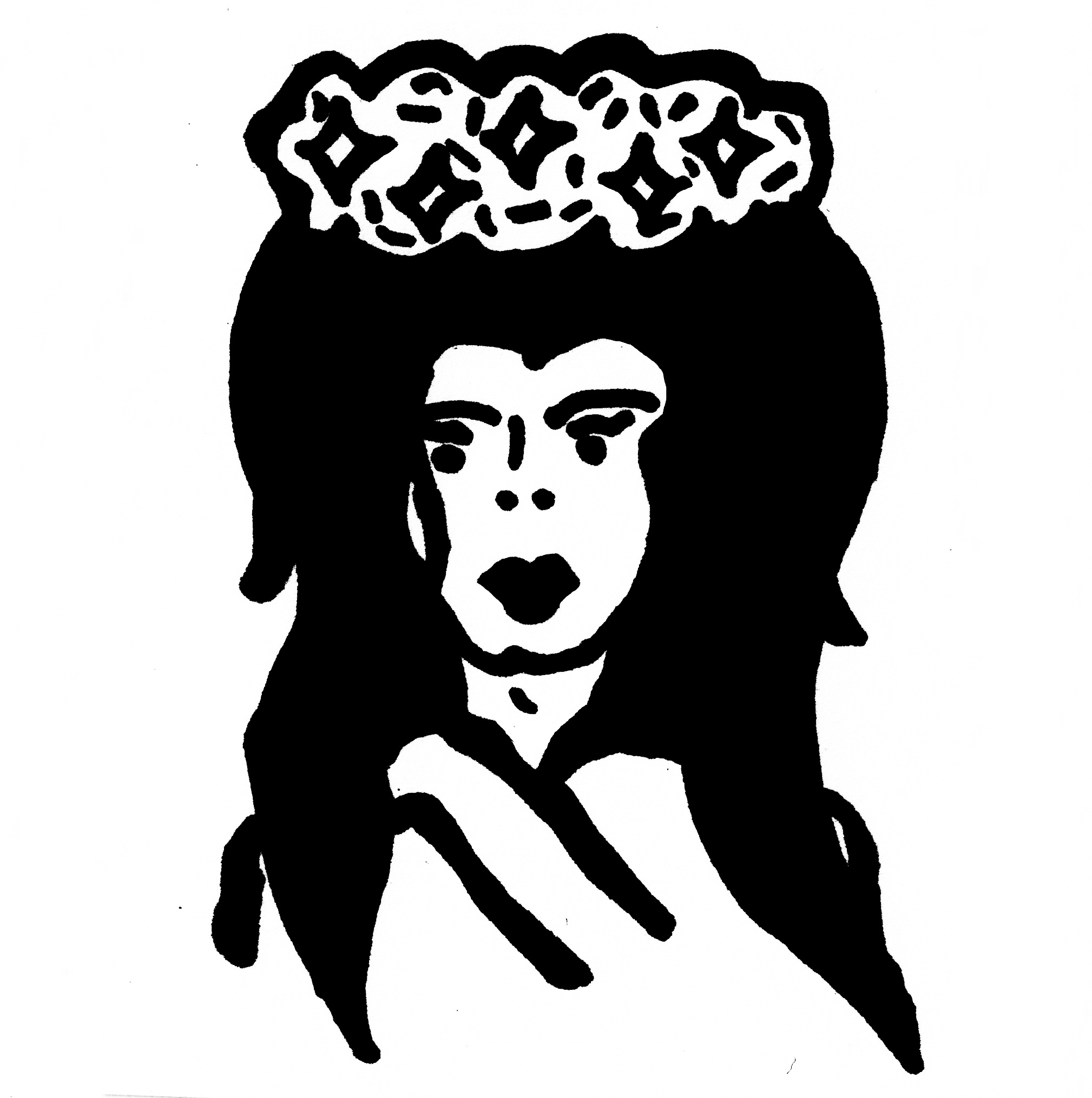
Part of Demond Pond‘s delicate nature is due to its queer angle on gender & romance, resulting from the casting of stage actor Bandō Tamasaburō in the dual role of Yuri/Yuki, bell-tender/princess. Tamasaburō was specifically trained in the kabuki art of onnagata: male actors who play overly dramatic female roles. He performs the fragile softness of Yuri and the all-powerful romantic fury of Yuki with a heightened, drag-like attention to gender cues that adds to the stagecraft artifice of the film’s fantasy realm. It also adds a subversive texture to the central romance between the ringers of the temple bell, something the movie leans into heaviest when it draws out the couple’s intimate mouth-to-mouth kiss into elaborate choreography & blocking worthy of an early-MTV music video. Meanwhile the aquatic-yokai princess Yuki is most pained by her bell-bound agreement to not flood the village because it keeps her apart from a neighboring prince she yearns to marry. She eventually comes to welcome the flood, as it would free her to love as she pleases, making poetic proclamations like, “How blissful to dissolve in the stream of affection. Let my body be crushed to pieces. Still my spirit will yearn for him.” That’s some high-quality yearning right there, especially since its cinematic adoption of kabuki theatricality drags it into the realm of tragic queer love.
For most of its runtime, Demon Pond floats somewhere between the isolationist folk-tradition dread of The Wicker Man and the garish high-artifice spectacle of The Wizard of Oz. Then, it’ll swerve into a special effects showcase sequence here or there unlike anything you’ve seen anywhere else. When the yokai “creatures of mud” (humanoid catfish, crabs, frogs, etc.) emerge from the pond grounds to summon the fabled flood, they’re represented in costuming befitting of community theatre or a well-attended Halloween soiree. When their bell-bound princess emerges, however, her otherworldly magic is represented in purely cinematic double-exposure techniques truly befitting of an underwater spirit. When the village inevitably fails to ring her bell and floods in the consequences of its own inaction, director Masahiro Shinoda (and special effects wizard Nobuo Yajima) go full tokusatsu spectacle, crushing the village under a heavy flow of water with the same might & scale of a Godzilla rampage. Whereas most later Godzilla pictures would indulge in kid-friendly pro wrestling drama, however, Demon Pond‘s spectacle is instead a tragic expression of nuanced, adult conflicts. Its superstitious villagers are paradoxically desperate for water but afraid of a pond. Its doomed-lover outsiders are paradoxically resentful of those villagers but feel responsible for keeping them alive, undrowned. The entire local structure at the edge of the Demon Pond hangs on a precarious balance, one so delicate it can be thrown off by a single bell tone. When it all comes crashing down, you feel the weight of that tragedy pressing directly on your heart. It hurts.
-Brandon Ledet
 Swampflix
Pingback: Podcast #252: Hellblazers (2022) & Tubi Originals | Swampflix