One of The Prytania’s Classic Movie selections this Halloween season was the 1958 Hammer Horror adaptation of Dracula, starring Christopher Lee as the famous vampire. It’s a gorgeous picture in the exact way that most Hammer Horrors are, but it’s also one that doesn’t take a lot of risks in its transformation from page to screen, to the point where its US release had to be retitled The Horror of Dracula in order to distinguish it from the decades-old Bela Lugosi classic from Universal. If anything, Hammer’s Dracula film goes out of its way to streamline and normalize the Bram Stoker source material, consolidating characters and skipping over the novel’s strange fixations on real estate deals & oceanic travel. As a result, I greatly enjoyed looking at The Horror of Dracula but didn’t think much about it after leaving the theater, since it deliberately made itself more inconspicuous so as not to be dismissed as a silly novelty. I believe this was a mistake. By the 1950s, the first run of the Universal Monster movies had established a concrete canon of iconic horror villains in Dracula, Frankenstein’s monster, the Mummy, the Wolf Man, and the Gill-man (with no offense meant to my egomaniacal bestie the Invisible Man). Those famous creatures’ early outings in the Universal Monsterverse defined the look, feel, and tone of horror cinema (if not only by bringing some dark German Expressionist magic to Old Hollywood), so that any reiteration in subsequent decades would have to stand out as a silly novelty in order to stand out at all. Restaging Dracula in sumptuous 1950s Technicolor is not enough; you need a fun, memorable gimmick to zhuzh up the material. Even Universal knew that by the 1950s, when they regularly dispatched their Famous Monsters to terrorize Abbott & Costello in a series of slapstick comedies for children. And so, I left The Horror of Dracula craving the goofier, zanier side of Count Dracula in a novelty take on the character, and I’ve spent the rest of this Halloween season tracking down similar goof-offs from his Famous Monster brethren.
Of all the silly Dracula-adjacent novelties that called out to me this month, 1977’s Dracula’s Dog barked my name the loudest. In this far-afield deviation from the original novel, the Dracula surname has carried down through multiple generations all the way to Michael Dracula, a suburban dad who loves spending quality time with his middle-class family in sunny California. During an especially sun-dappled camping trip, Michael Dracula and the rest of the Dracula clan are attacked by a vampiric Doberman that once belonged to his ancestor, the Count Dracula of Dracula lore. The undead, ever-loyal Doberman attacks whomever has the misfortune of crossing his muzzle from scene to scene, but the real way he continues his former owner’s legacy is by biting and converting all nearby dogs into his canine vampire army, further ruining Michael Dracula’s family vacation on an escalating scale. You won’t be surprised to learn that Dracula’s Dog (aka Zoltan . . . Hound of Dracula) is not an especially well regarded addition to the Dracula canon, but I think that’s a shame. Anytime the hellhound Zoltan leapt out of his little doggie coffin to expose his bloody vampire fangs and gently nibble on his victims’ exposed necks, I experienced pure childlike delight, and that’s exactly what the Famous Monsters are good for. Sure, Zoltan and his loyal vampire-dog army trap Michael Dracula in a locked car and viciously attack him from all sides in a living-nightmare sequence straight out of Cujo, but any movie with the title Dracula’s Dog is going to feel like it was made for children, regardless of its content (a dissonance that director Albert Band would later push to further extremes with this son Charlie under the Full Moon home video brand). It’s not as controlled nor as respectable as the Hammer Horror take on Dracula, but it’s undeniably more memorable. You’ll never get the details of Dracula’s Dog mixed up with other Dracula adaptations in memory. For better or worse, it’s its own thing.
Maybe if the goofier, off-brand versions of Famous Monsters are going to primarily appeal to children, it’s best not to torment the little tykes with nightmare fuel like Dracula’s Dog; maybe the kiddos should just be pandered to. Universal realized this as early as their Abbott & Costello Meet The Monsters series in the 1940s & 50s, and they continued the tradition through the end of the millennium with another kiddie-friendly IP in 1999’s Alvin and the Chipmunks Meet Frankenstein. By then, the appeal of marketing directly to children was that their little brains are soft and malleable for advertisers, which is why this direct-to-video Frankencomedy doubles as a tourism ad for the Universal Studios theme park. You see, while Alvin and his band of chipmunk brothers are between rock gigs at Universal Studios, they discover that the real Dr. Frankenstein has also been employed by the park’s haunted house attraction and, of course, has released his lumbering undead creature into the wider park. Selling children on the timeless fun of the Chipmunks brand, the Famous Monsters brand, and the in-house amusement park brand, this disposable Halloween Season novelty is more a relic of shameless corporate synergy than it is a sincere addition to the Universal Frankenstein canon (even if its black & white opening positions it as a direct sequel in the James Whale lineage). By the time Alvin and the boys are performing a high-pitched Ozzy pastiche or rapping about fighting the monsters under their bed, however, the artistic merit of the project becomes a secondary concern. Much like Dracula’s Dog, it’s funny enough that it simply exists. Not for nothing, it also works as a great educational tool for young children who have not yet met everyone’s good friend Frankenstein and don’t know that he can be a big old sweetheart if you don’t treat him like a monster. Once loose, the creature quickly proves to just be a big, dumb kid, much like the suckers in the audience who begged their parents to buy this promotional video in the first place.
The next year’s follow-up, Alvin and the Chipmunks Meet The Wolfman, was a bit of a letdown in comparison to the Frankenstein one, but that disappointment can be a useful educational tool for children too. It sets healthy expectations for what kids will find when they’re old enough to watch the actual Universal monster movies; the Wolf Man is kind of a drip. 1973’s The Werewolf of Washington is aware of this, making sure that its lycanthropic protagonist is recognizable as a dipshit putz long before he’s bitten by a werewolf. Dean Stockwell stars as a Washington D.C. political reporter who’s sent on assignment to Eastern Europe, where he annoys the local yokels until one of them gets fed up and bites him during a full moon (while disguised in werewolf form, of course). Back in Washington, he becomes increasingly fraught & paranoid as he transforms into a werewolf himself, in what gradually reveals itself to be a caricature of Richard Nixon’s then-deteriorating mental state. If it had been released a few years later, The Werewolf of Washington might be understood as a parody of the era’s political paranoia thrillers like Three Days of the Condor or All the President’s Men. Instead, it’s just one of that genre’s goofier contemporaries, complete with very silly jokes about mixing up the words “pentagram” and “Pentagon,” among other groaner one-liners. And because Universal’s Wolf Man movie starring Lon Chaney Jr. established so much of the core iconography of the werewolf genre, it frequently pays homage to that specific iteration of werewolf lore, including fixation on the werewolf-smiting power of a silver-handled walking cane and its own low-budget recreation of Jack Pierce’s time-elapse makeup transformation effects. Like Dracula’s Dog, The Werewolf of Washington is both too preposterous to take fully seriously but also frequently too beautiful to dismiss as a disposable novelty. Both movies are built on ridiculous premises, but they play them admirably straight for all they’re worth.
As much as the Wolf Man is a remarkably bad hang in the Universal Monsters crew, the Mummy is the biggest bummer of all. Most of the Mummy movies in that monster’s initial run are so punishingly boring that they’ve been forgotten to time entirely — their memories replaced with visions of Brendan Fraser & Rachel Weisz looking hot & sweaty in the big-budget desertscape of the late-90s reboot. The Mummy is the only Universal Monsters movie whose cultural memory has been surpassed by its derivatives’ and, as a result, most of the more prominent Mummy knockoffs are to be found in that late-90s era. Take for instance 1998’s ridiculously titled Bram Stoker’s The Mummy, a double-edged mockbuster of the then-upcoming Mummy remake and the long-cooled Bram Stoker’s Dracula, “starring” the third-billed actors from some of the 90s’ blandest sitcoms (Caroline in the City‘s Eric Lutes, Home Improvement‘s Richard Karn; Tubi is a truly magical place). Better yet, take 1999’s even more ridiculously titled The All New Adventures of Laurel & Hardy in For Love or Mummy: an Ernestless outing from Jim Varney collaborator John Cherry, improbably cashing in on the era’s Mummy revival by resurrecting Laurel & Hardy from the dead to star in their own Abbott & Costello Meet the Monsters comedy. Now that’s what off-brand Famous Monster movies are all about. Never at any point in For Love or Mummy‘s runtime do you believe that it exists or that you’re spending your precious time on this Earth watching it. It’s also, admittedly, pretty funny. “Laurel” (Bronson Pinchot) & “Hardy” (Gailard Sartain) fit right into the Dumb & Dumber mold of the era’s comedic sensibilities, landing easy laughs as they prattle & pratfall their way through their run-in with a magically resurrected Egyptian mummy. The mummy itself has a pretty cool design to it too, even if it is a remarkably stupid one. The head from a sarcophagus is propped up on a traditionally-bandaged mummy body like a giant papier-mâché mask in an image that would feel more at home in a Saturday morning cartoon than in live action. It’s just the right kind of dumb.
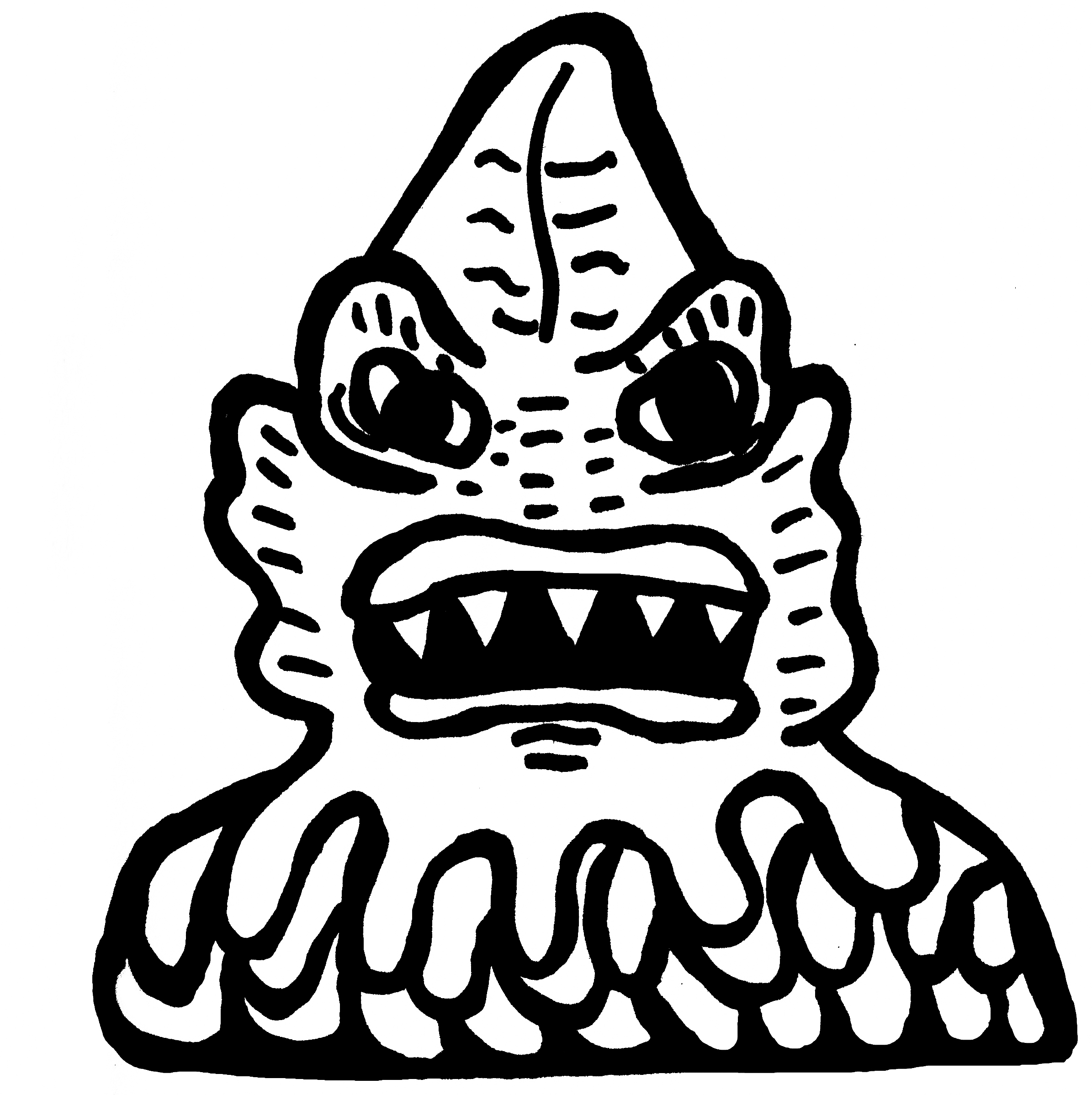
The knockoff Gill-man movies of the 1960s are even dumber. During the era’s beach-party craze, the latecomer Universal Monster was resurrected for two cult-classic creature features in 1964’s The Horror of Party Beach & 1965’s The Beach Girls and the Monster. Together, they teach the ultimate lesson to studios like Hammer and, more recently, the failed grim-dark Universal Monsterverse reboots: have fun. It turns out that making movies is easy. All you need to do is pay some twentysomethings to dance in bikinis to surf rock and point the camera in the right direction. The only hard part, really, is convincing them to also let you pour chocolate syrup on them while getting pawed at by a man in a rubber suit; it sounds sketchy out of context. The monsters in these two beach-party monster movies are both instantly recognizable as direct descendants of the Gill-man. More specifically, the one in The Beach Girls and the Monster looks like a child’s crayon drawing of the Gill-man (complete with goofily round eyeballs) and the one in The Horror of Party Beach looks like a wax figure of the Gill-man that has melted in the beachside sun, but they’re both honorary Gill-men all the same. The Horror of Party Beach even goes the extra mile by including some underwater cinematography in wimpy homage to the original Creature from the Black Lagoon, demonstrating in time-elapse photography how fish DNA, human skeletons, and nuclear waste have mixed to create its not-quite-Gill-man creature. The resulting monster looks a little like if Big Bird’s cousin was a fish and his only known photo was taken at the height of a hotdog eating contest. Then, the goofy beach party fun goes sour during his routine monster attacks, wherein the chocolate-syrup blood looks shockingly brutal in black & white contrast. The Beach Girls and the Monster puts less effort into its own monster mayhem, but it hits just about every other entertainment metric you would want out of a so-called Bad Movie. Its performances are perfectly stilted, its knockoff Gill-man is perfectly doofy, and anytime they’re not sure what to do between kills everyone starts aggressively go-go dancing to surf rock & stock footage. Perfection.
None of these Famous Monster knockoffs are nearly as handsome nor as respectable as the Hammer Horror adaptation of Dracula, but they’re all much more memorably bizarre. Why make Dracula’s tactics & motivations more logical & methodical when you could also choose to mount him on a surfboard while bikini babes go-go dance on a nearby beach, cheering him on? The original run of Universal Monster movies are not only perfect pieces of pop art, but they’re also warm, unrepeatable introductions to cinephiles’ best friends. We’ve already met Dracula, Frankenstein, the Wolf Man, the Mummy, and Gill-man in their prime, and we’ll always primarily remember them as they were in that black & white heyday. So, my impulse with their later films is to watch my ghoulish friends have a little fun. Let them enjoy time with their family pets or get into buffoonish mishaps with the biggest dum-dums within striking distance. There’s no need to take any of this kiddie stuff at all seriously. Now, please remember to excuse my hypocrisy when I fall in love with Robert Eggers’s super-serious “werwulf” picture next month, negating everything I just said.
-Brandon Ledet

