
Sipping a late-night beer while flipping through trash TV channels in an overly air-conditioned hotel room is one of the great luxuries of modern living. It doesn’t matter the quality of the hotel, the beer, or what’s on the TV; it always feels indulgent in the exact right way. I recently found myself enjoying this modern luxury while vacationing in Hot Springs, Arkansas, during a time when basic-cable TV channels were deep in their Halloween season programming. Every night, I would flip between the available movie channels to catch brief, out-of-context glimpses of crowd-favorite horror titles between commercial breaks, hopping from one movie to the next the second an ad would interrupt the spook show. From night to night, it seemed the same movies were playing in rotation while also hopping from channel to channel, establishing a moment-in-time canon of horror classics that are both famous enough to draw ad sales and currently cheap enough to license: Aliens, Beetlejuice, Bride of Chucky, Seed of Chucky, Stephen King’s IT, Jaws II, Halloween II, Friday the 13th: The Final Chapter, Lake Placid, The Mummy Returns, and several other titles I’ve already seen plenty of times before. Somewhere in that mix, I also caught glimpses of the 1983 Stephen King adaptation Cujo, which I was surprised to discover I hadn’t seen all the way through before, despite its obvious cultural familiarity. It seems to me that if a horror movie was famous enough to be included in that rotation of well-worn classics, I should probably make time to properly watch it, which I dutifully followed through on as soon as we returned home. Vacation is over, and I am no longer watching movies in out-of-context snippets; this blog is serious business.
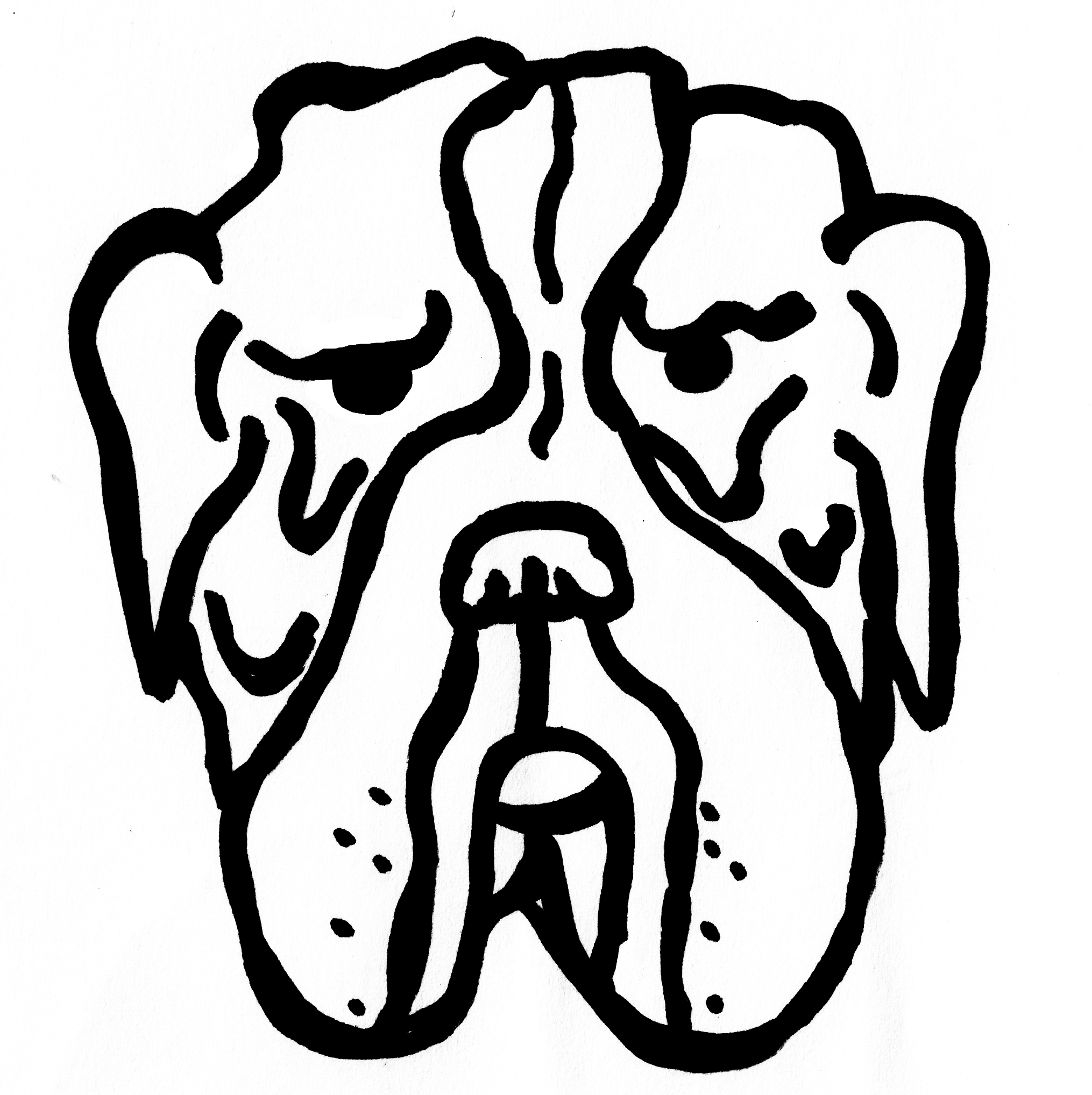
Cujo stars Dee Wallace as the mother of a young child, caught between her duties as a housewife and her desires as a lonely, frustrated woman. Her husband (Daniel Hugh-Kelly) is a total drip whose high-pressure advertising job has him ceaselessly babbling on the phone about breakfast cereal commercials, so she instead seeks sexual release with their rough-handed handyman (Christopher Stone), who’s too much of a brute for the tryst to last long-term. While this peak-divorce-era adultery drama plays out in the suburbs, a junkyard St. Bernard named Cujo is suffering his own personal crisis on the rural outskirts of town, where the family employs an off-the-books mechanic. Cujo is usually a very sweet, good boy, but he sticks his snout where it doesn’t belong and gets bitten on the face by a rabid bat, transforming him from loving family dog to giant, froth-mouthed monster. When the jilted husband leaves for a work trip after discovering his wife’s infidelity, mother & son bring the family car to Cujo’s junkyard for repair, where they find that the dog has already started a vicious murder spree, and they’re next on the menu. The film becomes intensely claustrophobic from there, with Wallace’s distraught & dehydrated mother fighting to keep her son alive in a broken car that Cujo guards like a prison warden, viciously attacking the duo any time they attempt escape. Through the struggle, she proves her worth to herself as a familial protector who’ll do anything to keep her son alive and her family intact, whereas she starts the film listlessly detached. She also gets in a paw-to-paw fight with a gigantic, rabid dog, whose supernatural relentlessness is comparable to a Freddy, a Jason, a Michael, or a Chucky.
At its start, Cujo doesn’t appear to be in much of a rush to terrorize its audience. The first half of the film is pure domestic drama, with its horror elements only hinted at in the young child Tad’s insistence that there is a monster under his bed that will eat him as soon as the lights are switched off. His otherwise absent father gets all the glory as the family protector in those scenes, scaring the make-believe monster away while his mother does the less glamorous work of actually raising him at home from day to day. That is, until the rabid dog attacks start halfway through, when she has to go to battle with the very real monster lurking under the family car instead of the fake one hiding under the bed. Once mother & son are isolated in that automotive prison, Cujo is legitimately terrifying. It’s the most I’ve been unnerved by a scary movie since I first saw the home-invasion thriller The Strangers a few years ago, likely because—like senseless home break-ins—an angry, barking dog covered in blood is a more probable threat in my life than ghosts or ghouls or goblins or the other go-to monsters I usually seek out in classic horror movies. Even so, Cujo does transform from a common dog to a supernatural monster somewhere in the process of his mental decline. Early in the movie, Tad makes a jokey reference to the movie Jaws at the family dinner table, which places this firmly in the canon of cross-species Jaws knockoffs from its era: Jaws, except it’s an octopus in Orca; Jaws, except it’s a bear in Grizzly; Jaws, except it’s a boar in Razorback; and so on. Appropriately enough, the director of Cujo made one of the finest specimens of that subgenre in the 1980 Jaws, except it’s an alligator banger Alligator.
It’s easy to see how Alligator landed Lewis Teague the job of adapting King’s novel — big creature, big chompers, etc. Along with frequent Verhoeven cinematographer Jan De Bont, Teague finds infinite angles on the car-imprisonment scenario of the second half to exploit for effective scares. The camera spins on a 360º swivel inside the car, searching for an unseen Cujo. The rabid dog’s own POV is shown in first-person Cujo Cam during his more slasher-inspired attacks. In the smartest production move, the dog is often portrayed by a man in a costume during his attacks, allowing him to get physical with his costars in a way more traditional animal-attack creature features can’t achieve. It’s a convincingly tactile tactic that helped clarify why I found Primate to be one of this year’s most satisfying horror titles, despite its muted reputations among more high-concept hits like Backrooms, Obsession, and Camp Miasma. It turns out that a freaked-out actor wrestling with a rabid, enraged animal is enough of a hook to carry an otherwise middling family drama, as long as you can sell the viciousness & physicality of that interspecies clash. I doubt that Cujo was ranked near the top of many critics’ Best of the Year lists back in 1983 either, but the scariness of its back half has proven to be enough to solidify it as a lasting horror classic . . . if the metric of continual basic-cable broadcast means anything in establishing that canon. It’s unlikely that Primate will experience the same long-term vindication over the decades, considering the current absence of a legitimate monoculture, but I would be just as happy to see out-of-context clips of it while surfing channels in a hotel room over a beer in the 2060s, God willing.
-Brandon Ledet

