Movie of the Month: My Demon Lover (1987)

EPSON MFP image

Every month one of us makes the rest of the crew watch a movie they’ve never seen before & we discuss it afterwards. This month Boomer made Erin, Brandon, and Britnee watch My Demon Lover (1987).

Boomer: I think that this was bound to happen sometime, and I’m pretty sorry that it happened with regards to a Movie of the Month that was my suggestion: My Demon Lover is not as much fun as a rewatch as it was in my memory. The male love interest comes across much more low-key predatory than I remembered, and the love story overall suffers as a result. Still, the two lady leads are just as likable as I remembered, which helped make this a more tolerable experience than it otherwise could have been.

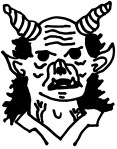
My Demon Lover tells the story of Denny (Michele Little), a perpetual loser who falls for crappy guys like her latest man, who leaves her on her birthday for having the audacity to want to throw a party for herself. How dare she?! Her best friend Sonia (Gina Gallego) is a modern woman with lots of lovers and no boyfriends, an occasional psychic who runs a new age store. After an encounter with lovelorn loser Charles (Xena alum Robert Trebor, virtually unrecognizable without his trademark beard), Denny is ready to give up on men, until she has a charisma-free meet cute with horndog Kaz (Scott Valentine), a homeless man that she immediately takes into her home. Although there are a lot of problems with this scenario, the narrative focuses on one in particular: Kaz was cursed by the mother of a girl with whom he was sexually experimenting in middle school. As a result, when he becomes aroused, he turns into a monster called a pazatzki, complete with scaly prosthetics and monstrous claws. As a series of murders of young women rack up and are attributed to a serial killer dubbed “The Mangler,” Kaz starts to wonder if he is the one at fault. Sonia has a vision that implies he is, and everything comes to a head in a random castle that appears to be smack in the middle of Central Park.

Debuting at number ten on the week of its release and then quickly falling off of the box office charts, My Demon Lover netted nearly two million dollars in its first week despite not being a particularly good movie. Part of the reason for this was that Valentine was a bit of a hot item at the time, having garnered attention for his portrayal of Nick Moore, the boyfriend of Justine Bateman’s character on eighties sitcom standard Family Ties, appearing in 44 episodes. The character was so well-received, in fact, that there were three separate attempts to spin him off into his own show, titled The Art of Being Nick. One script idea made it all the way to the pilot stage, where Nick’s new love interest was played by Seinfeld star Julia Louis-Dreyfuss and his sister was played by future Buffy mom Kristine Sutherland. Nick’s grandfather in the pilot was portrayed by Herschel Bernardi; Bernardi’s sudden death, combined with NBC’s hesitation to let Valentine leave Family Ties, led to the series not being picked up.

Despite the fact that his character in the film commits lots of micro-and macro-aggressions (including grabbing women on the street like an eighties YouTube pickup artist), Valentine himself has a lot of charm. Little is also very likable as the put-upon Denny, even if the character reads as a parody of unlucky eighties leading ladies. Gallego’s Sonia stands out in her role as the unapologetically sexually liberated modern woman, bringing warmth and sincerity to a role that one would expect to see treated more critically in a film of this era. These are all characters that would have been more successful in a movie wherein the leading man didn’t start out as such an unrepentant creep, and it’s a testament to Valentine’s likability as an actor that Kaz seems at all redeemable, given the aggressions cited above. It’s too bad that what could have been his breakout performance ended up burying him and relegating him to guest appearances in things like Lois & Clark, JAG, and Walker, Texas Ranger.

What do you think, Brandon? Are the likable characters who populate this film charismatic enough to partially cover the more unlikable elements here, or are the performances just adhesive bandages on a fatal wound?

Brandon: I do think you’re being a little harsh on My Demon Lover as a whole, but I can also see how a rewatch could make you cringe pretty hard. The opening stretch of the film constantly, confrontationally raises the essential question “Aren’t you supposed to like the male lead in a romcom? Or at least be able to tolerate him?” The demon lover hobo at the film’s center is a walking, breathing personification of street harassment, the kind of scummy cretin who must’ve scattered & disappeared when Giuliani cleaned up Times Square in the 1990s. My Demon Lover presents the most salacious version of NYC we’ve covered since former Movie of the Month Crimes of Passion & its male romantic lead thrives in its grimy, sex-soaked environment, often as a deadly threat for women navigating the city alone at night. You’d think that a romcom that begins with a man who turns into literal demon when he gets aroused & puts the women around him at risk would have virtually no chance of bouncing back, but My Demon Lover somehow pulls it off. A lot of this has to do with, as Boomer points out, the lady schlub charms of Denny as the demon lover’s love interest, but I somehow was also won over by the demon lover himself before the end credits rolled, a completely unexpected turnaround.

I think I can pinpoint the exact moment my opinion changed on the demon lover Kaz. There’s a really sweet, impossibly vapid falling-in-love montage where the devilish sex fiend learns the meaning of intimacy over a series of Big City dates with Denny that include props like hotdogs, park benches, and balloons. At this point it becomes kind of tenderly sad that Kaz can never become aroused by a woman without becoming a physical threat. It’s an affliction that keeps him from knowing the simple pleasures of romance and helps to explain how his sexuality remains predatory & juvenile without any chance for positive growth. The movie later does a lot of damage control to further repair the demon lover’s character by making his demonic form sort of cartoonishly pathetic & also making it explicitly clear that (huge spoiler) the serial Mangler murders were not his doing. However, it’s silly moments in his getting-know-Denny stretches that first began to redeem the poor little devil in my eyes. In those moments Kaz’s behavior seemed less monstrously brutal & more in line with obnoxious, emotionally stunted, magical characters like Drop Dead Fred.

Erin, you & Britnee both called the narrative twist of the real Mangler’s identity long before the movie revealed the true killer. Do you think that the murder mystery aspect of this film was a mistake, delaying how long it would take to learn to love the demon beau as a cursed goofball? Or was the act of gradually changing your mind on Kaz’s merits as a love interest more entertaining than the film would’ve been as a straight romcom fantasy? What does the Mangler murder mystery add or take away from My Demon Lover’s campy charms?

Erin: You know, I think that the kitchen sink nature of My Demon Lover is part of its appeal.  The movie would function without the mystery of The Mangler, and it would be a perfectly sweet monster-flavored romcom.  I do think that including The Mangler allows for an edge – it gives Kaz’s initial characterization a tinge of danger.  Though he is completely disgusting in his own right, the implication that he is murdering women in the streets makes his meet-cute (meet-gross?) with Denny so much more troubling.  We as an audience already know that she has terrible luck with relationships, and even without being led to believe that he is a blood crazed slasher it seems like a terrible idea for her to keep speaking with him and letting him sleep on her sofa.  Adding The Mangler’s subplot gives the redemption story a stronger and sharper flavor, as we end up having to cover so much more ground to see Kaz as a protagonist.  Instead of zero to hero, it’s like he’s starting at -50.

On the other hand, starting the movie with the implication that Kaz is The Mangler makes the second act of My Demon Lover really jarring and awkward at times.  It’s hard to enjoy sappy love montages and gratuitous makeouts when you have the unsettling feeling that an ingenue is going to be slaughtered in her sleep.  The nightly murders and rising hysteria about The Mangler are also at odds with the main plot of two goofy kids falling in love.  I’m not sure if the incongruity is intentional, or if watching My Demon Lover in 2016 increases the gap in mood.  I think that audiences today might be more sensitive to the portrayal of violence towards women in cinema.

It’s hard to choose the strangest element of My Demon Lover, though.  The magical rules seem inconsistent, with Kaz’s pazzazion manifesting in a thousand different ways.  Denny’s friend Sonia is inexplicably the best character in the movie, and for some reason sleeping with the DA.  The NYPD are following a procedure unknown to any police force in the world.  The balloon budget is strangely high.

Britnee, what do you make of My Demon Lover? What aspect of the movie caught your attention, the romcom elements or the monster movie side?  Do the production values of the movie detract from its charm or add to it?

Britnee: I honestly didn’t expect My Demon Lover to be much different than the other hundreds of campy 80s comedies out there, but it actually does a great job standing out on its own. At first, the film didn’t seem like it was going to be anything but a cheeseball comedy about a fruit burger-eating airhead that falls for a perverted homeless guy who may or may not be a killer demon. Thankfully, things become much more interesting as the film goes on.

The monster movie and romcom elements of My Demon Lover come together to create a rare combination that makes for one hell of a memorable flick. I think that the romcom features of the film stood out more for me than the monster movie elements. If all of that demon jazz was taken out of the film, I think it would still be just as wacky and entertaining. It seems as though we all agree that Kaz is not your average romcom heartthrob, and I think that’s what made this such an amusing experience. I actually found Kaz and Denny to be very annoying lead characters, but that’s not necessarily a bad thing. Their ridiculously irritating traits make them a hilarious, dynamic duo. Denny’s lack of self-respect and poor life choices mixed with Kaz’s disturbing mannerisms and erratic personality work very well together. I remember thinking, “God, these people suck, but is that why I’m laughing so hard right now?” while watching the film. This is the stuff that romcoms are made of.

As for the film’s production values, I would have to say that the film benefits from its cheap qualities. The poorly made demon costumes, Kaz’s limited wardrobe, and, as Erin previously mentioned, the large amount of balloons adds to the movie’s comical value. My Demon Lover wouldn’t have been half as much fun if it was some fancy schmancy high-quality production.

Boomer, of all the strange happenings that occur in My Demon Lover, the portion of the film that takes place in the Belvedere Castle in Central Park caught me off guard more than anything else. It seemed very displaced. Did you feel as though this part of the film seemed like a completely different movie? Also, if you had to choose a different location for The Mangler’s lair, where would it be?

Boomer:  I have to admit that, up to this very moment when I looked up “Belvedere Castle,” I had no idea that there really was a castle in Central Park. I thought that the Central Park castle was a total fabrication! With that knowledge, I’m a little more forgiving of the film’s climax (sorry) for taking place there. It still doesn’t quite work for me, but I can see what the intent was. Just as the vaguely racist “Romanian curse” enacted on a modern man draws a line of connection between the sexpolitik of the Old World and the contemporary one of the film, so too does a climactic castle rooftop showdown with modern weapons (and a little shaggin’ to make the magic happen). Still, you’re absolutely correct, Britnee, in that it doesn’t feel quite right.

I think a more industrial or warehouse location showdown would have been better suited to the film’s aesthetic and its placement in then-modern New York. At the time of the film’s production, it would have been impossible to predict the rise of Giulianni and the Disneyfication of New York that would follow in his wake (Times Square Red, Times Square Blue by Samuel Delany is essential reading to understanding this dichotomy). My Demon Lover is like a time capsule from the real New York, and diverting the narrative to such an Old World location when the story could have had a meatpacking district fight sequence or a battle of wills at a dead subway stop (just think of the passing trains and the potential for interesting lighting schemes!) would have been more in line with the presentation of the city up to that point. There are arguments to be made for shooting in either atmosphere, but I really would have loved to see more of 1980s NYC and its eccentricities (Fruit burgers! Occult shops with weapons that can actually kill a demon!) rather than a locale that seems almost formulaic, even for such an oddball flick.

Brandon, raunchy comedies seem to be popular in brief cycles, with watershed sex flicks like Porky’s, American Pie, and Forty Year Old Virgin inspiring imitators and followers for a few years before the madness dies down and the fields of film are left fallow to allow the next hit to germinate. Do you think that, in the wake of the bro-aggrandizing movies of the past few years (like Neighbors), a modernized remake of My Demon Lover would have the chance to reach a wide audience in the way that the original did not? And, if you were drafting a script for it, would you keep Kaz’s street harassing ways intact (all the better to discuss the issue and create a stronger arc) or forego that character trait altogether (making him a more sympathetic lead from the outset)?

Brandon: It’d be interesting to see a script take a thoughtful, pointed jab at hyper-masculine sexuality through this film’s formula. It could maybe even update Kaz’s toxic sexual persona with recent targets of online feminist social commentary: “manspreading”, “negging”, commands like “You should smile more!”, etc. The truth is, though, that a satirical comedy with ambitions that high would have to toe a thin line to succeed.

A much easier way to update My Demon’s Lover‘s formula would be to swap the genders of its protagonists. My favorite raunchy sex comedies of the past few years have been the ones lead by women. Films like Appropriate Behavior, Wetlands, The Bronze, The To Do List, Bachelorette, and (to a lesser extent) Trainwreck have breathed fresh air into a stale format by making its overgrown, oversexed adult children women for a change, which has been an exciting development when it’s done right. I know it’s not a sex comedy, but consider, for instance, Paul Feig’s upcoming Ghostbusters reboot. In almost every scenario a new Ghostbusters film sounds entirely unnecessary & gratuitous, but with that cast of talented women on board, it actually sounds like it might be kind of worthwhile?

Erin, picture for a moment My Demon Lover with Denny & Kaz’s roles reversed. Kaz is a bumbling nerd who always seems to attract emotionally abusive women & Denny is an oddball love interest who turns into a literal monster every time she gets horny. Would this gender reversal change the film’s fabric in an essential way or would their dynamic remain just as off-putting?

Erin: Oh man.  A gender flipped My Demon Lover might be a lot to process even for modern audiences.  I have two thoughts on switching the genders of Kaz and Denny (could we keep the names? probably?).  I’m also going to assume that you mean a full gender-flip, and that The Mangler is also going to be a female character.

First, I think that a gender flipped My Demon Lover would be a hard sell for the same reasons that other raunchy, female-led comedies seem to struggle.  American audiences are still coming to terms with actresses having full comedy range – comediennes are criticized for being pretty, and therefore unable to be funny, or being funny because they are unattractive and have nothing else going for them, and who wants to watch or listen to an unattractive woman, or trying too hard to be “one of the boys” with gross-out humor, or being unrelatable because their humor is about female experiences, or just being unfunny because women obviously have no sense of humor.  As difficult as it is for an audience to get behind Kaz as a protagonist (and he starts pretty freakin’ low), I think that it would even more difficult to make the turn around for a female character who’s meet cute involves digging through trash and spewing half-chewed food at their romantic lead.  There’s also a lot more judgment leveled at women who are unabashed horn dogs.

Secondly, I think that it might be more difficult to hold the tension that My Demon Lover has with its Mangler plotline.  We still have a hard time convincing the general public that men can be the victims of sexual or violent assault by women.  I’m not sure that audiences will see a female Kaz’s butt-grabbing crawl through Manhattan as the same kind of inappropriate as the male Kaz’s.  The only edge that My Demon Lover has is with the early implication that Kaz is The Mangler, and it could be very difficult to convince audiences that The Mangler’s brand of slash-and-dash is being performed on male victims by a woman, pazzazed or not.

That being said, I think that if the right director came along with the right vision, a gender flipped My Demon Lover would be interesting.  I can’t imagine that it would be worse than the original.  I’m actually pretty curious to see the redemption plot line work out with a gross-out, uber-horny lady lead and a thoughtful, cutie pie dude.  I think that the only way to fix some of the issues that I list above is to push them in public arenas, to familiarize audiences with new concepts and characterizations.  So throw in a few lessons with everything else in My Demon Lover, I’m not sure that you could possibly hurt it any more than it hurts itself.

I think my final assessment of My Demon Lover is that its goofiness makes it fun, but that some of the sexual politics are dated enough to make it uncomfortable to watch.  What do you think, Britnee?  Am I over analyzing a movie that’s intended to be funny and gross and inappropriate, or is there anything to be gained from talking about the parts that came across strangely when we watched the movie?

Britnee: I don’t think that you’re over analyzing this film at all. Yes, My Demon Lover is a total cheeseball of a movie, but the parts of the film that involve Kaz being a total perv are really obnoxious. Kaz’s inappropriate behavior towards women doesn’t add to the film’s comic value like I’m sure it was intended to, but being that this film was released in 1987, this wasn’t too much out of the norm. It’s interesting to think of what the response to the film would be like if it was a current release. I doubt that many viewers would walk out of theaters or pop the DVD out of their players, but I’m sure it would piss off a hell of a lot more people now that it did in ’87. It’s refreshing to know that we all felt discomfort in Kaz’s behavior in the film’s beginning. It’s a sign that the times are changing (though not quickly enough).

All that aside, My Demon Lover was a blast. Any time a film can make you laugh out loud as much as this flick made me, it must mean that something was done right.
EPSON MFP image

Lagniappe

Britnee: When I first heard the film’s title, I couldn’t help but think of how amazing Judas Priest’s “Turbo Lover” would be if “Turbo” was replaced with “Demon.” It would be a great song for the film’s credits.

Boomer: I’d like to voice my support for a gender flipped MDL, and nominate the following: Grant Gustin as Denny and Kat Dennings as Kaz. I’d like to vary up the whiteness of the original film, but putting a POC in either of these roles seems inappropriate (given the real historical and racist oversexualization of WOC in the West). I’ve voiced my general distaste for Emma Roberts in many of my writing projects, but I feel that she could pull off the role of The Mangler with more subtlety than Robert Trebor does here. I’d cast Michael B. Jordan as Sonia (Sonny?) and replace the irascible police chief with Michelle Rodriguez. Plus, because I seriously wish she was in everything I watched, Angela Bassett as Fixer. 

Erin: It must have been a lot of fun to do the monster effects in My Demon Lover.  It looks like the effects team had a pretty long leash and enjoyed every gross minute of it.

Brandon: I’m just going to piggyback on what Erin’s saying here. The visual effects in those demonic transformations are of the highest, almost Rick Baker-level quality. I was surprised to see Britnee call the demon designs “poorly made” since that’s just about the only thing on display not shoddily slapped together. I particularly like the detail of Kaz’s ears being sucked inside his skull in that first transformation. I might forget large chunks of My Demon Lover in the coming years, but those ears receding into his head will likely haunt me forever & they were the first thing that stuck out to us as a crew when we watched the film’s trailer (which is a work of art unto itself).

Upcoming Movies of the Month:
May: Brandon presents Girl Walk // All Day (2011)
June: Britnee presents Alligator (1980)
July: Erin presents [TBD]

-The Swampflix Crew


I Was a Teenage Werewolf (1957)

EPSON MFP image

fivestar

campstamp

When I recently reviewed the sci-fi horror comedy Invasion of the Saucer Men, I was quick to praise the picture for escaping criticism by mocking itself so openly that any sarcastic derision aimed at it would feel redundant. The film was in danger of becoming an empty exercise in teen-marketed drive-in horror genre tropes, but turned itself around & ending up functioning almost like a full-blown genre spoof. Although I enjoyed its detached, laissez-faire approach to 50s monster movie mayhem, the film it was attached to on a double bill, I Was a Teenage Werewolf, stands as a testament to the idea that big risk earnestness often pays off more than sarcastic self-parody every could. I Was a Teenage Werewolf is the exact kind of teenage-marketed monster movie that Invasion of the Saucer Men openly mocked, but it’s one that took such big risks in its basic formula that it ended up standing the test of time as the much more significant work. You could even claim that it forever changed the motion picture landscape at large, which is quite a bold claim for a schlocky monster movie cheaply slapped together for the drive-in crowd.

The main innovation I Was a Teenage Werewolf brings to the table is the very basic idea of a teenage monster. It’s difficult to imagine modern horror cinema without teenage monsters. Transforming into a heinous, bloodthirsty monstrosity is a perfect metaphor for the hormonal powder keg of puberty and has been put to effective use in countless horror pictures. Even the werewolf teenager picture has evolved into its own genre, including titles like Ginger Snaps, Cursed, and, duh, Teen Wolf among its ranks. In 1957, however, this idea was entirely foreign & even somewhat controversial. Keep in mind that the very idea of a teenager was a relatively new concept at the time, with almost no thought given to the awkward bridge between childhood & adulthood previously. More to the point, though, horror villains were almost unanimously either murderous adults or supernatural creatures so I Was a Teenage Werewolf was something of a game changer. Teens had gotten used to watching their peers terrorized by monsters onscreen, but this was the first instance where they saw themselves becoming a monster, which surely struck home in some way, considering the way puberty had already transformed their minds & bodies.

The titular teenage werewolf of I Was a Teenage Werewolf is a hothead with anger management issues named Tony (played by a pre-fame Michael Landon). The film starts with Tony engaging in a fistfight over most innocuous of offenses. A friend playfully tapped Tony’s shoulder, an act that threw him into a rage, exclaiming “I don’t like that kind of friendship!” His teen angst extends far beyond schoolyard fights, too, and Tony spends most of his day bucking the influence of parents, teachers, and police officers with an “I don’t like to be pushed around!” attitude. His quest not to be “hassled” by the adults in his life & a quick-to-anger personality is given an official diagnosis. Tony is told that there isn’t anything wrong with him, necessarily; he’s just having a difficult time “adjusting”. Sent to the mysterious Dr. Brandon, known for curing patients through hypnosis, Tony is told that he should be able to “adjust” after psychological treatment. “Adjusting” is far from Dr. Brandon’s mind, however. The maniacal scientist is hellbent on using Tony as a guinea pig in experiments to save the world by bringing Man back to a primitive state. Using the same meditative, de-evolution technique as Ken Russell’s masterful Altered States. Dr. Brandon’s mission to unlock “the primitive past that lurks within” & conviction that “the only road to progress is to hurl the human race back to its savage beginnings”, of course, only leads to monster movie mayhem as he turns the poorly adjusted Tony into a murderous lycanthrope.

I should be clear that I Was a Teenage Werewolf is finely-crafted in a campy kind of way. If you couldn’t tell by its title alone, this is cerainly an exploitation picture & a genre flick so the outdated hokeyness of its dialogue & monster make-up is certain to illicit a giggle or two. I was personally amused by the way the film panders to teens by attempting to co-opt their hip youngster slang. Phrases like “yakety yak”, “How square can you get?”, and “This party’s really percolating!” all play like the way parents think teens speak instead of how they would actually talk. Much like Roger Corman’s beatnik horror classic Bucket of Blood, I Was a Teenage Werewolf is certainly made by outsiders looking in & there’s a good bit of humor in that false authenticity. Campy or not, though, this movie is one of those unique genre pictures that achieves far more than its limited means would indicate. There are some truly beautiful shots/scenes to the picture that surprise in their craft.A fist punching the camera lens, a pan shot of Tony’s shocked friends, a masterful scene featuring a beautiful gymnast/Playboy bunny, and the then-idiosyncratic imagery of a werewolf wearing a varsity jacket on a high school campus are all far more striking than they have any right to be. I Was a Teenage Werewolf not only forever changed the course of horror cinema by turning its teenage target audience into monsters themselves; it also looked fantastic while doing it. It’s the kind of old school monster movie that burrows into your subconscious the way a less earnest picture like Invasion of the Saucer Men never could. It’s a genuinely fantastic slice of camp horror history that deserves to be remembered fondly & with great, schlocky reverence.

-Brandon Ledet

Good Burger (1997)

EPSON MFP image

fourhalfstar

campstamp

When I was a goofball, media-hungry youth I used to look forward to Saturday nights where I could manage to land myself at a house with a cable connection so I could watch new episodes of the sketch comedy hallmarks All That & Saturday Night Live in a single evening. Watching Kenan Thompson make the move from Nickelodeon to NBC, then, felt like just as much of a natural transition as graduating from high school to college. He’s grown as a comedic performer steadily over the years even if his range is somewhat limited & it’s been fun to take the journey with him as a sketch comedy fan. The one career milestone Thompson is likely never to top came before this transition to network television mainstay, though. In the mid-90s, Kenan found himself starring as the protagonist of a legitimate feature film, a cult classic screwball comedy about fast food workers called Good Burger. If I had more steady access to a cable connection as a kid I very well might’ve caught Good Burger in a Nickelodeon broadcast & grown up with it as an oddball favorite. Watching the film for the first time as an adult had its advantages, however, and I was surprised to fall completely in love with the film as a work of mild surrealist humor & laidback stoner charm.

The biggest surprise about Good Burger is just how far Kenan Thompson is outshined by his then-comedy partner Kel Mitchell. As the classic straight man in the duo, Kenan assumes the unfortunate task of trying to elicit preteen cool while Kel goes full Looney Tunes & runs chaotic circles around him. Even if you can’t commit 100 minutes of your life to a screwball comedy starring former Nickelodeon talents as a pair of mismatched fast food workers, I urge you to at least watch Good Burger‘s opening five minutes, which are a masterfully bizarre introduction to Kel’s boundless obliviousness as the living enigma Ed. Ed dreams a Pee-wee’s Playhouse style animation sequence about burger assembly, which then morphs into Better Off Dead-inspired burger puppetry before he wakes to shower while wearing his full uniform & sing the wonderfully egalitarian personal anthem “I’m a dude, he’s a dude, she’s a dude, we’re all dudes” to himself. Ed then starts his day with a reckless rollerblading adventure that sets in motion mayhem as varied as a baby being slam-dunked on a basketball court & a life-threatening car accident. Most of Ed’s humor is similar to the children’s book series Amelia Bedelia or the character Drax the Destroyer  from Guardians of the Galaxy. He’s a painfully literal personality, so a request for “a burger with nothing on it” lead to customers receiving an empty bun & the threat “Watch your butt!” leads to him walking in circles. This line of humor isn’t, you know, height of comedic wit or anything, but Kel’s performance makes it charming & his other, almost supernaturally bizarre attributes makes the performance approach high art.

At heart, Good Burger fits firmly in the genre of the weedless stoner comedy, joining the respectable ranks of cult classics like Wayne’s World, Dude Where’s My Car?, and the Bill & Ted series. Ed’s chaotic rollerblading antics set in motion a contrivance that traps Kenan’s straight man audience surrogate Dexter in a menial summer job meant to teach him humility/responsibility. Once he gets over his own selfishness & emotionally-distancing sarcasm, Dexter finds a higher calling in destroying Good Burger’s flashy corporate competition, Mondo Burger, who are threatening to deliberately put them out of business almost entirely out of spite. There’s some kind of emotional core in this plot about a heartfelt quality product outshining & dismantling the more shrewd, calculated machinations of big business, but the true nexus of Good Burger is much more closely tied to Kenan & Kel’s junior high stoner humor. The same high fructose visual design (the kind of look you’d find in a cereal commercial or the Vanilla Ice vehicle Cool as Ice) & gay panic bro humor that adorns almost all other weedless stoner comedies are aplenty here. That latter aspect is something I might find annoying or abhorrent in a Seth Rogen or Adam Sandler picture, but it’s so relentless & out of place in this context that it almost plays as downright subversive. I particularly liked the exchange “He doesn’t like  you [as a friend]. He wants to use you.” “That’s not natural!” and the uncomfortable reveal that Kel looks disturbingly beautiful in drag.

7e0wnkk

Good Burger proves time & time again that it’s well aware of the genre confines it’s working in and it’s a lot more well-versed in how to make them work than what you might expect giving its preteen media pedigree. For instance, when the Good Burger‘s manager exclaims “Ed, what are you doing inside the milkshake machine?” you’re not at all tempted to roll your eyes at the humor’s simplicity. Instead, you laugh to yourself & think “Classic Ed.” Well, I did at least.

Just about the last thing I expected when I watched Good Burger was for it to stand as my all-time favorite comedic use of Abe Vigoda and, yet, here we are. Besides Kenan & Kel’s great comedic chemistry, there are tons of bit roles & one-off cameos that shine in the film. George Clinton, Linda Cardellini, Carmen Electra, Sinbad, and Shaq all have their moments of unexpected charm, but it’s Abe Vigoda that manages to steal the show (as much as Kel will allow). Vigoda’s morbid line of self-deprecating humor is top notch here, with nearly every line referencing the idea that he probably should not still be alive. At one point another character asks of their geriatric Good Burger coworker, “How long could he possibly live?” Since Vigoda just passed away a few months ago, the answer ultimately was about two decades. Vigoda seemed to have a blast turning himself into something of a living novelty in his final years in projects like Joe Versus the Volcano & The Conan O’Brien Show, but I contend that Good Burger was his finest comedic performance of them all.

The film’s cast & general vibe is about as perfect of a mid-90s time capsule as you could ask for, right down to the Less Than Jake rendition of “We’re All Dudes” featuring guest vocalist Kel Mitchell. For what the film set out to accomplish it’s difficult to imagine any area where it could’ve been improved. I’d even go as far as to say that its fictional Good Burger delivery vehicle the Burgermobile is more of an enviable possession as any version of the Batmobile I’ve ever seen onscreen. Kenan Thompson’s performance could’ve used a little work, but it’s an act he’s gradually fine-tuned over the years & the film stands as a great document of his humble beginnings. Oddly enough, it’s Kel’s tour de force creation of Ed that I would’ve altered slightly in a re-write of the film’s screenplay if I could change just one thing about the film. At Good Burger‘s climax Ed hugs his newfound pal Dexter goodbye, completely misreading the finality of their friendship. If I had my way Ed would’ve been returned to his home planet in this moment though alien abduction & fulfilled his lifelong dream of “shaving a Martian”. The fact that he wasn’t feels like an opportunity missed. This (& only this) plot detail stands as the one area where Good Burger could’ve been improved. Considering the means & scope of its origins it’s an otherwise flawless edition to the weedless stoner comedy genre, this time with a 90s Nickelodeon preteen sheen.

-Brandon Ledet

Stardust (2007)

witch

fourhalfstar

I should stop kidding myself with the idea that I have to read a book before watching its movie adaptation. I was on a bit of a Neil Gaiman kick around the time that Stardust was released in 2007 so I had convinced myself that I was going to rush to read the novel as quickly as possible so I could experience the film fully informed. Almost a decade later I finally watched it thanks to a Netflix recommendation algorithm & hadn’t even yet even touched a copy of Gaiman’s book. There was a little fatigue on my end that came with reading a ton of Gaiman works in a row due to a perceived sameness in his narrative structures. More specifically, every Neil Gaiman novel read to me like a down-the-rabbit-hole adventure where a citizen of our realm gets swept up in the complications of a magical one. Although I tired of watching this formula play itself out repeatedly in his novels, it’s one that lends itself very well to cinematic adaptation & when I finally got around to giving Stardust a chance I ended up holding it just as high regard as previous Gaiman projects Coraline & MirrorMask, two movies I love very much.

The first thing most people will likely mention about Stardust is that it is the movie where Robert De Niro plays a crossdressing pirate on a flying ship. This detail is totally significant, as it might be the one role De Niro’s landed in the past 15 years that isn’t a total waste of time & talent (outside maybe his David O. Russell collaborations), but his fey pirate captain is just one of many players in a wide cast of winning eccentrics. Stardust is the kind of movie where every character is likable whether they’re literal star-crossed lovers or murderous goons with coal-black hearts. Boardwalk Empire/Daredevil‘s Charlie Cox stars as our bumbling, babyfaced hero who falls down the requisite rabbit hole to get the story kicked off. In order to retrieve a falling start to prove his love & devotion to a spoiled brat who couldn’t care less about him, our protagonist crosses the wall that serves as a thin barrier between our realm & its magical counterpart. He’s shocked to discover that his fallen star is, in fact, a beautiful woman (played by Claire DaaaaAAaaaanes) & on the journey to bring her back home to his coldblooded beloved, he runs into a long line of magical obstacles that include a coven of bloodthirsty witches (with Michelle Pfeiffer among them), a group of brothers determined to murder each other to claim royalty & their resulting ghosts, a unicorn, a humanoid goat and, yes, a crossdressing pirate & his loyal crew of cutthroats. Stardust shamelessly panders to the Ren Fair crowd & knows exactly how campy it gets in the process. The film’s mix of ribald humor, playful gender-bending, and lighthearted glee for witchcraft & murder all amount to a wonderfully silly adventure epic & mythical romance. Honestly, the only thing holding it back from being a (remarkably goofy) masterpiece is its horrifically shitty CGI, which looks exceptionally poor even for the mid-2000s.

I don’t know if it was the film’s unicorn connection with Legend (sans the wonderful Tangerine Dream soundtrack, unfortunately) or a magical Michelle Pfeiffer recalling her past roles in titles like Ladyhawk & The Witches of Eastwick, but my favorite aspect of Stardust was the way it felt like a throwback to decades-old fantasy classics. It feels like the era of titles like The Princess Bride, The NeverEnding Story, and The Labyrinth is long gone & it’s difficult recall the last time a fantasy epic was this winning. (Sorry, Harry Potter fans; I just can’t get into it.) The best example I can think of from recent memory was Upside Down & most people hated that one (possibly because they thought of it as shitty sci-fi instead of great fantasy cheese.). Are Gaiman & Gilliam the last two significant personalities still bringing this sensibility to the big screen on a somewhat regular basis? (Obviously, Game of Thrones is doing well enough on the televised end of things.) I’m at the point now where any cinematic adaptation of a Gaiman work is more than welcome in my life whether or not I’m committed to actually reading the source material first . . . or ever. The world is thirsty for this kind of romantic fantasy content.

-Brandon Ledet

Super (2010)

EPSON MFP image

threehalfstar

When recently revisiting James Gunn’s MCU directorial debut for our Agents of S.W.A.M.P.F.L.I.X. feature, I was surprised to find that the film had greatly improved with time & distance. A lot of problems I had with Guardians of the Galaxy felt entirely inconsequential the second time around. Unfortunately, I couldn’t repeat this trick with Gunn’s other superhero movie, 2010’s dark comedy Super. I enjoyed Super well enough the first time I saw it a few years ago, but found it deeply flawed in select moments that often poisoned the film’s brighter spots with a certain kind of tonal cruelty. More specifically, I thought Super‘s lighthearted approach to sexually assault in not one, but three separate gags was a huge Achilles heel in an otherwise enjoyable film. If anything, recently giving Super a second, closer look made this fault even more glaring than it was the first go-round.

In the film a short-order grill cook & lifelong target of bullying (Rainn Wilson) is emotionally wrecked when his exotic dancer wife (Liv Tyler) relapses on her sobriety & leaves him for a ruthless drug-dealing schmuck (Kevin Bacon). In this moment of crisis our pathetic hero finds solace & inspiration in a Christian television show about a pious superhero named The Holy Avenger. Things get out of hand when his religious delusions become full-blown divine visions where the finger of God touches his brain (literally) and convinces him to take justice into his own hands by becoming a real-life superhero. As his newly-minted superego The Crimson Bolt, our hero is no longer on the receiving end of bullying. He’s no longer the kind of pushover who’d make his wife’s new lover fried eggs for breakfast out of timid kindness. He’s now empowered by a homemade costume, an overeager sidekick (Ellen Page), and some nifty catchphrases (“Shut up, crime!”) to fight evil deeds by mercilessly beating people within an inch of their lives with household tools for minor offenses. In his mind The Crimson Bolt is all that’s standing between justice & chaos. From the outside looking in, he’s a man suffering from crippling depression & self hate and is more of a dangerous liability than he is a divine vigilante.

My favorite aspect of Super is the ambiguity of its tone. Is it a pitch black comedy or simply pitch black? When The Crimson Bolt weeps in a mirror & thinks to himself “People look stupid when they cry,” does the humor of that observation outweigh the severity of its emotional turmoil or should you join in on the tears? It’s difficult to tell either way, but part of what makes James Gunn pictures so engaging is in the fearless way they’re willing to explore this compromised tone by going hard on darker impulses that complicate their humor. Sometimes I’m more than willing to laugh at these clashes in tone, like when The Crimson Bolt has a moral dilemma about murdering people for non-violent offenses (like cutting in line or keying cars) that he summarizes as “How am I supposed to tell evil to shut up if I have to shut up?” Other times I’m left much more uncomfortable, especially in the multiple instances of rape “humor” that make light of prison rape, female-on-male rape, and drug-assisted sexual assault. In these moments Gunn’s tonal ambiguity plays much more like a detriment than an asset & any humor meant to be mined from the violence falls flat & unnerving.

It’s possible that the exact discomfort I’m describing is what Gunn was aiming to achieve in Super. The director makes a cameo in the film (in the context of the Holy Avenger television show) as the Devil & it’s possible that’s exactly how he sees himself. He promises to deliver certain genre goods in his films (Kick Ass-style dark comedy in this case), but merely uses them as a vehicle to deliver something much more misanthropic & grotesque. It’s a classic Devil’s bargain. I enjoy so much of what Super grimly delivers & maybe Gunn’s turning that sinful delight against me with this distasteful line of rape humor. Who’s to say? All I can really do is note the discomfort & wish for better.

-Brandon Ledet

Batman v Superman: Dawn of Justice (2016)

EPSON MFP image

twostar

I’ll start out saying this: I didn’t hate Batman v Superman … as much as I thought I was going to. I certainly didn’t hate it as much as I hated Man of Steel, for starters. Further, despite the fact that I found co-writer David S. Goyer’s script for the final Christopher Nolan Batman flick to be patronizing and transparent in its privileged take on income inequality, this film wasn’t quite so morally bankrupt in its presuppositions about audience attitudes. I even had a few positive takeaways from the flick, although some of those things were probably in spite of the filmmaker’s goals and not because of them.

I’m not a Zack “The Hack” Snyder hater, either. I know that hating on him is popular and easy, and he certainly deserves some of the criticism that is leveled at him. I’ve heard mixed things about Sucker Punch (although never anything that enticed me into watching the whole thing), and I find that the director’s cut of Watchmen is a decent adaptation of the source material. The problem with Snyder is that he knows and understands that film has a language, but he doesn’t know how to make that language work for him. Snyder just doesn’t grasp how to handle pacing and tension, so, instead of having rising action that grows at a steady rate up to a film’s denouement, everything is metaphorically cranked up to eleven at all times. Snyder knows how to make things look “epic,” but he uses that same technique in every shot; as a result, every action has the same dramatic weight, be it people fleeing in terror from collapsing buildings, potential warnings from the future, nuclear deployment, or uneventful board meetings.

Not all of this is Snyder’s fault, really; it’s the audience’s. The general public took 300, a film that revels in its consistently over-the-top nature and (arguably) succeeds as a narrative within that paradigm, and made it Snyder’s first real mainstream success. We taught Snyder the unfortunate lesson that this style was laudable and commercially viable when it’s actually exhausting. He’s like that classmate of yours who misunderstood the definition of a word from context clues and then proceeded to use it incorrectly all the time because it sounds good to their ear. It’s not that Snyder doesn’t have experience; he’s got several films under his belt now, each one more popular (or at least profitable) than the last. Snyder is simply living proof that sometimes a person can create a worthwhile piece of media without grasping the reason that it works. He understands that using a particular visual rhetorical strategy is something that filmmakers do to elicit a response, but he doesn’t seem to know why they do it. As a result, you can’t really say that there are any “quiet moments” here in Batman v Superman, just scenes and sequences that would be treated with some deftness and gravitas in another, more sensitive movie, a film in the hands of a more mature filmmaker.

Ironically, the audience is expected to assume that the immature Superman of the previous film has grown into a true-blue hero after a short montage of him rescuing people in scenes that appropriate the images of real-life disasters. Just as Man of Steel relied heavily on 9/11 imagery, so too does this film co-opt the images we have seen of the victims of Hurricane Katrina waiting for rescue on their rooftops. What’s more, it seems that the criticism of the previous film’s inappropriate use of this visual rhetoric resulted in an increase in it this time around, which is horrible. The audience is supposed to believe that Superman has learned his lesson about accountability and the value of life despite the fact that, metatextually, Snyder certainly didn’t. Further, he couldn’t figure out how to communicate that idea visually; you know, like making Metropolis a warmer looking place, or subtly lightening the blue of the Superman outfit in order to make him stand out as a beacon of hope in contrast to Batman’s more fear-mongering approach.

Of course, just because their names are in the title doesn’t necessarily mean that either Batman or Superman is really the main character in this film; Lex Luthor is. I wasn’t keeping track of the exact number of lines that each says in the film, but I wouldn’t be surprised if Jesse Eisenberg’s character had as many as Henry Cavill’s and Ben Affleck’s combined. Luthor’s actions kick off the plot, Luthor is behind the false flag operation in Nairomi (which provides the final catalyst for Bruce Wayne to come out of retirement), Luthor kidnaps Ma Kent in order to force Superman’s hand, Luthor creates Doomsday, etc. Luthor even collates the data about potential powered individuals for Bruce to later stumble upon. Every other character is reacting to Luthor’s manipulations, but Eisenberg’s performance doesn’t have the requisite gravitas to make the character work. Eisenberg has been in a few things that I’ve enjoyed and a fair few others that I have not. He’s not necessarily a bad actor, but he is one with a fairly limited range, and, in fairness to him, I don’t know that any performer could have played this role and pulled it off. Luthor is framed as some kind of wunderkind, but any menace that he could possibly embody is undercut by the character’s shrill, foppish affectations. I don’t know if that was a character choice made by Eisenberg or on his behalf, but it’s distracting and obnoxious. Overall, Luthor ends up as a non-threatening villain despite the heinousness of his actions.

Clocking in at just under three hours, Dawn of Justice seems interminable at times, and the above-cited problem with a lack of variation in intensity is only one factor. There are abundant issues with pacing as well. Something like 10% of the film’s 166 minutes, including the very first scene, is taken up with dream sequences (and dream sequences within dream sequences, and imagined conversations with dead relatives). I don’t want to go into too many details in case any of you reading this want to maintain some surprise when/if you get around to seeing it, but there’s a prolonged scene that occurs near the film’s climax which interrupts the preparation for battle to focus on a character watching a series of video files. This sequence exists solely for the purpose of planting the seeds for DC’s attempt to create a Marvel-style interconnected film franchise, and its placement  in the film is utterly baffling. There’s a basic misunderstanding of narrative at play here with DC’s embarrassing attempt to play catch up with the House of Ideas. I can’t tell if it’s a blatant attempt to differentiate their business model from Marvel’s or a stubborn unwillingness to take the time and effort to give individual characters the needed breathing room for an audience to get to know them before forcing an Avengers style team-up with the upcoming Justice League (Part I… ugh). Either way, Batman v Superman doesn’t work as a cornerstone for the building of this larger universe or as a notable film in its own right.

There are occasional hints of a better narrative throughout (for instance, having Lex act as both a corrupt businessman and a bit of a mad scientist, as he has been portrayed as both in the past/comics, was a good idea that was poorly executed). I would even go so far as to say that the first half of the film works surprisingly well, especially with Holly Hunter acting circles around every other person onscreen in her performance as Senator June Finch. It’s really all downhill once she’s no longer present, with the second half feeling like a completely different movie. Amy Adams’s Lois Lane spends most of the climax struggling to retrieve a kryptonite spear from an underwater location that she herself threw it into in an earlier scene; that’s a first draft plot problem if I ever saw one. In one particularly noteworthy scripting problem, Lois’s Senator informant tells the President that the monster Bats and Superman are fighting only gets stronger each time that they attack it. This occurs after they attack Doomsday only once; sure, the knowledge that Doomsday gets stronger with every defeat is something that certain parts of the audience will know because of a familiarity with the source material, but why does this character have this knowledge?

I am sure that defenders of this film will find ways to justify the problems with the narrative, just as there were many who bent over backwards to make excuses for Man of Steel and its poor choices. We live in a world where there are people who will look you in the eye and defend the Star Wars prequels, so there’s no possibility that I could ever again be caught off guard by individual tastes and perceptions, no matter how alien they seem to be to me. This is an objectively bad movie, but I’m certainly not here to judge (I’m writing this next to a DVD shelf that contains both Dead Heat and Astro Zombies, after all). I will say, however, that I cannot fathom getting sufficient enjoyment from this movie to merit dealing with the long swathes in which there is nothing that could offer the smallest amount of filmic pleasure.

In the interest of full disclosure, I should cite the film’s good elements. I mentioned Holly Hunter’s strong performance above, but Gal Gadot does good work here with the limited screen time they give her, and there really is nothing quite like finally seeing Wonder Woman on the big screen for the first time (not counting The Lego Movie), and I gave the movie an extra half star for her appearance alone. The guitar-heavy track that serves as WW’s leitmotif is strange, but it does effectively differentiate her musical arrangement from Clark’s and Bruce’s even if it is an unusual choice. I also appreciated that the film trusts the audience to infer that Bruce was once the Batman and has since retired, even though Snyder apparently felt the need to show the Waynes getting gunned down in an alley for approximately the millionth time, complete with falling pearls, as if this wasn’t the most well-known origin story on the planet other than the birth of Christ. There’s a fun cameo from a Major Ferris (i.e. Carol Ferris from the Green Lantern comics) as well as some other Easter Eggs, and I’m always happy to see Lauren Cohan (Mrs. Wayne) getting work.

If you were already planning to see this movie (or not), one more negative review on top of all the others that are floating around isn’t going to make much of a difference to you. Still, even if you (like me) are enticed solely by the prospect of Wonder Woman, don’t waste your money trying to catch this flick in theaters. Like the Luthor character, Dawn of Justice is less interested in being clever than it is in investing time in making itself seem more clever than it really is, and ultimately ends up being incoherent for all its effort.

Random Remaining Questions (spoilers for both this film and Man of Steel):

● In the trailer for the film, we see Bruce getting a piece of hate mail that says “You let your family die,” and we see this same scene in the film. In context, this makes no sense, as no members of the Wayne family were killed during the showdown that ended Man of Steel, just Wayne Enterprises employees. So what was the point of that, other than to mislead people with the trailer?

● At the end of the film, Lois is hanging out in a bedroom in the Kent farmhouse. From the look of it, it seems like it’s supposed to be Clark’s room from before he left for college. So did Ma Kent really have the house recreated so exactly after its destruction in the first film that they duplicated this room, right down to its rural teen aesthetic?

● When will TV and films realize that an atmospheric detonation of a nuclear weapon is exponentially worse than one that occurs on the ground? Heroes got called out for doing this same thing ten years ago at the end of their first season; was no one listening?

● This one was pointed out to me after the fact by my friend who saw the film with me: was Luthor intercepting Wally’s mail for eighteen months before he used him to infiltrate the senate subcommittee? My reading of the situation was that Wally was returning his checks to Wayne Enterprises for all that time and then came to Luthor’s attention following his public arrest for vandalism of that hideous Superman statue, at which point Luthor approached Wally to help him. But later Luthor seems to admit that he sent the final piece of mail to Bruce personally, implying that he was behind the returning of checks this whole time. So which is it?

● I know that the locations of Metropolis and Gotham City are not fixed and as such they sometimes are close to each other and sometimes further apart, but putting them across the bay from each other really bothers me for reasons that I can’t quite put my finger on. I guess I feel that you shouldn’t be able to see one city from the other? Like, if any random person in Metropolis could look toward the waterfront and see the Bat-Signal in Gotham City, it really strains credibility that these two characters would have never interacted previously.

-Mark “Boomer” Redmond

Invasion of the Saucer Men (1957)

EPSON MFP image

three star

campstamp

Many black & white alien invasion movies from the 1950s have found a second life in the last few decades as targets for sarcastic derision at the hands of MST3k & similarly-minded snark peddlers. I think the reason Invasion of the Saucer Men largely escaped this treatment was that it was more than willing to make fun of itself in a way that sucked the joy out of any potential bullying. An irreverent horror comedy of sorts, Invasion of the Saucer Men treats its teenage-marketed 50s sci-fi horror genre tropes with such a continuous wink & shrug attitude that making fun of the film in any way feels redundant at best. Filmed almost entirely on a sound studio lot with no budget to speak of, the movie originally was pitched as a drama & developed into a comedy sometime during production. In that decision the film avoided slipping into a mockably goofy triviality & instead became an intentionally goofy triviality. It’s a minor distinction, but an important one.

A “true story of a flying saucer” told over the course of a single night, Invasion of the Saucer Men is just one gentle push away from becoming a full-blown genre spoof. Its small town setting of Hicksville & population of drunk drifters, dimwitted farmers, and eternally horny teens all feel like a direct mockery of the many by-the-numbers sci-fi horror flicks that proceeded it. And that’s not even to mention the film’s standard issue alien invaders, which look like prototypes for Tim Burton’s Mars Attacks. The plot doesn’t truly kick off until a hot & heavy teen couple accidentally strike & kill one of said evil invaders with their car on the way home from canoodling. Because of the “little green men’s” stature they at first assume that they killed a small child, but when that “child’s” hand detaches from its lifeless body, grows an eyeball, and crawls away, they quickly realize what they’re dealing with is not of this planet. The question is if they can convince their fellow citizens of Earth they’re under attack from extraterrestrial forces before it’s too late.

It’s funny to think that Invasion of the Saucer Men was released on a double bill with I Was a Teenage Werewolf under the tagline “We DARE you to see the most amazing pictures of our time!”, since that’s the exact kind of old school, teen-oriented sci-fi horror the film mildly lampoons. Invasion of the Saucer Men is far from a full-blown spoof, but it does directly reference the violence & fantasy in other teen films, so its tongue-in-cheek genre mockery plays as entirely intentional. My very favorite moment in the film is when our eternally horny teen heroes trek out to Make Out Point to recruit their fellow oversexed peers to help save the day because the adults of Hicksville won’t believe them. It’s a gag I’ve seen repeated with the moviegoers of America in Night of the Lepus & the Greatest Generation of navy men in Battleship and it’s one that never fails to amuse me.  Invasion of the Saucer Men could’ve been (a goofy) one for the ages with a few more gags that inspired, but as is it’s an enjoyable, self-deprecating genre spoof that proves remarkably difficult to mock.

-Brandon Ledet

Reptilicus (1962)

EPSON MFP image

three star

campstamp

It’s sometimes difficult to distinguish old school giant monster/kaiju movies from one another through any means besides the individual visual designs of their respective monsters. The original King Kong & Godzilla films have a distinct look & history to them, but a lot of the giant monster films that followed in their wake are a little more run of the mill. The 1962 picture Reptilicus, on the other hand, is significant as the first & only giant monster movie native to Denmark. Filmed in & around Copenhagen, Reptilicus has effortlessly earned a cult reputation among Danish-speaking audiences because of the novelty of its setting, which gives Tokyo a much-needed break from kaiju-driven destruction.

A crew of Danish miners are shocked to strike blood & functioning organs beneath the frozen tundra of their job site. Once in possession of the anomalous specimen, a group of scientists identify the mysterious genetic material as belonging to a prehistoric reptile they christen “Reptilicus”. They soon discover that as the organic material thaws it begins to regenerate, heal, and grow, eventually returning Reptilicus to its massive prehistoric form so it can terrorize downtown Copenhagen. The mayhem that ensues may not seem all that special in light of the 10,001 Godzilla movies & Power Rangers episodes flouting around out there, but it does have a really cool monster puppet at its center and the film is allowed to repeatedly destroy it with flamethrowers, tanks, and missiles thanks to its reptilian “regeneration” powers. Reptilicus was one fire-breathing, airborne attack away from being a great old school movie about a dragon, but as is it’s a pretty decent kaiju picture with a really cool context in its setting.

There aren’t too many other distinguishing characteristics to Reptilicus besides its Danish setting. Its love story is flat & uninteresting, as is its bumbling doofus comic relief. There’s exactly one sequence where the film is campy in a way that has nothing to do with its “prehistoric reptile” menace. While out on the town on a date, two sightseeing lovers intone inane chatter over Ed Wood/Europe in the Raw-style stock footage of Copenhagen. This sequence is gloriously capped off by a dinner-and-a-show rendition of the swanky tune “Tivoli Nights” in a Danish nightclub. As highly amusing as this moment is, it points to the very simple formula that makes Reptilicus special: giant monster + Denmark. The film’s gigantic reptile terror is great fun to look at, from its dragon-like head to its dumb little T-Rex arms hanging out comically low on its elongated body, but it’s doubtful that would be memorable enough to carry the movie on its own without Denmark as a backdrop.

Reptilicus is a moderately fun novelty solely due to its monster & its setting. Years ago, it would’ve been the exact kind of B-picture I’d rather watch through the snarky lens of MST3k, but I’m starting to prefer this kind of dinky, antiquated  entertainment without the emotionally-distancing sarcasm. It’s the perfect daytime, background noise monster flick, especially if you have any particular fondness for or personal connection to Copenhagen or Denmark at large.

-Brandon Ledet

Batman: Mask of the Phantasm (1993)

EPSON MFP image

fourstar

Batman has been lighting up the silver screen for seven decades (!!!) now if you look all the way back to the serialized episodes that played as appetizers before feature presentations in the 1940s. That means there’s several generations of kids who’ve grown up with their own personal version of Batman, a specific actor or adaptation that marks their introduction to the Dark Knight. Just think, there will be thousands of youngsters who are first introduced to the Batster through Dawn of Justice this weekend, meaning their own personal Bruce Wayne will be none other than former Bennifer member Ben Affleck. Personally, my first Batman was likely Michael Keaton (who also probably remains my favorite), but the one I remember  much, much more vividly watching as a kid is the disembodied voice of Kevin Conroy.

Kevin Conroy voiced Batman/Bruce Wayne for the excellent, long-running television show Batman: The Animated Series. I spent so much time with Conroy’s voice emanating from Batman’s mouth that it’s impossible not to think of him as the Official Batman. It’s also arguable that since Conroy has logged so many hours as the Caped Crusader through all 85 glorious episodes & two feature length movies within that series, he’s more than earned the title. As an animated work, Batman had a really easy path to mastering the comic book balance between campy humor & brooding severity that so many adaptations have failed to capture by committing too fully to one end over the other. The show’s noir, Art Deco visual design (which was achieved by drawing on black paper) is not only gorgeous; it’s true to the property’s Detective Comics roots. Similarly, Conroy’s voice work plays the show’s hero with the perfect mix of suave, dark, and humorous tones that make him such an interesting anti-hero. I like to think that the reason Batman: The Animated Series is remembered so fondly is because it really was that good.

Batman: The Animated Series spawned a couple feature film editions in its time, but the most significant of the pair by far came at the height of the series’ popularity. The show was such a hit that it earned a legitimate theatrical release in 1993’s The Mask of the Phantasm. In the film, Batman finds himself being framed for a series of murders with interconnected victims in the organized crime community. The mysterious perpetrator in these murders is a fellow masked crusader known only as The Phantasm. While being hunted by the police for The Phantasm’s crimes, described here as “vigilantism at its worst”, Wayne flashes back to an early romance that swelled & fizzled during his early days as a gimmickless vigilante grieving over the loss of his parents.This trip down memory lane proves to be more than therapeutic. It also helps the befuddled Batman solve the mystery of who’s been murdering criminals instead of simply, nobly apprehending them.

It at first seems as though The Phantasm’s identity is spoiled by the very-recognizable voice of character actor (and, in Class of 1999, salacious banana eater) Stacy Keach, but that only leads to one reveal of many. The Mask of the Phantasm feels like a standard multiple episode story arc from Batman: The Animated Series, just one uninhibited by commercial breaks & repetitive credits sequences. The series was finely crafted enough to genuinely earn this theatrical treatment, though. Even if the movie doesn’t constitute the best story arc the series had to offer, it’s still a fine, typifying glimpse into what made the show so great in general. To that point, the series’ key antagonist, the Joker (voiced by Mark Hamill in his second most significant role), drops in mostly just to remind you of how awesome he is in this specific adaptation. There’s a particular fight scene between The Joker & Batman in a small-scale Gotham miniature that makes them look Godzilla-sized by comparison that I contend ranks among the best-choreographed fight scenes in any Batman film. The Mask of the Phantasm may not be the pinnacle of what The Animated Series had to offer, but it’s a great, concise mystery & an easily digestible glimpse into what made the show special, not to mention what made Kevin Conroy’s work one of Bruce Wayne’s best manifestations.

-Brandon Ledet

¡Tango! & Mrs. Winterbourne (1996)

Ah, the tango scene in Mrs. Winterbourne.  In a movie that’s basically comprised of nonsensical moments, the tango scene manages to stand out.

Without the tango scene, I may have never heard of Mrs. Winterbourne.  I bonded with one of my good friends from high school over our mutual crush on 90s-era Brendan Fraser.  I think we worked our way through his entire 1990-1999 filmography (actually, I just checked IMDb and we made it through a good two thirds).  I will admit without shame I started crushing on him with George of the Jungle (1997 – and can you blame me?!) and was more than happy to revisit and explore the movies that came out of Brendan’s hitherto sexiest era.  Brendan, if you read this, your abs were George-ous.

I apologize for nothing.

This is your cue as a reader to google “Brendan Fraser George of the Jungle”.  Had you forgotten?  I haven’t.

Anyway, thanks to the combination of Brendan’s bodacious bod and goofy style of humor, two high school girls got many movies to watch at sleepovers.  Years later, the same friend would suggest Mrs. Winterbourne as a movie in which Brendan Fraser is “totally hot”. Any you know, even with my complaints about the lack of chemistry between Ricki Lake and Brendan Fraser, the tango scene holds up in a weird, sexually charged way.  The actors are obviously not dancers (which makes sense for Ricki’s Connie), the tango is stilted, and the kissing is weird, but I definitely imagine myself in the arms of Fraser’s Bill every time.  Enjoy this Spanish language clip, imagine George of the Jungle’s abs under those pleated pants, and let yourself be swept away!

For more on March’s Movie of the Month, 1996’s Mrs. Winterbourne, check out our Swampchat discussion of the film, this peek into the film’s press kit, and last week’s look into its noir genre sister adaptation No Man of Her Own.

-Erin Kinchen