Advantageous (2015)

EPSON MFP image

threehalfstar

Some dystopian futures are wildly chaotic & packed to the gills with dirt & grime, like this year’s Fury Road, for instance. Others, like the indie sleeper Advantageous, imagine a cleaner, more tightly controlled future, where any semblance of chaos & grime are swept to the edges. There’s a lot of unrest in the world Advantageous presents as a possible tomorrow (rampant homelessness, reports of large-scale child prostitution, frequent terrorist attacks), but that aspect is relegated to the margins, mostly hidden from sight, making the calm, too-clean façade of the big city all the more nerve-racking in its artificiality. The movie’s cheaply-filmed digital photography is actually somewhat . . . advantageous in that aspect, fitting in perfectly with its sterilized, surveillance-laden atmosphere. Advantageous is a shining example of cheap sci-fi done right. It has a lot of big ideas, but limits its scope to intimate implications, focusing on the emotional turmoil of a single family instead of relying heavily on lowgrade CGI spectacle (which is only used sparingly here, when necessary in detailing a terrorist attack or an unusually voluptuous skyscraper).

The story Advantageous tells is all too appropriate for our current Recession-troubled economic climate. As the protagonist struggles with the degrading loss of a job, an overcrowded job market, a lack of professional opportunity (for aging women in particular), and the struggle to fund a worthy education for her bright, young daughter who will inevitably suffer similar circumstances, she encounters a financial back-against-the-wall position that a lot of people can undoubtedly empathize with these days. She just happens to be suffering these indignities in the future with strange & uncomfortable ways out that leave the viewer dying to know What’s Going to Happen? In order to save her family from financial ruin she’s pressured into a futuristic cosmetic operation that challenges her sense of self, the nature of her loyalty to her daughter, and the very nature of the human soul as a physically tangible & transferable property.

Advantageous is, admittedly, much more satisfying in its world-building than in the would-be rug-pull of its conclusion. Even the most casual observers of dystopian sci-fi will expect the film’s threatened cosmetic operation to be both inevitable & inevitably doomed to failure, but that’s not what makes the movie special. It’s the detail & circumstances of the world surrounding the operation that distinguish it. Precocious children, classical music, impossible skyscrapers, casually-observed terrorism, the homeless, The Elite, a catty little minx of a surveillance state operator named Drake: these are the details likely to stick with you, not the unavoidable fallout of the climactic act. Much more restrained than the similarly-minded, but infinitely goofier The Congress (which I loved much more deeply, because I have a general inclination towards lack of restraint), Advantageous is a well-executed, small-scale sci-fi slow burner that may not have a lot tricks up its sleeve narratively speaking, but does have a lot of insight into how cold the world can be for a single mother struggling to get by in the face of professional, financial, and political turmoil. Even if it doesn’t surprise you in its third act, you can at least bet that its reflection & exaggeration of our current cultural climate will touch you with an uncomfortable pang of recognition, which is always a great sign in the context of the dystopian genre.

-Brandon Ledet

Invaders from Mars (1986)

EPSON MFP image

threehalfstar

campstamp

When I first watched Invaders from Mars, I was expecting (based on title alone) the kind of black & white 50s sci-fi cheapie you’d typically find playing on late night television. It turns out that the DVD copy I had purchased on a whim was actually a remake of such a movie. The original Invaders from Mars film was a rushed 1953 production meant to beat War of the Worlds to the punch of showing extraterrestrial invaders on screen in color for the first time ever. What I had in my hands had even stranger origins, however. Not only was the 1986 Invaders from Mars produced by Golan-Globus, one of the era’s finest peddlers of over-the-top schlock (with titles like Invasion USA & Breakin’ 2: Electric Boogaloo lurking in their extensive catalog), but it was also directed by Tom Hooper, who is most widely known for bringing the world The Texas Chainsaw Massacre & Poltergeist. The result of that powerful genre movie combo & the production’s 50s schlock origins is a fun little cartoon of a sci-fi horror teeming with wholesome camp & decidedly unwholesome practical effects.

Invaders from Mars comes from a nice little sweet spot in 80s cinema where movies ostensibly aimed at little kids were more than eager to scare its pintsized audience shitless. Although the film boasts the general vibe of a Goosebumps paperback about parents & teachers turned into aliens, it’s also crawling with hideous, handmade creature effects worthy of any adult’s sweatiest nightmare. Released just a year after Joe Dante’s wonderful film Explorers, Invaders mimics that film’s child-meets-alien dynamic, but adds a much more twisted, grotesque layer to the exercise. It’s not only smart enough to acknowledge its roots in 50s schlock, but also to update that aesthetic to a more modern, more terrifying approach to children’s horror media that unfortunately has faded out of fashion in the decades since.

When I was a kid my favorite films used to scare the crap out of me (Monster Squad, Killer Klowns from Outer Space, Pee-Wee’s Big Adventure, etc) and I have no doubt that if I had seen the 1980s Invaders from Mars at the time it’d have been among my most cherished VHS selections. As is, I appreciate it a great deal for its combination of childlike wonder & hideous alien beasts. This isn’t an Invasion of the Body Snatchers kind of film that’s going to earn any accolades as the heights of the alien invasion genre, but it is a surprisingly fun & wickedly dark little love letter to camp cinema from a crew of 70s & 80s weirdos who themselves know a thing or two about memorable camp cinema.

-Brandon Ledet

Road House (1989)

EPSON MFP image

threehalfstar

campstamp

(Viewed 7/29/15, available on Netflix)

Man. Man oh man. Road House is terrible. Terrible and perfect, shining at us like a beacon out of 1989. Patrick Swazye at his absolute peak. I believe in this man. I do not, however, believe in a single other thing in this movie.

Road House is a modern camp classic. In a world populated entirely by stuntmen and models, the mysterious “cooler” (the much, um, cooler term for “bouncer”) Dalton takes a job cleaning up the rough and tumble Double Deuce. There’s romance, brawling, improbable explosions, impossible martial arts, fantastically volumized hair, taxidermy, small-town corruption, genuine blues music, heroic feats, oiled up bodies, dark pasts, and generalized awesomeness.

This movie’s only failing is that it takes itself seriously.

Pop some popcorn. Turn off your brain. There are no allegories, there is no moral to be learned. This movie does not apply to reality in any way. Do not attempt to watch this movie so much as experience it. Let yourself step into the avatar of Dalton, coil around yourself your perfect hair, your gleaming muscles, and your tortured past. Road House is an unblemished example of machismo put on screen, of every self-gratifying fantasy that you’ve ever had made visible.

-Erin Kinchen

Superfast! (2015)

EPSON MFP image

halfstar

campstamp

If you only paid attention to the examples of ZAZ-style spoof media inflicted upon the world by Jason Friedberg & Aaron Seltzer, it’d be understandable if you thought the format dead & worthless. For every brilliant spoof movie like Spy & Walk Hard, Friedberg & Seltzer have released a slew of awful garbage fires like Meet the Spartans, Disaster Movie, and Vampires Suck. The duo have an incredible talent for sucking the humor out of even the silliest of genre films under the guise of “making fun”. Their films suffer from something I used to call Mad TV Syndrome (back when that was a relevant reference): the subject they’re parodying is always more amusing in reality than it is in the spoof.

Even though I knew that I had very little patience for Friedberg & Seltzer’s brand of subpar spoof comedy, I was still morbidly curious about their Fast & Furious parody Superfast!. What was most interesting to me about the film was the timing. First of all, it seems strange that they waited until seven films into the franchise to spoof it, but even stranger still is their decision to make fun of Paul Walker so soon after his tragic death. Superfast! is not funny. It’s not clever. It boasts no commendable performances or standout gags. It’s not even particularly knowledgeable about the target of its “comedy”. It is, however, a fascinating exercise in bad taste. Reducing a beloved & much missed action movie star to a punchline in a movie meant to wean scrap change off the release of his final film was ill-advised at best & repugnantly cruel at worst.

Within the film, Walker’s surrogate, Lucas, is dumb & Californian. That’s essentially the extent of the film’s humorous insight into his seven-film stretch as an undercover cop turned international criminal with a heart of gold. Lucas isn’t bright & he sounds like a surfer. Boy, did they get him good. They really showed his recently-deceased ass who’s boss. To be fair, Superfast! also makes time to poke fun at the supposed low intelligence of Vin Diesel & The Rock (who are, by all accounts, intelligent & kind human beings in real life) and at the very least they didn’t name the character “Paul” (despite other characters being named Vin, Michelle, and Jordana after the real-life actors who play their counterparts), so it easily could’ve been worse. That still isn’t much a consolation, though, considering the nature of Walker’s death & the timing of the film’s release.

The film isn’t completely devoid of insightful jabs at the Fast & Furious franchise. It picks up on a lot of the same rapper cameos, car parts gibberish, and Corona ad-placement elements that I poked a little fun at in my own tour through the series. It just feels like it’s at least four or five films into the franchise too late, considering the kind of jokes it’s making at the film’s expense. Despite the inclusion of a The Rock stand-in, almost all of the film’s humor is based on the first three Fast & Furious movies, a major mistake considering that the franchise didn’t culminate until its own unique property until almost five films into its run. There wasn’t even a single reference to Vin Diesel’s longwinded rants about “family”, which have essentially become the heart of the franchise. At this point, it’s been so long since the series’ trashy lowpoint beginnings that titles like Tokyo Drift play much more humorously than any jokes about the movie ever could. Combine Superfast!‘s too-late 12 year old boy humor with the porn-quality production, an extended reference to Minions (a vile offense, that), the misguided belief that it’s just hilarious to suggest that Michelle Rodriguez is homosexual (she’s bi), and the cringe-inducing mistake of poking fun at a recently-deceased actor and you have one terrible film that I’m already actively trying to forget.

-Brandon Ledet

The Smokers (2000)

EPSON MFP image

halfstar

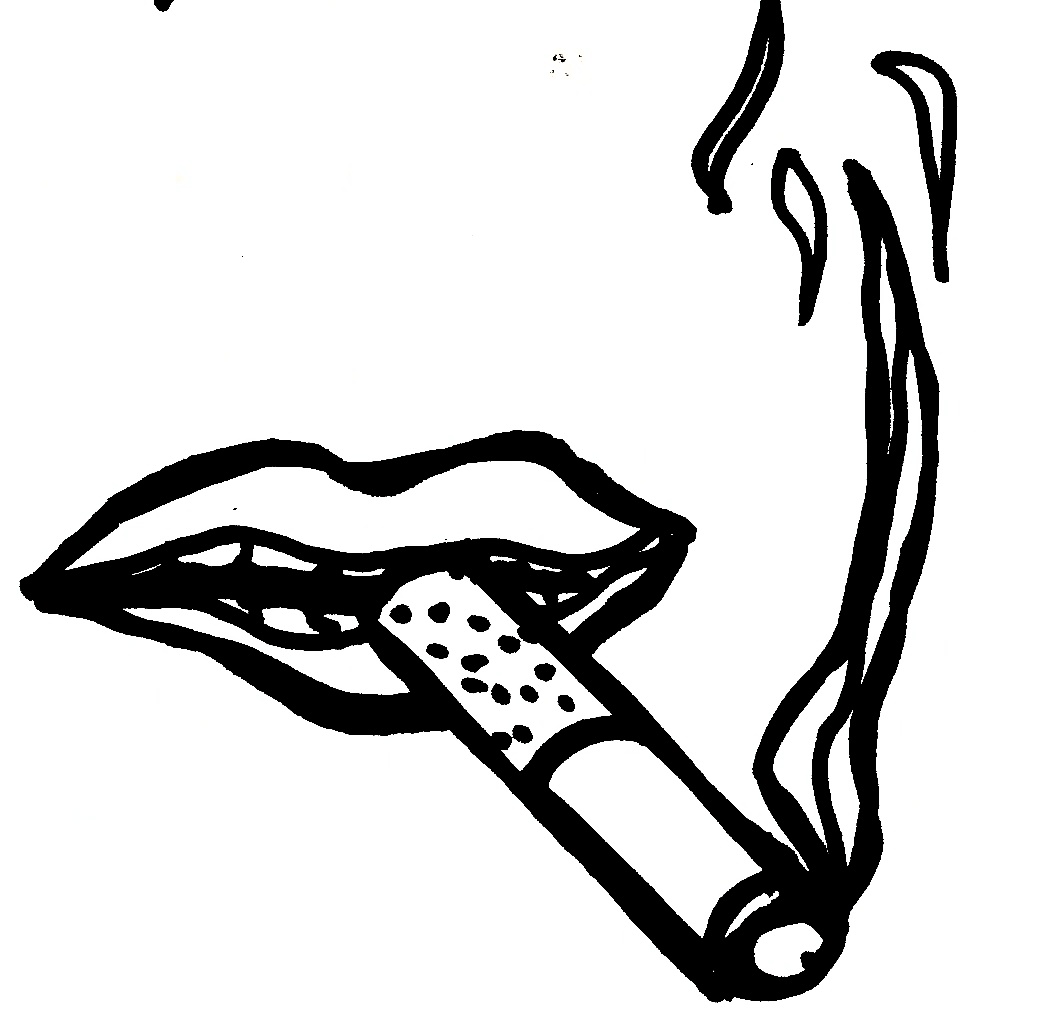
This was the dumbest film that I’ve watched so far this year, and the only interesting thing about it is a couple of fun facts about the “masterminds” behind the film’s production. After graduating from Tulane University, Nick Loeb became one of the co-founders of the International Production Company (IPC), and the first film the company produced was The Smokers. He also played the role of Jeremy in the film. Jeremy was supposed to come off as the film’s nice guy, but Loeb’s acting was subpar at best and the character ended up just being pathetic. Thankfully, he went on to become a well-known businessman and put his acting career on the backburner. Loeb has been in the news on and off in the past few months because of the embryo controversy between him and his ex-fiancé, Sofia Vergara. It seems like he’s probably still butthurt about being associated with The Smokers. Also, just to make things a little more interesting, Quincy Jones was the film’s executive producer, and the film’s director, Christina Peters (aka Kat Slater) is also a director in the adult film industry. Dream team!

What I expected to be an edgy film about a group of rebellious teenage girls turned out to be the one of the worst representations of feminism that I’ve ever seen, feeding into the misconception that empowered women are psychotic man haters. The leader of the pack, Karen (Busy Philipps), is angry at the entire male species and attempts to start a revolution with a few bullets and handgun. She also enjoys sporting terrible Juggalette inspired makeup from time to time. Her two pals, Jefferson (Dominique Swain) and Lisa (Keri Lynn Pratt), had some bad experiences with boys, and while they don’t have as much of a violent attitude as Karen, they sort of follow her lead. But not really. They don’t know what they want to do, just like this film. It has absolutely no direction and it’s about an hour too long.

-Britnee Lombas

Mission: Impossible – Rogue Nation (2015)

EPSON MFP image

fourstar

There’s an admittedly cheap, but remarkably effective result from committing a night at the opera to film. No matter how cynical or out of place its inclusion, the opera elevates cinema, especially genre films that can use a leg up. It elevates the romcom in Moonstruck, the deliberately dumb comedy in the Bob Sagat-directed Norm MacDonald vehicle Dirty Work, the slasher horror in Dario Argento’s (appropriately titled) Opera, and now in the fifth installment of the Mission: Impossible series, Rogue Nation, it elevates the super spy action movie. In one of Rogue Nation‘s most elegant sequences our hero & the thorn in the government’s side Ethan Hunt infiltrates an operatic production to put a stop to four separate assassination attempts on a single Austrian dignitary. John Woo (embarrassingly) attempted to invoke a sort of rack rock opera in the climax of Mission: Impossible 2 fifteen years ago, but it wasn’t until Rogue Nation that the series’ operatic ambitions amounted to anything meaningful. The assassination prevention is a ridiculous, impossible mission, but it’s neither the first or the last of the film’s many over the top set pieces. The fact that the film’s literal operatic heights are almost forgettable amongst its other action-laden tangents is merely a testament to how eager it is to please as a popcorn spectacle.

As you may have noticed (presuming anyone out there might be paying attention), I have been superficially tracking my journey through the Mission: Impossible series by the length of Tom Cruise’s hair in the films. In the delightful first & third entries, Cruise was rocking a short, handsome hairdo that conveniently coincided with the films’ somewhat concise approach to action delivery & 60s super spy nostalgia. In the second film his hair got remarkably douchier in length, which was mirrored in the film’s awful late 90s/early 00s aesthetic, a mistake repeated in the fourth installment, Ghost Protocol, which I’m willing to forgive since Cruise begins the film in a Serbian prison. It’s more than excusable. It’s not like he’s the President of the Limp Bizkit Fan Club in the fourth film (I’m assuming he was in the second), so the terrible hairdo can slide. In Rogue Nation, Cruise’s hair length also goes rogue, striking an in-between balance that serves as a nod to both hair styles. Rogue Nation is a satisfying culmination of all the Mission: Impossible films, forming a single entity greater than the sum of its parts & Cruise’s hair length is a nod to that cohesion. You may scoff, but I swear it’s true.

There are, of course, less simplistic & much more dignified ways of tracking the Mission: Impossible franchise’s progress as a whole. For instance, the The Gang’s All Here mentality that never truly solidified until Ghost Protocol was put to to great use in Rogue Nation, at the very least comically speaking. Since the beginning I’ve heralded Ving Rhames’ presence as a saving grace, even through the John Woo dark times, and it’s here that he finally joins the Abbott & Costello duo of Jeremy Renner & Simon Pegg to form some sort of unholy trinity of comic relief. The small taste of Alec Baldwin doing his best Jack Donaghy is merely icing on the already too-sweet cake. Rogue Nation also acknowledges its franchise’s history in the way it combines all of its past female characters (the agent, the double agent, the super sexy/deadly assassin, the love interest & Ethan Hunt’s only hope) into a single convenient package that’s smart enough to take off her heels before battle, unlike one of this summer’s most egregious female leads (who we’ve already effectively ripped to shreds).

What’s most fun about Rogue Nation, though, is that it combines the main selling points of the third & fourth installments (that Ethan Hunt is a divine being among men & that he has a loyal team behind him that helps create the myth of that divinity) into a satisfying, cohesive whole. The Mission: Impossible ball didn’t truly get rolling until the third entry & it somehow didn’t reach its true apex until the fifth. Hunt’s crew of loyal super spies (and Ving Rhames) eat up much of the film’s runtime, but they use that platform to elevate their fearless leader as “The Living Manifestation of Destiny.” By limiting his screen time in favor of letting his talented supporting cast run the show (which as a producer he could’ve easily turned into a vanity project), Cruise made great strides in Rogue Nation to build his character up as something more than just the “dude with a dangerous job” he was in the third film. He’s an impossible character in an improbable world who has to battle an equally impossible “syndicate” of evil spies helmed by a cross between a murderous Steve Jobs & Eddy Redmayne’s wicked, eternally hoarse drag queen from space in Jupiter Ascending. It’s thrilling, but highly goofy stuff.

Cruise has a history of working with an eclectic list of directors in this series (Brian De Palma, John Woo, JJ Abrams, Brad Bird) & here he enlists Christopher McQuarrie, a relative unkown, but longtime collaborator who he’s worked with on in films like Edge of Tomorrow, Jack Reacher, and Valkyrie. McQuarrie holds his own here, not only crafting one of the most enjoyable entries in the franchise to date, but also continuing to solidify a somewhat messy series of films as a recognizably unique intellectual property. Rogue Nation is a relentlessly fun action pic that Cruise & McQuarrie should be proud of bringing to the screen, both as a campy espionage spectacle and as a continuation of a decades-old franchise that has finally reached the operatic heights it promised way back when rap rock was still a viable commodity.

-Brandon Ledet

Dead Snow (2009)

EPSON MFP image
three star
campstamp

There’s a critical flaw at the heart of the Norwegian horror comedy Dead Snow that keeps it from being the absolute classic Shaun of the Dead-style schlock send-up it comes so close to achieving. For some strange reason the film stubbornly likes to pretend that its audience doesn’t know what is coming. Despite the exact nature of its threat being spoiled in every last piece the film’s advertising, Dead Snow keeps its monsters in the dark for as long as possible. Anyone likely to watch the movie in the first place would presumably be interested solely because of the gimmick of its monsters, so withholding them from the screen doesn’t build tension. It feels more like treading water.

Since I’ve already hinted to the “surprise” in the illustration above & it’s much more explicitly laid out in the film’s promotional material, I’ll just go ahead & spill the beans. Dead Snow is about Nazi zombies. It’s a Nazi zombie horror comedy. Since most of the audience is already prepared for that premise from the get go, it becomes increasingly frustrating that we don’t see a zombie Nazi in full regalia until 2/3 into the film. As if the promo material weren’t enough to prime you for the “surprise” there’s an ominous monologue from a local yokel that spins a yarn about a bygone Nazi occupation & some stolen gold that sets up a Leprechaun type scenario where the doomed victims are bound to unwittingly “steal” some Nazi treasure that the undead fascists will undoubtedly come knocking for. When the first fully visible Nazi zombie appears on the screen I was expecting to shout “Awesome!” but instead it was more of a “Finally!”

Despite the little bit of pained effort it takes to get there, Dead Snow eventually delivers on its promise of Nazi zombie mayhem & the film devolves into some great splatter-soaked chaos. With references to films like Peter Jackson’s Braindead (aka Dead Alive) & every group-of-youngsters-murdered-in-a-cabin horror cheapie ever, Dead Snow is smart to go over the top once it finally delivers on its premise. Eyes are gouged, head are crushed, a vast army of undead Nazi scumbags are gunned down & ripped to shreds. It’s a truly fun release after a very slow build that unnecessarily tests the audience’s patience before it lets loose. I’m hoping that since the hammer has already fallen that the same mistake wasn’t repeated in the sequel, last year’s Dead Snow 2: Red vs Dead. If it just would get to the good, bloody stuff a little quicker, a Dead Snow movie could easily go from “pretty good” to something much more special.

-Brandon Ledet

Southpaw (2015)

EPSON MFP image

twohalfstar
The advertisements for Southpaw have been driving me mad every time I go to the movies lately. No matter how I timed my entrance at the theater it seemed I was always just doomed to hear Eminem echo “I am PHENOMENAL PHENOMENAL PHENOMENAL” in an embarrassing fashion & I’d find myself cringing again. Much of the film’s trailer had me interested in Jake Gyllenhaal’s follow-up to his nightmarish turn in Nightcrawler, but Eminem was regrettably featured so prominently in Southpaw‘s trailer that I was expecting to take at least a half-star off my rating every time one his songs played on the soundtrack. Although Eminem’s voice is only heard twice during the film (once during a clueless in tone training montage & once during the end credits) his prominence in the trailer does point to a lack of self-awareness that prevents Southpaw from being anything too fresh or special.

It would be one thing if Eminem were something Gyellehaal’s punch drunk protagonist Billy Hope blasted in headphones to get pumped up before his boxing bouts. A down on his luck, white brute foster home survivor with a drinking problem certainly sounds like the kind of dude who might be a huge fan of the Detroit rapper, who knows a thing or two about being a down on his luck white brute with a troubled upbringing. Instead, though, Eminem’s contribution to the film amounts to little more than a business deal soundtrack tie-in, complete with an official music video. It feels like an ancient practice, dead for at least a decade, that’s much better suited for already-cynical corporate cash grabs like Juicy J’s contribution to the Ninja Turtles soundtrack or Waka Flocka Flame’s (laughably awful) collaboration with Good Charlotte meant to promote the latest Adam Sandler stinker Pixels. Instead of helping detail the character of its protagonist, Eminem’s involvement instead details the character of the film itself.

Southpaw is a mediocre film. It’s passable as a redemption story melodrama, but rarely memorable as a unique work. Even die-hard fans of boxing films in general are likely to find it difficult to distinguish its individual charms from much more distinctive examples of the genre. The story it tells is pretty easy to call from beginning to end within the first fifteen minutes or so, complete with a couple tearjerker character deaths solely meant to give Billy Hope’s inevitable final triumph some sense of meaning or purpose. Without a unique narrative or any visual touches to distinguish Southpaw (outside maybe a couple interesting 1st person POV shots in the ring), all that’s left then is the quality of the acting, which varies from Impressive, But Not Nightcrawler Impressive (Gyllenhall) to Decent (Forest Whitaker) to I’m Wearing A Hat! (Curtis “50 Cent” Jackson). It’s not a terrible viewing experience (besides maybe the sequence where it tries to use an Eminem song for misguided cool points), but Gyllenhaal’s performance is the sole element in play that approaches anything near PHENOMENAL PHENOMENAL PHENOMENAL and that’s far from enough to save the whole ordeal from mediocrity. I hope the actor continues this recent trend of playing scary that started with films like Nightcrawler & Enemy, but I’d like to also like to see that talent put to much more interesting use with far fewer Enimem songs stinking up the joint.

-Brandon Ledet

Sabotage (2014)

EPSON MFP image

three star

campstamp

Loving Arnold Schwarzenegger can sometimes mean loving repetition. There are distinct phases to the action legend’s career where he shifts gears & tries new types of films, but he’s pretty much consistently the same old Arnold in each role. Whether it’s The Running Man, Commando, or Kindergarten Cop, all wildly different films, he’s pretty much consistently the spotless tough guy with a great sense of comic timing & an unexplained Austrian accent. It’s been interesting to see, though, where he wants to go with his career in its latest phase. The post-gubernatorial, elderly Arnold is a strange bird, one that’s difficult to pigeonhole just yet. In projects like Terminator Genisys & The Last Stand, it definitely feel like he’s slipping back into his old ways, but then there’s more out-there choices like this year’s zom-drama Maggie, which showed him playing tender & quietly pensive. I didn’t enjoy Maggie very much on the whole, but I did respect Arnold’s vulnerability in getting out there & trying something new at this late stage of his career, even if he was disappointingly quiet & inexpressive in that role.

It wasn’t until I saw last year’s Sabotage that I got a glimpse of where I’d love Arnold’s career to go. Playing a crooked, disgraced DEA agent who heads an out-of-control crew that has devolved more or less into a gang, Arnold subverts his eternally unblemished good guy routine for the first time I can remember since The Terminator. And he does it so well. There’s something so satisfying to see him pull a (to borrow a pro wrestling term) heel-turn at this point of his career & play a cigar-chomping scumbag driven out of his mind by the violence of Mexican drug cartels. It’s already a little jarring to watch him head a team instead of falling into his usual lone wolf Commando routine, but it’s even more jarring to watch him head a team of such hopeless reprobates.

The catch with Sabotage is that Arnold is far from the film’s only scumbag. The entire film is just oozing with scum. I felt dirty just watching it. With character names like “Breacher” & “Grinder” and a visual palette that makes time to include blood, shit, and viscera, Sabotage is an ugly, ugly film. Much like with Swordfish & See No Evil, it’s the kind of movie where nearly every line of dialogue is loaded with an insult. Characters constantly call each other “assholes” & “crackwhores” and command each other to “Shut the fuck up” or “Wake up, you drunk fuck” or to quit “fingering The Devil’s pussy.” It’s far from a pleasant film & I wasn’t surprised to learn afterwards that the dude who wrote & directed it was also responsible for penning both Training Day & that upcoming Suicide Squad movie. David Ayer apparently has an eye & an ear for the grotesque and from what I’ve seen from his work this kind of nastiness is something he brings to the screen often.

The only truly remarkable thing about Sabotage‘s nastiness is that it managed to drag Schwarzenegger through the mud with it. This is far from the actor’s first ultraviolent rodeo, but his bloody action films usually have a sort of detached, cartoonish nature to them that’s intentionally missing here. Although Arnold’s shown chomping cigars & pumping iron in Sabotage, he’s almost unrecognisable as the film’s King Scumbag. I honestly appreciated that about the film. Its I Know What You Did Last Summer revenge plot was tolerable, but not exactly thrilling, and it was severely lacking for a single pleasant image or line of dialogue or any ray of sunshine, really to break through its deeply nasty, garbage water pessimism, but Arnold’s performance kinda made up for those shortcomings. There’s a really interesting idea at the heart of the way he plays villain here & I’d love to see that thread explored in other, more easy-to-stomach projects in the future.

-Brandon Ledet

Stuff Stephanie in the Incinerator (1989)

EPSON MFP image

three star

campstamp

Something is ever so appealing about films that have extra-long, descriptive titles. When I sat down to view Stuff Stephanie in the Incinerator, I assumed someone named Stephanie was going to be burned alive in an incinerator. I’ve seen a few films that involve murder evidence being burned in an incinerator, but never an entire body. Needless to say, I was bouncing off the walls when I got my hands on this movie, especially since it is a Troma film. Unfortunately, my expectations were a bit too high. It wasn’t a horrible film, it was just so confusing and not in the good way.

I began to lost interest halfway through the film, but the beginning of Stuff Stephanie in the Incinerator was amazing. It starts off with two strangers, Paul and Stephanie, who are prisoners in a mansion. The owner of this mansion, Roberta, is obviously a man crossdressed as an elderly socialite, and she wants to watch Paul and Stephanie have sex. Of course, the two “lovebirds” are opposed to the idea of having forced sexual intercourse for Roberta’s viewing pleasure, so they attempt to escape her evil clutches only to find themselves back in her hell house. Then, all of a sudden, the film takes an unexpected turn for the worst. Roberta takes off her wig to reveal herself as Robert, an actor paid by Stephanie and Paul (whose real names are Casey and Jared) to participate in their over-the-top role-playing. As the film goes on, it’s obvious that Casey is not too keen on the role-playing and desperately wants to leave Jared because he is absolutely insane and obsessed with doing one role-play after another.  The rest of the film is filled with twist after twist, and ends with a very surprising conclusion.

I enjoy a twist or two in a film, but this was just too much.  Every time I took my eyes off the screen for more than a second, there was a major change in the plot. The constant shift from one story to another became annoying, and I had to rewind the film a few times to figure out what was going on. Also, there is an incinerator scene, but it’s not as cool as I thought it was going to be, so that was another disappointment. Aside from all the negative comments, Stuff Stephanie in the Incinerator honestly wasn’t all that bad. It was entertaining and full of all kinds of stupid fun. I just really wish it would have been about a perverted old woman and her sex prisoners.

-Britnee Lombas