For this lagniappe episode of the podcast, Boomer, Brandon, and Alli discuss the Michelle Yeoh & Cynthia Rothrock action hero team-up Yes, Madam! (1985).
Middle-aged Beau Wasserman lives in a nightmare. To be more accurate, he lives in several nightmares, some of them in succession, some layered atop one another like an onion of misery. Beau is a man who is haunted: by images of overflowing bathtubs, by visions of choppy water, by memories of an unconventionally abusive childhood, by the gap in his life where his father should be, by the ever-present preoccupation with the possibility of death imposed upon him by congenital health issues, and by a thousand other intangible things that aren’t immediate threats but which nevertheless ostensibly guide him through his choices, moment by moment, day after day. Beau is also a man who is endangered, not by those things which haunt him, but by real menaces that confront him on a daily basis. His neighborhood is parodically dangerous, as if the entire area is the product of a fever dream of someone whose brain was rotted by conservative cable news fabrications about hellish city life. Just going home from his appointment with his therapist requires Beau to start sprinting down his street from blocks away so that he can get into his building and lock the door behind him before a menacing vagrant can chase him down; not in the abstract, either, as he’s actually racing against his attacker. There’s no real order or authority in the world; a dangerous nude murderer wanders the streets, there are men gouging each others’ eyes out between Beau’s building and the Cheapo Depot across the street, and there are automatic weapons being sold on the street with abandon. His home itself provides little comfort, as there is a known brown recluse in the building and he spends the entire night receiving increasingly threatening notes slipped under his door in regards to an increasingly loud sound system that does not exist. Beau is afraid, and he has every reason to be, but things really only get worse for him from here.
Beau is Afraid is almost a picaresque. In fact, it opens almost exactly the same way that one of the foremost examples of the genre, The Life and Opinions of Tristram Shandy, Gentleman, does: with the protagonist’s birth. However, unlike Tristram (or Candide, or Huckleberry Finn), there’s not much appealing about Beau. He’s not roguish, or courageous, or even much of an active player in his own life. A series of horrible things happen to him and his only option, over and over again, is to run, because he has no defense against the things that haunt or endanger him. In each of these vignettes, things seem to be taking a turn for the better for Beau before deflating every potential chance for his luck to improve. He’s hit by a car, then nursed back to health by kind strangers, then that situation falls apart because of the impulsive actions of the family’s youngest child and he is pursued into the forest by a shell-shocked veteran, then he’s found by a woman who’s part of a traveling forest theatre troupe which performs a play that transports him on an emotional journey by playing out this hope-to-despair cycle in miniature, then the performance is disrupted by a spree killing, and so on.
In the first scene following the opening P.O.V. birth sequence, Beau’s therapist asks Beau if he would return to a well that made him sick the next time that he was thirsty. This is a film with nigh-constant imagery of water, in its abundance and in its absence, and in the film’s first (of many, many) acts, we the audience are introduced to the arc words “always with water,” which is Beau’s therapist’s warning to him about his new prescription. Beau is adrift on that water (literally, by the end); he bobs in it and he is pushed by its motion as it surges and recedes like waves, and he is never in control. Beau’s journey truly begins when he is forced to leave his building to cross the street for a bottle of water in order to finish taking his pills because the water in his apartment is out. Because of circumstances beyond his control, he has to leave his building and apartment open in order to get back in once he does so, which results in his home being invaded and destroyed. After getting back inside, he immediately receives terrible news, resulting in his bathtub overflowing even before he can get in.
This absence-to-abundance-to-absence imagery cycle is obviously no accident. Between the opening horror show that is Beau’s everyday life and the next vignette (which is at first hopeful and then violently terrifying, another cycle to be prepared for in this narrative), he flashes back to a childhood cruise that he took with his mother and on which he met his first and only love, Elaine. In all of these sequences, however, there’s one thing that we never see: the ocean. Characters dine above deck, sunbathe above deck, and take walks in the moonlight, but for the audience, all of this is happening against a backdrop of sky alone, as if in a void. In his dreams, Beau is in a bathtub (one that overflows, naturally, in abundance), watching a braver version of himself standing up to his mother and being punished for it by being sent into the attic. When he is being cared for by Grace and Roger, great attention is paid to the fact that he is given water in the monogrammed cup which belonged to their son, who was killed in action overseas. When he finds the actors in the woods, we see water pour over a point-of-view shot from Beau’s perspective as a fresh head wound is tended, and in the sequence in which the drugged, concussed Beau becomes the character on the stage who builds a life that is completely destroyed by a flood. In the end, Beau meets his destiny on the water, sailing out to face judgment for his supposed sins. The waves go forth and they retract, and a buoy rises and falls, and through it all, Beau has no agency in what moves him.
This absence and abundance is everywhere. When Beau is taken in to be cared for by Grace and Roger, he is put in their teen daughter’s room, where she has posters for various K-pop acts and similar-to-but-legally-distinct-from Marvel “grrl power” pin-ups on her walls. With regards to the former, she has posters both for a solo artist named Only1 and a gigantic boy band called KI55, as a reference to the number of members, all of whom are crammed onto the same poster in quarter-sized photos. I’m sure that there are many more that I’m missing or didn’t pick up on, because this film is dense, and for someone like me who loves details and puzzle pieces, there’s a lot happening. Much criticism has been directed at the film with regards to its length, but I only felt its runtime in my bladder, not in my attention. With that said, I’m not at all surprised that this movie hasn’t been to everyone’s liking.
Beau is Afraid largely concerns itself with guilt, but it isn’t titled Beau is Guilty because Beau isn’t guilty, he is simply made to feel guilt. His therapist projects guilt onto him, his mother’s lawyer lays a guilt trip on him for his worthlessness, and his mother herself, in flashbacks and in the present, manipulates him over and over again and then pelts him with guilt when he reacts in just the way she has set him up to. Before we see her in flashbacks or the present—when she’s no more than a voice on the phone—we see that Beau has one photo of each parent; his father is a blur, his snapshot taken while he was moving, so that there’s no clear image of his face at all, and in the photo of his mother, she is holding him as a newborn, his bald head in the foreground, but instead of a gentle hand supporting his wobbly noggin, her long, pointed nails create an image of her son trapped in her claw like prey, which is all that he ever is. There’s even the implication that everything that he has suffered (or at least large parts of it) are the result of her machinations, given that there’s a photomosaic of her face at her home that is composed of her employees’ staff photos, and it includes a character who appeared earlier as a good samaritan Beau encountered. This isn’t the kind of movie that “makes sense” in the traditional way, as it’s a surreal fantasy that’s not supposed to be treated as a straightforward, rational narrative, so even when the film implies Beau’s mother has been acting behind the scenes, we’re still then treated to the revelation of who (or more accurately what) Beau’s father is, in a way that defies any attempt to rationalize what’s happened to Beau as being merely a protracted trial to demonstrate his love for his mother.
There are two major touchpoints that the film reminded me of: mother! and Marie NDiaye’s 2007 novel Mon Cœur à l’étroit. In the case of the latter, there is a scene in the film’s first act in which Beau, unable to return to his apartment, climbs the scaffolding outside of the building and is forced to watch as his home is ransacked and destroyed, which was reminiscent of the scene in Darren Aronofsky’s film where the titular character is running from room to room, unable to stop her husband’s unruly party guests from destroying her meticulously planned and curated home. That sense of helplessness and desperation that you feel when empathizing with Jennifer Lawrence’s character in that movie is present here as well; everything in this movie is happening to Beau, as he has no choice but to continue to be compelled forward by the motion of the sea on which he is adrift, the tide carrying him to an unjust damnation. Mon Cœur à l’étroit, which was translated into English as My Heart Hemmed In in 2017, is about a woman who awakens one morning to the sudden realization that she is hated by everyone around her. Where Beau most resembles it is in the way that people interact with him. The protagonist of the novel, Nadia, is confused by all of her neighbors’ and friends’ sudden antipathy toward her, which is only further agitated by the fact that, when she confronts them, they all start to voice an accusation that trails off without providing any real information. This happens to Beau as well, as the people he encounters continuously approach him with variations on “You know what you did” and leave notes for him to find that say “Stop implicating yourself.” How much his mother was influencing things (not to mention how much that matters to the reading of the text, really) is up for debate; how much Mona Wasserman shaped her son’s reality is less important than how she shaped his perception of reality, which was … a lot. He can only perceive reality through the lens of guilt, both when she’s gaslighting him directly and when she’s gaslighting him by proxy through the way her abuse has shaped his brain so that he induces it in himself.
Like Mon Cœur à l’étroit, mother!, and Tristram Shandy for that matter, Beau is Afraid will not be for everyone. It’s been pretty divisive, and I’m not surprised. Between the length of the movie, some detours into the kind of wacky ground that wouldn’t be out of place in a movie by The Daniels, and mainstream American audiences’ overall aversion to anything too complicated to be half-watched while you fart around on your phone, there are sure to be plenty of people who find this one off-putting, not fun, and too strange to enjoy, but I’m not one of them.
In Bertrand Bonello’s 2016 political provocation Nocturama, a group of young, hip domestic terrorists set off a disparate series of homemade bombs in modern Paris, then await the state’s violent military response in a shopping mall. In Daniel Goldhaber’s How to Blow Up a Pipeline, a group of young, hip domestic terrorists set off two homemade bombs along a Texan desert pipeline, then await the state’s violent military response in the hot American sand. The Parisian kids never fully explain the reasoning behind their explosives beyond a vague sense of economic unrest & cultural ennui. The central point of Nocturama is making its teenage dissidents look cool—which it does—before they all meet a violent end. By contrast, the American kids explain the ideology behind their explosive Direct Actions at length, intending to disrupt the economic viability of crude oil as a means to slow down Climate Change. The point of How to Blow Up a Pipeline isn’t to inform the audience how to replicate this violence ourselves, but to motivate us to get serious about Climate Change as a mass extinction event that needs to be directly, immediately combated. Both films are structured as non-linear heist thrillers, joining their hip teen terrorists in the hours before their respective bombings before flashing back to the planning stages of those attacks. They both function as feature-length Building the Team montages as a result, which is always the most satisfying sequence in heist movies anyway. In contrast, the American version of Nocturama is less pretty & more explainy than the French one, but it’s also a much more useful political motivator, which counts for a lot in this context.
Goldhaber & crew do their best to make this Lefty manifesto traditionally entertaining so that its incendiary politics ignite the widest audience possible. This was never a concern of Bonello’s, who made a provocative aesthetic object to be appreciated by a small audience of art nerds. How to Blow Up a Pipeline uses retro synth scoring & 90s blockbuster fonts to disguise itself as a throwback to crowd-pleaser heist thrillers like Point Break, but its full-hearted advocacy of its climate activists’ property destruction is much more daring & modern than the genre’s cop-friendly past. Most of the shocking plot twists are the exact kind of undercover, double-crossing character reveals we’re used to in that context, but the movie loudly endorses the titular bombing and the activists behind it every chance it gets. The most Goldhaber & editor Daniel Garber shake up the traditional blockbuster heist film formula is by cutting away from explosions seconds before detonation to retreat into flashbacks, letting the tension ride for several minutes before returning to the Bruckheimerian balls of fire. Otherwise, it works within a familiar, comforting Dad Movie story template that this time just happens to be populated by pissed-off crust punks & college campus leftists. The tension of whether a homemade explosive will be jolted the wrong way by those nervous rioters before they reach their targeted pipeline is continuously effective in the moment, but it’s all in service of stringing the audience along to listen to the reason behind their planned property destruction in their downtime between backroom chemistry experiments.
It’s extremely shallow of me to compare Pipeline‘s cool-cred endorsement of violent political action to the much more nihilist, beauty-obsessed Nocturama, as if they’re the only two films of their kind. There’s a wide range of uncivil unrest advocacy cinema in this movie’s lineage, from 2018’s Empty Metal to 1983’s Born in Flames to 1966’s Battle of Algiers. It would also be shallow of me to assign an auteurist reading to its production, given that it’s officially credited as “a film by Daniel Goldhaber, Ariela Barar, Jordan Sjol, and Daniel Garber” (a list that includes the director’s co-writers and aforementioned editor). I’m going to do it anyway, though, because I’m a shallow guy. I appreciate that some of the paranoid technophobia from Goldhaber’s debut feature Cam bled through to this follow-up, represented in Pipeline by characters’ constant awareness of being surveilled via their smartphones, even when dormant. Still, I miss the slick, fantastical aesthetics of that indoor sex-work cyberthriller, which are traded in here for the grit & sweat of the outdoor American West. That cinematic preference for beauty & artifice over more practical, real-world concerns is likely why Nocturama was at the forefront of my mind throughout Pipeline. I felt as if I had already seen my ideal version of this picture in Bonello’s puzzle-box terrorist thriller, so even when admiring the big-picture politics & scene-to-scene tension of Goldhaber’s version, I could never fully crossover into zealous love for it. It’s a consistently entertaining, ideologically solid eco-activist thriller that never fully shook me out of my cowardly complacency as a passive political thinker & pop media consumer. Or, that’s at least what I want to convey to the FBI.
I should be too ashamed to admit this in a public forum, but I’ve never fully understood the appeal of zydeco. My preferred mode of background-noise Louisiana kitsch is New Orleans brass, which hits a lot closer to home – literally, since I live on a major second line route where brass & bounce reverberate down the street practically every other week. I’m most used to hearing zydeco mixed with cornball swamp pop in French Quarter tourist shops, seconds at a time as I pass by on my way to a downtown theater or bar. I may be from Southeast Louisiana, but I’m a city boy through & through, and the routine regurgitation of folksy local traditions for spend-crazy out-of-towners always raises the hairs on neck. I was delighted to have those biases challenged by the Les Blank documentary J’ai Été Au Bal (I Went to the Dance), though, which recently screened in a 4K digital restoration at The Broad to celebrate this year’s Jazz Fest happenings down the street. Blank’s Always for Pleasure is just about the only documentary that has genuinely captured New Orleans culture onscreen in a way that doesn’t make this local cynic cringe, so I very much needed this extension of his humanist awe with Louisiana to the meanings & traditions of zydeco. To prime the pump, the programmers also invited musician Michael Doucet to open the show with his zydeco band BeauSoleil, since he is one of the few surviving performers from the film still alive to provide insight & context. The music was good, the crowd of WWOZ devotees was lively & chatty, and the film made a convincing argument for an artform I’ve been knee-jerk dismissive of my entire life. It was a lovely evening.
It’s a shame I didn’t see I Went to the Dance when I was in my Folk Punk phase a couple decades ago; its contextual positioning of zydeco as raucous, resilient roots music would have clicked a lot sooner & louder. In my defense, though, a large part of this film is about zydeco musicians having to explain the artform’s appeal to each generation of bratty children who are distracted from their heritage by popular music fads like rock ‘n roll. It turns out even swamp pop has its merits as a youth-outreach genre hybrid, attempting to inject a little Beatles & 60s New Orleans R&B into the usual zydeco formula to make it palatable for the kids. I Went to the Dance is more straightforward as an informational doc on the linear history of zydeco than Always for Pleasure‘s loose portrait of local Mardi Gras customs, possibly due to the influence of Blank’s more traditionalist co-director Chris Strachwitz. It provides a quick historical context for the migration of Cajun & Creole communities to Southwest Louisiana, moves on to explain the basic compositional structures & instrumentations that distinguish zydeco as a genre, and then tracks its struggles to remain popular yet authentic as it welcomed influence from blues, soul, country, and rock fads that energized the core musicians’ children throughout the decades. By the time the film concludes with a contemporary Jazz Fest performance from the R&B-infused Clifton “King of Zydeco” Chenier, a backyard cookout performance of the 80s novelty swamp pop hit “(Don’t Mess with) My Toot Toot”, and a cheeseball fais-dodo rock-out from what appeared to be the Reaganite frat bros of zydeco, I was fully won over – my cynicism thoroughly, methodically replaced with a smile.
I don’t think this academically minded zydeco explainer would be worth all that much without the Les Blank touch, though. As useful as it is in providing historical & cultural context for where the genre comes from and what pop-music indignities it has to endure for survival, it’s Blank’s loving, amused observations of Louisiana customs that qualify J’ai Été Au Bal as substantial filmmaking. The dancefloor audience is just as important as the fiddlers, washboarders, and accordionists onstage, as Blank’s camera searches contemporary bars & archival photographs for signs of vitality & exuberance in the people that made this music popular because it gave them an excuse to get tipsy & dance. Since he moved his camera too far inland to capture the wetland landscapes that have so quickly eroded in the past few decades, the Louisiana he captures here is exactly the one I remember growing up with “down the road” in St. Bernard Parish around when this was made. It’s also uncannily accurate to Louisiana today, as long as you avert your gaze from concrete & billboards to instead focus on the hand-painted signs & D.I.Y. dance parties that are forever encroached on but never fully extinguished here. There’s an authenticity to Blank’s portraits of this state as a people that I have found in no other outsider media, making him one of the most fully integrated Tulane University bros who ever passed through New Orleans for an education and never had the heart to fully leave us behind. It appears his estate is keeping that work alive & up to date by producing physical media restorations of his work to sell at high rates to university libraries as education tools, which is great but doesn’t fully convey how entertaining & endearing they are for a casual audience.
When I report that the Jazz Fest-adjacent screening of J’ai Été Au Bal at The Broad was a lovely evening, I’m brushing aside a lot of technical hiccups that disrupted the flow of the film. Getting the screening going in earnest involved the theater staff abandoning the DCP and climbing on a ladder to hook up a Vimeo stream with a laptop, an HDMI cable, and a smartphone hotspot crammed inside the projector box. There were many stops & starts before that Plan C was launched, which meant that the first fifteen minutes of the film were frequently broken up by premature Q&As with Blank’s surviving collaborators and bonus performances from Doucet sans band. If I’m not mistaken, there were also impromptu chime-ins from Belizaire the Cajun director Glen Pitre from the front seats of the audience. Some moviegoers’ patience was tested beyond its limits that night, but I soaked it all up as a Community Event, the strangest screening I’ve been to since The Broad ran The Mothman Prophecies a couple months ago. It also didn’t stress me out because I knew even while watching J’ai Été Au Bal that my first viewing would not be my last. Every year I squeeze in a screening of Always for Pleasure as a quick, convenient way to get into the Mardi Gras spirit (usually while working on costumes), and I can easily see throwing on Blank’s zydeco doc for the same purpose at the start of every Spring festival season. Jazz Fest is going to happen in my neighborhood regardless of whether I’m in the mood; French Quarter Fest is just a few blocks away from where I work. It was untenable to think I could live a full, happy life in Louisiana without appreciating swamp pop or zydeco, and I’m glad this movie is being kept in distro to help my cynical ass lighten up.
The great, wide world of popular media has done its damnedest to make sure I am nostalgic for the Power Rangers this year. Between seeing the original mighty morphin’ Rangers resurrected for cheap nostalgia pops in Netflix’s Power Rangers: Once and Always, seeing them spoofed for laughs in Quentin Dupieux’s absurdist horror anthology Smoking Causes Coughing, and seeing the vintage television aesthetics of their Japanese source material echoed in Hideaki Anno’s recent Ultraman reboot, the Power Rangers have been on my mind all year. Of those relentless nostalgia stokers, Once & Always felt the most accurate to the schlock TV I loved as a kid, in that it’s mostly just subprofessional actors bullshitting around in open fields until actual martial artists who know what they’re doing jump into the frame to save the day. It rides an uneasy imbalance between rushing out more anonymous background television for children under the Power Rangers brand and comforting those children’s parents with background garbage familiar to their own Millennial youth. If the one-off reunion special were only 20 minutes long and broken up by toy & cereal commercials it would have been perfectly in step with the way I remember the Power Rangers as my 1990s mechadino babysitters, as if the original show were never cancelled and its teen stars slowly succumbed to death & wrinkles on air week to week for decades on end. In some ways, I suppose the special itself is the commercial, in that its entire purpose is to re-spark interest in the Power Rangers brand, which has effectively been dormant since its excellent-but-failed franchise starter in 2017. I’m sure it’s no coincidence that Netflix currently holds the streaming rights for the original Mighty Morphin’ Power Rangers TV series, which officially makes Once & Always, as cheap & underdeveloped as it is, the most effort they’ve ever put into advertising one of their shows to date. And since most exhausted, world-weary Millennial parents aren’t going to have the time, patience, or awareness to seek out niche, higher quality Power Rangers-adjacent media like Smoking Causes Coughing, they’re going to scratch that nostalgic itch in the quickest, most convenient way possible – never venturing outside what’s available on Netflix. Not me, though. I’m different.
Because I’m first & foremost a movie nerd, I had to scratch my mighty morphin’ nostalgia itch by returning to 1995’s Mighty Morphin’ Power Rangers: The Movie. To my shock, it was not available to stream through subscription, rental, nor library loan despite the opportunity for profit raised by Once & Always, and I had to blow the dust off my early 2000s DVD copy to watch it again. In a way, I get why the Power Rangers movie would be allowed to slip out of general public access, since it’s getting just as old & dated as it is goofy & vapid. I was eight years old when I first begged my parents to see Mighty Morphin’ Power Rangers: The Movie in the theater, and so it has always felt like a prestigious cultural event to me when compared to the more casual, tossed-off nature of the television show it was cashing in on. Everything I loved about the show as a kid was given a high-end upgrade for the big screen, from the teenage superheroes’ regular-size power suits to their kaiju-size mechabeasts. As a result, it remains an excellent time capsule of the niche bullshit only a 90s Kid™ could possibly care about, starting with a preposterous Star Wars scroll that quickly explains the Power Rangers’ lore as intergalactic teen crimefighters recruited by a noble space alien named Zordon. Watching it as an adult, I was amused imagining my parents suffering through its endlessly inane babble about morphing, morphological beings, zords, megazords, ninja zords, ectomorians, and electromagnetic deadlock as if any of that means anything to anyone. Its convoluted lore is all in service of incomprehensibly edited fight choreography, surreally dated CGI, eXtreme sports posturing, and rushed one-liner insults labeling the bad guys “Mr. Raisin Head” (because, as you will surely remember, Ivan Ooze is purple) and “dingledorks” (that one explains itself). Power Rangers: The Movie is idiotic pop art at its finest, all sloppy live-action cartoon nonsense from top to bottom. It’s a crowd-pleaser for a crowd of 8-year-olds and, presumably, an extreme bore for their baffled parents, a tension that only gets funnier as the decades pile on and no one age-appropriate is left around to care. So few people care, in fact, that it’s been allowed to slip into distribution limbo so the only audience who can legally access it are the dingledorks who happened to fish it out of Wal-Mart’s $5 DVD bins two decades ago.
Because I am weak in will & intellect, my 90s nostalgia trip did not end there. One of the major 90s-specific pleasures of the Power Rangers movie is its tie-in CD soundtrack, which includes contributions form artists as disparate as Van Halen, Devo, The Red Hot Chili Peppers, and Snap!. As formidable as some of those names are in the music business, though, the soundtrack’s biggest get was “Trouble,” the international breakout hit of British pop duo Shampoo. I vividly remember the song dominating kids’ media in the 90s, to the point where I still sing its delightfully obnoxious “Uh oh, we’re in trouble, something’s come along and it’s burst our bubble, yeah yeah” chorus to myself every time something minorly inconvenient happens in my daily life. What I did not remember is that its initial promotion in America was tied so closely to the theatrical release of Mighty Morphin’ Power Rangers: The Movie. Not only does it underscore a children-only block party at the film’s emotional climax, but it was also domestically marketed through the lost artform of the tie-in music video, featuring the Shampoo singers dancing in Deee-Liteful psychedelic voids alongside the Power Rangers and their neurotic robo-sidekick Alpha5. A proper DVD release of Mighty Morphin’ Power Rangers: The Movie would have included that music video as a Bonus Feature, but my Wal-Mart discount bin copy instead includes a useless “Behind the Scenes” advertisement for the film where Amy Jo “Pink Ranger” Johnson bravely compares her big screen debut to the special effects spectacles of Star Wars & The Wizard of Oz. Thankfully, the Power Rangers version of the “Trouble” music video was at least uploaded to YouTube where, as of this posting, it can be enjoyed in glorious, grainy 480p. This indulgence, of course, led me down an entirely new 90s-tastic pop culture rabbit hole as I allowed Shampoo music videos to autoplay after the sassy Brits were done dancing alongside their new intergalactic crimefighter friends. What I discovered was that Shampoo has a deep, rewarding catalog of post-riot grrrrl, pre-Girl Power classics that never reached the US with the same ferocity that “Trouble” managed to, partially because they could not call on the power of the mega ninja zords to boost their signal every single.
The commonly accepted narrative is that Shampoo never made it as big as they could have because they were immediately eclipsed by an intense international obsession with the Spice Girls, who smoothed out the smaller group’s rougher, punker edges into pure bubblegum pop. The real heartbreaker there is that Shampoo even had a single called “Girl Power” that debuted only one week before the Spice Girls broke out with “Wannabe”, which is a shame since “Girl Power” opens with the lyrics “I don’t wanna be a boy, I wanna be a girl. I wanna do things that will make your hair curl. I wanna play with knives. I wanna play with guns. I wanna smash up a place just for fun.” It’s wonderful. I don’t mean to mourn Shampoo’s premature downfall at the expense of shading the Spice Girls, though, who were just as substantial superheroes in my childhood mind as the Power Rangers, thanks specifically to the strength of “Wannabe” and to the group’s own cash-in pop art movie Spice World. Tragically, Spice World is also currently unavailable to rent or stream through legal means in the US, so I again had to blow the dust off an ancient DVD copy from my modest collection – this time presented in a luxurious Full Screen frame. Although my DVD copy is “guaranteed” to be “packed with girl power” in a way no streaming service would dare to ensure, I still find the state of the film’s availability to the general, streaming-service-reliant public shameful. Way more shameful than the lost-to-time Power Rangers movie, even, since Spice World is a much more competently made, purposefully goofy artifact of 90s kitsch. It plugs the Spice Girls into a high-femme variation on A Hard Day’s Night, sending the 90s pop group on episodic, for-their-own-sake adventures where they get to be immensely charming on camera while interacting with Elton John, James Bond, Bob Hoskins, Riff Raff, and other various space aliens. Its most pivotal scene is a montage where the girls cosplay in different cute outfits that don’t quite fit their individual vibes and then switch around personas by cosplaying as each other in a playful pop art photo shoot. Spice World is cute, it’s joyful, and the only reason it isn’t more beloved as an MTV era pop art classic, really, is that the MTV-produced Josie and the Pussycats movie bested at its own game just a few years later. Well, that and it’s got a shamefully shitty post-DVD distribution history in the US.
My rapid spiral into full 90s nostalgia was finally sated by the time I revisited Spice World (and then—full disclosure—rewatched all available Shampoo videos a second time through). Although it’s heavily indebted to the pop art past of Swingin’ 60s London, it’s an aesthetic object that could have only existed in the period when I was most media obsessed as a child, which is where we all tend to retreat when we’re looking for comfort in cinematic junk food. In the process of pulling out both my Spice Girls & Power Rangers DVDs, though, I did a quick inventory of what other childhood junk media I own that’s not currently streaming. One title that jumped out at me was the movie version of The Worst Witch, which stars a young Fairuza Balk and features the heavily memed “Anything Can Happen on Halloween” musical number performed by Tim Curry against surreally cheap green screen effects. You’ll likely always be able to watch that music video tangent out of context in low-res YouTube clips alongside your favorite Shampoo jams, but if you want the entire Worst Witch movie available to you at all times for a full warm bath of 90s Kid™ Nostalgia, you have to resort to illegal torrents or purchases of used physical media. I was also reminded in this process that I ran into friends at French Quarter Fest a few weeks ago who said they had recently watched the animated Super Mario Bros movie that’s currently dominating the box office and were dismayed afterwards that they could not access the live-action adaptation of the video game that alienated the world when we were children (despite being a Power Rangers-level camp classic in my mind & household). I, of course, offered to lend them my DVD copy, which was a service they could not even access through the public library. Plenty of the other pop art novelties fron my youth I’m holding onto are currently streaming in higher quality than you’ll find on my used Blockbuster & thrift store DVDs: Howard the Duck & Teen Witch (Tubi), Big Time Pee-wee (Showtime), Barb Wire & Teenage Mutant Ninja Turtles II: Secret of the Ooze (VOD), etc. Any of those statuses might change as soon as next week, though. The illusion that everything we could possibly want or need to watch will always be available to stream at home is being constantly undermined, but it’s especially absurd when titles promoted & regurgitated by contemporary nostalgia stokers like the new Power Rangers & Super Mario Bros movies aren’t conveniently offered to the consumers being targeted.
There’s something really special about Galaxy Quest that’s hard to describe. It’s not just the loving send-up of classic Star Trek that permeates the film, because if that were all it had going for it, then it wouldn’t resonate comedically with an audience that’s unfamiliar with the old sci-fi juggernaut’s quirks and foibles, and I’ve witnessed enjoyment of the film by many a non-Trekkie. My most recent re-watch of the film was at least the twentieth time that I’ve seen it in my life, including an attendance during its theatrical run the summer I turned twelve, and I still get a kick out of it every time. Other genre parodies and pastiches have come and gone, but Galaxy Quest‘s enduring popularity even led to a 2019 documentary about the film, twenty years after its initial release. I’m not surprised by how beloved it is, however, as its appeal has never worn off for me, either.
The film opens some twenty years after the unresolved cliffhanger finale of kitschy old school space opera series Galaxy Quest, at a fan convention for the show. The show’s stars have seen little success in their careers after the show ended and the fan convention circuit seems to be the only way that they provide for themselves, other than Jason Nesmith (Tim Allen), who portrayed Kirk-analog Peter Quincy Taggart on the show. Allen plays Nesmith pitch perfectly, with a massive ego that’s just a few degrees off of William Shatner’s real life braggadocio, pairing it with a very un-Shatner tenderness with fans that makes him more sympathetic than Shatner is (sorry, Bill). He also hints at an ongoing attraction to former castmate Gwen DeMarco (a blonde Sigourney Weaver), who played Lieutenant Tawny Madison, whose sole function on the series was to look pretty and repeat everything that the computer said. Alexander Dane (Alan Rickman) is our not-quite-Leonard-Nimoy here, with a few shades of Patrick Stewart, as a classically trained British theatre actor whose role as the alien Doctor Lazarus—complete with a prosthetic rubber “head” that covers his hair—has so dwarfed anything else that he could possibly do that he openly laments that he will be repeating his character’s corny catchphrase until the day that he dies. True to his veteran stage nature, he can always be coaxed onstage with the reminder that “the show must go on.” Clearly (but for the sake of the film’s PG rating not explicitly) stoned Fred Kwan (Tony Shalhoub), who was the ship’s engineer Chen is also present, at least physically, as is Tommy Webber (Daryl Mitchell), who played the pilot of the Protector on the show as a child, like Wil Wheaton did as Wesley Crusher on The Next Generation.
Nesmith overhears some teenagers mocking him while in the bathroom at the convention, which results in him blowing up at eager young fan Brandon (Justin Long), which even the castmates who dislike him find out of character. After blowing off a group of people that are presumed to be alien cosplayers at the convention, they come to his home to pick him up for a mission, which he interprets to be the group simply maintaining character as Galaxy Quest LARPers for a side appearance that he accepted. Hungover from drinking himself unconscious the previous night over the embarrassment of being mocked and then exploding at teenagers afterward, Jason fails to notice that he has been transported up to a real spacecraft, where the leader of the group, Mathesar (Enrico Colantoni), brings him into contact with Sarris (Robin Sachs), a reptilian warlord who has attacked Mathesar’s people, the Thermians. Jason directs the aliens to fire, half-asses a Kirk Taggart speech, declares victory, and asks to be sent home. The Thermians, worriedly, allow him to leave, but they send him back via teleportation via goo, which shocks him and makes him realize that his experience has been real. When he tries to share this news with his castmates (and bumping into Brandon again, accidentally swapping out the functional communicator that Mathesar gave him with the kid’s toy), they believe he’s having a mental breakdown, but when Fred points out that he might have been talking about a gig, they race to catch up with him and then experience their own epiphanic space transport. Also along for the ride is Guy (Sam Rockwell), a convention emcee whose sole stake in the show was playing a Redshirt credited only as “Crewman 6,” but who is also living off of the convention appearances. Once aboard the real Protector, he immediately assumes that his status as a “non-character” means that he’s doomed to die first, which sets off a great running gag in which he, as the only person who watched the show, is the only one who has any genre awareness about presuming that there’s air on a planet or that seemingly cute aliens might be vicious predators.
So how did this all happen? Why is there a real starship Protector? The Thermians received the broadcasts of the Galaxy Quest show and, having no cultural reference for fiction, presume that they are “historical documents” and reverse engineered what they saw on the show into something that actually functions. Their pacifism, however, made them easy prey for the hostile Sarris, and so they did the only thing that they could think of, which was go to Earth and enlist the help of their heroes, not realizing that they were simply actors. Upon witnessing what happened to the previous leader of the Thermians, who was tortured to death by Sarris, the actors attempt to flee back to earth, but are unable to leave due to the arrival of Sarris, and have to do in reality what they’ve only ever accomplished on screen.
There are so many little details that really make this one punchy. When we see some of the cast members’ homes, Alexander is living in squalor while Gwen’s bedroom looks comfortable but modest; Jason, in contrast, lives in a gorgeous mid century modern ranch style house with huge windows. He’s not hard up for money like the others are, which not only means that he’s been more successful but also that he doesn’t really need to go to these conventions to stay afloat financially like his old co-workers, but that he does it to stoke the fires of his own ego. Still, we remain sympathetic to him, as he does seem to truly love his old role, even being able to remember a monologue from an episode that he filmed decades before when he stumbles upon the episode on late night television. Another really great detail is the costuming in the convention; when Gwen poses with a group of fans who are all cosplaying as her character Tawny, each Tawny’s costume is clearly based on the one she wears in the show but are different from one another in ways that reveal their homemade nature. It’s really an inspired touch that the movie includes a half dozen people wearing their own interpretation of the same outfit, just like you would see at any other convention. Look at any photo of a real Star Trek convention and you’ll see the same thing, with several Doctor Crushers all posing together in variations on a style, a non-uniform uniform of black and teal and maybe a blue lab coat, but none identical. It reflects a love of not just the source material but the people who make up the community that enjoys it as well. There are hundreds of inspired choices throughout here, and you don’t have to know or care about Star Trek to get the jokes under the jokes, but if you do, it’s even more of a rewarding experience.
Somehow, the easter eggs scattered throughout the narrative aren’t distracting. A perfect example is the scene in which Jason has to fight first a desert pig/lizard hybrid and then a full on rock monster. His friends decide to use the ship’s version of the transporter device, which the Thermians have never successfully tested. Fred’s first attempt to use it, a test run on the pig thing, results in the creature being turned inside out before exploding. On the planet below, Jason somehow loses his shirt while fighting the rock monster, all while being coached through the event by Alexander. In a second attempt, Fred manages to beam Jason out of there moments before he’s squashed. The scene is funny regardless, with the gross teleporter accident explosion, Rickman’s perfect embodiment of a true thespian whose patience with a gloryhound colleague ran out years ago, and Shalhoub’s panicked performance as Fred, but if you’re versed in the deeper Star Trek lore, you know that Shatner, when directing The Final Frontier, wanted Kirk to fight a group of rock monsters, which was then reduced to a single rock monster for budgetary reasons, and was ultimately cut because of how goofy looking it was; here, not!Kirk actually does what Kirk never got to do, which adds a layer of enjoyment that’s not strictly necessary but reflects a genuine affection for what it’s mocking. And that’s not even getting into the various transporter accidents that occur over the course of the franchise, perhaps most notably in The Motion Picture, where it’s a relief to learn that two people who are horribly mutilated when the device fritzes mid-transport “didn’t live long … fortunately.”
The chemistry between the cast is great, especially between the Allen/Weaver/Rickman trio. Weaver is the one most playing against type, a role she sought out largely because she was the opposite of her most famous character, Ripley. Her rising frustration is palpable and she deals with it very unlike Ripley would, but Ripley would also never find herself on a ship that has giant, functionless, metal chomping machinery in the bowels of the ship just because a writer in the late seventies/early eighties wanted to have Taggart fight a reptile monster there in one episode. Rickman so thoroughly throws himself into the role of an actor who loathes the one person with whom he’s been forever joined in the public consciousness that his eventual grudging respect for his longtime foil packs a true emotional punch. His reactions to the Thermians’ expectation that he resemble the character that he hates are comic gold, but when he repeats his despised catchphrase in earnest after the death of an alien who respected him, it’s genuinely emotional. Some things haven’t aged well (the goo transport thing in particular stands out as a bad effect), but for the most part, it looks like a movie that could come out this summer. In fact, to give the film a little extra verisimilitude, they forsook the traditional “shake the camera and have the actors stagger around” effect of demonstrating weapon hits and built the control room set on a giant moving stage called a gimbal, and there is a noticeable uptick in the suspension of disbelief as a result.
For me, this is a comfort movie. It’s extremely well crafted, conceived, and executed, and it’s an easy pick if you’re looking for something that doesn’t take itself too seriously but gets everything right.
As is often my wont, I was recently extolling to a friend about the virtues of our local library, and declared I would purchase said friend an inexpensive DVD player the next time I saw one at an estate sale (there’s a one-in-four chance there will be, in my experience) so that he could enjoy some of the more obscure picks that are available. This was perhaps days before the announcement that Netflix would be discontinuing its DVD-by-mail service, which was very close to my heart and which flung wide the doors for me to discover a plethora of movies and shows that had been out of my reach before. I couldn’t afford to have internet in my home when I was in college, but even at nineteen I could spare $8 a month for a constant stream of discs into my apartment, and although my local library can’t boast that it has a copy of everything (and for some reason doesn’t do interlibrary loans for media), there are thousands of things that are otherwise inaccessible now. My friend joked (I hope) that everything is streaming now, and that there’s no reason to own such a thing; I pointed out that I have been watching a lot of episodes of Ebert & Roeper at the Movies recently and that it’s opened my eyes to a huge number of movies that I never would have known existed otherwise. Every episode, the boys discuss 4-5 movies, with two of them usually being films that have remained in the public consciousness or otherwise has some kind of name brand recognition (your Top Gun, your Beauty and the Beast, a Silence of the Lambs), one or two movies that fall into the moderately obscure “oh, yeah,” category, (Uncle Buck, for instance, or She-Devil, or Major League: Back to the Minors; anything that you’d watch at a hotel when you’re on vacation and it’s raining on a Saturday afternoon), and then one or two movies that have, for all intents and purposes, vanished from the face of the earth. Is it worth listing those? We Think the World of You from 1988 and 1994’s BackBeat aren’t the kinds of titles you drop when you’re trying to impress someone. Buried among these episodes, I stumbled across their review of Vibes that sparked my interest and, having finally seen it (thanks, libraries!), has also stolen my heart.
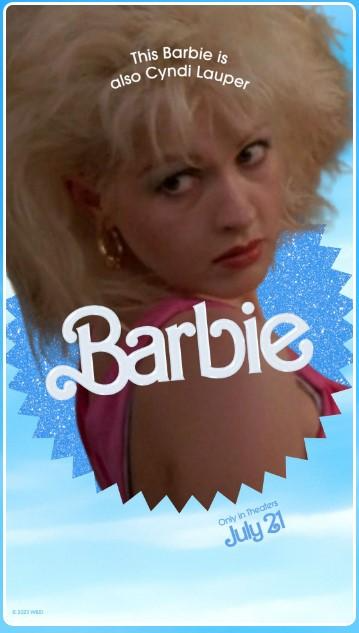
Ostentatious but insecure Sylvia (Cyndi Lauper – yes, really) meets staid museum curator Nick (Jeff Goldblum doing the platonic ideal of a Jeff Goldblum performance) under strange circumstances; they and several others are guests of Dr. Steele (Julian Sands), a parapsychologist. They’re both psychics; he’s a psychometrist, meaning that he can read the history of an object and even information about the people who have touched it, while she gained clairvoyance via a psychic guide named Louise, whom only she can see and hear. Louise, via Sylvia, warns Nick that his long-term girlfriend has been unfaithful while he’s been away, and although he doesn’t believe it, he’s confronted with the truth when his powers inadvertently reveal her deceit. Sylvia, meanwhile, meets her occasional flame Fred (Steve Buscemi) at the racetrack, where she is cajoled into using her powers to pick a winning horse on his behalf, only to be unceremoniously ditched for another woman moments later. Returning home, she finds a man named Harry (Peter Falk) in her kitchen, where he offers her $50K to help find his son, who has gone missing in Ecuador. Sylvia then enlists Nick to go along as well, since two psychics are better than one, and he opts to go rather than continue to spiral out and stew over the failure of his relationship. Once they arrive, Nick deduces with his powers that Harry has deceived them, and the older man admits that he’s actually seeking a fabled room of gold in the mountains, which was previously discovered by his business partner, but the latter man has since been hospitalized in a persistent vegetative state. The two psychics reluctantly agree to go, falling in love while being pursued the whole way by Steele, fellow psychic Ingo (Googy Gress), and a sexy assassin (Elizabeth Peña).
I mentioned above that Gene and Roger reviewed this movie; I didn’t mention that they both hated it. Not hated hated hated it, but neither was very impressed. In fact, most critics seem to have felt this way, as it’s sitting at 13% on Rotten Tomatoes. I’ve never considered that a perfect metric for a movie’s actual quality, but as a measurement of critical favor, it’s very telling. About halfway through this movie, my best friend, after several chuckles aloud, asked me how the film could have been reviewed so poorly, and neither of us could believe it. Unfortunately, it wasn’t that long after this that the film’s quality dipped, to the point where I could understand how a general audience may have been turned off by the pacing issues in the film’s third act. We can’t really go any further without noting, however, that Lauper is incredibly charming here, and a delight to watch.
I can’t remember the last time I watched one of these kinds of movies—you know, where a non-actor performer (or sports star) is trying to break into pictures—and the non-traditional actor really disappears into the role. She has great comedic timing for someone with no real background in that field, and she and Falk have amazing chemistry. She and Goldblum are a delight to watch together as well; according to her autobiography, they didn’t get along, but you wouldn’t be able to tell from how well they play off of each other here. Goldblum’s decision to go full Goldblum matches her energy perfectly, as even though Lauper’s hair, make-up, and sartorial choices are always completely over the top, her vibe (sorry) is much more subdued than the man standing next to her, eyes bugging and stams stammering.
The first few scenes in Ecuador are fun, as the trio arrives there to head for the mountains, albeit there’s some All in the Family-era racism from Falk’s character that doesn’t pass the sniff test these days. At first, these seem like mannerisms of the character Harry is playing, of the terrified father of a missing boy, but he spouts off a few other Bunkerisms even after the reveal that are jarring in an otherwise very goofy movie. Travelogue scenes set prior to the cresting of the mountain are gorgeous, capturing the natural verdant beauty of the Ecuadorian mountains, like something out of a movie with a much higher budget. Unfortunately, once Sylvia, Nicky, and their pursuers get to the mountaintop where Harry’s partner found a small, glowing pyramid in the film’s cold open, the plot drags considerably. All of this takes place on a set, which is fine, but the effect of being at the top of a high peak with nothing in the background makes the whole thing feel like it’s taking place in a void. Right before they arrive, we’re treated to a gorgeously rendered matte painting, but once on the actual mountaintop set, characters move around and make choices that feel like shuffling the deck before the denouement. This goes some way to explain why contemporary critics may have turned on the movie when the third act trended toward boredom, but I’m more forgiving, especially when there’s so much charm and appreciable humor on display.
The film manages to run the gamut of different comedic styles. When the trio first arrive in Ecuador, Sylvia teases Nick for bringing so much luggage, assuming that he’s overpacked. He reveals that one of the suitcases contains an entire month’s worth of dehydrated rations; when Sylvia points out that it’s normally the bacteria in the water that caused travellers of the time to become ill, Nick reveals that another suitcase is full of giant jugs of water, which he also brought along. Later, after Harry’s deception has been revealed, he and Sylvia find themselves at the tiki-themed hotel bar, where he is drinking directly from one of the jugs, which has a festive paper umbrella embellishment. It’s a good visual gag, one among many, including one in which the 5’3” Lauper and the 6’4″ Goldblum perform a tango that ends with her arms around his shoulders, essentially being carried, with her legs dangling back and forth. It all leads one to believe that the contemporary audiences and critics of the time may simply have misunderstood that the film understands that its zany, sometimes cartoony plot is intentional, not the result of poor writing or direction.
The real crime here is that the public reaction pushed Lauper to abandon film business, albeit not completely. She’s effervescent here in a very real way, like she’s trying some things out. At one point, when Nick rejects her because he misunderstands the reasons that she’s expressing interest, Lauper shifts into an affected Transatlantic accent and mockingly blurts “I want you bad all right. I dream about you and me and a house in Long Island. I’m only half a woman until I make love to you.” For someone who’s not really part of the business, she’s making interesting acting choices that reveal a talent range that most people wouldn’t assume. Reportedly, Dan Aykroyd was first interested in the project (which makes sense, since he’s a big believer in the paranormal in real life) but left because he refused to be in a movie with Lauper, which is both absurd and for the best, since Goldblum’s take on Nick is a much more believable match for Sylvia than I could imagine Aykroyd providing. As a fun bit of fluff, this is one worth tracking down.
Welcome to Episode #185 of The Swampflix Podcast. For this episode, Brandon, James, Hanna, and Britnee discuss Dolly Parton’s movie star era, starting with the legalized-prostitution musical The Best Little Whorehouse in Texas (1982).
00:00 Welcome
02:45 The Suckling (1990) 04:55 Bound (1996) 08:30 The Conversation (1974) 12:30 How to Blow Up a Pipeline (2023) 15:45 Blue Steel (1990)
19:35 Dolly Parton: Here I Am (2019) 23:25 The Best Little Whorehouse in Texas (1982) 38:55 9 to 5 (1980) 53:45 Steel Magnolias (1989) 1:13:50 Straight Talk (1992)
I’ve been getting lazy about how & why I group films together in these self-published reviews. My methodology boils down to comparing movies I happened to see around the same time regardless of their genuine connections, which is why I’m about to unfairly compare A24’s poster Enfant Terrible against The Master of Suspense. I happened to watch Ari Aster’s latest crowd-troller Beau is Afraid on the same day (and the same bus line) as Hitchcock’s dinner party thriller Rope, which recently screened in The Prytania’s Classic Movies series. Watching such a messy, sprawling odyssey so soon after seeing Hitchcock at his tightest & most controlled didn’t do Beau is Afraid many favors, but the comparison was more damning to the way the movie industry has changed in recent decades than it was to the young filmmaker working in that hellscape. This blog post isn’t an argument in favor of returning to the clockwork Studio System that propped Hitchcock up for cinematic worship & infamy, or at least that’s not how I intend it. What I’m more interested in is the pressure imposed on these two filmmakers by their public to deliver historic greatness with every single picture, a cultural impulse that’s become exponentially hyperbolic with the modern invention of online movie fandom – something Hitchcock was lucky to die before witnessing. When Ari Aster makes a movie that alienates his audience, fanboy freaks vocally rage against the screen, demanding that the studio executives at A24 be “held accountable” and that no fellow patrons in the theater “better fucking clap” in appreciation. By contrast, Hitchcock didn’t make much of a name for himself until his third feature film, the silent Jack the Ripper thriller The Lodger, which did already have some hyperbolic critics declaring it “the finest British production ever made” but didn’t inspire widespread audience obsession with the boardroom politics of the studio that greenlit it, Gainsborough Pictures. Once Hitchcock really was directing the finest thrillers ever made, he had dozens more titles behind him. Rope was his 37th feature film; Vertigo was his 47th; my personal favorite, Psycho, was his 49th. Ari Aster will never reach those numbers with this kind of A24 fanboy scrutiny pressuring him to outdo himself with every project, a problem I’m only compounding by comparing him to a master of the artform. If anything, it feels as if Aster’s artistry has already imploded under the pressure just three features into his career.
I enjoyed Beau is Afraid. Lately, I’ve been struggling to get onboard with Charlie Kaufmann-style journeys into the artist’s mind, having been disappointed by big-swing solipsism epics like I’m Thinking of Ending Things, The House That Jack Built, White Noise, and Under the Silver Lake. Beau is just as guilty of tedious self-obsession as those overlong annoyances, especially as Aster uses Joaquin Phoenix’s put-opon avatar as an excuse to voice his own struggles with Anxiety, Guilt, and Mommy Issues. The visualization of those struggles is often darkly hilarious, though, literalizing an anxious introvert’s fears so that the world looks as hellish as it feels to navigate. I appreciated Beau is Afraid most for its big-picture statements on modern life, not its insular ruminations on life inside Ari Aster’s head. In its most powerful form, it’s a grotesque caricature of modern American paranoia, taking a misanthropic view on everyone from violent urban maniacs to suburban security freaks to self-absorbed artists & off-the-gridders to the outlandishly cruel ultra-rich. We’re all monstrous & unworthy of love in our own way, at least as portrayed in this elaborate Aristocrats joke at our expense. At the same time, I’m not convinced that Aster was fully ready to make a statement that grand & all-encompassing. He’s still finding his voice as an artist, and yet he’s already blurting out everything he has to say just in case he’s never handed a microphone this loud again. Beau is Afraid drips with the desperation of a filmmaker who doubts he’ll ever get the opportunity to make another picture on its scale, so he better exorcise all thoughts about life inside & outside of his skull lest they be trapped forever. And if the studio-obsessed C.H.U.D.s in the audience who are throwing literal rotten tomatoes in his direction had their way, he’d be proven right. Aster belongs to a small class of young, instantly famous filmmakers who are carrying immense anticipation to deliver an era-defining classic with each subsequent project, joined only by the likes of Robert Eggers & Jordan Peele. It even feels perverse to say that I enjoyed Beau is Afraid just fine; it was neither the greatest nor the worst movie I saw this past week, much less the greatest or worst movie of all time. That kind of mixed-but-leaning-positive reaction can’t take up much real estate in modern movie discourse, though, not while violent nerds are calling for Aster’s head on a pike, acting exactly like the crazed ghouls they just watched onscreen.
In a way, Rope is just as showy & virtuosic as Aster’s latest; it’s just much less desperate. The thing most audiences remember about Hitchcock’s real-time howcatchem is its early prototype of the single-shot stunt film, which would not be practically possible until movies went digital. Restrained by the length of his film reels, Hitchcock cleverly “hides” his cuts to simulate the experience of one, unbroken 80-minute take. Only, he doesn’t really. Most of the “hidden” cuts are shamelessly blatant zoom-ins on the back of the same character’s dinner jacket, as if Hitchcock were so confident that his audience would follow along for the ride that he felt no need to impress us with variations on the gimmick. He finds other ways to show off without ever leaving the loft, gliding the camera to expertly timed character observations and shoehorning in his trademark onscreen cameo as a neon silhouette in the apartment window. What most impressed me watching it with an audience on the same day I watched Beau is Afraid is that it managed to provoke the exact reactions Aster was looking for without ever making a big show of it. Hitchcock had the audience laughing at cruelty & violence against our better judgement. Speaking personally, he also took me on a journey of immense interiority, clashing both sides of my personality against each other onscreen: the flamboyantly wicked artist Brandon & the timid, guilt-ridden Cancer who ruins all his plans. Those two unlikely murderers strangle an acquaintance they consider intellectually beneath them in the very first screen, purely for the perverse pleasure of the act. Then they throw a dinner party on top of his corpse, earning big laughs out of the morbid tension of their misdeeds with every bitchy academic ice-queen bon mot at his expense. Even knowing the story could only end one glaringly obvious way, I had the time of my life riding the tension to that predetermined destination, and I’d much sooner return to the theater to rewatch that glorified stage play than I would Aster’s Herculean attempt to capture everything everywhere all at once in a single, unwieldy container. Rope somehow really was one of the greatest films I’ve seen in my life. It was also a routine matter of course for its director, who was just trying to deliver his 3-dozenth entertaining genre picture, not a flailing attempt by an upstart youngster trying to deliver one of the all-time-greats right out the gate.
As I already acknowledged, I’m contributing to the exact problem I’m citing here by comparing Aster to such a Film Studies syllabus titan, but I can’t help that the comparison is what happened to be on my mind that sunny Sunday afternoon. I’m an indoor kid, and I chose to hide from the beautiful weather in two different movie theaters on different sides of town, despite the hellish experience of interacting with strangers along the way. I at least hope that this aimless, self-defeating rant is somewhat in the spirit of Beau is Afraid, a film I can’t seem to write about any more clearly or directly. I also hope, against all logic, that Aster gets to make dozens more aimless, self-defeating rants just like it so that he fully develops his craft and—sometime in the 2040s—gets to make his batshit epic equivalent of Rope when he’s at his most confident & efficient. It’s a lot more likely that audience pressure & hyperbole will make that ideal outcome impossible, though, so I suppose it’s for the best that he settled for making a pretty good version of that movie now while he has the chance.
One of the things I look forward to most every Overlook Film Fest is their vendor partnership with Vinegar Syndrome, who usually bring a table of pervy, schlocky products to peddle in the festival’s shopping mall lobby. There are certainly cheaper ways to shop for Vinegar Syndrome titles; the boutique Blu-ray label is infamous in genre-nerd circles for their generous Black Friday sales. Still, that annual trip to the Vinegar Syndrome table at Overlook is the closest feeling I still get to browsing the Cult section at long-defunct video rental stores like Major Video. There’s just no beating the physical touch of physical media. The staff always points me to titles I would’ve overlooked if I were just scrolling on their website, too, which is how I got around to seeing gems like Nightbeast & Fleshpot on 42nd Street in the past. Sidestepping the shipping costs doesn’t hurt either. Vinegar Syndrome has never before complimented my Overlook experience quite as decisively nor directly as it did this year, though, when the vendor rep nudged me into picking up a copy of the early-90s creature feature The Suckling. It was perfect timing, since I had just wandered from a screening of the couture-culture body horror Appendage, which featured a great rubber monster puppet but had no real grit or texture to it elsewhere. You could feel the audience pop every time the retro, gurgling monster appeared onscreen, which unfortunately becomes less frequent as the film chases down mental health metaphors instead of practical-effects gore gags. I liked Appendage okay, but I left it starving for more rubber monster mayhem, which that Blu-ray restoration of The Suckling immediately supplied in grotesque HD excess. God bless Vinegar Syndrome for coming through that night and, for balance, Hail Satan too.
While The Suckling may have a major advantage over Appendage in its commitment to rubber-monster puppetry, it’s an extremely inferior product in terms of political rhetoric. Instead of pursuing a thoughtful, responsible representation of women’s bottled-up familial, romantic, and professional frustrations in the modern world, The Suckling pursues a politically reckless subversion of women’s right to choose. Only, I don’t get the sense that it meant to say anything coherently political at all. This is a kind of anti-choice, pro-environmentalist creature feature where an aborted, toxically mutated fetus gets its revenge on the brothel-clinic that brought it into this sick, sad world. It knows that abortion is enough of a hot-button political issue to grab jaded, seen-it-all horror audiences’ attention, but it doesn’t know what to do with that thorny subject except to milk it for easy shock value. The illegal dumping of toxic waste that mutates the aborted fetus into the titular monster is just as much of underbaked political messaging, a boneheaded matter of course that got no more thoughtful consideration than its knock-off John Carpenter score. The Suckling uses abortion as lazy rage-bait marketing, even going as far as to hand out fake, miniature aborted fetuses in jars as mementos during its original New Jersey grindhouse run. Personally, I found being offended by the movie’s amorphous politics part of its grimy charm. It’s not a full-on Troma style edgelord comedy at pregnant women’s expense, but it’s still playing with thematic heft that’s way out of its depth as a dumb-as-rocks monster flick. By contrast, Appendage is way more coherent & agreeable politically but loses a lot of texture by prioritizing that agreeability over its titular monster, and The Suckling is way more memorable in its commitment to political tastelessness.
Set in 1970s Brooklyn to make its indulgence in post-Halloween slasher tedium feel relevant to the plot, The Suckling follows a young, timid couple’s visit to a seedy brothel that doubles as an illegal abortion clinic. Once their fetus is flushed down the toilet by the clinic’s nursetitutes, it’s greeted by illegally dumped toxic waste in Brooklyn’s sewers, then rapidly evolves like a flesh-hungry Pokémon until it becomes a Xenomorphic killing machine. Its fetal killing powers are supernatural and vaguely defined, turning the brothel-clinic into a womblike prison by covering all the doors & windows with fleshy membrane so it can hunt down its freaked-out prisoners one at a time. Once Skinamrinked in this liminal space for days on end, the Suckling’s victims turn on one another in violent fits of cabin fever, to the point where their infighting has a higher kill count than the monster attacks. The sex workers are, of course, the highlights among the cast, especially the mafiosa madame Big Mama and her world-weary star employee Candy, who frequently fires off nihilistic zingers like “I hope we die in this fucking sewer” as if she were telling knock-knock jokes. The only time we see them at work is before the Suckling gets loose in the house’s plumbing, in a scene where a teenage dominatrix pegs a jackass businessman with a vibrator wand while rolling her eyes in boredom. Otherwise, they’re just killing time between Suckling attacks, to the point where the film becomes a kind of perverse hangout comedy in which every joke is punctuated by a violent character death. The longer they’re trapped in the house the looser the logic gets, taking on a dream-within-a-dream abstraction that had me worried it would end with the abortion-patient mother waking up in the brothel-clinic waiting room and fleeing from the procedure. Thankfully, the ending goes for something much grander & stranger that I will not do the disservice of describing in text.
The Suckling is not a perfect movie, but it is a perfect This Kind Of Movie, delivering everything you could possibly want to see out of schlock of its ilk: a wide range of rubber monster puppets, over-the-top character work, stop-motion buffoonery, and opportunities to feel offended without ever being able to exactly pinpoint its politics. It’s New Jersey outsider art, the only directorial credit for local no-namer Francis Teri. You can feel Teri’s enthusiasm in every frame, just as often resonating in the film’s off-kilter compositions as in its rubber-puppet monster attacks. I don’t know if it’s the cleaned-up Blu-ray image talking, but The Suckling does feel like it belongs to a higher caliber than most made-on-the-weekends subprofessional horrors of the video store era, turning its cheapness & limited scope into an eerie, self-contained dreamworld instead of an excuse for laziness. The only place where the film is lazy is in its political messaging, which makes the entire medical practice of abortion look as grotesquely fucked up as how the Texas Chainsaw family runs their slaughterhouse. And I haven’t even gotten into its hackneyed depiction of mental institutions. Whether you can overlook that political bonheadedness to enjoy the boneheaded monster action it sets the stage for is a matter of personal taste but, given how hungry the Appendage audience was for more rubber monster puppetry, I assume this movie has plenty potential fans out there who need to seek it out ASAP – whether on Blu-ray or on Tubi. If anything, there should’ve been a long line in the Overlook lobby leading to the Vinegar Syndrome table where the entire Appendage audience queued up to buy a copy. It’s wonderfully fucked up stuff, and exactly what I was looking for that night.












 Swampflix