Welcome to Episode #245 of The Swampflix Podcast. For this episode, Brandon, James, Britnee, and Hanna discuss a grab bag of Roald Dahl adaptations, starting with the Wes Anderson anthology film The Wonderful Story of Henry Sugar and Three More (2024).
0:00 Welcome 02:45 Beavis and Butthead Do America (1996) 07:12 Napoleon Dynamite (2004) 13:52 Peter Pan (1960) 16:55 The Legend of Ochi (2025)
24:04 The Wonderful Story of Henry Sugar and Three More (2024) 49:09 The Witches (1990) 1:10:12 James and the Giant Peach (1996) 1:23:35 Matilda (1996)
For decades, whenever someone cited the “uncanny valley” effect of modern filmmaking, they were referring to the off-putting resemblance of CGI to real-life humanity. As computer technology inches nearer to photographic accuracy, the ways in which the images are still just slightly off become monstrously horrific, especially when rendering human faces. As a result, movie nerds tend to fetishize the practical effects of yesteryear, preferring the blatant artifice of movie-magic techniques like stop-motion, animatronics, and latex makeup transformations to the uncanny computer effects of our current corporate hellscape. Ironically, that fetishism has recently led to an entirely new uncanny valley forming between advanced practical effects and the CG graphics they’re meant to counteract. For instance, when the stop-motion Wallace & Gromit shorts were mostly made by Nick Park’s hands in the early 90s, you could see the lumpy imperfections of his fingerprints in the characters’ clay bodies, unmistakably marking them with evidence of human touch. Now that Wallace & Gromit features like Vengeance Most Fowl are being produced by hundreds of collaborators for major studios like Netflix, those fingerprints have to be artificially applied, intentionally warping the clay so the machine-printed faces can’t be mistaken for computer animation. Likewise, the new children’s fantasy-adventure The Legend of Ochi features an animatronic puppet so perfect in construction & operation that it uncannily resembles its CGI equivalents in movies from less discerning filmmakers. Music video director Isaiah Saxon has spent years perfecting the puppetry & matte paintings of his feature-film debut to revive an industry overrun by computer-generated tedium with some old-world movie magic and old-fashioned awe. He didn’t think to artificially muck up the final product like Aardman Animations, though, and the result is so uncannily similar to CGI that you have to wonder why he even bothered.
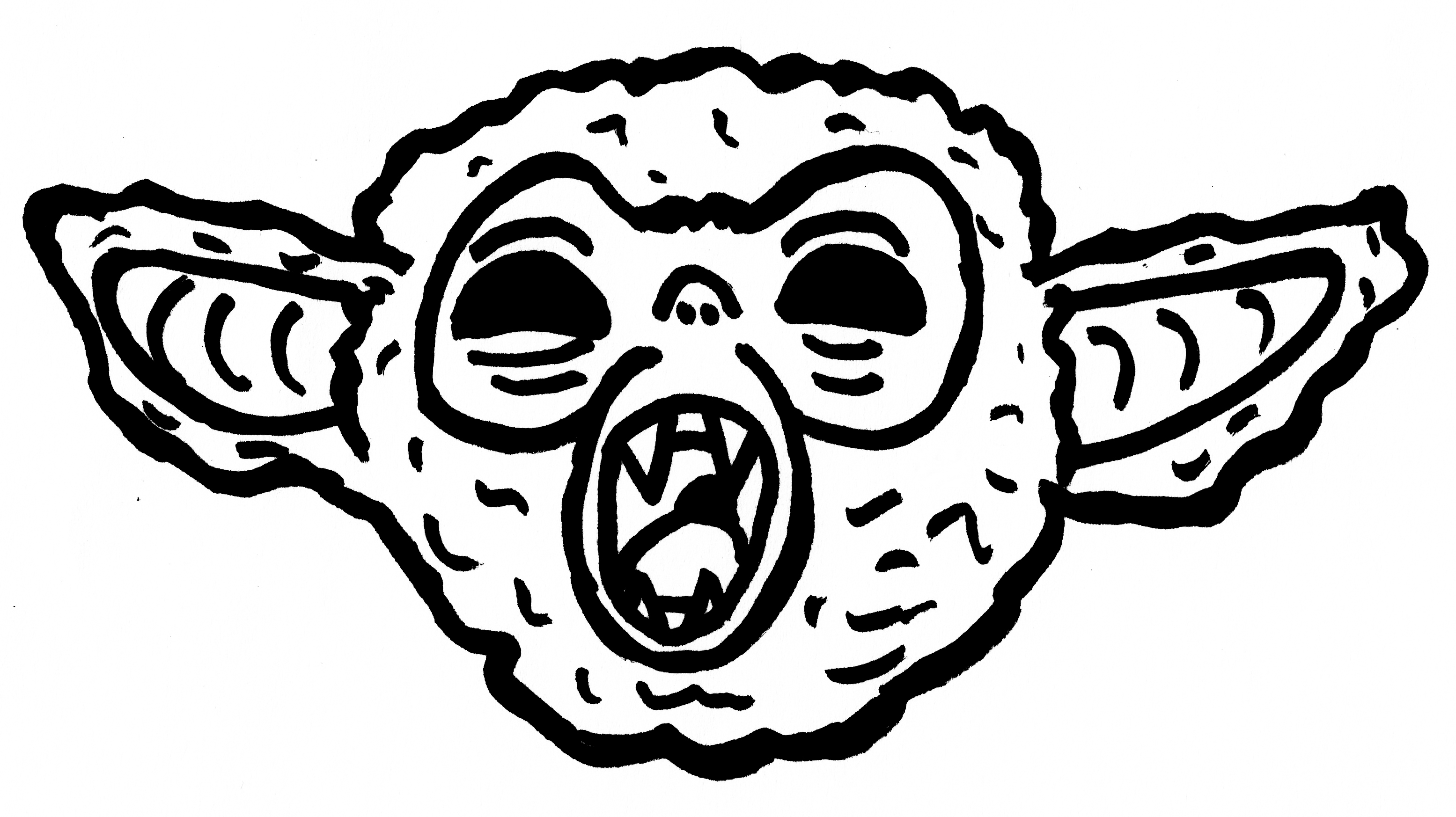
The titular Ochi are magical creatures brought to life via animatronic puppetry. The species largely resembles the golden snub-nosed monkeys of China, except that its bites are poisonous and its children are adorned with Mogwai ears for maximum cuteness. The Ochi are introduced to the audience in a scientific text titled Carpathian Beasts & Demons to help distinguish them from the real-life primates they resemble. Their presence on the fictional, Romania-adjacent island of Carpathia is treated as vampiric & monstrous, with a crazed patriarch played by Willem Dafoe training a new generation of boys to hunt & kill the supposedly demonic beasts on sight. His daughter is not so convinced of the nobility in this mission, and she quickly befriends a baby Ochi left behind by one of her father’s hunts. The rest of the movie is an E.T.-inspired children’s adventure, in which the sullen teenager runs away from home to safely return the Ochi to his fleeing family in a coming-of-age act of rebellion. If there’s any modern update to that familiar formula, it’s in Dafoe’s mockery of Jordan Peterson-style manosphere philosophy, which he preaches to impressionable young boys while driving around his monster-truck chariot in antique battlefield armor. He has no particular interest in his daughter beyond her value as “a father’s greatest treasure,” while she rejects her extremely gendered role in the house by donning costume vampire fangs and cranking heavy metal tunes from the fictional band Hell Throne. The goodbye note she leaves when she runs away proudly declares, “I am strong and cool and don’t believe anything you say,” speaking for all teenage rebels everywhere in their universal language of sass. As a result, the movie should spiritually speak to any depressed loner children who resent their bloviating fathers—of which there is always an infinite supply—regardless of whether they’ve already seen an E.T. riff or three.
The Legend of Ochi evokes all of the childlike wonder and sarcastic teen humor needed to make this genre formula work, but neither of those elements are entirely convincing. Its teenage characters (Helena Zengel as the Ochi’s bestie and Finn Wolfhard as a burgeoning fuckboy who’s “only nice when no one’s looking”) mumble their lines under mops of greasy hair to the point of near indecipherability. They aim for deadpan comedy but overshoot to land at dead-eyed monotony instead. There are also long stretches of the adventure to Ochi territory that have no dialogue at all, which would test audiences’ patience at any age and suggests that Saxon isn’t used to filling up a feature-length runtime with his writing. The real disappointment is that the psychedelic magic of his past music video work for artists like Björk & Panda Bear fall short of inspiring awe here. His puppetry & matte-painting visual tricks, while admirably old-fashioned, are too technically perfect to convey their construction by human hands. When the trailer for the film first dropped, social media C.H.U.D.s baselessly accused Saxon of boosting his budget with A.I.-generated imagery, which had to be heartbreaking for an artist who spent multiple years fighting to render this passion-project fantasy world through the most practical, tactile methods possible. Still, the final result is a little too machine-perfect to inspire genuine awe, and you can easily see what stoked those accusations. There’s an uncanny valley effect in how close its state-of-the-art puppets resemble computer-generated images, leaving them a little off-putting & soulless despite the passionate craft behind them. Saxon technically did everything right here. The aesthetic is distinct; the puppets are cute and smoothly operated; the gender politics are pointed and relevant to the moment; the kids are authentically mopey & rebellious. That’s what makes it so frustrating that the movie never fully sings, even if it can demonstrably hit all the right notes in perfect pitch.
Much like nu-metal, Crocs, and exposed-thong whale tail, it appears that VHS tapes are hip again. There’s already been widespread aesthetic nostalgia for the tape-warp wear & tear of vintage VHS tapes in horror cinema from the past decade or so, as evidenced in titles like Late Night with the Devil, WNUF Halloween Special, Rent-a-Pal, Beyond the Gates, Censor,V/H/S, and VHYes. But now I’m starting to see more appreciation for the physical tapes themselves, not just digital simulation of their degradation. Soon after the old-school video store Future Shock opened in Mid-City, renting both VHS tapes and VCR players, I attended an unrelated screening of the classic 1987 slasher The Stepfather at The Mudlark Theatre, projected from VHS to a hanging bedsheet. At the start of the movie, the audience warmly chuckled at the tape’s brief tracking issues and the projector’s struggle to calibrate its fuzzy image quality, but that attention to format eventually gave way to sincere tension & unease. It was a genuine 1990s sleepover atmosphere, as if we had snuck an R-rated movie past our sleeping parents. It was also very likely the first time I’ve watched a movie on VHS in almost a decade (specifically, since we covered Highway to Hell for Movie of the Month in 2015), since that’s around the time I gave away my VCRs because they all kept eating my tapes.
You don’t have to go to bootleg repertory screenings at Marigny puppet theatres to get in on the VHS nostalgia wave, though. While the collection & exhibition of physical VHS tapes is the domain of only a few true sickos, plenty movie nerds are exposed to VHS scans on a regular basis without intentionally looking for them. Anyone who regularly spends time searching YouTube, Tubi, Archive.org, and thrift-store DVD stacks for cheap-access cinema has been subjected to a deluge of sub-professional digi scans of VHS tapes, which are just as rampant now in the golden age of boutique Blu-ray restorations as they ever have been. Consider the curious case of Dr. Otto and the Riddle of the Gloom Beam, a 1985 comedy that had an initial theatrical release on celluloid, but is unavailable for streaming in HD. All official, legal uploads of the film to sites like Tubi, Freevee, and PlutoTV are the same scan of a vintage VHS cassette, since the film was a much bigger hit as a video store rental than it was as a theatrical release. That’s likely because the VHS cover dared to advertise the appearance of the popular character Ernest P. Worrell, despite the fact that his last-minute inclusion in the film is essentially a celebrity cameo. In theaters, The Riddle of the Gloom Beam was an anonymous, immediately forgotten comedy starring some nobody named Jim Varney. In video stores, it lingered on the shelves for years, boosted its official branding as An Ernest Movie. Even now, it’s still a kind of VHS rental, just one that’s untethered from a physical presence.
Dr. Otto and the Riddle of the Gloom Beam officially marks the first big-screen appearance of Ernest P. Worrell, the fast-talking Southern fool who’s always mugging directly to the camera and addressing the audience as his good friend “Vern”. Before he was camping, slam-dunking, saving Christmas, going to jail, and getting scared stupid in his career-making star vehicles, Ernest was a recurring character in a series of 1980s television commercials directed by John Cherry, starring rubber-faced comedian Jim Varney. Cherry (from Nashville) & Varney (from Kentucky) mostly sold their Ernest ads to the Louisiana & Mississippi at first, but the popularity of the character spread wide enough nationally that they figured they could cash in with a legitimate feature film. Ernest was only one of Varney’s many stock characters, though; longtime Varney Heads will surely recall fellow ad-break mainstay Auntie Nelda, Varney’s old-biddy drag act with a perpetually sprained neck. Instead of capitalizing on the popularity of Ernest in particular, Cherry & Varney chose to use The Riddle of the Gloom Beam as a showcase for every character Varney had in his comedic repertoire, giving the actor room to test-run a bunch of vague, go-nowhere archetypes like Evil German Scientist, Australian Militia Maniac, Filthy Pirate, and Literal Trash Monster, along with playing the hits. It’s less comedically specific than the official Ernest movies as a result, working more like a sketch comedy revue than a feature film.
The titular Dr. Otto is, of course, a Varney creation: a broad mad-scientist character costumed with a living human hand for a hat. The evil lair where he regularly attempts world domination looks like what might happen if Rita Repulsa couldn’t afford to pay the light bill, but it’s lavishly decorated with a wide range of evildoer machines that don’t do any evil thing in particular except light up & smoke. His first plan of attack is fairly agreeable, using his “gloom beam” machine to erase all official records of debt, throwing banks & credit card companies into chaos, to the point where CEOs are putting revolvers in their mouths onscreen in what’s ostensibly a children’s film. Later, he threatens to use the gloom beam to kill all the world’s first-born children like a Biblical plague, but let’s not focus too much on that plot point. Instead, let’s all boo & hiss at the hero that the banks & government nominate to take Dr. Otto down: a square-jawed American patriot named Lance Sterling (Myke Mueller), Dr. Otto’s childhood rival. In flashback, we witness the disturbing difference between Lance’s privileged, WASPy upbringing and Dr. Otto’s miserable life in the gutter, which only encourages us to root for the mad scientist as he seeks revenge on the planet. That’s what makes it okay to cheer on the many disguises he takes in the present—including crowd favorites Ernest & Nelda—as they do objectively evil things to prevent the squeaky-clean hero from saving the day.
None of the individual jokes or visual gags in The Riddle of the Gloom Beam are especially funny, but the movie is charming anyway. It’s high-energy, low-budget independent filmmaking, making up for a lot of the dead air between failed bits with aggressive music-video editing tactics and handmade arts & crafts ingenuity. It’s also incredibly dark considering the average age of its target audience. If nothing else, it’s got to be the only children’s film I’ve ever seen include a minutes-long Deer Hunter parody, making for two visual references to suicide by gun. When I was a kid, television and the video store were cultural democratizers. Jim Carrey & Robin Williams may have had more legitimate, widespread distribution in brick & mortar movie theaters, but Varney was their professional equal in my mind at the time, thanks to then-lifelong exposure to Ernest ads & videos in the Southern market where he hit heaviest. If The Riddle of the Gloom Beam had any chance of earning cult-classic status, it would’ve needed a lot more Ernest content instead of flooding the screen with Varney’s lesser-known comedic personae (despite those characters’ later appearances on his short-lived CBS sketch show Hey Vern, It’s Ernest!). Cherry & Varney soon figured that out in better-remembered titles like Ernest Goes to Jail & Ernest Scared Stupid, which have a much more distinct comedic personality than this early outing even if they don’t match its creative, try-anything energy. Thus, The Riddle of the Gloom Beam is the exact kind of title that belongs on VHS; it would feel sacrilegious to watch it in any updated format, since it’s such a relic of its era. And in a way, that makes Tubi just as hip and plugged-in to The Moment as your local underground video stores and D.I.Y. neighborhood rep screenings (as long as you politely ignore the fact that the company is owned by Rupert Murdoch).
Kids are scary. I say this as a reformed “I hate kids” person (thanks for helping me see the ignorance of my ways, Tara Mooknee), just to make it clear that I don’t mean it that way, and I don’t mean it in the way that most single-income-no-kids people intend either. Not that I think kids are great, either; I moved into a small multi-household complex of single bedroom units intentionally because it greatly reduces the chance that I will have to see or interact with children, or that I will have to deal with the building’s pool being filled with the shrill sound of kids’ joy all summer long. I also have been heard to bemoan the fact that many places my friends and I used to hang out are now more family-dense; my favorite cafe, once a place of refuge and Sunday morning recovery over greasy breakfast tacos, now hosts a kids band (in the Wiggles sense, not the Jackson 5 sense) on some Sundays. If you’re unlucky enough that you pick the wrong time to go to one of my favorite outdoor watering holes that happens to have a great burger truck, pupal humans range freely and run around in the gravel despite the placards at each table asking patrons to mind their children, with the reminder “We are still technically a bar!” But, considering how few of these kids are going to get the chance to grow up, either because they’ve got a date with gun violence destiny or because we’ve got maybe ten years left before widespread crop failure from climate change starves most of us, I have much more pity and sympathy in my heart than disgust these days. What I mean when I say “kids are scary” is that being around other people’s children naturally makes people anxious and nervous, or at least that’s my experience. What if they trip and fall while running past my table at a cafe? Do I suddenly become responsible for their well being? What if the parent thinks I tripped them? What if the kid thinks I tripped them and blames me? Kids are tiny, vulnerable people, but they also have a capability for pure, unfiltered malice that can be creepy as well, and since they’re only just learning how to regulate their emotions and communicate their thoughts, interaction with them can be a minefield.
There’s Something Wrong with the Children is probably the first film that I’ve ever seen that captures that particular unease. Childless couple Margaret (Alisha Wainwright) and Ben (Zach Gilford) are on a glamping trip with Margaret’s best friend Ellie (Amanda Crew), her husband Thomas (Carlos Santos), and their children, upper elementary aged Lucy (Briella Guiza) and younger boy Spencer (David Mattle). Each couple has their own issues; a recent experimentation with swinging has rendered Ellie and Thomas emotionally raw, and while Margaret remains supportive of her husband despite his ongoing struggles with his mental health, that very issue makes her hesitant to start a family with him, especially as it recently cost him a job. The scenes in which we spend time with these characters, to bear witness to their chemistry and the way that they feel comfortable with and play off of one another, is time well spent, unlike in many such films where such exposition feels forced and long-winded. There’s something very natural about the casual, easy way that they all interact that lends the film a level of verisimilitude that makes what comes next that much more wrenching. On a hike, the sextet finds some ruins which they enter and explore, eventually stumbling upon a circular pit that descends so deep into the earth that the bottom is invisible, and even a rock dropped into it never seems to hit bottom. The two kids are immediately entranced by it, with Spencer even calling it the place where light comes from, despite the fact that there’s no light inside of it, and Ben has to catch the boy before he falls/steps into the hole. That night, Margaret offers to let the kids spend the night in the cabin she and Ben are occupying, so that Thomas and Ellie can have some romantic time, and the latter couple accepts. Although the kids exhibit some odd behavior (at one point, Spencer hisses at Ben like some kind of animal when the latter refuses to take the boy back to the ruins that night), it’s chalked up to their age and dismissed pleasantly enough. The next morning, the kids aren’t in the bedroom, and Margaret and Ben both begin looking for them, with Ben jogging back up the previous day’s hike path to the ruins to see if the kids are there; he finds them standing at the precipice, and to his dismay, they leap into its maw. Horror-stricken, he returns to the camp in shock, unsure of how to tell the others the awful truth… only for the kids to come running out of their parents’ cabin, seemingly perfectly healthy.
Ben’s discomfort and, later, terror throughout Act II is palpable, and felt very real to me. Being responsible for someone else’s child, especially for those of us who don’t have a lot of experience with children (I didn’t even “get” other kids when I was a kid), can create a real sense of dread, especially when there’s a possibility of danger. I never had any younger siblings but when I was a teenager, I would babysit my younger twin cousins, who were 7 or 8 at the time. Both of them were much more energetic and rebellious than I could really handle (one of them I found riding her bike down the street during her nap, having climbed out of her window in a tantrum). Although many of my friends have had children in the intervening years and I’ve spent lots of time with those kids and even been a godparent, I’ve still never really gotten the hang of kids; it’s my great hope that my goddaughter sees me like Daria’s cool aunt, but I get the feeling that my discomfort with children comes through and I’m just like Seven of Nine with every child that I encounter. The only thing I do seem well-suited for that some real parents struggle with is understanding where the things that they verbalize may come from. I’ve seen countless listicles over the years that gather various “creepy” things that kids have said to their parents, and I can see how a child talking about an imaginary friend in an unclear way can make people who grew up reading Scary Stories to Read in the Dark interpret their child’s imaginative play as being spooky or ghostly. Although I think a basic understanding of child psychology explains these little creepy tidbits away, I understand the knee-jerk fright response as well. Children are pure id, have no filter, possess limited language skills, and are learning about the world, so they can say shit that sounds like it’s coming out of the mouth of the devil himself while looking like innocence incarnate, but that’s not really uncommon or even abnormal. This also contributes to the paranoia at the heart of Ben’s narrative arc: he never doubts that what he’s experiencing is objectively real, but everyone around him does and we in the audience must as well. Maybe the kids are possessed, or he could just as easily be having a psychological break that is making the common (but not not creepy) behavior of children seem like malicious supernatural evil.
Of course, being a Blumhouse movie, the children are possessed. Both child actors do quite well in their roles, with Spencer as the more impulsive of the two while Lucy’s malevolence is more restrained; their evil rictus grins are very effective, and the way that they can turn from tauntingly wicked to simpering victims depending upon the audience is very scary. Working in tandem, they first make Ben appear to be losing his self-control and sense of reality, then they frame him for violent behavior. There’s a midstream protagonist swap here as the story then moves to focus more on Margaret, as she watches her husband (seemingly) lose his mind and attack her best friend’s kids, and then the film becomes a more standard cabin-in-the-woods scare flick as the adults are separated and picked off one by one until only Margaret is left standing to try and escape. Surprisingly, this tonal shift actually worked rather well for me; up to that point, I was definitely experiencing Ben’s discomfort with the situation, but wasn’t fully won over by the film. Normally the psychological elements are what are more fascinating to me, but once the ball gets rolling with more traditional horror scares, my estimation of the movie was kicked up a notch or two, and Margaret makes for a compelling final girl, especially once Ben becomes fairly catatonic from the horrors of what he’s witnessed.
This is director Roxanne Benjamin’s sophomore feature, but if her name sounds familiar to you, you may remember her segment Don’t Fall from the anthology filmXX. There’s Something Wrong with the Children feels like a more successful attempt at telling that story, which also featured a group of campers stumbling across something otherworldly and one of them becoming inhabited by something evil and then killing the others, but that’s not a criticism. Don’t Fall, because of its brevity, was naturally more scant on characterization, which is one of this film’s strengths; when the relationships between the adults start to fall apart because of the deceptive activity of whatever has a hold on the children. I also really like the choice to have the ruins in this film be something constructed relatively recently; the hikers don’t come upon a sacred burial ground or (as in Don’t Fall) an ancient cave painting warning of some primordial evil. This is a post-colonial structure built from familiar brick and mortar, which the adults theorize may have been a factory that was part of the fur trapper trade or a decommissioned and abandoned military site. There’s a symmetry between the way that the building has been grown over with plants and vegetation and the way that this bottomless pit seems to have wormed its way up into this building, like a long-buried secret that forced its way up in the same way that weeds pop up through cracks in sidewalk. The mystery of the pit’s origin is never explained, nor are we given solid information about what exactly Lucy and Spencer brought back with them. There’s something vaguely insectoid about the kids after their transformation, as sometimes their shadows exhibit Caelifera like wings and heads, and the “secret language” that the two use with each other from that point forward sounds like cicada song, but they’re also clearly demonic in nature as well. There’s some fun foreshadowing of that in all of this as well, from a metal shirt that Ellie wears with the word “devil” on it, to Spencer and Lucy’s fascination with some kind of customizable card game and especially Lucy’s mention of her favorite card, which depicts a serpentine god that devours souls, to Ben’s gift to Spencer of the juggling sticks colloquially referred to as “devil sticks,” to the cartoony triangular cat ears on the hood of Lucy’s red jacket, which also resemble horns. Yellow mountain pansies also play a role somehow, but it’s left mysterious as well.
Of course, this is yet another one of those films which has seen a huge backlash of 1-star, complaint-filled, repetitive negative reviews. I’m almost to the point in my life where I feel like the blurb reviews from the general public are an algorithmically-driven outrage manufacturing experiment to make me hate young people by exaggerating the stereotypes about their expectations and attention spans. One reviewer really had the gall to say “The movie had a lot of unnecessary conversations and plot points,” which is an almost perfect distillation of the addle-brained post-“Why didn’t the eagles just fly the ring to Mordor?” discourse that’s so common now. That’s what the movie is, my guy. The conversations aren’t unnecessary; they’re the point. “Money would of [sic] been better off going to the homeless,” another person wrote, while another review reads “It absolutely didn’t explain the whole reason of [sic] the children being Psycho about holes [sic] at all.” A slightly more positive review reads “Nothing is [sic] this movie is explained to the viewer that gives us knowledge [sic] to know why things are happening.” This unwillingness to accept ambiguity feels like a bigger issue than just some bad reviews on the internet, to be honest; this feels like some real “decline of empire” shit. For me, the well-like shape of the pit and the supposed glow within it called to mind Lovecraft’s The Colour Out of Space, so in my mind I’m like “Oh, it’s inexplicable and eldritch,” and then I just enjoy the movie. Even if you don’t subscribe to that interpretation, there’s plenty of devilish symbolism, but you’re not going to catch Ellie’s t-shirt or Lucy’s jacket or the dialogue about the card game if you’re only half-watching the movie with your fucking phone in your hand. The movie is only “boring” to you because you’ve been taking psychic damage from a commercially corrupted, consumption driven internet for the past fifteen years.
Diatribe over (for now). I’ve had this one on the backburner for a little while now, and when a friend’s birthday night swim was called off because of severe thunderstorms, it was the perfect atmosphere for this viewing. If you can’t recreate that exactly, I recommend getting as close to it as you can, put your phone on the charger in the other room, and enjoy.
After watching Pearl Chang direct herself in two traditional, psychedelic wuxia revenge tales, it was nice to see her totally cut loose in her third feature. That’s not to say Wolf Devil Woman or Matching Escort are humorless slogs, but more that The Dark Lady of Kung Fu just out-goofs them both by a large margin. The Dark Lady of Kung Fu feels more like a condensed season of a children’s Saturday Morning TV comedy than it does a wuxia epic; it’s just one that happens to feature occasional outbursts of martial arts wirework, gore, and gender ambiguity. It’s decidedly inessential when compared to Chang’s previous accomplishments, but it’s wildly, endearingly playful in a way that rewards completionists.
Pearl Chang stars in dual roles as The Butterfly Bandit & The Monkey King, two separate heroes to local street orphans. The Monkey King provides a makeshift home for the orphans as their figurehead, teaching them how to survive as Dickensian pickpockets. The Butterfly Bandit is a Robin Hood type superhero who showers the orphans & other impoverished citizens with stolen gold, costumed in a winged Zorro costume with a purple Mardi Gras mask. Both characters are referred to by “he/him” pronouns despite identifying as women, and a third character in their orbit is eventually revealed to be intersex in a major, clumsy plot twist. Despite both being played by Chang, the movie never confirms that The Butterfly Bandit & The Monkey King are indeed the same person. The masked superhero’s true identity is instead allowed to remain an ambiguous secret, so they can continue to live on as a mysterious hero to poor children everywhere.
The Dark Lady of Kung Fu is missing some of the Peal Chang touchstones that made Wolf Devil Woman & Matching Escort so fun as low-budget wuxia novelties. Mainly, her rapidfire psychedelic editing style & lengthy martial arts battles are greatly minimized here, allowing more room for the day-to-day hijinks of the street orphans instead of the superheroics of their idols. Still, the film is incredibly playful in its intensely colorful imagery, including shots of Chang enjoying a bubble bath in a giant clamshell, performing as a human Whack-a-Mole for busking tips, and allowing her flock to play Hungry Hungry Hippos with her stolen loot. The usual ultraviolence is also present throughout, featuring chopped limbs, rivers of stage blood, and flashes of horrific self-surgery. Besides its laid-back pacing, the only thing that really holds The Dark Lady of Kung Fu back from greatness is the cloying Comedy Hijinks of its English language dub. It’s yet another argument for Pearl Chang’s work being rescued & properly restored for modern audiences; they’d all make excellent Midnight Movies with a proper clean-up, and this one is no exception.
As many stuck-at-home audiences have been over the past year of pure, all-encompassing Hell, I’ve recently found myself seeking out cinematic comfort food in the form of Classic Movies, the kind of Old Hollywood fare best enjoyed under a blanket with a hot toddy & a bar of chocolate. That impulse overwhelmed my viewing habits around this past Christmas especially, when the annual stress of the holiday and the burnout from Best of 2020 catchups had me seeking shelter in the feel-good Movie Magic of the Studio Era. I wasn’t watching these films with any specific critical purpose in mind, but I did notice a glaring, unexpected common thread between them that delighted me, if not only because it was a subversive contrast to the warm-blanket nostalgia feeling I was looking for. I started to detect an archetype of 1930s & 40s media that I hadn’t really considered being a hallmark of the era before: the adorably morbid child. I’m not referencing the vicious little monsters of later cinema like the pint-sized villains of The Bad Seed, The Children’s Hour, or Village of the Damned. It’s an earlier, sweeter archetype of the cutie-pie tyke who happens to be obsessed with death, decay, and general amoral debauchery despite their cheery appearance. In an era where studio-sanctioned art was cranked out to seek wide commercial appeal, creators had thoughtfully included proto-goth youngsters in their casts of characters for the real Weirdos in the audience — something I still greatly appreciated from the warmth of my couch & blanket nearly a century later.
By far the purest, most adorably vicious specimen of this archetype is Tootie from the 1944 movie musical Meet Me in St Louis. Based on its reputation as The One Where Judy Garland Sings “Have Yourself A Merry Little Christmas”, I didn’t expect much in the way of subversion out of this Old Hollywood Movie Musical. Maybe that’s why I absolutely fell in love with Tootie The Pint-Sized Sociopath, whose interjections of feral bloodlust into this otherwise cheery Studio picture got huge, consistent laughs out of me. It’s like Louise Belcher was cast as one of the March sisters in a musical production of Little Women, a delightful element of pure, out-of-nowhere chaos. Child actor Margaret O’Brien even earned second-bill for the role beneath Garland on the posters, despite being more of an occasional source of comic relief than a main-cast participant. While her older sisters & parents navigate romances, courtships, and harsh financial decisions of the adult world, Tootie lives out a mostly carefree childhood in turn-of-the-century Missouri where she staves off boredom by focusing on the more ghoulish aspects of life. Tootie frequently interrupts the plot to interject about all her dolls she’s buried in the cemetery, the minor acts of domestic terrorism she’s committed against the city’s streetcar tracks, or how “The iceman saw a drunkard get shot yesterday; the blood squirted out three feet!” Each time she pipes up in sugary sweet squeaks you know you’re about to hear about the gnarliest shit that’s ever happened in St. Louis, which is a hilarious contrast to the warmer, more nostalgic comforts of Judy Garland singing Christmas carols.
I might’ve assumed Tootie was a total cinematic anomaly had I not also revisited one of my personal favorite Christmas classics this year, 1934’s Hays Code defiant comedy-noir The Thin Man. Usually when praising The Thin Man, it’s unavoidable to focus on the playful, often violent sexual innuendo shared between married, martini-swilling detectives Nick & Nora Charles. On this rewatch, though, I found myself drawn to the morbid fixations of the teenage side character Gilbert, the son of the murder victim Nick & Nora are hired to avenge. Gilbert is much older than Tootie, and so his adorable morbidity as a teenage boy is a lot less striking at first glance. What’s hilarious about its effect on the film, however, is how freaked out the other characters are by his obsession with death & sexual perversion. Police are squicked when he gleefully asks, of his own father’s corpse, “Could I come down and see the body? I’ve never seen a dead body.” It doesn’t help at all when he plainly explains, “Well, I’ve been studying psychopathic criminology and I have a theory. Perhaps this was the work of a sadist or a paranoiac. If I saw it I might be able to tell.” Unlike Tootie’s family in Meet Me in St. Louis, Gilbert’s mother & sister aren’t at all amused by his faux-Freudian obsession with sex & death, best typified by his sister’s repulsed reaction to his confession that, “Now, I know I have a mother fixation, but it’s slight. It hasn’t yet reached the point of where I …” The censorship of the era would not have allowed that train of thought to go much further, but it’s almost worse that the audience’s imagination is allowed to fill in the blank. Gilbert is not nearly as funny nor as alarming as Tootie, if not only because death & perverse sexual urges don’t seem as wildly out of place coming from a teenage boy in a drunken noir as they do coming from a 7-year-old girl in a cheery movie musical. Still, he’s a hilarious intrusion on the plot & tone of the work, especially since every other character is so thoroughly freaked out by his enthusiasm for ghoulish subjects.
While I couldn’t think of another movie character from the 30s & 40s that fit the mold of a Tootie or a Gilbert, I do believe they share a sensibility with a newspaper comics icon from that same era: Wednesday Addams. While The Addams Family wouldn’t be adapted to television & silver screen until decades later, the wholesomely morbid characters originated in a single-panel newspaper comic that was substantially popular in the 1930s. Wednesday Addams isn’t as bubbly nor as sugar-addled as Tootie, but she mostly fills the same role: a subversively morbid child who’s just as adorable as she is fixated on death & mayhem. It might just be because I’m a child of the 1990s, but Christina Ricci defines the character in my mind, thanks to her dual performances in Barry Sonnenfeld’s The Addams Family (1991) & Addams Family Values (1993). While her performance (along with a career-high turn from Joan Cusack) is more deliciously over-the-top in the sequel, the often-neglected original film of the duo showcases her as occasional, adorable interjections to the plot the same way Tootie & Gilbert function in their respective films. The ’91 Addams Family movie feels spiritually in-sync with the source material’s origins as a single-panel newspaper comic, mostly entertaining as a never-ending flood of individual sight gags; it’s essentially ZAZ for goths. Wednesday mostly operates outside the main plot (which largely concerns her parents’ relationship with her prodigal uncle), occasionally interjecting as a hyper-specific type of sight gag: a young, adorable little girl with a hyperactive sense of bloodlust. Wednesday is mostly silent in the ’91 film, but the way she repeatedly murders her brother, leads a spooky familial séance, and sprays her school play audience in gallons of stage blood leads to some of the film’s most outrageously funny moments; it’s no wonder Addams Family Values gave her more to do in the spotlight, straying further from both the comic panel source material & the usual role of the adorably morbid child side-character trope.
One thing that stuck out to me when revisiting the Addams Family movie so soon after falling in love with Tootie is that it starts with a Christmas carol, and ends at Halloween. Similarly, Meet Me in St. Louis is often cited as one of the greatest Christmas movies of all time, but one of its major set-pieces involves Tootie participating in an escalating series of Halloween pranks while dressed as the ghost of a town drunk. Meanwhile, Addams Family Values includes an iconic Thanksgiving-themed stage play (despite being set at a sleepaway summer camp), and The Thin Man is set between Christmas Eve & New Year’s. It makes sense that these comfort-watch classics would be likely to be set around The Holidays, since that time of year is so prone to warmly comforting (and easily marketable) nostalgia. The uniformity of these three characters—Tootie, Gilbert, and Wednesday—across those similar settings is amusing as a codified trio, though, and I can’t help but want to seek out more adorably morbid children in classic films just like them. Surely, there must be more violence-obsessed tykes running havoc around otherwise even-keel studio pictures of the Old Hollywood era. If nothing else, I suspect the continued popularity of Wednesday Addams over the decades must have been an influence over classic movie characters I just haven’t met yet. I doubt any will be as delightfully fucked up as our beloved little Tootie, but I’ll be seeking them out anyway.
It’s been over a hundred years since turn-of-the-century author Frances Hodgson Burnett was a hip, happening commodity on the children’s literature circuit, but her work’s been perpetually floating around the cultural zeitgeist ever since. That’s mostly due to the ongoing popularity of Burnett’s 1911 novel The Secret Garden, which is constantly being adapted for stage, television, and silver screen for each new generation of young audiences. Just last year, a big-budget reworking of The Secret Garden passed through theaters like a fart in the wind, unnoticed by most audiences despite the source material’s apparently evergreen popularity. I didn’t bother with the 2020 version of The Secret Garden, mostly because the gaudy CGI & overbearing orchestral swells of the trailers looked like they were adding way too many bells & whistles to a story mostly loved for its sweetness in simplicity. Had the movie been a proper hit (something it never had a chance to accomplish, if not only due to the COVID pandemic’s across-the-board-kneecapping of theatrical distribution), it would not have surprised me that its CG Magic additions to the story were welcoming to a younger generation of kids who are used to that digital patina. For me, the latest Secret Garden movie’s release mostly served as a reminder that Burnett’s novels had another, earlier Cultural Moment when I was a kid, something I can’t help but regard as their best era of adaptation to date.
Way back in the ancient days of the mid-1990s there were two wonderful, beloved adaptations of Frances Hodgson Burnett’s most popular novels, both shot by A-list cinematographers. Of course, the decade saw just as many forgotten, mediocre film & television versions of The Secret Garden, A Little Princess, and Little Lord Fauntleroy as any other era in popular media, but there were two exceptional films that stood out among the dreck. The first (and most substantial) of the pair is 1993’s adaptation of The Secret Garden, directed by Agnieszka Holland and shot by industry legend Roger Deakins. Half a G-rated Gothic horror about haunted, lonely children and half gorgeous Technicolor nature footage, the 1993 Secret Garden is a tender, incredibly patient children’s classic that I should have caught up with sooner. Where the treacly, desperately whimsical trailers for the 2020 Secret Garden push the delicate magic of the source material past its breaking point, Holland’s interpretation is interested in the more cinematic magic of Mood. The protagonist is a “queer, unresponsive little thing,” a prideful young orphan known to her lower-class bunkmates as “Mary Quite Contrary.” Displaced from a life with servants & extravagant parties to a spooky mansion haunted by her depressive, reclusive uncle who can’t stand the sight of her, she’s a child who’s proud of her prickly, don’t-even-fucking-look-at-me exterior. The magic of the film is subtle, represented mostly in her environment’s transformation from a dark, moody estate with possible ghosts lurking in the shadows to a sunshiny, springtime garden that she collaborates on restoring with the fellow lonely children she meets in & around the surrounding moors. Watching her guarded personality bloom into openness & empathy along with time-elapsed photography of the blooming, lush garden as she makes her first genuine friends is beautifully, genuinely magical, something the film is confident in highlighting without much in the way of special effects – computerized or otherwise.
The 1995 adaptation of A Little Princess—directed by Alfonso Cuarón and shot by Emmanuel Lubezki—admittedly does indulge in some shockingly cheap, overstepping CGI, but it at least sequesters those images within its story-time fantasy sequences. The set-up of the story is much the same as The Secret Garden, with a once-wealthy British child being knocked down the ladder of class once she is orphaned, now forced to work as a servant at her boarding school or face a destitute life of homelessness. This is a film I actually remember seeing as a kid; it was Baby’s First Cuarón in fact, something I did not at all connect to my high school-love of Y Tu Mamá También until decades later. It follows a much more traditional, familiar fairy tale premise for a kids’ movie than The Secret Garden, but it still squeezes in some gorgeously artificial illustrations of The Ramayana (told as bedtime stories at the boarding school), with Lubezki doing his best possible precursor to The Fall, give or take some ill-advised mid-90s CGI. Outside those bedtime story fantasies, the real magic of A Little Princess is still fairly subtle & unstrained. Its thesis is that “All girls are princesses”, whether they’re a spoiled boarding school brat or the orphaned peasant who mops the floors and serves them breakfast. I can’t claim that the movie matches or exceeds the heights of Cuarón’s later, more critically lauded works, but that “Everyone’s a princess” sentiment clashes against the horrors of labor exploitation the protagonist stuffers in a way that really left an impression on me as a kid; the Ramayana fantasy sequences only underline the magic of that much more grounded, “realistic” frame story. The only glaring faults of the film is that the Ramayana demons should have been rendered in traditional stop-motion animation and the unavoidable fact that 1993’s The Secret Garden is by far the better film.
Since I haven’t seen the 2020 The Secret Garden and I’m only contrasting these films against its trailers, I can’t make any objective claims about their superiority as works of art. The two major 1990s adaptations of Burnett’s novels did make a lasting impression on the generation who grew up with them, though, whereas the most recent film seems to have been an instantly forgotten blip. In fact, most adaptations of Burnett’s work appear to be routine, disposable, going-though-the-motions children’s media tedium, which makes those two 90s films stand out as an exception to the rule. At the very least, they’re both commendable for the subtle, controlled way they accentuate the magic & the beauty of Burnett’s novels, which is a funny thing to be able to say about two films where children live in fairy tale castles and communicate with animals. It’s apparently very easy to cheapen & deflate that magic if you desperately push it to the forefront instead allowing it to quietly bloom.
The lineage of films borrowing from the killer-children British chiller Village of the Damned has echoed thunderously over the last half-century – from the Euro-grindhouse provocation of Who Can Kill a Child? to the corny folk tale of Children of the Corn to the cosmic Christmas horror subversion of The Childrenand beyond. If 1986’s Bloody Birthday does anything especially novel with this Evil Children subgenre it’s in the way it retrofits Village of the Damned into the post-Halloween slasher format. If you cut the killer children angle out of the film entirely, this picture would be unmistakable as a cheap-o Halloween knockoff. Its designated bookworm Final Girl archetype walks down suburban streets fending off invitations to party & sin with her promiscuous friends, scenes that look like half-remembered recreations of specific Halloween moments. Her doomed-to-die neighbor friend’s dad is even town sheriff, like in the John Carpenter classic, and the final showdown with the film’s pint-sized killers is a harrowing night of babysitting gone awry. Swapping out the looming presence of Michael Myers with a small cult of toe-headed rascals is a pretty substantial deviation from the Halloween slasher template, however, offering the Village of the Damned formula an interesting new subgenre avenue to explore. It’s an unholy marriage of two horror sensibilities that likely shouldn’t mix, and that explosive combination makes for a wickedly fun time.
Unlike in Village of the Damned, there isn’t much explanation provided as to why the murderous tykes of Bloody Birthday are evil. The three unrelated miscreants are born simultaneously in a small town during an absurdly windy solar eclipse, and their wickedness is waved off with Astrological babblings about cosmic alignments. What’s more important than their origin is the Lawful Evil characterization in their costuming & murder tactics. They dress like shrunken-down Reaganite adults and sidestep the traditional slasher weapon of a glistening kitchen knife for more pedestrian tools of chaos: skateboards, baseball bats, shovels, cars, etc. One of the little tykes even hunts down his elders with a stolen handgun – which would be a disappointing weapon in the hands of a Michael Myers but is genuinely horrifying when operated by a child. It’s unexpected details like that gun that keeps Bloody Birthday exciting even if you’re already over-familiar with the slasher genre at large. It’s not interesting enough for teens to make out in a graveyard in this film; they have to make out in a grave. Not only do the children have an unsettling prurient interest in adult sexuality, peering in on sex & private stripteases; they also fire a bow & arrow through their peephole. After two 2019 releases (Ma & Psycho Granny), this is the third film I’ve seen this year where a killer maniacally scrapbooks about their crimes – a very unsettling hobby for a child. This is a deeply ugly, unwholesome glimpse at Reagan Era suburbia, and the kids are not alright, not at all.
That spiritual ugliness also extends to the film’s look & sound. This is a repugnantly colorless affair, dealing almost exclusively in muddied browns & greys. The sound quality of my blind-buy DVD copy left the dialogue outright indecipherable, prompting us to switch to Severin’s digital restoration currently streaming on Shudder (which was only slightly better, but at least audible). Unlike in most first-wave slashers of its era, the murders in the film actually weigh on the community they terrorize, which mostly manifests in teary-eyed funerals, public meltdowns at kids’ birthday parties, and hospitalized psychiatric retreats to aid recovery. It’s a sense of grief & despair that keeps the mood harshly grotesque & rotten, even when the Evil Children’s wicked deeds stray into over-the-top camp. I personally never tire of the killer-children horror genre and had a lot of fun with this film’s peculiar melding of Village of the Damned tradition with Halloween modernism. It’s an ugly watch in both texture & sentiment, though, one that’s bested as a bygone nasty in its genre only by Who Can Kill a Child?. It works wonderfully well as a genre deviation for both the killer-children thriller and the traditional first-wave slasher, and there are plenty of cartoonishly excessive joys to be found in its intergenerational kills. It’s just also a nasty slice of schlock in its own right, though, so be prepared to squirm between your guffaws.
One of the most underappreciated cul-de-sacs in horror cinema is the 1950s & 60s British thriller that turned expansive premises with global implications into bottled-up, dialogue-heavy teleplays. Sci-fi horror classics like Devil Girl from Mars, The Day of the Triffids, and The Earth Dies Screaming executed big ideas on constricted budgets in excitingly ambitious ways, even if they often amounted to back-and-forth philosophical conversations in parlors & pubs. It’s difficult to imagine so, but our current Movie of the Month, the 1976 Euro-grindhouse provocation Who Can Kill a Child?has strong roots in one of the most iconic examples of this buttoned-up British tradition – the 1964 chiller Village of the Damned. What’s most amazing about that influence is that the calmer, more dialogue-heavy example of the pair is somehow just as disturbing as its ultraviolent descendent. Even working under harsh financial restraints & systemic moral censorship in a more conservative time for horror cinema, Village of the Damned holds its own against the free-to-shock grindhouse nasties that followed in its wake.
It’s not that Village of the Damned was the only killer-children horror film that could or would have influenced Who Can Kill a Child?. From the classier Evil Children artifacts like Rosemary’s Baby & The Bad Seed to schlockier contemporaries like It’s Alive! &Kill Baby Kill, it’s remarkably rich thematic territory that’s been mined countless times before & since. Still, there’s something about the way the concept is handled in Village of the Damned that directly correlates to Who Can Kill a Child?, particularly in the two films’ opening acts. They both begin with the eerie quiet of a vacated city where the adults have been neutralized (in Who Can Kill a Child? because they were massacred, in Village of the Damned because they were gassed by alien invaders). Both films dwell on the mystery of those vacant rural-village settings for as long as possible before revealing that their central antagonists will be murderous children. Those children may have different respective supernatural abilities (the ones of Who Can Kill a Child? are unusually athletic & muscular while the toe-headed cherubs of Village of the Damned are hyper-inteligent), but they share a common penchant for telepathic communication that leaves their adult victims out of the loop. Most importantly, Village of the Damned concludes with its main protagonist (veteran stage actor George Sanders) making the “heroic” decision to kill a classroom full of children to save the planet, which touches on the exact thematic conflict referenced in its unlikely decedent’s title.
There are, of course, plenty of ways that Who Can Kill a Child? mutates & reconfigures the Village of the Damned template instead of merely copying it (lest it suffer the same fate as John Carpenter’s tepid 90s remake). Instead of the killer children being a set number of alien invaders in a small village, they’re instead a growing number of infectious revolutionaries who can recruit more tykes into their adult-massacring cause – making their eventual escape from their island home a global threat. Since the sensibilities of the horror genre in general has changed drastically between the two films – from teleplays to gore fests – Who Can Kill a Child? also translates the earlier film’s “The Birds except with Children” gimmick to more of a hyperviolent George Romero scenario. Surprisingly, though, the most pronounced difference between the two works is their respective relationships with the military. In Village of the Damned, the British military is a force for patriotic good against an invading space alien Other – who trigger post-War trauma over entire communities being gassed & destroyed. Who Can Kill a Child? is much, much tougher on military activity, framing its entire children’s-revenge-on-adults scenario as retribution for the way it’s always children who suffer most for adults’ war crimes. That makes this gory Spanish mutation of the buttoned-up British original the exact right kind of cinematic descendent – the kind that’s in active conversation with its predecessors instead of merely copying them.
Who Can Kill a Child? is less restrained than Village of the Damned in terms of its politics & its violence, but both films are on equal footing in terms of bone-deep chills—which speaks to the power of the teleplay-style writing & acting of 1960s British horror. Village of the Damned is nowhere near the flashiest nor the most audacious entry in the Evil Children subgenre, but it is an incredibly effective one that plays just as hauntingly today as it did a half century ago. It’s like being locked in a deep freezer for 77minutes of pure panic, so it makes sense that it’d have a wide-reaching influence on films that don’t either share its sense of restraint nor its politics.
When initially discussing our current Movie of the Month, the 1981 Canuxploitation curio The Pit, Boomer lamented the loss of its screenplay’s original subtext about childhood struggles with Autism. In its conceptual phases, The Pit was intended to be a thoughtful insight into the mind of a child on the spectrum. Jamie’s misunderstanding of personal boundaries and fantastic obsessions with his “talking” teddy bear and the Tra-la-logs (troglodytes) that live in a pit in the nearby woods were originally intended to be empathetic teaching points about the internal processes of a child on the spectrum struggling with the emotional & sexual discomforts of early puberty. Realizing that kind of subtle, thoughtful child psychology drama wouldn’t make nearly as much money as a bonkers horror film with the same basic premise, producers pushed for a different story altogether. In The Pit as a final product, the woods-dwelling troglodytes & telepathic teddy bear are demonstrated to be real, and really dangerous. Jamie himself makes a leap from a misunderstood, bullied child with boundary issues to a full-on perverted menace who even out-creeps the flesh-eating Tra-la-logs as the film’s most hideous monster. I understand some of Boomer’s mixed feelings on this shift from empathetic child psychology drama to exploitative horror cheapie, but ultimately, I gotta say the producers made the right call (at least in terms of The Pit’s entertainment value). I’ve already seen a movie with The Pit’s budgetary & creative means attempt to recapture the imaginations & frustrations of a child on the spectrum through their relationship with a talking teddy bear. It was 2009’s Gooby, a film that’s only notable for its unintended terror & laughable absurdity (thanks largely to being covered on the “bad movie” podcast How Did This Get Made?); It’s the same fate I believe The Pit would have suffered if it had attempted sincere melodrama about Jamie’s troubled psyche.
Once you consider them as a pair, the parallels between Gooby & The Pit are unmistakable. A G-rated (presumably Christian-targeted) children’s film, Gooby follows a small child struggling to adjust to his family’s move into a new home, not his burgeoning sexuality, but the ways his anxieties manifest are very similar to Jamie’s. Instead of fearing Tra-la-logs, the pint-sized protagonist of Gooby fears “Hoonies”: two-headed CGI bird-beasts that only he can see. He also processes the emotional stress of his changing life and the threat of the Hoonies through his relationship with an anthropomorphic teddy bear. In The Pit, the teddy bear is a telepathic communicator who encourages Jamie to explore his sexuality and enact his revenge on perceived enemies in increasingly unsavory ways. In Gooby, the titular teddy bear transforms into a six-foot tall imaginary friend (voiced by Robbie Coltrane, of Hagrid fame) who provides his corresponding troubled child with emotional support in a time when he’s isolated from the humans in his life. Gooby is, in theory, the wholesome version of The Pit, with all the icky sex & violence replaced with tender, empathetic insight into the mental processes of an outsider child on the spectrum struggling to adapt to a new reality and to relate to the other humans in his social circle. Yet, Gooby is deeply disturbing in its own, unintended way both because of its lighthearted, sanitized exploration of deeply troubling emotional issues and because Gooby himself is a goddamn nightmare to look at. By leaning into its genre film potential and making its monstrous threats “real,” The Pit transcends so-bad-it’s good mockery to become something undeniably captivating & unnerving. Gooby, by contrast, risks the child psychology sincerity of The Pit’s original form and falls flat on its face because of its shortcomings in budget, dialogue, and character design. By trying to make the imaginary teddy bear friend of The Pit’s basic dynamic a lovable goofball, Gooby only succeeded in creating a new kind of horror, one that plays as an embarrassing mistake instead of a successful attempt at small-budget genre filmmaking. Both films are equally fascinating & unnerving, but only one’s effect feels successful in its intent – the one that asks to be treated as a horror film to begin with.
There are plenty of successful, well-considered children’s films about processing mental & emotional anxiety through imaginary devices – Paperhouse, MirriorMask, The Lady in White, A Monster Calls, I Kill Giants, to name a few we’ve covered here. Gooby & The Pit attempt a very specific, shared angle on that formula in their teddy bear vs. imaginary monsters (whether they be Hoonies or Tra-la-logs) interpretation of childhood Autism conflicts. The difference is that Gooby fully commits to the “It was all in their head” metaphor originally intended but abandoned by The Pit, to disastrous results. Whether a limitation in talent or budget, Gooby never had a chance to be anything but an absurd, unnerving embarrassment headlined by a nightmarish teddy bear goon. The producers of The Pit likely saw their own project heading in that direction when they decided to bail from the original child psychology melodrama script to pursue a more marketable cheapo horror genre payoff. The results are largely the same. The Pit & Gooby are both deeply uncomfortable curios that reach a very peculiar level of terror you might not expect given how goofy they appear from the outside. The difference is that The Pit comes out looking ingenious for framing that effect as its intent, whereas Gooby persists only as a how-did-this-get-made mockery, an abomination & an embarrassment. They’re basically the same movie, but only The Pit was self-aware enough to realize its own horrific effect.











 Swampflix