Burnt Offerings (1976)

EPSON MFP image

fourstar

Dan Curtis is most well remembered as the creator of gothic soap opera Dark Shadows (poorly remade as an irreverent fish-out-of-water comedy starring Johnny Depp in 2012), but  remembrance of his legacy should also include his direction of 1976’s horror film Burnt Offerings. A kind of haunted house flick, the story concerns a run-down neoclassical manor home and the spell that it casts over a hapless family in order to rejuvenate itself.

The owners of the mansion are the wheelchair-bound Arnold Allardyce and his sister Roz (Burgess Meredith and Eileen Heckart, prominently featured in the film’s trailer but in what amount to extended cameos). They are delighted when the Rolf family, consisting of father Ben (Oliver Reed), mother Marian (Karen Black, whom Curtis directed the previous year in Trilogy of Terror), and twelve-year-old son Davey (Lee Montgomery, future heartthrob of Girls Just Wanna Have Fun), express interest in renting the house. Of course, for the low rental price of $900 for the whole summer, there is one caveat; the family must care for the ancient Mrs. Allardyce, a recluse who requires only that meals be left outside her door thrice daily. Ben is resistant at first, but Marian, already affected by the house, insists, and the trio, along with Ben’s elderly Aunt Elizabeth (Bette Davis), arrive at the mansion the following week.

Things seem to go well for a while. Davis is a particular treasure as the wisecracking Aunt Liz, and although Marian becomes more withdrawn (becoming obsessed with Mrs. Allardyce’s collection of photographs and listening to a music box for hours on end), the rest of the family bonds on their vacation. Things begin to take a turn for the worse as Ben starts to have nightmares about a creepy, grinning chauffeur (Anthony James) he encountered at his mother’s funeral as a child, and his roughhousing with Davey in the pool takes on a dark turn as he feels compelled to drown the boy. Soon, the lively Aunt Elizabeth grows ill and dies while the house continues to become less decrepit. Ben ultimately tries to flee the grounds with Davey, but forces conspire to block his way, as his hallucinations of the evil chauffeur begin to appear even in his waking states. When the pool once again tries to drown Davey, Marian’s spell is briefly broken and she agrees to flee with the rest of the family, but the house will not let them go so easily.

A forgotten treasure, Burnt Offerings shares more than just its genre with Poltergeist: they also both share a PG rating. Although it’s still a bit of a shock to think about Spielberg’s haunted house movie being given such an age-inappropriate rating, it’s easier to see how the creepiness of Burnt Offerings slipped under the radar. There are no ghosts in the Allardyce house; the house itself seeks to feed upon the life force of its inhabitants, and very little explanation is given as to how or why the house came to be this way. In a more modern movie, the audience would likely be forced to deal with an unsatisfying origin story for the house’s hunger, but the lack of context actually adds to the horror factor; unanswered questions often leave a stronger impact than unfulfilling answers, and Offerings is a movie that understands that. The only thing that could conceivably be called a specter is the grinning chauffeur, who is effectively unsettling despite never performing any malicious actions. Who is he? Nobody, really, just a creepy guy that Ben encountered as a child and who left an impact on him, which is a nice touch. He’s not affiliated with the house except in the way that he relates to Ben’s unspooling sanity, and he actually stands out as one of the creepier boogeymen that have haunted horror films of the past, calling to mind the Thin Man from the Phantasm series.

Further, the way that the house uses its occupants to act out violence against each other is also quite scary. The tension builds slowly in this film, starting first with images of life and renewal (a dead potted plant suddenly has a green leaf, a burned-out light bulb begins to work) before more outrageous elements occur (gas leaks in locked rooms, dilapidated siding and roof tiles flying off of the house and being replaced by fresh fixtures). If the film had spent less time establishing the Rolfs as a happy family before tearing them apart, the escalation of terror wouldn’t work half as well as it does, and I can’t believe such a great film has faded into relative obscurity. It’s definitely worth tracking down and enjoying.

-Mark “Boomer” Redmond
Dead Silence (2007)

EPSON MFP image

threehalfstar

campstamp

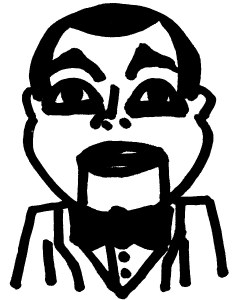
Dolls are creepy. The horror genre is opportunistic. The rest is history. Of course, individual moviegoers’ mileage may vary on that first point. Our particular fears & points of reference for creepiness can range as widely & specifically as our sexual fetishes & turn-ons, but I can at least speak for myself in saying that Dolls. Are. The. Worst. Especially the older porcelain ones, with their aged lace & cold, distant expressions. I hate ’em. I hate ’em even more than most people hate clowns (not that I have a lot of love for those fuckers either). Still, I love watching dolls act creepy in trashy horror movies, because they’re so effortlessly effective. Like a true evil doll fetishist, I dedicated my annual Halloween-inspired horror binge last October to watching every evil doll movie I could find. It was a quest that lead me to watching Dolls, Devil Doll, Dolly Dearest, Demonic Toys, Trilogy of Terror, Pin, Magic, Annabelle, Asylum, Puppet Master 4: The Demon, and possibly a couple titles I’ve forgotten all in the span of a month. As I crowdsourced my selections, both online & with “real life” friends, it’s a wonder that no one suggested that I watch James Wan’s Dead Silence during this devil doll binge. Dead Silence is a fun little horror flick & a worthy addition to the evil doll genre, easily better than half the titles I just listed.

In just a few pictures, James Wan has racked up a nice little collection of genre film oddities to his name (films like Saw, The Conjuring, the Insidious franchise, etc.), but with the exception of his most recent/expensive production (Furious 7) I don’t think I’ve ever enjoyed his work quite as much as I enjoyed Dead Silence. With the same love Furious 7 brought to the grotesquely excessive action film genre, Dead Silence displays a giddily thorough love for the world of trashy horror. It’s a pretty standard issue evil doll movie, for sure, one that narrows in only slightly on the insular world of evil ventriloquism. Still, within this frame Wan makes room for horror tropes of all kinds: foggy graveyards, evil toymakers, spooky mansions, flashing red & blue lights, oldtimey flashback footage, Argento’s slashing straight razor, Freddy Krueger’s from-beyond-the-grave-curse style of revenge, goofy/killer catchphrases (“Who’s the dummy?”), and the list goes on. This may be an evil doll movie, but really it’s all over the place. If there is any particular brand of horror that Wan zeroes in on here it’d be the work of shameless direct-to-video schlockmeister Charles Band, figurehead of Full Moon Features. I’m not just talking obvious points of reference like Band’s productions Puppet Master, Demonic Toys, and Dolls. The general vibe of Dead Silence is of a large budget version of Full Moon Entertainment’s entire aesthetic. I can tell you from experience that it takes a lot of love for trash cinema to find Full Moon’s overall vibe worthy of affection or even minimal effort, but after watching Dead Silence that’s something I assume James Wan has in spades.

The exact story Dead Silence tells doesn’t matter too, too much. There’s a local curse that haunts the residents of a small community thanks to the mysterious death of a wicked ventriloquist named Mary Shaw, who (true to the film’s vast collection of old hat horror tropes) has her own nursery rhyme that kids like to repeat ominously: “Beware the stare of Mary Shaw. She had no children, only dolls. And if you see her in your dreams, be sure you never, ever scream or she’ll rip your tongue out at the seam.” This ventriloquist ghost, of course, possesses the collection of dolls she left behind in her wake (wow, I kinda wish someone would reimagine this as a gory mockery of Jeff Dunham’s act), employing the not-so-inanimate bastards to avenge her death. Mary sometimes mimics/projects the voices of her would-be victims’ loved ones to lure them into vulnerable situation, which is a horror trope in its own way, but it’s at least one that fits in snuggly with the film’s ventriloquism theme. There’s exactly one invention (that at least I’ve never seen before) that Wan brings to the table here: in her quest to create “the perfect doll”, Mary Shaw turns her victims’ corpses into doll-like playthings, which leads to one hilariously over-the-top last minute reveal. Charles Band has tried to do a lot more with a lot less, I assure you, and the “perfect doll” angle & last second twist are plenty justification on their own for Dead Silence‘s place in the evil doll genre.

Otherwise, Dead Silence delivers exactly what you’d expect from a formulaic evil doll horror flick, but it at least does it from a place of love. That’s more than you can say for last year’s major studio return to the evil doll formula, the unbearably dull Rosemary’s Baby knockoff Anabelle (which, oddly enough, was a spin-off of Wan’s film The Conjuring). Dead Silence survives on its ambiance, cheap scares, and evil doll designs more than its barely competent acting & dialogue, but honestly that’s okay. Those kinds of shortcomings are just yet another old hat horror trope, fitting in perfectly with the movie’s trashy genre film charms. Besides, Dead Silence didn’t have to try too hard in the first place, since dolls are perfectly creepy enough on their own without help from basic things like a decent script or believable performances. Seriously, dolls are the worst. As long as a horror movie is willing to acknowledge that point, the rest is lagniappe.

SIDE NOTE: I appreciated Dead Silence‘s attention to sound, which is evident even in its title. There was plenty of ominous dead silence that allowed space for simple effects like the wooden creaking of the ventriloquist dolls’ eyes moving slightly to register as highly effective. Again, I feel like this is just more attention to detail from Wan, who’s obviously well aware that sound design is a large part of what makes horror tick.

-Brandon Ledet

Sinister 2 (2015)

EPSON MFP image

three star

In the first Sinister film children were often seen, but not heard. This is because Ethan Hawke’s protagonist lived in a house crawling with ghosts of the silent, but murderous tykes and kept this most unsavory detail to himself, struggling with the kids’ fucked up pasts on his own instead of involving his family. The film took a long time to get its mythology nailed down, but by the end it established that there was a real life “Boogieman” that recruited kids to murder their parents & join him in some sort of vague, blood-soaked otherworld. Part of what made the movie work was that the details of this set-up were kept vague & mysterious, revealed one at a time to an increasingly freaked out Hawke until he himself was confronted with one of The Boogieman’s pint-sized foot soldiers. Of course, it’s difficult to keep up this air of mystery in a sequel once the beans have already been spilled & the more Sinister 2 tries to flesh out the details of its predecessor the more it makes itself out to be an amusingly goofy slice of schlock by comparison.

Taking an exact opposite approach to the first film, Sinister 2 depicts The Boogieman’s recruitment tactics from a child’s POV instead of an academic one. This is a world where The Boogieman is very real, actually in your closet, and referenced in ancient texts “across all cultures” (sometimes known as Bughuul to his friends). The first film presents the idea that The Boogieman mayhem spreads when people living in a house where a family was once murdered by one of his child sentinels move to a new place. The first film also made it seem that this was a linear progression, that The Boogieman hopped from House A to B to C without ever looking back. Well, that idea’s thrown out the window here & apparently all the old Boogieman haunts are eligible for new victims. On top of that development, he’s now also able to haunt laptops through creepy computer viruses, because why not? There was also no indication in the first film as to why little kids were filming themselves brutally murdering their own families in the first place except that super 8 video looks really cool & grainy and it drove the too-curious protagonist crazy. Here, it’s given a purpose: the kids are filming their bloody deeds as gifts to The Boogieman, a sadistic sort of sacrificial offering, an “aesthetic observance of violence”, “murders captured in art”. For a thousands year old demon who manipulates children into becoming murderers & dresses like a Industrial Goth jackass, you gotta admit that his penchant for collecting art at the very least affords The Boogieman some cool points. At least his mayhem has some sort of a purpose (although it worked perfectly well in the first film without one).

The super 8 films are, of course, the main draw of the Sinister franchise and, as I stated in my review of the 2012 original, they sort of pose the series as a kind of throwback anthology horror with an extensive narrative wraparound. Sinister 2‘s super 8s open with a bang. An especially creative ghost kid, formerly a real kid, shows off a fishing trip where he tied up his family & fed them to a gator. I’m going to repeat that. This vile little tyke fed his entire family to a fucking gator. It’s a gnarly image & although there’s some really gruesome, inventive deaths involving electrocution, crucifixion, and ancient dental tools elsewhere in the film, I feel like the gator entry really drives home the half goofy, half . . . umm, sinister vibe the film achieves on the whole. The super 8s are where the movie’s terror is most effective & otherworldly, relying heavily on a grindhouse-era sound design & some meta reflections on the nature of the horror film as an artform. It’s also where the film is most enjoyable in pure surface pleasures.

Although there’s also some thought given to the cycles of domestic abuse & how the patterns of physical violence can be learned & passed down in a family here, it’s somehow still very apparent that there’s a lighter, goofier tone at play in Sinister 2 than there was in the original. A lot of credit for that tone goes to actor James Ransone (who’s had some wonderful turns as Ziggy Sobotka on The Wire, the pimp Chester in Tangerine, and Dingy Dave in John Waters’ A Dirty Shame) for being able to balance the sillier lines of thought with the distinct horror of occult-style massacres. Partial credit for keeping the tone light also goes to Shannyn “A Knight’s Tale” Sossamon’s awful Southern drawl for helping me remember to not take the film too seriously. This balance between goofy horror movie & something more affecting is also reflected in the film’s two distinct kinds of scares: the cheap jump scares & the legitimately creepy vibes of the grainy super 8s. Sinister 2 has its cake & eats it too. It’s not nearly as tasteful or artsy as the first movie, but it sort of goofs its way into earning just as much horror movie goodwill through its lighter tone & the fact that all we really wanted to see as an audience was more of those super 8s, anyway. I mean, that kid fed his entire family to fucking gator. How cool is that?

-Brandon Ledet

Sinister (2012)

EPSON MFP image

three star

Horror is one of those genres where you honestly don’t have to try too, too hard to succeed. Yes, it’s of course preferable that any film would stand out as a unique property that breaks all expectations of its context & genre, but it’s never that big of a deal when a horror film shrugs off that kind of ambition. With its own set-in-stone tropes & built-in audience, horror allows a lot of breathing room for films to just sort of coast on the long line of work that came before them. Innovation isn’t entirely necessary for each individual horror picture as long as they deliver a few basic elements: suspense, some good scares, maybe a memorably creepy creature or two, etc. As long as they play by the rules, all a passably decent horror film really needs to do is not drop the ball. In a lot of ways, Sinister is such a film.

There’s nothing really too special about Sinister. Ethan Hawke plays a “true crime” journalist who moves into the house of a slaughtered family in order to research his new book, some kind of In Cold Blood derivative. Of course, the house is haunted. Of course, the project drives him mad. Of course, there’s a Boogieman-type demon helming the entire horrid affair. Well, the film actually takes that last part quite literally. Known to historians as Bughuul & to possessed, homicidal little demon children as “Mr. Boogie”, The Boogieman is a real character in the film, orchestrating all of the haunted goings on from the protective distance of some super 8 films mysteriously discovered in Hawke’s attic. It’s curious that, since he exists largely in the imaginations & drawings of little children, Mr. Boogie isn’t represented here as I would’ve drawn him in my youth (a man-sized booger in a trenchcoat) but instead appears as some sort of Industrial Goth enthusiast in corpse paint. No matter. Despite Bughuul’s prominence in Sinister‘s mythology, he’s entirely nonverbal and doesn’t do much besides makes some guest cameos in the haunted super 8 films to look all goth-like & mean. The children under his spell do most of the heavy lifting & are much more effective at producing some great onscreen scares.

The haunted super 8 films that drive Ethan Hawke’s true crime journalist mad depict The Boogie Man’s child army calmly, methodically executing their respective families for the benefit of home video in a variety of unsavory ways: drownings, fires, lawn mowers, etc. These films are where Sinister excels most as a unique property, almost functioning as an old-fashioned horror anthology. There’s a lot of visual care that goes into depicting the projection equipment that screens the films and in other minute details (such as throats being slit in the reflection of Hawke’s glasses as we’re watching him watch a projection) that’s otherwise missing from the film’s more run-of-the-mill haunted house & creepy children formula. During these screenings the film’s sound design also takes on a special importance (including a kickass soundtrack) , reaching for some deeply unnerving vibes that can’t be accomplished simply through gore makeup & jump scares. Sinister may take a while to build up its own mythology & its central Nine Inch Nails Superfan villain may be a little underwhelming, but its haunted films concept is satisfying enough to make for a decent horror picture once the ball is finally rolling. Besides, creepy, murderous children are always an easy sell for fans of the genre, which allows the film to more or less coast.

-Brandon Ledet

Poltergeist (2015)

ghost

twohalfstar

So far this year alone in sequels, reboots, and remakes I’ve seen Mad Max: Fury Road, Furious 7, Avengers: Age of Ultron, Insidious: Chapter 3, and Jurassic World. Even if I didn’t enjoy most of those movies (I did) I’d still understand the fatigue folks are feeling with the oversaturation of rehashed cinematic properties. Of all the reboots, remakes & sequels I’ve seen recently, though, none have felt quite as pointless as the recent Poltergeist rehashing. When considered on its own, the new Poltergeist is passable as a decent genre exercise, I guess. It just doesn’t add enough to the original film’s formula to justify its own existence. If it were just any haunted house film Poltergeist (2015) would’ve been just okay, but it’s pedigree as a remake burdens its mediocre charms with way too much to live up to.

I’m not saying that the original Poltergeist film is a perfect work or art that shouldn’t be touched by lesser life forms. It’s just that updating its exact story with a few isolated cultural markers like flat-screen televisions, drone-operated cameras, and reality television isn’t really the kind of creative motivation that screams necessity. Both films share a goofy, childlike approach to horror & find their creep-outs in unlikely places like trees, suburban neighborhoods, precocious children, and television static. It’s just much less effective the second time around, more than three decades letter, with just a few faces & fashions swapped out as a means of making it fresh again.

I’m not usually this down on the idea of rehashing old movies, but I found very little special about the Poltergeist remake. Sam Rockwell’s always-welcome presence is the sole exciting element in play here, but he does very little to liven up the grim proceedings that surround him. I didn’t hate the new Poltergeist. I didn’t particularly like it much either. It was just kinda there, dying for a reason to exist, built on the cursed grave of a film that came long before it. You could do worse for lazy afternoon viewing if the film ever pops up on TV or streaming and you’re not sure how to kill a couple hours, but that’s hardly high praise.

-Brandon Ledet

Insidious: Chapter 3 (2015)

ghost

three star

When saw Insidious: Chapter 3 at the theater, it just happened to be playing at the exact right time. I had two hours to kill & Insidious 3 was conveniently positioned to kill it for me. Having not seen the first two films in the franchise I had absolutely no idea what to expect outside its pedigree as a horror sequel. Since then, I’ve caught up with the entire trilogy & I’m surprised to admit that the third “chapter” has held up both as an appropriate entry point & my favorite film of the series so far.

A prequel to the events that take place in the first two “chapters”, Insidious: Chapter 3 is a straightforward, no frills ghost story. A haunted teenage girl starts to get dragged into the afterlife (known here as “The Further”) by a super creepy specter with a terrible attitude. Character actress Lin Shaye (who was absolutely terrifying as the overbearing mother in Detroit Rock City) is expertly employed here as a medium who tries to drag her back to the physical world before it’s too late. Straightforward genre fare has been the Insidious series’ forte since the beginning, but this is the most successful entry so far both in terms of how fun it is and how successfully creepy-scary it can be.

Although Insidious: Chapter 3 doesn’t bring all too much new to the table that wasn’t in the first two films, it’s hard to shake the feeling that it’s the most successful of the three. Its ghost looked cooler, the tension was built better, it was much goofier on the camp scale (without the icky crossdressing phobia of the second entry), it spent more quality time in “The Further” realm, etc. The basic components of the first two films have merely been switched around & dusted off a little here, but it still managed to be my favorite entry to date, a rare feat for a horror sequel these days.

-Brandon Ledet

Unfriended (2015)

fourstar

campstamp

Sometimes the most effective horror films are the ones that can find terror in the mundane. It’s all well & good to be terrified of humanoid freakshows like Michael Myers & Jason Voorhees, but there’s a degree of separation with monsters like that. You can imagine them stalking you in the dark, but they’re not a part of your everyday life. It’s the films that turn the familiar into threats that can cut a little closer to home. Jaws scares us about what’s lurking in water. It Follows scares us about the vulnerability of sexual encounters. Alien scares us about venturing into outer space. You know, everyday stuff. Of course, attempting to milk the mundane for scares can end up making a film out to be a punchline, like in the case of The Lift (an 80s cheapie about a haunted elevator) or in Death Bed: The Bed That Eats. It’s a fine line to draw, but if a movie can turn something ordinary into something sinister it’s a lot more likely to stick with viewers once they leave the theater.

Surprisingly, the laptop-framed live chat horror flick Unfriended has it both ways. It’s so ludicrously invested in its gimmickry that it comes off as kind of a joke, but the commitment also leads to genuinely chilling moments that remind the audience a little too much of their own digital experiences. As a dumb horror flick filmed entirely from the first-person POV of gossipy teen operating a laptop, it’s both way more fun & way more affecting than it has any right to be. Unfriended uses real-life programs like Facebook, Chat Roulette, and Skype to lure audiences into the sense of a familiar online experience, but what’s incredible is how it turns those brands into something sinister. Its greatest trick is how it finds terror & suspense in a lagging video stream or a program that stubbornly acts on its own. The frustration & helplessness of those situations are common to a lot of digital experiences, but they generally aren’t caused by a murderous, revenge-bent ghost. Much like with other intangible spaces like television static & the isolation of outer space, there feels like there’s a legitimate possibility of a ghost chilling there. If a ghost were to exist somewhere, a haunted Facebook account or Skype session seems to be as hospitable of a place as any.

Of course, as its ridiculous trailer indicates, Unfriended is just as faithful to horror genre clichés as it is to its real-time laptop viewpoint gimmick. Just like every sound & image on display is a direct result of the laptop’s user (or the ghost that haunts them), every character’s wretched personality & grisly death feels preordained by horror movie rules, as if the know-it-all dicks from Scream were calling the shots. The teens in Unfriended are cruel, air-headed twits that deserve what’s coming to them: contrived deaths-by-appliances that range from being as goofy as the rogue soda machine in Maximum Overdrive to some truly grotesque demises. It takes an already-won-over fan of the slasher genre to enjoy the space Unfriended occupies between legitimately freaky and violently goofy. It’s not going to win over casual passersby with insightful musings on teen bullying & the vulnerability of our online presence the way titles like It Follows & The Babadook attracted larger audiences with their respective explorations of teen sexuality & mental health. It’s not nearly as intelligent or tasteful as either of those films. Instead, it pushes a gimmick that could easily outwear its welcome into some really creepy territory, while keeping in mind that its limitations require it to be cheap thrills entertainment above all else. Despite my moderate-at-best expectations going in, I found this balance to be surprisingly rewarding and encourage fans of the genre to give it a shot, regardless of how they felt about the laughable ads.

-Brandon Ledet

Housebound (2014)

EPSON MFP image

fourstar

Horror comedies are always a high wire act. Some titles like Dead Alive and Tucker & Dale vs. Evil find the right balance between laughs and chills, transcending their genre limitations, while others, (Kevin Smith’s latest, Tusk, for example), aim to be both scary and funny, but end up being neither. The 2014 New Zealand horror comedy Housebound, falls firmly in the former category. It’s a mishmash of genres that gracefully moves between horror, comedy, ghost story, and murder mystery.

The setup is perfect in its simplicity. Kylie, a troubled hooligan, is sentenced to eight months of house arrest following an attempt to break into an ATM. Forced to move back into her well-meaning, but clueless parent’s home, she lounges around, drinks during the day, and is a general pain in the ass. Things almost immediately start to go bump in the night. While she is initially skeptical of her mother’s ghost stories, an encounter with a maniacal, talking teddy bear convinces Kylie that the house is indeed haunted. She partners with Amos, the security guard in charge of monitoring her ankle bracelet, to investigate and discovers that there are plenty of other, more horrifying secrets waiting behind the walls of her family home.

Housebound is the writing-directing feature debut of Gerard Johnstone. His pitch-perfect script is wickedly funny without trying too hard and he shoots the film with a confident, playful style reminiscent of Sam Raimi. The film is also elevated by its strong performances. Morgana O’Reilly brings toughness, smarts, and loads of sarcasm to her portrayal of Kylie, making her female protagonist stronger than most found in the genre. Her partner Amos (Glen-Paul Waru) is a great comic foil and her gossiping, chatty mother (Rima Te Wiata) delivers plenty of laughs.

Of course it wouldn’t be a horror movie without scares and Housebound keeps the tension heightened throughout with a mix of false and very real terrors. Through his expert use of shadows and camera angles, cinematographer Simon Riera makes seemingly harmless objects like teddy bears and Jesus statues menacing. There’s also the obligatory gross-out moments, including a head-exploding bloody finale but Housebound also has an emotional core that addresses the rebellious nature of youth and learning to accept one’s parents that still resonates despite the craziness that surrounds it. It does go on for a little too long but that is only a minor fault; the film is so much fun you’ll barely notice. Offering an inventive mix of screwball comedy and white knuckle terror, Housebound is a perfectly calibrated horror comedy and one of the best horror movies of 2014.

Housebound is currently streaming on Netflix.

-James Cohn

The Canal (2014)

EPSON MFP image

threehalfstar

Horror is not a genre where individual films need to be narratively or stylistically idiosyncratic to work. Scary movies borrow so freely from each other that each of their subsets (“slashers”, “creature features”, “bodily horrors”, etc.) has its own lists of genre-trappings & clichés common to nearly every film under its umbrella. 2014’s stylish Irish ghost story The Canal is smart to acknowledge its heritage openly. The common images & themes it shares with films as varied as 2000s horror like The Ring or Blair Witch, early 20th century black & white scares like The Cabinet of Dr. Calgari, and 70s giallo classics like pretty much any title in Dario Argento’s catalog are so unashamedly open it plays like a knowing homage rather than an unfortunate side-effect of making a genre film. The Canal is so self-aware of the impressive range of horror it manages to cover in its 90min that its protagonist is a film archivist by occupation.

The story begins in a cinema, with the aforementioned film archivist David (played by Rupert Evans) addressing an unruly audience of children. He tells them that since the films about ghosts they are about to watch were filmed long ago and the people featured in them are most likely dead, it’s as if the images themselves are real-life ghosts. It’s a chilling thought that silences the room and it’s one I’ve pondered often, at least since I first read Hervé Guibert’s brilliant collection of photography essays Ghost Image or heard Daniel Johnston’s “It’s Spooky” in high school. The ghosts of The Canal are the believable kind, the kind that actually haunt us: images from the past, spaces that have been tainted by horrific acts, jealousy, regret, etc. The film shares a lot with last year’s The Babadook in that way: there’s a physical, violent threat that stalks its confined world, but it’s a threat that is based in more intangible elements like unhinged emotions and toxic personal relationships. It’s a testament to the film’s success that it can scare on a realistic level while still managing to run wild with obsessing over cinema as a medium, particularly the horror genre.

In addition to tipping its hat to a wide range of horror classics and setting several scenes in a movie theater, The Canal also prominently features images of cameras & projectors doing what they do: recording & displaying film. Giallo films, the most significant influence referenced in The Canal, generally have a particular theme or setting that guide their images, almost like a gimmick. For instance Mario Bava’s Blood and Black Lace is set in a fashion house and is littered with dressing mannequins; Dario Argento’s Opera is, well you get the picture. The Canal’s theme is film itself. Close-up shots of cameras & projectors are paired with loud clicks & whirs of the machines running and quick, disturbing flashes of violence & gore, seemingly from a wide range of different eras in scary filmmaking. The deep red of theater seats in the opening cinema scene plays into the giallo influence as well, as the genre is no stranger to saturated colors. Nor is it a stranger to the overwhelming sounds, lights, and masked killer that follow. The Canal’s intense focus on light & sound design boils cinema down to its most basic elements. The mystery of its mostly off-screen killer pays tribute to the Italian genre films that came before it, putting those elements to use in a genre context.

As film archivist David becomes more frayed in his search for the identity of the killer, the film gradually grows more erratic along with him. As a companion to last year’s similarly giallo-influenced The Strange Color of Your Body’s Tears, The Canal is a much calmer telling of a very similar story. It chooses not to reach Strange Color’s kaleidoscopic fever pitch until the climax, which is in some ways more true to the genre they’re both referencing. Strange Color pushes the cinematic elements of giallo to new, psychedelic extremes. The Canal uses them to bridge the gap between a seemingly endless list of horror narratives that came before it, to the point where its ghost-in-the-walls story has just as much to do with Strange Color as it does with The Grudge or Nosferatu or the short story “The Yellow Wallpaper”. Normally, it would feel like a kind of insult to review a film only through means of comparisons like this, but the nature of The Canal calls for it. It’s the story of film & horror as a genre just as much as it is the story of a man trying to solve the supernatural mystery of his wife’s murder. The impressive part is how it balances both narratives so well, one never overpowering the other. It works just as well as a reflection on film as a medium as it does a telling of an original, terrifying, albeit familiar ghost story.

-Brandon Ledet

Maps to the Stars (2015)

EPSON MFP image

threehalfstar

David Cronenberg’s newest film is a cold, unforgiving puzzle that’s difficult to wrap your head around. It’s a familiar feeling. The Canadian auteur is responsible for some of the most disturbingly ambiguous horror films this side of David Lynch: Videodrome, The Fly, The Brood, etc. On the surface, Maps to the Stars is Cronenberg at his most clear-cut & candid. The film is deceivingly costumed as a straight-forward satirical indictment of Hollywood types’ various neuroses, a story we’ve seen told many times before. It wears the clothes of a bitter, navel-gazing comedy, but it’s so much stranger & more unsettling than that.

Much like with the recent entertainment industry caricature Birdman, the nasty humor in Maps to the Stars falls flat on its face. Rarely inspiring a chuckle, it’s downright embarrassing as wealthy Hollywood narcissists toss out bottomlessly cruel jokes that rarely land. With Birdman, the failure of the humor leaves a disappointing void that the beautiful cinematography struggles to fill & distract the audience from. In Maps to the Stars, there’s no such relief. The film boasts such a relentlessly negative worldview & such a matter-of-fact, uncaring visual style that it feels intentional that the humor falls flat. Characters are way less amusing than they think they are. Each cruel, unfunny joke posits them as increasingly monstrous and film revels in their vapid, self-absorbed callousness.

It’s difficult to appreciate the film as a comedy, but it does have legs as an off-putting ghost story. In Cronenberg’s Hollywood everyone’s interconnected in the usual ensemble cast ways, but they’re also linked by the ways they are haunted both by the past and by the rancorous decay of their inner selves. Tenuous personal & professional relationships are inconsequential compared to the way Maps’ characters are connected by less concrete elements like fire, incest, dead children, strange mantras, and weeping in bathtubs. In public the characters feign glamorous lifestyles; limo drivers, beautiful homes, baby-faced teens enjoying cocktails, and movie set pampering are all part of their M.O. In intimate company they become a little bleaker; they have sex with producers, joke about selling fans their feces, and celebrate the deaths of children. When they’re entirely alone they’re faced with the literal ghosts of their past and the self-hatred that their bravado barely conceals.

Maps to the Stars is a difficult film to recommend, because it’s near impossible to tell who will be able to get on the film’s wavelength. The film’s cast is phenomenal (Julianne Moore, John Cusack, Olivia Williams, Robert Pattinson, etc.), but they’re used for such an unpleasant effect that it’s difficult to sell their presence as a draw. As nasty as the film is it also has a strangely campy undertone that reveals itself in strikingly cheap details like CGI flames & Julianne Moore’s exaggerated California accent. It’s a ghost story, but it’s one that requires the patience to sit through bitterly unfunny comedy before the ball starts rolling. Self-contradiction aside, the movie unmistakably finds Cronenberg on a mean streak, seemingly uninterested in winning an audience over or earning accolades (although he does find a somewhat unconventional use for award statues here). Maps to the Stars is bound to be divisive in both its nastiness & its flat, uninviting tone, but it’s a film I found both curiously engaging & surprisingly haunting.

-Brandon Ledet