Chunking Express (1994)

I recently celebrated my birthday, and coincidentally, over the course of Chungking Express, so does the protagonist of the first half. And he’s a May baby, too! This was not an intentional viewing choice on my part, but it was a fun little accident, and since I, like all of Wong Kar-Wai’s protagonists, am a hardcore yearner, that wasn’t the only thing that aligned for me. 

Express is neatly divided into two halves, each narrative connected solely by the presence of the Mandarin Express fast-food bar located in Hong Kong’s Chungking Mansions, a seventeen-story building originally built as a residential complex but which ultimately mostly houses low-budget guest houses and shops. Our first protagonist, Chi-Moo (Takeshi Kaneshiro), is a police officer whose girlfriend, May, breaks up with him on April 1st, initially leading him to believe that she is joking. As the month wears on, he finds himself committing to a silly ritual of buying a can of pineapple from the local convenience store every day, each one with an expiration date of May 1st, his upcoming 25th birthday. When the month ends and May has yet to tell him that she was kidding, he eats all thirty cans in one night, then goes out drinking. While out, he meets a woman in a blonde wig (Brigitte Lin); unbeknownst to him, she is a professional criminal specializing in drug trafficking, whose most recent scheme has run aground as her newest recruits disappeared at the airport with her product and never appeared at their final destination. After he vomits up a prodigious amount of canned pineapple, the two retire to a hotel room where she finally sleeps after days on the run while he watches over her. 

They both disappear completely from the film after this as the narrative view shifts. Chi-Moo runs through his entire little black book on the payphone at the Mandarin Express, where the owner attempts to set him up with one of his employees, coincidentally also named May, with no success. Said proprietor also tries to make a date for another frequent visitor, a beat cop known only by his badge number, 663 (Tony Leung), with May, but when he walks by on his patrol after having been dumped by his flight attendant girlfriend (Valerie Chow), May has gone off on a vacation and relative Faye (Faye Wong) is covering for her in her absence. 663 is still too heartbroken about his recent relationship to notice that Faye is utterly smitten with him from the get-go. When his ex drops by with a letter for him along with his house keys, every employee of the Express reads the letter and gossips about its contents among themselves, with only Faye finding the deeper resonance in the words between two separated lovers. 663 initially refuses to take the letter, saying that he will simply get it another time, and this allows Faye the opportunity to, in true manic pixie dream girl fashion, start using his keys to let herself into his home and spruce up the place. Over time, the lovelorn 663 moves through his grief (in no small part because of her attempts to cheer him up) and becomes fascinated by this strange woman and her quirks: her forgetfulness, her attitude, and her eternal fascination with The Mamas and the Papas’ “California Dreamin’,” which plays approximately one hundred times throughout the film. She has her own dreams that will take her away from him, however, but that doesn’t mean that the time that they walked a path together wasn’t the catalyst that led them both to pursue something meaningful in their lives, and it also doesn’t mean that they’ll never walk the same path again. 

Wong’s filmography, at least the parts with which I’m familiar (mostly Happy Together and In the Mood for Love; I’ve seen 2046 but have no memory of it), is all about longing, almost entirely without any kind of physical intimacy. It’s love that exists in the brooding, in the shared looks, expressed in the lingering of presence and the acceptance of absence. Happy Together does open with a sex scene, which serves to express the once-easy intimacy of Po–Wing and Fai in comparison to the slow, backsliding dissolution of their relationship that plays out over the rest of the film. There’s nothing that explicit here, other than a brief scene of 663 and the stewardess in bed together before she takes off on one of her flights (possibly the last time they were together before a chance reunion at the same corner store where Chi-Moo buys all his pineapple, near the finale), and the director is once again exploring the yearn, even if it doesn’t initially appear to be headed in that direction. The film opens with a much more action-y style as we meet the Woman in the Wig and see her recruit several men to be her drug runners, then follows the process of them being outfitted by special tailors who create clothing designed with secret pockets and compartments as well as the creation of false documentation to allow them to travel. She takes the cadre to the airport and sees them off, then learns that she’s been double crossed and the drugs never reached their destination. She tries to extort the return of the drugs by kidnapping a child, ultimately giving up on this half-hearted attempt, which is where we leave her before we spend some time with Chi-Moo before their two stories collide. A lot of this opening action is shot using a sort of shutter effect that I assume was in vogue in action films of the time (I recently attempted to watch the 1999 Korean action flick Nowhere to Hide, which featured the same kind of photography to ramp up the action, although I couldn’t finish that one). 

This changes completely once the film pivots to its two leading yearners, Chi-Moo and (later) 663. Apparently, the script was not complete at the time that filming began, and the second segment about 663 was written in a single day, which might explain the abrupt bifurcation of the film into its two largely separate halves. As such, there’s not as much consistency throughout this one as there is in his other works that I’ve seen. They’re not unified narratively or even structurally and are instead linked solely by the emotions of Leung and Takeshi’s characters. This gives the film an effortless and breathless quality, one that wanders but does not meander. Where it most reminded me of this other work, however, was in its musical choices. As a period piece, In the Mood for Love featured a lot of classic jazz numbers, notably several performed by Nat King Cole (“You Belong To My Heart,” “Magic Is The Moonlight,” “Quizas, Quizas, Quizas,” and more), with the frequent presence of his album Cole Español serving to tell us something about the characters. Chow and Su are both Shanghainese expatriates living in the eighth decade of British rule of Hong Kong, and their blossoming (but unconsummated) romance being soundtracked by the American Cole’s album created for the Latin market creates a feeling of being untethered from any sense of place or identity but finding root in love, a language that transcends tongues. The use of “Happy Together” by The Turtles as the concluding track in the film that takes its name from the song is an ironic, or at least ambiguous, one. Po-Wing and Yiu-Fai are not happy together and have not been for a long time, and it’s apparent that they likely cannot be happy together, but that doesn’t mean that they don’t both fondly recall the (admittedly brief) times in which this was the case, and the clinging to the past is preventing either of them from moving on. 

Here, the omnipresence of “California Dreamin’” acts as Faye’s leitmotif, underlining her desire to get out and experience something more than working in her uncle’s food counter, while also expressing a melancholy about that kind of change. Notably, when she returns from her first year of being a flight attendant to visit the Mandarin Express, she finds 663 there performing renovations, as he has bought the place and is turning it into his own restaurant; while he works, he listens to The Mamas and the Papas just as she had when working the counter when he first met her. Her willingness to commit to something took her far from him, and the same temerity that she brought out in him has caused him to forge a new career and life that will anchor him to one spot. Maybe they were so different that it never could have worked. Maybe this reunion will have them find a way to compromise. We’ll never know; we can only imagine it, and I love Wong’s ongoing commitment to that kind of ambiguity. Also worth noting is that Faye Wong sings a cover of “Dreams” by The Cranberries in this one, and it’s simply beautiful. 

-Mark “Boomer” Redmond

Devil Fetus (1983)

Of course, no Overlook Film Festival experience is complete without stopping by the Vinegar Syndrome table to peruse their annual selection of vintage-genre-cinema Blu-rays. I find the ritual both exhilarating and overwhelming, especially without the guidance of Letterboxd & blog-post reviews that help make sense of the boutique label’s catalog when shopping online. As a result, I usually end up buying the discs that most inspire me to think “What the fuck am I looking at?” when browsing those horizontal stacks — a method that has rewarded me with past genre gems as varied and as extreme as The Suckling, Nightbeast, and Singapore Sling. My blind-buy Vinegar Syndrome purchase at this year’s Overlook was no different: the Category III demonic possession title Devil Fetus, the most “What the fuck am I looking at?”-est title I could find on the table. Having now seen the movie a couple times at home since the festival concluded, I still cannot answer that question with any confidence or clarity, which may be its greatest strength as a vintage genre curio.

The narrative structure of Devil Fetus makes no logical or thematic sense as a work of commercial screenwriting, but it does create plenty of open, ambiguous space to stage a wide range of gore effects & carnival sideshow gross-outs. The story opens with a young woman entertaining herself at a local Hungry Ghost Festival while her husband is out of town on business. Mesmerized by a jade vase that the festival auctioneer promises will see “all her desires fulfilled,” she makes the impulsive purchase and takes the vase home . . . to immediately have sex with it. Disastrously, the absentee husband arrives home to catch his wife and the vase mid-coitus, where he sees the vase personified as a “Tibetan sex demon” and attacks the adulterous couple. The vase is smashed in the struggle, quickly leading to both spouses’ deaths (one by poisonous gas, one by housecat) and the demon is safely imprisoned in a Buddhist temple by a helpful priest. That magic doesn’t hold forever, though, and the woman’s nephew is the next body the demon possesses, much to the sexual peril of everyone around him.

Actually, it’s not entirely clear if the nephew is possessed by the demon or by the aunt’s undead spirit, given that at one point the mud-bodied “Tibetan sex demon” that seduced his aunt bursts out of his skin and, at another, he’s shown primping himself with lipstick & blush in a vanity mirror as he’s possessed directly by her spirit instead. Either way, the sins of the aunt being passed down to her nephew doesn’t make a ton of thematic sense beyond a generalized discomfort with sexual pleasure & aberration. In the aunt’s segment, the vase is presented as a kind of supernatural dildo, one she flips out to discover is being played with by her young nephews who went snooping in her room. In the now-grown-up nephew’s segment, the discomfort lies somewhere in the feminized traits that have been carried over from the demonically-corrupted  aunt, which raises a political eyebrow by the time the demonically-possessed teen starts attempting to rape all women in his immediate vicinity. It’s doubtful either of these implications were thoroughly considered in the writing stage, though, rather than bubbling up from the subconscious while quickly hammering away a script at the typewriter to meet a deadline.

Something I’m not writing about much in this recap of Devil Fetus is the titular devil fetus itself, which appears in exactly one shot, emerging from the dead aunt’s pregnant belly like an Alien chestburster. It’s just one of several copyright-testing images that recall famous horrors like The Exorcist & Michael Jackson’s “Thriller” video, none with any more thematic or stylistic importance than another. The movie is mostly a collection of gross-out gags involving puked-up birthday cake, worms crawling out of rotted faces, dog-on-human cunnilingus, semi-documentary animal slaughter, and whatever other disgusting image came to the production crew’s mind as they improvised new hellish horrors from day to day. It takes the cowardly Possession over an hour to work up the courage for a monster-fucking scene that this Cat III freak show delivers in the first ten minutes, and it’s followed by a nonstop assault of out-of-nowhere sight gags that had me shouting variations of “Wow!”, “Whoa!”, and “Ewww!” every few minutes while I was trying to make sense of the plot.

Like every Vinegar Syndrome disc I’ve ever purchased, this Blu-ray issue of Devil Fetus is a gorgeous, high-quality scan that adds a new layer of aesthetic beauty to the picture that cannot be discerned from the grainy VHS prints screenshotted elsewhere online. The movie was directed by cinematographer Lau Hung-chuen, whose consistent attention to color-gel lighting and visual illusion affords it a genuinely supernatural feel. Even when the plot spins its wheels during go-nowhere kendo tournaments, dance parties, and swimming pool horseplay, I was never bored thanks to the beauty & unpredictability of Lau Hung-chuen’s imagery, even when it was objectively, abhorrently disgusting. Usually the “What the fuck am I looking at?” question leaves my mind once I leave the Vinegar Syndrome table, but this year it continues to linger.

-Brandon Ledet

Lagniappe Podcast: Yes, Madam! (1985)

For this lagniappe episode of the podcast, Boomer, Brandon, and Alli discuss the Michelle Yeoh & Cynthia Rothrock action hero team-up Yes, Madam! (1985).

00:00 Welcome

02:50 Night Visions (2001 – 2002)
07:25 Vibes (1988)
08:50 Beau is Afraid (2023)
25:40 Gossip (2000)
27:30 I Went to the Dance (1989)
31:00 Mighty Morphin’ Power Rangers: The Movie (1995)

36:00 Yes, Madam! (1985)

You can stay up to date with our podcast through SoundCloudSpotifyiTunesStitcherTuneIn, or by following the links on this page.

-The Lagniappe Podcast Crew

The Heroic Trio (1993)

I recently read an encyclopedia of classic Hong Kong action movies titled Sex and Zen & A Bullet in the Head, which is overloaded with hundreds of capsule reviews of the once-vibrant industry’s greatest hits.  Each blurb makes each title sound like the most explosively badass movie you’ve never seen, fixating on the industry’s unmatched talent for absurd plot details, tactile fight choreography, and for-their-own-sake visual gags.  It’s a daunting surplus of giddy movie recommendations, with no real guide for what to prioritize besides whatever happens to be available to access.  After being pushed to check out the bonkers Indiana Jones mutation The Seventh Curse by the We Love to Watch podcast crew, I had no clear path for where to go next.  Thankfully, that decision was taken out of my hands by happenstance.  I lucked into a small haul of Hong Kong action DVDs (some bootlegs, some official releases, all pictured below) during a recent trip to Goodwill, which included the 1993 superhero oddity The Heroic Trio.  This was the same week that Criterion announced an upcoming Blu-ray release of The Heroic Trio and the same month that one of its stars, Michele Yeoh, was gifted a career-high acting showcase in the Daniels’ own novelty superhero picture Everything Everywhere All at Once, which made it the most obvious must-see.  I’m often overwhelmed deciding what movie to watch next when I’m left to my own devices, so it’s always a pleasure when the universe steps in to program that selection for me.

I am sure that the new Criterion restoration of The Heroic Trio will lovingly highlight the film’s technical beauty and pop-art iconography in a way few audiences have seen before.  I’ll still admit that I was charmed by the tape-warp warmth of the bootleg DVD that found its way into my collection, since it plays right into the film’s vintage appeal.  The Heroic Trio is a retro superhero team-up featuring the masked & powerful heroines Thief Catcher (Maggie Cheung), Wonder Woman (Anita Mui), and Invisible Woman (Yeoh) – each a total badass.  They start disorganized & distrustful of each other as a mysterious case of 19 kidnapped babies derails Hong Kong into chaos.  Eventually, they find love & unity amongst their super selves to fight the methane-breathing sewer god responsible for those kidnappings, brutally confronting the gender-ambiguous deity in their underground lair/baby-storage facility.  Tonally, the film plays like the kind of R-rated kids’ movie that you’d normally find through American labels like Troma & Full Moon, even featuring the children’s nursery rhyme “London Bridge is Falling Down” as a soundtrack motif.  It is S&M superhero cinema for the permanently immature, indulging in vintage Saturday-morning-TV cheese with far more gore, kink fashion, and shock-value baby deaths than any child should be consuming with their breakfast cereal.  It just executes that volatile immaturity with exquisite technical skill you will not find in its low-budget American equivalents, especially in the beauty of its complex, tactile fight choreography.

Michele Yeoh’s inclusion in the titular trio was my prompt to watch the film and, dramatically, she gets the most to do.  Invisible Woman is the only complex character of the bunch, starting off as the brainwashed lackey of the baby-snatching Evil Master but eventually coming around to join arms with her master’s enemies.  I still found Maggie Cheung to be the MVP of the trio as Thief Catcher, providing most of the film’s comic relief as a Bugs Bunny-style anarchist, a motorcycle-riding vigilante in dressed in bike shorts & lingerie; Tank Girl, eat your heart out.  Anita Mui is saddled with the least exciting part as Wonder Woman, who—as her name implies—is the most stereotypical comic book hero of the bunch.  Her mask & cape iconography and secret-identity shenanigans are essential in grounding the film in a recognizable superhero genre, since most of its in-the-moment indulgences are more aligned with Hong Kong action antics than with comic book tradition.  Director Johnnie To uses the superhero team-up template as a playground for martial arts chaos & Looney Tunes goofballery, playing around with as much Evil Dead POV camera movement, wuxia-style wire work, and bone-crunching brutality as his scrappy budget will allow.  He gives each heroine room to establish separate, distinct personalities in the film’s early scenes, then smashes them together like action figures during an especially sugared-up recess.  It’s the most gleeful, energizing movie experience I can think of that depicts the death of a dozen innocent babies.

Watching The Heroic Trio left me no better equipped to select my next Hong Kong action title.  Yeoh, Cheung, and Mui each have extensive careers in martial arts classics exactly like this.  To was equally prolific in his directorial career without them.  All four of those collaborators reunited for a direct sequel to The Heroic Trio titled Executioners, also released in 1993, but it is not regarded as any of their respective best.  Below, I’ll list the essential continued-viewing titles for Michelle Yeoh alone, as suggested by the authors of Sex and Zen & A Bullet in the Head, just to demonstrate the overwhelming wealth of great, over-the-top Hong Kong action pics there are to choose from.  And she’s only one of the industry’s many, many creative geniuses.  I’ll likely just wait until another title falls directly into my lap the way The Heroic Trio did, taking the decision out of my hands.   Otherwise, I’ll browse these titles & blurbs for hours without ever settling on one, the modern movie streamer’s dilemma.

Michelle Yeoh’s “Selected Filmography,” per Sex and Zen & A Bullet in the Head, printed 1996:
Magnificent Warriors (1986)
Royal Warriors (1986)
Yes, Madam (1986)
Police Story 3: Supercop (1993)
Project S (1993)
The Tai Chi Master (1993)
Butterfly and Sword (1993)
The Heroic Trio (1993)
Wonder 7 (1994)

-Brandon Ledet

The Seventh Curse (1986)

I have plenty of stubborn genre biases that I need a lot of handholding to get past; I need a movie to be really over the top in its style or novelty to bother with a genre that generally bores me.  I don’t care for Westerns, but watching Kate Winslet destroy an entire town by sewing pretty dresses in The Dressmaker is enough to make me get over that.  I don’t have patience for war films, but watching Jean-Pierre Jeunet warp his war epic A Very Long Engagement into an over-stylized twee romance was perversely thrilling.  Moonraker had to launch James Bond into outer space as a cheap cash-in on the Star Wars craze for me to go out of my way to see a 007 film.  However, I don’t know that I’ve ever seen a movie go as deliciously, deliriously over the top to break through my boredom with a specific genre than The Seventh Curse – a supernatural Hong Kong action classic that pulls off the unique miracle of keeping me awake for the entirety of an Indiana Jones adventure.

I normally don’t vibe with Indiana Jones-style international swashbuckling at all, but this copyright-infringing mind-melter hits the exact level of bonkers mayhem I need to get past that deeply ingrained disinterest.  While actual Indiana Jones pictures fire off dusty nostalgia triggers that have been old hat since at least the era of radio serials, The Seventh Curse is overflowing with imagination, irreverence, and explosive brutality in every single scene that you will not find replicated in any other movie, including the Hollywood blockbusters it lovingly “borrows” from.  This is a film where a James Bond-styled super-agent goes on international Indiana Jones adventures into ancient temples, ultimately teaming up with a Rambo-knockoff sidekick to defeat a flying Xenomorph with batwings.  Moreso than Indiana Jones, it reminded me a lot of the post-modern Brucesploitation picture The Dragon Lives Again, in which “Bruce Lee” teams up with Popeye the Sailor Man to beat up James Bond, Dracula, The Exorcist, and “Clint Eastwood” in Hell.  That wild abandon in random assemblages of copyright violations is absolutely thrilling in both cases, but The Seventh Curse is better funded, better conceived, and better staged than The Dragon Lives Again by pretty much every metric.  It’s also far preferable to any actual Indiana Jones film, even if it could not exist without their influence (and a little help from Jones’s loose collection of Hollywood superfriends).

In radio serial tradition, the film opens mid-adventure, where our pathetically named hero Chester Young untangles a delicate hostage negotiation by punching & kicking a legion of heavily armed Bad Guys to death.  While celebrating with his 007 sexual conquest after that mission, a pustule forms & explodes on his leg, spraying blood all over his high-thread-count bedsheets.  He then explains, in flashback, that this sudden fit of body horror is part of a supernatural curse that he’s been suffering for a full year – branded upon his soul by an ancient Thai god when he disrupted a human sacrifice ceremony on a previous mission.  This curse will soon destroy his body for good if he does not return to Thailand to confront the witchcraft-wielding Worm Tribe who cursed him a year ago, which launches us into another, grander adventure involving a flying cannibal fetus, a shape-shifting zombie god, the ritualistic sacrifice of human babies, gratuitous nudity and, of course, a bat-winged Xenomorph.  The antiqued sets & triumphant musical accompaniment frame Chester Young’s latest international mission in an Indiana Jones genre context, but the practical minute-to-minute details of that mission are far wilder & more thrilling than what you’d expect from the aesthetic.

I’m currently reading an encyclopedia of Hong Kong action cinema titled Sex and Zen & A Bullet in the Head, which is overloaded with hundreds of capsule reviews of the once-vibrant HK movie industry’s greatest hits.  Every single blurb in that book makes every single title sound like the most explosively badass movie you’ve never seen, fixating on that industry’s unmatched talent for absurd plot details, tactile fight choreography, and for-their-own-sake visual gags.  I want to be incredulous that the book’s bottomless hype for Hong Kong genre classics can’t be matched by the low-budget mayhem those movies actually delivered, but I don’t know; maybe it’s all true.  I was pushed to bump The Seventh Curse to the top of my Hong Kong Classics watchlist by our friends at We Love To Watch when they recently guest-hosted one of our podcast episodes, and it totally delivered on its reputation as an unhinged, uninhibited genre gem.  Between this glorious Indiana Jones revision, The Holy Virgin vs. The Evil Dead, and the few John Woo movies I’ve reviewed for the site, I’m starting to convince myself that the hype is real; all 1,000 of those recommended titles might actually be that badass.  The bummer is that most of them are either impossible or unaffordable to (legally) access in the US. By some unholy miracle, The Seventh Curse is currently only a $1.50 VOD rental, though, and it’s almost incredible enough to talk me into going into debt chasing down the rest of the Sex and Zen & A Bullet in the Head titles one-by-one.

-Brandon Ledet

Movie of the Month: Hard Boiled (1992)

Every month one of us makes the rest of the crew watch a movie they’ve never seen before & we discuss it afterwards. This month Alli made Britnee, Brandon, and Boomer watch Hard Boiled (1992).

Alli: Modern action cinema is full of shaky-cam, grit, chaotic set pieces, and giant robots (nothing against giant robots, they’re just the sparkling vampires of the contemporary action film). Sometimes a single film features all four of these and it’s a mess. Every summertime action movie season, 90% of the films are trash (in the bad way). I know we can’t expect a Fury Road every year, but there’s a certain daring artfulness and style missing from the movies that Hollywood churns out year after year.

To be fair, action films are difficult to calibrate. With too many explosions & gun shot scenes and not enough character development, they’re just silly. Too few kapow!s and they’re boring. No tension and they’re a flop. They need the perfect balance of fun and danger to excel as cinematic junk food.

John Woo, while he has made his share of flops, is one of action cinema’s greats, and Hard Boiled is his masterpiece. It’s a perfect blend of style and tension. He manages to keep the stakes just as high as the amount of fun. The sequences of explosions and stunts are beautifully choreographed, displaying the influence of kung fu movies that Honk Kong is historically known for. The characters, while classic tropes, are compelling, with even small side characters being afforded a life of their own. It manages to follow the blueprints laid down by the movies before it, while also exploring new territories.

A hard-boiled cop,”Tequila” (Chow Yun-Fat), and his partner go on a stake-out in a tea house to take down gun-smuggling gangsters. The tea house is full of pet birds (a tradition called bird-walking) and shady underworld types. When the stake-out descends into a extraordinarily violent shootout in a flurry of feathers and bullets, Tequila’s partner is killed. He swears revenge. Against his boss’s orders, he tracks down those responsible and with the help of a deep undercover cop, Alan (Tony Leung). Together, they take the entire enterprise down in one final battle. That violent climax happens to be staged inside a hospital, where there’s an underground gun cache. Patients are killed, babies are saved, and of course the whole thing is blown up spectacularly.

I only briefly mentioned the side characters, but my favorite is “Mad Dog,” played by Phillip Kwok. He’s a motorcycle-riding, badass henchman. At some point he loses an eye and the eye patch only makes him look cooler. Brandon, what did you think of Mad Dog? Do you have any other favorite characters?

Brandon: “Mad Dog” is definitely a clear stand-out among the film’s legion of baddies. Compared to his heartless crime boss, who is coded to be Pure Evil merely for being the only player around with Caucasian features (a common theme in eternally typecast Johnny Wong’s career), Kwok’s eye patch-wearing motorcyclist is a relatively complex character who evolves as the film progresses. When his diabolical De Facto White Guy boss demands that he put innocent hospital patients, including babies, in harm’s way during the climactic gunfight, he refuses to oblige out of a sense of human decency. That means a lot in the greater story about an illegal arms business gone mad, where money means more than lives and no human obstacle is sacred. Hard Boiled is very economical with its characterizations, presumably out of necessity. Tequila’s self-contradiction as a tough guy cop who plays jazz clarinet, Alan’s in-too-deep psychological breakdown expressing itself through his origami hobby, and even Mad Dog’s eye patch-wearing leather demonry all have a pro wrestling quality as personality traits; you have to instantly know via visual language who is Good and who is Bad to leave room for the much more complex & fully-developed action set pieces to flourish. Mad Dog & Alan are allowed (to borrow a wrestling parlance) face-turns in their respective roles, which makes them more interesting than other, more static villains & side characters, but they’re still (as Alli points out) classical archetypes. Even with far less screen time, Mad Dog makes more of an impression than Alan does, though, mostly because he just looks cool

My favorite side character in the film gets even less screen time than Mad Dog, but to even greater effect. It’s the chubby little baby Tequila partners with in the climactic gunfight. In an action sequence so iconically bonkers it features heavily on the film’s poster despite having fuck all to do with arms dealing, Tequila & his fellow cops have to save a nursery full of newborn babies by smuggling them out of the hospital window in the middle of a chaotic gunfight. I rolled my eyes a tad at the way the perpetually sidelined Lady Cop is finally given something to do (besides receiving flowers) in this scene, only for it to be the domestic work of caring for children. That unease is more than compensated for, however, when Tequila pairs up with one baby in particular who was left behind in the flaming hospital. Chow Yun-Fat’s comedic rapport with this fat-cheeked baby is adorable, especially in contrast to the bursts of gunfire he has to interrupt to soothe the baby with coos & a novelty rap song (!!!). The baby isn’t just an adorable mascot in this scene, either. He gets actively involved in the violent mayhem by putting out Tequila’s clothes fire with his piss, effectively saving the day. Even without this absurdist touch, Hard Boiled would’ve been instantly recognizable as an over-the-top action classic, but that exchange really helped seal it for me, which makes the chubby piss-baby an easy pick for MVP.

Britnee, since character development is somewhat secondary to Hard Boiled‘s complex set pieces & stylized violence, I’d like to know which action sequences stood out to you as favorites. Besides the bird cafe & hospital shootouts Alli & I already mentioned, there’s a nonstop flood of mayhem that spreads throughout all corners of Hong Kong: public libraries, warehouses, shipping docks, etc. Was there any one set piece that stood out to you as a particular highlight?

Britnee: I have never seen an action film with this much . . . well, action. The shootout scenes seemed to last forever and the effects were top-of-the-line. Needless to say, there’s too many action sequences to choose from. The almighty hospital shootout scene is probably the most memorable in the film for me, mainly because I can’t think of any other action film that has such a violent scene set in a hospital. Staging so much violence in such an innocent background seems almost taboo, and I think that Woo did his best to make sure that viewers were on the edge of their seat for that sequence. I mean, newborn babies were dangling from a cloth outside a hospital window while the hospital itself was blowing up.

The hospital sequence may have been awarded Most Memorable, but I have to say that my favorite action set piece is the one in which dear Uncle Hoi is killed in the warehouse. I still can’t figure out how all those explosions and gunshots could occur in such a small space with so many survivors. It’s almost as though the characters in this scene were immortal; they were able to withstand untold amounts of gunfire and explosions. Not only was the action mind-boggling, but my favorite moment in the entire film occurs in this sequence. Amidst all the chaos, a motorcycle that is engulfed in flames plows through the crowd. I remember this moment being in slow motion, but it’s possible that the slow motion occurred only in my mind. My jaw dropped and a long “whoaaaa” fell out. It was so beautiful and terrifying at the same time, much like this movie as a whole.

There is a scene in Hard Boiled that I haven’t been able to shake since watching it a few weeks ago. It’s the final scene in which Alan is throwing his origami cranes into the ocean from his sailboat. Prior to this scene, Alan shoots himself in the stomach to give Tequila a chance to shoot Wong. Part of me feels like he really didn’t die because he would be smart enough to wear a bulletproof vest, considering the situation. Alan jokes with Tequila about leaving everything behind and starting anew in Hawaii a couple of times throughout the movie, so I wasn’t sure if that’s what was actually happening in the final scene or if this was Alan’s ghost fulfilling his dream.

Boomer, what is your take on the film’s ending? Did Alan really die? Or did he survive the gunshot?

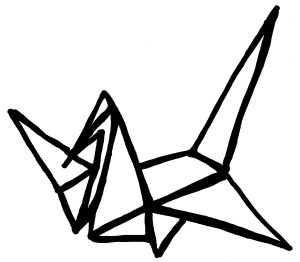
Boomer: I like that this is left intentionally vague but tempered by heavy allegorical imagery that permeates the film’s final scenes. We see Da Chief setting Alan’s file aflame in his office, just as we saw the docket for the previous killed-in-action undercover officer burned, a kind of memorial for a fallen friend. I don’t think that Alan was wearing a vest, though. We did see what contemporary Kevlar vests looked like in the final battle when the more heavily-armed police forces arrive at the hospital; they turn these armaments into makeshift baskets for some of the last few infants left behind in the maternity ward, and we see these same officers get eaten up by bullets shortly thereafter. As much as I want the ending to mean that our handsome hero Alan is alive, I get the sense that the interpretive element of the presentation is not as ambiguous as it was in, for instance, The Psychic. Per his conversation with Tequila, each of Alan’s origami cranes represents a man that he had to kill, both in the line of duty and to maintain his cover. While these deaths were all of evil men engaged in the gun trade, they weigh heavily on his conscience. Alan also mentions that Hawaii is a place he has never seen, a kind of paradise to which he’s hoping to achieve entry by passing through the crucible of his assignment. As he drops each paper bird into the ocean at the end, it is as if Alan is letting the sins he committed fall away from him into the ether as he sails toward whatever lies next for him.

We can assume that the film has a Taoist perspective, given that Tequila makes his entreaty for reconciliation with Teresa and a new apartment to a shrine of Guan Yu. Even with that in mind, the various different sects of Taoism are notoriously disunified in their different perspectives on death and the afterlife, so even thoroughly researching the topic doesn’t yield particularly useful information. Although Alan would be traveling eastward to reach Hawaii from China (in fact, he’d be going almost due east, given that there’s barely one degree of latitude difference between Hong Kong and Honolulu), a cursory internet search hasn’t helped me locate a specific correlation between eastward travel and enlightenment or the afterlife in Taoism. Religions informed by Christianity do hold the east—the cardinal direction, not the region—to have religious significance, however. Most cathedrals are cruciform in construction (see the Pisa Cathedral for a good example), with the “upper” part of the cross lying on the eastern end so that the congregation faces eastward, in the presumed direction of Christ (“For as the lightning cometh out of the east, and shineth even unto the west; so shall also the coming of the Son of man be.” -Matthew 24:27, KJV). It may just be my Western biases slipping through, but it feels like there’s a significance to Alan traveling east in (presumed) death, but I could be reading too much into it.

On the other hand, there is ample evidence that Alan could have survived. He’s definitely made of sterner stuff than other men, given that he takes a glancing shotgun blast to the back earlier in the film and survives. He also already survived a gunshot wound to the abdomen, as we see him tending the wound in his undershirt aboard the houseboat. We also know that he has implausibly good aim, as shown when he was able to slip a lighter into Fox’s pocket and then shoot him in such a way that the bullet was deflected from killing him by that same tiny piece of metal. Like I said: it’s up to one’s personal dissection, and my personal affection for Alan (and Tony Leung) means that I want the final shot of him embracing a new day to be a real event and not metaphorical, but the interpretation that he is dead is a much more rich vein, at least in my opinion.

Alli, you mentioned that you were a fan of Mad Dog, and I too liked that his character was multidimensional, especially in comparison to some of our “good” characters. Which characters, if any, do you feel simply don’t work (or pale in comparison to Mad Dog), and why? What would you improve about them to make them more lifelike or believable?

Alli: I am not a big fan of the character John Woo wrote for himself here. Supposedly this character was a late addition intended to help develop Tequila more, since many of his scenes playing jazz and pursuing his romance with Teresa were cut. The idea was that if John Woo was in a scene, why would he cut it? Though, I do get a director wanting to appear in a ridiculous movie that even from plot alone is a magnum opus. We didn’t need to watch Tequila seek advice from his bartender at the jazz club. The advice wasn’t even all that useful. It just felt like an unnecessary detail that added to the clutter. It’s understandable why in a movie with a cool badass like Mad Dog and the dreamy Alan going through moral dilemmas and tough choices, Chow Yun-Fat would want a character who doesn’t just ignore his boss’s orders and his girlfriend’s wishes, but I feel like there were better ways to handle that. The Mr. Woo scenes are a little too on the nose.

It’s hard for me to talk about this movie without comparing it to Die Hard. Both deal with rogue cops single-handedly taking down massive conspiracies and criminal organizations. Both are packed with iconic action sequences. Also, when it comes down to it, I think their main characters are extremely similar. John McClane isn’t really developed any more than Tequila until the action gets started, when we get a sense of his smug sense of humor and hear the “yippee ki yay.” In the same way, I think we see more of who Tequila is when he’s being a cop: smashing gangsters’ car windows, independently dropping into a warehouse full of baddies to shoot up the place, and, once again, the rap lullaby.

I’m sure there’s a ton of other Die Hard comparisons one could make, since they’re two of the finest action movies ever made, but I’m going to stop there for now. Brandon, are there any other movies you’d compare Hard Boiled to? Are the any movies heavily influenced by it that you’ve seen? What do you think of Hard Boiled‘s place in the action genre as a whole?

Brandon: The question of influence is a difficult one to detangle (except in blatant cases like the action spoof Shoot Em Up borrowing its baby-themed shoot-out concept wholesale), since Hong Kong action cinema drew heavy influence from its American counterparts before leaving its own mark on that industry in a kind of creative ouroboros. Since John Woo himself has since become an American cinema icon, the easiest points of comparison might be to look at his own work. Hard Boiled is weirdly positioned as the final film in Woo’s catalog before the two distinct markers critics usually cite as the downfall of Hong Kong’s action cinema heyday: the exodus of the movement’s most prominent directors to Hollywood and the handover of Hong Kong itself from British rule to mainland China in 1997 . With his following film, the JCVD vehicle Hard Target, you can already see the way American sensibilities (particularly the MPAA’s attitude towards violence) diluted Woo’s creative voice. By the time he directed pictures like Face/Off and the rap-rock opera Mission: Impossible 2, almost all of Hard Boiled‘s mesmerizing hyperviolence had completely evaporated, leaving only the over-the-top cheese behind. As a result, I’ve always shrugged off the suggestion that John Woo is an easy pick for the all-time greatest craftsman in action cinema. His American pictures maintain his playful absurdism, his obsession with white doves, and his excess of individual camera setups within a single action sequence (complete with slow-motion pauses for detail); they’re even (for the most part) really fun to watch. They don’t ever approach the intricate genius in craft or the blunt force brutality of Hard Boiled, though, and I feel like an idiot for avoiding seeing Woo’s work from his Hong Kong glory days for so long because of that slow American decline.

Britnee, what was your first experience with John Woo as a director? I’m assuming it was a 90s American picture as well. How did it compare to your experience with Hard Boiled?

Britnee: Hard Boiled is actually the first John Woo film that I’ve fully seen. I swear, I’m always late to the party for everything. When I was a kid, I saw parts of Face/Off and Hard Target thanks to the TNT and USA channels, but I don’t really remember much about either movie. Not knowing John Woo’s work is actually exciting to me, though. This is an entirely new world of action films that I can throw myself into. After looking at the decent-sized list of films Woo has directed, I noticed a good number of Hong Kong works. I’m curious to see if any of them are on the level of Hard Boiled, which would be freaking amazing.

I was a little nervous about being able to keep up with Hard Boiled when I realized it was an action film entirely in Cantonese. Having to pay attention to subtitles in an action-packed movie makes the film seem more like a chore than an enjoyment. Ultimately, I was somehow able to understand what was going on without really paying attention to the subtitles. It’s not that there was a lack of verbal interaction between the characters, either. I think credit goes to a blend of excellent acting and directing.

Boomer, did you have a similar experience with the subtitles?

Boomer: About two months ago, some friends and I were binging on all the Pop-Up Videos we could find on YouTube. One of these was the video for “Everybody Hurts” by R.E.M. There’s a point in that one where the song is playing, the subtitles say something different from the lyrics, and there’s a simultaneous “informational” pop-up; while watching it, it was like my brain blew a fuse for a second because it was impossible to keep up with every piece of information being presented. I think there’s definitely a danger in this kind of sensory overload in any action film, let alone one that is not in a language the viewer speaks. On the other hand, editing and tone are actually more important to an overall understanding of a film than even the dialogue is, and a good director, like Woo, knows how to use the languages of dialogue and the rhetorical space of visuals & editing to convey ideas. Film theorist Lindsay Ellis actually discusses this in the first entry of her fantastic series of video essays in which she uses the Transformers series as an easy textual representation of certain filmic ideas like affinity/contrast of continuum of movement.

Ellis asks: why is it so hard to remember what happens in those terrible movies? One answer is that there is a constant disruption of the continuum of movement between shots. When the eye has to move from one part of the screen to another when the shot changes, that is contrast of continuum of movement; a good director uses this intentionally in order to disorient the viewer after a period of relative visual stability. When it’s used constantly, however, it only serves to induce anxiety and confusion and prevents the film from coming together in a logical, sensible way. It effectively offsets what we call “persistence of vision” and baffles the mind, just like the aforementioned Pop-Up version of “Everybody Hurts.” I had this experience myself when I was 20 years old and went to see Transformers in theaters; I had gotten an eye infection the week beforehand, and was wearing an eyepatch at the screening. I still clearly remember parts of the film where the action was so intense and nonsensical that, through a single eye, the screen essentially went blank. The fact that this happens in a film in my (and our) native tongue is telling; there was no language barrier, but the film was still incomprehensible.

In general, though, competent directors know better than to try and hit more than one center of the brain at once, even if they only learn this skill through osmosis. In any given action scene, the protagonist will generally throw out a one liner either immediately before (“You’ve got to ask yourself one question: Do I feel lucky? Well, do ya, punk?”) or after (“Welcome to Earth!”) taking action. Only a very poor director would attempt to have their lead recite a lengthy screed at the same time that dozens of weapons dealers storm a factory. Even in something like Wrath of Khan, in which Khan gives a recitation of the “From hell’s heart, I stab at thee” speech from Moby Dick, that dialogue doesn’t play out over footage of two starships shooting at each other; the invective is delivered in close-up. Not every director is competent, of course, and I’ve definitely seen a film or two that was confusing because of an editorial failure and not as an intentional device (Tribulation comes to mind), but Hard Boiled doesn’t fall into this category. And, hey, if you could follow the movie without dialogue, more power you.

Lagniappe

Britnee: I love how there wasn’t a lot of unnecessary lovey-dovey stuff in Hard Boiled. I hate when action films bring in a ridiculous love story because it always takes away from the adrenaline high that I get after a good combat scene or two. There’s a light touch of romance between Tequila and Teresa, but it’s not enough to be a major plot point. Alli mentioned that a couple of romantic scenes between them were cut, and I’m so glad that they were.

Alli: I have watched this movie so many times and I still for the life of me have no idea why the lead’s nickname is Tequila, especially since throughout the film he’s only shown drinking gin & tonic. I don’t know if I like it better that it’s not explained or if I really wish we had the answer to that.

Boomer: Alli, look away in case you want to preserve the mystery of Tequila’s nickname, but . . . he’s not drinking a G&T. That’s a tequila slammer, which is notable for the way that it’s mixed (slamming it).

For interested parties who want to know more about how the brain accepts and interprets information, both musically and not, I can’t recommend the video essay “The Mozart Effect” by Sideways enough. In it, he talks about the areas of the brain that are affected by speech-as-sound, subvocalization, and why certain sounds/music are more conducive to certain activities.

Brandon: My apologies for bringing up pro wrestling a second time in this conversation (my WrestleMania tickets must be eating a hole in my brain), but something else about films from Hong Kong legends like John Woo & Tsui Hark remind me of another wrestling term: the sell.

The stunts pulled off in Hard Boiled and its ilk are so convincingly dangerous that I often have a difficult time watching the screen out of fear for the actors’ safety. The fact that Hong Kong action stars were often pressured to do their own stunts instead of leaving the work to professional doubles makes the experience even more nerve-racking. It’s entirely possible that these were super safe sets and the danger onscreen was just “sold” especially well by the performers, but it’s still difficult to watch at times. Even professional wrestlers, who are often accused of being in a “fake” business, frequently get injured . . . or sometimes worse. I won’t deny that this sense of real-life danger is uniquely thrilling, though. It’s one of the many things that distinguish Hard Boiled & its Hong Kong contemporaries from their American counterparts.

Upcoming Movies of the Month
March: Brandon presents Suicide Club (2001)
April: Britnee presents Magic in the Mirror (1996)
May: Boomer presents Batman: Under the Red Hood (2010)

-The Swampflix Crew