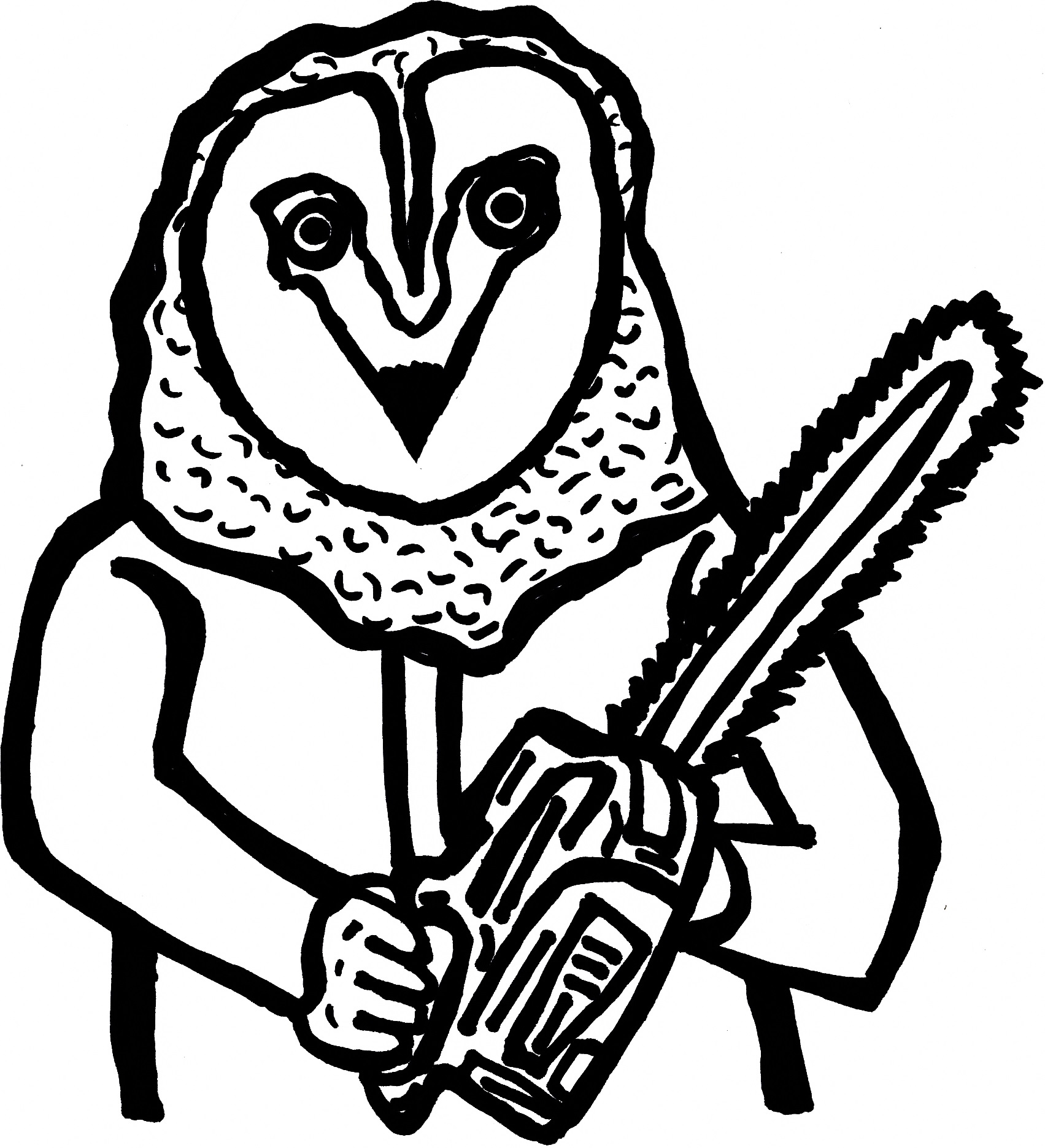
StageFright: Aquarius (1987)

Not to be confused with Alfred Hitchcock’s Stage Fright, StageFright: Aquarius is a 1987 giallo film directed by Michele Soavi, who got his start assisting Dario Argento and shooting second unit work on Tenebrae, Phenomena, and Opera. His second film was the previously reviewed La chiesa in 1989, but this freshman feature has a lot of style, which spackles over the occasional slip-ups that are common in debut films. 

Our film opens on a grimy street, as a woman in a platinum wig seeks an honest night’s work, only to be attacked and pulled into a shadowed entryway. This causes a commotion as a dozen people gather and stare at her murdered body, only for the killer to suddenly and energetically burst forth from the door and begin to dance as we pan out to see that the street is just a set on a stage in a modestly sized theater, and our characters are but actors on it. Well, most of them are actors; some are dancers, and there’s also an inexplicable saxophone player in a billowing Marilyn Monroe dress perched on one of the faux rooftops. The killer happens to be wearing a giant owl head, and it’s one of the strangest but most fascinating openings I’ve seen in a film in this genre. The choice to open with offscreen traffic noise and slowly pan up a city street makes for a clever misdirect that is also ultimately a metaphor about the film’s own method of doing more with less. 

After wounding her ankle on-stage in the opening scene, Alicia (Barbara Cupisti) acquiesces to the prompting of Betty (Ulrike Schwerk) to sneak out of the side door and get her ankle treated, without the permission of egomaniacal director Peter (David Brandon). They charm affable theater owner/property manager Willy (James Sampson) into letting them out through the side door. It turns out that the hospital that Betty knew about that was nearby is actually a psychiatric hospital, but as Betty points out, psychiatrists do attend medical school, so after an encounter with an unfriendly nurse, Alicia sees a doctor. On the way out, she asks about the room that has bars over the door, and the women learn that the prisoner is serial killer Irving Wallace (Clain Parker), who’s awaiting trial. Wallace escapes from his room due to an orderly’s carelessness, and, hiding in Betty’s trunk, returns with them to the theater. Alicia is immediately fired upon return, and while Peter is dressing her down, Betty is killed outside with a pickaxe. 

Surprisingly, Alicia discovers this almost immediately and the police are called and arrive at once. Her body is taken away, there are reporters, it’s a whole deal. Two patrolman (Soavi in a cameo, with Mickey Knox as his older partner) are stationed outside of the theater and Willy clocks out for the night, entrusting Peter to lock the place up. Instead, he has “ingenue” Corinne (Loredana Parrella) hide the key so that everyone is locked in and forced to participate in an all-night rehearsal so that they can open the play early and capitalize on the tragedy. Of course, that means that Irving is now locked in with the cast as well as their producer, Ferrari (Piero Vida). The first to be subdued is Brett (Giovanni Lombardo Radice, credited as John Morghen), who portrays the killer within the play; Irving takes his owl head mask and uses it as his disguise to get close to Corinne in the scene in which she dies, only for onlookers to respond too slowly to the dawning realization that she is actually being murdered. And, as she’s the only one who knows where the key is, they’re in for a long night. 

The play within the movie is about a fictional killer named The Night Owl who preys on vulnerable women and murders them. The characters within the film also recognize that the play is a stylish but trashy cheap thrill masquerading as something more; one character describes it as a “thoughtful musical” when asked, but this “artistic endeavor” is fully funded by a sleazy businessman who doles cash out of a briefcase like a gangster. The director of the play, a possible jab at Argento, is fully invested in his artistic vision … but that vision proves to be completely malleable if it sells a few extra tickets. There’s also a moment in which the director is confronted by the killer wielding a chainsaw and just throws a woman directly into the path of the blades, which, as someone whose knowledge of Argento is … extensive, seems like a pretty good jab at the older filmmaker’s less-than-modern take on gender dynamics. 

Speaking of the play, in order to enjoy the movie, it’s important not to worry about what the production’s narrative is or how it could possibly work, and I think this might be an intentional comment on Italian horror as a genre as well. We see several disparate scenes, included but not limited to: 

  • The aforementioned scene in which a sex worker played by Alicia is pulled into a dark alcove/building and murdered, then the owl-headed killer bursts out and dances while a woman plays a saxophone on a rooftop above. This appears as the film’s opening but is presumably not the beginning of the play, as Alicia’s role is repeatedly referred to as the “lead role,” despite her being killed in this scene. 
  • A scene in which Laurel (Mary Sellers) is dancing on a bed while wearing a red wig and dressed as Raggedy Ann–not just a dress like Raggedy Ann’s, but literally dressed as the doll, apparently. We later see that she’s even wearing pads that simulate a body shape that’s essentially identical to the patented Ann doll. This part is apparently non-essential to the plot, as Laurel is tapped to replace Alicia in the aforementioned lead role when Alicia is briefly fired for getting her ankle checked out, and there’s no mention of someone else taking on Laurel’s old role. 
  • The love/killing scene in which Corinne does an interpretive dance around her bedroom while mooning after but also fearing The Night Owl. Although Corinne is intentionally styled to appear more prudish/innocent than the other female characters, there’s no doll on the bed in this scene or any indication that she has a Raggedy Ann. 

I leave it to the giallo fanfiction writers of the world, which I assume exist (if only because I can’t be the only one, right?) to put together a feasible narrative in which these scenes might appear, but I like to think that this is supposed to reflect how most giallo films are often composed of striking individual scenes that ultimately add up to a whole that is greater—but less comprehensible—than the sum of its parts. This film is no exception, although it’s much more fun and compelling than many of its peers, despite occasional wonkiness. For one thing, I fully support the decision to get up in the catwalk above the stage more than once; in a theater, that’s a natural place to stage a scene, but the film puts both of its catwalk scenes in Act III, which makes it feel narratively unbalanced. The dubbing in this one is particularly funny, as there’s the characteristic slight syncing/emphasis issues that are pretty common in Italian cinema, but while most characters are clearly speaking (possibly phonetically memorized) English that’s been dubbed over, there’s no attempt to do so with Ferrari. Either he’s just straight up speaking Italian or every one of his lines was rewritten between filming and voiceover. There’s also an inconsistency of verbiage, as the events of the night are given the nickname “The Sound Stage Killings,” but this isn’t a sound stage; it’s a live theatrical performance space. Those quibbles are fun and easily ignored, but I did have some qualms with the finale. The movie reaches a natural conclusion (our final girl defeats the real Night Owl and escapes to notify the police), but it keeps going for some reason, following her return to the theatre, where she reunites with Willy. In shoddy ADR, he endlessly repeats a line about how the apparent prop gun that was found in one of his desk drawers and which turned out to be useless against Irving is, in fact, a real gun as the play crew had initially guessed, but that none of the actors had figured out how to turn the safety off, only for there to be one final altercation with Irving. The pacing of it is all off, and it feels like it was added to pad the runtime (even with this scene, it’s a lean 86 minutes); forgivable, but not very fun. 

StageFright: Aquarius is currently streaming on Shudder, although the title is styled much less interestingly as Stage Fright.

-Mark “Boomer” Redmond

Episode #130 of The Swampflix Podcast: Madhouse (1981) & Evil Twins

Welcome to Episode #130 of The Swampflix Podcast. For this episode, Britnee, James, and Brandon discuss over-the-top exploitation thrillers about Evil Twins, starting with the 1981 Italo whatsit Madhouse.

You can stay up to date with our podcast by subscribing on  SoundCloud, Spotify, iTunes, Stitcher, YouTube, or TuneIn.

– The Podcast Crew

What Keeps You Alive (2018)

Full disclosure, I was waiting to write this until I got copy done on Elizabeth Harvest so that I could link both that film and this one as having a connection to the Bluebeard fairytale (uh, spoiler alert, and also spoilers throughout), but as it turns out, Britnee already did a very positive write-up of that film a couple of years back, so I don’t have to! We are in agreement: Elizabeth Harvest is great! 

Also great is the modernized, queer update What Keeps You Alive! Hannah Emily Anderson stars as Jackie, opposite Brittany Allen as Jules. The film follows the two of them to a remote lake house for a retreat for the couple’s one year wedding anniversary. Things feel a little “off” right from the outset, but no more so than you would expect from any film that follows a couple going to a “home” that looms large in the childhood of only one of them. Their diametric idiosyncrasies (including Jules’s fondness for metal music, which her wife hates) also contribute to the willingness to dismiss any awkwardness as simply a matter of character. This pervasive strangeness continues when across-the-lake neighbor Sarah (Martha MacIsaac) visits the rarely-occupied property out of neighborly concern and recognizes one of the women, calling her by a different name than the one by which we the audience know her. This prompts a tearful story about a childhood accident the following day, which is immediately followed by an attempted murder-via-cliff-push. The killer, assuming victory, practices a tearful phone call to the police while walking back to the lake house, revealing a deep and abiding sociopathy; elsewhere, her victim, who has miraculously survived, tries to escape. 

I’ll just call them “Bluebeard” and “Survivor” from here on out to keep this straight and to avoid spoiling which of the leads is the killer. I almost went with “Bluebeard” and “Victim,” but make no mistake: Survivor is not a victim. A very tense cat and mouse plays out following this first attempted murder, including some fun swerves that you won’t see coming. For a film that exists almost entirely in a limited location—the house, the lake, the woods—the film finds a way to steer into some unexpected stylistic choices. Of particular note is a blacklight murder scene cleanup scored to Beethoven’s Piano Sonata No. 14, aka the Moonlight Sonata, and a half-dreamt reunion with a bloodthirsty bear. For a time, Survivor is recaptured by Bluebeard and kept alive for reasons that are justified internally, but really for the sole purpose of giving Bluebeard an actor’s showcase to show off just how quickly she can pivot from character to character, which is great both in concept and execution.

The film has had a pretty mixed reception. It flew under Swampflix’s radar, and we are a bunch with a fairly wide net of niche interests; there are a few of us I would have expected to have caught this film before now, so I’m surprised that it’s managed to get so many negative reviews. Rotten Tomatoes is an imperfect barometer even at the best of times, but this is one of those movies with a really rough critic/audience ratio (82%, 42%), and the number of 1-star ratings on the Google landing page for the film outnumber the 2-5 star ratings combined. The only negative review included in the body of the movie’s Wikipedia page, by Roger Moore of Movie Nation, takes umbrage with the Survivor’s Act III choices. I do understand this criticism; there’s a real bad case of Re-entering the Lion’s Den that functions as a narrative necessity to get Bluebeard and Survivor into the places where they need for the “checkmate” to occur, but which makes no sense as character choices. Ignoring that, however, there’s a really solid, unique action thriller at the core of this one that makes it worth seeking out.

-Mark “Boomer” Redmond

Things (1989)

The closing credits of the 1989 bargain-bin horror novelty Things declares in fuzzed-out block letters, “YOU HAVE JUST EXPERIENCED THINGS.” That kind of neutral, matter-of-fact statement is truly the only way this movie can be assessed, as if it were more of a unit of time or a natural disaster than it is a work of art. Things is delirious, direct-to-video Canuxploitation nonsense – a scuzzy hangout horror filmed on Super 8 and filtered through beat up VHS tapes. It’s near-budgetless & near-plotless, essentially just documenting a small group of Canadian horror nerds as they hang around one buddy’s bleakly dingy home, playing with homemade monster puppets and pretending that they’re Making A Movie. Its ineptitude drifts between disturbing dream logic & mind-numbing tedium so fluently that it’s near-impossible to determine whether it’s Good or Awful as a whole. And yet, it’s fondly remembered as a regional horror gem in cult-movie circles, because genre-trash Canadians are intensely loyal to their own subculture runoff. I cannot stress how much I admire that.

In the abstract, there’s a kind of sub-Cronenbergian body horror element to the premise, in which a couple’s desperate attempts at artificial insemination gives birth to an insectoid mutant creature that must be destroyed. The movie isn’t really about the couple or the mad scientist who created the ant-beast, though. Most scenes just feature a trio of buddies drinking cheap beer in that couple’s living room, while tangential interjections from outside the house occasionally gesture at the vague outline of a plot. This tactic includes sporadic news reports from vintage porn goddess Amber Lynn as TV reporter Amber Lynn, who appears to have filmed her contributions to the picture in less time than it took her to get in make-up. Things smartly paves over a lot of its incoherence with good ol’ Dream Logic, starting the whole thing off with a nightmare sequence just to set the tone. That does little to forgive the long stretches where absolutely nothing happens, and the characters trapped in its no-budget purgatory complain to the audience, “This is so boring.” I can’t help but agree, but its complete lack of purpose or urgency is—against all odds—charming, especially whenever the insectoid baby-mutant shows up to party.

Things mostly survives on the tried-and-true horror formula that Ineptitude + Time = Art. Its rubber monster puppets, Atom & His Package drum machine score, and general Tim & Eric awkwardness are adorable enough to leave most B-horror audiences with a positive feeling, even if we can’t remember exactly what we just “experienced.” The thing that really sticks out to me, though, is the way the actors can barely hold back their smirks, even in scenes where they’re supposedly being attacked by a mutant insect baby. The real joy here is not in what happens onscreen, but in the movie’s trajectory from a weekend art project between friends to a beloved Canuxploitation gem. Things has been cited as “perhaps the worst movie ever made” on several occasions, but even its status as the body horror version of The Room is a sign of respect in my eyes, a testament to Torontonians’ collective interest in exalting their own no-budget genre trash. I sincerely wish our own regional genre nerd community in New Orleans was strong enough to turn movies like Mardi Gras Massacre or The Last Slumber Party into cult classics in the same way.

-Brandon Ledet

The Queen of Black Magic (2021)

While he’s only credited as the film’s screenwriter, it’s tempting to frame Joko Anwar as the auteurist voice behind The Queen of Black Magic, given how snugly it falls in line with his recent work. The Queen of Black Magic repeats the returning-to-a-rural-home supernatural folktale horror of Anwar’s recent creep-out Impetigore. It also repeats the reinvention of an 80s Indonesian cult classic that he experimented with in 2017’s Satan’s Slaves. Unfortunately, director Kino Stamboel can’t match the pristine visual artistry or icy tension of either of those recent Joko Anwar knockouts, which holds The Queen of Black Magic back from achieving their must-see horror nerd prestige. Still, Anwar’s storytelling & stylistic influence is blatant throughout, and the two collaborators build to a spectacularly upsetting climax together within the framework of the backseat auteur’s previous triumphs.

The Queen of Black Magic doesn’t have a plot so much as it has a premise. For most of its runtime, it’s a gory ghost story about a haunted orphanage infested with CGI centipedes. Then, it climaxes with the intrusion of the titular black magic queen, who exponentially escalates the scale of the mayhem in a deliberate attempt to create Hell on earth. Adult alumni of the rural orphanage return to their collective home with their Big City wives & children in tow as a kind of unconventional family reunion. Once home, they’re reminded of a supernatural menace that underscored their childhood memories, which they’ve since passed off as the product of their overactive imaginations. Except, the supernatural threat returns to their lives as soon as they return to the orphanage, and it’s explicitly linked to long-buried abuses against the other children there – an evil they unknowingly participated in and must be punished for. Once the supernatural avenger of these abuses shows herself in the third act and her centipede army grows by the ton, it becomes clear that no one will be spared her vengeful chaos, not even the men’s own innocent children.

Story-wise, this film is stubbornly unrushed & conventional. The backstory that provides purpose for its ghostly, centipedal gross-outs is mostly told through purely expositional flashbacks, all shot with the limited scope & unembarrassed cheese of a soap opera broadcast. Meanwhile, the dozen or so characters who’ve gathered at the haunted orphanage more or less just hang around, waiting for something spooky to happen. The atmosphere is effectively eerie, but the events it serves are oddly inert . . . until Hell is fully unleashed. The third-act payoffs to this film’s traditional haunted-house plotting are gloriously fucked up. Its skincrawl moments fearlessly go for the jugular, making it clear that no guilty party nor innocent bystander is safe from centipedal gore or possessed self-mutilation. The inciting child abuse against helpless orphans isn’t avenged with any kind of targeted fury, but rather a burn-it-all-down anger against the entire world for allowing such cruelty to happen. No one is spared; ignorance is complicity; everyone deserves Hell for living in such a callous world.

After the hideous spectacle of its Hell-on-Earth climax, The Queen of Black Magic concludes with stills of the 1981 original it’s supposedly remaking. Just from that slideshow, you can tell the original film was a lot lighter & less traumatizing, presumably with an entirely different premise than this “remake.” Between this film & Satan’s Slaves, Joko Anwar is acting as a kind of cultural ambassador for the merits of cult-classic Indonesian horrors – both reviving the titles of the films that spooked & delighted him as a kid and using them as templates to spook & delight a modern audience in kind. I can’t claim this effort is as satisfying as the previous two films that he directed himself, but it’s still effectively upsetting as a haunted-house genre film, one that’s done a great job of further piquing my curiosity in Indonesian horror classics.

-Brandon Ledet

Saint Maud (2021)

Around this time in 2020, I was eagerly anticipating watching the A24 Horror creeper Saint Maud in a dark, loud movie theater. Instead, it was released an entire year later, free with a week-trial subscription to some obscure, dire streaming platform called Epix (first I’ve ever heard of it). This never-ending pandemic has been an absolute motherfucker. I suspect the full immersive, communal movie theater experience would’ve greatly amplified the small moments & eerie tension that make Saint Maud great. I can only confirm that even at home, watching from my couch, underscored by the hum of traffic outside, the movie is still a recognizably substantial work. I still naively hope to see it projected in a proper movie theater someday.

Saint Maud‘s internal struggle between hedonism & religious zealotry speaks both to my unquenchable thirst for the grotesque as a horror nerd and my unending guilt-horniness-guilt cycle as a lapsed Catholic. The Catholicism angle is somewhat abstracted, though, as the title character (played by Morfydd Clark) subscribes to a unique religious doctrine of her own manic making — one adorned by spirals, beetles, and holy acetone. Maud is an at-home caretaker to a retired, famous dancer (Jennifer Ehle) who is dying of lymphoma. Her internal voiceover track is a direct conversation with God, as she makes it her personal mission to save the lesbian, drunkard artist’s soul before she perishes. Bored, the dancer plays along with this religious conversion to pass the time, cheekily referring to Maud as a living saint and her “Saviour”. She doesn’t realize she’s playing with fire, but the audience is fully aware that the charade can only end disastrously once Maud catches on that she’s being mocked.

If Saint Maud were purely an intergenerational struggle between a godless artist & her religious-nut nurse, it might have been an all-timer. In its best moments, it works like a psychobiddy thriller in reverse, with a deranged younger woman threatening to destroy the vulnerable employer in her care, and it could have generated a lot more throat-hold tension if it dwelled for longer on that relationship. Instead, the film is more of a fucked-up character study of a very specific, very broken mind. The erotic intimacy of the two women’s physical therapy sessions is just a fraction of the complex sexual mania swimming around in Maud’s head, which she often mistakes for religious ecstasy & divine bodily possession. When she kneels on rice or steps on nails as repentance for her “fallen” lapses into hedonism, it reads almost as a solitary act of BDSM as much as it is religious ritual. Her brain is on fire, and the longer it’s allowed to burn the further the movie escalates into spectacular, supernatural horror.

I might’ve liked Saint Maud even more if it weren’t so immersed in its main character’s psyche, since there was so much delicious tension brewing with her potential, captive victim. I also might’ve liked it more if I were further immersed in my own head while watching it, better isolated from the distractions of the world outside. As is, it’s still a solidly effective creep-out, a portrait of a sinister modern saint taking it upon herself to execute God’s will on Earth (often as a means of self-punishment for Impure desires). Despite the circumstances, it was well worth the wait.

-Brandon Ledet

Mardi Gras Massacre (1978)

Mardi Gras in New Orleans is many things: cheesy, transcendent, sleazy, cheap, goofy, sinister, magical, communally handmade. Even if it’s spiritually corrupt and technically inept in its filmmaking, the cheap-o horror curio Mardi Gras Massacre is all those things as well. Yes, Mardi Grass Massacre is locally-flavored misogynist trash about a ritualistic serial murderer who targets French Quarter sex workers. It’s also the kinky, near-pornographic New Orleans equivalent of Manos: The Hands of Fate, in that it’s wonderfully, quirkily inept to the point of being Cute despite the repulsive cruelty of its genre. Better yet, all the qualities that make it memorable as a horror novelty are the exact same qualities that make our city-wide masquerade on Fat Tuesday such an extraordinary communal experience year after year, century after century. Unfortunately, 2021’s Carnival season has been completely upended by the ongoing COVID-19 pandemic, leaving a parade float-shaped hole in my heart. I don’t know if it’s just because of my desperate need to experience some semblance of that ritual through the safest means possible, but I was shocked to find some genuine Mardi Gras magic in such a lowly, putrid gutter. It felt great.

The poster for Mardi Gras Massacre sells the movie as if it were a giallo murder mystery, complete with a straight razor weapon that never appears in the actual film. In practice, it’s not a mystery at all. The killer’s identity is immediately apparent, as he plainly introduces himself to a pair of prostitutes at a Bourbon Street drinking hole, asking around for “the most Evil woman” they know. Once he secures a transactional “date” with the most Evil sex worker in the bar, he brings them back to his French Quarter torture dungeon, where he ritualistically removes their organs as a sacrifice to an Aztecan goddess. So much about this murder ritual is viciously amoral & tacky, which does not at all improve the two or three times it’s repeated beat for beat with subsequent victims. From the presentation of Aztecan religious practices as Anton LaVey-styled Satanic pageantry to the eroticized dismemberment of women as if it were a mere S&M kink, Mardi Gras Massacre is repugnant in its social politics – as most 1970s grindhouse horrors are. And, yet, as scope of the film expands outside those bloody dungeon sessions, the movie gradually becomes uniquely adorable in pure N’awlins fashion. Its distinctly 1970s misogyny is entirely overpowered by its distinctly local flavor.

The heroes of this story are a crooked cop and a French Quarter prostitute who form an unlikely love connection, turning the first ritualistic murder into a morbid meet-cute. The cheery pair play tourist on cutesy dates up & down the Riverwalk, inanely grinning at each other as the Natchez rolls by in the background. Before you can get incensed at the cops for being positioned as The Good Guys, however, this romantic fling eventually breaks down as the sex worker starts to resent her pig boyfriend’s sense of superiority over her. She calls him out for being a thief & a predator, and they split up to face the killer by their lonesome. The initial performative misogyny of the murder scenes gradually breaks down in a similar way. As we spend more time away from the dungeon rituals, the movie appears to have a much less Conservative viewpoint on women & sexuality than it initially pretends. The sex worker victims are more fleshed out & humanized than the evil caricature who hunts them down. Gender-ambiguous and flamboyantly queer side characters & extras are presented as matter-of-fact members of the French Quarter community instead of the punchlines you’d expect. Meanwhile, an incessant disco soundtrack constantly reminds the audience that the show is all in good fun. It would be absurd to posit that Mardi Gras Massacre was anything more than amoral sleaze—at least in terms of its political messaging—but it’s at least amoral sleaze that feels authentic to the French Quarter lifestyle once you emerge from the murder dungeon.

Of course, the real draw here is the novelty of the murders’ Mardi Gras setting, which frames the film as an act of regional filmmaking just as much as it is generic 1970s exploitation schlock. For most of the runtime, Carnival season is only as important to the plot as the approach of the 4th of July weekend in Jaws. Occasionally, cops & newspaper men are pressured to stop reporting the sex worker serial murders out of fear that it’ll ruin business during Mardi Gras, scaring away tourists. The climactic ritual is set on Fat Tuesday, however, where the killer feels emboldened to dress in his faux-Aztecan ritual garb in public, letting his freak flag fly among the other pedestrian revelers. I love this candid street footage with all my heart, as it captures the French Quarter masquerading of Fat Tuesday that most movies set here ignore in favor of the St. Charles Ave. float parades. As the on-the-street extras swarm around our costumed, misogynist killer, it’s fascinating just how little that real-life ritual has changed over the last four decades. The haircuts are a little different, but the costumes & the atmosphere are exactly the same. It was a time-warp to the exact blissful chaos of Mardi Gras that I’ve bene missing this year in quarantine, and it could not have come from a less reputable source.

There’s plenty of unsavory New Orleans flavor flowing throughout Mardi Gras Massacre even when it’s not parting its way through the Fat Tuesday crowds. At the very least, the movie is a wonderful guided tour of the Bourbon Street strip club scene of the 1970s, including an extensive novelty act with a dancer costumed as Lucifer. My favorite N’awlins Y’all moment in the entire picture is the shot where cops discover the abandoned body of the first victim near the Riverwalk, then the camera zooms in on the Cafe Du Monde signage lurking in the background. C’est magnifique. You can likely find these same New Orleans touches in far less grotesque regional horrors; The Exotic Ones is a much lighter, sillier equivalent that immediately comes to mind. Still, there’s just something about the lurid colors, the shameless hedonism, and the sinister non-stop partying of Mardi Gras Massacre that really won me over despite my initial misgivings. I did not expect the film to earn the “Mardi Gras” portion of its title, but its gawdy sub-professional ritualism got there in a roundabout, endearing way. The kills are mind-numbingly repetitive & grotesquely amoral, but everything that surrounds them forgives the indulgence, like Wednesday-morning ashes smeared on a hungover reveler’s forehead.

-Brandon Ledet