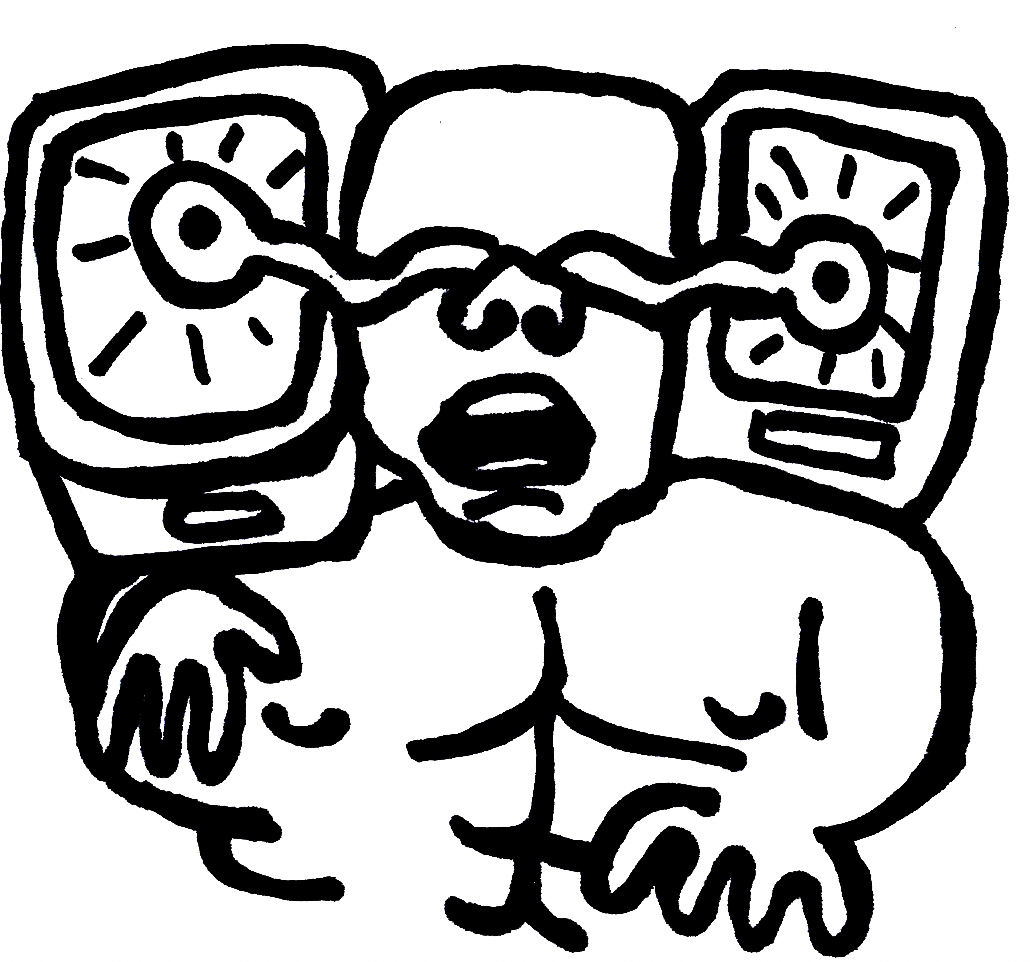
Violence Voyager (2019)

It’s becoming an annual routine for me to be captivated by some sexually menacing, cursed object that seemingly no one else in Film Nerd Land cares about. In the recent past, titles like The Wild Boys, Double Lover, and We Are the Flesh have triggered that ol’ Cronenberg feeling deep in my subconscious so that they’re all I want to talk about, despite being too alienating & gross to properly evangelize. Violence Voyager is my beloved Cronenbergian Nightmare of the Year in that respect, as it’s at once the most exciting and the most deeply uncomfortable film I’ve seen in ages, one I’m desperate to discuss with some like-minded freaks but feel hesitant to widely promote given its not-for-everyone discomforts. I won’t claim that it’s my favorite film of this cursed ilk, but it very well might be the most disturbing, as its peculiar brand of horror & sexuality involves the abuse of young children. More disturbing yet, the film feels as if it were made entirely by one loner-creep in some far-off basement, as if he were racing to publish his work before being raided by the authorities for crimes against society & good taste. It’s the rare work of modern outsider filmmaking that feels genuinely dangerous, with all the excitement & unease that descriptor implies.

In essence, Violence Voyager is a Cronenbergian puppet show. Sidestepping the financial time constraints of traditional animation, Japanese filmmaker Ujicha hand-operates 2D cutouts of illustrated characters against hand-painted backdrops. Their vintage illustration designs and seemingly hundreds of alternate poses means the work is neither lazy nor simplistic, but they’re still crudely animated & vocally dubbed to approximate an amateur backyard puppet show instead of a professional production. It feels as if a Henry Darger type had cut out characters from ancient board game boxes and recorded their imaginary interactions on VHS tapes that somehow made it into wide circulation. The genius of this technique is that it allows Ujicha to experiment with a mixed media approach that incorporates liquids, fire, smoke, and shadows. Just when you think you’ve gotten a grasp on what the movie is up to visually, the surprise intrusion of a seminal goo or firecracker “explosion” will knock you on your ass again. No matter how much effort artists like Jim Henson & Jan Švankmajer put into ensuring puppetry is taken seriously as adult entertainment in the past, the medium still inherently feels like it’s designed to attract children – an effect that Ujicha leans into with diabolical intent. Violence Voyager sometimes looks & sounds like cheap-o Saturday Morning television aimed directly at kids, but just one viewing could scar a child for life.

Plot-wise, Violence Voyager plays like an adaptation of a vintage choose-your-own-adventure novel or first-wave video game. A blonde American boy named Bobby is ostracized as a foreigner in his mountainside Japanese community, but has managed to make a few friends among the local children (and with a cat tamed Dereck). While getting into some Summertime Mischief in an isolated pocket of the mountain forest, Bobby and his BFFs stumble across a rundown amusement park named Violence Voyager. Admitted free of charge and armed with Super Soakers, they’re instructed to fire their “weapons” at an invading force of alien robots, which pop out of bushes at random in a kind of in-the-flesh video game. This embarrassingly dorky activity turns sinister as the amusement park quickly transforms into an escape room. Bobby discovers that he & his besties aren’t the only children who’ve been lured to the amusement park prison. Dozens of local children are being held hostage and turned into mutant abominations that eerily resemble the alien invaders of Violence Voyager lore. Grotesquely disfigured and forever psychologically scarred by his captors, Bobby must become the futuristic adventurer he only pretended to be when the stakes were fictional. The results of his heroism are more revolting than awe-inspiring, but it’s a noble effort all the same.

The biggest price at the door for enjoying this diabolical work is that you must be okay with seeing violence against children & animals simulated for your entertainment. As nasty as Ujicha’s visual creations can be, it helps tremendously that the acts of fantastic, unreal violence are crudely animated instead of pantomimed in live action. It does not at all help that the children are often nude. As far as the audience can tell, the Cronenbergian mutation experiments that drive the film’s plot do not involve any outright sexual abuse. However, the film stubbornly lingers on the imagery of naked child bodies in an uncomfortable way that pairs horrifically with the cheerful optimism of its vintage kids’ games aesthetic. Even before the true horror starts, the kids look oddly deformed & scarred – as if they had been raised near an unmentioned industrial dump. Later, we’re confronted with illustrations of their genitalia in mad scientist laboratory environments; the abusive implications of that juxtaposition crawls right under your skin regardless of whether it’s directly mentioned. I mean it both as a compliment and a warning that this film is reminiscent of Henry Darger’s work; it’s both a beautiful art object and a traumatic guided tour of some far-off sicko’s subconscious.

I don’t know that I can outright recommend Violence Voyager without feeling like a total scumbag, but I’d be a liar if I didn’t report that it’s one of my personal favorite discoveries of the year. If you’re looking for one of the most bizarre, brutal, psychologically disturbing visions of Hell that 2019 has to offer, look no further. Just be prepared to walk away wondering if the weirdo who made it is a potential sex criminal, or if you wound up on a government watchlist merely by renting it. It is one especially queasy slice of sleaze, which is apparently something I regularly crave.

-Brandon Ledet

Doctor Sleep (2019)

I reread The Shining this past October. It was part of my effort to read more spooky books after finishing up a posthumous Shirley Jackson collection (Let Me Tell You) that had a few good gothic outliers in it but was largely more domestic than the portions of her body of work with which I was more familiar (my next read after The Shining was David Mitchell’s Slade House, which was great but should really only be read if you’ve already finished his Bone Clocks, which is an endeavor). My erstwhile roommate and I talked about it midmonth when we met up for a mutual friend’s birthday, and he mentioned that, of all of Stephen King’s works that he had read, The Shining is the one that most closely resembles an objective (and admittedly pretentious) definition of “literature,” and as someone who loved the pulpiness of The Dead Zone but also literally threw Salem’s Lot into the trash at about the midway point, I had to agree. At the time, I had no idea that the forthcoming Doctor Sleep was an adaptation of the sequel to the earlier novel (or a sequel to Stanley Kubrick’s The Shining from 1980, or something between the two, as the case turned out to be), but boy was I excited once I learned that was the case!

2019 marks the first time that three theatrical King adaptations have hit the big screen in the same year since 1983, which featured the hat trick of Lewis Teague’s Cujo, David Cronenberg’s The Dead Zone, and John Carpenter’s Christine.* I had more positive feelings about IT: Chapter 2 than most (long story short: it was a better Nightmare on Elm Street movie than about half of the films in that franchise) and didn’t see the Pet Sematary remake, but boy was my King itch scratched by Doctor Sleep.

Doctor Sleep follows an adult Danny Torrance (Ewan McGregor), who, following the incident at the Overlook Hotel in the first film, was taught by the ghost of Dick Hallorann (Carl Lumbly, taking over for the late Scatman Crothers) to “lock away” the malevolent spirits that followed him—the rotten woman from Room 237, the Grady twins**, and even Horace Derwent—inside mental boxes. As an adult, he finds himself falling into the same patterns as his father and even going further; he’s not just an alcoholic, but abuses harder drugs as well, and even Jack Torrance never stole cash out of a single mother’s purse. Taking an inventory of his life, Danny starts anew in another town, where he seems to thrive and even becomes “psychic penpals” with a girl named Abra, whose Shining is perhaps even stronger than Danny’s. Elsewhere, however, a group of quasi-immortals called The True Knot seek out and murder children with the Shining in order to feed on their psychic essence. When the Knot’s de facto leader Rose the Hat (Rebecca Ferguson) becomes aware of Abra, the group seeks her out as their next victim, and she turns to Danny for help.

I loved this movie. I’ve been a fan of Mike Flanagan’s since Oculus, and I think that he may be the best horror director of this generation. The Haunting of Hill House series that he released last year was stunningly, achingly beautiful, and his adaptation of Gerald’s Game established that he was more than capable of adapting the tone, tension, and dry bones terror of a Stephen King narrative. With him at the helm, there was little to no chance that this film would be anything less than perfect. Every shot is beautifully composed, and although I know many probably balked at the film’s 152 minute runtime, there’s not a single frame of wasted celluloid in this film. Even the moments when, theoretically, nothing is happening (like Danny’s and the Knot’s long cross country drives), the camera watches from a place of elevated removal, watching and waiting and letting the tension build, subtly echoing Rose’s viewpoint when she “flies” while astral projecting in her pursuit of Abra. It’s elegant in its simplicity, but isn’t above descending into occasional camp either (Erstwhile Roommate of Boomer mentioned that the villains gave him strong True Blood vibes, which is a criticism not without merit). This film never feels its length, and the muted public reaction and mediocre box office returns are a personal disappointment; this film was never going to surpass The Shining, but it’s not far behind, and Flanagan was right to mix the original film’s solemn meditative qualities with occasional frenetic setpieces. In a lifetime of watching movies, I’ve never been so invested or felt so much tension in my spine when watching a scene of a man eight years sober struggle to not take a drink, even in Kubrick’s opus; it’s powerful movie-making at its best, and I can’t recommend it more highly. McGregor gives one of his best performances here, and Ferguson is likewise a delight (the supermarket scene is a particular standout). Sleep really and truly deserves all the attention that it’s failing to garner in the mainstream, and is the rare horror sequel to live up to (and feel like it truly belongs to) the legacy of its predecessor.

*Graveyard Shift, Misery, and Tales from the Darkside: The Movie all came out in 1990, but Darkside is an anthology with only one King adaptation in its ranks, so I don’t count that. 2017 actually boasted four features, but Gerald’s Game and 1922 both premiered on Netflix and not in theaters, and although IT was a clear success, the less said about The Dark Tower the better. Technically, King’s website also lists an April 2017 release date for My Pretty Pony, which is a movie that I’m not entirely sure exists. Even the Wikipedia page for the short story on which it is based talks about the film’s 2017 release in the future tense, and I can’t find any evidence of the film ever coming to fruition.

** Yes, I know they are not identified as the children of former caretaker Grady in Kubrick’s The Shining, and that Grady’s daughters in the novel are explicitly not twins (being aged 8 and 10); don’t @ me.

-Mark “Boomer” Redmond

Episode #97 of The Swampflix Podcast: Parasite (2019) & Vertical Class Warfare

Welcome to Episode #97 of The Swampflix Podcast. For our ninety-seventh episode, James & Brandon discuss one of 2019’s great crowd-pleasers and one of its most divisive oddities: Parasite & Us. And because both films deal in vertical class warfare, they then descend below ground to wrangle with C.H.U.D. (1985). Enjoy!

You can stay up to date with our podcast through SoundCloudSpotifyiTunesStitcherTuneIn, or by following the links on this page.

-Brandon Ledet & James Cohn

Ladyworld (2019)

“This party would be a lot more fun if it was over.”

In Ladyworld, eight women in their early-twenties are trapped in a house indefinitely after what seems to be a society-collapsing earthquake. As the consecutive days without electricity, water, or food supplies pile up, this event triggers the group’s collective descent into madness. I didn’t love this movie as much as I expected to, given the promise of that premise, but it’s still a solid entry in a genre I personally never tire of: the horrible party that never ends. Even if Ladyworld didn’t achieve the full atmospheric menace attempted in its disjointed imagery, stage play dialogue, and aggressive sound design, that story template of a miserable party gone out of bounds still guarantees a deeply unnerving effect the movie fosters admirably.

Often, these microcosmic descents into communal madness are deployed as allegories of larger societal ills. The Exterminating Angel’s never-ending party satirized wealth disparity in a grotesquely unfair class system; mother! hinged its own chaotic symbolism on an Environmentalist bent; Demon was haunted by a buried past of antiemetic genocide; etc. For its part, Ladyworld mostly seems concerned with hierarchal distributions of power. Within mere hours of the earthquake trapping these young women at a never-ending birthday party, the group splits into two camps behind self-elected leaders. This divide ignites a power struggle that results only in escalating violence and seemingly no positive motions toward survival. It’s a kind of femme variation on Lord of the Flies in that way, with the women exchanging that novel’s conch for a decorative crystal. It’s tough to say if there’s any clear messaging or themes intended behind this power struggle, beyond mocking the pointlessness of the impulse. If the movie has anything direct to say about hierarchal power, it’s that “No one needs to be in charge when everyone has a knife.” And the knives are only necessary because we’re naturally prone to violence & chaos.

It’s almost pointless to pick apart what the movie’s doing on a plot level, though, since its main focus appears to be atmospheric menace. Ominous drones & rhythmic breathing overpower the soundtrack as characters indulge in impov warmup exercises and cake on inch-thick layers of makeup. A paranoid myth that a man is lurking in the house, waiting to attack them, spreads throughout the group like a hushed religious belief. The menace of unending boredom & unstructured idle time escalates to a feverish panic, with the two warring factions starting shit with each other just so there’s something to do. The strongest case the movie makes for its value as a consistently unnerving, abrasive work of outsider art is when one character praises a painting in the house for being ugly. She contends that the necessity for everything to be pleasant & beautiful is a kind of artistic oppression, one that Ladyworld actively fights against in its tonal & atmospheric aggression. This is an ugly film about the ugliness of basic human nature, something that comes across much stronger in its visual & aural experiments than in its dialogue or plot.

As I’m writing about Ladyworld’s emphasis on cinematic language over traditional storytelling and its use of the party-out-of-bounds narrative template to terrorize its audience with atmospheric menace, I’m again left wondering why this isn’t my new favorite movie. Maybe if I had been fully immersed in a theatrical setting instead of watching it on my couch, I might have felt its psychological impact a lot stronger. Maybe I seek out these kinds of movies too often, so watching adult women devolving at a never-ending-slumber-party-from-Hell feels like something I’ve already seen approximated in recent films like Queen of Earth, #horror, and – most recently—Braid. Disregarding my sky-high expectations and over-saturation in this genre territory, though, this film is still an impressive work of D.I.Y. alchemy – turning a single location & a small crew of fresh-faced collaborators into something deeply, unrelentingly upsetting. It’s not the greatest specimen of its ilk, but it’s still a commendable one.

-Brandon Ledet

The True Terror in The Faculty (1998) is High School Athletics

I was lodged so embarrassingly deep in the target demographic for the 1998 Robert Rodriguez creature feature The Faculty that I spent my pre-teen allowance money on its soundtrack CD. The first time I heard Alice Cooper’s “Eighteen” was as a Creed cover on that soundtrack, years before the band re-branded as Christian Rock. The movie that soundtrack was cross-promoting was a blatant attempt to update the Invasion of the Body Snatchers alien-takeover template for the post-Scream era. Its Kevin Williamson-penned screenplay even features a lengthy discussion of Body Snatchers lore, leaning into the writer’s weakness for self-referential pop culture meta-analysis. As with Williamson’s work on Scream, I Know What You Did Last Summer, and Cursed, this winking at-the-camera dialogue is delivered by hip, young teen actors (Josh Harnett, Elijah Wood, Clea Duvall, Jordana Brewster, Usher, etc.) to appeal directly to a high school age crowd with an expendable income – the same teen-cool throwback aesthetic that currently fuels The CW’s Riverdale. Between those just-barely-older-than-me movie stars, their weirdly horny relationship with the adult staff, the film’s gateway introduction to sci-fi themed gore & body horror, and the marketing’s hard-rock posturing, I was helpless to resist the allure of The Faculty. But it turns out my vulnerability as the film’s target demographic runs even deeper than that.

The central threat in this drive-in era creature feature throwback is an invading alien force that burrows deep into the brains of its human hosts – turning them into mind-controlled Lovecraftian monsters who hide in plain sight as suburban high school teachers. The intended menace of this transformation is the spread & enforcement of Conformity, a satirical target that would have loudly spoken to me as a preteen nü-metal shithead (and one that’s increasingly hilarious in retrospect, given the characters’ unanimous modeling & marketing of a Tommy Hilfiger wardrobe). However, because of all the stylized, teen-targeted cool of this sci-fi mayhem, the alien creatures themselves register mostly as badass, fist-pumping payoffs worthy of celebration – especially in moments that opt for practical effects gore over CG rendering. The only aspect of The Faculty that can remain genuinely creepy, then, is the behavior those creatures illicit in their titular school staff hosts. Yet, even those results are varied on a pure horror scale, as the movie insists that the women on the school staff transform into horned-up dominatrix types rather than personality-free Conformity ghouls – upping the film’s appeal to hormonally-addled teens but muting its potential for genuine terror. One major member of the staff sidesteps that horny makeover entirely, though: the high school sports coach, played by the liquid Terminator himself, Robert Patrick. He remains an absolute fucking nightmare, no matter how goofy or dated the film might feel elsewhere.

Part of the coach’s terrifying presence in the film is due to Patrick’s hyper-masculine performance as an emotionless hard ass; part of it is that his gender allowed him to avoid the inhibiting sexualization that dampened the presence of fellow castmates like Selma Hayek & Famke Jensen. For me, personally, though, what’s really terrifying about Patrick’s onscreen menace as a rage-filled monster is that it recalls every single relationship I had with a high school or middle school PE coach growing up. As the kind of wimpy indoor kid who’d much rather watch horror movies than play football, I consistently had combative relationships with PE coaches throughout my educational career. I was terrified of them; they were not at all amused by me either. This culminated in being kicked out of PE entirely in my senior year of high school, when the coach reassigned me to library duty for that period (a blessing he foolishly coded as a punishment) and told me I would only pass if he never had to see or talk to me again. Watching Robert Patrick bully the similarly wimpy, unathletic Elijah Wood for daring to eat lunch alone on his football field was a vivid flashback to that conflict. When the coach jokingly recruits the nerd for track & field, Wood protests “I don’t think a person should run unless he’s being chased.” The coach retorts, “Get out of here,” ushering the twerp out of his macho domain. I’ve thankfully never had a coach follow up that conflict with an act of physical violence (represented here in Lovecraftian tentacled monstrosities), but I always feared that transgression was imminent, so this particular coach-wimp relationship dynamic taps into a very specific source of fear long buried in my past.

Of course, a burgeoning horror film nerd having a combative relationship with a high school sports coach is not all that unique to my own lived experience. If anything, centering the film’s source of terror on a scary macho football coach is just as blatant in appealing to a specific target demographic as the hip-teen casting & soundtrack contributions from then-bankable bands like Stabbing Westward & The Offspring. You can feel that screenplay-level machination in the way Patrick’s character is broadly portrayed as a sports coach archetype. He’s referred to simply as Coach and is an instructor in seemingly every sport played at the school: football, track, swimming, basketball, etc. Like Terry Quinn’s iconic performance as the archetypal Stepfather or Corbin Bersen’s skin-crawling performance as the archetypal Dentist, Robert Patrick transforms the broad concept of the high school sports Coach into a classic movie monster abomination on the level of Dracula, Frankenstein’s monster, or The Wolfman. It would have robbed the film of some of its other post-Scream late-90s charms and transformed the endeavor into something much more thoroughly horrifying, but I think they could have easily reworked the entire premise to be about that one monstrous villain alone – under the title The Coach. His performance is that scary, and the real-life terror of sports coaches runs psychologically deep for many horror nerds – something I had forgotten until I was confronted by the menace of this particular space alien bully all over again.

-Brandon Ledet

Rare Exports (2010) Fan Art: Season’s Greetings from Joulupukki

Here’s a holiday card illustration of Joulupukki (literally, “Christmas Goat”), who never fully emerges in Rare Exports (2010), our current Movie of the Month, despite being the film’s central villain.

-Hanna Räsänen

For more on November’s Movie of the Month, the 2010 dark fairy tale Rare Exports, check out our Swampchat discussion, our look at how it subversively works as a child-friendly introduction to The Thing (1982), and last week’s comparison to its American counterpart, Krampus (2015).

The Tingler (1959)

It’s becoming apparent that I’ve been foolishly overlooking William Castle’s value as a visual stylist & an auteur. Thanks to my own heroes’ reverence for Castle in works like the John Waters book Role Models & Joe Dante’s Matinee, I’ve always thought of him as a charming huckster & a good anecdote. Most coverage of William Castle’s art understandably focuses on his gleeful love for & exploitation of theatrical gimmicks: 3D tech, plastic skeletons that “fly” over the audience in key scenes, offering insurance policies to the audience, etc. As endearing as those playful pranks are and as big of an impression they made on the young genre nerds who grew up to become the producer’s biggest champions, it’s kind of a shame that they’ve wholly overshadowed his other merits as a filmmaker. After catching the Joan Crawford psychobiddy Strait-Jacket earlier this year and now the infamously gimmick-dependent The Tingler this Halloween, I’m shocked by how little praise Castle gets as a visual stylist, a boldly visionary genre cinema schlockteur. His imagery is often just as vividly memorable as his marketing gimmicks, which is something that needs to be stressed more often when he’s being praised.

1959’s The Tingler is a perfect illustration of the fight for attention between Castle’s visual work & his offscreen theatrical gimmickry. The movie is most often remembered for its so-called Percepto! gimmick – which simulated spine-tingling sensations referenced onscreen with electrically rigged theater seats that would mildly shock audiences during the bigger scares. The titular “tingler” in the film is explained to be a centipedal creature that lives in each of our spines, growing into massive rock-hard spinal obstructions whenever we are stricken with fear. Castle himself appears onscreen to introduce the film, instructing audiences to scream for relief from this rigid-back, tingly spine sensation whenever we get too scared, or else our respective tinglers will become too strong and crush our spinal columns from within. This insane mythology was conceived by screenwriter Robb White when he found himself studying centipede specimens around the time Aldous Huxley encouraged him to experiment with LSD. Castle’s gift was being able to transform those William S. Burroughs-level dark forces in the screenplay into a playful theatrical prank that’s fun for the whole family. And yet, as much as the Percepto! gimmick has aged into kitschy fun, Castle found other ways to accentuate the surrealism of this acid-soaked centipede premise in imagery that borders on legitimate fine art.

Vincent Price stars as a frustrated mad scientist studying the phenomenon of the tingler, increasingly obsessed with extracting the creature from a patient’s spine at the exact moment they’re effectively crippled with fear. In-between struggling for funding, fighting through skepticism from his peers, and engaging in bitter spats with his flagrantly adulterous wife, Price experiments with inciting terror in potential subjects (read: victims) in an attempt to extract a tingler at its most rigid. He starts with performing autopsies on already-executed prisoners, but diabolically graduates to shooting large amounts of LSD into his own arm in an attempt to scare himself and pulling a gun on his philandering wife to frighten her into frenzy. In each case, the subjects’ involuntary screams interrupt the experiment before completion, “releasing the fear tensions” before the tingler can fully take shape. Eventually, though, the mad scientist finds his his perfect specimen in the spine of a mute woman who cannot scream to dissolve her tingler. Once he inevitably frees the monster from her body, it runs loose, causing havoc onscreen and—through Castle’s Percepto! gimmick—in the very theater where the audience is watching the film. The tingler itself is an adorable centipede puppet operated by clearly visible twine, but Castle manages to squeeze more pure entertainment value out of those limited means than any working filmmaker could with big-budget modern tech.

Of course, you can’t entirely separate what Castle achieves as a visual artist from the novelty appeal of his theatrical pranks, since everything onscreen is toiling in service of that almighty gimmickry. Even just the long-winded, convoluted mythology of a fear-feeding centipede that causes spinal tingling in the moments of intense fear is such an over-the-top justification for the Percepto! stunt, making for one of the most delightfully bizarre B-movie plots in history (especially when you factor in Price’s onscreen experiments with mainlining LSD). Once the tingler is loose, though, the film’s formal experiments with theatrical cinema get even more impressively bizarre. The creature sneaks into an old-fashioned silent era movie house to terrorize the audience there, mimicking the theatrical environment where The Tingler would be screening in real life (an effect enhanced greatly for me by catching the film at the historic Prytania Theatre). It crawls across the projector light, revealing a kaiju-scale silhouette of its centipedal body. Vincent Price “cuts the lights” in the theater, shouting encouragements in the dark for the audience to scream in a collective effort to subdue the tingler, lest we suffer the wrath of the Percepto! chairs. Castle’s gimmickry is not a distraction from his visual artistry, but rather a commercial justification for it – finding a wonderful middle ground between surreal art & cheap amusement.

The tingler itself only represents a portion of the visual novelties Castle screentests here. Disembodied heads scream in a pitch-black surrealistic void as a visual representation of fear. A haunted house display disrupts the film’s black & white palette with splashes of blood-red color as one character attempts to scare a tingler out of another. The movie theater itself becomes a confining menace as the projector light shuts off, trapping the audience alone in a room with the monster they paid to see attack fictional others. William Castle’s playfulness extends beyond his imagination for attention-grabbing gimmickry to push schlocky premises into the realm of vividly graphic, surreal art. I have not been giving him the respect he’s owed for that willingness to experiment with the boundaries of cinema myself, and The Tingler’s a perfect example of these experiments’ dual extremes as silly novelty & high art.

-Brandon Ledet

Joulupukki’s Little Helpers

Too many Christmastime horror novelties of the recent past stick to the tried & true slasher template in which a serial killer dresses as Santa Claus while hunting down their teenage victims (Silent Night Deadly Night, Santa Claws, Santals Slay). Thankfully, the 2010s gifted us with at least two new genre gems that dug a little deeper into the holiday’s lore to unearth some lesser-seen Yuletide terror. The Finnish fairy tale Rare Exports—our current Movie of the Month—exposed the world to the kaiju-scale horrors of Jolupukki, a pagan goat-demon who punishes naughty children with much more fury than a stocking stuffed with coal. The more recent American horror comedy Krampus—one of our favorite movies of 2015—did the same for its titular horned demon, who served more as a collaborative counterpart to Santa Clause in Central European folklore, whereas Joulupukki served as direct inspiration for the character. Both films sidestep the Santa Slasher cliché the Christmas Horror genre too often settles into by rolling back “the hoax of the Coca Cola Santa” to its traditional pagan origins. Since neither film are big-budget affairs, however, they have to delegate some of the wintry mayhem caused by their respective CG goat demons to their minion underlings, a financial necessity they approach in drastically different ways.

For its part, Rare Exports is entirely about Joulipukki’s little helpers. When the children go missing from a remote village outside the mountain Korvantunturi (where Joulupukki is believed to be imprisoned), it’s assumed that the goat-demon himself is responsible for their disappearance. However, to save precious production dollars and avoid the embarrassment of a potentially cheap-looking CG Joulupukki, the film never fully unleashes the kaiju scale beast; it only gradually defrosts him to provide a ticking clock for the protagonists to race against. The childhood abductions are instead orchestrated by Santa’s “elves”: mute, naked old men who resemble Santa Claus impersonators stripped down for a much-needed shower. Thematically, Rare Exports is about coming-of-age self-actualization and familial male bonding. Plot-wise, though, it’s all about those elves. By its conclusion, the film proves to be a fairy tale about where shopping mall Santas come from, the same way we explain that babies are delivered via stork. These naked, Santa-reminiscent elves stir up a lot more mayhem than Joulupukki himself, but they also provide a much-needed punchline to the story’s mythmaking buildup. Without them, Rare Exports would feel uneventful & pointless; it would literally be just watching ice melt.

Krampus is a lot more active in his own titular, American movie platform. He hunts children & adults alike when an ungrateful, bickering family fails to get over their bullshit and into the spirit of Christmas. Eventually, you see his hideous Santa Claus Monster face in grotesque close-up at the film’s climax, a gorgeous practical effect. For most of the film’s rising action, though, he’s shot from a distance through a thick veil of show that cleverly obscures any potential flaws in the CGI. Like in Rare Exports (and in modern Santa Claus lore) most of the day-to-day, boots-on-the-ground horror in Krampus is handled by the goat-demon’s little helpers – heavy emphasis on the word “little” in this case. Teddy bears, gingerbread men, jacks in the box, and all kinds of other assorted Christmastime totems are animated to attack the grinchy Scrooges for their crimes against the holiday. Michael Dougherty maintains a tone akin to his cult-favorite debut Trick ‘r Treat throughout the film, but by the climax this cavalcade of demonic Christmas toys feels as it were guest-directed by Charles Band (and I’m sure straight-to-VHS Fully Moon cheapies were the exact kind of bullshit Dougherty was raised on). Krampus gets a lot more featured screen time in his climactic closeup than Joulupukki gets in his own film, but in both cases the Yuletide demon-goats leave most of the work to their minions.

Overall, I think Rare Exports is a better constructed film with a much deeper, clearer connection to its pagan folklore. The evil nudist elves’ transformation from child-abducting ghouls to professional shopping mall Santas even connects that North European tradition to its modern North American equivalent. Krampus still holds its own as a great Holiday Horror flick in its own right, though. It feels like the rare Christmas film that actively hates the holiday’s rituals & familial obligations in a way that a lot of people do, but don’t often see in acknowledged in popular media without repute. Krampus’s little helpers are massive part of that bahumbug sentiment, as they visually represent the holiday attacking its detractors in a direct, tangible way. I’m not convinced its investment in actual Krampus lore runs as deep as Rare Exports’s connection to Joulupukki, but a major-studio amplification of the Charles Band template is still its own kind of pleasure.

For more on November’s Movie of the Month, the 2010 dark fairy tale Rare Exports, check out our Swampchat discussion of the film and last week’s look at how it subversively works as a child-friendly introduction to The Thing (1982).

-Brandon Ledet

Baby’s First The Thing

It may have had a rocky critical & commercial start when it first arrived in the 1980s, but at this point John Carpenter’s The Thing is a verified classic, one of the unassailable titans of the horror genre. Unlike how a lot of horror classics age into being so culturally familiar they’re no longer traumatizing, however, The Thing remains . . . inappropriate for most children. No matter how many times I watch that goopy-gory practical effects showcase, I’m always taken aback by how upsetting it is on almost a cellular level. The grotesque transformations its titular shape-shifting alien beast exhibits onscreen chill me to the marrow in my bones, even now that I know through repeat viewings what’s going to leap onto the screen and when. Of course, there are plenty of macabre children who love being exposed to those kinds of age-inappropriate nightmares long before they’re mature enough to fully appreciate them in context – the kind of kids who grow up to run amateur horror movie blogs. For most children, however, the cosmic grotesqueries of The Thing would be too much to stomach; they require a far more toned-down gateway into that particular end of horror fandom before graduating to the real Thing.

Our current Movie of the Month, the 2010 darky fairy tale Rare Exports, is the perfect school age primer for future The Thing fandom. Whereas John Carpenter’s 80s classic mines the history of monster movies past (using Howard Hawks’s The Thing from the Another World as an entry point) to catch its adult audience off guard with a false sense of familiarity, Rare Exports does the same with a well-worn subject that would be just as warmly familiar to children: the myth of Santa Claus. It doesn’t take much recontextualization to make a magical world-traveling demon who constantly monitors children’s naughty behavior (and penalizes them accordingly) into something unnatural & scary. Like the more recent Michael Dougherty horror-comedy Krampus, Rare Exports rolls back “the hoax of the Coca Cola Santa” to reveal that character’s more authentic, pagan roots in the Finnish folklore of Joulupukki. The way Joulupukki is depicted onscreen in Rare Exports as an unknowable, evolving creature entirely separate from its Santa Claus corollary is much more in line with the shape-shifting alien of The Thing than it is with the set-in-stone demonic image of Krampus. Both Rare Exports & The Thing allow your imagination run wild in determining their respective beasts’ true form, but only one of them takes the time to scar you for life with surgical & animal cruelty gore in the meantime. That’s the one you probably shouldn’t burden your children with.

It admittedly does feel a little odd to recommend Rare Exports as the child-friendly version of The Thing, since it’s the only film of the pair to feature full-frontal male nudity. A good bit of it too. Although Joulupukki never reveals his finalized form in the movie, his little helper elves are essentially scary shopping mall Santas who forgot to wear their uniforms to work, chasing down little children in the snow while entirely nude. There’s nothing sexual about this nudity. The image of naked old men is played purely for childhood terror the same way the goopy surgical monstrosities of The Thing are played for deep phycological discomfort in adults. Because Rare Exports is made with a European sensibility that’s much less squeamish about nudity than Americans are in general, it doesn’t interfere too much with the feeling that this was a horror movie made specifically for children. The only way the naked male bodies on display in Rare Exports really stood out to me was in emphasizing the masculine environment of the entire picture – wherein gruff working-class Finnish men wage war against a Christmas beast in the harsh frozen wilderness. Like in The Thing, no women appear onscreen in Rare Exports, so that both movies feel like they’re about male bonding & male distrust just as much as they’re about terrifying supernatural creatures.

I’m not a parent, so I can’t speak to how that (sexless) male nudity might have played for me if I were watching Rare Exports with my own child. I’d like to think I’d feel more comfortable exposing to them to those naked old men than to Carpenter’s hideous tentacle dogs, but who knows.

For more on November’s Movie of the Month, the 2010 dark fairy tale Rare Exports, check out our Swampchat discussion of the film.

-Brandon Ledet

The World is Full of Secrets (2019)

I often hear cinephile intellectuals on podcasts like Film Comment & The Important Cinema Club evangelize for the merits of #slowcinema, which is typified by long, lingering shots where little to nothing happens onscreen for minutes on end. I don’t know that I’ve ever fully bought their galaxy-brain explanations of how the medium artfully explores the textures of boredom or how the absence of action makes even the tiniest of movement or change mean everything. At least, I haven’t yet reached the point in my amateur cinephilia where I’m actively seeking out these experiments in artful boredom myself. However, this critical exaltation of #slowcinema was very much on my mind throughout the recent New Orleans Film Fest screening of The World is Full of Secrets, despite the film being too dialogue-heavy & eventful to fully qualify for the distinction. This is very much a writer’s movie, composed largely of single-take performances of monologues in intense close-up, deliberately boring its audience and luring us into a trance so that any minor action or change onscreen feels vitally significant. I genuinely can’t believe how much it worked for me as pop entertainment.

Set during a slumber party in 1996 suburbia, The World is Full of Secrets is structured like a horror anthology wherein teen girls take turns answering the prompt “What’s the worst thing you’ve ever heard?” They encourage each other to be as disgusting, terrifying, and brutal as possible. The stories they tell are almost universally about young women who’ve been cruelly battered & torn down by a society that’s been misogynist since the dawn of time. Meanwhile, an offscreen narrator warns that the night will conclude with an act of violence in that very house. This clash between innocence & violence and this eerie undermining of the assumed invincibility of privileged, suburban life aren’t especially novel in a thematic sense, but the way they’re couched in lengthy, meandering monologues instead of proper anthology vignettes feels like a major stylistic gamble (as well as a blatant budgetary choice). The film plays like Are You Afraid of the Dark? reimagined as a traumatizing stage play or audio book – with long takes of sub-professional teen actors struggling to conquer unnecessarily complex monologues. What’s amazing about this set-up is that the film not only finds room to establish a genuinely creepy mood, but it’s often prankishly hilarious and light on its feet despite its potential for academic pretention.

There’s a wry sense of humor on display throughout this chatty horror anthology. It opens with an old-fashioned intro to a 1950s sci-fi horror, as if it were hosted by an Elvira-type TV ghoul. An elderly narrator voice then cuts through to intone “It was the summer of 1996 . . .” as if that date were a hundred years in the past (or maybe this film is a dispatch from a #slowcinema future?). What I loved most, though, is that the film openly acknowledges in its dialogue when it’s boring us, as its lengthy stories of misogynist violence take the non-linear, detail-distracted paths of teens gabbing on a landline. As often happens with #slowcinema—or so I’m told—this absurdly patient approach to narrative leaves the audience in a loopy state where tiny, hallucinatory details that break through the spooky atmosphere register as major events. Did I imagine a skull or the Devil’s talons entering the frame between these lengthy tales of woman-hating cruelty or did those images actually appear onscreen? It’s hard to remember for sure as floods of details from the monologues overwhelm the slumber party drama, but I never lost the sense that the movie was fucking with me and having a great time doing so. I admire that.

This prankish experiment in traditional storytelling, cheeky atmosphere, and artful boredom is obviously not going to be for everyone. About half our audience walked out midway through the screening once they realized the full scope of what we were getting into. I was personally tickled by it. There’s enough layered, soft-focus imagery crammed into its cramped Academy Ratio framing to keep your mind busy as the stories being told lull you into a #slowcinema daze. Once you’re hypnotized in that state, it’s up to the movie whether it wants to creep you out or laugh in your face, depending on its minute-to-minute whims. If nothing else, I greatly enjoyed the tension of not knowing which of those effects it was going to choose next at any given moment.

-Brandon Ledet