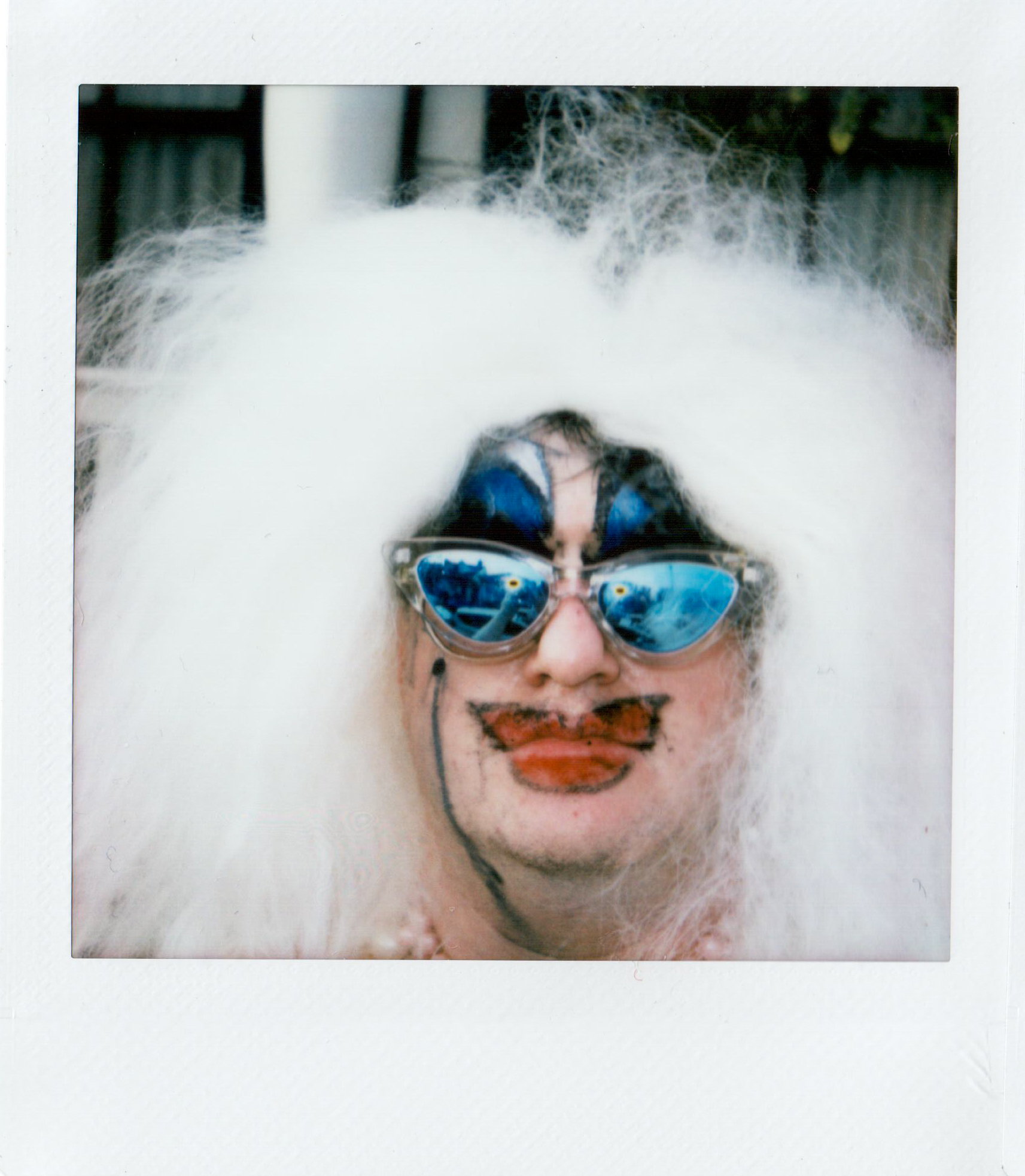
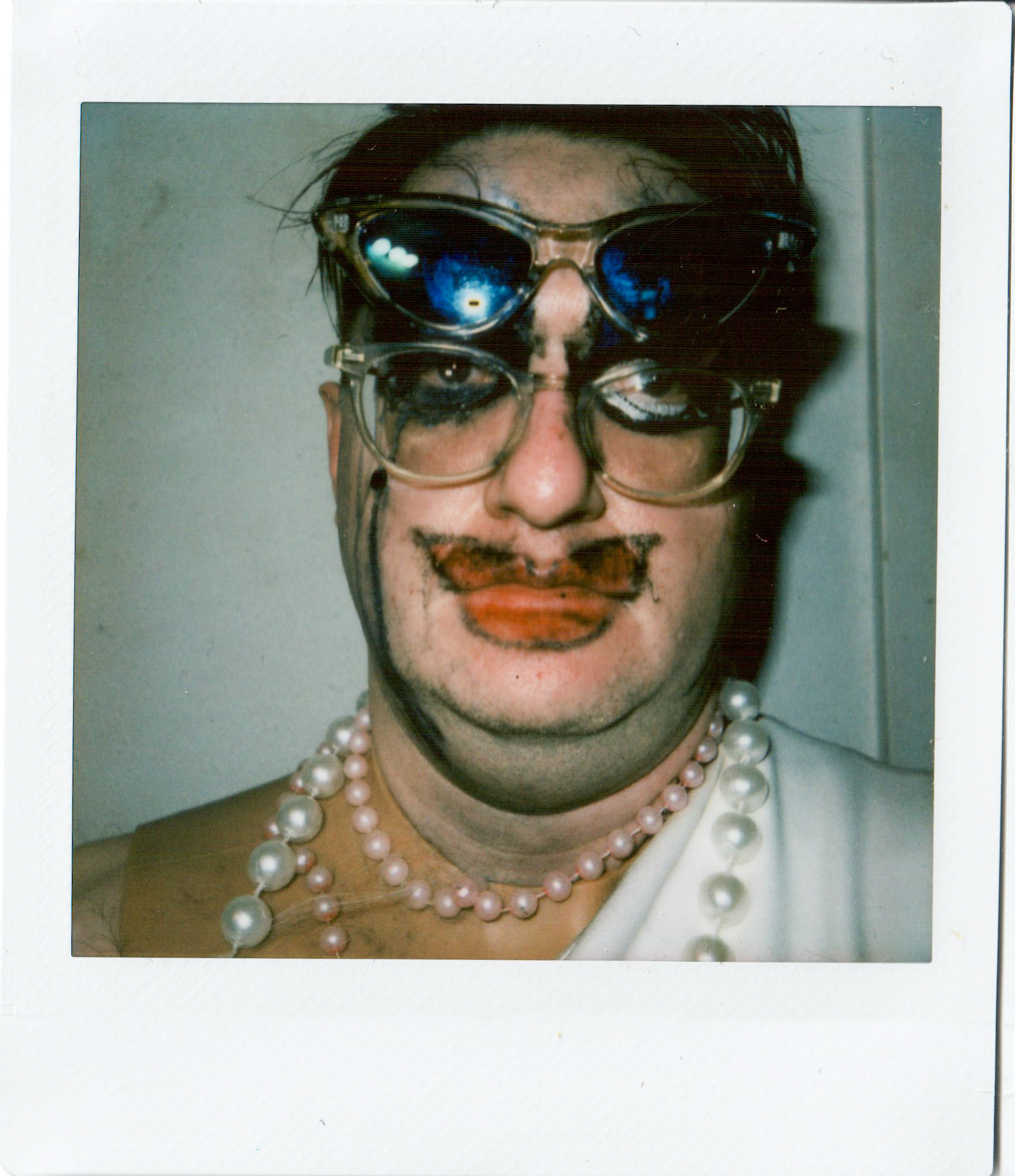
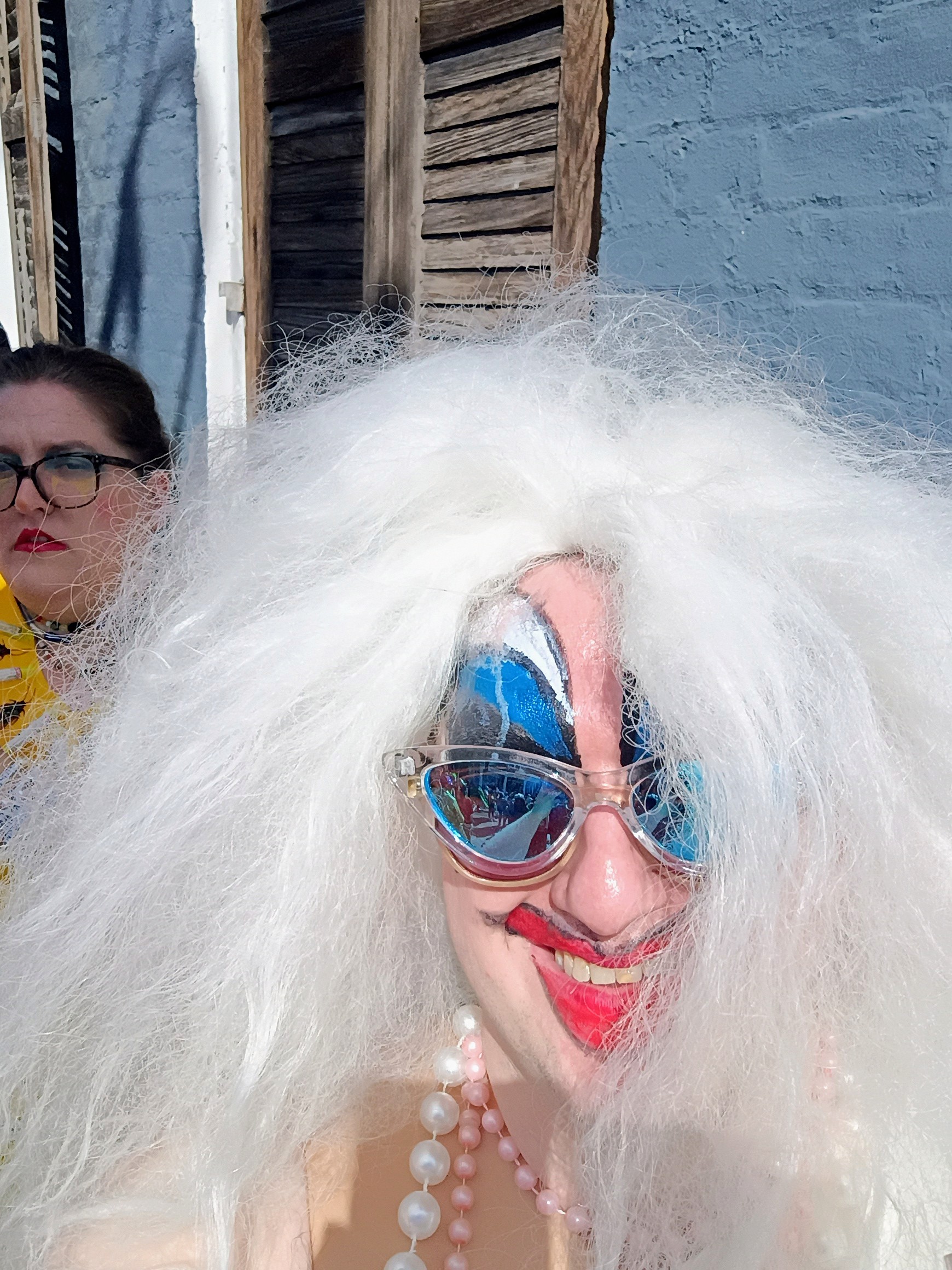
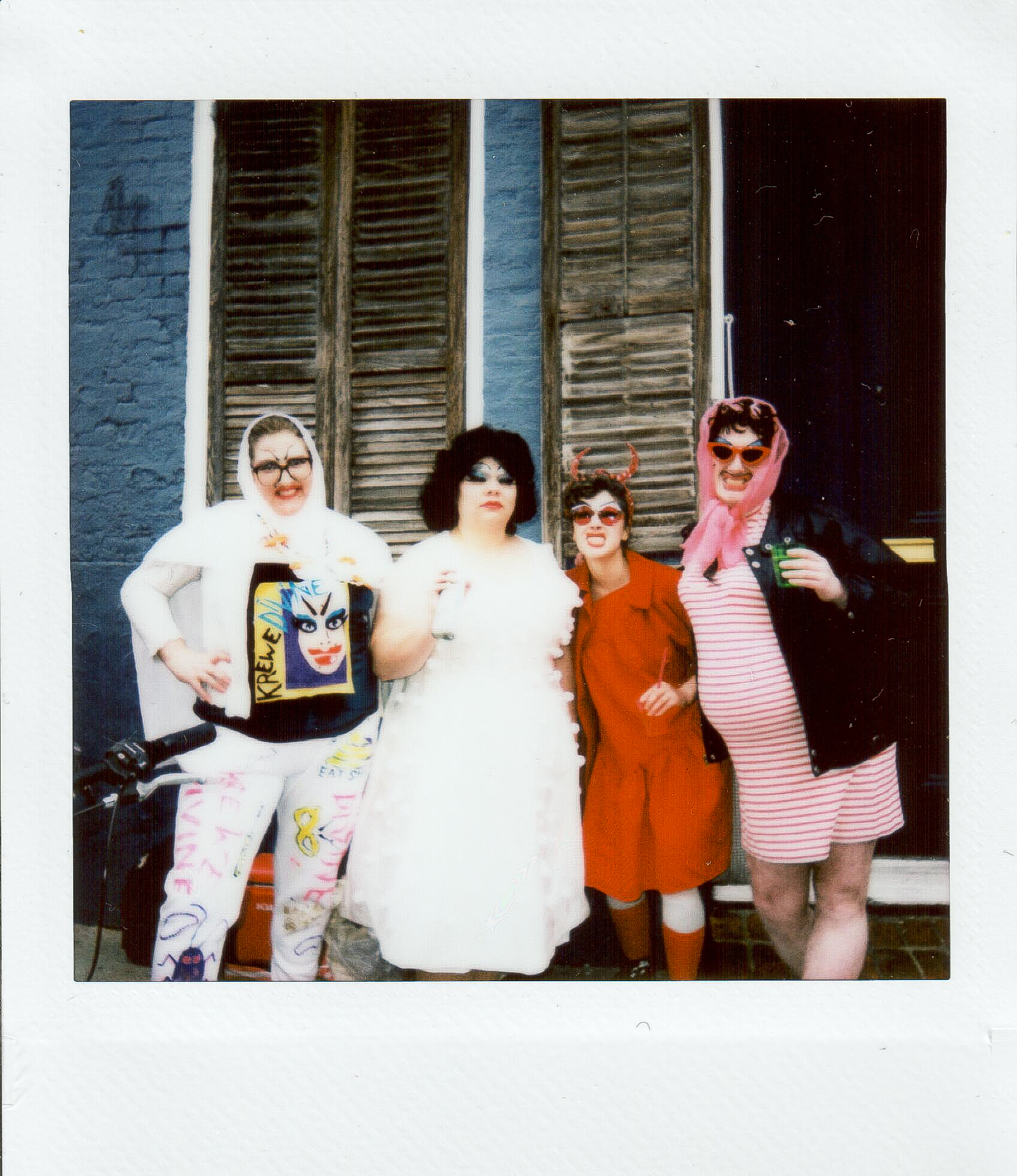
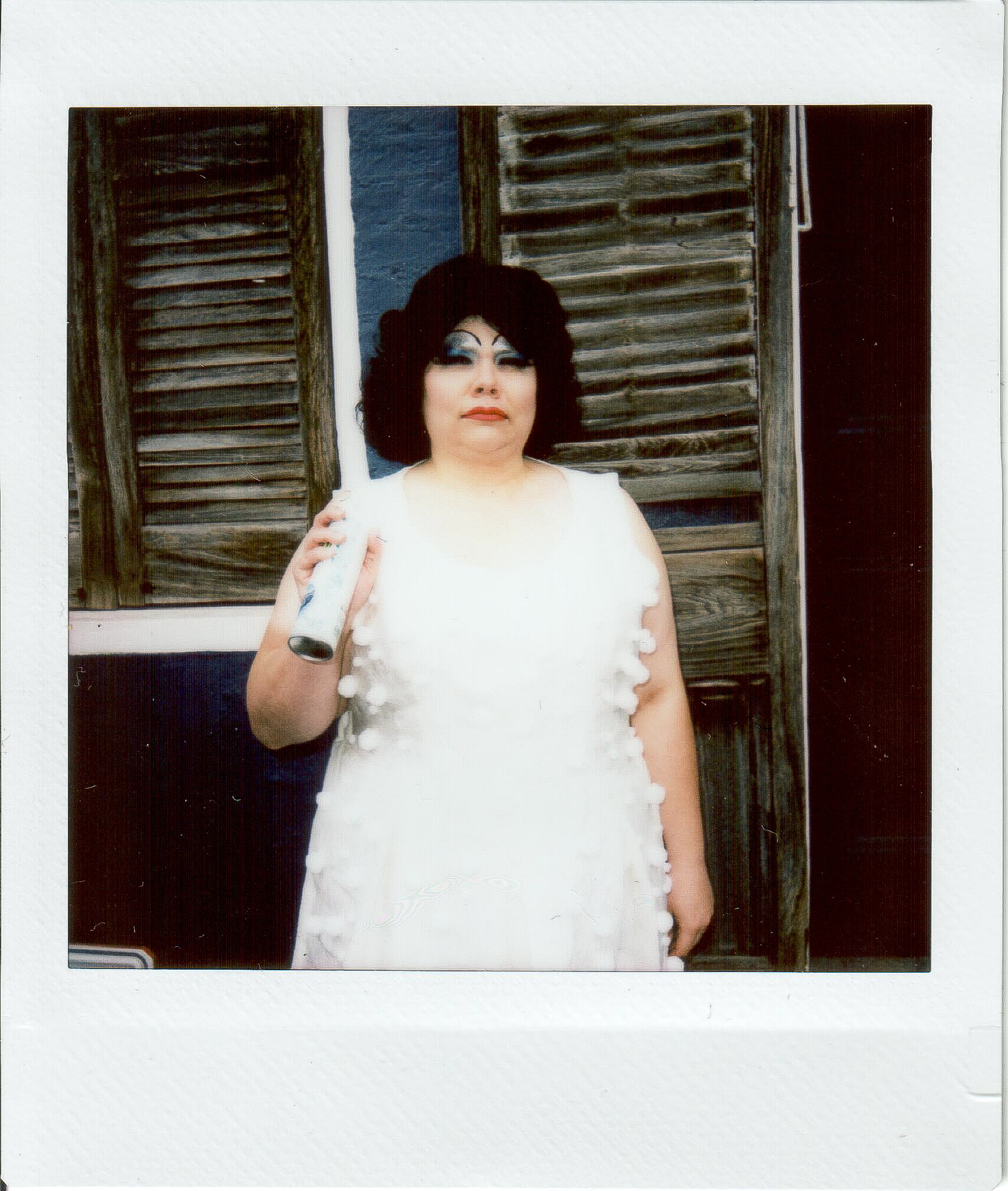
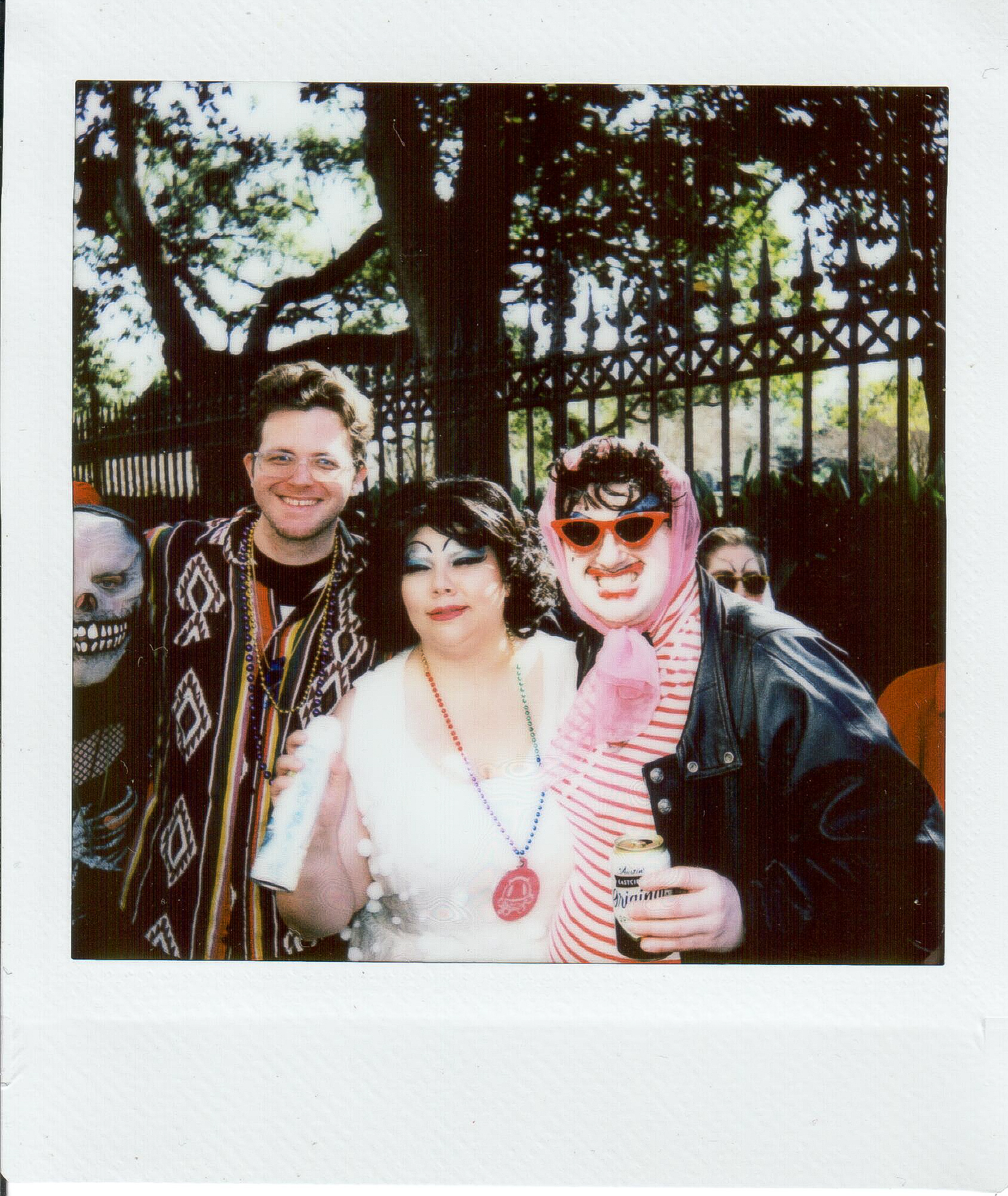
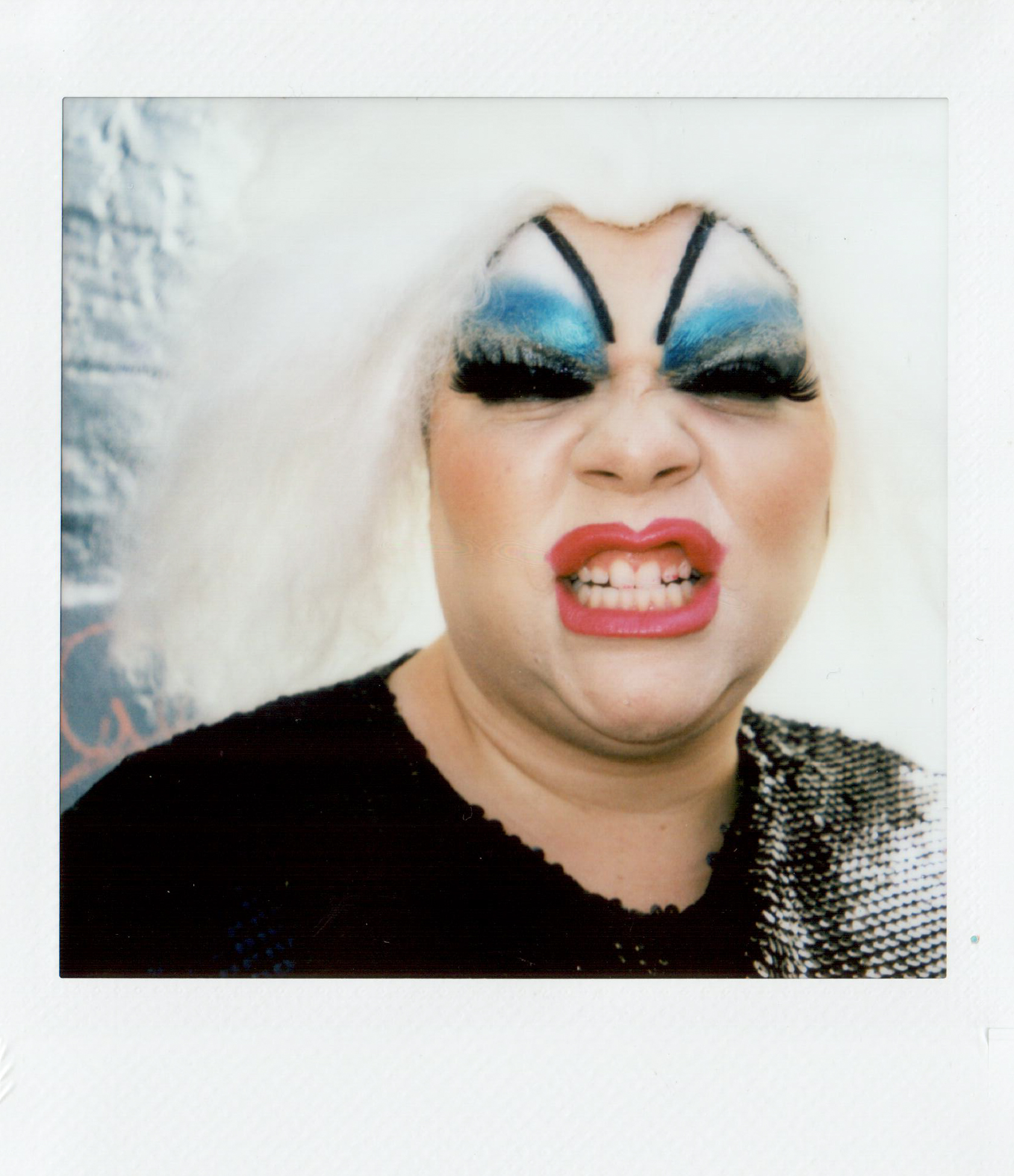
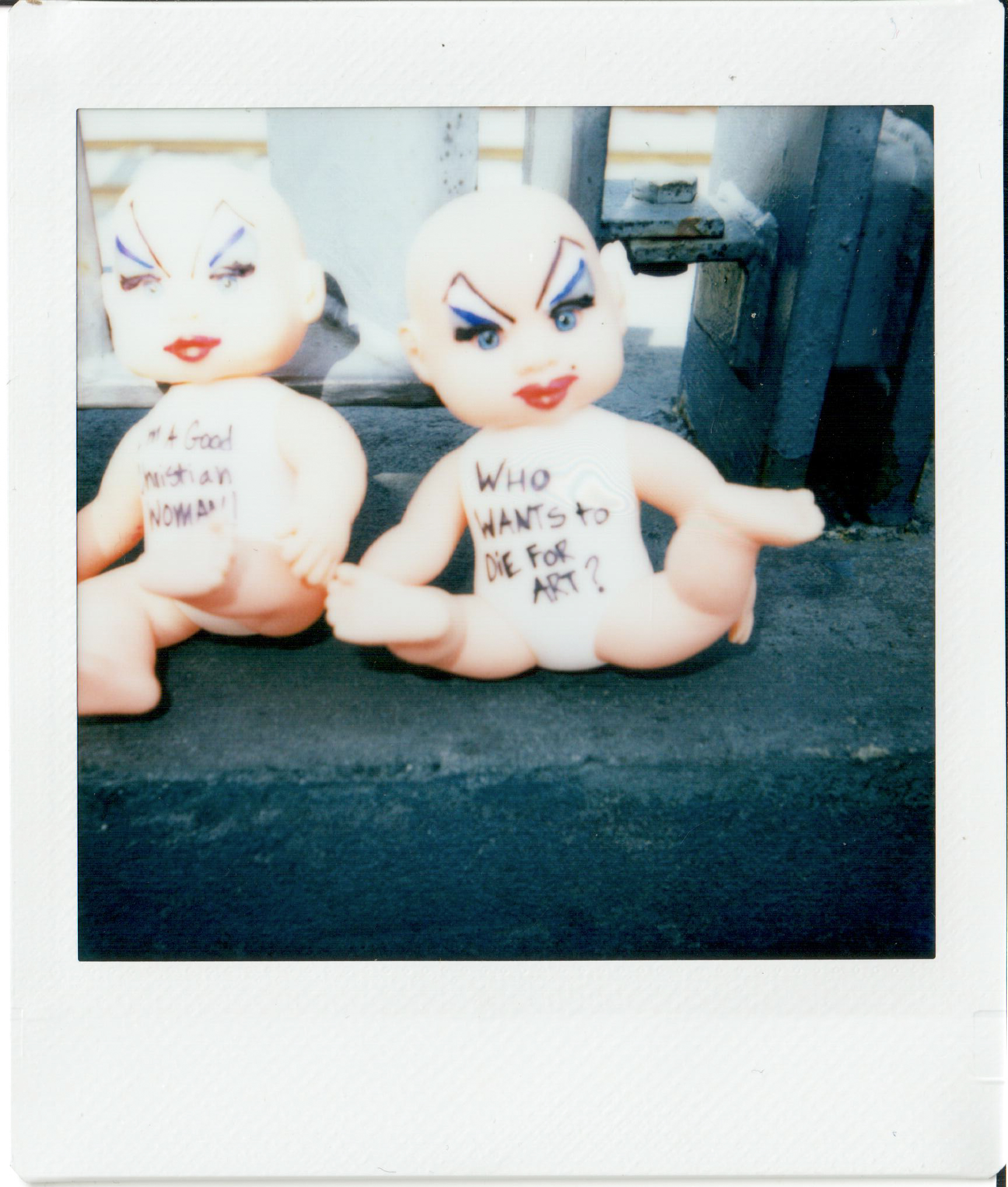
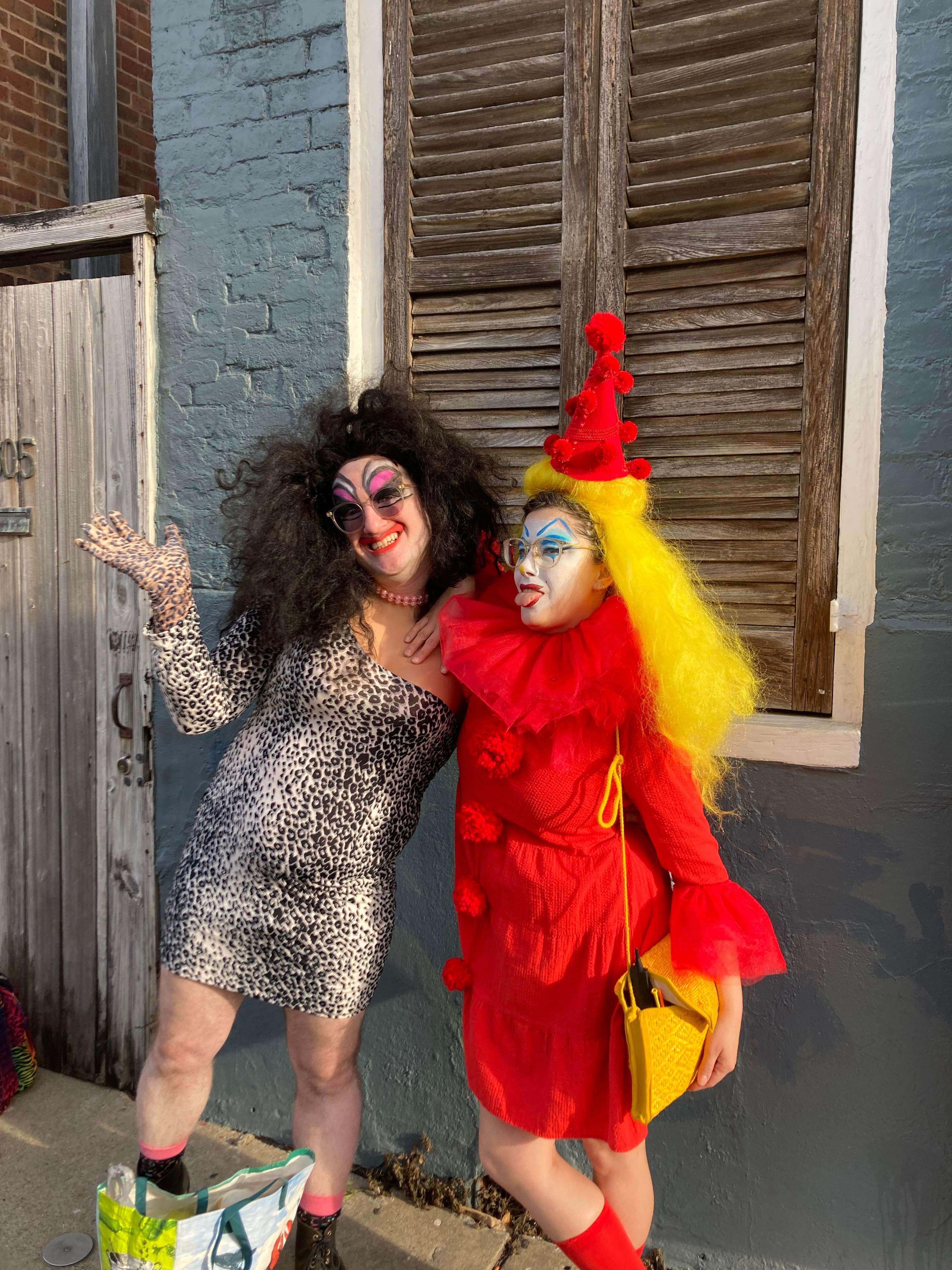
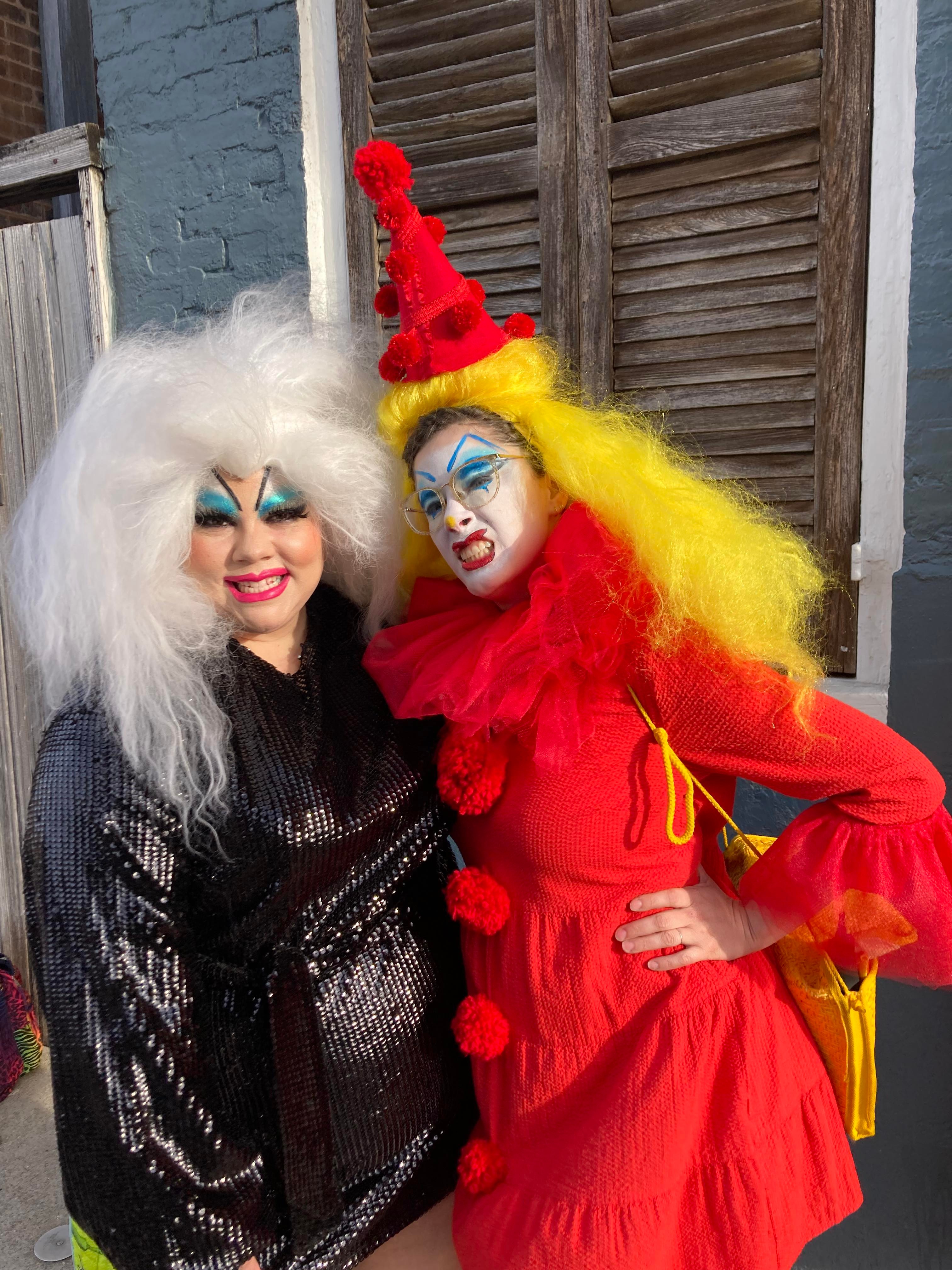
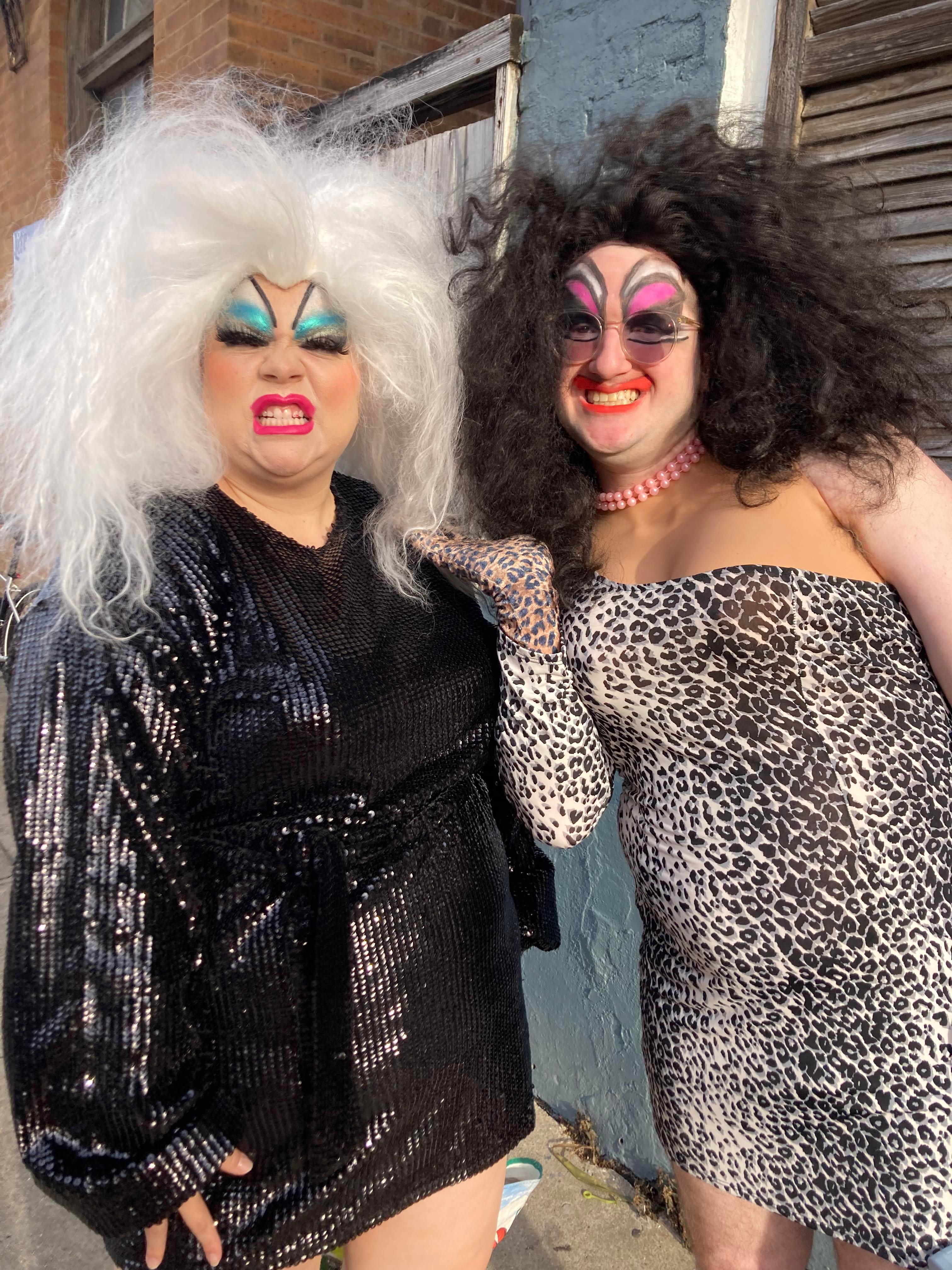
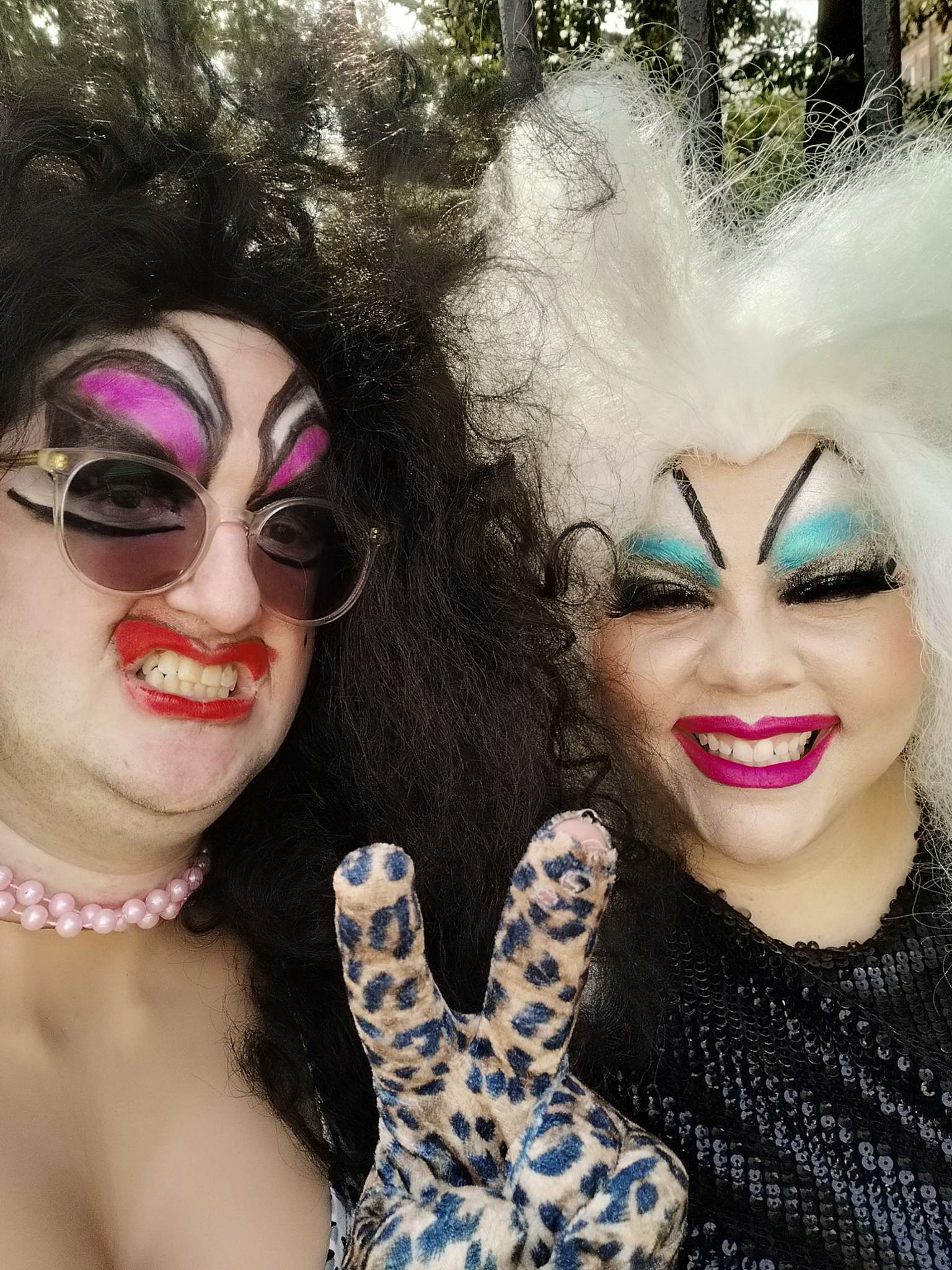
For Carnival 2017, a few members of the Swampflix crew joined forces to pray at the altar of the almighty Divine. The greatest drag queen of all time, Divine was the frequent collaborator & long-time muse of our favorite filmmaker, John Waters. Her influence on the pop culture landscape extends far beyond the Pope of Trash’s Dreamlanders era, however, emanating to as far-reaching places as the San Franciscan performers The Cockettes, the punkification of disco, and Disney’s The Little Mermaid. Our intent was to honor the Queen of Filth in all her fabulously fucked-up glory by maintaining a new Mardi Gras tradition in Krewe Divine, a costuming krewe meant to masquerade in the French Quarter on every Fat Tuesday into perpetuity.
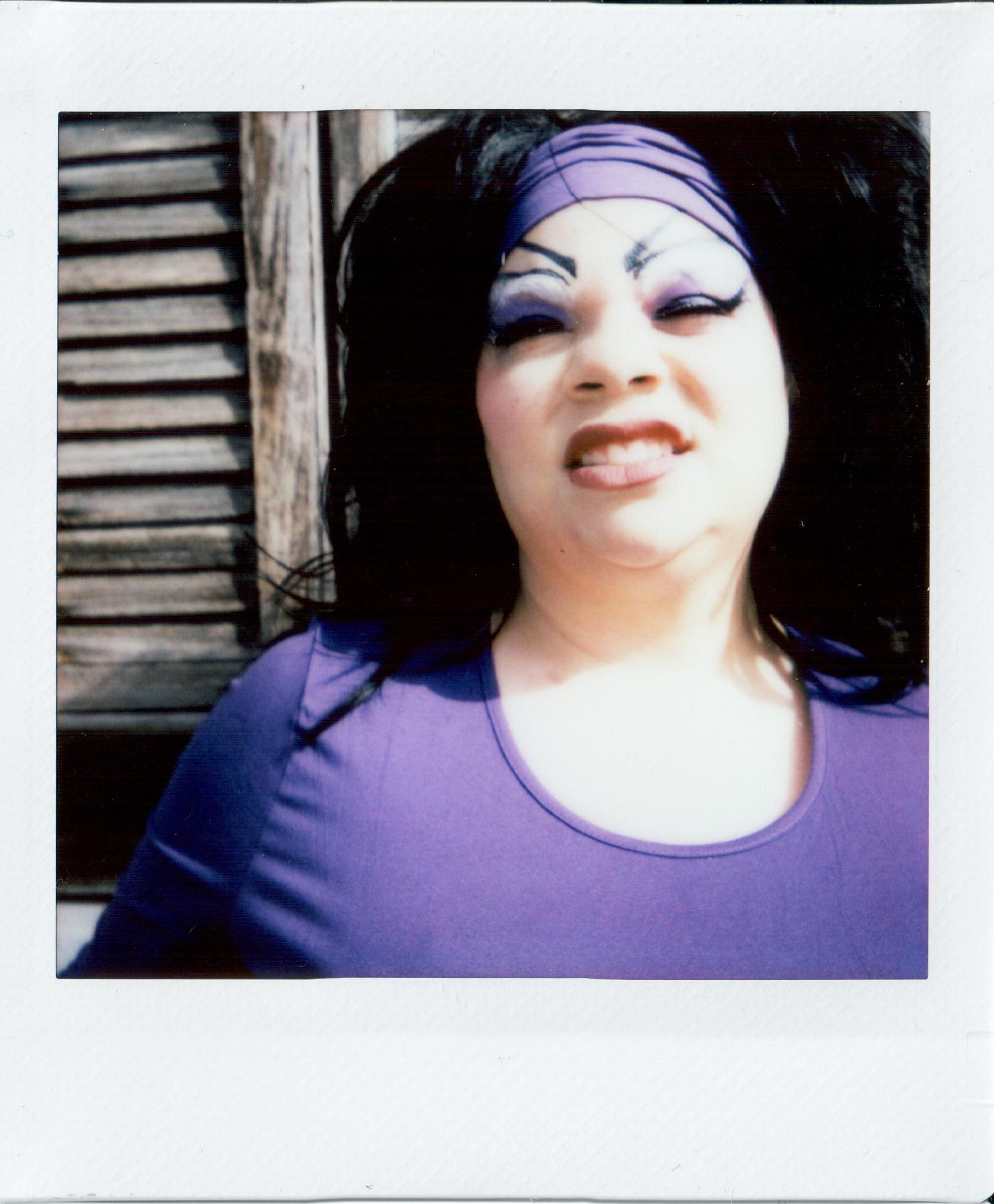
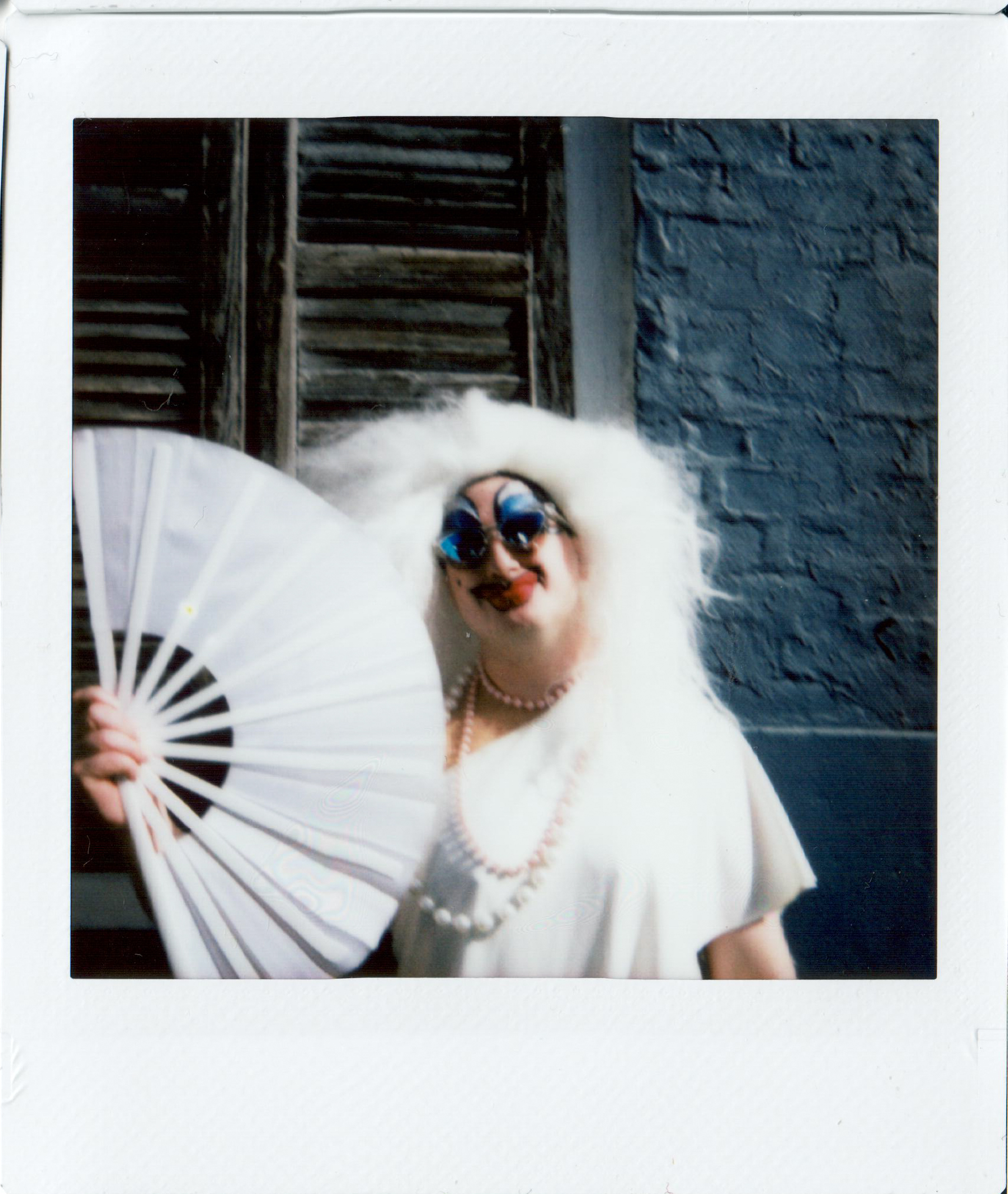
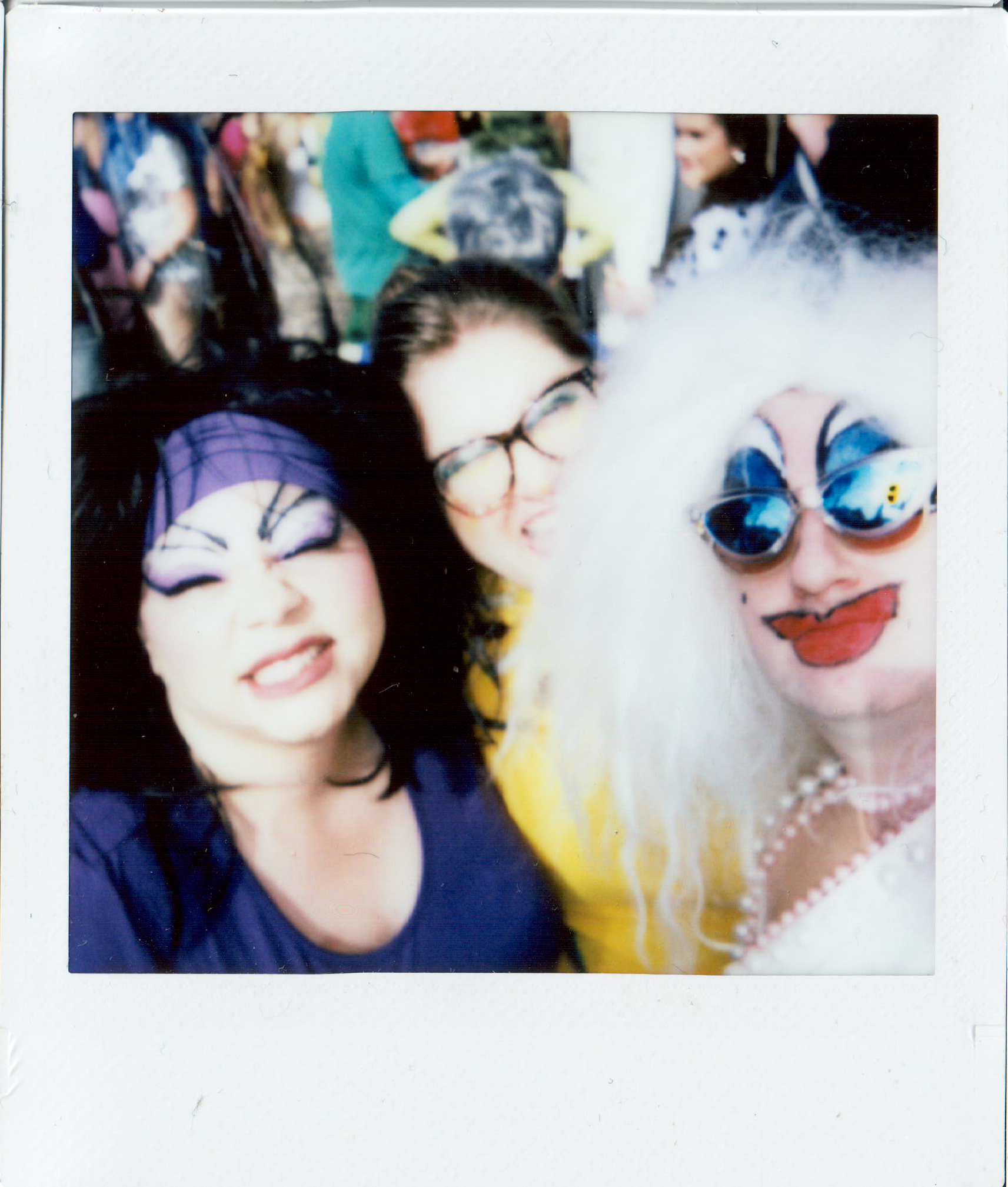
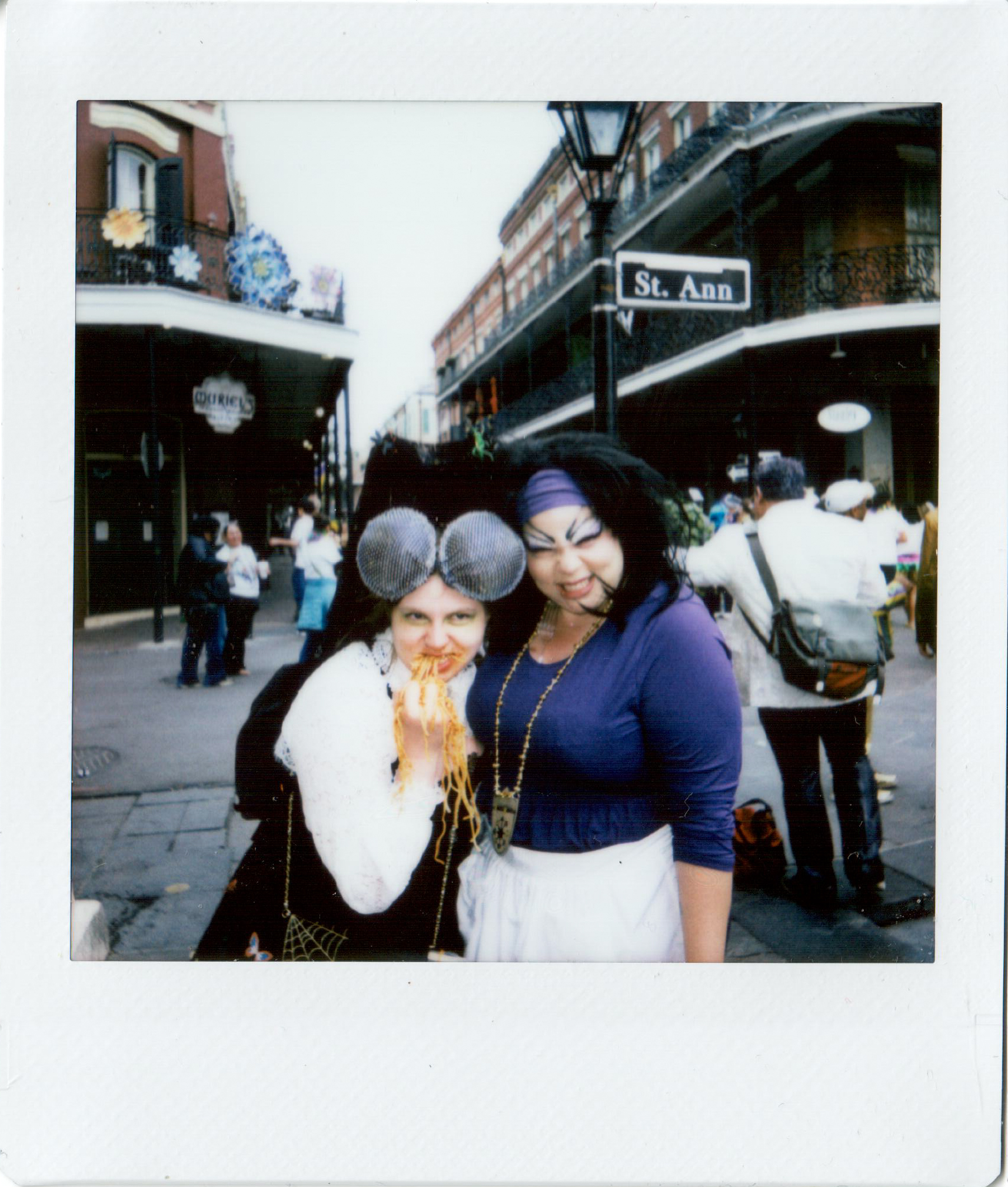
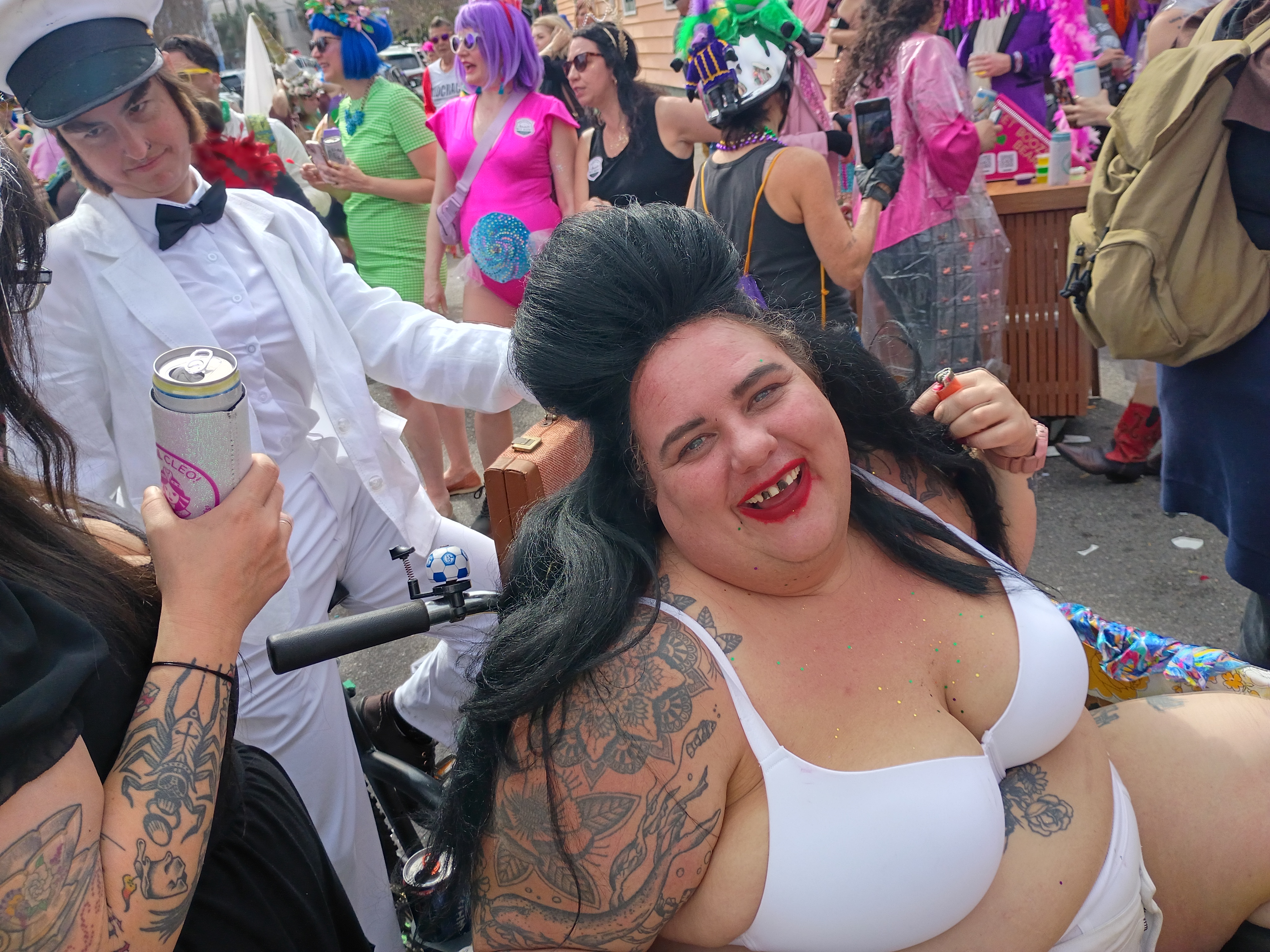
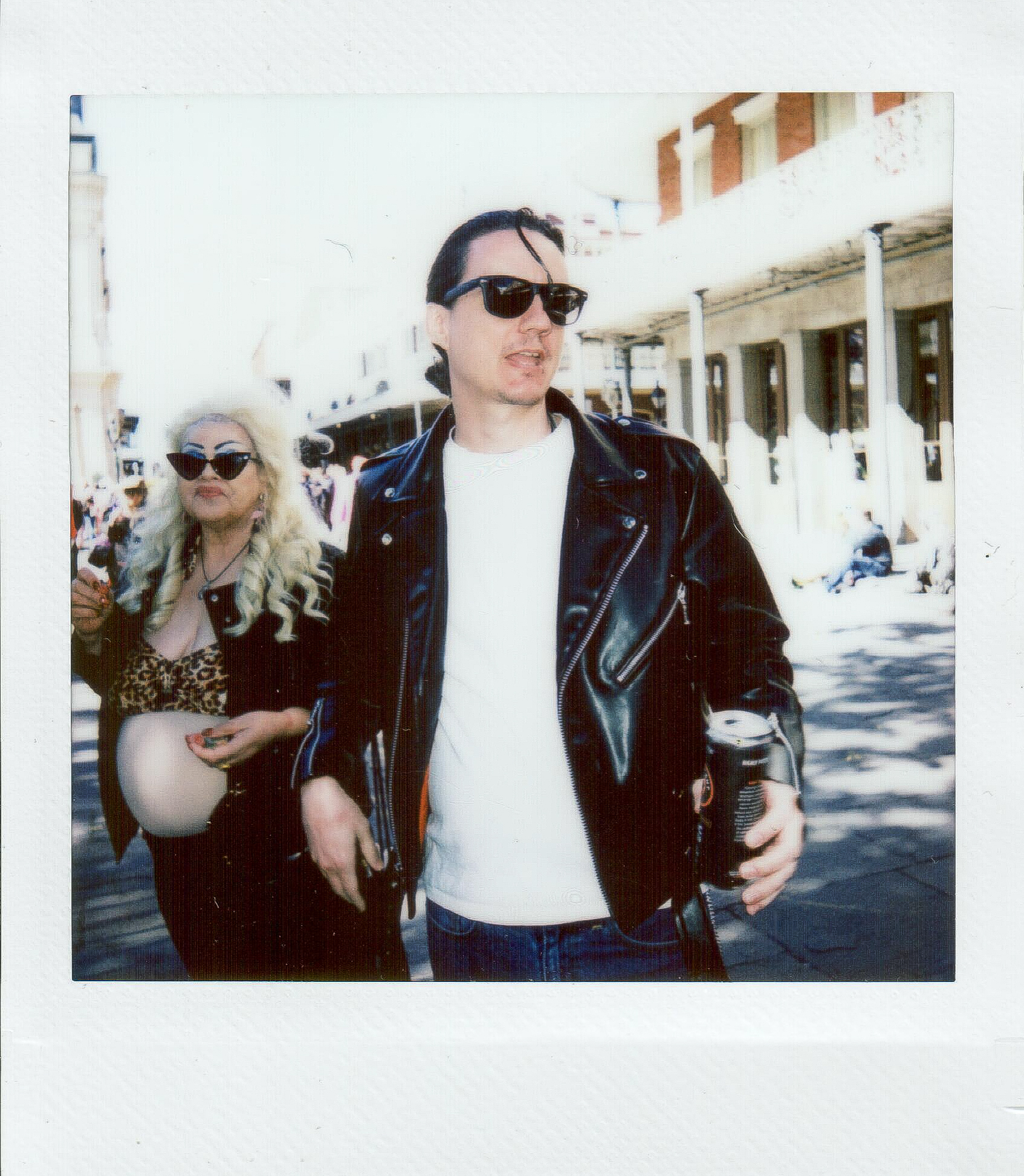
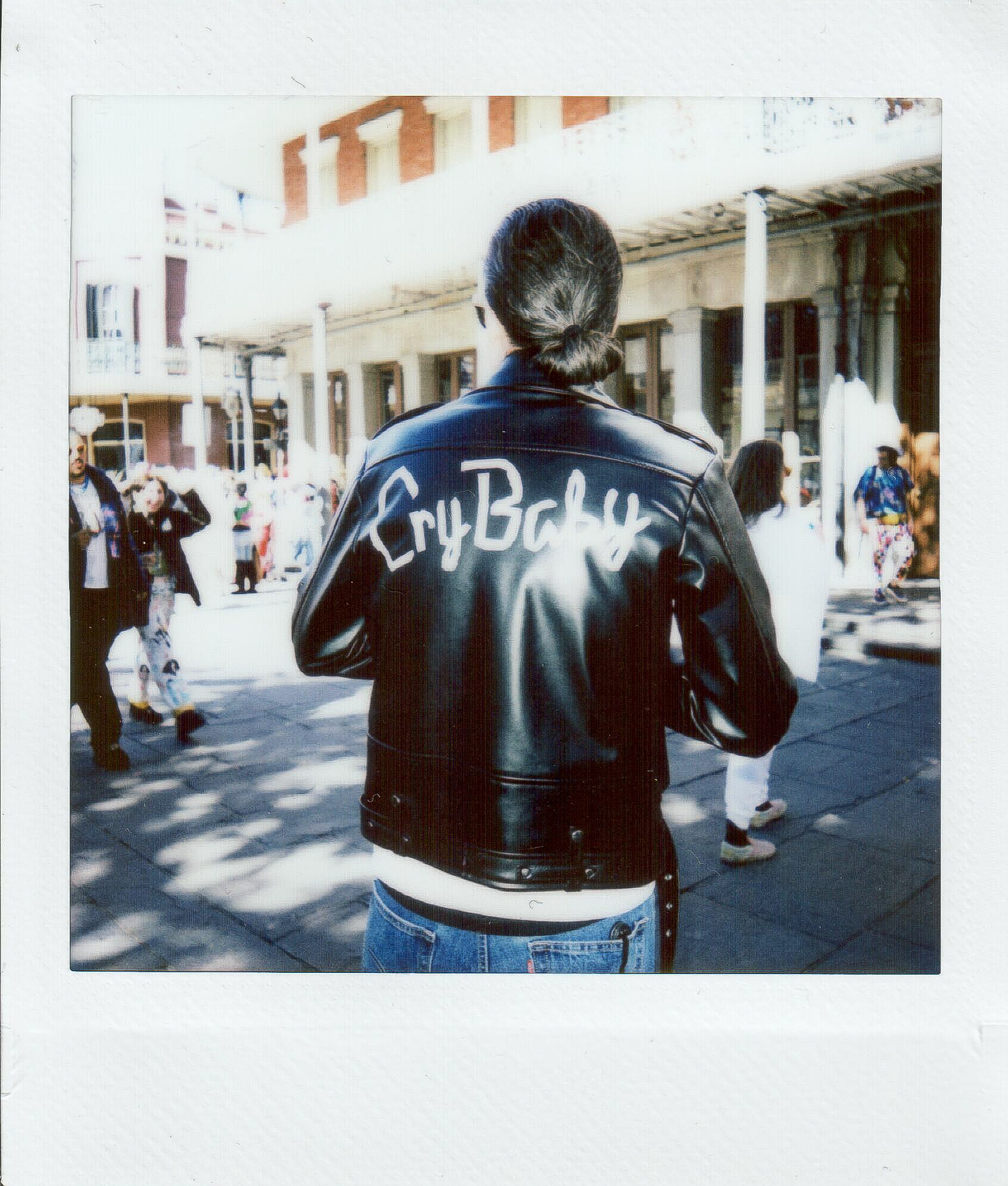
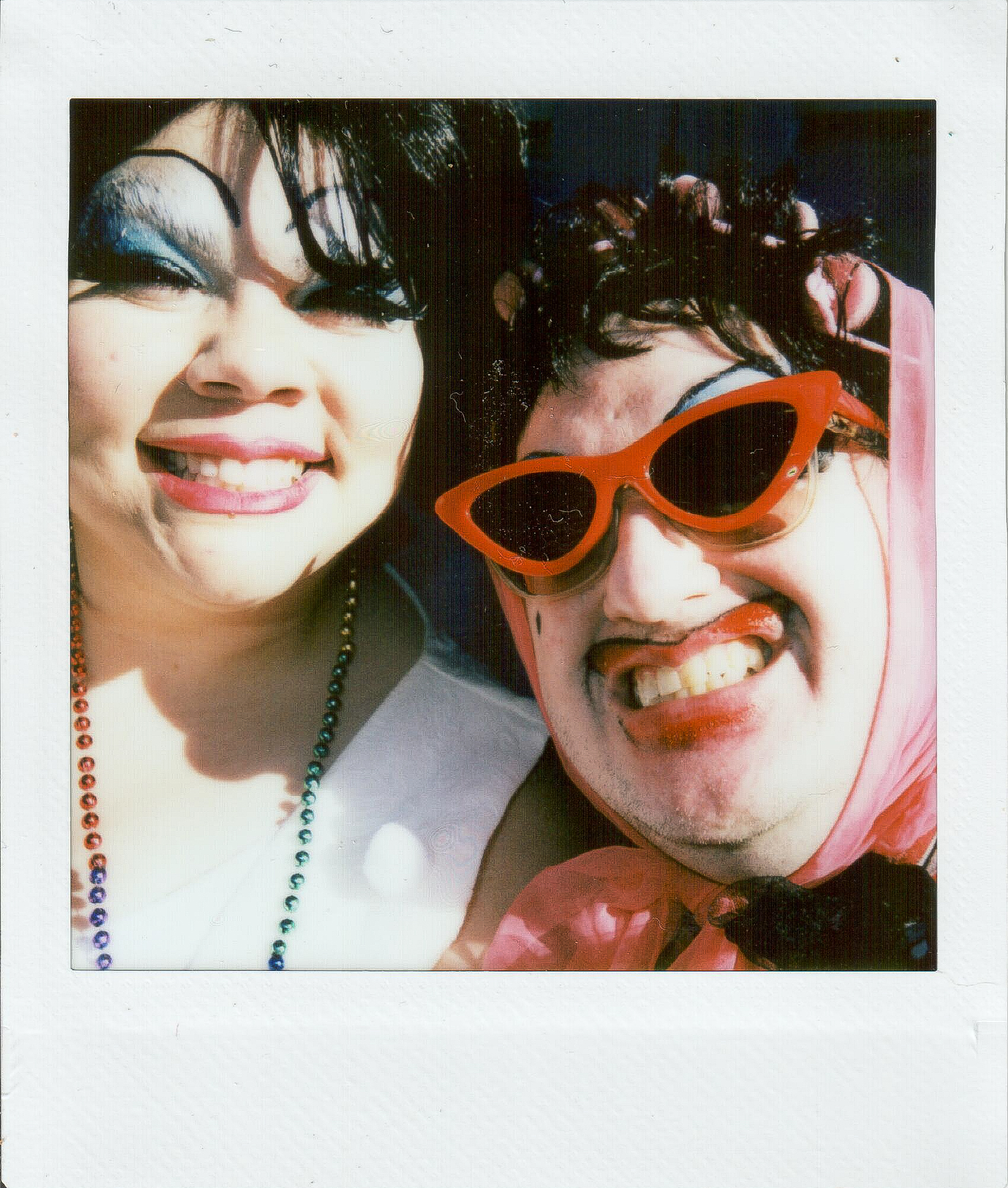
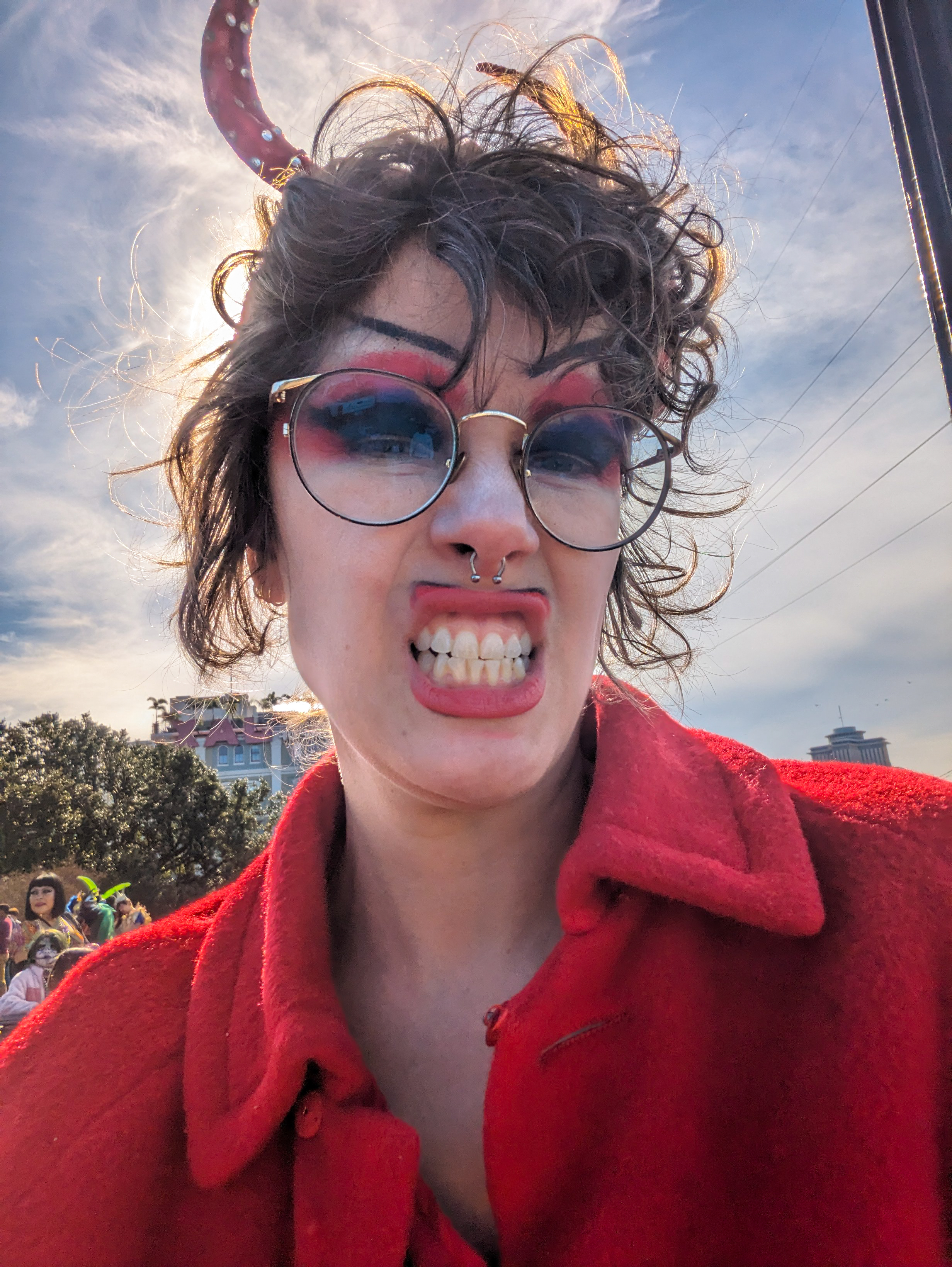
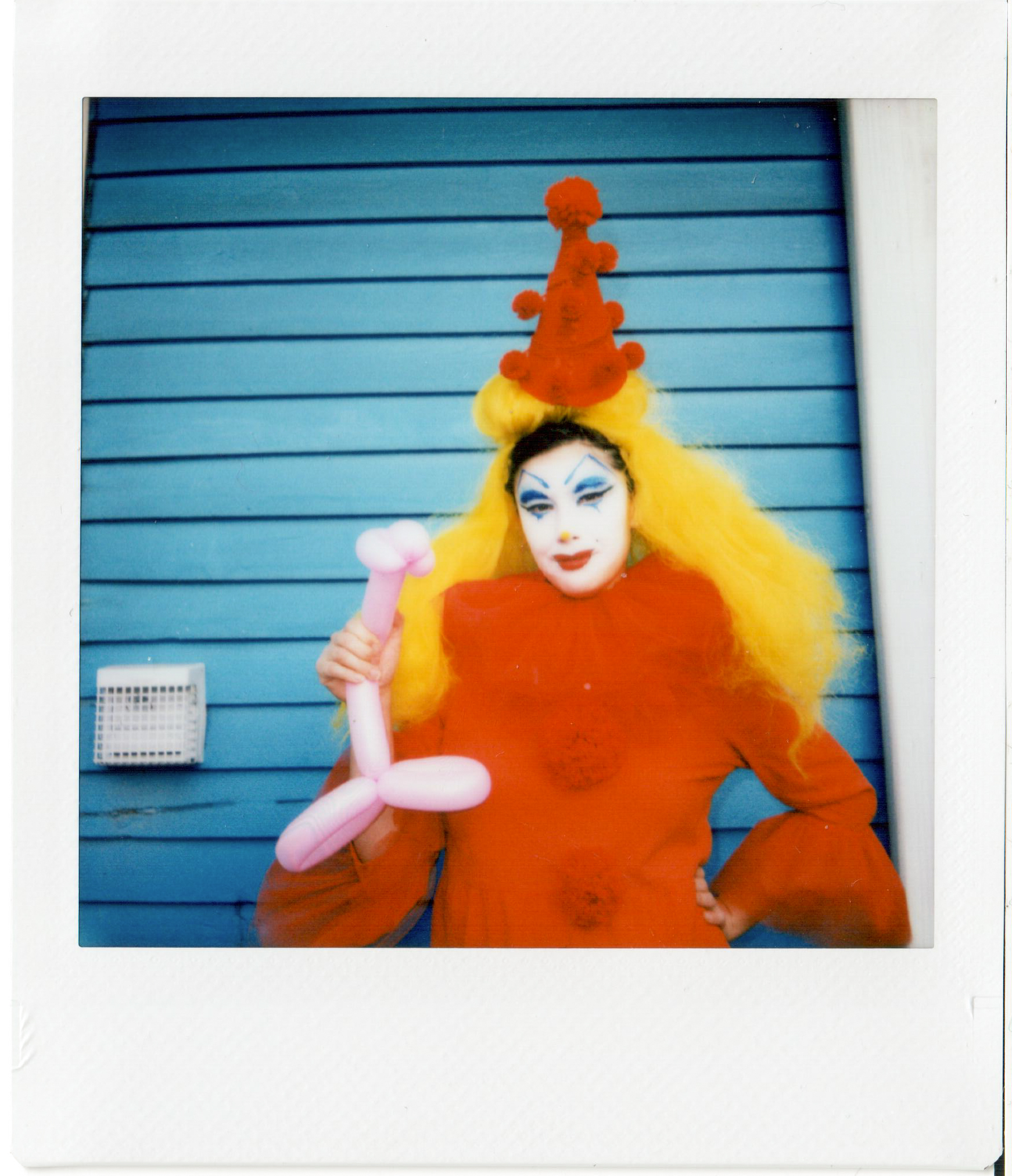
There’s no telling how Krewe Divine will expand or evolve from here as we do our best to honor the Queen of Filth in the future, but for now, enjoy some pictures from our 2026 excursion, our seventh outing as Swampflix’s official Mardi Gras krewe:
For Carnival 2017, a few members of the Swampflix crew joined forces to pray at the altar of the almighty Divine. The greatest drag queen of all time, Divine was the frequent collaborator & long-time muse of our favorite filmmaker, John Waters. Her influence on the pop culture landscape extends far beyond the Pope of Trash’s Dreamlanders era, however, emanating to as far-reaching places as the San Franciscan performers The Cockettes, the punkification of disco, and Disney’s The Little Mermaid. Our intent was to honor the Queen of Filth in all her fabulously fucked-up glory by maintaining a new Mardi Gras tradition in Krewe Divine, a costuming krewe meant to masquerade in the French Quarter on every Fat Tuesday into perpetuity.
There’s no telling how Krewe Divine will expand or evolve from here as we do our best to honor the Queen of Filth in the future, but for now, enjoy some pictures from our 2024 excursion, our sixth outing as Swampflix’s official Mardi Gras krewe:
And so, with all of the festival buzz surrounding Yorgos Lanthimos’s upcoming vulgar Frankenstein riff Poor Things, we have lived to suffer yet another round of online Sex Scenes Discourse. It’s only been a month since the young Evangelicals of the American suburbs were traumatized by brief flashes of Florence Pugh’s breasts in Christopher Nolan’s Oppenheimer the last round, and now we’re hearing from international YA fiction nerds who claim that “Most actors and many viewers don’t particularly like or miss [sex scenes in movies]. Only film critics and some directors seem to want them.” Like everyone else who’s addicted to online outrage bait, I always find myself scrolling through the replies to these Sex Scene diatribes in stunned disbelief of the support they receive, convincing myself that Zoomer prudes are itching to bring back The Hays Code. Also like everyone else who’s addicted to this monthly ritual, I’d be a lot better off just putting down my phone and watching a dirty movie instead. It’s worth reminding ourselves that these anti-sex scene freaks don’t speak for an entire generation of moviegoers; they’re isolated cases of puritanical mania, most of whom get their steady stream of chaste content through Disney+ and romance paperbacks written for teens, only to be scandalized by intimate moments of nudity & bodily contact the one or two times a year they accidentally watch a movie for adults. For the rest of us—audiences who believe sex is a common aspect of human life worth interpreting onscreen—there are still a few cinematic holdouts that haven’t given up the culture war to The Prudes, despite constant online chatter decrying their existence. The very best way to combat Sex Scene Discourse is to log off and go see a dirty movie in public, the filthier the better, which is exactly what I did the week Poor Things kicked off another round of puriteen grumbling online. Actually, I saw two.
Because America is a nation founded by Puritans, my best bet finding graphic depictions of sex at my local multiplex is catching up with the few adult dramas that happen to land domestic distribution at international film festivals. Memphis-born American director Ira Sachs seems to understand this conundrum, which is likely how he ended up making his messy bisexual love triangle drama Passages in France instead of the US. Here, Passages was threatened with an “NC-17” rating for its frank, onscreen depictions of queer sex, the modern equivalent of an “X.” In Europe, it’s a standard-issue adult drama, acted out by a small cast of Euro film fest regulars familiar to mildly risqué dramas just like it: Franz Rogowski, Ben Whishaw, and Adèle Exarchopoulos. Rogowski stars as a temperamental, narcissistic German filmmaker living in Paris with his much stabler, milder-mannered English husband (Whishaw). At the end of a typically tense film shoot (of a fictional movie also titled Passages), Rogowski feels the communal attention to his control-freak antics & directorial authority plummeting, so he acts out by sleeping with a French woman on the film’s crew (Exarchopoulos), seemingly on a first-time bisexual whim. Addicted to the thrill of stirring up drama in his marriage and in the romantic life of his new sexual partner, the film follows his desperate, darkly hilarious stunts for attention as he plays his two lovers against each other for his own momentary amusement, until he pushes both relationships past their breaking point, leaving him inevitably, permanently alone. It’s basically Poly Under Duress: The Movie, as anyone who makes the mistake of finding Rogowski attractive is sucked (literally and figuratively) into his hedonistic little orbit. There’s nothing especially deep or revelatory about Passages as a character study of a horned-up narcissist, but it is always encouraging to see that someone is still out there making complicated dramas about messy adult relationships, and Sachs goes the extra mile by centering this particular story on The Messiest Bitch in Paris.
Sachs also dared to directly engage with the Sex Scene Discourse in his response to the MPAA’s decision to slap this would-be R-rated drama with a higher, penalizing NC-17 rating – yet another data point in the organization’s long history of homophobia (see also: their egregious R-rating for M Knight Shyamalan’s Knock at the Cabin earlier this year). The main sticking point with most sex scene haters is that they’re “unnecessary” because they “do not advance the plot.” Personally, I think anyone who’s watching movies for The Plot above all else are already lost causes and would be better off reading an airport novel than engaging with cinema as an artform, but I appreciate the way Sachs pushes back on this notion anyway. In Passages, all advances in plot & characterization are achieved through sex scenes. We learn more about these characters in their private moments of intimacy than we do in their more guarded public lives, and there’s something especially pointed about the way Rogowski’s character deliberately creates drama in the bedroom to make his weekly schedule more interesting now that he doesn’t have a film project to work on. In explaining his refusal to edit Passages to meet the MPAA’s criteria for an R-rating, Sachs stated, “It is a film that is very open about the place of sexual experience in our lives. And to shift that now would be to create a very different movie. To make an interesting sex scene is not easy. Each of the sex scenes to me is a chapter in the film. It has a story. And I wanted each one to have its own relevance and have its own details and be interesting to the audience. I think making interesting sex scenes is the hardest thing . . . What I tried to track here was not to look at sex, but to look at intimacy, not constructed through editing and avoidance.” That sounds like an artist who’s committed to the cause, and we’re lucky to have him fighting on the frontlines of the online Sex Scene Wars.
All that said, I don’t know that treating sex as a normal, natural human behavior onscreen is enough anymore. It might be time to escalate the weaponry of war and make our dirty movies even dirtier, officially adopting a scorched Earth policy. That’s why it’s always important to go see a John Waters repertory screening whenever it’s offered to you, and I’m fairly sure The Prytania’s recent screening of 1977’s Desperate Living was the first time a Waters film has played here since NOMA’s retrospective of his work in 2017. It’s been even longer since I watched Desperate Living in particular with a crowd, and it was projected off the same ancient DVD scan of the film both times, well over a decade apart, because there’s no better version available – a damn dirty shame. Partly a hand-constructed dystopia about a community of crust-punk murderess outcasts and partly a storybook fairytale about a lesbian uprising that topples an unjust monarchy, Desperate Living is my personal favorite John Waters film and, thus, my favorite work of art. About halfway through this most recent screening, I was thinking that this little D.I.Y. geek show manages to touch on every single cinematic subject I’m passionate about except witchcraft, and then I had the joy of rediscovering Mink Stole cooking up a magic rabies potion in a giant cauldron, completing the full set. I was also delighted to see more graphic queer sex on the big screen for all the same reasons detailed above, including its unexpected contributions to the almighty Plot. Yes, Waters includes plenty of his signature pure-shock-value sex & violence in Desperate Living, most notably in scenes where Edith Massey’s evil-queen villain expresses a distinctly Gay Male sexuality purely for the audience’s delight: spanking her army of leather-clad twink underlings, huffing their jock straps, and cheerfully exclaiming “Look at those balls!” at their naked, writhing bodies. However, there’s also a surprising tenderness in the sex scenes between the various lesbian couples of Mortville, most significantly in how Mink Stole’s relationship with fellow fugitive Jean Hill evolves from employer-employee to partners-in-crime to mutually-betrayed-lovers, all tracked through their onscreen sexual contact.
Waters has also been roped into commenting on the state of Gen-Z puriteens and Sex Scene discourse, because he’s the kind of interview subject that regularly gets roped into commenting on the state of everything. An interviewer from the Los Angeles Review of Books writes, “From the rosary job in Multiple Maniacs, to Divine playing both participants in a filthy roadside fuck in Female Trouble, to penetration via chicken in Pink Flamingos, Waters’s films are chock-full of sexual debauchery. I elicit his take on a recent opinion, seemingly held among a younger, online generation that sex scenes in films are unnecessary. Waters scoffs: ‘I haven’t heard that one. That’s a good one. Young people don’t want to see sex in movies? Jesus Christ.” Honestly, I appreciate that complete dismissal of Sex Scene Discourse as a worthwhile topic of discussion even more so than Sachs’s earnest attempts to combat it through his art. It’s laughable that an entire generation of young people would be disinterested in sex as a cinematic subject; we just happen to live in a time when that outlier opinion gets amplified online for outrage engagement, making the voice of a few sound like the voice of the many. I can report from the ground that there were plenty of young people (presumably ones with internet access) present at that recent screening of Desperate Living, and they were hooting & hollering just as loud as the elder perverts in the room, myself included. There was something righteous & defiant about watching such a filthy movie in public (screened as a weekend kickstarter for this year’s Southern Decadence festivities), as if we were protesting for our Constitutional right to watch graphic sex at the multiplex. Meanwhile, my mid-afternoon screening of Passages at The Broad that same week was much more subdued, as it’s a movie that treats sex as a normal, healthy aspect of daily life instead of a nuclear weapon to wield against Evangelical suburbanites.
In summary, the answer to the supposed problem of Sex Scene Discourse is the same answer to most problems in the Internet Era: go outside. It helps to live in a sizeable city with adventurously programmed cinemas like The Prytania and The Broad, of course, but according to the easily spooked adult YA readers of the world, you can’t seem to go see any movie without being accosted with an “unnecessary” sex scene these days, so any theater will do. And if there is absolutely no public access to adult-targeted movies where you live, it is your solemn duty to invite friends over to watch the filthiest movies you own with popcorn at home. Having recently invited friends over to watch Rinse Dream’s semi-pornographic take on Dr. Caligari, I can proudly say that I am doing my part. It is imperative that the puriteens do not win this particular battle in the culture war, even though I’m starting to think there aren’t enough puriteens in the world to register as a genuine threat in the first place.
For Carnival 2017, a few members of the Swampflix crew joined forces to pray at the altar of the almighty Divine. The greatest drag queen of all time, Divine was the frequent collaborator & long-time muse of our favorite filmmaker, John Waters. Her influence on the pop culture landscape extends far beyond the Pope of Trash’s Dreamlanders era, however, emanating to as far-reaching places as the San Franciscan performers The Cockettes, the punkification of disco, and Disney’s The Little Mermaid. Our intent was to honor the Queen of Filth in all her fabulously fucked-up glory by maintaining a new Mardi Gras tradition in Krewe Divine, a costuming krewe meant to masquerade in the French Quarter on every Fat Tuesday into perpetuity.
Our initial krewe was a small group of Swampflix contributors: site co-founders Brandon Ledet & Britnee Lombas, regular contributor CC Chapman, and repeat podcast guest Virginia Ruth. We were later joined by local drag performer Ce Ce V DeMenthe, who frequently pays tribute to Divine in her performances. There’s no telling how Krewe Divine will expand or evolve from here as we do our best to honor the Queen of Filth in the future, but for now, enjoy some pictures from our 2023 excursion, our fifth year in operation as Swampflix’s official Mardi Gras krewe (and our first year returning after the COVID-19 outbreak of 2020):
I’m often alienated by hagiographies of late-60s hippie culture, where Boomers & burnouts wax nostalgic about the time that they almost saved the world through the power of Positive Vibes. The early 2000s documentary The Cockettes is the one major exception to that personal distaste. The grimy San Francisco drag scene it profiles feels like it’s only hippie by default, emerging too early to be D.I.Y. punk and too late to be an echo of the Beats. The only other countercultural icon of the era that speaks to (and, honestly, guides) my sensibilities is the Dreamlanders crew, headed by John Waters. It’s no surprise, then that Waters and partner-in-crime Divine feature prominently in the film as Cockettes-adjacent artists at the fringes of the scene. It’s the one snapshot of hippie culture where I’ve ever genuinely felt “These are my people.”
Although their bottomless appetite for LSD and their complete lack of a work ethic often made their stage shows sloppy to the point of incoherence, the Cockettes had a clearly defined point of view as a visual art collective – at least in the medium of drag. They were basically a never-ending carnival where every single attraction was a bearded lady, freaking out even their fellow hippie communes with their 24-7 dedication to glamor & hedonism. Their version of drag makeup was distinctly modern, defined by exaggerated eye lines and mountains of glitter packed into their unshaved beards. Cisgender women were equals among the crossdressing men in the collective, establishing an aggressive genderfuck ethos long before that term was coined. While their makeup was cutting-edge, their wardrobe was purposefully old-fashioned. Most of their stage shows consisted of hard-tripping, half-naked drag queens singing showtunes & acting out Busby Berkeley chorus lines in the discarded rags of 1940s Hollywood starlets who’d left their gowns & furs behind with the changing times. The gimmick only worked because everyone in the audience was on the exact same drugs as the performers, but the documentary allows us to enjoy their visual artistry as a gorgeous lookbook in motion while members who survived the dual epidemics of heroin overdoses & AIDS outbreaks gush about the best of times in reverent “You had to be there” tones. It’s fabulous to behold, even when their half-forgotten anecdotes drift into “Kids these days” bitterness.
Of course, having John Waters on hand as your bearded-lady-carnival barker helps tremendously, as he’s one of our great living storytellers. Hearing him vouch for the Cockettes as “hippie acid freak drag queens” who conjured “complete sexual anarchy” out of the Peace & Love movement is a huge boost to the film’s entertainment value, and he’s interviewed extensively throughout to capitalize on that infectious enthusiasm. It’s a justified inclusion too, as the Cockettes’ San Francisco venue—The Nocturnal Dream Show at The Palace Theatre—was the first cultural institution outside of Baltimore to embrace early Dreamlanders pictures like Multiple Maniacs, and the Cockettes themselves were the first subculture to treat Divine like a legitimate celebrity (along with iconic queer soul singer Sylvester). Any excuse to hear John Waters riff on a subject he’s passionate about is well worth the time investment, but this particular queer-culture doc does way more than most to justify the indulgence.
Revisiting this documentary on DVD after only having seen it on a taped-off-the-TV VHS was like wearing glasses for the first time. The iconography of The Cockettes is visually splendid and, even two decades after its original printing, the Strand Releasing DVD does rightful justice to their visual art. As inextricable as their art & lifestyle were from late-60s hippie culture (so much so that their genderfucked utopia quickly fell apart in the early 1970s), I still see a grimy D.I.Y. punk ethos to their version of counterculture theatrics that’s missing from most of the scene’s proto-Burning Man feauxlosophies. If nothing else, I think it’s exceedingly easy to connect the dots from the Cockettes’ Old Hollywood carnival drag to the iconic costume designs of The Rocky Horror Picture Show, which directly influenced the visual markers of punk fashion, if not punk’s sexual politics. Their nostalgia for the long-gone days of functional hippie communism isn’t too different from the punk communes led by bands like Crass either. And then there’s John Waters—the only other hippie-era counterculture institution who’s outright proto-punk in his personal philosophy & art—putting his stamp of approval on the entire experiment. The Cockettes may have self-identified as hippies, but I’m claiming them as an example of ahead-of-their time punks, if not only so I won’t fee l so self-conflicted about waiting to re-watch this movie every goddamn day of my life.
Our current Movie of the Month, 1987’s Hello Again, is a fluffy romantic comedy about an undead but unflappable Shelley Long, one that sidesteps all of the possible morbidity of its zom-com premise in favor of A Modern Woman Making Her Own Way feel-goodery. Even after she’s resurrected from the dead, Long’s status as a medical phenomenon has less impact on the film’s tone & plot than her nature as a hopeless klutz among big-city sophisticates does. It’s a dynamic that allows her to go absurdly broad in fits of Mr. Bean-style physical comedy, often to the point where you forget there’s any supernatural shenanigans afoot in the first place. The film is less about her being undead than it is about her being adorably ungraceful.
What most surprised me about this fairly anonymous studio comedy is that there’s some shockingly substantial talent behind the camera. Director Frank Perry began his career as a New Hollywood troublemaker, filming excruciatingly dark, uncomfortable comedies about The Human Condition. Whereas Hello Again actively avoids the inherent darkness of its subject, earlier Perry films seemed to revel in the discomfort of their premises. So, I used this month’s Movie of the Month selection as an excuse to dig a little further into Perry’s back catalog to see just how dark those earlier films could get and if they had tangible connection to the mainstream studio comedies he was cranking out by the 1980s. Here are a few recommended titles if you enjoyed our Movie of the Month but want to see the darker side of its director.
The Swimmer (1968)
The most bizarre aspect of Hello Again is how matter-of-fact it plays the absurdity of Shelley Long’s return from the grave. She’s not a decaying corpse; she doesn’t have magical powers; she’s just there. That underplayed absurdism is something Perry had done before to much more sinister effect when he was still a New Hollywood buttonpusher (along with his then-wife Eleanor Perry, who wrote the majority of his early screenplays). In The Swimmer, Perry cast Burt Lancaster as an aging suburban playboy who, on a whim, decides to “swim home” by visiting a string of friends’ backyard pools across his wealthy neighborhood. It’s a boldly vapid premise that’s somehow molded into a low-key mindmelter of 1960s moral rot through an eerie, matter-of-fact sense of surrealism.
Like Hello Again, The Swimmer is more of a quirky character piece than it is concerned with the internal logic of its supernatural plot. Instead of only traveling by the “continuous” “river” of swimming pools he initially envisions over his morning cocktail, Lancaster spends a lot of runtime galloping alongside horses, leisurely walking through forests, and crossing highway traffic barefoot. He does often emerge from one borrowed swimming pool to the next, though, and along the way we dig deeper into the ugliness of his himbo playboy lifestyle. He starts the film as a masterful charmer, seducing the world (or at least the world’s wives and mistresses) with an infectious swinging-60s bravado. By the time he swims his last pool, we recognize him as a miserable piece of shit who doesn’t deserve to kiss the feet of the infinite wonderful women of his past who we meet along the way. The overall result is sinisterly ludicrous beefcake melodrama, presented in lurid Technicolor. Sirk could never, but Perry did.
Diary of a Mad Housewife (1970)
Although it’s ostensibly a back-from-the-dead zom-com, the dramatic core of Hello Again is much less about the supernatural circumstances of Shelley Long’s second chance at life than it is about her transformation from a dowdy housewife to a fully realized, fully satisfied person. And it turns out one of Frank Perry’s earliest professional triumphs is a much darker prototype of that same basic story. Diary of a Mad Housewife is a woman-on-the-verge black comedy about an absurdly horrid marriage that drives a put-upon housewife to a steamy, but equally toxic affair. Her husband constantly negs her in an abusive way; her side-piece boyfriend also negs her, but in a kinky way. She emerges from the other end completely miserable, but at least finally having done something for herself.
Most of the humor in Diary of a Mad Housewife is wrung from just how obnoxiously awful the husband character is to his “beloved.” From the second she wakes up, he floods her with a constant stream of complaints about her body, her clothes, her hair, and her behavior. It’s basically an early draft of Mink Stole’s ranting complaints at the start of Desperate Living– hilariously unpleasant & cruel in its never-ending barrage. Like in Hello Again, the titular mad housewife (Carrie Snodgress) struggles to rub elbows with elite sophisticates at the stuffy society parties her husband wants to attend (not to mention the housekeeping struggle of throwing those large-scale parties to being with). This earlier draft of that tension is just much darker than anything Hello Again offers, including a stubborn refusal to offer its put-upon protagonist a happy ending. Other highlights include a hunky-hipster Frank Langella, the world’s most rotten children, and a chaotic pre-fame cameo from “The Alice Cooper Band”.
Mommie Dearest (1981)
Maybe Diary of a Mad Housewife‘s proto-Desperate Living opening was not happenstance at all. The film very well may have been a direct influence on John Waters’s filmmaking style, as evidenced by Waters’s fawning commentary track on Perry’s most iconic film: the Joan Crawford biopic Mommie Dearest. I’ve owned my Mommie Dearest DVD for at least a decade, have watched it lots, and somehow didn’t notice until this month that it includes a full commentary track from Waters. He does a great job of quipping throughout it MST3k style while also genuinely attempting to revamp its reputation as a “so good it’s great” melodrama. More to the point, he recalls early in the runtime that a critic once attempted to insult him by saying he’s not “the underground Russ Meyer,” he’s “the underground Frank Perry.” Of course, Waters took that insult as a compliment, as well he should have. Frank Perry’s great.
I highly recommend watching Mommie Dearest with the commentary track flipped on, especially if you’re already seen it and want to spend some quality time with one of history’s greatest talkers. Waters has some great quips about how Perry frames Crawford as “a female female-impersonator role” & a Strait-Jacket style horror villain, but I mostly just appreciated the way he tries to reclaim the film as a genuine crowd-pleaser. Waters absolutely nails it when he explains, “There’s no better kind of movie than this kind of movie if you’re home on a Saturday afternoon with a slight hangover.” I’d also put Hello Again in that exact same category, even if its own campy humor is much more measured & straightforward.
Our current Movie of the Month, Alan Rudolph’s Trouble in Mind, is a stylish but lowkey neo-noir set in a fictional version of Seattle called Rain City, featuring an incredibly cool soundtrack from Marianne Faithful. Its oddball clash of 1940s noir nostalgia & intensely 1980s fashion trends is a one-of-a-kind novelty in many ways, not least of all in the unconventional casting of its mafioso villain.
For degenerates like us, the main draw of Trouble in Mind is going to be the novelty of seeing Divine, the greatest drag queen of all time, play a male villain outside the context of one-off gags in John Waters comedies. To that end, here are a few recommended titles if you loved Divine’s performance in our Movie of the Month and want to see more footage of him performing a male persona.
Out of the Dark (1988)
The closest role Divine played to his mobster villain in Trouble in Mind was an extended “special appearance” cameo as a police detective in 1988’s Out of the Dark. His final acting credit before his death, Out of the Dark is a kind of unofficial class reunion for the major players from the Divine-starring comedy-Western Lust in the Dust: Tab Hunter, Paul Bartel, and Lainie Kazan (among other cult movie superstars like Bud Cort & Karen Black). While the film itself is shameless 80s sleaze about a serial killer in a clown mask who targets phone sex operators in downtown Los Angeles, Divine plays his role as an old-fashioned police detective with the broad, vaudevillian humor of an SNL sketch, complete with a laughably fake mustache.
Out of the Dark is basically a disposable Skinemax slasher, but it’s got charm to spare if you’re already under the spell of its eclectic cast of B-movie all-stars. If you’re looking for a thoughtful examination of the everyday labor exploitations of sex work as an industry, you’re better off looking to Lizzie Borden’sWorking Girls. The “fantasy phone line” girls at Suite Nothings offer much schlockier delights, and Divine’s minor presence is only there to sweeten the deal.
I Am Divine (2013)
Besides Trouble in Mind & Out of the Dark, there aren’t many places to see Divine performing a male persona for the camera. He was poised to become a much bigger star out of drag in a recurring role on the hit sitcom Married with Children but died the night before his first scheduled day on-set, tragically cutting short his ascent as a household name. That’s the exact kind of factoid you can pick up from the recent documentary I Am Divine, though, an intimate look at the drag superstar’s life & career. It’s nothing flashy in terms of its filmmaking aesthetics, but I Am Divine is still very much a worthwhile primer for Divine & John Waters devotees who don’t know much about the dastardly duo’s off-screen antics (re: anyone who hasn’t already read Waters’s memoirs like Shock Value & Crackpot). It’s also a great opportunity to see Divine out of drag, just being a normal-ass person, which is fascinating in its own way.
I Am Divine also offers insight into his post-Dreamlanders career, including the era when he filmed Trouble in Mind. I even picked up this factoid about our Movie of the Month long before we watched it: the gigantic diamond earring Divine rocks in the film was not provided by wardrobe but by the actor himself. He was super proud of saving up for that hunk of jewelry (after a fabulously delinquent life funded mostly by shoplifting) and paraded it around in public as much as possible in later years as a status symbol. It totally fits the mafioso character he’s playing, to the point where you might not even notice it, but I still love that Divine got to immortalize that obnoxious gem he was so proud of onscreen (and I never would have caught that detail without the documentary).
Of course, the very best source for Divine Content is always going to be his collaborations with John Waters. The only reason seeing Divine out of drag outside of a John Waters film is a novelty at all is because their collaborations inarguably defined his career (unless you were around to watch Divine perform live with The Cockettes or as a disco act, you lucky fuck). Divine did appear out of drag in a couple Waters films, even if only briefly. The foremost example of this might be the stunt in 1974’s Female Trouble in which Divine effectively rapes himself on a dirty mattress while playing two separate characters (teenage runaway Dawn Davenport and local pervert Earl Peterson). It’s a horrific gag, but it’s one played so broadly & grotesquely that you cannot take serious offense to the provocation – the John Waters specialty.
I firmly believe his best work out of drag is in the film Hairspray, though, another Waters picture where Divine plays dual roles. His housewife caricature Edna Turnblad rightly gets the most attention in the film (if not only for the uncanny horror of John Travolta’s reprisal of the role), but he also makes for a great male villain in the proudly racist TV station manager Arvin Hodgepile. The seething, grotesque bigotry that oozes out of Divine in that role is incredibly upsetting, and the character feels way more specific & nuanced than the broad caricatures he played in Trouble in Mind & Out of the Dark. It feels as if he were channeling some monstrous authority figure from his own youth that he despised, and you can feel that dark energy flowing through the disgusting pig. Of all of Divine’s performances in man-drag, the one in Hairspray is the one that lands as the most memorable & authentic to me. It’s the one that best hints that he might have pulled off a successful career beyond his John Waters collaborations had he not died so suddenly in his early 40s.
It’s been nearly two decades since John Waters’s last feature film, and it’s looking increasingly unlikely that there will ever be another. And that’s okay. The Pope of Filth appears to be totally content in semi-retirement, where he continues to entertain as an author and a travelling orator without having to beg movie studios for budgetary pittances. If Waters never makes another film again, at least he went out a return to form in A Dirty Shame, an underrated career retrospective that bridges the gap between his early-career gross-outs and his late-career “mainstream” comedies. Still, as he is the single greatest filmmaker of all time, it’s fun to daydream about all ~the John Waters projects that could have been~ had his Hollywood Studio cashflow not dried up so suddenly. A Christmas-themed comedy called Fruitcake (potentially starring Johnny Knoxville & Parker Posey) was the most recent unmade John Waters project drifting around the ether, but here are several others besides: a Wizard of Oz spoof called Dorothy the Kansas City Pothead, an ill-advised adaptation of Confederacy of Dunces, some unholy mutant titled Glamorpuss, etc. It’s difficult to speculate on any of these unmade projects with any clear detail beyond a basic elevator pitch, though, because they mostly pop up in media coverage as fun anecdotes in Waters’s bottomless repertoire of fun anecdotes. That is, with one major exception.
The closest one of John Waters’s unmade films ever came to production was in the mid-1980s, when the director was staging his unlikely transformation from arthouse reprobate to a household name. The 1988 paperback Trash Trio features collects three screenplays from John Waters’s “trash period”: Pink Flamingos, Desperate Living, and the unrealized sequel Flamingos Forever. In the intro to the book, Waters refers to Flamingos Forever as his “first abortion,” a “stillborn” project that failed to secure the proposed $600,000 budget it would’ve needed to reach the screen uncompromised. There were many roadblocks to Flamingos Forever‘s journey through the Hollywood System birth canal: clueless producers insisting on rewrites that included more Hot Babes, Divine’s dwindling enthusiasm for its various gross-out stunts, and, ultimately, the death of the irreplaceable Edith Massey. There was a brief window where Waters could have got the film off the ground under the infamously sleazy Troma Entertainment brand, but he held out for a better opportunity that never came. It’s probably for the best. I’m personally appreciative that Waters pressed on to new, subversive textures in works like Serial Momand Cry-Baby rather than revisiting Pink Flamingos for a victory lap sequel. Still, reading the screenplay for Flamingos Forever in Trash Trio all these years later is a total treat, as his authorial voice (as well as the mind-searing vocal performances of actors like Massey & Divine) is idiosyncratic enough that you can mentally picture the movie more or less exactly as it would have been had it not been quietly aborted decades ago.
Fifteen years after the events of Pink Flamingos, Divine and her cavalcade of perversions return to Baltimore to reclaim their title as the Filthiest Family Alive. In a beat-for-beat rehash of the previous film, Divine brags to the press about her wicked deeds, drawing unwanted attention from jealous members of the Marble clan, now led by the deceased Connie’s equally vile, child-snatching sister. Gross-out pranks and violent crimes ensue as the two families once again clash over Filth supremacy, with Divine ultimately (obviously) coming out on top. Of course, narrative doesn’t matter nearly as much in a John Waters film as the gross-out stunts & character quirks. While Flamingos Forever retreads a lot of familiar ground, it’s packs plenty of gags that would’ve been a scream if they were realized: the Filth family moving on up to an absurdly artificial Pee-wee’s Playhouse type compound, Divine carrying around Edie in a baby holster, a deranged performance of “The Hokey Pokey” (one of several gags that found its way into the A Dirty Shame), etc. It’s also a wildly offensive vision in the way that you’d expect from a Pink Flamingos sequel, including jokes involving blackface, necrophilia, children in drag and on heroin, and male rape. Even with the slightly-ballooned budget, it’s a trash-era John Waters screenplay through & through. No wonder producers were squeamish to back it.
To Flamingos Forever‘s credit, it does its best to escalate the filthy antics of its central cast to match the escalation of the proposed budget, especially when it comes to Divine. Amusingly, the screenplay recontextualizes Divine as a kind of filth superhero, an avenger of Bad Taste. As her war with the Marble clan heats up, Divine reveals previously unexplored superpowers that confirm her divinity: levitation, X-ray eyes, the production of flying turds (many, many flying turds). She also contrasts the heroic quality of her own filthy antics vs. the child-snatching stunts of the Marble clan, explaining in detail the difference between Good Filth & Bad Filth (the way Waters will walk you through the difference between High Camp & Low Camp in his essay work). Divine’s saga as a notorious murderess who kills because she loves attention from the press is already sketched out in a crude precursor to MCU-style sequential filmmaking across multiple loosely connected films: Mondo Trasho, Multiple Maniacs, and Pink Flamingos. In Flamingos Forever, she would have solidified her stature as a filth superhero in that lineage, even providing a flashback superhero origin story for how she became so filthy (in stubborn opposition to her cleanliness-obsessed parents). Flamingos Forever would not have broken new narrative ground for Waters’s early Family of Weirdos character comedies, but it is amusing to consider how far it would have unintentionally pushed that familiar story into the modern territory of sequential superhero storytelling.
I’ve gradually come to peace with the realization that I’ll likely never see a new John Waters film again, a blow that’s been softened by several recent developments in his cinematic legacy: Waters’s newfound joy as an on-stage storyteller, The Criterion Collection’s wonderful restorations of his trash-era classics, the occasional opportunity to experience repertory screenings of his work with new audiences (which somehow always still inspires mid-film walk-outs all these decades later despite their notorious reputations). I’d also chalk up reading the unmade screenplay for Flamingos Forever in Trash Trio as a similar comfort. It was a delightful to watch an unmade John Waters film projected only in the run-down drive-in theater of my mind (an experience I wisely saved for a hurricane-related power outage), even if his work is always better with an audience – as all comedies are. The unlikely Superhero Sequel qualities of the screenplay only added to that novelty, as movies this unabashedly filthy rarely secure Superhero Movie budgets.
I have never seen the 2007 movie musical Hairspray. Despite my bottomless appetite for John Waters #content and my morbid curiosity over the nightmarish images of John Travolta in prosthetic makeup & Divine drag, I’ve just never had much interest in watching the cursed thing. Waters would likely tell you that having such a wholesome, mainstream reinterpretation of his work out in wide distribution is a subversive act in itself, like how Mark Mothersbaugh openly revels in slipping subliminal messages into his corporate advertising jingles. He’s probably right too; the amount of people who’ve seen the 2007 musical Hairspray but not the 1988 original is alarming, and speaks to the power of having your messages amplified by major media players like Warner Bros. I just see more Broadway in the film’s advertising & surface details than I see Mortville or Dreamlanders, and unless I take a sudden unexpected swerve into loving showtunes I doubt that blindspot will be corrected any time soon.
There is a mainstream musical I believe taps into an authentic John Waters sensibility, however, one that was first staged on Broadway when Waters was in his mid-1970s prime. In fact, it’s so mainstream that its movie adaptation won six Oscars in its ceremony year, including Best Picture. 2002’s Chicago is so wrapped up in the mood & signifiers of its source material’s creator that it’s practically a work of Bob Fosse pastiche, regurgitating the iconic imagery & editing trickery of the Fosse classic Cabaret for a post-Baz Luhrmann world. That early-aughts burlesque revival aesthetic has little, if anything, to do with Waters’s own filmmaking sensibilities, which are more akin to a proto-punk landfill than anything as sleek as what you’ll see onscreen in Chicago. Where Fosse & Waters overlap is in their shared themes & storytelling concerns. While the Hairspray musical restages a very specific, single-film John Waters story in a new medium & context, Chicago instead tackles a broad topic that preoccupied Waters for almost the entirety of his filmmaking career (and his private life): tabloid-famous murderers.
When recently discovering Gus Van Sant’s (incredibly underrated) To Die For, it struck me how few mainstream movies there are on its same thematic wavelength. Nicole Kidman stars in the picture as a bubbly femme fatale who greatly enjoys the tabloid fame she earns by murdering her husband, likening it to the celebrity of a prime-time television actress. The only other big-name Hollywood films I could think of on that topic were Gone Girl and, of course, Chicago – in which Renee Zellweger and Catherine Zeta-Jones compete with each other to see who can turn their murderous crimes of passion into bigger press. For his part, John Waters has made at least six films on the subject (Pink Flamingos, Female Trouble, Multiple Maniacs, Serial Mom, Mondo Trasho, and Cecil B. Demented), most of which star Divine—the greatest drag queen of all time—as an unrepentant serial killer who literally gets off on the fame that accompanies being a murderess. In To Die For & Gone Girl, Kidman & Pike’s thrills over the press their crimes generate are mostly communicated through a wicked spark in their eyes. By contrast, Divine proudly boasts her murderous deeds to the press in stomach-turning monologues, pronouncing things like “Take a good look at me because I’m going to be on the front of every newspaper in this country tomorrow. You’re looking at crime personified and don’t you forget it!” and “Kill everyone now. Condone first-degree murder. Advocate cannibalism. Eat shit. Filth is my politics. Filth is my life!”. The murder-as-entertainment chanteuses of Chicago are a little coyer in front of the newspaper cameras & microphones that swarm them on courthouse steps, but in private they’re just as big of murderous braggards as Divine, which is rare to see in any Hollywood film, much less a musical.
This thematic overlap is likely one of happenstance. While the stage musical Chicago was first performed in the early days of Waters’s career, it was based on an eponymous dramatic play that was first staged a half-century earlier in the 1920s. The play was a satirical exaggeration of real-life tabloid celebrities of flapper-era Chicago who were famous solely because they were a) sexy and b) murderers. In his own life, Waters has long been fascinated by fame-through-crime celebrity, often attending public trials as a spectator as if he were watching live theater. In his first printed memoir Shock Value he writes, “Going to a sensational murder trial is the only way I can relax. Some people collect stamps, others pursue unfathomable physical-fitness programs, but the only way I can completely escape my everyday worries is to hop on a plane and head for the nearest media circus in a courtroom.” This fascination with criminal celebrity has led to real-life friendships with Death Row inmates, former Manson Family members, and eventual honorary Dreamlander Patty Hearst. And since Waters is obviously not entirely opposed to the idea of musical theatre as a medium—given his late-80s two-punch of Cry-Baby and Hairspray—Chicago feels oddly close to his auteurist preoccupations as a storyteller. He even joked during early rehearsals of Hairspray that his unexpected career shift to Broadway made him feel like he was Bob Fosse. I doubt Chicago was the impetus for this shift (the Hairspray musical was first performed around the time of the film’s 2002 release, so they were essentially contemporaries), but it unexpectedly fits the template of a John Waters story once you look past its Fosse-specific surface details.
It makes sense to me that a proper John Waters musical would turn the director’s career-long, life-defining obsession with unrepentant femme celebrity criminals into a series of showstopping numbers about sociopathy & sexual perversion. The Hairspray movie musical may have Waters’s stamp of approval as an act of mainstream cultural subversion (and his participation in a cameo role as a trenchcoat flasher), but Chicago feels much more narratively in tune with Waters’s directorial career at large. Picture a Pink Flamingos musical where Babs Johnson competes with the Marbles to see who can drum up the most press with their evil, murderous deeds – in song! Or a Female Trouble musical where Dawn Davenport sings her final monologue to her loyal “fans” at home from the electric chair. You could even copy the courtroom circus number from Chicago wholesale for a musical version of Serial Mom. I’m not saying that any of those possibilities would automatically be great, but any one of them would have a greater chance of tapping into a genuine Waters sensibility than the cursed Hairspray musical. All you’d have to do is swap out Chicago‘s cabaret décor & Fosse signifiers for some trash piles and a trailer park. You could probably even keep Zellweger’s casting as the lead, as she’s already tapping into the dazed starlet energy Melanie Griffith’s Honey Whitlock character served in Cecil B. Demented irl.
Welcome to Episode #105 of The Swampflix Podcast! For this episode, Britnee & Brandon meet over Skype to discuss three dirt-cheap, no-budget films starring drag queens, starting with John Waters’s debut feature Mondo Trasho (1969). Enjoy!


































 Swampflix