Movie of the Month: Head Over Heels (2001)

Every month one of us makes the rest of the crew watch a movie they’ve never seen before & we discuss it afterwards. This month Boomer made Alli, Britnee , and Brandon watch Head Over Heels (2001).

Boomer: Let’s get this out of the way right off the bat: Head Over Heels is not a good movie. Objectively, it’s actually kind of awful. It’s a nineties holdover of a specific kind of romantic comedy that paid for Meg Ryan’s house and every meal she will eat for the rest of her life. There’s a silly voice-over at the beginning about growing up in [small Midwest location] but now the protagonist lives in [major metropolitan city] with [impossibly perfect job], but gosh darn it she’s just so unlucky in love! It’s so dumb, and I love it so, so much.

I already wrote a more complete recap of the film’s plot in my review of it so I won’t go overlong with the details here, but I’d stand by my assessment of it as “Two parts standard turn of the century romcom, one part Rear Window, with just a dash of genderbent Zoolander.” Future Mean Girls helmer Mark Waters directs Monica Potter as Amanda Pierce, an art restoration expert who moves in with four supermodels after catching her fiancé in bed with another woman. With the encouragement of her newfound group of unlikely friends, Amanda reluctantly begins to open her heart to handsome neighbor Jim Winston (Freddie Prinze Jr.), upon whom the women spy through his windows. He seems perfect, until Amanda alone sees him murder a woman. Or does he?

Britnee, what did you think of the relationships between the women in this movie? The film just barely passes the Bechdel Test (when the models talk about fashion and trading clothing), but that’s not a make-or-break barometer, really. I feel like the representation of non-traditional female friendships and the presentation of the supermodels as being vain and vaguely self-centered but also powerful and accepting of their new friend was fresh, especially for 2001. What do you think?

Britnee: First off, I just have to say that I absolutely loved Head Over Heels. It has that late 1990’s vibe that I am totally addicted to (Romy and Michelle’s High School Reunion, Jawbreaker, She’s All That, etc.), even though the film was released in 2001. What can I say, brightly colored mismatched clothes, frosty lipstick, hair chopsticks, chunky heels, and halter tops get me jazzed. To top it all off, the movie stars Freddie Prinze Jr.! He’s such a great actor for those terrible-yet-addictive types of movies, so what a perfect choice for the lead guy in Head Over Heels. It’s a shame that he doesn’t really act anymore. If I’m not mistaken, I remember him becoming involved with WWE after he stepped away from acting, but the latest I’ve heard of Prinze is that he wrote a cookbook (with a forward by Sarah Michelle Gellar). I haven’t tried any of the recipes, but I hope that he makes references to his films in them (Spaghetti à la House of Yes).

To answer your question, Mark, I loved the relationships between the film’s female characters. Amanda’s friendship with the models and Lisa (her hilarious lesbian coworker) really shows that sisterhood comes in many forms, some more unique than others. In the beginning of the film, Amanda is harassed about not being married by her elderly coworkers, and I get it, being single wasn’t seen as an option during their youth, but it was still annoying to listen to their comments. Once she moves in with the models, they didn’t seem to be interested in her other than the $500 per month she was going to pay to live in a closet to fund their spending habits. I couldn’t help but assume that they were going to be a portrayed as the stereotypical self-absorbed group of air-headed models that were total mean girls, but thankfully, things didn’t go in that direction. The models, although very self-absorbed, did care about Amanda. They saw that she was interested (more like obsessed) with Jim, and they helped her score a date with him. Unfortunately, they covered her in makeup and dressed her up to their liking, making her look nothing like herself, but they were truly doing what they thought was best. And during Amanda’s quest to find out whether or not Jim was a murderer, they helped her break into his apartment to look for clues. They even endured Jim’s very intense poop and an absolutely disgusting septic tank shower in a public men’s room to get information for Amanda. If that’s not friendship, I don’t know what is.

What surprised me the most out of all the insanity in Head Over Heels was the incorporation of a murder mystery. I definitely didn’t see it coming, and I just about flew off my chair when Jim “murdered” Megan in his apartment. I sort of wish that Jim would’ve actually committed the murder and was part of a Russian mob or something like that because it would’ve made for a more interesting ending. Alli, what are your thoughts on the idea of Jim being an actual murderer? Or were you satisfied with him being an undercover agent?

Alli: I, too, actually kind of wish he was an actual murderer. The contrast between the bubble gum 90’s romcom aesthetic and a grim serial killer story really could have saved this movie for me. If Amanda had actually had a bad case of Hybristophilia (a crime fetish; I just looked up this word in case anyone was getting worried about me), I think the dark turn could have made for an extremely interesting and unique twist. Imagine her going to all this trouble and Rear Window-esque voyeurism to find out he actually did, only for her to realize that she doesn’t care and still loves him anyway. I thought the whole undercover agent thing was tacked on and sloppy. I understand that we’re supposed to be rooting for Amanda and want her to finally fall in love with Mr. Right, but it just seemed like a forced way to have a happy ending. It did make it possible to have that bizarre fashion show chase scene, though.

Fashion is an interesting part of this movie. The four models are dressed in perfect representation of current fashion for 2001, fashion that is now extremely dated. It seemed like, though, Head Over Heels was already acknowledging how ridiculous this all is. In the scene where the four models give Amanda a makeover, she knows it’s ridiculous. Her crush, Jim, knows it’s ridiculous.

Rather than a love letter to the fashion of the times, this movie strikes me more as a subtle satire. There’s vapid models constantly getting pointless plastic surgery done, who only care about rich men so they can continue a comfortable lifestyle (though, they do have a certain amount of Girl Power and protective instinct when it comes to Amanda), and there’s the fashion show gone wrong, but the press thinks it’s intentional. Brandon, what do you think about fashion in this film?  Do you see this movie as a satire of the industry?

Brandon: It’s clearly satire, but I think there’s a pretty distinct difference between the way this film handles its fashion industry parody and how that same attitude is executed in meaner, more pointed works of the era like Zoolander & Josie and the Pussycats. When we first encounter Amanda’s fashion model roomates, Head Over Heels clearly sets up a dichotomy between our protagonist’s supposedly more worthwhile career in fine art academia and the mindless frivolity of fashionista trend chasing. Unlike with Zoolander, however, the fashion industry and the perceived stupidity of fashion models eventually fades as a punchline and we start to see the value of their lifestyle. One of the roomates is a cunning academic who put her education on hold to take advantage of what a young, beautiful body can (temporarily) afford her. Casual nudity, aggressive catwalking, uninhibited attitudes toward sex, and blatant financial negotiations with men who want to be seen in public with them all afford these women a certain confidence & power that Amanda’s missing out on as a meek, academic shut-in. Waters (who is no stranger to dark humor in projects like Mean Girls and House of Yes) will sometimes undercut their power with somewhat tragic jokes about incest, child prostitution, and routine plastic surgery, but his script makes it clear that these are worthwhile, intelligent people who improve Amanda’s life with their specific skill set & collective life experience. There’s plenty of stray jabs aimed at the basic absurdity of fashion modeling as a profession, but the models themselves aren’t portrayed as nearly as cruel or idiotic as the people who look down on them merely for being models (especially the reoccurring police officer who won’t take their legitimate cries for help seriously until after they’re vindicated by his higher-ups).

One thing I love about the film that the modeling industry opens up to it is the incessant runway music. Gay 90s club music is just as omnipresent here as it is in the SNL comedy A Night at the Roxbury, which feels like a deliberate choice, given that this film would’ve been released a few years after the heyday of acts like La Bouche and Real McCoy. From the A*Teens’ aggressively bubbly cover of ABBA’s “Take a Chance on Me” in the make-over montage to the film’s wordless, repetitive Gay 90s theme music to the choice to include The Go-Go’s titular hit song “Head Over Heels” instead of the more obvious (and more romantic) Tears for Fears option, there’s a very specific soundtrack direction to Head Over Heels that keeps it away from the detached cynicism of Zoolander and moves it toward the absurdist fantasy of films like Spice World & Teen Witch. As Head Over Heels shifts its genre gears from romcom to Farrelly brothers-style gross-out to murder mystery to action comedy, the 90s style club music remains its only real constant, a consistent runway beat that feels just as important to the fashion world setting as the actual on-the-runway debacle of its Fashion Week conclusion.

Boomer, did you at all notice the soundtrack while watching Head Over Heels or did it just feel like typical romcom tunage to you? Is the film’s 90s-hangover club music significant to its fashion world aesthetic or am I allowing my love of acts like Deee-Lite & Snap! to make it appear to be more than it is?

Boomer: I love this question, because I’ve held a longtime fascination with films that are named for song titles. Until the 1980s, most movies that followed this naming convention were about music and starred musicians: White Christmas (1954) starring Bing Crosby, Rock Around the Clock (1956) starring Bill Haley and the Comets and The Platters among others, and I Wanna Hold Your Hand (1978) starring future Mrs. Brian De Palma Nancy Allen and focusing on four girls going to see The Beatles. Starting with John Hughes’s 1984 film Sixteen Candles, there was a boom of more romantic films taking their titles from classic love songs and contemporary pop music. Candles was followed by Girls Just Wanna Have Fun (1985), Pretty in Pink (1986), Some Kind of Wonderful, Roxanne, and Can’t Buy Me Love (all 1987), My Girl (1991), Love Potion No. 9 (1992), When a Man Loves a Woman (1994), One Fine Day (1996), Can’t Hardly Wait (1998), Simply Irresistible (1999). Of course, the veritable apotheosis of this concept was 1990’s Pretty Woman.

This conceit started to die out around the time that Head Over Heels was released (give or take a Sweet Home Alabama here and there), but I have to admit that, minus the cover of “Take a Chance on Me,” and the inclusion of the title song, none of the music in the film stood out to me all that much. That’s odd, considering how often I find myself consciously dissecting a film’s score while watching, sometimes to my own annoyance (while at a recent screening of A Tale of Two Sisters, every time the piercing, intense strings started playing, I found myself daydreaming about Psycho). Maybe the overall generic nature of the (accurately described) “gay 90s club music” is what makes the film flow with such grace. It fits well enough that it’s beneath notice, which is a compliment, even if it doesn’t seem like it.

When I hear the phrase “head over heels,” I too first think of Tears for Fears, but looking at the lyrics of the Go-Go’s “Head Over Heels,” it’s apparent why this is the title song and not the more famous new wave track. The song includes lines like “I couldn’t see the warning signs/I must be losin’ it/Cause my mind plays tricks on me,” which is much more in line with Amanda’s state of mind than poetical waxing about talking about the weather, wasting time, or being lost in admiration. It’s more consistent with the film’s thesis of a woman who has been fooled too many times but still finds herself smitten with a handsome stranger against her better judgment, although I can almost hear her say “don’t take my heart, don’t break my heart/Don’t, don’t, don’t throw it away” (presumably while sitting on the stairs outside a dreamboat’s apartment while he explains that his work persona is a facade).

To be honest, a part of me wishes that this was less of a romcom and more about an art restorer who gets into international shenanigans with the help of her fashion model roommates. Britnee, what do you think of the espionage plot? I agree with Alli that it feels tacked on and sloppy, and I wish the intrigue of smuggled diamonds had played a larger role in the overall narrative. Do you feel the same way? What changes would you make to the screenplay if you had the chance?

Britnee: I agree that the whole secret agent twist was sloppily thrown in. To be honest, I was waiting for another plot twist to happen about 5 minutes to the end of the movie where Jim reveals himself as a murderer disguised as a federal agent who was pretending to be a murderer. Anything would have been better than the overused agent-in-disguise cop out. I get it, Amanda and Jim needed to end up together, and this was written in the script so the two love birds could have their “happily ever after.” It just felt so lazy. Thankfully, there were many other interesting events that made up for it.

Like Mark, I too would like to see the film focus more on Amanda’s career as an art restorer because that has to be one of the coolest jobs on the planet. If I could make changes to the screenplay, I would definitely make the film more of a fantasy romcom that would focus on Amanda’s art restoration skills. Amanda receives a renaissance painting in desperate need of restoration, and as she starts to restore the faces on each person in the painting, they come to life. Sort of like the street art in the movie Xanadu. The characters from her paintings are confused about the time period change, and she has to bring them home with her until she can figure out a way to get them back to their world. When Amanda leaves the medieval folk at her apartment while she attempts to research the mysterious painting, her model roommates give them makeovers and take them out clubbing. Amanda would end up falling in love with one of the painting characters and in the end, she would chose to go back with them to their time period as she doesn’t feel like she fits in with early 2000s city life. Also, I would make sure that my version of Head Over Heels would be a bit slower than the original so the audience could have time to catch their breath and comprehend what’s going on.

Alli, did you feel as though the pace of Head Over Heels was extremely fast? The moment the film begins, Amanda’s voice immediately started to describe her upbringing, and everything was moving at 100 mph from that moment on.

Alli: I did think the pace of the movie was pretty strange actually. I felt like it breezed over interesting and important things and then spent too much time on others. Like you said, there’s barely any time spent on her career, even though it’s made out to be a minor plot point eventually, but we get to see a bunch of Freddy Prince Jr. doing chin-ups. I think part of it was that there was so much stuff going on in this movie, too much even. There wasn’t enough time to make a well paced film, because there was just a lot. It’s the sort of movie that makes you think, “less is definitely more.”

I think I would have cut out the jewel heist, and made it an art related plot. The diamonds just felt thrown in there. I know it was a good vehicle for the runway sequence, though. I think it would have also helped to have the big undercover agent reveal earlier on if we’re forced to go that route, instead of Amanda investigating this murder forever. Another thing that could go is the voiceover. We can see she’s in New York. We can see that she’s unlucky in love, but has a dream job. Maybe, I’m just being a hardline film snob here, but the voiceover felt completely unnecessary.

Brandon, are there any details you find unnecessary? Am I being too hard on the voiceover?

Brandon: “So dumb,” “sloppy,” “extremely dated,” “lazy,” “not a good movie,” “actually kind of awful;” I’m being a little unfair with the pull-quotes I’m cherry picking here, but it is funny how willing we are to tear this movie down even though we seemed to have a lot of fun watching it (excluding maybe Alli). The problem there might be that the romcom fantasy is so inherently frivolous as a genre that it can’t support this kind of roundtable critical discussion without the conversation devolving into nitpicking. I don’t often excuse the use of voiceover as an easy narrative tool, but removing it from Head Over Heels would be like asking a Batman movie to skip its suiting-up montage or a slasher film to cast geriatric actors instead of hot, horny teens. Without its voiceover narration, Head Over Heels would likely be a struggle to follow as an audience, given the film’s whiplash-inducing pace & shifts in tone. More importantly, though, it would remove one of the earliest & most consistent markers that this is an exercise in romcom genre filmmaking, with all the deliriously silly bells & whistles the format implies. The voiceover is just as much a part of the territory to me as the film’s dogwalking meet cute, its Big Misunderstanding romantic mixup, or its pretty-but-not-too-pretty lead (Monica Potter looks like she was built in a lab by combining Sandra Bullock & Julia Roberts DNA into a cute, but “approachable” hybrid).

What’s most fun about Head Over Heels is how it uses this familiarity with romcom tropes to allow the film to continuously shift gears from minute to minute in terms of content & tone. The clash of Zoolander-style fashion world parody with Hitchcock homage thriller beats, diamond heist action comedy, and scatological Farrelly brothers humor amounts to a disorienting, absurdist whirlwind that in any other situation might feel like an untethered mess, but there’s always the familiar romcom structure about a clumsy academic-type with “the worst taste in men” waiting to anchor the story to something that can easily be processed & understood. I believe that method of anchoring the film was an entirely intentional decision on Waters’s part, one that allows for a lot of the film’s more absurd tangents to creep in (like its crossdressing security guard or its unexpectedly raunchy cunnilingus joke), while still making for one of the most memorable romcom plots of all time. In terms of pure absurdity, it’s right up there with Brittany Murphy learning to make a magical bowl of ramen in Ramen Girl or Aubrey Plaza falling for a delusional “time traveler” in Safety Not Guaranteed or whatever the hell’s going on in former Movie of the Month entry My Demon Lover. I’m not saying that Head Over Heels is beyond critical nitpicking because of the genre territory it willfully chooses to occupy, but I just don’t have the heart to tear it down myself. I had too much fun going to the one million and ten places the movie took me in just 90 minutes to sour on the trope-reliant methods it needed to exploit to get me there.

Lagniappe

Britnee: Candi, the Australian model, was my favorite character. Her quirky personality and constant plastic surgery procedures added a lot of humor to Head Over Heels. However, I could have done without all the creepy Uncle Pete comments. Those just made me feel super uncomfortable.

Alli: I was really not expecting the amount of poop jokes. Poop jokes are fine and all, but it just didn’t work for me. The one in the bathroom stall is nauseating even.

Brandon: It’s funny to me that everyone’s drawing a line here as to where specific gags of crude, gross-out humor didn’t work for them. While I was a little more willing to follow Head Over Heels into its nasty child abuse humor and grotesque scatological visuals than Britnee or Alli (if not solely because they were such an absurd intrusion on the typically tamer romcom reverie at the film’s center), I also had a moment where the movie pushed me a little too far: the film’s plot-instigating meet cute. Freddie Prinze Jr. is introduced walking a friend’s dog (a Great Dane named Hamlet, heh heh) that knocks over and sexually mounts our poor down-on-her-luck protagonist. My shock at this most undignified public degradation might be a result of it arriving long before any of the film’s other gross-out gags. It was still shockingly cruel either way, a moment that’s even repeated to bring the chaotic plot around full-circle in a strangely sadistic way. Although I was taken aback by the film’s bestial meet cute cruelty, however, I still ultimately respect that it could have that kind of effect on me at all. It’s not often that a traditional romcom can surprise its audience that sharply and it’s only one of many examples of Head Over Heels continually pulling the rug.

Boomer: I think that some of the aberrant elements of the screenplay were an attempt to appeal to too many people: eye-candy in the form of FPJ doing pull-ups and lady models strutting about in various states of undress to suit whatever your tastes may be; scat humor and an action plot to serve as a more stereotypically masculine counterweight to the trappings of the “chick flick” formula (i.e., makeovers and girlie talk); a little bit of gay panic with Amanda and her overly-touchy friend but also a celebration of queerness in the form of Bob’s landlord. It’s probably not the only reason this film was a commercial failure and is relegated to late-night programming on USA, but it certainly doesn’t help. Hopefully I’ll be able to pick a movie that Alli likes next time.

Upcoming Movies of the Month
May: Alli presents Mikey and Nicky (1976)
June: Brandon presents Cool As Ice (1991)
July: Britnee presents Something Wicked this Way Comes (1983)

-The Swampflix Crew
Roger Ebert Film School, Lesson 25: Batman (1989)

Roger Ebert Film School is a recurring feature in which Brandon attempts to watch & review all 200+ movies referenced in the print & film versions of Roger Ebert’s (auto)biography Life Itself.

Where Batman (1989) is referenced in Life Itself: On page 155 of the first edition hardback, Ebert describes a notorious, boisterous publicist who worked for Warner Bros. named Frank Casey. In one anecdote about the larger-than-life character, he recounts, “It was of my opinion Casey had never seen a movie all the way through. Unlike other publicists, who mostly used screening rooms, Casey liked to take over a theater like the World Playhouse for the Chicago preview of a big movie like Batman and invite all his friends from the worlds of business and politics. Only at a Warner Bros. movie were you ever likely to see Mayor Daley, several alderman, and various Pritzkers.”

What Ebert had to say in his review: “The Gotham City created in Batman is one of the most distinctive and atmospheric places I’ve seen in the movies. It’s a shame  something more memorable doesn’t happen there. Batman is a triumph of design over story, style over substance – a great-looking movie with a plot you can’t care much about. All of the big moments in the movie are pounded home with ear-shattering sound effects and a jackhammer cutting style, but that just serves to underline the movie’s problem, which is a curious lack of suspense and intrinsic interest. Batman discards the recent cultural history of the Batman character – the camp 1960s TV series, the in-joke comic books – and returns to the mood of the 1940s, the decade of film noir and fascism.” -from his 1989 review for the Chicago Sun-Times

There have been four major live action Batman franchises to hit theaters since the cartoonishly campy days of Adam West in the 1960s. All of them have Tim Burton’s greasy fingerprints all over their basic DNA. Burton’s 1989 Batman adaptation was such a highly stylized smash hit that Gotham has never looked the same onscreen since. His highly specific production style of gothy art deco gloom mixed with subtly campy sadism has shaped everything Schumacher, Nolan, and Snyder have done visually with the Batman property in the decades since, and even launched an entire, highly-acclaimed animated TV series. Every Batman adaptation since Burton’s seems to like have inadvertently mirrored more than just that seminal work’s high-end Hot Topic gloom, however. They’ve also adopted his pattern of when to intensify personal vision instead of bending to corporate-minded marketability with each respective franchise.

Tim Burton’s Batman has a striking visual palette & overall tone to it that’s directly tied to the director’s personal wheelhouse as an auteur. Still, there’s something about the relatively vanilla romance at the film’s center, the shoehorned-in Prince soundtrack, and the blatantly brand-conscious imagery of the bat signal that reeks of movie-by-committee studio interference. Batman ’89 feels like Burton delivering exactly what studios want (with a strong personal spin, of course) so that he can prove himself worthy to fully take the reins in a second, wilder, more personalized feature. 1992’s Batman Returns is pure Tim Burton, an untethered, perverted goth kid rampage that broke free from studio exec influence, a much more striking & idiosyncratic work than its predecessor. Every live action Batman adaptation since has seemed to follow this pattern. Joel Schumacher’s jokey-but-tame Batman Forever isn’t nearly half as memorable as the oversexed camp fest of its far superior Batman and Robin follow-up. (It’s time we all admit that’s a great movie; don’t @ me.) Christopher Nolan’s The Dark Knight is widely recognized as one of the greatest cinematic achievements of the last decade, while its predecessor is a much more muted drama about Batman’s salad days at ninja school. Even recently (and I’m expecting even more flack for this than the Schumacher praise), the Zach Snyder-helmed Batman films got a lot more lively & delightfully weird in Suicide Squad than they started off as in the punishingly dull Dawn of Justice. Burton has laid out a clear blueprint for any & all would-be Batman auteurs arriving in his wake: try to keep it somewhat calm & familiar in the first film, then swing for the fences with the follow-up.

I don’t mean to imply here that Batman ’89 is in any way a bland, forgettable film. It does feel homogenized around the edges to meet major studio blockbuster expectations, but the weird little heart at the center of the film is still unmistakably Burton. The stop motion retractable shields on the Batmobile are pure Burton aesthetic, a visual calling card also matched in the film’s matte paintings & miniatures. He also frames a lot of the film with an excess of Dutch angles, which is not only a natural aspect of adapting a comic book property for the screen, but also consistent with the childlike tone of his then-contemporary works like Beetlejuice & Pee-wee’s Big Adventure. Besides the visual calling cards that let us know as an audience that this is A Tim Burton Joint, you can also feel the director’s personality strongly reflected in the casting. Michael Keaton’s portrayal of Bruce Wayne as a reclusive billionaire weirdo is a smart deviation from the square-jawed, American Hero caricature Adam West (expertly) brought to the screen before him, bringing a calmer version of his demonic Beetlejuice performance to the role. Where Burton really finds his footing in leaving a personal stamp on Batman as a product wouldn’t be with the titular hero at all, however. The director’s talents were much better suited for bringing to life the cartoon cruelty of the Caped Crusader’s sworn enemy, one of superhero comics’ most infamous villains.

Jack Nicholson’s performance as The Joker is the key to understanding Batman ’89 both as a Burton film and as a monolithic influence on the adaptations that would follow. Burton is obviously more interested in the villains of the Batverse than he is in Bruce Wayne himself, except maybe when the billionaire weirdo is exposed to be just another oddly kinky monster terrorizing the city he supposedly protects. A large part of what makes Batman Returns feel more like a pure Burton vision than its predecessor is that the director just fully gives himself into this impulse, wilfully allowing Batman to become a background character while total freaks like Danny DeVito’s Penguin & Michelle Pheiffer’s Catwoman run amok. Nicholson’s The Joker is a great preview of that future Utopia of gothy camp. He is as genuinely terrifying here as he is in his career-making role in The Shining, especially in scenes where he covers his clown-white face with flesh-toned make-up. He turns the character into a sadistic form of clowning, filling the squirting flower of his lapel with a corrosive acid & staging a sinisterly warped version of the Macy’s Day Parade with poison-filled balloons. To do Batman exactly right, you have to mix a little camp theatricality in to lighten the gloomy glowering of an otherwise depressive property. This is exactly why Heath Ledger’s own unhinged Joker performance exalted The Dark Knight and also why the utterly joyless Dawn of Justice put many theater-goers to sleep. Nicholson’s performance as The Joker is the first sign that Burton understood the need for that balance. You can hear it in his half-goofy, half-chilling catchphrase “You ever dance with the Devil in the pale moonlight?” You can feel it in a sequence where he defaces fine art with bathroom-quality graffiti to a funky Prince track and somehow makes the tone fit the film, despite all odds. In a lot of ways Batman ’89 feels like a dry run for better things to come in Returns, but everything Nicholson does onscreen in the mean time is just as timelessly entertaining as the best of what was to follow.

Roger Ebert wasn’t a fan of either of Tim Burton’s Batman productions. He praised the director’s work as “a triumph of design” & atmosphere, but ultimately dismisses it as a style over substance affair. Personally, I always value style over substance. I agree with Ebert on some level that the Bruce Wayne narrative arc never matches the eccentricity of Burton’s vision in Batman, likely due to the homogenizing effect of studio influence, but I can’t dismiss the value of that vision in & of itself. Burton’s mixed media visual accomplishments in Batman are stunning to this day, a distinct personal artistry that doesn’t require a strong narrative to justify its for-its-own-sake pleasures. Although he wouldn’t make his most fully personal Batman film until Returns, you can still feel his own idiosyncrasies creeping in through the influence of Nicholson’s goofy-scary Joker and an overall production design unmistakably of his own. I’ll always hold Returns in higher regard than Batman ’89, but I still greatly respect this landmark work for the ways it fights to be memorably bizarre despite studio influence, the way it envisions an entirely new & instantly definitive look for its hero’s playground, and the way it serves as a basic blueprint for all Batman cinema that followed.

Roger’s Rating: (2/4, 50%)

Brandon’s Rating (4/5, 80%)

Next Lesson: Galia (1966)

-Brandon Ledet

When Corman Taught Bogdanovich How to Mine the Past

Peter Bogdanovich built his best works on the sturdy shoulders of nostalgia. Titles like The Last Picture Show, Paper Moon, and (March’s Movie of the Month) What’s Up, Doc? all gaze backwards to cinema’s cobwebbed past for their tragic, romantic, and comedic thrills. To be able to earn the opportunity to go on that major studio hot streak, though, Bogdanovich had to pay his dues under the wing of a producer who jump-started the careers of many New Hollywood hotshots, living legend Roger Corman. Corman found Bogdanovich while he was a young film critic & historian and eased him into filmmaking as a craft through the editing room before affording him the opportunity to direct his first two features in dirt cheap productions that eventually became Targets & Journey to the Planet of Prehistoric Women. While films like What’s Up, Doc? find Bogdanovich working unrestrained in his nostalgic love letters to the past, Targets asks what happens when he’s pressured into making a violent, exploitative thriller in a contemporary context. Voyage to the Planet of Prehistoric Women asks even more of the director, having him cobble together a barely coherent picture out of premade Soviet sci-fi films. The resulting discomfort Bogdanovich shows for his material in both cases might be antithetical to the spirit of his usual M.O., but they do bring an interesting contempt for and disinterest in modern culture to the surface, a seething, disgusted anger that in part informs his usual choice to live & work in the past.

“To whom it may concern: It is now 11:40 A.M. My wife is still asleep, but when she wakes up I am going to kill her. Then I am going to kill my mother. I know they will get me, but there will be more killing before I die.”

One of the most immediately interesting things about Targets is the boundaries Roger Corman put on the project from the outset. Bogdanovich was instructed that he could make any movie he wanted as long as he cast horror legend Boris Karloff, who owed Corman two days’ work, and used footage from the (utterly incomprehensible) Corman production The Terror. Knowing the way Corman used to plan & promote his films at the time, I assume Bogdanovich was also expected to include some kind of exploitative element, of either the sex or violence variety, to get some coveted butts in seats. The fact that Targets is even half as great as it is, despite these parameters, points to a tremendous talent on Bogdanovich’s end. Corman was no stranger to cannibalizing scraps of his own work to squeeze a quick picture out of little more than thin air (which is largely why The Terror exists in the first place), but the results were rarely, if ever, as good as the minor miracle a young Bogdanovich pulls off here. Karloff was so impressed with the film’s script that he put in an extra three days’ work unpaid to see it to completion (which would sadly be his last appearance in a widely-distributed Hollywood film). Instead of distributing the film independently through AIP, Corman pushed to have Targets picked up by a major studio player for a wide release, a decision that paid off wonderfully. Bogdanovich turned the crumbs of films he seemingly didn’t even like into an enduring work that’s still discussed favorably decades later. And he did it with an open contempt for a culture he seemed to see as spiritually bankrupt.

Targets is essentially two films running simultaneously, but separately, until they violently clash in the third act. One film is the recognizable Peter Bogdanovich work that drowns in its own rose-tinted nostalgia for the past. The director himself plays a young filmmaker begging Boris Karloff’s aging horror actor to make one last film before retirement. Within this meta context, the two old-timers (one in his 70s and the other in his 20s) spout nostalgic platitudes about why cinema is dead and how modern culture has gone to shit. You can hear background characters exclaiming things like, “Antonioni is a genius.” Bogdanovich himself complains, “All the good movies have been made,” and goes out of his way to point out 1931’s The Criminal Code as it plays on TV, declaring, “Howard Hawks made this! He really knows how to tell a story,” a precursor to his full length love letter to Hawks in What’s Up, Doc?, I suppose. Karloff, who appeared as an actor in The Criminal Code, echoes these sentiments, lamenting that his style of old school horror is now treated as high camp and that Vincent Price had more or less replaced him in the public consciousness (which would become especially true once Price also started starring in meta works like Madhouse & Theatre of Blood). The second, competing film that runs in tandem with this Back In The Day gab fest is a cold-hearted gun control thriller about a Vietnam veteran who snaps and calmly murders his family (once leaving the note transcribed above) before moving on to murder large numbers of complete strangers, seemingly just because he can. It’s a dialogue-light subplot that deliberately recalls then-recent national tragedies like the University of Texas sniper & the assassination of JFK, while addressing both gun control laws & the mental toll of war on the nation’s youth. While the Karloff/Bogdanovich half recalls a culture that supposedly used to be robust and nostalgia-worthy, the titular half of Targets (excuse the expression) takes aim at exactly why modern culture is such a sickly, inferior alternative.

“The motion picture you are about to see can be called today a fantasy of the future, but one day, maybe not too far distant, audiences will be able to look back on it in the same spirit in which we view pictures about the first covered wagons crossing the plains.”

Before Bogdanovich could move onto the big studio successes that followed Targets, Corman squeezed one more rapid fire production out of the director. With an even cheaper production budget and even more ludicrous restraints & conditions, Voyage to the Planet of Prehistoric Women is likely the most passionless effort Bogdanovich has ever put in as a filmmaker. It’s a quick, dirty job, far from the spirited political skewering of modernity in Targets, that only helps to define the then-budding auteur as someone completely disinterested in genre films & camp. When Corman first hired Bogdanovich, he employed the young critic in the editing room for Soviet sci-fi pictures he purchased for distribution in American drive-ins. Bogdanovich & then-nobody Francis Ford Coppola would re-edit the Soviet schlock to remove any obvious anti-American sentiment from its Space Race imagery and retell their central stories through drastic editing & dialogue-dubbing. It’s through this process that Corman asked Bogdanovich to direct his second feature. The young filmmaker was tasked with combining footage from two Soviet pictures, Planet Bur & Nebo Zovyat, into a single narrative and then adding new footage of attractive women to the formula, since AIP refused to distribute it otherwise. The result is a tamer version of Nude on the Moon by way of the incomprehensible production The Terror, a compromised mess so dispassionate Bogdanovich wouldn’t even accept credit for the work, billing Voyage to the Planet of Prehistoric Women as being “directed by Derek Thomas.

Here’s Voyage to the Planet of Prehistoric Women‘s plot synopsis according to IMDb: “Astronauts landing on Venus encounter dangerous creatures and almost meet some sexy Venusian women who like to sun-bathe in hip-hugging skin-tight pants and seashell brassieres.” The reason the astronauts almost meet the Venusian beauties, of course, is that the women’s scenes were filmed & inserted after-the-fact. There was no danger of them ever coming in contact with the astronauts in a shared space. Like Targets, this work feels like two entirely separate films running their course simultaneously, except in this case they’re afforded no opportunity to collide for any thematic significance. In the futuristic space exploration timeline, the 1998 space travellers fight a wide range of alien terrain monsters (with some legitimately cool special effects work backing them up), which eventually include a pterodactyl. This flying dino is the talisman meant to connect the film’s two disparate storylines, as the sunbathing Venusian babes worshipped the now-dead pterodactyl as a god. They declare the invading Earth men to be “demons” and vow their revenge for that rude-at-best faux pas of god-killing, but they obviously never follow through on that impulse. Lead by Marilyn Monroe knockoff Mimie Van Doren, the women mostly just lounge on a seaside beach in their clam shell bras & cheap blonde wigs, patiently waiting for the film to end & looking cute doing it. Corman initially didn’t want to pay for sound mixing in the picture, so Bogdanovich had the women communicate through body language & facial expression, a choice that reportedly turned the film into incomprehensible garbage. To help make a clear storyline at all intelligible, the director later added voiceover “telepathy” to their communication dynamic as well as an overall narration track (recorded by Bogdanovich himself) that often plays simultaneously with the film’s dialogue. Overall, it’s a half-hearted mess of a picture Bogdanovich barely imprinted any of his own personality on (outside his voice and love for young, busty blondes), but obviously took a lot away from in terms of how to build a story in the editing room and how to assemble entirely new pictures out of the scraps of already-produced media.

Bogdanovich is not at all subtle about his distaste for modernity and his nostalgia for The Good Old Days in Targets. Nor does he attempt to hide his disinterest in sci-fi schlock in Voyage to the Planet of Prehistoric Women. When passionately singing the praises of Bringing Up Baby in What’s Up, Doc?, he lovingly conjures images & comedic tones of the past with such a soft hand it could nearly go unnoticed that his Barbara Streisand comedy is practically a beat for beat remake of the Katherine Hepburn classic. With Targets, he’s much less tactful. He announces himself, on camera, that Howard Hawks was a great filmmaker and then proceeds to deliver a slice of self-loathing exploitation cinema where a young, handsome, square-jawed killer snipes unsuspecting movie-goers at a drive-in theater. Shots of the killer’s guns & ammo are directly juxtaposed with images of whirring film strips in the projection booth. And if his feelings on the subject weren’t already clear, he directs a literal specter from the Old World, Karloff, to stop the killer by physically slapping some sense into him, thus saving the day. Targets finds Bogdanovich young & angry, ready at a second’s notice to throw a punch at a culture he felt he was decreasing at value at an exponential rate. It’s fascinating to see someone who usually works with a much softer hand lashing out within the confines of a genre he likely has no personal interest in: the ultra-violent thriller. Instead of making the violence of his film tantalizing or entertaining, he delivers what must have been uncomfortable trip to the drive-in, considering the location & the cold brutality of Targets‘s bloody climax.

It’s amazing that Targets is even watchable, taking into account the limitations of its production, but the film was so good that it launched Bogdanovich’s career, making works like What’s Up, Doc? financially possible. Voyage to the Planet of Prehistoric Women is much less successful in its triumphs over production restraints and finds Bogdanovich in the rare position of uncaring workman filmmaker. Besides the obvious novelty of the director of What’s Up, Doc? having ever made a violent thriller or a sexed-up sci-fi adventure pic in the first place, both films are interesting in the way they likely informed how Bogdanovich would continue to mine past, already-established works for a new, recycled purpose. The Roger Corman film school process was infamously a sink or swim, learn by doing affair and it’s fascinating to watch Bogdanovich learn how to put his obsession with the past on film through the lens of two especially-cheap Corman productions before he even knew how to tread water.

For more on March’s Movie of the Month, the throwback screwball comedy What’s Up, Doc?, check out our Swampchat discussion of the film and this look at how it found inspiration in Bringing Up Baby (1938), and last week’s discussion of why it’s the spiritual inverse of Bogdanovich’s Targets (1968).

-Brandon Ledet

Roger Ebert Film School, Lesson 25: Butch Cassidy and the Sundance Kid (1969)

Roger Ebert Film School is a recurring feature in which Brandon attempts to watch & review all 200+ movies referenced in the print & film versions of Roger Ebert’s (auto)biography Life Itself.

Where Butch Cassidy and the Sundance Kid (1969) is referenced in Life Itself: On page 153 of the first edition hardback, Ebert mentions that he lacks a formal film education and that he learned a lot about filmmaking as a craft by visiting sets as a journalist. He writes, “I spent full days on sound stages during movies like Camelot and Butch Cassidy and the Sundance Kid, watching a scene being done with a master shot and then broken down into closer shots and angles. I heard lighting and sound being discussed. I didn’t always understand what I was hearing, but I absorbed the general idea. I learned to see movies in terms of individual shots, instead of being swept along by the narrative.”

What Ebert had to say in his review: “Butch Cassidy and the Sundance Kid must have looked like a natural on paper, but, alas, the completed film is slow and disappointing. This despite the fact that it contains several good laughs and three sound performances. The problems are two. First, the investment in superstar Paul Newman apparently inspired a bloated production that destroys the pacing. Second, William Goldman’s script is constantly too cute and never gets up the nerve, by God, to admit it’s a Western.” -from his 1969 review for the Chicago Sun-Times

I often use the “I’m just not into Westerns,” excuse to avoid having to actually engage with films in the genre, but what am I supposed to do when a Western clearly just isn’t into itself? Arriving in the strange middle ground between the big budget Western and the small, ramshackle productions of New Hollywood, Butch Cassidy and the Sundance Kid is at war with its own nature. It wants to both please the old guard by revisiting a John Wayne era of Hollywood filmmaking, yet side with the existential rebelliousness of its contemporaries like Bonnie & Clyde. I suppose it found the right balance for a lot of people in consolidating those two sides, but I found it to be something of a bland compromise between two spiritually opposing filmmaking styles. Maybe if more of Butch Cassidy‘s sardonic, self-hating spirit were allowed to disrupt its outlaws-on-the-run premise I would have been won over as a modern, Western-ignoring cynic. As is, I found it to be kind of a middling choir.

Paul Newman & Robert Redford, pretty much the dual definition of Hollywood Handsome, star as two train-robbing bandits who find themselves on the run from ever-encroaching lawmen after a job gone bad. Katherine Ross (who’s been popping up in quite a few of these late 60s pictures) tags along as a lover & conspirator and the trio wind up mounting one final stand in South America. That’s a fairly reductive plot synopsis, I’ll admit, but it covers pretty much the entire arc of the film as long as you’re willing to disregard stray sequences where Katherine Ross teaches the boys rudimentary Spanish so they can rob Bolivian banks or flirts innocently with one of them on a bicycle to Bury Bacharach’s “Rain Drops Keep Falling On My Head,” (which was, bafflingly, written for the film). The real hook of Butch Cassidy, though, isn’t the strength of its story, but the then-refreshing casual banter of its two anti-hero protagonists. I’ll admit that aspect of the screenplay does help cut down on the film’s boring, idyllic tough guy Western aesthetic, but the exchanges are too few and far between to amount to much except brief reprieves from the otherwise oppressive stillness of the genre film they disrupt.

Ebert complained in his 1969 review that Butch Cassidy and the Sundance Kid‘s production was too bloated and its pacing was too slow & labored to match the rebellious nature of the spiritually similar (but far superior) Bonnie & Clyde. I can’t disagree with either point. Just as one character remarks to Newman & Redford’s titular bandits, “It’s over. Your time is over. You’re going to die bleeding. All you can do is choose where,” the same feels true of the genre their characters are serving & lightly subverting. The Western genre is in some ways antithetical to the New Hollywood era, since it was such a routine mainstay of the old Studio System formula, especially in this film’s lavishly produced form. You can feel Butch Cassidy attempting to change with the times in its mid-gunfight quipping and its shrugging tagline, “Not that it matters, but most of it is true.” It could have pushed those tendencies a whole lot further, though. One version of the screenplay had Butch & The Kid watching a movie adaptation of their lives in a South American cinema, heckling & nitpicking its perceived inaccuracies. The idea was reportedly cut for being “too over the top,” which is a shame, because it’s the exact kind of blasphemous energy this film needed to be worthwhile as a genre update. I assume I’d get some backlash from more dedicated fans of Westerns as a genre for that stance, but that’s okay. I don’t speak their language.

Roger’s Rating: (2.5/4, 63%)

Brandon’s Rating (2.5/5, 50%)

Next Lesson: Batman (1989)

-Brandon Ledet

Bogdanovich’s Targets (1968) as the Inverse of What’s Up, Doc? (1972)

There’s a fun section in Jason Zinoman’s narrative history of the creation of modern horror Shock Value that discusses the creation of Peter Bogdanovich’s first film, Targets. After working for years as the film programmer for MoMA and doing some AD/second unit work, Bogdanovich met notorious producer/director Roger Corman at a premiere, and Corman offered the younger man the opportunity to direct a movie, with a few caveats. First, the film had to star Boris Karloff. Second, Bogdanovich had to include a fair amount of footage from another film project, The Terror, which also starred Karloff; further, Bogdanovich would only have Karloff for two more days of shooting, which he owed Corman for contractual reasons. Finally, Bogdanovich would only have ten more days to film the rest of the movie. When he scoffed, Corman  supposedly said “I’ve shot whole pictures in two days!” If you’ve ever seen a Corman movie, you know that’s probably not hyperbole, and is in fact equal parts boast and threat.

Bogdanovich then drafted a script that Karloff enjoyed so much that he committed a full five days to the film that would, ultimately, be his swan song. Karloff stars as Byron Orloff, a kind of elder statesman of the silver screen and a thinly veiled version of himself. Orloff is a former horror icon who suddenly decides to retire after a screening of his latest flick, much to the chagrin of young director Sammy Michaels (Bogdanovich), who has finally written something that he feels is actually worthy of Orloff’s stature and ability. Orloff’s classy and witty assistant Jenny (Nancy Hsueh, think Janine from Ghostbusters but warmer and more stylish) is also unenthusiastic about this decision, given her genuine affection for both her boss and for Sammy. Worse still, Orloff completely dismisses the idea that he attend a premiere of the new film, despite already committing to the event. Meanwhile, Bobby Thompson (Tim O’Kelly) is across the street buying a rifle, which he adds to a veritable armory that he’s building in the trunk of his sporty convertible.

Bobby returns to the home that he and his wife share with his parents, and he tells them about seeing Orloff, but his joy about this is short lived. We see that baby-faced Bobby is a veteran, and he tries but ultimately fails to find the words to tell his wife that there’s something wrong inside of him that he can’t voice. As the Thompsons chuckle at Laugh-In and they bathe in the light and radiation of the television set, a drunken Orloff likewise watches his own TV, which is playing one of his (really Karloff’s) earliest films, The Criminal Code. He also entertains an equally inebriated Sammy when the latter appears at his doorstep; the two watch the film together and praise Howard Hawks. Sammy has come to convince the actor to read his script; Orloff, however, calls himself an anachronism. His horror is of the past, he says, and the reinterpretation of his work as “high camp” wounds him. He picks up a newspaper and shows Sammy the headline, about a shooting of six people by a “youth” with a rifle: this is the real terror, Orloff says. The two eventually pass out, and when Jenny arrives the next morning, a hungover Orloff, apparently moved by Sammy’s pleas, relents to attend the premiere. Across town, Bobby’s killing spree begins, as he and Orloff both set an inevitable course toward the same drive-in theater.

For a first film, and especially one made with such bizarre constraints, Targets is astonishingly well-made. There are directors who, in their entire career, never manage to paint the screen with light and color the way that Bogdanovich does here. The Thompson home is one of severe shadows juxtaposed with lavender walls and immaculate countertops, with a camera that weaves through the house like a cobra, catching every cold detail of Bobby’s seemingly perfect life and observing the Thompsons through a doorway, watching them while they in turn watch TV. Full of one-shots, swinging doors, and first person perspective: the view of Bobby’s ostensibly warm and fulfilled life is ironically cold and clinical, and the eye that follows him is documentarian and removed. Orloff’s home, by contrast, is empty and silent, the elderly actor kept company by the sound of his earlier work, but the camera treats him like a friend and not a subject. It’s stunning. The role of light even takes on an important part of the narrative at the end of the film, as the attendees of Orloff’s drive-in appearance attract the sniper’s attention when they activate their interior lights or headlamps.

The subtleties of the script are so faintly traced that you can see the critic’s eye in Bogdanovich’s work. This is most notable with the Thompsons, as the only possible clue that gives us any insight into Bobby’s motivations is his unusually deferential and devotional attitude toward his father, whom he addresses as “sir” and looks up to in a childlike reverence (Mr. Thompson also bosses his wife around brusquely). The subtext never becomes textual enough to provide you any real insight, and it wouldn’t matter if it did; Bobby is cold-blooded, a killer, and there’s no excusing him. The parallelism between Bobby and Orloff is masterfully handled, with each bound up in the expectations of others and a monster in their own unique way, one with a bright future and one whose days are fewer ahead than behind, but the two exchange fates when they meet beneath the flickering of the projector.

When we discussed What’s Up, Doc?, we talked about the way that the film felt timeless in its incorporation of references to films, cartoons, songs, and narrative devices of the past. Despite its age, that later Bogdanovich film feels fresh, and it’s undeniably a good thing. Targets is the inverse, a film that reflected forward rather than backward, a strangely prophetic and disturbingly prescient look at the future of gun violence. There’s almost no reference to gun culture, but the film drew inspiration from the University of Texas tower shooting that had happened a mere two years previously, and we’ve seen that narrative play out again and again and again in recent years, including the particularly relevant shooting at the Aurora movie theater. Further, Bobby looks like the perpetrators of this domestic terrorism: he’s boyishly handsome, blond and charming; he comes from an ostensibly Christian home (based upon the family’s pre-meal prayer) and has a close relationship with his doting parents. His crimes are completely unmotivated, which was a sticking point for contemporary critics who failed to realize that this didn’t detract from the terror but in fact contributed to it. It, too, is timeless, but for all the wrong reasons.

Even without that context, however, Targets is effective in the way that its antagonist’s dispassionate spree killing is horrifying and unnerving. My roommate was fascinated by the film’s humanity and the way that the victims of the shooter are defined by their reactions to this event that’s unfolding around them, comparing the movie to a Coen Brothers film, which is a strong point of contact. It’s a strong effort for a first-time director and is terrifically fascinating in its subject matter and composition; once can only hope it will become less relevant in years to come, but I doubt it.

For more on March’s Movie of the Month, the throwback screwball comedy What’s Up, Doc?, check out our Swampchat discussion of the film and last week’s look at how it found inspiration in Bringing Up Baby (1938).

-Mark “Boomer” Redmond

Bringing Up Petey: Hawks’s Immeasurable Influence on Bogdanovich

When I first read that our Movie of the Month, What’s Up, Doc?, was directly influenced by the classic Howard Hawks comedy Bringing Up Baby, the connection instinctively made a lot of sense. Bogdanovich’s nostalgic eye is a large part of his filmmaking aesthetic, so it’s only natural that his big budget screwball comedy starring Barbara Streisand as a chaotic hellraiser would look back to lavish big studio comedies of the 30s & 40s for direct inspiration. Bringing Up Baby just seemed like a recognizable title to cite that typified the era. What I didn’t realize until I revisited Bringing Up Baby after watching What’s Up, Doc? was just how deep its influences run. In fact, the first two thirds of the Howard Hawks classic makes What’s Up, Doc? look like a beat-for-beat remake. Bogdanovich didn’t look back to Bringing Up Baby for just its sense of comedic tone. It also mined the work for its basic narrative plot.

Instead of watching the chaotically whimsical Barbara Streisand wreck the life of hunky nerd Ryan O’Neal, Bringing Up Baby follows the chaotically whimsical Katherine Hepburn as she wrecks the life of hunky nerd Cary Grant. A nagging fiancée more interested in financial success than genuine romance pressures Grant’s pushover scientist into chasing grant money from a big shot financial donor to fund his research. The potential marriage & awarding of the grant are disrupted when the reclusive nerd is steamrolled by the chaotic presence of a total stranger, played by a breathlessly energetic Hepburn. This is more or less the exact same plot as What’s Up, Doc? except that instead of collecting rocks, Grant’s scientist studies dinosaur bones and instead of invading his hotel room, Hepburn steals his car. After the first two acts, the films part ways in their respective plots. Bringing Up Baby gets distracted by the comings and goings of its titular leopard, while What’s Up, Doc? gets wrapped up in a Bullit-spoofing car chase and both films have varying interest paid to the shrewish fiancée threatening to cool off the central romance. (She more or less disappears from Bringing Up Baby, while Madeline Kahn’s performance as Eunice is afforded a more humanizing dose of screentime.) However, by the time their central mix-ups are sorted out by perplexed authorities in their overly chatty stabs at denouement (in a police station and before a judge’s bench, respectively) the two films’ mildly varied plots sync back up for a final bow.

Initially a financial flop, Bringing Up Baby was derided by The New York Times for being cliché-ridden, derivative drivel. Hawks was dropped from his RKO contract & Hepburn was labeled “box office poison.” The esteem for the film has obviously risen since then and extends far beyond Bogdanovich reflecting its mirror image in What’s Up, Doc?. What I find funny about that initial backlash, though, is that Hawks’s work was already being shot down as too traditionalist and derivative at the time of its release, yet the film has endured as a consistently cited landmark of comedic cinema. I think that kind of cultural longevity is entirely dependent on the manic energy of Hepburn’s breathlessly frantic performance, which is all wreckless chaos and no pause for concern. Streisand does her best to match that energy in What’s Up, Doc? (with a little bit of Bugs Bunny thrown in for good measure) and she’s charming in the role, but even she can’t approach what Hepburn achieves in what seems to be an effortless act of constant destruction. By looking back to that performance and the chaotic film that barely contained it, Bogdanovich was not only recreating a work he fell in love with as a youngster, but also participating in a tradition Hawks was also consciously keeping alive his own work.

Before he got his start in filmmaking under the guiding hand of legendary producer Roger Corman, Peter Bogdanovich was already a film critic & historian. As such, he has been loudly vocal about his appreciation of Bringing Up Baby since the release of his Barbara Streisand comedy and has made that film’s deep-running influence on the work as well known as he can. In an interview between the directors collected in the book Who the Devil Made It?, Hawks even joked, “You made a mistake in telling ’em where you stole it from. I didn’t tell ’em where I stole it from.” What’s Up, Doc?‘s blatant appropriation of Bringing Up Baby‘s basic structure extends far beyond minor details like ripped coattails & tormented academics in lavish hotel settings, though. Bogdanovich gets to the real heart of the Hawks film in his admittedly derivative work. In his commentary track for the Bringing Up Baby DVD, he explains, “That’s what the movie is: Cary’s downward spiral into normality. In Hawks’s view, she’s the one who’s more normal, in the sense that he’s living a completely closed life and she’s at least engaged.” Most actual remakes that announce themselves as faithful cover versions of an already established work don’t bother to get that kind of spiritual essence of the film they’re recreating down. Bogdanovich nailed the exact tone & romantic dynamic of Bringing Up Baby in What’s Up, Doc? and does such a subtle job of borrowing from & updating the formula that you have to watch them back to back to catch exactly how deep Hawks’s influence runs.

For more on March’s Movie of the Month, the throwback screwball comedy What’s Up, Doc?, check out our Swampchat discussion of the film.

-Brandon Ledet

Roger Ebert Film School, Lesson 24: Camelot (1967)

hobbit

Roger Ebert Film School is a recurring feature in which Brandon attempts to watch & review all 200+ movies referenced in the print & film versions of Roger Ebert’s (auto)biography Life Itself.

Where Camelot (1967) is referenced in Life Itself: On page 153 of the first edition hardback, Ebert mentions that he lacks a formal film education and that he learned a lot about filmmaking as a craft by visiting sets as a journalist. He writes, “I spent full days on sound stages during movies like Camelot and Butch Cassidy and the Sundance Kid, watching a scene being done with a master shot and then broken down into closer shots and angles. I heard lighting and sound being discussed. I didn’t always understand what I was hearing, but I absorbed the general idea. I learned to see movies in terms of individual shots, instead of being swept along by the narrative.”

What Ebert had to say in his review: “Camelot is exactly what we were promised: ornate, visually beautiful, romantic and staged as the most lavish production in the history of the Hollywood musical. If that’s what you like, you’ll like it.” – from his 1967 review for The Chicago Sun-Times

hobbit

Looks like I finally hit the inevitable crossroads in this project where Ebert & I greatly differ on our enthusiasm for a work. The late, great critic was ecstatic about the mid-60s movie musical Camelot, a towering production that managed to stretch across 170 minutes of celluloid despite omitting several musical numbers from its stage play source material. Personally, I only see the same uninspiring Big Studio bloat here that Ebert chided in our last lesson, the John Wayne action epic Hellfighters, except without that film’s stray moments of immense beauty. Arriving at a time when New Hollywood rebels like Bonnie & Clyde and The Graduate were re-energizing an increasingly workmanlike, dispassionate movie industry, this three hour swashbuckling Ren Faire musical feels lame, stale, uninspired. I can totally see how musical theater geeks or folks obsessed with Arthurian folklore could be enamored with the late-era Old Hollywood spectacle of Camelot (Ebert doubly so, since it was one of the first film sets he was invited to visit as a writer), but the movie just did nothing for me. Outside of providing some extratextual context for the recent film Jackie & boasting a delightfully mischievous performance from a young, scene-stealing Vanessa Redgrave, Camelot weighed on me heavily as an overlong bore. I couldn’t even take pleasure in its period-specific costuming, which had all of the visual interest of a local, underfunded Ren Faire.

Is there any point to summarizing the plot of this Arthurian legend? King Arthur, Merlyn, Excalibur, Guenevere, Lancelot, and the Knights of the Round Table should all be familiar names in the public conscious, even if by secondhand knowledge through Disney’s The Sword and the Stone or a half-remembered Wishbone episode. Besides a dirty hippie version of Merlyn nearly pulling off a proto-Rob Zombie look, there’s really not much deviation worth describing here. The one thing Camelot does differently from most tellings is delivering most of its character work through song, a result of its nature as a cinematic Broadway adaptation. The film’s main crisis centers on a love triangle vying for Guenevere’s affections, a tension that leads Lancelot & Arthur to engage in battle. The battling itself, depicted through carefully staged sword fights, isn’t nearly as important as the forbidden three-way Hollywood romance, a conflict conveyed through a series of characters noticing each other notice each other with intensely jealous eye contact. This might be compelling if all three participants in this doomed Arthur-Lancelot-Guenevere trio were interesting as individual characters, but only Vanessa Redgrave’s portrayal of Guenevere registers as particularly memorable. In her first two musical numbers, Guenevere sings about the simple joys of living single and how Springtime makes her horny, a one-two punch of strikingly modern numbers with entertainment value never touched by Richard Harris’s nostalgic/sappy performance as King Arthur. Unfortunately (but understandably), Arthur’s whiny inner conflicts eat up a majority of the runtime and Redgrave isn’t given nearly enough screentime to counterbalance the film’s overlong chore of a slow-drip narrative & uninteresting visual appeal.

Obviously, it’s highly likely that I’m the one who’s wrong about Camelot‘s entertainment value & filmmaking merits. After all, Ebert was likely much better equipped to judge the worth of a musical theater adaptation than I, a cynical outsider to the genre, and it did win three Academy Awards for its efforts: Best Art Direction, Best Costume Design, and Best Music. As heavily referenced in Jackie, the original musical version of Camelot was also a personal favorite of John F. Kennedy’s, so the musical & this adaptation surely held a strong cultural & historical significance in the years following his 1963 assassination. I’m okay with being the modern philistine who can’t relate with the material, because it’s just so far outside what I usually seek out in my entertainment media. It would take a very specific kind of theater/Ren Faire nerd to fully embrace Camelot as a first watch in 2017 and I just don’t fit the type. I will say, however, that Vanessa Redgrave’s performance, particularly in her musical number about Springtime horniness, almost made the three limp hours that surround it worthwhile. She’s that great.

EPSON MFP image

Roger’s Rating: (4/4, 100%)

fourstar

Brandon’s Rating (2/5, 40%)

twostar

Next Lesson: Butch Cassidy and the Sundance Kid (1969)

-Brandon Ledet

Searching for Divine Inspiration at Walt Disney World

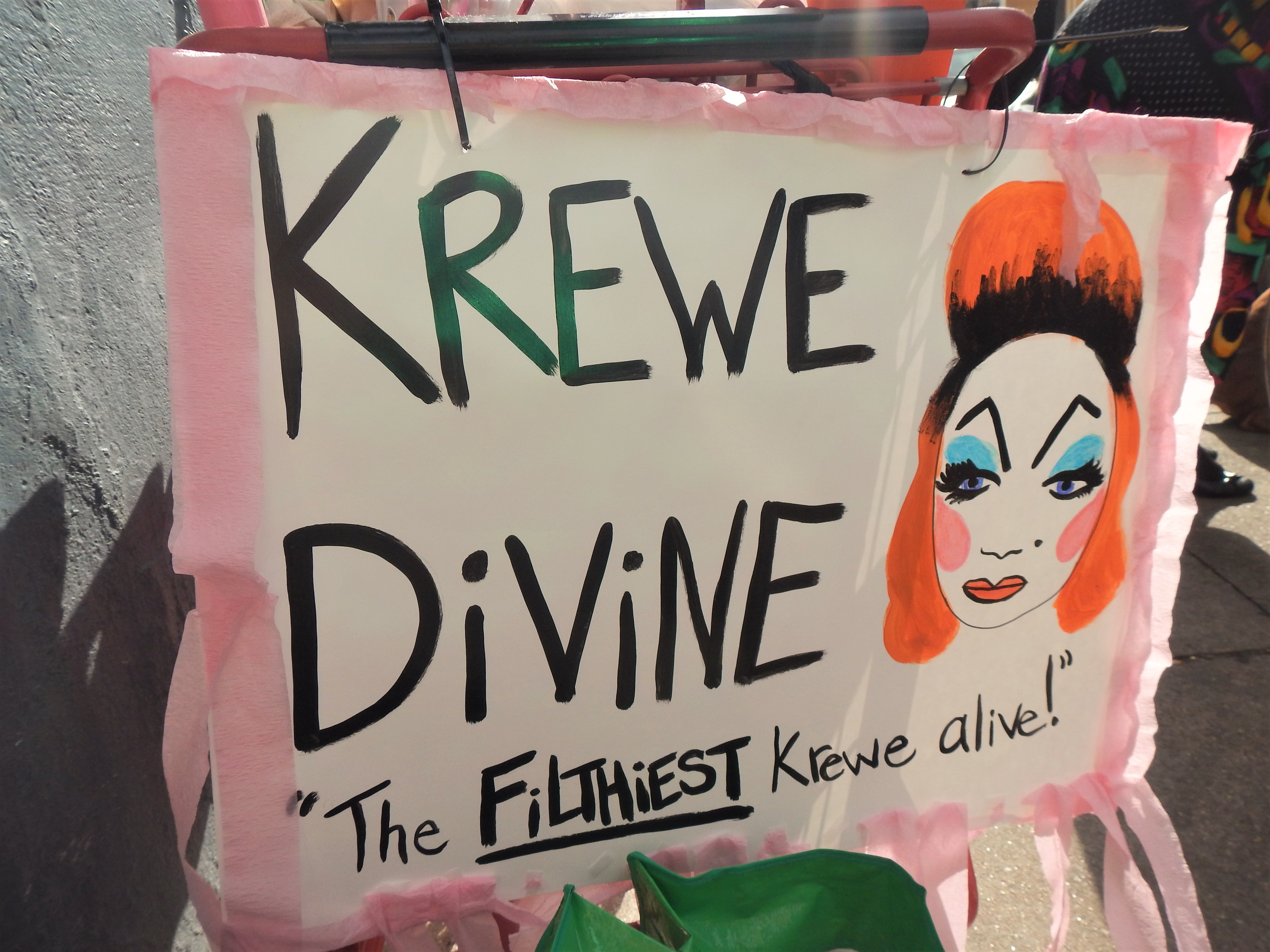
Mere hours after debuting our Divine-inspired, Swampflix-sponsored Mardi Gras krewe this past Fat Tuesday, CC & I found ourselves riding in the back seat of an SUV, exhausted, and headed toward Disney World. An immersive, three day adventure to the Happiest Place on Earth is always going to be a disorienting vacation no matter what mental state you’re in. Yet, there was something especially absurd about diving head first into such a wholesome fantasy space after running rampant through the French Quarter all morning, dressed as famous drag queen and frequent John Waters collaborator Divine in the alcohol-enhanced sunshine. 

At first, I wasn’t sure exactly what I wanted to accomplish while at Disney World besides checking off a few boxes as a film buff. That part was easy. A visit to a Walt Disney memorabilia museum titled One Man’s Dream, a similar Star Wars exhibit, a charmingly outdated 3-D Muppets screening, and a regularly-running “short film festival” of interactive Disney & Pixar selections all satisfied my apparent addiction to sitting in the dark, watching moving images. What was a much more difficult itch to scratch was maintaining our focus on our previously most recent task of keeping Divine’s legacy alive. You’d think that finding anything related to Divine or John Waters at large would be an impossible feat in such an aggressively clean environment, but Divine’s presence can be found in all things. And in Disney World, it can be found in Ursula.

The sea witch Ursula, of course, is the main villain in Disney’s modern animated classic The Little Mermaid. Although the construction of her persona can be attributed to many different influences, including both Elaine Stritch & Joan Collins, Ursula’s physical form was directly modeled after Divine (the top, non-octopus half was, anyway). The Little Mermaid‘s animators scrapped an initial idea to adorn Ursula with a hairstyle similar to the one Divine rocks in Pink Flamingos for being “too over the top,” but they did notably maintain her signature eye makeup & unmistakable body type for Ursula’s final form. The characters’ resemblance isn’t exactly uncanny, but it is blatant.

Ursula’s gigantic presence in The Little Mermaid, both physical & narrative, is a difficult effect to replicate in a kids’ amusement park, not least of all because the park would likely want to avoid scaring the shit out of children. It makes sense, then, that human actors would only be asked to portray Ariel from the film for the park’s rigidly scheduled photo ops & daily Festival of Fantasy parade. That doesn’t mean Ursula (and, by extension, Divine) has been locked out of the park entirely, though. She’s lurking around with her slithering eel accomplices (mostly in the form of large animatronic puppets) if you know where to look for her. Hopefully our search for Divine inspiration within Disney World parks will help expedite others’ in the future, in case anyone finds themselves visiting Orlando while as thirsty for Divine content as we were.

We started with the most obvious place you’d think to find Ursula lurking in the Walt Disney World parks: Magic Kingdom. There is exactly one The Little Mermaid-themed ride in Disney World’s oldest & most iconic park: Under the Sea – Journey of the Little Mermaid. Outside the ride you can wait in line to meet & take pictures with a professional Ariel cosplayer in her “grotto.” In line for the actual ride, Scuttle, the hoarder seagull, tries his best to simplify & recount the film’s plot in a digestible morsel to temper your boredom & distract you from heat exhaustion. Once inside, you’re strapped into a slow-moving clamshell vehicle that glides peacefully by two animatronic Ariels. One sings, “Part of Your World” and the other dances along to the ride’s centerpiece: a colorful, puppet-filled rendition of “Under the Sea” that’s doused with the widest variety of day-glo paint you’re ever likely to see in a single room.

None of that underwater glitz & glamor is our concern here, though. We’re looking for Divine. Ursula arrives in the ride just after the second Ariel in the “Under the Sea” number, isolated all by herself in a dark cove. She is a beautiful, oversized mechanical puppet I can only picture in my memory as cackling maniacally, even though in reality she sings a song. The purple sea witch is a breath of fresh, menacing air in a literal sea of smiling faces. Soak it in, because it will not last for long. After a glorious moment of hearing Ursula belt out the chorus of her show-stopping number “Poor Unfortunate Souls” in front of her giant crystal ball, she fades from the rest of the ride (or at least her inhuman, Divine-inspired form does), never to be heard from again. It was an all-too-brief Ursula encounter, but it fortunately wouldn’t be our last.

The next stop for Ursula content was a little less obvious and just happened to be something we stumbled into. As a park, Disney’s Hollywood Studios (formerly Disney-MGM Studios) is a little less cartoon-heavy than Magic Kingdom. This will be especially true once its current in-progress overhaul bulks up its Star Wars & MCU-themed attractions (for obviou$ rea$on$). The park is intensely focused on live theater, though, with attractions like The Tower of Terror & whatever the monstrously obnoxious Aerosmith rollercoaster is called existing as total outliers in an environment typically dedicated to more traditionally dramatic modes of entertainment. We were already having enough fun in the park being traumatized by the uncanny valley nightmare of the Robert Osbourne-hosted The Great Movie Ride (R.I.P.) and the distinctly Norman Bates theatricality of our server at the 50’s Prime Time Café, but there’s no good time that can’t be improved by a little Divine. Thankfully, the Divine lurking in Hollywood Studios was a large one. Freakishly large, even.

Located in the park’s Animated Courtyard area, the routinely performed indoor show Voyage of the Little Mermaid is very similar in content to the Journey of the Little Mermaid ride at Magic Kingdom (as if you couldn’t tell by their titles). Fish sing “Under the Sea;” Ariel sings “Part of Your World;” Ursula sings “Poor Unfortunate Souls” and then promptly disappears before the happily ever afters. It’s the same tidy retelling of the animated film with one major exception: the puppets. Whereas the Journey of the Little Mermaid ride is all 100% animatronic puppetry, the Voyage of the Little Mermaid is more of a mixed media affair. The fish puppets are all hand-operated by performers working in the stage’s shadows, Ariel & her boy toy Eric are portrayed by live human actors (as is the more degrading role of Eric’s dog), and the whole show is substantially beefed up by projections from the original animated film, laser light displays, and a waterfall curtain that smells authentically like seawater (whether or not the effect is intentional). It’s a totally pleasant, refreshingly cool way to spend 17 minutes of your life in the park, but what’s most impressive is the way the mini-play brings Ursula to life.

While Ariel & her fishy friends are given a new form of representation in Voyage of the Little Mermaid to distinguish them from Journey of the Little Mermaid, Ursula remains animatronic puppet. She’s so much more impressive in the show than she is in the ride, though, as her size is blown up to 12 feet high & 10 feet wide. I already fell in love with the mechanical puppet from the Little Mermaid ride (which is the more strikingly beautiful one in terms of basic visual craft), but it’s just absolutely dwarfed by the intimidatingly gigantic puppet from the show. It’s the kind of scale & magnificence that almost makes you want to fall to your knees in worship. In other words, it’s absolutely Divine.

That giant puppet would be the last Divine presence we located at Disney World, but, honestly, her magnificent size would’ve been difficult to top by any other display. Maybe there was an Ursula lurking somewhere in one of the three parks we didn’t have a chance to visit (Animal Kingdom, Typhoon Lagoon, Blizzard Beach), but that seems highly unlikely. The only other places to search for our Divine inspiration, then, would be the park’s other other main attraction besides rides & shows: merchandise.

Disney villains from decades-old cartoons aren’t going to move nearly as much merch as the likes of an Elsa or an Olaf or an, um, Other Thing from Frozen. That doesn’t mean there’s no Ursula merch to be found in the parks, though. You just sometimes have to accept her as a package deal with other characters. For instance, outside the Finding Nemo ride at Epcot (which dumps you into a surprisingly decent aquarium), there’s an underwater-themed gift shop that sells a collection of Little Mermaid “squeeze toy” figurines. Ursula’s included, but you have to buy the whole collection to get her. Similarly, I found (and, of course, purchased) a purple baseball cap that features several of Disney’s more infamous female villains like Maleficent, the Evil Queen from Snow White, and, duh, Ursula. According to a brief search of the term “The Little Mermaid” on Disney World’s creepily helpful Disney Go app, there were some really nice Ursula “couture de force” figurines, art prints, and blouses for sale, but we never laid eyes on them (and they would’ve been far outside our price range anyway).

If you really want to take home Ursula’s visage isolated on some affordable merchandise, your only viable option is to find her on an enamel pin. We happened to purchase some Ursula pins at a kiosk located outside Space Mountain, but Disney has a surprisingly strong, park-wide enamel pin culture. You could probably find the damn things in any shop you poke your head into, as a lot of the stores seem to carry overlapping merch. (The same also goes with the squeeze toy figurines we found outside the Finding Nemo ride.) There’s also a lot of annual turnover on the merch that’s sold within the parks, so not only is it possible that we missed out on some sweet Ursula gear when we happened to be there, but you can also likely find excessed deadstock of old Ursula merch at the various Disney outlet malls sprinkled throughout Orlando.

We really have no clue where Krewe Divine’s headed in the future in terms of scale or membership. It’s only a matter of time until one of us dresses as Ursula on Fat Tuesday, though, so it really was a treat to cap off our first year as a microscopic Mardi Gras krewe by treating Walt Disney World like an unofficial Divine scavenger hunt. As the release of The Little Mermaid is already nearly three decades behind us, it’s likely that Ursula’s Divine presence within the amusement park is on borrowed time. As is, she’s seemingly only represented in the form of two (beautiful) animatronic puppets and a few enamel pins already. Even that’s enough representation worth celebrating, though. I was overjoyed to see her there in any form. In a way it’s a kind of a miracle that there was ever any John Waters-adjacent content to be found at Disney World at all. It’s even more of a miracle that it happened to be Divine.

-Brandon Ledet

Roger Ebert Film School, Lesson 23: Hellfighters (1968)

EPSON MFP image

Roger Ebert Film School is a recurring feature in which Brandon attempts to watch & review all 200+ movies referenced in the print & film versions of Roger Ebert’s (auto)biography Life Itself.

Where Hellfighters (1968) is referenced in Life Itself: On page 153 of the first edition hardback, Ebert gloats about how great being a professional critic was in his glory days. He writes, “It was a honey of a job to have at that age. I had no office hours; it was understood that I would see the movies and meet the deadlines. I loved getting up from my desk and announcing, ‘I’m going to the movies.’ A lot of my writing was done at night and on the weekends. I saw about half of the movies in theaters with paying audiences, sinking into the gloom to watch John Wayne fighting flaming oil wells in Hellfighters at the Roosevelt, or Pam Grier inventing blaxploitation at the Chicago.”

What Ebert had to say in his review: “Out in front of the Roosevelt Theater there’s a big photo of John Wayne and this quote, attributed to him: ‘I’ve made a lot of action pictures but never one as exciting as this.’ I doubt that Wayne volunteered this information; it sounds more like a studio publicity idea. The fact is, Wayne has made a lot of action pictures, and over the years he has gotten to be about as good at it as anybody. He must have been miserable during the filming of Hellfighters, which is a slow moving, talkative, badly plotted bore.” – from his 1968 review for The Chicago Sun-Times

EPSON MFP image

When praising the young, energetic talent that reignited American art cinema in the late 60s’ so called New Hollywood movement, it’s all too easy to overlook the undeniable virtues of the system those films were bucking against. The John Wayne action epic Hellfighters is a perfect snapshot of Big Studio glut when compared to its more forward-thinking contemporaries like Bonnie & Clyde and The Graduate. While these smaller New Hollywood upstarts were pulling influence from still-exciting sources like the French New Wave, the lumbering, old-fashioned Hellfighters more closely resembles instantly outdated modes of entertainment like Earthquake, Airport, and The Towering Inferno. Ebert was right to praise those smaller, more experimental works in his reviews while labeling Hellfighters “a slow moving, talkative, badly plotted bore.” I can’t disagree with a word of that. The dirty secret, though, is that although formally & thematically outdated in the face of smaller, more passionate films being made around them, Old Hollywood ghosts like Hellfighters effortlessly pulled off mesmerizing visual spectacles that were never truly touched by the likes of a Bogdanovich or a Friedkin or a De Palma. Even if its superiority was simply a question of budget, there’s an immense beauty to the costume designs, sets, framing, and rich colors of Hellfighters that could’ve been transcendent if were applied passionately instead of with workmanlike competence.

As with all John Wayne movies, whether or not they’re set in the dusty West, Hellfighters is often classified as a Western. This makes even less sense here than it does with the London-set cop drama Brannigan, since Wayne’s tuxedo’d firefighter lead doesn’t even carry a gun. Loosely based off the real world personality Red Adair, Wayne plays infamous oil field firefighter Chance Buckman (man, I love that stupid name) as he travels across the globe putting out dangerous oil well fires with barrels full of dynamite. Real manly stuff. Based on that description, you might think that the art film version of Hellfighters might be Sorcerer or its predecessor Wages of Fear, but it actually more closely resembles a film from the late 90s. Much like Bruce Willis’s tough guy hero in Armageddon, Chance Buckman is an oil industry legend who bullheadedly infantilizes his adult daughter by attempting to protect her from a twofold danger: the physical danger of his industry & the emotional danger of the womanizing men who work within it. It’s not at all difficult to imagine Michael Bay growing up fond of Hellfighters, thanks to its hyper-masculine self-delusion & over-indulgence in practical effects explosions. The John Wayne film often mirrors Armageddon‘s bullshit romanticization of the hard working men who risk their lives for oil & the worried women who love them, despite the constant danger of loss. Where Armageddon employs this ludicrous narrative & attention to visual craft for a punishingly kinetic live action fantasy, however, Hellfighters is content to lie still & talk its audience to death. It’s an entire movie built around the idea that large spouts of fire look cool. It’s not exactly wrong, just too long to justify that thin of a premise and too lethargic to fully command its audience’s attention, even as beautifully decorated it’s production design can be. If Hellfighters could’ve operated with Michael Bay’s punishing sense of immediacy it might’ve been an all-time classic. At the very least, it could’ve shot John Wayne into space to fist fight an asteroid the size of Texas. There’s pretty much no one who wouldn’t pay to see that.

A large part of what makes Hellfighters feel desperately old-fashioned is its constant glorification of traditionalist masculinity. So many bare knuckle punches are thrown without any real consequence in bar rooms, brothels, gambling holes, and hospitals that they start to register more like a handshake between bros than an act of violence. News reporters are whiny little wimps who can only get in the way while Real Men do the Important Work, the kind that requires muscles & explosives. The women of Hellfighters are wives, daughters, and secretaries, completely extraneous to the plot outside a fresh-from-The Graduate Katherine Ross, whose virtue & emotional well-being Chance Buckman is tasked to protect. The closest the movie comes to passing the Bechdel Test is a single scene where Buckman’s wife & daughter are golfing alone together, but their entire conversation centers on whether or not it’s worth the worry to love an oil field firefighter. Buckman himself is a stoic emotional void, only budging in his rock solid confidence to express annoyed frustration & mild worry with the women in his life who needlessly complicate his profession. Otherwise he just does what he does best: exploding fires into oblivion & unconvincingly delivering oil-themed one-liners like “If you’re coming to me for advice, I’m a dry hole” with a distinct lack of passion.

In the years since the New Hollywood takeover, directors have learned (and have been better funded) to apply Hellfighters‘s workman sense of extravagant spectacle to the energetic narratives that deserve it. Instead of overtalking its virtues between this piece, my initial review, and a subsequent podcast episode, I do believe Michael Bay’s Armageddon is a perfect example o how well that visual craft could be utilized with just a little creative gusto, even while holding onto its idolization of toxic masculinity. Hellfighters was an overlabored, undercooked movie industry dinosaur when compared to the more exciting, artier New Hollywood films that upended its place in the world, but that doesn’t mean it’s a film without value. When gazing into the rich color, impeccable costuming, gorgeous sets, and mesmerizing explosions that Hellfighters wastes on a going-through-the-motions John Wayne action epic, there’s an undeniable sense of missed opportunity. The film could’ve been something truly memorable if its better aspects weren’t helmed by a sleepwalking studio system that misread what its audience was interested in seeing. I can’t recommend Hellfighters as an entertaining work to anyone other than the most diligent John Wayne completist imaginable. However, I do think it works as a valuable reminder that there was a lot of untold merit in the bloated studio system that the late 60s broke apart with its scruffy batch of babyface auteurs.

EPSON MFP image

Roger’s Rating (1.5/4, 38%)

onehalfstar

Brandon’s Rating (2.5/5, 50%)

twohalfstar

Next Lesson: Camelot (1967)

-Brandon Ledet