
The Bride! (2026)

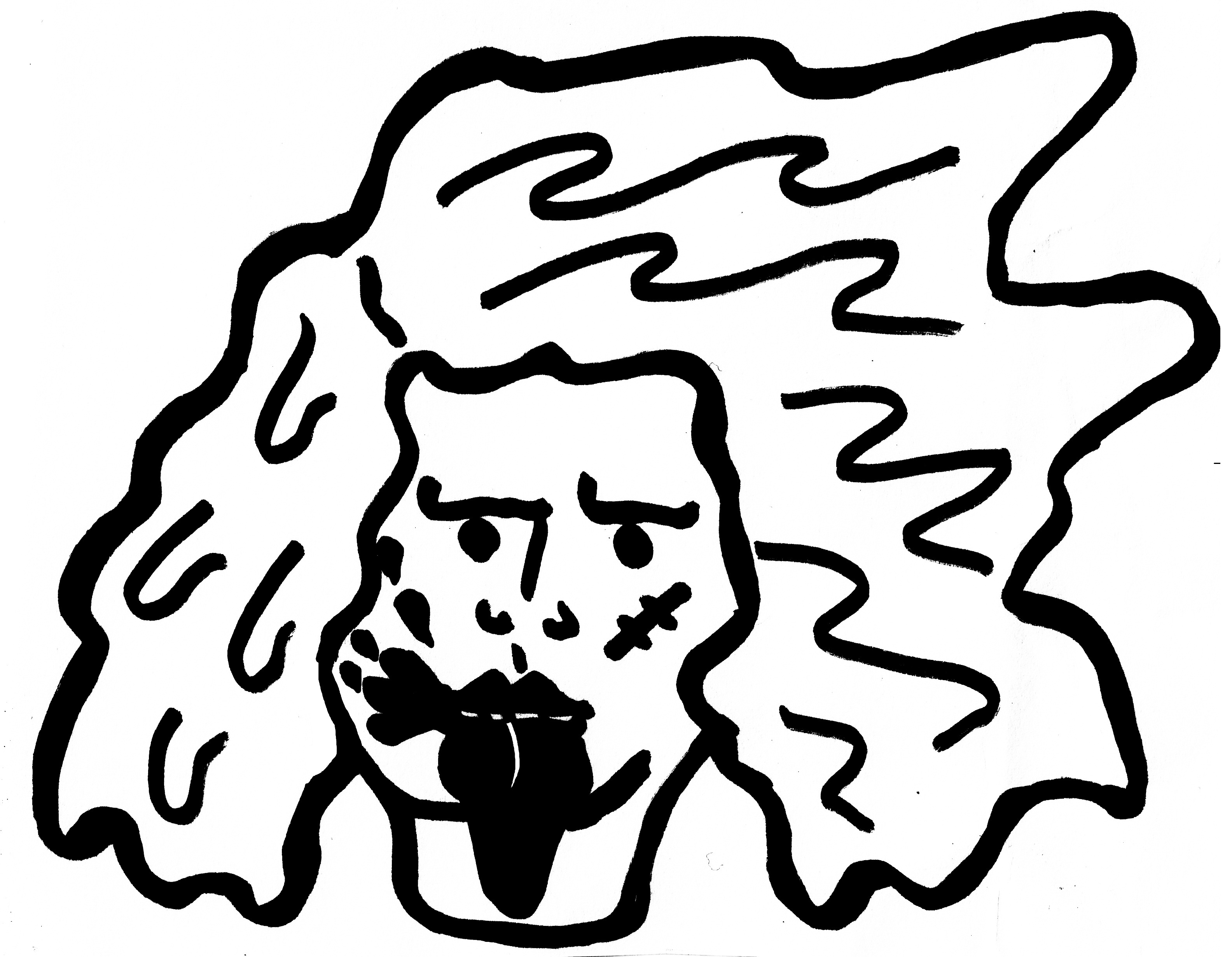
There are many more direct sequels to James Whale’s Frankenstein than most people realize. Universal made eight Frankenstein movies in the famous monster’s original run across the 1930s & 40s, while most modern audiences’ experience with him stops at the second one: 1935’s Bride of Frankenstein, also directed by Whale. Whale was already in a “Okay, now let’s do a goofy one” mood by the time he made Bride, sacrificing some of the haunting beauty of his first Frankenstein film for screwball antics and intentional camp. Maggie Gyllenhaal’s new Frankenstein riff is largely going to be interpreted as a feminist reboot of that early Frankenstein sequel, since it directly references a couple of its more outlandish details: the living bell-jar specimens of the mad scientist’s lab and the fact that actress Elsa Lanchester plays both Mary Shelley (in the intro) and the titular monster bride (in the finale). Hot off her Oscar-winning performance as the violently grieving mother of Shakespeare’s children in Hamnet, Jessie Buckley is deployed to hit both of those goofball references in The Bride!, briefly appearing as a floating head in a bell jar and, more importantly, pulling double duty as both Mary Shelley’s ghost and the undead woman’s body she possesses. That decision to extend Mary Shelley’s screentime via body possession is part of what pushes The Bride! past its limitations as a Bride of Frankenstein modernization to instead reach the even more ridiculous heights of later Frankenstein sequels like The Ghost of Frankenstein or Frankenstein Meets the Wolf Man. Gyllenhaal has effectively imagined an alternate timeline where Lanchester’s monster had continued to stumble through increasingly goofy Frankenstein sequels the way that Boris Karloff’s did in ours. Instead of spitballing, “Okay let’s put Chaney in the makeup this time, and now Lugosi’s Ygor plays a magical flute that controls him,” like Frankenstein producers of the past, she gets to riff, “Umm I don’t know, now she’s possessed by Mary Shelley’s ghost and we’ll dress up Fever Ray as The Joker or whatever. Let’s hit the road!” To be clear, this is why it rules.

Christian Bale co-stars alongside Buckley as the lit-famous Frankenstein, who assures the audience early on that it’s okay to call him that, since he took his scientist father’s name; for further convenience, he also goes by the nickname “Frank”. Having now roamed the Earth undead and lonely for over a century, he emerges from the shadows of 1930s Chicago to beg a mad-scientist woman in STEM (Anette Benning) to create a bride for him to love. True to the Frankensteins of old, he shows a surprising amount of tenderness & vulnerability for a monster, so the scientist eventually relents to what she initially sees as a piggish request. The corpse she revives as the titular monster bride is a recently murdered sex worker moll (Buckley), killed for her loudmouth blabbing about a local kingpin mobster’s evildoings after becoming possessed by the uninhibited spirit of Mary Shelley’s ghost (also Buckley). Once resurrected, she starts with a clean slate as a bratty agent of chaos who can’t remember much about who she is or why she exists, so she goes on a soul-searching road trip rampage with her newly assigned groom, acting like two giddy teenagers who just ran away from home . . . and who occasionally smash misogynist skulls along the way. They go to queer dance clubs soundtracked by a Jokerfied Fever Ray. They crash cocktail parties held by the wealthy elite, hiding in plain sight because no one would dare look directly at the help, no matter how grotesque. They kill any cops who try to stop their good times’ short, then feel immediate remorse for the transgression. Most importantly, they go to the movies. They go to the movies a lot, which is how they’re easily tracked down by an old-timey lady detective (Penelope Cruz) and her bumbling, good-for-nothing partner (Peter Sarsgaard). The Bride! is hyper aware of its temporal position in the long history of Frankenstein cinema, and it tracks the progression of the artform across a much longer timeline than what its 1930s setting should allow. Its character names are all inspired by Old Hollywood stars like Ida Lupino, Myrna Loy, Ginger Rogers and, of course, Elsa Lanchester. Jake Gyllenhaal frequently appears as the onscreen avatar for that era, performing Busby Berkeley dance routines that Frank imagines himself dancing along to in his fantasies. It also introduces the 3D craze to its onscreen cinemas decades before The Bwana Devil did so in real life, frequently dips into New Hollywood homage and, in its most blatant effort to modernize the material, has The Bride shout “Me too! Me too!” during her climactic fit of rage. Just like its tone, the timeline of The Bride!‘s vintage cinepehlia is all over the place, as Gyllenhaal seems to be following her own whims scene to scene without worrying too much about whether the audience is following along.

Besides killing cops and hanging out at the movies, another thing these monsters do is fuck. Given that the film includes tender, heartfelt monster fucking and concludes on a needle drop of the Halloween season novelty song “The Monster Mash,” it’s entirely possible that Gyllenhaal’s initial inspiration was cracking up to the recurring “Monster Fuck” bit from Comedy Bang Bang and wondering whether it could be adapted into a feature-length screenplay. Other stylistic influences seemingly include the bratty supervillain goof-around Birds of Prey and the sour-taste supervillain thriller Joker, the latter of which The Bride! shares a composer (Oscar-winner Hildur Guðnadóttir) & cinematographer (Lawrence Sher) with, among 100(!) other below-the-line crew members. As much as they delight me, personally, none of these references are especially revered as recent cultural touchstones, so it’s presumptuous for the film to prepackage a readymade Halloween costume in The Bride!‘s design (crafted by industry legend Sandy Powell) that spreads as a fashion trend among 1930s molls within the film itself. The Bride! has been immediately disregarded as a financial & critical flop, with no way of telling whether it will be reclaimed as a cult classic or forgotten to time in the long run. Any criticisms of it as a shallow work of pop-art feminism will miss the mark on what Gyllenhaal is accomplishing here. Its Feminism 101 political talking points are more than welcome in a cultural climate where teens are constantly bombarded with manosphere & trad-wife propaganda, and I find the dismissals of those themes just as misguided here as they were in the more cynical dismissals of Barbie. More importantly, Gyllenhaal puts too much of her own personal interests & obsessions on the screen for the movie to be seen as pure political allegory. It’s a family affair, with her husband & brother invited along to play silly onscreen. She also gives in to her cringiest Theatre Kid shenanigans, allowing Buckley to run wild with the multiple personalities fighting for dominance in her character’s undead body: the ghost, the monster, and the woman. She also frequently gets lost in the geeky love story shared by her two famous monsters, bringing their Old Hollywood cinephilia into the New Hollywood era via a feature-length homage to 1967’s Bonnie & Clyde. She is suffering from a severe case of Hollywood actor brain here, but the resulting spectacle is so chaotic and so specific to her personal interests that I can’t imagine any other response to it than admiration & delight. It’s like a version of The People’s Joker where Vera Drew had $100mil to play with and grew up obsessed with Frankenstein instead of Batman. Bless her corny heart.

-Brandon Ledet
The Well-Intentioned Letdown of When John Waters Targeted the Art World

Starting with the mid-career course correction of Polyester, cult director John Waters had a kind of creative epiphany. In his earliest works of divine genius (Multiple Maniacs, Pink Flamingos, Female Trouble, etc.), the trash-dwelling provocateur gave life to insular freakshows of over-the-top Baltimore personalities, outsiders who were naturally exuding a punk rock nastiness when hippie feel-goodery still ruled the counterculture. Polyester and its suburban-set follow-ups (Hairspray, Cry-Baby, Serial Mom) found an even more subversive platform for his cinematic freaks, contrasting their outlandish trashiness with the supposedly more well-behaved sect of Proper Society. Hairspray & Cry-Baby were especially adept at exposing suburbia for being a sea of hateful, racist, close-minded assholes in a way that wouldn’t be apparent in more insular settings like Desperate Living‘s Mortville, where the weirdos keep to themselves. After four consecutive films exposed this suburban evil, however, Waters was in need of a new target. Mainstream commercial success had entirely changed his outsider status as a renegade filmmaker & a provocateur by the mid-90s. Waters found himself the toast of both the suburban monsters he’d lampooned for the better part of a decade and the art world snobs who enjoyed his early works for their supposed dedication to irony. With suburbia thoroughly skewered, the director fired off two successive films that targeted the ironic hipsters & mainstream moviegoers who fundamentally misunderstood his passions & his appeal. The intent was admirably calculated, but the results were . . . mixed.

It pains me to write anything even remotely negative about a director I consider to be the greatest artist, if not greatest human being, of all times forever. The nu-metal vibes of the late 90s & early 00s were just poisonous for pop culture in general, though, so it would make sense that Waters would experience the worst creative slump of his career in that era. You can feel him introspectively reaching for something to say in his 1998 comedy Pecker, which continues his childhood period piece navel-gazing in Hairspray & Cry-Baby by centering on a weirdo teen artist who accidentally makes it big just by goofing around with his nobody loved-ones in Baltimore. I think the biggest misconception of Waters’s career, particularly in his early “trash” pictures, is that his portrayals of over-the-top Baltimore caricatures are entirely rooted in a sense of irony. Those pictures are actually coming from a place of feverishly obsessive love. There’s obviously a sense of camp that informs his humor, but Waters also deeply loves & admires early regulars like Divine, Mink Stole, and Edith Massey (as well as his home city of Baltimore) and seemingly only makes his films as a way to document & broadcast their art & their obsessions. Pecker is, above all else, a film about that clash between his intent & public perception of his work. Just as Waters obsessively made movies about his weirdo friends in 1970s Baltimore, he depicts a young photographer (Edward Furlong, the titular Pecker) who obsessively documents his loved ones & their surroundings on the same city streets. That’s why it’s such a betrayal when, in the film and in life, Big City hipsters latch onto those characters only with a sense of irony, laughing at them instead of with them.

Pecker is a film about obsession & authenticity. Even beyond the titular protagonist’s bottomless passion for photography, every character in his social circle has a sitcom-esque dedication to a singular interest: candy, laundromats, shoplifting, clothing the homeless, gay men, pubic hair, ventriloquism, teabagging, etc. These damned souls stay dutifully within their own lanes, only speaking on their one respective topic of interest whenever prompted for dialogue. Pecker finds their passions endearing & documents them within his own sole interest: photography. When his art takes off to an unlikely notoriety in New York City, he assumes everyone championing his photographs is similarly celebrating the beauty of his subjects. Instead, they’re ironically laughing at his “culturally challenged” family & friends for their perceived tackiness. Once this Big City hipster irony is revealed as a real world evil, the film eventually takes the form of a good-natured revenge tale. Pecker invites his new Art World “friends” to Baltimore for his latest show, where they’re given a taste of their own medicine as the derogatory subject of his photographs, a source of mockery. They’re briefly gawked at by Baltimore weirdos as the true freaks for once, until Pecker unites both sides for a climactic party where everyone shares indulgences in each other’s obsessions & collectively cheer, “To the end of irony!” The point being made in that celebration is admirable and I love that Waters took his audience to task for looking down on his weirdo friends as inhuman curiosities instead of genuinely joining in the celebration of their obsessions. The comedy just doesn’t feel as sharp or, frankly, as dirty as it should to match the laugh riot heights of earlier triumphs. Besides a few details involving strip clubs & gay bars (of which The Fudge Palace feels like an obvious ode to New Orleans staple The Corner Pocket), the film didn’t feel very much interested in its own subjects, at least not with the same obsessive intensity they were interested in things like candy & pubic hair. It seems in making a film about art & obsessions, Waters somewhat lost track of funneling his own passionate obsessions into his art.

Cecil B. Demented, the 2000 follow-up to Pecker, feels even more creatively exhausted. Waters shifts his focus slightly from the irony of Art World assholes to the slow death of modern cinema, which he sees as being completely drained of the obsessive artistic passions of his earlier work. Here, the director sides with the artsy types he previously lampooned in order to take aim at the corporate business end of film production. In an opening credits sequence that’s only become more relevant as the years roll on, movie theater marquees are overrun by sequels, franchise titles like Star Trek & Star Wars, comedies starring disposable knuckleheads like Pauly Shore, and art films dubbed from their original languages. As Pecker toasted, “To the end of irony!,” Cecil B. Demented cries, “Death to those who support mainstream cinema!” This is essentially a heist picture where a “teenage” gang (including early appearances from Michael Shannon, Maggie Gyllenhaal, and Adrian Grenier) kidnaps a famed Hollywood starlet (Melanie Griffith, who has no trouble slipping into the role of Terrible Actress) and forces her into a guerilla film production that often borders on outright terrorism. Literally wearing their influences on their sleeves in the forms of tattooed names like William Castle, David Lynch, Herschell Gordon Lewis, and Kenneth Anger, they attempt to disrupt business-as-usual Hollywood filmmaking by bringing artistic obsession back to the forefront of the industry. There’s an unfortunate irony in this intense focus on authenticity, as the movie doesn’t feel nearly as dangerous or as personal as Waters’s own past in guerilla filmmaking. His murderous cinephiles are certainly silly, but you get the sense that he’s on their side, while still failing to live up to their impossible ideals. “Technique is nothing but failed style,” is a great line in isolation, but I’m not sure what it means in a work that’s Waters’s least funny, least stylish, and most obedient adherence to the mainstream technique of its time: the nu-metal Dark Ages.

By the mid-90s, John Waters’s outsider aesthetic had become an essential part of mainstream filmmaking thanks the gross-out comedy boom that followed the success of There’s Something About Mary. There’s an “Okay, what now?” quality to Pecker & Cecil B. Demented that might be a direct result of that assimilation. With a sensibility he was on the ground floor of establishing now the mainstream standard and his own personal obsessions already documented for infamy in previous works, Waters had to find new purpose for his art in a time mired in one of our worst modern pop culture slumps. I admire his ambition in tackling the commercial end of art production in Cecil B. Demented & the earnestness of the art consumer in Pecker, even if I believe those films to represent his worst creative period. Not only is it a half-assed put-down for me to call out a film or two for being the worst releases from my favorite director; this story also has a happy ending in John Waters eventually getting his groove back back in the excellent 2004 sex comedy A Dirty Shame, his most recent (and most underrated) film to date. Having proven himself in so many other titles that transcend these nu-metal era doldrums, Waters’s Art World potshots are worth having around if not only for giving voice to the director’s take on the art & commerce compromises of his industry. Characters describing Pecker’s photography persona as “a humane Diane Arbus” while Cindy Sherman (playing herself) walks around art galleries offering Valium to children or a dangerously horny Michael Shannon shouting “Tell me about Mel Gibson’s dick and balls!” are worthwhile indulgences for their own sake, even if they don’t match the obsessive passion of documenting Divine & Edith Massey’s exploits in the Dreamlanders era. I may wish that the final products were a little funnier & more artistically distinct, but I love that Waters took the time to dismantle art world pretension & empties commercialism once he was done vilifying suburban normies.

-Brandon Ledet