A Classic Horror Story (2021)

C’era una volta, Italy was a world power … in horror. Lucio Fulci, Mario Bava, Michele Soavi, and of course my beloved Dario Argento were i re of horror cinema. But in the year 2021 … non così tanto. After all, there’s a reason that recent giallo throwbacks like Knife + Heart and Berberian Sound Studio don’t take place in Italy itself (the former) or, if they do, why they are set during the height of Italian horror exportation (the latter). When it comes to domination of the international horror market, Italy is a failed state.  So when Italy exported the recent Una classica storia dell’orrore, I was excited. And although A Classic Horror Story couldn’t live up to that legend, it does live up to its title. 

We meet young lawyer Elisa (Matilda Lutz) as she is preparing to return home to “visit” her parents, but in reality she is leaving her current city to seek to terminate her pregnancy and recuperate afterward with family before heading back to work. To get home, she is carpooling in a small camper with vacationing couple Mark and Sofia (Will Merrick and Yuliia Sobol), unfriendly doctor Riccardo (Peppino Mazzotta), and their driver, the nerdy and talkative Fabrizio (Francesco Russo). It isn’t explicit, but later dialogue between Mark and Fabrizio, in which the latter expresses annoyance with cultural assumptions that northern Italians make about southern Italians (in short, that everyone in the south is involved with the mafia), suggests that they are travelling from the north to the southern coast. Fabrizio plans to film parts of the trip for his YouTube channel, entitled “Friends of Fabrizio,” and asks the four riders to introduce themselves to the camera, saying that it’s important that his audience come to like them, even stocking the camper’s minifridge with beers to act as a social lubricant and get everyone to come out of their shells. Elisa is pressured into taking a sip but immediately falls ill, forcing them crew to stop by the roadside. While Riccardo argues on the phone with his recently estranged wife, a now inebriated Mark forces his way into the driver’s seat, and insists that he drive the rest of the way. The others accept that he cannot be talked out of it, and he does a fairly decent job for a drunk driver, even bonding with Fabrizio along the drive, until he swerves to avoid a dead animal in the road. 

It’s daytime when Elisa awakes, and the camper is now in a vast field, encircled by forest. Mark’s leg is broken and there are no signs of civilization other than a rustic cabin that also occupies the clearing. Riccardo and Fabrizio set out to look for the road, but seemingly trace a great circle instead, ending up back at the site where the camper and cabin are located. Another venture into the forest also results in the discovery of some kind of pagan altar to “three knights,” including pig heads on stakes. After their initial reluctance, the group (minus the still-immobilized Mark) enter the cabin looking for a way to contact or locate help when its door opens with a mysterious creak. Inside, they find ritualisting paintings that relay a local legend that Fabrizio summarizes: the tre cavalieri are Osso, Mastrosso and Carcagnosso, pagan deities who blessed local land in exchange for sacrifices, and that these sacrifices involve the ritualistic removal of individual victims’ ears, eyes, and tongue. The only other decorations in the cabin are photos of what appear to be generations of people wearing animalistic masks, or who perhaps have actual animal heads, as the result of their devil’s deal with the Cavalieri. When the clearing is bathed in a saturating red light while ominous sirens sound, Riccardo, Fabrizio, Elisa, and Sofia take shelter in the cabin’s attic, which gives them a bird’s eye view of three masked entities dragging Mark from the camper to the cabin and securing him to the table within and mutilating his eyes before killing him. As if this weren’t horrifying enough, they also discover a child in the attic in a cocoon made of sticks and straw; the group asks for her name, but she is unable to answer, as she has no tongue. 

The group makes another attempt to escape through the woods during the day, discovering a graveyard of abandoned vehicles that imply that this kind of sacrifice has been going on for a very long time. One of the vehicles belonged to the young girl’s family, and she reveals her name, Chiara, to Elisa by recovering her diary from within it. She also implies that they are all in some kind of inescapable purgatory, which is supported by their failure to escape the woods once again; worse, when they return to the clearing, the camper is gone. 

It’s all but impossible to talk about this much further without getting into major spoilers, so here ye be warned: spoilers abound from here on out. 

Elisa wakes in the night to discover that Ciara, Riccardo, and Sofia have been dragged out of the cabin and into the clearing, where a crowd of animal-headed cultists watch with rapt attention as Osso, Mastrosso and Carcagnosso take the older victims’ eyes and ears, respectively. Elisa is rightfully terrified, and when Fabrizio reappears in the cabin saying that they have to escape, she all but collapses into an embrace with him. As they hold one another, however, she can hear a small, tinny voice … as it gives Fabrizio instructions over his earpiece. 

There is no sacrifice or ritual here, at least not in service of harvest gods. All of this has been of Fabrizio’s design, as he seeks to craft a classic horror story. He bemoans the state of contemporary Italian cinema, which consists entirely of insipid comedies and brainless YouTube fluff, and wants to make a new Italian classic. Oddly enough, he doesn’t invoke the names of the three giants of giallo cinema that I cited above, and instead draws on comparisons to extremely American representations of the genre: Friday the 13th, A Nightmare on Elm Street, and Texas Chainsaw Massacre (Titanic is also mentioned for good measure). The Osso, Mastrosso and Carcagnosso that he mentioned are actually the supposed founders of the three Mediterranean crime families, tying back to his repeated references to the mafia, including a joke that he told to break the tension and lighten Chiara’s spirits during a particularly grim moment. Not that she actually needed this, of course; she’s still alive, and has been in on it the whole time. 

Fabrizio’s biggest problem is that, for all his supposed learnedness about the nature of horror, he forgot about one of the genre’s most important features: the final girl. After a brief interlude in which we learn that Fabrizio has the support (or at least the indifference) of local politicians and police, Elisa escapes from the wheelchair to which her hands are nailed, and she turns the tables on Fabrizio and Chiara, and she’s kind enough to film the whole thing before escaping into the woods and eventually finding her way to a beach, where horrified onlookers are briefly stunned by the bloody girl in their midst before they immediately take their phones out and begin to film her. 

The first hour or so of A Classic Horror Story isn’t anything to write home about, being more “serviceable” than “good.” But the final 35 minutes more than make up for the water-treading of the first and second acts. What’s also praiseworthy here is how much it fits with what I want to see more of in horror: wherein we are first led to believe that something supernatural is afoot, before we get the important reminder that all evil in this world is done by humans. There’s a genuine eeriness that permeates the proceedings as soon as the travellers find themselves in the clearing, especially with the apparent presence of pagan deities and sacrifices in creepy masks, as well as the strange lighting and the wailing sirens. Unfortunately, those elements suffer from appearing in a film that was released so soon after the higher-budgeted Midsommar, especially given that the source imagery from which both films are borrowing are similar. It’s not identical, of course, but neither are Garden State and Elizabethtown, which didn’t stop contemporary critics from making the same note about the short time between those similar releases. There are very similar scenes of an outdoor cultist feast with our heroine at the head of the table, and it’s even present in the various lodgings, which don’t look alike precisely, but which are both juuust unconventional enough to lend an air of uncanniness to the proceedings. 

I truly didn’t see that final act twist coming, and my opinion of the film took a sharp increase as it drew to a conclusion. It didn’t turn this into the instant horror classic that it was aiming for, and there’s an extension of its metacommentary into the end credits that I have mixed feelings about (it’s kind of dumb but the final moment of self-deprication amused me). That’s the element that I think will age the most poorly, but then again, only time will tell. A Classic Horror Story is streaming now on Netflix. 

-Mark “Boomer” Redmond

The Green Knight (2021)

It’s Christmas in July! Or at least it was last weekend when I saw David Lowery’s latest, long-delayed, gorgeous bombast, The Green Knight. There have been multiple failed attempts at bringing Arthurian stories to the big screen in a meaningful way in my lifetime (although that 2004’s King Arthur, 2006’s Tristan and Isolde, and 2017’s King Arthur: Legend of the Sword all have exactly 31% on Rotten Tomatoes is impressive in its own strange way), with the most successful being the generally disappointing First Knight, which no one remembers. Fun fact: Ralph Ineson, who plays the titular pastoral paladin in this film, was in First Knight. Sorry to get into the trivia portion of this review so early, but I don’t really have a lot to say about this one. Shocking coming from an overtalker like myself, I know, but sometimes there are films that you don’t see so much as experience, and like Lowery’s A Ghost Story before it, The Green Knight is one such film. 

Which isn’t to say that there’s not a clear narrative here. There is, and it’s fairly easy to follow. Gawain (Dev Patel) is the nephew of King Arthur (Sean Harris) by way of his sister (Sarita Choudhury), who is traditionally Morgause but appears to be a combination of Morgause and Morgaine le Fay (also usually—but not always—Arthur’s step- or half-sister). On Christmas morning, he awakens beside his lover, the commoner Essel (Alicia Vikander) and makes his way back to the castle, where he washes up before appearing before Arthur, his queen (Kate Dickie), and the other knights of the realm. The elderly Arthur invites Gawain to sit beside him and tell him a story of himself, so that he may know his potential heir better, but the younger man admits that he has no great deeds of himself to share. “Yet,” Guinevere corrects him, “you have no stories to tell yet.” Elsewhere, Morgause/Morgaine and a few attendants perform a ceremony that appears to invoke or invite a large, green knight (Ineson, as noted) to appear in the great hall, riding a massive steed. He issues a challenge, asking only that one of Arthur’s fabled knights strike him a blow with the caveat that the following year Arthur’s champion goes to the “green chapel” and allow the knight to return the blow in kind. All refuse, and Merlin (Emmet O’Brien) shakes his head slightly when Arthur himself seems prepared to face the challenge. Gawain asks that he be allowed to do so, and is given Arthur’s own sword to face the knight. When the Green Knight offers his neck to the boy, he first laughs, then grows angry at the visitor for mocking him before lopping off the larger man’s head. Undeterred, the knight’s body retrieves his head, laughs, and says he’ll see Gawain the next Christmas. 

After a “too short year,” Gawain sets out on his journey to find the Green Chapel and the knight therein, with gifts like a shield which bears an image of the Virgin Mary and is anointed by a bishop and a green sash that his mother makes, and into which she inserts sigils. After departing Camelot, he first passes some older towers and buildings in decline, then through a section of deforested woods which are in the process of being cut down, and finally comes upon a field in which a battle has been fought and in which a few fires yet smolder. There he encounters a scavenger (Barry Keoghan) who points him in the right direction, but after he gives the poorer man a single coin, and even then only because he was guilted, Gawain finds himself the victim of two of the poor man’s fellow highwaymen. Now divested of his shield, horse, belt, and even the Green Knight’s axe, Gawain eventually frees himself, but is weakened. Eventually making his way to a seemingly deserted house, Gawain avails himself of the empty bed therein, only to be awoken in the night by the spirit of a woman named Winifred, who asks him to reunite her decapitated head with the rest of her body, which he does; once this task is complete, the Green Knight’s axe is mysteriously returned to him. He ventures further, facing starvation and madness, eventually meeting and becoming the traveling companion of a fox, and even encountering a group of mysterious giants as they wander in an apparent migratory pattern (this was my favorite part). 

Eventually, he comes to a castle occupied by a friendly noble lord (Joel Edgerton), his wife (Vikander again), and an unnamed, unremarked-upon sightless woman (Helena Browne). As in the poem, the Lord enters into an agreement with Gawain that would mean that anything given to Gawain in the Lord’s house would be given by Gawain in turn, and the Lady of the house tempts Gawain’s virtue. On his final day within the castle, the Lady returns Gawain’s green sash to him, claiming that she made it herself, and reiterating that it will keep him from harm; he accepts it, but not before finally giving in to her advances (albeit in more of a shortstop way, in that it’s between second and third base). Leaving the house, he encounters the Lord for the last time, but does not give him the sash (or the hand job) as their deal would require. Gawain reunites with the fox, who accompanies him all the way to a stream where a boat waits to take him to the Green Chapel, and the fox suddenly speaks, to give him one more warning to turn back and avoid his fate, but Gawain soldiers on. 

At long last, he meets the Knight, and after he flinches, the Green Knight teases him, and then Gawain flees. He returns to the place where the boat was left and finds his horse returned. He makes his way back to Camelot, where he is reunited with Essel (in the Biblical sense), knighted by a bedridden Arthur, and eventually becomes king. Essel gives birth to a son that Gawain takes to raise, leaving behind a few shekels on her bloody birthing bed; as time goes on, Camelot begins to degrade, perhaps because of her dishonored king, or simply because it is in the nature of “Camelot” to wane when Arthur is gone. Gawain marries a lady of proper aristocratic birth and she bears him a daughter, while his son dies in a battle in which Gawain himself does not participate. In all these moments, which play out with no dialogue, the sash is never removed. He becomes a pariah in his own kingdom, lacking the respect that the middling folk who adored his uncle. He finally faces his end as Camelot prepares to fall to marauders, and as he finds himself seated alone on the throne he does not deserve, he removes the sash at last, and his head falls to the ground … and then we return to the Green Chapel, and the realization that all of these moments are, to paraphrase Dickens, the shadows of things that May Be, not necessarily which Will Be. Realizing that he cannot flee from fulfilling his debt of honor, he once more submits to the Green Knight, who playfully traces his finger along the royal nephew’s throat. Credits!

That’s more of a summary than a review, but it was an exercise for myself as much as it is a recommendation for you, dear reader. When I walked out of the theater with my friends, none of us was completely certain what to make of it. When recording our recent Lagniappe episode about Stoker, Brandon referred to Nicole Kidman’s third act “I can’t wait to see the world break you down” speech as a “barn burner,” and this film has a monologue of the same caliber delivered with delicious righteousness by Vikander as the Lady; although, an equally apt comparison would be to call her speech this film’s version of “Rooney Mara eats a pie for 5 minutes,” as she describes all of the potentialities of what the color green could mean—nature, entropy, life, death, rebirth, sickness—in a way that becomes completely hypnotic. Is it “good”? I’m not sure, but it sure was huge. It’s so soporific that I’m not completely certain it even manages to tie into the film’s larger themes, but I certainly experienced something. 

This is a story about honor, and from whence it flows and how one can come to be anointed by it. Gawain, as a member of the aristocracy, fails to consider the small folk, which is traditionally the province in which Arthur succeeds, and from which his honor (and thus his power) flows. From the moment he first appears on screen, his casual disregard for those outside of the landed aristocracy is made apparent, as he ignores the burning of a commoner’s hut as he wends his way back to the castle proper. When he is followed into the plains by children who are entranced by the fledgling, yet-unbuilt legend of Gawain, he spares not a smile or a wave for them. When he meets the scavenger, he must be guilted into giving him a pittance, even though, as heir apparent to the king and a queen who has passed her child-bearing years, his funds are virtually limitless, and the man’s pitiable existence is explicitly the result of being a resident of the medieval equivalent of fly-over country during a skirmish fought in the name of kings he will never see or know. When asked by Winnifred to retrieve her head, he asks what his reward will be, and she’s shocked by his lack of chivalric benevolence. He even fails to uphold his end of the bargain he makes with the Lord in whose house he finds healing and comfort. 

Still, there is a seed of honor in Gawain which, if properly nurtured, could yet germinate and grow within him, just as the Green Knight is composed of the branches and trees which also make up the Green Chapel. After all, what is honor? What is courage? These things are not conferred upon a person by a higher power, or by that power’s earthly representative sprinkling holy water on a shield. They are not conferred upon a person by the stature of their lineage or through gifts from a progenitor, despite that this was the method by which power was transferred for much of human politik. They are not conferred by drawing a sword from a stone, or from the hand of the one who previously did so, nor are they conferred by regal clothing; although these things may stem from that which resides within, they are the noble flowering, not the source of the vine. Gawain may only complete his quest out of fear of the shame of returning home without having made good his word, but therein lies the nature of all courageousness: if we act with honor, even if it be for spite or in avoidance of shame, the performance of the thing becomes the thing itself, be it for the better and green in growth or for the worse and green in rot. Despite many opportunities to turn back and persistent discouragement from his pursuit, Gawain presses on, even passing what could be called his last temptation. He sees his life as it could be, and once more chooses to press on, and in so doing, becomes more than he had been. 

Lowery has said that, in his vision, Gawain does not survive this encounter. Which, first of all, how dare he? But secondly, this is your semiannual reminder that, as for me and my house, we will follow Roland Barthes, so I reject that interpretation and substitute my own. I feel that, textually, we are seeing Morgause/Morgaine test her son, as the Green Knight is clearly summoned or even created by her magics, and Gawain is told explicitly that the Knight is someone he knows. Our very first image is of Gawain on Arthur’s throne and bearing his crown before he is, unflinching, covered in flame, as if all that was weak and chaff within him has been burned away. To see this purification trial to its end, in order to prevent her unready and unworthy son from pulling a total Mordred and ascending to the throne and hastening Camelot’s decline, she creates this series of tests that not only prove his mettle but create it. It’s worth mentioning, in case it’s been a long time since your last literature class, that Morgaine is revealed to be the blind woman in the house of Sir Bertilak (the rough equivalent of the unnamed Lord in the film), and that she was pulling the strings of the entire narrative all along. 

I have to admit that I was slightly disappointed that there was little exploration of the relationship between Albionian pre-Christian paganism and the rise of Arthurian Christendom. (Did I already give away that Mists of Avalon is my favorite Arthurian story by insistently calling her “Morgaine” and not “Morgan”? A pox on Marion Zimmer Bradley’s grave, though.) The very concept of “England” is thoroughly tied into the rise of Christianity as an influence on politics and world events, and the application of those motifs to Arthurian legend, which is thoroughly and inexplicably tied to pre-Christian magic, makes for a truly fascinating, if muddled, historiography. The way that Gawain was first girded by both his mother’s smoke-and-incense dark magic sash and the Marian image on his shield seemed to be setting up a narrative in that vein, but if that element was carried through in any way, it’s that religion, as a creation of man, is doomed to be destroyed and reclaimed, as demonstrated by the scavengers breaking his shield almost immediately, and the way in which the foliage of the Green Chapel is superimposed over and suffused through a Christian house of worship. 

I don’t know if you’ll like this. I don’t know if I liked it. But I did experience it, and I would again. After all this time being isolated, and with the possibility that we’ll have to do this all again on the horizon, if you need to be transported, take this journey.

-Mark “Boomer” Redmond

Movie of the Month: Sneakers (1992)

Every month one of us makes the rest of the crew watch a movie they’ve never seen before and we discuss it afterwards. This month Boomer made HannaBrandon, and Britnee watch Sneakers (1992).

Boomer: love the movie Sneakers. This movie has everything: government conspiracies, a villain with a praiseworthy goal, hacking, phreaking, a blind man driving a van, the creation of a voiceprint password by cobbling together pieces of recordings, two scenes with River Phoenix in a scrub top, significant anagrams, post-Cold War espionage, ancient car phones, crawlspaces, codenames, rooftop confrontations, extremely futuristic but uncomfortable looking furniture made out of wire mesh, call tracing, electronic toy dogs, complex mathematics, briefcases full of cash, intrigue, prestidigitation, and two-time Emmy, Golden Globe, and Oscar nominee Mary McDonnell. I’ve seen it at least a dozen times and I never, ever get tired of it. 

Martin Bishop (Robert Redford), some twenty years after his friend and fellow idealist Cosmo was arrested while Martin was out getting pizza to celebrate some illegal but morally admirable money transfers, now works with a tiger team of “sneakers.” There’s Crease (Sidney Poitier), ex-C.I.A. and the group’s watchtower man; conspiracy theorist and electronics whiz “Mother” (real-life conspiracy theorist Dan Aykroyd); Irwin “Whistler” Emery (David Strathairn), a blind man whose hearing is so precise that it allows him to participate in the now largely defunct form of hacking known as phreaking; and young, pretty Carl Arbogast (River Phoenix), a hacking prodigy. Only two people know that Martin is actually the still-wanted fugitive once known as Martin Brice: Cosmo, who died in prison, and his ex-girlfriend, Liz (Mary McDonnell), with whom he is still relatively friendly. His secret, and his freedom, are threatened one day when Martin is approached by two men from the NSA (Timothy Busfield and Eddie Jones) who task him with stealing a “black box” piece of decryption hardware from a mathematician named Janek (Donal Logue, in his first film role). Although they succeed in obtaining the device, their payday is complicated by the revelation that they’ve actually been duped by former NSA operatives, now working for a person or persons unknown. Now, the team, including Liz, will have to use all of their wits to avoid not just jail time, but death. 

Sneakers was a box office success. This is owed in no small part, I’m sure, to its all-star cast, which also includes James Earl Jones and Ben Kingsley in roles that are too spoilery to note in a synopsis. It’s got a great soundtrack from the late James Horner, who perfectly balances the film’s intermittent intrigue and danger with its larger comedic tone, creating something that is at turns triumphant, cautious, and playful. Director Phil Alden Robinson, who also wrote the screenplay alongside Walter F. Parkes and Lawrence Lasker (the duo who previously penned the somewhat thematically similar WarGames), seems to be seeking to correct the mistakes of 1985’s Fletch. The earlier film, on which Robinson was an uncredited screenwriter, is also one of intrigue with touches of comedy, but despite Fletch‘s modicum of success at both the box office and with audiences, I agree with Roger Ebert’s contemporary assessment of the movie’s star: “[Chevy] Chase’s performance tends to reduce all the scenes to the same level. […] Fletch needed an actor more interested in playing the character than in playing himself.” Here, Robinson banks on Robert Redford’s longtime association with the conspiracy genre (Three Days of the CondorAll The President’s Men) as well as his natural charisma as an actor to do some of the shorthand of making Sneakers work without having to do too much legwork itself. Of course, every actor is great here; Poitier could have been used more, but he’s the absolute center of every scene that he’s in, and my love of Mary McDonnell is long documented so I won’t repeat myself here. Aykroyd, bless him, makes a meal out of his proto-Mulder role as he effortlessly tosses off lines about increases in cattle mutilations and ties the (unsuccessful, he claims) assassination of JFK to the men behind the Pete Rose scandal

Since I’ve mentioned Ebert, however, it bears noting that he was lukewarm on the film, calling it “sometimes entertaining […] but thin” and claims that it “recycles” older film cliches: “Redford’s team […] is yet another version of the World War II platoon that always had one of everything. […] the black guy, the fat guy, the blind guy, the woman[,] and the Kid.” Although he found parts of Sneakers cliche at points, he also praised Robinson for directing “with skill and imagination.” Brandon, I know that I’ve forced you to watch quite a few conspiracy films over the years; you were moderately positive in our discussion of Winter Soldier but struggled to find something nice to say about Undiscovered CountryGiven that Sneakers is at its core a cyberpunk story like previous Movie of the Month Strange Days, albeit one with a cassette futurism aesthetic, and that I know how much you love The Net, I’m hoping you enjoyed this one. Did it work for you? If so (or if not), why (or what would you have preferred)? 

Brandon: Like the last Mary McDonnell film we discussed as a Movie of the Month selection, Passion Fish, Sneakers mostly landed with me as an Afternoon Movie: low-key mainstream filmmaking best enjoyed while the sun is still out on a profoundly lazy day.  It’s the kind of movie I used to catch on broadcast television as a kid, when commercial breaks would stretch the runtime out to actually take up an entire afternoon, pleasantly so.  At the risk of participating in gender binary rhetoric, I’d say the main difference is that Passion Fish is a Mom Movie, while Sneakers is solidly a Dad Movie — the perfect basic cable background fodder to passively enjoy while your grandpa snores over the soundtrack.  As a “cyberpunk” thriller about elite early-internet hackers, it is absurdly un-hip; it’s all cyber and no punk.  I’ve come to expect my movie hackers to be young, androgynous perverts dressed in glossy patent leather, not middle-aged movie stars who tuck in their shirt-tails.  However, as a big-budget Dad Movie that plays with the same 1990s cyberterror anxieties exploited in the much goofier The Net, I found it highly entertaining.  It feels like a dispatch from a bygone studio filmmaking era when movie stars actually drove ticket sales, so that their importance on the screen is stressed way more than directorial style or production design — which are slick enough here but deliberately avoid calling attention to themselves.

As a result, I was more invested in the charm of the casting and the performances than I was in the actual espionage plot, which boils down to a global-scale hacking MacGuffin that has since become standard to most modern blockbusters in the MCU and Fast & Furious vein.  We’re introduced to Redford’s motley crew of square-looking cybercriminals in two separate rollcalls: one in which NSA agents read out their respective arrest records to quickly sketch out their past, and one in which they individually dance to Motown records with Mary McDonnell to show off their personal quirks.  I found the movie to be most vibrantly alive in those two scenes because of its general commitment to highlighting the eccentricities of its cast.  Redford & Poitier squeeze in an obligatory “We’re getting too old for this shit” quip in the first ten minutes of the film, but outside of those two rollcalls it’s rare for the movie to acknowledge just how out-of-place and Ordinary its elite hackers look (at least when compared to other 90s gems like Hackers and The Matrix), when that’s the only thing I really wanted to dwell on.  I could’ve watched an entire movie about Dan Akroyd’s awkwardly past-his-prime Mall Goth conspiracy theorist, for instance, since that role could’ve been much more comfortably filled by a Janeane Garofalo or a Fairuza Balk type without any change in demeanor or costuming.  What is Mother’s deal?  I’d love to know.

Britnee, were you similarly distracted by the movie’s casting & costuming of its “cyberpunk” hackers?  Who were the highlights (or lowlights) of the film’s cast of characters for you?

Britnee: I have to admit that Sneakers took me by surprise when I realized it was a hacker movie. I’ve known about its existence for years. It was always hanging out in my local library’s VHS collection. Its cover is a sneaky look at Robert Redford with a group of middle aged pals, so I just always assumed it was about him owning a shoe store in New England or something along those lines. It turns out that I was way off.

Like Brandon, I always expect hacker films to have a cast of sexy 90s cyperpunks. Leather pants, spiky hair, and those tiny cyber sunglasses that make no sense but all the sense at the same time. The only other way I’ve seen a hacker represented in a movie is a gamer guy with a messy t-shirt or a girl with a tight black tank top and cargo pants. The group in Sneakers is far from what I’m used to seeing as hackers in film. They look like my great-uncle and his group of wacky friends. Maybe Hollywood is working with the dark web overlords to paint a false picture of what real life computer hackers look like (sexy 90s cyperpunks) so we don’t think to consider middle aged sports bar crews as real hackers. Phil Robinson and friends were probably risking everything  to go against “them” to show us a glimpse of what real hackers are. That’s my Sneakers conspiracy theory, anyway.

All that being said, Robert Redford knocked it out of the park as Marty. He always beams so much charisma on screen, and in Sneakers, he does so while balancing being a hacking genius and a hero to dads everywhere.  I actually thought the casting all around was amazing, but I would have loved to see a nerdy middle aged woman in the same garb as Mother as a member of the crew. That would be the only suggestion I would make regarding casting, and that’s just me being selfish.

Something that really fascinated me about Sneakers was the beginning and ending wraparound about taking money from Republicans to give to liberal causes. I was surprised to see that in the movie considering it being in 1992 (post-Regan and in the midst of Bush). And it did tremendously well at the box office! Hanna, was this something that surprised you as well, considering the political climate at the time in the US? 

Hanna: Actually, I think this movie was a pretty safe political bet for Hollywood at the time. Sneakers was released just two months before Clinton’s election in 1992, and Marty—played by white, charismatic, red-blooded American Redford—is, in some ways, a perfect embodiment of the Third Way, a left-center political position that Clinton championed. Marty and his adversary both agree “money’s most powerful ability is to allow bad people to continue doing bad things at the expense of those who don’t have it”; the antagonist wants (or proclaims to want) to completely destroy the binary of wealth by toppling the inherently corrupt economics systems across the globe; in his new world, billionaires will cease to exist. This is obviously an untenable solution, but at least it’s radical. Marty’s idea of economic justice, on the other hand, is moving millions of dollars from the Republican National Convention to non-profits and NGOs, which is a fun joke that doesn’t fundamentally change anything about who is able to wield power and wealth. I would love the RNC to be suddenly and inexplicably bankrupt, but I doubt that the Koch brothers would give up on their political machinations after the RNC’s funding wound up at Greenpeace in the Sneakers universe. The film seemed squarely settled in the camp of without actually challenging the circumstances fueling wealth inequality; the film’s solution isn’t to radically re-think a system that allows a few wealthy people to disproportionately control our political, social, and economic realities, but to periodically move million dollar donations from one (pretty unpopular) organization to philanthropic ones, like Robin Hood for CEOs. At the very least, I wish they had been funneling money from Unilever.

Did any of that have any impact on my opinion or enjoyment of this movie whatsoever? Absolutely not. I loved Sneakers, and crime comedies from the late 90s do not have any kind of responsibility to be politically radical. Like Boomer mentioned, Ebert was soured by Sneakers’s use of material recycled from other movies, and it does play like a movie designed identify every possible permutation of the crime comedy cliché; fortunately for Phil Alden Robinson, I was more than happy to lap it up. I love any and all heist/spy movies, but I especially appreciated the earnest absurdity of Sneakers, from the standard CSI mumbo jumbo (enhancing on the tiniest details of already blurry photos) to goofy spy nonsense involving a room fortified with temperature and motion alarms. These cliches are definitely animated by a stellar cast, and I don’t think this film would have worked quite so well for me if it weren’t for the performances, especially from Redford and Poitier. I was so tickled by Crease’s impassioned probe into the details of Janek’s secret funding at 52:42 that I had to rewind and rewatch it multiple times (“Don’t tell me you can’t do it, because I know you can! And don’t tell me you won’t do it, because I’ve got to have it! Dammit, I need to know, and I need to know now!”), and it couldn’t have worked without Poitier hamming it up. As others have mentioned, Redford perfectly captures a version of the Strong, Good-Hearted, Down-To-Earth Man with smoother edges (like Harrison Ford mixed with Alan Alda, kind of), a character that is equally irresistible to Dads and Moms alike. This is the kind of movie that should have been on annual rotation in my household, and I can’t wait to make up for lost time. 

Lagniappe

Boomer: I’ve been singing this film’s praises ever since it was first brought to my attention some 5-6 years after release, when it turned up at a sleepover. It’s the rare (perhaps the only) film with expressly leftist views that my father tolerated watching more than once, and that should tell you something about its quality, if nothing else. 

Hanna: This movie made me remember how much I enjoy anagrams. I know it’s not a practical encoding technique, but those anagrams in the opening credits really roped me in, and I was on the edge of my seat when Robert Redford started shuffling those Scrabble tiles around. Spy films need more anagrams!

Brandon: As much as I enjoyed this movie as a time capsule of mainstream 90s filmmaking, I’m convinced I would’ve fully loved it as a post-“retirement” Soderbergh heist flick.  Pairing this caliber of movie star casting with the more playful, eccentric visual style of an Ocean’s 12, Logan Lucky, or No Sudden Move would’ve pushed it much closer to the style-over-substance ethos that usually wins my heart.  As is, it’s handsomely staged, but maybe a little too well behaved.  Maybe what I’m saying is that I should finally check out Michael Mann’s Blackhat.

Britnee:  In 2016, NBC planned on making a TV series reboot of Sneakers, but to my knowledge, it looks like nothing came of it. I actually think a Sneakers TV series would be pretty great, so I hope something is still brewing.

Upcoming Movies of the Month
September:
 Britnee presents Hello Again (1987)
October: 
Hanna presents Lisa and the Devil (1973)
November:
Brandon presents Planet of the Vampires (1965)

-The Swampflix Crew

Lagniappe Podcast: Stoker (2013)

For this lagniappe episode of the podcast, BoomerBrandon, and Alli discuss Korean provocateur Park Chan-wook’s English-language debut, Stoker (2013) — a high-style Gothic melodrama modeled after Hitchcock’s Shadow of a Doubt.

00:00 Welcome

03:30 The City of Lost Children (1995)
06:35 The X-Files (1998)
10:40 The Unholy (2021)
13:24 A Perfect Enemy (2021)
14:34 Stowaway (2021)
16:12 The Toll (2021)
19:27 Saint Maud (2021)
21:30 Promising Young Woman (2020)
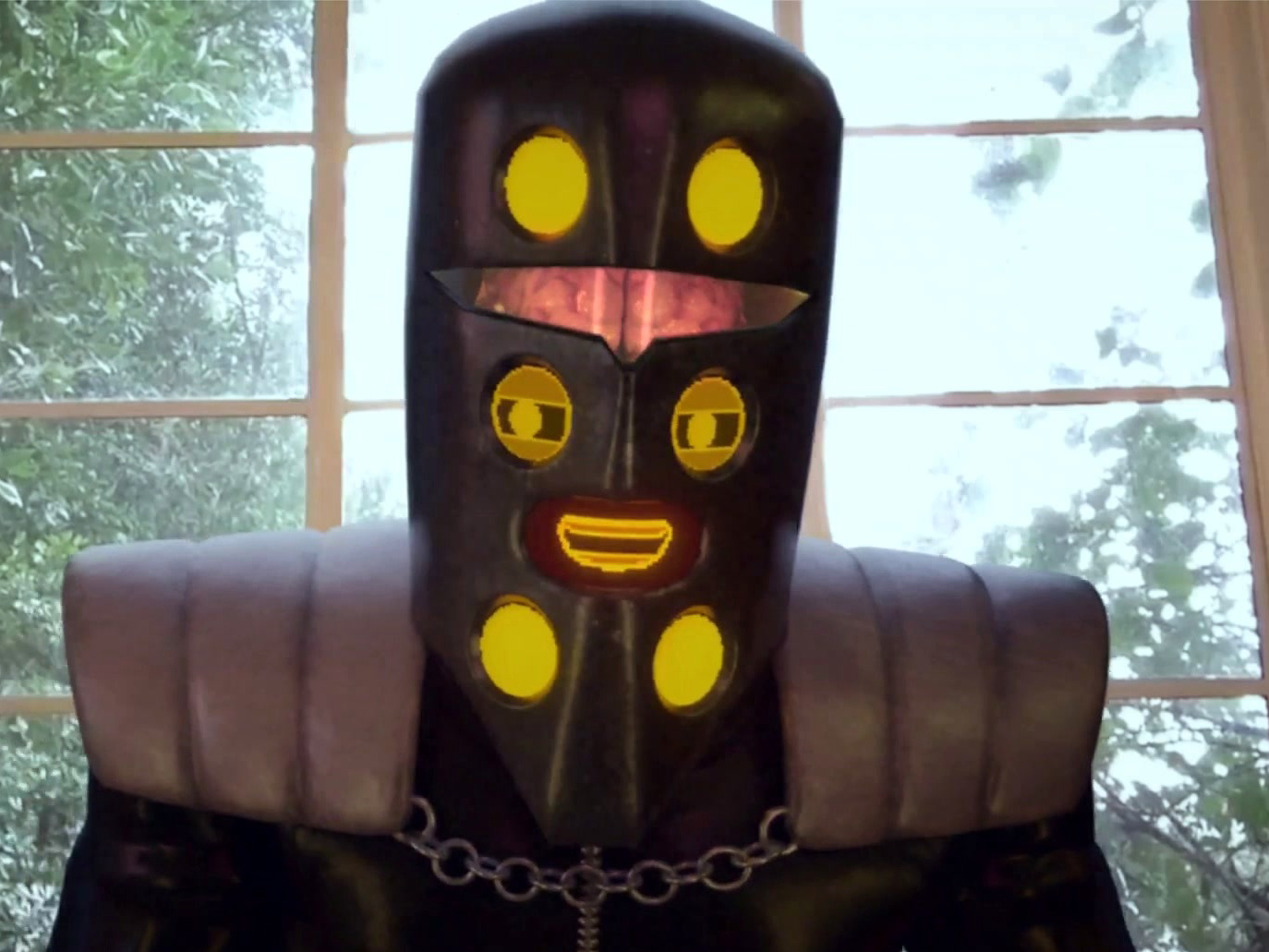
27:56 Psycho Goreman (2021)
37:17 Terminator: Dark Fate (2019)
41:48 Escape Room: Tournament of Champions (2021)
42:33 Pig (2021)
47:15 Hackers (1995)

49:40 Stoker (2013)

You can stay up to date with our podcast through SoundCloudSpotifyiTunesStitcherTuneIn, or by following the links on this page.

– The Lagniappe Podcast Crew

Stowaway (2021)

“They sure don’t make [X] like they used to” is something that I either never tire of hearing or can’t stand to hear someone say, depending upon who’s making the statement and what they’re complaining about. “They sure don’t make gender theory like they used to” is a statement that could go either way, varying wildly depending on whether it’s a radical person at your local DSA meeting or a talking head on any news outlet. “They sure don’t make Confederate monuments like they used to” is a delight to hear if the person saying it is pleased, but would be a huge red (and treasonous) flag if the speaker is wistful for the days when they could indulge in their Lost Cause nonsense without inspection. Nothing in life is ever really stable, but one thing that they’re still making just like they used to are contemporary(ish) medium-to-hard sci-fi dramas about Things Going Wrong in Space. 

Medical researcher Zoe Levenson (Anna Kendrick) originally applied for a position with space exploration agency Hyperion because she thought that “I was rejected by Hyperion” would be a funny story to tell at parties. To her surprise, she was accepted for a position for a two-year Mars mission, alongside biologist David Kim (Daniel Dae Kim), whose work revolves around the possibility of using algae as a feasible atmosphere conversion medium. Leading the mission is Commander Marina Barnett (Toni Collette), for whom this is a bittersweet journey, as it marks her third and final interplanetary trip. Their ship, the MTS-42, has an interesting configuration: the upper stage booster remains attached to the ship proper by a tether, and using centrifugal interia, provides artificial gravity for the crew. After a bumpy takeoff, the astronauts get down to the business of making the journey to Mars, but it turns out that this was no run-of-the-mill shaky departure: the ship’s weight is off due to the presence of Michael Adams (Shamier Anderson), a support engineer working as part of Hyperion’s ground crew, who was caught between two modules and trapped aboard the vessel. Worse still, his presence has inadvertently damaged the ship’s carbon dioxide scrubbers, which are needed to ensure a breathable atmosphere for the astronauts and their accidental stowaway for the entirety of their journey. 

Although Stowaway is set in the not-too-distant future, as evidenced by the way that a trip to Mars is treated as a semi-regular aeroscience practice and the lack of a NASA presence (Hyperion is never identified as a government agency or a private corporation; its international crew implies the latter but the genuine concern that home base demonstrates regarding the lives of its astronauts implies the former). It’s still part of the genealogy of films that can trace their ancestry back to The Right Stuff but were defined as a genre by Apollo 13: realistic space dangers. Stowaway doesn’t break the mold that also created The Martian and Gravity, but it’s also not really breaking the mold of Tom Godwin’s 1954 short story “The Cold Equations,” from which it draws its primary dilemma. “Equations,” which itself draws inspiration from works going back to the nineteenth century, takes its title from the calculations needed when a starfaring vessel whose margins of error are very small finds those margins exceeded by a stowaway (an intentional one in that text), in order to determine if there’s a way for both pilot and passenger to survive. There isn’t; the stowaway passenger in “Equations” makes the ultimate sacrifice upon realizing that her actions, however well-intentioned if poorly-informed, threaten the lives of an entire colony. 

That it fails to break that mold isn’t necessarily a bad thing, however. “The Cold Equations” is considered a classic sci-fi story with values that resonate across time for a reason. Stowaway also circumvents two potential problems with updates to the central conflict of “Equations” as well: the ship in “Equations” is pretty clearly in violation of common sense safety standards (it was published 16 years before OSHA went into effect, after all) by failing to provide for even the smallest margin of error, and the teenaged stowaway intentionally boarded the vessel to see her brother. In Stowaway, we instead have an engineer who was accidentally injured and knocked unconscious before being sealed behind a panel prior to liftoff, meaning that he is an innocent in this situation; secondly, it’s not merely a matter that the ship can’t support more than three people, but that the scrubbers that are the safety precaution and could enable them to make it to Mars with an extra person on board are damaged. Every attempt is made to find another solution, including using the algae from Kim’s experiment to try and produce sufficient oxygen to make the rest of the flight, and a daring and thrilling climb across the tether to the second stage booster to collect any remaining oxygen from its tanks in an attempt to extend MTS-42’s atmospheric supply until they reach Mars, but ultimately, just as in “Equations,” not everyone will make it out alive. 

Stowaway isn’t likely to blow the average audience member away. Its appeal lies largely in its similarity to what’s come before in the Things Going Wrong in Space genre and applying hard contemporary science to its familiar plot, but therein lies its weakness; there’s nothing here that you haven’t seen before. The minimal cast is strongly composed, but although no one’s phoning it in, everyone involved knows that this isn’t their opus, so it’s no one’s career best performance either. Anderson is a standout, given that he’s the least seasoned cast member, and Kendrick manages charm and gravitas in equal measures in a rare non-comedic role. I have a feeling that this would play better on the big screen; I certainly remember being captivated by Gravity and Interstellar while watching them in theaters, and Stowaway has sequences that feel stifled on my TV at home. Hopefully, we’ll see writer-director Joe Penna’s next feature large and beautiful, but in the meantime, this one’s on Netflix if you’re itching for a near-future sci-fi tragedy. 

-Mark “Boomer” Redmond

A Perfect Enemy (2021)

In March 2020, I started reading Marie NDiaye’s novel My Heart Hemmed In about a week before Texas went into its first lockdown. It was a stunning book, beautiful and discomfiting, about a woman, Nadia, who suddenly and inexplicably becomes othered by her community. Friends, neighbors, amenable ex-lovers, strangers, her pupils: overnight, she becomes a pariah to them, something different and perhaps even obscene. As I was on the bus on the way home from work, not realizing that it would be the last time I would be taking that route, I was reading through a passage about Nadia also taking public transportation, and her growing awareness of being watched and observed, and that paranoid feeling surged through me as the eyes of my fellow commuters began to dart from face to face, seeking any sign of illness or contagion. It was a distinctly surreal experience that I do not recall fondly. NDiaye’s writings seemed, based on my own admittedly limited cultural knowledge, very French; Heart focused heavily not just on the feeling of being ostracized, but also on the confusion of it, and through narrative sleight of hand managed to let the reader know that there was something about her situation that Nadia unconsciously understood but forced beneath the surface of her conscious mind. Despite her constant claims that she couldn’t imagine the reason for her situation, the reader always knew that she was more aware than she let on. Although the novel upon which A Perfect Enemy is based, Cosmétique de l’ennemi, is Belgian (albeit written in French), the summaries of it which I’ve managed to locate indicate a similar self-deception at the original novel’s core, which does not (forgive the pun) translate to the big screen, nor am I certain it could have translated.

Successful and renowned Polish architect Jeremiasz Angust (Tomasz Kot) has just finished giving a lecture in Paris about his philosophy of design. In so doing, he quotes Antoine de Saint-Exupéry (probably best known in the Western Hemisphere as the author of The Little Prince): “Perfection is achieved, not when there is nothing more to add, but when there is nothing left to take away.” This is tied into his desire to design spaces which are to the benefit not of an aristocratic class, but to the societal underclasses, who deserve beauty as much as their supposed betters. En route to the airport to return home, he offers to share a cab with a rain-soaked young Dutch woman who gives her name as Texel Textor (Athena Strates). Despite the objections of the cab driver, they also turn back to retrieve Texel’s suitcase, which causes both of them to miss their flights. As they each wait for the next available flight, Jeremiasz politely attempts to rebuff Texel’s attempts to engage him in further conversation, especially once her interest in him is further aroused by the fact that he had designed the very airport in which they are currently stranded. He finally gives in to her begging to hear her out as she tells him stories about her childhood, promising one such tale about how she killed a classmate in her youth. As they adjourn to a very nice lounge, the miniature diorama of the airport shows two tiny figures inside painted to look just like Jeremiasz and Texel, in an otherwise monochromatic white sea. 

Texel tells three stories. The first is about her disgust with the sound of her stepfather’s eating as a child and how her own rejection of food due to textural issues led to her being punished by mixing up offal and other unappetizing food remnants to feed to the family’s cats, but forced herself to eat that mixture and discovered she loved it. The second story is about her friendship with another girl from school, who was much more well-off and of whom the poor Texel was deeply envious, even going so far as to destroy the wealthier girl’s toys out of spite. One night she prayed for the girl to die while stabbing a doll, and learned the following day at school that she had died in the night. Between these stories, Texel asks Jeremiasz about his wife, noting his wedding band, but he reveals nothing other than to say that he still loves her, which Texel doubts, noting that when someone loves another person, they can’t help but talk about them more than Jeremiasz is willing to speak of his bride. Jeremiasz says that Texel can’t possibly think that her prayers killed her classmate, but Texel tells her final story, about seeing a beautiful woman in a French cemetery, standing over a sculpture of a mourning woman that looks almost just like her. She falls madly in love with the woman instantly and pursues her, much to the woman’s dismay, and although Texel catches up with the woman and even knocks her down, the mourner manages to get away. Texel spends years trying to find her again, and when she does and realizes the woman does not recognize her from that day in the graveyard, she weasels her way into the woman’s home, only for the woman to eventually recognize Texel’s mad laughter, and then a tragedy occurs. 

Although there’s not much to spoil here for a first time viewer and I’m not giving this film a recommendation, I’ll still refrain from sharing too much about how Texel and Jeremiasz were connected prior to their “chance” meeting, although an astute reader may have already figured it out. That’s by far the least interesting part of the film. Maybe I’m simply still haunted by Hereditary, but I had really hoped that the recurring image of the tiny figures of Texel and Jeremiasz appearing in the model airport in the transitions between scenes would be a larger and more literal factor in the plot, and that perhaps Texel was some kind of avenging spirit or witch come to force Jeremiasz to confront or reckon with something from his past. I’m not saying that’s not what happens in the movie, but, again, I don’t want to ruin the ending or the journey should you find yourself with access to this film and time to kill. The twist isn’t telegraphed necessarily, but it is foreshadowed heavily enough that you’ll probably stay a few steps ahead of the reveal. Even if that doesn’t work, what does work in the “long conversation” part of Act II are Texel’s interruptions of her own stories to ask Jeremiasz what he’s imagining when she talks about childhood poverty or elementary school buildings, and corrects his mental images, which draw on his own experiences, with clearer and more specific ones that accurately reflect her past. I love movies about memory, and this is an interesting and dynamic way to confront, inspect, and visualize the imperfections of memory and imagination in a visual way. There’s also a striking scene in the final act of the film that’s evoked by the movie’s poster image, but to say more about it would give too much away.

Unfortunately, where A Perfect Enemy falls flat is in the performances. Although there’s something indescribably “off” about Marta Nieto, who plays the object of Texel’s affections, it’s Kot who delivers one of the strangest performances I’ve ever seen here, and not in a good way. At first I thought it might have been a language barrier issue and was fully prepared to, on this film’s behalf, argue that it might have been better to allow Kot to speak his native Polish and subtitle the movie instead of forcing him to speak English throughout, but I watched an English-language interview with him, and he speaks the language fluently. I cannot imagine what prompted the acting choice to deliver every line of Jeremiasz’s dialogue so stiltedly; as a result of it, Kot delivers a performance that is—and I hesitate to use this term without sufficient reason but there are truly no other or more accurate descriptors—Wiseaunian. I don’t think that Kot is a bad actor necessarily, but it’s such a huge distraction that one could almost (but not quite) overlook what an amazing performance Strates is bringing to the table. She manages to portray innocence, madness, and clarity of purpose in what could have easily been a textbook standard manic pixie nightmare girl, and I really look forward to seeing her in future roles. I’m also fascinated by director Kike Maíllo’s cinematic eye; there are a lot of breathtaking images here (most of which were included in the film’s extremely well-crafted trailer), and I can’t wait to see him take the helm of another thriller that’s less hampered by a familiar narrative twist and a wooden performance from its lead.

-Mark “Boomer” Redmond

The Unholy (2021)

I am a man who loves a haunted doll movie, as long as it doesn’t involve acting like the Warrens were anything other than scam artists. You can imagine my disappointment upon the realization that The Unholy, which I thought would center around a possessed toy, turned out to be something different entirely. That disappointment was tempered by the realization that, although I wouldn’t see an ancient doll wielding a knife against Papa Winchester, at least this would be a possession horror, which is another genre that I’m rather fond of. It’s pretty rote and paint-by-numbers, unfortunately, but the ending was sufficiently unconventional that I can’t say it’s the worst of its kind. Spoiler alert, I guess? 

Following a prologue set in 1845, in which a woman is hanged for practicing witchcraft and her soul bound to a doll, we find disgraced journalist Gerald Finn (Jeffrey Dean Morgan) travelling to rural Massachusetts to photograph a supposed cattle mutilation. Disappointed but not surprised to find nothing more than a teen prank on a farm adjacent to a church, Finn notices the gnarled tree from the prologue and, within its hollowed base, the “kern” doll. Seizing the opportunity to spruce up his underwhelming story, he breaks the doll’s china head and takes its photo, unwittingly releasing the spirit of the witch. While intoxicated later that night, he’s driven off of the road by the appearance of a local girl, Alice (Cricket Brown), in front of his vehicle. He tails her back to the tree, where she speaks in tongues and collapses. When relaying this to the girl’s uncle, Father William Hagan (William Sadler), both he and Dr. Natalie Gates (Katie Aselton) express surprise; Alice has been both deaf and mute since birth. Soon, however, Alice demonstrates that she can not only speak but has gained the ability to hear, and says that “Mary” is speaking to her, and has healed her. 

This attracts the attention of the local diocese, including Bishop Gyles (Cary Elwes) and Monsignor Delgarde (Diogo Morgado). Before long, Alice garners national and international attention, as she heals a boy who could not walk as well as Father Hagan’s terminal lung cancer, and the small town of Banfield becomes an epicenter of pilgrimages. Also rehabilitated is Finn’s journalistic career, as he’s soon fielding calls from his former editor Monica Slade (Christine Adams), who mere days before was dodging his calls while citing Finn’s previous career-ending lapse of journalistic integrity. When Father Hagan discovers the truth about the “Mary” with whom Alice is communing, and that she is in fact the spirit of the executed nineteenth century witch Mary Elnor, this revelation costs him his life, but puts Finn and Dr. Gates on the right track to stop Mary’s ascension on the night of the Feast of the Immaculate Conception. 

There’s a fair amount of water-treading going on in this 99 minute budget horror, which could easily have been trimmed to a tight 80 and gone straight to streaming, perhaps as a surprisingly star-studded episode of Into the Dark or some other horror anthology. First time director Evan Spiliotopoulos has been working in the industry for over two decades now, with some noteworthy (if not praiseworthy) writing credits under his belt: the live action Beauty and the Beast, for instance, as well as The Huntsman: Winter’s War and the 2007 CGI animated Battle for Terra, which I don’t think anyone has ever heard of except for those of us who’ve seen the unskippable trailer on every single Wolverine and the X-Men DVD more times than are reasonable to admit. One wouldn’t think that the man who penned Tinker Bell and the Lost Treasure, The Little Mermaid: Ariel’s Beginning, and Pooh’s Heffalump Halloween Movie would be up for the reinvention of possession horror, and that assumption would be correct. This is a script full of dialogue that you’ve heard a million times before (Slade: “I know you; you would sell your soul for a story.” Finn: “I’m pretty sure I already did.”) as well as some painfully embarrassing attempts at being hip. For instance, when Finn makes a mix for Alice, he cites Tupac as “old school” but mentions cites Billie Eilish as contemporary youth music in the same breath as The Smashing Pumpkins, as if Mellon Collie and the Infinite Sadness came out in 2019 and not 1995 (sandwiched directly between Me Against the World and All Eyez on Me). It doesn’t strike me as being intentionally ironic, either, as Morgan is a fine actor and could have easily delivered a wry lack of self-awareness if that had been appropriate. 

Of course, that Spiliotopoulos wrote Tinker Bell and the Lost Treasure may actually be important to this movie’s ending. After reviewing various plot synopses of the novel from which the film is adapted online, I can’t determine if this is new to the adaptation or within the book, but Mary’s ultimate defeat isn’t the result of an exorcism. Instead, Finn wields his sullied reputation to sow doubt about Alice’s supposed miracles among the mass of congregants who have made their way to Banfield, preventing Mary from sucking up their souls and sealing her infernal pact. Mary, like Tinkerbell, has the “clap if you believe in fairies” limitation that requires faith in order to fuel her return, and by inverting this, Finn and Gates are able to weaken Mary’s hold over Alice and the populace. Of course, since this is a movie, the demands of the modern viewer require that we still be subjected to a show-stopping climax in which Mary appears in the burned flesh and her worshippers flee before her, but I was still pleasantly surprised by the fact that the narrative, which was theretofore about as canonical as a film of this kind could be, took a bit of a left turn into using skepticism as a weapon. It’s still not great, but if you’re stuck with limited options, there are worse possession retreads to spend some time with. 

-Mark “Boomer” Redmond

The Toll (2021)

CW/TW: Discussion of rape culture as a source of anxiety and sexual assault. 

Cami (Jordan Hayes) is not having a good day. She’s en route to see her father (James McGowan), and since her flight touches down at 2 AM due to delays, she tells her dad she’ll take a rideshare to his place instead of expecting him to pick her up. Her mood does not improve when her driver, Spencer (Max Topplin), makes awkward attempts at small talk that tend toward the sinister; he reveals that he’s a bowhunter and, when asked what he hunts, includes “humans” on the list as a bad joke. Or is it? Cami’s suspicions are further aroused when Spencer attempts to take a turn onto a rural road that Cami doesn’t recognize, and she is not assuaged to see that the turn is indicated on the rideshare app’s navigation screen. As their path takes them through a deeply wooded area, Spencer’s car suddenly breaks down, stranding the two of them alone . . .

A few years ago, I looked up the reader reviews for Neil Gaiman’s The Ocean at the End of the Lane, a book that I read on a flight in 2014, beginning my trip to New York with a good, hearty cry as the plane touched down at JFK. I was surprised by the negative reviews of it, until I dug a little deeper and saw that most of them were centered around the book’s length (178 pages) versus its cost (MSRP of $16.95 at the time). I had picked it up at the airport on my way out, so I knew exactly how much I was getting and at what cost, but it struck me as an immature (and grossly capitalistic) way to evaluate a piece of art. In fairness, during my more economically insecure (and less mature) days, I sometimes was affected by the same kind of thinking: “How can [band] charge full price for an EP that’s only 8 tracks?!” was a thought that passed through my brain more than once, and it fills me with shame to look back on it. It’s a toxic way of thinking, and from time to time I still have to remind myself of this, especially when it comes to movies. When I was a kid, movies (and of course books) were the only way I could escape an unhappy home environment for a little while, and when I was allowed to rent something from our local video store or borrow only one tape from the library, I felt cheated when it ended up being shorter than I expected. The anguish of wasting the one rental I was allowed that month in 1996 on a 45 minute tape of Carrotblanca that contained shorts I had already seen irrevocably changed my interaction with movies for the rest of my life; I still can’t pick up any form of physical media without immediately checking the run-time before I look at anything else. To me, the purported ongoing “bloat” of films to lengths greater than three hours isn’t a turnoff the way that it is for others; if anything, every time I see that a film is 150+ minutes, my interest is piqued like that Stan Kelly image that became a meme. This is decidedly not how Swampflix at large operates, where the “tight ninety” (™ Alli) is the preferred vision. 

All of that is (as is my wont) a needlessly and pointlessly indulgent digression and lead-in to the fact that I loved this 80 minute(!) thriller. Like Lucky, The Toll is a recent thriller that taps into —and unfortunately necessary—anxieties about existing in public spaces as a woman. In this month alone, my best friend expressed her concerns about parking in a pay garage so that we could meet her family downtown to watch the Independence Day fireworks; days later, she mentioned how fraught with danger it would have been for her to take the bus alone instead, and I have seen enough with my own eyes to know that her hesitancy is valid. Even without the benefit of hearing about the day to day horrors from countless first and secondary sources, as a man, I know how other men talk about women when they’re not around, and it’s terrifying. It’s easy to immediately sympathize and empathize with Cami, trapped alone in the woods with a stranger, even before things get “really” scary. 

Where The Toll plays with expectations is in what happens after the breakdown, which coincides with Spencer’s phone glitching and Cami’s dying. The audience watched as Spencer selected Cami specifically from a list of riders and this, along with our knowledge about the general shitshow that is patriarchal entitlement, primes us for where this story is presumably headed. However, once the characters are stuck in the woods, as they discover more and more reasons to mistrust one another, the audience is tipped off that something equally as pernicious but more ethereal is afoot. After several false scares, Cami opts to take off on foot towards the main road and leave Spencer behind, but discovers that there are now warning signs in the road that would prevent a vehicle from passing, warning of a road closure and graffiti’d with small notes and smiley faces that warn of the need to pay a toll of some kind. She soldiers on, and although she stays on the path, she finds herself back where she started, with one hiccup: she started walking away from Spencer back towards the main road from which they came, but she approaches him from the front, as if coming from deeper in the dark, dark woods. Spencer makes his own attempt to leave, but is likewise thwarted; in a beautifully underlit scene, he leaves the road altogether and sets off into the woods at a perpendicular angle, only to re-emerge from the forest onto the road from the opposite side. 

Other messages begin to appear as well. A warning about “The Toll Man” appears, written in the dust on Spencer’s back windshield. Cami discovers a cache of photos of herself in Spencer’s car, leading her to accuse him of stalking her and orchestrating the evening’s events, while he in turn is dumbfounded by this turn of events and accuses her of planting them; while neither are looking, the pictures disappear as suddenly as they appeared, as if they never existed in the first place. Assuming that someone in the woods is harassing them (The Strangers is mentioned), the two prepare to defend themselves, but they are eventually discovered by an older woman (Canadian treasure Rosemary Dunsmore) on a tractor, who offers to help them. When they relate their experiences, however, she realizes with horror that she will be unable to assist. “It’s been a long time; I’d forgot,” she says. “I’m not where you are. We’re looking at each other like we’re close, but you’re someplace else. You’re in his place. The Toll Man.” Like a malevolent fae, The Toll Man traps wayward travelers who have the scent of death if they should be unlucky enough to find their way onto his road; someone with suicidal ideation or bound for an accident is then diverted into his realm so that he can extract his toll: death. 

This has the potential to be more goofy than scary (The Bye Bye Man, anyone?), but in spite of its possible pitfalls, this one manages to work. I’ve recently been watching The X-Files for the first time, and although I know it’s a huge part of the show’s iconic imagery, every time Mulder and Scully go into the woods with their giant flashlights that are all-but-unnecessary simply because of how brightly backlit the trees are, I have to stifle a laugh (while watching the pilot, I turned to my best friend and almost shouted “Is that supposed to be moonlight?!”). That bled into the pop culture landscape a lot, and I’m pleased to say that the darkness that surrounds Spencer and Cami definitively looks like real, arboreal darkness. Their flashlight barely illuminates the first row of trees closest to them, and beyond that lies nothing but dread, inky blackness. The creepiness of it lingers, even after the Toll Man shepherds them away from the car and toward an isolated house, which contains other illusions that aim to warp their perceptions of reality, including images of Spencer’s dead mother (Jana Peck), who taunts her son with the secrets that she took with her to the grave when she killed herself. When the duo is separated, Cami is also confronted with images from her past; a canopy bed appears in the woods, where a younger version of herself is terrified after being assaulted by an “upstanding” young man (Thomas L. Colford); present-day Cami comforts her, but past Cami is in her head, and knows that although the wound is gone, the scar persists. A similar blending of indoor past and outdoor present was part of the visual language in The Ritual, and I loved it there as I do here. There’s something deeply uncanny about it, and as Cami is hounded by visions of the people who were present in the aftermath of her assault (very similarly to Lucky, although no one sings here), the impossible largeness of the darkness just beyond the treeline merges with the impossibly large weight of her past, while also descending on her in a way that can only be described as claustrophobic. 

The ending comes at the viewer fast, and I won’t spoil the conclusion here other than to say that the circle is fully closed. What we learn in those final ten minutes paints a new picture of everything that came before it, and this is the first film of 2021 that has made me feel like I’m already ready to rewatch it and see what I missed the first time. Although it feels like a Shudder release, it’s currently only available for rental or purchase, but when it comes to streaming, make sure to check it out. 

-Mark “Boomer” Redmond

Lagniappe Podcast: Cube³ – Cube Cubed

For this lagniappe episode of the podcast, BoomerBrandon, and Alli discuss the sequel & prequel to the high-concept Canuxploitation sci-fi thriller Cube (1997): Cube² – Hypercube (2002) & Cube Zero (2004).

00:00 Welcome

05:35 A Glitch in the Matrix (2021)
25:55 Black Widow (2021)
28:55 Cowboy Bebop: The Movie (2001)
34:44 Karnan (2021)

37:30 Cube 2: Hypercube (2002)
57:50 Cube Zero (2004)

You can stay up to date with our podcast through SoundCloudSpotifyiTunesStitcherTuneIn, or by following the links on this page.

– The Lagniappe Podcast Crew

A Glitch in the Matrix (2021)

A Glitch in the Matrix is a (purported) documentary about people who believe in some form of what’s known as the simulation hypothesis, which essentially postulates that existence—as we perceive, experience, measure, and know it—is an artificially created simulation. The film was directed by Rodney Ascher, and if that name is familiar to you, it’s likely because he also helmed the 2012 documentary Room 237, (a film that purported itself as) an academic and scholarly deconstruction of Stanley Kubrick’s horror classic The Shining, creating a lens through which the film could be viewed as both Kubrick’s confession and his exegesis. Although you may not have seen Room 237, you’ve still probably born witness to its reverberations in the pop culture discourse; for instance, if you’ve ever seen a tweet or a listicle that references Kubrick’s involvement in creating false footage of the moon landing or read an article about how The Shining is really about the collision of American imperialism with Native Americans, you’ve seen the cultural impact of Room 237.

For the first hour of Glitch, the film assumes an editorial tone that could charitably be described as “negligent.” The simulation hypothesis itself is laid out for the presumably unfamiliar viewer using clips from films that feature characters awakening to an understanding that their reality is somehow falsified or otherwise unreal: The Truman Show, Brazil, They Live!, and, of course, The Matrix. Interspersed with this exposition are excised-from-context clips from various respectable (if problematic) academics and intellectuals like Neil DeGrasse Tyson, using soundbytes that overemphasize their concessions about the possibility that the simulation hypothesis reflects an accurate understanding of our reality (for the record, that’s not what he said). For some reason, there are also a lot of longer, non-excised clips of non-scientist and former trust fund kid turned insouciant, nascent Bond villain Elon Musk, in which he talks about his own ideas about the simulation hypothesis, which we will definitely be circling back to. Additionally, there are long clips taken from noted speculative fiction author Philip K. Dick’s infamous appearance at a conference in Metz, France. For the uninitiated, much (if not all) of Dick’s prose focuses upon protagonists whose lives are somehow unreal, either because the character prioritizes a fictive inner life which is demonstrably oppositional to their lived experience, or because the character exists in a fiction within a fiction before realizing the falseness of their presumed reality. In that rare public appearance, a post-psychotic break Dick elaborated on the idea that his novels were not fiction, but were in fact true, and that his writing of them was his way of exploring his “realization” that he had personally experienced multiple different timelines, and in so doing unintentionally elaborated upon and outlined the psychological delusion that we now call the “Mandela effect.” 

Among these irresponsibly arranged sound bytes and film clips, we also get to meet several of the documentary’s subjects, most of whom were interviewed via some kind of video conference software, and who appear on screen as video game-esque avatars. There’s Jesse Orion, a special education teacher who dreams of being an illustrator full time; we get to see some of his work, which includes a skull drawn in a Mike Mignola style as well as pages from his redrawing of an entire volume of Jean “Moebius” Giraud’s work using characters from the Peanuts comic strip. There’s also Leao Mystwood, who appears as a kind of high-tech Anubis; his time spent in a sensory deprivation chamber convinced him that his perception of himself as having or being a physical form is false, and that he is instead composed of code. There’s Alex Levine, whose avatar looks like a cross between the classic “brain in a jar” image that accompanies many discussions of simulation hypothesis and 790 from Lexx. But the interviewee we spend the most time with, and who in fact the film opens on and who deliberately “set[s] the tenor” of the piece as a whole is Paul Gude, who portrays (and perhaps perceives) himself as leonine. Paul opens with a story about attending a lecture while at university, in which his instructor discussed the genealogy of neurological epistemology as understood by theorists who were bound by the horizons of their knowledge; that is to say, when the highest level of technology was the aqueduct, the human understanding of neuroscience was perceived as and delineated through the use of fluids/humors, and then the rise of telegraphy altered that perception and description to instead treat the nervous system as a series of wires and impulses. From there, the rise of sophisticated computing technology lead to the contemporary understanding of the mind as a kind of CPU informs our current understanding of reality and the perception thereof; Gude then posits that since we now have technology capable of replicating reality virtually, we should then not only have the ability to conceive of our perception of reality as virtual, but to an extent, we must concede that it is so. 

Gude notes that he was adopted, and that his adoptive father was a clergyman, and talks at length about his childhood proddings at the concepts of what constitutes reality. Some of this is familiar to me, although I wouldn’t go so far as to presume the universality of those experiences. One anecdote revolves around his childhood move to an area with a much smaller population than the city in which he previously resided, and his internal mental justification of this was that this was the result of the need for “them” to use less processing power to render fewer people and objects; the long drive to and from other areas was therefore the result of the need for “them” to change the surroundings and set up the next location. Although he doesn’t come straight out and use this analogy, it could be more simply explained that he conceived of car trips with his father as the equivalent of a loading screen between sections of a video game that show up while the next area is rendered. Another instance of his worldview being altered occurs while he is sitting in church, listening to his fellow congregants sing a hymn in unison, and his subsequent “realization” that what he is perceiving as a musical harmony and the assumption that it is produced by air forced through internal human flesh must be false, that it in fact could not possibly be the case. His story is presented without commentary, creating (through the language of documentary filmmaking) the impression that the documentarian concurs with this analysis and sees no issue with arriving at the conclusion that reality is a simulation because it’s “impossible” that the sounds of people singing are created by the vibration of larynxes. This is what I’m talking about when I say that the editorial tone is questionable; these are not intercut with psychologists elaborating upon common delusions and their physiological origins, but are simply presented as completely rational ideas. 

Gude is not the only subject here for whom a history of teleological theology clearly underpins their perception (and associative distrust of the parameters) of reality. Leao Mystwood, whose introductory chyron provides the appellation “Brother,” also notes that he himself is an ordained minister. Textually, the film itself draws a comparison between the simulation hypothesis and many religious teachings, specifically citing Luke 7:21, in which Jesus, upon being asked about the Kingdom of Heaven, notes that the kingdom is “within” the questioners, existing both inside and outside of them. For someone for whom the concept that we reside in a simulation is an a priori assumption about the nature of existence, this statement, taken through that lens, seems to be that of an Avatar (defined traditionally, e.g., a divine being made flesh in our world) describing an external, “truer” world to beings who can only perceive the simulation that is “housed” within that truer world. And, despite the fact that Jesus also described the Kingdom of Heaven as a place of feasting with Abraham, Isaac and Jacob, a man who sowed good seed in his field, treasure hidden in a field, a net, and yeast, I think that interpreting the concept of “heaven” as a “truer” outer world within which our world is but a shadow on a wall is completely legitimate—and therein lies the rub of this film as a whole. After all, what is the simulation hypothesis if not a kind of creationism? I put “them” in quotations earlier when discussing Paul Gude’s ideas because he never names these actors and artificers who are exterior to the simulation, and neither does anyone else who was interviewed for this documentary; who are “they?” What could “they” possibly be other than the divine, or some secularized recontextualization of the concept of divine beings? 

I find A Glitch in the Matrix troubling. That’s not because its “revelations” shock me to my core or make me re-evaluate the reality of, well, my reality. To be quite frank, the “simulation hypothesis” is essentially what I was raised to believe, as elaborated upon here, simply with a different name and an overlayment of scientific buzzwords and bizarre fetishization of Elon Musk (I haven’t forgotten about that part) over it to make it seem not only plausible but undeniable, when in reality it comes down to one of the oldest human concepts of them all: faith. One of the core tenets of faith is that this mortal, decaying flesh is not all that we are. That there is something external, that there is something higher, that there is a consciousness or consciousnesses which supersede and exist beyond ourselves which exert authority over our existence. Regardless of whether or not I personally think that interpretation of existence is valid, whether that concept comes in the form of a deity in heaven above or a programmer of the simulation, both require the same rejection of empirical reality as it can be measured, tasted, and observed and embrace an unfalsifiable concept of existence. That’s fine! But to present a text that defines existence this way as a documentary, to treat the belief system as fact instead of a chronicle about the people who believe it as fact isn’t documentation at all; it’s proselytization. It’s the same as when the VHS box for Future Tense proclaims that it’s a “true story” that just “hasn’t happened… yet,” except that, unlike that production, this one doesn’t advertise itself as an evangelical tool. This presents itself as a factual document of record, which is both disingenuous and dangerous. 

To give credit where it’s due, the second half of the film delves further into the dark potential of this way of thinking. In the first half, more than one of the interview subjects notes that there are people with whom they have interacted whose personal tendencies toward antisocial behavior and violence were only curbed by the belief that reality is real and therefore there are consequences to violence. This smacks of the logical fallacy that many people express, that we must maintain a society-wide belief in a higher power/metaphysical consequence in order for the populace to inhibit their darker impulses; you see this in the way that many people can’t wrap their heads around the proven validity of  redistributing police and carceral punishment funds to preventative social safety nets as a method of preventing (instead of punishing) crime. There are a great many people (including, in my opinion, most of the people who appear in this movie) who need psychological therapy and/or pharmaceutical assistance to reach a baseline of empathetic civility. That the belief that others are less “real” than oneself creates a space for violence in its very core; it’s the foundational basis of white supremacy and other forms of antisocial ideologies that often result in violence in the public and private spheres. The film does denounce this potentiality, at least, and does so through a recorded phone call with Joshua Cooke. 

That name, too, may sound familiar; nearly two decades ago, Cooke murdered his parents in the basement of their home with a shotgun. Infamously, his lawyers considered pleading insanity on his behalf, citing that Cooke “harbored a bona fide belief that he was living in [a] virtual reality,” which became known as the “Matrix defense” (Cooke eventually pled guilty). The possibility that the rejection of the fundamentals of reality could lead to violence is also referred to as the “school shooter” mentality within the film, but the film fails to provide a truly robust condemnation of violence within its text, and I think that’s rather telling. The proliferation of a multitude of people who take to the internet to share photoshopped images of cereal boxes and TV Guide typos to use as visual aids to the recapitulation of their experience of the so-called Mandela Effect isn’t just harmless shenaniganry; it’s a demonstration of the larger parts of society’s growing unwillingness to reexamine their precepts and beliefs, even in the face of evidence against it. We are living in an era in which people are more likely to believe that they’re sliding through parallel universes like Quinn Mallory rather than consider that their memory might fail to be 100% accurate, simply because Reddit told them so; we’re seeing the consequences of that now, politically and globally. To paraphrase another giant of speculative fiction, Isaac Asimov, there is a growing contingent of Americans who legitimately believe that their ignorance (and misremembrance) is just as valid as scientific knowledge and evidence, and it’s that which I find truly deplorable about A Glitch in the Matrix’s text—it will only add more fuel to that fire which threatens to consume our world. Blink and you’ll miss it, but one of the interviewees notes that they think large scale disasters, including those like recent California wildfires that are exacerbated by climate change, are the result of programming errors; every day in every way they’re coming up with new reasons to denigrate the need for immediate action to mitigate and prepare for climate change.

Although the second portion of the film attempts to cover the failures of the film’s first hour, its bizarre fetishization of Musk extends beyond the questionable first half into the second. And make no mistake—some of these people come within a hair’s breadth of literally worshipping Musk. Taking into consideration that the simulation hypothesis is just creationism with extra steps, at least one of the interviewees essentially likens Musk to a god. While explicating on the idea that some people are player characters and others are non-player/playable characters (or NPCs), one of the interviewees speculates that Musk might be not only a player character, but someone from outside the simulation who “descended” into our reality as an avatar in order to try and awaken us and to a recognition that the simulation as false. That is to say: this person believes that it’s possible Musk is an extra-simulation messiah. At the risk of editorializing, I’ll say this: if god were one of us, I’d accept that they were a slob like one of us or a stranger on the bus, but they sure as hell wouldn’t be a guest on Joe fucking Rogan’s podcast. I get that for many neurodivergent people, Musk’s accomplishments (such as they are) are encouraging and demonstrate that people with Asperger’s shouldn’t be dismissed out of hand, but I won’t make any apologies for failing to be impressed that the heir to an apartheid emerald mine leveraged obscene and objectively amoral wealth into a business empire that’s largely dysfunctional. You’d be hard pressed to find someone more interested in living on the moon than I am, but I’m not gonna work for Mr. Grimes’s scrip and I’m not going to live in one of his lunar debtor’s prisons/company towns; you can fucking forget that.  

I mean no disrespect to those who work in the service industry, but when someone says “For two years, all I did was work at Chili’s and then come home and play video games,” and then uses that as the basis for their claim that they then “realized” that reality was also just a video game, that’s a person who needs counseling and therapy to manage their addiction. I’m not mocking this guy: addiction is a disease, it takes many forms, and it warps your reality. What it doesn’t do is make you an expert on that reality. The two works that this most reminded me of were the film What the #$*! Do We Know!? and the book Supergods by Grant Morrison. In the case of the former, Glitch is similar in that it presents pseudoscientific ideas not as a possible interpretation of existence, but as decidedly true (and, although I am aware that this verges on ad hominem, it’s worth noting that it was created by NXIVM cultists). In the case of the latter, I find the use of footage from Philip K. Dick’s mental breakdown to be both heartbreaking and cruel; it reminded me of Morrison’s book, which for the first 2/3rds is a loving, jubilant history of superhero comics and that artform’s various wonders, before the final third descends into a bizarre scripture of Morrison’s personal beliefs. I won’t try to summarize them here, but here’s a sample (from p. 277 of the 2012 Spiegel & Grau paperback edition): “The interior of our skulls contains a portal to infinity [….] Could fertile wet planets like our Earth really be nurseries where omni-anemones fed and grew to become quicksilver angels in a timeless AllNow?” For the sake of my future hypothetical political career I won’t get into specifics, but I’ve personally spent a not-insignificant amount of time communing with the fractals, if you catch my drift; that doesn’t mean that I would ever consider that experience to be revelatory about the nature of reality, and if I did, and I tried to start spreading the Gospel of Boomer, and that Gospel also incorporated depersonalization that is analogous to that which is part of evil ideologies, I’d hope no one would follow me. I also hope no one takes this documentary to heart, and in the meantime I’ll be looking forward to a different documentary about the simulation hypothesis someday, one which is more scientifically, spiritually, and ethically considered.

-Mark “Boomer” Redmond