
Of all the various legacy sequels that are propping up the Hollywood economy right now, the overwhelming majority have very little reason to exist beyond desperately trying to milk the cow one last time before the entire industry is put out to pasture. The new Scary Movie, to its credit, is the one among them with the most justification to be made in the current moment. After all, the last time that one of these shallow parody films was released was nearly 15 years ago, and the last time that they really had anything to do with parodying horror movies was in 2006. Franchise originators Shawn and Marlon Wayans departed the franchise after Scary Movie 2, all the way back in 2001. In the interim, a half-dozen horror trends have come and gone, so there’s a whole lot of ground to cover. We’ve seen the rise and fall of torture porn in Hostel and the Saw franchise, the glut of mid-aughts remakes that saw (among other things) Jackie Earle Haley take a turn as Freddy Krueger, a resurgence of zombie movies, an abundance of horror legacy sequels like David Gordon Green’s Halloween films and the Radio Silence-produced Scream sequels, MCU-ified horror like The Conjuring, and, of course, the much-vaunted rise of “elevated” horror. For 2026, though, the Scary Movie franchise returns to what it does … well, not “best,” exactly, since—despite the decline in quality over the series’ repeated returns to the well—none of these movies are particularly great, but it’s back to what it does adequately.
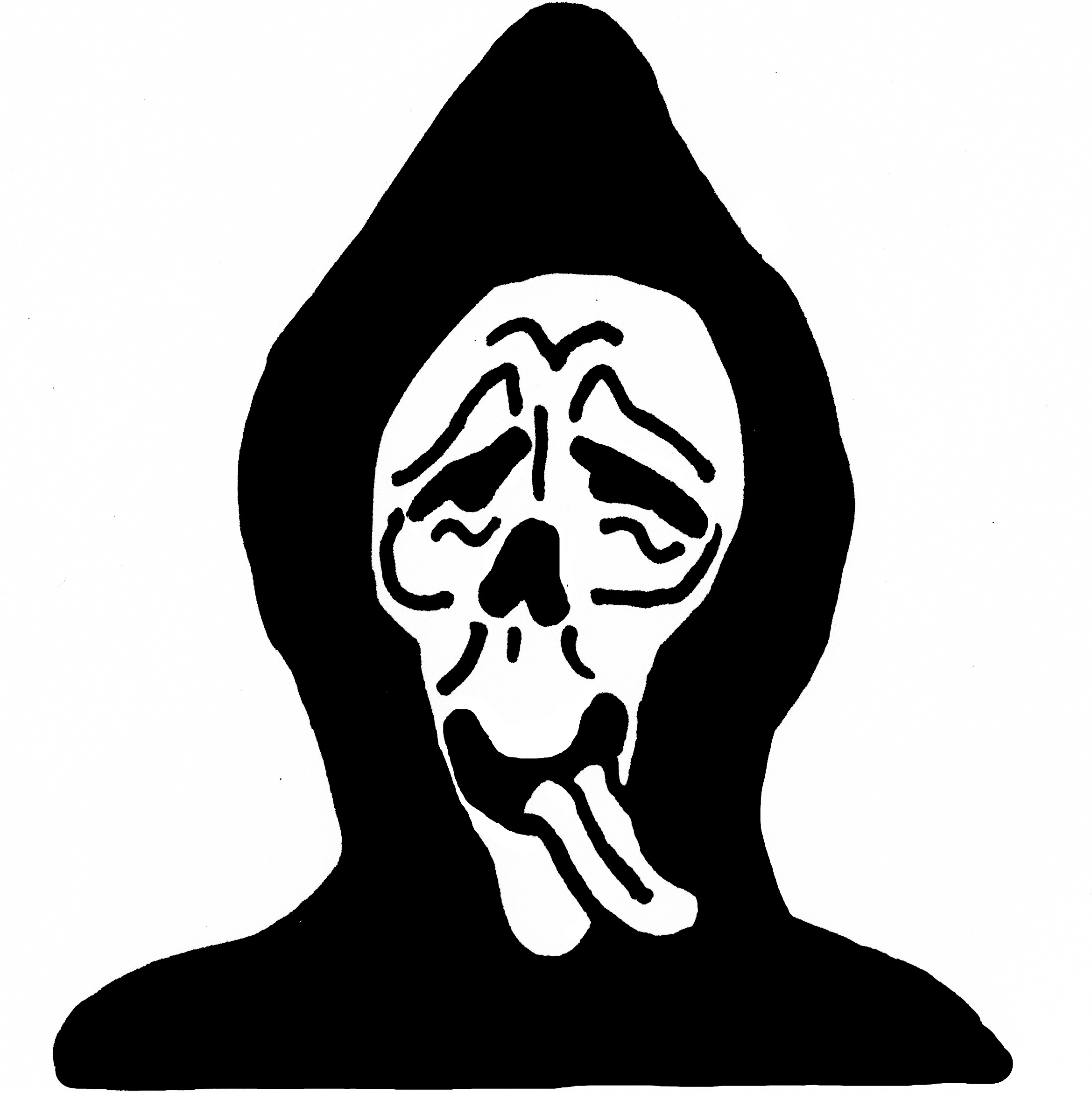
Scary Movie (2026) bases most of its “plot” around 5cream, although its opening sequence most closely parodies Scream VI and cribs the NYC subway scene from the later sequel as well. The opening features a cameo from Carmen Electra and sees Teyana Taylor reenacting the opening sequence of Scream VI, in which Samara Weaving was lured into an alley in New York City. Here, however, she summons a crew of burly men to assist her in kicking Ghostface’s ass. As part of the movie-within-the-movie series Horror Movie, Teyana’s would-be date/killer calls her directly after a couple of back-and-forth text exchanges, and they break the fourth wall by noting that an audible phone call provides better exposition for the presumed audience than on-screen text messages, citing that most people who would turn out for a Wayans Bros. movie “are probably illiterate.” It’s supposed to be self-aware mockery of the audience but it mostly belittles the filmmakers themselves, demonstrating just how little regard the script has for its audience. Make no mistake; I laughed myself silly during this movie (under the influence of an edible, admittedly), but there’s not a single joke in here that doesn’t wear out its welcome by belaboring the point. One of the best bits arrives near the end when Brenda (Regina Hall) pretends to have been shot so that she doesn’t have to go back into the killer’s house with Cindy (Anna Faris), and we see that she’s faked her injury with ketchup packets. It’s funny stuff, but then Brenda overexplains the joke, and it makes the whole thing less comic than if the film wasn’t (over)narrating itself. There’s a potential cut of Scary Movie that’s twenty minutes shorter, cuts several of the dead-on-arrival “comedy” bits, is less dialogue heavy, and would be twice as funny.
It’s been some amount of time since the last time Ghostface showed up to harass Brenda, Cindy, Brenda’s closeted partner Ray (Shawn Wayans), and her brother Shorty (Marlon Wayans). In the intervening time, Cindy has had two daughters, Sara (Olivia Rose Keegan) and Tuesday, who essentially play the parts of Sam and Tara Carpenter from the recent Scream sequels — because Jenna Ortega also played Wednesday Addams, get it? Brenda has had two kids of her own, the Chad and Mindy equivalents Brad (Gregg Wayans, who is thirty-seven years old) and non-binary Dei (get it?). With the return of Ghostface and an attack on Tuesday, Sara returns home alongside her clearly-the-killer boyfriend “Jack” to find her mother, who now has Jamie Lee Curtis’s frazzled white hair from the aforementioned Green-helmed Halloween films. This leads to Cindy’s reunion with Brenda, who has turned into a Ma-like figure for the local high school kids, including Shorty, who is in his third decade of attempting to graduate. Ghostface comes back to town, stirs up some interpersonal conflict between Sara and her mother (whose insistence that the return of Ghostface is all about her drives her daughter insane), some people die in wacky ways, and the film frequently finds itself sidetracked into various shallow references to contemporary flash-in-the-pan pop culture. That’s all that these movies have ever been; when they manage to parody something that stood the test of time, like The Matrix, it’s more of an accident than it is an insight into cultural longevity (and, like, everyone was parodying The Matrix).
Last year’s rebootquel of The Naked Gun proved that there is a place for parody films in the market. It was so much fun that it led me to rewatch the original and its sequels, and I’ve also long been a proponent of Top Secret! and recently rewatched both Hot Shots films. The thing about those ZAZ parodies is that the jokes are so layered and come so quickly that even if one of them lands with a resounding thud, the movie moves along quickly enough that you’re laughing again moments later. In Scary Movie, every bit is 1.5-4 times as long as it should be, which means that even the jokes that do land can wear out their welcome quickly, and when there’s a swing and a miss, one still has to sit there for an interminable amount of time before we move on to the next bit. The first real clunker is when Cindy tries to remind Sara of the good times from her childhood, which is illustrated by taking her to see a mall Santa who’s actually the Terrifier; it goes on just shy of forever and isn’t funny at all. Other particularly unfunny sequences include full recreations of non-horror pop culture as well. After the memorably surreal image of Ghostface taking the place of Catherine Keener across from Shorty as Daniel Kaluuya in Get Out, the film segues into Shorty’s Sunken Place, which he calls a k-hole before Ghostface corrects him that he’s in a K-Pop hole. This leads to a fully animated sequence that sees Shorty hooking up with the three leads of KPop Demon Hunters while spoofing the song “Golden” with a chorus that includes the refrain “Gonna be gonna be smokin’.” It’s peak “Remember this?” style parody, and although that film’s widespread success may mean that this “joke” makes sense in twenty years (we’ll see if the references to Smile and cameo from Kai Cenat do the same), there’s no amount of time that will pass for it to ever be funny. (That having been said, the choice to do a parody of the marketing campaign for Michael with “Tubi original” Jermaine, featuring Kenan Thompson as Jermaine Jackson, was something that I thoroughly enjoyed. But why is it here, in Scary Movie? That’s an orphaned SNL sketch if I’ve ever seen one.)
Ultimately, Scary Movie leaves one with too much time to linger on and ponder the bits that aren’t landing. I was one of a group of five who went to see this movie, and only two of us laughed enough for it to have been worth the price of admission (one of whom was me), one person seemed to enjoy parts of it, and two people utterly hated it. One of the haters was a surprise to me, given that this is a longtime friend with whom I’ve spent no small time over the years chatting about our fondness for the first two Scary Movie films; we recognize that they’re not very good, but that doesn’t mean we don’t have a certain nostalgia for movies that were airing virtually every week on Comedy Central during our formative years. He was the person I expected to enjoy this the most, since its comedy is really no different from the earlier Wayans Brothers-produced films. He was actively miserable the entire time, and I think that if you’re trying to decide whether this is worth your time, this is worth considering. It’s exactly as good as Scary Movie and Scary Movie 2, and if you didn’t like those, you probably won’t like this. If you do have positive memories associated with those, it’s still a crapshoot whether or not the humor of this one will land. All I can say is that, if you’re going to see it, you should try to get as high as Shorty beforehand (and for legal reasons, I remind you all to toke responsibly).
-Mark “Boomer” Redmond