Agents of S.W.A.M.P.F.L.I.X.: Avengers – Age of Ultron (2015)

EPSON MFP image

Superhero Watching: Alternating Marvel Perspectives, Fresh and Longterm, Ignoring X-Men, or S.W.A.M.P.F.L.I.X., is a feature in which Boomer (who reads superhero comics & is well versed in the MCU) & Brandon (who reads alternative comics & had, at the start of this project, seen less than 25% of the MCU’s output) revisit the films that make up the Marvel Cinematic Universe from the perspective of someone who knows what they’re talking about & someone who doesn’t have the slightest clue.

Boomer: Do you need a history of the Avengers sequel here? The first movie cast such a shadow that it was impossible to escape this film, even if you wanted to (and most people didn’t). Even when it was unclear whether or not director Joss Whedon would return to helm the second film, there were no other potential directors announced before he eventually acquiesced. By the time this movie came out, virtually every blog that is created and consumed by humans had talked about the upcoming film in extreme detail. Next time, when we talk about Ant-Man, there’ll be a lot of production history to discuss, as that film had a long and troubled road from inception to release, but not Age of Ultron. Let’s just get to it, shall we?

EPSON MFP image

threehalfstar

Brandon: When I first reviewed Age of Ultron last summer I had kinda marked it off as a breaking point for the MCU. I enjoyed the film very much as a loud, chaotic action film, but felt like it was stretching itself a little thin trying to please both people like me who (at the time) only casually checked in on the Marvel films every now & then and hardcore fans who had consumed all ten films, three television shows, several DVD-exclusive shorts, and untold amount of tie-in comic books worth of content that preceded it. Age of Ultron was enjoyable to an outsider, but it had to labor fairly heavily to get there & I felt like at some point the franchise would have to leave me behind if it wanted to keep already-established fans engaged in future films. In the past year I’ve since caught up with all of the preceding MCU films & a few of the comic books and it turns out Age of Ultron still feels a little overstuffed & compromised now that I’m somewhat in the know. It’s a sluggish, sprawling mess of an action film that stresses itself out trying to provide significant character beats for each of its many larger than life heroes while also juggling with the introduction of several new supervillains for them to thwart. In a lot of ways Age of Ultron repeats a lot of the highlights and downfalls of the first Avengers films. It’s fun & inspired in moments both big (a stunning slug-it-out fight between Iron Man & The Hulk) & small (the repeated gag with who can/cannot lift Thor’s hammer), but also labored in a way that’s impossible to ignore, especially in its overlong, stop & start exposition.

However, there is a new spark of inspiration at work in Age of Ultron that gives me great hope for where the MCU is headed as a franchise. Now that the individual introductions & character quirks for each Avenger member are out of the way, the series has made a little room for itself to go into unexplored territory beyond the basic novelty of seeing all of these superheroes function as a unit. This development comes twofold. The first & flashiest change afoot here is the breathing space the film allows for its eccentric villainy. James Spader is a total hoot as the titular Ultron, just devouring the scenery at every opportunity he gets (even as soon as his introduction as a disembodied voice). The second development is the very nature of Ultron as a form of artificial intelligence. Thus far, MCU movies have centered on very traditional superhero plots: origin stories, tales of revenge, moral crises over the very nature of heroism, etc. Captain America: The Winter Soldier & Thor 2: The Dark World both promised new lines of narrative with their respective experiments in political thriller & space epic plot lines, but Age of Ultron takes this adventurous genre play a step further. The film’s pedigree as modern A.I. sci-fi makes it surprisingly satisfying & unique as a modern superhero work (and as a result it ranked fairly high on our recent list of the best A.I. sci-fi titles of the 2010s). Age of Ultron may be a little messy in its attempts to juggle so many varied larger-than-life personalities & sidebar plot lines, but James Spader’s over-the-top performance as the central villain & the resulting A.I. sci-fi plot that surrounds him make the film at the very least an interesting, entertaining mess. It’s at least as good as the first Avengers film & promises that there’s even better work to come in the near future (I’m starting to get really stoked about Captain America: Civil War‘s imminent release, as I’m sure most people are).

EPSON MFP image

three star

Boomer: I’m never really sure where to start when talking about this one. Age of Ultron isn’t a bad movie. In actuality, it’s a pretty decent outing for a group of characters that people were losing their minds over the first time we saw them unite. I’d dare say it’s good, if not great. The cinematography is clean, the pacing moves swiftly and cleanly, and the likable characters are terribly likable while the unlikable characters are not.

Buuuuuuuut…. this movie bores me? Maybe “bores” is the wrong word; it’s more that the film just fails to really grab me? Although there are some tonal inconsistencies and narrative problems throughout, the same could be said of Avengers, and I still found that movie enjoyable in spite of its flaws. I’d even go so far as to say that this film might be technically better, but I don’t get the same thrill from it that I still get from the first one. Admittedly, it would have been virtually impossible to capture a second lightning bolt in this particular Marvel-shaped bottle regardless, but I still feel underwhelmed with each viewing. This was my third watch of the film (after seeing it in theatres and then again at Christmas), and this was probably the most rewarding watching experience, but does an Avengers flick need to be the kind of movie that takes multiple rewatches to be fully enjoyed? This isn’t Jacob’s Ladder or Primer that I’m talking about; it’s the eleventh movie in a franchise that walks the thin line between “media made for children” and “media aimed at adults,” a direct sequel to a movie that was so much fun we all willingly ignored the fact that its plot is pretty threadbare and that the villain’s motivations were utterly inexplicable. So how did a follow-up with more explicit character motivation and expanded personal stories for many of the heroes end up being so… blasé?

When Whedon finally announced that he would return to direct Age of Ultron, he said that it was because he “actually started to consider it [and] it became so clear that [he] desperately wanted to say more about these characters.” This is most evident in Jeremy Renner’s Hawkeye, which is ironic given that the actor couldn’t stop putting his foot in his mouth during the press tour. Overall, the film garnered a mixed response among new media outlets: many people interpreted Black Widow’s line about being a monster, a declaration that came on the heels of the revelation that she was sterilized as part of her espionage training, to mean that she considered herself less than a woman because she could not have children (I don’t personally subscribe to this inference, but the placement of that line is unquestionably insensitive and poorly timed). And it’s no real surprise that Whedon got burnt out from working on the film, considering that he was trying to grow the mythology while also being beholden to the Marvel franchise at large. This was a pretty big contributing factor to his eventual departure from social media, which was solidified when people reacted angrily to his accusation that Chris Pratt’s character in the then-upcoming Jurassic World smacked of “seventies-era sexism” (an observation that turned out to be absolutely correct, for anyone keeping score at home).

But those are all things that aren’t specific to the film itself; so, what about the movie? Well… clocking in at 2.5 hours, there are still too many stories that feel unresolved. In my review of Batman v Superman, I mentioned the scene wherein Lois Lane has to retrieve a Kryptonite spear from a flooded building after throwing the damn thing into the water in the first place; both I and the friend with whom I saw the movie immediately referred to this as the “Riker Fights a Monster” moment, referencing RedLetterMedia’s Plinkett Review of Star Trek: Nemesis. In that film, there is a scene in which Jonathan Frakes’s character goes down into the bowels of the ship to fight Ron Perlman’s Nosferatu-esque Reman character for no other reason than to give Riker an irrelevant plot point; as “Harry Plinkett” points out, making a main character run off to engage in hand to hand combat with a monster simply to give that character something to do is a demonstration of utter failure to properly craft a story. The same thing happens here with Thor, who takes off from the Barton farm halfway through the movie to go submerge himself in some magic waters and have a mystical vision, for the sole purpose of getting him out of the way for a little while and providing Thor with the information needed to provide exposition about how the MacGuffins of the MCU are interconnected, even though we kind of already got that explanation from The Collector in Guardians. Because the film has to introduce three new Avengers but Thor is still on the team, he has to be sent off on an irrelevant side quest just to give him something to do.

I didn’t read any books written by men in 2015. The biggest reason for this is that, while I was reading Charles Yu’s How to Live Safely in a Science Fictional Universe last January, I realized I was reading the fifth novel in a row that was about a relationship between fathers and sons, specifically one that was estranged. Like a lot of writers, I also have a strained relationship with my Pops, but I’m sick to death of having to see that narrative device in every piece of media that I consume. It’s been a central thematic element of most of the Marvel films, with Stark having to face off against his surrogate father in Iron Man and Iron Man 2 revolving around him having to finish his father’s work (with bonus daddy issues coming from a parallel story about Whiplash’s own dead father). Thor could have been subtitled “Odin is kind of a bad dad,” and the plot of Thor 2 is basically “Loki has daddy issues some more, and also there are evil elves.” Guardians of the Galaxy has both Nebula and Gamora rebelling against their “father” Thanos, and Star Lord’s father is mentioned several times, setting up more dad-focused shenanigans further down the line. The Incredible Hulk didn’t focus on the patriarch of the Banner family (although Ang Lee’s non-MCU Hulk certainly did), but it did milk drama from the relationship between Betty and General Ross. Even Ant-Man, which I really enjoyed, wrung most of its pathos from the parallel father-daughter relationships between the two Ant-Men and their respective offspring. The only movies that don’t have bad father-child relationships as a central element were the Captain America films. And, hey, I get that, I really do. Assuming that your parents were present in your life, the relationship that you have with them is the first and most formative relationship that you have; further, especially in God-haunted America, the relationship between fatherhood and the divine takes on such familial and social importance that one’s father is often one’s model for how they conceive God. I’m just saying that this is a metaphorical well that has been visited by storytellers so often that they’re hauling up buckets of dust at this point and trying to get us to drink it.

Age of Ultron takes this idea and cranks it up as high as it will go. Wanda and Pietro turned to Baron von Strucker and his experiments as a way of getting back at Stark for the death of their parents. The Barton family farm gives every character the opportunity to reflect on their own place in the world and whether or not that precludes them from starting families of their own: Banner and Widow have a heart-to-heart about how neither of them is biologically capable of starting a family (the idea of adopting, as is so often the case, never crosses anyone’s mind); Stark talks about building Pepper a farm, implying that he is thinking about continuing the Stark lineage (legitimately). Cap’s is a little more subtle, as we see him dreaming about the end of the war and being able to finally dance (and, by implication, settle down) with Peggy, a dream that can never be realized. Even Thor becomes a kind of father by the end, as his lightning gives life to Vision. But, of course, all of this pales in comparison to Ultron and his hatred for his “father,” Tony Stark. It’s thematically connected but ultimately feels hollow.

Where do I even begin with Ultron? For one thing, his design is terrible. The effects team did some excellent work making him look as good as he does, but he still doesn’t quite fit. The Iron Man suits are almost always CGI, but they work for me because they don’t have as many distracting details on them and they aren’t required to imitate real facial expressions; Ultron, on the other hand, has a stupid cartoon face that laughs and speaks and looks absurd. Combined with James Spader’s disarmingly likeable dialogue, this doesn’t work for me at all. I understand that Ultron wants to become more human (even if the film fails to properly explain why this is a goal for him), but he would have been more unsettling if his jokes and attempts to seem more affable had come from a less expressive face. When Ultron first interrupts the after-party at Avengers tower and gives his “I’m alive, father” speech to the gang while inhabiting a broken Iron Legion bot, he’s much more menacing in that moment than he is at any point later in the film, and that’s a problem; a villain should become more frightening as he goes from party-crasher to world-destroyer, but Ultron gets less creepy as the film goes on. If they weren’t going to keep him in a broken robot suit the whole time, the least that could be done would have been to make his face immobile to ramp up the uncanny valley factor.

On top of that, the film sells itself short by having Ultron move into full-blown extinction-event villainy almost immediately. Remember the scene from The Fifth Element in which Leeloo discovers the concept of “War” and briefly has a psychic break before returning to her mission with a renewed vigor? Age of Ultron would have benefited from downplaying Ultron’s maliciousness at the outset. For instance, he could have worked alongside Jarvis for a scene or two, maybe even helping to design the anti-Hulk “Veronica” system, which would have foreshadowed that Ultron would eventually work against the team. Then have him come to the conclusion (after having a Leeloo-like epiphany but with the opposite result) that the world would be better off without humans in general and the Avengers specifically, so that he goes rogue, kills Jarvis, and sets out on his own to unmake life as we know it. This would raise the emotional and thematic stakes without changing the plot all that much, while also making Stark look less foolish by having his “son” turn to evil eventually rather than instantaneously.

All that having been said, do I hate this movie? Not really. I actually enjoyed its mindless summer action flick elements, and I continued to laud the fact that the MCU heroes really are heroic in that they focus their attentions on saving people as much as they do on defeating villains. Compared to the mindless ultraviolence of, for instance, Man of Steel (and the petulantly sarcastic “good thing this island we’re utterly destroying is uninhabited” violence of follow-up BvS), Age of Ultron truly reflects the superheroic ideal in a way that other franchises fail to understand. The trailer for Civil War even shows that there were fewer than 200 casualties in this film, which is mind-boggling, given that an entire city is obliterated in the climax. The action scenes are fun, even if there are so many that the excitement is diluted and diminished (the Iron Man versus Hulk fight is narratively justified but could have been excised with few changes). I also like that the film takes the time to remind us that Tony Stark is a real asshole, and that the character growth he’s experienced over the course of the franchise hasn’t absolved him of the guilt of his past (as evidenced by his recognition of a notable black market arms dealer and the fact that the Maximoffs were orphaned as a result of his company’s war profiteering) or of his pathological egomania (as seen in his accidental creation of what is essentially Skynet and his willful refusal to destroy the experiment that would become Vision, despite all available evidence at the time indicating that this was the best course of action).

Still, the spectacle doesn’t make up for the looseness of the plot this time around, and the film’s thematic focus on progeny and responsibility is neither as strong nor as clever as it tries to be. It’s the quintessential example of a sequel that reduces its narrative world rather than enriches it. It’s a recommended watch, but not a required one.

EPSON MFP image

Lagniappe

Brandon: I’m giving a lot of credit to the character of Ultron here for what makes this film so entertaining as a work of superhero-themed A.I. sci-fi, but Ultron’s philosophical counterpoint Vision is just as fascinating. I know both Ultron & Vision are both inorganic lifeforms entirely dedicated to their respective good & evil plots to “save” the world (Ultron’s Murder Everyone policy is particularly inventive in that regard), but what strikes me most about these two characters is their off-putting sexuality. James Spader has always been something of a creepy sex symbol throughout his career & even though he appears here mostly as a voice, his work as Ultron is no different, so no surprise there, really. What’s really off-putting is the sex vibes I get from his heroic opposite Vision. Vision is creepily sexual in a way that a subtly flirtatious yoga instructor or an enigmatic cult leader would be and it makes me simultaneously super fascinated & super uncomfortable watching him at work. It’s highly probable that this is all in my head, but I still think it was a reaction worth mentioning.

Boomer: As much as I cited the problematic over reliance upon father-child relationship clichés, it is worth pointing out that this is, to my knowledge, the first and only time that anything created by Joss Whedon has a good father archetype. From Buffy (in which literally every single character’s father was either not present, abusive, or both) to Toy Story (in which Andy’s father is notably absent), Joss Whedon has a the same hard-on for bad fathers that Jonathan Safran Foer has for fatherhood in general. Arguably, Fred’s dad on Angel was decent, but Hawkeye is the first good, relevant father that we have ever had in a Whedonverse product.

On a more random note, non-comics character Helen Cho feels like an attempt to fix the comics-to-screen adaptation of Kavita Rao, who was created by Whedon during his Astonishing X-Men run and who was unfortunately ruined by her appearance in Fox’s X-Men: The Last Stand.

I’d also like to point out that I really like Vision. He’s a favorite character of mine from the comics because he’s just such a total weirdo. For those who don’t read the comics, Vision’s neural patterns were based on those of fellow Avenger Wonder Man (who has no analog in the MCU, possibly because he was excised from The Ultimates); when Coulson was killed in the first Avengers film, my theory was that they would bring him back by using his mind as the basis for Vision. I’m not saying that my idea was better, but… okay, I am saying that. Still, I appreciate that the MCU has brought on such a bizarre comic character and I have to admit that I’m really looking forward to seeing what they do with him. I also like that they slyly alluded to his comic-book relationship with Scarlet Witch, with Ultron saying early in the film that she needs something different from/more than a man, and with Elizabeth Olson’s reaction to seeing Vision for the first time (her face basically says “Oh, my, yes”).

Of course, even more than Vision, I love Wanda. She’s a notoriously difficult character to get right, and even though the movie makes some changes for the worse (divesting both Pietro and Wanda of their Roma heritage and instead making them generically Eastern European is unnecessary and insulting, especially considering that you can count the number of Roma comics characters on one hand), her characterization is pretty neat. The Ultimates version of the twins was awful, and the dumbed-down nature of X-Men Evolution meant that she was turned into a pretty generic goth girl with issues, a la Nancy in The Craft. My favorite non-comics version of her is probably from the all-too-brief Wolverine and the X-Men cartoon from five or so years ago; pairing her off on adventures with Nightcrawler made sense thematically (given both character’s connections to the Roma) and making her an ambassador for Genosha allowed her to be involved without making her a part of the team.

As for how this film fits into the wider MCU, we haven’t quite gotten to see the ramifications of these events inform the growth of the franchise in quite the same way as, for instance, the events of Winter Soldier did. When that film was released, it had an immediate and apparent impact on other films, taking away the S.H.I.E.L.D. support system that the characters and the audience had come to rely upon and making Hydra a real threat in the present. This had an obvious and instantaneous effect on Agents of S.H.I.E.L.D., finally refining that program into something worth watching. How does Ultron tie into the program this time around? An off-the-books project is referenced many times throughout the second season, a project so secret that it causes dissension in the ranks (when Ming Na’s Agent May finds out what it is, a few weeks before the audience does, she seems pretty pissed). The big surprise is that this secret project is actually the new helicarrier that is used to rescue the fleeing Sokovians at the end of Ultron, which doesn’t make sense given what Agents showed us and is completely irrelevant to viewers who only follow the films and don’t care about the shows. Ignoring that, it looks like the events of this film will be important in the upcoming Civil War, so that’s something to look forward to. And, of course, we can expect to see more of Andy Serkis’s character when the Black Panther finally gets involved.

EPSON MFP image

 Combined S.W.A.M.P.F.L.I.X. Rating for Avengers: Age of Ultron (2015)

three star

-Agents of S.W.A.M.P.F.L.I.X.

Agents of S.W.A.M.P.F.L.I.X.: Guardians of the Galaxy (2014)

EPSON MFP image

Superhero Watching: Alternating Marvel Perspectives, Fresh and Longterm, Ignoring X-Men, or S.W.A.M.P.F.L.I.X., is a feature in which Boomer (who reads superhero comics & is well versed in the MCU) & Brandon (who reads alternative comics & had, at the start of this project, seen less than 25% of the MCU’s output) revisit the films that make up the Marvel Cinematic Universe from the perspective of someone who knows what they’re talking about & someone who doesn’t have the slightest clue.

Boomer: There was a great deal of consternation in the nerd and mainstream communities when Guardians of the Galaxy was first announced. Eagle-eyed viewers (and readers of Wizard) had already spotted an appearance by the Infinity Gauntlet in Odin’s weapons locker in Thor, and many had correctly guessed that the Tesseract that appeared in Captain America was one of the Infinity Gems, meaning that an adaptation or re-imagining of Marvel’s Infinity War storyline would eventually be on its way. With that in mind, there had to be a way to incorporate more of Marvel’s cosmic mythology into the MCU, but no one was certain which form this would take. Within the comics, space-based plotlines generally revolved around either the Shi’ar Empire or the Kree-Skrull War; neither of these two elements lent themselves to the MCU, however, because of the rights issues surrounding each. The Shi’ar are mostly linked to the mythology of the Phoenix Force (and thus the X-Men) and the Skrulls were a longtime recurring enemy of the Fantastic Four; with the film rights for both of those teams tied up at Twentieth Century Fox, there was much debate as to how the MCU would be able to address interstellar plots. Notably, Avengers had taken the Skrull stand-ins from the Ultimate books, the Chitauri, and made them the alien invaders in that film. Ultimately (no pun intended), the Kree play a role in this film, although the Skrulls go unmentioned.

Kevin Feige hinted in 2010 that a film bearing this title could be on its way, and confirmed in 2012 that the film was in production. Initial announcements named Peyton Reed as the director, although at that point his biggest successes were over ten years behind him, having helmed a few episodes of the last season of HBO’s terrific Mr. Show with Bob and David and 2000’s underrated Bring It On. Writing/Directing duo Ryan Fleck and Anna Boden (the team behind Ryan Gosling vehicle Half Nelson) were also in talks to create the film and its world, but the project eventually found its way into the capable hands of James Gunn. Gunn only had two features under his belt as director, horror satire Slither and Rainn Wilson’s superhero pastiche dramedy Super, but the majority of his work was in writing, including the 2004 Dawn of the Dead remake. Joss Whedon, director of The Avengers, was kept on by Marvel as a consultant for the films leading up to the (then untitled) sequel to the team-up film, and he was vocal in his excitement about Gunn’s hiring, citing the director’s enthusiasm and cinematic eye.

A virtual unknown, Nicole Perlman, was later announced as the film’s screenwriter. She had previously acted as an uncredited script doctor on a draft of Thor, and she was given free reign to choose which Marvel property she wanted to draft a script for, choosing Guardians because of her fondness for space opera. Although Disney’s screenwriting program no longer exists, Perlman was one of the last to graduate from it, and her script for Guardians was the only reason the film ended up being made, according to Variety in 2012; Senior Editor Marc Graser wrote at the time that Marvel “was high on” her initial script treatment. Since then, Perlman has admitted that she’s also written a draft of a potential Black Widow script that has yet to see the light of day, and she has also been announced as the screenwriter for the upcoming Captain Marvel film due out in 2019. Perlman’s name is also frequently banded about as the potential writer of a rumored reboot of Jim Henson cult classic Labyrinth (although talk of a reboot has largely died down in the wake of David Bowie’s recent passing). In the meantime, however, she has not one single IMDb entry that does not relate to the MCU, which is heartening considering what a boys club the franchise can seem to be at times.

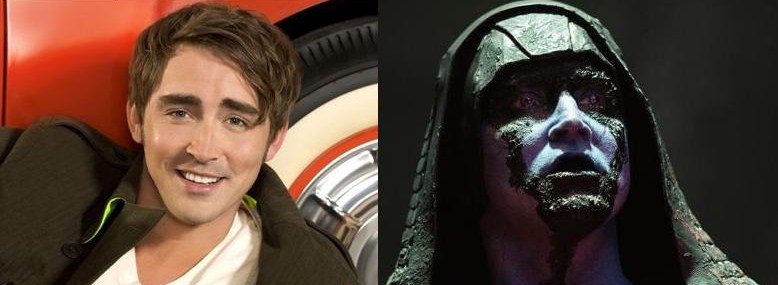
Casting for the film’s default lead, Star Lord, began in September 2012, with a laundry list of people who tested or read for the role: Eddie Redmayne, Joseph Gordon-Levitt, Joel Edgerton, Jack Huston, Michael Rosenbaum, and many, many others. Lee Pace also auditioned for the role, ending up instead slotted into the role of Ronan, the film’s main antagonist. Five months later, Marvel finally announced that they had found their man in Chris Pratt. Jason Momoa auditioned for the role of Drax, but he was passed over in favor of Dave Bautista (Momoa, of course, is slated to appear as Aquaman in DC’s upcoming attempted franchise). The nature of this new film meant that none of the MCU’s previously appearing characters could not reasonably make cameos in this film, although Buffyverse alum Alexis Denisof reprised his role as The Other, Thanos’s emissary who gave Loki his marching orders in Avengers. There was little publication surrounding other roles and testing for them, but the film’s cast was finalized by mid-2013 (minus Vin Diesel, whose vocal acting for Groot was only confirmed after the end of principal photography), and filming began in July of that year.

For those of you who have forgotten everything about the film except for a wisecracking raccoon and freshly-buff Chris Pratt being hosed down while flouncing about in underwear, a quick refresher: Young Peter Quill fled the hospital where his mother was dying in 1988 and was picked up by an alien ship. Years later, Quill (Pratt) acts as a scavenger in a fleet led by Yondu (Michael Rooker), a blue alien with an inexplicable Southern accent; he finds and takes a valuable item from a space tomb and ends up on the run from Kree radical Ronan (Pace). Multiple bounty hunters are sent to apprehend Quill, including Rocket Raccoon (voiced by Bradley Cooper) and his partner Groot (Diesel) and assassin Gamora (Zoe Saldana), who was kidnapped from her home by intergalactic warlord Thanos (Josh Brolin) and trained as a killer. These four untethered people are eventually captured and detained in a space prison; when they escape, they are joined by fellow inmate Drax (Bautista), who has his own axe to grind with Ronan and Thanos. They are opposed by Ronan and Gamora’s warrior “sister” Nebula (Karen Gillan) and the police-like Nova Corps, led by Nova Prime (Glenn Close). These decidedly-not-team-players reluctantly accept that no one else is in a position to save the galaxy from total annihilation and rise to the challenge.

Brandon, what did you think about Guardians of the Galaxy? If I remember correctly, this was one of the MCU flicks that you had seen before starting this project; does it fare better or worse now with more of a background in this world? Or, given that this film that lies outside of the MCU’s reach for the most part, does that context change your opinion at all?

EPSON MFP image

fourhalfstar

Brandon: I’m starting to feel extremely foolish about how I received Guardians of the Galaxy at the time of its release a couple years ago. I liked the film well enough as a loud, vibrant action comedy that provided a much-deserved starring role for America’s affable older brother (or boy toy sex symbol, depending who you are) Chris Pratt. However, I remember buying into the idea that the Marvel “house style” had significantly put a damper on the over-the-top exuberance of madman schlock director James Gunn. Gunn was familiar to me as the dark soul behind depraved camp titles like Slither and Tromeo & Juliet, so it was weird to see his style somewhat homogenized into a Luc Besson-style space epic. The truth is, though, that Gunn’s version of an uninhibited MCU entry probably would’ve turned out more like the grotesquely asinine Deadpool film I’ve spent the last month brooding over. In fact, Gunn already directed a nastily misanthropic superhero film, simply titled Super, that I generally enjoyed, but also found difficult to stomach at times due to the lighthearted way it depicts sexual assault. I don’t know if this is me getting increasingly sensitive with age, but another The Fifth Element, Star Wars-style space epic with Kevin Feige & company keeping Gunn’s sadistic id in check actually sounds preferable now to what might’ve been delivered otherwise. It might also be the case that the act of catching up with the rest of the MCU’s output in recent months has helped me realize just how unique Guardians is as a modern superhero popcorn flick & just how much of Gunn’s personality is noticeably present on the screen.

In any case, returning to Guardians of the Galaxy with fresh eyes was a revelation. This is a fantastic work of crowd-pleasing action cinema, the exact kind of delirious spectacle I look for in blockbusters. In that respect, the only film that might‘ve topped it in the year or so since its release is Mad Max: Fury Road & I mean that with full sincerity. The film’s detailed, lived-in version of space opera is literally worlds away from the rest of the MCU. Its superheroes aren’t truly heroic or even all that super. They’re mostly thieves, murderers, aliens, and the bi-products of cruel science experiments. Something that largely got by me the first time I watched Guardians of the Galaxy was just how emotionally damaged its central crew of space pirates are. Their families are dead. They’ve never known true friendship. They’re sometimes prone to drunkenly curse their own very existence. The film’s tendency for 80s nostalgia & crowd-pleasing action set pieces are really fun in an overwhelming way that I think often distract from just how devastatingly sad its emotional core can be. I never knew an anthropomorphic raccoon grimly complaining, “I didn’t ask to get made!” could make me so teary-eyed, but Guardians has a way of making the emotional pain of its damaged, nonhuman non-heroes feel just as real as the physical space they populate looks. That’s no small feat.

That’s obviously not to say that all of Guardians is deep-seated emotional pain. The film is mostly a riotously fun action comedy with broken hearts & bruised egos only peppering its blockbuster thrills. I love how inane its outer space worldbuilding is. Blue people, green people, purple people, and purple people eaters all roam about as if they are on a silly 60s sci-fi television show. Villains are known to say absurd things like “Nebula, go to Xandar and get me the Orb.” The MCU’s ultimate MacGuffin, the Infinity Stones, actually feel at home in this kind of space age gobbledy gook. It’s also fun to watch this atmosphere clash with Pratt’s womanizing bro humor as Star Lord, as I feel like I’ve lived in this kind of space adventure before, but I’ve never met anyone I could describe as a “space bro” as comfortably as Star Lord. I particularly enjoyed the line when describing the filth of his space ship/bachelor pad he confesses, “If I had a black light these walls would look like a Jackson Pollock painting.” The kicker is that Guardians not only has the most successful humor of the MCU’s output so far; it also has some of the most exhilarating action sequences in the franchise. The Kyln prison break in particular is a beaut & watching Rocket Raccoon operate his homemade weaponry gives me the same thrill I caught watching primates operate automatic machine guns in 2014’s Dawn of the Planet of the Apes.

4120537-7008853704-kclkd

the-brew-buzz-19

I could probably prattle on about how my favorite two MCU entries so far, Guardians of the Galaxy & Captain America: The First Avenger, thrive on their own strengths by distancing themselves from the rest of the franchise, but I don’t believe that best captures what makes Guardians so special. Honestly, the film’s own mixtape gimmick is a better access point to understanding its wide appeal. A mix of crowd-pleasing songs like “I Want You Back” & Escape (The Piña Colada Song)” and offbeat essentials like “Cherry Bomb” & “Moonage Daydream“, the film’s mixtape soundtrack mirrors its larger mashup of action comedy marketability & cult film tendencies. In retrospect the marriage of James Gunn’s mean nerd exuberance & the MCU’s action comedy accessibility is a match made in blockbuster heaven. It delights me to no end that you can actually purchase a copy of Star Lord’s beloved mixtape cassette. That piece of comic book movie ephemera actually seems more to the heart of the film’s appeal than a Rocket Raccoon figurine or even a Blu-ray copy of the film could ever be.

EPSON MFP image

fourstar

Boomer: Last time we were here, I mentioned how much Captain America: Winter Soldier reminded me of Star Trek VI and how that only made me love the former all the more. I have to admit that I was one of the naysayers with little hope for Guardians. By the time it came out, I was sick to death of the endless stream of advertisements for the movie; in every commercial break and before every YouTube there was a clip of Chris Pratt slowly flipping off John C. Reilly. But what I found when I saw the film was that I actually loved it, but mostly because it was the closest I felt we would ever come to having a Farscape feature.

The parallels don’t track perfectly, but they are obvious. We have the wise-cracking American thrust into an interstellar society made up of various societies and factions (Peter Quill/John Crichton), who has a relationship with a woman who was taken at birth and trained to be a deadly soldier and assassin (Gamora/Aeryn Sun). They’re joined by a large warrior with ritual scarrification and tattoos (Drax/D’Argo), a pint-sized wiseass (Rocket Racoon/Rygel), and a living plant (Groot/Zhaan). Farscape’s premiere episode even involves a prison break in which many of the main characters escape captivity, and both ragtag crews eventually find themselves drawn into the greater war going on around them in spite of their individual desires to simply overcome the traumas of their past. Both Drax and D’Argo have lost their wife and child (although D’Argo’s son is still alive, albeit enslaved), and both Gamora and Aeryn slowly warm to the human crewmate that helps them feel closer to their (in)humanity. The sequence in which the titular Guardians visit a mining colony inside of a once-living giant is even reminiscent of the episode in which the crew of Moya find a mining colony inside of the budong, an ancient spacefaring being of humongous proportions.

For the most part, the similarities end there, however. Although Groot and Zhaan are both plant people, the former lacks the metaphysical wisdom and spirituality of the latter. Although Rocket is full of himself, he lacks the imperial pomposity of the dethroned Rygel. Still, once can’t help but feel that Guardians is a spiritual sequel to Farscape, and that greatly contributes to my enjoyment of the film. I have to admit, however, that this rewatch wasn’t the thrill ride that I remembered fro my first few viewings. Guardians is undoubtedly the coolest of the MCU flicks so far, but the repetition of the jokes from the film in the real world has stolen some of the luster from their enjoyment. There’s still a lot to enjoy here, but Guardians doesn’t hold the endless rewatchability for me that Winter Soldier does, despite being much more fun than the comparably dour Captain America sequel. It was a smart move on Marvel’s part to follow up a somber MCU installment with a film that was exhilarating in a different way and for different reasons, but Guardians has a problem that the other films don’t have.Whereas the previous ensemble in The Avengers had the luxury of multiple individual films to flesh out the members of the team (minus the characters who were supporting players in previous installments, with Hawkeye never being fully realized as a character until Age of Ultron), Guardians has the unenviable task of introducing all five of its mains as well as their world and the ramifications thereof in a very short amount of time. The script is excellent in that the film doesn’t feel overloaded, but reflection upon the movie does lead to some questions that feel unanswered. We know that the Kree and the Xandarians have recently reached a peace accord, but what was their relationship beforehand? Are many of the Kree fanatics like Ronan, or is he an outlier, and, if so, why does Nova Prime have such difficulty getting the Kree ambassador(?) that she contacts late in the film to make a political statement decrying Ronan? And why wouldn’t the Kree condemn a terrorist anyway? This scene and others blow past so quickly that viewers may not realize just how much information is needed, but scenes like this have a way of niggling the subconscious.

Still, Guardians is a lot of fun. When I first saw it in theatres, I would have given it five stars, but time and distance have made me a bit more critical of it. Maybe I just wasn’t in the right frame of mind this time around, but the film just doesn’t have the magic for me that it did in 2014.

EPSON MFP image

Lagniappe

Brandon: It’s impossible to talk about Guardians‘ likability without addressing the absurd strength of its cast. Besides the appeal of Chris Pratt’s affable bro humor & “pelvic sorcery”, watching James Gunn regulars like Michael Rooker & Lloyd Kaufman appear among Hollywood heavyweights like Benicio Del Toro & Josh Brolin is a strange delight. Goofball comedic actor John C. Reilly interacting with Glenn Close is equally enjoyable as novelty. Bradley Cooper appears as a CG raccoon wearing people clothes. Vin Diesel outs himself as a huge D&D-oriented nerd as a talking tree. Bautista & the much-hated (among cinephiles, anyway) comic book prankster Howard the Duck both make a massive impact, which combine to make it feel as if this film were aimed to please my own particular nerdy obsessions: bad movies & pro wrestling.

The only complaint I might have about Guardians‘ insanely stacked cast of always welcome faces is the way it largely wastes the eternally-underutilized Lee Pace. I enjoyed Pace’s turn as impossibly cruel Ronan the Accuser more than I did the first time around but I do still think it was a huge mistake to cover up his luscious eyebrows with the alien makeup. Those might be the most handsome eyebrows in Hollywood. They deserve to run free.

tumblr_na2ozpjnfv1rfbi2jo1_1280

Boomer: For anyone reading this who is still mourning the loss of Farscape, I recommend current sci-fi series Dark Matter. It has fewer obvious commonalities with Farscape than Guardians, but its tone is the closest thing to Farscape’s that I’ve been able to find in a long time, even if it lacks the older series’s humor.

When joking in our earlier review about the fact that the Ninth Doctor appeared in Thor 2 and that the Tenth Doctor had played the villain of Jessica Jones, I had completely forgotten about the fact that Karen Gillam, who played the Eleventh Doctor’s companion Amy Pond, played Nebula in this film. There’s also the fact that Tobey Jones, who portrayed a nightmare version of the Doctor a few years back in “Amy’s Choice,” portrayed the evil Doctor Zola in both Cap flicks. Were it not that Jenna Coleman (who portrayed Clara Oswald, companion to the Eleventh and Twelfth Doctors) played a minor role in Captain America, all the Doctor Who alums who have thus far appeared in the MCU would have portrayed villains.

Regarding how the film plays into the larger mythos of the franchise, the plot elements from Guardians have largely only been important in how they affect Agents of S.H.I.E.L.D. Just as one of the main characters on the program was revealed to be a Hydra mole near the end of the first season, the second season featured major developments in the form of the revelation of the existence of the Inhumans and that another member of the squad was one such being. The Inhumans, for those who understandably gave up on Agents early on, are a subspecies of humanity who possess abnormal physiological traits as the result of a Kree genetic engineering campaign in Earth’s distant past. It’s also an easy way for the MCU to introduce large numbers of super-powered individuals despite not having the right to use the term “mutant,” what with the rights to the X-Men franchise still tied up at Fox. For those of you playing along at home, there is also a planned Inhumans film slated for release in 2019.

EPSON MFP image

Combined S.W.A.M.P.F.L.I.X. Rating for Guardians of the Galaxy (2014)

fourhalfstar

-Agents of S.W.A.M.P.F.L.I.X.
Agents of S.W.A.M.P.F.L.I.X.: Captain America 2 – The Winter Soldier (2014)

EPSON MFP image

Superhero Watching: Alternating Marvel Perspectives, Fresh and Longterm, Ignoring X-Men, or S.W.A.M.P.F.L.I.X., is a feature in which Boomer (who reads superhero comics & is well versed in the MCU) & Brandon (who reads alternative comics & had, at the start of this project, seen less than 25% of the MCU’s output) revisit the films that make up the Marvel Cinematic Universe from the perspective of someone who knows what they’re talking about & someone who doesn’t have the slightest clue.

Boomer: Captain America: The Winter Soldier was very nearly a different kind of movie. Christopher Markus & Stephen McFeely announced before the premier of the first Cap that they had already been hired to draft the sequel’s script, and there were three choices for direction: George Nolfi, F. Gary Gray, and sibling directorial team Anthony and Joseph Russo. Gray would certainly have been the most interesting choice, as he would have been the first person of color to helm an MCU film and have helped with Marvel’s ongoing diversity problem (as demonstrated just in the past week by the announcement that Danny Rand would be portrayed in the upcoming Netflix Iron Fist series by white Game of Thrones alum Finn Jones). To date, only two films based on Marvel properties have been directed by non-white directors, Hulk (Ang Lee) and Blade II (Guillermo del Toro), and only one has been directed by a woman, Lexi Alexander’s Punisher: War Zone. At present, Black Panther is set to break this white streak with director Ryan Coogler (Fruitvale Station, Creed), although the revolving door of directors (with Selma’s Ava Duvernay and Gray himself having been attached to production at different points) makes one wonder if there will be any more upsets between now and when production actually begins. Ultimately, Gray passed on the project in order to direct last year’s Straight Outta Compton, and the reins to the film were handed over to the Russo brothers, best known for their work on the early (good) years of NBC’s Community.

Those who are only familiar with the movies may be unaware, but S.H.I.E.L.D.’s contribution to the primary Marvel Comic universe took place largely outside of the context of superheroics. In fact, one could read comic books for several years without ever finding out that such an organization exists within that world; I certainly did. When interest in strong men and Amazons waned in the mid-Twentieth Century while the popularity of western, detective, and horror comics grew, S.H.I.E.L.D. took on prominence as a vehicle for telling stories about war and espionage, with books like Sgt. Fury and His Howling Commandos. The idea that S.H.I.E.L.D. should play a role in the founding of a superhero team is taken wholly from the Ultimate Marvel comics, a sub-imprint launched in the early 2000s to provide an entry into the comics world for new readers whose interest in the medium came as the result of the success of the Spider-Man and X-Men films. Forsaking the moniker “Avengers,” the equivalent team in the Ultimate books was known as “The Ultimates,” featuring a line-up of heroes that were brought together by Ultimate Nick Fury, who was consciously drawn to resemble Samuel L. Jackson in the hopes that he would be interested in the role should a film adaptation ever come to fruition. Many of the ideas that made their way into the MCU found their origins in the Ultimate imprint, with some scenes in the films even shot to be evocative of similar scenes in the comics (Thor’s visit from Loki, who lies that Odin has died in the first Thor film, is probably the most direct lift). The MCU has so far managed to mix stories from both the main books and the Ultimate line with new ideas to make sure that even comic book readers can never quite predict what twists the narrative will take. For instance, in the Ultimate Universe, Black Widow is revealed to be a double agent who turns on the rest of the team; non-readers who see Winter Soldier won’t have this knowledge and thus don’t know whether Natasha can be trusted, while readers who love the MCU Romanoff will constantly be anxious, wondering if she’ll follow in her ink counterpart’s footsteps, adding an edge to the movie.

Writing duo Markus & McFeely initially wanted to do an adaptation of Ed Brubaker’s Winter Soldier storyline (from the mainstream Marvel books) but were hesitant to commit to that idea, unsure if they would be able to make the story fit into the MCU while also doing it justice. Ultimately, with encouragement from MCU coordinator Kevin Feige, the two drafted the script as a political conspiracy thriller that incorporated elements of that plot but that also included S.H.I.E.L.D. in a larger role than in Brubaker’s story, given the greater prominence of the agency in the film franchise. Feige was quoted as saying that stories about Cap dealing with the fearmongering and political unrest of the seventies and eighties was “a hell of a journey” for the character. Although they couldn’t do stories set in that time period due to the fact that this version of Cap was frozen during that era, they “wanted to force him to confront that kind of moral conundrum, something with that ’70s flavor.” As such, the script was written with the intention of incorporating elements from political conspiracy thrillers of that era, like Three Days of the Condor and All the President’s Men.

To cement that connection, Robert Redford, who had appeared in both of those films, was cast to portray Alexander Pierce, the man to whom Nick Fury reports. Another new face in the cast was Anthony Mackie, who plays Sam Wilson, a character from the comics codenamed the Falcon. Cap and Falcon have had a long working relationship in the comics, with the Captain America comic even being retitled Captain America and the Falcon for 88 issues from 1971 to 1978, as the two duplicated the two-buddies-travel-the-world-and-have-different-social-perspectives narrative of the groundbreaking 1970-1972 Green Lantern/Green Arrow books. Emily van Camp was eventually cast as Agent 13, a longtime Cap love interest from the comics (originally introduced as Peggy Carter’s younger sister then later retconned as her niece given the nature of comic books’ static timelines) after beating out Alison Brie, Emilia Clarke, and Imogen Poots (among others) for the role. The film also introduced Crossbones in his civilian identity as a S.H.I.E.L.D. footsoldier revealed as a Hydra interloper; in the film, he is portrayed by Frank Grillo.

The nature of the time jump at the end of Captain America meant that most of Cap’s supporting cast would not be able to reappear in this film, although there is a heartbreaking cameo by Hayley Atwell as a very old Peggy Carter, and Sebastian Stan’s Bucky Barnes plays a prominent role. Scarlett Johansson, Samuel L. Jackson, and Cobie Smulders reprise their roles from other MCU features as Black Widow, Nick Fury, and Maria Hill respectively. Maximiliano Hernández, who had previously appeared as S.H.I.E.L.D. agent Jasper Sitwell in Thor, The Avengers, and ABC’s Agents of S.H.I.E.L.D., also appears in the film as a turncoat, as does Garry Shandling’s senator character from Iron Man 2 (it’s a good thing that Stark managed to keep the senator’s hands off the Iron Man suit, then). Toby Jones also reprised his role as Hydra scientist Arnim Zola, both in flashback and as an electronic ghost.

So, what did you think, Brandon? Captain America got high praise from you; how does this one fare?

EPSON MFP image

threehalfstar

Brandon: I was head over heels for the first Captain America film, which played like a retroactively-perfected version of The Rocketeer. Captain Steve Rogers’ bully-hating, Nazi-punching earnestness was a much welcome antidote to the sarcastic, megalomaniacs like Deadpool & Iron Man who often test my completist patience. I was, of course, stoked to catch up with the second installment in the Captain America series not only because I found the found The First Avenger so perfectly sincere, but also because ever since this project began The Winter Soldier has been sold to me as the height of what the MCU has to offer. I don’t want to say that I was exactly disappointed by the film that was delivered after all that hype, but I will say that the burden of expectation definitely colored my experience in a negative way. From the outside looking in, Captain America: The Winter Soldier is a fine action film, a perfectly entertaining superhero movie that does a great job of tying the Marvel mythology in with real-life political intrigue. However, I think the film stands as a dividing line between the franchise’s die hard fans who greedily eat up the ins & outs of the Marvel lore (particularly the narrative arc of S.H.I.E.L.D.) and the more casual observers such as myself who are mostly looking for an escapist spectacle with a cool hero in a kooky costume (which is more in line with what The First Avenger delivered). Fans who love the MCU enough to devotedly follow all of its short film bonus material & televised spin-offs are likely to love The WInter Soldier. The more detached devotees will enjoy the film’s action sequences & cool cat protagonists, but perhaps with less hyperbolic rapture.

Freshly unfrozen in the modern world, Captain Steve Rogers is simultaneously dealing with the post-Battle of NYC PTSD issues that Tony Stark wrestled with in Iron Man 3 & the same kind of fish out of water awkwardness as his Norse god buddy/fellow beefcake model Thor eternally suffers. Besides having to catch up with cultural markers like Marvin Gaye & Star Wars that he missed while taking an extensive nap on ice, Rogers also has to deal with the fact that his one true love (and ABC star) Peggy Carter lived a full life without him & is now spending her last days alone in a hospital bed. Friends & colleagues pressure Rogers to ask someone less geriatric for a date, but he refuses to move on. Of course, these small personal concerns are dwarfed by an evil world domination scheme Rogers has to put to a swift end. The Nazi offshoot Hydra from the first Captain America film is apparently alive & thriving, having successfully infiltrated S.H.I.E.L.D. & subtly influenced all of the world’s war & unrest from behind the scenes in the decades since the second World War. Can Rogers stop the Hydra from hijacking an advanced weapons system & using a sinister algorithm to destroy every one of its potential enemies in one fell swoop before it’s too late? Of course he can. He is The Greatest Soldier in History, after all (having now graduated from comic book hero status to living museum exhibit in his own lifetime).

What’s most interesting about The Winter Soldier is the way it complicates who & what is Captain America’s enemy. Rogers joined S.H.I.E.L.D. because it was partly founded by his one true love & he finds great value in reliving his wartime specialty: rescue missions. S.H.I.E.L.D. is too powerful to trust, however, especially since its participation in a worldwide (& maybe even intergalactic) arms race is what provides the weapon that Hydra intends to use the wipe out its enemies wholesale. By showing the faults of our modern day surveillance state by attaching a gun to each camera, The Winter Soldier approaches the most biting political commentary the MCU has offered yet, especially when Rogers criticizes his S.H.I.E.L.D. overlords for “holding a gun to everyone in the world & calling it protection” (a theme that will later be repeated in Age of Ultron). I don’t think the film’s political themes are ever explored any deeper or more thoroughly than they’d be in any other high budget, explosion-heavy action film, though. For MCU die hards who’ve been following every Agents of S.H.I.E.L.D. episode & tangentially-related S.H.I.E.L.D. mythology-related media, the film’s big reveal that the organization has been hijacked by Hydra might’ve landed with massive impact, but the betrayal never feels too significant from an outsider perspective. It’s mostly a political thriller springboard for a cool action movie with a lovable hero & some of the best fight choreography in the MCU outside the Avengers films (including increasingly inventive uses of Captain’s shield in its hand-to0-hand brutality).

It feels almost like a betrayal to nerdom at large to say I really liked this movie but didn’t love it, but that kinda points to the way Marvel Studios have spread their properties so, so very thin. In the greater, 10,000+ hour span of MCU content, The Winter Soldier is a major turning point & a fulfilling payoff for irons that have been in the fire for years. As a standalone property surviving on its on isolated merits, its a very solid picture, but far from the pinnacle of any of its various genres: political thrillers, action flicks, superhero media, etc.

EPSON MFP image

fivestar

Boomer: I love this movie. It’s the MCU picture that I’ve watched and rewatched the most and the one that I find the most enduring, thoughtful, and well-paced; for my money, it’s the best of them all. It’s a testament to Winter Soldier’s excellence that, despite the fact that I got dumped two hours after I walked out the theatre on that 2014 afternoon, it wasn’t ruined for me (like so, so many things were in the wake of that breakup). I can look back on that day and say, “Hey, that was one of the worst days of my life, but I also saw Winter Soldier.”

I’m not ever sure where to start with all the things that make this film work for me. I’m a sucker for a good conspiracy flick (and even some bad ones), and the tonal similarities between Winter Soldier and things like Enemy of the State, The Manchurian Candidate, and most obviously (and explicitly) Three Days of the Condor hit all the right buttons for me. It brings Black Widow into the foreground in a way that the previous films attempted with mixed success and introduces a great new hero character to the mythos in Falcon, and both Johannson and Mackie bring a lot of energy into the mix that harmonizes well with Evans’s leading man charisma. Redford is perfect in his role as the turncoat leader of the World Security Council, and the film puts a lot of work into including and subtly commenting on contemporary issues of security, privacy, and systemic violence. Evans was serviceable in his previous appearances as Cap, but he clearly understands the role better here than in the earlier outings: Cap is a man who fought a brutal war that history has painted as a righteous one, and as such is best suited to remind those around him when they are repeating the mistakes of the past.

The film draws a clear line between itself and other films of the same genre that came before, both within the text (most notably with Natasha quoting War Games) and metatextually, especially with the casting of Redford. Although his most notable contributions to political thrillers were his roles in All the President’s Men and Three Days of the Condor, I also have a fondness for Sneakers, which shares plot elements like computer algorithms and heisty shenanigans with Winter Soldier. Of course, the movie to which I feel this film is most tonally similar isn’t your standard contemporary political thriller like your Sneakers or even your classics like The Parallax View: it’s Star Trek VI: The Undiscovered Country.

I’ll keep this as brief as I possibly can, given that I have a (deserved) reputation of making everything about Star Trek, despite any obstacles. The Star Trek franchise was always about creating the rhetorical space that science fiction inhabits when it’s at its best: commenting upon contemporary social mores through a lens that provides the viewer or reader with enough metaphorical distance that he or she can see the absurdity and beauty of the human experience. (Last year’s Hugo Awards were undermined by a small group of rabid people who fail to realize that this is and always has been the purpose of the genre.) As such, the classic 1960s series created by Gene Roddenberry featured groundbreaking elements like people of color and women being treated as colleagues and equals by their white and male crewmen while also exploring the relationship between different earth cultures by projecting them onto extraterrestrial confederations.

Most notably, this was demonstrated by the way in which the Klingon Empire was a clear stand-in for the Soviet Union, and this was made all the more textual in The Undiscovered Country, which opened with a Chernobyl-esque disaster that places the Federation (the society in which Kirk and Spock abide) in a position to finally hammer their swords into plowshares… or bring their enemies to their knees. In the midst of all this is Kirk, who has fought the Klingons all his life and even lost his son to them; still, the Federation believes that, just as only Nixon could go to China, only Kirk can present the Klingons with a metaphorical olive branch. Unfortunately, Kirk ends up being framed for the assassination of the Klingon Chancellor and is assigned to a Siberia-esque gulag, while Spock works out the mystery. Working from opposite ends toward the middle, the two find a peace-endangering conspiracy that has wound its way around the heart of the seemingly-utopian Federation, fueled by long-stewing grudges, cultural fascism, and speciesist (read: racist) attitudes.

The Undiscovered Country is a fantastic movie, and although it’s not the best entry in the film franchise (Wrath of Khan is the undisputed champion), it’s a viable contender for runner-up. The Winter Soldier plays out similarly with its revelation that Hydra was never destroyed, but that it was instead reborn by planting its monstrous seeds within S.H.I.E.L.D. from its conception. Like ST6, this film also features the great and historical hero who finds himself framed and caught up in political machinations, dealing with strategic espionage maneuvering which is far outside of his control but in which he has a vested personal stake. Both films take the tropes and traits of the conspiracy narrative and add them to their respective genres, elevating both films to increased notability outside of their franchises.

And Natasha! Romanoff is back, baby, taking on heavier narrative lifting here than ever before and not only rising to the challenge, but killing it. Natasha never comes off as a sidekick here, instead acting as the perfect foil to Rogers. He’s the perfect soldier, and she’s the perfect spy: the focus on the ways that their respective skills and worldviews inscribe, complement, and conflict contributes to the film’s constant momentum. Johannson nails the small moments of vulnerability and the fact that Widow is always a few steps ahead of everyone else, like she’s accustomed to always being the smartest person in the room. This is just as much a story about her as it is about Cap, despite how much of the plot is devoted to his feelings of having failed Bucky. The film also does a better job of displaying professional respect and friendship between the two than most films are able to with a male-female friendship, and their emotional arc is perfect, forsaking the easy road of creating a romantic relationship between the two.

If anything, the titular Winter Soldier is the weakest link for me here. Part of that may be that his true identity as a brainwashed Bucky is no secret to comic fans (and it kind of surprises me that it was a shock to film-goers, given how recognizable Stan’s face is even with a mask on). It provides a counterpart to Cap’s friendship with Natasha, but it’s not as emotionally satisfying to me. Cap and Bucky’s friendship was built up in the first film, but it never quite clicked for me; I’m not as invested in the two of them as the franchise wants me to be, mostly because we actually see the two of them interact with each other much less than we see Cap interact with Natasha or even Tommy Lee Jones’s General in the first film. His involvement raises the stakes for Cap personally, but not for me.

That doesn’t make me any less invested in loving this movie, however. It hits the sweet spot for many in virtually every way, and I can hardly thing of a disparaging thing to say about it. Every few months, we see a new thinkpiece being published that asks if this genre is on its way out. Although I haven’t really seen any signs of slowing or stopping at this point, I’d wager that Winter Soldier will long outlive its peers in the public consciousness even if the MCU draws to a close.

EPSON MFP image

Lagniappe

Brandon: One thing that has been super impressive over the last few MCU features is how they’ve turned around my frustration with one-line cameos & half-assed tie-ins. I think that The Avengers, while not the height of the franchise, was an entirely necessary step in bringing this whole mess of a universe into an increasingly sharp focus & The Winter Soldier in particular is a great collaborative effort that directly reflects that shift. It’s doubtful that Nick Fury or Black Widow will ever star in their own standalone vehicles, but they’re both given way more to do in The Winter Soldier than ever before. Black Widow has already had ample time to show off her badassery in previous pictures, but her extended presence is always a welcome asset. This is really Nick Fury’s big break as a major player, though, and it’s fantastic to see him elevated form a walk-through cameo in a stinger to a fully-realized character. It’s also incredible how characters like Falcon & Bucky are shoehorned in there (even if I spoiled their individual reveals for myself by watching MCU content out of order) without ever cluttering up the film’s proceedings. Again, The Winter Soldier is a well made political thriller-leaning action flick that covers a lot of ground in its massive 2 1/2 hour runtime. I’m not sure that each of its characters & themes are given enough room to properly breathe & resonate, but there’s an impressive juggling act in how many personalities & plotlines get involved in the first place and the film delivers a wealth of entertainment in its genre-based treats alone.

Boomer: The furthest-reaching repercussions of this film on the franchise is the revelation that S.H.I.E.L.D. has been infected by Hydra from its very inception. For me personally, S.H.I.E.L.D. has always been a non-essential element of the MCU; sure, most of the stories would be different without their involvement, but not by much and not necessarily detrimentally. This reveal did end up creating more plotlines for Agents of S.H.I.E.L.D., with that series finally developing into something worth following in the wake of Winter Soldier, but it also annoys me. The rest of the MCU must now pay lip service to this development constantly, with references to Hydra showing up in shows and films that don’t really relate to S.H.I.E.L.D., if as nothing more than a bogeyman. Other than films where it wouldn’t make sense (such as Guardians of the Galaxy), all the villains relate back to Hydra now, if only tangentially. It makes me like past, unrelated villains like Jeff Bridges’s Obadiah Stane more in retrospect, since they weren’t required to tie in as heavily. It’s not that I feel the franchise is hamstrung by this revelation, but I find it weakens a plot when everything has to tie back into one evil mastermind or organization, limiting storytelling possibilities.

EPSON MFP image

Combined S.W.A.M.P.F.L.I.X. Rating for Captain America 2 – The Winter Soldier (2013)

fourhalfstar

-Agents of S.W.A.M.P.F.L.I.X.

Agents of S.W.A.M.P.F.L.I.X.: Thor 2 – The Dark World (2013)

EPSON MFP image

Superhero Watching: Alternating Marvel Perspectives, Fresh and Longterm, Ignoring X-Men, or S.W.A.M.P.F.L.I.X., is a feature in which Boomer (who reads superhero comics & is well versed in the MCU) & Brandon (who reads alternative comics & had, at the start of this project, seen less than 25% of the MCU’s output) revisit the films that make up the Marvel Cinematic Universe from the perspective of someone who knows what they’re talking about & someone who doesn’t have the slightest clue.

Boomer: It seems silly now to think that the ongoing existence of the Thor franchise was not a given. Prior to the first film’s release, Kevin Feige announced that there would be a second Thor following the release of The Avengers, but Kenneth Branagh wasn’t so sure. In fact, his response to the news seems almost pessimistic, as he stated that he felt the audience would have to decide. At the time, there was gossip that this was a response to what must have been seen more and more by the individual directors as executive influence. Although our culture has a tendency to think of studio influence as an inherently negative contributor to a film’s overall quality (probably because its impact is negative in most cases), but there are examples of this kind of oversight working. Two prominent examples in this same genre are Star Wars and Star Trek: The Next Generation: in both cases, once the creator had full creative control the content took a nosedive, and the material itself vastly improved when the property was returned to more corporate oversight. Although this would later (famously) be the reason that Edgar Wright would leave the Ant-Man project, Branagh’s stated reasons for leaving Thor 2 were that he was hesitant to get straight back into production so shortly after the first film was completed, given the long lead times that effects-heavy films like the Marvel spectacles have.

Branagh’s successor was originally slated to be Brian Kirk, and the film would have been his feature debut after working as a frequent director on Game of Thrones. He entered negotiations for the project in August 2011, but ultimately backed out, citing contractual issues. Patty Jenkins, who had previously directed the biopic Monster and who is slated to direct the upcoming Wonder Woman, was brought on to direct, although she too left the project in December of 2011; this time, the cited reasons were creative differences. Ultimately, Alan Taylor, who had also previously worked on Game of Thrones as well as Mad Men, was brought on to helm the picture. Don Payne, who had a hand in the script for the first film, was brought in to draft the script. Payne lost his battle with bone cancer in March of 2013, and it can be assumed that he may not have been able to contribute in the creative process after his initial script treatment. Whether or not his declining health took him off the project, Robert Rodat was brought on to give it another pass. Rodat was most well known at the time for his scripts for Saving Private Ryan and The Patriot, and there’s a darker text to this film than the first that can be attributed to his influence.

On the casting side, Mads Mikkelsen was in talks to portray a villain in the film (presumably Malekith) but was was offered Hannibal and took that opportunity instead. The role of the Malekith ultimately went to Christopher Eccleston, a British actor known for his portrayal of the Ninth Doctor in the Doctor Who franchise and who is currently starring in HBO’s series The Leftovers. All major cast members were set to return, as well as virtually all of the minor characters. One of Thor’s buddies, Fendral, was recast; ironically, Zachary Levi was set to play him in the first film but had to back out due to commitment to Chuck, but he replaced Joshua Dallas in the role when the latter was pulled away by his obligations to Once Upon A Time. Adewale Akinnuoye-Agbaje was cast as Algrim, an elf supersoldier (yeah) who takes on the name “Kursed.”

For those of you who saw the movie once and then kind of forgot about it while waiting for the next Marvel movie, the plot is this: Once upon a time, Thor (Chris Hemsworth)’s grandfather Bor took a magical liquid McGuffin known as the Aether from the leader of a race of “dark elves.” These elves existed before there was light in the universe and who, as a result, hate lightness, goodness, and pretty much life itself. In the present day, an interdimensional alignment is occurring where all the different “realms” that Thor talked about in the first film will line up and physics will be a little wonky. Luckily for him, Jane Foster (Natalie Portman) is on the scene investigating these strange phenomena. The alignment allows her to get lost inside another realm, where she stumbles upon Bor’s hiding place for the Aether, and she becomes infected by it. The plot contrives to trap Thor in Asgard, so he must enlist the help of Loki (Tom Hiddeston) to cross over to Earth and save the day from the villain who keeps trying to kidnap his girlfriend so she can help him destroy the universe itself.

Brandon, what did you think?

EPSON MFP image

three star

Brandon: There seems to have been a monumental shift in the Thor franchise here. If you boil the series down to its most basic parts there’s exactly two contrasting realms where the narrative operates (although its internal folklore is heavily tied to their being nine realms, the rest of which are mostly relegated for brief visits): Earth (or some kind of variation of Earth that has seen modern contact with gods, aliens, and supermen) & Asgard, some kind of golden city of the gods that rests somewhere across the dimensions & can only be reached by a rainbow bridge. The first Thor film staged a familial, Shakespearean drama on the mighty purty Asgard, (which was a perfect fit for director Kenneth Branagh’s background), but for the most part it was a fish out of water comedy set on Earth. Although an near-immortal god, Thor was buffoonish in his attempts to adapt to Earth life & spent most of his MCU debut acting like a profoundly handsome & powerful Mr. Bean. Thor 2 takes a wildly different approach to its superheroics, borrowing a little Chris Nolan gloom to dampen down the good mood (right down to the wormhole fascination & the emphasis on the “Dark” aspect of its title). One of the things I enjoyed most about the first Thor film was that it lightened the mood of the MCU in a sincerely wholesome way. It felt like the start of what many people consider Marvel Studios’ “house style”. The Dark World ditches that bright outlook for a much gloomier aesthetic, but I ended up enjoying the film well enough anyway. After seven un-Nolan superhero movies the MCU can easily afford to go angsty for a single picture.

Completely ditching the fish out of water comedy of the original Thor film, The Dark World instead delves deeper into the distant world of Asgard. There are some comedic elements to the film (mostly in Kat Dennings’ strait -out-a-CBS-sitcom comic relief goof Darcy), but the plot is for the most part dead serious. A lot of the same Asgardian concerns about who will take the throne when it’s left vacant by an aging Odin (played again by an even-more-game-than-last -time Anthony Hopkins) & who exactly The Gatekeeper of Asgard (an equally more-engaged Idris Elba) is faithful to play out exactly like they did in the previous film, just with enough time & attention to take the main focus. Thor is still gleefully oblivious of his obligations to the throne. Loki is still an evil, manipulative weasel who teases playing nice before he pulls the rug form under his gullible brother. Aliens from other realms are still trying to cut deals with Loki to take over the Universe. All is right in the world(s). Instead of dragging Thor back to Earth to make more of a fool of himself, it’s Natalie Portman’s scientist hottie Jane’s turn to make a fool of herself on his world. While investigating a “gravitational anomaly” (the aforementioned wormholes) Jane is infected with something called The Ether, which is essentially purely-concentrated space evil. This is no run of the mill space evil, either. It’s an “ancient force of infinite deconstruction” that turns matter into dark matter or some such hooey. Some alien baddies seek to reclaim & harness the space evil & there you have the basic makings of a ludicrously overstuffed Marvel Studios movie plot.

By far the best aspect of The Dark World is the film’s visual treats. If I weren’t watching the film for the purpose of this review it’d be the exact kind of thing I’d zone out for just to drool over the imagery in isolation. It’s the exact way I interact with (don’t shoot!) the Lord of the Rings franchise. I’ve seen Jackson’s adaptations countless times, but can name you only a few of the characters’ names without Google’s help & know very little of the plot outside the endless walking & the quest to destroy The Ring. I treated The Dark World much of the same way. It’s a feast for the eyes, a gloomy trudge through so many alien bests, war ships, and swirling storm clouds that any given farm outside of the Earth scenes could easily pas as a heavy metal album cover. I didn’t evoke that Lord of the Rings comparison lightly, either. As soon as the film opens with Hopkins intoning the Epic Tale of the Dark Elves & warning of the One Ether to Rule Them All, Jackson’s work was already at the forefront of my mind. I was prepared to space out & maybe confirm some plot details on Wikipedia after the end credits. Honestly, that’ s probably something I should still work on. The details are a little fuzzy, but I really enjoyed what I saw.

EPSON MFP image

twohalfstar

Boomer: I forgot about everything that happened in this movie pretty much the moment I walked out of the theatre in 2013. I remember enjoying it as a pleasant diversion, but it’s apparent that this movie is spinning its wheels. The number of different directors who were at one point attached to the property makes one feel that there is a lot of welding between different ideas for the film, and not all the of the connections work. There’s also the fact that there are parts of this film that feel like the first Thor in tone but are out of place in this darker overall film. It also feels like there was a lot cut out of the movie, especially with regards to the motivations of the villains. Loki’s motives are the same as they always are, and his arc (such as it is) feels largely like a retread of everything we’ve already seen. They even have him reprise his “you must be truly desperate…” line from The Avengers, which feels less like an echo and more like a cynical cut-and-paste from one script to the next. Eccleston is particularly underutilized, as he has virtually no distinguishing features that separate him from all of the other generic genocidal dictators that make their home in this genre. The man is probably the best actor to portray a villain in this franchise since Jeff Bridges, and he’s utterly wasted in a role that a mannequin could play.

The tone is too dissimilar from the first film as well. Thor took place almost entirely in New Mexico and Asgard (give or take a couple of field trips to Jotunheim), and the bright sun of the former and the boisterous lighting of the latter gave that film a warm quality, and the gray overcast skies of the British Isles are a stark contrast. That dissonance characterizes The Dark World from its predecessor, and the tonal shifts within the film itself, along with the handing off of writing duties from Payne to Rotan, leads me to infer a few things. There may have been a hesitation to throw out too much of a dying man’s work, but Rotan’s tendency toward darker storytelling highlights the scenes that retain Payne’s lighter take from the first film and makes them stand out even more. There’s an argument to be made that, should you find yourself watching A.I., you can see the moment when Kubrick died and Spielberg took over to complete the film, because their individual visions conflict with more than complement each other. There’s an element of that here, where you can see Rotan take over from Payne, and the end result is a bit of a mish-mash of ideas.

The women in Thor’s life take it the worst this time around. Although Jane’s scientific knowledge comes through at the end of the film to save the day, she spends most of the movie in near catatonia, saying few lines and having to be protected constantly. The MCU has largely avoided the damsel-in-distress routine that seemed to be the standard in comic book film (give or take your Pfeiffer Catwoman) up to this point, but this is an all but a textbook example. Rene Russo’s Frigga has the best scene in the film (when she protects Jane from the invading elves), and her funeral is the closest the film comes to having a tone that works both as an amalgam of Payne and Rotan’s approaches and to a compelling feeling overall, but it’s not enough. Kat Dennings gets more to do this time out and, although I find her screen presence enjoyable, it didn’t do more to expand our understanding of Darcy, instead simply repeating character beats from the last time we saw her. In no other film is it more apparent that the MCU is killing time. Kevin Feige likely made a mistake by committing the film to a 2013 release date before locking in a creative team, because the final product feels somehow both rushed and overproduced. I think the upcoming third Thor film, Ragnarok, will be a step up, but only time will tell.

Lagniappe

Brandon: It wasn’t entirely intentional, but I’ve mostly relegated my thoughts on the MCU’s post-credits stingers to these “Lagniappe” segments so that they’ve become sort of a meta post-review stinger in a weird way. So, I guess I should touch on the two that occur here. One is a teaser for the (then) upcoming Guardians of the Galaxy movie that worked perfectly well by accomplishing two succinct missions: introducing Benicio del Toro’s weirdo “collector” character & relegating talk of the Infinity Stones MacGuffin to the credits, both of which were fine by me. Even more innocuous was a second stinger that served as one last romantic beat for the Me Thor You Jane relationship, which, again, was fine. I’m usually a lot more likely to be annoyed when the stingers are the sole tie to other properties in the MCU through a quick two-line cameo. That quick cameo actually occurs much earlier in The Dark World in a scene where Loki mocks the ultra-wholesome (and all-around best Avenger) Captain America in a one-off goof. I don’t know if it’s just that I like Cap so much or what, but that gag was actually quite amusing for me. It was at least funny to watch Chris Evans mime Loki’s sardonic version of himself.

Speaking of Loki, The Dark World really turned me around on that little scamp. I wasn’t particularly invested in his character as anything more than a pissant weasel before, but things took a much more interesting turn here: he reveals himself to be hurt & emotionally vulnerable in a way that never felt quite as convincing before. This turn toward the occasionally sympathetic makes his acerbic brutality all the more interesting when he inevitably changes his mind & commits himself to evil. Not that his Kylo Ren emo tantrums weren’t still amusing. I got a particularly good giggle out of the exchange where Thor confesses “I wish I could trust you” & Loki responds “Trust my rage.” That’s some high quality angst right there.

Boomer: Now that we’ve had Chris Eccleston play a villain in this film and David Tennant as Kilgrave on Jessica Jones, I guess it’s only a matter of time before we see Matt Smith in this franchise. Also, it’s such a bummer that they killed off Frigga in this film, but I am hopeful that they may find a way to bring her back for Ragnarok. A trip to the afterlife isn’t entirely out of the question for this franchise, right?

Combined S.W.A.M.P.F.L.I.X. Rating for Thor 2 – The Dark World (2013)

EPSON MFP image

three star

-Agents of S.W.A.M.P.F.L.I.X.

Deadpool (2016)

EPSON MFP image

twostar

Every year or so there seems to be a Ryan Reynolds vehicle waiting to test my resolve to stop trying to fall in love with the dude’s work. Last year it was the horror comedy The Voices, which pulled me in with an amusing premise & a candy-coated color palette only to waste it all on Reynolds’ unlovable smugness. This year Deadpool fits the bill. I was once again fooled that this was the Ryan Reynolds vehicle for me, because this time there was a Ryan Reynolds vehicle for everyone. Hell, I could even repeat my opening screed from my review of The Voices to cover a lot of how I felt watching Deadpool in the theater: “Comedy is risky. If you fail to connect with your audience the time you spend together can be brutal. Just ask any stand-up who’s bombed a set. That disconnect between audience & performer can be even more punishing if the material is aggressive.” Deadpool is both aggressive & aggressively unfunny. It’s making tons of money & most of the people in the theater where I watched it were howling at every gag, so there’s certainly an audience for what it’s selling, but I was left stone cold. Reynolds can play a perfectly good cad when you’re not supposed to like him (as with his turns in Adventureland & Waiting), but I find his shtick much harder to stomach when you’re supposed to cheer for his assholery. I’m still having a difficult time buying him as a leading man and an anti-hero.

Deadpool is, more or less, the Family Guy of superhero media. It’s a crass, hopelessly juvenile comedy that believes “adult content” means decades-old pop culture references & an onslaught of abrasive language. The thing is that a lot of people really like Family Guy & I’m not one to begrudge anyone from enjoying themselves at the movies, so I’m honestly glad the film has found a satisfied audience. For me, though, the pop culture-referencing, Gen-X snark that that properties like Deadpool & Family Guy seem determined to keep alive feels hopelessly outdated, a relic of the 90s. Watching the MCU films for the first time with Boomer for our Agents of S.W.A.M.P.F.L.I.X. recaps, I’ve noticed that the earnest side of the superhero spectrum is what plays much more fresh & endearing in a modern context. Properties like Thor & Captain America (especially Captain America) are much more readily enjoyable to me than the bloated ego snark of properties like Iron Man (speaking of films that made tons of money & did nothing for me). Deadpool is firmly on that snarky, self-satisfied Iron Man end of the spectrum, always willing to poke fun at itself or detract from its run-of-the-mill Origin Story Formula by tossing out a name like Bernadette Peters or Wham! as if its detached irreverence was more of a game-changer than it would be to actually try a new idea in earnest. At the very least it could’ve gone further in the irreverent direction & functioned as a full-blown ZAZ-style spoof of superhero conventions instead of trying to have it both ways all while appearing not to genuinely care about anything at all (à la Seth MacFarlane). Deadpool is willing to wholeheartedly participate in the most generic tropes of its genre, but it wants you to know the entire time that it’s totally above it all & doesn’t give a shit. It’s not an endearing attitude.
From what I gather from comic book aficionados (both friends & internet commenters who’ve been viciously picking at the small list of critics who’ve dared to give this film a negative review), it’s the exact qualities I loathed about this film that made Ryan Reynolds & Deadpool as a character such a perfect match. From the outside looking in I have no reason to disagree with that idea. Deadpool’s 4th wall-breaking, winking at the camera, “Ain’t I a stinker?” meta snark is custom made for a comedy style Ryan Reynolds has been perfecting since the late-90s. In effect, both Deadpool & Ryan Reynolds have been working in the realm of Gen-X sardonic humor since it was actually in its heyday two decades ago. The movie wastes no time in setting that tone either. The opening scroll forgoes telling you who actually worked on the film to include credits for “A Hot Chick”, “A CGI Character”, “A British Villain”, “A Gratuitous Cameo”, etc. One of Deadpool’s first memorable lines is “I know, right? Whose balls did I have to fondle to get my own movie?” It’s pretty much a steady course from there. There’s a nonstop onslaught of “witty” jokes about death, poop, genitals, sexual orientation, babes with bangin’ bods, and things going up dudes’ butts (including a pegging gag that threatened to be playfully progressive for a half-second before falling back in line with the film’s bro-pleasing sensibilities) that eats up the film’s runtime, just barely distracting you from the fact that you’re watching yet another by-the-numbers superhero origin story. Personally, the biggest laugh I got out of the film is when the “British Villain” asked Mr. Pool, “You’re so relentlessly annoying. Why don’t you do us all a favor & shut the fuck up?” but those more in tune with Deadpool & Reynolds as personalities are a lot more likely to find humor that lands. Jokes are certainly in no short supply, since the film has zero interest in taking anything seriously (except maybe in a couple ten minute stretches when it pretends to be a cancer drama or a romance of the ages).

As much as the humor failed to connect with me, I did appreciate the way Deadpool staged its action sequences. Deadpool himself has a cool look to him, especially the way he totes both guns and swords into battle & it’s nice to watch a superhero film where the protagonist actually keeps his mask on for most of the runtime (especially since it saved me from Reynold’s eternally smug grin in this case). While I found most of its “adult” humor about as charming as Ben Kingsley’s potty mouth brute in Sexy Beast, the film’s R-rating worked wonders for its gore. The decapitations & blood-soaked torture upped the stakes to grindhouse horror levels that I honestly wouldn’t mind seeing in a more worthy superhero property. The rating also made room for a lot of naked Ryan Reynolds footage, which I know is sure to please plenty of folks who like to treat him as what Liz Lemon would describe a “sex idiot.” It was also cool to see X-Men characters Colossus & Negasonic Teenage Warhead in action if not only because X-Men is one of the few superhero comics I’m actually familiar with. Even the bloody, well-choreographed action sequences can be botched in their own way, though. Particularly, the opening sequence involving a fight-to-the-death on a freeway is really fun to watch, but is broken into frustratingly small pieces by elongated flashbacks that create a dual timeline structure, making the film feel like an incoherent mess on top of being painfully unfunny. The main goal of Deadpool is sarcastic humor & the genuinely awesome action sequences are often swept aside to serve that purpose, probably because they feel too sincere to fit the character’s M.O.

Like I said, I was never the target audience for Deadpool. I gave it an honest shot, but it was just never meant to be. The film never really tries to win over an outside audience, either, which I’d count as a huge positive. I didn’t need to be included here for the film to be successful. There’s a specific brand of mainline Nerd Culture™ that I always fail to connect with and although the definitions of what falls under that umbrella are intangible, Deadpool is firmly Nerd Culture™-friendly in a way that feels authentic even when it’s not funny or enjoyable or especially well-made. It’d be difficult to boil the film’s Nerd™ aesthetic down to a specific image or two, but I can at least point to its insistence that the meme-ification of unicorns & Ugly Christmas Sweaters is still verifiable as comedy gold. The thing is that unicorns & Ugly Christmas Sweaters are the exact kind of quirk you’d find crawling all over Facebook timelines or Target store fashion racks, so they’re not nearly as “weird” or “subversive” as Nerds™ believe them to be. Deadpool is a film that broke all kinds of box-office records for an R-rated property’s opening weekend, so the Nerdy™ gatekeeping that usually accompanies products like this is more than a little silly considering how many people loved what the movie was selling. I’m not saying that it’s a bad thing that this movie was a widely-loved Nerd Culture™ property that made tons of money (I just spent most of the last two months singing The Force Awakens’ praises after all). I just got the distinct feeling that I was on the outside looking in with this film, which is fine. There were a lot more people in on the joke than I expected and I’m glad they had a good time where I failed to.

Side note: One thing that struck me as odd about this film’s sense of humor is that it felt compelled to repeat minor jokes as if they were callbacks to gut-busting one-liners. Off the top of my head, there were references to unicorns, shit-stained pants, and Agent Smith from The Matrix that were repeated twice apiece with little to no effect or change in their second occurrence. If they had occurred more often they might’ve played like a running gag, but just hitting the same note twice felt awkward at best, hopelessly lazy at worst.

-Brandon Ledet

Agents of S.W.A.M.P.F.L.I.X.: Iron Man 3 (2013)

EPSON MFP image

Superhero Watching: Alternating Marvel Perspectives, Fresh and Longterm, Ignoring X-Men, or S.W.A.M.P.F.L.I.X., is a feature in which Boomer (who reads superhero comics & is well versed in the MCU) & Brandon (who reads alternative comics & had, at the start of this project, seen less than 25% of the MCU’s output) revisit the films that make up the Marvel Cinematic Universe from the perspective of someone who knows what they’re talking about & someone who doesn’t have the slightest clue.

Boomer: In 2014, director Jon Favreau released the indie critical darling Chef, in which he appeared as a man who tired of the world of elite haute cuisine that values style over substance, a man who forsakes that world to fix up an old food truck and take a more “back to basics” approach to food. As has been pointed out by other critics, this can be seen as a metaphor for Favreau’s fatigue with the Iron Man franchise, as he bowed out of directing the third film, although he reprised his role as Hogan (if spending 80% of the film comatose can be considered a reprisal). Instead, the reins were handed over to Shane Black, whose resume as a writer includes Lethal Weapon, Monster Squad, and The Long Kiss Goodnight, and as such was already well-regarded before he began directing with 2005’s Kiss Kiss Bang Bang.

In 2007, British TV producer Drew Pearce created the cult hit No Heroics, a sitcom focusing on the downtime of troubled British superheroes, and the series aired in late 2008. The surprise cult following of the show led to some interest in an American adaptation during the shaky post-Heroes years in which many stations were looking to ride the superhero wave to the top. An American No Heroics pilot was shot, but ABC ultimately passed on the project (although they greenlit No Ordinary Family, a show that should have gotten a hard pass, just a few years later). Still, this had been enough to bring him to the attention of stateside production companies, and Pearce was initially hired to write the film adaptation of Marvel series Runaways. Although that film’s production stalled out, he was invited to co-write IM3 with Black. The resulting story took large chunks from Warren Ellis’s work on the popular “Extremis” arc from the Iron Man comics (homage is paid in the film by naming the president, played by William Sadler, after Ellis).

Robert Downey, Jr., Gwyneth Paltrow, Don Cheadle, and Paul Bettany(‘s voice) reprise their roles from previous films, and the post-credits gag features a cameo from Mark Ruffalo as Dr. Bruce Banner. New faces include Ben Kingsley as Mandarin, Guy Pearce as Aldrich Killian, and Rebecca Hall as Maya Hansen. As the lead-in to what Marvel Studios called “Phase Two,” IM3 follows up on the events of The Avengers, showing a Tony Stark who is traumatized and living with the aftereffects of the Battle of New York. And, since Shane Black is involved, the film is set at Christmastime for no real reason.

Brandon, what did you think?

EPSON MFP image

twohalfstar

Brandon: Because I had heard that director Shane Black had taken over Jon Favreau’s directoral duties for the third Iron Man installment, I had gotten my hopes up that it might be the turning point where I started liking the Iron Man franchise at large. Black’s darkly comic work on properties like Lethal Weapon, The Last Action Hero, and The Monster Squad seemed to position him as a perfect fit for taking the Iron Man films into a new, more purposeful direction. I can recognize flashes of that newfound sense of purpose straining to break through this feature’s bogged down mess of a narrative, but ultimately Iron Man 3 felt like just as much of a mixed bag as Iron Man 2.

The film opens with America’s Favorite D-Bag Tony Stark tooting his own horn to Eiffel 65’s “I’m Blue” & referring to the absolute worst era in popular culture (the late 90s, *shudder*) as “the [good] old days” (which, appropriately enough, is when his bad boy schtick & awful facial hair might’ve actually felt fresh). Things get worse from there. The film’s completely-besides-the-point Christmastime setting allows Stark to move on from his previous soundtrack of AC/DC dad jams to dance club remixes of Yuletide carols, which is, musically speaking, my worst nightmare. Tony’s snarkiness has also gotten worse, since the success of the character had apparently lead Feige & company to believe that what the world wanted more of was exchanges like [from a pretty lady] “Where are we going?” “To town on each other,” [to a lady on fire] “I’ve dated hotter chicks than you,” and [to a boy who’s been abandoned by his father] “Guys leave. No need to be a pussy about it.” There are other ways in which the Iron Man franchise has improved in a general sense, but its billionaire playboy protagonist might be a bigger piece of shit than ever here and the worst part is it still feels like the movies are asking its audience to celebrate him for it.

The frustrating thing is that there’s so much of Iron Man 3 that does work, especially elsewhere in the cast. I was a little dubious at first about the series’s return to its War on Terror roots, but Don Cheadle’s transition from toeing the water as The War Machine to full-blown superhero status as The Iron Patriot was encouraging to see. Ben Kingsely’s villain, who I’m pretty sure he was told was supposed to be named Osama Bin Nixon instead of The Mandarin, also has some entertaining moments in the film. I particularly enjoyed the following monologue that accompanied one of his terrorist-funded propaganda films: “True story about fortune cookies – They look Chinese. They sound Chinese. But they’re actually an American invention, which is why they’re hollow, full of lies, and leave a bad taste in the mouth.” The MVP for me, though, believe it or not, was Gwyneth Paltrow as the surprisingly endearing Pepper Potts. I don’t have any particularly strong opinions about Paltrow as an actress, but get the sense that her performances in these films aren’t especially popular among diehard MCU fans, which is a shame. Iron Man 3 allows Potts the opportunity to try on one of Stark’s mech suits, which made for a kinda awesome (and on a personal note, oddly sexy) moment when she gets to save the day for a change. Better yet is her climactic freakout moment, which releases a feral side to Paltrow’s screen presence I didn’t know she had in her (although it was teased in her line-reading of “Are you out of your mind?!” in Iron Man 2).

Speaking of the suit-sharing, Iron Man 3 features more Iron Man suits than ever, which, when combined with remote-controlled automation, makes for some absolutely killer action sequences involving an Iron Man army, some ludicrously complicated suit-hopping/exploding choreography, and a sublimely corny, parachuteless freefall rescue that played nicely into the film’s comic book origins. It’s a shame that none of these charming moments or character beats ever amount to a satisfying whole, though. Repeating the exact same mistakes of Iron Man 2, the film splits its time between two villains, a formula that bogs down its plot, only to make a third act decision to follow the least interesting of the pair to the conclusion. Iron Man 3 even takes this mistake a step further and retroactively ruins its most interesting threat, reducing Kingley’s monstrous terrorist from an Osama bin Nixon to a buffoonish Russell Brand archetype. What a waste. And to think, they casually kick him aside in favor of a fire-breathing version of Val Kilmer’s generic Dieter Von Cunth villain from MacGruber. It’s not a good sign when your film’s lead antagonist most closely resembles a character meant to spoof the genre you’re working in.

Once that shift occurs, Iron Man 3 devolves into generic superhero action cinema. The last 40 minutes of the film feel like a total waste, despite the suit-hopping heroics & Pepper Potts silliness mentioned above. Every now & then Iron Man 3 would throw out a fistpump-worthy moment or two (Stark taking out a helicopter by hurling a grand piano comes to mind), but for the most part the film felt like a mess of compromises & disappointments with half-cooked references to A Christmas Carol that went more or less nowhere & an entirely unnecessary performance by series-vet Jon Favreau as The World’s Shittiest Comic Relief. At best, it’s a generic mixed bag of an action film that almost gets its shit together before completely losing track of what makes it special. At worst, it’s a disappointingly low entry to Shane Black’s catalog, whether or not it helped him gain some notoriety for the strange body of work he had quietly put together prior.

EPSON MFP image

fourstar

Boomer: A lot of people really disliked this movie when it came out, citing the appearance of a kid sidekick character and the purported ruination of The Mandarin. Personally, however, I have to say that this is probably my favorite of the Iron Man flicks. I’ll admit that the kid sidekick character doesn’t really bother me in the slightest (and he appears onscreen for such a short period of time that his presence is virtually negligible). As for the way that the film used The Mandarin… I actually think that it was a bit of an ingenious move. I understand that this is a character into whom a lot of people have invested time and emotional energy, and I can understand the outrage because I felt much the same way when Star Trek Into Darkness sprang a whitewashed terrible Khan on the audience. The difference, however, is that the fact that Benedict Cumberbatch’s character is Khan contributes nothing to the film other than a familiar name, whereas the Mandarin reveal in Iron Man 3 actually serves to further the plot in an interesting way, and the film does well to play that reveal close to the chest up to the point where we finally meet Trevor Slattery. This was a neat twist that played on expectations of comic book fans and mainstream filmgoers alike, and I think a lot of people were simply caught off guard by the revelation and overreacted to it.

As for other issues viewers took with the film, I don’t really lend a lot of credence to what could be called the Avengers Problem, or, more loosely, the Shared Universe Problem. For some, once a shared universe is established or canonized, there is a need to ask why such-and-such character doesn’t appear in so-and-so’s film. I don’t really understand this impulse on the part of the audience to criticize this element of a work; it’s not as if every character spends all of their downtime together, nor is it a far-fetched idea that a person like Tony Stark who is accustomed to self-reliance would, in a period of self-doubt, try to fix all of his problems without calling on his superfriends. It’s not a problem for me that Banner shows up after the fact and only for a chat, and I feel that a lot of people were looking for elements of the film to complain about, as the honeymoon patina of the MCU was starting to wear thin. All of this is to say: this is a movie about a man who is pried loose from his moorings and forced to confront both his mortality and his potential for failure, and ends up being the least cliche of the Iron Man movies as a result.

There are problems, of course. The film is smart to focus on Tony and his one-man journey, but Paltrow and Cheadle end up underutilized this time around as a matter of consequence. Although Kingsley’s performance as both Slattery and The Mandarin is fantastic, Hall’s botanist character ends up feeling underdeveloped, and we never get a real feeling for her motivations. Pearce’s motivations are also less than perfectly defined, but he stands out as still being a better villain than either Hammer or Whiplash from Tony’s last solo outing. The deus ex machina elements of Pepper’s superheroics at the end of the film are a little on-the-nose, but it was nice to see her get to have more agency this time around, especially since her appearance early in the film painted her in a less than stellar light.

Still, I liked this one. The film largely restrains its elaborate set-pieces to the film’s back half, instead focusing the first half on character building and establishing the new relationships between all the characters, new and old, and the film benefits greatly from this structure. The humor here isn’t derived solely from trying to elicit envy of the Tony Stark way of life, which is a refreshing change of pace. Furthermore, making Stark more vulnerable provides Downey with additional ways to approach the character, which makes both actor and character come off as more likable than in previous installments. It’s a different approach, and the non-standard format of the film’s narrative sets a good example for the way that this film and the five that followed it would change the tone of the MCU at large.

Lagniappe

Boomer: It’s super weird to me that the MCU has a white president. It’s something that felt strange the first time I saw it; normally, I wouldn’t bring it up, but with recent news that Marvel bigwig Ike Perlmutter donated a hefty chunk of money to the Trump campaign, it does raise some questions. Also, it’s a bummer that we don’t hear about Extremis or see any of the fallout in the films that follow. Pepper’s newfound superherodom doesn’t even get a line of dialogue in Age of Ultron, even though she is mentioned. It’s strange, given the fact that the movie seems to set her up as a new power player–not that we needed another character in Ultron gumming up the works.

Brandon: Here’s where I praise Iron Man 3 for what it gets exactly right. Part of what’s been bugging me about the MCU as a cohesive unit of films is that outside of the Avengers crossovers the individual properties haven’t interacted with each other in any significant way. Iron Man 2 was better than most MCU properties on that front, mostly in the way that it gave outside characters Black Widow & Nick Fury something more significant to do besides popping up for a post-credits cameo. Iron Man 3 finally works the Marvel Universe at large into its core narrative, though, which posits it as the most well-integrated MCU property yet (well, outside The Avengers, which is integration by nature).

In the film, Tony Stark is suffering from PTSD after the “gods, aliens, other dimensions,” and robots caused so much mayhem at the climax of The Avengers. He confesses to Potts, “Nothing’s been the same since New York” and in a nice change of pace his ego is put into check by nightmares & panic attacks that can occasionally become life-threatening, especially once he begins operating mech suits in his sleep. I love this sense of progression. It finally feels like a standalone MCU property is actually, significantly affected by the preceding films outside its realm. I look forward to seeing more of the franchise function this way.

Curiously, although Iron Man 3 is the most well-integrated, non-Avengers MCU film so far, it feels like it brings its narrative to a close by the end credits. Everything feels thoroughly wrapped up, finite, as if Tony STark’s time with the franchise were over. If I didn’t know any better, I’d believe that “I am Iron Man” would be Starks’s final word to tie a neat little ribbon on his entire d-bag story arc. What’s even weirder is that after all this finality & integration, the film reverts back to a meaningless post-credits cameo for Mark Ruffalo’s Bruce Banner. Again, the film is the definition of a mixed bag.

Side note: Did anybody else find it strange that this film found time for references to Joan Rivers, Downton Abbey, and the Home Shopping Network? I don’t know what to make of those nods other than to say they felt bizarre in this context.

Combined S.W.A.M.P.F.L.I.X. Rating for Iron Man 3 (2013)

EPSON MFP image

three star

-Agents of S.W.A.M.P.F.L.I.X.

Agents of S.W.A.M.P.F.L.I.X.: The Avengers (2012)

EPSON MFP image

Superhero Watching: Alternating Marvel Perspectives, Fresh and Longterm, Ignoring X-Men, or S.W.A.M.P.F.L.I.X., is a feature in which Boomer (who reads superhero comics & is well versed in the MCU) & Brandon (who reads alternative comics & had, at the start of this project, seen less than 25% of the MCU’s output) revisit the films that make up the Marvel Cinematic Universe from the perspective of someone who knows what they’re talking about & someone who doesn’t have the slightest clue.

Boomer: The Avengers was always one of Kevin Feige’s goals. Audacious and ambitious, when Feige started conceptualizing the greater Marvel Cinematic Universe his intention was to create a crossover film that united characters originally featured in individual films, mirroring the character/team dichotomy that permeates superhero comics. As such, a great deal of the history of the Avengers film project is really the history of the MCU up to this point, which has been discussed in our previous posts.

Casting for the film began in 2010, with Jeremy Renner’s Hawkeye being cast far enough in advance that Kenneth Branagh was able to insert an early cameo from him into Thor in 2011. Marvel’s official story is that they “declined” to have Ed Norton return as Bruce Banner, whereas Norton has claimed that he never intended to return to the role after the 2008 The Hulk flick, as he “wanted more diversity” in his career. His role was recast with Mark Ruffalo. The only other major addition to the ensemble was Cobie Smulders, who was cast in the role of Maria Hill. Hill is well-known to comic book fans as the sometime director of S.H.I.E.L.D., and she was a key player in Marvel’s then-recent Secret Invasion storyline. As a result, her casing fueled fan theory that her casting was an indication that the metamorphic Skrulls would be the primary antagonists in the film, especially when the Chitauri (who essentially stand in for the Skrulls under Marvel’s Ultimate imprint) were announced as well; ultimately, these theories were proven incorrect. Other than the six Avengers themselves, the film also featured the return of Gwyneth Paltrow’s Pepper Potts and Paul Bettany’s Jarvis from the Iron Man flicks and Stellan Skarsgård’s Erik Selvig and Tom Hiddleston’s Loki from Thor. Clark Gregg also reprised his role as Agent Coulson, and Samuel L. Jackson is featured as Director Nick Fury.

Early story work was completed by Zak Penn, who also contributed to the story for the excellent X2 and co-wrote the screenplay for the abysmal X3; the script was rewritten by Joss Whedon when he was brought on board to direct. There’s no need to explain who Whedon is, right? There are probably sea mollusks out there that are sick of hearing about the Cancellation of Firefly like it was an actual battle that was lost. Still, Whedon’s experience as a director as well as a purveyor of superhero yarns (his run on Astonishing X-Men was particularly good, although I didn’t care for his work on Runaways) made him the perfect fit for bringing the Avengers to celluloid life. Composer Alan Silvestri so impressed Marvel Studios with his composition for Captain America that he was brought back to score this film as well.

But enough about the seeds of the franchise. Brandon, what did you think?

EPSON MFP image

threehalfstar
Brandon: Finally, an MCU film I’ve actually seen before! When I went to the theater to see The Avengers in 2012 I was aware of its individual characters’ basic attributes, but a little lost as to what exactly was happening in the film plot-wise until about halfway into its massive runtime. The funny thing is that now that I’ve watched all five standalone films that have lead up to this crossover effort, I still found myself somewhat lost. The Avengers is the beginning of the MCU’s descent into full-blown Infinity Stone, MacGuffin-chasing nonsense. The film’s opening sequence feels like the ending of a nondescript action film that just happens to include a magic scepter and a “tesseract”. It’s a pretty clever idea to throw the film’s in-the-know audience into just as much of a confused state as those who just happened to wander into the universe for the first time, but the film’s central Infinity Stone caper is not nearly as much of a draw as the thrill of seeing six wildly varied superheroes share top billing in a single feature, so it feels a bit like wasted time. And once the film sets up its stolen tesseract conflict, it then takes way too much time to re-introduce each of the film’s disparate heroes & bring them together as a single unit. I had a lot of fun with going into an IMAX 3D screening of The Avengers completely blind of context in 2012, but returning to the film fully-informed (movie-wise, anyway) dampened my enthusiasm a good deal. It’s still a fun, crowd-pleasing action film, to be sure, but I think the effort required to get to its gang’s-all-here charm rolling reveals itself to be a little more labored on repeat viewings.

That being said, there are at least two scenes in The Avengers that rank among the best moments in superhero cinema of all time. I’m thinking, firstly, of the scene where the pissant god Loki’s evil scepter causes all six Avengers & (released from his post-credits stinger prison) Nick Fury to bicker in a slowly ratcheted moment of bitter discontent. It’s a well-played moment that sets up how a group of inflated superegos would have a near-impossible time working together as a unit. That scene functions as a set-up for the much more obvious centerpiece: the climactic battle with the alien robot army that destroys an entire metropolis. I don’t really have much to say about the film’s concluding action sequence other than it’s a grand spectacle of fist-pumping action that might be one of the single most fun to watch half hour stretches in the history of superheroes on film. I have no doubt that the reason I left the theater so satisfied in 2012 is that the spectacle of that Battle for the Fate of the Universe completely obliterated any concerns about the labor it took to get there. I was probably also less bored with the film’s individual introductions to the characters & the concept of Infinity Stones on that first go-round, since I feel now like I already put in that effort in the 10 hours of media leading up to that point. Still, I’m entirely grateful for the isolated moments of excellence that The Avengers delivers on its own time, not to mention some wonderful character beats for my favorite duo within the franchise so far (Black Widow & Captain America) and a fantastic revision of a character who simply did not work the first time around (The Hulk). I’ll just be more likely to return to those moments as isolated scenes in the future instead of watching the film as a whole, unless it’s as background noise. The Avengers is one of those movies I can see working best as something you can drift in and out of, maybe while channel surfing or housecleaning or something along those lines.

EPSON MFP image

fivestar

Boomer: It’s been three-and-a-half years (and roughly 7,283 thinkpieces of varying insight and coherence about whether or not Joss Whedon’s body of work is sufficiently feminist or hopelessly static and outdated) since a group of friends and I went to see The Avengers after a long and trying semester. There was some concern that the film would be bloated or an overall mess. While there’s certainly a case to be made that Age of Ultron would realize those concerns three summers later, I find myself drawn in by Whedon’s first MCU outing every time I watch it, despite the number of times that I have seen it. Between the whip-smart dialogue, the extended but imaginative action set-pieces, and the undeniable cool of seeing super-powered characters come together and coalesce into a united, if volatile, front, there’s so much to enjoy about the film that even the most cantankerous of critics found it hard to commit to panning the movie.

The Avengers is a fun ride, and although the Battle of New York—as the final action sequence would come to be called in later MCU media—admittedly experienced a series of diminishing returns, most of the myriad of other high-octane set-pieces were genuinely thrilling and engaging. It was a smart move to start the film with an action sequence that was largely Avenger-free and which instead focused on Fury, Coulson, and Maria Hill before following that up with a series of smaller scenes that reintroduce each of the key players with varying degrees of bombasity. Other checkmarks in the “good idea” column include the decision to have characters express reluctance and hesitance to commit to the idea of a full-on superhero team, and to introduce the seeds of discord early on. As a result, when the temporary falling out occurs at the end of Act Two, it feels properly earned and not as forced as it so easily could have.

As a writer, Whedon has always had a talent for drafting dialogue and characterization that is at once clever, observational, and occasionally devastating. Jeremy Renner isn’t given much to do in this first flick as he spends most of the film under the brainwashed control of Loki’s staff, but the other Avengers work well here. In particular, Tony Stark improves a great deal as a character under the direction of Whedon, as his dialogue, while still pompous, is less obnoxious in all its crackling Buffy-esque witticism than when other writers have put words in his mouth. Chris Hemsworth’s Thor gets in some good lines as well (the reference to the bilgesnipe is a favorite of mine despite its brevity, as it’s totally wacky while remaining oddly conversational), and Evans gets to show more dimensions to Cap, now a man out of time. Evans’s performance is particularly strong, but, for my money, Scarlett Johansson’s Natasha is the MVP here, not that it should be any surprise that Whedon would expand her role significantly from her previous appearance in Iron Man 2.

Throughout the film, Romanoff is surrounded by men who project assumptions onto her: the Russians she is “interrogating” in her first scene see her only as an object of sexual scorn, using derogatory and charged language; Banner initially underestimates her strength and resolve; Loki spits insults at her, concluding that her investment in saving her friend is purely the result of pathetic romantic attachment. In every instance, these assumptions are false, and Black Widow uses these misogynistic and presumptive attitudes against the antagonists at every turn. Despite some well-choreographed ass-kicking in her last appearance, Natasha was still mostly played for the male gaze (potentially an inevitable consequence of appearing in an Iron Man film); here, she’s an extremely competent agent who is so skilled that she doesn’t seem out of place as a team-member alongside supersoldiers and literal gods. And, like Buffy before her, Nat is not an “strong female character” in the sense that she is an emotionless and implacable badass–she gets hurt, experiences doubt, mourns her comrades, and is forced to fight her closest friend. She doesn’t have to be coded as a male character, and it’s just grand.

Overall, The Avengers is an ambitious but well-suited capstone to the first phase of the MCU. It expands a lot from here, as Phase Two would include not only six films but two network television series (it’s not clear where Daredevil and Jessica Jones fit into the “phase” structure, if they fit in at all) over the following three years. It’s big fun that’s mostly (but not wholly) a surface-deep spectacle.

Lagniappe

Boomer: Not only did my friends and I go see this film in costume, but we caught it in 3D as well, as we had with Thor. For those so inclined, I daresay that Chris Evan’s punching bag scene towards the beginning of the film may well justify the extra dollars spent on the post-conversion.

tumblr_m9u34z9opw1ry3tn5o1_250

(image courtesy of user thecaptainrogers of rebloggy)

With regards to the larger MCU, the events of the Battle of New York will come up again and again, especially in regards to how the public and governments will respond to the team. The death of Phil Coulson is cheapened by the knowledge that his character returned a mere three months later when Agents of S.H.I.E.L.D. debuted; the reason for his sudden and unexpected resurrection was one of the ongoing mysteries of that show’s lukewarm first season (arguably the weakest). My original theory at the time was that his mind would be used to create the personality imprint for Vision when that character eventually appeared in the MCU, standing in for Wonder Man, although the MCU obviously went in a different direction.

Brandon: The feeling I got while watching The Avengers‘ 2015 followup, Age of Ultron, was that the MCU was stretching itself a little thin trying to include both barely-interested newcomers & deeply invested comic book supernerds in the same audience. Now that the novelty of meeting the MCU’s characters for the first time in the first Avengers film has worn off a bit for me, I feel that strained divide might’ve begun as soon as 2012. As a compromise between pleasing both the well-informed and the completely contextless, The Avengers is a massively impressive balancing act. However, I think that these crossover films might be better served as standalone works of art if they left newcomers behind completely & just focused on serving the audience who’ve already put in the effort to get there. And I’m saying that as a recent convert who’s just barely keeping up as is.

Combined S.W.A.M.P.F.L.I.X. Rating for The Avengers (2012)

EPSON MFP image

fourstar

-Agents of S.W.A.M.P.F.L.I.X.

Agents of S.W.A.M.P.F.L.I.X.: Captain America – The First Avenger (2011)

EPSON MFP image

Superhero Watching: Alternating Marvel Perspectives, Fresh and Longterm, Ignoring X-Men, or S.W.A.M.P.F.L.I.X., is a feature in which Boomer (who reads superhero comics & is well versed in the MCU) & Brandon (who reads alternative comics & has thus far seen less than 25% of the MCU’s output) revisit the films that make up the Marvel Cinematic Universe from the perspective of someone who knows what they’re talking about & someone who doesn’t have the slightest clue.

Boomer: For me, the key difference between DC and Marvel as companies is that Marvel has always been better at creating characters that are down-­to-­earth and grounded, while DC’s characters are traditionally larger than life and iconic in their titanic stature. Spider-­Man and the X­-Men are relatable characters; Superman and Wonder Woman are inspirational ones. This isn’t absolutely true across the board, and when discussing characters that have existed for nearly a century under the pen of dozens (if not hundreds) of different writers over the decades, there are bound to be many counter-arguments to this admittedly reductive distinction. However, dissecting the different companies’ primary characteristics and output, that difference is the major division between the two. In this sense, Captain America, with his concrete­-if­-antiquated moral code, larger-­than­-life prestige, and well defined ethical concepts, is the Marvel character most like a DC hero, and this, combined with the built-­in fandom that comes from such an outspokenly and inherently patriotic character, has made Cap an enduringly captivating dramatis persona. Despite being only one of many, many jingoistic characters introduced in the build up to (and following) WWII, Captain America continues to be a fan favorite, and it’s no surprise that Marvel has gone to his well many times in their creation of non­-graphic media.

Following his introduction in March 1941 (nine months before the US officially became involved in the war), Cap made his way to the silver screen in under three years, with a film serial being filmed in six weeks in October and November 1943 that started screening in February of the following year. This serial bore little resemblance to the comics character, which film historians attribute to the likelihood that the original script was written to feature Fawcett Comics character Mr. Scarlet; as a result, there is no super soldier serum, no shield, and no mention of Nazis, and Cap’s secret identity is not Steve Rogers but civilian District Attorney Grant Gardner. This would be Marvel’s only theatrical release until 1986’s Howard the Duck. Two made-­for­-TV films, Captain America and Captain America II: Death Too Soon, were released in 1979 and starred Reb Brown; these featured a contemporary former­-marine­-turned­-artist who acquiesces to undergo testing of a “super-­steroid” following an accident and then fighting crime using the costume that he envisioned for the character he created as a visual artist. A Captain America feature, inspired by the financial success of Tim Burton’s Batman in 1989, was filmed and intended for theatrical release in 1990, but the completed film was such a disaster that it was quietly dumped into the VHS market with little fanfare.

After three attempts at a film adaptation, mostly unsuccessful, a new vehicle for Captain America was envisioned. Screenwriters Leslie Bohem (Daylight, Dante’s Peak) and Larry Wilson (The Addams Family) were initially approached in 1997, but the project was put on hold due to a legal dispute between Joe Simon (co-­creator of Captain America alongside Jack Kirby) and Marvel regarding rights and royalties. This suit was settled in 2003, and the film was batted around for a couple of years, with Avi Arad optimistically announcing in 2006 that he hoped to see the film released in 2008. These plans were again put on hold due to the 2007-­2008 WGA Strike, and plans were finalized in late 2008 following the release of Iron Man, with a planned release date in May 2011 (eventually pushed back to July) under the working title The First Avenger: Captain America (with the two parts of the title being swapped later in production). Joe Johnston, well known for his effects work on Raiders of the Lost Ark and his direction of Honey, I Shrunk the Kids and The Rocketeer, was tapped to helm the picture, and Christopher Markus and Stephen McFeely, the screenwriting duo behind the Chronicles of Narnia films, wrote the script.

The film follows scrawny Brooklyn artist Steve Rogers (Chris Evans) who, desperate to participate in the fight against the Axis, becomes a test subject in an experiment to create super soldiers, an experiment based on the studies of German expatriate Dr. Abraham Erskine (Stanley Tucci). Howard Stark (Dominic Cooper) also participates in the experiment under the supervision of Colonel Phillips (Tommy Lee Jones) and British liaison Agent Peggy Carter (Hayley Atwell). The experiment is a success, but an on­site attack means that the project cannot be recreated. Meanwhile in Europe, the Red Skull (Hugo Weaving) and his super-science organization, Hydra, have broken away from Nazi oversight in order to pursue his own interests, assisted by Dr. Arnim Zola (Toby Jones). Rogers is immediately enlisted as a figurehead for the war effort, but when he goes behind enemy lines to rescue his childhood friend Bucky (Sebastian Stan), he becomes a real hero. I already have an idea as to how Brandon feels about this film, but, without further ado, here’s his opinion:

EPSON MFP image

fivestar

­­­­­­­­­­­­­­­­­­­­Brandon: I’m in that weird little pocket of movie nerds who hold Disney’s cheesier live-action flops like Tomorrowland & John Carter of Mars in much higher regard than they probably deserve. That’s probably a large part of why I got such a huge kick out of 2011’s Captain America: The First Avenger. At heart, this is director Joe Johnston remaking his commercial flop for Disney, The Rocketeer, into a much more successful film. I know Marvel Studios gets a lot of flack for valuing a “house style” over individual director’s visions, but I think they got the formula right here.They seemingly matched an already-appropriate director to the style they wanted, something mildly attempted by bringing in Shakespearean vet Kenneth Branagh for Thor, but brought to its full collaborative potential with Johnston’s Captain America. I really like The Rocketeer, but it’s a deeply flawed movie. Captain America recreates The Rocketeer‘s Nazi-punching retro-future with no discernible flaws or blemishes. It achieves the exact aesthetic it aims for with few to no missteps. It’s essentially a perfect superhero movie, easily ranking up there with Batman Returns & The Dark Knight as the best I’ve ever seen. And although it’s more closely associated with being a Marvel property than existing under the larger Disney umbrella, I do believe it snugly fits with the old-fashioned earnestness of the flops mentioned above.

From the outside looking in, I wasn’t exactly sure why I had been seeing so much Captain America merch around lately. Captain America t-shirts & jackets are seemingly becoming just as ubiquitous as Hulk Hands were in the early 2000s, except without the iconic quirkiness of the product design to explain the merch sales. I totally get the appeal now. Chris Evans’ Cap is perfectly charming in his 1940s “just a kid from Brooklyn” moxie, especially once he explains that he’s desparate to enlist as a soldier in World War II not to kill Nazis, exactly, but because he can’t stand bullies. So far in the MCU, our heroes have been an ivy league academic of a scientist, a billionaire playboy arms dealer, and a Norse god. Against these titans, Captain America/Steve Rogers stands as the little guy . . . literally. Through a surprisingly smooth bit of CGI magic Chris Evans is shrunken down into a scrawny little baby of a protagonist with a long list of health problems that prevents him from enlisting in the Army. As opposed to the Hulk’s experiment-gone-wrong origins, Captain stands as an experiment-gone-right. A kindly scientist (Stanley Tucci) sees as much potential in Steve Rogers’ moxie as the audience does, and with a little help from Tony Stark’s eccentric bajillionaire daddy (who looks nothing at all like a young John Slattery, by the way) transforms the Captain into the muscled-up beefcake superhero Evans embodies so well. Captain America is a 100% earnest, sarcasmless virgin who physically cannot get drunk. He’s essentially the antithesis of Tony Stark & it’s a welcome change of pace for the franchise at large.

Captain America is a too-good-to-be-true ideal of an American super-soldier, something straight out of a propaganda reel. My favorite part of this film is the way it accentuates that idea instead of downplaying it. Both sides of the war are greatly exaggerated as a Defender of the Free World, Captain’s weapon is a shield made of unobtanium, uh, vibranium & instead of fighting run-of-the-mill Nazis, he faces a futuristic force of futuristic super-Nazis equipped with laser cannons & lead by the even-worse-than-Hitler monster villain Red Skull (whose CGI design is even more impressive than scrawny Rogers’). More importantly, before Captain finds a particular use for himself in the Army, he’s employed as a public face for the war’s propaganda machine, marking the first time I can recall where a Marvel character (if not any superhero at large) exists in a world where he stars in comic books & movies. That’s such a cool idea. An even cooler idea is what happens when he actually starts fighting in the war & the movie devolves into an actual winning-the-war-effort montage instead of faking one. It’s one hell of a callback to the earlier propaganda montage, not to mention a fascinating bit of meta narrative play, and it works like gangbusters.

A lesser film would’ve tried to turn Captain America’s inherent cheese into something darker, grittier, but Joe Johnston’s The First Avenger embraces the cheese wholesale. Far removed from the post-Dark Knight doom & gloom casting its shadow over most blockbusters in recent years, Captain America first introduces its hero in costume selling war bonds at a USO show & first using a shield by wielding a trash can lid in a back alley brawl. This line of irreverent, but wholesome humor is balanced expertly with some surprisingly severe touches, especially in the introduction of Hydra as a worse-than-Nazis force to be reckoned with & in its higher-than-usual wartime bodycount (which includes a kill that might stand as the best propeller death since The Titanic). I said in our Thor review that I wasn’t sure exactly when the MCU became the cutting edge of superhero cinema, since the first few films felt oddly old-fashioned. It’s curious that a film set in the 1940s stands as the first glimpse of the franchise’s transition into becoming the modern standard. It’s a thoroughly fun watch, but stands as the MCU’s most brutally violent film at the time of its release, striking a more or less perfect balance. I’ve heard that 2014’s Captain America: Winter Soldier is an even better example of the superhero film as a genre, but it’s difficult for me to imagine it getting much better than what’s accomplished here.

EPSON MFP image

fourhalfstar

­­­­­­­­­­­­­­­­­­­­Boomer: I wasn’t terribly impressed with Captain America (I hate the subtitle) the first time I saw it. I remember that the frail bodied Steve Rogers looked really silly on the big screen, which put me in the wrong frame of mind from the outset. This wasn’t my only complaint either; I didn’t care for the way that the film seemed to go out of its way, from very early in the runtime, to focus its attention on Hydra as a proxy for the Nazi forces rather than on Hitler’s forces proper. I also hated the way that Cap’s war experiences were condensed into a single montage, which I felt undermined the character’s relevance as a long­-term soldier. Looking back, though, I can’t believe I was such a stick in the mud about it.

This is a delightful movie and represents a continued positive change in the MCU’s direction with regards to protagonist characterization. Steve Rogers is the polar opposite of Tony Stark from the ground up and represents the better angels of our nature. He’s the kind of self-sacrificing role model you or I hope we would have the temerity to be should we be given great power (while Tony is a genius bro who uses his great intellect to build toys for himself and cover his sex and substance abuse issues while only working toward the greater good when he has no real choice). Evans is also the perfect choice to play Cap. There are plenty of men wandering around Hollywood with the physical presence needed to fill out the Cap suit, but Evans brings a humility and humanity to the role that could easily have been lost if casting was only looking for the perfect human specimen (which isn’t to say Evans isn’t, because damn). This could be difficult to pull off, as there really isn’t that much of a character arc for Cap this go­-round; he experiences a lot of changes that don’t affect his characterization up to the loss of Bucky, which is a flaw in the film’s design but also allows room for the character to grow over the course of the films to come.

Sebastian Stan doesn’t seem to be given a lot to work with here, but as obsessive Stan fans on Tumblr who have vivisected all of his scenes with long essays in effort to delineate character moments have shown us, he does some great work with his background role. The casting of Tommy Lee Jones as yet another irascible veteran badass is a little on-­the-­nose, but he’s a lot of fun to watch in his gruffness and begrudging respect, even if it is all a little rote. Dominic Cooper in particular deserves praise for differentiating the elder Stark from his son, embodying many of the same qualities while also demonstrating grief and self-­doubt, effectively portraying a greater depth of character in Howard’s supporting role than we’ve seen in two featured appearances from Tony. On the other hand, Hugo Weaving’s Red Skull was far too over­-the­-top, calling to mind Raul Julia’s portrayal of M. Bison in the terrible Street Fighter adaptation. Toby Jones’s Zola was likewise poorly executed, as his simpering and faux­-sycophancy was obnoxious; every time the villainous duo was onscreen, the film devolved into a bit of a cartoon. Of course, all of this pales in comparison to the introduction of Hayley Atwell’s Peggy Carter, a.k.a. the Best! MCU! Character!, even if there are moments in this introductory chapter that undermine her badassery (i.e., her apparent jealousy).

Johnston’s experience with period drama and action do the film a great service. Markus and McFeely wouldn’t have been the first team I would have thought of to pen a Captain America flick, but their work on the Narnia adaptations means they, like Johnston with The Rocketeer, have also plied their trade at WWII­-era escapist fantasy period work as well. The pacing is a little strange, as the film invests a great deal of the first act in establishing Steve’s motivations and ideals, compresses all of Cap’s great and valorous wartime battles into three set pieces and one brief montage, and has an epilogue longer than one would expect in a standard action movie. The unusual plot structure helps the audience feel somewhat time-­lost, however, which adds to the film in equal measure to the extent that it detracts from it. The film also manages to set up future installments without that distracting from the cohesiveness of this film as well. Overall, this is the first truly great film of the MCU, and cemented, at least for me, the long term viability of this franchise.

­­­­­­­­­­­­­­­­­­­­Lagniappe

Boomer: Continuity-­wise, Cap will, of course, go on to participate in the Avengers films, the first sequel The Winter Soldier, and the upcoming Phase Three flagship feature Civil War. Best MCU Character Peggy Carter has now appeared in more individual Marvel productions than any other character, with her appearance here and cameos in Agents of S.H.I.E.L.D., Winter Soldier, Avengers: Age of Ultron, and Ant-­Man, and, of course, her leading role in Agent Carter (catch the premiere of Season 2 on January 19!). Dominic Cooper’s Howard Stark reappears on that series in a supporting role as well, but the film’s most far-­reaching addition to the MCU canon (other than Cap himself) is the first appearance of Hydra, which will have implications that reverberate way down the line. In non­-continuity news, I always forget that future Doctor Who companion Jenna Coleman and future Game of Thrones competitor Natalie Dormer are both in this film in small, inconsequential roles, so it’s a nice re-­surprise to see them here.

Brandon: My biggest gripe about the MCU as a whole has been its individual films’ shoutouts to outside properties often having no immediate consequence. There’s a little bit of that wankery going around here, mostly in a last minute Nick Fury cameo (as always) & in a post-credits stinger that promotes the then-upcoming Avengers crossover movie in a hilariously awful “You Wouldn’t Steal a DVD” editing style. For the most part, though, other Marvel properties are incorporated into the fold for more purposeful effect here. Daddy Stark is given an integral role in the creation of Captain America instead of merely making an appearance. Even more importantly, the MCU’s MacGuffin-at-large, the Infinity Stones, aren’t especially interesting in the abstract, but I don find it highly amusing that Hitler would be desperately seeking an Infinity Stone in this version of history. They even create a little bit of retroactive connective tissue here by making it perfectly logical that Tony Stark would be in possession of Cap’s shield in a throwaway gag in the previously-released Iron Man 2. Even if Nick Fury’s presence is again mostly inconsequential (as has been in the case in every MCU film besides Iron Man 2), they’re still working in the right direction here.

Combined S.W.A.M.P.F.L.I.X. Rating for Captain America: The First Avenger (2011)

EPSON MFP image

fourhalfstar

-Agents of S.W.A.M.P.F.L.I.X.
Agents of S.W.A.M.P.F.L.I.X.: Thor (2011)

EPSON MFP image

Superhero Watching: Alternating Marvel Perspectives, Fresh and Longterm, Ignoring X-Men, or S.W.A.M.P.F.L.I.X., is a feature in which Boomer (who reads superhero comics & is well versed in the MCU) & Brandon (who reads alternative comics & has thus far seen less than 25% of the MCU’s output) revisit the films that make up the Marvel Cinematic Universe from the perspective of someone who knows what they’re talking about & someone who doesn’t have the slightest clue.

Boomer: The ironic thing about the Marvel Cinematic Universe is that it owes so much to the success of Sam Raimi’s Spider-Man, but Thor owes its placement in the MCU to the failure of that series of films, although I’m getting ahead of myself. Sam Raimi initially conceived of making a Thor film after he finished production on 1990’s Darkman, one of the best films ever made about a costumed hero even before one takes into account that it was not based on a previous intellectual property. This project never got off the ground, but after the success of Bryan Singer’s first X-Men film in 2000, interest in the potential of adapting Marvel’s Thunder God was renewed, although by that time it was being considered for a series adaptation for UPN. After a few years of discussion, the project was again tabled until Kevin Feige started dreaming up the Marvel Cinematic Universe.

In 2007, Mark Protosevich, fresh from having written the screenplay adaptation of the Will Smith vehicle I Am Legend, based on the novel by Richard Matheson, expressed interest in drafting a Thor script. That same year also saw the beginning of the definitive 21st Century arc for Thor comics in the wake of Civil War, penned by J. Michael Straczynski. Straczynski was already well known in nerd circles for having created Babylon 5 (and would become even more so following the publication of One More Day, the notorious Spider-Man arc in which Peter Parker makes a deal with Mephisto that costs him his marriage and unborn child). This new direction, envisioning a newly recreated Asgard hovering over farmland in the American breadbasket, featured interaction between Asgardians like Thor, Sif, and Balder and locals. You can see a definite influence from that story in this film, even if the specifics are quite different.

Ultimately, both Protosevich and Straczynski ended up with story credit on this film, with the screenplay credit going to Ashley Edward Miller & Zach Stentz alongside Don Payne (the ampersand here indicating that Stentz and Miller worked together on their version of the script). Stentz and Miller had also previously worked together on television series as varied as Andromeda, Terminator: The Sarah Connor Chronicles, and Fringe, where they created the scripts for several episodes of the second season, including the premiere. The last screenwriter, Don Payne, had a series of one-to-two episode stints on utterly forgotten sitcoms in the nineties, like Hope & Gloria, Pride & Joy, Men Behaving Badly, and something called The Brian Benben Show. His breakthrough big screen work was 2006’s My Super Ex-Girlfriend, which is the antithesis of the above-cited Darkman, in that it is one of the worst films ever made about a costumed hero, even after taking into account those others which were not based on previous intellectual properties. As Payne also had the critically and popularly reviled 2007 Fantastic Four sequel on his C.V., there was much speculation about whether or not Thor would be the MCU’s first artistic and financial failure (which was later the speculative case for Guardians of the Galaxy and Ant-Man).

At the same time, over at Sony, the Spider-Man series was running out of steam. The goodwill that was built up by the first two films had been virtually obliterated by the backlash against the third when it was released in 2007. Jokes about Peter Parker’s pseudogoth makeover following his bonding with the Venom symbiote persist to this day, even after an entire reboot series in the interregnum between Tobey Maguire and the new kid set to reappear when Spidey finally shows up in the MCU. A script for a fourth film was solicited, and concept art even appeared in Wizard Magazine showing designs for the costumes of Vulture and his daughter (supposedly to have eventually been played by John Malkovich and Anne Hathaway, which seemed farfetched even then). Ultimately, however, Spider-Man 4 was cancelled following friction between Raimi and Sony, and the release date for Thor was bumped up. Kenneth Branagh, who was most well known for his adaptations of Shakespeare, including Much Ado About Nothing and As You Like It, was brought on as director. With such a long time in development limbo and with so many fingers in the pot creatively, there was much debate as to whether Branagh’s film would be any good.

EPSON MFP image

three star

Brandon: At this point in the MCU’s trajectory I was just desperately hoping for a movie that didn’t involve Tony Stark in any way. It’s no surprise, then, that Thor ended up being my favorite film in the franchise so far, especially since I had set the bar so underachievingly low. The silliness is cranked to deliriously enjoyable heights in this film, a nice change from the wealthy douche fantasy fulfillment of the Iron Man movies & the somber romance machinations of The Incredible Hulk. Thor is essentially a fish-out-of-water action comedy about a Norse god stranded in Modern Times America once he is banished from an Oz-looking palace on a planet where gods live for being “nothing but a little boy trying to prove himself a man.” This is a film where a one-eyed Anthony Hopkins plays a space lord in a golden Jack Kirby getup similar to Skeletor’s at the end of Golan-Globus’ Masters of the Universe. Idris Elba, also playing a golden space lord, serves as a “Gatekeeper” for a “rainbow bridge” that can transport these gods to any location in the Universe (although they often end up settling for America, because of course they would). And then there’s the copious amounts of lush, reverent shots of a magical mallet, a.k.a. Thor’s hammer. It’s all quite ridiculous.

The comedy didn’t work nearly as well in Iron Man because it was coming from a nasty, misogynistic place. The Incredible Hulk had flashes of comedy spread throughout its runtime, but they were mostly buried under an overwhelmingly grim tone. After watching the self-absorbed antics of a playboy billionaire & the pensive longing of a blood-poisoned scientist, it was thoroughly refreshinging to watch an empty-headed, naive, absurdly trusting bimbo of an ancient god bumble his way through political relations between warring planets & through the logistics of life in modern America. And because Thor is played by handsome/buff/charming actor Christ Hemsworth, there’s an absurd lean towards shirtless beefcake here that’s a nice change after two movies’ worth of Tony Stark’s grotesque womanizing. Natalie “What Is She Doing Here?” Portman is also pretty refreshing as Thor’s Earthling arm candy, which is somehow less gross than it is when Tony Stark’s endless parade of faceless hotties fill that role. It’s at the very least amusing when Portman’s smitten scientist easily gives in to her boy-toy’s explanation of the Universe’s nine realms & his own origins in a place “where science & magic are one & the same”, disregarding all skepticism that would be necessary for her to sustain a career in her field.

I’m not saying that the film is entirely successful. It’s just that it’s silly enough to pass as an entertaining trifle. Most of what gets in the way of Thor being a thoroughly winning film is director Kenneth Branagh’s over-reaching personal style. I know that it’s a common complaint that Marvel Studios doesn’t allow for enough of a personalized touch in its films & relies heavily on a “house style” (especially considering the way they homogenized the typically-recognizable work of Edgar Wright & James Gunn), but I gotta say that most visual traces of Branagh’s touch are distracting in this particular case. I suppose he was well suited for the task based on the Shakespearean nature of Thor’s home life on the magical god planet Asgard, but the melodrama is laid on fairly thick here. Far worse is the director’s perverse use of Dutch angles, tilting the camera so drastically left to right to back again that I swear it was mounted to a seesaw. The effect was downright nauseating. There were also some generic superhero movie problems afoot here presumably out of Branagh’s control. The CGI “Frost Giants” serve as pretty bland, vaguely-defined villains. Tom Hiddleston’s Loki has a thoroughly unsurprising heel turn in the second act (Could anyone ever buy him as a “good guy”? Don’t answer that). There’s a pretty annoying false-death crisis (or “Disney Death” if you will) in the third act, etc.

None of these faults register as too tragic, though. For the most part Thor is a decent example of what sets the MCU apart from other post-Dark Knight superhero franchises: lighthearted humor. This a fun, dumb movie, one with irreverent gags like its alien god protagonist demanding that a strip mall pet store provide a horse or a dog/cat/bird large enough to ride & getting called a “dumbass” when he mindlessly wanders into traffic. I suppose they mostly made this tonal choice to contrast the ridiculous/large-scale power its Norse god hero holds in comparison to the blood-poisoned scientist & rich douche with a mech suit heroes in the films prior. Whatever the reason, it was a welcome glimpse into the mindless fun of films I had previously seen from this “universe” before starting this project: the two Avengers movies, Ant-Man, and Guardians of the Galaxy. It makes me a lot more eager to continue watching how this whole thing unfolds, as opposed to how Jon Favreau’s Iron Man movies were beating me down.

EPSON MFP image

fourhalfstar
Boomer: I was a little nervous about rewatching this film. It was the first MCU movie that I saw in theaters (in 3D, even, because some of my friends were a little slow to realize what a cheap and useless gimmick that is and always has been); in fact, we went to the opening night, and I still have the half-sized poster the ticket taker handed out to prove it. Iron Man and The Incredible Hulk had failed to make a huge impact on me even though I found them passable, but I was more hesitant to commit to a Thor movie. I had only been introduced to Thor as a character (outside of his involvement in Avengers and crossover events) as of the Straczynski run mentioned above. This was a character with a very involved backstory and so many supporting characters that I wasn’t certain how that would translate to the screen; moreover, this was a character that actually mattered to me as a reader, and I was almost certain it was bound to fail. My expectations were overturned, and I remember walking out of Thor and immediately texting several of my nerd friends in other cities about how it was one of the best comic book movies I had ever seen.

My concerns that the movie would not hold up turned out to be unfounded as well. The market saturation of the MCU and the omnipresence of superhero narratives has dulled a bit of the movie’s shine (not to mention some serious Loki fatigue brought on by the continual revisitation of that character), but it still holds up as a fun movie that manages to lend gravitas to the more outlandish and potentially cheesy ideas. Although it borrows the same tired opening structure as Iron Man—a bunch of characters in a vehicle encounter an event, and then the film flashes back to show the audience “how we got here”—the film makes this stupid in-media-res-then-[x time]-earlier thing seem fresh. In fact, considering that the film credits the story and script to a cumulative five people, the narrative is surprisingly streamlined and internally consistent, never splitting focus to the point where the audience becomes bored (as was the case with Iron Man 2).

I have to admit that I have never seen any of Branagh’s Shakespeare adaptations, but coming from that world probably made him the person best suited to helm this film, especially considering that the title character and his entourage were always based more on Shakespearean drama than real Norse myth anyway. The Thor books always used characters from a largely dead religion with great dramatic license; one of the most noteworthy things about Marvel’s Thor is that he has blond hair, but traditional Norse Thor has a fiery red mane and beard. It’s fine that the comics (and thus the films) deviate from tradition, and it’s much more fun to accept the Elizabethan speech patterns than try to rationalize them. The plot is like someone threw a Shakespeare anthology into a blender with some Norse characters and made a smoothie that was not merely palatable but compelling: a Lear-like Odin has unwittingly instigated a rivalry between his roguish natural-born son and the Iago-esque son he adopted; he realizes that his son is not yet fit to lead, to so he banishes him to a far-off land to teach him a lesson, but falls ill before the prodigal’s return, allowing his even more ill-suited, manipulative son to take the throne.

Thor could easily come off as terribly unlikable (and some parts of the internet will defend any interpretation of the film which lends itself to positing that Thor was a bully and Loki was justified in his actions by default), but Chris Hemsworth deftly treads the line between aggression and exuberance. Ultimately, he keeps Thor sympathetic and the audience is invested in his evolution from an immature prince to knowledgeable leader with enough wisdom to know that he is not ready to be king but will be one day. Tom Hiddleston is also quite good in his role, and I really enjoyed watching his manipulations this time around. It’s hard to divorce the role from the overwhelming outpouring of Loki apologia that has haunted particular corners of Tumblr for the past five years, but he does well in keeping Loki grounded. Sure, Loki wants More! Power! just like Obadiah Stane, Justin Hammer, and General Ross, but this desire stems less from the lust for power itself and more from his need to demonstrate his worthiness to his father. Of course, whether or not that’s actually the case or just one more of his manipulations is never made utterly clear, which is what makes him so interesting.

As a character and in theory, Thor had the potential to be just as much of a jerkass as Tony Stark; as the potential future leader of the highest realm, he was an even greater child of privilege than Stark was (as much as Howard Stark swaggers, I sincerely doubt he ever gave Tony a “all the light touches will one day be yours” speech). The film is well served by focusing on his depowered earthbound adventures, as this allows Thor to be a newcomer who must learn the ways of the new world in which he finds himself. Instead of your typical origin story, this is a spiritual journey in which a man who believes that his way is the only way and that peace can only be achieved with subjugation becomes a man who understands the importance of self-sacrifice and the realizes that the most virtuous use of power is to show mercy. Those are hardly groundbreaking concepts, but they’re larger and more thoughtful than the topics tackled in superhero films before this point, and Thor represents a step in the right direction towards more heady ideas and more inventive plot structures for the MCU.

There’s a lot to love here, from the humor of Thor’s exploration of Midgard, the great interactions between Jane and her crew of ragtag science outsiders, Thor’s confrontations with S.H.I.E.L.D. and the early-bird introduction of Hawkeye, the incredible performance that Idris Elba brings to a largely thankless part, Anthony Hopkins’s pitch-perfect Odin, etc. In fact, the only element that rings a little false is Jane and Thor’s relationship, which moves too fast. As a narrative weakness, that’s pretty common, and may even be part of the intentional Shakespeare atmosphere, but it doesn’t irreparably harm the movie. Overall, this was the first truly good MCU flick, and proved that there was potential for Marvel projects that weren’t based on names with which mainstream audiences were already familiar.

Lagniappe

Brandon: Although I enjoyed this film more than any other entry in the MCU so far, it did backslide a bit in terms of making its inter-connected universe count for something. The exciting development in Iron Man 2 was that it finally gave non-Iron Man Marvel characters something significant to do in an Iron Man film, namely ScarJo’s Black Widow & Sam Jackson’s Nick Fury. Here, Nick Fury is again relegated to post-credits stinger status & future-Avenger Hawkeye basically just pops into acknowledge that he exists. There’s also a quick, throwaway reference to Iron Man in a climactic battle with a space robot where one of the members of S.H.I.E.L.D. asks “Is that one of Stark’s?”. Speaking of S.H.I.E.L.D., they’re actually given the most do here as connective tissue, acting as total Big Government dicks even though they’re essentially on the same team as the scientists they overpower. That was a nice touch. I’m still getting the sense in these early MCU films that the studio was getting too ahead of themselves in promising the next big spectacle where all of this will finally pay off (in the first Avengers film) instead of making it count for something in the moment.

It’s also throwing me off how out of date & behind the times these films feel. This is mostly detectable in Thor by taking a glance at free spirit/comic relief Darcy’s (Kat Denning’s) wardrobe. I’d swear that her awful hats & scarves where purchased sometime in the early 2000s & not in 2011 if I didn’t know any better. Similarly, Thor’s ragtag group of immortal ass-kicking buddies are amusingly out of step with what’s cool & what’s corny (although I suppose you could argue that some of that effect was intentional). At some point in its lineage the MCU became the cutting edge of superhero cinema. I’m still not seeing it yet.

Boomer: Josh Dallas’s Fandral looks really silly here. Like, really silly. Every time he appeared in a scene, it really took me out of the moment. Also, how strange is it that his daughter on Once Upon a Time is played by Jennifer Morrison, who in turn played the wife of Chris Hemsworth’s character in the Star Trek reboot? That has absolutely no bearing on this movie but felt it merited consideration. As for how Thor fits into the rest of the MCU, this film features the return of fan favorite Coulson, although S.H.I.E.L.D. is outright antagonistic for the first time in this film in a way that will be explored further down the line. This is also the first appearance of Agent Sitwell, who was a total non-entity to me the first time I saw Thor, but his appearance here is noteworthy based on what comes to light later. Also, in retrospect, I can’t believe it took four films to finally introduce a villain who would recur later in the franchise (not counting General Ross, who is set to reappear in Civil War). It’s just too bad they’ll go to the Loki well so soon and so often that this goodwill will wear out.

Combined S.W.A.M.P.F.L.I.X. Rating for Thor (2011)

EPSON MFP image

fourstar

-Agents of S.W.A.M.P.F.L.I.X.

Agents of S.W.A.M.P.F.L.I.X.: Iron Man 2 (2010)

EPSON MFP image

Superhero Watching: Alternating Marvel Perspectives, Fresh and Longterm, Ignoring X-Men, or S.W.A.M.P.F.L.I.X., is a feature in which Boomer (who reads superhero comics & is well versed in the MCU) & Brandon (who reads alternative comics & has thus far seen less than 25% of the MCU’s output) revisit the films that make up the Marvel Cinematic Universe from the perspective of someone who knows what they’re talking about & someone who doesn’t have the slightest clue.

Boomer: After the somewhat surprising success of Iron Man and the mostly tepid response to The Incredible Hulk, Marvel Studios allowed their product line to lie fallow for 2009. Instead, they spent most of their behind the scenes time conceptualizing and drafting the growing interconnected universe and putting forth just enough information to whet the appetites of the general public. Iron Man 2 in 2010! Thor and Captain America (which would later have the silly, unwieldy subtitle The First Avenger added to it) in 2011! Avengers in 2012! Iron Man 2 was heavily marketed in the U.S., but there was a distinct decline in the attention from film and comic trade papers compared to the whirlwind of publicity that surrounded the first picture. If anything, most of the hard copy from trade journals was less about the film itself and more about notable lunatic Terrence Howard’s exit and replacement by prestige performer Don Cheadle. Howard has claimed on separate occasions that he left the film of his own volition and that he was let go, the former statement having only recently become part of his repertoire of stories. Lately, his claim is that his departure was due to a vast pay discrepancy between himself and Robert Downey, Jr., but Howard is also infamously difficult to work with—just look no further than the madness that was his September Rolling Stone interview for proof. Imagine what it must be like to work with someone whose conceptualization of mathematics makes Time Cube seem straightforward in comparison. I would prefer working with class act Don Cheadle, too.

There’s not as much backstory about the history of this film, but the expansion of the cast is noteworthy. Of the four main actors appearing in the first film, only Gwyneth Paltrow and Downey reprise their roles, due to Howard’s exit and the death of Jeff Bridges’s character. Samuel L. Jackson’s role was expanded, and Mad Men actor John Slattery was cast to play Tony’s father Howard Stark in file footage. Sam Rockwell joined the cast as rival weapons mogul Justin Hammer, and Mickey Rourke, of all people, was cast as unrepentant Russian ex-con Ivan “Whiplash” Vanko. Even stranger, likable comedian Garry Shandling was brought on board to play blowhard politician Senator Stern. Most notably, the film introduced Scarlett Johansson as S.H.I.E.L.D. agent Natasha Romanoff, a.k.a. Black Widow, in a role that raised the profile of both actress and character significantly. Director Jon Favreau returned to helm the film and appear as Tony’s driver, “Happy” Hogan, and screenwriting duties were handed over to Justin Theroux, who is more recognizable as an actor in films like Mulholland Drive and American Psycho (and as the current Mr. Jennifer Aniston) than a writer. He also played the villain in Charlie’s Angels: Full Throttle, following on the heels of Rockwell’s villainous turn in the first Angels film. Can the two of them working together make a decent Iron Man film? Read on for our reviews!

EPSON MFP image

twohalfstar

Brandon: Are we back to this dude already? Seems like just two films ago I was complaining about Tony Stark’s obnoxious rich boy D-bag fantasy fulfillment horror show of a personality. And here we are again, watching The Last of the Famous International Playboys work the crowd in his expensive suits & Guy Fieri sunglasses/goatee combos. As much as I would love to say I hated it even more the second time around, Jon Favreau’s second Iron Man film wasn’t nearly as bad as the first. Despite insistent warnings from friends that this would be the worst entry under the MCU brand to date, I found myself enjoying a great deal of the film, especially in moments where Mr. Stark was nowhere to be seen. Even though I could feel myself being won over, though, I think it’s much more that the MCU is growing on me & coming into its own than it is that this individual property is worth anything more than mixed praise.

The major improvement in Iron Man 2 is in the strength of its cast. Don Cheadle was a huge get in replacing Terrence Howard as Col. James Rhodes & it was super cool to see him fly around in a spare Iron Man suit, effectively establishing himself as the MCU’s first non-white superhero. Jon Slattery is as amusingly smug as ever in his role as Iron Dad. Gary Schandling & Sam Rockwell are always-welcome faces, even if the latter was asked to do such undignified things as blabbering about super-“cool”, super-deadly weapons to an obnoxious blues rock soundtrack. Scarlett Johansson is a refreshing glimpse into a better, future MCU in her kickass performance as the (undercover) Black Widow. Even the much-complained-about Gwyenth Paltrow gets a couple great moments in there, especially in her delivery of a particularly passionate line-reading of “ARE YOU OUT OF YOUR MIND?!”

The real MVP here, though, is Mickey Rourke. I suspect that Rourke’s performance as the oddly grandmotherly supervillain Ivan “Whiplash” Vanko wasn’t universally beloved by fans, but I was personally won over. I can’t be too objective about Rourke in this film because I’m pretty much on board with everything he’s done on film in the past 15 years or so. Even in dire properties that I have no patience for like Sin City & The Expendables, Rourke’s weird, hardened, subdued energy is a breath of fresh air. It’s hard to tell how much of this is leftover goodwill from how much I love him in Aronofsky’s The Wrestler, but it’s true all the same. Rourke’s softened, heavily tattooed Russian terrorist of a villain is easily the most deliciously over-the-top aspect of anything I’ve seen in the first three MCU entries. I loved everything about him, from his dumb girl’s-first-year-at-Burning-Man dreds to his fetish-inspiring lightning whips. When the film opens with Rourke’s oddly gentle brooding I was expecting to fall for Iron Man 2‘s charms . . . a feeling that lasted only briefly, as it was promptly interrupted by Iron Man flying around to AC/DC dad jams & my Iron Man 1 deja vu kicked in.

The problem with Iron Man 2 is not in the villains, but in Iron Man himself. I wasn’t convinced that Tony Stark’s reformed bad boy act in the first film outweighed his more unpalatable impulses as a rakish dick & he indeed dismisses his moral salvation in that film (an interest in renewable energy sources instead of military grade weapons) as a “liberal agenda” that he now finds boring here. I guess his new path to salvation is in his evolving romance plot with Pepper Potts. I’ll admit that I find the characters’ chemistry fairly compelling (way more than Ed Norton & Liv Tyler’s chemistry in The Incredible Hulk, at least), but there’s too much else working against Stark’s personality for it to save the movie for me. It’d be one thing if Stark’s go for broke narcissism were played as villainous, but it’s largely celebrated in the film. He’s applauded for “successfully privatizing world peace” without a trace of irony. He sexually objectifies the MCU’s first female superhero at first glance, joking “I want one of those” in ScarJo’s first scene, and the audience is supposed to think “Heh, heh me too”. And then there’s his love of a expensive-looking version of European NASCAR, Iron Gams chorus girls, and – worst yet – scratching records like an idiotic RoboDJ. Ugh. I’m surprised they stopped short of giving him a backwards baseball cap & a skateboard.

I could probably get behind Tony Stark’s persona if he were played as a villain, but he’s just too openly celebrated in the film for it to work for me. When he jokes about a beautiful woman standing next to his ride, “Does she come with the car?” we’re supposed to think “What a cool dude!” instead of “What a vile pig!”, which is the film’s main problem in a nutshell. Perhaps as his relationship with Potts develops the more grotesque aspects of his personality will soften, but for now I mostly find Stark to be a source of embarrassment. This isn’t helped at all by director Jon Favreau’s now-extended glorified cameo as Stark’s personal driver, since it confronts the viewer with the film’s oddly conservative power fantasy looking us in the eye, desperately hoping some of his creation’s supposed cool will rub off on him.

There’s so much going on in Iron Man 2 that had me rooting for the film – mostly in the superhero/villain antics of ScarJo, Rourke, and Cheadle. It’s just a shame that Iron Man had to get in the way of what makes Iron Man 2 work. When one character warns Stark, “The device keeping you alive is also killing you” I found myself thinking, “Would his death really be so bad for this franchise?” I doubt that was the desired effect.

EPSON MFP image

three star

Boomer: When Brandon told me that he had watched this film, I expressed my sympathies and referred to IM2 as the nadir of the MCU. Upon rewatch, however, this film was a lot better than I remembered, and outpaces The Incredible Hulk easily. The problem, I think, is that I had never actually sat through the entire film from beginning to end without commercial interruption, which bloats the already overlong film out to an interminable three hours and exacerbates the film’s pacing problems as well. It’s not great, but there were a lot more fun elements present than I remembered. Unfortunately, those moments are buried under a mountain of bizarre acting choices, miscast roles, and about 50% more subplots than any film should try to support.

How many subplots are there? Do we define the main plot as “Tony Stark attempts to find the cure for the blood toxicity problem caused by his arc reactor,” given that this would presuppose that “Tony faces off against the son of a man from whom his father may have stolen ideas” is not also the main plot? Of course, that would also further presuppose that “Tony faces off against the spoiled, rich weapons manufacturer who he could have been (and kinda is)” is not also the main plotline. Right away, the fact that all three of these ideas are primary narratives in their own right means that the film is overloaded. Then there are all the subplots: the Senate subcommittee hearings, the tension between Tony and Rhodey as the latter is pressured by the government to obtain an Iron Man suit, Pepper’s promotion to CEO of Stark Industries, the introduction and integration of Black Widow and the reveal of her true alliances, the uneasy alliance between Vanko and Hammer, Tony coming to understand his father’s real legacy and accept their emotional distance, and Tony forging a new element (“LOL” -everyone who paid even the barest minimum attention in high school chemistry). Every time the film changes scenes, you find yourself thinking “Oh, right, these people are doing things in this movie too; I forgot.” There are too many sequences in the film, and by the final act, there’s such a sense of narrative fatigue that you can hardly bring yourself to care.

A lot of the performances are flat and, frankly, terrible. ScarJo’s Black Widow had a lot of presence in the first Avengers film, and her appearance in Captain America: The Winter Soldier is far and away one of the best things in an inarguably fantastic film, but here, she’s wooden and unlikable. There are a few moments in which her emotionless seems like a façade (the way she drops her smile when Happy makes dismissive and sexist assumptions about her physical prowess is a nicely underplayed moment, actually), but it’s obvious that she had a hard time finding this character. Of course, given that her character seems poorly thought out on paper as well, this is hardly a surprise. Paltrow’s Pepper is also more of a damsel in this film than she was in the last, which is a disappointment, and Cheadle’s Rhodey is written as decisive in his actions but easily swayed in his motivations; both of them feel like they were written down in this installment in praise of the almighty Tony Stark.

Speaking of which, Tony Stark is a self-important blowhard who lacks humility, not entirely unlike Downey (who’s basically a white Kanye with an ego that the general public doesn’t police as heavily because of his whiteness); in order to make him more likable, his villains have to be utterly devoid of any redeeming features that could accidentally render them sympathetic. Ivan Vanko can’t just be a prodigal son seeking revenge on the child of the man who he believes stole his father’s legacy, he has to be a criminal who sold uranium to terrorists, and his father must also have been involved in wartime espionage. Senator Stern can’t possibly be presented as someone with reasonable objections to Tony Stark’s self-described privatization of worldwide peacekeeping; he has to be a barely-competent parody of fear-mongering, war-hungry senatorial arrogance. And Justin Hammer can’t just be a rival industrialist who wants to experience the successes that seem to come so easy to Tony Stark; he has to be a spoiled brat infatuated with his own decadent lifestyle and possessed of the misconception that he is capable of being intimidating, with occasional bouts of impotent rage.

Everyone in this movie feels like they’re slumming it, and the bad performances I mentioned earlier really show through in regards to the villains. Sam Rockwell is particularly terrible. I mentioned above that this movie has a longer running time than is necessary or warranted, and the film doesn’t have to be as long as it is, either. It’s unusual to feel a film’s length because of performative choices, but a good five percent of this film consists of Rockwell (and, to a lesser extent, Downey) repeating and repeating their lines, not for emphasis but as filler. Every scene that Rockwell is in feels interminable, and it only gets worse once he breaks Vanko out of prison and enlists him to make Hammer’s failed experiments moderately functional, with Rourke’s choices as the Russian criminal/mechanical genius almost (but not quite) working based purely on their sheer audacity. Without these two characters, almost nothing of substance would have been lost (less the Monaco racing/action sequence, which was a better set piece than the overloaded finale and a highlight of the film). Further, more time could have been spent focusing on the way Tony’s self-destructive behavior pushed his friends away, rather than abbreviating that plot point.

Overall, Iron Man 2 is a film that is overburdened by too many ideas, only half of which should have made it past the first draft. Returning characters are marginalized in lieu of introducing two major villains, when the plot of Tony’s poisoning and his completion of his father’s legacy would have been sufficient to carry a grounded and compelling film. Instead, those interesting narratives become so lost in the shuffle that by the time Tony invents his new element (LOL) you’ve already forgotten why he needs to. Still, I’d put it on nearly the same level as the first film, even if it doesn’t come together as coherently in the end.

Lagniappe

Brandon: Iron Man 2 feels like the MCU finally coming into its own. I get frustrated when the individual movies include references to other MCU properties with no in-the-moment consequence besides promoting The Next Big Show. There are indeed a few MCU calling cards left on the table here with no purpose for the task at hand – Captain America’s shield, Thor’s hammer, an envelope that reads “The Avengers Initiative” – but they’re isolated moments in a more general push to truly get the ball rolling. The biggest change here is that the characters of Sam Jackson’s Nick Fury & ScarJo’s Black Widow are given more to do than just to pop in & acknowledge their own existence. A move away from brief cameos toward active involvement is an important one. When Black Widow gets her hands dirty kicking nameless goons’ asses towards the film’s climax the crossover potential of MCU properties finally, excitingly sees some payoff. If it weren’t for Mickey Rourke’s lightning whips weirdness it would’ve been my favorite moment in a film that almost worked for me (when its titular “hero” protagonist wasn’t getting in the way).

Boomer: This film is really the first one in which a larger universe feels like it’s beginning to unfold, as evidenced by Nick Fury’s exasperation at having to deal with Tony Stark’s emotional problems when he has bigger fish to fry. Hammer and Vanko are distinctly disposable villains in a way that Obadiah Stane was not, which makes the decision to kill him off in the first film even more shortsighted; theoretically, we could see Hammer reappear, but it hasn’t happened yet, and I’m glad for it. Johansson will have solidified Natasha’s character by the time of her next appearance, and she definitely goes on to be one of my favorite things about the MCU as a whole. Even though I complained about the paper-thin characterization of Senator Stern above, I’m looking forward to his later appearances. Finally, one of the things that I really disliked about this film is that Tony, even when he is staring his mortality in the face, never seems to feel the weight of his impending death in a way that matures him; I’m looking forward to rewatching Iron Man 3, which I remember having the most depth of character of all three, despite its poor reputation.

Combined S.W.A.M.P.F.L.I.X. Rating for Iron Man 2 (2010)

EPSON MFP image

three star

-Agents of S.W.A.M.P.F.L.I.X.