Star Trek: Section 31 (2025)

In 2026, the Star Trek franchise will celebrate its sixtieth anniversary, and this upcoming summer will mark thirty years since the thirtieth anniversary marketing push coincided with my being babysat by a family of Trek fans who introduced me to what has become a lifelong obsession. That 1996 anniversary was marked by a huge jump in merchandising of toys, knick-knacks, and fan publications, and since the franchise had two shows airing at the time (Deep Space Nine and Voyager) and that November saw the first solo feature outing of the Next Generation crew in First Contact, it had significant cultural visibility. Ten years later, the fortieth anniversary in 2006 found the franchise dead, as the end of Enterprise in 2005 meant that ‘06 was the first year since 1985 that the franchise hadn’t produced either a film or a season of television. The first show to air post-Enterprise, prequel (at least at first) series Star Trek: Discovery, would miss the fifty-year anniversary by a year and premiere in 2017, where it proved … divisive. Nevertheless, Discovery ushered in a glut of Trek content, having now concluded its fifth and final season, Picard had a three-season run, animated sitcom Lower Decks aired five seasons, and kids’ cartoon Prodigy ran for two seasons. With all of these having concluded, that unwieldy number of series has come to an end. As of the sixtieth anniversary, Strange New Worlds is the only continuing series, with even that having already wrapped its final two (yet to be broadcast) seasons, with a new series, Starfleet Academy, launching in January. 

Both of the then-running series produced episodes for the thirtieth anniversary. DS9 aired “Trials and Tribble-ations,” which used state-of-the-art compositing to insert characters from the series into one of the original show’s most memorable episodes; Voyager less successfully produced “Flashback,” which relayed the untold story of what Sulu was up to during the events of Undiscovered Country. One would think that, having missed doing anything special (other than releasing Beyond to very little fanfare) for the fiftieth anniversary, the franchise’s current helmers might have considered doing something special for the sixtieth, but instead, we got a surprise “feature film” dumped directly onto streaming a year early, sometime after it was first announced as another series in Paramount’s massive streaming library. To explain, I’ll have to build you a timeline because, just like this movie, this review has to dump a lot of exposition on you multiple times in order for any of this to make sense. 

On October 6, 1967, Star Trek airs “Mirror, Mirror,” the first of what will be far too many trips to the so-called “mirror universe,” where the peaceful Federation is replaced by the brutal and totalitarian Terran Empire. In April of 1998, Deep Space Nine airs the first episode of the series to reference “Section 31,” a covert operations unit acting within Starfleet against its declared principles of egalitarianism, democracy, and peace. On the 24th of September 2017, Star Trek: Discovery, a new series starring Sonequa Martin-Green as Michael Burnham, debuts; Burnham is introduced as the first officer of Captain Philippa Georgiou (Michelle Yeoh), who dies during the two-part feature length premiere. Later in that same season, Discovery takes its own adventure into the mirror universe, where Yeoh returns as the evil version of Georgiou, the emperor, who returns to “our” timeline at the end of this galavant for a redemption arc that was, at best, misguided from its inception. Georgiou is eventually recruited into Section 31 as part of the second season’s story arc, and the news was released that Paramount was developing this as a spin-off to star Yeoh. This was put on hold due to COVID, and then in March of 2023, Yeoh won an Oscar for Everything Everywhere All At Once, meaning that she didn’t really have as much time for all this Star Trek nonsense as she had before. I assumed that the project had simply been cancelled, but it was suddenly re-announced as a one-off non-theatrical feature and hastily dumped into everyone’s home screens, where it managed to be hated by just about everyone. I kept this one in my back pocket for a while because I knew our well of Star Trek annual podcast discussion topics was starting to run a little low. After covering First Contact in 2023, we talked about the documentary Trekkies in 2024 and the even more tenuously Trek-related Please Stand By in 2025; I figured this one would do for our 2026 topic. In those malaise-filled days during the holidays, however, I decided to give this one a pre-screen watch, and I could not in good conscience subject Brandon to it. 

After a pre-credits sequence that establishes Georgiou ascended to the throne after killing her own family before scarring and enslaving her last competitor (and lover) for control of the empire, we’re in the primary narrative dimension of the 23rd Century, where a ragtag group of mercenary specialists has converged at a space station outside of Federation territory to prevent the sale of an omnicidal weapon. Coincidentally, the sale is set to take place in a bar/hotel/space station operated by the fugitive Georgiou. She catches on rather quickly and the leader of this group, Alok (Omari Hardwick) explains the situation and introduces his team: shapeshifter Quasi (Sam Richardson), psionic “honeypot” Melle (Humberly González), exoskeleton-bound Zeph (Robert Kazinsky), and Starfleet liaison Rachel Garrett (Kacey Rohl), the only character here with a canon precedent. Also on the team is Fuzz (Sven Ruygrok), who appears to be Vulcan but is actually a microscopic life form operating a humanoid mech suit. Georgiou teases them about their ho-hum plan and then introduces a new, more exciting one that predictably goes awry, allowing for her to discover that the weapon is of her design from her previous life as Terran Empress before it’s taken by a masked man. A “now it’s up to these unlikely heroes to save the galaxy” plot ensues. 

To this movie’s credit, it certainly looks expensive. That’s not the same thing as looking good, mind you, but it is worth noting. A hefty chunk of change was clearly invested in the Section 31 series, which is probably why this exists in the first place. This “film” is so clearly cobbled together from the ideas of an unproduced TV series that it’s actually divided into episodes, I mean “transmissions,” with individual titles. Even without them, the episodic narrative beats of cliffhanger and resolution at forty-minute intervals would telegraph this structure. This makes for narrative chaos, since instead of three distinct acts we’re dealing with a film divided into thirds which are then subdivided into their own rhythms of rising and falling action; it’s muddled, to say the least. The writing likewise leaves a great deal to be desired. Screenwriter Craig Sweeny’s background largely lies in mystery procedurals, as he was an executive producer on Elementary, of which he wrote sixteen episodes, and has since gone on to create and serve as exec producer for Watson. Section 31 tries to have some mysteries, but if there’s anyone who didn’t assume that the masked villain was Georgiou’s presumed dead lover/enemy from the moment they appeared on screen, then that person has probably never seen a movie before. The mole—there is, inevitably, a mole—likewise is the person you’d most suspect based on simply having seen any movie of this kind before. 

This might have worked better if there had been some breathing room. If the audience had a week between the installment where we introduce the fact that Fuzz can fly out of his Vulcan mech suit and into other cybernetics to futz with them and the next episode where said mech suit seems to be operating on autopilot while Zeph’s exoskeleton is acting up, then maybe it would have felt like more of an “ah-ha” moment. As it is in the text itself, it feels like more of the script’s tendency to overexplain the new elements that it introduces while also showing the frayed edges where character arcs are whittled down. This is most obvious with Quasi, who was presumably so named because his shapeshifting would have been a metaphor for being unsure of himself in the version of this that went to series. The characterization for this is thin throughout before becoming unusually pivotal to the climax when he has to trust his instincts and push one of two buttons. It’s all very surface level and rote.

Worst of all, however, are the film’s shuddering attempts at comedy. Sam Richardson is primarily a comedic actor, but the lines he’s given to deliver here are all absolute duds. The joke about whether the galaxy-threatening MacGuffin is called “godsend” or “god’s end” must have lasted less than thirty seconds but felt like it went on forever. Fuzz’s constant leaps to anger over perceived microaggressions about his size or species are, as comedy, dead on arrival. This film forced Oscar winner Michelle Yeoh to use the phrase “mecha boom boom” as a reference to sex with a person with cybernetics. Overall, however, the person I felt the most sympathy for throughout was poor Kacey Rohl, a Vancouver-based actress who’s one of those performers who’s always giving a quietly powerful performance, whether as budding sociopath Abigail Hobbs on Hannibal or in (my favorite) her recurring role as tough-as-nails hedge witch Marina on The Magicians. Yeoh is capable of making every stupid line given to her in this work on at least some level, but Rohl is tasked with some lifting that made me embarrassed on her behalf, like when she has to give herself a pep talk about how she’s a science officer and “science is just controlled chaos” in a scene that sees her skedaddling out of frame repeating “chaos, chaos, chaos!” She’s also the one given the most jarring instances of modern slang, like “whatevs” and calling Georgiou a “bad bitch.” Not a single comedic moment lands, which means that if you’re not going to be surprised by any of the film’s twists, you’re not going to find satisfaction in good character arcs or the humor, meaning that there’s nothing of value here to make the investment of the studio’s money or the audience’s time worthwhile, a film truly for no one. 

If we wanted to think of this one as something close to an anniversary special, it’s worth noting that virtually every member of this by-the-numbers ragtag group seems to be functioning as a reference to a previous Star Trek film. As mentioned above, Melle is a Deltan, an alien species introduced in The Motion Picture, and Alok is a genetically augmented human left over from the Eugenics Wars like Khan while the “godsend” device also functions very similarly to the Genesis Device from that film. Fuzz is introduced as a Vulcan who laughs uncharacteristically, as was Sybok in the cold open of Final Frontier, and Quasi is identified as a Chameloid, a species only ever heretofore mentioned in Undiscovered Country. The use of future Enterprise-C captain Rachel Garrett references the launch of the Enterprise-B in Generations, while Zeph’s cybernetic exoskeleton deliberately evokes the image of First Contact’s villainous Borg. These allusions are relatively subtle in comparison to the more overt bits of fanservice that Trek fans are presumably supposed to gawk at, which I won’t bother to get into. The truth of the matter is that Section 31 is not only a bad Star Trek movie, it’s also a bad film in general. Despite the film angling for a continuation in its final moments, I hope we never get another one.

-Mark “Boomer” Redmond
Wicked: For Good (2025)

In the lead up to the release of last year’s Wicked—which surprised no one by turning out to be an adaptation of only the first half of the hit Broadway musical inspired by Gregory Maguire’s revisionist novel of the same name—I saw a spectrum of positive to negative press from legitimate outlets and fawning praise from musical fans and Ariana Grande devotees. My thoughts were mostly positive, finding it a perfectly pleasant, if incomplete, story with passable-to-admirable performances. I didn’t understand then why people seemed so upset about the film’s visual stylings; it wasn’t perfect, but I went into that film expecting to hate it and came out pleasantly surprised. It didn’t end up on my end of the year list, however, despite my positive review; I had a good time, but it didn’t stick with me. As early as the days following the premiere of 2024’s Wicked, those most familiar with the Wicked musical cited that it infamously has a weaker second half than its first and that this downward momentum would not serve the second film well. Their foresight was mostly true. Early reviews of Wicked: For Good moved the needle in an even more negative direction, as those who came without the foreknowledge of the overall quality of the back half of stage production were underwhelmed by this concluding outing. The reception has been mixed at best, so I once again went into this film expecting that I wouldn’t have a very good time, but once again, I enjoyed myself. Not as thoroughly as last time, and I expect this one to stick with me even less, but less enchantment didn’t mean I wasn’t charmed at all. 

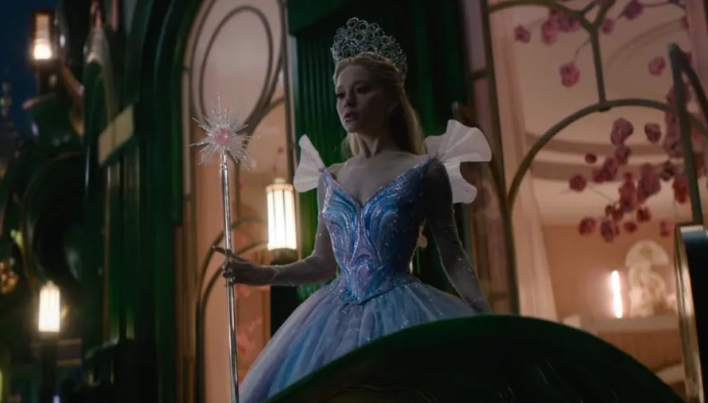
The film picks up five years after Elphaba (Cynthia Erivo) oooh-wa-ah-ah-aaaaah’d off into the western sky. In the interim, her sister Nessarose (Marissa Bode) has taken over their late father’s position as governor of Munchkinland, with Munchkin Boq (Ethan Slater) as her primary attendant. The Wizard (Jeff Goldblum) is continuing his wholesale prosecution of the talking Animal community while winning the public relations war on two fronts: the impending completion of a major public works project, The Yellow Brick Road (which was built with enslaved Animal labor), and—via Madame Morrible (Michelle Yeoh)—a constant output of propaganda painting Elphaba as the terroristic “Wicked Witch of the West.” The opposite of wickedness is goodness, and to that end, Morrible and the Wizard have created a cult of personality around Galinda (Ariana Grande), who has now taken the name “Glinda” and accepted the title “the Good.” It’s so like a modern P.R. campaign that they even throw in a sudden celebrity marriage between Glinda and Prince Fiyero (official sexiest man alive Jonathan Bailey), who has been appointed to the Emerald City’s special “Gale Force” (get it?) tasked with taking down the Wicked Witch. 

There’s a big love pentagon going on here. Nessarose is in love with Boq, who was encouraged by Glinda to show Nessarose attention and affection in their college days, and who is ready to move on but has been hesitant to do so because she’s still grieving her father (and Elphaba, in a different way). Boq is in love with Glinda and has been since they were all in school together, and learning of her impending wedding to Fiyero causes him to try and depart for the Emerald City, only for Nessarose to go full fascist and shut down Munchkinland’s borders to keep him from leaving her. Glinda, despite still being a bit of an airhead, is deep enough to know that the lack of happiness she feels despite public adoration and supposed romantic fulfillment means that it’s all hollow underneath; nevertheless, she genuinely loves Fiyero. For his part, Fiyero is taken aback by the sudden announcement of his wedding (no proposal was made by either party) and feigns positive feelings about this development, continuing to hide his pining for Elphaba. She feels that same love in return, but all she can see from her vantage is the Emerald City-propagated public image of him as a righteous crusader against the vile Wicked Witch. 

These interpersonal relationships are more integral to the story than the supposed greater political situation, the subjugation of the sentient Animals, although there’s more here than in the stage musical. The film opens with an action sequence in which Elphaba disrupts the building of the yellow brick road by freeing the Animals being used as slave labor, and she later interacts with a group of animals who are fleeing Oz via a tunnel under the road, begging them not to give up. Later still, she discusses a truce with the Wizard, with her final demand being that he release the flying monkeys, to which he agrees, only for her to discover an entire second chamber full of abducted Animals in cages, including her goat professor from Shiz University. She releases the animals, which stampede through Glinda and Fiyero’s wedding, and then this subplot is mostly forgotten about as the film moves on to putting all the pieces on the board in the place that they need to be for the events of The Wonderful Wizard of Oz (the book) and perhaps more importantly The Wizard of Oz (the movie) to occur, getting only a moment of lip service in the conclusion as Glinda gives her big speech. 

That table-setting is this film’s biggest hindrance, and why the back half of this story feels less organic and emotional than the first part. Nessarose has to decide to take advantage of the ancient spell book being open to try and use magic to make Boq stay with her, causing him to lose his heart. Elphaba has to try additional magic to save him, which means turning him into the Tin Woodsman, because eventually turning into the Tin Man is the only reason Boq is here in the first place. Madame Morrible wants to lure Elphaba out of hiding, so she sets out to hurt her sister. In order to do so, she creates the tornado that brings Dorothy’s house to Oz and crushes her in the street, because that’s where this story has always been going. The Cowardly Lion stuff is borderline irrelevant, other than his accusation that she was responsible for creating the winged monkeys rattling the Animals’ faith in her, but it’s here because that’s where this story has always been going. The most egregious is the fate of Fiyero. After holding his own ex-fiancee at gunpoint in order to get the Gale Force to release Elphaba, he doesn’t go with her, citing that it would be “too dangerous.” What? More dangerous than them dragging him off to torture him? Moments later, in “No Good Deed,” Elphaba sings that she presumes that they are in the process of beating him to death, if they haven’t already; I’m not really sure how that’s better than going on the run together? There’s absolutely no reason within this narrative for Fiyero not to run off with Elphaba in that very moment, but because we have to move the pieces into place for the story of The Wonderful Wizard of Oz to happen, he has to stay behind so that Elphaba’s concern for him can drive her to cast a spell that—surprise!—turns him into the Scarecrow we all know and love. It’s a necessary evil, but it doesn’t exactly flow the way that last year’s release does. 

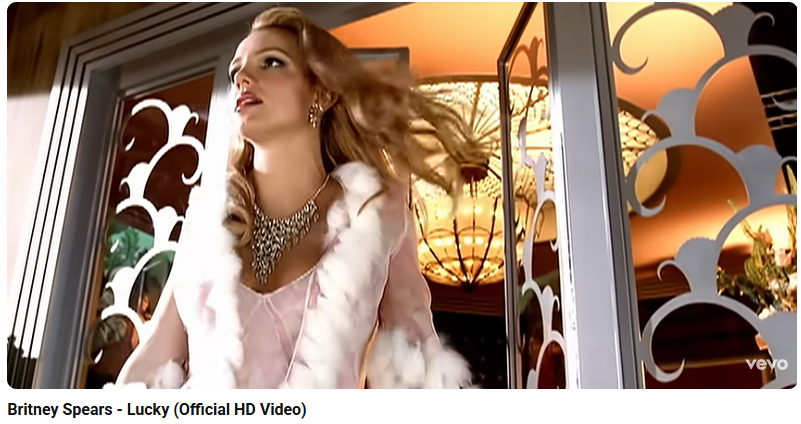
This film is also goofier than the first, and it feels like it comes from carelessness, except when it’s audaciously borrowing elements from the MGM film. Elphaba levitates her paraplegic sister by enchanting their late mother’s silver (as they were in the book) slippers, but her power makes them glow red so that Universal Pictures can skirt MGM’s copyright for Judy Garland’s ruby slippers. Two of the songs featured in the film are new to the adaptation; one of them is Ariana Grande as Glinda as Britney Spears in the “Lucky” video. I’m serious. 

The second is a new song for Elphaba when she tries to inspire the Animals to stay and fight, and it’s called “No Place Like Home.” That’s trying too hard. It’s difficult not to notice since this film wraps up the narrative threads of everyone but the little girl whose fate is left unknown, given that Glinda is a witch with no magic (which is a miserable creature indeed) and can’t send her back to Kansas. Admittedly, this does lead to a funny background bit where the Wizard takes off in his balloon and leaves Dorothy behind, this viewpoint implying that he was running for his life before Glinda decides to turn his exile into imprisonment. About half of the laughs I had in the theater were clearly intentional on the film’s part; the other half … I’m not so sure. After Elphaba’s disruption of the road construction, the film’s title suddenly appears over an image of a government overseer fleeing through fields of flowers as tense, dramatic music plays, and it’s so jarring it feels like an intentional joke. When Elphaba confronts the Wizard for the first time in this film, he playfully bonks himself with a yellow brick, which he then demonstrates as being light and bouncy before tossing it away. Was that a bit that Goldblum did on set with a prop brick that they decided to keep in? It’s bizarre. At other times, I merely groaned as the film forced in references, or when we had to make a hard right in a given character’s storyline so that they can get railroaded on track for their respective stations of the canon

I’m being pretty negative about a film that I had a pretty decent time watching, so it’s worth noting that there’s still a lot to enjoy, even if it’s rushed in some places and sluggish in others as it chugs toward its inevitable conclusion. Erivo’s pipes are still masterful, and the songs are sufficiently rousing even if they’re not as inspired as the last time we were all here. It has come, it will go, and by this time next year we’ll have mostly forgotten about it. Once its theatrical run is completed, the overwhelming tie-in advertising (Bowen Yang and Bronwyn James put in two brief appearances as their sycophant characters from the first film in order to justify their appearances in For Good-themed ads for Secret Clinical deodorant) will come to an end, and people will mostly remember the first film fondly, and this one little if at all. Don’t take it too seriously, have a good time, and perhaps see it late enough in the evening that there will be a minimal number of children in your audience (trust me).

-Mark “Boomer” Redmond

Wicked (2024)

In our recent podcast episode about Sirocco and the Kingdom of the Winds, Brandon mentioned having seen (and not enjoyed) Wicked. I had previously shared that, when this film was over, I turned to my viewing companion and said, “I have a confession to make. I thought I was going to hate this,” but admitted that I had, in fact, loved it. The Wizard of Oz is one of the first movies that I can ever remember seeing, and I had a secondhand walkman that the red cassette of Oz songs basically lived inside of for years. I loved the books, reading them repeatedly (my favorite characters were Tik Tok and The Hungry Tiger, whose tormented existence torn between desire and moral conviction probably spoke to me at a deeper level, even at that young age). We named one of our chickens Billina and I even spent an entire summer saving my chore money toward a layaway copy of the much-maligned SNES Wizard video game. (The only other person I have ever met with any memory of the game, my friend Eric, also admitted he had never been able to beat it. About five years ago, we got together to watch a playthrough of it on YouTube and were shocked to discover that, of about 110 minutes of gameplay, neither of us had ever gotten past the first 25 minutes, which is where we inevitably died. It was just that hard.) I read Gregory Maguire’s Wicked in the summer between undergrad and grad school, and while I didn’t love it, I didn’t think it was bad, just that I preferred to imagine Oz as I had when I was a child. But after so many bad Oz movies and series over the years (especially Oz the Great and Powerful), I didn’t expect that I would fall into the magic of a movie that had so much negative press surrounding its visual style, especially since a musical is already kind of a hard sell for me. I was mostly there for the Jonathan Bailey of it all (since Broadchurch, if you’re keeping score at home). 

Wicked (Part 1, as everyone suspected) is about Elphaba Thropp (Cynthia Erivo), a woman from Munchkinland who, as the result of some magical hanky-panky in the middle of some extramarital hanky-panky, was born with green skin. This makes her an ostracized outsider among the Munchkins and leaves her the less-favored daughter of her widowed father, who dotes upon her paraplegic younger sister Nessarose (Marissa Bode). Nessarose is accepted to attend Oz’s Shiz University, and although Elphaba is not a prospective student, her accidental use of real magic in the presence of Madame Morrible (Michelle Yeoh) leads her to being invited to attend, under direct tutelage of Morrible, on the spot. As the result of a misunderstanding, Elphaba is set up to room with Galinda (Ariana Grande), the prettiest, most popular girl in all of Oz, although Elphaba ends up shoved into a small corner of their shared lodgings as a result of Galinda’s extensive pink wardrobe. Initial conflict between the two leads to Elphaba’s further isolation at school, and it is further exacerbated with the arrival of Prince Fiyero from Winkieland, whose devil-may-care attitude and carpe diem approach to academics, love, and life in general. Fiyero and Elphaba meet before he arrives at the school, and he is charmed by her lack of deference to either his royal title (of which she is ignorant) or his stunning good looks (which she cannot help but notice). However, upon arrival at the school, Galinda immediately gloms onto him and he accepts and reciprocates the attention, attempting to get the entire student body to reject the boredom of academia in favor of vice and fun, much to Elphaba’s annoyance. Meanwhile, there is an undercurrent of fascism and racism at Shiz U, as the once-diverse teaching body of the university has been whittled down to have only one remaining talking Animal instructor, the goat Dr. Dillamond (Peter Dinklage), who is the person willing to befriend Elphaba. Galinda and Elphaba eventually reconcile when, after a particularly cruel prank, Galinda learns that Elphaba has done something genuinely kind and meaningful in helping Galinda pursue her greatest ambitions; Galinda then makes it her project to rehabilitate Elphaba’s public image and make her, as the song says, popular. When Elphaba at last receives an invite to come to the Emerald City and meet The Wizard (Jeff Goldblum), she chooses instead to argue on behalf of the plight of the Animals rather than ask him to cure her of her green skin, setting events into motion that change the destinies of everyone involved. 

I’ve long been known to be a musical-averse person, but I’m coming around. After having seen recorded versions of Sweeney Todd (the one with Angela Lansbury) and Phantom of the Opera (the 25th anniversary production) this year, I’m more open to them than I once was, and it’s no secret that Wicked is one of the biggest and most widely acclaimed ones of all time. I can’t really speak to this one as an adaptation, but I really enjoyed it. I didn’t love every song (“Dancing Through Life” is acceptable as a bit of exposition/character development, but it’s very boring to me, and if it didn’t have Jonathan Bailey dancing through it, I wouldn’t work at all), but I thoroughly enjoyed most of them, and some are real standouts. Erivo’s voice is fantastic, and in some behind-the-scenes footage she’s singing live in several scenes that show that the magic is coming from her and not from any studio enhancements. She’s entrancing here as Elphaba, and I see so much of people I’ve known and loved in her performance that she completely won me over. I’ve also never been all that interested in Ariana Grande; she came along after I had already long graduated from the age group that she’s aimed at. I was of the generation whose adolescent-aimed-cable-channel-musical-industrial-complex products were Raven and Hillary Duff, so Grande’s rise from that same metaphorical farm league came long after I was among the target demographic. She’s quite fun here, and separates herself from the others on the same career path with a lot of genuine charm and a willingness to commit to the bit that’s quite admirable. 

As for most people’s complaints about the film and its visual style, I have to admit that I didn’t mind it. It would have been nice to have the film try to replicate the Technicolor-sais quoi of the MGM classic, but there’s still a lot to love here in the designs and the details. The costuming is fantastic, and at no point did I think that Oz looked boring or colorless, except in moments in which there’s an intentionality to the blandness that I find appropriate. This one left me feeling elevated and effervescent, and I loved that, even if what we’re watching is the real time character assassination of our protagonist at the hands of an evil government. What more could one really ask for?

-Mark “Boomer” Redmond

Lagniappe Podcast: Yes, Madam! (1985)

For this lagniappe episode of the podcast, Boomer, Brandon, and Alli discuss the Michelle Yeoh & Cynthia Rothrock action hero team-up Yes, Madam! (1985).

00:00 Welcome

02:50 Night Visions (2001 – 2002)
07:25 Vibes (1988)
08:50 Beau is Afraid (2023)
25:40 Gossip (2000)
27:30 I Went to the Dance (1989)
31:00 Mighty Morphin’ Power Rangers: The Movie (1995)

36:00 Yes, Madam! (1985)

You can stay up to date with our podcast through SoundCloudSpotifyiTunesStitcherTuneIn, or by following the links on this page.

-The Lagniappe Podcast Crew

Quick Takes: New Orleans Rep Scene Report

I’ve hit a dry spell with new releases lately.  Now that last year’s Awards Season holdovers and January’s Dumping Season genre trash have fallen off local marquees, there just isn’t that much out there for me.  I’d be in much better shape if I kept up with the annual sequels to ongoing franchises like Shazam, Creed, and John Wick, but I resent the idea that I need to do prerequisite homework before going to the movies, so I’m okay just letting them pass me by.  During this ritualistic dry spell that crops up before “Summer Blockbuster” season gets rolling mid-Spring, I find myself thinking a lot about cities like Los Angeles, New York, Austin, Chicago, and Toronto that aren’t nearly as reliant on the new release calendar for their moviegoing options.  These are cities with robust, flourishing repertory scenes where audiences seemingly get to see an older “new-to-you” title projected on the big screen every day of the week.  The New Orleans rep scene is much smaller & more scattered, to the point where it isn’t actually an organized scene at all.  You have to scrounge local listings on a weekly basis to find a couple disparate repertory titles worth getting excited about, something I become sharply aware of every time the new release calendar gets this consistently dull.  New Orleans rep screenings are out there, though, and they are easily accessible if you know where to look.

So, here are a few quick short-form reviews of the repertory screenings I happened to catch around the city over the past month, along with notes on where I found them.

Cléo from 5 to 7 (1962)

You can find the usual suspects of broad-appeal crowdpleaser rep screenings on a near-monthly basis—namely, Rocky Horror & The Room—but for the really good stuff you have to wait for annual festivals.  For instance, the upcoming Overlook Film Festival is about to bring legacy screenings of titles like Joe Dante’s Matinee, William Castle’s The Tingler, and David Cronenberg’s Dead Zone to both locations of The Prytania for one killer rep-friendly weekend we won’t see again until next Overlook.  This is happening less than a month after the most recent New Orleans French Film Festival (also staged at The Prytania) included Agnès Varda’s French New Wave classic Cléo from 5 to 7 in collaboration with the host venue’s weekly Classic Movie series.  That was also no fluke.  In the past, I’ve gotten to see French classics like Breathless, Children of the Paradise, Beauty and the Beast, Umbrellas of Cherbourg, Mr. Klein, and The Nun for the first time on the big screen thanks to French Film Fest, when I’d usually have to seek that kind of artsy-fartsy fare on the Criterion Channel at home.  I’ve particularly become spoiled when it comes to Varda’s work, of which I’ve seen most of her titles that I’m familiar with (including personal favorites The Gleaners & I and Le Bonheur) for the first time at that exact venue.  In all honesty, I should have sought out Cléo from 5 to 7 a lot sooner, as it’s arguably her most iconic work, but I was convinced it would eventually play at the festival if I was patient enough . . . and the gamble paid off.

The titular Cleopatra is a young chanteuse enjoying mild notoriety for her yé-yé pop tunes in early-60s Paris.  She’s also a superstitious, narcissistic hypochondriac who’s awaiting potentially devastating news from a doctor who recently screened her for cancer.  The movie follows Cléo’s attempts to distract herself for the final two hours before those test results arrive, explaining through an observational character study how, in her mind, the anticipation is far worse than any news her doctor could deliver.  Incidentally, the film also doubles as a real-time tour of 1960s Paris, as Varda’s handheld, ground-level camera commits brazen acts of people-watching while Cléo cabs & busses from cafe to art studio to couturier.  As Cléo muses about how modeling new clothes is intoxicating and her free-spirit bestie muses the same about nude modeling for art students, that cinematic voyeurism becomes the main thematic thrust of the picture.  The camera casually observes the people of Paris.  The people of Paris intensely observe the fashionable Cléo, who in turn even more intensely observes her own reflection.  Even though not much actually happens in the film, I was thrilled by how much of its screen space was overwhelmed by reflections in mirrors & windowpanes.  Not only did those reflections underline its themes of self-obsession & strange gazes, but it also just looked cool, affording Varda even more room to chop up & alter her images from infinite angles. And just as I was putting that thought together, the movie “overhears” a café discussion of Cubism as an artform.  As always with these Varda screenings at French Film Fest, Cléo was an immensely rewarding trip to the theater, one that made me fondly remember its newfound superiority over Breathless in the most recent Sight & Sound rankings.

Assault on Precinct 13 (1976)

Besides sporadic festival offerings, the most obvious, consistent venues for rep screenings are the only venues where you can watch any movies in New Orleans proper: The Broad and The Prytania, which among them account for the only three full-time cinemas within city limits.  Luckily, they’re both well balanced & adventurous in their programming, squeezing in as a many freak-show arthouse screenings as they can between the Top Gun & Avatar behemoths that pay the bills.  Since they recently acquired the Canal Place venue, The Prytania has had more screens to play with than The Broad, so they have more room for regular repertory programming like their aforementioned Classic Movie series and their weirder, wilder Wildwood series on Thursday nights.  I check both theatres’ listings every Tuesday afternoon to survey the next week of showtimes, though, and they’ve both come through with plenty of great repertory screenings in recent months – from new-to-me genre relics like Ghost in the Shell & Calvaire to very strange, one-of-a-kind presentations of The Mothman Prophecies and Antonioni’s Blow-Up.  Even though their rep offerings are less frequent, The Broad accounts for about half of the screenings I actually make it to (not least of all because they’re a much shorter bus ride away from my house), and I very much appreciate that they make room for older titles on the few screens they have to play with.  In particular, they’ve been on a John Carpenter kick lately, screening 4K restorations of his genre-defining classics that happened to get past me in my video store youth, which is how I recently got to see both The Fog and Assault on Precinct 13 for the first time on the big screen.

I would never place a Western-inspired prison siege movie above Carpenter’s supernatural horror classics as the director’s absolute best, but Assault on Precinct 13 does have a strong case as Carpenter’s absolute coolest.  Set in the vaguely defined war zone of “a Los Angeles ghetto”, this punk-era cops vs. gangsters shootout recalls much later, grimier genre pictures like Tenement, The Warriors, and Streets of Fire than it does the gruff, traditionalist John Wayne heroics that inspired it.  That said, Darwin Joston is doing a straight-up John Wayne impersonation as the laidback Death Row inmate Napoleon Wilson, who’s temporarily set free by his jailers to fire back at the ghoulish gangsters who relentlessly invade the titular police station where he is held captive.  His uneasy, sardonic friendship & romance with the officers he fights beside make Precinct a kind of unlikely hangout film in the tradition of the similarly violent-but-laidback Rio Bravo.  It’s Carpenter’s overbearing directorial style that makes it a classic in its own right, though, especially in the way he portrays the invading gangsters as no less mysterious & otherworldly than the ghosts that emerge from The Fog.  His halfway-closed police station setting is an eerie liminal space, and the morality of who’s in “the right” in the plot’s pigs vs. civilians warfare is just as unsettled.  I’ve gotten to see a lot of John Carpenter classics for the first time theatrically (including his actual career-best, The Thing, at The Prytania), and two things are always consistent among those screenings: his signature synth scores are electrifying in that full surround-sound environment, and no matter how great the movies are I always struggle to stay awake for their entirety.  In a perfect world, I’d love for the city’s somewhat regular John Carpenter rep screenings to play as matinees instead of cult-classic Midnighters, but as is I’ve gotten used to seeing them in my own liminal halfway dream state, re-running key scenes on Tubi as soon as I get home to make sure I didn’t actually sleep through something vital.  Given its real-world setting & premise, I didn’t expect Assault on Precinct 13 to fit so well into that eerie supernatural mold, but that’s apparently the John Carpenter touch.

Crouching Tiger, Hidden Dragon (2000)

When things get really desperate, you can always leave the city for the suburbs, where there are multiple AMC Theaters waiting to dazzle you with “$5 Fan Favorite” rep screenings of crowd-pleasers like E.T., Jurassic Park, The Goonies and, presumably, even a few movies not produced by Steven Spielberg.  I happened to catch AMC at an opportune moment in recent weeks, when the Awards Season afterglow of the Oscars allowed for more variety on their schedule than usual.  In particular, AMC Elmwood included Ang Lee’s international wuxia hit Crouching Tiger, Hidden Dragon on its recent Fan Favorites schedule, presumably inspired by Michele Yeoh’s Oscars Moment as the lead of the Daniels’ Everything Everywhere All at Once.  Movies like Crouching Tiger returning to the big screen for their victory laps (or, often enough, getting funded in the first place) are the major reason I consider the exhausting Oscars ritual an overall net good. They’re more of a useful marketing tool than they are a signifier of artistic quality, but they are useful.  Until now, I’ve only ever experienced Crouching Tiger, Hidden Dragon as an on-the-couch Blockbuster VHS rental, and it was wonderful to see its fantastic fight choreography play out on a larger canvas for the first time.

To my taste, the classy, buttoned-up version of martial arts cinema in Crouching Tiger is not nearly as exciting as the more playful, over-the-top actioners Michele Yeoh was making in her Hong Kong heyday.  Since The Heroic Trio is unlikely to ever make its way back to the suburban multiplex, however (despite a recent co-sign from The Criterion Collection, an actual signifier of good taste), I was ecstatic to watch Yeoh clang swords & hop rooftops in this Oscars-certified historical drama.  I can’t say that the will-they-won’t-they love story Yeoh shares with Chow Yun-Fat ever landed much emotional impact with me in the few times I’ve seen this film, nor do I pay much attention to the quiet nobility of their mission to find a rightful home for a 400-year-old sword.  I’m the kind of dipshit who prefers Pearl Chang’s low-rent, goofball version of wuxia acrobatics to the headier, classier oeuvre of King Hu, though, so it’s probably best that my personal taste is not dictating what gets screened around the city.  At its best, Crouching Tiger, Hidden Dragon is a visual spectacle about the beauty of tactile fight choreography and wire work, and no matter how restrained the drama is between those fights (nor how mundane a theatrical venue the AMC can be), it’s impossible to deny the power of seeing those images big & loud for the first time.

-Brandon Ledet

The Heroic Trio (1993)

I recently read an encyclopedia of classic Hong Kong action movies titled Sex and Zen & A Bullet in the Head, which is overloaded with hundreds of capsule reviews of the once-vibrant industry’s greatest hits.  Each blurb makes each title sound like the most explosively badass movie you’ve never seen, fixating on the industry’s unmatched talent for absurd plot details, tactile fight choreography, and for-their-own-sake visual gags.  It’s a daunting surplus of giddy movie recommendations, with no real guide for what to prioritize besides whatever happens to be available to access.  After being pushed to check out the bonkers Indiana Jones mutation The Seventh Curse by the We Love to Watch podcast crew, I had no clear path for where to go next.  Thankfully, that decision was taken out of my hands by happenstance.  I lucked into a small haul of Hong Kong action DVDs (some bootlegs, some official releases, all pictured below) during a recent trip to Goodwill, which included the 1993 superhero oddity The Heroic Trio.  This was the same week that Criterion announced an upcoming Blu-ray release of The Heroic Trio and the same month that one of its stars, Michele Yeoh, was gifted a career-high acting showcase in the Daniels’ own novelty superhero picture Everything Everywhere All at Once, which made it the most obvious must-see.  I’m often overwhelmed deciding what movie to watch next when I’m left to my own devices, so it’s always a pleasure when the universe steps in to program that selection for me.

I am sure that the new Criterion restoration of The Heroic Trio will lovingly highlight the film’s technical beauty and pop-art iconography in a way few audiences have seen before.  I’ll still admit that I was charmed by the tape-warp warmth of the bootleg DVD that found its way into my collection, since it plays right into the film’s vintage appeal.  The Heroic Trio is a retro superhero team-up featuring the masked & powerful heroines Thief Catcher (Maggie Cheung), Wonder Woman (Anita Mui), and Invisible Woman (Yeoh) – each a total badass.  They start disorganized & distrustful of each other as a mysterious case of 19 kidnapped babies derails Hong Kong into chaos.  Eventually, they find love & unity amongst their super selves to fight the methane-breathing sewer god responsible for those kidnappings, brutally confronting the gender-ambiguous deity in their underground lair/baby-storage facility.  Tonally, the film plays like the kind of R-rated kids’ movie that you’d normally find through American labels like Troma & Full Moon, even featuring the children’s nursery rhyme “London Bridge is Falling Down” as a soundtrack motif.  It is S&M superhero cinema for the permanently immature, indulging in vintage Saturday-morning-TV cheese with far more gore, kink fashion, and shock-value baby deaths than any child should be consuming with their breakfast cereal.  It just executes that volatile immaturity with exquisite technical skill you will not find in its low-budget American equivalents, especially in the beauty of its complex, tactile fight choreography.

Michele Yeoh’s inclusion in the titular trio was my prompt to watch the film and, dramatically, she gets the most to do.  Invisible Woman is the only complex character of the bunch, starting off as the brainwashed lackey of the baby-snatching Evil Master but eventually coming around to join arms with her master’s enemies.  I still found Maggie Cheung to be the MVP of the trio as Thief Catcher, providing most of the film’s comic relief as a Bugs Bunny-style anarchist, a motorcycle-riding vigilante in dressed in bike shorts & lingerie; Tank Girl, eat your heart out.  Anita Mui is saddled with the least exciting part as Wonder Woman, who—as her name implies—is the most stereotypical comic book hero of the bunch.  Her mask & cape iconography and secret-identity shenanigans are essential in grounding the film in a recognizable superhero genre, since most of its in-the-moment indulgences are more aligned with Hong Kong action antics than with comic book tradition.  Director Johnnie To uses the superhero team-up template as a playground for martial arts chaos & Looney Tunes goofballery, playing around with as much Evil Dead POV camera movement, wuxia-style wire work, and bone-crunching brutality as his scrappy budget will allow.  He gives each heroine room to establish separate, distinct personalities in the film’s early scenes, then smashes them together like action figures during an especially sugared-up recess.  It’s the most gleeful, energizing movie experience I can think of that depicts the death of a dozen innocent babies.

Watching The Heroic Trio left me no better equipped to select my next Hong Kong action title.  Yeoh, Cheung, and Mui each have extensive careers in martial arts classics exactly like this.  To was equally prolific in his directorial career without them.  All four of those collaborators reunited for a direct sequel to The Heroic Trio titled Executioners, also released in 1993, but it is not regarded as any of their respective best.  Below, I’ll list the essential continued-viewing titles for Michelle Yeoh alone, as suggested by the authors of Sex and Zen & A Bullet in the Head, just to demonstrate the overwhelming wealth of great, over-the-top Hong Kong action pics there are to choose from.  And she’s only one of the industry’s many, many creative geniuses.  I’ll likely just wait until another title falls directly into my lap the way The Heroic Trio did, taking the decision out of my hands.   Otherwise, I’ll browse these titles & blurbs for hours without ever settling on one, the modern movie streamer’s dilemma.

Michelle Yeoh’s “Selected Filmography,” per Sex and Zen & A Bullet in the Head, printed 1996:
Magnificent Warriors (1986)
Royal Warriors (1986)
Yes, Madam (1986)
Police Story 3: Supercop (1993)
Project S (1993)
The Tai Chi Master (1993)
Butterfly and Sword (1993)
The Heroic Trio (1993)
Wonder 7 (1994)

-Brandon Ledet

Everything Everywhere All at Once (2022)

I enjoyed the Daniels’ debut feature Swiss Army Man, which I categorized on my Top Films of 2016 list as “an unconventional love story, a road trip buddy comedy, and an indie pop musical about a farting corpse with a magical boner.”  Even as a fan of that understandably divisive gross-out, I still agree with the consensus that their follow-up film is a huge step up for the music video director-duo.  Everything Everywhere All at Once triples down on the Cold Stone Creamery approach to filmmaking that the Daniels toyed with in Swiss Army Man, mashing every cinematic indulgence the directors could manage—from alternate-dimension sci-fi to vaudevillian slapstick to sincere Wong Kar-Wai homage—into a massive, delectable headache.  And yet it securely anchors that chaos to a solid emotional rock in a way that Swiss Army Man could not, which left it feeling adrift.  I don’t even know that I would encourage fans of Everything Everywhere double back to check out the Daniels’ debut.  You probably already knew in 2016 whether a farting-corpse boner comedy was going to appeal to you, and that likely has not changed.  In contrast, Everything Everywhere crams in a little taste of something for absolutely everyone, so much so that you’ll find yourself recommending it to family & coworkers despite it featuring its own gross-out gags involving butt-plugs & hotdog fellatio.

The elevator pitch for this unlikely crowd-pleaser is that it offers a glimpse into an alternate reality where The Matrix was directed by Michel Gondry.  It’s nice there.  Everything Everywhere is structured around a standard-issue comic book plot in which a maniacal supervillain attempts to gain ultimate power over the infinite alternate timelines of “the Multiverse,” with only a specially equipped Chosen One hero standing in their way.  It distorts that superhero blockbuster template through the hand-crafted dream logic & heart-on-sleeve sentimentality of our twee yesteryear, bringing an earnestness & personality to the genre that’s sorely missing from its megacorporate equivalents.  The superpower that allows ordinary characters to leap between these infinite timelines is the cosmic surprise of an unexpected, improbable act, “the less it makes sense the better.” The Daniels openly dare you to roll your eyes at the “LOL! So random!” humor of that premise, packing the screen with randomly generated totems like googly eyes, talking racoons, pro wrestling finishers, lethal fanny packs, and an all-powerful, apocalyptic Everything Bagel.  However, every silly, randomsauce image is lovingly crafted and thoughtfully anchored to the film’s emotional rock, earning its place on the screen beyond a for-its-own-sake indulgence.  They somehow even make their Chosen One heroine’s Deadpool-style observations about the absurdity of her predicament (especially her stubborn mispronunciations of the villain’s name) feel well-earned & natural to her character.  It’s an incredible feat.

The aforementioned emotional rock is the lead performance from the always-solid Michelle Yeoh.  The infinite alternate timelines premise demands that Yeoh play infinite alternate versions of herself, and she excels at every turn.  Yeoh is funny.  Yeoh is frustrating.  Yeoh breaks your heart into a thousand shards, then lovingly glues them together again.  The Daniels obviously have immense respect for her range as a performer. They allow her to show off both the stern dramatic severity & classic Hong Kong action superheroics she’s already famous for, then demonstrate the thousands of possibilities in-between those extremes we’ve been robbed of seeing onscreen.  Ke Huy Quan & Stephanie Hsu are also wonderful as her husband & daughter, respectfully, exploding the boundaries of what audiences have been trained to expect from their Nice Guy side character & flamboyant Gay Villain archetypes.  It’s Yeoh who leaves you in total stunned awe, though, especially as the rare Strong Female Character who’s allowed to be a genuinely complicated person.  We’re introduced to our hero as the absolute worst version of herself across the vast multiverse.  She’s terrible at the enormous entirety of everything, most crucially in the way she relates to her family as they frantically scurry through their shared daily routine.  Watching her learn to be a better person by breaking out of her rigid-thinking patterns & emotional cowardice is inspirational, something I can’t say about most Chosen One superheroes.

It’s easy to be reductive about what makes Everything Everywhere great, since the Daniels are willing to pummel you with an infinite supply of absurdly disparate, deeply silly imagery.  Pushing past that impulse, it’s impressive that a loud, chaotic superhero movie can prompt you to evaluate how you live your daily life and how you can work towards becoming the best possible version of yourself.  Considering that I only walked away from their last picture with fond memories of laughing at farts & boners, I’m okay conceding this follow-up was a major improvement.  My own rigid, stubborn, contrarian impulses would usually have me defending their earlier, messier work against their popular break-out, but in this instance the consensus take is the correct one.

-Brandon Ledet

Morgan (2016)

Ever since Anya Taylor-Joy made her grand entrance as a name to watch in her stunning, starring role in The Witch (Swampflix’s 2016 Movie of the Year), she’s continued to be a compelling presence in modern genre cinema. Perhaps typecast for her wide-eyed, witchy visage that appears as if she just stepped out of a Victorian oil painting, Taylor-Joy has continued to dwell in genre cinema corners ranging from the Gothic horror vibes of Marrowbone & The Miniaturist to the highly stylized modernist thrillers Split & Thoroughbreds. I’m unsure if that reflects her personal taste in choosing roles or just the range of options being made available to her, but it seems constant to her career path stretching back even before her name became synonymous with The Witch. The same year The Witch was released to wide audiences, Taylor-Joy starred as the titular character in a more mainstream production that made much less of a splash. The sci-fi horror Morgan, directorial debut of Ridley Scott’s son Luke Scott, was largely dismissed in its initial run as merely being an obvious, Hollywood-style rehashing of the superior work Ex Machina, perhaps rightfully so. As hyperbolically negative as I find the film’s general critical reputation to be, I somewhat understand that dismissal and can mount no defense of the mediocre-at-best thriller as some great lost work worthy of reclamation. After recently falling in love with Anya Taylor-Joy’s screen presence all over again in the BBC miniseries The Miniaturist, however, I did find Morgan worthy of a revisit, if not solely for the merits of her performance.

Like Ex Machina, Morgan is a Turing Test thriller where an outside party is hired to determine the commercial viability of a femme A.I. creation in captivity at a remotely located science facility. Toby Jones, Michelle Yeoh, Rose Leslie, Paul Giamatti, and Jennifer Jason Leigh round out an over-qualified cast of scientists & staffers assigned to this A.I. experiment, but they mostly amount to archetypes who hang around to get slaughtered once things inevitably go wrong. Only two characters really matter in this movie: Anya Taylor-Joy as the titular, dangerous A.I. creation and Kate Mara as a corporate “risk management consultant” hired to assess the artificial creature’s commercial viability. A very human-like creation with a recent history of violent episodes with the staff, Morgan presents two ethical questions the movie only pretends to wrestle with: “Is her advancement of technology worth the risk of her potential violence?” and “Is she a person or is it property?” These very basic sci-fi concerns are mostly just time-wasters in the lead-up to the film’s true payoff: Morgan’s escape & horrific slaughter of every human that held her captive, even the ones she once considered close friends & family (as much as an A.I. creature could). These horror genre leanings are reinforced by the sci-fi lab’s locale in a spooky Gothic mansion & a few last-minute, telegraphed twists that are much more concerned about in-the-moment thrills then they are philosophical ponderings. Morgan’s main concern is an attempt to be coldly creepy, and it’s something the movie often pulls off well thanks to the seething animosity that binds Mara & Taylor-Joy’s performances.

As a sci-fi horror about an A.I. creation that escapes captivity & erupts into bloodshed, Morgan doesn’t offer much of interest that can’t be found elsewhere. As a showcase for Anya Taylor-Joy’s acting range, the film does feature some deviating touches in performance that feels like a far cry from her more typical modes in The Miniaturist & The Witch. Although often cast in spooky genre fare, Taylor-Joy typically plays a traumatized, delicate victim, batting her giant doe eyes to convey innocence in a world ruled by evil (deceptively so in Thoroughbreds). Here, she’s allowed to be fierce & dangerous throughout, even opening the film in a vicious lunge to tear out one of her captor’s eyes. Taylor-Joy plays Morgan with the brooding anger of a teenage girl who’s been wronged and stripped of her agency, expressing a quiet, violent anger halfway between explosive emotional outburst & cold, machine-like calculation of who exactly to strike. You can even sense this atypical use of her screen presence in her costuming, which forsakes her usual period-specific garb for a modernist sweatpants & hoodie combo – the comfy outfit of a pissed off teen locked in their room by parents who Just Don’t Understand. Her striking looks are intensified by a cold makeup effect that almost renders her silver, as if she’s in black & white while the rest of the film is in color. It’s a different approach to how her appearance & talents are typically deployed in genre films and that deviation is largely what makes Morgan a worthwhile watch. As a Hollywood companion piece to Ex Machina the film could only suffer through comparison, but as a demonstration of explosive teenage anger from a compelling actor who doesn’t often get to express it, it finds a way to feel worthwhile.

You’re unlikely to walk away from Morgan with any intense interest in whatever follow-up project Luke Scott has in the works. The film is competent enough to get by as a passable sci-fi horror diversion about a Killer A.I., but it’s ultimately nothing special in terms of style or texture. The takeaway is more the question of what other sides of Anya Taylor-Joy’s abilities as a performer are we not yet privy to this early in her career. I appreciated seeing her as a teenage killing machine here, but I’m even more excited by what that indicates about what she might be able to unleash in future roles. It’s a career worth keeping a (gigantic, doe-like) eye on, to say the least.

-Brandon Ledet