Heidi Kozak: Undersung Scream Queen

EPSON MFP image

There’s a lot to be shocked about in February’s Movie of the Month, Brian Yuzna’s satirical class politics body horror Society, but long before the incestuous, gore-soaked surrealism of the film’s climactic shunting began I found one of my biggest shocks in a very minor casting choice. The protagonist’s Valley Girl brat girlfriend was a very much unexpected face, the same actress who played the drummer in one of my favorite discoveries last year: Slumber Party Massacre II. Heidi Kozak has a tidy little career as a television actor to her name, most notable from her arc on the long-defunct drama series Dr. Quinn, Medicine Woman. Her feature film career, however, is much more limited. After a single scene debut as a street tough in the Sharon Stone/Adam Ant cop thriller Cold Steel, Kozak enjoyed a brief run as an undersung scream queen in three 80s horror classics: Slumber Party Massacre II, Friday the 13th Part VII – The New Blood, and, of course, Society. Her respective roles as Sally, Sandra, and Shauna in these films were never big enough to snag top bill or make her anything close to a household name, but Kozak did find a way to leave a huge impression on horror schlock as an art form in just a few years’ time.

EPSON MFP image

Sally

I ran through the entirety of the Slumber Party Massacre trilogy twice last year, not because each entry in the series blew my mind, but because the second film in particular was a life changer. Slumber Party Massacre II is an MTV-inspired fever dream of slain teenagers & nightmarish hallucinations that completely reinterpreted its straightforward slasher predecessor as a kind of surreal live action cartoon. All four girls in the film’s central garage rock band (a surprisingly decent The Go-Go’s knockoff) who embark on the titular doomed slumber party road trip are exciting to watch as performers. Courtney’s got the Final Girl timidity, Amy’s got the Best Friend sincerity, Sheila’s got the Rock Star sex appeal: each are entertaining in their own right. Still, I’d argue that Heidi Kozak’s performance as the band’s drummer, Sally, is a definitive show stealer. She not only features prominently in the movie’s most stomach-churning practical effects showcase (just one of her two onscreen deaths in the film), but she also brings a distinct Valley Girl cheese to the character that would make the actor so easily recognizable in her later horror works.

We don’t know much about Sally as a character except that she’s boy-crazy and she’s a drummer. The drumming part is something Kozak sells hilariously unconvincingly, endlessly miming the same repetitive motions with her drumsticks while the soundtrack does its best to make her seem competent. She does sell the character’s boy-crazy delirium quite well, though, chiming in as often as she can with announcements like, “I met this outrageous guy! He was such a babe,” and “I know what Courtney’s getting for her birthday . . . a boyfriend!” Sally seems to be her social group’s air headed cut-up, prone to shouting half-formed thoughts like, “Someday we’re going to be in movies and rock videos and everything,” and “Do anything you want to! Good times!” It’s easily the most dialogue Kozak is afforded in any of her works as a minor scream queen and she makes Sally out to be such a fun, bubbly character that every moment she’s onscreen is a gift. This is especially true of the first of her two onscreen deaths in the film, when Courtney hallucinates that a pimple Sally’s been worried about all weekend grows to encompass the entirety of her face and explodes all over the bathroom. It’s hideous, highly effective gore work and a much more memorable moment than when she’s later impaled by the killer’s phallic guitar drill. Poor Sally.

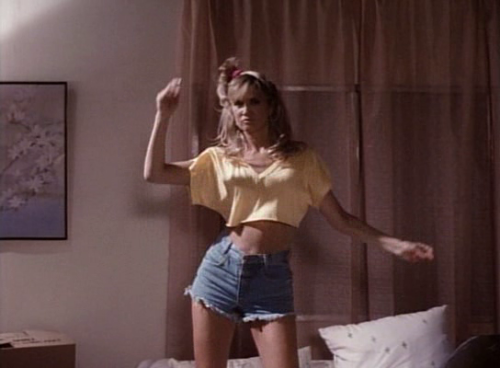
Most Killer Outfit: In the pillow fight scene, Sally sports a yellow crop top with Daisy Duke cutoffs and an asymmetrical ponytail. It’s the perfect outfit for any summertime sleepover, but it’s especially sporty for when you might need to flee from a demonic sex monster and his giant, guitar-shaped drill.

Sandra

A year after her scream queen debut in Slumber Party Massacre II, Kozak hit it big time (as far as mainstream horror franchises go). Friday the 13th Part VII: The New Blood practically lifted the Sally character wholesale from her previous film, only leaving behind her beloved drum kit. I can’t say that I especially enjoy this late-in-the-game franchise entry, but I do appreciate that it occupies the sillier end of Jason Voorhees lore that makes movies like Jason X and Jason Takes Manhattan, some of my favorites of the series. In this loosely sketched out version of Crystal Lake mythology, Jason’s dead body is reanimated & freed from its watery grave when a troubled young teen accidentally exercises her Carrie-like telepathic abilities in his general vicinity. Unfortunately, the film finds a way to make this ludicrous premise punishingly dull, despite some promising ideas about Jason functioning as a supernatural curse. There’s only two worthwhile aspects to The New Blood once the plot gets stuck in its by the books slasher rut: an inventive kill in which Jason smashes a girl zipped up in a sleeping bag against a tree (a kill later satirized to even greater effect in Jason X) and the casting of Heidi Kozak as inevitable victim Sandra.

Again, there isn’t much difference between Sandra & Sally in terms of character work, except that Sandra actually gets to act on her boy-crazy teen horniness while Sally only got to gush about it. In her introductory scene, Sandra is shown sunbathing and ogling a nearby hunk. In her second scene, she’s screwing a different boy, her boyfriend, in the back of a van, essentially marking herself as ineligible for Final Girl status, a surefire victim for Jason’s swinging machete. It’s in this romantic pairing that we get to see a different side of Kozak that wasn’t already covered in Slumber Party Massacre II. Because her wealthy boyfriend is hosting a teen party at his uncle’s Crystal Lake cabin, Sally winds up playing party mom during a large portion of the film’s first act. She’s still operating within her usual ditzy Valley Girl caricature, but now with a flustered sense of responsibility that has to negotiate between her oversensitive boytoy and some rowdy teens who just want to get drunk & screw. She makes no show of hiding why she’s with the wealthy dipshit either, answering his question, “When did you fall in love with me?” with a teasing, “The first time I saw the enormous size of your beautiful . . . wallet. The bulge in your pants was calling my name. Sandra, Sandra!” Unfortunately, Sandra’s life on this Earth is cut short when she gets the idea to go skinny dipping in Crystal Lake, one of Jason’s biggest pet peeves. She watches in horror as her boyfriend is decapitated on the shore and her naked body double is subsequently drowned. It’s a shame too, because she was one of the few compelling characters in a film that desperately needed more of them, yet she was one of the first to go.

heidikozakf13vii

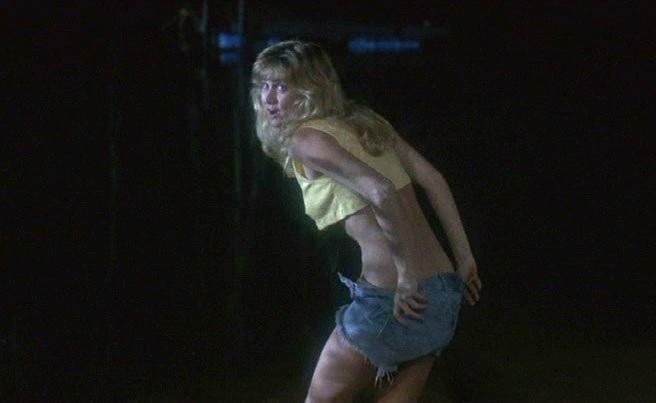
Most Killer Outfit: In accordance with her status as a more horned-up replica of Sally, Sandra sports a skimpier version of the yellow crop top & short jorts outfit from the previously mentioned pillow fight in her big skinny dipping scene. This time, however, it’s paired with a nude body double instead of an asymmetrical ponytail.

EPSON MFP image

Shauna

Society is easily the strangest film in Kozak’s trio of horror outliers, depite each work being uniquely goofy in their own unique ways. Kozak reprises her Valley Girl routine for one final go-round in Brian Yuzna’s cult classic body horror, but not as a participant in the gore-soaked “shunting” climax, neither as a victim nor as a wealthy mutant “sucking off” the life force of the lower class. Instead, Shauna is a total outsider to the entirety of the plot. She’s just as clueless as the film’s protagonist as to what supernatural evils lie under the surface of the film’s well-to-do Society, but instead of investigating the Truth, she spends the entire film trying to join the ranks of a ruling class that has no use for her. Her character traits aren’t much different than Sally’s or Sandra’s, but Shauna’s ditzy, boy-obsessed teen routine is put to a much stranger use, likely because Society itself is much less structurally formulaic than the two straightforward slashers she worked on previously.

Shauna has exactly one goal in Society: to earn an invitation to rich cad Ted Ferguson’s party. She does not succeed. The high school cheerleader schemer pretends to be so into and in love with the protagonist, Bill, but her interest in him seems to be a political move based on his football star social status and potential election as senior class president. When Bill finds himself entangled with a potential love interest that actually wants to have sex, Shauna is incensed not because she’s jealous of the affair, but because she wasted so much emotional work with Bill and never earned that Ted Ferguson invite she wanted so badly. Once their romance is fully dissolved, Shauna’s storyline is left by the wayside and she disappears before the climactic shunting, forever an outsider, never to be heard from again.

As an actor, Heidi Kozak similarly disappeared. Her work as a minor scream queen dissipated within three glorious, but short years and it’s doubtful she’d be remembered for any other popular media contributions, except maybe by the most dedicated Dr. Quinn, Medicine Woman fans. I’d say she fully deserves to be remembered now, though. All three of her horror projects have proven to be such strange genre outliers with unexpected cult status longevity and she makes a striking presence in each instance. She’ll never enjoy the status of a Neve Campbell or a Jamie Lee Curtis, but she’ll always be a cherished scream queen to me.

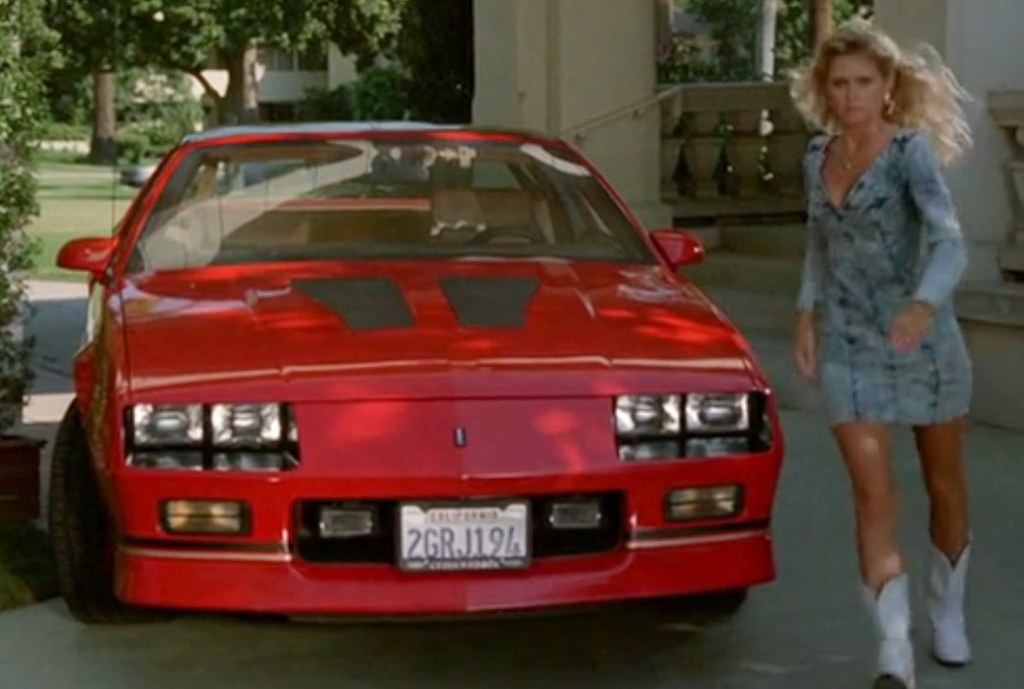
Most Killer Outfit: In the scene when Shauna confronts Bill for his cheating ways, she shows up at his house in a skin tight denim dress, paired with a candy red sports car. She looks incredibly powerful in that getup and Bill was a fool to let her go in his pursuit of the truth about the shunt, especially since his eventual fate was entirely unavoidable.

For more on February’s Movie of the Month, the satirical class politics body horror Society, check out our Swampchat discussion of the film and last week’s look at its highly questionable DVD-mate Spontaneous Combustion (1990).

-Brandon Ledet

Double Feature Disaster: Spontaneous Combustion (1990) & Society (1992)

EPSON MFP image

When I first set out to track down a copy of Society, I turned to my old pal, the Vulcan Video catalog search, which showed that there was a copy at the location nearest me. When I went to locate it, however, it was nowhere to be found on the shelf, and the kind woman working the counter that day noted that their copy had actually been sold several years back and that the catalog listing was an oversight (an unusual lapse for the fine folk of Vulcan). We did eventually track down a copy of the film in their stacks, one of those early double-sided DVDs with Society on one side and Spontaneous Combustion on the reverse. I was pretty pleased by this, because a double feature usually means an easy instant follow up article (just add water).

I was wrong. I was so, so wrong. There’s nothing easy about Spontaneous Combustion.

The film stars America’s non-darling Brad Dourif as Sam, the adult son of a husband-and- wife team who were given an experimental anti-radiation injection during a propagandistic Cold War exercise. Following his birth, both parents spontaneously combust after contact with their new infant, leaving him to be raised by the mysterious Lew Orlander (William Prince), a wealthy industrialist who acts as the face of the original experiment when his company takes over from the government.

Some reviews identify Sam as a would-be actor, apparently based on his first scene in the film, in which he recites some lines of Shakespeare on stage with a student, but I think he’s supposed to be a teacher, as is his love interest Lisa (Cynthia Bain). One can hardly blame the audience for being unclear as to who Sam is, what his motivations are, or for failing to follow the so-called plot of the film. From what I can understand, Sam was once married to Rachel (Dey Young), Orlander’s granddaughter, who was always pushing Sam to visit Dr. Marsh (Jon Cypher), who is secretly in Orlander’s employ. Since their divorce, Sam has struck up a relationship with fellow anti-nuclear activist Lisa, but this relationship is also the result of Orlander’s manipulations, and the supposed homeopathic medication she has been sharing with him is actually from Dr. Marsh. These treatments are provided in order to encourage the growth of Sam’s supernatural power to start fires.

All of this seems pretty straightforward, but there’s also the mysterious reappearance of Sam’s childhood toy that sends him off searching for the truth of his origins, Sam’s budding powers and the ensuing accidental deaths thereof (including a couple of police officers and John Landis in a cameo as a radio . . .  technician, maybe?), a radio evangelist/medium who seems to be speaking to Sam directly for reasons that are utterly unclear, the sudden reappearance of a woman (Melinda Dillon) involved in the original experiment and her just-as- sudden murder, the murder of another woman who was investigating the soon-to- be-activated nuclear plant nearby, Lisa’s own pyrogenetic powers, and an inordinate number of conversations held on neon telephones.

combustion-espontanea-spontaneous-combustion-tobe-hooper-eeuu_-1990_avi_002513600

The composition and plotting of this movie are bafflingly inelegant, and even two viewings left me unable to accurately gauge just what in the hell was happening at any given time. This was a frustrating viewing experience, both times, and not in the sense that some deeply philosophical films are hard to parse. Instead, Spontaneous Combustion feels like a unauthorized, non-union sequel to Firestarter that was hastily edited together by someone trying to recreate the experience of watching that film with a 104° fever. It’s a movie that actively tries to discourage you from watching it even as the story (such as it is) unfolds, challenging the viewer to a test of wills.

Despite the incohesiveness of the overall plot, I was able to discern two similarities that would reasonably connect this film to Society and, to the inebriated mind of some marketing exec, warrant putting the two films on a single disc. First, the actor playing Sam’s father, Brian Bremer, also portrayed Petrie, Billy’s rival for student body president, in Society. More thematically, both Billy Whitney and Sam are the children of working class people raised by wealthy elites for their own nefarious purposes. It’s a bit of a stretch, but there it is.

Even if you find yourself with a copy of this double DVD in your pursuit of watching Society, don’t flip that disc. It’s not worth it.

For more on February’s Movie of the Month, the satirical class politics body horror Society, check out our Swampchat discussion of the film.

-Mark “Boomer” Redmond

Movie of the Month: Society (1992)

EPSON MFP image

Every month one of us makes the rest of the crew watch a movie they’ve never seen before & we discuss it afterwards. This month Brandon made Alli, Boomer, and Britnee watch Society (1992).

Brandon: In the post-apocalyptic eternity since the presidential election of Donald Trump there’s been bountiful articles explaining why such & such movie, say Bob Roberts or Children of Men or even Rogue One, are now more relevant than ever in our current political climate. The truth is more likely that these films never lost their political relevance in the first place. Although this country has seen a somewhat progressive swing in the last eight years, the same systemic class inequality & civil rights issues that have always plagued it haven’t budged an inch. Most political art made in the last century, particularly art that addresses our deceptively rigid class system & the often brutal ways its boundaries are enforced, is always likely to retain its significance as our presidents change, since the system they helm doesn’t change along with them. That’s why I don’t want to pose the rich-feeding-off-the-poor terrors of Brian Yuzna’s cult classic body horror Society as being more relevant than ever in the face of a Donald Trump regime, as tempting as it may be. More accurately put, Society is very much a product of its Reagan-era times that, when viewed through a modern context, can be a harrowing (and amusingly absurdist) reminder that nothing ever really changes, least of all the status quo.

For all of its continued political relevance in its hamfisted approach to satirizing rigid class structures, Society is admittedly a deeply silly film. High school senior Bill Whitney feels out of step with his Beverly Hills yuppie community, including his own family. Despite his privileged life of manicured mansions, cheerleader girlfriends, and popularity contest high school elections, Bill is intensely uncomfortable in his environment, suffering a growing unease he discusses at length with his therapist. This discomfort amounts to a spiritually crushing paranoia in which Bill hallucinates grotesque body contortions in his Reaganite peers and becomes convinced that his parents & sister are attending incestuous, murder-fueled orgies among a secret sect of Society he simply doesn’t have access to. Of course, Bill’s dead right. He doesn’t fit in with his Beverly Hills social group because he was born an entirely different species, a Poor. The wealthy members of the film’s self-described “Society” are an inhuman race who run the world by literally feeding off the poor. Bill was merely adopted into their ranks as an unworthy outsider & eventual sacrifice. The final half hour of the film is a Cronenbergian mess of melded bodies, unimaginable cruelty, and sexual taboo that exposes the heartless & wealthy ruling class for the monsters they truly are. It’s a bewildering special effects showcase from gore wizard Screaming Mad George that nearly wipes away all memory of the mostly standard horror film that precedes it by putting an outrageously grotesque face on systemic inequality in modern class politics.

What I love most about Society is its complete lack of subtlety & nuance. Once its world’s rules are revealed in its infamous “shunting” sequence in the final act, the film’s themes are spelled out in the plainest of terms. Bill is collared & walked around like a wild dog for public ridicule (before he’s subjected to a more supernatural torment). Wealthy men explain to him that their superiority comes from “good breeding” and that, since he was adopted from a non-wealthy family, “You’re a different race from us, a different species, a different class.” They even explicitly connect their evildoings to a historical tradition of class inequality, bragging that “The rich have always sucked off low class shit like you.” Society was largely panned in its time for this disinterest in thematic subtlety, struggling for three years after its initial release in 1989 to earn a proper US distribution deal. Treating its class politics as a flimsy excuse for the disturbing practical effects orgy in its final act seems like a mistake to me, though, and I’m delighted that the film has been reassessed as a cult classic in the decades since its humble beginnings. The way it explores class divisions in the most literal & grotesque terms possible is highly amusing to me in an almost cathartic way. This is especially true of these earliest days in a Donald Trump presidency, where poking fun at the inhuman cruelty of the wealthy oligarchy feels almost necessary for survival, even if their status as the ruling class hasn’t at all changed since this film’s initial release.

Boomer, do you agree that Society is well-served by its blatant class warfare themes, particularly in the cruelly grotesque way the 1% are characterized in its sledgehammer dialogue & nightmarish gore, or do you think the film would have fared better with an occasional adherence to subtlety & restraint?

Boomer: Honestly, yes and no, as I am of two minds when it comes to film’s mixed relationship with subtlety. Though the plot becomes more traditionally horrific as it plays out, the outpouring of nauseating imagery and sound that constitutes the film’s finale is a huge tonal shift from the relatively grounded story that seems to be playing out in the first act. As much as I love grue, I also love the conceit of the unreliable narrator, especially one who doubts his own mind. Take, for instance, Bill’s first scene with his therapist, in which he takes a bite of an apple only to realize it’s full of worms; he looks away, then back, and the apple is totally normal. This is a fairly obvious metaphor for the way that the presumed normalcy of Bill’s world is merely a thin facade covering inconceivable monsters beneath the surface, but it also implies that Bill’s less-than-objective interpretation of events may be the result of a diseased mind. At least until the shunting begins, anyway.

Of course, that was just my reading of the scene based on viewing the film cold. Many of the early oddities, like the squirming apple, the apparently inhuman body structure of Bill’s sister, and the changes to the audiotape, could easily be interpreted either way: as hallucinations or a They Live-style peek behind the veil of our ordered existence. Instead, of course, we learn that these are just moments in which members of the titular Society are gaslighting (another important term that has seen a resurgence in usage and discussion since the Trump ascendancy) poor Bill. Luckily, for the sake of goreheads and fans of unsubtle social satire everywhere, Society quickly descends into stomach-churning “after dark” madness.

After my viewing, I watched the trailer and looked at posters for the film, and I can only imagine that filmgoers of 1992 would have been highly disappointed if “the minds behind Re-Animator” and the gore wizard “who brought you Nightmare on Elm Street IV (um) and Predator (oh, ok)” had turned out a film about a rich Beverly Hills kid who thought his world was being turned upside-down only to learn that he was merely losing his mind. Still, I think I would like to see a film that plays out more subtly, wherein Bill becomes all-too-aware of how privileged his easy, moneyed life is and begins seeing his 1% peers as the inhuman monsters they are on the inside, without making that metaphor so literal. The film would have been a bit more nuanced if it took that road, but that doesn’t mean Society doesn’t work in the form that it does take.

What the film lacks in subtlety, it makes up for with its overt depiction of the grotesqueries of American pomp and lavishness. When the film shreds the guise of humanity to reveal its, uh, true form, the film doesn’t suffer for its straightforwardness. The rich are fundamentally different from you and me, and it is, from their point of view, a matter of class and breeding. This isn’t even arcane knowedge that I’m talking about, it’s all out there to be seen by anyone who opens their eyes. I never saw a full episode of Rich Kids of Beverly Hills, but I did see plenty of clips on the dearly departed (and sorely missed) The Soup, and have seen enough “Rich Kids of Instagram” compilations scattered around the internet to know that a life of wealth and privilege makes people rotten to their cores. A dear friend used to be a frequent babysitter for the four-year-old daughter of a rich Baton Rouge lawyer; one day, the little girl was so cruel to my friend that she cried, causing the brat to tell her that she didn’t have to be nice because she was pretty. When my friend told the parents about this incident that evening, the father didn’t apologize or even inspect the way that he was raising his child to be a monster; he just looked at my friend and said, “Well, she’s right, you know. She doesn’t have to be nice; she’s pretty.”

Anecdotal though that is, it bespeaks a systemic inhumanity on the part of the American aristocracy, and that inhumanity is on full frontal display in Society, just as it is in society. To hide that behind a veil of subtlety is to do a grave disservice to the truth of our existence. I would even go so far as to argue that the exaggeration of that idea is more important now than it was 30 years ago. After all, our society has degenerated into such frothing madness that satire can hardly find a foothold; so unable are we to discern extreme parodies of absurd political ideation from the actual extremist views held by fringe mentally ill people (whose voices are amplified by the proliferation of the internet) that there’s a plausible argument being made that “fake news” swung the election. If Jonathan Swift were to publish “A Modest Proposal” in the New York Times tomorrow morning, there would be commenters at Breitbart and TeaParty.org putting on their “All Lives Matter” aprons and getting ready to light the grill to barbecue up some Irish babies by mid-afternoon. The finale of Society may be just over-the-top enough to penetrate even the thickest skulls (and Klan hoods).

Let’s back off of that for a second though, before I work myself up too much. For me, the weakest link in the film has nothing to do with the story or the direction but with Billy Warlock’s performance. I’m sure part of my less-than-hospitable attitude towards the actor is the result of Allison Pregler’s delightful abridged series project Baywatching, but I still found Bill to be a thoroughly disinteresting lead, with no power in Warlock’s portrayal to save the character. Hell, if anything, Milo is the hero of this story, not Bill. What do you think, Britnee? Were you distracted by Billy Warlock’s lackluster presence, or was it suitable for the film? What change would you make to strengthen the film: recasting, or rewriting the character?

Britnee: I’m in agreement that Billy Warlock’s performance in Society was pretty terrible. With such an interesting last name, who would’ve guessed he’d be such a letdown? Even though his acting was shit, he didn’t really have that much of a negative impact on the movie, though. Society was absolutely insane from the opening scene to the disturbingly haunting ending, so, if anything, Warlock contributed to the insanity that made this movie such a success in the cult film community. Imagine how off-balanced the movie would be if someone decent played the role of Bill. I couldn’t even imagine such a thing.

If I could change anything about Bill’s character, I would want him to take all the strange occurrences happening around him more seriously. It was irritating to watch him be so willingly blind to what was happening around him, and it was even more annoying to know that he didn’t start questioning his place in his weird family until he was in his late teens. I’m assuming that he was adopted by the Whitney family when he was a baby since he didn’t know he was adopted, so he probably noticed their strange behavior way before he started to question it. Maybe I’m being too harsh because he was raised in that environment his entire life and probably thought it was normal, but it’s still hard to believe.

The biggest question that I have from Society (and I have many) is why did the Whitney’s adopt Bill and raise him for so long with the intention of eventually “shunting” him? They didn’t have to groom him for so long just to shunt him in the end because they shunted Blanchard, who was pretty much just an average guy. They could lure or capture any lower class individual to shunt, but I don’t understand why they put so much effort into shunting Bill.

Alli, what do you think about the Whitney’s adopting of Bill to just shunt him in the end? Would you have liked more of a background story of their motivation to adopt and raise Bill? If you could create the story for Bill’s adoption, would would it be?

Alli: I think their cruelty and extravagance has made them bored, so they need increasingly sick diversions. I’m imagining some sort of extremely twisted My Fair Lady, where they found this poor family with a child they can’t afford and just for kicks decide to groom a lower class “poor” into a false sense of security just to see the terror and confusion. It also kind of brings to mind “The Most Dangerous Game.” My main question is why now? Have any of them thought of keeping “shuntable” pets before? It’s such a hyperbole of the idea of the poor as sheep for the rich to herd and take advantage of. It’s amazing that they’re applauded and congratulated on their great achievement, because in a way this makes the Whitney’s farmers, and I imagine farmers are some sort of unimaginably lower rank.

But something more mysterious to me than any of that is Mrs. Carlyn (Pamela Matheson). I didn’t ever really figure her character out. Her doe-eyed, empty stare and tricophagia aren’t really explained. Very early on the cheerleader types reference her in disgust when talking about Bill’s infatuation with Clarissa Carlyn (Devin DeVasquez), “Have you seen her mom?!” After mentioning Clarissa’s turning tricks, I assumed her mom would be some sort of scandalous gold digger, but she’s the opposite. Instead, she’s a semi-catatonic wanderer with wild hair. She’s harmless enough as a member of Society goes, but I guess I don’t really understand why they keep her around.  The most I can make of it is that this Society even has outcasts and those who don’t fit in. They sweep them under the rug and ignore them, but is Mrs. Carlyn anymore messed up than any of the rest of them?

Brandon, what do you think about Mrs. Carlyn’s place in Society?

Brandon: I’m really glad that came up, because Mrs. Carlyn & her hot to trot daughter were the first thing that came to mind when Boomer & Britnee called out Bill for being a lackluster presence in the film. Mrs. Carlyn in particular is a sore thumb. She plays Society‘s already broad comedy a tad too far into a cartoonish territory that spoils the winking camp a little for me, recalling a Laurie Beth Denberg character from a long-forgotten All That sketch. This is more a fault of the filmmakers’ than the actor’s, though. They don’t give her much to do outside tired fatty-fall-down-make-boom lines of humor and excuses to mug crazy-eyed for the camera when she tries to eat unsuspecting victims’ hair. (In a typifying punchline, she’s confused when she attempts to eat a toupee.) If I had to justify her inclusion in the plot, I could argue, as Alli suggests, that she’s a comedic take on the way wealthy families always seem to have that one black sheep weirdo that doesn’t quite fit in, usually due to mental illness. Mrs. Carlyn & her oversexed daughter are essentially this Society’s version of Grey Gardens, their outcast mutant lives existing as a sort of bane on the more respectable slug-eating mutants of Society proper. That’s giving the film more credit than it probably deserves, though, especially since nothing else in its themes is treated with any semblance of subtlety. For a film willing to beat you over the head with lines like, “There are people who make the rules and people who follow them. You’re born into it,” and the often-repeated “You’re going to make a wonderful contribution to Society,” I think a little acknowledged justification for the Carlyns’ existence as outsiders, even as a source of embarrassment, would’ve improved the script. I also could’ve done without Mrs. Carlyn’s character entirely, to be honest.

Her daughter Clarissa is another strange outlier in the story. Clarissa seems to at first be horny for Bill in a nefarious way, as if she’s playing with her food or further trapping him in his predetermined downfall, but that attraction is later revealed to be genuine. This could possibly be a result of her identifying with his fellow outsider status as a Poor, thanks to her family’s position as the Grey Gardens black sheep. Again, the script doesn’t give us much to work with there. Clarissa’s affection for Bill honestly wouldn’t distract me too much, though, if it weren’t used as a deus ex machina (along with her mother’s trichophagia) to rescue him just before his turn to be shunted. Bill’s escape at the end & ultimate survival makes for an interesting gender-swapped version of the Final Girl trope (something telegraphed in the red herring slasher film opening), but I was honestly rooting for a much more pessimistic conclusion to the story. As far as screenwriting tradition goes, a gore-soaked Canadian horror indie just might be one of the few times when you can get away with a triumphless, dispiriting ending without gripes from producers or test audiences and it just seems weird that Society would allow its protagonist to walk away without more than a few scratches. If all these wealthy families conspired for nearly two decades to shunt Bill, why would they so easily allow their science project to escape once he’s learned all of their horrific secrets? I guess you could argue that they’re in a vulnerable, physically soft state during the shunting that would inhibit his capture, but that seems like a pretty weak excuse. Having Bill suffer the shunting and the wealthy secure an inescapable victory over their born-poor protagonist might’ve better served the film’s central metaphor and it seems as if the only reason he’s allowed to escape is to set up a sequel that never came, a lame cop-out if there ever was one. And since Clarissa’s entire existence in the plot is the machination of that escape I have to question her validity in the script just as much as I do her mother’s.

What do you think, Boomer? Would a pessimistic ending have better driven home Society’s central metaphor? Would it have been a better film if Bill had fallen victim to the shunting he was groomed for all his life?

Boomer: That’s an interesting question. More than the relative positivity/negativity of the ending, I was struck by how abrupt it was, and how odd that conclusion felt in a film that spent much of its runtime letting the story breathe. To use a comparison that is accessible for many, consider the ending of Terminator: imagine that, after Sarah Connor destroys the T-800, the film cut to black and the end credits immediately started rolling, without the follow-up scene in which she drives off into the desert as the distant thunder of a gathering storm rumbles ominously. That’s how you end this kind of movie: the hero vanquishes (or escapes) the clutches of evil, and the audience is treated to an epilogue that allows us to digest the climactic finale and imagine a future for the character or characters in whom, if the film is successful in its presentation, we have become invested. It doesn’t have to be completely optimistic or pessimistic; in fact, Terminator‘s final moments are all the more poignant for their ambiguity. James Cameron’s film is perhaps the best example of how to make this work, given that it could so easily have been yet another generic action film like so many of that era, but rose above the milieu to become iconic through strong performances, impressive VFX work, and attention to detail.

I have a feeling that director Brian Yuzna may have even thought he was endowing the ending of Society with this same feeling of bittersweet uncertainty: Billy escapes, but a member of the Beverly Hills shunt calmly tells a cohort that there is another Society… in Washington (dun dun DUN). But instead of giving the ending room to breathe, the end credits start to roll seemingly out of nowhere, without even a perfunctory denouement in which Billy, Milo, and Clarissa drive into the night as the first fingers of the sun grab at the horizon. On the other hand, I might just be making this connection between the two movies because both Sarah Connor and Bill drive sweet Jeeps; that’s for the reader to decide.

In the end, however, I think that the film’s “happy” ending is difficult to parse as either a function of its time of creation and its creative genesis. Although Yuzna was born in the Philippines, the film can be read as a clear product of anxieties about the rich that are not unique to American wealth distribution but specifically reflect that culture. As such, my initial assumption was that the optimistic ending was a result of the need to represent the hope of escaping the clutches of wealthy evil, metaphorically. As obvious as that may seem, interviews with the director indicate that the film was originally about religious cultists out to sacrifice Billy, but that this plot point was altered following discussions between Yuzna and Screaming Mad George during the pre-production process. The “shunting” was conceived by George and the plot reworked backward from there, meaning that any discussion of the relative “happiness” of the ending presupposes a premise that is supported by the text itself, but appears unintentional.

Roland Barthes would argue that this is irrelevant, however, so in the interest of not limiting the text, I declare the author dead and put forth this explanation: the ending must be optimistic in order to give the audience hope of escaping the wealth-positive cronyism of Ronald Reagan. An ending in which Billy dies at the hands (?) of the Society would be reflective of the way that this generally works in the real world (for instance, with the recent repeal of the ACA damning many Americans to a slow and painful death without affordable medical care in order to support the malevolent and uncharitable greed of a few), but wouldn’t make for very good entertainment, so a happy ending is called for.

To go back to the Terminator reference above, how would you see a potential film franchise for Society playing out, Britnee? Do you think there would be any value in confronting other Societies? Would those be better served by taking on the more pessimistic (perhaps even deterministic) tone that the Terminator franchise did?

Britnee: I would absolutely love a Society franchise! I recently read an interview that Yuzna had with Horror Channel back in 2013, and he mentions that he was actively working on a sequel to Society. I haven’t seen anything else that mentions the status of Society sequel, but I hope that it’s still in the works. Having a sequel come out over 20 years after the original film was released sounds insane, but I think that it would be great to get a modern day dose of Society while we’re living in Trump’s America. There’s actually loads of potential for a Society franchise. Think of all the Societies around the world that the films could focus on: the British royal family, Russian oligarchs, Indian billionaires, etc. Could you imagine how amazing it would be to see Queen Elizabeth II lead a shunting with Prince Charles? There’s just so much to work with, and by exploring “Societies” in other countries, viewers could be more aware of the endless supply of greedy jerks all over the world.

Honestly, it’s been at least 15 years since I’ve seen any of the Terminator films, so I only vaguely remember them. It’s not that I didn’t enjoy them, I just haven’t revisited them in a while. If there was a Society franchise, I think the films should have a more pessimistic tone. I would’ve liked to have seen Bill shunted to death and Milo as the only one who was able to escape. Then Milo would go on to be the protagonist in the sequel, where he gets a little team together to destroy all the Societies in the world. In each subsequent film, part of the team would get shunted while the others barely make it out alive (covered in that nasty shunting lubricant). Having the films take a more pessimistic approach adds so much more to the horror element. When Billy escaped in the end, it made the film so much lighter. But as Boomer mentioned earlier, the ending was so abrupt. If there was just a little two minute scene of Billy being thrown in a mental institution from suffering from some sort of shunting PTSD, the film would’ve been more of a solid horror movie.

One image that I just can’t get out of my head is when Bill’s dad becomes a butt-face and makes fart noises. It’s probably my favorite part in the movie. Alli, what where some of your favorite body morphs in the movie? Is there any body morph that you would’ve liked to have seen?

Alli: Man, all the body morphs were really great, but the ones that really stood out to me were when the story was still ambiguous and we didn’t know whether or not it was still in Bill’s head. One of my favorites is when Clarissa’s body is all twisted around. It just reminded me of some freakish nightmares I’ve had. I don’t think I would have included any more of the subtle ones though, because I think the story benefits from the quick descent into overt madness. I guess what I would have wanted more of is the fact that the Society can body morph being used as an advantage rather than a bizarre sex cult or strange clumsy hindrances. How cool would it have been for just a really long arm to try and snag Bill as he’s getting away? I think that would be a pretty simple way to fix the abrupt ending, anyway.

One thing I’d like to see explain more is Bill’s hallucinations. Is he seeing bugs in his food because the food is made of bugs, or is he seeing bugs in his food because he’s actually losing it? It would be more of an interesting statement if it were the latter. I’d like for a protagonist in a movie to be going a little loony but also be 100% completely right about something else crazy going on. Rather than being an unreliable narrator, he’d become a reliable narrator with some problems, which would be an interesting take on that trope. It’s also believable in a way; anyone would have problems if they were raised by an out-of-touch rich family of grotesque mutants.

EPSON MFP image

Lagniappe

Alli: Britnee mentioned the butt-face morph and I feel like here’s the place to say that I really like the idea of ultra rich people literally talking out of their ass. In a movie totally lacking in subtlety, that might be my favorite in-your-face moment.

Britnee: I don’t really understand why Bill’s mom and dad were checking out slugs with their gardener at the beginning of the movie. Was it supposed the be a hint that they were up to something strange or is that really how rich people prepare to make escargot? I wish there was more explanation for it in the movie because not knowing is really killing me.

Boomer: To go back to the question of Mrs. Carlyn, I think that she represents the way that “good breeding” apparently means some kind of inbreeding here, as was often the case with aristocratic families over the course of history. Since the author is dead, I’ll put in my two cents that I interpreted her place in this group as a kind of blindness to the basics of genetics that must permeate Society, and is indicative of the way that the rich ignore that which doesn’t support their worldview. Mrs. Carlyn can’t be inbred because of how good their breeding is and because they are the elite, even when the counter-evidence is staring them in the face (and trying to eat their hair).

Brandon: I think I’ve come up with a pretty decent Society drinking game: Take a swig every time you see Bill’s Jeep, which Boomer mentioned earlier. The fancy black Jeep Bill drives is featured early on as one of the unsuspecting Final Boy’s hallmarks of privilege. The movie obsessively makes a big deal out of the vehicle long after we get the point, though. If features several scenes of Bill finding vague, prankish threats like lynched Barbies & naked blow-up dolls in the passenger seat and once the plot starts barreling toward a conclusion, the Jeep is repetitively shown as both a literal & a literary vehicle used to get Bill from one horror to the next. It started to remind me of that easy screenwriting device where expository information is dumped over phonecalls instead of cropping up naturally. Anyway, I call the game Jeep Shots. Please play responsibly and avoid operating any Jeeps until long after the credits roll.

Upcoming Movies of the Month
March: Britnee presents What’s Up Doc? (1972)
April: Boomer presents Head Over Heels (2001)
May: Alli presents Europa (1991)

-The Swampflix Crew

Cronenberg, Luxury Cars, and the End of the World

EPSON MFP image

I’m going to try to keep this short & reductive, so as not to get unnecessarily mean. There was a weird detail to our December Movie of the Month, the apocalyptic Canadian black comedy Last Night, that reminded me to finally check out a work I’ve been putting off for years. However, much like how our conversation around the Laura Dern black comedy Citizen Ruth lead me to finally pulling the trigger on David Lynch’s Inland Empire only to find it an exhaustingly ugly, empty exercise in art film pretension, Last Night similarly lead me astray. In the film, cult Canadian director David Cronenberg plays a distressed business man who spends his (and everyone else’s) last day alive at the office, making sure things run smoothly in the world’s final moments before its mysterious doomsday mechanism arrives. It’s when Cronenberg’s character, conveniently named David, leaves the office that Last Night‘s scenario begins to feel eerily familiar. David calmly navigates the world-crumbling chaos & riotous hooliganism taking over Toronto from the comfort of his expensive-looking luxury car. Watching this unfold, I thought I had accidentally entered some kind of time loop, as it’s this exact scenario that Cronenberg directs Twilight vet & honorary Death Grips member Robert Pattinson through in his 2012 film Cosmopolis. The major difference there is that in Last Night this is a single detail in a large, thematically fulfilling tapestry, while in Cosmopolis it’s the entire exhaustingly cold, empty journey.

I’ve had a DVD copy of Cosmopolis lurking in my to-watch pile since the mass Blockbuster Video close-out sales of 2013. I was smart to stay far away as long as I could resist. I’m not at all hostile towards the basic idea of a feature length film about Robert Pattinson venturing across town in a limousine solely to get a haircut. After all, I was fairly ecstatic about the film Locke, in which Tom Hardy makes a series of phone calls to orchestrate a concrete pour from the driver’s seat of a car. Cosmopolis had a lot more going on than Locke in terms of set pieces & range of characters; Pattinson occasionally leaves the relative safety if his “office” limo to visit a basketball court or a bookstore or, of course, a barber shop. The purpose of the film’s dialogue is much more difficult to pin down, though, aiming more for philosophical musings on existentialism and capitalist vampirism than any linear narrative. It was all white noise to me, recalling the empty-headed speculation of Southland Tales without the energy or humor. With the detached coldness of an absurdist stage play or a going-through-the-motions table reading, Cosmopolis provides very little for its audience to hold onto. It has some interesting cultural context, considering how it’s dead rat-brandishing protesters that surround the all-important office limo mirror the time’s Occupy movement and I’ll admit that Pattinson is entertaining enough to carry his beyond-demanding lead role. It just ultimately signified nothing to me, despite the fact that I was very much positive on Cronenberg’s similarly detached Hollywood satire Maps to the Stars. Don’t ask me why that is, because I honestly have no clue.

I’m not sure that Cronenberg’s apocalyptic car ride in Last Night influenced his choices in directing Cosmopolis in any way. Not only was the latter film adapted from a Don DeLillo-penned novel, there are some pretty major differences between his character’s business man coldness and Robert Pattinson’s. Last Night‘s business dude seems to be a kind, gentle man despite the emotionless way Cronenberg portrays him. Cosmopolis‘s protagonist, by contrast, is a heartless brute & a money-grubbing sociopath, making the film feel like Gossip Girl’s Chuck Bass: The Movie. In that case, the world is crumbling because of a man-made financial crisis; in Last Night we don’t know why the world is ending, just the humanist ways it’s many characters grieve its loss. When Last Night ends we see strangers comfort each other & fight through personal insecurities to achieve intimate, emotional connections in their final moments. When Robert Pattinson finally reaches the barber in Cosmopolis, he gets a terrible, asymmetric haircut. I’ll leave it to you to guess which result I found more satisfying and to draw connections on why Cronenberg would be attracted to two disparate, dialogue-heavy projects in which wealthy businessmen calmly drive through a crumbling society in the comfort of a luxury vehicle. In the mean time I’ll be trying to forget the frustration & boredom I suffered when I finally pushed play on Cosmopolis . . . or eagerly awaiting the end of the world. Whichever comes first would be fine.

For more on December’s Movie of the Month, the apocalyptic black comedy Last Night, check out our Swampchat discussion of the film, this look at its studio comedy equivalent Seeking a Friend for the End of the World (2012), and last week’s gaze into the bright explosions of its Michael Bay contemporary, Armageddon (1988).

-Brandon Ledet

Armageddon (1998) Doesn’t Contrast the Small Scale Apocalypse Narrative of Last Night (1999), It Explodes It

EPSON MFP image

When Last Night played the festival circuit in 1998, critics made a big deal about how its small scale, intimate depiction of the Apocalypse was entirely antithetical to Michael Bay’s massive explosion orgy of the same year, Armageddon. Almost a decade later, it’s still an interesting point of contrast. There are obvious ways that an indie budget Canadian black comedy wouldn’t match up to a massive Hollywood special effects spectacle, mostly in terms of scale. Armageddon is packed to the gills with recognizable faces (Bruce Willis, Billy Bob Thornton, Ben Affleck, Liv Tyler, Steve Buscemi, Owen Wilson, so many more), while Last Night boasts the muted star power of niche Canadian indie superdarlings like David Cronenberg & a before-she-was-minorly-famous Sarah Polley. Last Night saves money & energy by not at all addressing the mechanism for the world’s end, instead focusing on the personal reactions of a small group of people to the grief it inspires; Armageddon dedicates more than half of its bloated 150min runtime to blowing up an asteroid “the size of Texas.” Last Night limits its scope to the city of Toronto, while Armageddon attempts to span the entire globe (or at least a version of the globe where the USA eats up 60% of the terrain) and utterly destroys three major cities in the process. These financial & genre differences are to be expected from the get go, though. What’s really interesting outside the two doomsday films’ sense of scale is the relative blackness of their souls.

For all of Last Night‘s Gen-X cynicism & neurotic existentialism, it’s above all else a humanist story. We join the world well after it has accepted its impending communal death and although the film often chooses to laugh through the pain, it makes a point to celebrate the way characters, often strangers, comfort each other in their shared moment of grief. Armageddon is an entirely different kind of beast. The Apocalypse depicted in Michael Bay’s film is not a crisis that must be accepted & emotionally processed; it’s an obstacle that can be overcome by a tough son of a bitch American badass who blows stuff up real good. We first meet our supposed hero (Willis) launching golf balls at oil spill protestors & chasing an employee around his rig with his adult daughter. The black-hearted conservative fantasy continues when he & his rag tag crew of “roughnecks” (who at one point, no joke, self-describe as “a bunch of daddies”) are recruited to blow up the Texas-sized asteroid, because the pansy nerds at NASA just could not get the job done. So much of Bay’s film is outright despicable. Steve Buscemi’s asked to charmingly deliver a torrent of pedophile humor. Every depiction of a foreign country (who apparently all sit on their hands while America saves the day) is cartoonish in its culture-gazing, especially in the comic relief of its Chinese businessmen. One of the film’s many climactic crises is solved when a man violently tosses aside a trained female astronaut (with practically no dialogue) to bang on a machine with a wrench & yell at it until it works. Thousands of lives are lost as entire cities crumble, but less thought is given to casualties than to finding more space for yet another Aesosmith song or a lengthy assembling-the-team montage. Armageddon doesn’t muster one ounce of the compassion or the empathy of Last Night and often feels actively deplorable in its views on humanity, both political & spiritual. Still, I can’t shake the feeling that the film is worthwhile in its own right.

As ugly as Armageddon‘s hostile, conservative soul in its terms of narrative & dialogue, it’s an absolutely gorgeous film to behold. With the low attention span of a Hausu or a Beyond the Valley of the Dolls, Bay’s camera carefully considers each kinetic set-up and somehow turns a succession of beautifully crafted shots into a rapid fire assault on the senses & sensibilities of its audience. The way Last Night understands basic human fears & intimacies and the way they galvanize in timed of widespread crisis is impressive, but I don’t think the film ever approaches Armageddon‘s attention to filmmaking as a craft. It’s not even a question of budget, either. Even when you ignore for a minute all of the CGI buildings and hand-built miniatures Bay can’t resist gleefully exploding every few narrative beats, he has a distinct touch as a stylist. I’m not sure McKellar can claim the same in Last Night. The intense colors, framing, and rhythms of Armageddon are far above the film’s intelligence level in terms of plot & dialogue and it’s fascinating to watch something so smartly beautiful used for such an ugly, evil purpose.

I don’t mean to imply that Armageddon needs to be reassessed as some kind of overlooked masterpiece. If anything, it’d full-blown camp spectacle. Details like the opening narration about dinosaurs and the unfathomably awful animal crackers seduction scene had me howling with laughter, when I’m fairly sure that was far from their intent. Last Night‘s joke about the world’s biggest (and presumably final) guitar jam playing Bachman Turner Overdrive’s “Taking Care of Business” was the only gag that got that big of a laugh out of me, even though I’d say that film is the one that “deserves” to be championed as a lost classic. Armageddon is much more firmly in the so-bad-it’s-good side of that divide. It takes everything touching, mysterious, and humanist about Last Night and explodes it into a mean-spirited spectacle of jingoistic hero worship & casual misogyny. And yet, I found myself floored by Bay’s disaster epic for the entirety of its impossibly bloated runtime, a reaction I certainly did not expect on this revisit. Last Night is the more artful, empathetic portrait of humanity in crisis and fulfils every desire you’d have for a small budget indie about the Apocalypse. Armageddon, on the other hand, refuses to be ignored as a remarkable achievement in its own right, even if it is the exact polar opposite of McKellar’s black comedy and, arguably, a loud exemplifier of the worst aspects of modern Hollywood blockbuster filmmaking. As deplorable as Armageddon is as a Death Wish-style conservative fantasy piece, I’ll never sarcastically deride its inclusion in the Criterion Collection again. I get its appeal now, despite my better judgement.

For more on December’s Movie of the Month, the apocalyptic black comedy Last Night, check out our Swampchat discussion of the film & last week’s look at its studio comedy equivalent Seeking a Friend for the End of the World (2012).

-Brandon Ledet

Last Night (1999)’s Studio Comedy Equivalent in Seeking a Friend for the End of the World (2012)

EPSON MFP image

The Y2K scare in the late 90s lead to a brief cinema trend of End of the World features, but there weren’t many out there quite like our December Movie of the Month, Last Night. The Don McKellar-helmed black comedy strayed from the alarmist thriller beats of titles like Armageddon, Deep Impact, and End of Days to chase a much more realistic, resigned Gen-X vibe of sullen gloom & gallows humor in the face the Apocalypse. Much more recently, End of the World cinema trended once again, this time likely inspired by the supposed end of the Mayan Calendar in 2012. Among the traditional alarmist thrillers this time around (like the appropriately titled 2012) there were actually a good number of mainstream comedies on the topic: This Is the End, The World’s End, It’s a Disaster, etc. Only one of these Armageddon comedies of the 2010s managed to match the weirdly subdued in a time of crisis vibe of Last Night. Seeking a Friend for the End of the World is a much more minor & less stylistically focused work than Last Night, but it still makes for an interesting companion piece for McKellar’s Canadian cult classic. It not only reflects the way humor & pop culture attitude had shifted in the decade or so between their releases, but also points to how Hollywood convention could’ve made McKellar’s piece a much less interesting work if it weren’t a dirt cheap indie.

Both Last Night & Seeking a Friend for the End of the World center their tales of a world unraveling on a neurotic male protagonist who faces dying alone after the recent departure of his romantic partner & the impending doom of an inevitable Apocalypse. Unlike Patrick’s wife in Last Night, who died before the announcement of the world’s end, Steve Carell’s protagonist in Seeking a Friend loses his own wife to infidelity and she bolts from their marriage in the opening scene. In both features, the leads are neurotic men who can’t will themselves to join in the orgiastic parties surrounding them as they wrestle with their grief, but instead take unexpected comfort in newly-formed intimacies with total strangers (Sandra Oh in Last Night, Kiera Knightly in Seeking a Friend). News broadcasts continue to the bitter end in both films; insurance & gas companies continue to function; riots overtake the cities; characters obsess over curating their life-ending soundtracks, including off-screen radio DJs. What really ties the films together outside of their narrative details, however, is their general search for an authentic response to a world-ending crisis. Once the initial shock of a Doomsday scenario fades, what does worldwide grief look like and how can it be reflected in the personal response of a lone protagonist? Last Night and Seeking a Friend for the End of the World stand out from their temporal peers & reflect each other’s unique tones through this pursuit of a believable, down tempo Apocalypse.

As much as I enjoy Seeking a Friend as a down tempo comedy, however, I don’t think it quite measures up to the significance of Last Night as a unique work. Last Night is an odd little duck. It may feature a Gen-X 90s tone in its humor (along with a unfortunate influence from Woody Allen neuroticism), but it does carve out a very specific space that’s indicative of Don McKellar’s authorial voice. Seeking a Friend, by contrast, feels very conventional for a major studio comedy, a project by committee. Where Last Night finds small moments of shared, nonverbal intimacy, Seeking a Friend filters its entire plot into a familiar romcom formula. It also trades in Last Night‘s everything-is-connected ensemble cast structure for a more traditionally linear road trip narrative and unfortunately allows its female lead slip into something of a manic pixie dream girl cliché, which is far from the devastating performance Sandra Oh gives in her role. Most tellingly, Last Night never feels the need to explain how or why the world is ending because it doesn’t necessarily inform its characters’ behavior, but Seeking a Friend feels the need to spell it out in the very first scene. You can readily see exact gags that reflect each other in both works. The brilliant “Taking Care of Business” guitar jam gag in Last Night is reflected in Seeking a Friend’s End of the World Awareness Concert & its radio DJ promising “a countdown to the End of Days along with all of your classic rock favorites.” Craig from Last Night‘s pursuit of bucket list sexual experiences is represented in Seeking a Friend by a family restaurant called Friendly’s that’s devolved into a nonstop pansexual orgy. The movies do share a lot of content in their smaller details. However, Last Night employs them for a much more unique effect than the cookie cutter comedy beats of Seeking a Friend (as funny as they can be).

I think what’s most interesting here is just how normalized the idea of a low stakes response to the end of the world had become between 1999 & 2012. Don McKellar’s Apocalypse comedy is a dirt cheap production with a small cast & limited scope. Seeking a Friend, by contrast, features two recognizable stars (along with a long list of the time’s comedic up & comers: Patton Oswalt, Rob Corddry, Rob Huebel, Amy Schumer, Gillian Jacobs, TJ Miller, I’m out of breath) and spreads its story out over a wide range of road trip-driven set pieces. It’s far from a summer blockbuster in terms of scale, but it still boasts the generic feel of a studio-funded romantic comedy, however dark. When Don McKellar made Last Night in 1999, concluding an ensemble cast black comedy with a bright light signifying the Apocalypse was weird fodder for an off-kilter, low budget indie production. By 2012, it was familiar enough territory for a major studio romcom starring two household names. That’s a fairly quick turnaround on pop culture sensibilities, all things considered.

For more on December’s Movie of the Month, the lucid dreaming fantasy drama Paperhouse, check out our Swampchat discussion of the film.

-Brandon Ledet

Paperhouse (1988)’s Thunderous Echo in MirrorMask (2005) and the Assorted Works of Neil Gaiman

One of the most easily accessible ways to explore the themes, nuances, and techniques of a work of art is finding a contrast & compare reference point in another work to bounce ideas off of. November’s Movie of the Month, the lucid dreaming fantasy drama Paperhouse, is an interesting case in this regard, as it hovers between so many different genres (horror, fairy tale, melodrama, children’s adventure), without ever firmly landing under any of those categories. After looking to director Bernard Rose’s subsequent horror masterpiece Candyman and the genre-defiant melodrama that spooked me most as a child, Lady in White, I still can’t shake the idea that Paperhouse only has one true 1:1 companion film. A 2005 feature film collaboration between visual artist Dave McKean & his frequent writing partner Neil Gaiman, MirrorMask is a clear contrast & compare reference point for Paperhouse in many surprising, improbable ways. If Rose’s film wasn’t a direct influence on its 2005 counterpart, it’s at least somewhat safe to assume that it had a subconscious, maybe even cultural influence. You can clearly hear Paperhouse‘s echo in MirrorMask‘s story & tone, as well as in the basic fabric of the fiction-writing career of its much beloved author, Gaiman.

In Paperhouse, a young girl who is frustrated with her mother’s parenting & her father’s chronic absence falls ill with an intense fever and enters her own crayon drawings of a sparsely decorated house every time she falls asleep. In MirrorMask, a girl has an argument with her mother the day the parent falls into a coma. Tormented with guilt for treating her mother cruelly the last time they spoke, she cries herself to sleep and awakes inside the expansive drawing she has posted on her bedroom wall. Both films follow their young protagonists as they work through their complicated feelings for their parents in a fantasy space of their own artistic design. In Paperhouse it means living through the fear of an absent father who has become abstracted & monstrous in his child’s mind (so much so that much of our conversation on the film was an attempt to rationalize whether or not he was a physically abusive drunk). In both works changes in the art-bound fantasy world & the lonely, declining health “real” world affect each other in massive, often catastrophic ways. This comes to a head in both instances when the world-containing artworks in question are partially destroyed, leaving vast rubble in their wake. I’m not sure how many children’s art therapy-themed lucid dreaming fantasy dramas about familial strife & crises of poor health are out there in the world, but these are two British productions that echo each other in undeniably significant ways.

When I mentioned these MirrorMask comparisons in our original conversation on Paperhouse, Alli seconded the connection, but added “I also thought of MirrorMask and its terrifying dreamworld, but another Neil Gaiman creation came to mind as well, Coraline, which is another story about a girl upset at her parents entering a dreamworld with duplicate parents.” She also wrote, “The terrifying Other Mother [of Coraline] is reminiscent of the faceless dad [of Paperhouse],” which is certainly true. Here’s where I make a full confession: I was never especially interested in reading Neil Gaiman’s fiction until after I fell in love with MirrorMask in the mid 00s, at which point I read several of his novels in a row. They were all well-written and interesting (and he seemed like an exceedingly charming guy when I briefly met him at a signing in 2006), but I couldn’t shake a certain sameness in the types of stories he tended to tell. Neverwhere, Coraline, MirrorMask, and so on all play like a “down the rabbit hole” story  where a character in the “real” world slips into a fantasy space to work out personal & emotional issues they struggled dealing with otherwise. Alli was right to point out the similarities in Coraline, which was written long before MirrorMask, despite its film adaptation arriving at theaters years after that forgotten Dave McKean gem. As Paperhouse was released just a couple years before Neil Gaiman transitioned into his since-steady career as a prolific (if slightly repetitive) novelist, I have to wonder if that film had any direct influence on the kinds of stories he likes to tell.

Are the thematic similarities in Coraline & MirrorMask in particular an echo of what Gaiman found fascinating in Paperhouse or is that connection entirely incidental, a result of two independent minds coming to a similar conclusion on their own? Gaiman once compared MirrorMask to “such films as Labyrinth, Spirited Away, and Paperhouse” in an interview promoting the film, describing them as “films of a certain kind of genre in which a girl gets to go somewhere and search something out.” I guess I should take that admission as a vindicating acknowledgement of the film’s influence on the writer’s work, but I’m not satisfied to leave it there. If I ever find myself in another Q&A-type scenario with Gaiman, I’d have to ask him about his relationship with Paperhouse & how it may have influenced not only MirrorMask, but the types of stories he likes to tell in general. Until that ever comes up in an interview, though, the best I can say is that Gaiman devotees & MirrorMask‘s small cult of lonely fans owe it to themselves to give Paperhouse a look. Its far-reaching influence might surprise them, as it did with me, considering how little recognition it gets as a significant work in its own right.

For more on November’s Movie of the Month, the lucid dreaming fantasy drama Paperhouse, check out our Swampchat discussion of the film, this look at director Bernard Rose’s best known work, Candyman, and last week’s comparison with its 1988 childhood horror contemporary Lady in White.

-Brandon Ledet

1988 Was a Scary Time to Be a Child with a VCR: Paperhouse & Lady in White

In our initial conversation about November’s Movie of the Month, the lucid dreaming fantasy drama Paperhouse, Boomer mentioned discovering the film when it used to play regularly on IFC in the early 2000s. This surprised me, because it felt exactly like the kind of thing that kids would’ve grown up remembering (in horror) through countless late night viewings on a home-taped VHS. Specifically, Paperhouse reminded me of a film I watched repeatedly on VHS as a child, Lady in White. Both works are from 1988 and occupy a strange space where they feel like they’re made for young children, but are much more traumatizing than traditional kids’ media tends to be (with Paperhouse earning a PG-13 rating and Lady in White landing a solid R). Despite both films scoring high with populist critics like Roger Ebert, they didn’t make much of a splash financially (in fact, Lady in White only made 1/3rd of its modest budget back at the box office), so their cult status notoriety had to be maintained by the children who happened to catch them at the right age, growing up with anxieties inspired by their nightmarish details. Speaking personally, I can say that I think about and reference Lady in White constantly as an adult even though I hadn’t watched it since the early 90s until this week (and despite the fact that, unlike Paperhouse, it’s actually not very good).

Set during Halloween in a 1962 suburbia, Lady in White is narrated by a Steven King-esque writerly archetype reminiscing about a childhood trauma, a time when his entire East Coast town was wrapped up in a serial child killer murder mystery and he found himself at the center of it. I remembered the beginning of this film vividly. As a young boy the protagonist (played by late 80s mainstay Lukas Haas) is locked in his school’s coatroom by racist bullies after hours, where he encounters two terrifying figures: the ghost of a young girl and the real life presence of a menacing man (later revealed to be the serial child murderer) who nearly chokes him to death. In my scared child’s mind most of the film was confined to that coatroom and that’s what reminded me of its contemporary, the kids’ horror Paperhouse. A young child makes friends with a not-quite-real member of the opposite gender in an attic-sparse space, coldly lit, haunted by a menacing adult figure with an obscured face who threatens their lives: this plot could potentially describe either Lady in White or Paperhouse. The problem is that my childhood memories distorted the details of the former and I had forgotten the murder mystery melodrama about the dangers of racism & mov mentality that eats up most of Lady in White’s runtime in favor of the Paperhouse-like moments of horror the film was able to construct only in fleeting moments & specific scenes. The truth is that although Lady in White manages to evoke Paperhouse’s effective late 80s horror tone in brief stretches, it can’t in any way compare to its full artistic effectiveness & magnitude.

I think a lot of the divide in terms of artistic success in both works derives from the strong guiding hand of director Bernard Rose. With Candyman, Rose proved that the menacing tone evoked in Paperhouse was no fluke and could be used for an even more distinct, horrifying effect at will. Lady in White has great moments & specific images that nearly match Rose’s eerie tone, but the film falls short when considered as a whole. When locked in the school coatroom, the film’s protagonist rocks a distinct, doll-like look in his plastic Dracula mask, suffers a psychedelic vision of his own death as his astral projection barrels towards the sun, and revisits the resonating horror of attending his mother’s funeral at an even younger age. He’s also, of course, visited by a ghost (one of two in the film) and nearly dies several times in a misty wooded area that recalls the strangely artificial set of the TV show Dinosaurs. Lady in White has a lot of the same spooky material to work with as Paperhouse, including both a near-death crisis at the edge of a cliff & a child suffering crippling anxieties over a parental absence, but it fails to sustain that film’s effectiveness for any significant stretch of time.

There are so many ways that Paperhouse trounces Lady in White in terms of quality, especially when you consider the way the latter film spreads itself so thin over so many narratives & the way it continuously plays Italian caricatures that would make Mario blush for comedic relief to undercut its own spooky mood. One of the most glaring ways Lady in White shoots itself in the foot is in the carefree, child-friendly tone of its score, which directly contrasts with the horrifying atmosphere Hans Zimmer sets in Paperhouse (a trick Bernard Rose would later repeat by hiring Phillip Glass to soundtrack Candyman). For all of these two film’s resounding differences, though, they represent to me a very specific time in VHS media where it was okay, if not openly encouraged, to scare the living shit out of children. 1988 was a scary year to be a child with a VCR. In films like Paperhouse & Lady in White, bone-chilling supernatural horror had a way of seeping into film genres where you wouldn’t expect them: familial drama, fantasy epics, crime story melodrama, tone-confused comedy about Italian stereotypes, etc. Paperhouse managed to turn that bleed-over into a wonderfully balanced work of deeply effective art. Lady in White could only hold onto that effectiveness in fleeting moments & isolated images, but together the two films paint a strange, horrifying picture, one that could haunt your imagination forever if you caught them at the right age & the right year with the right home entertainment gear. 

For more on November’s Movie of the Month, the lucid dreaming fantasy drama Paperhouse, check out our Swampchat discussion of the film and last week’s look at director Bernard Rose’s best known work, Candyman.

-Brandon Ledet

Paperhouse (1988) as a Warning Shot for the Atmospheric Horror of Candyman (1992)

When we were first discussing November’s Movie of the Month, the lucid dreaming fantasy drama Paperhouse, we were very adamant that the film didn’t entirely fall under the horror genre, despite the way it carried itself with a horror atmosphere. The film’s alternating dream world vs reality dichotomy lent itself to some horror genre hallmarks: an eerie score, a mutilated villain, an overwhelming sense of dread. Yet, the story was about a young girl exuding godlike control in a self-created dream space as a means of bucking against the health & home life helplessness she suffered in the “real world,” sometimes with the two realms meeting in unexpected ways. That’s not exactly the blueprint for the ghost stories, slashers, and monster movies we usually pin under the horror umbrella. Four years after Paperhouse, however, director Bernard Rose repurposed a lot of the dread-stirring techniques of the children’s film for something entirely different: Candyman. The supernatural slasher Candyman is certainly Rose’s most infamous film to date, but a lot of what makes it work as a bone-chilling, reality-disrupting horror can easily be traced back to the familial drama nightmare of Paperhouse.

Just like how Paperhouse distinguises between the natural world and the dream world of its protagonist’s crayon drawing, Candyman exists in two distinct spaces: in front of & behind the mirror. The killer from this Clive Barker-penned story is summoned in a mix of Beetlejuice lore & “Bloody Mary” urban legend shenanigans. After someone/anyone says “Candyman” five times in the mirror, the spirit of a brutally murdered slave with a hook for a hand and a body full of bees materializes to murder them. What’s brilliant about the way Candyman’s mirror realm is presented onscreen is that it partly exists as a physical space characters/victims can climb into through the back of medicine cabinets. This space exists both as a physical part of the building and as a dream world where the Candyman can hold hostages, sometimes infants, as bait to lure his more prized victims into full cooperation with his evil plans. The fantasy realm in Paperhouse works likewise. It’s physically represented in a crayon drawing the protagonist can manipulate while awake and as a dream realm she can only enter while asleep. The way one realm can affect the other in Paperhouse is also reflected in the way the Candyman frames his victims for murder while they’re under his spell, enacting a physical change in the “real” world while the protagonist is helplessly trapped in a supernatural one.

Besides their established dichotomies between “real” and fantasy spaces & the occasional crossovers that disrupt them, Paperhouse and Candyman also share a general sense of fairy tale storytelling. Paperhouse most notably feels like a classic fairy tale, following a young girl who can enter & change the world through her own drawings. Candyman, however, is specifically about the power of urban legends & myth making. It’s not too difficult to draw a line between traditional fairy tale folklore and the modern urban legend, particularly in the case of the Candyman’s legend, which includes supernatural detail in its mirror realms & its Biblically massive swarms of bees. The Candyman himself is desperately concerned with the strength and prominence of his own legend, focusing as much effort as possible on making sure people still believe in his fairy tale folklore as if his (after)life depends on it. As the series continues in its campier, less effective sequels, the Candyman even begins to somewhat reflect the intention of the eyes-scratched-out dream Dad of Paperhouse, specifically tormenting the living members of his family as part of his revenge strategy. By the third film in the series, his supernatural power is also revealed to be tied to a work of art, a self-portrait, which is even more of an encroachment on Paperhouse territory. Bernard Rose had no discernible influence on those diminishing returns ventures, but the fairy tale aesthetic & power he established in both Paperhouse & Candyman mirror each other close enough even without that connection.

There’s a lot to dissect in Paperhouse & Candyman‘s shared fairy tale narratives about dueling reality & fantasy realms, but it’s the way director Bernard Rose establishes a distressing mood in both films that truly ties them together. The menacing score from Hans Zimmer that makes so much of Paperhouse feel like a nightmare is recognizably echoed in Phillip Glass’s masterfully eerie work in Candyman. Both films turn cheap, cold sets into assets, distorting reality by making everything feel tactile, but off. The disorientation in how the two works distinguish between fantasy & reality similarly put the audience on edge. Paperhouse sets the table for a lot of the horror genre thrills Rose later pulled off in Candyman. Even though that latter work’s sequels pushed it into more traditional slasher territory, the film itself doesn’t ever feel like a strict horror narrative. Clive Barker’s writing style surely had an influence there, as his works like Hellraiser & Nightbreed never exactly fit into the traditional Jason Voorhees-type slasher box (despite Pinhead often being referenced in that context). Anyone who’s looking for standardized Candyman thrills where atmosphere is made secondary to violence & gore would likely find the most solace in that film’s less-than-stellar sequels. On the other hand, if the atmosphere & surrealism is what made Candyman feel special to you in the first place, Paperhouse demonstrates just how effective Rose can make that tone feel even with most of the horror removed. Paperhouse is remarkable in many ways that has nothing to do with Rose’s latter work in Candyman, but the film is still noteworthy as proof that his best known effort would still be horrifying even if it were completely removed from the horror genre.

For more on November’s Movie of the Month, the lucid dreaming fantasy drama Paperhouse, check out our Swampchat discussion of the film.

-Brandon Ledet

Movie of the Month: Paperhouse (1988)

EPSON MFP image

Every month one of us makes the rest of the crew watch a movie they’ve never seen before & we discuss it afterwards. This month Boomer made Brandon, Alli, and Britnee watch Paperhouse (1988).

Boomer: Paperhouse is an odd little film. Helmed by Brit director Bernard Rose, the film follows the frenzied dreams of an artistic young girl, Anna (Charlotte Burke), as she finds herself flipping back and forth between the real world (where she is suffering from a glandular fever) and the fantasy world that is home to the titular paper house of her design. The lines between reality and unreality start to blur as she strikes up a friendship with Marc (Elliott Spiers), a disabled boy living in the otherworldly house and with no memory of life outside of it; when she learns from her physician (Gemma Jones) that Marc is real, things start to get more surreal and bizarre.

This wasn’t Rose’s directorial debut; he had previously worked in various roles on the last season of The Muppet Show and on The Dark Crystal before a short stint making music videos, most notably for Frankie Goes to Hollywood’s “Relax.” After two smaller films that are largely forgotten, Rose directed Paperhouse, which was a perennial favorite on IFC in the early 2000s, before moving on to direct cult classic (and his only other truly great film) Candyman, released in 1992. Candyman is undeniably a horror film, and Paperhouse was largely lumped in with the horror genre upon home video release as well, despite not strictly deserving that distinction. It’s much more of a mood piece, with a relatively simple story elevated by striking visuals and a moodily beautiful score by Stanley Myers and Hans Zimmer (Rose certainly knows how to choose composers; Candyman’s Philip Glass soundtrack is so haunting that Glass apparently still makes royalties from it each year, no doubt helped by the fact that “Helen’s Theme” continues to appear in other genre works, most recently American Horror Story).

I love this film, and have seen it at least a half dozen times, but there is always enough time between each viewing that I forget that the film has a longer ending than I expect. For me, the film reaches its narrative conclusion when [spoiler alert] Anna learns that Marc has died. Although I’m not opposed to the resolution of Anna and her family (including her father, whose notable absence informs much of the psychological underpinnings of the film) returning to the seaside and revisiting a happier time, there is something about the ending that seems as little too pat, especially in light of the mildly silly scene in which Marc reappears to Anna. What do you think, Brandon? Did the ending seem out of place to you, or am I being too critical? Would you suggest a different conclusion?

Brandon: If I had to fault Paperhouse for anything it’d be the muddled nature of its central metaphor. The film operates in a spooky 80s kids’ movie headspace that I’m always a huge sucker for and the dream logic of both its set design & its eerie score is wonderfully chilling. There’s just something a little off in its dreamworld narrative that makes it difficult for me to track its overriding metaphor (not that I mind the ambiguity). Two sick children meet in the shared dreamworld set of a hand-drawn house and their recovery in the real world is dependent upon their progress in that fantasy space. Marc, who is unaware of this dichotomy despite Anna’s frequent explanations, suffers a fairly straightforward narrative where he slowly dies due to complications that arise through his muscular dystrophy. As Boomer points out, his death in the real world seems like a logical place for the story to end, but I do believe that the seaside resort epilogue was a necessary addition to the story, because Anna’s own struggle was at that point still largely unresolved.

Anna’s near-death experience with a glandular fever is what puts her in contact with the paperhouse fantasy where she meets Marc, but her true conflict is a mental health struggle related to her anxieties over an absent, alcoholic father. When Marc dies he rides a helicopter to heaven that relieves the real world pains of his body. In the seaside epilogue Anna tempted to leave behind her own pain by joining Marc in the helicopter, a moment that’s coded as a suicide attempt at the edge of a cliff. This last minute crisis might not make much sense in a typical three act story structure, but I do think Anna flirting with the relief of death is a powerful idea that Paperhouse would be lacking without, especially in its indication that her mental health struggle wasn’t instantly wiped away upon her father’s return.

Where I stumble a little in my reading of this conflict is in understanding the exact relationship between Anna & her father. Paperhouse explains the father figure to be a drunk & an abandoner in the real world, which is meant to explain Anna’s anxiety, lashing-out rebelliousness, and eventual disinterest in continuing to live. In the dreamworld, however, her father is far more abusive than that. Blinded by rage (both Anna’s & his own), Dream Dad strikes a terrifying nightmare of an image, destroying the physical objects Anna created & cherished with a hammer and physically beating her in the chest nearly to the point of death. No mention is ever made in the real world of Anna being physically abused by her father, but the brutality & specificity of the hammer & the chest-beating in the dreamworld at least makes it plausible that Anna was afraid that such abuse was a possibility. Coming back to Boomer’s original question, if there’s anything lacking in the ending for me it’s how easy Anna & her father’s seaside reconciliation feels after the brutality of their altercation in the dreamworld. Anna gets in the cathartic zinger, “You don’t have to be invisible to disappear, Dad,” but she does eventually forgive him after the helicopter/suicide crisis and the family is again made whole, which might be a little too neat & tidy of a conclusion given Anna’s near-fatal parental anxieties.

Britnee, how literal did you take the physical abuse in the dreamworld to be? Do you think it was intended as a reflection of something that happened in the real world or simply an amplification of Anna’s anxieties over her father’s alcoholism?

Britnee: One of the many mysteries in Paperhouse is the relationship between Anna and her father. Part of me feels as though the abuse in the dreamworld was more of a reflection of something Anna witnessed rather than something she experienced herself. If her father did indeed abuse her, I feel as though she would have been much more fearful of him in her dreams, but she wasn’t very scared of him considering how creepy the whole situation was. I really think she witnessed her father abusing her mother. Anna’s dreams allowed her to see the potential of her father’s alcoholism, and it really seemed like a big eye opener for her in the real world. There was something about the mannerisms of her mother that makes me believe she had a traumatizing experience with her husband. She seemed a bit shaky when she would light up her cigarettes, and she seemed to be in an entirely different world herself (perhaps Anna’s real world was her paperhouse?). I do agree with Brandon’s frustration with the very simple reunion at the end of the film. It actually made me a little nervous for Anna’s well-being; however, I’ve also been watching a lot of Dr. Phil lately, so that may have something to do with my uneasy thoughts about Anna and Drunk Dad.

What I found most interesting about Paperhouse was the confusing soundtrack. Brilliant, but so confusing. During the film’s opening credits, I was waiting for a dead body to fall out into the school hallway. I kept waiting for a gruesome, terrifying scene, but by the latter half of the film, I just gave up. There were a handful of scenes that were spooky, especially when Drunk Dad captures Anna in her dreamworld, but nothing was half as scary as the tunes in the background. Needless to say, I was surprised to find that the film fell way more on the drama side than on the horror.

Alli, did you feel as though the film’s score was out of place? Did the music add to the creepiness of Anna’s dreamworld? Did you get more horror vibes or fantasy vibes from that world?

Alli: Initially the score felt very spooky and out of place to me and definitely made me feel like more bad things were going to happen; but once in the dreamworld, it felt really appropriate. The low ominous synth sounds seem to enhance the vast emptiness you see around the house. What especially made the score work in the dreamworld was that at some points it became diegetic with the talking radio. While the idea of a talking mumbling radio seems reminiscent of Pee-wee’s Playhouse, here it was very creepy, as the nightmare dad seemed to be talking through it a little bit.

The dreamworld to me was very much a fantasy and an escape from the fact that she’s lonely at school and at home. While it starts off as something she can control very quickly it functions on it’s own bizarre logic, where some of the things she draws turn up very realistically and other things just are crooked and funny. It’s not until the faceless dad that it gets into nightmare zone, and even then he feels more like an intruder than an aspect of the dreamworld. In Anna’s life he is sort of an intruder, showing up whenever he feels like it both emotionally and physically.

But as much as the dad seems like a dark figure in Anna’s life, her mom is really not better at all. It’s no wonder she acts out with a mother who is as unsupportive as we see on screen. She criticizes Anna’s drawings very rudely and isn’t really nurturing at all until Anna is extremely ill, in a sort of trying to make it up to her way. Both parents seem to just make up for the lack of love with material things like riding lessons and manufactured happy trips to the seashore, which I think makes the ending more depressing and bitter.

Boomer, what did you think of the mom’s role? Is she just as bad as the dad or is she just a single mother at the end of her leash?

BoomerI feel like we’re being more critical of both parents here than is called for, at least based on my reading of the film. Multiple times, we see how the dreamworld of the paperhouse is influenced by things that Anna sees or vaguely recalls, or by her physical circumstances in the real world. The reason that Anna feels like she is being beaten in the dreamworld is because, in the waking world, the paramedics are giving her compressions to keep her alive. The reason that her father appears as a backlit creepy shadow is because she encouraged her mother to let the photo of him at the beach develop for too long, until he becomes a dark figure in the image, and thus in her mind. The father doesn’t seem abusive to me, either to his wife or to Anna, so much as he is an unknowable being, his absence making him a figure that is half-remembered and half-imagined, larger than life but imposing.

The mother, for her part, reads more as a woman who’s been run ragged by holding down a household with a misbehaving young girl, suddenly stricken with illness. She has artistic pursuits of her own, as evidenced by her home dark room, and likely has had to sublimate her interest into being both breadwinner and full time caretaker to Anna due to her husband’s chronic and prolonged absence.

One of the things I like most about the film is the fact that no character is a paragon. As a heroine, Anna is a surprisingly postmodern. She’s a girl, but not feminized. She’s not stereotyped as drawing a dream house that’s reminiscent of the kind of future home girls are encouraged to imagine, but a strikingly dull building instead. She tries on make-up, but not to impress a boy; she just wants to try it for herself. Usually, female protagonists can only avoid being sexualized if they are infantilized (and, unfortunately, not even then), and although Anna is young, she’s not treated as an idealized perfect child. She lies, she throws tantrums, she skips school, and, most importantly, she’s not demonized for this either. These are just aspects of her character, not flaws that need to be corrected with external discipline, but that make up the gestalt that is Anna. Her mother, though her screentime is shorter than Anna’s, makes her seem fully-fleshed in her own way as well. She even seems genuinely loving, going so far as to dig through the whole building’s trash to placate what she must assume is some feverish madness.

Am I giving the film too much credit, Brandon? Am I making excuses for the movie because I like it, or have I convinced you that there’s more going on at the character level than there first appears?

Brandon: Please forgive me for the banality of this answer, but I think a lot of that ambiguity falls under the umbrella of personal interpretation. Paperhouse is in the most basic sense a story about lucid dreaming. Dream logic always comes with a certain level of impenetrable surrealism to it and there’s been an entire industry full of psychologist “experts” built around the therapeutic benefits of dream interpretation. Then there’s the film’s art therapy element, in which Anna creates a personal space for herself where she can exude total control as an omnipotent (and highly fallible) god. Both the weird dream logic & the art therapy surrealism of the film’s basic plot leave Paperhouse with a lot of room for personal interpretation in its symbolism, especially once Anna’s drawings start affecting real world change in Marc’s medical condition. Personally, I see a drunk dad who scares Anna (who points out his alcoholism in the darkroom scene) and a mother who may be frazzled, but is not at all abusive (as evidenced in the manic trash-digging scene). I also read a third act suicide attempt at the edge of the cliff, but I’ll willingly admit that I’m reaching for a solid explanation for an intentionally lyrical moment there, which may be the wrong way to go about things in this movie.

So much of this movie is literally in Anna’s head that it’s near impossible to tell what’s “really” happening from minute to minute. How much of our darker interpretations of the parents’ behavior is being influenced by the horror film dread of Myers & Zimmer’s score? How much of the dreamworld content is merely, as Boomer suggests, reflections of images Anna encounters throughout the day, as many dreams tend to be? There’s no “true” answers to these questions, as the film intentionally deals in ambiguity. There’s evidence that Anna’s dreamworld surrogate was truly communicating with Marc’s, a boy she never met in a physical space, but everything else is left open-ended. The film kind of works like a coloring book: it provides a basic outline of how its world works and invites its audience to color in the details. Maybe we’ve been coloring a little outside the lines in our personal interpretations here, but I think the movie invites that kind misbehavior. I also don’t believe that misbehavior is a detriment to either of the central characters, though, as I never felt like I lost track of Marc or Anna as complex, multifaceted human beings. It’s their own personal interpretations of the adults in their lives that throw off our perception as an audience & complicate some of the film’s intent & metaphor.

Britnee, I’m getting some flashbacks to our Movie of the Month conversation about Black Moon here, particularly in our attempts to parse out what the film specifically “means.” Instead of picking apart an intentionally inscrutable art film, though, we’re discussing a movie that was ostensibly made with a very young audience in mind. Do you think the darkness & ambiguity helps the film in this case, considering the flexible imaginations of the children intended to see it? As adults, are we reading more solid, static interpretations of the film’s metaphor than we might have as kids, when Paperhouse could possibly have survived purely on mood instead of concrete symbolism?

Britnee:  While I was in college, I took a history class that focused on the 1960s, and most of that course involved watching films, such as Go Tell the Spartans and Easy Rider, and writing about them. Before viewing each film, my professor would say, “Remember, every detail, whether major or minor, in a film means something. There is symbolism everywhere.” That really stuck with me, and since then I always feel somewhat guilty if I don’t search for meaning behind every little detail in a movie. I’m glad that Brandon brought up the point that this is a film intended for a younger audience. I need to remind myself every now and then that sometimes (maybe even most of the time), films are created solely for the purpose of pleasure and entertainment.

Ignoring the interpretations we made of Anna’s dreamworld as well as her relationship with her parents (Drunk Dad in particular) and viewing the film through the eyes of a child, Paperhouse seems a bit more whimsical. A film about drawings that come to life in dreams and a magical friendship that only exists in the dreamworld seems a lot better than a film about a girl with neglectful and abusive parents. Paperhouse becomes another film entirely. Even the darker elements of the film take on a new meaning. Anna’s scary dream father becomes a product of a mistake in her magical drawing instead of an abusive parent turned villain. As for the darkness and ambiguity of the film, I think it actually contributes to the film’s fantasy elements and makes it much more exciting for the intended adolescent audience. If I was eight years old watching Paperhouse for the first time, my imagination would be running wild during those scenes in Anna’s dreamworld.

Alli, I was really irritated by the mystery between Anna and Marc’s friendship. If only we were able to know if Marc was having his own recurring dream with Anna. What if they were possibly sharing the same dream? The fact that we will never know just kills me. What are your thoughts on the telepathic connection between Anna and Marc? Would you have enjoyed seeing Marc’s side of things?

Alli: I think the interesting thing about Anna and Marc’s friendship is that he has no knowledge of the world outside the dream, which leads me to believe that he was kind of subconsciously called there. Not to try to make too much technical sense of dream logic, it seems like they are sharing a dream, but since he’s less in control of it he is much more wrapped up in the dream state. Like Brandon said Paperhouse seems to be about lucid dreaming. It would be a lot harder for Marc’s dream-self to be aware what’s going on. For him, this is probably just a really crappy dream where instead of being a fantastic escape he’s still sick and unable to walk and there’s this girl urging him to be happy. As we’ve already said, we’re very sympathetic with Anna though and it’s hard to fault a girl for accidentally summoning a sick boy into her dream. I think not knowing Marc’s side of things gives us an opportunity to watch Anna grow more from her perspective. Not seeing Marc’s side, we’re figuring him out as she is. By doing that this film really captures the vulnerability of making friends as kids with kid emotions. They’re so tumultuous and dramatic, because kids are still figuring out themselves and their own boundaries.

I’m going to dare to interpret the dream logic more and say that a lot of these volatile, underdeveloped emotions are mirrored in the dreams. Her dream house is bare. The dreams themselves go from just having a conversation to terrifying faceless dream dad pretty quickly.  As traumatic as they were, the dream conflicts help Anna find more of herself. These dreams are so hard and scary because figuring out yourself is hard and scary. She learns more how to honestly interact with people and to take responsibility for her actions. She learns empathy, which is really hard for kids to learn, by talking to Marc. As she learns more about herself and matures, the dreams become more fleshed out and less bleak. 

EPSON MFP image

Lagniappe

Brandon: Paperhouse reminds me of a very specific time in 80s children media where stories were allowed to be dark & ambiguous in a way that a lot of the more sanitized kids’ movies of late wouldn’t dare. Titles like The NeverEnding Story, Lady in White, and Return to Oz all specifically came to mind while watching the film, but I have to admit I think it’s closest comparison point was released in 2005. The Dave McKean & Neil Gaiman collaboration MirrorMask is a children’s fantasy film in which a young girl feels immense guilt over fighting with her mother before they’re separated by a sudden illness. She wrestles with this anxiety during an extended dream in which she enters & explores a world she drew by hand in her own bedroom. Sound familiar? MirrorMask is a little more obvious & blunt in its central metaphor & a lot more expansive in its dream space, but otherwise the pair make interesting companion pieces.I think if you really enjoyed one, it’d be more than worthwhile to seek out the other.

Alli: I also thought of MirrorMask, and its terrifying dreamworld, but another Neil Gaiman creation came to mind as well, Coraline, which is another story about a girl upset at her parents entering a dreamworld with duplicate parents. The terrifying Other Mother is reminiscent of faceless dad. But there’s another similarity for me. One disappointing thing the Coraline movie did that deviated from the book was to add in the male character, Wybie, that besides being a sidekick also seems to have an unnecessary crush on Coraline. And that kind of touches on my one gripe with Paperhouse. I kind of wished that Anna and Marc hadn’t become crushes and just remained friends. You so rarely see male-female friendships in movies.

Britnee: I feel really bad for being so rough on Anna’s father. He was probably just a really nice, hardworking man that has to sacrifice spending time with his family to make a decent living. Instead of seeing that initially, I jumped to conclusions and labeled him as an alcoholic and abusive father. Shame on me.

Boomer: I don’t think there’s anything wrong with reading the father as an alcoholic, as there is certainly reference to his drinking in the text. That having been said, the mind of our main character (and perhaps all children) has a tendency to exaggerate the real world, as evidenced in the way that things become larger than life in the dreaming, and that’s how I interpret that particular nuance. Still, although that’s my reading of the text, the other readings are certainly valid as well.

Upcoming Movies of the Month
December: Alli presents Last Night (1999)

January: The Top Films of 2016

-The Swampflix Crew