Movie of the Month: Monster Brawl (2011)

Every month one of us makes the rest of the crew watch a movie they’ve never seen before and we discuss it afterwards. This month Brandon made Boomer, Britnee, and Hanna watch Monster Brawl (2011).

Brandon: This summer, every major American sports conglomerate—the NFL, the NBA, MLB, etc.—publicly debated whether it was safe to restart operations as the COVID pandemic stretched on months beyond what was initially projected. This debate was unnecessary in the world of “sports entertainment“, however, as pro wrestling companies like WWE, AEW, and Impact! never shut down operations in the first place. Continuing a notoriously shitty history of exploiting their roster for maximum profit (see: lack of employee benefits for wrestlers because of their dubious status as “contract workers”), WWE has maintained consistent weekly broadcasts and monthly Pay-Per-View specials while COVID halted the rest of the entertainment industry. Unsurprisingly, the company had a breakout of coronavirus cases among its staff in late June and still continued weekly broadcasts without interruption. While it would have been impossible to maintain operations without any risk of COVID outbreak (imagine opponents wrestling while somehow also maintaining a six-foot distance), there have been some performative measures to make WWE’s broadcasts appear “safe”. The eeriness of watching wrestlers perform in empty arenas, in front of LED screens of webcam-wielding fans at home, or for their enemies on the other side of a plexiglass barrier has been a fascinating symptom of our dystopian times. The real gem of COVID-era pro wrestling, however, has been WWE’s increased reliance on pre-taped, off-site matches.

While the COVID pandemic has made pro wrestling even more immorally dangerous for its workers, it’s also made pro wrestling more cinematic. The over-the-top, deliriously silly pageantry of wrestling that attracts me to the “sport” in the first place has been especially heightened this year. We’ve seen #SwampFight matches set in haunted wetland shacks straight out of True Detective, Season 1. This year’s Money in the Bank Pay-Per-View featured a #CorporateLadderMatch: a vertical fight from the lobby to the rooftop of WWE’s corporate headquarters. My personal favorite was the #FireflyFunhouse match: a darkly surreal, Lynchian descent into the troubled psyche of John Cena, possibly the single greatest wrestling segment of all time. The rules of reality have been entirely broken & disregarded in favor of delivering the most memorably entertaining matches possible, which is something I wish this proudly unreal “sport” pursued more often. While these pre-taped, off-site pandemic matches have been a freshly exciting development for modern pro wrestling, they don’t feel like a total anomaly. I’ve not only seen similar matches within pro wrestling broadcasts before (mostly in Attitude Era segments set at funerals & boiler rooms and in the Hardy Boyz’ recent “Broken” series for Impact!), but they also distinctly recalled a little-loved B-movie from 2011 that I hold near & dear to my stupid little heart: Monster Brawl.

Monster Brawl is a one-time-only pro wrestling tournament between famous monster archetypes, held in a haunted graveyard to determine “The Most Powerful Ghoul of All Time”. It’s staged as if it were a real-time Pay-Per-View broadcast of an actual pro wrestling event, with comedian Dave Foley & genre film veteran Art Hindle providing live action commentary as traditional ringside announcers. Competitors with generic famous-monster gimmicks like Werewolf, Zombie Man, Lady Vampire, Mummy, and Frankenstein (“Technically, it’s Frankenstein’s Monster, if you want to be a dick about it,”) fight to the death in a standard-issue wrestling ring in the middle of a spooky graveyard straight out of a 1950s B-movie. Scratch that; it’s a set straight out of the #BoneyardMatch at this year’s pandemic-altered WrestleMania, wherein real-life famous monster The Undertaker buried opponent AJ Styles alive in a pre-marked grave. I don’t know how to convey how awesomely stupid it is to watch classic monster archetypes murder each other in a wrestling ring if that premise doesn’t automatically speak to your sensibilities the way it does to mine. When I see a Louisiana-themed Creature from the Black Lagoon knockoff named Swamp Gut who’s mostly made of trash and is pissed off about wetlands erosion, my heart just sings. I do hope that audiences outside this exact B-movie/pro wrestling fandom Venn Diagram could at least appreciate the film’s commitment to the bit, however. It establishes a very simple famous-monster-deathmatch-tournament premise upfront and never steps outside of those parameters to win over any potential detractors.

This might be the absolute worst movie that I wholeheartedly love. That’s because it mimics the structure & rhythms of a wrestling Pay-Per-View instead of a traditional Movie, which requires the audience to adjust their expectations to the payoffs of that format. Everything I love & loathe about pro wrestling is present here: the over-the-top characters, the exaggerated cartoon violence, the infuriating marginalization of women outside the ring to Bikini Babe status, all of it. It’s a pure joy to see (generic versions of) the famous monsters that I also love plugged into that template, especially when the announcers underline the absurdity of the scenario with inane statements like “For the first time in professional sports, folks, we’re witnessing the dead rising from their graves to attack Frankenstein.” That combination delivers all the deliriously absurd action I’ve been enjoying from COVID-era WWE programming without any of the behind-the-scenes worker exploitation spoiling the mood. In fact, it looks like it was genuinely fun to conceive & film, judging by the loving care that went into the detailed character designs of the monsters and the unembarrassed commitment to the Pay-Per-View broadcast gimmick.

Hanna, while we’ve all been known to enjoy a cheap-o horror movie or two, you’re the only other member of the crew who watches pro wrestling with any regularity, so it’s probably safest to start with you. Was there anything particular about the spirit of “sports entertainment” that you saw accurately represented in Monster Brawl? How well do you think the film mimics the feel of either current or classic wrestling broadcasts – then, now, or forever?

Hanna: I should preface this by saying that I am the kind of wrestling fan who likes the idea of the Repo Man, so I realize that my opinions about what makes wrestling appealing may not be shared by the majority of the Sports Entertainment community. Apart from the athleticism and the glorious spots, wrestling makes me happiest in its highest moments of theatricality and absurdity. I also love horror movies, and I’m especially interested in global horror mythologies. In theory, this movie should have been a dream come true for me; I was so ready to love it, but ultimately it fell flat (in part due my extremely high expectations).

Unfortunately, I think that Monster Brawl’s fatal flaw is its monsters; for a movie focused on wrestling and goofy monster tropes, I didn’t find the characters that compelling. For the most part, the monsters didn’t fulfill any of the three criteria that generally attract me to wrestlers: they weren’t dramatically engaging, they weren’t scary, and they weren’t funny. You could argue that it’s hard to establish the kind of character investment that WWE has years to build in an hour and 29 minutes, but the pure glee that Swamp Gut instilled in me kills that argument (the Swamp-speak diatribe against pollution is one of my favorite movie-watching moments from this year). He’s the only character with a unique or memorable identity, the only one that I found myself rooting for – and he gets squashed by a werewolf! Despicable booking. How did they get the other monsters so wrong? How did a slimy pile of green swamp trash have more charisma than a vampire?

It’s absolutely possible that I’m being too hard on this movie; I don’t think it intended to be a masterpiece. Still, I was so disappointed at the untapped potential in the premise. I at least would have enjoyed it more if the camp had been turned up a few notches. What did you think, Britnee? Did the Monster Brawl monsters resonate with you? I know that you’re a sucker for theatricality, so did this film pique your interest in wrestling?

Britnee: Monster Brawl is unlike anything I’ve ever seen before. I really do enjoy watching wrestling because I’m a sucker for all things tacky and trashy, but I honestly don’t watch it all that much. I’ll watch clips online or watch a match or two when I’m indulging in someone else’s cable, but that’s pretty much it. Monster Brawl really felt more like a wrestling match than a movie, but could it be that wrestling matches are actually more like movies than I thought?

The part of the film that I kept going back and forth on were the monsters. It was like a Spirit Halloween store threw up on the screen. I actually enjoyed the cheap looking costumes and makeup effects because it really went with the B-movie vibe, but the biggest disappointment was the lack of creativity with their characters (except for Swamp Gut, of course). Like Hanna, I really wanted the monsters to go all out and have fun with their characters. Most of them just made gross scary noises and boring comments to one another. I was laughing immediately at the Witch Bitch character when she was introduced in the film’s beginning, but as time passed, she just became so boring. I wanted her to do insane witchy stuff during her battle with Cyclops, like brand a pentagram on his head or shove a broomstick up his ass.

The lack of creativity with the monsters was the only negative thing about this movie for me. Otherwise, it really was an all around good time. The tiny details in some of the stories were super funny, like the Mummy character being called a MILF (Mummy I’d Like to Find). Those little cheeseball moments reminded me why wrestling is great.

I know that the format of Monster Brawl is that of a wrestling tournament, but I wonder if the film would have been a little better if there was some sort of focused plot. For instance, what if there was more of a focus on just one of the monsters and their journey within the tournament? Boomer, did you enjoy the film adapting to the mold of a wrestling match? Or would you have preferred something different?

Boomer: It would appear that I am the only MotM-participating Swampflixer who has no interest in wrestling whatsoever. It’s not that wrestling didn’t try to grab hold of me with all of its might: my fifth grade class went completely apeshit for WWE while the rest of the world was getting into Pokémon and Animorphs (both of which were forbidden at our evangelical school), and there was even a tie-in promotional episode of Star Trek: Voyager in which the not-yet-famous-as-an-actor Dwayne “The Rock” Johnson appeared as … an alien cage fighter (it’s bad, although Jeffrey Combs is a delight as always). But despite all the pageantry, the sweaty homoeroticism, and the constant barrage of subliminal (Voyager), liminal (constant advertising and even airing on Sci-Fi/Syfy; a half decade period of Austin 3:16 shirts for sale in every store in America), and superliminal (being forced to watch wrestling events at elementary and middle school sleepovers) advertising, I was never all that interested. I can tell you that I know the names Chyna, Sting, and of course mainstream/mainstream-adjacent figures like Hulk Hogan, John Cena, and Dwayne Johnson, but until this moment I was unaware that there are two famous “The Undertaker(s),” and, don’t judge me, but I’m more interested in the monster truck. I knew of Jimmy Hart, but only as the former trope namer for “Suspiciously Similar Song” on TVTropes. So the fact that this follows the format of a big Pay-Per-View match is news to me, but isn’t surprising, because the cultural touchstone that I couldn’t stop thinking about was Celebrity Deathmatch, which I would often see portions of while waiting out the clock for Daria to start. It followed a pretty similar trajectory; I didn’t really care for Celebrity Deathmatch either.

Of the things that others have mentioned liking about the film, I also enjoyed the overall cheapness of the costumes, which did in fact feel like they were kitbashed together from a Spirit Halloween or the seasonal section of a Savers or Big Lots; the unblinking eye on the Cyclops was particularly endearing in its “Let’s make a movie, gang!” aesthetic. It was a wise idea to intersperse these throughout the film before each match instead of frontloading the movie with all of the narrative elements and then devolving into the wrestling scenes. It took me over two hours to watch this 90 minute feature because every time a fight started, my eyes glazed over and I completely dissociated from the experience, my mind alternating between flashbacks to those sleepovers and my desire to be doing anything else while Jesse Simpson and Matt McCulloch re-enacted the moves that they saw on screen. I had to deliberately remind myself to pay attention, rewinding to make sure I hadn’t missed some element that would give me something else to write about in this segment other than Voyager, reciting segments of Roger Ebert’s review of North, and my boredom. As a longtime fan of Swamp Thing (both the character and the terrible eighties TV show), I did get a kick out of Swamp Gut, and I liked how his introductory segment was framed like a TV documentary show from a formerly-respectable-but-not-so-much-anymore station. I also really liked the potential of Witch Bitch, who could have been a lot of fun. The idea of a time-displaced Colonial Era witch finding meaning in the ring could have made for an interesting story, like a Million Dollar Baby-Eater, but her introductory segment took a turn for the very mean spirited almost immediately, and her early defeat made it clear that she was more of a placeholder than someone worthy of investing time in the characterization of.

I did like the aforementioned “Frankenstien’s monster if you’re a dick” joke, though. I’m glad that, even nearly ten years ago, everyone was already tired of that pedantry. It reminds me of this, one of the best Onion articles from the time when they were making satire and not just predicting the next horrible thing this administration was going to do.

Lagniappe

Britnee: I would love to see more of Swamp Gut. He needs his own movie where he wrestles swamp-polluting douche bags. This is what will save the planet.

Hanna: Like Brandon mentioned, this wouldn’t have been a wrestling movie without some Bikini Babes. One is completely dedicated to the part of cheering on the monsters (or at least marginally enthusiastic), and the other looks like she’s mourning her career in the cemetery.

Boomer: In the recent podcast where Brandon and I talked about A Tale of Two Sisters, I admitted that I know I tend to be the most negative Swampflixian, although I still adhere to the maxim that enjoying something is more interesting than hating it. But now, at long last, with everyone else finding something to enjoy here and me being completely miserable, I am glad to have finally paid my debt for forcing everyone to watch Live Freaky, Die Freaky, which was universally reviled. I can rest easy now.

Brandon: I knew recommending this movie would be risky, but I’m glad we can all at least share in our love for Swam Gut. It also seems like the movie is somewhat successful in “working” the audience the way a real-life wrestling promotion would. Getting us heated over Swam Gut’s loss immediately after falling in love with his eco-terrorist politics is classic pro wrestling booking. It’s even something that’s been recently echoed by Daniel Bryan’s “Eco-Friendly Heavyweight Champion” angle on WWE — playing heel by plainly voicing his heartfelt climate change concerns.

Another great example of this is the way the two women wrestlers are booked in the intergender matches; it’s frustrating to watch Witch Bitch lose so viciously to Cyclops in the first match, but that tension makes Lady Vampire’s victory over Mummy in the very next round all the sweeter. I find that keeping the monsters simple & generic allows the audience to quickly get invested in those broad archetypes’ failures & successes. They’re instantly familiar to us and, thus, easy tools for emotional manipulation during the matches. That’s A+ in-ring storytelling in my book.

Upcoming Movies of the Month
November: Boomer presents Passion Fish (1992)
December: Britnee presents Salome’s Last Dance (1988)
January: The Top Films of 2020

-The Swampflix Crew
Bogart on the Verge

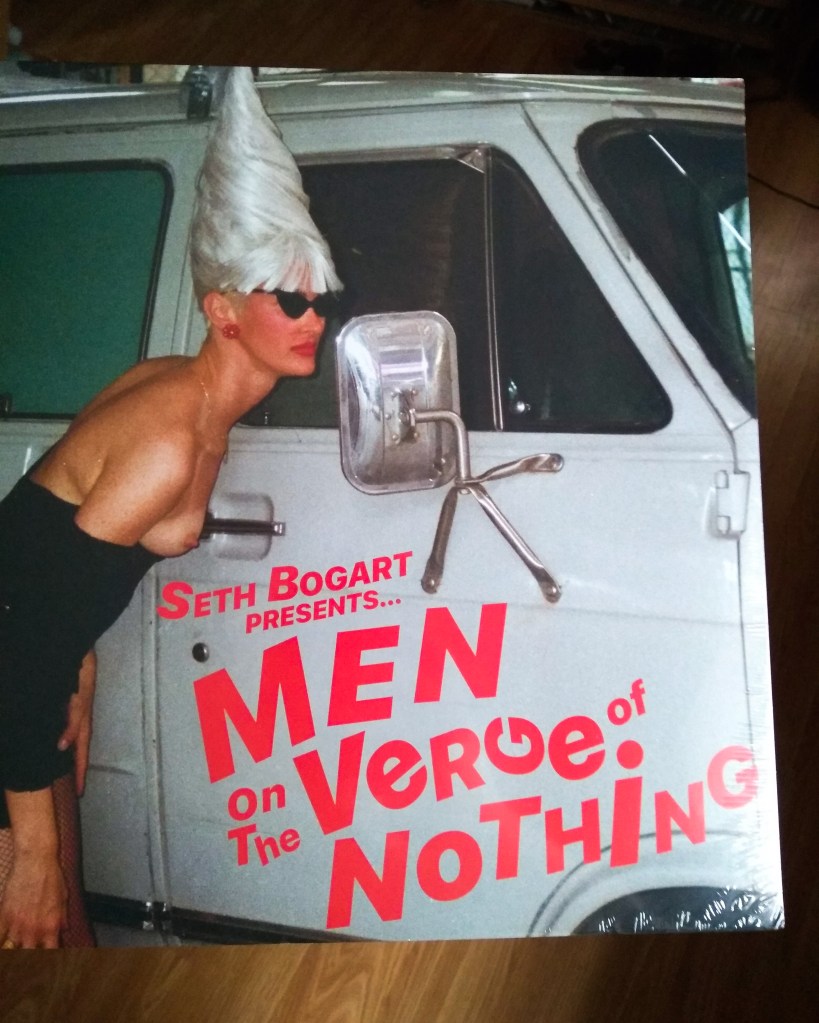
I pre-ordered the new Seth Bogart album from the Wacky Wacko store several months ago and had completely forgot about it by the time it arrived on my doorstep this week. I was surprised, then, to (re)disover that the album’s title overlapped thematically with our current Movie of the Month selection, Women on the Verge of a Nervous Breakdown. It was also officially released on director Pedro Almodóvar’s birthday, something neither Bogart nor the Swampflix crew consciously intended to celebrate. That’s some beautiful happenstance.

Men on the Verge of Nothing is Bogart’s second album as a solo artist, following his self-titled debut in 2016. Ironically, his debut was much more closely aligned with the candy-coated pop art aesthetics of Almodóvar’s classic screwball comedy. This new record is more downbeat & despondent, practically reaching for the sleeping pills-laced gazpacho just to put an end to it all. It turns out the existential turn of phrase in the title is totally appropriate to how his music’s mood has soured (an understandable reaction to the ways the world has degenerated in the four years since the previous record). Still, you can feel a continued kinship with Almodóvar’s love for women, queerness, and artifice in all of Bogart’s work, whether or not it’s specific to the tone of Women on the Verge in particular.

Check out the video for the album’s single “Boys Who Don’t Wanna Be Boys” below (featuring appearances from other loveable L.A. weirdos like Tammie Brown, Peggy Noland, and Kate Berlant). If nothing else, it shares a strong cut-and-paste magazine collage aesthetic that appears throughout Almodóvar’s work, Women on the Verge included.

For more on September’s Movie of the Month, check out our Swampchat discussion of the film and our podcast discussion of Pedro Almodóvar’s greatest hits.

-Brandon Ledet

Episode #116 of The Swampflix Podcast: All About Almodóvar

Welcome to Episode #116 of The Swampflix Podcast. For this episode, Brandon and Hanna continue their Movie of the Month conversation about Women on the Verge of a Nervous Breakdown (1988) by discussing the career highs of provocateur director Pedro Almodóvar. They particularly focus on his award-winning hot streak between All About My Mother (1999) and Volver (2006).

You can stay up to date with our podcast through SoundCloud, Spotify, iTunes, Stitcher, TuneIn, or by following the links on this page.

-Hanna Räsänen and Brandon Ledet

Movie of the Month: Women on the Verge of a Nervous Breakdown (1988)

Every month one of us makes the rest of the crew watch a movie they’ve never seen before and we discuss it afterwards. This month Hanna made Boomer,  Britnee, and Brandon watch Women on the Verge of a Nervous Breakdown (1988).

Hanna: Sometimes the universe has to shove you into art before you’ll pay any attention to it; this was the case with me and Pedro Almodóvar. I vaguely remember my mother talking about Broken Embraces and admiring Penélope Cruz on the poppy-covered poster for Volver when I was a teenager, and The Skin I Live In floated across my radar when I was in the habit of seeking out macabre media as a protest against the Midwestern values of Minnesota, but for some reason I wasn’t compelled to watch any of those movies. I didn’t see an Almodóvar film until my first year of college, by force, in my Spanish Media class; that film was Women on the Verge of a Nervous Breakdown (1988), and it shoved me (very happily) into the Almodóvar canon.

The primary Woman on the verge of a nervous breakdown is Pepa Marcos (Carmen Maura), a TV actress and film dubber. Her ex-lover and co-dubber, Ivan—an older, spineless lech with a mahogany voice—left her a week ago; he is going on a trip (with another woman), and is asking her to pack him a suitcase. Pepa is inconsolable. She wolfs down sleeping pills, spiking her gazpacho with barbiturates. She sleeps through the alarms of the 30-odd clocks littered around her apartment. She accidentally lights her bed on fire. She leaves Ivan desperate voicemails, insisting that she has something important that they need to discuss and becoming increasingly irate. No matter what Pepa does, she is always just catching up to Ivan’s ghost: finding that he left the studio a minute before she arrives, or that he called her apartment just before she walked in the door. When the phone does ring for Pepa, Ivan is never on the other line. Eventually, through a series of fraught coincidences, chaos seeps into Pepa’s apartment through her friend Candela, Ivan’s ex-wife Lucía, Ivan’s son Carlos, and Carlos’s fiancée Marisa, shattering the spell of her obsessive despair over Ivan.

Of the Almodóvar films I’ve seen, Women on the Verge is probably the lightest fare – the least political, the least subversive, and the least confessional. It never seems to bubble over in the way that madcap comedies usually do, even in its final stretch (which is still, in my opinion, a jaunty little thrill ride). Regardless, there is something about this film that totally entrances me. First of all, for being a breezy, highly stylized black-comedy melodrama, Women On the Verge of a Nervous Breakdown was confoundingly successful; it was the highest-grossing Spanish film of all time when it was released and is still Almodóvar’s 4th highest grossing film (not adjusting for inflation, which would boost it up even higher). The cinematography is characteristically gorgeous, tactile and vibrant, and some of the images are still splintered into my brain from the first watch (specifically, the scenes of Pepa and Ivan dubbing Johnny Guitar and Pepa looking out of her apartment through that huge slatted peephole). I’m consistently delighted by the film’s comic serendipity: the near-misses, close calls, and coincidental injuries (shoes and records are the universe’s guided missiles, launched unintentionally by people in fits of rage or despair). If nothing else, this movie has given me the Mambo Taxi driver, one of the purest and most absurd characters in cinema; his attention to the provisions of amenities in his taxi was genuinely touching.

One of my favorite things about Almodóvar is his embrace of multiple genres; he has touched comedy, drama, autobiography, and horror, and his films are usually a chaotic blend of two or three. In the case of Women on the Verge, I do think the comic elements could have been pushed even further. Britnee, what did you think about the balance of comedy and drama in Women on the Verge? Did the tone work for you, or do you wish the film had pushed more in one direction or the other?

Britnee: Right now, we are all living in a pretty dark world, and my primary escape from all the insanity has been reality TV and, of course, movies. For some reason, I’ve been finding myself binging old made-for-TV Lifetime films with pretty intense plots. While I thought these films were helping me unwind and relax, I was actually subconsciously adding to my already high stress levels. Women on the Verge basically got me out of this horrible funk because of it’s wonderful blend of the drama that I crave while giving me the light comedy that I so desperately needed. From the Mambo Taxi driver (“Thank You For Smoking”) to Candela’s moka pot earrings, there are many eccentricities sprinkled throughout the film that brought me so much joy and laughter. And don’t even get my started on how much I loved that kitschy apartment setup! I definitely think Women on the Verge leans more towards being a comedy than a drama, but I actually admire how it holds back from going too far in a comic direction. It somehow makes all the funny moments more special and memorable.

Pepa is constantly surrounded by the mysterious Ivan, be it through the many characters who pop up in her life who have various connections to him or through her own obsession with finding him to tell him “something.” The drama that Ivan brings into her life without him actually physically being a part of her life is the kind of drama that I find fascinating. Boomer, do you think the film would have benefited from having Ivan physically appear in more scenes? Like, if there were even more scenes that focused on what Ivan was up to while Pepa was going through all of her apartment-contained insanity?

Boomer: I prefer Ivan as—as Hanna puts it—a ghost in the film. There’s something so smarmy and gross about him, from the way he distances himself emotionally from his son and his lover by giving them autographed photos as if they were fans, to his callous movement from one lover to the next with careless disregard for the damage he leaves in his wake, to his uneven application of secrecy (Pepa clearly never knew about Lucía or Carlos, indicating that Ivan intentionally hid the fact that he was a divorced father, while Paulina Morales clearly knows who Pepa is from the moment the latter walks into the former’s office, treating her with open hostility). He’s such a cad that he has no shame about asking his former lover to pack a suitcase for him but can’t face her in order to collect it. The fact that, as you mentioned, he brings so much drama into the piece without being present for much of it is part of the fun for me. He’s mysterious: a clear heel in every way, and yet able to be such a focal point of the attention of women are all too good for him, but who find themselves caught in his wake against their better judgment. If there was one thing that I wanted more of, however, it was Pepa’s role as the mother of the Crossroads Killer in her TV show. What is that program even about?

Brandon, you and I have spoken in the past about the relationship between comedy and mystery and how they both occupy the same kind of space in the mind: the set-up of joke and punchline is not entirely dissimilar from mystery and revelation, and there’s actually a fair amount of that at play here. Although this is first and foremost a comedy, the mystery element (who is Ivan going away with?) is still omnipresent. The relationship between planting and payoff may have its most triumphant example on film here, as we first see Ivan dubbing over Sterling Hayden’s voice in Johnny Guitar while we can’t hear Joan Crawford’s dialogue at all, only to later see Pepa in the studio performing her half of the scene, not against silence as Ivan had, but against his voice. Even in this, he is a ghost. What were your two favorite planting-and-payoff revelations here, comedic and mysterious?

Brandon: I love the idea of breaking this film down into individual moments & punchlines, because it’s practically a feature-length pilot for a sitcom.  I could happily watch these characters burst into & out of Pepa’s candy-coated apartment forever, even if they were dealing with more mundane day-to-day conflicts than the high-stakes farce staged here.  It’s comforting to know that Almodóvar heavily reuses the same actors & crew for most of his pictures, because it was heartbreaking to leave these outrageous women behind just because the credits rolled.  Ivan, I could live without.  If he were made to be even more of a ghost and was only talked about but never shown, the movie would have worked just was well.

My favorite payoffs—both comedic and mysterious—resulted from the Hitchcockian tension of the poisoned gazpacho.  When Pepa first loads Chekhov’s Blender with gazpacho & sleeping pills, her intentions are opaque.  She’s distraught enough over Ivan’s infidelity that it appears she’s planning to kill herself in a deliciously complex manner, but it’s later revealed to be a long-game murder attempt (Ivan loves gazpacho).  Instead of either tragedy unfolding as planned, the gazpacho litters Pepa’s apartment with the unconscious bodies of an exponential number of hungry fools who sneak a taste: first Carlos’s bratty girlfriend (the fascinating-looking Rossy de Palma), then the meathead cops who seek to bust Pepa’s naïve bestie, then practically every other character on the cast list in a giant impromptu slumber party.  It’s a hilariously wholesome escalation of a plot point that first promised to be nastily lethal (although delicious).

My other favorite payoff is more aesthetic & superficial: the matter-of-fact presentation of this world’s surreal artificiality.  The exterior shots of Pepa’s apartment building are represented in fake, plastic miniatures, and the skyline outside her apartment is an old-school painted backdrop.  Given her work at a movie studio, you’d expect those images to be a winking joke that the movie pulls away from to reveal the “real” world behind that artifice.  Instead, they’re just allowed to exist on screen as-is, entirely matter-of-fact.  I found that choice just as rewardingly delightful as any of the madcap complexities of the plot.  There are many comedies that are just as funny as Women on the Verge, but there are very few, if any, that look this fabulous.

Lagniappe

Britnee: I had no idea who Rossy de Palma was until I watched this movie, and I am totally obsessed with her now. She is mesmerizing!  I am especially loving the photos from her modeling career. The looks she served when wearing Thierry Mugler are absolutely stunning. Also, she apparently makes an appearance in Robert Altman’s Prêt-à-Porter, which I’m pretty excited to watch now.

Boomer: My absolute favorite bit was Pepa’s laundry commercial. It’s just so perfect: the self-identification as the Crossroads Killer’s mother, her presentation of the detergent, the reaction of the cops to the lack of viscera on her son’s freshly washed clothing. Just ::chef’s kiss::.

Brandon: This might be my favorite Almodóvar movie I’ve seen to date, mostly because it’s fully immersed in the things he excels at best (Gorgeous Artifice & Complex Women) while also sidestepping a lot of the darker, more violent tones of his work (which is an odd thing to say about a movie that occasionally dabbles in murder & suicide).  It’s a perfectly constructed little screwball comedy throwback populated by wonderfully over-the-top women and set in a world so beautifully artificial it’s practically Pee-wee’s Playhouse. It’s perfect.

Hanna: Almodóvar has said that women make the best characters, and he absolutely delivers that here. We have deranged women, compassionate women, cruel women, calculating women, funny women, tired women, angry women, all revolving around one barely-present man who doesn’t deserve their attention. If this movie were made in the US, I think Pepa would have ended up with some doting hunk in the end; instead she burns her bed, reclaims her beautiful loft apartment, and moves on with her life. Glorious.

Upcoming Movies of the Month
October: Brandon presents Monster Brawl (2011)
November: Boomer presents Passion Fish (1992)
December: Britnee presents Salome’s Last Dance (1988)

-The Swampflix Crew

Bonus Features: 3 Women (1977)

Our current Movie of the Month, the eerie mind-melter 3 Women, feels like a huge departure from what I’ve come to expect from a Robert Alman film. I’m used to seeing Altman in his big cast/overlapping dialogue mode (Short Cuts, Nashville, Ready to Wear, Gosford Park, etc), and 3 Women feels like a much more insular, cerebral experience than that. It belongs more to a lineage of psychological thrillers about mutually obsessed women than it belongs in Altman’s extensive catalog of chatty ensemble-cast comedies. As a result, recommending further viewing to anyone who enjoyed 3 Women and wanted to see more movies on its delicately horrific wavelength is going to have to be more about the content & genre of the film itself than the storied career of the beloved auteur behind it.

Here are a few recommended titles if you loved our Movie of the Month and want to experience similar dreamlike horrors about the fluidity of reality & personae.

Persona (1966)

I don’t know why there are so many psychological thrillers where women who are fixated on each other meld & swap personae, but I do know that I’m always a sucker for them (with recent examples including titles like Queen of Earth, Sibyl, Always Shine, and Butter on the Latch). Even so, 3 Women registers as one of the greats. In fact, it’s bested only by the queen of the genre: Persona.

Bergman’s arthouse classic is about a stoic stage actress’s beachside recovery under the care of a chatty nurse, who dotes on her far beyond the boundaries of a typical patient-caretaker dynamic. Over the course of their mental health getaway, their shared ugly anxieties surrounding fear of motherhood & amoral sexual desire bubble to the surface in such a horrific, unsettling way that you could consider the film a work of avant-garde horror. By the end of the film, the two women’s individual personae are inextricably mangled together in the wreckage of an abstract narrative that somehow remains one of the most chilling, bizarre specimens of this genre even after being mutated into so many loving imitations.

Robert Altman claimed that 3 Women was inspired entirely by a dream, not designed as a conscious homage to Persona. It’s difficult to fathom that Persona had no influence on his own personae-melding arthouse freak-out, though, especially considering the way Shelley Long’s endless mundane monologues mirror the ramblings of Bergman’s chatty nurse. Maybe 3 Women was inspired by a dream Altman had after watching Persona alone after midnight, stoned and unnerved (which happens to be the perfect viewing conditions for the film, in case you’re looking for a proper setting).

Images (1972)

While the exact level of influence Persona may have had on 3 Women will remain a mystery, the film does become less of an anomaly in Altman’s filmography once you dig around his earlier, scrappier works. 3 Women shares a lot of thematic DNA with Altman’s 1972 psychological horror Images in particular, which finds the director sinking even deeper into the familiar tones & tropes of genre filmmaking. Images practically feels like Altman taking a stab at making a giallo film (or its American equivalent, anyway), and that early-career experiment unexpectedly telegraphed a lot of what he would later develop into more idiosyncratic territory with 3 Women.

Susannah York stars in Images as a schizophrenic author who can’t find her footing within her increasingly fluid sense of reality. Mostly alone in her mountainside cabin while writing a children’s fantasy novel, York is tormented by visitors & phone calls – mundane interruptions she cannot distinguish from violent hallucinations. In particular, she cannot nail down which of these “visitors” is actually her husband, as his image is continually swapped out with other men from her past (who equally feel entitled to her body) as well as her own doppelganger. It is unclear whether Altman is implying that she’s tormenting herself with guilt over past infidelities or if this is a traditional Driven Mad By The Patriarchy story, but the immersive, disorienting editing style makes for a compelling watch all the same – especially once she decides to start killing off her hallucinated(?) visitors to finally get some peace & quiet.

I wish Altman tackled this kind of eerie, dreamlike, horror-adjacent material more often. He’s damn good at it. Britnee also recommended the false-imprisonment thriller That Cold Day in the Park as another one of Altman’s genre-heavy outliers, but the shifting personae surrealism of Images shares such a wide thematic overlap with 3 Women that it practically feels like a trial run. Plus, it features an uncharacteristically sparse, arrhythmic score from John Williams of all people, which alone makes it worth a look.

Single White Female (1992)

Maybe you don’t want to watch all these highfalutin arthouse echoes of 3 Women‘s basic themes. Maybe you want the dumbed down, fast food version of the story. Look no further than 1992’s Single White Female, which sleazes up Altman’s story of a fragile young girl usurping her older, more popular roommate’s persona for the Joe Eszterhas & Adrian Lyne era of erotic thrillers.

Single White Female is one of those great-premise/mediocre-execution thrillers that gets referenced more often than it gets watched. Based on a popular novel and successful enough to have earned a sequel, the film obviously left a cultural mark despite offering the least nuanced, most inane possible version of a young woman melding with (or, in this case, deliberately stealing from) the persona of her girl-crush. In fact, it left such an impact that in verb-form one character “Single White Femaling” another has become short-hand for the trope. That’s such a bizarrely substantial legacy for a film where basically none of its imagery or on-screen action has any detectable presence in modern pop culture.

To be fair, Single White Female does work surprisingly well as an erotic melodrama relic of its era, mostly because Jennifer Jason Leigh’s performance as the villain is an ice bath of off-putting character choices. Her intense fascination with her prettier, more graceful roommate isn’t allowed to be as delicately menacing as Sissy Spacek’s fascination with Shelley Duvall in 3 Women – at least not by the time she transforms into a full-on Norman Bates slasher villain in the third act. Still, her masterfully unsettling screen presence saves the film from being just a camp novelty, elevating to something genuinely eerie even when it’s at its silliest. Mind you, she did win the prestigious MTV Movie Award for Best Villain for the role.

If you’re going to engage with this genre in any significant way, you might as well experience it at its trashiest (and take in a phenomenal performance from Leigh while you’re at it). After all, we can’t survive on a diet of eerie, dreamlike arthouse oddities alone. It’s important to gobble down some junk-food cinema every now & then as a pick-me-up.

-Brandon Ledet

Movie of the Month: 3 Women (1977)

Every month one of us makes the rest of the crew watch a movie they’ve never seen before and we discuss it afterwards. This month Britnee made Boomer, Hanna, and Brandon watch 3 Women (1977).

Britnee: “I’m trying to reach toward a picture that’s totally emotional, not narrative or intellectual, where an audience walks out and they can’t say anything about it except what they feel.” Robert Altman’s words about his 1977 masterpiece 3 Women accurately describes the experience I had when watching it for the first time about a year ago. When I first saw the film I didn’t really understand what I had watched, but I knew that I loved it. Over time, it’s become one of my all-time favorite movies. The idea for 3 Women came to Altman in a dream, and the movie really does feel like a dream, where nothing really makes sense yet everything feels perfectly normal. Typically, when you wake up from a dream it’s difficult to explain it to others, and 3 Women is equally difficult to explain to someone who hasn’t seen it.

As the title suggests, 3 Women is about three women: Pinky (Sissy Spacek), Millie (Shelley Duvall), and Willie (Janice Rule). Pinky is a carefree young girl and possibly a teenage runaway. She finds a job working at a geriatric health spa, which is where she meets her new coworker and her new obsession, Millie. Millie is a bit older than Pinkie. When she’s not working at the spa, she’s talking about all sorts of unappetizing recipes and how much she loves Scrabble. She actually never stops talking, but the problem is that no one listens to her. Everyone around her acts as if she doesn’t exist. Everyone except for Pinky, who is infatuated with Millie in a very Single White Female sort of way. Pinky eventually becomes Millie’s roommate in an apartment complex for singles. On their way to the apartment, Millie brings Pinky to her favorite bar, Dodge City, a dive attached to an abandoned Old West theme park in the middle of the desert. Both the bar and the apartment complex are owned by Edgar and his pregnant wife, Willie. Willie is older than Millie and Pinky, and she spends her time painting bizarre murals in silence.

Of the three women, my favorite is Millie. My God, Shelley Duvall is utter perfection in that role. She’s one of the most tragic characters in all of cinema, wasting most her time talking to people who don’t bother making eye contact with her or even acknowledge her existence. Whether it’s the group of male physicians she awkwardly lunches with, her coworkers, or the tenants in her apartment complex (especially bachelor Tom, with his never-ending “cough”), everyone treats Millie like a ghost. She really embodies that feeling of when you are trying to talk to someone in a dream, but they won’t respond or pay any attention to you.

Brandon, what did you think about Millie? Did her character’s journey throughout the film stick out to you more than Pinky and Willie?

Brandon: The main reason that Millie is such a standout in that central trio is that Shelley Duvall is such a heartbreaker of a performer. She is too fragile for this callous world, and watching people crush her spirit is always absolutely devastating. Whether in canonized classics like The Shining or in disposable novelties like Altman’s own Popeye adaptation, she is perfectly suited for the damsel in distress archetype. Unfortunately, this extends beyond her fictional performances and bleeds over into her real-life persona, something that’s haunted me ever since her offscreen struggles with mental illness were crassly exploited for ratings on a very special episode of Dr. Phil in 2016. Watching Millie endlessly chat at no one in particular, reaching out for human connection to a disinterested world only to be rejected, ignored, or taken advantage of over and over again easily made for the most compelling performance of the three women for me. By which I mean I spent most of the movie wanting to reach through the screen to whisk her away to a community that actually gives a shit about her. Even seeing her skirt get caught in the car door every time she went for a drive was just as heartbreaking as it was adorable.

The tragedy, of course, is that she does not acknowledge the one person who’s actively listening to her babble about boardgames and casserole recipes. Pinky’s childlike crush on Millie is just as delicately menacing as Spacek’s telekinetic fury was in her performance as Carrie White, but there is a kind of sweetness to her obsession as well. Pinky goes way overboard in her fixation on Millie, extending beyond a “I want to be your best friend” sentiment to more of a “I want to wear your skin like a housecoat” vibe. Still, Pinky’s loving attention towards her new roommate & unwilling mentor is essentially just an intense overdose of the kindness & interconnectedness that Millie longs for. It’s heartbreaking that they can’t get past their awkward social barriers to truly connect with one another on a meaningful level (ditto in their relationship with the reclusive artist Willie, who’s just as closed off to the world as Millie is openly vulnerable to it), so it’s effectively a relief when real-world logic breaks down to allow them to form a truly cohesive unit. The film strikes a nightmarish tone as it shifts their world around to allow these connections to happen, but the end result is outright sublime, serene: they become a family.

I don’t know why there are so many psychological thrillers where women who are fixated on each other start to meld & swap personalities over time, but I do know that I’m always a sucker for it (with recent examples including titles like Queen of Earth, Sibyl, Always Shine, and Butter on the Latch). Even so, 3 Women registers as one of the greats, maybe bested only by the queen of the genre: Persona. Boomer, do you have any thoughts on this genre in general or how 3 Women functions within it? What differentiates its tone & purpose from a more typical woman-on-the-verge-of-a-breakdown story?

Boomer: When the Swampflix Canon was updated a few months ago, I took a look at my contributions to that list and had one of those “You really don’t see your patterns until they’re laid out in front of you” moments and realized that there are apparently only three things that I like: (in Brandon’s words) “populist superhero spectacles, obscure Euro horrors,” and women-on-the-verge films. My love for the aforementioned Queen of Earth is well documented, but the film that I thought of most frequently throughout 3 Women (after my initial thoughts of “Oh, this is Single White Female” followed by “Oh this is actually Mulholland Drive“) was Puzzle of a Downfall Child, which similarly features dreamlike narrative and “gauzy” filmmaking juxtaposed against harsh realities of disaffection and occasional violence.

There’s a definite undercurrent of that quality that fascinates me in that genre present in 3 Women, but one major difference that I see is that 3 Women has (arguably more than) one woman who’s already on the other side of the verge: Willie. She’s clearly past the point where she cares about “society” in any meaningful way, living in a derelict mini golf park/shithole bar and spending her waking moments making angry and occasionally violent (literally, with bullet holes on the canvas) art on every available surface. Millie isn’t really flirting with the edge, yet, but you can tell that she knows it’s not too far away, as her constant attempts to garner not just the friendship but the mere attention of her peers and other members of the community is her defining character trait; at first, Pinky isn’t even aware that there’s a cliff that she could possibly go flying over, until her disappointment in and (tacit and explicit) rejection by Millie causes her to leapfrog straight over her crush/roommate into complete loss of identity.

What really differentiates 3 Women from others in this genre, however, is the way that it treats the characters’ pasts. Queen of Earth has flashbacks to the year prior and features much discussion of the past and the characters’ relationships that delineate their current conflict; Puzzle of a Downfall Child likewise has flashbacks to Lou’s childhood that ultimately explain why she is the way she is, albeit not without some contradiction; 2011’s The Roommate (which I’m citing because I saw it more recently than Single White Female, despite it being a worse movie in every way) has a backstory and a diagnosis for our identity-coveting villain. Like the desert itself, the “now” of the film seems ageless in an anxious, foreboding, and eternal way. We learn relatively nothing about Willie, even in comparison to her husband, whom we at least know is a prankster and a former stunt double from the outset. We know a little bit more about Pinky, but her backstory is still mysterious and possibly false, as we never really confirm if she’s even from Texas. In comparison, we know lots more about Millie because she’s always talking about herself, but the things we learn about her are pretty shallow (that irises are her favorite flower, that she had to sleep in the rollaway bed in the living room a lot when her previous roommate had “company,” and that she keeps a daily journal that’s factual and perfunctory rather than insightful or meditative) and don’t really inform an understanding of her long term psychology, other than the fact that she’s doing her level best to be “normal” without much success. There’s a strength of character and identity that’s conveyed solely through performance here without the standard packaging of “Character X does Y because of childhood event Z” that we normally see, and I like that a lot.

Hanna, what do you think of Pinky’s story, in or out of the context of the epilogue? I’m thinking in particular of her pre-hospitalization stories (such as they are) about herself, and the scene where Millie drives her home to the apartment for the first time, wherein Pinky compares their surroundings to Texas; later, when Pinky’s parents (maybe) visit to see her, her mother (maybe) says “It sure doesn’t look like Texas.” Does she really not recognize her parents only due to amnesia and taking on an amalgamation of Millie’s real and imagined identities, or is it because they’re not her parents, as is potentially indicated by Mrs. Rose’s claim that Mr. Rose came up with the name “Pinky,” although we know her real name is Mildred (or is it)? Is Pinky merely an honest girl who experienced severe brain damage or does she simply lie about her past like a lot of teenagers do and lose track of her deceptions?

Hanna: To be honest, I had a very hard time interpreting the journeys of these characters, or at least articulating any kind of interpretation. Just like in a dream, the relationships are foggy, disjointed, and archetypal; it seems like you can’t make sense of them unless you close your eyes. So, when I close my eyes, I feel like Mr. and Mrs. Rose are the parents of pre-coma Pinky, who dies in the pool; when Pinky is “reborn” as Mildred, her parents aren’t her parents anymore. I don’t think Pinky is lying about her past, and I don’t even really think that “Mildred” Pinky is brain damaged; I see “Pinky” Pinky and “Mildred” Pinky as two connected but distinct people, one of whom has started to absorb Millie’s identity. Pinky’s dive felt sacrificial, and the first step towards fulfilling the prophecy of enmeshed identity that Willie’s paintings seem to predict; through the sacrifice, she destroys any part of her that has history outside of the other two women. I also think it’s telling that, in the very end, Pinky identifies Millie as her mother, and that all three women have established relationships that preclude individual lives. This is a totally strange line of logic in real life, but if it was happening in a dream I don’t think I would question it.

I think one of the most compelling aspects of this film was each woman’s sublimation of self into a single folkloric identity. Boomer’s pointed out that nagging “eternal” feeling of the desert, and that perfectly describes my feelings about the three women. The film starts off with Pinky and Millie working in the rehabilitation center for the elderly, but slowly the two women are drawn out of Californian society and into this dreamworld saloon by the magnetism of Willie, the pregnant Wild Woman. In the end, we find all three of the women abandoning the identities that no longer serve them, creating a dreadful symbiotic family comprised of a Child, a Mother, and an Elder out on the ranch that’s incapable of fostering growth outside of itself. I imagine that they’ll be living out there until the end of time, certainly never in need of a spa for the old.

Lagniappe

Brandon: This feels like a huge departure from what I’ve come to expect from a Robert Alman picture. I’m much more used to seeing him in his big cast/overlapping dialogue mode (Short Cuts, Nashville, Pret-a-Porter, Gosford Park, etc), and 3 Women feels like a much more insular, cerebral experience than that. I wish he had tackled this kind of eerie, dreamlike, horror-adjacent material more often; he’s damn good at it. Looking through his filmography, the hallucinatory psych-horror Images is really the only title that seems close to this territory, and I’m excited to check it out.

Hanna: I definitely agree that Shelley Duvall was the standout (I cringed very deeply and personally during the lunchroom scenes), but I really wish this movie had more Willie. Her energy elevated 3 Women from a dreamy psycho-drama into the realm of the mystical. On the other hand, I think that mysticism was accentuated by the fact that she spent 90% of her scenes skulking around the edges of the frame painting beautiful, tortured fish-people.

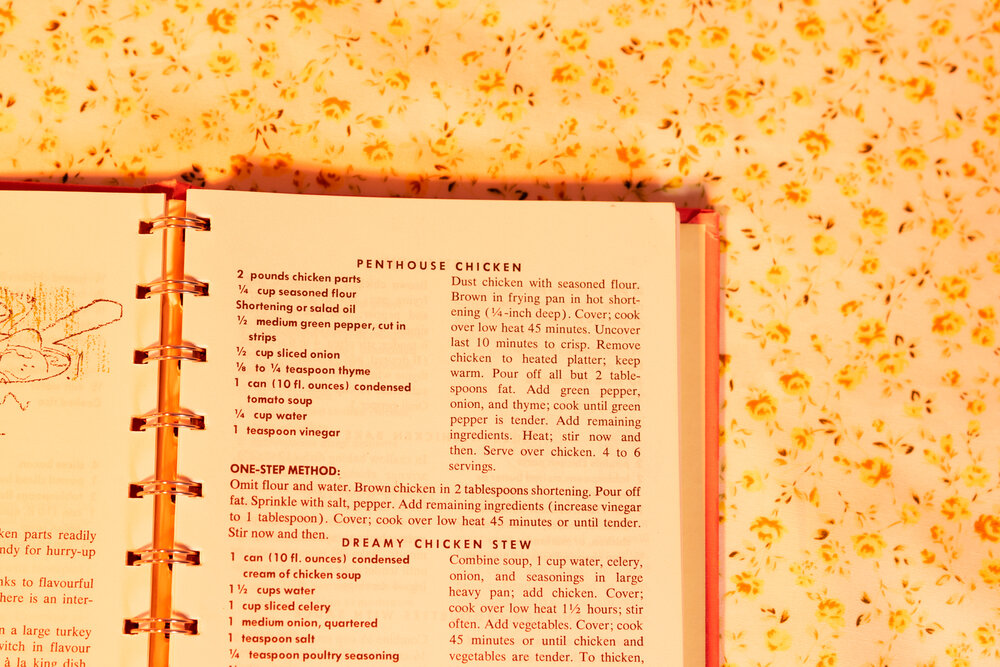
Britnee: Listening to Millie talk about now vintage recipes made with nothing but processed ingredients brought me so much joy. The one that stuck out to me the most was Penthouse Chicken. When she was trying to impress the table of silent doctors with the recipe that can be “made with a can of tomato soup,” I was sold. It turns out I’m not the only one who wanted to make Penthouse Chicken after watching 3 Women. The Famous for My Dinner Parties blog (titled after a direct quote from Millie) posted a picture of the recipe from the 1963 cookbook Cooking with Soup. What a great dinner and movie combination!

Boomer: Shelley Duvall’s overall career is referenced above, and I think it’s worth mentioning that when I think of her name, the first thing that comes to mind isn’t The Shining or Popeye, it’s Faerie Tale Theatre. Enjoy.

And also this, which is one of my earliest memories of watching a movie and fully warped my brain.

Upcoming Movies of the Month
September: Hanna presents Women on the Verge of a Nervous Breakdown (1988)
October: Brandon presents Monster Brawl (2011)
November: Boomer presents Searching for the Wrong-Eyed Jesus (2003)

-The Swampflix Crew

Bonus Features: Marjoe (1972)

Our current Movie of the Month, the behind-the-scenes Christian evangelist exposé Marjoe, is one of the more captivating specimens of the “Direct Cinema” movement of the 1970s. It recalls both a politically subversive, Maysles Brothers-style documentary and a subversive take on the concert film, gawking at the stage performances of a lapsed Christian preacher who doesn’t believe his own sermons but needs to keep the show on the road to in order to pay the bills. Since both the movie’s form (1970s direct-cinema documentary filmmaking) and its broader subject (financial exploitation in modern Christian evangelism) have become somewhat familiar to audiences over the decades—however powerful—the most unique factor at play here is Marjoe Gortner himself: a bizarre, charismatic creature who was trained (read: tortured) from a young age to be a kind of sideshow performer in the name of the Lord. As a result, recommending further viewing for Marjoe fans must take into account Gortner’s idiosyncratic characteristics as a screen presence more so than the circumstances of the film itself.

It’s difficult to be mindful of just how politically incendiary Marjoe would have been when it was released a half-century ago. Its peek behind the scenes of Southern-fried religious exploitation has become such familiar territory in the decades since that it now has a sitcom version in HBO’s The Righteous Gemstones. At the time, though, its anti-evangelism subject was considered so taboo that it wasn’t theatrically distributed anywhere in the American South. It may have taken home the Oscar for Best Documentary Feature, but if you lived anywhere south of De Moines, Iowa, chances are you never got a chance to see it until it hit home video decades later. Because of the film’s uniquely 1970s politics and the distinct peculiarities of Marjoe Gortner himself, it’s difficult to recommend many films that entirely overlap with its subject or mood. Unfortunately, though, Gortner is not the only sideshow attraction preacher out there with a morbid life story to tell.

Here are a few recommended titles if you loved our Movie of the Month and want to experience more cinema on its eccentric, politically subversive wavelength.

Jesus Camp (2006)

One of the most electrifying sequences in Marjoe is the hotel room debriefing early in the film when Gortner preps the hippie documentary crew on how to act while socializing among Evangelicals, as if they were going into war behind enemy lines. This unspoken culture war between documentarian & subject immediately reminded me of the 2006 doc Jesus Camp, which chilled me to my core when I first saw it in college. Jesus Camp is careful not to tip its hand in revealing its political POV, at least not as overtly as in Marjoe‘s hotel room debriefing. Instead, it allows the Christian Evangelists it documents to define the battle lines as they see it. In their own words, the Evangelists claim they are engaged in a genuine Culture War with secularists, declaring “We want to reclaim America for Christ.” For once, it’s not the countercultural hippie artists who are being honest about the moral combat perpetrated by well-funded Christians with a pathological persecution complex; the fascists just openly, proudly admit what they’re up to.

Much of what makes Marjoe Gortner such a fascinating subject is that he was profoundly fucked up by an abusive childhood that trained him to be a sideshow Child Preacher in order to fatten his parents’ pockets. By the time the documentary catches up with him, however, those abuses are in the distant past, represented only by a few scratchy audio recordings & still photographs. Jesus Camp documents Evangelist indoctrination of young children in real time. Threatened with eternal damnation in torturous Hellfire if they don’t speak in tongues or if they dare enjoy secular pop music (or any other minor indulgence that doesn’t directly honor God), the children of Jesus Camp are deliberately warped by the adults around who run their Christian-themed summer camp (most notably head camp pastor Becky Fischer, the most infuriating villain in the history of cinema). The adults proudly boast that they’re indoctrinating the kids to become “prayer warriors” to fight in an ideological army for George W. Bush & the Republican Party – the exact kind of militarized Christian voter devotion that now keeps Trump in office all these years later, despite him being the least Christian man alive. The children are scared out of their little minds and just follow along as best as they can, lest they burn in Hell forever for minor infractions against God’s Will.

The icing on the cake in this pairing is that one of the central subjects that arises in Jesus Camp is a child preacher who uses his youth as a gimmick to draw attention to his sermons. Seeing how that schtick worked out for Gortner in the long run, I sincerely hope that kid got out okay after the cameras stopped rolling.

The Eyes of Tammy Faye (2000)

Not all Evangelists are as villainous as Jesus Camp‘s Becky Fischer. If Marjoe Gortner’s any proof, they can even be weirdly lovable (even if still mildly terrifying). Case in point: Tammy Faye Bakker, former televangelist and unlikely queer icon (thanks to her public embrace of gay men during the darkest days of the AIDS crisis in the 80s & 90s). From her trademark spackled eye makeup to her Evangelist puppet shows to her former Christian water park empire, Tammy Faye Bakker is a kind of nightmarishly unreal public figure, but she’s also unexpectedly sweet & adorable once you get past her eccentric surface. Her own documentary is not as prestigious or artfully crafted as Marjoe Gortner’s, but it may function as better PR, as it allows her to charm the audience for as long as she feels like chattering.

The Eyes of Tammy Faye is a shamelessly trashy documentary that allows Tammy Faye Bakker to tell her rise-to-televangelist-fame story in her own words, while also openly having campy fun with the details. Made by the same production company that has since sunk all its efforts into the RuPaul’s Drag Race empire, World of Wonder, the film has a deliberately cheap, made-for-TV tone. It effectively feels like a spoof of sensationalist true-crime reporting on 90s television, right down to RuPaul living his full Behind the Music fantasy as the narrator. The movie catches Faye after the most incredible chapters of her life have closed (as opposed to Marjoe, which documents Gortner while he’s still active on the Evangelist circuit), but her bubbly, bizarro personality and her history as one of the very first televangelist celebrities more than makes up for its timing. She even offers a universally detestable villain for the audience to hiss at while describing the figures behind her professional downfall: Jerry Fucking Falwell, the devil himself.

The WOW boys have almost too much fun while playing up Tammy’s inescapable camp value. They even use her vintage puppet characters to announce the chapter titles between her rambling anecdotes. Not every documentary has to be as politically fired-up as Marjoe or Jesus Camp to be worthwhile, however, and at least this one’s puppet show goofballery appears to have been the inspiration for Drag Race‘s beloved puppet challenge (Tammy Faye offhandedly uses the phrase “Everybody loves puppets” in a scene where she’s pitching TV shows to a bewildered producer who doesn’t know what to do with her).

Starcrash (1978)

While Tammy Faye is oddly charismatic in a similar way, there’s no substitute for Marjoe Gortner himself. I was delighted to discover after watching his own documentary that Gortner was able to leverage the film’s notoriety into a modest career as a B-movie actor in the 1970s. His hammy, off-kilter charisma is perfect for cheap-o genre filmmaking, which are always benefited by eccentric oddballs who audiences would never see in better-funded, better-regulated productions. Besides, it’s fun to imagine an alternate reality where Gortner’s acting career really took off and you could buy official Marjoe® wigs at every Halloween costume store. We were so close to making that happen!

The jewel of Gortner’s B-movie repertoire seems to be the Roger Corman production Starcrash, a shameless Italian knockoff of Star Wars. Even among other eccentric personalities (and legitimate actors) like David Hasselhoff, Christopher Plummer, and Caroline Munro, Gortner stands out as a captivating oddity. There are space aliens, metallic giantesses, and retro-futuristic bikini babes all over the picture, but it’s Gortner’s Orphan Annie curls and weirdo charisma that always draws the eye whenever he’s onscreen. The movie makes as much use of his weirdo charisma as it can, casting him as a telepathic, superpowered space alien with a laser sword (not to be confused with a lightsaber). Even the booming voice that overdubs his dialogue only accentuates his unconventional screen presence. It reminded me of when Muppets in Space explained Gonzo’s origins as a space alien who crash landed to Earth; it’s the first time his presence on this planet really made sense.

While it can be a little boring in patches, Starcrash is mostly fun, delirious late-night trash. It has no original ideas or clear sense of purpose (there’s a Millennium Falcon on its official poster), but goddamn if it isn’t beautiful. It’s so cheaply, gaudily lit & costumed that it stumbles into some genuine psychedelia that any cheap-o space adventure movie should envy. Gortner’s presence only enhances that entertainment value, which I believe would be true even without knowing the backstory of his Evangelist past. Something about seeing him in space just feels right; I wish he could have travelled there more often.

-Brandon Ledet

Movie of the Month: Marjoe (1972)

Every month one of us makes the rest of the crew watch a movie they’ve never seen before and we discuss it afterwards. This month Boomer made Britnee, Hanna, and Brandon watch Marjoe (1972).

Boomer: Well, well, well. Here we are. The world is in utter chaos, and we are a rudderless nation in the middle of dealing with a global pandemic by reopening too early. Meanwhile, a strong and moral resistance to centuries of racial inequality and police violence is being met with more militarized police violence, garnering so much attention that even Uncle Jed is questioning his long-held Lost Cause beliefs and moms and dads across the country are being radicalized against fascism in a way unseen since WWII, calling for the abolition of “policing” as we know it. But why are we leaderless? Could it have anything to do with the fact that the greatest weakness of church-going Americans is that they can be manipulated by a man who espouses their faith but is in fact nothing but a con-man and a snake oil salesman?

Marjoe is a 1972 documentary produced and directed by Howard Smith and Sarah Kernochan about the life and “ministry” of Marjoe Gortner. Marjoe is (as we are told more than once) the fourth in a line of evangelical pastors, and his parents Marge and Vernon Gortner, were real pieces of work. After spending his entire childhood from age 4 to 14 as a gimmicky “child” preacher, complete with the cadences of the Evangelical movement then and now (“And the wrath-uh of God-uh” etc.), the now-adult Marjoe is on one last tour through the revival-style meetings happening throughout 1971 America, tailed by a documentary film crew. Along the way, he reveals the way that the movers and shakers of the contemporary revival scene scam, guilt, and browbeat their congregants and simple believers in order to rake in the all-mighty dollar.

Marjoe’s life is not all that different from that of any other child celebrity: haunted by child abuse, being used as a source of immense wealth from which he does not directly benefit as an adult, the pressures of maintaining a public persona that supports a certain narrative. He cites examples of being mock-drowned by his mother (so as not to leave marks and bruises on him that might be noticed due to his presence in the public eye) among other examples, which is horrifying. Creating the narrative that God reached down from Heaven to give him a divine mission to convert the unwashed masses (“the teenagers, the narcotics, the dopeheads”), his parents put him in front of an audience before an age most would be in kindergarten. As a result, there was never a time in his life where Marjoe Gortner ever truly believed the message that he was preaching, as he was exposed to the truths of the revivalist circuit as a pit of liars and confidence artists from before he could read.

Horrifying as his childhood is, the doc doesn’t treat Marjoe as a brave exposer of the truth. There’s definitely a human being in there, and he’s humanized to an extent, but when it comes to remorse, he feels more guilty that his rhetoric has to be so laden with fire and brimstone, wishing he could use more love-oriented language than the punishment-avoidance conversion technique of the Southern Evangelical movement. In a lounging position on a waterbed from which he pontificates about the various gimmicks of different religious leaders within the movement, he never seems anything other than at ease with himself, no doubt a result of having to get over the innate fear of public speaking before losing any baby teeth. There’s no remorse when he pours bills out of a brown paper bag and recalls how much bigger the “take” was in his youth. He’s just pulling the lid off of a large scale sleight of hand grift because his particular gimmick is on its last legs. Whether he’s coaching his film crew about how to interact with the True Believers that they will encounter along the way, imitating the way that a particular matriarchal church leader hisses into the microphone in an early form of ASMR, or casually agreeing to go with one of the hosting church families to their Brazilian “farm” (possibly referring to a practice that continues to this day), he’s never not performing, either in his life as Brother Marjoe or Marjoe the narc. There’s a disconnect, always.

Marjoe won the Academy Award for Best Documentary in 1972, but shockingly for a film that won such an award, it was lost for decades. During its original release, the film was never released further south than Des Moines, Iowa, which is ironically where the church behind the Thief in the Night Rapture series was located, and where those films were shot (Thief likewise came out in 1972). Other than a rare (and shoddy) VHS release, the film was largely forgotten until the original negatives were rediscovered in 2002 and released as a DVD in 2005. Although it gets a little thin in parts (sometimes containing long shots of entire church musical numbers), there are some truly great images in this film that imbue it with a fair amount of comedic irony. There’s never any menace, and Marjoe’s outing of not only himself but his cohorts as morally bankrupt scammers convincing little old ladies to send them their “cookie jar money” is never treated as a threat, just an inevitability. And yet, nearly half a century later, this malicious predation on the financial security of middle and lower class people under the banner of their faith is not only still happening, it’s happened at such a scale that it managed to reach the White House. All of this has happened before, and all of it will happen again.

Brandon, one of the things I noticed on this watch was a similarity between the shooting style of some of the party scenes and the nonsexual parts of the parties in Funeral Parade of Roses. There’s definitely an element of Gonzo documentarianism on the part of the film crew (love the shot of an usher pocketing an offering) as they immerse themselves in this society that runs parallel to but separate from the mainstream. Where do you stand on this kind of punk aesthetic, either in documentaries in general or Marjoe specifically?

Brandon: I don’t know if “punk” is the first cultural touchstone that came to mind here, if only because the movie was so entrenched in the youth counterculture of its own time: hippies. Even Gortner’s desire to shift his sermons away from the language of Fear towards the language of Love feels very much tied to hippie-dippy sentiments, but that’s not to say that the political thrust of the film is toothless or purposeless. One of the most electrifying sequences is the hotel room debriefing early in the film when Gortner preps the documentary crew as if they were going into war behind enemy lines. As he explains they can’t smoke, have sex, or literally let their hair down while attending the tent revivals, you get a clear sense of just how different the two worlds that Gortner alternates between truly are, drawing clear cultural battle lines between The Hippies and The Evangelists as two opposing factions. That rundown also gives the film a genuine thrilling purpose as political insurgency, a reminder that loosey-goosey “Peace & Love” hippie ideologies actually had strong roots in direct, genuine political action through student-movement protests. They were more or less punks with a different wardrobe & soundtrack (and apparently smoked the same abundance of cigarettes), so it makes sense their cinema would share similar D.I.Y. sensibilities.

It’s difficult to be mindful of just how politically incendiary this movie would have been when it was released a half-century ago. Its peek behind the scenes of Southern-fried religious exploitation has become such familiar territory in the decades since that it now has a sitcom version in HBO’s The Righteous Gemstones. As Boomer mentioned, though, its anti-evangelism subject was considered so taboo at the time that it wasn’t theatrically distributed anywhere in the American South. Even just recording & broadcasting in plain, no-frills terms the financial side of evangelist preaching was met as an anti-social political act that had to be extinguished. Although Marjoe does not touch on our current, global moment of protest in opposition to systemic racist injustice (outside the aforementioned Christian voter base that keeps Trump in office, despite him being the least Christian man alive), that kind of fearless infiltration & subversion of a powerful, corrupt institution very much resonates as an admirable document of political action. That only becomes more apparent as you get a sense of how limited the means & resources of the hippies behind the picture would have been compared to the big-money evangelists they intended to expose, which the film contrasts in Marjoe’s backroom money-counting in church vs. the low-key hippie party scenes he floats through when he’s off-duty.

In terms of style, the gonzo approach reminded me most of the Maysles Brothers documentaries of the era, often referred to as “Direct Cinema.” Given that this was made just a couple years after the Maysles’ landmark door-to-door Bible shilling doc Salesman, I have to imagine Marjoe pulled some influence from their intimate, handheld cinema verité approach to documentary filmmaking. That’s to be expected. What really surprised me as the film went on, however, was how much it also reminded me of a concert film. Gortner was trained (read: tormented) from a young age to be a live entertainer, and once the film settles into its groove it really becomes fascinated with taking in his performances in full, as if this were a document of a charismatic rock n’ roll singer’s farewell tour. Allowing his lengthy, somewhat repetitive sermons play out in full was a risk, as the film might have felt like actually being in church if the audience were allowed to become bored (which is how I remember what it was like being in church, anyway). Gortner is such a peculiarly entertaining presence (especially once you realize he doesn’t believe a word he’s preaching) that the film more or less gets away with that gamble, though. Marjoe ultimately feels like a Maylses-style concert doc with gleefully subversive politics, which is to say that it’s very much of its time in countercultural context & aesthetics.

Since both this movie’s form (1970s direct-cinema documentary filmmaking) and its broader subject (financial exploitation in modern Christian evangelism) have become somewhat familiar to audiences over the decades—however powerful—it seems to me that the most unique factor at play here is Marjoe Gortner himself. It’s easy to see why someone would want to build an entire feature film around him; he’s damn peculiar, truly one-of-a-kind. Hanna, what do you see as being Marjoe’s most distinguishing, most fascinating characteristics? What’s most captivating to you about him, either as a performer or as a latent political subversive?

Hanna: I think the thing I found most captivating about Marjoe is that, despite the fact that he’s a dope-smoking radical who disavows organized religion, he commands attention in the way I imagine a prophet would, whether he’s writhing onstage or calmly discussing the corruption of the holy circuit with the shaggy-maned camera crew. Marjoe’s tender vulnerability in quiet moments is touching; he is completely honest about his relationship with his parents, his movement away from religion, his inclinations towards showmanship, and his own culpability in the exploitation of God-fearing old biddies. In his role as a preacher, he is totally enrapturing and convincing, even when the subject of salvation is a (very confused) black lab. I found myself believing in him in every frame, even when he was praising a God that I knew he didn’t believe in, which was an uncomfortable feeling as a very secular, politically left human. There is some kind of ecstatic divinity in showmanship which, like all things, can be used to gain power over people, and Marjoe was built to harness that from the beginning.

Beyond his natural charisma, Marjoe’s an absolutely effective subject because he’s a true infiltrator into the corruption of the Pentecostal circuit, having lived and breathed the gospel of Godly performance as a child. I’ve seen documentaries that are similar to Marjoe in the past, where an investigative reporter infiltrates a community either as a show of empathetic curiosity or as a straight-up exposé. In the live taping of Darren Brown’s Miracle, for instance, Brown simulates the illusory healing of a gospel revival for his crowd to prove, with a smirk, that it’s all bullshit. This approach is effective, and independent critique of any system is obviously important, but it means something totally different for an insider to step out and expose the rot of a tightly-knit and corrupt community, especially when that insider benefits from the corruption. When Marjoe went into detail about the practices that preachers pushed to get a buck, I felt like I was in a war behind enemy lines.

All of this is complicated, obviously, by the fact of Marjoe’s participation as a preacher all these years, knowing that his paid performances and claims of Godliness are immoral. He even admits to dipping back into preaching when he’s running low on cash, just because he doesn’t really know what else to do. We catch him at just the right time in his life, when his hypocrisy is at a boiling point; he enjoys the showmanship and the spectacle of the Pentecostal church, but can’t reconcile the moral implications of his capitalist evangelism. He says he wants to shed a light on the exploitation of parishioners in these churches through the documentary; Britnee, do you think he succeeds in redeeming himself? What do you think about the tension between his politics and his preaching?

Britnee: My thoughts on Marjoe as an individual constantly changed throughout the documentary. At first, I thought he was going to be this badass who would expose the cruel world that exists behind the scenes of evangelicalism, but that’s not really how it went down. He never showed true remorse for the scamming that he was partaking in during the documentary. In a way, he seemed to be proud of how smart he was for getting away with it. There were moments where I started to think that his followers were foolish, and if they were willing to throw their money at him so willingly, then that’s on them. But then I spent some time reading the crowd. The documentary does focus intently on the crowds at all of Marjoe’s events, and it’s clearly purposeful. The crowds are made up of the elderly, the disabled, and people who show how hard life has ridden them through the expressions on their faces. These are people who are desperate for hope, and Marjoe has no shame in lying to them to take what little money they have to offer. If he was truly trying to expose the crimes of the evangelical world, he would have revealed the truth to his followers at some point during the filming of the documentary. He never really redeems himself in the way that I expected him to.

Being the star of this documentary gave him the same high as being the star of his revivals, and I found this so fascinating to watch. Marjoe loves attention so much that he doesn’t really care what he needs to do to get it. He didn’t agree to do this documentary because he wanted to do something good; he did it because it was a documentary about himself. I’m currently watching The Comeback, and Marjoe definitely has his share of Valerie Cherish moments. This isn’t exactly his fault, since he’s been groomed to be a scamming showman since the age of four. Our early childhood years are so important to the way that we develop mentally, and he was robbed of any chance of being an empathetic human being by his parents. I don’t think that Marjoe is a good, genuine person, but I don’t hold that against him because he never had a chance to be one.

Lagniappe

Hanna: I found Marjoe’s rockstar aspirations to be pretty fascinating, because he does a good job of exuding that raw physical sensuality while yelping his praises to God. Don’t tell me you don’t love those hips, congregation! In another universe, Prince might have been an A+ preacher.

Brandon: I was delighted to discover that Marjoe was able to convert his hammy charisma into a modest career as a B-movie actor in the 1970s, including a starring role in the Italian Star Wars knockoff Starcrash. It’s fun to imagine an alternate reality where his acting career really took off and you could buy official Marjoe® wigs at every Halloween costume store.

Boomer: My favorite (and also most infuriating) visual is from the church near the end, in which the lady preacher is talking about how hard up her church is and is really, really milking the congregation for their tithe . . . only for the camera to zoom in on her jewel-encrusted brooch

Britnee: Other than the occasional Universalist service, I don’t really attend church. I also grew up Catholic, where the services were extremely quiet. I’ve always wondered what it would be like to attend an evangelical service, but I’m too scared to do it. Mega churches and evangelical preaching have always made me uncomfortable. I get a horrible knot in my stomach just by seeing a picture of Joel Olsteen or passing by a megachurch. Watching Marjoe sparked the curiosity in me again to know what that experience is like in person. Does the charisma of these preachers come across stronger in person than they do in the YouTube videos I’ve watched? I’ve fallen down the Kenneth Copeland YouTube rabbit hole since his wild COVID-19 video was posted, and I am just blown away by the idea of anyone giving a penny to someone like this. I guess not much has changed since Marjoe.

Upcoming Movies of the Month
August: Britnee presents Three Women (1977)
September: Hanna presents Women on the Verge of a Nervous Breakdown (1988)
October: Brandon presents Monster Brawl (2011)

-The Swampflix Crew

Bonus Features: Funeral Parade of Roses (1969)

Our current Movie of the Month, the gender-defying whatsit Funeral Parade of Roses (1969), is a chaotic portrait of queer youth culture in late-60s Japan. Referred to in the film’s English translation as “gay boys,” its cast mostly consists of trans women & drag queens who survive as sex workers & drug dealers in hippie-era Tokyo. Their story is told through techniques as wide ranging as documentary-style “interviews” that include meta commentary on the film itself and high-fantasy fables that pull direct, violent influence from Oedipus Rex. Part French New Wave, part Benny Hill, and part gore-soaked horror, Funeral Parade of Roses is a rebellious amalgamation of wildly varied styles & tones all synthesized into an aesthetically cohesive, undeniably punk energy. It is, without a doubt, one of the most audacious queer films of all time.

There are a couple obvious titles that immediately jump to mind when considering what films to pair with Funeral Parade. As Britnee mentioned in our initial conversation about the film, Stanley Kubrick cited it as a major stylistic influence on his adaptation of A Clockwork Orange. There’s also a recent documentary titled Queer Japan that appears to be a vital primer on the Japanese youth culture depicted in the film (even if only as a half-century-later check-in). Neither of those films really fit the bill for me here, though, as Queer Japan is not yet available for home-streaming and I have no real desire to return to Clockwork Orange anytime soon (at least not voluntarily). Instead, here are a few recommended titles if you loved our Movie of the Month and want to experience more cinema on its sensual, chaotic wavelength (even if their connection to it is less obvious or direct).

Daisies (1966)

Stylistically, the movie that Funeral Parade of Roses most reminded me of was the surrealist Czech classic Daisies, directed by Věra Chytilová just a few years prior. In Chytilová’s film, a pair of young, misbehaving women commit childish, hedonistic acts with seemingly no purpose other than to upset the status quo of Civilized Living. In what feels like an arthouse precursor to Freddy Got Fingered, they aimlessly prank their way through every social encounter, creating a trail of chaos out of sheer boredom. When men attempt to sexualize them, they concoct elaborate dine-and-dash schemes and tauntingly dismember phallic-shaped foods with sharp pairs of scissors. When allowed into a restaurant or banquet, they stomp the food before it can be enjoyed, seemingly in defiance of upper-class excess at a time of national food shortages. By the end of the film, they’re literally hanging from the chandelier, a cartoon embodiment of childish misbehavior. The sex workers at the center of Funeral Parade of Roses are much more insular & subdued in their subversive behavior—having been pushed out of proper society by bigotry not choice—but they share the Daisies brats’ outsider status nonetheless.

The real connective tissue here, however, is in how Daisies allows its characters’ disruptive behavior to dictate the film’s visual language. Chytilová cuts her frames into Cubist shards, wildly alternates between highly saturated color tints, and allows the images & sounds of War to sour the childish pranksterism on display with a deeply sickening undertone. Funeral Parade is equally prone to indulging in new, exciting stylistic tangents from scene to scene, behaving just as wildly as its outsider characters. Both films also share a willingness to allow anti-war protest sentiments to hum loudly in the background, informing the narrative without fully overtaking it. They’re energetically abstract art pieces with little regard for properly Civilized behavior, and it shows in their form just as much as it does in their content.

Jubilee (1978)

Recently watching Derek Jarman’s Jubilee for the first time reminded me a lot of catching Funeral Parade’s 2015 restoration in theaters, in that both films have been around my entire life and are 1000% in tune with my personal interests, but seemingly arrived in my lap out of nowhere. How could two films that speak so directly to the way I internally experience life & art have been floating out in the cinematic ether since well before I was born?

In particular, Jubilee thematically overlaps with the femme punk dystopias of some of my all-time favorite films: Desperate Living, Born in Flames, Ladies and Gentlemen … The Fabulous Stains, etc. Jarman warps the grimy, low-fi punk aesthetics of those hall-of-famers into a pure art-house abstraction of his own design. He tells a story, but it’s a confounding mess of a story at best, and it only exists to prop up the distinctly punk stage dressing & nihilism of his tableaus-in-motion. Like with the 1980s No Wave scene that cleared the way for Born in Flames, it’s the kind of film that could only be made in an already crumbling city – exploiting the leftover infrastructure rubble of WWII to evoke a debaucherous punk futurism, a world with no hope. Its sci-fi vision of London’s cracked-concrete future is essentially just a portrait of its present-day moment in punk discontent, snapshotting the female teen degenerates, queer burnouts, and hedonistic vandals who defined the scene at its purest.

Funeral Parade of Roses lands much closer to the hippie era of youth culture, if not only because it was released a decade earlier than Jubilee. Instead of thrashing around to Siouxsie & The Banshees and The Slits, its own characters stage their psychedelic, pot-addled dance parties in front of an almighty Beatles poster. Its spirit is punk, though, which carries over into the messy, abrasive stylization that distracts it from telling a linear story in any given scene just as much as Jarman’s work. Both films are gorgeously grotesque portraits of youth on the fringe, and both deserve to be listed at the top of any all-time-greats film canon.

Wild Zero (1999)

I can’t personally name many other films that directly touch on Japanese youth counterculture as a subject, much less any that prominently feature queer or trans characters. Only Wild Zero really comes to mind, mostly because it’s closely tied to the youth culture of my own era and, thus, has earned some notoriety as a cult classic among movie nerds my age. Despite proclaiming itself “wild” in its title, the film is much better behaved than Funeral Parade in a stylistic sense, mostly playing as a straight-forward, retro zombie comedy that happens to have an exciting garage rock soundtrack. Still, despite its lack of arthouse credentials, it shares a certain street-youth cool with Funeral Parade, as well as a refreshing disregard for gender boundaries in sketching out its central romance.

Wild Zero is a rock n’ roll themed B-movie throwback about an extraterrestrial zombie invasion. It’s also a love letter to the Japanese garage band Guitar Wolf (the unlikely inspiration for the legendary Memphis label Goner Records). Wild Zero promotes & worships Guitar Wolf the same way that The Ramones are religiously revered in Rock ‘n Roll High School. They’re essentially a magical force for Good in the movie, guiding our hero (their biggest fan) in his fight against an extraterrestrial zombie horde and eventually saving the world through the power of rock ‘n roll. The plot is frequently interrupted to check back in on Guitar Wolf at a series of nightclub gigs, so that the band’s loud, punishingly fast guitar rock soundtrack is entirely responsible for keeping the audience’s energy up, as opposed to the energetic editing & imagery experimentation in Funeral Parade.

As undeniably cool as their music is, however, where Guitar Wolf really shines as a force for good in Wild Zero is in their spiritual guidance of the film’s hero. When he has a transphobic freak-out after discovering that his femme love interest has a penis, the band magically appears to encourage him that “Love has no borders, nationalities, or genders. Do it!” The movie is generally a fun, playful genre film throwback with a hip punk soundtrack, but none of those merits feel quite as unique as that unexpectedly wholesome, trans-friendly moment of encouragement. Admittedly, Funeral Parade of Roses is much bolder in both its boundaryless transgender sensuality and in its indulgences in violent horror genre tropes, but that’s somewhat of an unfair comparison. There are few films that are as bold as Funeral Parade by any metric. Still, it’s admirable that Wild Zero made a similar effort at all, however small. We could use a ton more movies like either of them.

-Brandon Ledet

Movie of the Month: Funeral Parade of Roses (1969)

Every month one of us makes the rest of the crew watch a movie they’ve never seen before and we discuss it afterwards. This month Brandon made Britnee, Hanna, and Boomer watch Funeral Parade of Roses (1969).

Brandon: When we were compiling our ballots for the Best Films of the 2010s earlier this year, I spent a lot of time thinking about what themes & topics defined the decade in moviegoing for me. Along with our increasingly intimate relationship with technology and the looming threat of total economic collapse, something that stood out to me as one of the major stories of the 2010s was the evolution of our cultural understanding of gender. Some of the most potent cinema of the decade (particularly recent titles like The Wild Boys, Knife+Heart, and The Misandrists) were the films that reflected our cultural deconstructions & reinterpretations of socially-enforced gender norms, which have been cruelly limiting & embarrassingly outdated for far too long. Curiously, though, the trip to the theater in the last decade that sticks out to me as the most aggressively confrontational in its disregard for traditional gender boundaries wasn’t a 2010s film at all. That honor belongs to the 2017 restoration of Funeral Parade of Roses, which is over half-a-century old and still stands out as one of the most sharply audacious films I can remember seeing on the topic.

Part French New Wave, part Benny Hill, and part gore-soaked horror, Funeral Parade of Roses is a rebellious amalgamation of wildly varied styles & tones all synthesized into an aesthetically cohesive, undeniably punk energy. Shot in a stark black & white that simultaneously recalls both Goddard & Multiple Maniacs, the film approximates a portrait of queer youth culture in late-60s Japan. Referred to in the film’s English translation as “gay boys,” its cast mostly consists of trans women & drag queens who survive as sex workers & drug dealers in Tokyo. Their story is told through techniques as wide ranging as documentary-style “interviews” that include meta commentary on the film itself and high-fantasy fables that pull direct influence from Oedipus Rex. Although there is no traditional plot, the character of Eddie (played by Pîtâ) becomes our de facto protagonist as we watch her rise above the ranks of her fellow sex workers to become the Madamme of the Genet (a lovely Our Lady of the Flowers reference, that). Becoming the figurehead of a queer brothel obviously invites its own set of unwanted attentions & potentials for violence, which ultimately does give Funeral Parade of Roses an unfortunately tragic air. So much of the film is a nonstop psychedelic party, however, that this classic “road to ruin” structure never really registers. All shocks of horrific violence & dramatic tension are entirely offset by an irreverently celebratory energy that carries the audience home in a damn good mood, no matter what Oedipal fate Eddie is made to suffer.

Plot is just about the last thing that matters in this kind of deliberately-fractured art film, though. Much like the Czech classic Daisies, Funeral Parade of Roses finds all of its power in the potency of its imagery and in the political transgression of its flippant acts of rebellious pranksterism. Eddie & her sex-worker crew hang out with pot-smoking beatniks (whom Eddie deals pot to, conveniently) at soirees that often devolve into psychedelic dance parties staged before an almighty Beatles poster. They admire performance art war protests in the streets. Their out-of-character interviews & in-the-moment narratives are often disrupted by dissociative images like a rose squeezed between ass cheeks or cigarette ash emerging from a family portrait. Whether picking girl-gang fights with other groups of women at the mall or simply applying false eyelashes & lipstick in the mirror, everything Eddie & the girls get into is treated as an artful, politically subversive act. In a way, their mere existence was subversive, just as the public presence of transgender people is still somehow a hot-button political topic today. Funeral Parade of Roses often undercuts its own visual experimentation by laughing at the culture of Art Film pretension trough nonsensical asides or by using the tune of “The More We GetTogether” to score its pranks & transgressions. Its most far-out visual flourishes or most horrific moments of gore will often be interrupted by a shrugging “I don’t get it” interjection from a narrator or side character. It’s consistently just as funny as it is erotic, horrific, and visually stunning, never daring to take itself too seriously.

Even half a century after its initial release, Funeral Parade of Roses feels daring & transgressive in a way a lot of modern queer cinema unfortunately pales in comparison to. You can feel a progressive rebelliousness in its street interviews where trans women dodge aggressive, eyeroll-worthy questions with lines like, “I was born that way,” or “I’m just really enjoying myself right now.” What’s even more forward-thinking are the film’s lengthy, sensuous depictions of queer sex. Its sexual content doesn’t do much to push the boundaries of R-rating eroticism, but its quiet passion & sensuality erase ideas of gender essentialism or sexual orientation, instead becoming simple depictions of flesh-on-flesh intimacy. Both this genuinely erotic eye for queer intimacy and topical references to still-relevant issues like street harassment, teenage homelessness, parental abuse, and transgender identity make Funeral Parade of Roses feel excitingly modern & cutting edge, despite its aggressively flippant attitude & last-minute tragic downfall. Still, I could see the outdated terminology of the way it discusses gender & sexuality or the way it ultimately conforms to a queer-tragedy cliché with its Oedipal conclusion falling short of modern morality standards. I could also see its highly stylized, aggressively playful visual experimentation distracting from the dramatic empathy at its core, especially on a first watch. You can’t behave this wildly without alienating someone.

Hanna, there is a lot of visual & cultural information here for us to cover in just one conversation. Too much, even. So, I want to start small: Outside its stylistic flourishes & cultural significance, were you at all emotionally invested in this film’s central story? Was Eddie’s Oedipal journey engaging on a dramatic level, or were the film’s other, flashier qualities too overwhelming for you to fully sink into the narrative?

Hanna: Eddie’s arc did engage me, and I was totally immersed in her world, but I can’t say I was fully invested in her story. I don’t necessarily think I was overwhelmed by the rest of the film, although I would definitely be more grounded in her story upon a second viewing; I think that I always felt some distance and un-reality in her narrative because her character was intentionally refracted through the various experimental mechanisms (e.g., the abstract cuts, mask monologues, and the documentarian asides). The way she traveled through the membranes of the movie—in and out of dreams, forward and backward in time, into and out of character—left the impression of a person who is slowly dissolving. The film even includes a (gorgeously shot) interview with Pîtâ about how she feels playing the role of Eddie, which further distances us from the narrative; we are aware that the Eddie is one mask, representative of many people in Tokyo’s underground queer scene. All of that, layered on top of an Oedipal framework, situates Eddie’s story somewhere between a personal and communal context. This actually didn’t take away from the movie for me at all; t was a totally moving, surreal experience, like I was sharing a dream with someone.

Having said all that, Funeral Parade of Roses is also one of the most intensely sensual, wonderfully humanist movies I’ve seen in a long time, especially the scenes outside of the Oedipal plotline. Sex is shot like queer Edward Weston photographs come to life, and parties reverberate with that pure, corporeal 60s euphoria that you can feel (and smell) through the screen. One scene follows Eddie as she gets ready for the day, lingering on her immaculate, deliberate makeup application of eyeliner, then lipstick (in keeping with the surrealism of the film, this scene is almost immediately followed by a bizarre pseudo-shootout between Eddie and her rival, Leda). These moments of tactile intimacy balance out the porousness of Eddie’s experience really beautifully.

I definitely agree that Eddie’s Oedipal descent hasn’t aged quite as well as the rest of the movie, but the inclusion of Pîtâs interview added some nuance to the ending. Pîtâ muses that her background, lifestyle, and personality are all very similar to Eddie’s, and that she sympathized with the character except for “the incest part.” This snippet allows Pîtâ to publicly disavow the tragic queer narrative, or at least acknowledge that it doesn’t adequately or fairly represent queer life in a film that otherwise “portrays gay boys beautifully.” Boomer, how do you think Funeral Parade fits in the canon of queer cinema? How did you feel about the film’s resolution?

Boomer: A few weeks ago, Brandon posted a link to The Swampflix Canon across our various social media platforms. I took at look at my contributions to that list and realized that, to those who might know me solely by my presence here, I’m a complete weirdo. My additions are, as Brandon put it, “Populist superhero spectacles, obscure Euro horrors, and nothing in-between,” and he’s absolutely right, although I would add that my contributions that fall outside of that binary (Head Over Heels, Puzzle of a Downfall Child, Citizen Ruth, Queen of Earth, An Unmarried Woman, etc.) add a genre of “women on the verge” to my bizarre palate (and pallet). If you mix my love of women on the edge, Euro horror, and queer cinema, you get the above-mentioned Knife+Heart, which probably explains why it ended up being my number one movie of 2019 and the 2010s. So you would think that the main throughline of Funeral Parade of Roses, of Eddie’s violent streak and the mythologically influenced finale would be really up my alley, but honestly, my favorite part is actually the “women on the verge” element of Leda’s plotline. The fear of being replaced is strong with me, and that was much more resonant to me than Eddie’s story; I sympathized with Leda from the start, and Eddie didn’t have my sympathies.

If you distill the Oedipus story to its two core tragic points, the marquee moments are Oedipus killing one parent and having intercourse with the other. The former isn’t a huge part of queer culture, luckily, but in a metaphorical way, the latter is, in a way that makes this film seem less dated to me than other elements. Compare the nonthreatening lead performance in Love, Simon (parodied here) to the queer people on parade here, which is much grittier and soaked in blood, literally at times. Queer men often grow up having difficult relationships with their closed-minded fathers, and as a result often seek out the guidance of older gay men as they come of age, and strange quasi-paternal relationships form out of these bonds, and those relationships are not entirely asexual. Metaphorically speaking, Eddie finding and fucking the father that he never knew strikes me as being a core part of many queer men’s earliest relationships; it’s only nonrepresentational when it’s literal, which is basically film in a nutshell. There have been many attempts to pathologize why so many young men out there are looking for their “daddy,” and the going theory is that they are looking for someone to initiate them into adulthood the way that a father figure would but that a straight father can’t, because he doesn’t belong to that world. I don’t know what it is, but Eddie’s journey has the ring of truth to me, putting it pretty squarely in the queer canon, even if the incestuous nature of the plot, borrowed from Western mythology, is icky.

Britnee, I guess this is becoming a pattern for me: I don’t seem to enjoy the experimental parts of the experimental films that we watch. I found the sped-up footage annoying (I know that the music used in multiple undercranked scenes is “The More We Get Together,” but when I reply it in my mind it’s always “Yackety Sax”), and the interviews with the actors and filmmakers were more distracting to me than anything else (although I found the interviews with street queens to be meaningful and to contribute something thematically), but I know you usually find them more digestible. Is that the case here? Did you find them to contribute or distract? Were there any that you like more than others?

Britnee: I actually enjoyed the experimental parts of the film more than anything that followed a clear storyline. The sped-up scenes with “The More We Get Together” blaring in the background were my favorite parts of the film! The carnival sounding tune had a way of making the subject matter seem darker than it already was, all while forcing me to hum the tune while doing my daily tasks for days after watching the movie. Perhaps my current mental state has something to do with my appreciation of all thing wacky in this film (thanks to the COVID-19 pandemic). I’m finding myself enjoying art that is more on the eccentric side more so than usual because nothing really makes sense anymore, and I kind of don’t want to make sense out of anything for the time being. The experimental components of Funeral Parade of Roses did prevent me from focusing on the film’s plot (if there really was one), but they also pulled me into a wild gender-queer universe that I loved so much. I honestly only grasped bits and pieces of the plot (mostly the Oedipus story), but I still feel a though I got just as much out of the film than if I would have been 100% focused on the story.

The opening scene really had me hooked on whatever the film was going to throw my way. The grainy black and white close-ups of two bodies making love without any detail to indicate if those bodies were male or female was one of the most beautiful things that I’ve seen in a long time. The other scene that I found to be really striking was the big finale, where Eddie gouges out his eyes Oedipus style. The way that the world around him reacts to such a violent act was bone chilling. The stillness of the people on the streets, watching Eddie without offering assistance or making any commotion really sat with me for a long while after the film was over. The opening and closing scenes were like the brioche bun on a Popeye’s sandwich, holding the spicy chicken that makes up the rest of the film together beautifully.

Lagniappe

Hanna: Honestly, I would recommend this Funeral Parade of Roses on the imagery alone; I wish I could make this movie into a quilt. Over the last few weeks, my mind has repeatedly drifted back into the black-and-white dreamland, running its fingers over the masks and roses and blood and wigs. Plus, it was totally refreshing to the Japanese version of a stoned-out record orgy.

Britnee: I was surprised by how many parts of Funeral Parade of Roses reminded me of A Clockwork Orange. I was very much into A Clockwork Orange in high school, partially due to some of the cheesy punk music I listened to that was inspired by the film, like Lower Class Brats. The sped-up scenes with loud, well-known instrumental music and the up-close focus on Eddie’s eyes with those heavy lower lashes are just a couple elements that were very Clockwork-like. I was not surprised to discover online that Stanley Kubrick was heavily influenced by Funeral Parade of Roses while making the film.

Brandon: As I’m looking at my own contributions to The Swampflix Canon that Boomer referenced—especially my Movie of the Month picks—I’m finding that a lot of these severely low-fi experimental works that punch far above the weight of their resources to approximate arthouse prestige on a shoestring budget: Jubilee, Smithereens, Born in Flames, The Gleaners & I, Girl Walk//All Day, Local Legends, etc. I hope this strand of D.I.Y. outsider art is not becoming a nuisance to the rest of the crew, because I apparently can’t help but be inspired & energized by it. The best aspect of punk is its anyone-can-do-this democratization of art production, opening the gates for people without proper funds or training to have their own voice in a cultural space that normally locks them out. Funeral Parade of Roses would never be able to tell this story this wildly if it were made through proper production or distribution channels, so I have to admit one of the things I admire most about it is that it’s a volatile, dirt-cheap experiment that’s likely to alienate, confuse, or annoy a significant portion of its audience at every turn. That very same quality makes it something of a risk to recommend to friends.

Boomer: About two years ago, I met someone on Tinder. I won’t deadname her or risk outing her by using her current name, so let’s call her Veronica. At the time, Veronica was still figuring herself out, and although we weren’t compatible romantically, we became good friends, and I introduced her to the Austin Film Society, where we attended a screening of On the Silver Globe. Veronica started going to more screenings there, including Funeral Parade of Roses, although I didn’t make it to that one. Seeing the film transformed her, as she went from identifying as a cisman, to an occasional self-described cismale cross-dresser, to genderfluid, to finally coming out as a transwoman in 2019. I may not be the biggest fan of Roses, but it sparked a fire in my friend Veronica that burned away the untrue parts of herself, and that’s fucking rad.

Upcoming Movies of the Month
July: Boomer presents Marjoe (1972)
August: Britnee presents Three Women (1977)
September: Hanna presents Women on the Verge of a Nervous Breakdown (1988)

-The Swampflix Crew