Get Excited! Swampflix is Exhibiting at This Year’s NOCAZ Fest

EPSON MFP image

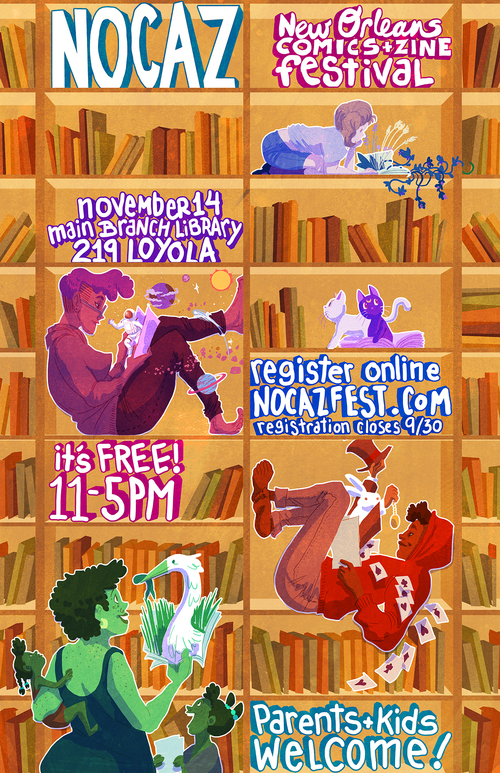
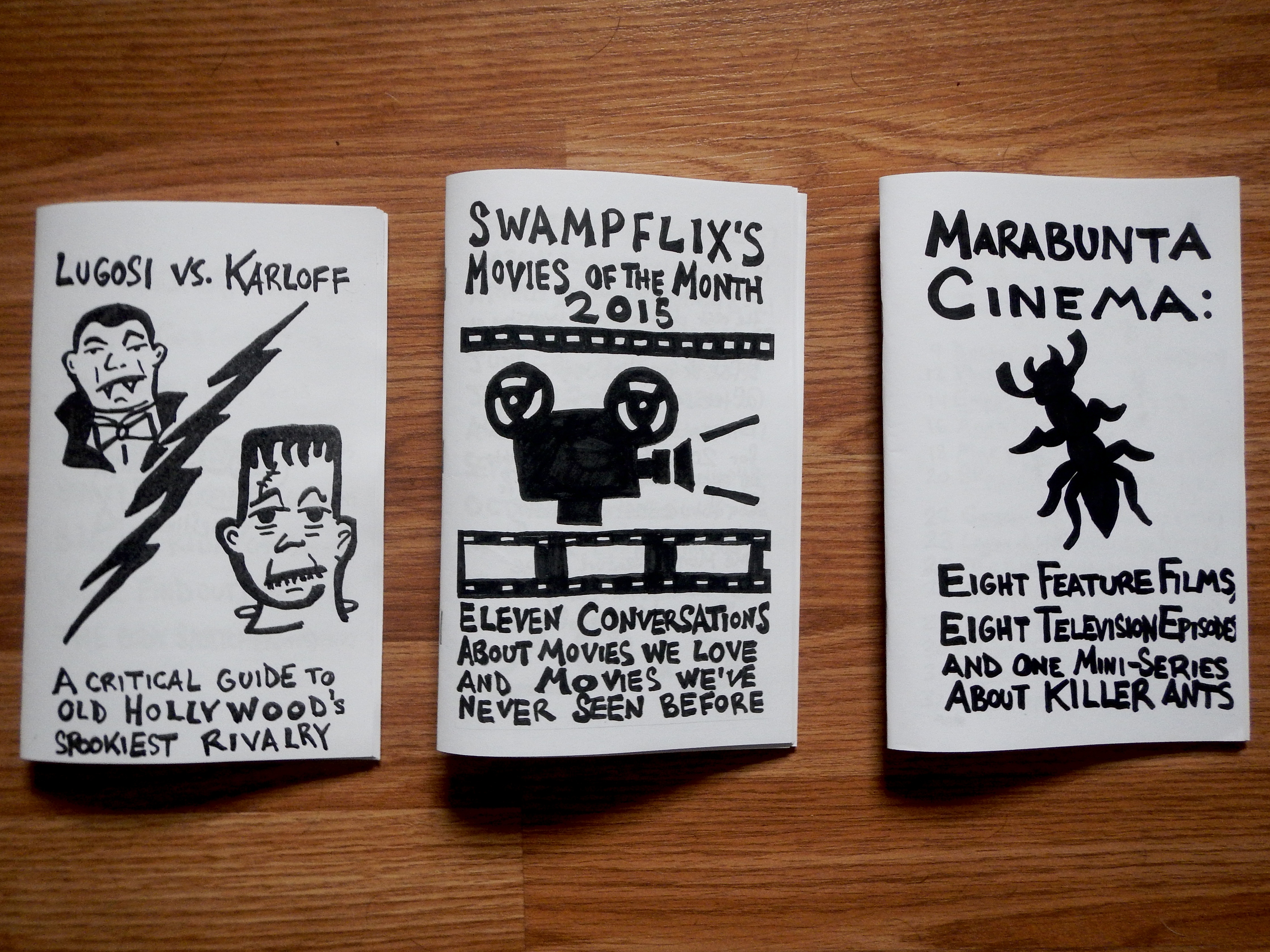
Attention, Swampflix readers in the New Orleans area! Swampflix will be exhibiting tomorrow (November 14th) at the second annual New Orleans Comics & Zines Festival along with a bunch of other super cool comics & zines exhibitors. We will be selling print versions of three Swampflix pieces (“Marabunta Cinema“, “Lugosi Vs. Karloff“, and a collection of our Movie of the Month conversations) from 11am-5pm at the Main Branch of the Orleans Public Library on Loyola Ave.

DSCN1455 (Modified (2))

DSCN1456 (Modified (2))

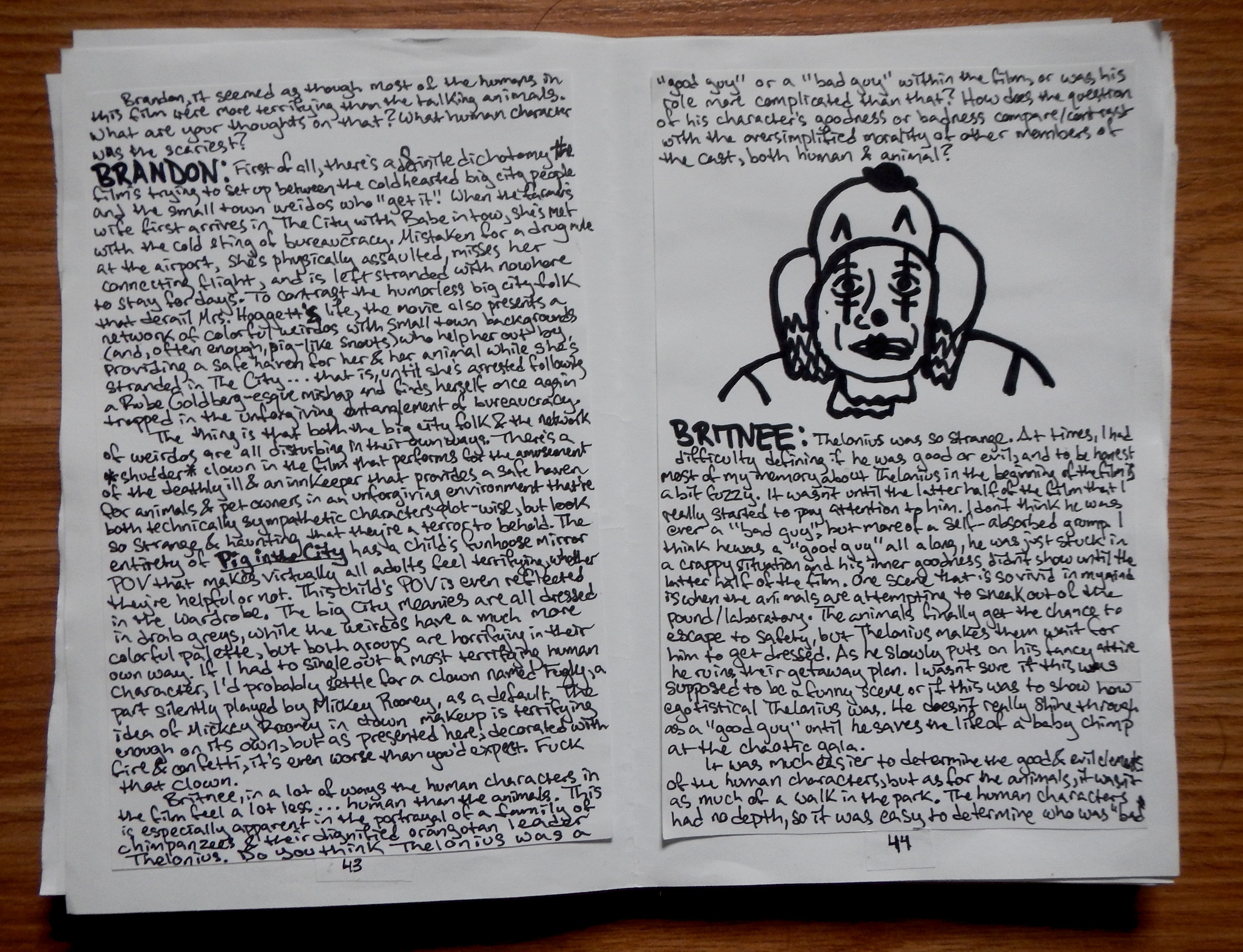
That middle piece is a ~90 page whopper featuring work from everyone who’s contributed to the site this year. All three feature dozens of new illustrations & hand-transcribed text from the site and, of course, all three will be dirt cheap.

For more info on the festival, check out their website at Nocazfest.com & refer to the poster below.

static1.squarespace.com

We hope to see y’all there!

-The Swampflix Crew

Missing People (2015)

fourstar

I first heard of the visual artist Roy Ferdinand when I attended his one-man show In Your Fucking Face at Barrister’s Art Gallery (when it was still on Oretha Castle Haley) sometime in 2004, As the title of that show suggests, Ferdinand’s work is aggressively crude & transgressive, assembling a unique document of New Orleans at the height of the city’s fever pitch crime rates in the 90s & 00s. An self-taught, outsider artist along the lines of a Henry Darger or a Daniel Johnson, Ferdinand drew portraits of the city & its inhabitants at their most cruel & vulnerable moments. His art is somehow both immediately digestible & impossible to ever shake once seen. The imagery sticks with you in a deeply affecting way, both in its violence’s absurdity & honesty, despite a lack of honed technical skills you’d expect from a more traditionally trained artist.

Roy Ferdinand may have been a somewhat financially successful artist, but he’s far from a household name & information on his personal life is scarce at best. That’s why I was stoked to discover that a documentary about Ferdinand was screening at the Ogden Museum of Southern Art as a part of the 2015 New Orleans Film Fest. Super stoked. Indeed, Missing People was a rare chance to see interview footage of Roy Ferdinand talking about himself, his city, and his art. However, it was far from the film that I was I expecting. Instead of being a documentary about Ferdinand outright, Missing People follows the story of Martina Batan, an art collector & curator who obsessively amassed hundreds of Ferdinand’s pieces for reasons that even she had difficulty understanding. It would be incredible to see a documentary strictly about Ferdinand & his work, but Missing People is not that film. Instead, it serves as a document about the way his art can deeply affect someone in a personal way. And after seeing the film it’d be difficult to argue that it’s ever affected anyone nearly as much as it has Martina Batan.

Described by a close friend & comic book artist Dave Carino as “a cross between Wednesday Adams & Holly Golightly”, Martina Batan was once a young art student with a Joey Ramone haircut in NYC’s highly influential late 70s punk era. The polaroids depicting her energetic youth are a stark contrast with her current life as a middle age divorcee & professional art curator. Living alone with two elderly dogs in Brooklyn, NY, Baton is a deeply depressed, anxious soul, one that rarely sleeps or, ostensibly, enjoys herself. One thing that haunts Batan in an ever-increasing intensity is the decades-old violent stabbing death of her teenage brother, a tragedy that tore her family to shreds. One of the ways Batan processes her grief over the loss of her brother, of course, is through collecting Roy Ferdinand’s artwork.

Batan first discovered Ferdinand while volunteering in New Orleans’ post-Katrina recovery shortly after the artist’s premature death in 2005. She soon became possessed with the task of collecting what she describes as “a greatest hits” of the artist’s work. Although Missing People is by no means a straight-forward documentary on Ferdinand & his art, it does feature hundreds of his pieces, by far the most I’ve ever seen, thanks to Batan’s tireless obsession as a collector. Besides the drawings, Batan also collected various ephemera from Ferdinand’s life, including a cowboy hat, boots, and unwashed socks Ferdinand’s two living sisters had entrusted to the owner of Barrister’s Gallery (a detail spookily echoed in Batan’s collection of her slain brother’s similar ephemera). Speaking of Ferdinand’s sisters, as a pair they offer one of the few points of insight into the deceased artists’ life & personality, outside stray interview footage of Roy in 1997, a few anecdotes from Barrister’s Gallery owner and, of course, the work itself. Roy’s sisters are particularly endearing in their dismissive laughter after hearing their brother describe himself as “an OG retired”. Whether or not roy was a certifiable “original gangster”, his self-declared role as a “journalist” & a “documentarian” that lead him to record “simple portraits of neighborhood characters” suggests that he at least had some kind of first hand experience with New Orleans’ crime element. As Roy himself puts it, he felt compelled to depict “guns, drugs, violence, and church” in his work because that’s what happens in a city where you constantly see “cops shooting at drug dealers, drug dealers shooting at cops, drug dealers shooting at each other.” Leave the scenic streams & meadows to the artists who live where that’s the reality. Although Roy’s sisters couldn’t corroborate his self-image of a “retired” hard criminal, they did admit that he often sold his paintings as a means to support his crack cocaine habit, saying “When he did his most eye-popping pieces, he was high as a kite.”

Not enough is really known about the “true” Roy Ferdinand to support a full-length documentary in the traditional sense (not that I wouldn’t love to see someone try). As one interviewee puts it, Roy was somewhat of a “performance artist”, adapting to many personas over the course of his lifetime: cowboy, voodoo practitioner, crack addict, fine artist, limo driver, French Quarter eccentric Chicken Man’s “official bodyguard”, etc. Although Missing People makes little to no attempt to offer a full portrait of the artist as a man, it does wonders to establish his role as a docuementarian. Roy explains the reasons he depicts the victims of horrible acts of violence is to preserve their likeness beyond being a mere headline in a news story. He says, “If it wasn’t for me, nobody would remember that these people existed.” Perhaps that sentiment is the essence of Martina Batan’s personal connection with Ferdinand’s work, seeing as how her long-deceased brother suffered a similar fate to many of Roy’s subjects, just in New York instead of New Orleans. The movie offers little in the way of answers.

As Martina struggles with her brother’s mysterious death, with her own failing health, and with an uneasy relationship with Roy’s sisters (who are justifiably suspicious & jealous of her collection of their brother’s work), Missing People paints a bleak, complicated picture. Much like Roy Ferdinand’s artwork, the documentary is painfully honest in an absurdly open, vulnerable way, refusing to play by the rules. Missing People documents the life of a great, little known artist not by offering a traditional biography, but instead focusing its attention on a few people still actively engaged with his work a decade after his passing. It works in the same way that Room 237 revealed a lot about the power of ambiguity in Kubrick’s The Shining by exploring the crackpot theories the film inspired instead of documenting the production of the film itself. As I said, as a fan of his work I would love to watch a proper, full-length documentary about Ferdinand (if that’s even possible), but that’s not at all what Missing People is aiming for. Instead, Roy is just the connective tissue in a story about the people living in his wake. It’s a bold & often frustrating choice, but in a lot of ways the film is more fascinating & satisfying for it.

-Brandon Ledet

12 Rounds (2009)

EPSON MFP image

three star

campstamp

Generic Action Movie #8 (I counted!) from WWE Studios was a (surprise!) John Cena vehicle meant to follow up his acting debut in The Marine. When considered outside of time & cultural context, 12 Rounds has very little going for it as a genre film. Its villain, played by (The Wire & Game of Thrones vet) Aidan Gillen, is mildly interesting in his playful scavenger hunt that he uses to keep Cena’s supercop off his trail, but the plot isn’t anything we haven’t seen done better in the past, particularly in Die Hard 3: Die Hard with a Vengeance. There are explosions (!!!) and helpless wives used as collatoral/potential victims (!!!), but nothing too exceptional to be found therein. No, what makes 12 Rounds distinct is the place & time of its setting.

Filmed in post-Katrina New Orleans on the back of those sweet, sweet Louisiana film tax credits, 12 Rounds is a potentially fun watch for locals looking to roll their eyes at an action movie determined to cram every possible New Orleanian cliché (short of maybe beignets & gumbo) into a single picture that honestly has nothing to do with the city outside of its setting. Our tour guide for this trip is NOPD officer John Cena (God, I love the way that sounds), who shows us through such great landmarks as “The Lake Pontchartrain Causeway”, Algiers Point, Decatur, a brief glimpse of The Saturn Bar, Bourbon Street (of course), etc. Sometimes the movie accidentally gets New Orleans right, especially while stumbling through the French Quarter’s drunks & street performers, but it’s most entertaining when it gets the city horribly wrong.

For instance, there’s a scene where Cena’s potential-victim wife boards the ferry at Algiers Point & he can’t reach her in time, so he steals a car, drives down the levy an somehow crosses the Crescent City Connection before the ferry reaches the other side. Incredible. There’s also some silliness involving using Katrina X-code markings (which are gravely serious business) as clues on the scavenger hunt that felt particularly tasteless. The most ludicrous detail of all, however, is an effort in which supercop Cena has to stop a runaway streetcar on Canal before it “smashes through” the end of the line. The strained effort to make the streetcar look fast & dangerous might be the height of the film’s New Orleanian silliness.

It’s difficult to tell if non-locals will find any enjoyment in this inaccurate foolishness, but there are a couple non-New Orleans moments of camp to be found here or there in 12 Rounds. The way Cena talks shit about punching Gillen’s mad terrorist in the face feels like a goofy extension of his pro wrestling promo work. There’s a scene in which he has to drive a bomb to the Mississippi River before it destroys “three city blocks”, but once he tosses it underwater, it barely makes a splash. In the grand finale, as Cena’s supercop & his wife are exiting a helicopter, she shouts “You land it, bitch” & the couple jump without parachutes into a rooftop pool as the sky rains money & fire around them. These moments may be mildly amusing, but they are by no means the height of action movie hijinks. Because of the exaggerated use of its setting, 12 Rounds‘ best chance for entertainment is in perplexing New Orleanian action movie fans looking for an incredulous chuckle or two as a uniformed John Cena takes them on an impossible city tour.

-Brandon Ledet

French Quarter (Film) Festival 2015

EPSON MFP image

It’s usually around Mardi Gras when the city wakes up from its winter slumber, suddenly coming to life after months of hibernation. Tourists start to arrive in town to drink in the streets & enjoy the sunshine while their friends & loved ones freeze in the snow back home. Locals stop acting like total babies about what passes for “the cold” down here and venture at least as far as their front porches to enjoy the second lines & boiled crawfish. Mardi Gras is only the start to this Spring awakening, however, and the spirit to excess rolls right on into our festival season, which stretches on as long as it can before it’s too hot too drink gallons of beer in the daylight and visitors abandon us for the summer. Jazz Fest stands tall as the most obvious pinnacle of the season, but French Quarter Fest has recently been giving that juggernaut a run for its money. What used to essentially be “Jazz Fest for Locals” is now ballooning to be its own feature attraction, drawing thousands downtown for deliciously cheap local food & free music. To my recent discovery & surprise, it also features a free film festival.

I’ve been to French Quarter Fest a few times over the years, but this year was the first I’d ever heard of a film festival accompanying the better advertised attractions of food, drink, and local brass. Located just outside Jacskon Square at Le Petit Theatre, a venue that traditionally stages live drama, the film festival is a cocoon-like respite in the center of madness, the eye of a drunken storm. After wandering from stage to stage, drinking like a madman & downing hot sauce-soaked poboys in the heat (and unfortunately this year, the rain) it’s difficult to describe just how much of a relief it was to sit in a darkened, air conditioned room and watch movies. Presented by the folks behind Timecode: NOLA, the offerings at the French Quarter Film Fest are a well-curated group of documentaries seemingly selected to make the city look good for visitors. It featured several documentaries I had never seen before as well as ones I already know intimately, essentially upper crust of the kind of New Orleans-praising fare you’d expect to catch on late night PBS.

0410151108

I attempted to catch one film a day at the festival to get a decent sampling of its offerings, but my Friday afternoon plans got derailed when I coincidentally ran into a friend at a live performance on Royal Street and ended up missing the classic, doc Always for Pleasure. There pretty much is no substitution for the all-encompassing sampling of New Orleans culture in Always for Pleasure, but it’s a film I already know well (and one that’s currently available on Hulu), so I had no qualms with missing it for a chance to enjoy French Quarter Fest’s more traditional offerings of booze & live music. Actually, I feel like it was even more in the spirit of the movie to miss it. Filmed in the 1970s, the Criterion-approved Les Blank documentary truly is the best introduction to local culture that I could possibly imagine. Where else are you going to find soul legend Irma Thomas sharing her red beans & rice recipe and Allen Toussaint explaining the significance of jazz funerals & second lines. There’s also glimpses of crawfish boils, Mardi Gras Indians, St. Patty’s Day celebrations in the Irish Channel, and what essentially amounts to music videos for Wild Thcopitoulas & Professor Longhair. An interviewee in Always for Pleasure describes New Orleans as “The City that Care Forgot” & “The last city in American where you can feel free to live,” and the supporting images that surround those claims make it feel like he might be onto something.

On Saturday, I not only made it to the screening I wanted to catch; I desperately needed to. After sweating it out in the drunken, downtown masses, it was a life-saving sensation to watch the documentary He’s the Prettiest: A Salute to Big Chief Allison “Tootie” Montana’s 50 Years of Mardi Gras Indian Suiting. He’s the Prettiest obviously has a much more focused subject than Always for Pleasure, choosing to narrow in solely on a profile of Mardi Gras Indian Chief Tootie as he dressed for his final outing. Tootie is not only a significant chief because of his 50 consecutive years of suiting, but in the innovative artistry he brought to the practice. Instead of merely continuing the traditional Mardi Gras Indian beading he inherited, Tootie introduced the concept of 3-D designs to his suits, elevating the painstaking bead work to unparalleled levels of intricate design. He’s the Prettiest is less interested in the history of Mardi Gras Indian culture than it is providing a platform for Tootie’s work to shine. It’s essentially a moving art gallery for beautiful designs, a constant tribal soundtrack of thumping tambourines & rhythmic chants providing a rich texture for bead work that would already be dazzling in a silent, still image. It’s an important profile of a brilliant, unfortunately deceased artist whose work doesn’t receive as much formal fine art praise as it should.

On Sunday afternoon, once the rain died off, we caught the final film of the festival, Faubourg Tremé: The Untold Story of Black New Orleans. Initially conceived as a history lesson reviving a forgotten storyline in which New Orleans was a historical forerunner in racial equality & integration, providing then unheard of freedoms for people of color long before the 1960s Civil Rights movement (freedoms sadly poisoned by the years of Jim Crow), the documentary about the historic district of Faubourg Tremé was derailed by a little storm called Hurricane Katrina. The final third of the film captured a time I rarely care to revisit, a time in which most people couldn’t afford to return to the city they knew & loved and the ones that could struggled to piece their lives (and families) back together from the wreckage. It was an emotionally crippling note to end the festival on, but once I stepped back onto the city streets and watched a nameless group of ten-to-fifteen year olds playing traditional brass music draw a lively crowd outside the French Market (most likely the best set I saw all festival) I realized that Faubourg Tremé was for the most part a depressing story because it was an incomplete one. It captured the city’s incomprehensible lows (right down to the storm’s irrevocable psychological damage & a beyond troubled history of race relations), but did not have the time to capture the resiliency that brought the city back to life in the years following the broken levees. We all went through Hell to get here, but there’s plenty of our culture left to make the struggle worthwhile.

The couple of screenings I successfully made it to at this year’s French Quarter Film Festival were surprisingly well-attended, but also decidedly low-key. It seemed to be mostly older couples who, like my lame-ass self, needed a break from the external madness of drunken tourists and admittedly overpriced drinks (hey, at least they pay for the music). More importantly, the films selected had the kind of celebratory quality that gets you genuinely excited about your own city & culture in a heartfelt way, especially in the last minute acknowledgment that we’ve been through Hell together. There were plenty of opportunities for me to fall in love with New Orleans all over again at this year’s French Quarter Festival, like trying my first ever alcoholic snowball (which honestly wasn’t all that different from a daiquiri) or listening to any brass band you can name jamming outside the US Mint or overhearing a cop explain to a couple of passed out crust punks, “Look, if you want to sleep out here, you gotta do it by the river.” That sense of civic & cultural pride was surprisingly just as potent in the mid-afternoon darkness of Le Petit Theater as it was on the busy streets surrounding it; and it was just as simple as watching a couple of movies in the dark with a few strangers/neighbors.

-Brandon Ledet
UPDATE: The Indywood Kickstarter Campaign was a Success!

EPSON MFP image

Last week I wrote that the independent New Orleans cinema Indywood was looking to expand their programming through a Kickstarter campaign. The intimate theater has already been up and running at the edge of the French Quarter for just over a year now, but through a very reasonable requested donation they were looking to expand the scope of what services they could offer to the city’s cinephile community. At the time I wrote about their Kickstarter campaign it had two weeks to fund its project and just over half of its requested funds secured. I am happy to report that Indywood has since reached its goal and will now be able to expand its programming to include diverse offerings like Saturday morning cartoons, stand-up comedy, silent films with live musical accompaniment, “80’s VHS gems” and more.

In the last announcement I wrote that Indywood “occupies a strange, comfortable middle ground between watching a film in a traditional theater and popping in a DVD in a friend’s living room. Much like the experience of seeing a film at Zeitgeist or the outdoor Moonlight Movies screenings, there’s a communal aesthetic to Indywood that can’t be achieved at a larger, corporate-owned venue.” It’s awesome that the very community Indywood shares movies with stepped up to help them expand & grow. Personally, I very much look forward to watching to see what they bloom into and believe that, no matter what the scope of what they can accomplish, New Orleans will be all the richer for it.

Although the Kickstarter campaign has been fully funded, it’s still not too late to contribute if you haven’t already. They’ve secured the basic donation amount they’ve asked for, but more funding always helps. At this time there’s exactly one week left (until 8pm on March 5th to be exact) to contribute to the growth of New Orleans’ cinematic community & claim some truly cool rewards. There will also be a celebration for their backers (including a screening of The Big Lebowski) on March 5th to commemorate the success of the campaign. Hope to see you there!

-Brandon Ledet

Get Excited! Indywood is Looking to Expand their Programming through a Kickstarter Campaign

EPSON MFP image

I’ve heard tale of an ancient time when New Orleans was blessed with independent movie theaters, from legitimate single-screen cinemas to the overheated living rooms of shotgun houses where enterprising weirdos would sell you cheap beer & strange art films. By the time I was old enough to care, this cinematic paradise was gone. Up until a few years ago, the only independent theater holding on for dear life was The Prytania, a cultural institution that’s blessed our city with a hundred years of service. Most of our city’s independent cinemas had fallen to the crushing presence of AMC theaters in the suburbs and the convenience of home video.

Thankfully, things have changed. Just in the last few years, New Orleans’ independent movie scene has been veritably raised from the dead. In addition to the Prytania, we now have Chalmette Movies, Zeitgeist, Shotgun Cinema, The Theatres at Canal Place, outdoor Moonlight Movies screenings, the upcoming cinema on Broad Street and Indywood at the edge of the French Quarter. The city is buzzing with filmmaking & film watching activity. It’s a great time to be a cinephile in New Orleans.

One of the more exciting and more recent movie theaters in the city, Indywood, is looking to expand its scope & ambition through a crowd-funded Kickstarter campaign. A much cozier & laidback downtown option than the too-rich-for-my-blood Theatres at Canal Place, Indywood is an intimate single-screen cinema on Elysian Fields, a few blocks from the river. It occupies a strange, comfortable middle ground between watching a film in a traditional theater and popping in a DVD in a friend’s living room. Much like the experience of seeing a film at Zeitgeist or the outdoor Moonlight Movies screenings, there’s a communal aesthetic to Indywood that can’t be achieved at a larger, corporate-owned venue.

Asking the very community it serves for a very reasonable donation to fund an expanse in programming, Indywood is looking to be more than just an intimate place to watch movies. According to the Kickstarter page, they’re looking to serve food & wine, play Saturday morning cartoons, and host stand-up comedy & discussions of classic works. They’re also looking to expand the ranges of films they screen to include spotlights on local films, African American films, silent films with live musical accompaniment and (most exciting to me) “80’s VHS gems”. The campaign’s “rewards” are also pretty cool, including a nifty t-shirt, private screenings, and the right to buy a seat in the theater that you’ll have the right to claim “no matter who’s sitting there for a whole year. Even if it’s Beyoncé.”

If you have the time or a few bucks to spare, help support the revival of New Orleans’ independent cinema scene by donating to the Indywood Kickstarter page or at least spreading it on social media. It has about two weeks left to reach its reasonable goal, but just over half of its funding secured. We at Swampflix would love to see their project completed.

2/26/15 UPDATE: The campain was a success!

-Brandon Ledet

The Masque of the Red Death (1964) on Mardi Gras Day

masque

In our Movie of the Month conversation about the deeply strange, beautiful and undeniably ahead-of-its-time The Masque of the Red Death, I pointed out how much the movie reminds me of Carnival season in New Orleans. I wrote, “With Fat Tuesday looming around the corner, it was impossible not to see aspects of Carnival in the masquerade ball hosted by Prince Prospero (Vincent Price). The cheap costumes & mockery of opulence is very much reminiscent of Mardi Gras parades. There’s even a scene where Prospero literally throws beads from a balcony shouting ‘Gifts! Gifts!’ and scoffs at the greed of the people below. As the threat of The Red Death plague becomes increasingly severe, the masquerade takes on a ‘party while the ship is sinking’ vibe New Orleans knows all too well. Horror films are usually tied to Halloween, but The Masque of the Red Death is distinctly akin to Mardi Gras in my mind.” In an effort to put my money where my mouth is, I took the Movie of the Month out into the streets on Mardi Gras, masquerading as The Red Death himself. Here’s a few pictures of the costume below to help solidify the memory.

DSCN1115

DSCN1113

DSCN1134

DSCN1298

I hope everyone had a great, safe Mardi Gras and maybe even costumed as their own pet obsessions, movie-related or not. It’s certainly been a fun Carnival season on my end and I was glad to take a little bit of Swampflix with me into the Quarter on Fat Tuesday. I might even do it again next year!

For more on February’s Movie of the Month, 1964’s The Masque of the Red Death, visit our Swampchat on the film and last week’s round-up of its dueling 1989 knockoffs.

-Brandon Ledet

Carnival Revelry: The Intergalactic Krewe of Chewbacchus in 2015

EPSON MFP image

This past Saturday was the annual turning point for me when Mardi Gras stops being a vague concept I hear about on the radio & Facebook feeds and becomes an experience I’m living. Although the Phunny Phorty Phellows’ annual streetcar ride on Twelfth Night is the official start to Carnival season, it’s one I typically miss. Mardi Gras never feels real until I’m finally misbehaving in the thick of it & Krewe du Vieux is my usual starting point for the revelry, but I missed that parade this year as well. 2015’s Chewbacchus celebration was that magical moment when everything clicked and I thought “This is it. This is Mardi Gras.”

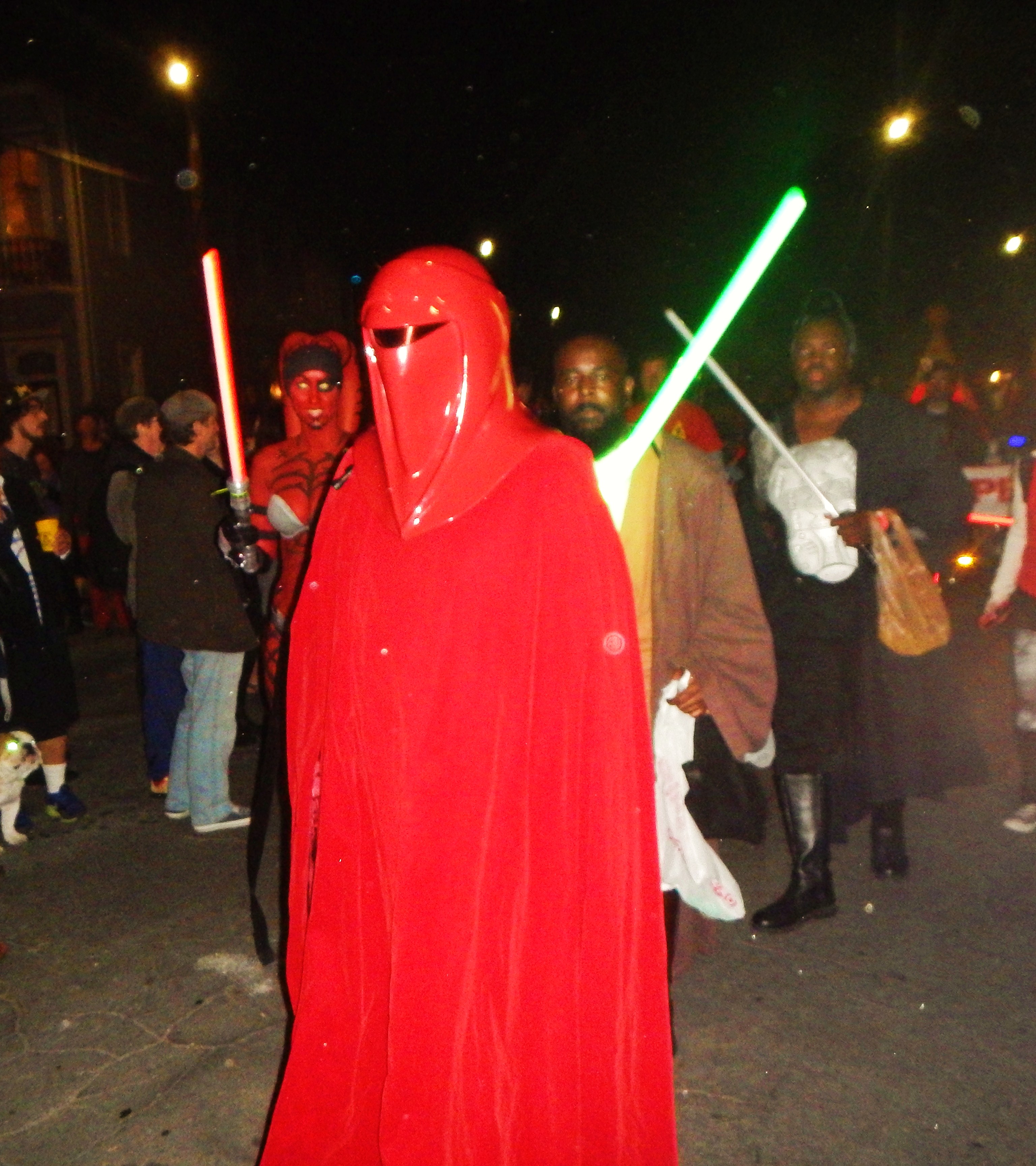
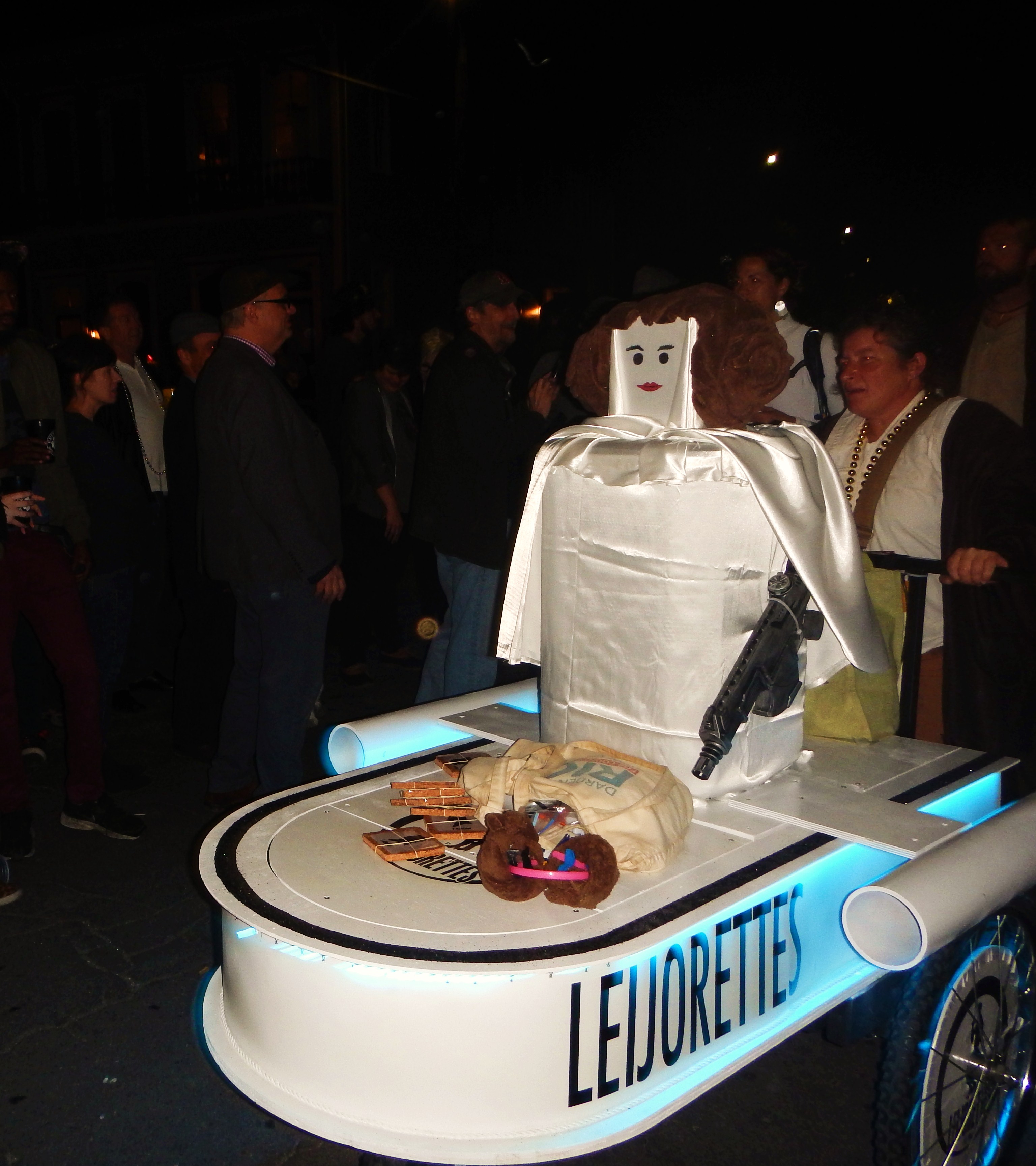
The Intergalactic Krewe of Chewbacchus is a relatively young parade that rolls hand-made, people-powered contraptions through the French Quarter & Marigny while the larger, gas-powered floats roll elsewhere across town. Although their nerdy umbrella has expanded to include all kinds of sci-fi goofiness, they’re the only parade I can think of that’s specifically designed to celebrate a movie franchise: Star Wars. Despite the inclusion of other sci-fi properties like Doctor Who, Star Trek, E.T. and (most recently) Guardians of the Galaxy, it’s still a mostly Star Wars-themed affair, one that lauds the “drunken Wookie” Chewbacca as its monarch. Real-life Chewbacca Peter Mayhew himself has even lorded over the parade the past couple of years, revelers treating him like nerdy royalty. The parade’s haphazard, DIY aesthetic perfectly matches the DIY practical effects of the original Star Wars trilogy. Star Wars’ endless parade of odd-looking weirdos and handmade sets & costumes serves as a fitting platform for New Orleans’ own endless parade of odd-looking weirdos & their personal creations, even if they’ve come to incorporate other fandoms as the years march on.

Wasting away a drunken afternoon in the Quarter and then capping off the night with Chewbacchus’ Imperial Stormtroopers & Jedi Knights was my personal introduction to the 2015 Carnival season. It was a great feeling to ring in my favorite time of the year while celebrating one of my other favorite activities: watching movies. Here are a few pics to help solidify the memory.

DSCN0999

DSCN1000

DSCN1001

DSCN1003

DSCN1004

DSCN1005

Have a great, safe Mardi Gras, y’all! And may the Force be etc, etc.

-Brandon Ledet

Knucklehead (2010)

wrasslin

halfstar

campstamp

Who is the target audience for Knucklehead? Is it for kids? There are plenty of fart jokes & slapstick antics, but there are also homosexual innuendos, religious mockery, and racial stereotypes. Is it for fans of professional wrestling? The movie features WWE superstar Paul Wight (aka Big Show/The Giant), but the fight scenes are too infantile to whet any wrestling fan’s appetite, the climactic fighting competition consisting of a half-assed wrestling montage accompanied by generic nu metal. But probably the most important question for the sake of this review is: Is this movie for anyone? The answer is definitely not.

The first time we meet the 7 foot, 450lbs hero at the center of Knucklehead, he is descending from the rafters during his orphanage’s rendition of The Wizard of Oz. He is playing the Good Witch, but the gentle giant soon ruins the production by clumsily destroying the set. Why is a full grown man still an orphan? Simply, the film explains no one wants to adopt a giant. It becomes apparent, however, that Walter’s below average intelligence & awful luck are the true reason. In his very next scene he burns down the orphanage’s kitchen by throwing grease on a raging fire. What a knucklehead! Inexplicably, the orphanage has no fire insurance and must raise the money quickly or all the poor orphans will be evicted. But in an act of divine intervention, Walter is pushed through a stained glass window at the exact moment that former MMA fighter turned promoter Eddie Sullivan is asking God to wash away his gambling debts. It’s a miracle! Eddie sees the potential in him and they soon embark on a road trip to New Orleans for the “Beatdown on the Bayou”, a fighting tournament with a $100,000 prize that will solve both their problems. Their journey basically amounts to a series of formulaic gags involving farts, poops, and urine (sometimes simultaneously), that are punctuated by lessons about family, determination, and faith.

It’s obvious the filmmakers were imitating the Farrelly Brothers with this attempt to mix sweet, light-hearted comedy with gross-out humor but, unlike the Farrellys, they don’t give us any characters to care about or any truly gross-out moments. I watched a human giant flatulate, act silly and beat people and I still wasn’t entertained. That’s pretty sad. Knucklehead does have some offensive moments, but not the good kind. As is standard for a lot of WWE entertainment, the minority characters are stereotypical and the butt of a lot of the jokes. We encounter a trucker smuggling Mexicans; a Jewish boxer Sugar Ray Rosenburg, the Monster of Matza, who Walter is convinced to beat down because “That guy hates Christmas”; and a smooth hustler black child that runs boxing fights out of his dad’s house. The movie pretends to have themes like the power of hope and believing in miracles but at its heart it is deeply cynical: Sister Francesca agrees to let Walter fight only after her cut of the purse is mentioned; Eddie’s love interest who works at the orphanage, Mary, reveals she used to be a stripper; a Jewish bookie runs fights out of a synagogue.

Will Patton, Dennis Farina, and Wendie Malick are all excellent character actors who have done great work in the past, but every time one of them was on the screen in Knucklehead I sat perplexed, asking “Why are you in this movie?” There is no point in hiring talented actors if there is nothing interesting for them to say. Case in point: Eddie’s statement “What do you mean the engine’s smoking?” as an engine is billowing smoke. Paul Wight is likable enough, but can’t be expected to carry a feature length film after the poop jokes outwear their welcome. Not even a mildly entertaining bear fight, reminiscent of Hercules in New York, can save this dumb, poorly written dud.

I feel like a Knucklehead for having sat through this movie.

Knucklehead is currently streaming on Netflix.

-James Cohn

The Meta Experience of Prytania Screening Cinema Paradiso (1989)

paradiso

I was washing dishes this Thursday afternoon when I was unexpectedly alerted that Prytania Theatre was going to screen Cinema Paradiso for free in a half-hour’s time. I dried my hands, crated the dog and sped Uptown just in time to take my seat among the little old biddies and stray college students just before the movie began. With no time for Google or IMDb before I ran out the door, I went into the movie completely blind. All I knew was that it’s one of those foreign titles synonymous with phrases like “Oh man that’s a classic” and “How have you not seen that yet?” Oh man. It was a classic. How had I not seen that yet?

Cinema Paradiso is a movie about movies, cinema about a cinema, art about art. It’s one of those rare films that attempts to provoke every possible response in its viewers (laughter, tears, heartbreak, frustration, unbridled joy) and succeeds consistently. As the audience watches the story young boy grow into an old man, they also watch a history of how audiences have engaged with film over the course of decades. When we watch Cinema Paradiso, we watch the way people watch movies. At the beginning of the film the Cinema Paradiso’s audiences basically riot throughout the pictures. Towards the end they sit in rapt silence.

The audience at Prytania that day was anything but silent. They weren’t the masturbating, shit slinging, drunken near-rioters of Cinema Paradiso, but there was some audible chatter throughout the movie in the seats behind me and a full-on celebration in the lobby that could easily be heard through the dividing curtains. The Prytania was screening free movies that day and was gearing up for an afternoon block party to commemorate its 100th anniversary. As the oldest operating cinema in New Orleans and the only one in its neighborhood, it’s way too easy to draw connections between the Prytania Theatre and the titular Cinema Paradiso. Just as the Cinema Paradiso grows with & serves its Sicilian village, Prytania is a cultural mainstay of Uptown New Orleans. They planned on screening the film a second time later that night at the block party, the same kind of outdoor community screening Alfredo stages in the film.

Before the afternoon screening I attended began, Prytania’s 93 year old operator Rene Brunet told the following anecdote: When the one-screen theatre first ran Cinema Paradiso in 1989 it played for over six weeks, upsetting the locals (presumably the college kids) enough to picket the theatre to finally move on & play another movie. It’s the exact kind of episode that would’ve happened in the film itself, although presumably more tame.

The meta experience doesn’t stop there. When Cinema Paradiso was first released to an American audience, the undisputed king of cinematic self-sabotage Harvey Weinstein cut a full 51 minutes of footage from the Italian original (a tactic he almost repeated with last year’s Snowpiercer). The streamlined cut is the one that played at Prytania this Thursday, but it’s also the one that played in its original extended run at that cinema, as well as the one that earned the Oscar for Best Foreign Film. Oddly enough, Roger Ebert himself contended that the Weinstein cut is “a better film than the longer.” Whether or not that is true, it’s still hilarious to me that drastic edits were made to a film that depicts a priest making drastic edits to other films as one of its thematic lynchpins.

The programming choice to celebrate Prytania’s century long history with Cinema Paradiso was wholly perfect. It was the story of New Orleans’ most significant one-screen cinema examining itself by revisiting the most significant story of a one-screen cinema around. They could’ve played a more tragic (but just as potent) work of cinematic navel-gazing like 1971’s The Last Picture Show or last year’s Life Itself, but that would’ve undermined the reason we were all there: a celebration. Commemorating Prytania’s first 100 years with Paradiso left me with the hope that it will last at least 100 more. There was no  better way possible to celebrate the movies than to watch people watch movies.

-Brandon Ledet