The Nightlife that Was (2004)

EPSON MFP image

threehalfstar

Like many kids who grew up without cable, PBS was my major television window into the weirdness abyss a milquetoast suburban life in St. Bernard sheltered me from. A lot of what I learned about the various subcultures of punks, painters, and poets as a kid started with hour-long documentaries on New Orleans’s local PBS affiliate WYES (in between daytime offerings of Old Hollywood standards), initial introductions I would later flesh out by hunting down something people used to call “books.” I have a lot less time for “books” now that I’m watching/reviewing so many goddamn movies every week (Seriously. I’ve been reading the same biography of pro wrestler Gorgeous George & the same Howard the Duck comics collection since early summer when I usually would have knocked them both out in a week), but I did recently bring home one of WYES’s made-for-TV documentaries about local New Orleans culture from a university library that brought me back to that Chalmette bedroom where I was forever rapt & eager to learn more. Maybe I’ll even pick up a “book” on the subject (though, more likely, I’ll click around on Wikipedia between theater showtimes like the increasingly uncultured heathen I’ve become).

The Nightlife that Was first aired on WYES in 2004, but it might as well have been 1994 given the fashions & sensibilities that drives its awe-struck history of local nightlife. The hour-long documentary is not only a glimpse into the legendary bars & clubs that made New Orleans one of the coolest cities on the planet in the 1950s & 60s; it’s also a glimpse at a much more recent time where pre-Katrina New Orleans was relaxed & content with falling behind on every current trend other major cities were chasing. It’s very difficult to believe this documentary was made as recently as the aughts, not because it’s corny or old fashioned, but because it reflects a very specific kind of untouched-by-time aspect the city’s lost in its modernization over the last decade. The Nightlife that Was is a really fun, informative look back at half a century old pop culture history in my favorite city, but it also made me miss The New Orleans that Was in much more recent memory in its own charming way.

As a history lesson, The Nightlife that Was plays like a slowed-down, actually-informative version of Mondo Topless set in New Orleans instead of San Francisco. In a wild, hedonistic time, before-they-were-famous musicians like Dr John & Clarence “Frogman” Henry played background tunes for barroom strippers & cops were very relaxed on enforcing age restrictions for patrons; New Orleans was the wildest party on the planet. As one interviewee puts it, “If you couldn’t find something to do, you were a hermit.” Names like Tennessee Williams, Truman Capote, and a babyfaced Bill Clinton traveled to the city in the search of “the naughty & the gawdy,” finding an endless wealth of jazz musicians, killer soul singers, drag queens, comedians, and larger than life personalities for their troubles. Local standards like “Bill Baley” & “Stacker Lee” blare through a barrage of rapidfire anecdotes about the city’s rich history of “colorful squalor”, eventually giving way to hippie dippy bullshit like The Grateful Dead & the more recent Fat City disco scene as the years roll on before your eyes. The film makes a couple larger statements about the importance of nightlife to the city’s culture like its (very much true) assertion that “The gay political scene came out of bars, much like how the black political movement came out of churches,” but mostly The Nightlife that Was plays like a best-of highlight reel of priceless vintage nightlife footage. It’s mostly a reminder that the music may have gotten shittier on Bourbon Street & the people may not dress up to go there like they used to, but the debauchery has remained largely unchanged.

As far as the objective quality & importance of The Nightlife that Was goes, it’s probably much more in line with the post-Katrina check-in of Max Cusimano’s recent New City doc than with the priceless documentation of works like Always for Pleasure or The Sons of Tennessee Williams. That is to say that it’s interesting & worthy of discussion, but maybe not a home run in terms of thoroughly covering every topic it unearths. For instance, I found myself wanting to know more, much more about the history of the infamous black nightlclub The Dew Drop Inn than what the film had time for, to the point where I’d sacrifice the rest of its runtime to just focus on that one club. Nostalgia-wise, though, there was something special about this WYES production that struck a very particular chord in my heart. Everything from host/narrator Peggy Scott Laborde’s shoulder padded blazer to local legend Irma Thomas’s mid-00s visage to the fact that the film’s official for-purchase print appears to be a DVD-R brought me back to a childhood place of warmth & fascinated curiosity. Even the fact that I wanted to learn more than what little the film provided on many of its subjects reminded me of the role WYES has filled for a long time in my life. It made me want to read “books.”

-Brandon Ledet

Kraftwerk 3-D and the Modern Concert as Cinema

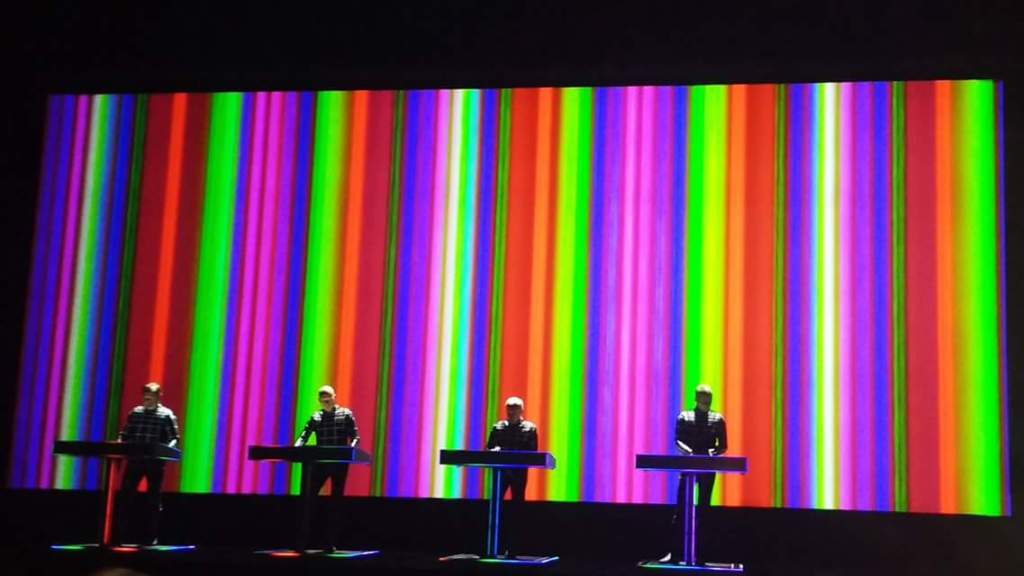
At the time I’m writing this it’s been over a week since I’ve seen a proper movie, which is likely the longest stretch I’ve gone without watching one in at least two years. Thanks to the ever-expanding grey area of what does & does not qualify as cinema, however, I feel like that itch is being scratched elsewhere, with a surprising amount of that content relating to pop music. For instance, long form music videos like Beyoncé’s Lemonade or our former Movie of the Month Girl Walk //All Day and prestige television shows like Baz Luhrmann’s recent chaotic mess of a hip-hop disco musical The Get Down all feel cinematic without being what’s traditionally considered cinema. Gallons of ink have already been spilled about how television is becoming more like film & vice versa (in the form of never-ending franchises like the Marvel Cinematic Universe),but what’s been of particular interest to me lately is how music videos & live concerts have been doing the same. This might explain why while attending a 3-D Kraftwerk concert in New Orleans last Friday I found myself (between spaced out, gin & soda fueled dancing) asking “Is this cinema?” I don’t know if it was because I hadn’t watched a film in days & was desperate to tap myself into that headspace, but I wound up deciding that yes, it was. And it was one of the best movies I had seen all year.

If you’re wondering, like I was before I reached the Orpheum that Friday, exactly what a “3-D concert” is (besides watching three-dimensional musicians perform in a three-dimensional space), Kraftwerk basically performed in front of a stage-sized screen that displayed a moving image to correspond with each song, not unlike a live music video. These images were made to look 3-D through cardboard glasses specifically printed for the show & distributed at the entrance. Now, watching a screen at a live event isn’t all that novel for a 2010s concert experience. In fact, it’s almost become standard. Besides attendees watching acts through their view-blocking, media-capturing smartphones, bands often use projections & display screens to enhance the live music experience. From metal bands doing living room sets in front of projections of silent horror relics to gigantic crowd music festivals using jumbotrons to reach the folk miles form the stage, we’ve all witnessed 2-D visual media incorporated as part of the live concert experience. The concept goes back pretty far down the history of rock n’ roll too, touching on the rudimentary light shows of 60s psychedelia & the multimedia assault on the senses of acts like The Butthole Surfers. There’s something different about the way Kraftwerk is crafting their live experience that makes it more of a recognizably cinematic endeavor, however, and that difference has a lot to do with the immersion & the gimmickry of the 3-D experience.

When trying to conjure the ways live music is gradually becoming more cinematic the first thing that might come to mind is the live performance of movie scores for public screenings. Radiohead’s Jonny Greenwood performed live versions of his There Will Be Blood score for recent events. Prog rock legends Goblin embarked on an entire international tour where they performed their killer score for Dario Argento’s Suspiria along with screenings of the movie. Local musician Hellen Gillet recently performed a live score for Fritz Lang’s silent masterpiece Metropolis at an outdoor screening outside the US Mint in the French Quarter. These examples of cinema seeping into the live music experience are exciting, but they’re also more traditional than they might initially appear. Think back to the early days of silent cinema where soundtracks would be performed by a live, in-house pianist. Updating that dynamic for a pop music context is exciting, but it’s not necessarily the innovation of a homogenous live music & cinema blend that acts like Kraftwerk have been bringing to concert venues.

What’s fascinating to me lately is the film-concert hybrid, a cinematic experience specifically designed to be engaged with as a live musical act. The multimedia performances of Björk’s Biophilia & Laurie Anderson’s United States I-IV were brave steps in that direction, but the first live music cinema experience I can remember attending myself was Dan Deacon’s collaboration with visual artist Jimmy Joe Roche. Live performances of their visual album, the blisteringly psychedelic Ultimate Reality, were singularly overwhelming experiences. Two live drummers set up on opposite sides of the stage in front of an oversized projector screen. They played mechanically in sync over a recording of Deacon’s trademark synth assault, accompanied by a mid-length feature film collage of bright, kaleidoscopic imagery lifted from various Arnold Schwarzenegger films. Ultimate Reality pushes its concert-cinema hybrid even a step further by marrying its aural & visual assault with a loose narrative in which all of Arnold’s movies, from Total Recall to Junior, are melted into an incomprehensible mess of a storyline that doesn’t exactly resemble the story structure of even the loosest, most Lynchian of film narratives or the vibe-driven, movement-based structure of a live concert. Ultimate Reality occupies a strange gray area between those two extremes, the same cinematic live music territory I experienced while watching Kraftwerk 3-D.

Kraftwerk is a seminal band, having played the role of innovator for nearly half a century. Listening to them perform live you can detect the early beginnings of pop music genres as varied as hip-hop, techno, industrial, and (duh) new wave lurking in the sparse, cold sounds of their digital meditations. They marry this slow, synth-soaked hypnosis, each song stretching on for dozens of minutes at a time, with a stark, minimalist, stage show. All four members of the band are centered at their own synthesizer podiums, remaining stoically still as they mix their digital soundscapes into a cohesive whole. It took me almost two songs into their set to even realize that the vocals were being provided live by one of the members. Everything felt so fixed & so clinical. Behind those four synth-commanding demigods stands a gigantic projector screen, which of course displays 3-D imagery related to each song performed. The imagery can range from archival footage of supermodels of the 1950s (during my personal favorite Kraftwerk tune “Das Model”) to crude digital renderings of a pixelated car on the highway (during the song “Autobahn”), an intentionally outdated aesthetic that recalls the look of certain Tim & Eric segments or, perhaps more appropriately, the music video project that accompanied the Death Grips album Government Plates. The rudimentary, elemental nature of these images matched the sparse genre seedlings of Kraftwerk’s music and transported their audience into a cinematic headspace that’s foreign to most concert experiences, even ones aided by higher tech on their display screens.

Unlike Ultimate Reality, 3-D Kraftwerk didn’t form its individual vignettes into a larger narrative whole. Instead, each music video experience was allowed to exist as its own separate meditation, functioning almost like a horror anthology, with the concert hall itself standing in as a wraparound segment. One song dove into the ever-present threat of nuclear war. One meditated on the machine-like efficiency of athletes who participate in the Tour de France. One provided a visualization of the digital landscape where the band’s Tron-like costumes might be considered high fashion. A particularly playful rendition of “We are Robots” had the band replaced onstage with mannequins propped up behind their synth podiums & projected in 3-D behind them. That last moment in particular pointed to the absurdity of paying to see a band so rooted in the artistry of music studio production perform “live” in the first place. The very idea of “a 3-D concert” is an exceedingly ridiculous concept on its own and the band never shied away from pointing to that absurdity. Instead of pursuing a more kinetic stage show, they turned their songs into a collection of short films with live music accompaniment, each devolving into long form meditations on concepts like international travel & “computer love”. The result felt a lot like watching a movie. Instead of feeling comradery with the band, like being within arms’ reach at a $5 punk show, you feel as if you’re watching a collection of mannequins stand before a silver screen; it’s distancing, but it’s also dazzling.

3-D technology has always been a William Castle-type gimmick meant to sell extra movie tickets to audiences looking for a novel & immersive cinematic experience. It was a perfect choice for Kraftwerk to draw an audience in with that cinema-specific gimmick because their live show already feels so similar to watching a movie in the first place. As the screen-heavy multimedia approach to the live concert becomes increasingly cinematic it’ll be interesting to see where other bands can take the basic idea explored by 3-D Kraftwerk, Dan Deacon, and others into new, more narrative territories. It’s not a perfect fit for every musical act, but in a struggling industry suffering long-term declines in album sales the idea of live music cinema could be a great potential moneymaker for bands more prone to in-the-studio tinkering than live rock n’ roll antics. More importantly, though, it could lead to innovative modes of great, cinematic art, the next evolution in both the movie going & live music experiences as we know them. It’s only appropriate that Kraftwerk would be one of the acts on the forefront of that innovation, as they have been with so many other musical advancements since the late 1960s.

wp-1474123650255.jpg
-Brandon Ledet

Louis Malle’s Unsettling Takes on Pubescent Femininity in Black Moon (1975) & Pretty Baby (1978)

EPSON MFP image

One of the most discomforting aspects of August’s Movie of the Month, Louis Malle’s art house fantasy piece Black Moon, is its depiction of a young woman on the verge of adulthood. The film has a way of patronizing & infantilizing its seemingly teenage protagonist, a dynamic Malle likely picked up from Lewis Carroll’s Alice in Wonderland along with that source material’s down-the-rabbit-hole story structure. It’s not uncommon for Malle to face controversy for the sex politics of his films, something that even cropped up here when Alli questioned the intent behind Black Moon’s literal war of the sexes and Boomer expressed discomfort with the film’s panty-dropping gag in our original Swampchat discussion. Though, if Black Moon‘s depiction of a young girl’s journey into womanhood is uncomfortable, then Malle’s follow-up film Pretty Baby was an unapologetic act of aggression. If the director’s coldly detached, yet oddly lighthearted depiction of a young woman being indoctrinated into fantasy realm domesticity & interspecies breastfeeding is discomforting, then his application of that exact same tone to a preteen girl’s life as a sex worker in a turn of the century New Orleans brothel is an outright horror show. At the very least it was a bold choice for the French filmmaker’s American debut. At its worse it was a deliberate, pedal to the floor provocation.

That’s not to say that Pretty Baby is empty or spiritually corrupt filmmaking. If you remove the underage aspect from its protagonist sex worker’s character traits, what you’d get really wouldn’t be that far off from the film’s cutesy Oscar bait equivalent Rambling Rose. Pretty Baby faced accusations of being child pornography and was banned in a couple regions of North America, mostly for its nude depictions of a far too young Brooke Shields, but it’s a much tamer work than what those accusations suggest. Set during the final days of New Orleans’s storied Storyville district, where prostitution was once legal, Pretty Baby is for the most part a tame costume drama staged at a very specific time in this city’s history. Although its more sensationalist content is what immediately comes to mind when the film is mentioned, it’s for the most part a laidback, melancholy hangout in the heat & humidity of New Orleans courtyards. Just like how Black Moon is more interested in carving out a very particular fantasy realm to dwell in than following the more action-packed aspects of its wartime plot, Pretty Baby is a quiet, languid, depressive work with an oddly detached, carefree worldview despite the stakes of its central conflict. You could argue that it’s that exact judgement-free take on the material that makes the film so uncomfortable in the first place, but it’s still difficult to claim that its main goal was to shock & disgust. It more obviously just wants to hang around in its own earth tone drunkenness & historical accuracy.

Not yet a teenager, Brooke Shields stars as young sex worker in a very busy brothel. Her mother, played by (the always beautiful & forever talented) Susan Sarandon, is a cruelly dismissive employee of the same madame and pushes to have her daughter’s virginity auctioned off as quickly as possible, so that the young girl can become self-sufficient. After a particularly painful experience with a john and her mother taking off with a new husband/former client, the child runs away from “home” and into the arms of a fine art photographer named Bellocq. Apparently modeled after a real-life photographer who documented Storyville sex workers, Bellocq forms a strange domesticity with his new, unexpected ward and marries her, despite her horrifically young age. Although they’re husband & wife, Bellocq & his child bride have a clear father-daughter dynamic that would be oddly sweet if it weren’t for all the icky lovemaking (something that would easily be defined as rape by today’s standards). Malle maintains an emotional distance in the way he covers the material here, the same detached vibe he brought to Black Moon’s fantasy dreamscape. It can be more than a little alarming considering the inflammatory nature of the material he’s working with, (unlike Black Moon, Pretty Baby could in no way be mistaken for a fairy tale), but it also feels true to the long dead era he’s trying to evoke, unlike the softened melodrama of works like Rambling Rose.

Even beyond their judgement-free, yet male gaze tinted takes on pubescent femininity and their shared, dreamlike sense of languid pacing, Black Moon & Pretty Baby occupy a surprising amount of common thematic territory. They’re both stories about young women (one very young) trying to navigate worlds where they don’t belong. They both feature naked children running wild & free (although in a far less sexualized context in one case) and a strange fascination with breastfeeding (sometimes with a human baby, sometimes with a talking unicorn). Pretty Baby’s voodoo priestess recalls Black Moon’s mode of immersion in Natural Magic.  Black Moon’s varying examples of what the womanhood its protagonist is entering looks like are echoed in Pretty Baby’s performances from the always-welcome B-movie goddess Barbara Steele & and an elderly madame with a braying, John Waters cadence to her line delivery. Although the settings of these films are wildly different, it’s easy to see the specific touch Louis Malle brings to both pictures and how they work as a thematic pairing. The question of how that thematic throughline handles the hefty topic of pubescent femininity in either work is up for debate, however. And since Malle stubbornly remains detached in both pictures, that debate largely falls on the shoulders of his audience.

For more on August’s Movie of the Month, Louis Malle’s surrealist fantasy art piece Black Moon, check out our Swampchat discussion of the film, this comparison of its lame duck unicorn with the divine unicorns of Legend (1985), and last week’s look at how its surrealist take on Lewis Carroll’s Alice in Wonderland compares to the 1988 stop-motion animation classic Alice.

-Brandon Ledet

Episode #8 of The Swampflix Podcast: Documentarian Tim Wolff & A Pigeon Sat on a Branch Reflecting on Existence (2015)

inaworld

Welcome to Episode #8 of The Swampflix Podcast! For our eighth episode, Brandon interviews local filmmaker Tim Wolff about his gay Mardi Gras culture documentary The Sons of Tennessee Williams (2011). Also, James makes Brandon watch Roy Andersson’s Swedish black comedy A Pigeon Sat on a Branch Reflecting on Existence (2015) for the first time. Enjoy!

Production note: The dreamy guitar musical “bumps” between segments were also provided by James.

-James Cohn & Brandon Ledet

The Sons of Tennessee Williams (2011)

EPSON MFP image

fourstar

In my review of the exquisite ball culture documentary Paris is Burning I mentioned that New Orleans’s queer bounce scene deserves its own myth-making documentary, especially in light of those two subcultures’ remarkable similarities. It turns out that New Orleans already has its de facto version of Paris is Burning in The Sons of Tennessee Williams (not that a “sissy bounce” doc wouldn’t’ still be an essential historical document). Chronicling 50 years of gay Mardi Gras culture in New Orleans, The Sons of Tennessee Williams is a priceless archive of an LGBTQ subculture that amazes merely by existing. To think that the footage, photography, and history detailed here was ever recorded in the first place is incredible, given the danger it would’ve put its pre-Stonewall subjects into, not to mention the successive physical damage decades of hurricanes would later pose. It’s a thorough, definitive work that makes almost any attempt to follow up on or retell its story redundant.  If you’re at all interested in gay Mardi Gras tradition in New Orleans, The Sons of Tennessee Williams is the only logical place to begin.

The film splits its time between documenting the current state of the last two remaining gay Mardi Gras krewes, The Krewe of Petronius & The Krewe of Aremeinius, and constructing an oral history of those two social clubs’ storied past. The more reflective, anthropological segments of the film fascinate in a more unique way than the up-to-date check-in. Elderly gay men describe in detail the peril of growing up queer in the American South before the civil rights movements of the 1960s. In a time where homosexual public association was explicitly illegal, Mardi Gras stood as the one day a year when gay men could legally gather in a public space. In the face of ridicule, violence, and police harassment (under the vice cops’ crackdown on “crimes against Nature”), gay men began forming their own social structures by gathering in certain French Quarter bars as safe havens.

Eventually, this subculture craved legitimacy and a break from the secretive, dangerous nature of cruising undercover and sought official, legal status of a traditional Mardi Gras krewe. This urge was likely born of the simple desire to gather in celebration and to join the pageantry of traditional Mardi Gras balls, but it also saw a marginalized group bonding together to form a strong political voice. And since the formation of The Krewe of Petronius occurred before The Stonewall Riots, the film convincingly posits gay Mardi Gras krewes as “the earliest civil rights for gays” on record. It’s a story that isn’t told as often or as loudly as it should be and this film offers the rare treat of hearing directly from the mouths of the men who lived it and survived to tell the tale.

As rough as some of its subjects’ backstory can be, The Sons of Tennessee Williams is largely a celebration. These men survived societal persecution, the AIDS crisis, and Hurricane Katrina with their numbers dwindled, but their traditions unscathed. Although the modern check-in portion of the documentary is somewhat less compelling than its central history lesson, it’s still an uplifting reassurance that gay Mardi Gras culture is still alive & intact. It’s even had enough time to grow into a venerable institution, joining the old-fashioned pageantry of other krewes’ ball traditions and inspiring straight people & politicians to beg for an invite to exclusive social events that were once considered a disgrace by “polite society”.

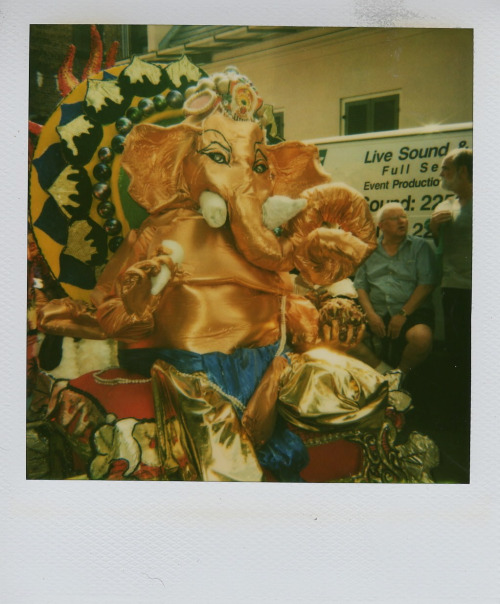
I do think that The Sons of Tennessee Williams is an essential historical document that should be seen by as wide of an audience as possible, but I’ll also admit that being a local made it strike a particular chord with me (as it must also have with documentarian Tim Wolff). I live down the street from The Krewe of Aremeinius’s headquarters. I’ve personally taken Polaroids of some of the costumes on display in the film on Mardi Gras Day in The French Quarter [included below]. Seeing 1940s footage of homemade costumes on Canal Street fills me with a certain hometown pride that might not translate as powerfully to outside audiences, etc. The Sons of Tennessee Williams is as much of a celebration of New Orleans culture along the lines of the classic Les Blanc doc Always for Pleasure as it is a gay culture landmark akin to Paris is Burning. It’s a thoroughly New Orleans story that deserves to be told around the world instead of the way it’s been locked away & forgotten. I urge anyone interested in gay Mardi Gras tradition to seek it out immediately.

EPSON MFP image

EPSON MFP image

-Brandon Ledet

New City (2015)

EPSON MFP image

three star

2015 saw the ten year anniversary of the broken levees that flooded New Orleans during Hurricane Katrina. The decade that’s followed this man-made disaster has brought various anxieties & concerns to the city, not least of all about the flood of transplants that have moved here during our long road to recovery. It’s easy to get bitter about the speed in which the city is changing. People move to New Orleans because they love its culture, but often try to change the city from within once they arrive. The fear is that along with positive changes like economic growth & much needed educational reform the city might be trading in its more unique cultural traditions, transforming into a modern, homogenized city no different than Anywhere Else, America.

The documentary New City bucks local negativity about the rapid changes we’ve seen post-Katrina, positing the last decade as “a renaissance” for New Orleans, playing almost like an advertisement for the direction the city is heading in. The film is relentlessly positive, countering the exhaustion & PTSD New Orleans has been struggling with in the years since the levee breach with unbridled enthusiasm about the hope that young  transplants bring to our economic landscape. There are a few voices of dissent among the film’s interviewees, but they mostly belong to barflies trapping themselves in negative thought loops. Local business owners, Mayor Mitch Landrieu, and other sober voices are selling a purely positive spin, declaring that the city is (in Landrieu’s words) “stronger & better than before”. No one is claiming that the storm’s death, destruction, and diaspora were a good thing for the city (at least I hope not), but when the loudest negative voices about post-Katrina transplants are coming from drunken rants that cover distaste for everything from President Obama to “job stealing” Hondurans, Landrieu & company’s optimism plays like a much more attractive way of thinking.

Form-wise, New City is about what you’d expect from a talking heads documentary about the current state of the city. It feels ready-made to be put in rotation on WYES (which is not at all a bad thing). The film does some interesting things with the format, though. Its aerial shots, most likely drone-operated, are very striking, inviting the audience to pull back & look at the city from a detached, distant angle. I also appreciated the way local cuisine is woven into its narrative. Narrator (and first time documentarian) Max Cusimano often exclaims things like “Let’s take a food break!” or “And now for some food porn” & values interviews from local chefs & food critics like Tom Fitzmorris & Out to Lunch‘s Peter Ricchiuti just as much as he values input from folks like the mayor. In a lot of ways, New City‘s bartstool interviews, drooling food photography, and stray footage of live music & Mardi Gras parades often work like a wordless reassurance that the city’s culture is here to stay indefinitely no matter how much or how quickly the population changes.

I’ll admit that I found certain aspects of New City‘s relentless optimism frustrating. There are entire lines of thought that the film avoids as long as possible in order to keep things posi. It takes almost 40 minutes for the doc to address people being priced out of their neighborhoods in this so-called “renaissance”. Words like “gentrification”, “Airbnb”, and “hipsters” are held off for even longer despite the severe weight they hold for locals. I also bristled at the way some interviewees valued “new, educated, business-oriented people” over undermined & underserved local talent. Even more uncomfortable was watching a Los Angeles couple gush over mix drinks with names like “levee breach” & “flood water” at a restaurant in the 9th Ward. Still, I found the film’s overall positivity to be downright infectious. My own tendencies to get defensive about who’s moving here & how they should behave once they arrive is unproductively negative & ultimately futile. New Orleans is a port city. As protective as we can be about maintaining local traditions, it’s good to keep in mind that our entire history, our very fabric is dependent upon constant influx of new faces & new ideas. This is far from our first “renaissance”.

I found myself agreeing with New City‘s the-future’s-looking-bright attitude most when it was tempered with a little caution for balance. As much as Landrieu lauds all of the new money & young talent coming through town, even he punctuates that opinion with the old adage that once you move to this city you don’t change it; it changes you. I also found myself encouraged by a bar owner’s levelheaded reminder that it’s great to have money flowing through the city that wasn’t here before the storm, but that “Money isn’t everything.” Even though I wish more of New City‘s sentiment was thoughtfully balanced in that way, it was still pleasant to see the city through the film’s hopeful eyes. At the very least, it put a lot of my own personal negativity about where the city might be headed & who’s moving here in check. I genuinely appreciated that. And when it wasn’t working for me, there was always food porn waiting to put my mind at ease.

Side note: When I watched this film on Amazon Prime there were a few sound quality issues in some of the interview footage that occasionally obscured what was being said. So, you know, that might not be the best platform to watch the film on even if it is currently the most convenient.

-Brandon Ledet

Always for Pleasure (1978)

EPSON MFP image

fourhalfstar

Mardi Gras in New Orleans is a near-impossible phenomenon to capture in art. There’s a magical, revelrous spirit to it that defies a strict, all-encompassing definition. As one interviewee explains in the documentary Always for Pleasure, Mardi Gras is not a spectator sport. It’s something you have to engage with & participate in to truly grasp, which might be a significant reason why capturing its spirit on film or in words is like trying to catch lightning in a bottle.

Filmed in 1977, the Criterion-approved Les Blank documentary Always for Pleasure truly is the best introduction to New Orleans culture that I could possibly imagine. Where else are you going to find soul legend Irma Thomas sharing her red beans & rice recipe and Allen Toussaint explaining the significance of jazz funerals & second lines? There’s also glimpses of crawfish boils, Mardi Gras Indians, Jazz Fest, above-ground cemeteries, St. Patty’s Day celebrations in the Irish Channel, brass bands, street cars, Dixie beer, Congo Square, and what essentially amounts to music videos for Wild Tchopitoulas & Professor Longhair. At just less than an hour in length, the film is an easily digestible crash course in local charm & hedonism. An interviewee in Always for Pleasure describes New Orleans as “The City that Care Forgot” & “The last city in American where you can feel free to live,” and the supporting images that surround those claims make it feel like he might be onto something.

What’s most remarkable about Always for Pleasure, though, is how close it comes to the near-impossible task of capturing the totality Mardi Gras in a single work. There’s a little bit of historical context provided about how the holiday developed as “a lustful time before a time without” both within & without religious connotation. For the most part, though, the film is smart not to over-explain. It mostly just documents. With the shoulder-mounted shakiness of a local news camera investigating a crime scene, Blank’s movie takes you into the nooks & crannies of the Carnival season. If Mardi Gras is not a spectator sport, the reason Always for Pleasure succeeds is because it feels authentically participatory. It grabs you by the hand & leads you through the parades & celebrations in a playful, drunken “sea cruise” of excess & time-honored tradition.

There pretty much is no substitution for the all-encompassing sampling of New Orleans culture in Always for Pleasure. The only significant aspect of local flavor I can think of that’s missing from the film would maybe be some culinary delights: gumbo, king cakes, beignets, etc. . . . and, of course, the rampant political corruption. And because the city is so hellbent on preserving & passing down its traditions from one generation to the next, the documentary still feels eerily fresh today. Honestly, not much has changed in the past three or four decades except for the fashions. This is the New Orleans I know & love. This is the meandering magic of Mardi Gras preserved for posterity in a work of art. That’s no small feat, I assure you, so this ends up being the film I return to on an annual basis to get into the spirit of the season.

-Brandon Ledet

The Red Kimona (1925)

threehalfstar

“I believe it takes a woman to believe in a woman’s motives, and every story intended for the screen should have a woman working on it at some stage to convince the audience of women.” – Dorothy Davenport

Dorothy Davenport was somewhat of an early trailblazer in the arena of women filmmakers. Her third picture, 1925’s The Red Kimona, is credited as being one of the first independent film productions ever handled predominately by women. Davenport was credited as a producer & a writer for the film, among other female voices, and acted in an uncredited role as the film’s head director, often nixing ideas from first time director Walter Lang she didn’t approve. Much like Davenport’s first film, the drug addiction drama Human Wreckage, The Red Kimona garnered a great deal of controversy in its time, to the point where it was even banned in the UK. Released years before the alarmist “road to ruin” movies of the 30s & 40s, the film was way ahead of its time in terms of racy content in the silent era, remarkable for its pedigree as a woman’s tragic story told by a woman filmmaker in a time where they were a rare breed.

Telling the real-life story of Gabrielle Darley, a woman tricked into a life of prostitution in 1920s New Orleans, The Red Kimona depicts the ramifications of “years of bondage-sorrowful-sordid.” When, early in the film, Darely discovers that her boyfriend/pimp is using money earned through her sex work to purchase a wedding ring intended for another woman, she flips out & shoots him dead. In a California Supreme Court case that made national headlines, Darley was acquitted of the crime because of what the deceased put her through in New Orleans. The movie mostly tackles what followed Darley’s infamous fall from grace, depicting a world of closed doors & unwelcome faces as she tries to piece her life back together following the trial. She finds a brief respite as a wealthy socialite’s publicity generator (which in its own way is like being pimped), but she finds this prospect exhausting & frivolous: Darley longs to “seek redemption” in servitude as a nurse, but she discovers that not many employers are willing to give an opportunity to a woman with a public record of murder & prostitution.

The Red Kimona is a difficult film to pin down. I initially watched it to see a 1920s depiction of New Orleans’ famed Storyville district, which has a very Old World Europe look to it here, but most of the film is set in California. Despite the expectations set by later “road to ruin” films, which would’ve ended with a guilty verdict at Darley’s murder trial & a firm warning to young love-hungry girls not to follow in her path, the film avoids themes about the evils of sex work & instead focuses on charity, poverty, exploitation, and the lack of opportunity for a woman trying to make it on her own. The writing can be really sharp sometimes, like when the preying pimp creepily urges Darley to “be a good little girl”, but sometimes the prose gets mighty purple, like in the line “Three words – I love you – sometimes as beautiful and sacred as a prayer, sometimes a cowardly lie.” And even though the film isn’t quite as creative in its political moralizing as Häxan‘s tirade against the way we deal with mental illness, it does have its own interesting visual touches, especially in the way that the Storyville district’s (literal) red light, the distant glow of warfare, and the titular red kimona are all hand-colorized to glow red while the rest of the film is a contrasting black & white.

The movie also proved frustrating for Davenport herself. Even though everything depicted about Darley’s real life Supreme Court case was a matter of public record, she was still successfully sued for making the film without her subject’s permission. The financial blow was substantial, but Davenport still went on to produce more Big Issue films & started a drug rehab program designed to help relieve the “upward struggle of such unfortunates” depicted in her Human Wreckage film. The Red Kimona is far from a forgotten masterpiece, but it is an interesting early example of a female protagonist struggling with some difficult, salacious issues in a way that isn’t as dismissive or moralizing as what you’d typically expect from 20s cinema. If you’re a fan of subtly transgressive films from the silent era, Davenport’s The Red Kimona might be well worth your attention.

-Brandon Ledet

40 Indignities I Suffered to Watch John Waters’ Cameo in Alvin & The Chipmunks: Road Chip (2015)

EPSON MFP image

John Waters is my favorite director of all time. He may even be my favorite human being of all time. His own personal sense of irony & self-amusement knows no bounds, though, which is how I ended up in a movie theater in the middle of the afternoon watching the fourth live-action Alvin & The Chipmunks feature, Road Chip, despite having never seen a Chipmunks movie prior. Much of the Internet was freaking out over the weekend about Star Wars: The Force Awakens, which is an undeniable phenomenon, but there was also a lot of confused excitement about John Waters, who is his own kind of phenomenon, appearing in the latest Chipmunks feature.

At first the John Waters/Chipmunks connection may seem a bit arbitrary & absurd, but the two entities aren’t entirely unrelated. For instance, I’ve never seen a Chipmunks movie before, but I do remember a trailer for one of the earlier entries (possibly the first?) involving a gag in which one of the Chipmunks eats a turd (because who wouldn’t love to see one of their favorite childhood cartoon characters do that?). Of course, this gag parallels one of Waters’ more infamous stunts: the time he filmed Divine eating dog shit at the end of his gross-out trashterpiece Pink Flamingos. I could’ve saved you the gruesome details of that connection just by informing you that Waters is an outspoken fan of the Chipmunks & probably simply requested to appear in a cameo for the franchise, but where would be the fun in that?

I am going to save you the emotional turmoil of actually watching Alvin & The Chipmunks: Road Chip by describing here the entirety of John Waters’ brief scene in the film. He appears as himself, flying first class alone on a flight to Miami. Alvin, the star chipmunk, sloppily eats a plate of spaghetti or some such next to Waters, who feigns being disgusted. Alvin asks something to the effect of, “What’s the matter, you’ve never been on a flight with a chipmunk before?” Waters scoffs, “Actually, I was on on a flight with the Chipettes [more on them later] and they were ladies.” Alvin then closes the exchange with the punchline, “Don’t you judge me. I’ve seen Pink Flamingos.”

And that about wraps it up. In order to witness this brief exchange, which is admittedly pretty cute, I suffered through a 90 minute Alvin & The Chipmunks feature I could’ve happily died without ever seeing. There were too many indignities to count haunting this embarrassment of an experience, but I’ll do my best to list as many that come to mind below. Please do not repeat my mistake. Love yourself.

1. Purchasing a ticket for Alvin & The Chipmunks: Road Chip. I currently work at a movie theater, so my ticket was comped, but still. It was mildly embarrassing to have to ask for one adult ticket for Alvin & The Chipmunks: Road Chip in the middle of a rainy afternoon. Funnily enough, in Waters’ interviews about his cameo in the film, he expresses his delight about when he’ll be able to see the film in the theater, since he’ll have the perverse delight of requesting one senior ticket for Alvin & The Chipmunks: Road Chip. I guess it’s a pleasure that improves with age.

2. Watching Road Chip alone among parents & young children. This sometimes feels awkward for me in children’s movie screenings, especially as an adult male. I feel like I’m always giving off at least low-level creep vibes when I watch kids’ movies alone in the theater. It was especially undignified this time, though, because the movie was for a very young audiece. Like, babies.

3. Watching two advertisements for Road Chip prior to the film beginning. In ads for the Road Chip soundtrack & a Road Chip-themed gift card, scenes from the film I resigned myself to sitting down & watching were sadistically warning me of what was soon to come. It was redundant at best, hopelessly cruel at worst.

4. A young child’s forced laughter. Okay, this one kinda makes me out to be a monster, but hear me out. Since the pint-sized audience at my screening was so young, just barely outside of baby range, I ended up seated near a super young child who had no business being in a movie theater. Instead of really watching or interacting with the movie, the kid was faking loud laughter at very odd, arbitrary moments in order to get a reaction out of their very patient, willing-to-please father. I’m not faulting the kid at all for trying to have a good time, but there was something about their loud, forced, fake laughter that rang a little too true to my own experience of desperately trying to find some amusement in a film I also had no business watching.

5. The Chimpunks’ awful voices. I mean, there was a reason I avoided the first three Alvin & The Chipmunks features. Their auto-tuned helium voices are annoying enough in the short-form ads. Experiencing them for an entire full-length feature was near torturous.

6. Feminized versions of Alvin & The Chipmunks. For some reason, this franchise (and possibly its animated source material?) decided it needed female versions of each of the Chipmunks just to wear cute clothes, suggestively gyrate their hips to dance music, and flirtatiously remind you of the meaningless of existence & the random cruelty of life & the universe.

7. A “music by” credit for Mark Mothersbaugh. It’s not enough that my favorite director of all time has a cameo in this film, I also have to deal with the fact that the front-man for my favorite band of all time was even more heavily involved? I know Mothersbaugh has been doing this kind of thing for decades,  but that’s still rough.

8. A cameo from LMFAO’s Redfoo. I can’t tell if this cameo makes Waters’ contribution more or less subversive, but it hurt too watch either way.

9. Urban line dancing.

10. Country line dancing.

11. A fart joke about “pizza toots”.

12. The Chipmunks butchering Gloria Estefan’s “Conga”

13. The following line [delivered by a Chipmunk to their “dad” Dave]: “Any girlfriend of yours is a girlfriend of ours.”

14. The multiple weird insinuations about whether Dave is The Chipmunk’s “real” father or adoptive father.

15. A Chipmunk butchering Sir Mix-a-Lot’s “Baby Got Back”

16. Being tricked into watching American Idol.

17. Having suffered through the film’s ad campaign frequently enough to recognize that there were gags from the trailer missing in the film.

18. “Dave liked it & he’s gonna put a ring on it.”

19. Watching comedy greats Retta, Jennifer Coolidge, and Tony “Buster Bluth” Hale slum it in larger-than-cameo roles. Hale easily got the worst of it on that front, as he thanklessly plays the film’s antagonist & The Chipmunks’ ever-thwarted foil.

20. The implication that Alvin has watched Pink Flamingos.

21. “I have a very particular set of skills.” Can we retire this reference now?

22. The Chipmunks butchering The Dixie Cups’ [and many others’] “Iko Iko.” This one actually hurt the most out of all the auto-tuned karaoke in the film. It’s a New Orleans classic, a song I grew up loving. And now it’s been soiled.

23. An extended tangent filmed in New Orleans. This included a cleaned-up version of Bourbon Street busking, off-season Mardi Gras beads, a “New Orleans jazz parade”, and a thick-accented local yokel in a mumu demanding that the out-of-towners drink her moonshine.

24. A second-line themed cover of “Uptown Funk”.

25. A gag in which Hale takes a nut shot.

26. A gag in which a parrot shits on Hale’s shoulder.

27. Beats by Dre ad placement.

28. Chuck E. Cheese ad placement.

29. An honest-to-God Santigold song on the soundtrack. Her last record, Master of My Make-Believe, was really fantastic stuff, but it was released over 3 years ago and I feel like I’m just starting to hear her songs in various movies & advertisements. I’m glad Santigold’s getting paid for her legitimately awesome music, but I had no interest in hearing songs I actually like in this film.

30. “Teens today” social media shaming.

31. A false death crisis following a car accident. Oh man, that character totally died, which is a bummer. Except that they’re fine, which is awesome! It’s a common trope in a lot of recent media, one I can’t help but dwell on thanks to critic Tasha Robinson’s excellent piece on The Disney Death.

32. A “Turn Down for What” dance break.

33. A mostly-wasted Taylor Swift archetype.

34. An original song sung at the climax that included a rap breakdown.

35. “Does this look like a face that would survive prison?”

37. A who-cares romantic subplot.

38. A legal proceeding conclusion that recalls the gloriously idiotic conclusion to Mac & Me, except way, way less fun.

39. Finding myself oddly compelled to stick around for scenes playing in tandem with the final credits to receive closure on Tony Hale’s storyline.

40. Three separate incidents of Dave screaming, “Alvin!”. One would’ve been a decent callback. Two is an understandable indulgence in excess. Three is cruel. There’s no need for three “Alvins!”, just as there’s no real need for four Alvin & The Chipmunks movies, but here we are.

I love John Waters with all of my heart, but I can’t say that the emotional toll of these 40 indignities were worth the comedic payoff of his brief cameo. I hope he had fun filming the scene & I hope he has even more fun ordering his senior citizen movie ticket as soon as he has the free time. That’s the only good thing that could’ve come from this. I had no business being there.

-Brandon Ledet

Get Excited! Swampflix is Exhibiting at This Year’s New Orleans Bookfair

EPSON MFP image

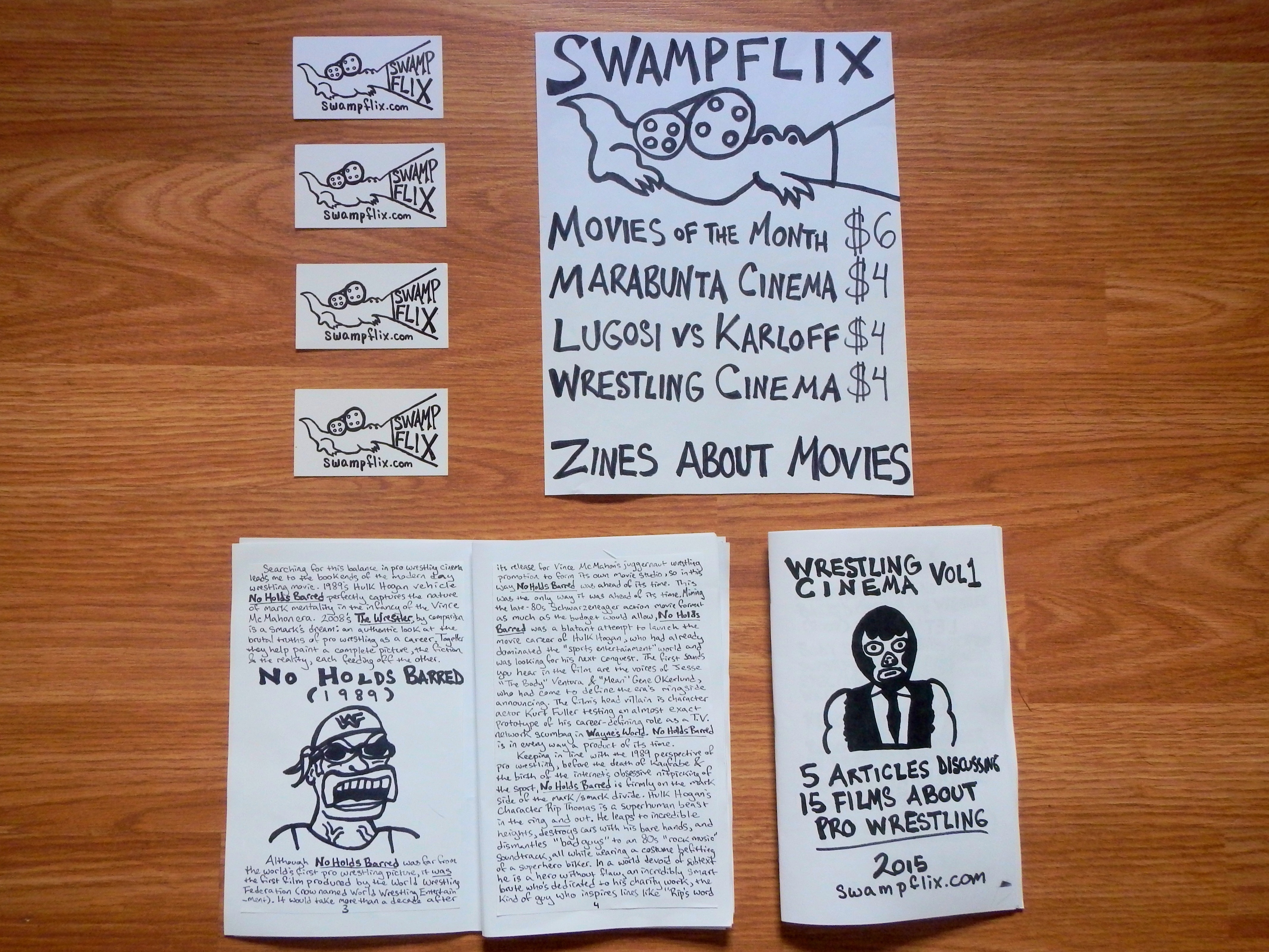
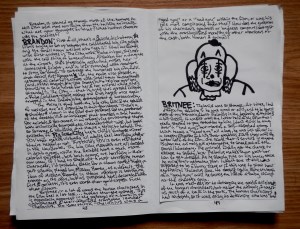
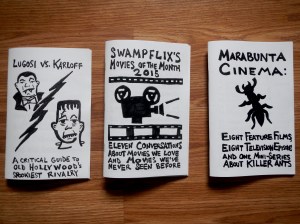
Attention, Swampflix readers in the New Orleans area! Swampflix will be exhibiting tomorrow (December 12th) at the fourteenth annual New Orleans Bookfair along with a bunch of other super cool books, comics, and zines exhibitors. We will be selling the print versions of the three Swampflix zines we sold at last month’s NOCAZ Fest (“Marabunta Cinema“, “Lugosi Vs. Karloff“, and 2015’s Movie of the Month conversations) PLUS a brand new collection of articles from our Wrestling Cinema page for all of you marks & smarks out there.

The Bookfair will take place Saturday, December 12th from 11am-5pm at Clouet Gardens (707 Clouet St., New Orleans, LA   70117)  in the Ninth Ward.

DSCN1460 (Modified (2))

DSCN1456 (Modified (2))

DSCN1455 (Modified (2))

I’ve lowered our prices a little since NOCAZ so all four pieces are dirt cheap. They all feature dozens of new illustrations & hand-transcribed text from the site and the Movies of the Month zine is a ~90 page whopper featuring work from everyone who’s contributed to the site this year.

For more info on the Bookfair (which features a whole lot of other activities besides book-selling), check out their website at NewOrleansBookfair.com  & refer to the poster below.

Book-Fair-8x11

We hope to see y’all there!

-The Swampflix Crew