
Rats! (2025)

Hollywood studios are struggling to get back on their feet after years of being knocked to the ground by blows like the COVID-19 pandemic, labor union strikes, and the decline of the Marvel Cinematic Industrial Complex. That’s bad news for shareholders & below-the-line workers alike, but it has cleared a lot of space on local marquees for microbudget indie cinema that would otherwise be elbowed out of the frame by superhero flicks, nostalgic remakes, and other Disney products of that cursed ilk. It’s easy to doomsay about the future of theatrical moviegoing in our current blockbuster lull, but I can’t get too dispirited by a trend that’s left room for independently-funded filmmakers like Jane Schoenbrun, Vera Drew, Kyle Edward Ball, Robbie Banfitch, Matt Farley, Kansas Bowling, Dylan Greenberg, Mike Cheslik and Ryland Tews to land major headlines & showtimes when just a decade ago their work would’ve been stuck in straight-to-Vimeo purgatory. Maybe it’s a bad time to own a movie studio, but things are looking up for outsider artists with attention-grabbing filmmaking styles, an active After Effects subscription, and a dream.

I’m excited to add Maxwell Nalevansky & Carl Fry to that growing list of microbudget freaks who’ve landed major impact with minor resources in this new era of outsider cinema. Their debut feature Rats! calls back to an older tradition of Texan slacker art sparked by a previous independent cinema boom, but I don’t know that any of those post-Linklater buttscratchers were ever as exceedingly gross or as truly anarchic. A pop-punk breakfast cereal commercial molding in rotten milk, Rats! is a singular vision, if not only because none of its peers would think to extrude poop directly onto the lens. Set in small-town Texas in the mid-aughts, it follows the daily follies of a permanently stoned graffiti artist who earns himself a night in jail when he’s caught tagging the town’s beloved public phone booth. The especially deranged cop on his case offers him amnesty for this crime if he rats on his small-time drug dealer cousin, whom she suspects of selling nukes to Osama Bin Laden but does not have the evidence to prove it. Meanwhile, a local serial killer is systematically removing the hands of unsuspecting victims around town, which also gets unfairly pinned on the cousins despite their collective ambitions mostly amounting to ripping bongs & chilling out. There isn’t much else going on in terms of plot, but much violence, romance, pop-punk whining, and lazing about ensues.

Rats! estimates what it might be like if the singing-butthole sequence of Pink Flamingos were staged in the live-action cartoon playhouse of Cool as Ice. The audience is afforded no time to adjust to its cavity-boring sugar rush, as the film frequently cuts to one-off Looney Tunes gags & nauseating Farrelly Brothers gross-outs without warning. It’s an unrelenting editing rhythm that’s sure to trigger a fight-or-flight response in unsuspecting viewers, but it’s also one with promising cult-classic potential for those who stick with it, given the density & intensity of its jokes. Like with other recent outsider-art triumphs like The People’s Joker & Hundreds of Beavers, it only gets funnier the more time you spend with it, as it builds its own inside-jokes with repeated gags like its persistent, nonsensical mispronunciation of the word “hands.” There might be some subversive political commentary in its lampooning of fascist suburban paranoia and its declaration that “The only good cop is a dead cop,” but for the most part its only goal from minute to minute is to make the audience laugh, and it consistently succeeds. Everything else is just a loving effort to make every frame as cartoonishly 2007 as possible, collecting as many totems from the era as it can in 85 breakneck minutes: an Alkaline Trio poster, a Converge t-shirt, a McCain/Palin billboard, Game Stop & Hot Topic shoplifting sprees, Xanax tablets, a panini press, etc.

Yellow Veil is giving Rats! a proper theatrical run before it hits VOD, including a local screening at The Broad on 3/28. Regardless of its immediate response from a wide audience, that level of distribution is an immediate victory for a film this cheap, this gross, and this prankishly abrasive. Not that long ago, it likely would have stalled on the regional festival circuit before trickling into self-published online platforms. That’s cause to celebrate, preferably over 40ozs and Black & Milds with your closest knucklehead friends for the full effect.

-Brandon Ledet
Striptease (1996)

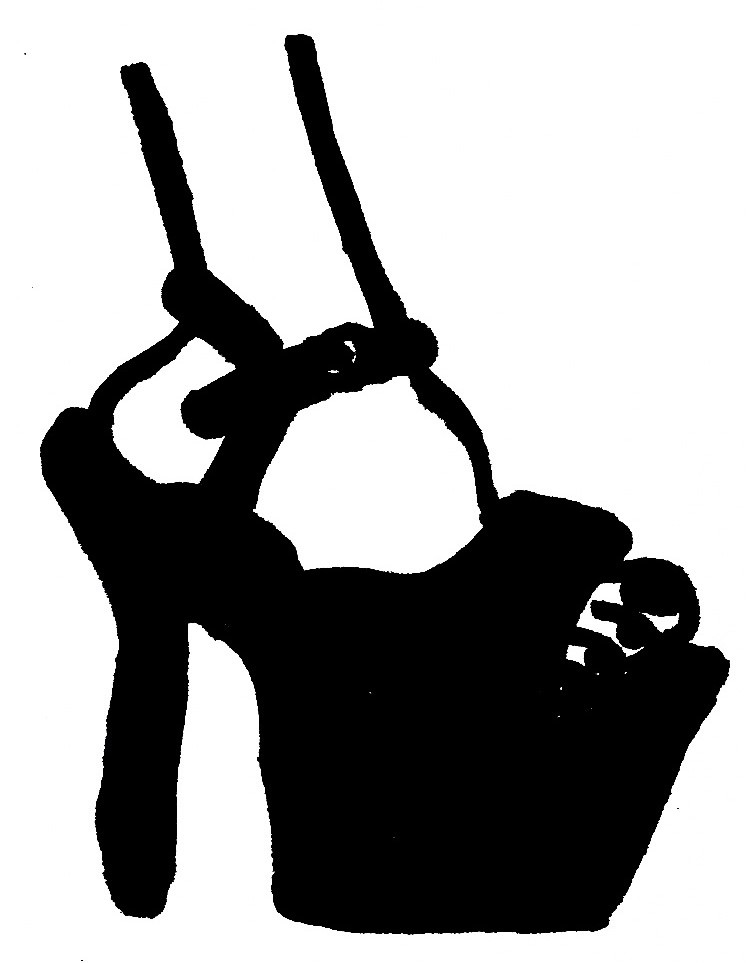
This year’s Oscar race for Best Actress has narrowed down to two fierce combatants: Demi Moore for her career-reviving role as an aged-out aerobics TV show host in Coralie Fargeat’s The Substance vs. Mikey Madison for her career-making role as a wronged erotic dancer in Sean Baker’s Anora. Thankfully, they’re both great performances in great movies, but since this is Awards Season, they share a combined running time of 280 minutes, which is a lot of homework to squeeze in before this Sunday’s ceremony if you’ve fallen behind on the syllabus. So, at this point it’s probably best recommended to watch the one title that combines those two flavors in one easy-to-swallow, two-hour treat. 1996’s Striptease stars Demi Moore in a career-pinnacle role as a wronged erotic dancer, lacing up her stripper boots and spinning the poles years before Mikey Madison was born. It’s got none of The Substance‘s gross-out humor nor any of Anora‘s violent despair, but it does find the exact Venn-Diagram overlap where Moore & Madison’s awards-season spotlights currently intersect. It’s also, on its own terms, a total hoot.

Released just one year after Paul Verhoeven’s vicious camp classic Showgirls, Striptease is mostly remembered as a hollow echo of one of the great erotic thrillers of its era. Despite their shared strip club setting, the two movies are wildly different in tone & intent, which makes Striptease‘s lighter, fluffier approach hugely beneficial in retrospect. It’s shockingly cute & playful for its scummy setting—populated with perverted Congressmen & gropey strip club patrons—ultimately playing more like a precursor for Miss Congeniality than an echo of Showgirls. Like Madison in Anora, Moore stars as an erotic dancer who has to chase down her fuckboy ex to get what’s owed to her (in this case, custody of her young daughter) while suffering a series of screwball hijinks that are tonally incongruent with the violence threatened by the crime-world goons circling around her. Moore was no young upstart ingénue at the time of filming, though. Her performance was the highest paid actress gig in Hollywood history at the point of paycheck, and she deserved every penny. Unfortunately and unfairly, it was also the start of her professional decline that hadn’t fully recovered until this year’s Oscar campaign, three decades later.

On a technical level, Striptease excels foremost as a feat of mainstream screenwriting. In an opening scene that lasts less than a minute, we’re introduced to Demi Moore in a Floridian divorce court, pleading to a good-old-boy judge not to grant custody of her daughter to her pill-head ex (Robert Patrick), whose flagrant criminality caused her to lose her job as a secretary for the FBI. That’s some incredible efficiency. From there, we immediately jump eight weeks into her new career as the rising-star dancer at The Eager Beaver, a humble strip club that struggles to match the class-standard set by its better-funded rival, The Flesh Farm. In that club, Moore exclusively strips to Annie Lennox tunes in absurdly athletic, MTV-style strip routines that recall Adrian Lynne’s girl-on-the-go 80s classic Flashdance . . . with a lot more nudity. She also makes fast friends with a cast of adorable fellow dancers and their living-cartoon bodyguard, played by Ving Rhames in what might be his career-funniest performance. Every exchange between Moore and the rest of the Eager Beaver staff is genuinely, warmly funny and hints to a screenplay that was refined trough several joke punch-ups by screenwriter-turned-director Andrew Bergman. That affable tone then goes a long way to soften the thriller elements that threaten to sour the good mood but never can, not in a movie where Ving Rhames trades quips with a pet monkey in perfect deadpan.

Burt Reynolds anchors the serious end of the plot in a deeply unserious role as a drunken lush Congressman with a panty fetish, who is so obsessed with Moore’s rising-star dancer that he at one point douses himself in Vaseline and huffs her dryer lint just to feel close to her. The role perfectly completes the comedic pervert trifecta established by his more celebrated parts in Boogie Nights & The Best Little Whorehouse in Texas, balancing out the thriller requirements of his character with some vintage kinky kitsch. Because the Congressman is so obviously, publicly horny for Moore, his staff has to clean up the trail of witnesses to his depravity with murderous violence, which escalates the stakes of Moore’s custody struggles. To the Right-Wing Christian voter base, he’s a God-fearing soldier of Christ who uses his office to uphold Family Values in the Deep South. To anyone who’s ever been alone with him, he’s a dangerously horny freak with no functional sense of interpersonal decorum, a total menace. Meanwhile, Moore and the rest of the Eager Beaver staff are portrayed as adorable women struggling to make do with “honest work.” Sure, a couple of them have the largest breast implants you’ll ever see outside of a Russ Meyer film, but they’re truly a wholesome bunch who love & support each other. It’s really very sweet, especially in comparison with the sleazy lawyers, politicians, and fixers in their orbit.

Demi Moore is more widely beloved for earlier 90s classics like Indecent Proposal & Ghost, but Striptease might be the best total-package encapsulation of what makes her great. She’s funny, she’s relatable, and she’s an exquisitely sculpted physical specimen that defies the usual limitations of the human body. A lot of the subtext of her role in The Substance relies on the audience’s understanding that she is a perfectly calibrated Hollywood actress who is still made to feel like she’s not living up to the impossible, illusionary standard set by her industry; Striptease puts her body on display in the same way, which had to have been a vulnerable act even at the height of her star power. The main struggle of Mikey Madison’s Oscar campaign this year is that she doesn’t have that built-in rapport with her audience, since she’s really just getting started. Her body is also being ogled in her star-making role, though, so it would be great to see her compare notes with Moore in a dual interview discussing what it’s like to work a stripper pole on a 50-foot movie screen with nowhere to hide from strangers’ eyes. You’d think that, because of the time of its release, Striptease would’ve been a lot more dismissive or gross about Moore’s fictional dancer than Anora was about Madison’s, but that’s really not the case. The two women were both given a chance to play these vulnerable, wronged sex workers with full heart, humor, and humanity, sidestepping the nastier, scuzzier tropes typically associated with the archetype. And they were both great at it.

-Brandon Ledet

Naughty New Orleans (1954)

It’s Carnival time in New Orleans, when civic pride is its most glowingly beautiful. This is not always an easy city to live in, but it is an easy city to love, and Mardi Gras is our annual reminder of how wonderful it can be at its best. It’s also an annual reminder that its wonders & beauty have never changed in any significant way. The dozens of Carnival seasons I’ve celebrated all feel part of one grand hedonistic continuum, set against the unchanging backdrop of centuries-old French Quarter facades. It’s a rejuvenating ritual that helps me combat the “Ain’t dere no more” nostalgia of grumps who complain that the city isn’t the same as it used to be since Katrina, or since the ’70s, or since whenever that particular grump happened to be in their carefree twenties. People change, governments change, but the city stays the same, like how a river keeps its name even as new water flows through it.

There are much less expensive, exhausting ways to be reminded of this grand New Orleanian continuum than attending Mardi Gras in-person. You could also just watch a movie. Any picture filmed in the French Quarter, regardless of purpose or quality, is a documentary about the city’s temporal stasis. The opening montage of 1954’s semi-nudie cutie Naughty New Orleans takes that mission more seriously than most, explaining the allure of “the city that care forgot […] where life is lived at a different pace” in overly formal newsreel narration. Of course, this narration is illustrated by a slideshow of French Quarter architecture, which looks exactly the same now as it did 70 years ago, give or take changes in fashion among the day-drinking pedestrians and hand-painted advertisements that adorn it. That is, until the movie settles on Bourbon Street, which has been unofficially annexed from the city proper and now exclusively belongs to the tourists.

Naughty New Orleans is less of a feature film than it is a lengthy tourism ad for the Bourbon Street strip club strip. Its poster is drowning in ad copy, enticing viewers to “actually visit the heart of world-famed French Quarter” where we’ll be treated to “delightful adult entertainment, exactly as seen by millions of visitors from across the world [….] a sophisticated treat with the girls you’ll meet on Bourbon Street.” Bourbon Street is still anchored by strip bars and dance clubs today, but the “adult entertainment” dancing style therein has changed dramatically. If you want to see burlesque, you have to flock to nerdier spaces like The AllWays Lounge on St Claude Ave, where actual New Orleanians drink. Bourbon Street strip clubs are where men from Ohio get blackout drunk to half-remember pole dances that would’ve been identical to what’s offered back in Cleveland, just now with commemorative plastic beads.

A document of stripping-fashions past, Naughty New Orleans is a vintage Bourbon Street striptease revue set to somber jazz and routinely interrupted by hack comedy routines & whispers of a plot. Set inside the “Ain’t dere no more” Bourbon Street club The Moulin Rouge, the core of the film is a series of burlesque acts akin to what I’ve seen performed in more recent years at The AllWays and One Eyed Jacks. Occasionally, a dancer will perform a superheroic feat like simultaneously helicoptering four independent tassels on her bra & panties in opposing directions, but mostly they just put on and take off their gartered stockings one leg at a time, just like everybody else. If you can ignore the heavily laugh-tracked, light-on-actual-laughs comedy sketches that interrupt those dance routines, it’s a warmly pleasant, classically smutty good time.

The ideal version of Naughty New Orleans would’ve continued the overly verbose newsreel narration throughout and strictly stuck to the striptease revue format in the mondo-movie fashion of a Mondo Topless or a Wild, Wild World of Jayne Mansfield. Instead, the film is flimsily held together by a story involving a star dancer’s deception of her out-of-town boyfriend, who believes she works as a “night secretary” until he stumbles into her headlining act at The Moulin Rouge. That’s it; that’s the entire story. The boyfriend is delighted instead of angered, to the dancer’s relief, then returns to his hometown while she pines from her French Quarter bedroom for another male visitor, leading the audience on through open implication. If the movie hadn’t bothered with that plotline and cut out the comedy routines to make more room for French Quarter strip shows & tourist photos, it might’ve really been something. Oh well.

Naughty New Orleans is best enjoyed as background noise on Tubi while folding laundry, only glancing up when the funeral-jazz hits the soundtrack so you know someone’s about to strip. The crowd reaction shots during those strip shows are a spectacle worth seeing in their own right, even if they are chaotically inserted images of toothless men & overdressed women repeating the same drunken, knowing grins for 77 haphazard minutes. It’s also a movie best enjoyed if you already have an affection for New Orleans as a temporal anomaly. You might not be able to recreate the exact night out advertised here on Bourbon Street in particular, but you can pass by these same buildings on your walk to a classic burlesque show on one of Bourbon’s less-crowded tributaries. The city is still—as the poster advertises—”tranquil by day, naughty by nite,” same as it ever was.

-Brandon Ledet

Armand (2025)

There is currently an American remake of Andrei Żuławski’s monstrous divorce meltdown Possession in the works, to be directed by Smile‘s Parker Finn and produced by Robert Pattinson. The project is both catastrophically misguided and totally understandable. Just a decade ago, it was difficult to access the 1981 political psych thriller through any official, legal means, which afforded it a kind of cult-curio prestige. The full-bodied mania of Isabelle Adjani’s performance in out-of-context clips in which she writhes in a tunnel while smashing her groceries against the concrete wall got passed around the internet enough that it gradually became a staple of online film culture, though, initiated by its copyright-infringing use in the Crystal Castles music video for “Plague.” A few expensive physical-media reissues & short streaming-platform stints later, and Possession is now an official part of the canon. There’s even enough evidence to argue that Adjani’s interpretive-dance tunnel freakout is the most influential movie scene of the current moment. It was cited as direct inspiration for at least three of last year’s biggest horror-heroine performances (Nosferatu, Immaculate, The First Omen), and now some poor actress will be tasked with retracing Adjani’s exact steps in a mainstream remake removed from its original cultural & political context — the final stage in legitimizing any once-subversive piece of art.

Adjani’s interpretive-dance freakout is now so cinematically ubiquitous that it’s influencing procedural dramas about tense parent-teacher conferences, not just horror flicks. The Norwegian film Armand is mostly structured as a stage play in a single primary school classroom wherein two couples argue about a physical altercation between their 6-year-old sons, as mediated by a timid schoolteacher and her hard-nosed administrative higher-ups. In the initial telling of the story, the titular child Armand is accused of having sexually assaulted his playmate in a school bathroom, an event that neither (unseen) child has the full vocabulary to communicate to the confused, horrified adults. Every parent and school employee has a hidden, selfish agenda in how they react to this crisis, which is slowly teased out in a web of secrets & resentments that link the two families far beyond the transgression they’re currently debating. It’s Armand’s mother Elizabeth who’s afforded the most complex internal life, though, as performed by Renate “Worst Person in the World” Reinsve. As the intensity of the parent-teacher conference escalates, she has a full psychotic breakdown that destroys all decorum by releasing something monstrously inhuman in the room, transforming a small-scale drama into a full-blown psych thriller merely by laughing & crying with violent intensity at unpredictable intervals. Armand might have gotten the title, but the movie is Elizabeth’s story.

It’s when Elizabeth steps into the school’s hallways & empty classrooms that the movie goes full Possession. The whispered rumors that spiral out of that closed-door meeting haunt her like vengeful ghosts as they echo off of every hard surface to the point of supernatural cacophony. Her public-figure role as a semi-famous actress combines with the scrutiny of her mothering technique to give her the feeling of constantly being pawed at from every direction, which is literalized by the imagined hands of fellow parents roughly groping her flesh in interpretive dance. The proceedings are coldly clerical in nature, but there’s an erotic violence to the tone that reverberates throughout the building, frequently turning moments of heated intimacy into physical abuse as parents & staff siphon each other off into empty rooms. Whether abuse is learned or inherited and whether you can ever fully separate truth from spin provide the film a thematic justification for what’s mostly just an excuse to rattle the audience, often through unexpected nosebleeds, fire alarms, and thundercracks. First-time director Halfdan Ullmann Tøndel is playing a game of tonal precarity here, unlocking something intangibly evil in a parent-teacher conference the way Possession unlocks something intangibly evil in a simple act of adultery or, more notably, a trip to the grocer. My comparing Reinsve to Adjani is probably doing her performance no favors, but she does hold her own among other recent actresses who’ve explicitly stated that’s where they’re drawing their inspo.

It’s entirely possible that no one making Armand had Possession in mind during production. As the nepo-grandbaby of Ingmar Bergman & Liv Ullman, Tøndel has plenty of under-the-surface menace to pull from just within his own family’s cinematic legacy. Where & when he chooses to break from reality in this psychological meltdown felt Possession adjacent to me, though, especially by the time the cast breaks into violent, abstract dance. By default, it’s a more compelling, interpretive use of Possession’s influence than any straight-forward Hollywood remake could be, regardless of whether the influence was conscious. The influence is unavoidable right now, but that doesn’t mean you can’t do something new with it.

-Brandon Ledet

George Dureau: New Orleans Artist (2023)

I have been aware of George Dureau’s legacy as a local artist for as long as I have been aware of local art, but until now I’ve only ever seen a toned-down, smoothed-out presentation of his actual work. Dureau was an edgy, confrontational presence in the early decades of his notoriety, but by the time I was old enough to explore local art galleries on my own in the 2000s, he had become a respectable cultural ambassador for the city, delivering commissioned works of public art for institutions like NOMA & Gallier Hall. The only time I’ve ever seen his image outside of self-portraits and still photographs is in a made-for-PBS documentary about the process of constructing Mardi Gras parade-floats, titled From the Ground Up. Introduced to him as a venerated public artist, I assumed his personal work was as safe & kitschy as George Rodrigue’s, but Dureau was much more provocative than that. He had just already gone through the John Waters trajectory of outsider-art iconoclast turned Respected Filth Elder before I was around to see the transformation. Thankfully, the new documentary George Dureau: New Orleans Artist is here to correct the record.

George Dureau: New Orleans Artist is a documentary portrait of a classic French Quarter eccentric, crudely stitched together from the stories & works he left behind.  The movie itself is ragged in its construction, seemingly assembled from whatever scraps of interviews with Dureau could be found on YouTube and molding camcorder tapes, with little attention paid to their mismatched sound quality. Despite enjoying an active social & professional life in the city for over eight decades, only eight interviewees are included in this hagiographic portrait, which either feels lazy or cowardly (depending on how divisive other participants might have found his personality or art). The filmmaking team of Sergio Andres Lobo-Navia & Jarret Lofstead are inconsistent in the final edit on when to illustrate those interviewees’ anecdotes with location-specific images captured around the city and when to just repeat triple-exposure shots of oak tree canopies filmed from below as a place-holder background image for the audience to zone out to. Still, no matter the moment-to-moment quibbles I had with the presentation, I left overall grateful for them giving this subject a feature-length treatment in the first place.

As a slideshow of art stills, New Orleans Artist is thrilling. Dureau thought of himself primarily as a painter and was frustrated by the curational attention paid to his photographs instead. Both mediums are presented with equal weight & importance here, drawing a throughline between the macho, muscular models he scouted to photograph in his home studio and the classical figure paintings that resulted from those studies. A homosexual lush with a warm but caustic demeanor, Dureau is portrayed as his own worst professional enemy, self-sabotaging his way through The Art World as he blew easy opportunities in order to maintain a vague personal integrity that only he fully understood. This self-driven conflict is mostly explained in his relationship with infamous NYC photographer Robert Mapplethorpe, whom both the film and Dureau himself argue photocopied all of his best visual ideas in less interesting, crueler works that made a lot more money in a market that thrives on cruelty. Dureau’s own work could cynically be seen as exploitative towards his nonprofessional models, whom he often sought for their differences in race & physical disfigurement. Mapplethorpe is presented at length as both an example of Dureau’s self-sabotaging professional combativeness and as an example of how this same work could be truly exploitative in the wrong hands.

A better movie might have focused entirely on Dureau’s warmly bitchy clashes with Mapplethorpe and the mutual influences of their work as contemporaries. There’s a specificity & purpose to that subject that’s missing in the film’s broader recollections of Dureau’s life in the city, which often devolve into “Ain’t dere no more” nostalgia and understandable-but-rote mourning over the devastation of AIDS & Hurricane Katrina (both of which Dureau survived relatively intact). By the time local art gallery owner Arthur Rogers explains that the French Quarter of the 1970s was different from today because it was full of “true eccentrics” then, I was nauseated by the obliviousness to the city’s ongoing art-scene counterculture; speaking of it purely in the past tense is embarrassing, not validating. Dureau’s work is powerful enough to speak for itself, though, and it loudly speaks over any good-old-days distractions from the film’s few interviewees. His work feels especially alive when compared with Mapplethorpe’s, seeming much cooler & kinder than his more famous frenemy’s (which was blurred at local screenings, presumably due to copyright issues). No one would have hated a side-by-side Dureau/Mapplethorpe documentary more than George Dureau himself, though, so it’s probably for the best that the only feature-length documentary of his work to date is about his relationship with New Orleans instead, something he did have genuine affection for.

-Brandon Ledet

Heart Eyes (2025)

Christopher Landon has his heart set on reviving the slasher, and he only has one plan on how to pull that off. In Happy Death Day, Landon combined the slasher with the time-loop Groundhog’s Day comedy, hoping to bring some novelty to a horror template that’s been stale since at least the late 1990s. In Freaky, he combined the slasher with the 80s body-swap comedy, and now, as a producer & writer on the latest slasher-mashup Heart Eyes, he has repeated the gimmick by combining the slasher with the mainstream romcom. All of these novelty mashups have a killer logline premise and a few amusing individual gags, but they’re not doing much to revive the slasher on its own merits. If anything, by comparing & merging the slasher with other genres decades beyond their own respective expiration dates, Landon is making a dispiriting admission that it is an effectively dead medium. It’s like improvising a full meal out of several incongruent, insufficient portions of leftovers before they get tossed out or mold in the fridge. Sure, it’s filling, but it’s also desperate and ultimately unsatisfying.

To be specific, Heart Eyes combines the early 2000s third-wave slasher with the 2010s straight-to-Netflix romcom, inadvertently calling attention to how long both genres have been culturally dormant (and how dire of a state they were in when they were most recently relevant). The romcom plot at its center is purposefully tropey as a They Came Together-style parody of the genre, complete with verbal references to decades-old relics like Notting Hill, My Best Friend’s Wedding, and 10 Things I Hate About You. Olivia Holt (doing her best Kate Hudson) stars as an over-worked, under-compensated marketing professional whose latest, failed ad campaign has put her job in jeopardy. Mason Gooding (doing his best Ryan Phillippe) co-stars as the hotshot ad agency hunk who’s threatening to take over her job but, wouldn’t you know it, they end up falling for each other despite the professional conflict. Of course, this swooning reverie is broken when a masked maniac who only kills lovers—only on Valentine’s Day—interrupts their meet cute with meaty cuts, hunting the unlikely couple during their first after-hours business meeting together while they desperately insist that it is not a date.

If there’s any thematic justification for this clunky genre mashup, it’s based in a cynicism against modern romance, as annually escalated by the cultural Valentine’s Day ritual. Heart Eyes ties its slasher-romance premise to a longer violent-romantic literary tradition, citing Romeo & Juliet, Bonnie & Clyde, and Jack & Rose as iconic couples who meet a violent end in their respective stories. In practice, though, its only real commentary on the nature of romance is mired in current, derisive assessments of love in the internet age, as typified by social media envy, dating apps, incels, kinks, throuples, etc. It’s a rallying cry for anyone frustrated with the state of modern romance, offering ironic, gory counterprogramming for people who groan at the very mention of Valentine’s Day, an emblem of a great societal failure. Thankfully, the mascot of that counterprogramming is at least well designed: a leather-hooded figure with glowing hearts for eyes and a full arsenal of deadly weapons, including some Cupid arrows for the sake of holiday-specific branding. The reveal of that mysterious killer’s identity is a bit of a letdown, but the mask is memorably distinct and the kills are memorably brutal, which is more than most rote slashers deliver.

Speaking of romantic traditions, the Valentine’s Day slasher is a subgenre with its own history of unrated gems, namely Valentine & My Bloody Valentine. If Heart Eyes has a permanent place in the greater horror canon, it’s as a novelty to be watched on that specific holiday, the way dedicated horror nerds plan their calendar around titles like April Fool’s Day, Halloween, Thanksgiving, Black Christmas, and New Year’s Evil. That seasonal context is much more forgiving to its charms than the context of Christopher Landon’s career project of saving the slasher through an ongoing series of genre mashups. As a blending of the slasher and the romcom, Heart Eyes feels disappointingly out of date and insincere, especially when compared to more conceptually thorough mashups like last year’s slow-cinema slasher In a Violent Nature. So much of the modern slasher’s current state is defined by nostalgia for past successes, with recent revivals of Scream, Texas Chainsaw Massacre, and Slumber Party Massacre being typical examples (along with broader pastiches like Ti West’s X trilogy). Tying that revival to other long-stale genres like the romcom and the body-swap comedy doesn’t exactly imply progress or innovation; it’s a lateral move at best.

-Brandon Ledet

Dark Match (2025)

Very early on in the first year of Swampflix, I reviewed a bad-on-purpose horror comedy called WolfCop, about a werewolf who’s “half man, half wolf, and all cop”. I remember having fun with the absurd novelty of that film’s premise and throwback 80s aesthetic, but I also remember finding the plot-heavy journey to those pleasures to be frustratingly tedious. A decade later, not much has changed. WolfCop director Lowell Dean has a new straight-to-Shudder horror film called Dark Match that repeats all the exact highs and lows of his werewolf-cop movie, except now mapped to the milieu of 1980s regional pro wrestling circuits. Infinity Pool & Possessor cinematographer Karim Hussain makes great use of Dark Match‘s late-80s setting by submerging its hyperviolent pro wrestling matches under a thick layer of VHS haze, often shooting its actors in uncomfortable, drunken close-ups like an unexperienced videographer operating the era’s bulky cameras for the very first time. The story also works its way up to a fun, bloody bar-napkin premise once it lures its minor pro wrestling promotion out to a backwoods cult compound for untelevised death matches, which turn out to be a Satanic ritual involving novelty weapons themed to Earth, Wind, Fire, and Water. The problem is that it’s a long, trudging journey to the over-the-top joys of that core premise, repeating all of the sins and virtues of WolfCop along the way.

If there’s anything that’s improved about Lowell Dean’s high-premise genre exercises in the past decade, it’s in Dark Match‘s tonal progression towards sincerity. Wrestling hall-of-famer Chris Jericho hams it up as the rural cult leader who’s engineered the death matches that liven up the third act, but he’s mostly included as a prop. Aisha Issa stars as our POV wrestler, Miss Behave, who’s the most talented grappler on her promotion’s roster but has to play heel due to the small-town racism of the venues they entertain. A stunted career spent putting over bubbly blonde white women leaves the Trinidadian cynic in an eternally rotten mood, which makes her sharply aware of the sour vibes at the Satanic cult’s pro wrestling sleepaway camp long before the death matches’ decapitations & disembowelings. The resulting tension falls somewhere between a straight-to-streaming knockoff of Get Out and a straight-to-streaming knockoff of Green Room, paling in comparison to either overt reference point. Thankfully, the four killer wrestling bouts at the center of the film liven things up with some true, gruesome novelty, and the sincerity of Miss Behave’s journey to that violent escalation prevent it from devolving into winking, smug irony. Unfortunately, those matches make up less than a third of the total runtime, and the remaining scenes of sincere drama are effectively dead air.

For a much more efficient, satisfying version of what Dark Match is going for, check out the 2011 novelty horror Monster Brawl, which simulates a feature-length pro wrestling Pay-Per-View where all of the combatants are Famous Monster archetypes: a werewolf, a mummy, a zombie, a Frankenstein, etc. However, please keep in mind that everyone I recommend that movie to absolutely hates it. Dark Match only truly comes alive during its gore-gimmicked pro wrestling bouts, having obvious fun with the visual textures of vintage TV broadcasts of the sport (despite the implications of its title). Monster Brawl maintains kayfabe for its entire runtime, never breaking from its TV broadcast premise for jags of dramatic tedium. That fully committed format leaves a lot more room for supernaturally violent in-ring action, which is the only reason an audience would stream one of these novelty horrors in the first place. Given that Monster Brawl is loved by seemingly no one but me, maybe it doesn’t matter that Dark Match falls short of its fully-fleshed-out ideal. Maybe all that matters is that, like Lowell Dean, I’m still wasting my time on disposable trivialities like this ten years since our last passing moment together. Regardless of whether the movies that bond us are any good, we are brothers in schlock.

-Brandon Ledet

Companion (2025)

It’s no surprise that Companion is advertised by association with producer Zach Creggers’s previous film Barbarian, as there’s a lot of fun being had by mixing an inconsistent light tone with a genuinely tense horror atmosphere, bending what could otherwise be pretty straightforward genre fare into something novel. Iris (Sophie Thatcher) is the sweetly innocent girlfriend of Josh (Jack Quaid), with whom she had a cute first meeting at a supermarket. The film opens on them making their way to the lakehouse of Sergey (Rupert Friend), who is the boyfriend of Josh’s friend Kat (Megan Suri). Also joining for the weekend are Kat and Josh’s old friend Eli (Harvey Guillén), and Eli’s partner Patrick (Lucas Gage). After an awkward interaction between Kat and Iris that establishes Iris’s belief that Kat hates her isn’t all in her head, the group has a little dance party and Iris’s reaction to the story of Patrick and Eli’s own meet cute implies she may be overinvested in her relationship. Things go completely awry the next morning when Sergey attempts to assault Iris while the two are alone at the lake shore, with deadly results. 

I’m going to go into BIG SPOILERS here, even though I’m not sure we can even call them that, since the marketing for this film has largely given it away. In fact, one of the friends that I invited to the screening I attended spoiled herself from the trailer so much that she decided she didn’t even want to see it. It’s almost impossible to talk about this movie without getting into it. Still here? Okay. The title “Companion” isn’t just about Iris being Josh’s girlfriend; it relates to the fact that she is a gynoid girlfriend. If you manage to avoid being spoiled for this, as I was, this is foreshadowed several times. First, Iris awakens in the car when Josh says “Iris, wake up,” which doesn’t seem unusual at that time but later turns out to be her activation phrase (with its inverse being her sleep mode instruction). She’s also extremely polite to Josh’s self-driving car, which seems to bemuse him, and Kat later tells Iris that the latter’s existence makes her feel replaceable. The hints get thicker as the revelation approaches, like when Iris responds with precise temperature and forecast information when Josh asks her what the weather will be like that day. 

Iris herself is a model from the Empathix company, and although the companionship droids that they provide have safeguards built in—the same strength as a human of the same build, programming that prevents the droids from harming people or other living things, and an inability to lie—Josh has “jailbroken” her so that she responded with lethal force to Sergey. This is part of an elaborate plan between Josh and Kat to steal Sergey’s money, with Patrick and Eli in attendance to unwittingly provide corroborating testimony that Sergey was killed by Iris. When Josh reactivates Iris in order to “say goodbye,” he sets up his own downfall, as she is able to escape from the lakehouse and flee into the wilderness nearby, and Josh et al must track her down and reboot her before the police arrive in order to disguise his complicity in her reprogramming and ensure their impunity in Sergey’s death. 

Like Barbarian before it, this is an exciting ride with twists and turns beyond the initial reveal that Iris isn’t the girl she seems to be that propel the action along. Jack Quaid plays a variation on his 5cream character, the seemingly nice, perfect boyfriend who turns out to be a pathetic manchild whose motivations are driven by a sense of entitlement. In that slasher, it was that he was a superfan with a grudge (“How can fandom be toxic?”). Here, he’s a seemingly unambitious man who rants about nice guys finishing last and demonstrates other such personality flaws. That’s two-for-two for movies getting a lot of mileage out of Quaid’s cute face and presumed innocence, but I hope we don’t go to that well too often (this screening featured a trailer for his upcoming action-hero-who-can’t-feel-pain flick Novocaine, and it’s nice to see him doing something different). I praised Sophie Thatcher up and down for her work in Heretic, and she carries this movie with aplomb. Iris is both Sarah Connor and the Terminator (a comparison that the film makes textual through both recreating the metal endoskeletal hand scene and putting a killer android in a police uniform à la T2), determined but not unstoppable. I’m sure a lot of this may seem derivative to some: yes, we also saw sliders for personality traits for robotic humans on Westworld; yes, this is in some ways another take on The Stepford Wives. But all writing is rewriting and all creation is remixing, and Companion is clever and novel in its approach. 

-Mark “Boomer” Redmond

Feels Good Man (2020)

The first few weeks of Donald Trump’s second presidential term have surprisingly been defined more by the daily stunts & shenanigans of unelected government official Elon Musk than they have been by the actions of the president himself. Sure, Trump is signing a relentless barrage of hateful, unconstitutional Executive Orders that are threatening to crumble decades of social & economic progress in a matter of days. That was fully expected, though, especially if you paid any attention to the “Project 2025” agenda advertised during his election campaign. Musk’s overt, oligarchic influence on these Executive Branch actions have been just as nefarious but much more bizarre, especially as an extension of the failed meme humor of his current reign as the Villain King of Twitter. It’s not enough that Trump & Musk are wielding institutional power to reshape America with a straight-up Nazi agenda; they’re also irony-washing that Nazi ideology through several layers of internet meme humor, so that their above-board, bought-and-paid-for coup is read as a humorous prank meant to “trigger the libs,” not to welcome in a new, shameless era of American fascism. Between Musk’s “DOGE” branding, his juvenile obsession with the numbers 69 & 420, and the bar now being so low that his executing a Nazi salute at Trump’s inauguration now qualifies as a “dog whistle,” it’s clear that we’re living through America’s first 4chan presidency. Evil has never been so inane.

If you catch yourself wondering how, exactly, we got here over the last few years, I’ve seen no better explainer than the 2020 documentary Feels Good Man. A 90-minute history lesson on the memeification of a cartoon stoner frog may sound trivial in the context of America’s Nazi takeover, but Feels Good Man somehow does a better job explaining & contextualizing that far-right political shift than any other film I’ve seen – predating and overriding all of those QAnon docs that auto-populated on every streaming service in the years following the January 6 coup attempt of 2021. The stoner frog in question is, of course, Pepe the Frog, the breakout character from alt-comics artist Matt Furie’s cult series Boys Club. A soft-spoken San Francisco stoner who’s been drawing goofy frog doodles his entire life, Furie confides that Pepe is the Boys Club character he most personally identifies with . . . which is a brave thing to admit given the character’s eventual perversion and radicalization in the Hell pits of 4chan once it escaped the pages of his comic book. A single frame of Boys Club in which Pepe explains to his burnout roommates that he urinates with his pants completely lowered to his ankles because it “feels good man” was a funny enough image that it started getting shared on the internet outside the context of its source material and, as the movie argues, somehow snowballed into Donald Trump becoming the 45th President of the United States.

I have a general affection for Anthropology of the Internet documentaries that immortalize disposable online ephemera for cinematic prosperity, especially when they capture the sinister atmosphere of the Internet’s dankest dungeons (see also: the Russian dashcam compilation The Road Movie, the evil-clown sightings doc Wrinkles the Clown, and Jane Schoenbrun’s Slenderman doc A Self-Induced Hallucination). Even so, Feels Good Man does a better job than most at explaining how its own subject’s online virality led to real-world consequences outside niche meme forums. It chronicles Pepe the Frog’s transformation in the hellfires of 4chan from loveable frog to “the new swastika”, explaining how users who identified with Pepe as much as its creator had to force the frog to “go dark” to protect him from “normies” (i.e., women) who might identify with him as well. Because 4chan is an attention-economy culture that mostly traffics in “ironic” racism, this effort manifested as Pepe becoming a mouthpiece for Nazi rhetoric and an online dog whistle for alt-right C.H.U.D.s. Making Pepe as bigoted as possible became a kind of online game, and it gave real-world Right Wing ghouls a way to signal to the keyboard Nazis at home that the Trump-led establishment shared their values without abandoning their more buttoned-up, traditional voter base. That co-opting seems a little quaint now that Elon Musk is Sieg Heiling on an official government stage, but it was a major stepping stone that led us here.

The half of Feels Good Man that explains how 4chan memes created a new Nazi America is populated with all the expected demons of 2010s alt-right ascension. Pepe’s Nazi radicalization was directly inspired by Steve Bannon’s political strategy to “flood the zone with shit,” which has become the go-to playbook for the Trump-led Republican Party. During the infamous street interview when Richard Spencer is punched in the face by a protester, he’s explaining his Pepe the Frog lapel pin to a reporter at the moment the fist connects with his jaw (which the movie graciously repeats in several loops for our viewing pleasure). Pepe is even transformed into a direct stand-in for Trump himself, outfitted with a new smug facial expression and a Trumpian wig. Most critically, former Infowars blowhard Alex Jones is sued for copyright infringement by Matt Furie after using Pepe’s image on a fundraising campaign poster, marking Furie’s too-little-too-late attempt to reclaim his intellectual property from the worst people alive. The half of the film that’s about Furie’s astonishment & unpreparedness for the Internet’s hateful perversion of Pepe is adorably naive and populated with fellow alt-comics artists who are sad to see their friend suffer in this exponentially shitty shithole of a world: Lisa Hanawalt, Johnny Ryan, Aiyana Udesen, etc. Their attempt to reclaim Pepe and save his reputation was heavily outgunned, though, since the opposition included literal White House occupants.

It’s easy to roll your eyes at the twee preciousness of Furie’s pleas for good vibes and kindness as opposition against the hateful scum who’ve stolen & desecrated his art, but I appreciate the sentiment. I could not have sat through an exhaustive recounting of how 4chan “elected a meme as a president” and ushered in a Fourth Reich for the LOLs without a little kindness & levity. Being reminded that there are still sweet, reasonable people in the world who are oblivious to the deep well of evil on the other side of their computer screens was a calming counterbalance to the infuriating co-opting of meme culture to enact real-world fascism detailed elsewhere in the film. Five years later, it’s clear which side of that divide is winning the Culture War, but it’s also clear that they cannot create anything substantial themselves worthy of sharing & celebrating; they can only pervert, corrupt, and drain the humor & life out of previously existing art & language (which explains their more recent fondness for generative A.I.). As evidenced by the interstitial animations that imagine what it might be like if Boys Club had been adapted into a psychedelic Adult Swim sitcom instead of a Nazi dog whistle, Pepe deserved so much better than the hell-world we live in. He’s a cool frog.

-Brandon Ledet

Ernest Cole: Lost and Found (2025)

Nearly ten years ago, a trove of presumed lost photographic prints and negatives belonging to the late exiled South African photographer Ernest Cole was discovered in several Swiss bank deposit boxes. Cole, born in 1940, was a critical component in the eventual overturning of the policies of apartheid in South Africa, as the 1967 release of his photobook House of Bondage was one of the first pieces of media to expose the inhuman cruelties occurring in South Africa under the hand of Prime Minister Hendrik Verwoerd (the “architect of apartheid”). Exiled as a result of this act of activism, Cole ended up in the United States, where he ultimately died—essentially homeless—in 1990. At the time, much of his work, which he had stored in a boarding house storeroom and had been unable to regain access to, was assumed to have been tossed out and lost forever, until the 2017 Swiss bank discovery. One of Cole’s last living relatives, a nephew, was flown into the country to collect these items, and found himself unable to get any information about why his uncle’s work had ended up in the safe at this bank, who had deposited it, or how they had paid for it. 

Ernest Cole: Lost and Found spends some time on this Swiss mystery, and I want to get that out of the way first since it is, to me, the least important aspect of this documentary. When it was first mentioned that Cole’s assumed-lost work had been found intact and preserved in the SEB vault, I considered this a cause for joy, and it didn’t occur to me to presume malice on the part of whoever put it there. Surely, it would have to be someone who wanted to keep that material safe and preserved. If someone wanted to get rid of his documentation of social injustice, they would just destroy it, right? Once we learn later in the documentary that Cole’s mental (and physical) health had degraded to the point that he was unable to regain possession of his work before his death, one could almost imagine some Good Samaritan rescuing the work from being hauled away in the back of a sanitation truck, although this doesn’t explain how it ended up on the other side of the Atlantic. When the doc revealed that there were a remaining 504 photographs that the Swiss government was still fighting for possession of with Cole’s estate, I was a bit more convinced of the possibility of malintent on the part of whomever had spirited away Cole’s work. It was only after I started to write this paragraph that it struck me that I might be failing to inspect the colonialism of the idea altogether since any preservationist instinct that removed art from Africa to “protect” it by storing it in Europe is, well … colonialist by default. We may never know how a collection of Cole’s work ended up there, but its return to Cole’s family prompted filmmaker Raoul Peck to create Lost and Found, and it’s an unequivocal good that this film exists. 

Nearly all of the footage within the film is Cole’s own, as are the words; LaKeith Stanfield provides voiceover that is taken from Cole’s correspondence and other writings, weaving together the narrative of a life. Cole talks about where he grew up, how a racist campaign of term-redefinition and expansionist neologisms led to the destruction of homes, communities, and families of native Africans under European rule. He escaped with his negatives and published House of Bondage, and as a result of his political exile, found himself adrift in a world that he had no hand in making and in which he could find little purchase. An attempt to expose the racism of the American South as he had the racism of South Africa was mounted, with Cole being sponsored by publishers to travel, but contemporary critics were less receptive to this work. Whether this is purely a matter of Western tendencies to find depictions of injustice abroad moving and empathy-inspiring while bristling when we see it in the mirror, or if there is some validity to the idea that his artistic eye was less capable of capturing the emotion of his subjects because of the cultural differences between the kind of racism that they experienced, I shall leave to your discretion. Despite the horrors of what he saw at home, his exile had a profoundly depressive effect on Cole, leaving him constantly in search of work and making it nearly impossible for him to keep a residence for long. Changes in leadership at publishing houses would mean that he was only half paid for a job and thus never finished it, and the discrepancies between how Cole would describe himself in his journals (not depressed) versus how his friends remember him to have been at the time (severely affected by depression) reveal a man who was lost, alone, and who never fully recovered from what he witnessed in his youth. Ultimately, he never did return home, although his aged mother was able to be at his bedside in New York when he died on February 19, 1990, just eight days after Nelson Mandela was released from prison in one of the defining moments in the collapse of the apartheid regime within the next few years. 

This documentary is deeply felt, wonderfully composed, and unfortunately timely. The portrait of Cole that is created is a warm but not overly sentimental one. The narrative choice to use only Cole’s words is one that means that the voiceover informs but does not contextualize and, thus, requires you to build the story yourself from the juxtaposition and editing rather than having your hand held about what you should be thinking or how you should feel. One feature that stood out to me particularly was the frequent appearance of filmed political speeches and U.N. forums that, for decades, repeated the same tired canards justifying a lack of embargoes or sanctions against South Africa. “It would only harm those we are trying to help” says the U.N. president in grainy black and white footage from the 1960s, and which is said again by his successor in the 1970s, before being repeated almost word-for-word in vibrant color video of Margaret Thatcher and Ronald Reagan. I have to be honest with you; it’s bleak, and the portrait it paints of what’s in store for us in the coming years is even bleaker. When House of Bondage was released, it created a sense of moral outrage in the populace that, even at full force, was completely incapable of causing national and international leadership to take any action to end apartheid. We’ve spent the last 15 months with constant, new images of harrowing, monstrous, evil violence enacted by an apartheid state that currently exists, and the modern American is so inured to this kind of wickedness that the coalition of those who are rightly horrified is mocked, belittled, shouted down, fired, and legally silenced by conmen, grifters, and empowered bigots. If it took two and a half decades for apartheid to fall despite international (citizen-level) support for its abolition, then it does not bode well for the end of any current campaign of government terror, when people are unmoved by the plight of their fellow man. The past is never dead. It is not even the past. 

-Mark “Boomer” Redmond