I Know What You Did Last Summer (2025)

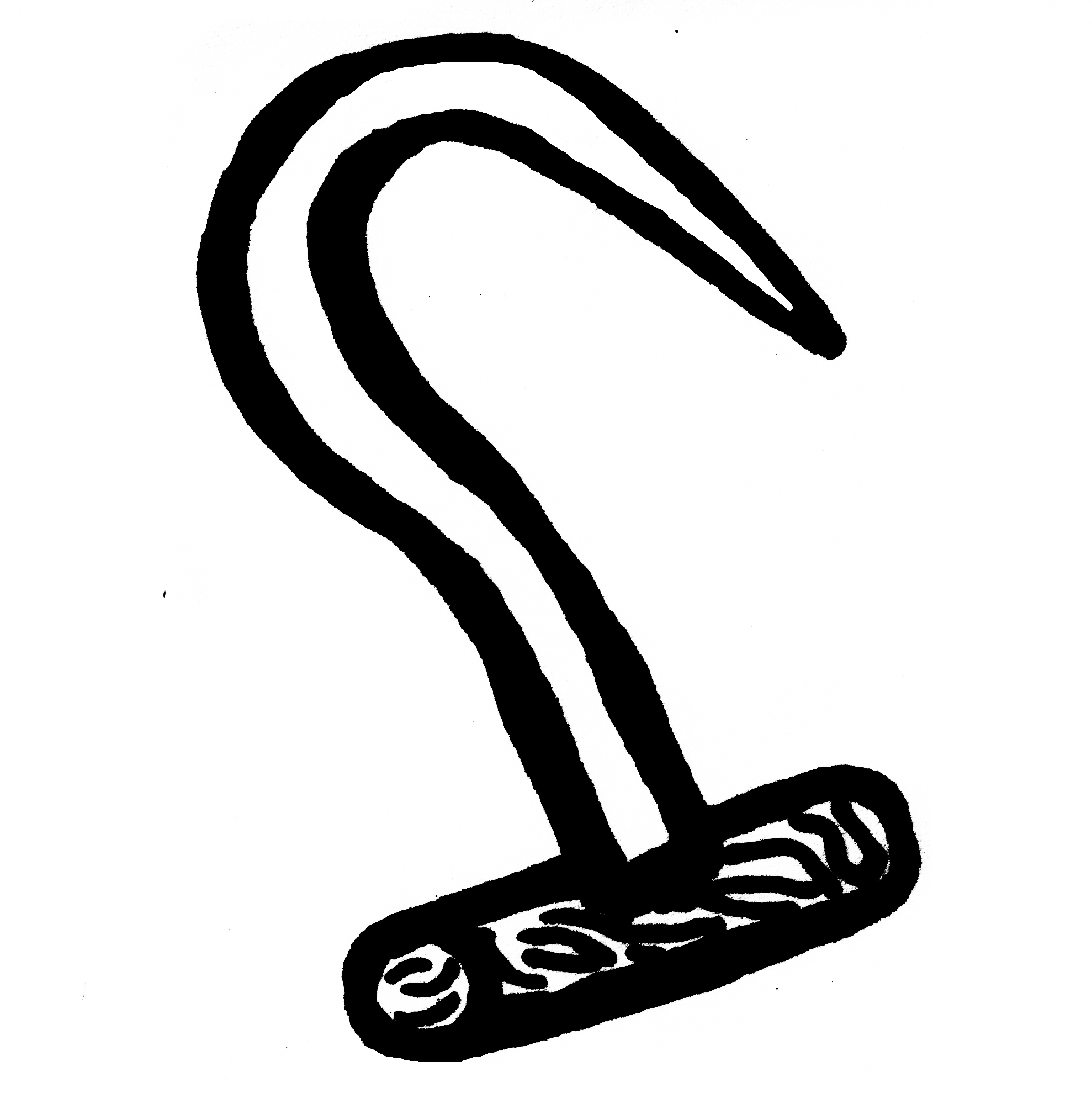
There is something both inevitable and unfathomable about there being a new I Know What You Did Last Summer legacyquel in wide theatrical release right now. Sure, the combination of Hollywood executives’ unquenchable thirst for name-brand IP and the relative dependability of horror cheapies to turn a tidy profit makes it seem like a no-brainer that this vintage 90s title would get the modern rebootquel treatment. It was pretty low on the priority list too, following a long parade of legacy horror sequels of varying quality in recent years, like Scream, Halloween, Candyman, Texas Chainsaw Massacre, and Final Destination: Bloodlines. Even so, the I Know What You Did Last Summer brand had already been downgraded to straight-to-streaming schlock in its little seen third & fourth entries, so it’s a little surprising to see the title claw its way back onto multiplex marquees. It’s especially surprising when you consider how little there is to the property beyond the recognizability of its title, which makes for easy, memorable parody in Scary Movie-type yuck-em-ups. The first I Know What You Did Last Summer film is a by-the-numbers teen slasher with little bloodshed and little novelty. Its setting in a North Carolina fishing village provides some nice background texture for its otherwise indisticntive murder spree, justifying its hook-handed fisherman killer’s costuming beyond its connection to a timeless urban legend. By the second film in the series, it was already apparent that those details weren’t enough to keep the party going, since I Still Know What You Did Last Summer immediately jumped the shark by sending its teens-in-peril on the kind of Bahamas beach trip that usually arrives multiple seasons into a hokey sitcom like Saved by the Bell. That tropical island locale does little to distract from the fact that the series’ killer isn’t iconic enough to have earned a recognizable moniker by his second outing. You can’t even joke about I Still Know being subtitled The Fisherman’s Tropical Vacay or The Hook Man’s Island Getaway because no one would know what you’re talking about. When the killer’s teenage victims refer to him as “The Slicker Guy” deep into the third act, you can feel the whole brand falling apart from under you . . . and yet here we are, two more sequels and a televised series later.

The benefit of contributing to a legacy this bland is that it sets expectations low. No army of black t-shirted horror bros are going to be outraged about the blasphemous desecration of I Know What You Did Last Summer as a sacred object, not the way they were with more disastrous franchise refreshers like The Exorcist: Believer or the 2010 Nightmare on Elm Street. That gives director Jennifer Kaytin Robinson free rein to be playful & flippant with the material, even if the exercise requires her to be absurdly reverent to the fabled events of 1997. Through reluctant re-unions, nightmare visitations, and a presumptuous sequel set-up stinger, the main casts of the first two I Know What You Did features return here for unearned moments of horror-icon spotlight: Jennifer Love Hewitt, Freddie Prinze Jr., Sarah Michelle Gellar and, briefly, Brandy. As is now legacyquel tradition, they help fill in a younger cast of imperiled teens on their initial bouts with the slicker killer, adding gravitas to previous outings by constantly referencing Trauma in therapy speak (in this case through classroom lecture and conversational references to The Body Keeps The Score). The 4th of July celebrations, fish-themed parade floats, department store mannequins, and town-hall beauty pageant stage of the original film are all treated with sacred reverence as if anyone would remember those details without having recently rewatched it as homework. Robinson undercuts that reverence with metatextual jokes about how “Nostalgia’s overrated” or how it’s not a viable plan to “fuck off to the Bahamas” to escape this particular killer, but those one-liners only go so far. Her bolder choice is to double down on the sassy, aggressive girliness of her straight-to-Netflix comedy thriller Do Revenge here, aiming her I Know What You Did sequel at teen-girl sensibilities instead of trying to please those teens’ aging Millennial parents. Considering that the first Last Summer movie excelled more as a teen melodrama than as a bodycount slasher anyway, it makes sense that this cutesy reboot would be rigorously engineered specifically “for the girlies and the gays.” What’s impressive is that it pulls off that girlish tone while still being the most violent entry in its series to date.

As with the original cast, the new I Know What You Did Last Summer crew is populated by young twentysomethings who are likely only famous to children (give or take whatever die-hard fans Chase Sui Wonders might have picked up from her turn as the least recognizable actor in Bodies Bodies Bodies). As with the original cast, they spend a reckless night partying on a public road by the fishing-village coast, leading to an anonymous stranger’s vehicular death. They do nothing to rescue or report in that moment of crisis, which seemingly leads to vengeance from beyond the grave the following summer, when a hook-handed killer in a fisherman slicker threatens them with notecards & puncture wounds. This reboot does not deviate from the narrative formula of the original, but it does deviate in tone & extremity. While the 1997 film kept most of its kills offscreen and cleanly preserved on fishing-boat ice, the new one leans into its R rating and throws in some additional fishing-themed tools of death to expand the killer’s arsenal: boning knife, anchor rope, harpoon gun, etc. Robinson also expands the horror-nostalgia scope to include allusions to other famous properties, borrowing the Jaws mayor’s refusal to postpone his town’s 4th of July celebrations, the Scream killer’s kitchen-island voyeurism, and some horror-nerd cred from references to podcasts like Colors of the Dark & This Ends at Prom. She balances out all of this genre-fan pandering by keeping the mood light, sassy, and gay. Same-sex couples, bisexual hookups, and a self-satisfied coining of the term “gentrifislaytion” align the film with other recent reclaimed-for-the-girlies horror titles like Do Revenge, Clown in a Cornfield, and 2021’s Slumber Party Massacre remake than traditionally macho horror-convention-bro fare. I don’t believe any of those titles are remarkably great films, but I also recognize that I am not their primary target audience. I was 12 years old when I watched the first I Know What You Did Last Summer in a suburban movie theater, duped into enjoying an afterschool-special melodrama about reckless driving because it was dressed up in the rain-soaked clothes of a post-Scream slasher. Today’s 12-year-olds now have a mediocre-to-everyone-else slasher of their very own here, just as lacking in distinct iconography but now doubly violent, fun, and queer-friendly. I think that’s beautiful.

-Brandon Ledet

I Know What You Did Last Summer (1997)

One of my most distinct moviegoing memories from my childhood was seeing the post-Scream teen slasher I Know What You Did Last Summer with my parents opening weekend. As an exclusive new track from my then-favorite band played over the end credits (“Proud,” by KoЯn), I was in 12-year-old nü-metal brat heaven, beaming in delight. That’s when my father leaned over and whispered in a firm, disappointed tone, “You never get to pick the movie again.” Three decades later, I’m older now than my father’s age was then, and I totally get it. This mildly violent teenage melodrama must be torturously tedious for any adult outside its very narrow target demographic (gloomy Millennials who were 12—and exactly 12—years old in 1997). In retrospect, I can’t believe that I dragged my parents to see it in a theater, regardless of how giddy it made me personally. Even more so, I can’t believe that some poor parent my age now is about to suffer the same fate via legacyquel. Must we forever be tormented by the sins of our mall-goth past? Can’t the world finally forgive & forget what we did that summer? Will there ever be peace in the suburbs?

All of your favorite late-90s teen stars are here: Sarah Michelle Gellar as a small-town beauty queen, Ryan Phillipe as her spoiled fuckboy sweetheart, Freddie Prinze Jr. as the townie interloper who’s desperate to earn his way into his friend group’s tax bracket, and Jennifer Love Hewitt as the only normal, well-adjusted youngster among them. The four bright young things get into trouble one night after partying on the beach outside their small fishing village, when they accidentally strike & kill a pedestrian crossing a dimly lit road and dump his body into a nearby bay to avoid hassle from the law. A year later, this act of semi-voluntary manslaughter haunts all four of the now-estranged kids involved, derailing their professional & educational ambitions as they quietly stew in the isolation of their own guilt & grief. The haunting becomes a lot more literal when a mysterious killer dressed in a fisherman slicker starts picking them off one by one via fish hook, seemingly avenging their hit-and-run victim from beyond the grave. If you’ve seen any formulaic teen slasher, you’ve seen it all before (doubly so if you’ve seen 1985’s The Mutilator); you just haven’t seen it performed by this era-specific cast.

I Know What You Did Last Summer splits the difference between an 80s teen slasher & a 50s road-to-ruin PSA about the perils of reckless driving, updated with a totally 90s cast & an astonishingly shitty 90s soundtrack (including, among other atrocities, covers of “Summer Breeze” by Type O Negative and “Hey Bulldog” by Toad the Wet Sprocket). It’s a little too squeamish about bloodshed to be an effective horror film, slaying most of its victims offscreen and keeping their corpses on ice like freshly caught fish so they don’t stink up the place. It is relatively compelling as an afterschool melodrama, however, with the two main girls’ increasingly grim home lives leading to a few memorable scenes that outperform the undead fisherman’s kills. Its lack of slasher-genre ingenuity is a little surprising given that the screenplay was written by Kevin Williamson one year after he penned the meta-horror hit Scream, which is much smarter about reshaping & reexamining the slasher formula from new angles. His trademark post-modernism enters the frame in an early scene where the teens in peril share campfire stories of the urban legend about a killer with a hook for a hand before suffering an updated version of it in real life, but the same idea was pushed much further in the next year’s Urban Legend, leaving this one effectively moot.

It’s easy to point out the ways in which I Know What You Did Last Summer falls short of 90s slasher greatness, but it’s by no means the worst of Kevin Williamson’s post-Scream teen horror scripts (that would be Teaching Mrs. Tingle). If nothing else, its coastal fishing village on the 4th of July setting affords it some occasional distinguishing novelty, not least of all in the multiple parade sequences featuring gigantic paper mâché fish on wheels. Thanks to Williamson’s previous commercial triumph, it was also made in a time when these teen bodycount movies were produced with robust Hollywood budgets behind them, so director Jim Gillespie (of Venom “fame”) gets to make frequent use of swooping crane shots to liven up the dialogue-heavy melodrama. Still, of all the 90s properties to continually get serialized & rebooted, it makes no sense that something this generic is still being kept alive as Horror Icon IP instead of, say, the more stylish & memorable Williamson-penned classic The Faculty. I pity the poor parents whose pre-teens are going to drag them to the theater for the latest legacyquel addition to the I Know What You Did franchise this summer because they have a crush on one of its famous-only-to-children stars. It’s a tradition that’s gone on for far too long, dragging on since the long-gone days of Soul Asylum, Our Lady Peace, and KoЯn.

-Brandon Ledet

Do Revenge (2022)

It probably comes as no surprise that I am a man whose limited social media use includes following the Twitter accounts of several Buffy-related content producers. I used to follow the one and only Mrs. Sarah Michelle Gellar on Instagram until I got sad that her manager was making her do the same branded social media content that fame bottom feeders like Patreon-less YouTubers and people who make cakes that are 80% fondant are doing; I felt like Sideshow Bob shivering upon learning that “TV’s bottomless chum bucket [had] claimed Vanessa Redgrave.” No judgment on our adulated SMG, of course; I love her like Broadway queens love Patti LuPone. I’m just saying everybody needs to go stream BTVS on Hulu like, right now, so that she never has to do another one of those unless she actually wants to. So, of course when I heard that Her Excellency was going to be in a new movie that was being billed as the high school version of Strangers on a Train, and that I didn’t even have to leave the house to see it, well, of course I was going to. 

At 28 minutes into Do Revenge, the traditionally attractive Drea (Camila Mendes, of Riverdale), having convinced gawkishly gorgeous Eleanor (Maya Hawke) to do revenge with her, gets excited: 

Drea: First we have to fix (pulls Eleanor in front of a mirror) … this. We have to do

Eleanor: Please don’t say “makeover.” 

Drea: —a makeover! Yay! (jumps up and down)

Eleanor: (with vocal fry) Feels problematic.

Drea: It is, but it’s fun!

Do Revenge presents itself as a pretty conventional movie, and in many ways it is, despite its winking self-awareness that it’s trafficking in cliches. Prior to this scene, when Eleanor is offered a tour of her new high school, she responds “I mean, as a disciple of the ’90s teen movie, I would be offended if I didn’t get one.” It’s borrowing from a deep, deep well: high school-set literature adaptations, the sharp wit and ear for dialogue that permeates the mean girl movie canon, and revenge thrillers. The film opens with narration from Drea, who fills us in on how, from humble beginnings, she has clawed her way to the top of the social hierarchy at Rosewood Country Day, an elite private high school in the Miami area. “They all want me as a friend or a fuck,” she says. “I’m worshipped at Westerburg and I’m only a Junior.” Wait, no, shit, that’s Heather Chandler. The words are different, but the speech is the same: it’s the end of her junior year, and she’s done something or other with Teen Vogue. Her friends are mostly vapid hangers-on, and although she thinks of herself as a scrappy underdog, she’s just an Alpha Heather with good publicity. She’s also dating star student Max (Austin Abrams), a weaselly little rich boy who happens to be class president. Since they won’t be seeing each other, he asks her to send him a sexy video, which is then leaked to the whole school. She ends up painted as the aggressor when she punches Max in the quad, and it nearly costs her the scholarship she depends on. 

Humiliated, Drea spends the summer friendless, working at a tennis camp for rich girls, a group that includes Eleanor. When the girls there also get  their hands on the “leaked” video, Eleanor names Erica (Sophie Turner) as the distributor, and is impressed with how swiftly Drea ruins Erica’s life, planting cocaine on her and remaining calm in the face of Erica’s furious accusations. When Drea has car trouble at the end of the summer, Eleanor drives her back, and they bond, with Eleanor relating a particularly traumatizing story about being outed as queer by a girl she had a crush on, who also told gossipy lies about Eleanor being a predator. Eleanor also happens to be transferring to the same school as the girl who bullied her, which is also Rosewood Country Day. On the first day, Max gives a speech which appropriates the language of resistance in order to distance himself from accusations that he was the one who leaked Drea’s video, shames the people who shared and viewed the video, and humiliates Drea by making her stand up in the assembly. He also announces the formation of the new school club “The Cis Hetero Men Championing Female-Identifying Students League,” which is to be exclusively male and straight, for men to become better allies (I fear I’m underselling the intentional tastelessness and invoked odiousness here, but he’s just awful). Eleanor and Drea run into each other again in the bathroom, and agree to each do the other’s revenge: Drea will get close to and socially destroy Carissa (Ava Capri), the girl who outed and started rumors about Eleanor, and Eleanor will get close to Max and help Drea get her own vengeance, and then they act out the scene transcribed above.

You might be asking yourself where Sarah Michelle Gellar is in all of this; she’s the headmistress of the school who’s heavily invested in Drea’s academic success. Although her scenes are too few, too brief, and too infrequent (although every single entrance made me gasp and say “She looks amazing“), her presence is felt throughout the narrative, and that’s not just me singing her praises. All our favorites are here, blended into a pastel smoothie: one part Mean Girls if Janis Ian used to be Regina George; one part Jawbreaker if Vylette’s makeover was arranged by Julie in order to get back at Courtney; two parts Heathers if Veronica allied herself with Betty Finn instead of Jason Dean; there’s even a little zest of that scene in Cruel Intentions where Reese Witherspoon distributes copies of Ryan Phillipe’s catty little journal to the whole school, except this time it’s copies of Max’s data that proves he’s faking his apparent progressivism, from the top of his stupid earrings to the tips of his “masculinity reimagined” painted nails. And I’m not just projecting that; both movies use Fatboy Slim’s “Praise You,” for goodness’s sake. And that’s not even getting into the (frankly inspired) choice to have the school uniforms uniformly look like Cher Horowitz’s Martha’s Vineyard Easter attire (which gives the whole thing a D.E.B.S. flair). It’s like a greatest hits album, right up until the moment that it suddenly isn’t anymore: well-worn and funny until everything gets turned on its head. I won’t spoil the very Patricia Highsmith twist here, but it disrupts the complacency with the familiar into which the audience has been lulled in a clever way. You thought that just because there was a scene in this movie where someone gets a tour of all the school’s cliques like in She’s All That and Ten Things I Hate About You that it meant you were going to ride the whole thing out in your comfort zone, but there’s something fresh and new here, too. 

I’m not really sure what demographic this movie is aiming for, but I’m in it. A few years back, I asked about the decade’s successor to the legacy of the Heathers -> Jawbreaker -> Mean Girls pipeline and nominated New Year, New You as the heir apparent, but there’s something new and fun here. This one is also theoretically aimed at the contemporary teen market, what with the inclusion of Riverdale‘s own Betty with Cabelo, Outer Banks hunk Jonathan Daviss, Alisha Boe from Thirteen Reasons Why, and Stranger Things actresses Hawke and Francesca Reale. (After the recent and dreadful He’s All That, I can only presume that the rest of the cast is filled with TikTokers and former Disney sitcom children.) At the same time, the soundtrack, like the films from which the narrative cribs, is very 90s focused. Aside from the aforementioned Fatboy Slim, the soundtrack also features tracks from The Cranberries, Meredith Brooks, Harvey Danger, the Symphonic Pops, and even The Mighty Mighty Bosstones, if you can believe it. Drea and Eleanor first bond while the dulcet tones of Third Eye Blind’s “How’s It Going To Be?”, and, because someone wanted to make me happy specifically, Le Tigre’s “Deceptacon.”  And yet there’s also more contemporary music like Olivia Rodrigo and Billie Eilish (although the simple fact that I, a man in my thirties, knows them could mean that they are no longer cool).

-Mark “Boomer” Redmond

An Evening with Richard Kelly: A Southland Tales (2007) Q&A

EPSON MFP image

“No film is every really finished, just abandoned by the filmmaker.”

This is the philosophy, or rather one of the facets of the real-life and filmmaking philosophies, of Richard Kelly. In something of a MotM miracle, I received an email last week advising that Austin’s Alamo Drafthouse would be hosting a screening of Kelly’s 2007 opus Southland Tales, with an introduction by the director and a Q&A following the film. As discussed in our email roundtable, I was a fan of Donnie Darko when it was first brought to my attention in 2003, when a DVD of the film was passed around like wildfire at the Louisiana School for Math, Science, and the Arts. Although time and distance (and a strong wave of hype backlash as the film caught on outside of the cult scene) have dulled my teenage enthusiasm for the film, my interest in Kelly’s work was piqued again by our viewing of The Box, a film I didn’t love but haven’t been able to stop thinking about. I never got the chance to see Southland Tales before this past Sunday, but I’m glad that my first viewing experience was on the big screen and not limited to the comparatively tiny television in my living room.

What’s the film about? I’ll try to be as succinct as I can: Southland Tales takes place in an alternate 2008, where post-9/11 paranoia and the overreach of infringement upon civil liberties that followed that incident has been further exacerbated by a nuclear attack on American soil (Texas, to be precise). The draft has been reinstated, interstate travel is extremely restricted, and citizens are heavily monitored via the use of information network USIdent and the deployment of heavily militarized Urban Pacification Units, which seem to have taken the place of standard police forces. The Republican Party, most notably represented by Texas Senator and potential VP Bobby Frost (Holmes Osborne) and his wife, NSA Deputy Director cum USIdent overlord Nana Mae (Miranda Richardson), is seeking to swing California to the red in order to ensure the continued power of USIdent and the party. Popular action star Boxer Santaros (Dwayne Johnson), the husband of the Frosts’ daughter Madeleine (Mandy Moore), has recently awoken in the desert with amnesia; he makes his way into the arms of Krysta Now (Sarah Michelle Gellar), a psychic porn star seeking to expand her media and merchandise empires through diversification. Krysta has recently completed a screenplay entitled The Power, which foretells the end of the world.

Elsewhere, the underground liberal forces of the Neo-Marxists oppose the Republican Party (this entire group is composed almost entirely of former SNL cast members, including but not limited to Nora Dunn, Amy Poehler, and Cheri Oteri). Their current plan involves staging a racially-motivated police shooting committed by haunted veteran Roland Taverner posing as his twin brother Ronald (Seann William Scott), an UPU officer; the intention is to have this captured on film by Boxer during a ride-along for research purposes, then use the footage to discredit Bush’s apparent successors. Their machinations are held in check by a series of double-crosses that undermine their ability to take any real political action. Elsewhere elsewhere, the wizard Baron von Westphalen (Wallace Shawn) has invented both a device that uses the power of the ocean to generate wireless electricity as well as several injectable liquids of various colors that are used as drugs for both recreational and psychic purposes. He and his band of assorted cronies (Bai Ling, Curtis Armstrong, Zelda Rubinsten, and Beth Grant) move throughout the various factions at play, gaining political power and prestige while well aware that the alternative energy source that they have created could bring about the end of humanity. And all of this is narrated by Pilot Abilene (Justin Timberlake), a former movie star whose face was disfigured by friendly fire in Iraq after he was drafted. And, hey, if you were starting to think any of this was too straightforward, don’t worry; there are also stable time loops, predestination paradoxes, mistaken identities, and all the other Kelly elements you’ve come to know and, perhaps, love. Plus a lip-synch music video.

Part multimedia experiment, part time travel film, part jeremiad prophecy of the dangers of unchecked rightwing expansion into surveillance and homeland policing, part philosophy lecture, but mostly a political satire, Southland Tales has been called many things: unwatchable, convoluted, pretentious, and incomprehensible. For my money, however, the film (and its expanded materials, which I hesitate to call “supplementary” given that they were always intended to be part of the experience) is simply too ambitious to ever have any kind of mainstream penetration, even on the level that Darko did. There’s also been a lot of name-calling and assumptions with regards to Kelly’s ego and affectations of intellectualism, even from those of us here at Swampflix; in person, however, Kelly comes across as approachable, well-spoken, thoughtful, and shy (and he’s a total babe as well– look up a picture or two if you haven’t already done yourself this great service; those triceps are poppin’). Kelly directed this film when he was twenty-nine; that’s my age, and all I have to show for a life is a stack of unopened mail and a heap of student loan debt that I’ll finish paying off seven years after I’m dead– if I’m lucky.

In case you weren’t aware, Southland was originally envisioned as the final three chapters in a six-chapter arc, with the first three components released as graphic novels (Kelly said that when these materials, which were not quite complete at the time of the Cannes premiere, were given to the press, they sneered). There is a certain feeling of incompleteness that can be felt in the film as a result, but this is not the same thing as saying that the film is, as Kelly said in his introduction, “unfinished.” There’s certainly an element of that in play in the theatrical version that was screened, but I didn’t find it as distracting as others have. He discussed the nature of the release of the film, the way that certain visual effects were never quite completed due to the fact that the money for said polishing was to have come from one studio that held the international distribution rights, but there were issues with the domestic distributor. It’s all information that you can find elsewhere, I’m sure, so I won’t get into it here. There were some new tidbits that were shared in the Q&A that I’ll share here, though.

Why is Janeane Garofalo in the final scene? In the earlier, longer version of the film that was screened at Cannes, there is an additional subplot in which Garofalo plays a general who is engaged in a Dungeons & Dragons game with veteran Simon Theory (Kevin Smith) and a couple of other characters, with that game serving as an additional metaphorical layer to the events of the film, just line the screenplay for The Power. (I did see a credit for a D&D consultant in the final credits, which confused me until this was explained.)

Was this movie inspired by Brazil? Yes, Kelly loves Brazil.

Where did the character names come from? Kelly discussed that there’s a music to character names, and described how some come from more obvious sources (like the Robert Frost-quoting Senator Bobby Frost), and some a bit more obscure from sources both historical (like the von Westphalen family, whose true allegiances are obvious from the outset for those who know Jenny von Westphalen was the wife of Karl Marx), and literary (the Taverners share their surname with Jason Taverner, protagonist of Philip K. Dick’s Flow My Tears, the Policeman Said, which shares a rightwing autocratic dictatorship with Southland). So, like many of the references to extratextual real-world works that we mentioned in The Box discussion, they’re present less because Kelly wants to prove how smart he is and more because he thinks we’re all on his level, which is a compliment more than anything else.

Why so many Saturday Night Live actors? Besides the aforementioned Poehler, Oteri, Dunn, and Garofalo, other SNL alums include Jon Lovitz and John Larroquette. I really liked Kelly’s answer to this question; when we talk about political satire, at least in America, SNL is the troupe that is on the cutting edge of that discussion.

Is the recurring theme of free will versus predestination representative of a personal philosophy or just something that Kelly finds intriguing to play with on film? This was my question, and was admittedly a little longer in the actual asking (which involved referencing the Job-like structure of The Box and eschatological nature of Southland, leading Richard Kelly to compliment me personally, so take that, world!), but Kelly stated that this was something that he thinks about a lot, that humans beings are often bandied about by forces outside of their control, and how much agency any of us have at all (one audience member asked about Krysta Now’s agency in regards to the film, but I missed the answer to that one trying to calm myself enough to ask my question). Kelly had previously mentioned that Southland was intended to be a cathartic film experience; given that the themes of the film boil down to the idea that salvation comes from forgiving the self, which is an entirely internal emotional journey, I think that this could be reflective of that idea. Forgiving one’s self, like Taverner does in the film’s final moments, removes the external elements of predestination and is purely an act of personal decision, and through that comes real existential relief.

Whatever happened to the Norma Lewis prosthetic foot prop? This one I had to ask for Britnee, per her final thoughts on The Box. As it turns out, Kelly’s father, who really did work on the Mars Viking Lander project, did something similar for Kelly’s mother, whose own foot was disfigured, not unlike Norma’s. As for the prop, Kelly said he would have to make some calls to be absolutely certain, but he’s pretty sure it’s in a props warehouse in Boston.

For more on September’s Movie of the Month, Richard Kelly’s sci-fi mystery thriller The Box, check out our Swampchat discussion of the film and last week’s look at how the film works as a literary adaptation.

-Mark “Boomer” Redmond
