Atomic Rulers of the World (1964)

EPSON MFP image

threehalfstar

campstamp

It almost seems unfair to review the public domain cheapie Atomic Rulers of the World as a legitimate feature film, because it has such a ludicrous pedigree. Edited together for American television from two Japanese shorts in a series titled Super Giant, this is a work that just barely qualifies as proper cinema. As far as made-for-TV schlock goes, though, Atomic Rulers is too fun to resist. In a melting pot plot of for-kids camp that touches on sci-fi, espionage, and Adam West-era Batman vibes in its all-encompassing quest for genre thrills, Atomic Rulers of the World is a live action comic book sugar blast that literally & figuratively represents the best of old-fashioned serial storytelling. The first of four films following the out-of-this-world superhero Starman as he attempts to save Earth from destroying itself in a nuclear holocaust, Atomic Rulers looks, feels, and resonates like comic book camp. In a modern context, where all comic book cinema is super serious & adult-oriented, though, its particular band of Saturday morning inanity is oddly infectious.

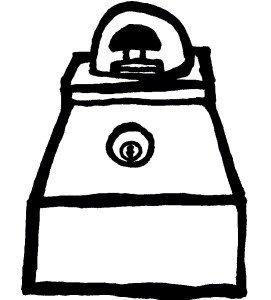
There are several more infamous superheros Starman could be compared to (as well as some more obscure reference points like Fletcher Hanks’s Stardust character), but there’s no clearer reflection of his character than, arguably the most famous superhero of all time, Superman. Like Superman, Starman is a bulletproof alien with movie star handsomeness, inhuman strength, and a frequent indulgence in green screen flight. The only aspects he’s missing are the adoptive parents & laser beam eyes. Instead of crash landing in Kansas as a wee babe, Starman lives on a distant world known simply as The Emerald Planet. The high council of The Emerald Planet (who look like every episode of the 1950s Dr. Who series smashed together as a dinner party theme) becomes concerned with Earth’s impending doom as the radiation from atomic weapons testing leaks from the atmosphere & poisons other worlds. They deploy Starman, who can master intergalactic flight without any kind of vessel, to stop an evil nation from deploying “atomic superweapons” that would lead to intentional nuclear peril. The alien superhero occasionally does Superman-esque things like landing on the outside of the airplanes to physically steady their landings or alternating between skin-tight supergear & sharply tailored suits, but for the most part Starman acts as a solo agent in Cold War espionage. When a gangster accuses, “You’re a police agent!” he responds “Not of this earth,” which isn’t exactly a denial. By the time he fences like a swashbuckler & engages at length in hand-to-hand martial arts, Starman seemingly encompasses all genre film cliché in a single vessel, but Superman certainly provides his basic framework.

Paced & narrated for television, Atomic Rulers of the World occasionally suffers a boring stretch of narrative or a rigidly episodic story structure, but it’s a format that works well in a superhero cinema context. In the first half of the film, Starman sets out to rescue an orphan boy kidnapped by an evil organization attempting to hold Japan hostage with “atomic superweapons.” In the second half, he has to rescue a second hostage, this time a young woman, while thwarting the impending nuclear holocaust. As this was made for 1960s children’s television, it goes without saying that Starman succeeds in both instances (even though one encounter ludicrously requires him to survive a mini-nuke in an enclosed space). If I hadn’t known that there were three more Starman films to follow, I might have found the story a little slight, but it at least feels totally self-contained. At the end of the movie Starman decides not to destroy the atomic superweapon, but to return it to the “good guys,” urging them to “use it for peace.” It’s a simplistic solution for a massively complex problem (that still hasn’t been solved half a century later), but it still works well enough as a standalone product in an episodic series. I’ve certainly seen films in the MCU with less in-the-moment stakes & frustratingly unresolved “until next time” conclusions.

Anyone who’s curious about watching Atomic Rulers of the World isn’t likely all that interested in the film’s narrative ambition, though, and it’s a work that survives largely on the novelty of its multi-genre thrills. The villainous nuclear cult that plans to take Japan hostage boasts some interesting details in the meth lab futurism of their secret base & their preferred execution method of the world’s most convoluted, slow-moving guillotine. There’s also a quaint charm to the film’s cheap production design, with its half-assed dubbing & green screen flight. The real joy of Atomic Rulers, however, is the introduction of intergalactic superhero Starman. Actor Ken Utsui’s near nude outer space get-up & everything-to-everyone invincibility/versatility turns the character into something of a campy joke, but I do have a strong nostalgia for this kind of over-the-top cartoon superhero media. Some of Atomic Rulers‘s best moments are when Starman is simply delighting an orphanage full of kids who ooh & ahh as he demonstrates his ability to fly or to mangle firearms with his bare hands. I often found myself getting giddy right along with those impressed & overwhelmed tykes, as Starman is a high camp superhero I didn’t know I needed back in my life until Atomic Rulers showed me the way.

-Brandon Ledet

The Unknown Terror (1957)

EPSON MFP image

three star

Common wisdom tends to posit Francis Ford Coppola’s Apocalypse Now as an art film upheaval of Joseph Conrad’s novel Heart of Darkness, but I think there’s something undeniably pulpy in the film’s final act that compromises that reading. Marlon Brando’s infamous performance as Colonel Kurtz is an intensely weird vision of madness that elevates the material in a last minute left turn, but the more I mull over the character the more he plays like a true archetype of a mad villain than a modern subversion of that trope. This rings especially true after watching the drive-in horror cheapie The Unknown Terror. The villain of The Unknown Terror is a mad scientist type who has won over the hearts of a remote Mexican community by “conquering the God of Death” with First World medicines, an act of “charity” that has made him something of an unchecked deity among the locals. Much like Kurtz, the wicked Dr. Ramsey loses control of his hubris and lets the newfound power go straight to his head. He also loses his sanity and becomes enraptured with the natural world, dangerously so. The idea that Dr. Ramsey would be modeled after Kurtz isn’t too much out of the ordinary, given the influential nature of Conrad’s novel, but the way his character is played for cheap drive-in thrills in The Unknown Terror points to a pulp aspect of Brando’s odd mode of scenery chewing in Apocalypse Now, an energy he would later repeat in The Island of Dr. Moreau.

Even outside of its context under the umbrella of Heart of Darkness adaptations/bastardizations, The Unknown Terror is still an entertaining slice of schlocky sci-fi horror. In a way it plays like the major studio productions in the decades before its time that promised to have something for everyone: music!, adventure!, romance!, scares!. Yet, it still avoids feeling entirely like cookie cutter tedium, since each of these individual elements are executed surprisingly effectively. The musical performances are badass calypso tunes about a mysterious Cave of the Dead that haunts local superstition, featuring menacing lyrics about how Man has to “suffer to be born again.” The adventure is an Indiana Jones-style spelunking effort meant to retrieve a man lost to the Cueva Muertes, a cave believed to be a physical manifestation of Purgatory, where you can hear the screams of the damned. The romance is a love triangle disturbed by a crippling accident in the past & a seething air of jealousy that bubbles to the surface in the rescue mission attempts to recover the missing explorer in the Cueva Muertes. The scares are, of course, what they find in the cave and what has been driving the once reputable Dr. Ramsey to the point of madness. What Ramsey has been hiding from the villagers is that the screams coming from the Cueva Muertes are not at all the screams of the dead, but rather the screams of the very much alive survivors of his cruel science experiments on unsuspecting human subjects.

The same way the evil scientist of The Flesh Eaters cultivates & weaponizes a pre-existing, natural virus, Dr. Ramsey orchestrates the horrors of The Unknown Terror by cultivating & weaponizing a killer fungus. The Cueva Muertes is covered in a very peculiar fungus that spreads through “binary fusion,” latching onto parasitic hosts, namely humans, and transforming them into hideous fungus monsters.  The visual effects of this cave fungus are more or less on par with what you’d expect from this era of filmmaking. The “monsters” are men in Halloween costume getups. The “fungus” covered set looks like a combination of a Buck Rogers alien terrain & a nightclub foam party with a science fair volcano theme. What makes The Unknown Terror at all memorable is the strength of its ideas within its cookie cutter genre film shape, dragging in the specificity of its Of Human Bondage disability shame & the Heart of Darkness vibes of its mad scientist villain to elevate the auto-pilot material, when it didn’t need to try nearly as hard to fulfill its destiny as double bill drive-in fodder. I would never suggest pairing any film with Apocalypse Now, since Coppola’s supposed masterpiece is already an overlong three hour affair, but I do think The Unknown Terror shines some unexpected light on how that film mixes a little genre film cliché into its overreaching art film ambition, especially when it comes to the character of Kurtz. The Unknown Terror is entertaining enough even without that connection to a beloved 1970s classic, but the way it resembles the standard-issue shape of so many of its contemporaries means it wasn’t likely to be remembered otherwise.

-Brandon Ledet

Devil Girl from Mars (1954)

EPSON MFP image

three star

campstamp

If most people had access to a single trip in a time machine, they’d likely use it to do some kind of good deed: saving a life, preventing a tragedy, correcting a mistake, etc. If I could take a single trip in a time machine, I’d waste it on something stupid, namely getting drunk with Ed Wood & attending a screening of Devil Girl from Mars. So much of Devil Girl from Mars feels like standard Ed Woodian fare that I suspect the infamous weirdo schlockmeister would’ve gotten a kick out of the film & perhaps been inspired by it to make something truly astounding. Devil Girl from Mars takes the same lofty, but empty stage play dialogue of Plan 9 from Outer Space & marries it to the same absurdly cheap, but highly memorable sci-fi visual effects. Yet, the film feels oddly flat & uninteresting for long stretches in a way that Ed Wood’s sci-fi work could never be accused of. As is, Devil Girl from Mars is an interesting trifle with a killer high camp villainess. If it had the aggressively inane guiding hand of an Ed Wood behind it, it might’ve been a trashterpiece. It already had the building blocks on hand.

Part of what makes Devil Girl from Mars so interesting, oddly enough, is also exactly what makes it dull: a false air of sophistication. A British production adapted from a stage play, the film aims for the heady B-picture space of a Village of the Damned or The Earth Dies Screaming, but falls far short of the mark. The dialogue is just as inane & inconsequential as any other 50s sci-fi cheapie you can conjure, but it’s given the utmost respect & reverence in a way that makes for both a curious watch & a disappointing slog, depending on who’s talking, human or devil girl. The stage play machinations of gathering various archetypes (an escaped convict, a lady barkeep, a square jawed alpha male, a wise professor, etc.) holed up at an isolated inn are belabored to the point of exhaustion, as if there was confusion about what kind of movie drive-in audiences would want to see: a stuffy parlor drama or a high camp sci-fi train wreck. Luckily, there’s enough of the latter to make Devil Girl from Mars worthwhile, but just barely, as the two halves of the film seem to be at war with each other.

The key to the entertainment factor in this film is, duh, the Martian devil girl herself. Our titular antagonist is dressed like an S&M take on Darth Vader, commands a lazily-constructed robot in the shape of a refrigerator, and flies around in an adorably shoddy UFO miniature. The people of Earth (or at least the people of the tavern) take her word for it that she’s from Mars without any semblance of doubt, based entirely on her sleek space dominatrix uniform, presumably. She boasts at length about her invisible force fields, her killer robot, the mental superiority of the Martian people, and rambles about the 4th dimension, the War of the Sexes, and a newly-invented organic metal; the tavern folk listen in bewilderment. I love the audacity of rambling off these giant ideas while sticking to the most bare bones cast, set, and effects imaginable. Yes, the killer fridge-bot shoots deadly laser bullets, but its arms lay limply at its sides; the film felt no need to animate them. The titular devil girl zaps men with her own atomic age ray gun, but when they disappear there’s no skeleton or goop left behind; there’s no visual effect as they fade away, only the cheap trick of removing them from the frame.

Devil Girl from Mars is mostly recommendable for the ridiculous camp of its central villain, but should be approached with patience, as it takes its mediocre dramatic setup just as seriously as its goofy sci-fi horror camp. An airplane is zapped out of the sky before the opening credits even have a chance to roll (take that, Sully), but otherwise it takes a while for the men to gather & grumble in the tavern before they’re tortured by the film’s space dominatrix & her robot sub. There’s a few stray lines that make their ludicrous bickering amusing (“I’m a scientist! I believe what my brain tells me to believe,”) but for the most part it’s too dry to be funny & too inane to be prestigious, resting somewhere in a B-movie limbo. With an Ed Wood behind the wheel, both halves of these films would shine together as one ridiculous whole, but until I get the chance to waste a trip in a time machine to make that happen we just have to settle on celebrating the good & forgetting the bad in this one. If you watch the film & Ed Wood’s name is in the credits or attached to a remake, you’ll know that my mission was a success.

-Brandon ledet

Missile to the Moon (1958)

EPSON MFP image

twostar

campstamp

With recent remakes like Ben Hur, Blade Runner, and Ghosbusters, it’s easy to get into the mindset that reboot culture has recently gotten out of hand, but the truth is that it may have always been out of hand. Consider the case of Missile to the Moon. This throwaway sci-fi B-picture is a five-years-later remake of the ludicrous camp oddity Cat-Women of the Moon. Delivered by the same indie production company that made the much more fun original, Missile to the Moon merely added more moon monsters & extraneous plot lines to Cat-Women of the Moon’s exact narrative structure and casually slapped on a new title. It’s what we folks in a post-Dark Knight world would call “a gritty reboot.” Whatever you want to call it, its existence feels entirely unnecessary, especially once you start splitting hairs over the film’s baffling decision of what to keep from its source material & what to discard.

I’ll try not to waste too much time on a plot description here, since Missile to the Moon largely resembles hundreds of other B-movie space pictures & standalone episodes of serials like Roy Rogers. A rocket ship (picture the most generic toy rocket ship imaginable; you’ve got it) travels to the moon through some dangerous meteorite turbulence and once the crew lands on the alien terrain they face mysterious dangers posed by lunar monsters. In Cat-Women of the Moon these monsters only included a gigantic moon spider & a misandrist society of alien women determined to steal the crew’s rocket ship & use it to take over Earth. Missile to the Moon repeats this dynamic with only a few slight changes: the spider puppets look a little better; they’re joined by entirely unneeded Styrofoam rock monsters; the cave-dwelling women are no longer misandrists. That last point, of course, is what sucks a lot of the fun out of the source material’s dynamic. Instead of a man-hating city of women dressed in black catsuits, we get a vague harem of one or two alien baddies who are a little power hungry, but mostly in desperate need of a man’s loving company. Boring.

Much like with the case of Russ Meyer’s Faster, Pussycat! Kill! Kill! dry run Motorpsycho!, Missile to the Moon is only interesting as a comparison point to a far better work that shares its basic dynamic. In the original film the lone female member of the astronaut crew is a navigator with a key role central to the plot. In the remake she’s a stowaway & a scientist’s fiancée, not even as central to the plot as a pair of escaped convict ruffians who also wind up on this lunar expedition. Her biggest concern is that the moon women might lure away her future husband, which leads her to mutter catty things like “If I knew there was going to be this much competition, I would’ve undressed for the occasion.” In Cat-Women of the Moon the titular aliens function in villainous peace & harmony; here they have petty, jealous fights over space idiot love interests who say endearing things like “Don’t think, honey. Just be beautiful.” There’s even an added moment of threatened sexual assault, you know, to liven things up. All the transgressive elements of the original are stripped from its derivative follow-up in favor of some barely-better special effects, increased violence, entirely unnecessary rock monsters, and a few baffling tweaks to the details, like swapping out the moon gold of the first film for the radically different treasure of moon diamonds. Whatever.

Everything about Missile to the Moon is secondary. As a remake, it feels purposeless and only interesting in the schlocky shadow of its predecessor. As a sci-fi horror cheapie in its own right it doesn’t even look as interesting as the other half of its double bill: Frankenstein’s Daughter. Just about the only moment of joy I got from the film was the cattily jealous fiancé asking of her leading man, “Do you think I’m prettier than that girl?” mere moments after watching her fellow crew members die a grisly death. And even the humor of that moment points to the film’s central problem: a complete lack of the playfully transgressive misandry of its predecessor.

-Brandon Ledet

The Earth Dies Screaming (1964)

EPSON MFP image

fourstar

campstamp

Sometimes efficiency is the most impressive quality a movie can boast, especially in the case of schlocky genre fare. From the outside looking in, The Earth Dies Screaming might not appear to be much. As an alien invasion sci-fi horror from the drive-in 60s that barely clocks in at an hour’s length, it’d be easy to dismiss the film outright as a filler title on some indistinct double bill. The film is far more interesting than its pedigree would lead you to believe, however, and one of its best qualities is that it recognizes the limits of its somewhat slight premise and chooses to stick to the point. The Earth Dies Screaming smartly avoids overexplaining the exact scope & nature of its murderous alien threat and instead uses the mystery & minute to minute deadly obstacles posed by its otherworldly dread to propel the plot forward through several unexpected gear shifts until the whole thing’s over before you know it. The film may look cheaply made & hastily produced, but you gotta respect that kind of genre flick efficiency.

Although you can pinpoint other genre films that have utilized individual elements of The Earth Dies Screaming for more fully realized conflicts, this particular cheapie achieves a very specific aesthetic by gathering all of those elements in a single, well-tuned vehicle. I kind of feel like the genre film equivalent of a fine wine snob while watching this one, detecting hints of 28 Days later, The Village of the Damned, and The Night of the Living Dead with a strong The Day the Earth Stood Still undertone rounding out the bouquet. In the film’s dialogue-free five minute opening most of the world’s population is seemingly struck dead by a mysterious gas, later revealed to have been released by a malicious alien race. Planes, trains, and automobiles crash as their individual pilots are strewn about, lifeless. The few survivors in a rural England town find themselves isolated form the world with no radio or television broadcasts seemingly able to make it through the chaos. The horrors don’t end there, though, as an army of killer alien robots is deployed to sweep the streets of any temporarily lucky survivors and, just in case that wasn’t enough, they’re followed by an undead, mindcontrolled zombie hoard. The alien threat of The Earth Dies Screaming is one thing after another, a continually shifting obstacle course that pummels its audience and its victims with just the right rhythm to remain surprising & just the right runtime to never outwear its welcome.

I guess there might be some kind of lesson at the heart of this film about the best attribute of humanity being in comradery. Our would-be victims (ranging from a drunken cad to a young pregnant woman to an all-American alpha male, all strangers) find their best chance of survival in their ability to solve their differences & work together as a unit. That aspect of the film’s formula is faint at best, though, especially when compared to more heavy-handed message pieces like The Day the Earth Stood Still or nuclear paranoia monster pictures like Godzilla or Them!. Here, the alien threat has no real discernible intent outside pure malice. There’s no source or ending for the attack and instead of worrying about context the film instead eats up its runtime with details like its robots’ Touch of Death executions & its zombies’ whiteout contacts. In the age where big budget action franchises have no foreseeable end in sight & follow a carnival act trajectory of promising the next big thing down the road without ever having to deliver a self-contained product (much like pro wrestling or, better yet, those films’ comic book source material), there’s a satisfying quality to this kind of genre filmmaking simplicity that’s more than a little refreshing. Despite what’s promised in this film’s (undeniably badass) title, the Earth could actually use a lot more of this contextless, go-for-broke efficiency.

-Brandon Ledet

Vegas in Space (1991)

EPSON MFP image

threehalfstar

campstamp

Vegas in Space is an early 90s sci-fi cheapie distributed by Troma in which all characters are played by either drag queens or women. It took almost a decade to complete, was partially fueled by sex work & meth, and was filmed entirely in its star performer’s San Francisco apartment. You can feel all of those qualities in every shoddy fiber of what’s essentially a glorified home movie and, yet, there’s enough artistry in the film’s set & costume design and its central B-movie sendup gimmick to make for a fun, fascinating watch. Filmed in full glory Glamourama & staged on entirely hand-built sets, Vegas in Space looks the way a B-52s song sounds (“Planet Claire”, especially) & recalls a drag routine version of either Corman’s unreleased Fantastic Four adaptation or the cult television series Pee-wee’s Playhouse. It’s very rough around the edges, but it has style to spare as it lives by its pronounced motto “Glamour first, glamour last, glamor always!”

An all-male (including women in male drag) crew fly their space ship to the Planet Clitoris in The Beaver System in order to help solve a diamond heist caper. This proves to be a dangerous mission since “No males are allowed to touch down on Clitoris”, so the men disguise their gender by taking sex change pills, a transformation process that looks & sounds a lot like the female orgasm. Newly feminized & disguised as 20th Century showgirls, the men infiltrate the city of Vegas on the Planet Clitoris, “an oasis of glamor in a Universe of mediocrity.” They set themselves on saving the planet by entertaining for a slumber party and keeping their eyes peeled for a jewel thief who has stolen a precious object that keeps Clitoris from suffering dangerous earthquakes. The whole plot feels like something out of erotic fiction, but does serve as a loving tribute to real-life titles of 1950s space epics like Cat-Women of the Moon. There’s no sexual energy to its women-only “pleasure planet’ premise, despite what you might expect from a film written & performed by drag queens & there’s really no point to the space crew starting the film as men at all, really, except for pointing to its own central drag queen gimmick, since they readily adapt to the change & suffer no conflict because of it. For the most part, even the sci-fi aspect of the story doesn’t feel all-that necessary or fully-explored. Outside some cardboard spaceship & a few goofy ideas (like swapping out the term “warp speed” for “ultra space jumps”), the sci-fi setting is mostly an excuse for the film’s true bread & butter: outrageous costume & set design. Those aspects far outweigh any petty concerns like plot structure or a command of pacing, so you have to love their charms to ignore the film’s blindspots & land yourself on its wavelength.

Obviously, it would help if you love drag as an artform for you to appreciate Vegas in Space as art. Starring San Francisco personalities like Doris Fish, Miss X, and Ginger Quest, the film is billed as being “based on the party by Ginger Quest” in its opening credits and “the first ever all-drag queen sci-fi musical” in its liner notes. Now that latter point is up for debate, not only because it might not be the first ever, but because it features cis women among its many drag performers and doesn’t feel at all like a musical besides the fact that it does feature some music (as most films do), most notably the deliciously cheesy lounge number “Love Theme from Vegas in Space.” It may very well be, however, the first film adapted from a drag queen’s party theme (can you name another?), which is much more of an accomplishment in my book anyway. Vegas in Space mostly serves as a Doris Fish showcase, as the performer wrote, co-produced, starred, built the sets (including the miniature outer space cityscapes), did the makeup for her fellow crew members, and (if director Phillip R Ford is to be believed) partially funding the picture by turning tricks. Fish is a delightful personality to helm the picture as the once-male space crew’s captain, but I actually think she’s upstaged by fellow drag queen Miss X, who boasts a kind a gothy, bitchy, Violet Chachki vibe as the film’s would-be villain, The Queen of Police. Miss X‘s cruelty in forcing imprisoned shoplifters to harvest cotton candy and her palace on ”The dark side of the planet” show in glorious black & white) a choice that feels truer to the film’s drive-in era source of inspiration) are where Vegas in Space finds its groove, even if those moments were birthed by Fish’s work on the page. The film features some classic moments of painfully corny drag queen humor, like when The Queen of Police answers the question “Are there crimes here?” with a deadpan “Only crimes of fashion,” or when Doris Fish comments on the mission at hand “sounds like a cinch.” The all-female pleasure planet setting also affords the film plenty of opportunities to do what drag does best in the first place (besides showcasing killer costuming & makeup): poke fun at femininity as a social construct. In this particular case, it helps that here are “real” woman there who are in on the joke, too, especially at sillier moments like when the crew war using their “feminine intuition” to navigate their ship. In some ways Vegas in Space plays its premise a little too, for lack of a better word, straight, (I really cannot believe there is no lesbianism or any sexuality at all in this film), but it’s still delightfully corny & transgressive in the way most drag performances are by nature.

In a lot of ways Vegas in Space feels like what might happen if I tried to make a movie, from its dedication to bad taste to its overwhelming cheapness to its painfully troubled production history. Even if the film sounds exhausting to you or just not really your thing, I’d still encourage you to read director Phillip R. Ford’s lengthy making-of account of this film’s production, because it’s a fascinating mess. Vegas in Space required two years of filming & seven years of post-production, meaning Ford & his drag scene buddies more or less worked on the film for the entirety of the 1980s. Besides the behind-the scenes meth & sex work that color the film’s already plenty colorful aesthetic, there’s also a tragic air to its history as many of the performers involved didn’t live to see the final product due to its lengthy post-production period & the horror of the AIDS crisis in the gay community of that era. As a director, Ford brings a few interesting ideas to the table I especially appreciated: an opening credits scroll that mixed B-movie worthy shots of outer space with Vegas strip light bulbs, a psychedelic dream sequence that intentionally evokes the early stirrings of MTV, and his inclusion of earthquakes in the film’s central crisis that reflected the San Francisco scene where the film was produced (although I suspect that Doris Fish had enough input on all three points to deserve a co-director credit among her endless list of other duties). However, I think Ford’s greatest accomplishment here is in completing the project in the first place. As indicated in his account of the film’s production, this was a sprawling mess of a collaboration that’s nothing short of miracle to ever have been released at all (even if it means suffering through a disturbingly transphobic “bit” from Troma madman/cretin Lloyd Kaufman in its intro). I could see Vegas in Space maybe gaining traction as a cult-adored object or maybe a RuPauls’ Drag Race runway category (Vegas in Space Realness does have certain ring to it), but I think the film’s greatest accomplishment might be that it simply exists in the first place. Well, that and the glorious makeup & costume designs, especially the ones sported by one Miss X. They’re the film’s true artistry, as it should be in what’s essentially a drag queen’s unusually expensive home movie.

-Brandon Ledet

Cat-Women of the Moon (1953)

EPSON MFP image

fourstar

campstamp

“The eternal wonders of space & time. The faraway dreams & mysteries of other worlds, other life. The stars, the planets: man has been face to face with them for centuries, barely able to penetrate their unknown secrets. Someday, the barrier will be pierced. Why must we wait? Why not now?”

Judging by the above prologue, the 1950s writers behind Cat-Women of the Moon really wanted to fuck outer space. Like, all of it. The film’s phallic symbol space rocket searches the cosmos for something to “pierce” & “penetrate” from minute one, but the film doesn’t find a tangible target for its desire of interstellar sexual conquest until more than halfway into its measly 60min runtime. The titular cat-women of the moon, played by the less-than-infamous “Hollywood Cover Girls” don’t appear until more than a half hour into their own film. The movie mostly functions like a cheap version of a Planet of the Vampires or The Angry Red Planet, with a bewildered crew of astronauts exploring a strange alien terrain (this time not venturing any further then our own moon) and facing challenges presented by the life they unexpectedly encounter there. When these alien monster obstacles take the shape of meteorites & giant moon spiders the film remains fun & lighthearted, but more than a little indistinct. For some reason, it’s the hidden Dark Side of the Moon city of sinister women in black catsuits with a passion for misandry & ritualistic dance that distinguishes Cat-Women of the Moon as above average, 3D-era schlock. I just can’t place my finger on it.

The men of the doomed astronaut crew are outnumbered & made vulnerable when their only female member, the navigator, falls under the hypnotic spell of the lunar cat women and leads them to peril at the underground city where the sexed-up aliens dwell. Her strange directives are at first perceived as a “touch of space madness” and her crew is already in danger by the time her unwitting betrayal is revealed. The men of this lunar expedition (it’s not clear if it’s the first mission to the moon, but they’re certainly the first crew to breathe oxygen in a moon cave, which is something) sought to “pierce” & “penetrate” the mysteries of space and initially believe their buxom alien hosts to be a great conduit for that conqueror’s spirit. However, the moon women prove to be far more powerful than the Earth men could imagine, commanding abilities that include teleportation, telepathy, and hypnotism. While the men make plans to make love & swipe some precious moon gold, the cat-women plot to steal away their only female crew member & pilot their rocket ship back to Earth where all men will be killed or enslaved to make room for more lunar cat-women. There’s an interesting push & pull between the film’s posturing bravado & its villainous “We have no use for men!” misandry that makes this a really fun, almost anachronistic watch. This isn’t quite the man-bashing roadster gangs of Faster, Pussycat! Kill! Kill!, but it might be somewhere in the same ballpark in its own silly way.

It’s kind of incredible just how much of Kubrick’s 2001 blew this entire space-exploration B-picture genre apart, but the painted lunar backgrounds & tiny rocket ship models presented here are still beautiful & interesting in their own quaint way. The cat-women’s moon city in particular has a quality to it that looks like a cross between a chess board and a De Chirico painting in an interesting way. As you can tell by the film’s title, though, visual craft is far from what makes it interesting or distinct. Cat-Women of the Moon’s mix of man-hating sex kittens, gigantic spider puppets, hostile lunar terrains, and the men desperate to survive them is what makes the film a blast as a quick, cheap B-picture with a  killer titular hook. If watching something this unrepentantly silly & leering sounds a little exhausting at an hour’s length, I at least urge you to watch the film’s trailer below. Its promise of alien women who are “everlastingly beautiful … and without men for centuries!” just waiting to “lure men into the den of bloodthirsty moon monsters” is just as silly as anything that happens in the film, which it should be mentioned features red-blooded Americans carrying cigarettes & guns on the moon’s surface, as is their cosmos-penetrating right. I recommend the film for a cheap, schlocky thrill not too far off from a visually realized work of erotic fiction, but this two minute ad is also a work of art in its own right.

-Brandon Ledet

Episode #14 of The Swampflix Podcast: Trash Humpers (2010) & The Films of Richard Kelly

inaworld

Welcome to Episode #14 of The Swampflix Podcast! For our fourteenth episode (our second in Skype exile), Brandon discusses all four feature films by Richard Kelly, director of September’s Movie of the Month The Box, with returning co-host Bill Arceneaux and Caliornia-based film critic Rick Kelley. Also, Bill makes Brandon watch Harmony Korine’s found footage oddity Trash Humpers (2010) for the first time. Enjoy!

Production note: The musical “bumps” between segments were provided by the long-defunct band Your Cat is Dead.

-Bill Arceneaux & Brandon Ledet

An Evening with Richard Kelly: A Southland Tales (2007) Q&A

EPSON MFP image

“No film is every really finished, just abandoned by the filmmaker.”

This is the philosophy, or rather one of the facets of the real-life and filmmaking philosophies, of Richard Kelly. In something of a MotM miracle, I received an email last week advising that Austin’s Alamo Drafthouse would be hosting a screening of Kelly’s 2007 opus Southland Tales, with an introduction by the director and a Q&A following the film. As discussed in our email roundtable, I was a fan of Donnie Darko when it was first brought to my attention in 2003, when a DVD of the film was passed around like wildfire at the Louisiana School for Math, Science, and the Arts. Although time and distance (and a strong wave of hype backlash as the film caught on outside of the cult scene) have dulled my teenage enthusiasm for the film, my interest in Kelly’s work was piqued again by our viewing of The Box, a film I didn’t love but haven’t been able to stop thinking about. I never got the chance to see Southland Tales before this past Sunday, but I’m glad that my first viewing experience was on the big screen and not limited to the comparatively tiny television in my living room.

What’s the film about? I’ll try to be as succinct as I can: Southland Tales takes place in an alternate 2008, where post-9/11 paranoia and the overreach of infringement upon civil liberties that followed that incident has been further exacerbated by a nuclear attack on American soil (Texas, to be precise). The draft has been reinstated, interstate travel is extremely restricted, and citizens are heavily monitored via the use of information network USIdent and the deployment of heavily militarized Urban Pacification Units, which seem to have taken the place of standard police forces. The Republican Party, most notably represented by Texas Senator and potential VP Bobby Frost (Holmes Osborne) and his wife, NSA Deputy Director cum USIdent overlord Nana Mae (Miranda Richardson), is seeking to swing California to the red in order to ensure the continued power of USIdent and the party. Popular action star Boxer Santaros (Dwayne Johnson), the husband of the Frosts’ daughter Madeleine (Mandy Moore), has recently awoken in the desert with amnesia; he makes his way into the arms of Krysta Now (Sarah Michelle Gellar), a psychic porn star seeking to expand her media and merchandise empires through diversification. Krysta has recently completed a screenplay entitled The Power, which foretells the end of the world.

Elsewhere, the underground liberal forces of the Neo-Marxists oppose the Republican Party (this entire group is composed almost entirely of former SNL cast members, including but not limited to Nora Dunn, Amy Poehler, and Cheri Oteri). Their current plan involves staging a racially-motivated police shooting committed by haunted veteran Roland Taverner posing as his twin brother Ronald (Seann William Scott), an UPU officer; the intention is to have this captured on film by Boxer during a ride-along for research purposes, then use the footage to discredit Bush’s apparent successors. Their machinations are held in check by a series of double-crosses that undermine their ability to take any real political action. Elsewhere elsewhere, the wizard Baron von Westphalen (Wallace Shawn) has invented both a device that uses the power of the ocean to generate wireless electricity as well as several injectable liquids of various colors that are used as drugs for both recreational and psychic purposes. He and his band of assorted cronies (Bai Ling, Curtis Armstrong, Zelda Rubinsten, and Beth Grant) move throughout the various factions at play, gaining political power and prestige while well aware that the alternative energy source that they have created could bring about the end of humanity. And all of this is narrated by Pilot Abilene (Justin Timberlake), a former movie star whose face was disfigured by friendly fire in Iraq after he was drafted. And, hey, if you were starting to think any of this was too straightforward, don’t worry; there are also stable time loops, predestination paradoxes, mistaken identities, and all the other Kelly elements you’ve come to know and, perhaps, love. Plus a lip-synch music video.

Part multimedia experiment, part time travel film, part jeremiad prophecy of the dangers of unchecked rightwing expansion into surveillance and homeland policing, part philosophy lecture, but mostly a political satire, Southland Tales has been called many things: unwatchable, convoluted, pretentious, and incomprehensible. For my money, however, the film (and its expanded materials, which I hesitate to call “supplementary” given that they were always intended to be part of the experience) is simply too ambitious to ever have any kind of mainstream penetration, even on the level that Darko did. There’s also been a lot of name-calling and assumptions with regards to Kelly’s ego and affectations of intellectualism, even from those of us here at Swampflix; in person, however, Kelly comes across as approachable, well-spoken, thoughtful, and shy (and he’s a total babe as well– look up a picture or two if you haven’t already done yourself this great service; those triceps are poppin’). Kelly directed this film when he was twenty-nine; that’s my age, and all I have to show for a life is a stack of unopened mail and a heap of student loan debt that I’ll finish paying off seven years after I’m dead– if I’m lucky.

In case you weren’t aware, Southland was originally envisioned as the final three chapters in a six-chapter arc, with the first three components released as graphic novels (Kelly said that when these materials, which were not quite complete at the time of the Cannes premiere, were given to the press, they sneered). There is a certain feeling of incompleteness that can be felt in the film as a result, but this is not the same thing as saying that the film is, as Kelly said in his introduction, “unfinished.” There’s certainly an element of that in play in the theatrical version that was screened, but I didn’t find it as distracting as others have. He discussed the nature of the release of the film, the way that certain visual effects were never quite completed due to the fact that the money for said polishing was to have come from one studio that held the international distribution rights, but there were issues with the domestic distributor. It’s all information that you can find elsewhere, I’m sure, so I won’t get into it here. There were some new tidbits that were shared in the Q&A that I’ll share here, though.

Why is Janeane Garofalo in the final scene? In the earlier, longer version of the film that was screened at Cannes, there is an additional subplot in which Garofalo plays a general who is engaged in a Dungeons & Dragons game with veteran Simon Theory (Kevin Smith) and a couple of other characters, with that game serving as an additional metaphorical layer to the events of the film, just line the screenplay for The Power. (I did see a credit for a D&D consultant in the final credits, which confused me until this was explained.)

Was this movie inspired by Brazil? Yes, Kelly loves Brazil.

Where did the character names come from? Kelly discussed that there’s a music to character names, and described how some come from more obvious sources (like the Robert Frost-quoting Senator Bobby Frost), and some a bit more obscure from sources both historical (like the von Westphalen family, whose true allegiances are obvious from the outset for those who know Jenny von Westphalen was the wife of Karl Marx), and literary (the Taverners share their surname with Jason Taverner, protagonist of Philip K. Dick’s Flow My Tears, the Policeman Said, which shares a rightwing autocratic dictatorship with Southland). So, like many of the references to extratextual real-world works that we mentioned in The Box discussion, they’re present less because Kelly wants to prove how smart he is and more because he thinks we’re all on his level, which is a compliment more than anything else.

Why so many Saturday Night Live actors? Besides the aforementioned Poehler, Oteri, Dunn, and Garofalo, other SNL alums include Jon Lovitz and John Larroquette. I really liked Kelly’s answer to this question; when we talk about political satire, at least in America, SNL is the troupe that is on the cutting edge of that discussion.

Is the recurring theme of free will versus predestination representative of a personal philosophy or just something that Kelly finds intriguing to play with on film? This was my question, and was admittedly a little longer in the actual asking (which involved referencing the Job-like structure of The Box and eschatological nature of Southland, leading Richard Kelly to compliment me personally, so take that, world!), but Kelly stated that this was something that he thinks about a lot, that humans beings are often bandied about by forces outside of their control, and how much agency any of us have at all (one audience member asked about Krysta Now’s agency in regards to the film, but I missed the answer to that one trying to calm myself enough to ask my question). Kelly had previously mentioned that Southland was intended to be a cathartic film experience; given that the themes of the film boil down to the idea that salvation comes from forgiving the self, which is an entirely internal emotional journey, I think that this could be reflective of that idea. Forgiving one’s self, like Taverner does in the film’s final moments, removes the external elements of predestination and is purely an act of personal decision, and through that comes real existential relief.

Whatever happened to the Norma Lewis prosthetic foot prop? This one I had to ask for Britnee, per her final thoughts on The Box. As it turns out, Kelly’s father, who really did work on the Mars Viking Lander project, did something similar for Kelly’s mother, whose own foot was disfigured, not unlike Norma’s. As for the prop, Kelly said he would have to make some calls to be absolutely certain, but he’s pretty sure it’s in a props warehouse in Boston.

For more on September’s Movie of the Month, Richard Kelly’s sci-fi mystery thriller The Box, check out our Swampchat discussion of the film and last week’s look at how the film works as a literary adaptation.

-Mark “Boomer” Redmond

From Playboy Magazine to Cult Classic Contender: The Box (2009) as a Literary Adaptation

EPSON MFP image

Richard Kelly’s sci-fi mystery thriller The Box might not ever earn the legitimate cult classic status it most certainly deserves. Kelly’s other two features, Donnie Darko & Southland Tales, have already found their own dedicated of cult followings out there in the wilderness of cinematic nerdom, but The Box remains largely unchampioned. There are many, varied complaints detailing exactly why The Box “doesn’t work,” but one of the most common is that it expanded upon a basic premise that needed no depth of context or detail. Before The Box was a sprawling, two hour critical & financial misstep it was a nine page story in Playboy Magazine & a 20 minute episode of the Twilight Zone. When it comes to adapting literary text for the big screen, the critical impulse generally tends to favor the source material in terms of legitimacy, especially in the case of something like The Box, which shows very little, if any regard for solely sticking to the script of its short story origins. By exploding the central mystery of its source material into a galaxy of other unanswered questions, however, The Box far exceeds its origins’ ambitions & successes in my mind. Its DNA in Playboy Magazine & The Twilight Zone is interesting for sure, but nowhere near as fascinating as the places Kelly took the story in his go-for-broke adaptation/bastardization.

Consider the shifted stakes & the heavy-handed morality lesson of The Box’s very first incarnation, a very brief short story published by Playboy Magazine in 1970. The Richard Matheson-penned story “Button, Button” is for the most party reminiscent of what Kelly later brought to the screen. Even its central character names remained largely unchanged: Arthur, Norma, Arlington. However, the story’s scope is ludicrously miniscule as a comparison point, with these three characters more or less representing the totality of relevant players. In “Button, Button” the mysterious agent Arlington Steward drops off a box featuring a button under the cover of a glass dome. He informs the married couple of Norma & Arthur Lewis that if they press this button someone they do not know will die & they will receive $50,000 cash. The husband urges the wife not to push the button out of basic human decency, but she does so anyway, as she does in all three versions of the story (it’d be a pretty go-nowhere plot if she didn’t). What differs in the original text is its last minute twist in which Arthur is the one who is killed the promised $50,000 is collected from his life insurance policy. Incensed, Norma calls out Arlington for claiming that the person who would die would be someone she did not know. Steward retorts by questioning if Norma ever truly knew her husband. As far as morality tales go “Button, Button” is a little slight, but very efficient. However, it raises a lot of interesting, open-ended questions about the origins of its mysterious box & the menacing organization who carry out its machinations, an ambiguity its down-the-road adaptations would greedily revel in.

“Button, Button” was published too late in the game to be included in the classic black & white, Roger Sterling era of The Twilight Zone. Instead it appeared in the much cheaper, much less charming 1980s run of the show. Its basic premise remains faithful to its Playboy Magazine roots, but it does make some significant changes to the details. In the Twilight Zone version the prize for pushing the murder button skyrockets to $20,000, along with an escalation in the economic state of the couple in question. The televised Norma & Arthur live unhappily in abject poverty, with Norma playing the thankless role of a nagging shrew wife & Arthur struggling to provide for the household in a less than glamorous economy. Their philosophical conversations around whether or not to push the button are largely the same as they are in the original story, but they’re nastily heated here in a way that low income couples arguing about money often tend to be. Unfortunately, because the production value of the episode is so ungodly cheap, their tension is conveyed mostly through shouty braying, two performances that might even stand out as over-the-top in an early John Waters provocation.

Besides altering the economic tension of the central philosophical crisis, the televised version of “Button, Button” also crucially changes the detail of its gotcha ending. Instead of killing Arthur, the box only instigates Arlington Steward paying the couple their previously discussed amount, then informing them that it will be “reprogrammed” & passed along to a new household, someone they do not know. Just like the original story, it’s a tidily little morality play, although in this case the lesson is shifted from what it means to truly know someone to the value of the Golden Rule, which was the lesson of most Twilight Zone episodes anyway.

Part of the sprawling brilliance of Richard Kelly’s The Box is how it’s a pretty faithful adaptation of both of these works, yet still drowns out their central life lessons with a deafening sea of existential concerns and batshit crazy plot twists. So much of Richard Kelly’s film adaptation is eerily faithful to its source material, from the exactly look & name of “the button unit” (mostly lifted form the Twilight Zone verson of the story) to the intense focus on domesticity & the home (very strongly emphasized in the Playboy version, if you can believe it). It’s all represented in the first 20 minutes or so of The Box before Kelly blows the whole tightly controlled story apart into something infinitely more expansive & strange. You can tell Kelly was a huge, adoring fan of his source material. It’s just that he gets hopelessly lost in his fascination with its minor details. In the Twlight Zone version, Norma asks “What is this, some kind of survey or something to see who will and won’t push it?” Kelly wants to know what that survey would look like, what it would mean, and what other similar surveys it would constitute. In the Playboy version, Steward admits that he “represents and organization of international scope,” but keeps the details vague & menacing. Kelly wants to know exactly how large & powerful such an organization would have to be to function. You can even see Kelly’s admiration for his movie’s “Button, Button” roots in the details he does decide to change. For instance, when he gives Norma & Arthur a child, he can’t figure out exactly what the child is good for in the story, except as a plot device that allows for more button unit-type moral/existential dilemmas once the plot becomes truly unwieldy.

The Box has a tendency to over-explain or provide too much context for what’s basically a very simple story, but Kelly leaves the overall ambiguity of his source material’s scenario exactly how he found it. He pokes & questions initial vague details presented in the early versions of “Button, Button,” but only so that they give way to even more immense & vague details once they’re prodded. The mistake a lot of reboots, prequels, and reimaginings make is in providing too much context & background info so that all mystery is sucked out of the room in favor of mediocrity. No one liked Death Vader better after knowing he was a little blonde boy who built C-3PO & held his beloved at the lakes of Naboo. However, the kind of context Kelly piles on how somehow makes the story feel more contextless. A lesser, more disciplined mind might’ve stuck to the basic outline of “Button, Button”, but stretched it out to a feature length slog of a moral dilemma. Kelly instead gives it the exact length of time it needed to work itself out on an episode of television, then expands his scope from there, chasing his fascination with the story’s vague, menacing details once the business of a faithful adaptation was out of the way. I don’t think I’ve ever seen a literary adaptation quite like it, even from other films that started as Phillip K. Dick short stories or slight Roald Dahl novellas for children.  Kelly’s film is at once a faithful adaptation and a brazen, no-cares bastardization. Its gaze into the infinity can be at once both cripplingly silly & devastatingly impressive, but looking back to its roots as a miniscule 9 pages in Playboy Magazine only makes Kelly’s fascinating sprawl all the more puzzling. The question, then, is whether or not you find that puzzle entertaining.

For more on September’s Movie of the Month, Richard Kelly’s sci-fi mystery thriller The Box, check out our Swampchat discussion of the film.

-Brandon Ledet