Ghosts of Mars (2001)

ghostofmars

twostar

campstamp

In 1965 Italian horror mastermind Mario Bava released the eerie, way-ahead-of-its-time Planet of the Vampires. In 1979 directorial enigma Ridley Scott drew major influence from the atmospheric elements of Planet of the Vampires and reworked them into Alien, one of the scariest, most striking creature features of all time. In 2001 former-genius-turned-shlock-peddler John Carpenter borrowed Planet of the Vampires’ most superficial plot points and turned them into a nu-metal shootout in space that nobody asked for.

Told through the unnecessary framing device of a criminal hearing in a Martian mining colony of a future matriarchal society (we know this detail because of a title card that helpfully reads “Society: Matriarchal”), the bare bones story of Ghosts of Mars is awfully similar to that of Planet of the Vampires. While digging under Mars’ surface, miners mistakenly release disembodied Martian spirits (or “ghosts” if you will) who are none too pleased with the planet’s new human inhabitants. As one character puts it, “As far as they’re concerned, we are the invaders.” Yep. The ghosts of Mars exact their revenge on the Earth invaders by inhabiting their bodies, then causing them to self-mutilate & murder each other indiscriminately. The ghosts are essentially impossible to kill, because when one of their bodily vehicles dies they simply move on to the next.

Instead of properly utilizing the horrific potential of this premise, Carpenter mistakenly aims for a late-90s cool, the same effect he attempted in his 1998 misfire Vampires. Characters saunter around in black leather trench coats, getting high on space drugs, piloting steampunk hot air balloons, and trading we’re-so-cool quips like “Maybe I’d sleep with you if you were the last man on Earth. But we’re not on Earth.” If it weren’t for the ghosts, the Martian community could be mistaken for an especially dour year at Burning Man. Despite that, the ghosts themselves are menacing enough. Even though the cheapness of their costumes suggests Mad Max cosplay or a GWAR cover band, they have a distinct affinity for decapiation that makes them viable as a real threat. The problem is that any threat they pose is severely undercut by the nu-metal riffage that obnoxiously drones on in the background, trying (but failing) to portray them as super cool instead of super creepy.

Ghosts of Mars isn’t a total loss, but it is a disappointment. The cast is surprisingly decent, considering the quality of the film: Clea DuVall, Jason Statham, Natasha Henstridge, and Pam Grier are always welcome faces (although, how there are two Pam-Grier-In-Space movies and they both suck is beyond me). Ice Cube steals the show, firmly operating in angry NWA mode and not his more recent milquetoast-family-man mode. Although it’s a disappointment that the film’s genuinely cool ghosts-in-space concept devolves into a generic nu-metal shootout film, watching Ice Cube (and Clea DuVall for that matter) run around like a shoot-em-up action star is a draw in itself. Carpenter failed to utilize the body possession aspects of the premise to its full Planet of the Vampires potential & lazily used storytelling devices like flashbacks within the central flashback to get its point across and he paid the price for it. Ghosts of Mars was a huge flop, earning only half of its $28 million back at the box office. The most frustrating thing about the film is that you can see elements in play that could swing it either in the direction of an actually decent horror flick or at least a ridiculous camp fest if exploited properly. It instead mires itself in self-mutilating, nu-metal-soaked mediocrity.

-Brandon Ledet

The Adventures of Pluto Nash (2002)

EPSON MFP image

onehalfstar

campstamp

I’ve been curious about The Adventures of Pluto Nash for over a decade now. It’s widely accepted that Eddie Murphy has been putting in subpar work since at least the late 90s & Pluto Nash seemed to be one of those early signs that his best days were well behind him. With a $100 million budget and a mere $7 million dollar return, the movie was one of the top ten biggest box office flops of all time. While I didn’t expect it to be a particularly great movie, I though it did have potential as a trashy gem (à la Leonard Part 6 or Howard the Duck) because of its sci-fi premise. I suspected that Pluto Nash had potential as a fun bad movie because it was a Bad Movie in Space, which gave it a distinct advantage over the appeal of the Klumps & Norbits of Muprhy’s career. Unfortunately, it instead committed the number one sin in the Bad Movie Bible: it was boring.

When I pictured a Shitty Eddie-Murphy-in-Space Movie with a $100 Million Budget, I naively expected all kinds of goofy adventures featuring Murphy exploring improbable planets & cracking wise at the expense of goofy-looking aliens. Instead, Pluto Nash bottled all of its action on the Earth’s moon and supplanted madcap adventure with run-of-the-mill gunfights & a staggering surplus of jokes about horny robots. Murphy’s Nash is a retired smuggler struggling to run a clean nightclub business where oddly costumed weirdos can line dance to Outkast songs in a futuristic version of doing the robot. His wholesome nightclub is threatened by mafia types who want to turn the moon into a tacky outer space Atlantic City and he risks his life to stop them. The movie could’ve been set on Earth in the present and not lost much in the translation.

In the rare moments when the movie is in full gear the screen is littered with cheap-looking gunfights & car chases crippled with mediocrity. When it slows down Nash literally goes into hiding and essentially watches the Moon’s version of Netflix, which has to be one of the most boring approaches to a space adventure ever conceived. Imagine if The Fifth Element were adapted as a hackneyed UPN sitcom that frivolously wasted its entire budget on huge explosions & cameos that no one asked for and you’d have a pretty good idea of Pluto Nash’s style. Even the movie’s sole set outside on the Moon’s surface is embarrassingly cheap looking, faker than even 1969’s “real” Moon landing.

It’s hard to imagine where the film’s budget went outside the cast (and the gratuitous explosions). The list of supporting players is beyond impressive: B-Movie legend Pam Grier plays Nash’s gun-toting mother; the beautiful Rosario Dawson is his unlikely love interest; Peter Boyle is his partner in crime; Jay Mohr is a pop star that narrowly avoids drinking battery acid; John Cleese is some kind of AI butler. That’s not even including the appearances of Alec Baldwin, James Rebhorn, Joe Pantoliano, Illeana Douglas and Randy Quaid (as the aforementioned horny robot). Unfortunately, this ungodly stockpile of talent is put to waste and everyone seems to be in full paycheck mode. Even Murphy himself is dead weight here, keeping the antics to a minimum & surrounding himself with a script seemingly designed to massage his ego by constantly reminding everyone how awesome he is. The only actor that has any fun with the film is the always-dependable Luis Guzmán, but Guzmán is about as consistent as they come, so it’s a fairly hollow victory.

The Adventures of Pluto Nash is an action comedy that fails both in its action and its comedy. Jokes about Hilary Clinton’s face on future money (har har) and robots desperately trying to get laid (hee hee) aren’t funny the first time around and are downright painful in their repetition. The film even unironically uses a record scratch sound effect to punctuate its action gags, lest the audience forget to laugh. It’s that dire. As I’ve pointed out before in reviews of Exit to Eden & 2014’s Teenage Mutant Ninja Turtles, it’s possible for failed comedies or action movies to still be interesting as cultural time capsules or complete train wrecks. There’s a miniscule amount of early 2000’s charm in Pluto Nash’s shoddy rap versions of corny songs like “Blue Moon” & “Dancing in the Moonlight”, its semi-futuristic nightclub attire, and its use of Space Jam-inspired font, but it’s not enough to save the film from its own self-crushing blandness. In this case the schlock is both unfunny and boring, which is a brutal combination for any audience. I should’ve left Pluto Nash where it belongs: forgotten in the past, in hiding on the Moon, watching Moonflix (or whatever) in its pajamas, and trading tired quips with oversexed robots.

-Brandon Ledet

Upside Down (2013)

EPSON MFP image

fourstar

campstamp

It’s probably safe to say that by the end of its whopping seven minutes of opening narration you’ll be prepared to tell if you’re game for where Upside Down wants to take you. In heavy, overreaching breaths the protagonist coos about pink bees, forbidden love, flying pancakes, and “the three basic laws of double gravity” in a stunningly over-explanation of the film’s ludicrous premise. It’s as if Romeo & Juliet were retold through the half-mad kaleidoscope of Richard Kelly’s Southland Tales. The line “Once love was stronger than gravity” best sums up the tone, distinctly warning the audience that this is a fairy tale and a love story, not a crowd-pleaser for discerning sci-fi types.

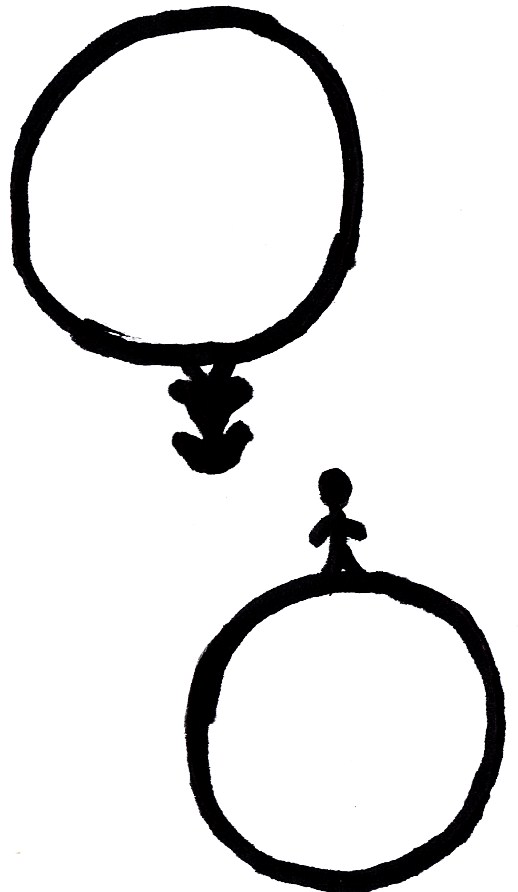
As is common with fairy tales (and sci-fi for that matter), the film sets up a very simple haves-vs-have-nots dichotomy. Two worlds are connected by opposing gravitational pulls, so that inhabitants of one are always looking upside down at the inhabitants of the other. The world on top is rich. The world on bottom is poor. It’s about as simple of an allegory as you’ll get outside the front & back of the train in Snowpiercer. The fun is in the film’s more fantastic elements, like the aforementioned pink bees that pollinate flowers from both worlds and improbably make an interplanetary romance possible. Besides a few grim details in the wealth disparity and interplanetary oil trade, Upside Down is mostly light fare. If you have the ability (or desire) to turn off your brain and enjoy a sappy against-all-odds love story that involves distant planets and magical pink nectar, it’s a truly fun film.

Even though the movie requires a complete absence of cynicism, it does boast visually thoughtful rewards as well. The spaces where the two worlds meet (particularly in offices & ballrooms that stretch on like two mirrors facing each other) are just straight up nifty. There’s an effortless cool to watching Kirsten Dunst sip a martini out of an upside down glass or watching her love interest hop around on floating platforms like a video game character. After the film’s opening Richard Kelly-style rant, it slows way down to tell a simple love story that will sound awfully familiar to most, but it’s a cliché that’s substantially boosted by its outlandish setting. The romantic fairy tale Upside Down tells is trite, but it’s also timelessly cute and backed up by a puzzling visual landscape that’s deliciously stubborn to even the most basic logic.

Upside Down is currently streaming on Netflix.

-Brandon Ledet

Carnival Revelry: The Intergalactic Krewe of Chewbacchus in 2015

EPSON MFP image

This past Saturday was the annual turning point for me when Mardi Gras stops being a vague concept I hear about on the radio & Facebook feeds and becomes an experience I’m living. Although the Phunny Phorty Phellows’ annual streetcar ride on Twelfth Night is the official start to Carnival season, it’s one I typically miss. Mardi Gras never feels real until I’m finally misbehaving in the thick of it & Krewe du Vieux is my usual starting point for the revelry, but I missed that parade this year as well. 2015’s Chewbacchus celebration was that magical moment when everything clicked and I thought “This is it. This is Mardi Gras.”

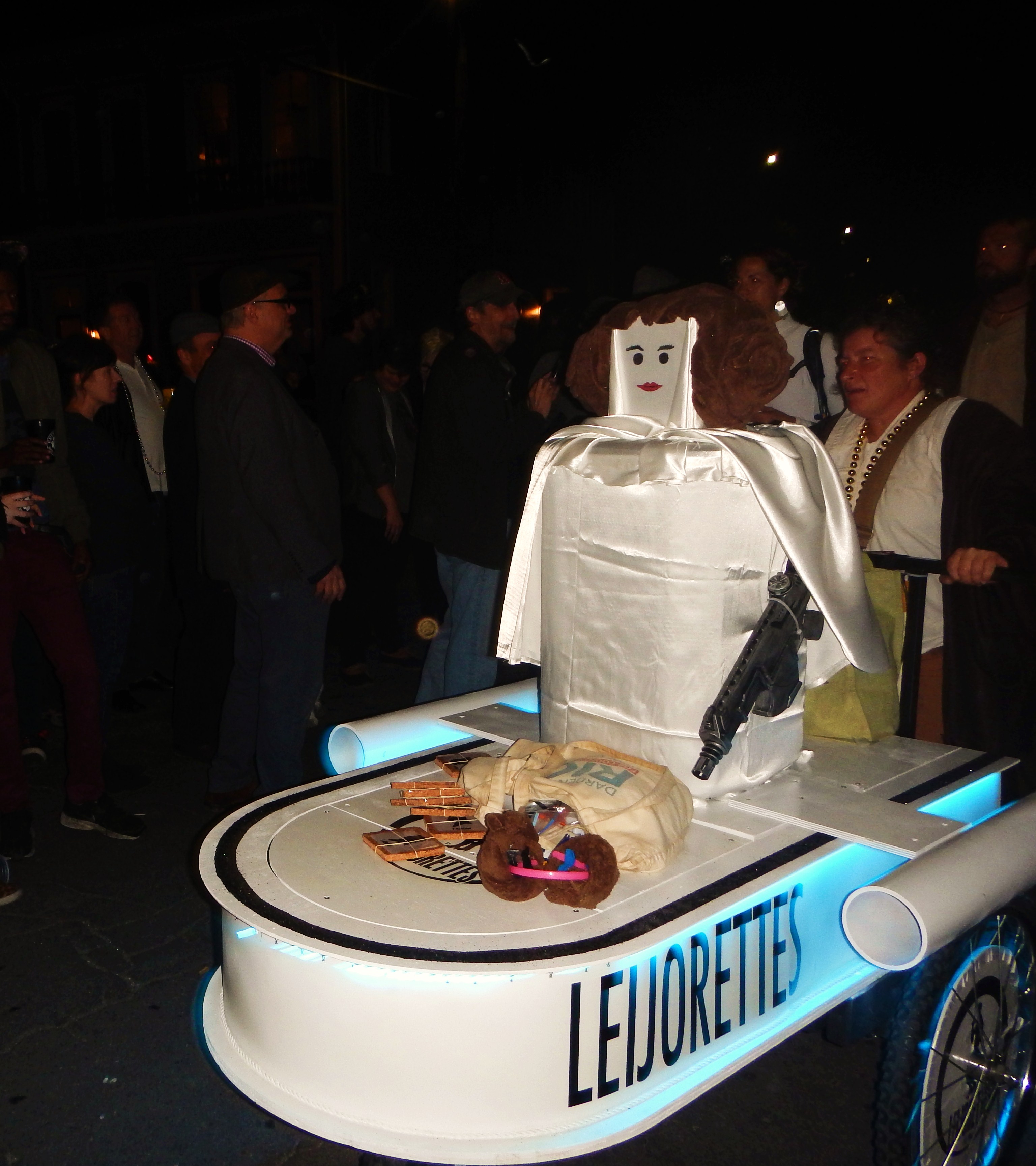
The Intergalactic Krewe of Chewbacchus is a relatively young parade that rolls hand-made, people-powered contraptions through the French Quarter & Marigny while the larger, gas-powered floats roll elsewhere across town. Although their nerdy umbrella has expanded to include all kinds of sci-fi goofiness, they’re the only parade I can think of that’s specifically designed to celebrate a movie franchise: Star Wars. Despite the inclusion of other sci-fi properties like Doctor Who, Star Trek, E.T. and (most recently) Guardians of the Galaxy, it’s still a mostly Star Wars-themed affair, one that lauds the “drunken Wookie” Chewbacca as its monarch. Real-life Chewbacca Peter Mayhew himself has even lorded over the parade the past couple of years, revelers treating him like nerdy royalty. The parade’s haphazard, DIY aesthetic perfectly matches the DIY practical effects of the original Star Wars trilogy. Star Wars’ endless parade of odd-looking weirdos and handmade sets & costumes serves as a fitting platform for New Orleans’ own endless parade of odd-looking weirdos & their personal creations, even if they’ve come to incorporate other fandoms as the years march on.

Wasting away a drunken afternoon in the Quarter and then capping off the night with Chewbacchus’ Imperial Stormtroopers & Jedi Knights was my personal introduction to the 2015 Carnival season. It was a great feeling to ring in my favorite time of the year while celebrating one of my other favorite activities: watching movies. Here are a few pics to help solidify the memory.

DSCN0999

DSCN1000

DSCN1001

DSCN1003

DSCN1004

DSCN1005

Have a great, safe Mardi Gras, y’all! And may the Force be etc, etc.

-Brandon Ledet