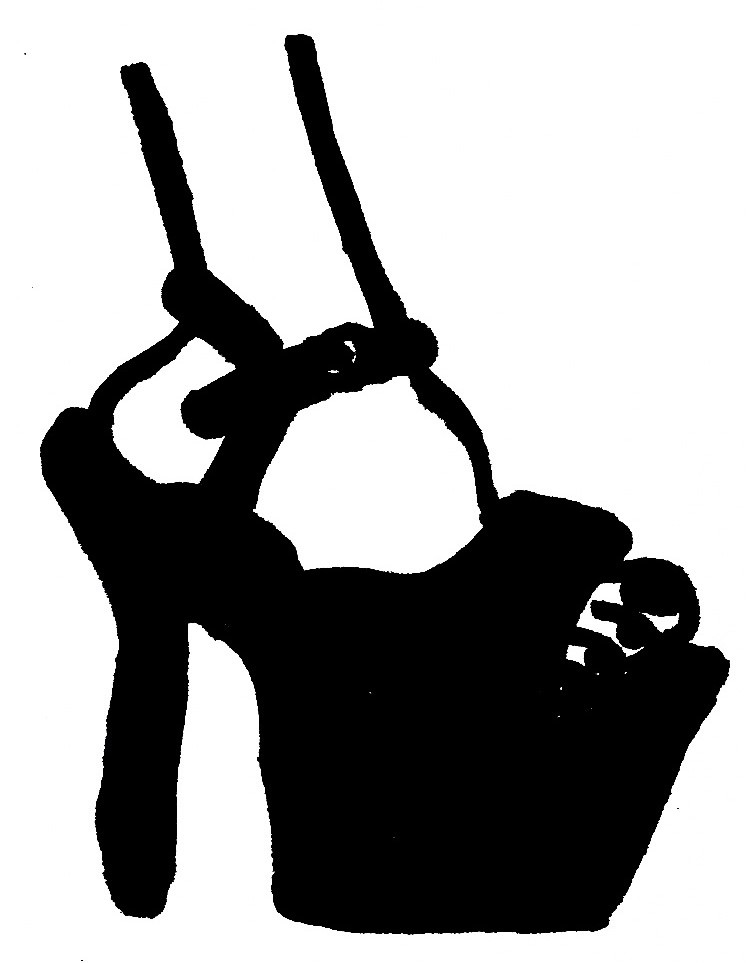
Bratty Woman

This year’s Best Picture winner at the Oscars was about a sex worker who foolishly allows herself to be swept off her feet by a fantasy romance proposal from a wealthy fuckboy client, clashing classic “Cinderella story” & “hooker with a heart of gold” tropes with the harsh, transactional realities of the modern world. There’s obviously a lot of Pretty Woman (1990) DNA running through Anora‘s veins, even if the older, schmaltzier film is distanced from its offspring by several decades and the entire length of the United States. As opposing coastal stories, both movies are appropriately anchored, with Anora playing the scrappy Brooklynite brat who throws stray punches at Pretty Woman‘s dream-factory Hollywood romance. They have too much in common to be purely read as polar opposites, though. Pretty Woman strut the Walk of Fame on Hollywood Boulevard so that Anora could clack its Lucite heels on NYC pavement. The former was rewarded with great box office returns & terrible reviews, while the latter is a niche art-circuit crowdpleaser that sneakily nabbed Cinema’s Top Prize despite a relatively meager scale & budget.

Julia Roberts sealed her status as a Hollywood A-lister by playing a fresh-faced streetwalker. She hooks a once-in-a-lifetime trick in the form of a sleepwalking Richard Gere, playing a slutty businessman who’s feeling numb & lonely after the recent loss of his father. Their single-night luxury hotel room tryst quickly escalates into a weeklong engagement for the lifechanging sum of $3,000 (a figure that provided the working title of the original screenplay) and then, eventually, a genuine proposal of marriage. In Anora, the modern fairy-tale romance of that premise unravels quickly & violently, leaving its titular sex worker scrambling to hold onto some compensation after blowing up her life for a dishonorable john. In Pretty Woman, the big-kiss acceptance of the proposal is the end-goal, a consummation of Roberts declaring she “wants the fairy tale” instead of being kept as an on-staff sex worker. The deal-sealing kiss is then punctuated by an unnamed observer on the street pontificating, “Welcome to Hollywood! What’s your dream? Everybody comes here. This is Hollywood, land of dreams. Some dreams come true, some don’t; but keep dreamin’. This is Hollywood.”

The original scripted ending of Pretty Woman had a distinctly Sean Baker touch, mirroring the end of The Florida Project with Roberts taking her fairy-tale romance to Disneyland. I doubt the toothless Gary Marshall’s version of that trip would’ve had the same dramatic or satirical impact as Baker’s, but they’re both consciously dealing in the same tropes & cliches. If anything, I don’t see Anora upending Pretty Woman‘s naive view of sex-worker-and-client romance; I just see it starting where Pretty Woman ends, logically teasing the story out past the rush of the first Big Kiss. Julia Roberts’s Vivian has plenty in common with Mikey Madison’s Ani throughout the movie. She’s just as defiantly bratty in the face of obscene wealth, and she’s just as friendly to fellow staff workers who serve the same clientele. Marshall mixes sex & slapstick in a way that recalls Baker’s sensibilities in Roberts’s first sexual act with Gere, having her initiate fellatio between giggling fits during an I Love Lucy rerun. I doubt even Baker would call Anora a refutation of Pretty Woman, given that Roberts’s declaration that her tryst with her new client is just like “Cinder-fuckin’-rella” might as well have been recited word-for-word in his version of the story.

Overall, Anora really is the better film. It’s got an anarchic energy that swings wildly from comedic confection to bitter drama within the span of a single scene, whereas Pretty Woman is almost pure confection. After Roberts’s & Gere’s first night together, they immediately slip into a comfortable, domestic dynamic, and most of their scene-to-scene interactions are genuinely romantic, like their Moonstruck trip to the opera or the john playing Vivian’s body like a grand piano. The darker notes of a rape attempt (from Gere’s sleazy lawyer, played by Jason Alexander) or a fellow sex worker’s body being discovered in a nearby dumpster are just illustrations of why the fairy-tale romance is necessary for Vivian, who will accept no less. Gary Marshall is working in tonal contrast there, while Baker lets opposing tones wrestle & tangle until they’re indistinguishable. The audience is scared for Ani in the same scene where we’re laughing at the bumbling incompetence of the male brutes keeping her in place. All we’re really allowed to feel for Vivian is pure adoration, only scared that Julia Roberts might hurt her back carrying the movie while Richard Gere shrugs & mumbles his way through the script. She does so ably, though, with a 3,000-watt smile.

-Brandon Ledet

Podcast #232: Starlet (2012) & 2025’s Best Director Nominees

Welcome to Episode #232 of The Swampflix Podcast. For this episode, Brandon, James, Britnee, and Hanna discuss the earlier works of this year’s Best Director Oscar nominees, starting with Sean Baker’s porn-industry buddy comedy Starlet (2012).

00:00 Apology/Goo
05:03 Kinda Pregnant (2025)
10:19 The Vietnam War (2017)
14:17 The Sweet Smell of Success (1957)
18:35 Rats! (2025)

23:39 Starlet (2012)
41:48 The Childhood of a Leader (2015)
58:30 A Prophet (2009)
1:13:22 Revenge (2017)
1:28:36 Cop Land (1997)

You can stay up to date with our podcast through SoundCloudSpotifyiTunesTuneIn, or by following the links on this page.

– The Podcast Crew

Anora and Her Friends

Sean Baker’s time is here.  After nailing down his gig-labor docufiction style in the 2004 food-delivery tragedy Take Out and then applying it to a long string of sex-industry dramas in the couple decades since, Baker has finally earned his moment in the prestige-circuit spotlight.  Earlier breakthroughs like Tangerine & The Florida Project perfectly calibrated his caustically funny, soberingly traumatic storytelling style in his best work to date, but he emerged from those triumphs recognized as a name to watch rather than one of the modern greats.  He’s been recalibrating in the years since, going full heel in his deliberately unlovable black comedy Red Rocket before face-turning to the opposite extreme in his latest work, Anora.  Clearly, Baker has decided he wants audiences to love him again, and it’s impressive to see him swing so wildly in tone between his last two features without losing his voice.  Anora is the feel-good sweet counterbalance to the feel-bad sour Sean Baker of Red Rocket.  Both are equally funny & frantic, but only one is affable enough to set the filmmaker up for a Best-Picture Oscar run after taking home the top prize at Cannes.  It’s his time.

The surprising thing about Anora’s critical success is that it’s such a dutiful continuation of the work Baker’s already been doing for years – just with an extra dash of sugar to help sweeten the bitter.  Mikey Madison stars as the titular erotic dancer, another trapped-by-capitalism sex worker in a long tradition of Sean Baker anti-heroines dating at least as far back as 2012’s Starlet.  Anora is a thorny, chaotic, unfiltered baddie whom the audience instantly loves for her faults, because she’s fun to be around.  Like in Tangerine & The Florida Project, we meet her working customers in a high-stress but manageable profession, then follow her on an anarchic journey through her larger urban community, walking a tightrope between slapstick physical comedy & face-slap physical violence until she’s offered a moment of grace in the final beat.  As the editor, Baker has worked out a well-timed rhythm for this story template through its many repetitions in previous works.  He sweeps the audience up in the hedonistic romance of Anora’s Vegas-strip marriage to a big-spender Russian brat who offers a Cinderellic escape from the strip club circuit in exchange for helping secure a green card.  The quick-edit montage of that fantasy then slows down to linger on its real-world fallout, investing increasingly long, painful stretches of time on Russian gangsters’ retribution for the young couple generating tabloid headlines that embarrass the brat’s oligarch father.  The laughs continue to roll in, but the punchlines (and physical punches) get more brutal with each impact until it just isn’t fun anymore, as is the Sean Baker way.

There’s nothing especially revelatory about the Sean Baker formula in Anora.  In the context of his filmography, it’s just more of the same (of a very good thing).  However, the increased attention to his career-long project as an auteur has had its immediate benefits, not least of all in Baker’s collaboration with the local repertory series Gap Tooth Cinema (formerly known as Wildwood).  When asked to program a screening for Gap Tooth as a primer for what he was aiming to achieve in Anora, Baker offered three titles as options: Fellini’s Oscar-winning sex worker drama Nights of Cabiria, the fish-out-of-water Eddie Murphy comedy Coming to America, and a second Italian sex-work story in 1960’s Adua and Her Friends.  Gap Tooth ultimately selected Adua, the most obscure title of the trio and, more importantly, one of the very best titles they’ve screened to date.  I don’t know that Sean Baker’s name would have come to mind had I discovered Adua and Her Friends in a different context, since it’s a much more formally polished picture than the anarchic comedies he’s become known for since he filmed Tangerine on an iPhone.  The comparisons that more readily came to mind were Mildred Pierce, Volver, and The Best Little Whorehouse in Texas.  It’s a less recognizable title than any of those comparisons, but that’s the only way in which it’s lesser.  It’s an incredibly stylish, sexy, tragic, and cool story of self-reinvented sex workers making do in late-50s Italy, one that speaks well to Baker’s genuine interest in his characters’ inner lives beyond what they symbolize as society’s economic casualties.

Adua and Her Friends is a darkly comic drama about a small crew of sex workers who are forcibly retired by the Merlin Law of 1958, which ceased the legal operation of all Italian brothels.  Unsure how to get by without the only trade they have experience in, the women conspire to open a rural, roadside restaurant as a front for a new, illegal brothel they will run themselves.  Only, after a few successful months of food service—depicted as being equally difficult as prostitution—they decide they’d rather “go straight” in their new business than convert it into an underground brothel.  As you’d expect, the self-reinvented women’s lives as restaurateurs are upended by men from their past that refuse to let them start fresh, the same way Anora is blocked from upgrading her social position from escort to wife.  Where Adua excels is in taking the time to flesh out the inner lives & conflicts of each woman in its main cast.  Lolita is led astray by conmen who take advantage of her youthful naivete; Marilina struggles to reestablish a familial relationship with her estranged son; Milly hopes to leave her past behind and start over as a devoted housewife, Anora-style.  Adua (Oscar-winner Simone Signoret) gets the first & final word in her struggle to establish a new career before she ages out of her livelihood, but the movie is an ensemble-cast melodrama at heart, asking you to love, laugh with, and weep for every woman at the roadside restaurant (and to hiss at the cads who selfishly ruin it all).

Much like in Baker’s films, the majority of Adua and Her Friends is a surprisingly good time, with plenty slapstick gags & irreverently bawdy jokes undercutting the hooker-with-a-heart-of-gold tropes typical to this subject.  Like Anora, it’s a 2+ hour comedy with an emotionally devastating ending, one that carefully avoids making its titular sex worker a purely pitiable symbol of societal cruelty even while acknowledging that she’s backed into a pretty shitty corner.  Adua and Anora can be plenty cruel themselves when it helps their day-to-day survival.  That might be where the two films’ overlapping interests end, since Adua lounges in a much more relaxed hangout vibe than Anora, scored by repetitions of Santo & Johnny’s “Sleepwalk” rather than t.A.T.u.’s “All the Things She Said.”  Adua and her friends loiter around their Italian villa, fanning themselves in a deep-focus tableau, while Anora is dragged around Vegas & NYC by Russian mobsters who (for the most part) don’t see her as a human being.  There is one early sequence in Adua where a black-out drunken night is represented in choppy lost-time edits that may have been an influence on the rhythms of Anora’s first act, but otherwise I assume Baker was inspired less by the film’s formal style than he was by the characterizations of its main cast.  The frank, sincere, humanizing approach to sex-worker portraiture in Adua and Her Friends speaks well to Sean Baker’s continued interest in sex-work as a cinematic subject and, although both were great, I feel like I learned more about his work through its presentation than I did by watching his latest film.

 -Brandon Ledet

Take Out (2004)

When Sean Baker’s career-high poverty drama The Florida Project locally premiered at New Orleans Film Fest in 2017, I was surprised that the screening included a Q&A with the movie’s producer, Shih-Ching Tsou.  Although Tsou does not enjoy the same name recognition as her longtime creative partner, I immediately recognized her as the donut counter cashier from Baker’s previous picture – his breakout hit Tangerine.  Listening to her talk about the creative & financial decisions behind The Florida Project‘s production made it clear she was a substantial player in the success of Baker’s directorial career, and that she had been his main collaborator since long before their movies received red-carpet film festival rollouts.  A recent Criterion Collection restoration of Baker’s early, scrappy service industry drama Take Out highlighted the extent of their collaboration even more starkly.  It’s the one instance where Shih-Ching Tsou was so involved in the daily filming of a project that she & Baker were listed as co-directors instead of being rigidly relegated to director & producer.  It’s an interesting curio within the context of Baker’s career anyway, since it’s the only story I’ve seen him tell outside his usual pet subject of poverty-line sex work.  Still, it’s even more interesting for the way it pushes what Tsou brings to her creative partnership with Baker to the forefront, since it was largely made with a two-person crew.

If it hadn’t been an early-style precursor to the greater things Baker & Tsou accomplished in Tangerine, The Florida Project, and Red Rocket, it’s unlikely Take Out would be remembered much at all.  It’s a pretty straightforward cinema verité labor drama, most notable for its chump-change budget & documentary sensibilities.  The most interest it might have to audiences unfamiliar with the trajectory of Sean Baker’s career is the authentic snapshot it captures of the daily operations of a Chinese food delivery kitchen in a post-9/11 NYC.  Baker & Tsou spent weeks filming the front-of-house customer service & back-of-house food production of an authentic Chinese take-out counter before writing a sparse screenplay that could be staged in its sweaty, cramped walls.  The customers at the counter are real New Yorkers waiting on their take-out orders; the customers who accept deliveries at their apartments were cast through Craigslist and improvised their interactions with the central, doomed delivery guy.  Most importantly, the incredibly charismatic woman working the take-out counter, Wang-Thye “Big Sister” Lee, is documented performing her actual, natural work persona, providing enough priceless interactions with the real people of New York that it’s almost frustrating the movie wasn’t reworked as a full documentary instead of a mixed-media docudrama.  Instead, Baker & Tsou reshaped these authentic transactions into a tidy, barebones crime drama, which likely helped land it the film festival distribution that kickstarted their career.

After harvesting enough B-roll of real-life kitchen drama, Tsou & Baker wrote a fictional drama about a food delivery worker’s frantic day-long scramble to repay borrowed cash, staged within the same restaurant.  He has until the end of his shift to scrape together $800 in donations & tips or his debt to the gangsters who helped fund his US immigration will be doubled, a consequence they make brutally clear by hobbling his body with a hammer.  This desperation pushes him to work grueling hours biking through a rainstorm, performing gratitude to shit-heel customers on what’s presumably the worst day of his life.  Of course, it’s near impossible to get ahead on his own under those conditions, only picking up $1 here or $2 there in tips as the deadline quickly approaches.  There’s no music underscoring the tension of this low-level crime drama, just the low hum of kitchen equipment and NYC rain.  Although the story being told about the risks & pitfalls of undocumented immigration is a politically pointed one, it often feels a little forced & tidy compared to what’s otherwise such an authentic look at the daily lives of undocumented kitchen workers in major US cities.  In the few movies they’ve made together since, Baker & Tsou have greatly improved the balance between those two impulses – pushing the fictional drama of their semi-documentary films to even more artificial extremes while simultaneously making them feel natural to the real-world environments they’re staged in.  Take Out can’t help but feel like an early test run for greater work by comparison, but it’s still successful Independent Filmmaking on its own terms.

This early Tsou & Baker collaboration was made for $3,000 on rented mini-DV cameras in just one month’s time.  Unlike the movie’s central characters and his co-director, Baker does not speak Mandarin Chinese, so he relied on Tsou to translate any improvised deviations from their script to help keep the rushed production on track.  The handheld cameras frame the world they document & synthesize in a grotesque dinge, fixating on poverty-porn details like cockroach infestations, curled linoleum tiles, and the yellowed hues of fluorescent lights.  Despite the uniform hideousness of low-budget digital filmmaking in that era, the food being served in the central kitchen location still looks damn good; the fried rice might read as electric green onscreen, but it’s topped with a visibly juicy half of chicken that’ll have you reaching for the pile of take-out menus in your own apartment.  The equipment & financial limitations that shaped the production were obviously less than ideal, but they forced Tsou & Baker to work in cramped proximity in a way that solidified their joint filmmaking style that’s only led to increasingly greater work since.  From the outside looking in, I get the sense that Tsou is still just as much of a driving force in their creative output as Baker, even though she doesn’t get onscreen credit as his co-director.  At least, there’s nothing especially glaring about the filmmaking & economic ideas of Take Out that you won’t find in their more recent pictures; it’s just that now professional actors like Willem Dafoe deliver their dialogue instead of Craigslist randos, for better more than for worse.

-Brandon Ledet

Quick Takes: Spotlight Films at #NOFF2021

As you would likely assume, the COVID-19 pandemic has sabotaged my usual filmgoing routine during the New Orleans Film Society’s annual New Orleans Film Festival.  In a typical year, I fill my NOFF schedule with a dozen or more low-profile independent films that I likely wouldn’t be able to see on the big screen (or see at all) outside a festival environment.  I’ll zip around the city for a week solid, cramming in 3-4 no-budget titles a day, the more esoteric the better.  I tend to avoid most of the big-name movie premieres at NOFF every year – both because those films are likely to be widely distributed to local theater chains in a few months anyway, and because the events are time-sucks that keep me from catching the smaller, weirder titles that will not screen in any other local venue.  The pandemic shifted those priorities greatly for me, though.  As I’ve been going to the movies a lot less frequently this year, the appeal of seeing a film festival screening of a major release with a masked, vaccinated crowd instead of gambling that I might be comfortable seeing it at the multiplex in a couple months is much less resistible.  And so, my participation in the 2021 edition of the New Orleans Film Festival was most boldly defined by attending the city’s premieres of three Awards Season prestige pictures, the exact thing I usually avoid during this ritual.

I will still do my best to individually review the few smaller NOFF selections that I watched at home on the festival’s virtual platform, since those no-distro titles are the ones that can most use the attention.  Since the three Spotlight Films I attended in person will most likely be discussed to death in the coming months by professional publications, I’m okay just grouping them here in bite size quick-take reviews.  As always, we’ll also provide an audio round-up of all the films we caught at this year’s festival on an upcoming episode of The Swampflix Podcast in the coming days.  Some traditions are worth maintaining, pandemic or no.  For now, here’s a brief round-up of all the major spotlight releases I caught at this year’s NOFF.

C’mon C’mon

The most thematically on-point selection for this year’s New Orleans Film Festival was definitely C’mon C’mon, which was highlighted with a lavish red-carpet premiere at The Orpheum.  The film was an obvious programming choice for that festival-opener treatment because the city of New Orleans features prominently in its cross-generational road trip narrative, which visits—in order—Detroit, Los Angeles, New York and, finally, N.O.  Director Mike Mills was in attendance to gush about the locals who collaborated on the picture, especially the New Orleanians who trusted him to interview their children on-camera about their visions of what they expect the future will be like. 

While that choice to highlight a (partially) local production in one of the city’s most gorgeous venues makes total sense thematically, I do think the presentation clashed with the film’s low-key nature.  I walked out Mills’s previous film wowed by his concise encapsulation of subjects as wide-spanning as punk culture solidarity, what it means to be “a good man” in modern times, the shifts in the status of the American woman in the decades since the Great Depression, the 1980s as a tipping point for consumer culture, the history of life on planet Earth, and our insignificance as a species in the face of the immensity of the Universe.  For all of C’mon C’mon‘s interviews with real-life kids about the daunting subject of The Future, it’s mostly just a road trip movie where a socially awkward uncle (Joaquin Phoenix at his most subdued) bonds with his socially awkward son.  It’s about the same thing a lot of low-key indie dramas are about: how difficult it is to meaningfully connect with the fellow human beings in your life, which is a much smaller scope than what I’m used to from this director.

Since C’mon C’mon is a lot more contained & intimate than either Beginners or 20th Century Women, it never approaches the heights of what Mills can do at his best.   Still, it’s pretty darn charming as one of those heartfelt friendship stories where a precocious child drags a lonely grump out of their shell.  And I love that you can feel Mills falling in love with New Orleans in real time in the third act, especially in a brief sequence set during a walking parade.  He looked genuinely inspired by the city on that stage.

Red Rocket

The other two Spotlight screenings I caught at this year’s fest were staged at AMC Elmwood – a very clear vision of what it would’ve been like to see them presented outside of the fest.  Of the Elmwood screenings, the title I was most stoked to see was Sean Baker’s latest black comedy Red Rocket, since his previous film The Florida Project ranked among my personal favorite films of the 2010s (several spots below Mills’s 20th Century Women).  Red Rocket did not disappoint, but it did leave me in a worse mood than Baker’s previous two features, which are much sweeter despite dwelling in the same bottomless pits of economic desperation.

Former MTV VJ Simon Rex stars as a down-on-his-luck pornstar who returns to his hometown in rural Texas to recover from his rock-bottom fallout in Los Angeles.  From the opening seconds of the film, Rex chatters & schemes at a brutally unrelenting pace, weaponizing his conman charm (and gigantic dick) to climb the local drug-ring ladder at the expense of everyone he encounters – including his closest family members and innocent neighborhood teens.  The only moment of relief from his sociopathic motormouth is when the community joins forces to shout “Shut the fuck up” into his face in unison.  The film boasts all the D.I.Y. visual splendor & infectiously rambunctious energy that typify a Sean Baker film, but they’re re-routed into a stomach-turning, pitch-black character study of Beach Bum-level proportions.

In its broadest terms, Red Rocket is just another bleak poverty-line comedy from Baker, exactly what you’d expect from him.  It’s just that this time it’s more of a feel-bad hangout than a nonstop plummet into chaos, and the protagonist is deeply unlikeable instead of charmingly vulgar.  It’s like a goofier, laidback version of Good Time, where you feel terrible for laughing while a desperate scumbag exploits every poor soul in their path just to keep their own head slightly above water.  It really slows down to make you squirm between the punchlines.  I didn’t appreciate it as much as The Florida Project or Tangerine, where you are invited to love Baker’s protagonists for their misbehavior, but at least he’s not repeating himself, nor shrinking away from what makes his work divisive.

Memoria

While the appeal of the other two NOFF Spotlight selections I caught this year was the previous work of the creatives behind them, I’m embarrassed to admit that I was drawn to the third & final film on my schedule mainly because of its exclusivity.  I’m generally a fan of Sean Baker & Mike Mills, but the only other film I’ve seen from Apichatpong Weerasethakul left me dead cold.  What drew me to his latest slow-cinema arthouse drama, Memoria, was less the artist behind it and more the William Castle-style gimmickry of its distribution.  A large part of the appeal of film festivals is having access to movies I wouldn’t be able to see otherwise.  Memoria fits that bill perfectly: a challenging head-scratcher indie film that may never play in New Orleans again.

In a publicity-generating power move, Memoria‘s distributor Neon has announced that the film will “never” be presented on a streaming service or physical media.  It will instead perpetually “travel” in a “never-ending” theatrical release that will only play on one screen in one city at a time.  Personally, I very much value the novelty of attending an Event Movie right now.  It’s been a lackluster year for me, so I appreciate a little carnival barker razzle dazzle on the arthouse calendar, luring marks like myself who don’t even enjoy the director’s previous work into the circus tent just to feel like I’m witnessing something special.  I also recognize the pretension & elitism of that release strategy, so I was proud of the NOFF audience for outright laughing at the explanation of it during the festival’s pre-recorded intro.  That moment of communal mockery turned out to be one of the precious few highlights of the experience, unfortunately.

Memoria stars Tilda Swinton as a Scottish academic who’s spiritually adrift in Colombia, haunted by her sister’s mysterious illness and an even more mysterious sound that only she can hear.  Much of the film consists of non-sequitur tangents & intentionally overlong shots of its star sitting in still silence, as seems to be Apichatpong’s M.O.  I had about the same level of engagement with this film as I had with Uncle Boonmee Who Can Recall His Past Lives: short bursts of baffled awe drowning in a bottomless sea of boredom.  Both films have exactly one scene that I flat-out love (a tense family dinner at a restaurant here & the catfish encounter in Boonmee) but for the most part were decidedly Not For Me.  I was practically begging for Memoria to end by its final half-hour, cursing myself for being suckered into the theater by its “never-ending” exhibition gimmickry.  Taking chances on difficult-to-access art films that make you feel intellectually bankrupt for not “getting” them is a quintessential film festival experience, though, and it oddly felt nice to be let down in that distinctly familiar way.  Made me miss the before times, may they soon return.

-Brandon Ledet

Money, Sex, Love, Christmas, Blood, and Donuts

The Gen-X vampire slacker drama Blood & Donuts, our current Movie of the Month, carries a lot of low-key hangout energy for a movie about a bloodsucking immortal ghoul. The film’s central vampire, Boya, is reluctant about his role as an eternal seducer & killer, appearing to be genuinely pained by the danger he poses to the vulnerable humans around him. He attempts to limit his sanguine footprint by feeding off street rats and avoiding eye contact with potential romantic partners, until the urge overpowers him or until his vampirism proves useful in saving the day for his mortal friends. One of the ways this small-budget Canuxploitation horror signals this low-key, anti-violence hangout ethos is by setting its story in a 24-hour donut shop, where Boya can hang out in wholesome solidarity with other nocturnal weirdos without frequenting the orgiastic goth nightclubs more typical to vampire cinema. That donut shop is a quirky choice that maybe suggests a livelier horror comedy than Blood & Donuts cares to deliver, but it still helps distinguish the otherwise tempered film as a singular novelty (which can only be a boon in the crowded field of vampire media).

While vampire movies are a dime a dozen, donut shop movies are more of a niche rarity. There are certainly iconic donut shops to be found scattered around pop culture –Big Donut in Steven Universe, Miss Donuts in Boogie Nights, Stan Mikita’s Donuts in Wayne’s World, Krispy Kreme in Power Rangers, etc. However, those settings are isolated diversions rather than serving as a central location like the one in Blood & Donuts. The only other significant feature film I can think of with a plot that revolves so closely around a donut shop is Sean Baker’s 2015 Los Angeles Christmas-chaos piece Tangerine, which is anchored to a real-life LA donut shop called Donut Time. The opening credits of Tangerine scroll over a yellow enamel table at Donut Time, scratched with the names of bored vandals who have visited over the years. The movie serves as a kind of whirlwind feet-on-the-ground tour of a very niche corner of LA, but it’s anchored to Donut Time as a significant landmark to establish a sense of order amidst that chaos. It opens there with its two stars (Mya Taylor & Kitana Kiki Rodriguez) splitting a single donut because they’re perilously cash-strapped. It also climaxes there in a classic Greek stage drama confrontation between all the film’s major players in a single, donut-decorated location that explodes the various hustles & schemes they’ve been struggling to keep under control throughout. Both Blood & Donuts and Tangerine wander off from their donut shops to explore the city outside (Toronto & Los Angeles, respectively), but their shared novelty locale provides the structure that allows for that indulgence

Like how Boya (Gordon Currie) awakens from a decades-long slumber at the start of Blood & Donuts, the similarly dormant Sindee (Rodriguez) emerges from prison at the start of Tangerine out of the loop on what’s been happening in her local trans sex worker microcosm since she’s been away. Over the opening shared donut, she learns from her best friend Alexandra (Taylor) that her boyfriend/pimp Chester (James Ransone) has been cheating on her while she was locked up, so she bursts out of Donut Time into the Los Angeles sunshine to enact her revenge on all parties involved. Obviously, this flood of Los Angeles sunlight distinguishes Tangerine from the late-night vampire drama of Blood & Donuts (as well as distinguishing Baker’s film as a kind of novelty within its own Christmas movie genre). Otherwise, though, the two films have a similar way of collecting oddball characters in low-income-level gathering spots—like, for instance, donut shops. Tangerine speeds through a blur of 7/11s, laundromats, dive bars, by-the-hour motels, and car washes until it finds its way back to its Donut Time starting point. It finds an unexpected symmetry within the low-rent late-night locales of Blood & Donuts’s own tour of Toronto, something that’s most readily recognizable in the films’ respective visions of impossibly filthy motel rooms. Or maybe it’s most recognizable in how David Cronenberg’s mobster runs his crime ring out of a bowling alley, while the pimp antagonist of Tangerine runs his own out of a donut shop.

You’d think that a nocturnal vampire comedy from the 90s and a sunlit 2010s trans sex worker drama would have very little in common, especially since the former is so lackadaisical and the latter is commanded by high-energy chaos. Their shared donut shops locales and commitment to exploring the character quirks of the weirdos who frequent them bridge that gap with gusto. The word “donut” may not appear in Tangerine’s title the way it does with its Gen-X predecessor, but the film is just as committed to accentuating the novelty of its central location. Despite being far too young to reasonably remember the TV commercial she’s referencing, Sindee announces, “Time to make the donuts, bitch!” to her romantic rival as they approach the climactic showdown. She also jokingly asks the Donut Time counter girl, “Do you have watermelon flavor?,” an echo of Blood & Donuts’s own bizarre inclusion of a kiwi-flavored donut. As a pair, the two films seem to be serving as two pillars of a sparsely populated Donut Movie subgenre. The longer you scrutinize how they use the novelty of that locale the more they appear to have in common despite their drastically different surface details.

For more on September’s Movie of the Month, the Gen-X Canuxploitation vampire drama Blood & Donuts (1995), check out our Swampchat discussion of the film.

-Brandon Ledet

The Florida Project (2017)

Youth is the key ingredient to the court jester defiance of D.I.Y. punk as a culture & as a philosophy. There’s a defiant, punk as fuck spirit that drives Sean Baker’s breakout feature Tangerine in a way that made it an easy pick for one of my favorite films of 2015 and one of the 2010s releases I’d most want to watch with the unintentional godfather of youthful punk defiance, John Waters (Wetlands would be up there as well). Baker distills that youthful, punk defiance even further in his follow-up to that iPhone-shot whirlwind of sex workers on the war path by looking to even younger, more defiant protagonists: actual children. The Florida Project is already facing early waves of backlash for its cultural sins as poverty porn (and it’s honestly a miracle that Tangerine largely escaped the same). These accusations are understandable given the film’s children-in-peril setting in the extended-stay slum motels just outside the Disney World amusement parks in Florida, but they presume that the film’s sole goal is to merely report that these impoverished communities exist just outside the tourist industry playgrounds they surround. The Florida Project is not the miserable, poverty-exploiting drama that reading frames it to be. Rather, it captures the defiant punk spirit that laughs in the face of all authority & life obstacles among the children who run wild in those insular, run-down motel communities. The Florida Project doesn’t dwell on or exploit the less-than-ideal conditions its pint-sized punks grow up in, even when depicting their most dire consequences; it instead celebrates the kids’ anarchic energy and refusal to buckle under the false authority of adults.

Willem Dafoe (in Willem Dafriend mode here) stars as the only recognizable face in a crowd of “nonprofessional” actors (give or take a Macon Blair or a Caleb Landy Jones), mostly children & young women. His exasperated motel manager, Bobby, is a reluctant caretaker of the single mother families that rent his rooms by the week. He attempts to maintain a professional emotional distance from these near-homeless families, whom he occasionally has to police & evict, but fails miserably due to direct contact & a soft heart. Like all adults & authority figures, however, Bobby is only a periphery presence to be mocked & subverted by the punk-as-fuck little rascals that play throughout the purple pastel stucco buildings that cater to Disney World tourist runoff. Their ring leader is our POV character, Moonee (Brooklynn Prince), a dangerously sharp child who runs wild around the motel as if it were a playground, with the approval of her sex worker mother. Instead of solemnly gawking at her small family’s limited means, The Florida Project celebrates the minor successes Moonee pulls off in the tropical Florida heat: scheming tourists out of ice cream money, crashing fancier hotels’ breakfast buffets, initiating newcomer kids into the joys of smashing the fragile semblance of routine normality authority figures like Bobby are tasked to maintain, spitting on cars. It’s no mistake that the opening credits are set to the disco hit “Celebration,” since the entire intent of the film is to celebrate good times, even in the face of the harsher realities at the story’s fringes. Although Moonee & her cronies are financially locked out of The Happiest Place on Earth, they defiantly turn the Magic Castle & Futureland Inn knockoffs they are allowed to occupy into a punk rock amusement park of its own.

Many reviewers are discussing The Florida Project in the same modern American poverty documentation terms used to describe last year’s (much less jubilant) American Honey. I believe the film’s vibe is much more in line with the young court jester punks of titles like We Are the Best!, Daisies, Female Trouble, etc. There’s certainly a detectable quality of documentation of hyper-specific “at risk” Floridians who live at the tourism industry’s fringes, following them with a detailed eye as they pass theme park-style gift shops & listen to trap music on smartphone speakers. Baker’s filmmaking style is much less kinetic & haphazard here than it was in the iPhone-shot sugar rush of Tangerine, but the rich 35mm colors & fixed camera precision of The Florida Project only stabilizes & beautifies the world of its children-in-peril punks enough to emphasize their exuberance & imagination. The pure, dangerous joy these kids find in the palm tree-lined parking lots of an urban Florida wasteland is infectiously genuine. The movie doesn’t ask for your pity, but rather a hearty cry of “Up the punks!” and recognition that “All Cops Are Bastards,” even well-meaning motel managers. The court jester youthfulness of punk requires you to take no authority or life challenge too seriously (even though situations are often physically & emotionally dangerous here) and the little kids who run free in The Florida Project’s miniature domain laugh in the face of it all without caution and without apology.

-Brandon Ledet

Tangerine (2015)

EPSON MFP image

fourhalfstar

Not many Christmas films dare to take you down the nightmarish, sun-soaked rabbit hole of Los Angeles sex trade, but then again not many films behave like Tangerine at all. Set on a particularly busy, but far from well-behaved Christmas Eve, Tangerine is overflowing with the visual eccentricity & moral ambiguity you’d expect from an indie director making his breakout film on a handful of iPhone 5s (he has a name & it’s Sean Baker). However, what’s so great about the film is not necessarily the behind-the-camera showiness (although that stuff’s fun too). It’s the verisimilitude of its non-actress leads being let loose to run wild across the Los Angeles cityscape, dragging the audience by the hair through a violent, but hilarious whirlwind of drug abuse, sex trade, and tender exchanges of friendship & love in a world that’s been relentlessly unkind. It’s so easy to get wrapped up in the skeezy fun of the film’s cracksmoke-fueled bathroom primping & puke-drenched cab rides that when the film slows down long enough to remind you of the cruel world its protagonists inhabit (a rare recess, that) the emotional toll is all the more affecting.

Our guides to this very specific version of a L.A.’s underbelly are a pair of trans sex workers named Alexandra & Sin-Dee. Alexandra is the audience surrogate. An aspiring singer with no interest in the intense flood of drama that drives the film, Alexandra is cool, collected, and often surprisingly wise, serving almost as a one-woman Greek chorus who’s there to comment on the goings on & offer support to her friend when needed. Sin-Dee, on the other hand, is the living personification of drama. Released from a one-month prison stay on Christmas Eve, Sin-Dee immediately launches into a revenge plot to destroy the woman she’s told her lover/former-pimp Chester has been cheating on her with while she was locked up. Once she finds the cisgender sex worker in question, Sin-Dee physically drags & beats on the unsuspecting adulteress until she can stage her intentionally climactic showdown at the film’s central meeting place, Donut Time. Joining them for the shouting match in the donut shop is Razmik, an Armenian cab driver/gentle john who lives at the fringes of their lives, but opens a gateway for the audience into another side of L.A. that Alexandra & Sin-Dee have no access to.

Even with the Donut Time blowup, the plot is unlikely to be what sticks in the viewer’s memory. Tangerine is a film most likely to be remembered for the story of its inexpensive production. For a feature filmed entirely on iPhones, it has a nice visual poetry to it, drawing an impressive potency out of images like graffiti murals, Christmas lights, automated car washes and, of course, donuts. Much like with this year’s pair of Patrick Brice films, Creep & The Overnight, Tangerine is an inspiring reminder of how much a determined filmmaker can accomplish with even the smallest pool of resources (all three films were produced by the Duplass Brothers, by the way).

The true-to-life (and riotously funny) performances from actresses Mya Taylor (Alexandra) & Kitana Kiki Rodriguez (Sin-Dee) are also likely to eat up much of the conversation surrounding the film, and deservedly so. Taylor & Rodriguez are vibrant talents with a natural, but wildly mischievous authenticity to them that’s rarely seen outside of John Waters’ films. I don’t say that lightly. John Waters is my favorite living artist. If there’s one movie I’d love to talk to him about at this very moment it would be Tangerine & all the credit for that impulse goes to Taylor & Rodriguez. The fact that they’re debuting in such a wickedly transgressive & visually impressive revenge comedy is almost secondary. Almost.

-Brandon Ledet