Deadwood: The Movie (2019)

There are certain TV series that are hailed as extremely prestigious or otherwise laudable in their time, and which ultimately fade from public consciousness. For most of my life, I often read about how Moonlighting was one of the most unconventional TV series ever made and was extremely ahead of its time, only for the show to be all but inaccessible due to music licensing issues until very recently, when it came to Tubi, the people’s streaming service. Around Y2K, thinkpieces popped up all over talking about the three contemporary television shows that were ushering in a new era of respectability for TV as a medium: The Sopranos (which remains in the public consciousness), The X-Files (which remains a strong brand in some ways but which was unable to maintain excitement enough to support a reboot/sequel series for very long), and Buffy the Vampire Slayer (which was so powerful that it created TV Tropes but which went largely underdiscussed in wider culture until recent news of a potential reboot). HBO was the primary place where you could find ongoing series which were stylistic, cinematic, and profound, as made clear in their slogan “It’s not TV; it’s HBO,” and that remained the case for a long time. In addition to The Sopranos, other series like Six Feet Under and The Wire are also strong contenders for the “greatest TV series ever made” epithet. I also remember a strong contingent of people, mostly on the Television Without Pity (R.I.P.)’s message boards, arguing that Deadwood, which ran for three seasons between 2004 and 2006, was the heir apparent to this designation. After finally watching The Sopranos for the first time last year, I’ve spent a few months of this one finally watching Deadwood, and I have to say that those folks have a pretty decent case. 

As a series, Deadwood revolves mostly around Al Swearengen (Ian McShane), who runs a saloon and brothel known as The Gem, in the mining encampment of Deadwood, a settlement in the then-unincorporated Dakota Territory. Nominally, the lead was Seth Bullock (Timothy Olyphant), a former lawman who came to Deadwood seeking a new start co-running a hardware store with his friend Sol Star (John Hawkes). As a series that would play with the tropes and conventions of the western genre, it makes sense that the just Bullock and the conniving, clever Swearengen would have an antagonistic relationship with Bullock as the main character (just as lawmen usually were in these pieces; Gunsmoke is about Matt Dillon, Gunslinger is about secret agent Cord, and Bat Masterson is about, well, Bat Masterson) and Swearengen as the thorn in his side. The show quickly realized that examining the complex compartmentalization of Swearengen’s morality was a much more dramatically rich vein to mine, with Swearengen becoming the most dynamic character while Bullock remains the more static one. Bullock’s first season arc largely deals with his slow realization that Deadwood’s lawlessness demands that he take on the role of sheriff despite his reluctance, as well as his burgeoning romance with wealthy widow Alma Garret (Molly Parker). Bullock has a wife back in Montana, but it’s not a marriage of love but of responsibility, as he married his brother’s widow after the elder Bullock was killed as a member of the Union Army. He is torn between his and Alma’s love and the knowledge that his wife will have to join him eventually (which she does, along with Bullock’s nephew/adopted son at the beginning of the second season, played by Anna Gunn). 

Bullock’s partner Sol never gets as much character exploration, but he serves as the motivator for a wonderful character arc for prostitute Trixie (Paula Malcomson), who starts out as the de facto captain of the leg spreading team at The Gem. She’s initially suicidal but comes to recognize her importance to the community with fits and starts, first by defying Swearengen’s orders to help kill a child who is the lone survivor of an attack by highwaymen who are in his employ, and then later by helping Alma through withdrawals from laudanum (Al had ordered her to supply Alma with the stuff to ensure her compliance when he low-balled her on an offer for her land). She finds herself drawn to the awkward Sol and the two slowly fall for one another, although her loyalty remains split between Sol and Swearengen. There’s also “Calamity” Jane Canary (Robin Weigert), who is frequently the best part of the show, as she pontificates in a state of extreme inebriation about how lost she is in life without the direction that she got from her loose partnership with “Wild Bill” Hickok. (Keith Carradine played Wild Bill during the series, but if you’ve ever heard the name “Deadwood” outside of the context of this series, it’s probably because it’s known as the place where Wild Bill was murdered, so no surprises that he’s not back for the reunion film.) The only person from whom Weigert can’t steal the scene is America’s darling Brad Dourif, whose Doc Cochran finds himself on the frontier on the run from warrants for grave robbing while also being haunted by the sheer amount of death that he witnessed and was powerless to stop during the Civil War. There are dozens of other characters, but you’d be much better served by watching the show (it’s less than 40 episodes) than by my recital of their names and attributes, but these are the ones to know for the purposes of the movie.

The only remaining character of high plot importance not yet mentioned is George Hearst (played by Mr. Delta Burke, Gerald McRainey). The show slowly builds to his arrival; the first season’s central conflict revolves around Swearengen and Bullock’s rivalry, while in the second season Hearst becomes a spectral figure whose impending arrival is heralded by the appearance of Francis Wolcott (Garret Dillahunt), his “scout” whose sociopathic malevolence overshadows Swearengen’s. The man himself arrives in the flesh in the third season, and he is a figure of such pure, unadulterated evil that his present looms over the encampment. All the while, Deadwood itself becomes less and less of a “frontier” and more connected to the U.S., geographically and legislatively, as the future is always coming. Famously, Deadwood ended without an “ending,” as the series was renewed for two additional seasons after season two, only to have the fourth season pulled from under them. As such, the end of that season deals with Hearst—having already demonstrated how little he values human life by having his army of Pinkertons murder the miners in his employ who talk about collective action and possibly arranging the killing of the beloved only son of his lifetime servant—arranging for the murder of one of the show’s most kind-hearted and beloved characters. This action prompts Trixie to attempt to kill him, which fails, and Swearengen chooses to kill an innocent prostitute in his employ and submit her body to Hearst as that of his attempted assassin in order to prevent retaliatory action and protect Trixie’s life. Then Hearst just rides out of town, hands technically clean, free of consequence. Hearst is such a monstrous character that, with only a few episodes left in the series, I told my friend that I hoped the show would pull a full on Once Upon a Time in Hollywood and straight up kill the bastard, historical accuracy be damned. Alas. 

But then! In 2019, HBO commissioned a reunion movie to wrap things up. I’m generally wary of these kinds of things. Even when I was a kid I could tell that the Growing Pains reunion movie wasn’t very good, I still remember the gut-punching disappointment of the Arrested Development continuation, and one late night during quarantine I saw Family Ties Vacation and thought I might have already been dead and in hell. Then again, well, you know how much I talk about this. As it turns out, I needn’t have been so concerned, as Deadwood: The Movie is an absolute delight. 

As the film opens, Alma Garret arrives in Deadwood, now officially a part of the U.S. (South Dakota specifically) and connected to the wider world not just by the telegraph that was newly installed at the beginning of season three, but also telephone and even railroad. She is accompanied by her ward, the adopted Sophia (the little girl whose family was murdered in the series premiere), and she is reunited first with Charlie Utter (Dayton Callie) and then with Bullock; the former recommends that Alma stay in the latter’s hotel, Bullock and Star having expanded from hardware sales to hoteliers. Trixie is pregnant with Sol’s child, and she insists upon waiting until the child is safely born before she will marry him. Despite the fact that when we last saw him Doc seemed to be in the throes of consumption, he’s still alive and kicking, and he tends to both Trixie and Swearengen, whose lifetime of drinking is threatening to catch up with him, fatally, any day now. As part of the statehood celebrations, Hearst returns to Deadwood to give a speech as a visiting senator from California; he understands that he’s unwelcome when faced with so many people who have not forgotten what he did a decade prior, but he nonetheless has a minor parade through the thoroughfare. Trixie, still furious about the murder of [redacted], refuses to hide as everyone recommends and instead bursts out onto her balcony to call the murderer a coward to his face. Hearst, incensed upon realizing that he was deceived by a decoy corpse before, demands that the nearly infirm Swearengen help him acquire Charlie Utter’s land, as that tract is vital to his plans to expand upon and profit from completing telephone lines. Then, Utter turns up dead. 

I am of two minds about the way that flashbacks are used throughout this film to make connections to the narrative that came before. For the most part, they play out in brief flashes of moments, almost like stylized memories interjecting into the present. These feel organic, and they’re so short that they’re almost subliminal. On the other hand, there are several that play out for a little too long, all of them concerning Trixie’s failed killing of Hearst ten years ago and Swearengen’s offering up of a different woman’s body to cover for her. Admittedly, this is a moderately complicated narrative development to have to recap for the audience, and I understand that I don’t need this repeated back to me because I just watched the final few episodes a couple of weeks ago, rather than the thirteen years that had passed for those who had watched the series in its original run and were now back just for this movie. Sometimes, the little snatches of the past are beautiful; Al lies in bed with one in a long line of women under his employ who have given him comfort over the years, and as she curls her head to his chest, so too does Trixie curl up next to him, all that time ago but also here and now, and the moments like this were the ones where my breath caught in my chest. For all the ways that I had been impressed by Deadwood, I had rarely ever been moved by it. I liked the way that the relationships developed, and I was shocked by the deaths of certain characters, and I may have rooted for Bullock’s wife to be disposed of so that he and Alma could be together. Six Feet Under, The Wire, and—yes—Buffy had moved me in their time, but Deadwood was something that was a technical marvel to me, a masterpiece of dialogue and dovetailing plotting, a solid and remarkable genre deconstruction. And then, in this reunion movie, they managed to make me not just enjoy it, but find some meaning in it. 

Of course, some of that can be attributed to the fact that all our friends are here! Why, it’s Tom Nuttall, who runs the No. 10 Saloon, and he’s alive! Swearengen’s minions Dan Dority and Johnny are still standing around at the bar at The Gem, waiting for Al to come down and dish out orders that are an order of magnitude above their own cleverness. Samuel Fields is fishing in the stream at Charlie Utter’s property, and Aunty Lou is there to help Trixie with her difficult childbirth! Con Stapleton’s given up on being a goon (or perhaps merely had to find new work since the death of actor Powers Boothe meant that the character of Cy Tolliver had likewise passed) and become a minister! Joanie’s running the Bella Union now and she and Calamity Jane are shacked up together. Bullock and wife have a family of three kids now, and Harry Manning finally, finally got that fire wagon that he was always droning on about. In fairness, Manning’s frequent raising of the issue in the series seems to have been intended to foreshadow the eventual destruction of the original Deadwood encampment by fire, as it was in real life, and would likely have been the series finale if the show had continued. Ironically, Deadwood actually does pull a OUATIH-style historical revision, as the town is still standing in 1889 in this film despite the fact that historically, Deadwood was destroyed in a blaze in 1879. And! At the end of this film, even though we don’t get to see Hearst get everything that’s coming to him, we do get to bear witness to him being arrested for Utter’s killing, and as Bullock carts him off to a cell the people of Deadwood get to kick him around a little (Bullock even considers letting them finish Hearst off!). It’s a very satisfying ending, especially as we also get to see Trixie and Sol married, with Swearengen walking her down the aisle in his final days. It feels complete. It feels whole. 

… Except for one thing. There is simply not enough of E.B. Farnum (William Sanderson) in this movie. That makes some sense, as his role in the show proper had declined quite a bit toward the end. Early on, Farnum’s ownership of the only hotel in town granted him access to characters whose activities he could then report to Swearengen and assist in the barkeeper’s machinations, not to mention that it allowed an endless parade of transient characters to meet and comment upon Farnum and their hilarious disgust for him. Farnum’s weaselly nature, his perpetual dampness of the hand, and his wheedling voice made him the butt of every joke, with his appointment as mayor of the town by a committee allowing him nominal authority and no real power being the ultimate pinnacle of his ridiculousness. As a result of being involved in fewer shenanigans, the show gave Farnum an even more lowly worm for him to belittle and mock, but the audience often found him alone, delivering soliloquies about his social impotence and his anger at his position, and they were always comedic showstoppers. Here, we get to see a little bit of him, as he plays a crucial role in the resolution of Charlie Utter’s murder; he has apparently fashioned a crawlspace in his hotel that allows him to spy on rooms Norman Bates style, and his eavesdropping on Hearst reveals the plan for two of his goons to kill the only witness to Utter’s slaying. Despite the seriousness of the situation, it’s still hysterical to watch Farnum try to get himself out of his latest predicament, and I simply wish there was more of him in this. At least for now we have YouTube compilations.

-Mark “Boomer” Redmond

Last Stop in Yuma County (2024)

Heretofore a director of mostly short films and music videos, first-time feature director Francis Galluppi has burst onto the scene with something that’s both indebted to indie upstarts of the past and which feels like a breath of fresh air. Last Stop in Yuma County is a spare movie; it doesn’t look or feel cheap although you can definitely tell it was made on a marginal budget. It’s lean in just the right places to take this story to the next level. 

In the 1970s, an unnamed traveling knife salesman (Jim Cummings) stops for gas while en route to see his daughter, in the custody of his ex-wife, for her birthday. He arrives at a filling station only to learn from the attendant, Vernon (Faizon Love), that he’s waiting for the fuel truck to arrive, and that he’s welcome to wait in the attached diner. Since this is, as the title says, the last stop in Yuma, he has little choice. The diner’s waitress and possibly sole employee, Charlotte (Jocelin Donahue), is dropped off by her sheriff husband, Charlie, while the salesman hears on the radio about a bank robbery a few counties over. Once the diner opens, Charlotte and the salesman make pleasant chit-chat while trying to ignore the rising heat, as the diner’s air conditioner is no longer working. Before long, another car stops in for gas and gets the same bad news, and its occupants also choose to idle the time away in the diner. While Charlotte takes their order, the salesman notices that they are driving the same green Pinto described in the radio bulletin. The robbers, young hothead Travis (Nicholas Logan) and middle-aged, stone-cold Beau (Richard Brake), take note that the salesman and the waitress seem to be exchanging confidences, and cut the phone line when Charlotte tries to call Charlie, who takes too long to come to the phone. (Charlie’s assistant, Virginia, is played by the one and only Barbara Crampton.) Beau tells them to play nice and tasks Charlotte with grilling each customer who comes in about their fuel situation and, if any of them have gas, he’ll simply take that car and let everyone live. 

The diner starts to fill up as more and more people arrive at the fill-up station. An elderly couple from Texas (Robin Bartlett and Gene Jones, the latter of whom you may remember as the gas station attendant whose small talk infuriates Anton Chigurh in No Country for Old Men) takes up residence at one table, and Charlie’s deputy Gavin (Connor Paolo) comes in for coffee, which sets Beau and Travis on edge. Charlotte almost manages to get a warning out, but Gavin’s careless collision with Travis costs her the opportunity. Two drifters, Miles (Ryan Masson) and Sybil (Sierra McCormick), also find their way to the diner, and Miles, who already idolized the criminals he heard about on the radio since he and Sybil have a whole anti-social folie-a-deux, attempts to steal the bank loot from the Pinto’s trunk before he’s spotted and they have to head into the diner to avoid being caught. It’s when local rancher Pete (Jon Proudstar) arrives, solely to have lunch since he filled up the day before, that things finally get out of hand. The meek salesman writes a note to his daughter and sticks it in his pocket and prepares to make a stand, but a standoff occurs when Beau takes Charlotte hostage, with Pete, the Texans, and Miles all pulling their guns on each other. Miles tries to bargain for part of the loot for helping Beau and Travis, and then things take a real turn for the worse. 

There are a couple of minor elements that spotlight Yuma as a first-time outing for a feature director. Throughout the film, one of its strengths is a beautiful, constant, yellow desert light coming in from the outside; it’s very atmospheric in a way that contributes to the tension. But when the salesman shows up at the diner around dawn (it’s specifically said that it opens at six o’clock, and he watches Charlotte enter and turn the “open” sign around), the light is already that same pallid yellow of noon. It’s unchanging, and it’s a minor detail, but one that I couldn’t help but notice. The scene in which Beau explains—calmly, coolly, and dispassionately—exactly why the salesman and Charlotte are still alive, it’s delivered as a monologue. It’s a strong one, and one that’s done in a single long take, which works great with the tone. However, there’s a moment in the speech when Beau says, “Do you understand?” [beat] “Good,” and then continues with his directions. We can assume, yes, that Charlotte and/or the salesman nodded their assent, but it feels weird not to see that response in the text, without a cutaway. You can’t cut the question from the monologue without cutting the long take, and you can’t cut to the other characters reacting without doing the same, but it nonetheless feels a little awkward. 

That’s all that there is to quibble about, though. This is a great piece of work, moody and tense. From the opening credits on, we know that the fuel truck isn’t coming, as the opening credits play out over its crash site, so we know that things can only go tragically (and boy do they). Cummings’ transformation from timidity to reluctant courage is fun to watch, and when his character starts to make selfish choices, we go into full Coen Brothers mode as he succumbs to his own personal greed, up to and including a moment where it seems like he will be forced to bury the cash beside the road like Jerry Lundegaard. Beau and Travis even superficially resemble other pairs of criminals that the Coens often conceive in their films, with Braker’s Beau in particular a welcome presence as his casual cruelty means the stakes are as high as possible, and the performance of base, blood simple (ha) meanness that Braker brings to the role is a highlight. The placement of the dominoes that create the narrative flow is excellent, with some really elegant foreshadowing and rhyming imagery. It’s hard to say more about this one without giving too much away (in fact, I may already have), but if you’re yearning for something in the vein of a less sprawling No Country in a tight ninety minutes, this is a perfect choice. 

-Mark “Boomer” Redmond
Prisoners of the Ghostland (2021)

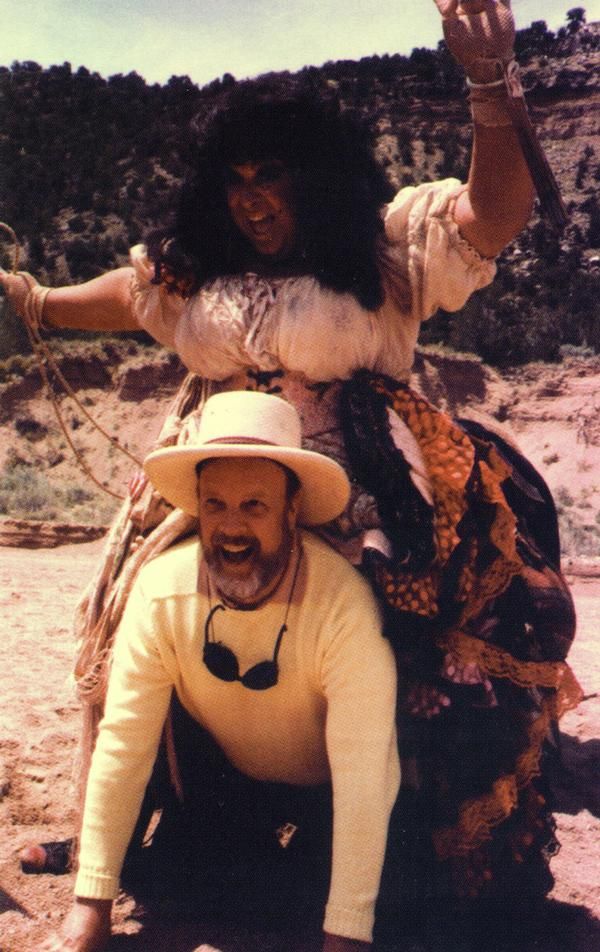
Madman actor Nicolas Cage collaborated with madman genre filmmaker Sion Sono on a dystopian horror-Western set in the futuristic nuclear wastelands of Japan.  Everything about that team-up sounds like an easy slam dunk, but instead it’s a lazy layup that barely makes it through the hoop.  Prisoners of the Ghostland is overloaded with vivid pop art iconography, surprisingly effective creep-outs in its momentary stabs at horror, a plot bonkers enough to rival Hell Comes to Frogtown . . . and yet it’s somehow near-indistinguishable from most of Cage’s late-career goof-offs.  It’s amusing enough as a Nic Cagian novelty, but it’s shockingly inessential considering the pedigree of the director behind it (whose film Suicide Club is among my all-time personal favs).

In Hell Comes to Frogtown fashion, Nicolas Cage plays a violent criminal on a mercenary mission to retrieve a missing woman from the nuclear wastelands, locked into a security device that will explode his limbs, head, and testicles if he steps out of line.  His target for retrieval is a runaway sex slave (Sofia Boutella) who’s better off staying lost in the desert than under the thumb of the captors paying for her return.  Will the cold-hearted brute warm to his doomed captive and fight for her freedom instead of trading her in for freedom & cash?  The answer to that question is obvious, but it’s also obvious that the plot doesn’t matter as much as the vibrant comic book swordfights & gun battles that illustrate it.  They do look cool, but that’s about all they do.

Like a lot of late-career Nic Cage oddities, Prisoners of the Ghostland‘s major downfall is that it recalls too many of the actor’s previous stunt performances to stand out on its own as anything especially novel.  Between its echoes of the missing-girl mission from Wicker Man, the hotrod-revving macho posturing from Drive Angry, and the dystopian gloom of Mandy, Prisoners of the Ghostland plays like a Greatest Hits collection of Nic Cage meme movies.  The real shame about that is losing Sion Sono’s voice among the whispers-and-screams performances of Cage and his cast of fellow caricatures.  Sono’s visual iconography is gorgeously realized here—especially in the wasteland’s creepy mannequin masks and the village’s blood-spraying samurai swordfights—but it overall feels more like a Nic Cage movie than a 50/50 collaboration.  The two of them should make beautiful music together, but it ends up feeling like a solo project.

Nicolas Cage had an interesting year.  Instead of starring in a dozen DTV action snoozers and a couple genuinely interesting outliers, he appears to have been much pickier than usual when choosing his projects.  Cage only starred in three movies released in 2021.  Going into the year, Prisoners of the Ghostland promised to be his Mandy-scale knockout, but that honor ended up going to a quiet drama about the art of fine dining.  It also looked like it might be the most fun performance he’d put in all year, but even by that metric it was outdone by a single-location thriller where he fights killer Chuck E. Cheese style animatronics (a movie that appears to be very popular among furries, if my anecdotal observations mean anything).  Instead, it ended up being the mediocre middle ground between those two competing features, which is not at all what you want to feel about a Cage/Sono team-up.

For everyone playing along at home, here’s the official 2021 Nic Cage Movie Power Rankings:

-Brandon Ledet

Episode #123 of The Swampflix Podcast: Birds of Prey (2020) & Good Movies in Bad Genres

Welcome to Episode #123 of The Swampflix Podcast. For this episode, Brandon, James, and Britnee discuss the recent superhero blockbuster Birds of Prey (2020) and several others movies we enjoy in genres that usually bore us.

You can stay up to date with our podcast by subscribing on  SoundCloudSpotifyiTunesStitcherYouTube, or TuneIn.

– The Podcast Crew

When I Get Home (2019)

When I Get Home is a feature-length music video from R&B singer-songwriter Solange, who has presented the work as an “inter-disciplinary performance art film” and a companion piece to her album of the same name. As such, the film has been projected in select art museum spaces and arthouse movie theaters across the country (including NOMA and The Broad in New Orleans) instead of being quietly shoveled off to streaming platforms like so may “visual albums” have in recent years, despite their lofty cinematic ambitions. I went into my screening When I Get Home not being especially familiar with Solange’s work as a musician (despite her status as an adopted New Orleans local), but still wanting to support projects like this, Lemonade, and Dirty Computer getting the proper theatrical treatment – as they often prove to be among the best filmmaking achievements of their respective years. I’m a huge sucker for the feature-length music video as a medium; it’s a format that’s primed to reach levels of #purecinema ecstasy that traditional narrative features are often too weighed down by plot & logic to achieve, as it’s free to experiment with the basic sensory combination of visuals + sound that defines cinema in the first place without being distracted by any other concerns. When I Get Home is no exception there. It’s pure visual poetry, the exact transcendent visual lyricism we look for when we venture out for Art Movies at the cinema, which are sadly in short supply as of late (at least through proper distribution channels).

The “home” referred to in this title is not New Orleans, but rather Solange’s nearby hometown of Houston, TX. Although the film does not follow a clear plotline the way Janelle Monáe’s Dirty Computer video anthology project did last year, this concept of examining Houston as a homeland does serve as a unifying theme for When I Get Home. This is a kind of R&B sci-fi acid Western portrait of the Black people of Houston that reaches more for poetry than it does for clear messaging. Traditional Black cowboys & cowgirls on horseback trot through the Texan deserts that surround the city, as well as the more rural suburban environments that define its borders. The crisp, geometric lines of Houston’s downtown business district present the city as a modern space as well (albeit one somewhat stuck in the sensibilities of the 70s & 80s), and that architecture is abstracted throughout the film as a backdrop for a series of high-fashion photo shoots. We also jump from this stylish present into a peculiarly kitschy retro-futurism, where a Barbarella-type astronaut stripper drags a sparking spaceship motherboard through the desert (in heels!) and glitchy agriculture robots with giant dongs dance under a crop duster in a sports-stadium-turned-future-farm. It’s a bewildering collection of past-present-future imagery that’s most clearly tied together by Solange’s constant soundtrack – which includes Houstonian touches throughout among its melancholy vocals & synthy flourishes (like DJ Screw chops & tape-warps and lyrical references to “candy paint”) to keep the picture on-theme. This is a sprawling multimedia work that invites subjective interpretation more than straightforward communication, but it does amount to a stunning portrait of Black life in Houston across time when considered in total.

What really lands When I Get Home close to my own heart is the way it juxtaposes high-art formalism with pedestrian Digital Age media like text messages & YouTube clips – a combination that I will always be on the hook for. So much of this film operates like an ethereal art piece dedicated to seeking pristine beauty in every frame that it’s outright jarring when these sensual pleasures are interrupted with Power Point-level animation graphics and flip phone-quality online found-footage. I couldn’t get enough of it. I’ve seen dozens of feature films from 2019 so far and, yet, there’s a montage in this where Solange adjusts the webcam on her laptop over & over again that I swear is the most invigorating thing I’ve seen on the big screen all year. There are more affordable, wide-ranging means of production in filmmaking than ever before, yet most of the tech that’s available to us in our daily lives (even in just the tools we use to record & broadcast our day via social media) are often locked out of inclusion in Legitimate Cinema. Already freed from these concerns a both as a music video and as a multimedia collage, When I Get Home uses every tool at its disposal to create its surreal Houstonian dreamscape, and its most effective moments often come across when its imagery look cheapest – if not only through the virtue of contrast. There’s also a kind of overexposed photography aesthetic about its high-art vignettes that ties them into the more pedestrian online imagery, as it affords the film the patina of a well-selected Instagram filter (even though these images were mostly recorded on actual celluloid). There’s something vitally honest and comprehensive about this high-low filmmaking inclusivity that I found more daring & exciting than most Real Movies I’ve seen projected in theaters all year.

The synth-heavy, off-center musical compositions in the film are phenomenal. The fashion, sculpture, choreography, and makeup artistry on display are exquisitely composed & presented in surreal juxtaposition with their locales. Its vision of an eternally black, mystical Houston is pure cinematic poetry. Even the old-fashioned cowboy aesthetic of this Black Houston portraiture (complete with exaggerated Spaghetti Western zoom-ins) is remarkably well timed, considering “Old Town Road’s” year-long dominance of the Billboard charts. When I Get Home is not a novelty act or a meme-in-motion like that Lil Nas X hit, however, no matter how much irreverent humor and dirt-cheap online imagery it weaves into its more pristine cinematic impulses. This is a work of pure artistic ambition, unconcerned with the limitations of its medium that are usually dictated by commercial concerns (despite it effectively being an advertisement for its accompanying album, in longstanding music video tradition). My only disappointment when leaving the theater was that I didn’t get to see Dirty Computer or Lemonade presented in the same proper theatrical environment, as these visual album projects really are pushing cinema forward as an artform in a way few other modern genres even dare to attempt.

-Brandon Ledet

The Ballad of Buster Scruggs (2018)

The Coen Brothers’ last feature, Hail, Caesar!, was one of my very favorite films of 2016 and one of my all-time dearest favorites from the directors’ mighty catalog. It’s a testament to how little interest I have in the Western as a genre, then, that it took me so long to catch up with the Coens’ follow-up to that philosophical Old Hollywood farce. Readily available on Netflix for months, nominated for several Academy Awards, and elbowing its way to the top of many critics’ Best Films of 2018 lists (including James’s), The Ballad of Buster Scruggs should have registered as must-see-ASAP material in the scramble to catch up with the best films 2018 had to offer. Early in its runtime, I even felt foolish for having let it cool on the shelf for so long, as its opening ten minutes are an energizing, over-the-top subversion of a genre that normally bores me to tears. My appreciation quickly plummeted from there, however, as it more often participated in the standard tones & tropes of the classic Western without subversion or update – sometimes to disturbing political implication, often to by-the-numbers tedium. The Ballad of Buster Scruggs doesn’t transcend genre so much as it gleefully rolls around in it.

This is an anthology of Western tales with an elegantly simple wraparound: an illustrated hardcover collection of short stories set in the Old West titled “The Ballad of Buster Scruggs (And Other Tales of the American Frontier.” As a disembodied hand flips the pages of the book it becomes clear why the titular story was highlighted as a standout and the other tales were grouped together beneath it. Coens veteran Tim Blake Nelson stars as the eponymous Buster Scruggs, parodying the exact smiling, singing cowboy archetype from Old Hollywood Westerns that Alden Ehrenreich played in Hail, Caesar!. Against the intensely artificial desert backdrops & drunken saloon shootout settings of classic cowboy musicals, Buster Scruggs exists as a kind of Bugs Bunny anarchist – mugging directly to the audience while enacting a brutal trail of slapstick violence. The segment’s Looney Tunes-level exaggeration of the typical Western’s brutality and anarchic mockery of its usual somber adherence to a strict moral code were a welcome subversion of a genre that could use some shaking up. It’s a shame, then, that the rest of the film felt so grim & macho (and weirdly racist) in the exact ways I’m usually bored with in this genre template.

“The Ballad of Buster Scruggs” is a wonderful novelty in isolation; it’s the “Other Tales of the American Frontier” that drag this anthology down into regressive tedium as a collection. The Coens’ usual fixation on the philosophy & brutality of Death are perfectly at home with the genre – to the point where they get perilously uncomfortable with its worst trappings. Tall tales of brutish men fearlessly carving out a space for themselves in harsh, untamed terrain, nary a woman in sight; tone-deaf vignettes of white celebrities playing cowboy by slaughtering the indigenous nations of the land without subversion or critique; the indignity of having to continue looking at James Franco: The Ballad of Buster Scruggs is so often an unpleasant, outdated bore that by its final segments it’s difficult to remember all the way back (over two hours earlier) to the live-action cartoon subversion that opened the show. There’s something to be admired in how the Coens use the avatar of Buster Scruggs, billing him as The Misanthrope, to exaggerate the way their cruel, ironic pessimism is often interpreted by critics despite their ostensible role as singing, dancing entertainers, before then leaning into the exact prolonged misanthropy they’re too often dinged for. The problem is the contrast between those two modes – the self-parody and the business-as-usual – is unfavorable to the majority of the runtime.

As someone who’s bored by Westerns almost by default and doesn’t have the same scholarly, intensive interest in the Coens as a lot of serious Film Nerds do, I’m probably the exact wrong voice to weigh in on this film’s merits. After several unsuccessful attempts to watch their much-beloved No Country for Old Men in its entirely without falling asleep, for instance, my opinion here is likely not to be trusted. Either way, I do believe “The Ballad of Buster Scruggs” is worth a look. I just don’t think the “Other Tales of the American Frontier” have much to offer beyond what you’d expect from the “Coen Brothers Western” premise of the anthology.

-Brandon Ledet

Let the Corpses Tan (2018)

Let the Corpses Tan is a fascinating convergence of things I love to see on the screen and things I could not care less about. Directed by the married duo behind the psychedelic giallo freakout The Strange Colour of Your Body’s Tears, the film is a highly stylized, hyperviolent indulgence in over-the-top depictions of sex, violence, and outsider art. It’s also a loving pastiche of the Spaghetti Western, one that details a never-ending shootout between cops & robbers fighting to the death over stolen gold. Westerns aren’t my usual genre of choice and although Let the Corpses Tan largely avoids the gruff, macho posturing and ruminations over codes of Honor that typically bore me in the Western pic, I couldn’t help but be exhausted by it all the same. This is a film that deliberately survives on the virtues of its aesthetics, so I don’t feel too bad in admitting that its choice of genre & locale was largely the only elements at play preventing me from falling in love. If these same tones & tactics were set in a haunted graveyard or a spaceship instead of the desert I would have been a lot more enraged with the gorgeous display on the screen; it’s petty but it’s true.

A small crew of boneheaded brutes take refuge at a remote artists’ retreat in the desert after stealing a truckload of solid gold bars. When a young woman kidnaps her child against a custody order and arrives at the retreat unannounced, unconnected to the robbery, she brings police scrutiny that explodes the already tense situation into a day-long shootout. The story behind the gun violence is treated like a necessary evil so that directors Hélène Cattet & Bruno Forzani can get to the detail-obsessive filmmaking indulgences that really excite them: biker cops in fetish gear reaching for their holstered guns; kinky fantasies involving outdoor piss play & bondage; jolts of desert-set psychedelia reminiscent of titles like Phase IV, The Velvet Vampire, and Altered States, etc. The hour by hour detailing of the cops & robbers shootout (as told & retold from various angles) can be a bit of a chore, making Let the Corpses Tan feel twice its 90min runtime. However, the detailed aesthetic Cattet & Forzani evoke between the film’s creaky black leather & gold glitter-smeared nude bodies is undeniable in its in-the-moment effect. Its blasé attitude shared between artists & thieves who think nothing of “killing all the cops on Earth” is also infectiously punk, especially considering that this is a genre I typically associate with Conservative grumps.

When Let the Corpses Tan sings it’s a gorgeous, badass free-for-all of detail-obsessed filmmaking. When it drags it plays a little like a dime-a-dozen Tarantino knockoff the world has already seen far too much of in the last two decades, Thankfully, it sings more than it drags, and the strength of its imagery – whether a highway robbery disguised by Frankenstein masks, a stream of glittery gold piss snaking through the desert sand, or the simple lighting of a cigarette – is what sticks with you longer than its overly familiar gene beats. Even beyond its debt to the Western template in general — Spaghetti or otherwise — Let the Corpses Tan has to contend with plenty of other recent highly-stylized, desert-set gore fests that threaten to dampen its novelty. It’s like Revenge, but less political; it’s like The Bad Batch, but not as boring; it’s like Bone Tomahawk, but not latently racist. The modern genre film landscape is overflowing with so many riches, both in new releases and in Blu-Ray reissues of long-lost classics, that it’s extremely difficult for any isolated title to stand out as a one-of-a-kind-novelty. Between Let the Corpses Tan, The Strange Colour of Your Body’s Tears, and their debut Amer (which I also found a little patience-testing, to be honest), Cattet & Forzani have proven that they can do so with ease, as long as their chosen genre is something that sparks your interest on its own merits. I enjoyed this one immensely at times and fought off the approach of boredom at others. Here’s to hoping they make their next one about something more my speed, like a pro wrestling tournament or a witch’s coven; I’ll be watching either way.

-Brandon Ledet

Roger Ebert Film School, Lesson 36: True Grit (1969)

Roger Ebert Film School is a recurring feature in which Brandon attempts to watch & review all 200+ movies referenced in the print & film versions of Roger Ebert’s (auto)biography Life Itself.

Where True Grit (1969) is referenced in Life Itself: On page 158 of the first edition hardback, Ebert explains his general taste in cinema. He writes, “Of the other movies I love, some are simply about the joy of physical movement.” One of his examples includes “when John Wayne puts the reins in his teeth and gallops across the mountain meadow.” On page 226 he mentions having spotted John Wayne in costume for the film’s production during a studio lot interview with Lee Marvin. On page 250 he details a separate interview with Wayne himself, who shows off his prop rifle from the film.

What Ebert had to say in his review(s): “One of the glories of True Grit is that it recognizes Wayne’s special presence. It was not directed by Ford (who in any event probably couldn’t have been objective enough about Wayne), but it was directed by another old Western hand, Hathaway, who has made the movie of his lifetime and given us a masterpiece. This is the sort of film you call a movie, instead of the kind of movie you call a film. It is one of the most delightful, joyous scary movies of all time […] It is not a work of art, but it wouldn’t be nearly as good if it were. Instead, it is the Western you should see if you only see one Western every three years (an act of denial I cannot quite comprehend in any case).” -from his 1969 review for the Chicago Sun-Times

In his original, gleefully enthusiastic review for the 1969 John Wayne Western True Grit, Ebert explains that the film “is not a work of art, but wouldn’t be nearly as good if it were.” This is just a few sentences after he dares to call it “a masterpiece.” I totally relate to the sentiment of those seemingly self-contradictory ideas, as it very much is at peace with how I watch & review movies myself. Ebert’s legacy as a film critic has always been one of subjectivity & populism, so it makes perfect sense to hear him declare a film to be genre-minded fluff in one breath and a stone-cold masterpiece in the next. Where I diverge with him on the topic at hand is in the specific genre he’s praising: Westerns. I’ve given many trashy horror & sci-fi pictures five-star raves over the three years we’ve been blogging here, but Westerns just really aren’t my genre. In fact, part of the reason the Roger Ebert Film School project has been on hold for the past six months (!!!!) is that I was dreading watching True Grit, which has a reputation for being on the best Westerns ever made. Adapted from a popular novel, inspiring a remake & a sequel, and earning John Wayne his sole Academy Award, it’s the kind of genre exercise that should appeal to even heretics like me, who’d rather watch the worst monster movie over the best cowboy thriller any day. Admittedly, True Grit did win me over despite my personal genre boundaries, but not necessarily by being a great movie first and a great Western second. It did so by side-stepping the roadblock I usually have with these Old West narratives: their traditionally macho POV.

If pressured to declare my favorite Western of all time, my answer would like likely be the recent Australian genre-bender The Dressmaker. Essentially reimagining the Western genre as a tonal mashup of Muriel’s Wedding and a 90s John Waters comedy, The Dressmaker is a classic guns-blazing revenge tale in which Kate Winslet takes out an entire town by sewing pretty dresses instead of firing a six-shooter. The Dressmaker is a genre standout to me because it’s an intoxicatingly feminine take on a traditionally masculine genre. To my surprise, despite ostensibly being a John Wayne picture, True Grit works in a similar way. Written for the screen by (McCarthy witch hunt victim) Marguerite Roberts, the film is largely about a bubbly teenage girl defiantly making her way through an intimidatingly macho world. Our plucky protagonist, Mattie (Kim Darby), has a Book of Henry-type preciousness in her willingness to steamroll adults’ wills and run the show. Her mission in the picture in an act of cold-blooded revenge, hiring two macho hard-asses (the drunkest & meanest of the pair being played by John Wayne, naturally) to kill the man who murdered her own father in an act of petty theft. She insists on accompanying the mission into Native territory herself, of course, and the movie builds a lot of tension out the danger she puts herself in by dangerously navigating “a man’s world.” Her presence isn’t nearly as aggressively femme as the energy of The Dressmaker (I likely would have been much more enthusiastic about the film at large if it were, to be honest), but it did help me adjust to the macho power fantasy of gruff Western lore instead of just mentally checking out completely, which is my usual experience with the genre.

I haven’t had many reasons or opportunities in my life to study the John Wayne Western as an artform, so it’s difficult for me to compare his Oscar-winning performance here with his more typical work. The couple times I’ve dealt with Wayne with any critical intent was in the cop thriller Brannigan (which was great) and the fire-fighting epic Hellfighters (which was terrible). But since Ebert is obviously a giddy fan of The Duke, I suspect that will drastically change soon. True Grit is likely as good of a crash course in John Wayne’s Western work as any I could have hoped for, if not only because the movie doesn’t take his heroics too seriously. A mean old US Marshall roped into a revenge mission while in a drunken stupor, you’d think Wayne’s antihero sidekick character would be all macho posturing & no levity. He’s wonderfully contrasted by Kim Darby’s authentic teenage femininity, though. The two butt heads immediately, him warning “I ought to paddle your rump!” and her spitting back that he’s “a sorry piece of trash.” The heart of True Grit is largely in watching the two partners soften to each other even more so than it is their shared revenge mission. The closing line of the film is Wayne shouting, “Come see a fat old man sometime!” jovially to Mattie, who has come to accept him as the drunk uncle she never had (when you might expect him to be closer to a replacement father figure). The drunk bastard even has a tender friendship onscreen with a house cat named General Sterling Pride, whom he snuggles with when he’s too tipsy to get out of bed. Wayne certainly plays the hardened gunfighter archetype he was famous for embodying in the film, one that’s even dangerously macho, but it somehow comes across as adorable instead of grotesque.

There’s plenty to True Grit I couldn’t identify with because of my arm’s distance relationship with the Western genre. The macho posturing, G-rated gun violence, and racist caricatures of any & all PoC that usually kill the mood for me (and, to be frank, bore me) in Westerns are all present & accounted for here. Although I could be tickled by the antiquated phrasing of “Hurry! I’m in a bad way!” when Mattie falls in a rattlesnake pit, the tension of that moment & other various gunfights never truly hit me, to the point where it’s utterly baffling that Ebert describes the film as “scary” in his review. Here’s what I’ll concede, though: if Westerns were my genre of choice, True Grit would likely be one of my favorites. It has a spark of the feminine subversion I loved so much in The Dressmaker, a glimpse into a less macho parallel universe where I wouldn’t generally find these pictures to be insufferably boring.  I suspect my experience with John Wayne Westerns can only go down from there, as Ebert’s love of the genre will probably lead me to far less hospitable territory for outsiders, but I can admit this one got past my typical defenses.

Roger’s Rating (4/4, 100%)

Brandon’s Rating (3.5/5, 70%)

Next Lesson: Equinox Flower (1958)

-Brandon Ledet

Lust in the Dust (1985)

Now that Criterion has given Multiple Maniacs a restorative spit shine for a recent BluRay release, there aren’t many unsung movies left featuring a performance from Divine, the greatest drag queen who ever lived. Starring roles from Divine are especially scarce, particularly ones outside the John Waters oeuvre. That’s what makes Lust in the Dust so tempting as a potential off-road gem. Divine stars in a comedy directed by the ever-charming Paul Bartel (Eating Raul, Death Race 2000, Scenes from the Class Struggle in Beverly Hills) and no one ever talks about it? How could that be? The answer, obviously, is that the movie is a bit of a stinker and would likely have been forgotten by time completely if it weren’t for Divine’s name on the poster. Worse yet, it feels like a dilution & cheapening of the John Waters brand, which already suffers from being treated like ironic kitsch instead of what it truly is: a collection of the greatest films ever made. Waters was asked to direct Lust in the Dust, but declined because he did not pen the script. Frequent Waters collaborator Edith Massey was cast as a sleazy bartender (not a stretch for her) but died before filming began. Divine stars opposite Tab Hunter, her onscreen rival/lover in Waters’s Polyester. The film also arrived in the seven-year gap between Polyester & Hairspray, which makes me wonder if Divine’s departure from the Dreamlanders crew to pursue projects like Lust in the Dust & her disco career means there were other John Waters projects in the works that were derailed in the meantime. Lust in the Dust isn’t without its occasional charms, but it feels like a huge roadblock that likely prevented better art from seeing the light of day.

Speaking of daylight, Lust in the Dust is a textbook demonstration of the horrors of day drag. Shot in the sun-drenched California desert, the film is a bawdy comedy masquerading as a cheapie Western. Divine is tasked to flop sweat her way through dust-coated comedy routines as stale as the cowboy backdrop that flavors them. A thin story about buried treasure, bandits, and bar fights drags its corpse across the desert sand as playful music continually elbows the audience as a reminder that “This is fun! So funny!” A few of the gags do work, but they’re the rare exception to the rule. I was particularly tickled by Divine’s tendency to crush the head of any man that goes down on her. Her costar Lannie Kazan (of My Big Fat Greek Wedding fame) also gets in a few great one-liners like, “Freeze, hombre, or I’ll be wearing your asshole like a garter,” that remind you that Bartel is usually a super sharp, crass wit. Most of the bits fall dead flat, though. Divine drunkenly falling off a donkey, the small town they raise hell in being called Chile Verde, Divine bashfully pretending she doesn’t want to be gang raped: Lust in the Dust’s major failure is that it isn’t nearly funny enough to justify its own indulgences as an irreverent comedy. Waters was smart to decline the opportunity to direct the picture himself and I’d never want to see my favorite filmmaker tackle something as tired & pedestrian as a Western, but you could bet that if he did the result would be far more energetic & genuinely humorous. Here, the zaniness feels forced and Divine feels weighed down by being tied to an unfunny script instead of being let loose to cause havoc as the no-holds-barred filth monster she truly was.

Lust in the Dust is only a must-see for Divine completists & the morbidly curious. It’s difficult to imagine Western-friendly audiences getting anything more out of it than I did, coming from the perspective of a Waters devotee. Unless you desperately need to see Divine & Tab Hunter share the screen one last time and your copy of Polyester is damaged or missing, I’d advise you to stay as far away as you can manage. It’s best to keep the better memories of Divine alive in our minds than to dilute them with this labored, unfunny dreck. The same goes with the typically wonderful Paul Bartel, really, but it hurts much less to see a dilution of his divinity.

And just so this isn’t a total waste of time, let’s all smile in wonder at the only good thing that came out of this picture: this picture.

-Brandon Ledet

Jesse James Meets Frankenstein’s Daughter (1966)

It’s always at least a little frustrating when all a movie does is affirm things you already know. For instance, I already knew from the first film in William Beaudine’s career-concluding Weird West double bill, Billy the Kid Versus Dracula, that I wasn’t likely to enjoy its marquee mate Jesse James Meets Frankenstein’s Daughter. Indeed, my second trip to that well was even less rewarding than the first and I had to question exactly why I even do these things to myself, especially since I already knew going in that its title was bound to be its best attribute. That wasn’t my most depressing reaffirmation watching Frankenstein’s Daughter, however. What really got to me was once again facing a truth about myself as an audience that never goes away: I will greedily gobble up any scraps of horror genre schlock put in front of me, but most Westerns put me to sleep, regardless of quality.

Of Billy the Kid Versus Dracula, I wrote that the Western end of the film’s horror-Western divide felt like a Halloween-themed episode of Gunsmoke or Bonanza. Jesse James Meets Frankenstein’s Daughter similarly mirrors the lifeless, going-through-the-motions tedium of televised Western serials whenever its titular horror villain is offscreen. It also makes the problem worse by stretching out these gun-slinging adventures to much longer extremes than Beaudine’s other Weird West picture. At the opening of the film I was foolishly excited that it may be an improvement from Billy the Kid Versus Dracula because it begins in Lady Frankenstein’s lab as she experiments on a dead body using her grandfather’s ancient recipe. That excitement soon faded as I realized this is more so a picture about Jesse James’s travels as a pistol-shootin’ romantic.

Two scientists from Vienna, including the titular Lady Frankenstein, set up shop in a small Mexican village to take advantage of two of their most precious resources: electrical storms & disposable laborers (you know, human children). Lady Frankenstein’s experiments in the old abandoned mission she converts to a lab packed with sciency bleep bloop machines have no concern for conquering death, but rather create a strong, mind-controlled slave out of the local undead. Unfortunately, the cruelty in her preposterous form of sci-fi colonialism is abandoned for most of the film’s (very short) runtime to follow the American man who eventually does her in: Jesse James. James’s story is split between planning a bank robbery and getting stuck between the romantic intentions of a local Mexican woman & Lady Frankenstein herself. Neither end of that divide is half as interesting as Lady Frankenstein’s experiments, cheap thrills that have been better pulled off in countless films that are far more entertaining than this one.

If there’s any delight to be found in Jesse James Meets Frankenstein’s Daughter, it’s in the film’s disinterest in maintaining its own sense of world-building. Just like how the vampire in Billy the Kid Versus Dracula is never once referred to as Dracula, Frankenstein’s “daughter” in the film is actually the mad scientist’s granddaughter. Also, when Lady Frankenstein finally creates a successful undead mind-slave out of Jesse James’s hunky buddy, she names the monster Igor for some unknown reason. I guess the production design or the line delivery or a classic “Why? Why?! WHY?!!!!!” reaction made stray moments of the movie humorous, but it never lived up to the potential of its real life outlaw meets supernatural threat premise. I suppose my familiarity with its sister film should’ve meant I already knew that it wouldn’t. I got tricked, once again, into thinking the delights of its schlocky horror elements or its ridiculous title could outweigh the tedium of watching a tedious mid-60s Western. I sorta already knew better, but I watched it anyway and learned nothing in the process.

-Brandon Ledet