
For decades, whenever someone cited the “uncanny valley” effect of modern filmmaking, they were referring to the off-putting resemblance of CGI to real-life humanity. As computer technology inches nearer to photographic accuracy, the ways in which the images are still just slightly off become monstrously horrific, especially when rendering human faces. As a result, movie nerds tend to fetishize the practical effects of yesteryear, preferring the blatant artifice of movie-magic techniques like stop-motion, animatronics, and latex makeup transformations to the uncanny computer effects of our current corporate hellscape. Ironically, that fetishism has recently led to an entirely new uncanny valley forming between advanced practical effects and the CG graphics they’re meant to counteract. For instance, when the stop-motion Wallace & Gromit shorts were mostly made by Nick Park’s hands in the early 90s, you could see the lumpy imperfections of his fingerprints in the characters’ clay bodies, unmistakably marking them with evidence of human touch. Now that Wallace & Gromit features like Vengeance Most Fowl are being produced by hundreds of collaborators for major studios like Netflix, those fingerprints have to be artificially applied, intentionally warping the clay so the machine-printed faces can’t be mistaken for computer animation. Likewise, the new children’s fantasy-adventure The Legend of Ochi features an animatronic puppet so perfect in construction & operation that it uncannily resembles its CGI equivalents in movies from less discerning filmmakers. Music video director Isaiah Saxon has spent years perfecting the puppetry & matte paintings of his feature-film debut to revive an industry overrun by computer-generated tedium with some old-world movie magic and old-fashioned awe. He didn’t think to artificially muck up the final product like Aardman Animations, though, and the result is so uncannily similar to CGI that you have to wonder why he even bothered.
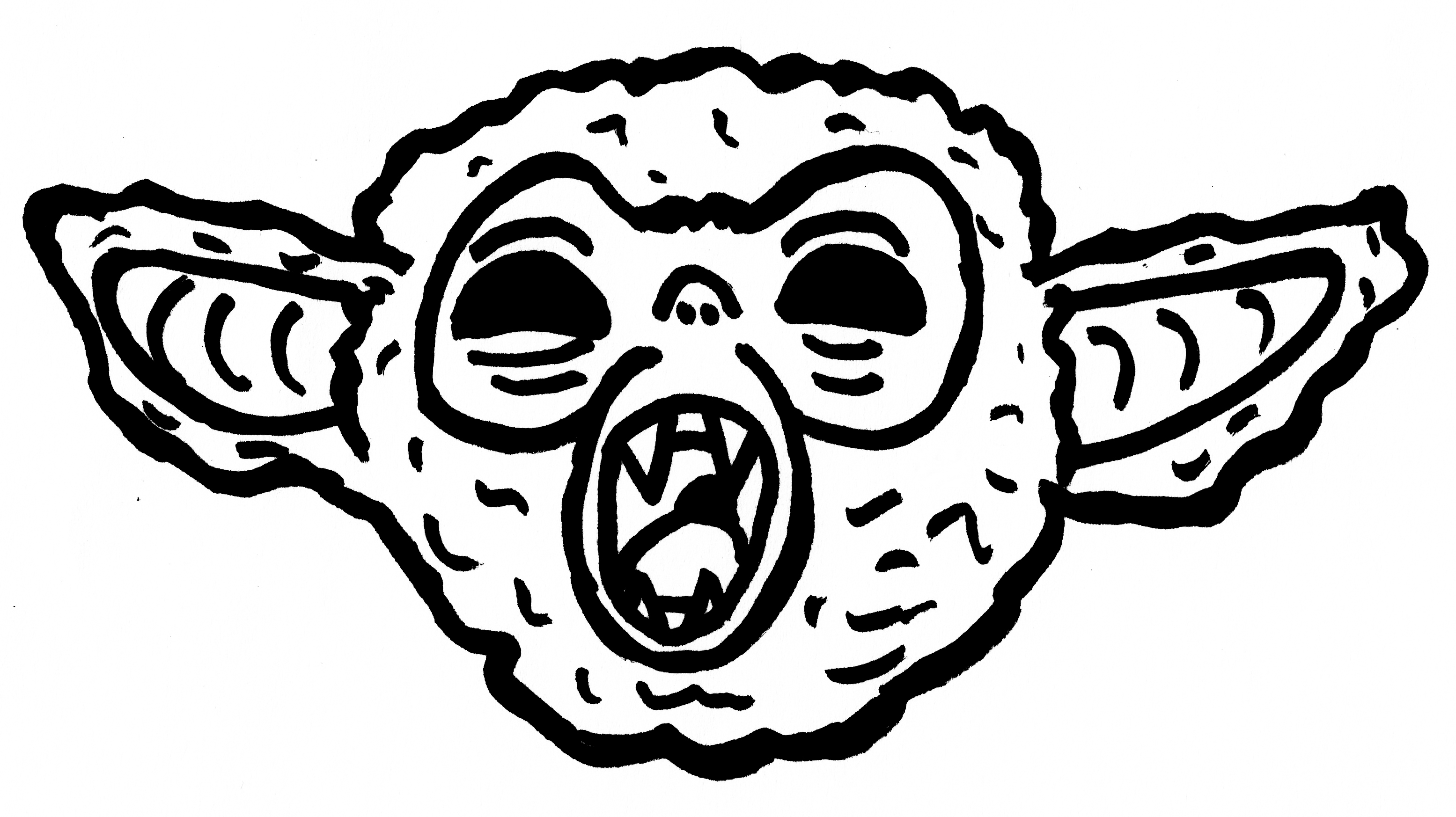
The titular Ochi are magical creatures brought to life via animatronic puppetry. The species largely resembles the golden snub-nosed monkeys of China, except that its bites are poisonous and its children are adorned with Mogwai ears for maximum cuteness. The Ochi are introduced to the audience in a scientific text titled Carpathian Beasts & Demons to help distinguish them from the real-life primates they resemble. Their presence on the fictional, Romania-adjacent island of Carpathia is treated as vampiric & monstrous, with a crazed patriarch played by Willem Dafoe training a new generation of boys to hunt & kill the supposedly demonic beasts on sight. His daughter is not so convinced of the nobility in this mission, and she quickly befriends a baby Ochi left behind by one of her father’s hunts. The rest of the movie is an E.T.-inspired children’s adventure, in which the sullen teenager runs away from home to safely return the Ochi to his fleeing family in a coming-of-age act of rebellion. If there’s any modern update to that familiar formula, it’s in Dafoe’s mockery of Jordan Peterson-style manosphere philosophy, which he preaches to impressionable young boys while driving around his monster-truck chariot in antique battlefield armor. He has no particular interest in his daughter beyond her value as “a father’s greatest treasure,” while she rejects her extremely gendered role in the house by donning costume vampire fangs and cranking heavy metal tunes from the fictional band Hell Throne. The goodbye note she leaves when she runs away proudly declares, “I am strong and cool and don’t believe anything you say,” speaking for all teenage rebels everywhere in their universal language of sass. As a result, the movie should spiritually speak to any depressed loner children who resent their bloviating fathers—of which there is always an infinite supply—regardless of whether they’ve already seen an E.T. riff or three.
The Legend of Ochi evokes all of the childlike wonder and sarcastic teen humor needed to make this genre formula work, but neither of those elements are entirely convincing. Its teenage characters (Helena Zengel as the Ochi’s bestie and Finn Wolfhard as a burgeoning fuckboy who’s “only nice when no one’s looking”) mumble their lines under mops of greasy hair to the point of near indecipherability. They aim for deadpan comedy but overshoot to land at dead-eyed monotony instead. There are also long stretches of the adventure to Ochi territory that have no dialogue at all, which would test audiences’ patience at any age and suggests that Saxon isn’t used to filling up a feature-length runtime with his writing. The real disappointment is that the psychedelic magic of his past music video work for artists like Björk & Panda Bear fall short of inspiring awe here. His puppetry & matte-painting visual tricks, while admirably old-fashioned, are too technically perfect to convey their construction by human hands. When the trailer for the film first dropped, social media C.H.U.D.s baselessly accused Saxon of boosting his budget with A.I.-generated imagery, which had to be heartbreaking for an artist who spent multiple years fighting to render this passion-project fantasy world through the most practical, tactile methods possible. Still, the final result is a little too machine-perfect to inspire genuine awe, and you can easily see what stoked those accusations. There’s an uncanny valley effect in how close its state-of-the-art puppets resemble computer-generated images, leaving them a little off-putting & soulless despite the passionate craft behind them. Saxon technically did everything right here. The aesthetic is distinct; the puppets are cute and smoothly operated; the gender politics are pointed and relevant to the moment; the kids are authentically mopey & rebellious. That’s what makes it so frustrating that the movie never fully sings, even if it can demonstrably hit all the right notes in perfect pitch.
-Brandon Ledet














 Swampflix