White Girl (2016)

EPSON MFP image

twostar

Is White Girl a smartly pointed indictment of white privilege or an exploitative morality tale built around teenage hedonism and unwarranted sexual shaming in which a young woman is blamed for ruining a man’s life with her feminine wiles?  Does it help ease the film’s leering misogyny to know that it was written, directed, and produced by a woman? Are the characters & plot developed enough beyond 2D devices so that answering these questions could lead to anything more than eyerolling boredom? White Girl is such an obvious, clumsy button pusher that I’m mostly just annoyed that I allowed it to push my buttons. Somewhere out there a young college student is about to find their favorite movie in this cheap indie provocation, but I couldn’t get past the fact that it was participating in the very thing it was supposedly condemning. Every generation needs their version of Kids, I guess. The trick is catching yours when you’re still young enough to gasp instead of yawn.

Two white college students move into a predominately POC neighborhood and make fast friends & lovers out of the young, small fry drug dealers who work the corner outside of their apartment. Coming from a world of unpaid internships, liberal arts colleges, and money-filled care packages from naïve parents, they’re ill prepared for the real-life consequences of their actions and treat the lives of the men they fuck like playgrounds, a silly summertime indulgence. Luring their newfound cohorts outside their comfort zones, the girls push them into the dangerous territory of moving large quantities of product in wealthier, whiter circles. They also attract an obnoxious amount of attention to themselves & urge their beaus to start dipping into their own product (mostly cocaine, or, in the movie’s vernacular, “white girl”) instead of sticking to their normal routine of blunts & bong rips. This, of course, leads to a world of legal troubles, addiction, and clashes with bigger fish dealers in much bigger ponds. The film believes the tragedy it inevitably generates is a revelation of the way the white & wealthy are treated differently in a heartless system that targets POC. Mostly it just delivers the exact clichés you’d expect from miles away, revealing nothing that wasn’t already obvious from the start.

The main problem with White Girl is that it gleefully participates in the very evils it intends to expose. The film takes aim at a world of men who have a predatory sexual eye for young women’s bodies, but it leers slack jawed at them in the very same way. It wants to humanize the disenfranchised kid on the corner, but does so by making them the most blatant & ham-fisted dealer with a heart of gold cliché imaginable. It strives so hard to call out wealthy white woman privilege that it slips backwards into an old-fashioned mode of misogyny where women are to blame for men’s downfalls because they’re too sexually desirable to resist. Worse yet, the film often plays directly into the fears of casually racist parents when they send their darling baby girls into the big bad city for college. What if they move into a “sketchy” neighborhood, fall into casual sex & hard drugs routines with older men, and expose their naked bodies in public for easy popularity? Well, I never. White Girl wants to indulge in the sex & drugs & rock n’ roll lifestyle for easy hedonism, condemn the audience for leering along with it, make a point about white women using POC neighborhoods as consequence-free playgrounds, and then use POC narratives as consequence-free playgrounds. In so many ways the film participates in the very same entitlement it aims to indict.

I don’t mean to sound entirely negative here just because I personally had such an adverse reaction to the film’s casual provocations. I’d usually put in an effort to seek out some redeeming value in the film’s visual craft or occasionally effective performances, but the thematic fumbling left me with such a bitter taste that I don’t have the energy. I don’t believe White Girl is a despicable work worthy of any think piece outrage or moral protest. Its intentions in pointing out systemic racism & the harmful naïveté of unchecked privilege seems to be in the right place. It just chose an oddly compromised tone & outsider POV to tell its story, to the point where it tied its own shoelaces together on a screenplay level before it hit the ground stumbling. The film occasionally finds some interesting ideas in its clumsy button pushing, but doesn’t stand strong or confident enough to support its own convictions. If you’re going to get on a soapbox for a Big Message tirade, you should probably get your story straight before your rant begins. Self-contradiction makes for weak politics, especially if you’re using those politics to get away with indulging in a garish good time moments before getting serious.

-Brandon Ledet

Movie of the Month: Paperhouse (1988)

EPSON MFP image

Every month one of us makes the rest of the crew watch a movie they’ve never seen before & we discuss it afterwards. This month Boomer made Brandon, Alli, and Britnee watch Paperhouse (1988).

Boomer: Paperhouse is an odd little film. Helmed by Brit director Bernard Rose, the film follows the frenzied dreams of an artistic young girl, Anna (Charlotte Burke), as she finds herself flipping back and forth between the real world (where she is suffering from a glandular fever) and the fantasy world that is home to the titular paper house of her design. The lines between reality and unreality start to blur as she strikes up a friendship with Marc (Elliott Spiers), a disabled boy living in the otherworldly house and with no memory of life outside of it; when she learns from her physician (Gemma Jones) that Marc is real, things start to get more surreal and bizarre.

This wasn’t Rose’s directorial debut; he had previously worked in various roles on the last season of The Muppet Show and on The Dark Crystal before a short stint making music videos, most notably for Frankie Goes to Hollywood’s “Relax.” After two smaller films that are largely forgotten, Rose directed Paperhouse, which was a perennial favorite on IFC in the early 2000s, before moving on to direct cult classic (and his only other truly great film) Candyman, released in 1992. Candyman is undeniably a horror film, and Paperhouse was largely lumped in with the horror genre upon home video release as well, despite not strictly deserving that distinction. It’s much more of a mood piece, with a relatively simple story elevated by striking visuals and a moodily beautiful score by Stanley Myers and Hans Zimmer (Rose certainly knows how to choose composers; Candyman’s Philip Glass soundtrack is so haunting that Glass apparently still makes royalties from it each year, no doubt helped by the fact that “Helen’s Theme” continues to appear in other genre works, most recently American Horror Story).

I love this film, and have seen it at least a half dozen times, but there is always enough time between each viewing that I forget that the film has a longer ending than I expect. For me, the film reaches its narrative conclusion when [spoiler alert] Anna learns that Marc has died. Although I’m not opposed to the resolution of Anna and her family (including her father, whose notable absence informs much of the psychological underpinnings of the film) returning to the seaside and revisiting a happier time, there is something about the ending that seems as little too pat, especially in light of the mildly silly scene in which Marc reappears to Anna. What do you think, Brandon? Did the ending seem out of place to you, or am I being too critical? Would you suggest a different conclusion?

Brandon: If I had to fault Paperhouse for anything it’d be the muddled nature of its central metaphor. The film operates in a spooky 80s kids’ movie headspace that I’m always a huge sucker for and the dream logic of both its set design & its eerie score is wonderfully chilling. There’s just something a little off in its dreamworld narrative that makes it difficult for me to track its overriding metaphor (not that I mind the ambiguity). Two sick children meet in the shared dreamworld set of a hand-drawn house and their recovery in the real world is dependent upon their progress in that fantasy space. Marc, who is unaware of this dichotomy despite Anna’s frequent explanations, suffers a fairly straightforward narrative where he slowly dies due to complications that arise through his muscular dystrophy. As Boomer points out, his death in the real world seems like a logical place for the story to end, but I do believe that the seaside resort epilogue was a necessary addition to the story, because Anna’s own struggle was at that point still largely unresolved.

Anna’s near-death experience with a glandular fever is what puts her in contact with the paperhouse fantasy where she meets Marc, but her true conflict is a mental health struggle related to her anxieties over an absent, alcoholic father. When Marc dies he rides a helicopter to heaven that relieves the real world pains of his body. In the seaside epilogue Anna tempted to leave behind her own pain by joining Marc in the helicopter, a moment that’s coded as a suicide attempt at the edge of a cliff. This last minute crisis might not make much sense in a typical three act story structure, but I do think Anna flirting with the relief of death is a powerful idea that Paperhouse would be lacking without, especially in its indication that her mental health struggle wasn’t instantly wiped away upon her father’s return.

Where I stumble a little in my reading of this conflict is in understanding the exact relationship between Anna & her father. Paperhouse explains the father figure to be a drunk & an abandoner in the real world, which is meant to explain Anna’s anxiety, lashing-out rebelliousness, and eventual disinterest in continuing to live. In the dreamworld, however, her father is far more abusive than that. Blinded by rage (both Anna’s & his own), Dream Dad strikes a terrifying nightmare of an image, destroying the physical objects Anna created & cherished with a hammer and physically beating her in the chest nearly to the point of death. No mention is ever made in the real world of Anna being physically abused by her father, but the brutality & specificity of the hammer & the chest-beating in the dreamworld at least makes it plausible that Anna was afraid that such abuse was a possibility. Coming back to Boomer’s original question, if there’s anything lacking in the ending for me it’s how easy Anna & her father’s seaside reconciliation feels after the brutality of their altercation in the dreamworld. Anna gets in the cathartic zinger, “You don’t have to be invisible to disappear, Dad,” but she does eventually forgive him after the helicopter/suicide crisis and the family is again made whole, which might be a little too neat & tidy of a conclusion given Anna’s near-fatal parental anxieties.

Britnee, how literal did you take the physical abuse in the dreamworld to be? Do you think it was intended as a reflection of something that happened in the real world or simply an amplification of Anna’s anxieties over her father’s alcoholism?

Britnee: One of the many mysteries in Paperhouse is the relationship between Anna and her father. Part of me feels as though the abuse in the dreamworld was more of a reflection of something Anna witnessed rather than something she experienced herself. If her father did indeed abuse her, I feel as though she would have been much more fearful of him in her dreams, but she wasn’t very scared of him considering how creepy the whole situation was. I really think she witnessed her father abusing her mother. Anna’s dreams allowed her to see the potential of her father’s alcoholism, and it really seemed like a big eye opener for her in the real world. There was something about the mannerisms of her mother that makes me believe she had a traumatizing experience with her husband. She seemed a bit shaky when she would light up her cigarettes, and she seemed to be in an entirely different world herself (perhaps Anna’s real world was her paperhouse?). I do agree with Brandon’s frustration with the very simple reunion at the end of the film. It actually made me a little nervous for Anna’s well-being; however, I’ve also been watching a lot of Dr. Phil lately, so that may have something to do with my uneasy thoughts about Anna and Drunk Dad.

What I found most interesting about Paperhouse was the confusing soundtrack. Brilliant, but so confusing. During the film’s opening credits, I was waiting for a dead body to fall out into the school hallway. I kept waiting for a gruesome, terrifying scene, but by the latter half of the film, I just gave up. There were a handful of scenes that were spooky, especially when Drunk Dad captures Anna in her dreamworld, but nothing was half as scary as the tunes in the background. Needless to say, I was surprised to find that the film fell way more on the drama side than on the horror.

Alli, did you feel as though the film’s score was out of place? Did the music add to the creepiness of Anna’s dreamworld? Did you get more horror vibes or fantasy vibes from that world?

Alli: Initially the score felt very spooky and out of place to me and definitely made me feel like more bad things were going to happen; but once in the dreamworld, it felt really appropriate. The low ominous synth sounds seem to enhance the vast emptiness you see around the house. What especially made the score work in the dreamworld was that at some points it became diegetic with the talking radio. While the idea of a talking mumbling radio seems reminiscent of Pee-wee’s Playhouse, here it was very creepy, as the nightmare dad seemed to be talking through it a little bit.

The dreamworld to me was very much a fantasy and an escape from the fact that she’s lonely at school and at home. While it starts off as something she can control very quickly it functions on it’s own bizarre logic, where some of the things she draws turn up very realistically and other things just are crooked and funny. It’s not until the faceless dad that it gets into nightmare zone, and even then he feels more like an intruder than an aspect of the dreamworld. In Anna’s life he is sort of an intruder, showing up whenever he feels like it both emotionally and physically.

But as much as the dad seems like a dark figure in Anna’s life, her mom is really not better at all. It’s no wonder she acts out with a mother who is as unsupportive as we see on screen. She criticizes Anna’s drawings very rudely and isn’t really nurturing at all until Anna is extremely ill, in a sort of trying to make it up to her way. Both parents seem to just make up for the lack of love with material things like riding lessons and manufactured happy trips to the seashore, which I think makes the ending more depressing and bitter.

Boomer, what did you think of the mom’s role? Is she just as bad as the dad or is she just a single mother at the end of her leash?

BoomerI feel like we’re being more critical of both parents here than is called for, at least based on my reading of the film. Multiple times, we see how the dreamworld of the paperhouse is influenced by things that Anna sees or vaguely recalls, or by her physical circumstances in the real world. The reason that Anna feels like she is being beaten in the dreamworld is because, in the waking world, the paramedics are giving her compressions to keep her alive. The reason that her father appears as a backlit creepy shadow is because she encouraged her mother to let the photo of him at the beach develop for too long, until he becomes a dark figure in the image, and thus in her mind. The father doesn’t seem abusive to me, either to his wife or to Anna, so much as he is an unknowable being, his absence making him a figure that is half-remembered and half-imagined, larger than life but imposing.

The mother, for her part, reads more as a woman who’s been run ragged by holding down a household with a misbehaving young girl, suddenly stricken with illness. She has artistic pursuits of her own, as evidenced by her home dark room, and likely has had to sublimate her interest into being both breadwinner and full time caretaker to Anna due to her husband’s chronic and prolonged absence.

One of the things I like most about the film is the fact that no character is a paragon. As a heroine, Anna is a surprisingly postmodern. She’s a girl, but not feminized. She’s not stereotyped as drawing a dream house that’s reminiscent of the kind of future home girls are encouraged to imagine, but a strikingly dull building instead. She tries on make-up, but not to impress a boy; she just wants to try it for herself. Usually, female protagonists can only avoid being sexualized if they are infantilized (and, unfortunately, not even then), and although Anna is young, she’s not treated as an idealized perfect child. She lies, she throws tantrums, she skips school, and, most importantly, she’s not demonized for this either. These are just aspects of her character, not flaws that need to be corrected with external discipline, but that make up the gestalt that is Anna. Her mother, though her screentime is shorter than Anna’s, makes her seem fully-fleshed in her own way as well. She even seems genuinely loving, going so far as to dig through the whole building’s trash to placate what she must assume is some feverish madness.

Am I giving the film too much credit, Brandon? Am I making excuses for the movie because I like it, or have I convinced you that there’s more going on at the character level than there first appears?

Brandon: Please forgive me for the banality of this answer, but I think a lot of that ambiguity falls under the umbrella of personal interpretation. Paperhouse is in the most basic sense a story about lucid dreaming. Dream logic always comes with a certain level of impenetrable surrealism to it and there’s been an entire industry full of psychologist “experts” built around the therapeutic benefits of dream interpretation. Then there’s the film’s art therapy element, in which Anna creates a personal space for herself where she can exude total control as an omnipotent (and highly fallible) god. Both the weird dream logic & the art therapy surrealism of the film’s basic plot leave Paperhouse with a lot of room for personal interpretation in its symbolism, especially once Anna’s drawings start affecting real world change in Marc’s medical condition. Personally, I see a drunk dad who scares Anna (who points out his alcoholism in the darkroom scene) and a mother who may be frazzled, but is not at all abusive (as evidenced in the manic trash-digging scene). I also read a third act suicide attempt at the edge of the cliff, but I’ll willingly admit that I’m reaching for a solid explanation for an intentionally lyrical moment there, which may be the wrong way to go about things in this movie.

So much of this movie is literally in Anna’s head that it’s near impossible to tell what’s “really” happening from minute to minute. How much of our darker interpretations of the parents’ behavior is being influenced by the horror film dread of Myers & Zimmer’s score? How much of the dreamworld content is merely, as Boomer suggests, reflections of images Anna encounters throughout the day, as many dreams tend to be? There’s no “true” answers to these questions, as the film intentionally deals in ambiguity. There’s evidence that Anna’s dreamworld surrogate was truly communicating with Marc’s, a boy she never met in a physical space, but everything else is left open-ended. The film kind of works like a coloring book: it provides a basic outline of how its world works and invites its audience to color in the details. Maybe we’ve been coloring a little outside the lines in our personal interpretations here, but I think the movie invites that kind misbehavior. I also don’t believe that misbehavior is a detriment to either of the central characters, though, as I never felt like I lost track of Marc or Anna as complex, multifaceted human beings. It’s their own personal interpretations of the adults in their lives that throw off our perception as an audience & complicate some of the film’s intent & metaphor.

Britnee, I’m getting some flashbacks to our Movie of the Month conversation about Black Moon here, particularly in our attempts to parse out what the film specifically “means.” Instead of picking apart an intentionally inscrutable art film, though, we’re discussing a movie that was ostensibly made with a very young audience in mind. Do you think the darkness & ambiguity helps the film in this case, considering the flexible imaginations of the children intended to see it? As adults, are we reading more solid, static interpretations of the film’s metaphor than we might have as kids, when Paperhouse could possibly have survived purely on mood instead of concrete symbolism?

Britnee:  While I was in college, I took a history class that focused on the 1960s, and most of that course involved watching films, such as Go Tell the Spartans and Easy Rider, and writing about them. Before viewing each film, my professor would say, “Remember, every detail, whether major or minor, in a film means something. There is symbolism everywhere.” That really stuck with me, and since then I always feel somewhat guilty if I don’t search for meaning behind every little detail in a movie. I’m glad that Brandon brought up the point that this is a film intended for a younger audience. I need to remind myself every now and then that sometimes (maybe even most of the time), films are created solely for the purpose of pleasure and entertainment.

Ignoring the interpretations we made of Anna’s dreamworld as well as her relationship with her parents (Drunk Dad in particular) and viewing the film through the eyes of a child, Paperhouse seems a bit more whimsical. A film about drawings that come to life in dreams and a magical friendship that only exists in the dreamworld seems a lot better than a film about a girl with neglectful and abusive parents. Paperhouse becomes another film entirely. Even the darker elements of the film take on a new meaning. Anna’s scary dream father becomes a product of a mistake in her magical drawing instead of an abusive parent turned villain. As for the darkness and ambiguity of the film, I think it actually contributes to the film’s fantasy elements and makes it much more exciting for the intended adolescent audience. If I was eight years old watching Paperhouse for the first time, my imagination would be running wild during those scenes in Anna’s dreamworld.

Alli, I was really irritated by the mystery between Anna and Marc’s friendship. If only we were able to know if Marc was having his own recurring dream with Anna. What if they were possibly sharing the same dream? The fact that we will never know just kills me. What are your thoughts on the telepathic connection between Anna and Marc? Would you have enjoyed seeing Marc’s side of things?

Alli: I think the interesting thing about Anna and Marc’s friendship is that he has no knowledge of the world outside the dream, which leads me to believe that he was kind of subconsciously called there. Not to try to make too much technical sense of dream logic, it seems like they are sharing a dream, but since he’s less in control of it he is much more wrapped up in the dream state. Like Brandon said Paperhouse seems to be about lucid dreaming. It would be a lot harder for Marc’s dream-self to be aware what’s going on. For him, this is probably just a really crappy dream where instead of being a fantastic escape he’s still sick and unable to walk and there’s this girl urging him to be happy. As we’ve already said, we’re very sympathetic with Anna though and it’s hard to fault a girl for accidentally summoning a sick boy into her dream. I think not knowing Marc’s side of things gives us an opportunity to watch Anna grow more from her perspective. Not seeing Marc’s side, we’re figuring him out as she is. By doing that this film really captures the vulnerability of making friends as kids with kid emotions. They’re so tumultuous and dramatic, because kids are still figuring out themselves and their own boundaries.

I’m going to dare to interpret the dream logic more and say that a lot of these volatile, underdeveloped emotions are mirrored in the dreams. Her dream house is bare. The dreams themselves go from just having a conversation to terrifying faceless dream dad pretty quickly.  As traumatic as they were, the dream conflicts help Anna find more of herself. These dreams are so hard and scary because figuring out yourself is hard and scary. She learns more how to honestly interact with people and to take responsibility for her actions. She learns empathy, which is really hard for kids to learn, by talking to Marc. As she learns more about herself and matures, the dreams become more fleshed out and less bleak. 

EPSON MFP image

Lagniappe

Brandon: Paperhouse reminds me of a very specific time in 80s children media where stories were allowed to be dark & ambiguous in a way that a lot of the more sanitized kids’ movies of late wouldn’t dare. Titles like The NeverEnding Story, Lady in White, and Return to Oz all specifically came to mind while watching the film, but I have to admit I think it’s closest comparison point was released in 2005. The Dave McKean & Neil Gaiman collaboration MirrorMask is a children’s fantasy film in which a young girl feels immense guilt over fighting with her mother before they’re separated by a sudden illness. She wrestles with this anxiety during an extended dream in which she enters & explores a world she drew by hand in her own bedroom. Sound familiar? MirrorMask is a little more obvious & blunt in its central metaphor & a lot more expansive in its dream space, but otherwise the pair make interesting companion pieces.I think if you really enjoyed one, it’d be more than worthwhile to seek out the other.

Alli: I also thought of MirrorMask, and its terrifying dreamworld, but another Neil Gaiman creation came to mind as well, Coraline, which is another story about a girl upset at her parents entering a dreamworld with duplicate parents. The terrifying Other Mother is reminiscent of faceless dad. But there’s another similarity for me. One disappointing thing the Coraline movie did that deviated from the book was to add in the male character, Wybie, that besides being a sidekick also seems to have an unnecessary crush on Coraline. And that kind of touches on my one gripe with Paperhouse. I kind of wished that Anna and Marc hadn’t become crushes and just remained friends. You so rarely see male-female friendships in movies.

Britnee: I feel really bad for being so rough on Anna’s father. He was probably just a really nice, hardworking man that has to sacrifice spending time with his family to make a decent living. Instead of seeing that initially, I jumped to conclusions and labeled him as an alcoholic and abusive father. Shame on me.

Boomer: I don’t think there’s anything wrong with reading the father as an alcoholic, as there is certainly reference to his drinking in the text. That having been said, the mind of our main character (and perhaps all children) has a tendency to exaggerate the real world, as evidenced in the way that things become larger than life in the dreaming, and that’s how I interpret that particular nuance. Still, although that’s my reading of the text, the other readings are certainly valid as well.

Upcoming Movies of the Month
December: Alli presents Last Night (1999)

January: The Top Films of 2016

-The Swampflix Crew

Frightmare (1983)

EPSON MFP image

three star

campstamp

My curiosity in watching Frightmare began & ended with my most recent visitation of the Richard Kelly cult classic Donnie Darko. In the scene where Donnie sits alone in a desolate cinema with his sleeping girlfriend & the time travelling bunny that haunts his hallucinations, the theater’s marquee advertises a double feature of John Carpenter’s classic slasher Halloween & the (deservedly) much less frequently referenced Frightmare. Curious about what that film could have to add to Donnie Darko’s already overstuffed mythos, I discovered that it’s a Troma-distributed supernatural horror cheapie written & directed by (the totally fake-sounding) no-namer Norman Thaddeus Kane. For a cheap horror flick distributed by one of the most questionable schlock peddlers around with only a ridiculous portmanteau title & a tenuous connection to a decades-down-the-line sci-fi indie, however, Frightmare’s not all that bad. In fact, in isolated moments of supernatural spookery, the film even nearly touches on genuine greatness. Presuming its inclusion in Donnie Darko wasn’t simply a tossed-off detail (as nothing ever seems to be in the director’s work), it’s fairly easy to see how a young Richard Kelly could’ve grown up with a dedicated affection for it.

Frightmare partly mirrors the narrative conceits of the Vincent Price films Madhouse & Theatre of Blood. A typecast horror actor (falling somewhere between Price and Christopher Lee), seeks revenge on a world he feels wronged him from beyond the grave. At first he casually murders directors, casting agents, and producers who’ve ghettoized his talent as a legitimate stage actor into a one-note joke who’s stuck in a career-length role as Dracula. This setup is mostly meta wish fulfillment, though, as it leaves little room for drive-in audiences to be scared (unless they also happen to be big shot movie producers). That’s presumably why a college campus film society steals the deceased actor’s body from a mausoleum, providing a fairly solid reason for the actor to be murderously angry with a group of horror’s favorite victim type: horny teens. Our naïve dumdums desecrate the corpse of their favorite 80s Bela Lugosi knockoff, which opens them up for a world of pain when the actor’s corpse reanimates, now equipped with telepathic command of the fires of Hell (not unlike my favorite Marvel hero, The Son of Satan).

The idea of a beloved horror icon rising from the dead to attack his most dedicated fans is a pretty interesting launching point for a horror film and Frightmare takes great delight in the supernatural implications of that scenario. The actor literally explodes out of his coffin using the fires of Hell. His supposedly pre-recorded messages speak directly to visitors at his wake & his neon-lit mausoleum with eerie statements like “Thank you, friends, for coming to my funeral.” He telepathically decapitates an idiot teen so that a mysterious crow can pick at their scalp. If Donnie Darko is any way thematically connected to Frightmare it’s in these otherworldly creep out moments. In particular, both films suppose supernatural ways for their main players to affect the living world after their deaths, serving as slices of high concept attending-your-own-funeral wish fulfillment, the kind that comes with revenge against your worst bullies. Frightmare’s post-mortem revenge tale might come with mood-cheapening one-liners (when the actor kills a director he dislikes he quips, “Take 20”) that directly conflict with Donnie Darko’s heart on the sleeve earnestness, but the connection’s still there.

Oddly enough, though, it wasn’t the supernatural terror that interests or unnerves me in Frightmare. The most striking sequence of the film, by far, is when the college campus film club parties with their hero’s limp corpse. They waltz with him romantically, feed him spaghetti, take portraits with him, and even go as far to make out with the lifeless legend (*cue “Chrissy Kiss the Corpse”*). And all of their morbid pranks are set to a soaring orchestral score while the camera spins and the young, foolish, soon-to-be victims don rubber Halloween masks & drink themselves into oblivion. It’s a shockingly lyrical moment in a film that can often be intentionally silly. If Frightmare spent more of its time chasing that art house take on Weekend at Bernie’s it might’ve been a cult classic title that landed itself on fictional double bill marquees a lot more frequently. I enjoyed the silly, ramshackle film well enough as is, but something about that party scene had me curious about the kind of work that Norman Thaddeus Kane (who I refuse to believe is a real person) could be capable of with a bigger production budget & more dedicated focus on real-world scares.

-Brandon Ledet

The Night of a Thousand Cats (1972)

fourstar

The 1970s was a truly vile era of schlock cinema, a decade of post-Hays Code liberation that’s just as notable for its New Hollywood artistic renaissance as it is for grotesque drive-in provocations like Cannibal Holocaust & I Spit on Your Grave. Whenever I watch horror films from the 70s era of grindhouse grime I usually prepare myself for the possibility of disgust, particularly in the decade’s beyond questionable depictions of sexual assault. I do have a few pet favorites from the era, though, rough at the edges gems that could’ve only been produced in the lawless days when exploitation cinema was king, a malevolent, slovenly king. I don’t want to say, for instance, that I’ve seen the minor schlock title The Night of a Thousand Cats more than anyone else, but it is a nasty 70s horror title I return to far more often than is typical for me. Ever since I picked up its laughably shoddy DVD print at an ancient FYE for pocket change, the film has held a strange, undeniable fascination for me. It’s something that could have only been made in what I consider to be the sleaziest, most disreputable era of genre cinema and, yet, I return to it often in sheer bewilderment.

You might expect a horror film with the title The Night of a Thousand Cats to be laughable camp, but somehow the inherent goofiness of a mass hoard of ravenous, man-eating house cats is severely undercut here. Much like with the mannequin-commanding telepathy of Tourist Trap, The Night of a Thousand Cats is far too grimy, loopy, cruel, and unnerving in its feline-themed murders to be brushed aside as a campy trifle. Its cocktail napkin plot is thus: a mysterious, wealthy man flirts with women by flaunting his opulence. Once (easily) seduced, he flies them back to his remote castle via helicopter, murders them, stores their heads in glass cases, and tosses their remaining meat to his ungodly collection of house cats, which might just meet the 1,000 benchmark indicated in the title. Before he can complete his collection of lovely lady heads, his cat army escapes confinement, turns on him, and eats him alive. It’s an inevitable comeuppance in a bare bones story with little to no frills in its individual beats. There’s certainly an alternate universe where the exact same premise could be played for absurdist, camp-minded laughs, but something about this film lodges itself under your skin. It’s disturbing to the point of feeling unethical, even more so in its treatment of cats than its treatment of women.

If The Night of a Thousand Cats were produced in 2016 there’s no doubt its titular feline hoard would be made entirely of CGI. In 1972, they used real cats. Like, so many goddamn cats. A lot of 1970s schlock is difficult to watch due to its gleeful cruelty towards fictional women. This film is disturbing for the way it treats real life animals. A sea of cats whine in a bare, concrete cage where they’re fed from above by casually-tossed, rare “human” meat. What’s worse is that the cats themselves are tossed at both their fleeing victims & their cruel master. It’s not quite the nasty on-screen animal cruelty of Cannibal Holocaust, but it’s still disturbing to watch. The only cinematic reference point I can really compare it to is the feline kill at the heart of Dario Argento’s Inferno. As uncomfortable as the film is to watch as an animal lover, however, it’s still fascinating as a relic from a time when filmmakers could go unchecked in such a questionable way. My usual discomfort with grindhouse slime is in the way sexual violence is exploited for shock value & (in the worst cases) titillation. The cat-tossing & cat-hoarding of this work is surely immoral in a similarly sleazy way. I’d never want to see it recreated in a modern context and it probably should have never been made in the first place, but it’s a fascinating document as is, one that’s effectively disturbing in both its on & off screen implications.

What’s most surprising about The Night of a Thousand Cats is that its depiction of predatory sexuality is actually somewhat enlightened & thoughtful, depending on how you read the film’s intent. Since there is a surprisingly minuscule amount of dialogue holding the film together, the terror of The Night of a Thousand Cats is mostly centered on the predatory evils of masculine seduction. The bearded playboy killer who collects heads & house cats could easily be presented as a target for envy from the audience. He vacations in beautiful locations, seduces beautiful women, and lives in an inherited mansion complete with an Igor-esque butler named Goro. The killer’s entire seduction process amounts to “Look at my helicopter,” but it’s a flirtation that works every single time. Instead of coming across like a prototype for The World’s Most Interesting Man, however, he’s played as an obvious creep. He directly tells his romantic partners that he wants to possess them, to “put you in a place where no one can’t touch you,” “a crystal cage”. The women find this possessiveness charming, but for the audience it’s a horror show, one that only leads to more cat feedings. We know so little about the killer that he’s defined solely by his wealth, his sexuality, and his masculinity. He inherited wealth from a family of “collectors” & strives to assemble his own collection of sorts that will stand as “the most interesting of all”, but that’s about it. We don’t even know for sure why he’s obsessed with cats. His interest in cats & women seems to be one in the same: a violent obsessiveness that’s smartly played for chills & vague menace instead of shameless titillation.

Some of the confusion in this film’s plot is surely due to its heavily-edited US release, which cuts a good half-hour off the original Mexican work for a slim hour-long runtime. The speed & disjointedness of The Night of a Thousand Cats plays to the film’s strengths, however, and through its strange, clunky edits the film feels at times like a clumsy art house dream world. In a way, it plays like a nasty grindhouse version of Knight of Cups, with its loose, largely dialogue-free disposal of beautiful women & the heavy psychedelic melancholy of a deeply selfish man. I don’t want to oversell this film’s competence. It’s an ugly mess first & foremost, but I’m continually fascinated by the surreal quality of its ugliness, the surprisingly deft way it handles the killer’s misogyny and (of course) its never-ending sea of bloodthirsty cats. I’m usually all for leaving the nastier side of grindhouse horror in the past, but The Night of a Thousand Cats is one ghost from that era I’d love to see brought back & re-examined. It’s a singularly strange & nasty work I return to way more often than I probably should.

-Brandon Ledet

Multiple Maniacs (1970)

EPSON MFP image

fourhalfstar

campstamp

I’ve seen a few John Waters classics like Desperate Living & Pink Flamingos projected on the big screen before, usually with a midnight crowd, but I’ve only had two experiences watching his work for the very first time in a proper movie theater: 2004’s A Dirty Shame & the 2016 restoration of his 1970 forgotten gem Multiple Maniacs. Surely, there’s a bias factor that should be considered when reviewing a work from your favorite director/artist/human being after experiencing it for the first time large & loud with a receptive film fest crowd. My personal devotion to Waters aside, though, Multiple Maniacs is still an excellent slice of go-for-broke shlock cinema. A smaller, arguably nastier provocation than Pink Flamingos, it answers a question I’m not sure I ever would’ve dreamed to ask: what if John Waters made a horror film? It’s impossible to divorce the context from the content in this case, because Waters is such a highly specific stylist & works so closely with a steady cast of nontraditional “actors,” but even if the director had never made another feature in his life I believe the world would still be talking about Multiple Maniacs all these decades later. Horror films this weird & this grotesquely fun are rarely left behind or forgotten and, given the devotion of Waters’s more dedicated fans, I’m honestly surprised it took this long for this one to get its proper due.

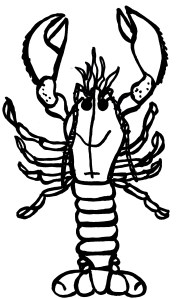
I guess I should clarify up front exactly what I mean when I call Multiple Maniacs a horror film. Unlike the subversive horror comedy leanings of Serial Mom, this is horror in the way titles like Spider Baby & Mudhoney qualify. It’s a grimy uncovering of an outside-of-society crew of murderous weirdos, the kind of picture that eventually lead to more conventional slasher genre space carved out by The Texas Chainsaw Massacre, but didn’t quite have its own established tradition at the time of its release. Waters displays no shame in his getta-load-of-this-freakshow dynamic, opening his film with a literal freakshow: Lady Divine’s Cavalcade of Perversions. A carnival barker advertises “acts against God & Nature” to entice the audience & passersby inside the tent, all while feigning mock disgust. There’s gleeful puke-eaters, bicycle seat humpers, and actual real-life homosexuals (the horror!); but the real star of the show is Divine herself, Waters’s most infamous collaborator and, arguably, the greatest drag queen of all time. Divine’s freakshow act is simply her own fabulous being. She holds her audience at gunpoint, bullies all of her employees, and lounges nude in the mirror to give full reverence to her own beauty & divinity. Her turbulent romance with David Lochary’s carnival barker, with its cop-killing violent streak & dual indulgences in adultery, drives the isolated freakshow into the general public, where Multiple Maniacs turns into a legitimate monster movie. Not only does Divine herself transform into an inhuman monster with a formidable body count, the film also makes room for an appearance from a giant monster movie-style lobster just for the sake of it.

It’s tempting to believe that this early glimpse at John Waters’s regular crew of degenerate collaborators, The Dreamlanders, would mostly benefit the already-converted. Surely it’s exciting to see these weirdos in their artistic infancy. Edith Massey seems particularly fresh & unpolished in her natural habitat as a barkeep. It’s weird to know that David Lochary’s look as Raymond Marble in Pink Flamingos was something he exuded all the time. Mink Stole, Cookie Mueller, and Divine are all playing prototypes of the characters who would later be cartoonishly exaggerated in other Dreamlander collaborations, with Divine’s monstrous transformation in particular being explained in-film with the line “Every minute she’s alive she’s getting worse & worse!” Waters even draws conscious attention to this “cavalcade of perversions” by naming the characters after their real life counterparts: David, Mink, Cookie, Edith, etc. There’s no doubt that longtime fans of the director’s work would get a kick out of this overlooked gem’s babyfaced cast that newcomers might not tend to care about in any particular way. However, the film does have a recognizable appeal as a genre film artifact even outside of that context and it’s a dynamic largely due to its nature as deliberately campy horror.

Seeing Waters’s “cavalcade of perversions” at work so early in his career is valuable both to fans & newcomers alike because it calls attention to the fact that The Dreamlanders were straight up punks in the era of hippies & suburban sprawl. The surf rock soundtrack, beat-up Cadillacs, crossdressing, and leopard print get-ups of Multiple Maniacs construct a rock & roll nightmare incongruous with its then-current counterculture of hippie niceness. This is a playfully mean movie, one crawling with cartoonish rape humor, gleeful violence, and the single most blasphemous use of a prayer rosary imaginable. It’s no wonder that in Divine’s final moments of mania she’s treated like a Godzilla-esque monster complete with fleeing crowds & an armed military response. The world wasn’t quite ready for her particular brand of perversion and her very existence reads on the screen as a criminal act, one amplified by the film’s microfilm-reminiscent opening credits scroll. That shock value even holds power today, somehow, as I’ve never attended a John Waters screening that didn’t inspire at least one walk-out. Even in a film festival environment there were three hurried walk-outs during Multiple Maniacs. I don’t know if that speaks more to Waters’s reputation as The Hairspray Guy, the aggressive specificity of his sense of humor, or his unique ability to push buttons, but it’s honestly kind of incredible that any film from 1970, before the grindhouse heights of drive-in grotesquery, can disgust people into fleeing in horror in 2016, especially one this unabashedly silly.

Waters is obviously an inexperienced filmmaker in Multiple Maniacs. He catches his players wildly out of focus, he wears his influences proudly on his sleeve (including a poster for Russ Meyer’s Vixen!), he relies heavily on details like nudity & (absurdly unrealistic) rape scenarios for easy shock value, etc. However, the film holds up surprisingly well as a proto-punk provocation, maybe even one with wider commercial appeal than the more consistently celebrated Pink Flamingos, due to its genre thrills as an eccentric horror comedy of sorts. I’ll likely have very few more chances to catch one of his films for the very first time in a public audience environment & this one did not disappoint in the slightest. In an ideal world all of Waters’s back catalog would get this careful restoration treatment.

-Brandon Ledet

The Funhouse (1981) as an Ideal, Forgotten Midpoint Between Tobe Hooper’s Texas Chainsaw Massacres (1974, 1986)

EPSON MFP image

We’ve been scratching our heads all month trying to figure out why Tobe Hooper’s grimy carnival slasher The Funhouse isn’t more of a household name. One of my theories was that Hooper had already changed the game years earlier with his weirdo slasher opus The Texas Chainsaw Massacre, inspiring so many similar oddball horror entries in its wake (Tourist Trap, for instance) that The Funhouse had a little too much company to stand out on its own as anything radical or idiosyncratic. By the time of its release the Tobe Hooper grime of The Funhouse was just a drop in really strange, hideously dirty bucket. Maybe that’s why Hooper’s next return to the slasher genre in The Texas Chainsaw Massacre 2 strived for a much campier, more colorful aesthetic than the original. It was a decision that (intentionally) pissed off a lot of fans at the time of its release, but led to a much more infamous work that’s still regularly discussed today, despite The Funhouse being the better movie overall.

The Funhouse was released more or less at the temporal midpoint between Tobe Hooper’s Texas Chainsaw Massacre films, which were separated by twelve years and a few wildly varied experiments from the director. 1974’s The Texas Chainsaw Massacre details a backwoods Texas family of chainsaw-wielding cannibals with a weird collection of skeleton art & Ed Gein-inspired modes of improving their self image. 1986’s The Texas Chainsaw Massacre 2 follows a very similar narrative structure, sometimes recreating exact scenes from the original, but punches them up with hideously shrill humor, jaw-dropping gore effects, and color-soaked camp spectacle. The Funhouse splits the difference, offering a more colorfully surreal setting for its cold-blooded violence than The Texas Chainsaw Massacre without aiming for the full-goof absurdism of The Texas Chainsaw Massacre 2.

Hooper’s career is wildly chaotic, haunted by ghosts, Martian invaders, sexy space vampires, and all kinds of other horror genre eccentricities that are worlds away from standard slasher fare. The Funhouse serves as a great, typifying middle ground for his difficult to pinpoint work that somehow captured the spirit of both of his violently disparate Texas Chainsaw Massacre films, while still pointing to the otherworldly quality of his non-slasher work. It doesn’t ever bring in the supernatural funhouse goofery of Ghoulies II, but The Texas Chainsaw Massacre 2 also remains grounded in the real world and that film stands as a strange slasher genre outlier in its own right.

It makes total sense that the original Texas Chainsaw Massacre film would have the biggest cultural impact in this trio. Not only was it the earliest & most financially successful title of the bunch, its humans-as-meat slaughterhouse horror is also more darkly humorous than it’s often given credit for. I do believe The Funhouse deserves a closer look than that film’s sequel, though. The gory kills and the cartoon energy of The Texas Chainsaw Massacre 2 have earned it an easy cult following in recent years (not to mention that it seemingly laid out the blueprint for Rob Zombie’s entire directorial career), but I think The Funhouse is more deserving of the attention. Instead of punching up and altering his original outlier slasher like in the sequel, Hooper found new, colorfully surreal ways to repurpose The Texas Chainsaw Massacre‘s energy in The Funhouse that should be regularly celebrated, but is instead largely forgotten. A month after watching it for the first time, I still can’t pinpoint exactly why.

For more on October’s Movie of the Month, Tobe Hooper’s grimy carnival slasher The Funhouse, check out our Swampchat discussion of the film, this comparison of its carnival-setting horrors with those of Ghoulies II (1988), and last week’s look at its unexpected companion in Tourist Trap (1978).

-Brandon Ledet

Are We Not Cats (2016)

EPSON MFP image

fourstar

One curious throughline that ties together a lot of body horror classics (besides the sadly dying art of grotesque practical effects) is the idea of doomed romance. Titles like The FlyPossession, Altered States, Splice, and Slither all make their inhuman, nail-splitting, mucus-gushing freakshows count for something by using a doomed romance plot as an emotional anchor. The surprise indie gem Are We Not Cats, delivered by first time director Xander Robin, flips this dynamic on its head. As grotesque as the film’s body horror imagery can be, not least of all in its moments of hair-eating & amateur surgery, its practical effects shock value always feels secondary to its central romance plot. Are We Not Cats toes the line between many genres: body horror, mental health drama, black comedy, surrealist fantasy. It’s first & foremost a doomed romance, though, one that’s infectiously celebratory despite the grotesque violence & grime of its direly tragic atmosphere.

An out of work garbage man finds an unexpected love interest in a lumber yard worker who shares a surprising amount of his peculiarities/afflictions: addiction, crippling loneliness, boredom, poverty, and (most importantly) trichophagia. Our two stray cat lovebirds suffer a rare psychological condition that urges them to compulsively eat human hair. One has a manageable condition that largely sticks to the tiny hairs of beards & arms, but the other is far more voracious. She chows down on the stuff wholesale, leaving entire scalps bare in her wake. There’s a tangible sense of impending doom in this sudden romance, as both addicts feel “weirdly sick” in a way they find difficult to express. Surely, this is somewhat attributable to their likelihood of consuming toxic amounts of jug wine & antifreeze for a cheap high instead of anything that could remotely be considered food, but eating large quantities of human hair also has its own inherent health risks. Have you ever seen a cat cough up an oversized, mucus-coated furball? This is far worse.

Are We Not Cats is a minor work in a lot of ways & features some narrative clichés you’d expect from a first-time filmmaker (an emotionally damaged male lead searching for a female love interest to “fix” him, for starters), but Robin finds a way to luxuriate in the narrative’s insignificance in a way that charms instead of deflates. His characters are society’s throwaway trash, at one point literally tossed in the garbage, so that everything they do is minor by nature anyway. More importantly, though, the film makes lyrical art out its discarded pieces. Instead of chasing the burn-out shrug of the similarly-minded psychedelic body horror Anitibirth, the film is confident that it has style to spare and instead builds its world around an intangible air of romance & desperation. For all its dirty Detroit soul & doom metal sound cues, colorful Quintron-esque musical contraptions, and horrific flashes of skincrawl gore, Are We Not Cats is a film ultimately about intimacy & mutual addiction. As memorable as its grotesque, psychedelic freak-outs can be, their impact is equaled if not bested by the tender melancholy of lines like “When was the last memory you have of not being truly alone?” The details of the romance that ends that loneliness construct a body horror nightmare of open sores & swallowed hair, but still play as oddly sweet in a minor, intimate way that underlines the film’s viscerally memorable strengths & forgives a lot of its more overly-familiar narrative impulses.

-Brandon Ledet

Ouija: Origin of Evil (2016)

ghost

threehalfstar

campstamp

Between Battleship, Clue, and now Ouija: Origin of Evil, I can honestly say I’ve never seen a movie based off a board game that I did not enjoy. It’s a strange feeling, considering how many awful movies based on action figures, video games, and comic books have been released over the years. My best guess as to why the board game movie has a fairly high success rate, besides not having a large number of chances to shit the bed, is that there’s a playfulness inherent to the sub-subgenre that calls for a kind of in-on-the-joke campiness that deflects a lot of potential criticism with a casual wave of the hand. The trailers for Ouija: Origin of Evil signaled to me, “Hey, we’re just having fun here. No pressure,” and the film itself followed through on that cavalier attitude. I’m not saying that Origin of Evil was the kind of lazy, winking affair you’d find in a Sharknado or a Lavalantula, but it did have a playful smirk in the way it chose to deliver its genre thrills, one that undercut any of its generic formula and made me wonder if I might be a fan of the board game movie as an artistic medium.

If there’s anything unfortunate about the ad campaign that hooked me into watching Origin of Evil, it’s that it revealed a little too much. Not only was every potential scare up until the last half hour thoroughly spoiled in the trailers, but the film’s few major narrative reveals were also spelled out in the campaign. Since we know ahead of time that a family of scam artist “psychics” who fake communication with the dead will be taught a harsh lesson by actually communicating with the dead through the titular haunted board game, there’s not much room left for the film to surprise in terms of unexpected story beats. Worse yet, the ads revealed that the youngest, most adorable member of the family would suffer a Linda Blair-style demonic possession that causes her to do & say all the freaky Creepy Kid Horror things we’ve been seeing on film since all the way back to Village of the Damned (if not earlier): spooky voices, inhuman contortions, ice cold precociousness, etc. Where Origin of Evil makes these already-expected tropes worthwhile, then, is in how willing it is to have fun with the very familiar space it carves out for itself.

Like with a lot of recent horror films, Origin of Evil sets its haunted house/board game horrors decades in the past, this time opting for the 1960s instead of the well-worn temporal setting of the 70s (like in The Conjuring & We Are Still Here). This not only makes room for beautiful sets & costuming in its production design and removes pesky horror-prevention inventions like cellphones & Google from the scenario; it also harkens back to a time when the ouija board was new & sacred. The religious adherence to rules like “Don’t play by yourself” & “Never play in a graveyard,” makes it all the more significant when they’re inevitably broken and violators are punished accordingly. Visually, the film also has a lot of fun with the detail allowed by the setting, digitally recreating “cigarette burn” reel changes & indulging in the most split diopter shots I’ve seen since Blow Out. There’s some fun touches in the dialogue that are specific to the era as well, like when a teen boy mansplains to a group of girls why we could never land on the moon & in the general Brady Bunch precociousness of the evil little girl at the film’s center as she gleefully channels the restless spirits of the dead. If set in 2016, Ouija: Origin of Evil might have been a generic, by the books blur (which, by all accounts, its 2014 predecessor Ouija was), but something about a rock ‘n roll 60s familial melodrama being invaded by an evil board game allowed a lot of room for camp horror efficiency & the film had a lot of fun playing around in that space.

It’s difficult to say exactly what I’m looking for when I go see a modern generic horror at the theater, but Ouija: Origin of Evil delivers it with ease. It’s got exactly what I felt was missing from other 2016 titles like The Darkness, The Forest, and (the worst of the bunch) Lights Out, bested only by The Boy in putting a smile on my face while supplying what I want from Modern Big Studio Horror, whatever it is. Director Mike Flanagan, who also helmed Hush & Oculus, has a great track record with making gold out of standard horror fare so far, so surely he should be given some significant credit for crafting an enjoyable prequel to a film I never plan to see here, but I also think there’s something to the board game movie as a novelty subgenre that made his playfulness possible. Using the ouija board as a centerpiece opened up a goofy-spooky playground for Flanagan to let loose in and it’s fun watching him gleefully run in circles with his camera within that environment.

-Brandon Ledet

American Honey (2016)

EPSON MFP image

three star

American Honey was a very specific kind of disappointment for me, a type of letdown I only ever seem to find in buzzed-about indie releases. For months, the critical narrative surrounding this film has been that it’s intensely divisive. Even the film’s trailer, with all of its Shia LaBeouf-with-a-rat-tail earnestness & musings on the joys of making money/getting turnt, promised a production that could elicit a strong love it or hate it reaction. I went into American Honey expecting intensity, so I was oddly disappointment when I mostly found it to be fairly okay. Normally, enjoying a movie on the whole, but not finding it to be too big of a deal would still be a totally worthwhile, even comfortable cinematic experience. With titles like American Honey, Gaspar Noe’s Love, and The Revenant, however, the expectation is to have an extreme reaction, positive or negative, and it’s kind of a bummer when they don’t deliver on the divisiveness promised by their reputations.

Part of the reason films like this are such a letdown when they’re only moderately enjoyable is that they require so much work from the audience’s end. American Honey is deliberately light on plot, yet stretches nearly three hours in length. Its squared-off aspect ratio and daydreamy tendency to get lost in traditional beauty detail like hair blowing in the wind & flowers waving off the side of the highway play more like a lengthy scroll through an Instagram account than a feature film. The movie asks you to hang out in a closed space with Shia LaBeouf for hours on end; while LaBeouf is actually serviceable at worst here, that’s still a lot to ask from some people in light of his James Franco x1000 Misunderstood Artist public persona. The film clears these potential hurdles with ease, avoiding a lot of eyeroll-worthy indie movie cheese with a decidedly laidback, candid tone. However, its overall effect of capturing the directionless drift of a never-ending road trip might not be worth the headache required to get on its wavelength. If you meet American Honey halfway to buy what it’s selling (magazines or otherwise), the best you can hope for is a warm, comfortable meandering through America’s dead spaces and a visit with the young ghosts who haunt them. It’s an enjoyable experience, but one with a hefty toll.

A van full of teenage castaways tour America selling magazine subscriptions door to door, parking lot to parking lot. Although they could not care less about the product they’re peddling, the operation is handled like a “legitimate” business. They have orientation rituals, meetings, big seller rewards, and a boss figure who stands to benefit the most from their sweat & persistence as they remain fixed in their economic standing. These are America’s throwaway kids, drifters. They hitchhike, sport dreadlocks, dumpster dive for raw chicken, self-medicate with a steady diet of bong rips & grain alcohol. In the film’s more unique moments it strives only to see the country through their eyes. Economic desperation drives them down dusty roads, through cheap motels, and hundreds of miles past the families who abandoned or abused them. In their words, they “explore America, party, a bunch of stuff. It’s cool.” In our eyes it’s not cool at all; it’s depressing. The movie attempts to construct a will-they-won’t-they romance between two of the kids (LaBeouf’s mostly-nude body being part of that bargain) and to find moments of intense physical & emotional vulnerability in its narrative tangents, but it can never fully escape its status as a delicate, laidback hangout film, with all of the underwhelming impact that distinction entails.

British director Andrea Arnold captured this downstream drift with just as loose of a battle plan as you’d expect. In her own first tour of America, she’s acting as a sort of explorer/partier herself, packing the van with real-life drifter kid non-actors, which makes for some truly effective moments of quiet devastation. Sometimes she can reach a little too far in her attempts to capture America’s spirit. Her camera’s strange fascination with the mechanical ritual of line-dancing makes for a bizarre moment of authentic detail, but we also get shots of wildflowers juxtaposed with the blood river runoffs of slaughterhouses that really test the resolve not to roll eyes & walk away. There’s a sort of sweet, childish sensuality in the physical flirtation that builds the central romance, but the entire courtship is sparked with the lovelorn pair making eyes to Rihanna singing “We fell in love in a hopeless place,” which is just about the least subtle music cue possible; and I’m saying that as someone who typically places no significant value on subtlety. When the kids are daydreaming & sing-shouting along to the same endless repetitions of songs by Kevin Gates, Juicy J, and the like, Arnold captures something convincingly true & brutally sad about these nomadic ragamuffins pursuing an eternal road trip to escape the inevitability of “real life.” When she starts peppering the scenario with loaded guns, stolen cars, and soul-shattering romance, the movie loses its footing a little and resembles something much more generic & familiar.

The overall result, then, is a mixed bag. American Honey winds up being enjoyable, but maybe not worth all of the trouble it takes to reap its smaller, more delicate benefits. Like I said, calling a film out for being merely enjoyable is a strange complaint to get hung up on, but I’m honestly jealous of the folks who had a strong reaction to it, either way that response swung. I wish I could call this film high art or low trash, but I instead find myself drifting between the two extremes, mumbling half-remembered rap lyrics to myself & hazily waiting for my next drink.

-Brandon Ledet