I love the 1996 sci-fi comedy film Space Jam, by which I mean I was 10 years old in 1996. Even as an adult, I find the movie fascinating as a corporate cashgrab mash-em-up of two disparate but popular brands—Looney Tunes & Michael Jordan—that accidently stumbled into sublimely silly post-modern absurdism. The contortions Space Jam forces itself into to highlight both a post-baseball, career-reflective Michael Jordan and a hyperviolent, physics-defying cartoon bunny are incredible to watch, both from a place of ironic detachment and as in-the-moment entertainment. Of course, it’s impossible for me to claim that Space Jam is objectively good, considering that anyone who was not a child in the mid-90s seems to despise it as a cultural scourge rather than just a middling, studio-made kids’ film. I just want to confess up-front that I’m a Space Jam apologist; I even prefer it to the Joe Dante Looney Tunes film that supposedly fixed all its faults (according to more respectable tastemakers). That way I can I credibly say I went into Space Jam: A New Legacy genuinely hopeful that I would enjoy the experience. I did not watch this long-delayed sequel just to lazily dunk on it or call it out as the death knell of modern cinema. I thought it might be fun.
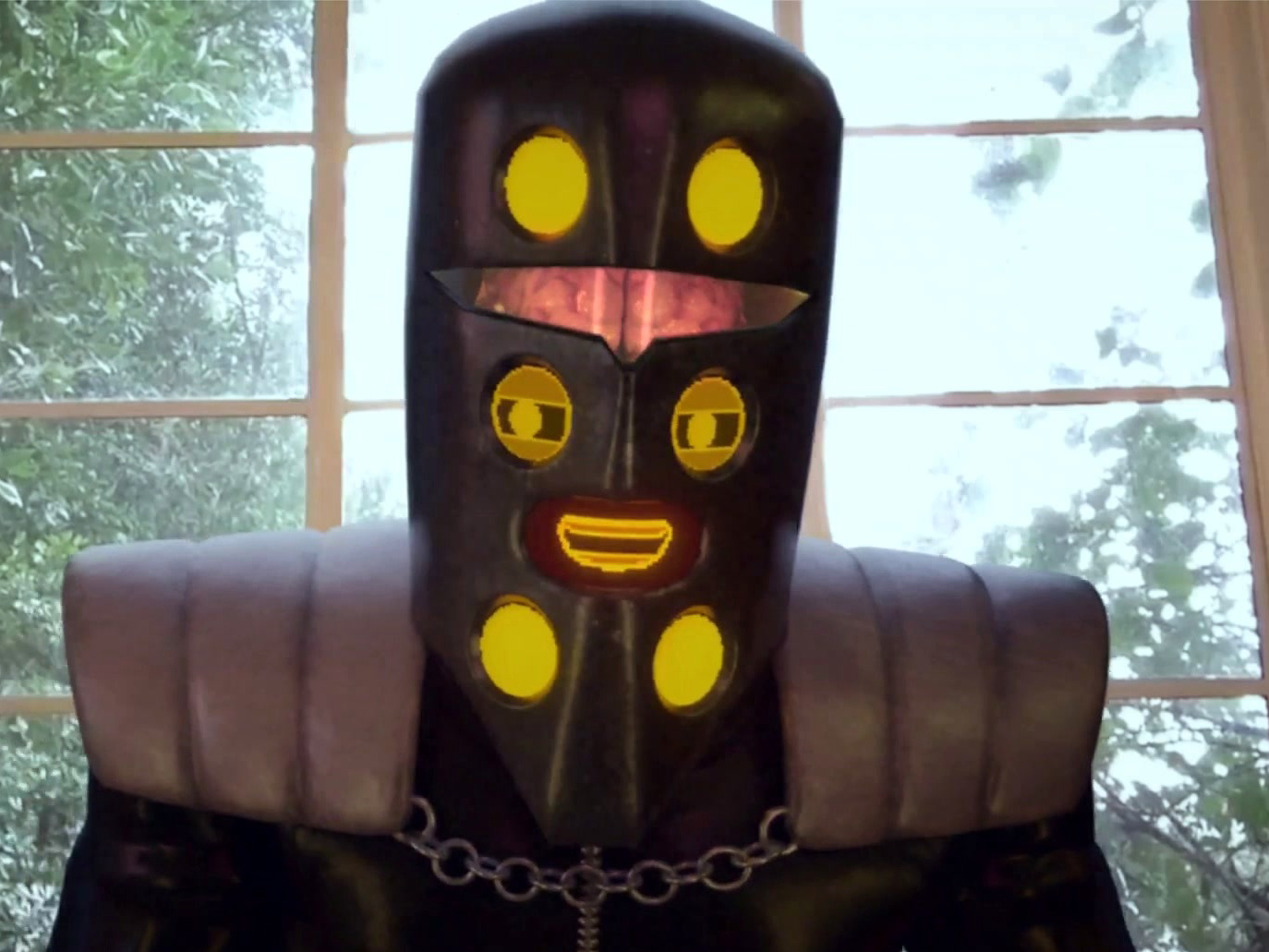
Space Jam: A New Legacy is devoid of fun. It succeeds neither as intentional comedy nor as accidental absurdism. It lacks the shameless commitment to its own crass commercialism that the pushed the original Space Jam to the point of post-modern delirium. Like the worst cash-grab sequels, it does its best to retrace the steps of its predecessor while suppressing all its strangest, most exciting ideas to the margins. A New Legacy simply subs out Michael Jordan for his modern-day equivalent in LeBron James, then hangs up the towel. James teams up with Bugs Bunny and other Looney Tunes characters to win a cosmic game of basketball so he can get back to his family . . . except this time the game is staged in a computer server instead of outer space. That venue change allows the new Space Jam to rope in as many background characters as it can from the full library of Warner Bros. Entertainment IP – including blasphemous “cameos” from “cinematic universes” like The Matrix, The Devils, Casablanca, A Clockwork Orange, and What Ever Happened to Baby Jane?. That’s the kind of naked corporate-synergy flexing that has professional critics decrying the film as “an abomination”, “an apocalyptic horror movie”, and a “swirling CGI garbage tornado.” Those layup hit-pieces were preloaded before the movie was actually screened for critics, though. What really holds A New Legacy back is that it keeps its only new, exciting idea—that intrusion of characters from classic films outside the Looney Tunes brand—relegated to the background. King Kong, The Penguin, and Baby Jane Hudson should have been shooting hoops alongside LeBron James and Bugs Bunny, not cheering them on from the sidelines in blurred-out crowd shots.
It’s most widely being compared to Spielberg’s post-apocalyptic VR thriller Ready Player One (which is much more critical of this kind of self-aggrandizing IP worship than it’s given credit for), but the basic premise of Space Jam: A New Legacy actually lands much closer to the underappreciated sci-fi bummer The Congress. In a dystopian vision that only rings truer to out shithole reality every year, The Congress imagines a world where celebrities no longer physically perform in mass-distributed art, but instead are scanned-into a computer system that simulates their screen presence in AI emulations. It’s the ultimate movie studio power grab, one we’ve seen echoed in real-life simulations of deceased performers in films like Rogue One (Peter Cushing), Furious 7 (Paul Walker) and, most recently, the ethically-shaky documentary Roadrunner (Anthony Bordain). In Space Jam: A New Legacy, LeBron James is offered the same opportunity: being scanned into the Warner Bros. “serververse” so his likeness can be plugged into whatever intellectual property the mega-corporation can scoop up before Disney gets to it first. A New Legacy even maintains some of the dystopian undercurrent of Ready Player One & The Congress, with human beings cheering on the Looney Tunes team on one side of the court, fictional-product characters cheering on the opposing team of villains, and Don Cheadle orchestrating the entire event from the center as an evil algorithm MC (the film’s only decent, fully committed performance). No matter how much its pile-on of disparate IPs in a single locale is supposed to register as Fun! and Cool!, the Warner Bros. studio itself is clearly positioned as the main villain of the piece, in direct opposition to its human, terrified audience, which it literally holds captive.
It’s a shame that idea wasn’t pushed further. If the entire point of this movie was for Warner Bros. to show off its extensive collection of intellectual properties, it should have just flooded the screen with them to the point where the audience was crushed under their immensity. Instead, it just sweeps them to the background so LeBron James can cosplay as a late-career Michael Jordan by recreating the exact plot beats & character dynamics of the original SpaceJam in a new locale. At least doubling down on its grotesque display of corporate synergy could’ve been memorable. As is, there’s nothing offered here worth sitting through A New Legacy to see, which I’m saying even as the rare dumdum who loves the original Space Jam, The Congress and, to a lesser extent, Ready Player One. There are technically jokes in this movie, but none of them are funny (save maybe a couple throwback Silent Cinema gags featuring Wile E. Coyote). It’s a full half-hour longer than the original, sacrificing the breakneck pacing that makes it such a breezy watch. LeBron James is too concerned with being lauded as both the greatest basketball player to have ever lived and the ultimate family man to do anything risky or interesting with the material. Even with all those missteps, though, A New Legacy‘s greatest sin is that it doesn’t push its one deviation from the original Space Jam to its furthest possible extreme. Humorless movie nerds were already going to be pissed about it dragging characters from beloved classics down to the level of a Space Jam sequel no matter what, so there’s no reason for the movie to be timid about its shameless Warner Bros. IP promotion. Fuck it. Show Pennywise spin-dunking in Immortan Joe’s face, then high-fiving Free Willy and planting a sloppy kiss on Lego Catwoman’s blocky lips. If you’re going to be blasphemous, at least have fun with it.
For this lagniappe episode of the podcast, Boomer, Brandon, and Alli discuss the sequel & prequel to the high-concept Canuxploitation sci-fi thriller Cube (1997): Cube² – Hypercube (2002) & Cube Zero (2004).
I’ve lost track of how we’re supposed to react to Bob Odenkirk as a screen presence. After all the obsessive rewatches of Mr. Show DVD sets in my college years I’m trained to receive Odenkirk as a sight gag, where his very presence is meant to read as a joke. Given the barely stifled laughter that echoed his titular line reading of “My little women!” in my theater screening of Gerwig’s Little Women, I assume I’m not the only one who reacts to him that way. Bob Odenkirk is synonymous with sketch comedy in my mind, making any scene he’s in inherently feel like a bit. What’s confusing about that association is that Odenkirk has been much busier and more widely popular in recent years in a medium I know very little about: Prestige Television. His roles on shows like Breaking Bad, Better Call Saul, and Fargo appear to be occasionally comedic in the way most TV dramas dabble in dark humor from time to time, but for the most part they’re played straight. Bob Odenkirk is just as much of a legitimate actor now as he was a visual punchline in the past, and it’s up to the audience’s personal familiarity with specific pockets of his work to determine how he’s going to register onscreen (the same way I can’t watch Toby Huss in a serious dramatic role without first thinking of Artie, The Strongest Man in the World for at least a half-second).
That muddled screen persona makes for an initially confusing experience in Odenkirk’s post-John Wick action vehicle Nobody. At first glance, it’s absolutely absurd that Odenkirk would be starring in any kind of action movie at all, much less one styled after the bone-crunching ultraviolence of John Wick. You’re not immediately invited to laugh at that casting choice, though, since Nobody plays its John Wick in the Suburbs premise entirely straight. Odenkirk plays a self-identified “nobody”: a suburban dad with severe home invasion anxieties and an exponentially distanced relationship with his nuclear family, who’re bored by his stability. The only early wink towards the absurdism of Odenkirk’s casting is in the brutality of its close-quarters violence. Once a bloodlust is awakened in the milquetoast suburban dad, he over-commits to his role as a macho protector, and it’s absolutely bizarre to see Odenkirk smashing windows and crushing throats as if he were a retired, middle-age Rambo. As that violence escalates and the suburban-America nobody’s list of enemies grows to include the entire Russian mafia, it’s clear that this is very much an intentional action-comedy; it’s just one that’s incredibly patient in paying off the set-up to the punchline. Odenkirk starts the film in his Prestige TV Drama mode but by the end he’s a full-on sketch comedy player.
I had a lot of fun with Nobody once it fully sketched out what it’s doing. Based on its marketing (and the involvement of producer David Leitch), I expected it to be a fish-out-of-water action comedy about suburban dad stumbling into a John Wick plot. By the end, I was more convinced it was a direct parody of every post-Taken Liam Neeson thriller about a dad on the verge. All the signs were there if I had known to look for them. My borrowed library DVD started with a Liam Neeson trailer; Odenkirk grimly refers to his secretive military past, hinting at a “very particular set of skills” that could be deployed to save his family; he breaks into thieves’ apartment to retrieve his daughter’s beloved kittycat bracelet instead of, you know, his entire daughter; etc. The opening montage is even a direct spoof of the morning-routine sequence from The Commuter (aka Taken on a Train, not to be confused with Non-Stop, aka Taken on a Plane). The only way the Neeson spoofing could’ve been more obvious is if Odenkirk were speaking in a gravelly Irish accent, and I still didn’t catch onto what it was doing until about halfway into the runtime. Nobodyis a Mr. Show level parody of the post-Taken dad thriller; it just doesn’t make that satirical target immediately apparent.
The tonal confusion of what eventually turns out to be an over-the-top action comedy here feels both purposeful and effective. Odenkirk’s mid-life macho fantasy of being an untapped protector of his household just waiting for a threat to quash is already funny enough when it’s played straight in the opening act. Watching that fantasy meet the harsh reality of a suburban dad bod being pummeled by Russian mobsters mid-film is even funnier. Then, the whole thing farcically escalates into live-action cartoon mayhem by the finale, boldly underlining the absurdism of its premise to the point where it’s unignorable. If I were more confident on where Odenkirk is in his acting career (basically, if I watched more cable TV dramas) I might’ve caught onto that parodic sense of humor a lot sooner, but it took me a minute to get my footing on the film’s tone. In retrospect, that makes it the perfect Bob Odenkirk vehicle despite the unlikeliness of its genre: a comedy where you’re not initially sure whether you’re supposed to treat the actor as a joke but it’s funny either way.
This is going to sound ironic coming from someone who publishes multiple paragraphs of movie opinions no one asked for on a daily basis, but I’ve been trying my best to avoid Online Film Discourse lately. I still frequently listen to podcasts, lurk in heavily curated Facebook & Twitter circles, and refresh my Activity feed on Letterboxd—mostly looking for new movies to watch—but I’m becoming increasingly reluctant to participate in conversations with strangers online about movies, or about anything at all. Sometime between the reactionary blowback to the Cutiestrailer and the immediate Hot Take apocalypse aftermath of Bo Burnham: Inside, I’ve just lost my taste for engaging with strangers’ opinions online. I’ll read and listen to film criticism, but I have no energy for contributing to the discussion . . . unless that discussion is contained among the half-dozen people who contribute to the Swampflix blog & podcast. That loss of appetite for a more generalized, public form of film discourse is likely Pandemic related. I’m just generally burnt out on the daily chore of basic existence, and having all my social interactions limited to digitally obscured strangers is not helping at all. If anything, spending too much time scrolling my Twitter feed makes me outright misanthropic; I always end up walking away with a few sparse movie recommendations and a thousand reasons to feel worse about the nature of humanity as a species. The tradeoff is not really worth it.
The recent Dutch black comedy The Columnist deeply understands that kind of internet-inspired misanthropy, just as much as it understands how weak I am for succumbing to it. It’s a satirical horror film for our cursed Online Discourse times. It treats the universal truth “Never read the comment section” with the same grave seriousness previous generations’ horror films gravely warned “Never sleep in the woods,” “Never have premarital sex”, and “Never swim on a shark-infested beach.” Katja Herbers stars as a clickbait columnist who reads one too many anonymous sexist tweets about her work and snaps, going on a violent rampage. It starts as a kind of writer’s block thriller, where she cannot focus on her work until her detractors are violently silenced (after she slays them in their homes, confronting them with sexist language from their tweets). By the end, though, she’s totally Jokerfied, losing track of her familial connections and professional duty to create #content in her pursuit to destroy every last misogynist troll who antagonizes her online — of which there is an infinite supply. The biggest red flag that she’s lost to the madness of Online Discourse is when she announces that she’s officially quitting Twitter, then spends more time obsessively checking the notifications on that message than she does writing or enjoying her life. It’s a very familiar kind of horror, one that evokes a humor of recognition and despair rather than anything politically satirical.
The Columnist is smart enough to satirize its antiheroine for her own ideological weaknesses, so as not to entirely rely on The Internet Is Evil fearmongering. She’s at least lightly ribbed for her amorphous neolib politics, as her strongest ideological stances are that blackface is bad (a still-sensitive subject in Holland, at least, thanks to Christmas celebrations involving the figure Black Peter) and that people with differing opinions should be nicer to each other online. Still, it mostly backs her ultraviolent revenge on her much more grotesque right-wing trolls, gleefully indulging in a Fuck Around and Find Out ethos. The Columnist is most fun as a pitch-black counterpoint to all those NPR & Chris Gethard human interest stories where targets of online bullying forgive and make amends with their vilest trolls. Here, internet vitriol is literalized into physical, cartoonish violence and everyone involved is mocked for getting sucked into the pointless ritual of Online Discourse in the first place. It’s just as cathartic as it is sharply observed, especially considering that women in particular take the most shit for daring to have opinions online (apparently even women with benign clickbait-friendly “opinions” of no real consequence).
As an illustration of why I’m losing my appetite for engaging in Online Film Discourse with unmoderated strangers, I’d like to point to the real-world clickbait article “Bizarre Dutch dark comedy film ‘The Columnist’ mocked for showing journalist on a killing spree against online critics“. Much like the reactionary blowback to films like Cuties, Joker, and The Hunt months before they were actually released, The Columnist apparently stirred up minor right-wing vitriol for “endorsing” the murder of lefty journalists’ political opponents. You can’t fault the anonymous right-wing commentariat (and their army of bots) for willfully misconstruing the point of a movie that satirizes the journalist herself as well as her trolls; after all, they were commenting on a movie they hadn’t seen. It’s still a useful affirmation that the kind of aggressively inane Online Discourse that accompanies every last news item (including the release of low-budget Dutch horror comedies, apparently) is enough to make a normal, calm person violently misanthropic — proving the satirical point of The Columnist months before the movie was released. Anyway, I should have known better than to read that comment section round-up in the first place, a mistake I hope I can avoid making again in the future.
A Glitch in the Matrix is a (purported) documentary about people who believe in some form of what’s known as the simulation hypothesis, which essentially postulates that existence—as we perceive, experience, measure, and know it—is an artificially created simulation. The film was directed by Rodney Ascher, and if that name is familiar to you, it’s likely because he also helmed the 2012 documentary Room 237, (a film that purported itself as) an academic and scholarly deconstruction of Stanley Kubrick’s horror classic The Shining, creating a lens through which the film could be viewed as both Kubrick’s confession and his exegesis. Although you may not have seen Room 237, you’ve still probably born witness to its reverberations in the pop culture discourse; for instance, if you’ve ever seen a tweet or a listicle that references Kubrick’s involvement in creating false footage of the moon landing or read an article about how The Shining is really about the collision of American imperialism with Native Americans, you’ve seen the cultural impact of Room 237.
For the first hour of Glitch, the film assumes an editorial tone that could charitably be described as “negligent.” The simulation hypothesis itself is laid out for the presumably unfamiliar viewer using clips from films that feature characters awakening to an understanding that their reality is somehow falsified or otherwise unreal: The Truman Show, Brazil, They Live!, and, of course, The Matrix. Interspersed with this exposition are excised-from-context clips from various respectable (if problematic) academics and intellectuals like Neil DeGrasse Tyson, using soundbytes that overemphasize their concessions about the possibility that the simulation hypothesis reflects an accurate understanding of our reality (for the record, that’s not what he said). For some reason, there are also a lot of longer, non-excised clips of non-scientist and former trust fund kid turned insouciant, nascent Bond villain Elon Musk, in which he talks about his own ideas about the simulation hypothesis, which we will definitely be circling back to. Additionally, there are long clips taken from noted speculative fiction author Philip K. Dick’s infamous appearance at a conference in Metz, France. For the uninitiated, much (if not all) of Dick’s prose focuses upon protagonists whose lives are somehow unreal, either because the character prioritizes a fictive inner life which is demonstrably oppositional to their lived experience, or because the character exists in a fiction within a fiction before realizing the falseness of their presumed reality. In that rare public appearance, a post-psychotic break Dick elaborated on the idea that his novels were not fiction, but were in fact true, and that his writing of them was his way of exploring his “realization” that he had personally experienced multiple different timelines, and in so doing unintentionally elaborated upon and outlined the psychological delusion that we now call the “Mandela effect.”
Among these irresponsibly arranged sound bytes and film clips, we also get to meet several of the documentary’s subjects, most of whom were interviewed via some kind of video conference software, and who appear on screen as video game-esque avatars. There’s Jesse Orion, a special education teacher who dreams of being an illustrator full time; we get to see some of his work, which includes a skull drawn in a Mike Mignola style as well as pages from his redrawing of an entire volume of Jean “Moebius” Giraud’s work using characters from the Peanuts comic strip. There’s also Leao Mystwood, who appears as a kind of high-tech Anubis; his time spent in a sensory deprivation chamber convinced him that his perception of himself as having or being a physical form is false, and that he is instead composed of code. There’s Alex Levine, whose avatar looks like a cross between the classic “brain in a jar” image that accompanies many discussions of simulation hypothesis and 790 from Lexx. But the interviewee we spend the most time with, and who in fact the film opens on and who deliberately “set[s] the tenor” of the piece as a whole is Paul Gude, who portrays (and perhaps perceives) himself as leonine. Paul opens with a story about attending a lecture while at university, in which his instructor discussed the genealogy of neurological epistemology as understood by theorists who were bound by the horizons of their knowledge; that is to say, when the highest level of technology was the aqueduct, the human understanding of neuroscience was perceived as and delineated through the use of fluids/humors, and then the rise of telegraphy altered that perception and description to instead treat the nervous system as a series of wires and impulses. From there, the rise of sophisticated computing technology lead to the contemporary understanding of the mind as a kind of CPU informs our current understanding of reality and the perception thereof; Gude then posits that since we now have technology capable of replicating reality virtually, we should then not only have the ability to conceive of our perception of reality as virtual, but to an extent, we must concede that it is so.
Gude notes that he was adopted, and that his adoptive father was a clergyman, and talks at length about his childhood proddings at the concepts of what constitutes reality. Some of this is familiar to me, although I wouldn’t go so far as to presume the universality of those experiences. One anecdote revolves around his childhood move to an area with a much smaller population than the city in which he previously resided, and his internal mental justification of this was that this was the result of the need for “them” to use less processing power to render fewer people and objects; the long drive to and from other areas was therefore the result of the need for “them” to change the surroundings and set up the next location. Although he doesn’t come straight out and use this analogy, it could be more simply explained that he conceived of car trips with his father as the equivalent of a loading screen between sections of a video game that show up while the next area is rendered. Another instance of his worldview being altered occurs while he is sitting in church, listening to his fellow congregants sing a hymn in unison, and his subsequent “realization” that what he is perceiving as a musical harmony and the assumption that it is produced by air forced through internal human flesh must be false, that it in fact could not possibly be the case. His story is presented without commentary, creating (through the language of documentary filmmaking) the impression that the documentarian concurs with this analysis and sees no issue with arriving at the conclusion that reality is a simulation because it’s “impossible” that the sounds of people singing are created by the vibration of larynxes. This is what I’m talking about when I say that the editorial tone is questionable; these are not intercut with psychologists elaborating upon common delusions and their physiological origins, but are simply presented as completely rational ideas.
Gude is not the only subject here for whom a history of teleological theology clearly underpins their perception (and associative distrust of the parameters) of reality. Leao Mystwood, whose introductory chyron provides the appellation “Brother,” also notes that he himself is an ordained minister. Textually, the film itself draws a comparison between the simulation hypothesis and many religious teachings, specifically citing Luke 7:21, in which Jesus, upon being asked about the Kingdom of Heaven, notes that the kingdom is “within” the questioners, existing both inside and outside of them. For someone for whom the concept that we reside in a simulation is an a priori assumption about the nature of existence, this statement, taken through that lens, seems to be that of an Avatar (defined traditionally, e.g., a divine being made flesh in our world) describing an external, “truer” world to beings who can only perceive the simulation that is “housed” within that truer world. And, despite the fact that Jesus also described the Kingdom of Heaven as a place of feasting with Abraham, Isaac and Jacob, a man who sowed good seed in his field, treasure hidden in a field, a net, and yeast, I think that interpreting the concept of “heaven” as a “truer” outer world within which our world is but a shadow on a wall is completely legitimate—and therein lies the rub of this film as a whole. After all, what is the simulation hypothesis if not a kind of creationism? I put “them” in quotations earlier when discussing Paul Gude’s ideas because he never names these actors and artificers who are exterior to the simulation, and neither does anyone else who was interviewed for this documentary; who are “they?” What could “they” possibly be other than the divine, or some secularized recontextualization of the concept of divine beings?
I find A Glitch in the Matrix troubling. That’s not because its “revelations” shock me to my core or make me re-evaluate the reality of, well, my reality. To be quite frank, the “simulation hypothesis” is essentially what I was raised to believe, as elaborated upon here, simply with a different name and an overlayment of scientific buzzwords and bizarre fetishization of Elon Musk (I haven’t forgotten about that part) over it to make it seem not only plausible but undeniable, when in reality it comes down to one of the oldest human concepts of them all: faith. One of the core tenets of faith is that this mortal, decaying flesh is not all that we are. That there is something external, that there is something higher, that there is a consciousness or consciousnesses which supersede and exist beyond ourselves which exert authority over our existence. Regardless of whether or not I personally think that interpretation of existence is valid, whether that concept comes in the form of a deity in heaven above or a programmer of the simulation, both require the same rejection of empirical reality as it can be measured, tasted, and observed and embrace an unfalsifiable concept of existence. That’s fine! But to present a text that defines existence this way as a documentary, to treat the belief system as fact instead of a chronicle about the people who believe it as fact isn’t documentation at all; it’s proselytization. It’s the same as when the VHS box for Future Tenseproclaims that it’s a “true story” that just “hasn’t happened… yet,” except that, unlike that production, this one doesn’t advertise itself as an evangelical tool. This presents itself as a factual document of record, which is both disingenuous and dangerous.
To give credit where it’s due, the second half of the film delves further into the dark potential of this way of thinking. In the first half, more than one of the interview subjects notes that there are people with whom they have interacted whose personal tendencies toward antisocial behavior and violence were only curbed by the belief that reality is real and therefore there are consequences to violence. This smacks of the logical fallacy that many people express, that we must maintain a society-wide belief in a higher power/metaphysical consequence in order for the populace to inhibit their darker impulses; you see this in the way that many people can’t wrap their heads around the proven validity of redistributing police and carceral punishment funds to preventative social safety nets as a method of preventing (instead of punishing) crime. There are a great many people (including, in my opinion, most of the people who appear in this movie) who need psychological therapy and/or pharmaceutical assistance to reach a baseline of empathetic civility. That the belief that others are less “real” than oneself creates a space for violence in its very core; it’s the foundational basis of white supremacy and other forms of antisocial ideologies that often result in violence in the public and private spheres. The film does denounce this potentiality, at least, and does so through a recorded phone call with Joshua Cooke.
That name, too, may sound familiar; nearly two decades ago, Cooke murdered his parents in the basement of their home with a shotgun. Infamously, his lawyers considered pleading insanity on his behalf, citing that Cooke “harbored a bona fide belief that he was living in [a] virtual reality,” which became known as the “Matrix defense” (Cooke eventually pled guilty). The possibility that the rejection of the fundamentals of reality could lead to violence is also referred to as the “school shooter” mentality within the film, but the film fails to provide a truly robust condemnation of violence within its text, and I think that’s rather telling. The proliferation of a multitude of people who take to the internet to share photoshopped images of cereal boxes and TV Guide typos to use as visual aids to the recapitulation of their experience of the so-called Mandela Effect isn’t just harmless shenaniganry; it’s a demonstration of the larger parts of society’s growing unwillingness to reexamine their precepts and beliefs, even in the face of evidence against it. We are living in an era in which people are more likely to believe that they’re sliding through parallel universes like Quinn Mallory rather than consider that their memory might fail to be 100% accurate, simply because Reddit told them so; we’re seeing the consequences of that now, politically and globally. To paraphrase another giant of speculative fiction, Isaac Asimov, there is a growing contingent of Americans who legitimately believe that their ignorance (and misremembrance) is just as valid as scientific knowledge and evidence, and it’s that which I find truly deplorable about A Glitch in the Matrix’s text—it will only add more fuel to that fire which threatens to consume our world. Blink and you’ll miss it, but one of the interviewees notes that they think large scale disasters, including those like recent California wildfires that are exacerbated by climate change, are the result of programming errors; every day in every way they’re coming up with new reasons to denigrate the need for immediate action to mitigate and prepare for climate change.
Although the second portion of the film attempts to cover the failures of the film’s first hour, its bizarre fetishization of Musk extends beyond the questionable first half into the second. And make no mistake—some of these people come within a hair’s breadth of literally worshipping Musk. Taking into consideration that the simulation hypothesis is just creationism with extra steps, at least one of the interviewees essentially likens Musk to a god. While explicating on the idea that some people are player characters and others are non-player/playable characters (or NPCs), one of the interviewees speculates that Musk might be not only a player character, but someone from outside the simulation who “descended” into our reality as an avatar in order to try and awaken us and to a recognition that the simulation as false. That is to say: this person believes that it’s possible Musk is an extra-simulation messiah. At the risk of editorializing, I’ll say this: if god were one of us, I’d accept that they were a slob like one of us or a stranger on the bus, but they sure as hell wouldn’t be a guest on Joe fucking Rogan’s podcast. I get that for many neurodivergent people, Musk’s accomplishments (such as they are) are encouraging and demonstrate that people with Asperger’s shouldn’t be dismissed out of hand, but I won’t make any apologies for failing to be impressed that the heir to an apartheid emerald mine leveraged obscene and objectively amoral wealth into a business empire that’s largely dysfunctional. You’d be hard pressed to find someone more interested in living on the moon than I am, but I’m not gonna work for Mr. Grimes’s scrip and I’m not going to live in one of his lunar debtor’s prisons/company towns; you can fucking forget that.
I mean no disrespect to those who work in the service industry, but when someone says “For two years, all I did was work at Chili’s and then come home and play video games,” and then uses that as the basis for their claim that they then “realized” that reality was also just a video game, that’s a person who needs counseling and therapy to manage their addiction. I’m not mocking this guy: addiction is a disease, it takes many forms, and it warps your reality. What it doesn’t do is make you an expert on that reality. The two works that this most reminded me of were the film What the #$*! Do We Know!? and the book Supergods by Grant Morrison. In the case of the former, Glitch is similar in that it presents pseudoscientific ideas not as a possible interpretation of existence, but as decidedly true (and, although I am aware that this verges on ad hominem, it’s worth noting that it was created by NXIVM cultists). In the case of the latter, I find the use of footage from Philip K. Dick’s mental breakdown to be both heartbreaking and cruel; it reminded me of Morrison’s book, which for the first 2/3rds is a loving, jubilant history of superhero comics and that artform’s various wonders, before the final third descends into a bizarre scripture of Morrison’s personal beliefs. I won’t try to summarize them here, but here’s a sample (from p. 277 of the 2012 Spiegel & Grau paperback edition): “The interior of our skulls contains a portal to infinity [….] Could fertile wet planets like our Earth really be nurseries where omni-anemones fed and grew to become quicksilver angels in a timeless AllNow?” For the sake of my future hypothetical political career I won’t get into specifics, but I’ve personally spent a not-insignificant amount of time communing with the fractals, if you catch my drift; that doesn’t mean that I would ever consider that experience to be revelatory about the nature of reality, and if I did, and I tried to start spreading the Gospel of Boomer, and that Gospel also incorporated depersonalization that is analogous to that which is part of evil ideologies, I’d hope no one would follow me. I also hope no one takes this documentary to heart, and in the meantime I’ll be looking forward to a different documentary about the simulation hypothesis someday, one which is more scientifically, spiritually, and ethically considered.
It came to mind again most recently yesterday, as I sat in a movie theater for the first time since Emma., watching Scarlett Johansson and Florence Pugh engage in a car/motorcycle/tank chase through the streets of Budapest and into the city’s subway, exchanging quippy dialogue all the while. In that moment, I flashed back to the similar car chase sequences in Berlin in Civil War, Seoul in Black Panther, San Francisco in Ant-Man and the Wasp, and [Cleveland as D.C.] in Winter Soldier, as well as probably others that I’m forgetting. And although this was another movie that largely stuck to the tried-and-true Marvel formula, I thought to myself, Why must a movie be “novel’? Is it not enough to sit somewhere dark and see a thrilling car chase through a metropolitan area, huge? After all, although this isn’t the first MCU film all about one of our lady heroes, it’s leaps and bounds better than Captain Marvel, which I gave a high star rating to upon release but was largely tepid about it in the review proper (I literally wrote “I’m hot and cold on this one”) and which I look back on now mostly with contempt, as its imperial Yvan eht Nioj underpinnings have only become clearer with the passing of time.
I’ll admit here that, by and large, it’s pretty easy for a film to manipulate me emotionally (the people would like to enter into evidence my likewise high star rating for 2016’s Ghostbusters), and it’s also not just films that do it. The Alamo Drafthouse has, for the past few years, used the same simple animated introduction before new releases where several colored circles appear, then overlap, then space out to mimic planets orbiting a star, then come back together to embody the six circular cut-outs of the classic film reel canister. My description is overselling the complexity, I think, but I can’t find it online anywhere so forgive me. The sound design of it is fairly simple as well, but this time, after the theater darkened and the traditional Alamo font appeared on screen saying “We missed you,” the pre-show included a montage of clips of characters from the movies at the movies: Amélie, Taxi Driver, Cinema Paradiso, etc., and then the bonging tones of that intro came together, and I was overcome. It felt like coming home, and if I’m warmer to Black Widow than it truly deserves because of it, well, maybe the people will have to enter this review into evidence one day, too, but for now, I have to say, I really liked it. Even my best friend, who is generally apathetic to Marvel movies, thoroughly enjoyed it; immediately afterward, she said she would be willing to pay to see it again, and when we were considering watching another movie back home last night, she said she’d rather just watch television than another movie because she enjoyed Black Widow so thoroughly that she wanted to “marinate” in it a while before another cinematic experience watered it down. Take from that what you will.
We open in Ohio in 1995, where a young Natasha (Ever Anderson, daughter of Milla Jovovich and Paul W. S. Anderson) rides her bike through suburban streets and into her backyard, where she plays with her younger sister, Yelena (Violet McGraw). When Yelena skins her knee, their mother Melina (Rachel Weisz) attends to her, and there appears to be some tension between Natasha and dear old mom. As night falls, Yelena notes the appearance of fireflies in their backyard, and Melina gives her daughters a little science lesson about bioluminescence. While they set the table, father Alexei (David Harbour) returns home, agitated. He shows Melina a 3.5’’ floppy and notes that “it” is “finally happening.” As Melina whispers a meaningful apology to Natasha at the dinner table, Alexei grabs a rifle and the entire family hops into their SUV and makes haste toward a small airstrip, with S.H.I.E.L.D. agents in pursuit shortly. After a tense shootout, the family manages to make their getaway in a prop plane and land in Cuba, where we learn that the “family” is comprised entirely of Russian agents, even the two children, and that the past three years in America have been part of a long term operation at a secret S.H.I.E.L.D. facility. Natasha attempts to prevent her separation from Yelena, citing that the younger girl is only six years old and too young for training, but Alexei notes that Natasha herself was even younger when she first began, and the two of them are forced apart on the orders of General Dreykov (Ray Winstone).
After an opening montage (set to a downbeat cover of “Smells Like Teen Spirit”) gives us the general impression of what constitutes a Black Widow’s training in the “Red Room” (it’s not fun!) we move forward to 2016. The rest of the film is set parallel to the events of the aforementioned Captain America: Civil War, following Natasha (Johansson) in hiding after siding with Cap against Tony re: The Sokovia Accords. Elsewhere, Yelena (Pugh) and a team of fellow Black Widows tracks down and ultimately kills a rogue Widow, but not before her former ally exposes her to a red dust that acts as a counteragent to Yelena’s Black Widow programming, which we learn has grown beyond conditioning and brutal training to literal mind control. Natasha makes her way to a safe house in Norway with help from her friend Mason (O-T Fagbenle), who also delivers some things left behind at her last safe house in Budapest, which includes a package from Yelena that contains several vials of the red dust; the dust, in turn ends up drawing the attention of Taskmaster, Dreykov’s right hand killer, who has the ability to mimic the fighting styles of anyone from merely watching a video. Yelena and Natasha reunite and decide to destroy the Red Room once and for all. In order to do so, they must first rescue their “father” from the Siberian gulag to which he has been sent; the former “Red Guardian,” the only successful supersoldier equivalent of Captain America who was produced by the Soviet Union not relives his glory days in stories told to his fellow inmates and is mocked by his guards. He, in turn, leads them to their “mother,” who reveals that she was the scientist who worked on the beginnings of the mind control project. But can any members of this reunited not-really-a-family trust one another long enough to stop Dreykov?
Look, this is a Disney’s Marvel Cinematic Universe consumable product. You’ve already decided if you’re going to see it or not, and if you’re going to see it, whether you’ll do so on a big screen, fork over an exorbitant amount of money to watch it on Disney+, or wait for a more affordable at-home option. It exists to sell toys, costumes, and trips to theme parks while continuing to build the Disney monopoly that we should all be more worried about since the overseers of antitrust laws are asleep at the wheel, and probably would be more worried about if we weren’t all (a) contemplating our insignificance and powerlessness to stave off the climate disaster that will boil, drown, bury, burn, smother, etc. us all alive, or (b) living in a state of denial of said looming extinction event. Its emotional beats are rote, its storytelling checkpoints are familiar, and the forward thrust of its characters is largely moot considering that, as of 2019, Natasha Romanoff is dead. For what it’s worth, at least Disney isn’t trying to insultingly push Black Widow as “empowering for girls/women” (one can read the text that way, but it’s not part of the metatext for once, and the film itself calls attention to the fact that Natasha’s dark past as an assassin renders her “hero” status among “little girls” problematic, to say the least). This film is also decidedly Not For Children, given its use of the visual language we associate with human trafficking to illustrate the horrors of the Red Room as well as the higher-than-normal profanity and a fairly graphic verbal description of the Red Room’s sterilization procedure.
I’m sure that there will be some reviews that cite the film’s “heart,” although I would warn readers to take that with a grain of salt. The “reunited family that was really composed of spies but who could be a found family” element is present, and all of the cast (Pugh in particular) sell this angle in their performances, but how much it will resonate with you as a viewer will depend on a lot of factors that are external to the film proper. I wasn’t sold on it, but I still had a blast, and the setpieces here are some of the best that this franchise has brought to the table. Pugh is great in this first entry for her into the MCU, and Harbour brings an effortlessly comedic touch to the proceedings. Weisz has never given a bad performance ever, and her Russian accent here is a delight. It’s a shame that Johansson is finally given a vehicle in this series that is hers and hers alone and it must be an interquel due to the choices made in other films, but she’s been carrying films on her back since she was a literal child, so it’s no surprise that she delivers here in her postscript swan song. If you’re going to see it, see it, before we’re all dead.
Welcome to Episode #138 of The Swampflix Podcast. For this episode, Britnee, James, Brandon, and Hanna discuss the most noteworthy movies from last year they‘ve seen in the six months since they made their respective Top Films of 2020 lists, with a particular focus on the mainstream horror oddity The Empty Man. Enjoy!
00:00 Welcome
01:50 Good on Paper (2021) 04:30 Mother’s Day (2016) 08:30 The Devil Wears Prada (2006) 09:20 Nobody (2021) 15:40 The Summer of Soul (2021) 22:20 Coyote Ugly (2000) 28:55 The Columnist (2021)
36:15 The Empty Man (2020) 1:04:20 Pinocchio(2020) 1:21:24 Ham on Rye (2020) 1:39:10 Babyteeth (2020)
Most documentaries about the lives & works of artists are majorly self-conflicted in their form & content. The artist being profiled can be the most provocative, combative bombthrower in the history of their medium, and their retrospective documentary will still be the safest Wikipedia-in-motion overview of their life imaginable. I don’t know that the recent doc Wojnarowicz ever matches the righteous fury of its own subject, but you can’t say it doesn’t try. Fully titled (please excuse the incoming slur) Wojnarowicz: Fuck You Faggot Fucker, the film clearly attempts to recreate the in-your-face political activism of its subject’s ACT UP-era queer resistance & art. It’s nowhere near as inventive, shocking, or confrontational as multimedia artist David Wojnarowicz was in his own time, but it’s at least bold & propulsive enough to convey what made his art so vitally incendiary.
It helps that almost all of the documentary’s imagery was created by Wojnarowicz himself, supplemented by audio interviews with the people who personally knew him. Paintings, prints, stencils, photographs, 3D instillations, audio journals, and a soundtrack from his post-punk band 3 Teens Kill 4 overwhelm the screen, often as David himself rants about the grotesque injustices of the world at large and of 1980s NYC in particular. There’s a vibrant, purposeful anger to his visual art and his recorded monologues that especially comes into sharp relief in discussions of the AIDS crisis and the Reagan administration’s genocidal indifference to that epidemic. There’s no shortage of worthwhile targets for Wojnarowicz’s fury, though, and he throws well-observed punches at the irresponsible vapidity of news media, the grotesque elitism of fine art collectors, and the economic disparity that led him to hustling as a runaway teen, among other social ills. When he was alive, most of Wojnarowicz’s contemporaries likely would’ve reductively described his unbridled anger as a mentally ill artist sabotaging his own success. Here, his work is properly contextualized as confrontational, queer activism in direct opposition to economic exploitation & respectability politics.
The purposeful, incendiary provocation of Wojnarowicz’s art reminded me a lot of Marlon Riggs, along with the more obvious No Wave contemporaries in his social circle (most notably Richard Kern). If Wojnarowicz had survived the AIDS epidemic to make this film himself as a self-portrait retrospective, I imagine it might’ve come out as invigorating as Tongues Untied, Riggs’s magnum opus. Director Chris McKim instead does his best to recreate that exact era of queer-activist video art with the clips, scraps, and completed works that Wojnarowicz left behind after dying at the hands of governmental indifference. The result is one of the few hagiographic documentaries on an artist’s life that approximate the shock & awe of their subjects’ actual work: Sick, Crumb, Marwencol, The Devil and Daniel Johnston, etc. At the very least, it leaves you infuriated that Wojnarowicz and his immediate community were purposefully abandoned & encouraged to die by their own government at the height of the AIDS epidemic; he likely would’ve been proud of that effect.
I’ve been a voracious audience for Doris Wishman sexploitation cheapies over the past few years. There’s a wholesome amateurism to the schlockteur’s decades of D.I.Y. smut that appeals to me as a fan of B-movies and kitsch erotica, especially in the context of her being one of the few women directors to “make it” in that industry. I will admit that I’ve hit a wall with my appreciation of Doris Wishman’s back catalog, though. It’s the exact same genre barrier that made parts of my Russ Meyer retrospective such a prolonged slog. I hate “roughies.” Somewhere between the cutesy nudist-colony novelties at the start of her career (titles like Nude on the Moon) and her late-career, absurdist whatsits (titles like Double Agent 73), Doris Wishman cranked out a lot of roughies. They’re violent rape-fantasy films in which a female protagonist is stripped, exploited, and assaulted by every man she encounters on her journeys, her torment played purely for the audience’s sexual titillation. A lot of Wishman’s auteurist quirks repeat throughout her roughies period—most notably her adorable obliviousness to what is and what is not erotic—but I’d much rather seek those pleasures out in a genre that’s less inherently grotesque. It’s slowed me way down on seeking out her work, since the bulk of the remaining ones I haven’t seen appear to fall in that category.
I’m at least glad that my general distaste for roughies delayed me from seeking out Bad Girls Go to Hell sooner, despite it being one of Wishman’s most widely recognized titles. My appreciation of the film is just as muted now as it would’ve been a few years ago when I was at the pinnacle of my Wishman binge, but the film’s presentation has changed in the meantime. Whereas I’ve previously had to seek out Wishman novelties like Dildo Heaven or A Night to Dismember as fuzzy VHS rips on YouTube or sub-legal porn streamers, Bad Girls Go To Hell is currently streaming on The Criterion Channel – all cleaned-up and presented as Important Art. It is a roughie in the strictest sense, following a sheltered housewife’s moral decline after she kills her rapist neighbor and flees from the law by bed-hopping across the country, mostly against her will. The film is included in Criterion’s “Close to Home” programming, which highlights films shot in their directors’ homes & apartments (alongside another pre-hardcore erotica classic, Pink Narcissus). I initially suspected it was added as a bizarro Pride Month selection, given that our housewife-in-crisis’s only consensual sexual encounter while on the run is shared with another woman. Regardless, seeing a Doris Wishman film all cleaned up and prestigious on Criterion feels like a major cultural Event. I just personally wish they had programmed something outside of her roughies period; almost all of her films were at least partially staged in her NYC and Miami apartments, so pretty much anything she’s directed could’ve fit the bill.
Despite my reluctance to dig any further, I’m sure that there’s a Doris Wishman roughie out there that will wholly win me over someday. If nothing else, the women-on-top, femdom variation of the roughie format in titles like She Moband Faster, Pussycat! Kill! Kill!appeal directly to my sensibilities, and it’s likely Wishman has waded into that exact territory sometime in her career – if not only through having made so many films in that genre. There’s also plenty pure-Wishman goodness oozing out of Bad Girls Go to Hell as is. Her instantly recognizable apartment is starting to feel like a nostalgic setting after seeing it repeat in so many of her classic-era pictures. There’s a statement-piece glass ashtray always on display in her living room that’s used as a murder weapon in this particular appearance, and it feels like a surprise celebrity cameo. Wishman’s camerawork is also as wild as ever here, sometimes tilting around the room as if her sex scenes were set on a carnival ride and sometimes statically fixating on the most mundane details imaginable: strangers’ feet on the sidewalk, pigeons, beaded curtains, etc. I’ll even admit that Wishman is highly effective at times in highlighting the sleaze & grime of the roughie genre. Her flashlit crime scene lighting and insert shots of lace panties resting on the corner of a mattress are incredibly lurid for a smut director who largely doesn’t seem all that interested in sex.
Bad Girls Go to Hell is not the best Doris Wishman has to offer, but it’s maybe her most iconic – at least among Something Weird VHS collectors and other video store weirdos of that ilk. It’s cool to see any of her work presented in such crisp, respectful packaging from a taste-making institution like Criterion. Anything that gets me closer to owning Deadly Weapons restored in HD on Blu-Ray has to be counted as a victory, so I’ll gladly suffer a few more roughies to get there.
Every month one of us makes the rest of the crew watch a movie they’ve never seen before and we discuss it afterwards. This month Brandon made Hanna, Boomer, and Britneewatch Starstruck (1982).
Brandon: I’ve been thinking a lot about movie musicals lately. Not only are the releases of Lin-Manuel Miranda’s In the Heights and Steven Spielberg’s West Side Story remake threatening to dominate online film discourse all the way through next Oscars season, but we also recently discussed the grim, reality-grounded stage musical London Road as a Movie of the Month selection. In his intro to London Road, Boomer mentioned a few reasons why the movie musical is a medium he struggles to connect with as an audience—its awkward rhyme schemes, its Declared Feelings, its emotional artificiality, etc.—a few of which I bristle at myself. The real reason I struggle with most musical theatre, though, is that I often just don’t care for its music. The singing-for-the-back-row emotional projection of most traditional, stagey musicals strikes me as a kind of false, strained earnestness that takes me out of the promised fantasy of the artform. When I think of movie musicals I do love—Rocky Horror, Velvet Goldmine, Hedwig,The Lure,etc.—they’re often the ones that indulge in the punk, glam, synthpop, and new wave musical tones I already listen to in my idle time.
In that respect, the 1980s new wave extravaganza Starstruck is perfectly suited for my movie musical tastes. Not only does it operate like a rough prototype for 90s Australian gems like Strictly Ballroom, Muriel’s Wedding, and The Adventures of Priscilla, Queen of the Desert—all huge tastemaking discoveries for me as a young film nerd—but it also plays like a jukebox musical adaptation of Cyndi Lauper’s landmark debut She’s So Unusual, one of the greatest pop albums of all time. If you’ve ever found yourself watching a marathon of Cyndi Lauper music videos on YouTube (if you haven’t, who are you?) you’ll notice that there’s a vaguely defined storyline from that She’s So Unusual album cycle wherein Lauper is a bubbly, working class teen desperate to escape her restrictive household to find other artsy weirdos like her in the big city outside her reach. Starstruck was released at least a full year before that album but follows a remarkably similar storyline: a bubbly teen who’s tired of working the counter at her family’s local pub maneuvers her way into fronting a new wave punk band, then a Top 40s pop career (thanks largely to collaborating with her younger, manically ambitious cousin) where she excels as her So Unusual self. There’s some indulgences in record industry satire, let’s-save-the-pub community rallying, and television broadcast heists along the way, but largely the film is a fantasy-fulfillment for the same sheltered, artsy kids who saw their ideal selves blooming in Lauper’s avatar a year later. And it’s just as satisfying here as it is in those videos.
Speaking of music videos, I think the main reason Starstruck works so well for me as a movie musical is that its break-from-reality performances are presented in the visual language of early MTV broadcasts. Given how much of my idle time is still spent YouTubing videos from 80s icons like Lauper, Kate Bush, and Madonna, that MTV-specific version of fantasy-fulfillment cinema speaks to me in a way most musical theatre can’t. The new wave music & fashion of Starstruck is pitched exactly to my tastes, and the movie only strays from those modernized music video pleasures to (lovingly) mock the traditional movie musical as outdated kitsch (most notably in a Busby Berkeley synchronized swimming sequence featuring a pool packed with oiled-up muscle boys). It’s my ideal version of its genre, and I can’t believe it’s not more routinely cited as an all-time classic.
Boomer, was Starstruck able to sneak past your own genre biases, or did its new wave-ification of the artfrom still fall flat in the face of your general movie musical skepticism?
Boomer: I was initially resistant to giving in to Starstruck‘s allure in much the same way that the first time I saw God Help the Girl; despite my absolute and utter adoration for all things Belle & Sebastian (a close friend gave me a copy of The Life Pursuit for my recent birthday and it hasn’t left the turntable yet), I had a hard time surrendering to Stuart Murdoch’s twee vision until the first non-title musical number well and truly won me over. With regards to Starstruck, I had the same hesitancy, and was also immediately set a bit off-kilter by its odd opening that dispensed with the normal film structure–there’s no studio or distributor logo, we’re simply thrust straight into the opening credits. From there, we meet our two leads in a brief intro scene that’s mostly taken up by a phone call that obscures both of their faces. Before the film even hits the three minute mark, Phil Judd from The Swingers is staring straight into the camera and singing “Gimme Love,” and by the seven minute mark, Jackie Mullens (Jo Kennedy) is doing her own musical number, singing “Temper Temper.” And I … wasn’t really having a great time, if we’re being honest. As I’ve noted before, the two things that I dislike most about typical Western musicals are the artificially earnest “musical voice” that’s a hallmark of “classically” trained singers and the belabored nature of musical lyrics, as plot points and exposition are beaten into submission in order to match a rhyme scheme and rhythm. As to the former, I much prefer the raw earnestness of your average local garage band to the operatic diaphragming of the university, and although Kennedy’s untrained and—frankly—confrontational vocals certainly aligns with my preferences, the strong-armed rhyming lyrics are very much in the style of those of traditional musicals: So trigger happy you get vicious / Also getting malicious / And you throw the dishes. I know that those are real lyrics because The Swingers were a real band, but they’re painful.
But then … as soon as “Temper Temper” ends at about 8.5 minutes in, the “musical” part of this musical dries up for nearly 30 minutes, and we just get to enjoy the antics of Angus (Ross O’Donovan) and Jackie as they try to make Jackie famous. When Jackie first starts to tightrope walk in the family pub, the film was giving such strong The New Adventures of Pippi Longstocking vibes that I couldn’t help but enjoy myself, because I realized that what I had initially interpreted as just another “teenager wants to be a star” narrative, with all of its well-worn waypoints that we know from previous films in the genre, was actually a fantasy for children (the nudity, swearing, and smoking notwithstanding). The elaborate set piece that follows, in which Jackie dangles precariously from a wire between two buildings, was a genuine thrill in which there’s no real danger, unless you put yourself into the accepting mindset of a child who thinks Jackie may actually plummet to her death. That this is prelude to “Body and Soul,” which was the best and most energizing musical number to that point, only makes it that much more fun. The song itself wasn’t necessarily better than the dead-in-the-water tracks that frontloaded the picture, but that it’s not framed as an on-stage performance lends itself to a feeling of genuine spontaneity, and the frenetic energy of the family and the ever-present barflies as they dance around and sing is infectious, and the backing band gives it an effervescent quality that was lacking in the first two numbers. It’s genuinely catchy!
And then we have our first (and only) song that’s a showpiece for Angus, and even though Angus is by far the most fascinating and magnetic character in this movie, it’s also … not very good. However, as musical producer/host Terry (John O’May) says to Jackie at one point after she botches a show, “There’s only boring and interesting, and you certainly weren’t boring;” and Angus is never boring. This is about the point where the movie really started to lose my interest: Angus’s number, “I Want To Live In a House,” fun as it was, ends at 55:05, and it’s less than two minutes before Jackie does her disastrous rendition of “My Belief in You,” which lasts over three minutes of screen time (56:45-59:48), and then it’s less than ninety seconds before Terry and Jackie perform “Tough,” which itself clocks in at five long minutes (60:07-65:07). Five minutes later, we’re in another musical number (“It’s Not Enough”), this time a sappy ballad, but it’s mercifully short. When looping back to take notes about those time codes, I think that “I Want to Live in a House” works fairly well in isolation and suffers primarily from its proximity to several consecutive stinkers, and although it’s not a good track, I was thoroughly charmed by the performances and dancing of Donovan and the backing band (mostly comprised of members of The Swingers minus Phil Judd, but also our love interest Robbie, as played by Ned Lander). It’s interesting, not boring, like the tracks that follow it. After this overstuffed middle section, we head into our final act, in which we spend a goodly amount of time with the Mullens family, as they have what may be their last Christmas together in their apartments above the pub and commiserate about the possibility of losing their business and home. After that, the last performances at the opera house are pretty fun, counterposed with the Mullens et al watching the performance and doing their little old people dances, and I was pleased in spite of myself.
So I would have to say that, yeah, the New Wave nature of the music did do some of the legwork of making the musical part of this musical more palatable. The lyrics of the songs were still very much in line with what annoys me about the traditional musical—It’s the monkey in me that makes me want to do it / It’s the monkey in me that makes me want to chew it is a lyric written by an alien trying to imitate human music after only having heard “Rock Lobster”—but the energy and unadulterated, unpolished performances really made up for it. The musical sequences would perhaps be better served from being more spaced out, rather than happening in multiple clumps, but there’s an argument to be made that putting all of the worst ones in the middle and lumping them together helps you get through them more efficiently.
Britnee, a few weeks back my best friend and I were sitting around and watching Cyndi Lauper videos (as one does), and she asked me if I thought a woman with Lauper’s lack of “traditional” talent would be able to make it in the current musical market. I’m of the mind that it’s possible, since it’s more difficult for most people to sing along with a classically trained vocalist as opposed to someone whose range is “whatever range the listener is in” (Lindsay Ellis once made this comparison between Christina Aguilera, who is inarguably a better vocalist, and Britney Spears, who is the better performer; Aguilera has something in the range of four octaves that she can dance between, while Spears has a broader appeal because it’s a lot easier to keep step with “Toxic” than, say, “Beautiful”). I have no interest in shaming Jo Kennedy, but she’s in the latter camp, with a sound that’s very similar to Lauper’s high, nasally own. Do you think that if Jackie were a real person, she would have had a real chance to make it big in 1982? Do you think she would have a chance now?
Britnee: I honestly never made the Cyndi Lauper connection with Jackie, but that definitely makes sense. I don’t think that Jackie would have made it big in the world of mainstream pop in 80s though. She’s too cool for any of that nonsense. She reminded me a lot of Kate Fagan (especially with Kate’s hit “I Don’t Wanna Be Too Cool”), but with a little more quirkiness. At most, she would have been more on the popular side of underground 80s pop/punk. I actually think she would find more mainstream success today. With social media being a huge component to the success of musicians, especially in the world of Pop, she would be a hit! If nothing else, her tightrope stunt would be all over TikTok and the Gram, reaching millions around the globe.
I do agree that Jackie’s strength lies more in her performance than her voice, but my god, this soundtrack is so damn good. I love pretty much every song, especially “I Want to Live In A House” and “Body and Soul”. And all of the outrageous performances that go along with the songs are chef’s-kiss spectacular. That’s something that musicals don’t always do as well as Starstruck. The wacky hijinks and action constantly happening around the musical numbers add to the entire feel of the movie. It’s so high energy and fun without falling into any boring slumps.
Other than the fabulous tunes, I think the other component of this movie that blows it out of the water is the eccentric pub crowd. The lady covered in leopard print, her Lifetime movie mom, Nana, the bird, and the rest of the gang could have had their own TV show that I would have watched without a doubt. Not to mention the gorgeous pub décor and tiling. While that part of the film was a huge win for me, I did have some difficulty following along with some part of the plot. Especially the drama in her family. I knew that Angus was Jackie’s cousin, but I was so confused by the dynamics between her mother, father, and uncle. I honestly thought that her uncle was her widowed/divorced mother’s boyfriend for a bit. It was just hard for me to keep track of that story while focusing on Jackie’s journey to stardom.
Hanna, what do you think about Jackie’s family drama happening in the background? Was it necessary or added anything extra to the movie?
Hanna: I also had a hard time understanding the family dynamics; I consistently mixed up brothers, cousins, uncles, and romantic partners up until the very end of the film. I definitely thought Pearl was having a fling with her brother for a minute. I have pretty terrible hearing, so I would blame 80% of my confusion on the thick, wondrous Aussie accents. I wasn’t that invested in the particular relationships as a result, but I think the haze of confusion actually complemented everything I liked about the film; it added another little another little layer of chaos over the dance numbers and bare-breasted publicity stunts. On top of that, I enjoyed each family member so much (Nanna is a sweetie, Pearl’s outfits are A+, and I’m a sucker for Uncle Reg’s cockatoo) that I was happy to watch them saunter around Sydney and Pearl’s beautiful pub without quite knowing what was going on.
Besides, the film with or without the drama is absolutely delightful. I was totally charmed by Jackie, Robbie, and the weird little pub community. There are so many delicious visuals that have stuck in my mind: the seafoam barmaid dress! The pool boys with their big inflatable sharks! The big red kangaroo outfit! Jo Kennedy’s performance alone makes Starstruck worth the watch; she carries her plucky new-wave energy with an effortless joy, and her rabid determination to stardom give the film a fantastic backbone. Basically, Starstruck is a whole lot of fun, and you should watch it; I love watching musicals when I’m in the mood for a visual feast with a bare minimum of conflict, but I never dreamed that the pop-punk version of musical escapism was out there waiting for me.
Lagniappe
Hanna: I am completely in love with the sweeping curved bar and the splashes of tile Pearl’s pub, which was filmed in the Harbour View Hotel in Sydney. It’s one of the most unique locations I’ve seen in a long time (Hilly Blue’s mansion in Trouble in Mindgets second place; I would love to go on a Swampflix MOTM location tour). It looks like the bar was renovated with wood paneling, and all of the beautiful colorful tile is gone. It’s still gorgeous, but I’m crushed that I’ll never be able to see the pub in its kitschy prime.
Britnee: Jackie’s cousin Angus had a look that reminded me a lot of AC/DC’s guitarist Angus Young. They both wore blazers with shorts, both were named Angus, and they both were Australian. I don’t think this means anything, but I thought it was interesting and worth mentioning!
Boomer: It’s worth noting that the lead singer of The Swingers, Phil Judd, was much more handsome than Ned Lander, who plays the love interest, Robbie (for what it’s worth, I think Lander looks much cuter now in his older age). I can only imagine two reasons why they didn’t use him in the film outside of his appearances at the beginning and end during the “Gimme Love” and “Starstruck” musical numbers, respectively: (a) at nearly 30, it was too creepy to have him act as love interest to the supposedly teenaged Jackie, or (b), he refused to stoop to doing the “litter box” choreography for the “I Want to Live in a House” segment.
Also, if you’re a sci-fi fan and saw the name “Melissa Jaffer” in the credits and recognized Mrs. Booth and weren’t sure from where, it’s because she’s Noranti! From Farscape!
Brandon: While Jackie’s fashion sense and persona both strongly resemble Cyndi Lauper’s, I think her vocal style lands much closer to Lene Lovich’s, especially in the song “Temper, Temper”. If Jackie were a real-life performer in the 1980s, I think she could have easily “made it” on the level of Lovich’s minor-league version of success: a few decent new wave albums on a mid-card record label like Stiff, followed by decades of obscurity in the shadow of more memorable performers of the same ilk like Kate Bush, Nina Hagen, and Siouxsie Sioux. As an eternal sucker for new wave kitsch who owns most of Lene Lovich’s output on vinyl, I can almost guarantee I’d have Jackie Mullins records on my shelf right now if they existed. I’m actually frustrated that I don’t own the Starstruck soundtrack, as it’s wonderful from start to end (contrary to some outrageous claims made elsewhere in this conversation).
Upcoming Movies of the Month August: Boomer presents Sneakers (1992) September: Britnee presents Hello Again (1987) October: Hanna presents Lisa and the Devil (1973)