Stop me if you’ve heard this one before: Here Before is a psychological thriller about a depressed woman who becomes awkwardly fixated on a nearby mother/daughter duo, triggering a flood of fragmented, fraught emotions surrounding her own relationships with her children. Like The Lost Daughter, it premiered to positive reviews in 2021, praised for the performances of its central cast and as a promising debut for its director. Since Maggie Gyllenhaal obviously enjoys more name-recognition cachet in the industry, Stacey Gregg’s own unraveling-mom psych thriller followed a much slower, quieter distribution path, newly available on the library-subscription streamer Hoopla instead of receiving an immediate awards push from the global behemoth Netflix. As a result, their thematic overlap plays to The Lost Daughter‘s favor, which got there first & louder, but the eerie feeling of having been . . . here before does mirror the latter film’s premise in an interesting way.
In this particular mom-on-the-verge thriller, Andrea Riseborough plays an Irish suburbanite who’s grieving the loss of her young daughter when a new couple moves in next door with a child that looks & acts remarkably like her. The neighbor child even shares memories & daily habits with Riseborough’s child, as if she were possessed by the daughter’s ghost. Obviously, Riseborough cannot ignore this phenomenon, which has effectively brought her daughter back to life after a year of heartbreak, and she gradually wedges herself into this young stranger’s life in a way that makes everyone around her deeply uncomfortable. The story twists & disorients from there, teetering between supernatural horror & communal-gaslighting conspiracy depending on its scene-to-scene whims. Like with The Lost Daughter, the movie’s strengths lie more its performances & discomforting parental dynamics than it does in its plot, but Gregg’s film concludes with a much more satisfying genre payoff than Gyllenhaal’s.
Even putting Here Before‘s coincidental Lost Daughter parallels aside, it’s not exactly unique in its purpose or tone. There’s plenty of Atmospheric Horror About Grief out there, especially of the post-Hereditary variety. Only this one has Andrea Riseborough at center stage, though, and she carries the genre’s tension as expertly as you’d expect. Rebecca Hall got her own acting showcase in the genre with The Night House. Sandra Oh got hers in Umma. Riseborough’s been given plenty of room to show off her range in the past (especially in Possessor, Mandy, and Nancy), but it’s still incredible to see her stretch her legs here. The way she alternates between scowling at her living, knucklehead teenage son and smiling nervously at the ghost-child who’s replaced her dead daughter is nightmarishly volatile, winding tension so tight it’s incredible her face doesn’t tear in two. Gregg matches her efforts without outshining them, except for in a music video nightmare sequence that momentarily tips the slowly building dread into true brain-melt terror.
Here Before is a low-budget, 80-minute chiller that’s entire allure is for horror fans already familiar with Riseborough’s talents as a performer. I’m doing it no favors by comparing it to a Hollywood adaptation of a best-selling novel, produced by three well-established actresses who each received Oscar nominations for their efforts (including Gyllenhaal for Best Adapted Screenplay). Still, I’d say it’s a more wholly satisfying movie than The Lost Daughter, while sharing many of its themes & saving graces. It’s a shame fewer people will see it.
Every month one of us makes the rest of the crew watch a movie they’ve never seen before and we discuss it afterwards. This month Brandon made Hanna, Boomer, and Britnee watch The Music Lovers (1971).
Brandon: The ongoing Russian invasion of Ukraine is awful to watch. Daily doomscrolls of the latest atrocity footage from Ukraine have been a weight on our hearts & stomachs for months, so it’s understandable that Westerners distanced from the conflict feel the urge to do something to help, however small. People are being weird about it, though. Recalling the xenophobic “freedom fries” days of post-9/11 America, there has been a recent online push for “cultural boycotts” of all things Russian, often punishing the lives & work of Russian people for the actions of the Russian government. It’s a modern Red Scare reboot that has US bar owners dumping Stoli vodka down the drain and EA Sports removing digital representations of Russian teams from their video games – symbolic gestures that do nothing to ease the suffering of Ukrainian people but do a lot to fan the flames of Slavophobia.
The strangest example of these cultural boycotts I’ve seen in the past couple months was from, of course, a rando on Twitter. In response to the tweet “banning all things russian is so bizarre and it will definitely trigger an increase in xenophbia against russian (and slav) immigrants”, the rando replied “Don’t think that matters now , I can’t even listen to Tchaikovsky without feeling sick”. That is obviously not the most unhinged exchange I’ve seen on that platform, but it’s still an odd sentiment. It’s also one that’s been echoed in real-world actions, with multiple philharmonic orchestras around the globe removing Tchaikovsky symphonies from their programmes. I really only know two things about Pyotr Ilyich Tchaikovsky’s place in Russian history: he was disregarded by contemporaries for not being nationalist enough in his music (embracing influence from Western outsiders in his compositions), and his cultural importance is still often downplayed by Russian musicologists because he was homosexual. I’m not sure how boycotting a dead, gay Russian iconoclast is supposed to ease the suffering of modern Ukrainians, but I also was never clear on how a “freedom fries” culinary rebrand was supposed to protest France’s opposition to our own government’s invasion of Iraq twenty idiotic years ago.
To be fair, I’m missing a lot of cultural context here, since most of my biographical knowledge of Tchaikovsky comes from Ken Russell’s over-the-top, loose-with-the-facts biopic The Music Lovers (starring Richard Chamberlain as the 19th Century composer). The Music Lovers mostly focuses on Tchaikovsky’s marriage to Antonina Miliukova (played by Glenda Jackson), whom Russell portrays as an insatiable, fantasy-prone nymphomaniac. Unable to copulate with his wife, as he is anchored to the extreme right end of the Kinsey Scale, Tchaikovsky becomes increasingly volatile as a person and unproductive as an artist throughout the film. Although he’s solely attracted to men, he finds himself torn in all directions by a small coven of women: his horndog wife, her grifter mother, his overly adoring sister, and his wealthy stalker/patron. At the time when he was working, being officially outed as gay would have ruined his career as a composer. In a modern context, it makes him Cool as Hell, the perfect subject for a Ken Russell film – especially as his repressed desires drive him into a drunken, sweaty mania. When his closeted relationship with a longtime male lover reaches its violent breaking point, Russell’s usual erotic funhouse nightmares spill onto the screen in spectacular ways, matching the explosively violent piano stabs that typify Tchaikovsky’s music. I’m particularly fond of a drunken train ride where his wife fails to seduce him in the sloppiest, most explicit maneuvers she can manage and the climactic sequence where the composer’s pent-up creativity floods onto the screen and washes away the last semblance of reality holding the entire picture together.
Russian state-sanctioned homophobia is still alive & well in the 2020s, so it’s unlikely that a cultural boycott on Tchaikovsky’s music is an effective way to stick it to Putin & The Kremlin. There’s something genuinely heartbreaking in The Music Lovers about Tchaikovsky’s urge to fit in with heteronormative society by pursuing “spiritual relationships” with women in search of “marriage without a wife,” even as Russell finds lewd, lurid joy in the conflict. Tchaikovsky’s violent compositions & barely-closeted homosexuality lands him firmly under the Misunderstood Mad Genius umbrella where Russell loved to play, and I’m not convinced he would’ve had any easier of a time living & working as a gay man in the country’s modern era – especially considering the legal troubles of contemporary iconoclastic artists like Leto director Kirill Serebrennikov (who incidentally has a movie titled Tchaikovsky’s Wife premiering at this year’s Cannes) and the punk band Pussy Riot. Then again, Russell’s Tchaikovsky biopic is so indulgent in its fantasy sequences and stylistic expressiveness that it’s likely foolish to form any concrete historical or political conclusions without further research.
Hanna, how useful or trustworthy do you think The Music Lovers is as a historical biography of Tchaikovsky? Do you feel like you learned anything about his place in Russian culture from the movie, or do you think it excels more as an excuse for Russell to indulge his own volatile creative impulses?
Hanna: Per Roger Ebert, “The Music Lovers is totally irresponsible … as a film about, or inspired by, or parallel to, or bearing a vague resemblance to, Tchaikovsky, his life and times”. Truthfully, I really didn’t know anything about Tchaikovsky before watching The Music Lovers, and I was doubtful that any part of the film could serve as a remotely reliable biography until after following up on some of the key points online. I think that Ebert is technically correct in his assessment of the film, but I don’t care! It was a pure Russell festival of opulent indulgence, and I was totally into it.
I read up a little bit on Tchaikovsky immediately after returning from Brandon’s watch party (emphasis on “a little bit”), and from what I could glean, the skeleton bolstering The Music Lovers is more or less accurate (e.g., his very compelling patron relationship with Nadezhda von Meck, his disastrous relationship with Antonina, the trauma of his mother’s death from cholera). However, Russell has draped this skeleton in an absolutely thrilling, garish, psychosexual drama. I’m not sure that I learned anything about Russia from this movie, and I don’t think I ever felt a strong “Russian” identity in the film. In fact, I had to continuously remind myself throughout the movie that the film was based in Russia as the actors accosted each other in British accents. The Music Lovers also mostly focuses Tchaikovsky’s ill-fated marriage to Antonina and the period of creative stagnation and isolation that followed, so I always felt like it was more concerned with Tchaikovsky’s mental landscape than anything else; I never had much of a sense of the Russian society surrounding Tchaikovsky during the middle stretch of the movie, except maybe during the Swan Lake performance, where he’s awkwardly wedged between his wife and Count Chiluvsky, surrounded on all sides by members of the Russian art crowd. I’m a passive fan of Tchaikovsky’s music so I had a vested interest in learning about his life, but I found myself more drawn to the hazy dream and nightmare spaces that Russell conjured than the historical, cultural, or objective details of Tchaikovsky’s life. I’m thinking especially of Tchaikovsky’s long stay in von Meck’s “small” cottage, which was an especially evocative, mist-laden affair detailing a distant queerness and eroticism that transcended the historical moment (although it had all the dressings of the period, which were an absolute pleasure to behold). The train car (pure nightmare!) and Tchaikovsky’s apartment (so lush! so pink!) are equally hard to leave behind. At the same time, his mental landscape was, of course, directly informed by the politics of his time, so it’s impossible to separate them completely.
Boomer, I know you’re a fan of Russell’s comingling of high-falutin sensibilities and gaudy mayhem. Personally, The Music Lovers scratched that itch perfectly, and delivered some genuinely moving human moments along with it. How does this stack up for you in the Ken Russell canon?
Boomer: Oh no! Reports of my knowledge of Ken Russell movies are greatly exaggerated! As an adult, I’ve only seen Altered States many times and Salome’s Last Dancethe once, although I have extremely vivid memories of Lair of the White Worm during HBO’s free preview weekend when I was far, far too young for it. Within my limited experience (as a viewer and hearing Brandon talk about them on our Lagniappe episodes of the podcast), however, I can confirm that his films are generally disinterested in attempting to adhere to the confines of realism. It’s rare, even among the most talented directors, for the creator to forsake the concept that the camera is objective or an observer and instead make something that attempts to capture the subjectivity of feelings. It’s not real, surreal, or hyperreal: it is simply unreal, but is somehow universal as a result. Altered States has this as its text: that the altered, uh, states of human consciousness are just as real as the one we “agree” is reality. In Salome, it’s all about the play within the film; both are fiction, but the viewer is expected to preferentially conceptualize one as “reality.” In the former, this is done for horror, in the latter it is done for comedy, and in The Music Lovers, it’s done for transcendence.
During the first scene in which Tchaikovsky performs at the piano, I was absolutely captivated by its minimal dialogue and the flights of fancy and fantasy that the various listeners feel as they attend. Similarly, music critic Deems Taylor describes how Fantasia begins with impressions of the orchestra and then moves into more abstract concepts as the music “suggest[s] other things to your imagination,” and that’s often the draw of classical music and the live performances thereof, at least for me. I go into our Movies of the Month with as little foreknowledge as possible, and when it comes to films that have a minimal pop culture footprint (like this one, although it certainly deserves better), that means that I go into these completely blind. Starting at the nine minute mark, it indulges in twelve minutes of people attending a performance and the vision of what the music means to each of them, and although each imagines a different scene, all of them are suffused with an almost palpable yearning, a longing for the romance of familiarity and simplicity, of excitement and newness, and of a time irretrievable. Maybe I’m just dense, but I hadn’t even put together at that point that our lead was Tchaikovsky. (The title card, which reads Ken Russell’s Film on Tchaikovsky and The Music Lovers, is both completely accurate and somewhat impenetrable, on purpose). I would have been perfectly satisfied if the whole film had simply been people listening to Tchaikovsky compositions and then having rapturous daydreams. That it leaves that conservatory hall and surveys much larger sections of the lives of others is icing on the cake.
Britnee, every time I engage with a text that’s about a creator—a movie about a playwright, a book about a painter, a comic about an illustrator—there’s a little light that goes off in my head that tells me to look for the way in which the person creating that text is commenting upon the act or process of creation. Not every work that meets that criteria is necessarily being used by the author to talk about their work or the work of others, but it’s a pretty common rhetorical and narrative device. For me, when I apply that perception filter to The Music Lovers, what that part of my brain wants this to be is a story about the death of creativity as it relates to being in a relationship; that is to say, it feels like something that would have been created by someone who, in their personal life, was feeling creatively stifled by their partner. I can’t find any evidence that this was the case for Russell here (he and his first wife had been married for thirteen or fourteen years at this point and would remain so for another eight or nine, and he was making a film nearly every year during this time with no apparent writer’s block), but I wonder if you got that same feeling, or if you felt something different. In other words, what, if anything, do you think Russell is saying about being an artist?
Britnee: While I’m a fan of his movies, I don’t really know that much about Russell as a person or an artist. That’s embarrassing to admit, so shame on me. All I know is that he’s some sort of perverted genius. As the audience journeys thorugh the tortured life of Tchaikovsky, I have to admit there were times that I questioned what was the biographical component of Tchaikovsky versus what was the influence of Chamberlin versus what was the personal touch from Russell. Tchaikovsky struggled to live a truly authentic life, so what did that mean about his art? All of what he longed for was put into his musical creations. Russell’s films are known for being beautiful fever dreams, but I’m sure that he had his fair share of hardships (hopefully not as much as Tchaikovsky). I think he’s trying to remind us all of the struggles that artists endure to give us something that makes our lives more enjoyable. There is always pain lurking behind something beautiful. I didn’t think that Russell was trying to say something about how relationships can hinder the work of an artist, but now that I’m thinking about it, that seems pretty likely considering that the romantic relationships in film were what stopped Tchaikovsky from creating. And yes, it seemed to be more personal than just an exaggeration on a historical fact. I definitely want to give this another watch with this in mind!
Speaking of relationships, I was absolutely fascinated with Tchaikovsky’s relationship with Madame Nadezhda con Meck. I was ignorant to this prior to watching The Music Lovers, so I was completely enamored by it on the initial watch. The horniness between the letters and visits to her estate without her physical presence had me so giddy with excitement. It was so kinky and so dramatic!
Lagniappe
Boomer: Above, Brandon mentioned four women who governed Tchaikovsky’s life—Nina, her mother, sister Sasha, and Nadezhda von Meck—but we’d be remiss to not mention the fifth: Tchaikovsky’s own mother. Her death haunts the composer for his whole life, literalized by Russell on screen as we see Tchaikovsky as a child witnessing her traumatic death at the hands of physicians attempting to treat her cholera, and those images reappear throughout his life. That Tchaikovsky’s life is in the shadow of such personal and intimate tribulation lends the whole thing an air of not just tragedy but inevitability.
Hanna: I have a plan to mine the world of media to discover the truth about Tchaikovsky! To start, this weird little Disney mini-autobiography from 1959 is lacking in emotionally charged train-car seductions and (of course) absolutely refuses to acknowledge Tchaikovsky’s sexuality, but I think the childhood sequence still captures his passionate, manic energy and dependence on platonic female relationships.
Britnee: I’ve loved every Ken Russell movie I’ve ever seen, so I’m on a mission to watch them all! I’m probably not going to come out of this the same. Thank god for therapy.
Brandon: As this is his third entry in our ever-expanding Movie of the Month canon (after Crimes of Passion & Salome’s Last Dance), I believe we should declare Ken Russell as Swampflix’s official MVP. Before he loses this blog-historic lead to the likes of Mario Bava or Tobe Hooper (who both have two MotM selections to their name), I say we all join in Britnee’s mission and rebrand this feature the Ken Russell Movie of the Month, sinking forever further into the madness of his filmography.
Next Month: Boomer presents Embrace of the Serpent (2015)
Why is it that every movie about a dominatrix follows the same trite storyline where the hardened, leather-clad woman in charge softens the moment she finds a romantic partner who can lower her defenses? From corny, vintage domme media like Body of Evidence & Exit to Eden to more modern, thoughtfully considered dramas like Dogs Don’t Wear Pants & Pvt Chat, every feature-length depiction of a dominatrix’s love life I’ve seen is framed through a macho “I can fix her” POV. That tradition apparently dates at least as far back as 1975’s Maîtresse, in which a young, bumbling thief (Gérard Depardieu) falls in love with an experienced dominatrix (Bulle Ogier) despite being baffled by her profession, then schemes to break her “free” from the lifestyle. It’s up there with Basic Instinct as one of the more nuanced, subversive movies about sexually dominant women that I can name, but it still plays directly into the dominatrix romance’s most tired cliché.
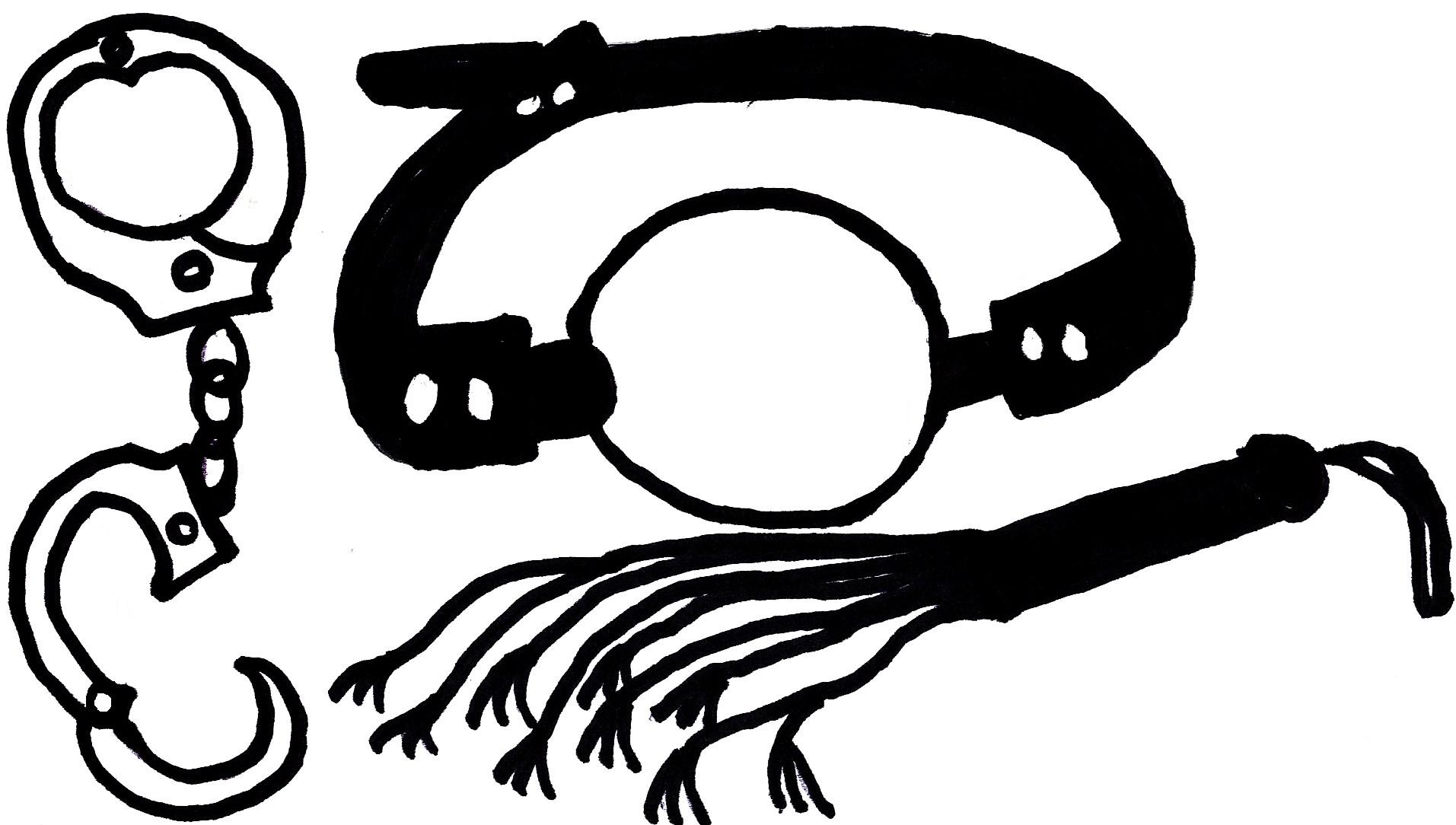
What’s funny about Maîtresse‘s narrative phoniness is that director Barbet Schroeder is obviously proud of its Authenticity in every other metric. His in-your-face, documentarian approach to Authenticity can be a little tiresome, like in moments when a horse is slaughtered & drained for butcher meat on-camera, or when the titular mistress nails one of her client’s dicks to a wooden board in full surgical detail (a stunt thankfully performed by a real-life professional, not Ogier). It’s an incredible asset to the film’s mise-en-scène, though, especially in the dominatrix’s play dungeon. Schroeder hired a professional domme to ensure the legitimacy of the kink scenes’ props & practices. The camera’s awed pans over the mistress’s tools of the trade or her clients being dressed in lingerie and ridden like horses (some, apparently, clients of the sex worker hired to oversee the shoot, getting off on the humiliation of being filmed) are electric in their documentation of vintage BDSM play. I somehow doubt that real-life dominatrix was also consulted for the story beats of the central romance, though, which is a shame.
To be fair, Maîtresse does directly challenge the macho POV of its in-over-his-head protagonist. Depardieu plays a real mouthbreather, a thug who’s visibly intimidated by the whips & leather gear he finds in the play dungeon he burgles before wooing the dominatrix who owns it. For her part, Ogier’s mistress character clearly explains to her new thief boyfriend that she is no damsel in distress, saying “I couldn’t do it if I didn’t like it.” He attempts to “rescue” her from her comfortable, voluntary sex work routine anyway, and every drastic knucklehead action he takes on her behalf only makes her life worse. Although the story is framed through the thief’s POV, he is introduced to the audience picking his nose on his motorcycle, undercutting whatever brutish cool he could possibly convey with the same dipshit goofiness that makes the thieves in Mandibles so laughably ineffectual. Maîtresse may participate in the same “I can fix her” trope as every other dominatrix romance I’ve ever seen (Hell, for all I know it may have been responsible for creating it), but at least the central relationship in this specific example is dramatically complex.
This is essentially the story of two mismatched tops struggling to dominate each other, both barreling towards ruin because they won’t do the obvious thing and break up. I’m always a sucker for stories where characters are compelled to repeatedly do things that are obviously going to kill them just because it makes them super horny; this version is even somehow refreshingly sentimental in its romance . . . when it wants to be. Karl Lagerfeld’s fetish-fashion designs for the dominatrix’s wardrobe also afford it some wonderfully vivid imagery. Genital torture & horse deaths aside, Maîtresse is commendable. It’s only when I stop thinking about it as an individual work and consider it instead in the larger continuum of how dominatrices’ inner lives are portrayed (or ignored) on-screen that I’m disappointed it didn’t transgress in even more pointed, narrative ways.
For this lagniappe episode of the podcast, Boomer, Brandon, and Alli discuss the recently restored cult curio Arrebato (1979), a trippy not-quite-horror picture about addiction to movies & heroin.
I was recently knocked on my ass by the Japanese revenge tale Lady Snowblood when we watched it for the podcast. If it’s not the coolest film ever made, it’s at least one of the coolest-looking, translating the graphic imagery of its manga source material to the big screen with exquisite frame-by-frame composition. As much as I loved Lady Snowblood in isolation, though, it did zap some of my lingering appreciation for Kill Bill Vol. 1, which I would have cited as my favorite Tarantino film before seeing every one of its best ideas accomplished more beautifully & brutally in a film released four decades prior. Normally, I can tell what Tarantino is bringing to the table in his post-modern remixes of pre-existing genre films, but his take on Lady Snowblood‘s themes & imagery were such a 1:1 carbon copy that I lost a little respect for his best-looking, most entertaining work by comparing it to the text that directly inspired it. But maybe that retroactive disappointment was a little hasty; maybe I have more genre-history homework to do before brushing off Kill Bill entirely.
Released a year before Lady Snowblood, the wuxia actioner Intimate Confessions of a Chinese Courtesan touches on the same rape-revenge catharsis & snow-brawl imagery that make its Japanese equivalent so wonderfully vivid. It even does so while dabbling in (a less explicit version of) In the Realm of the Senses-style eroticism and subversive themes of lesbian desire that complicate the much more straightforward vengeance premise of Lady Snowblood. Intimate Confessions is a Shaw Brothers sexploitation picture about a lesbian madame who is both a fierce, misandrist defender of her brothel’s abducted women and one of their cruelest exploiters. It’s framed as a rape-revenge tale for the brothel’s latest abductee, and all of the dramatic tension is centered between the two women. Does our vengeful hero sincerely love the woman who holds her captive or is she using the madame’s romantic attraction as leverage for her true mission of killing all the men who’ve wronged her? It’s a complex dynamic, but it’s also a convenient excuse for badass swordfights & tantalizing shots of naked flesh.
Intimate Confessions alternates between feminism and exploitation just like its cruel madame, with plenty of genuine empathy & for-its-own-sake badassery to support either reading. It’s visually gorgeous, from the high-femme, flowing pink fabrics of its brothel setting to the stark red snow contrasts of its bloodspray finale. The brothel’s avenger is an awesome wuxia warrior, making no attempt to hide the fact that she’s murdering her abusers one by one (even using the whip that “broke her in” against them in her revenge). Her relationship with her abusive madame also alternates between shameless exploitation & provocative power dynamics, depending on whether the captor is licking the blood from her victim’s lashings or if the two women are fighting to the death in a private moment of sexual foreplay. There’s a nuance to their violent, semi-romantic relationship that helps save the film from feeling like a total male fantasy of faux-lesbian eroticism, but there’s certainly an aspect of eye-candy titillation that undercuts that drama.
Obviously, Lady Snowblood does not exist in a vacuum. Between Intimate Confessions, its 1984 remake Lust for Love of a Chinese Courtesan, and even more recent brothel-set, rise-to-power revenge tales like Gangubai Kathiawaidi, it’s clear the film is part of a larger continuum of genre pictures that Tarantino was playing with in Kill Bill. There are still specific images from Lady Snowblood that are copied directly over to Kill Bill without much interpretation or alteration, but they also have direct equivalents in this Shaw Brothers wuxia pic that predates it. I should probably watch more examples of this genre to better familiarize myself with its greatest, most idiosyncratic works, but I can’t say that I’m especially looking forward to watching a bunch of rape-revenge epics in rapid succession. So, for now, all I can say is this: Kill Bill Vol. 1 might be the best Tarantino film, but it’s at most only the third best example of its kind.
In the time-honored tradition of Netflix underpromoting their film festival acquisitions in favor of front-paging their in-house Television Fad of The Week #content, we now have Vengeance is Mine, All Others Pay Cash — which premiered to positive reviews at last year’s TIFF & Locarno before being quietly dumped onto the global streaming platform this April. I understand the difficulty in marketing this low-budget Indonesian curio; it is incredibly elusive in its genre & tone. Vengeance is Mine is a sentimental indie romcom dressed up in the closed fists & stiff kicks of a retro martial arts bone-cruncher. It mixes the understated, quietly morbid humor of a Kaurismäki film with the full-throttle fight choreography of vintage Hong Kong action schlock and the slowly simmering romance of a 90s festival-circuit slacker pic, topping it all off with a matter-of-fact ghost story & flashes of political satire. In order to properly promote their product, Netflix would have to first be able to define what that product is, which is an exceedingly difficult task in this instance. Still, it would have been worth it for them to give it a shot; they bought a very good movie, even if it’s a puzzling one.
In Vengeance is Mine, a small town fists-for-hire mercenary (Marthino Lio) starts as many bare-knuckled brawls as he can to broadcast & reinforce his masculinity, as it’s an open secret he’s been sexually impotent his entire adult life. He meets his match in an adorable bodyguard (Ladya Cheryl), who beats him into submission and wins his bruised heart in the process. It’s cute to watch them flirt through traded blows, sweetly smiling while kicking each other’s teeth in. A years-spanning romance develops between the two lonely brutes, complicated of course by their inability to copulate in a traditional sense. The film fully sidesteps the potential machismo of its street-brawl backdrop by building its central romance around male impotence & female sexual pleasure. Ex-lovers, corrupt politicians, and meddling ghosts keep the story novel & unpredictable, even as it feels like not much is happening from scene to scene. Director Edwin also underlines his female lead’s ties to the Cynthia Rothrock era of martial arts cinema by dialing the clock back to a late-80s setting—complete with windbreakers, dirt bikes, and rat tails—affording it a vintage cool on top of all its messy modern melodrama.
On the one hand, it’s wonderful that a movie this strange & low-key is available to a global audience on a platform as mainstream as Netflix. It’s not enough for modern indie movies to be accessible, though. They need to be marketed into existence, especially if they’re going to populate on streamers months after their initial festival buzz fades. Vengeance is Mine, All Others Pay Cash might appear to be an especially difficult product to market but, I dunno, Drive My Car was a 3-hour drama about rehearsals for a staging of Chekov’s Uncle Vanya, and Janus Films managed to draw a lot of eyes to the screen for that one after it premiered at Cannes. Netflix apparently does not care about promoting their own festival acquisitions unless they have potential Oscar Buzz™, which this bitter martial arts romcom very much does not. I’m starting to wonder why they bother buying low-budget festival movies in the first place, even though I am enjoying the benefits.
In Moonfall, the moon is a hollow “megastructure” that very nearly crash-lands into Earth (getting close enough to scrape a few mountain tops) before course-correcting back to its proper orbit. It is the exact same moon-crash disaster epic that director Roland Emmerich would have made in 1998 had the script crossed his desk then, except with fewer movie stars filling out the ensemble cast; only Halle Berry & a brief Donald Sutherland cameo pass the Would Emmerich Have Cast Them in the 1990s? test. As a genre, the over-the-top, over-budgeted CGI spectacle has continued past the 90s in the respective movie industries of India, China, and Korea, but Emmerich’s distinctly retro charms only recall pictures from its Hollywood heyday: Armageddon, Mission to Mars, The Matrix, Contact, Deep Impact and, of course, Emmerich’s own Independence Day. Everything from the film’s shameless Lexus product placement to its astronaut hero’s anxieties over being an absent father are so distinctly 90s that it’s hard to shake the feeling that I’ve already seen half of it before on TBS, intercut with hours of commercial breaks and an unplanned afternoon nap.
Well, maybe not everything here would’ve made its way into the 90s version of Moonfall. Game of Thrones‘s John Bradley is assigned the thankless task of modernizing the falling-moon disaster premise with some 2020s internet lingo. Bradley plays a conspiracy theorist blogger & YouTuber, a self-proclaimed “megastructurist”. We are told he is very smart, as he is the first civilian to deduce that the moon is crashing into Earth and that it is not a natural moon at all, but rather an alien-made megastructure. Since he’s a cat-meme nerd who asks the question “What would Elon do?” for self-motivation, however, I retain that he is, in fact, very dumb. Halle Berry & Patrick Wilson’s heroic NASA defectors agree with that assessment, and continue to poke fun at his absurd, idiotic conspiracy theories about moon lasers & the moon’s hollow core long after he’s been proven correct. They’re right to do so. Moonfall‘s premise is absurd & idiotic, and it was only written to set up the CGI spectacle of the film’s final act (where, spoilers, the mismatched trio stop the moon from falling). Thankfully, in the process it also sets up some beautifully asinine dialogue exchanges about the peculiar nature of our megastructure moon, a few of which I will transcribe below for your reading pleasure:
“You’re telling me that the moon was effectively the biggest cover-up in human history?”
“I told you! The moon was built by aliens.”
“You are the key to our moon’s knowledge.”
“We scanned your consciousness; you’re part of the moon now.”
Between Moonfall & Ambulance, it’s been a big year for vintage vulgar auteurs pretending it’s still the 1990s. Michael Bay at least updated his schtick with modern drone camera tech; Emmerich simply stuck to his basics while committing to the biggest goofball premise he could find. Sometimes, that nostalgia for Hollywood’s knucklehead disaster-epic past feels like a deliberate intent of the script, which laments several times that all of NASA’s moon shuttles are collecting dust in museums instead of standing by to heroically save the day (in case, you know, the moon decides to fall). It’s much more likely, though, that Moonfall is just the Emmerich production machine on autopilot. Any byproduct nostalgia is an incidental result of how that rusty content mill differs from the MCU and Fast & Furious empires that have taken its place in the past couple decades. Neither Emmerich nor Bay put in their career-best work this year, but there is still something reassuring about watching them do their usual thing in a post-superhero Hollywood. All we need now is for Jerry Bruckheimer to produce a big-budget swashbuckler about the recovery of Atlantis to complete the cycle.
I fully understand the mockery that met the mermaid fantasy movie The King’s Daughter when it was dumped into theaters this January. Filmed at Versailles in 2014, the cursed production has been collecting dust for seven long, bizarre years, mostly waiting for the funding needed to complete its CGI. The King’s Daughter was supposed to be released as The Moon and Sun in the spring of 2015. Obama was president then. Its star, Kaya Scodelario, was a hot commodity, fresh off the set of the hit TV show Skins. Its bargain bin CGI would’ve been laughable even seven years ago, but getting displaced outside its time only makes it feel goofier than it already is. It’s a movie made of leftover scraps, loosely stitched together with Bridgerton-style “Once upon a time” narration from Julie Andrews, turning over each scene like the brittle pages of a crumbling book. The King’s Daughter is the exact kind of barely presentable debacle that cordially invites internet mockery; it’s more punching bag than movie.
And yet, picking on it feels unnecessarily cruel. This is a cute, harmless (and, despite itself, gay) wish-fulfillment fantasy for little girls. Its target audience is so young & uncynical that it mostly gets away with being outdated & uncool. Adults might snicker at every “Meanwhile …” interjection from Andrews that clumsily lunges us towards the next disconnected scene, but young children are only going to see an aspirational tale of a rebel artist who makes friends with a magical mermaid despite her mean father’s wishes. Pierce Brosnan stars as a highly fictionalized King Louis XIV, who commissions the capture of two very special creatures: his illegitimate, impoverished daughter (Scodelario) & a mermaid citizen of Atlantis (Fan Bingbing). The daughter has a total blast at Versailles, celebrated by her estranged father for her musical talents & her Individuality. The mermaid has less fun as the king’s prisoner—held captive as a potential fountain of youth—but forms a semi-romantic friendship with his daughter that almost makes her own constant suffering worthwhile; it’s a pretty thankless role. The whole movie is in service of making the daughter’s new life seem magical & great, so little girls in the audience can live their mermaid-friend fantasies through her.
There are obviously much better mermaid movies out there, from the kid-friendly romanticism of The Little Mermaid to the disco-beat eroticism of The Lure. Considering the wealth of better-funded, better-publicized titles between those two extremes, The King’s Daughter is harmless & anonymous enough to deserve a pass. If there’s any reason for an adult audience to seek this film out, it’s to see Pierce Brosnan’s over-the-top, flouncy-wigged performance as King Louis XIV, but I can’t claim that he’s enough of a hoot to be worth the 90-minute mediocrity that contains him. Otherwise, the only real draw for this film is if you’re a wide-eyed child with a long-running mermaid fixation, in which case no shoddy CGI or online dunking was ever going to stop you from seeing this anyway. The only real shame of the picture is that it chickens out of making that mermaid-kids’ fantasy explicitly gay, choosing instead to romantically pair Scodelario with a Fabio-style hunk to de-emphasize her obvious attraction to the mermaid. It’s not the romance novel swashbuckler whose heart-song calls out to Scodelario in the middle of the night, though, and even the youngest, naivest children in the audience will see right through that ploy.
Welcome to Episode #159 of The Swampflix Podcast. For this episode, Brandon, James, Britnee, and Hanna discuss a grab bag of classic concert films, starting with Led Zeppelin’s stoner odyssey The Song Remains the Same (1976).
I love a good copyright infringement free-for-all. In the cheap-o Brucesploitation picture The Dragon Lives Again, “Bruce Lee” (i.e., Bruce Leong) teams up with Popeye the Sailor Man to beat up James Bond, Dracula, The Exorcist and “Clint Eastwood” in Hell. In The Seventh Curse, a James Bond-styled super-agent goes on international Indiana Jones adventures into ancient temples, ultimately teaming up with a Rambo-knockoff sidekick to defeat a flying Xenomorph with batwings; it’s somehow just as thrilling as it sounds. At first glance, the Bollywood Saturday Night Fever knockoff Disco Dancer doesn’t appear to share the same free-flowing creative collage approach as those post-modern Hong Kong actioners, but as its collection of “borrowed” pop culture ephemera builds (especially on its soundtrack), so does its disregard for the real-world details of its disco nightclub setting. Disco Dancer ultimately ends up being a huge improvement on Saturday Night Fever—actually delivering the delirious, retro fun audiences misremember the somber American film as—precisely because it feels no fealty to borrowing from just one inspiration source, nor sticking to just one tone. It’s made entirely of pre-existing building blocks, but it manages to arrange them in new, exciting configurations that out-entertain the wholly “original” (i.e., more subtly derivative) creations it resembles.
In case its Saturday Night Fever inspiration source was not crystal clear, Disco Dancer is careful to include a scene where its dancing, fighting disco hero Jimmy (Mithun Chakraborty) dance-struts across a nighttime bridge in flared pants to a rolling Bee Gees bass line. In the very next scene, he’s shown dancing alone in his bedroom under an actual Saturday Night Fever poster to underline the connection. Most of Disco Dancer‘s other copyright oversteps are limited to its soundtrack, give or take a rival disco gang menacingly snapping in-rhythm like extras from West Side Story. An instrumental backing track mimics the melody of Grease‘s “You’re the One that I Want,” scrambling the film’s Travolta reference points beyond recognition. More importantly, the first big disco number, “Auva Avua” opens the story with a spectacular discofied rip-off of “Video Killed the Radio Star,” which should be all you need to know to understand that this film is great. To be honest, most of the soundtrack’s other borrowed melodies from French disco & Indonesian rock legends soared miles over my head; it was the familiarity, recognition, and delight of that opening Buggles-inspired dance track that put me in a great mood, and the movie never let me down from that high.
If defining Disco Dancer by its collection of loose, disparate influences is making it sound creatively bankrupt, I’m doing a poor job selling its charms. As a cultural artifact, it’s a wonderful snapshot of disco’s absurdity as an international export, with large, seated crowds watching disco performers from stadium benches as if they were watching an orchestra, not a participatory dance fad. As a rags-to-riches, rise-to-fame story for a street musician climbing the ranks of the then-burgeoning Bombay disco scene, it’s a winning melodrama – especially in his mission to musically smite the wealthy bullies who publicly shamed his mother when he was a helpless, borderline-homeless child. As a martial-arts action epic, it’s got plenty of deliciously over-the-top details, like the hero’s third-act development of “guitar phobia” zapping his ability to perform on stage, thanks to a guitar lethally weaponized by his enemies. Disco Dancer was a huge international hit in its time (especially in the Soviet Union & China, oddly enough), and that success had nothing to do with its familiarity to pre-existing works. It’s its own uniquely beautiful, deliriously unhinged novelty, often reaching a disco-scored, light-up-dancefloor euphoria you won’t find in any of the better known works it vaguely resembles. I just also think its willingness to freely borrow from those works—totally unconcerned with accusations of theft—is an essential part of its appeal. This kind of free-association borrowing is an artform in itself, not something to be ashamed of.