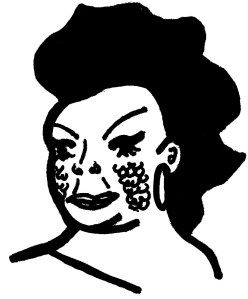

The Big Easy (1986)

The only reason it’s so difficult for actors to nail a genuine New Orleans accent is that it’s always been difficult for actors to nail a New Orleans accent. There have been so many wildly inaccurate Cajun French & Antebellum South accents attributed to the city in films & television over the years that out-of-towners have a very distorted idea of what New Orleanians sound like. It’s especially strange if you consider that most low-level impressionists already have a perfect New Orleans “Y’at” accent in their arsenal; they just don’t realize that we sound almost exactly like New Yorkers. Of all the wildly off-base, Cajun-fried, Southern belle accents I’ve heard attributed to the city over the years, none have ever matched Dennis Quaid’s in The Big Easy in terms of pure preposterousness. It’s not that Quaid exaggerates the stereotypical inaccuracies of the big screen N.O. accent. It’s that he sounds like no human being who has ever existed on the planet. He turns the bad New Orleans accent into a baffling spectacle, a truly singular “What the fuck were you even going for?” experience for folks down the road. It’s as confusing as it is mesmerizing. It’s also hilarious.

Quaid stars in The Big Easy opposite Ellen Barkin. He’s a spicy Cajun NOPD officer; she’s the federal DA cracking down on the corruption that runs rampant throughout his department. They learn a lot from each other. She teaches him that his “good guys” vs. “bad guys” binary philosophy is a lot less cut & dry than he explains it to be, considering the bribe money local police extort from the public as if they were working for tips. In return, he teaches her the most valuable thing she could learn from a Cajun firecracker: how to fuck good. The Big Easy arrived at the height of the Joe Eszterhas era of the erotic thriller. It shamelessly exploits the cheesy, sleazy backdrop of New Orleans as an excuse for hedonistic sex & violence (the same way it’s exploited in Cat People ’82 & Zandalee). Barkin enters the city as a frigid, nervous woman who does not know how to relax, and Quaid’s space-alien version of a suave Cajun romantic awakens her inner sexual goddess. Meanwhile, the pair continually find horrifically mutilated, bullet-riddled corpses left by cops & mobsters around the city and collaborate on the paperwork that will dismantle that corruption, which are about as strange of aphrodisiacs as I can imagine.

Of course, the main draw of The Big Easy for locals is the 80s era tourism of New Orleans at is sleaziest. The movie wastes no time there, opening with an aerial helicopter shot of the bayou while drunken zydeco music blares on the soundtrack. The first spoken dialogue is of a radio DJ announcing “It’s 2a.m. in New Orleans, The Big Easy, and we’re stirring up that gumbo!” That’s when Quaid & Barkin meet at the scene of a homicide on the steps of the 80s World’s Fair pavilion (blocks away from my office). Other tourist stops include Voodoo stores, Bourbon St. strip joints, Antoine’s, Tipitina’s, the Cabrini bridge, and nighttime drives down Decatur. Chef Paul Prudhomme drops by the hot-and-dangerous couple’s diner table while they down Dixie beers among neon-lit crawfish signs and conspicuous bottles of Tabasco. Local actors John Goodman & Grace Zabriski appear in bit roles. The St. Aug marching band soundtracks a police chase. The pronunciation of terms like “Whre y’at?” & “Tchoupitoulas” are discussed at length in the dialogue. Even the film’s steamiest sex scenes are set to tender zydeco music, because nothing is allowed to touch the screen here unless it’s being served up Cajun style. It’s a dedication to shameless New Orleans tourism that makes The Big Easy especially entertaining as a locally-set novelty.

As laughably unconvincing as Dennis Quad’s accent is in the movie, he becomes endearing as a local-boy novelty through osmosis as you learn to accept the singular, space-alien lisps & rhythms of his made-up dialect. After all, the wildly inaccurate movie-star attempt at a New Orleans accent has in its own way become part of the city’s DNA. We are often delighted by our own shameless cheese, so it’s easy to fall for Quaid’s peculiar “Cajun” charms as he sings at a fais do-do and shows off his various alligator toys: gator plushies, gator dolls, gator lamps, etc. Barkin is also charming in her own right as the outsider to this world, her mannerisms often reminding me of (a much more stable) Gena Rowlands in A Woman Under the Influence. The pair even drum up some genuine erotic tension in their clashing personalities, especially in a courtroom sequence where she’s pressured to interrogate him on the witness stand. Mostly, though, the entire production plays like a ridiculous joke – shamelessly mixing its Skinemax-tier sex with its grotesque mafia-violence gore to achieve something beautifully sleazy & New Orleans-appropriate in its B-movie majesty. Quaid has said in interviews that he regrets the quality of his performance in The Big Easy, a mistake he blames on Hollywood’s collective coke problem in the 1980s. I personally think he has nothing to apologize for, as his preposterous “Cajun” accent and old-fashioned N’Awlins hedonism make The Big Easy a true gift for anyone who loves the city – a trashy, campy delight.

-Brandon Ledet

Episode #77 of The Swampflix Podcast: Shyamalan Classics & Spring (2014)

Welcome to Episode #77 of The Swampflix Podcast! For our seventy-seventh episode, Brandon & James dive deeper into M. Night Shyamalan canon to re-evaluate the divisive director’s early classics. Also, Brandon makes James watch the Lovecraftian sci-fi romance horror Spring (2014). Enjoy!

You can stay up to date with our podcast through SoundCloud, Spotify, iTunes, Stitcher, TuneIn, or by following the links on this page.

–Brandon Ledet & James Cohn

I Want to Eat Your Pancreas (2019)

Although it’s at best a cult favorite in America, the animated supernatural teen romance Your Name. was a massive success in its native Japan. Likely fueled by repeat viewings from droves of lovelorn teens, the film broke all kinds of box office records – spawning official merchandize jewelry, planned live action remakes and, unavoidably, knockoffs. The teen anime romance is nothing new as a genre (if nothing else, Your Name. director Makoto Shinkai also made a film titled 5 Centimeters Per Second in a very similar vein as his smash hit an entire decade earlier), but there are some basic elements of Your Name. that have been echoed & rearranged enough times in the couple years since its massive success to establish an entire subgenre of knockoffs. Lightly proggy emo soundtracks, heart-swelling fireworks displays, supernatural shenanigans, and overreaching romantic narration have become almost standard in the post-Your Name. teen anime, as if films were attempting to reverse-engineer its success using the exact same building blocks. Last year’s goofily haphazard Fireworks is a clear example of how the cynical Your Name. riff can fall flat on its face – the butt of some cosmic, absurdist joke. Although it’s more humorously titled, this year’s I Want to Eat Your Pancreas swings in the exact opposite direction – suggesting that the sub-Your Name. genre is worthy of being continued & explored, that there’s plenty of room to keep the formula flesh & emotionally effective.

Part of I Want to Eat Your Pancreas’s saving grace as a deliberate Your Name. riff (besides its attention-grabbing title) is that it’s adapted from well-established source material entirely separate from its newfound anime subgenre. A YA teen romance novel that has already been adapted into a manga series and a live-action film titled Let Me Eat Your Pancreas, this is a property that’s already popular & familiar enough to Japanese audiences to stand on its own legs as an individual work. It even comes from a different angle than Your Name. in that its premise isn’t at all supernatural, but instead is a romantic terminal illness teen weepie along the lines of Me and Earl and the Dying Girl, The Fault in Our Stars, and the upcoming Cole Sprouse vehicle Five Feet Apart. A high school student who’s eternally cheerful despite slowly dying of “a pancreatic disease” becomes unlikely friends with (and the unlikely love interest of) a stubbornly antisocial boy who’s defiantly boring & needs help breaking out of his shell, but reluctantly gets roped into helping the dying girl complete her bucket list anyway. The quiet, conversational drama that unfolds from that premise doesn’t sound at all similar to the raucous body-swapping, physics-defying romance of Your Name., which helps the film distinguish itself from that apparently seminal work. However, as the checkboxes of the purple narration, power pop soundtrack, and CG fireworks display are each ticked off the entire exercise starts to feel strikingly familiar. Then, it all ends in a climactic supernatural fantasy that transcends reality in a sequence inspired by The Little Prince on a planet populated by cherry blossom trees – far away from the grounded, conversational tone of its source material – solidifying it as a fully committed Your Name. disciple.

To be honest, distinguishing itself from Your Name. was far from I Want to Eat Your Pancreas’s greatest hurdle to clear. There’s a reason that formula has been echoed in so many recent teen anime titles: it works. If anything, it’s the terminal illness weepie premise of its source material that threatens to sink its enjoyability, especially in regard to its choice of POV. This is the story of a chipper, terminally ill child who seemingly lives without fear; she misshelves library books, kicks bullies in the nuts, runs from cops, experiments with alcohol & sex, gorges on rich foods, and does basically everything else a rebellious suburban teen wishes they could get away with. So why, then, do we instead see the world through the POV of her polar opposite, a killjoy boy who literally feels sorry for himself because he’s boring? It initially seems as if this choice were a textbook repetition of the Manic Pixie Dying Girl trope, where a tragic girl with a rambunctious spirit exists only to improve the life & disposition of a milquetoast male protagonist with a much less interesting POV. If you afford I Want to Eat Your Pancreas a little patience, that dynamic is beautifully subverted in its emotionally cathartic climax, which saves the entire film in one paradigm-shifting information dump. In reading the Manic Pixie Dying Girl’s private diary (morbidly titled Living with Dying), we’re suddenly flooded with her perspective & story of personal growth, something that had been missing for the entire film before it. Not only is there a huge emotional payoff in that reveal, it’s also where the film justifies its animation format by reaching for some Little Prince by way of Sailor Moon surrealism to match the soaring emotional stakes of that catharsis. The trick is trusting the film long enough to get there.

The flashier, attention-grabbing details of I Want to Eat Your Pancreas are likely to draw in most of the audience, but also promise a much wilder, louder movie than what’s ultimately delivered. Once you look past its weirdly cannibalistic title, its Your Name.-riffing aesthetic, and the severity of tis terminal illness romance premise, however, you will find an intimate, minor teen drama that (outside the visualization of its climax) makes total sense as a work that was previously translated into live action. There are slideshow sequences & CG animation shortcuts that call into question the film’s need to be animated at all, outside the opportunity to ride the wave of Your Name.’s success, but it’s a decision that’s eventually justified, even if at the last minute. More importantly, I Want to Eat Your Pancreas eventually finds distinct, emotionally satisfying things to say about how teens establish their sense of identity & self-worth that feel entirely separate from its value as a post-Your Name. anime or a post-John Green teen weepie. It takes a lot of work for the film to stand on its own beyond those comparison points and the novelty it its title, but it does get there with time & patience.

-Brandon Ledet

Burning (2018)

It doesn’t come up here very often as this is a film review site and not a place where I brag about all the books I read, but I’m a huge fan of Haruki Murakami. I was 16 in 2004 when a friend recommended The Wind-Up Bird Chronicle, and it is not an exaggeration to say that the book helped save my life in a dark time. Murakami has notoriously been reticent to hand over adaptation rights to much of his work (and if you’re a fan, imagine someone trying to turn 1Q84 or Kafka on the Shore into a movie and you can probably see why), but director Lee Chang-dong (Oasis, Secret Sunshine) did it, and the result is nothing less than spectacular. It took a little time, but Burning made its way back to Austin via the Film Society Cinema, and it was well worth the wait.

After his father runs into trouble with the law, Lee Jong-su (Yoo Ah-in), who finished college after his mandatory military service but has yet to find gainful employment, is making his way back to his father’s small farm in his hometown near the North Korean border to manage his livestock. Along the way, he runs into Shin Hae-mi (Jeon Jong-seo), a childhood friend and neighbor, whom he doesn’t recognize at first, which she attributes to plastic surgery. She demonstrates a talent for pantomime and tells him that she is planning a trip to Africa and asks him to feed her cat, Boil, while she is out of the country. The two sleep together when she gives him the tour of her tiny apartment, showing him the one spot in the single room which gets a ray of sunshine reflected off of the Seoul Tower for a few moments a day. After she leaves, he attends his father’s arraignment and attends to feeding Boil, whom he never sees, and grows more attached to Hae-mi in her absence. When Hae-mi returns from Kenya, she is accompanied by Ben (Steven Yeun), a fellow Korean with whom she bonded when they were both trapped in the Nairobi airport for three days due to a terror warning. The three attend dinner together, where Ben plays coy about his employment and claims to have never shed a tear in his adult life as he has never experienced sadness, while Jong-su appears envious of the rapport Ben and Hae-mi have developed.

The three get together again and Ben prepares dinner (or, as he says he sometimes imagines, and offering to himself) in his home, an upscale apartment in Seoul’s expensive Gangnam neighborhood; Jong-su compares him to Jay Gatsby, a young man of great wealth whose income is obscure. Still later, Ben and Hae-mi visit Jong-su’s farm and the three get high; Hae-mi dances topless beneath a beautiful sunset, Jong-su opens up about his mother’s departure when he was a child and his father’s anger, and Ben admits to having a fascination with burning down greenhouses. Jong-su insults and shames Hae-mi, and she and Ben leave. Later, when Jong-su tries to contact her again, she doesn’t respond. Eventually her phone number is disconnected, and after a visit to the Shin family still reveals no secrets, Jong-su investigates further. But what is he chasing? A woman? A shadow? A victim? A dream? A ghost? Someone who was never there at all?

This movie is dense. It also never feels its length, moving along at a steady clip for all 150 minutes. I’d never read “Barn Burning,” the Murakami short story on which the film is loosely based (and which was in turn inspired by a Faulkner story), but there’s a 13 page PDF version floating around the internet, so I gave it a quick once-over to see how much of the film’s plot correlated to the original text, and it’s less than you would expect. Still, it’s obvious that Lee (the director, not the carrier) is a fan of Murakami’s wider body of work based on other elements that he inserted in expanding the 5000ish word piece into a sprawling film. There’s no cat in “Barn Burning,” for instance, but the presence of cats in the author’s work can’t be understated (the missing cat Noboru kicks off the plot of Wind-Up Bird, Tengo’s obsession with a short story about a town of cats is an integral part of 1Q84, and Nakata in Kafka on the Shore can communicate with cats, just to name a few). There’s also no mention in the story of the father of the unnamed narrator (who is older than Jong-su), but bad fathers are also a frequent element in Murakami’s work (the titular Kafka runs away from home because of his father, Tengo’s reminisces about his childhood that don’t involve around Aomame are all about being used as a prop by his father on his NHK fee-collecting route, etc.), and Jong-su’s father here is explicitly a man with anger issues who drove his wife away before forcing his son to burn the woman’s clothes and who can’t seem to stop fighting with local authorities. As soon as there was a cat and a shitty dad, I thought to myself, “Now all we need is a well,” and sure enough, Hae-mi ended up telling a (probably false) story about falling into a well as a child and being rescued by Jong-su about ten minutes of screentime later. It’s all the Murakami hallmarks you’ve come to know and love, even down to the fact that the song Hae-mi dances to is Miles Davis’s “Générique,” although the narrator mentions that the trio listened to Davis during the visit to his home in “Barn Burning.” All that’s missing is an internal monologue about staying in shape by swimming in the city’s public pool or a step-by-step recitation of how to take care of vinyl records and you’d hit Murakami bingo.

Not that you need to speak Murakami to love this film. I confess I’ve not seen any of Lee’s previous work, but I have to imagine that if it contains half the subtlety, the meaningful composition, the sweeping cinematic beauty, and the intensity of emotion here, it’s no wonder he’s considered one of the great living directors (just look at the list of awards and honors on his wikipedia page). It’s almost impossible to really get into the layers of composition here without giving too much away, since there’s a lot going on. Just how reliable is Jong-su’s point of view? He paints Ben as Jay Gatsby, but Ben comes across more as a Tom Buchanan type, with Hae-mi as the mercurial and flighty Daisy to Jong-su’s obsessive Gatsby (albeit lacking in the archetype’s material wealth). We dislike Ben because Jong-su does, but should we like Jong-su, really, even before he starts to suspect Ben might have had something to do with Hae-mi’s disappearance and thus stalks Ben around in the world’s most conspicuous “stealth” vehicle? But if Ben’s so innocent, what is he up to with all his mysterious riches and his gaggle of friends? Is he a sociopath, as his lack of empathy seems to imply? What’s up with his collection of women’s jewelry – is he hiding a cuckqueaned wife from his series of girlfriends? Is this his collection of trophies from sexual conquests? Something more sinister? What really happened to Hae-mi? When she returns from Kenya, she delivers a poignant monologue about watching the sunset over the desert and feeling that she was at the end of the world, citing fear of death but a desire for non-existence. Did she disappear because that’s what she really wanted? This hearkens back to her explanation of pantomiming eating a tangerine (which does come from the short story): it’s not about believing that the tangerine is there, but forgetting that it isn’t. Does she want to not exist, or does she want to forget that she ever did? We even see this void/lack when Jong-su visits Hae-mi’s mother and sister, who not only haven’t seen her but tell Jong-su that she’s not welcome to return until she repays her debts; they’re correct that Hae-mi is responsible for Jong-su’s visit despite his protests that she didn’t send him, they simply don’t realize that its Hae-mi’s absence that is driving him.

I really can’t add any more here without telling you too much. Just go watch Burning. It’s currently streaming for $3.99 (a steal, believe me) on Vudu and Amazon Prime.

-Mark “Boomer” Redmond

Fighting with My Family (2019)

Even though I’m a huge pro wrestling fan and Stephen Merchant’s dual credit as writer-director vouched for its quality, I did not expect to get much out of Fighting with My Family. WWE-produced content tends to have a slick, careful, personality-free approach to revisionist history when telling its own story, which usually prompts me to expect the eerie gloss of a Dianetics infomercial DVD rather than heartfelt cinema. Maybe it was that hyperactive skepticism that allowed me to have an intense, unexpected emotional reaction to this picture despite its unembarrassed commercialism and weakness for revisionist bullshit. This is the hardest I’ve laughed and the most I’ve cried in a movie I didn’t expect either from since 2017’s Power Rangers reboot (which was essentially a feature-length commercial for Krispy Kreme donuts). Aesthetically & craft-wise, Fighting with My Family feels like a poorly aged relic from the early aughts, a once-true story sanitized for wide commercial appeal. Yet, as an achievement in screenwriting, it’s a shockingly dirty, oddly inspiring rise-to-power story that somehow does the pro wrestler Paige’s early career & peculiar familial dynamic full justice, against all odds. The clash of its rowdy dialogue & commercial production sheen feels like an approximation of an R-rated Disney Chanel Original Movie – the exact kind of target audience grey area pro wrestling occupies in the real world.

Paige, born Saraya-Jade Bevis & originally wrestling under the ring name Britani Knight, is portrayed in this simplistic rise to power biopic by acting chameleon Florence Pugh (entirely unrecognizable from her breakout role in Lady Macbeth). Raised by professional wrestler parents (Nick Frost & Lena Headey), she was trained in the ring by her older brother as a family-supporting commodity, just like in any other clan of carnies. When she’s unexpectedly signed by the WWE to wrestle on international TV, Paige has to contend with two separate crises: one with her family and one with the outdated shape of the wrestling community’s inclusion of women. Her family is proud of her professional accomplishments, but also sad to see her go (along with the money she makes for their local promotion) and resentful that her wrestling fanatic brother was not also signed. As a pale mall-goth with a life-long pro wrestling fetish, she’s also at odds with how major promotions treated their female performers until recent years: as eye candy or, in her parlance, T&A. Paige’s major contribution to WWE, what makes her biopic worthy to fans in the wrestling community, is how her unconventional fashion choices & legitimate ring skills helped bring an end to WWE’s Divas era, where women were mostly hired as models & dancers to stir up fans’ libidos. She helped usher in the current so-called Women’s Revolution, where legitimate female performers from the indie circuit are being given an opportunity to wrestle in earnest. What makes Fighting with My Family impressive as a piece of writing, though, is that it never villainizes Paige’s family or the more conventional eye-candy babes she seeks to prove herself against. Nor does it let her off the hook for her shortcomings in handling these conflicts as a naive teen suddenly burdened with massive responsibilities. The movie offers empathy to every character its story touches while not at all shying away from their faults, which is just as important to its success as sketching out how influential Paige was in wrestling’s recent, gendered sea change.

Of course, anyone who’s already familiar with Paige’s WWE career should find plenty to chew on here while picking apart the film’s rearranged timeline & selective memory. Specifically, Paige’s career-ending injuries & backstage controversies are (smartly) excised here to make for a cleaner, more inspiring version of the truth. Yet, the movie surprisingly doesn’t shy away from including WWE pariah AJ Lee from the story of how Paige influenced a massive change within the Women’s Division, which Lee also had a major involvement in before she became a persona non grata within the company (although they do weirdly mischaracterize Lee here as an ex-model Bella-type instead of a fellow wrestling-nerd goth). For wrestling fans, these storytelling decisions (along with the company’s continued support & inclusion of Paige after her body gave out at a disturbingly young age) are an encouraging sign of changing times, and it feels great to see the upswing of that change reflected here in the context of Paige’s early-career accomplishments. I’d like to think Fighting with My Family works just as well for audiences who don’t care at all about wrestling, though. Stephen Merchant’s dialogue (and bit part cameo) is sharply funny. Paige’s familial dynamic as the sole breakout star in a clan of fame-starved wrestling carnies is objectively fascinating (and well-performed by Pugh). The film also makes a genuine effort to convey pro wrestling’s artistic & emotional appeal – both on the scale of communal VFW hall events and on the global stage of the WWE. I can’t guarantee that everyone will have as emotional of a reaction to the film as I did – both because of my personal interest in women’s pro wrestling and because I’m generally an emotional wreck. However, I can at least testify to the movie achieving far more than you would typically expect from something so aesthetically unassuming, given its cheesy guitar-riff soundtrack & Disney Channel sheen. The strengths of Merchant’s writing instincts & Pugh’s fully-committed performance are likely to catch you off-guard in tandem, forming one superb tag team.

-Brandon Ledet

Movies to See in New Orleans This Week 2/28/19 – 3/6/19

We’re exhausted from the Oscars; Mardi Gras might just finish the job and kill us all. In that spirit, let’s keep this week’s big screen roundup short & sweet.

There are still a few great Oscar-nominated movies playing around town but you either already know where to find them or you’ve already seen them. Either way, we’re all tired of talking about them. Here are the few other movies we’re most excited about that are screening in New Orleans this week.

Movies We Haven’t Seen (Yet)

Greta I honestly have no idea what’s going on in this movie beyond Isaelle Huppert & Chloë Grace Moretz trading some deliciously vicious Lifteime Movie cruelty in a struggle for power. That alone is more than enough to sell my ticket.

Happy Death Day 2U The locally-shot, Groundhog’s Day-riffing time loop slasher is back for a second round, this time pivoting from horror comedy to absurdist sci-fi. The first Happy Death Day was a hoot, if not only for offering locals an opportunity to see sports mascot The King Cake Baby fulfill his obvious destiny as a horror movie villain.

Movies We Already Enjoyed

Fighting with My Family British comedy mainstay Stephen Merchant writes & directs a shockingly compelling biopic about WWE wrestler Paige in her early rise to power. This is the most I’ve cried and the hardest I laughed in a movie I didn’t expect either from since that Breakfast Club-style reboot of Power Rangers. Even if you have zero interest in pro wrestling as an artform, it’s still very much worth your time.

Singin’ in the Rain (1952) – To commemorate the passing of legendary Hollywood director Stanley Donen, The Prytania Theatre is screening his beloved musical on Ash Wednesday, when we’ll all need a good pick-me-up. From my review for our Roger Ebert Film School series: “A comedy about a fictional movie studio’s struggles to transition from the Silent Era to talkies, Singin’ in the Rain takes great pleasure in staging Technicolor recreations of old forms of entertainment like black & white silent romance pictures & traditional vaudeville acts. Hollywood’s favorite subject in general has always been itself, echoing an even more ancient tradition of art about art, and Gene Kelly’s career seems to be an essential part of that introspective self-indulgence.” Screening Wednesday 3/6, 7:30pm at The Prytania Theatre.

-Brandon Ledet

The Seven Year Itch (1955)

I’m not convinced the effect was intentional from anyone involved, but the Big Studio comedy classic The Seven Year Itch might be one of the few rare examples of a movie that was saved by the Hays Code, rather than stifled by it. Adapted for the screen by comedy legend Billy Wilder from a mildly raunchy stage play, The Seven Year Itch suffered many negotiations & revisions at the behest of the overly moralistic Hays Code & the overly protective playwright of its source material. As is usual with risqué comedies of its era, this revision process dulled much of its sex humor, or at least obscured it behind a veil of winking insinuations. It also, unintentionally, made for a much more fascinating picture in the process by abstracting its POV. The original version of The Seven Year Itch features the inner monologues of a pair of upstairs & downstairs neighbors in an apartment complex – offering the POV of a young single woman & older married man in the middle of an adulterous sexual tryst. Hays Code censorship & other production restrictions removed the woman’s POV from that dynamic, as well as the extramarital sex the pair indulged in. You would think that these changes would enhance the film’s sexist, male chauvinist POV, but it curiously has the exact opposite effect. Through censorship & writing process bickering, The Seven Year Itch transformed into something strangely compelling, if not outright surreal.

The male chauvinist protagonist in question is played by Tom Ewell, perhaps the most milquetoast screen presence of all time. Experiencing a midlife crisis at the exact seven-year mark when married couples supposedly tend to cheat in boredom, he finds himself alone in NYC for the summer. While their wives & children escape to cool off on lakeside vacations, businessmen husbands stay behind in the hot city ostensibly to continue their work, but actually use the opportunity to drink, cheat, and let loose. As explained in a constant torrent of soliloquies to the audience, our protagonist Richard believes himself to be above that boorish, animalistic behavior. It’s only that his macho virility is too irresistible to women, so it’s the young seductresses’ fault that he gets into trouble as a wayward husband, not his own. Just looking at the mild-mannered, middle-aged dolt, we know these delusions of macho grandeur to be far beyond the realm of reality. However, there’s an initial unease in not knowing whether we’re meant to be sympathetic to his complaints that marriage & the modern world are what’s holding back his dominant alpha male energy, rather than him just being an unremarkable specimen of a middle-aged sap. As his delusions & paranoid fantasies escalate, though, it becomes crystal clear that we’re not watching the justified political rants of the Modern American Male stifled by his environment, but rather the ravings of a total lunatic who has entirely detached from reality. He might as well be bloviating into a bullhorn from a street corner in a tinfoil hat rather than working in a brick & mortar office building.

There are no bounds to Richard’s paranoid fantasies. Any vague recollection he has of being alone with a woman other than his wife is distorted into their being violent temptresses who cannot resist his “tremendous personal magnetism.” When his wife misses a phone call while on vacation, he becomes panicked that she’s necking with another married man on a romantic hayride. When seen talking to another woman while his wife is away, he imagines the exact gossip trail that would lead the intel back to her, convinced that she instantaneously knows of his planed infidelity. These fantasies are increasingly ludicrous & far-fetched, making Richard the most blatantly unreliable narrator that you can imagine, one who compulsively feels the need to narrate every thought that comes to his delusional mind. How are we to trust his version of events, then, when he begins an inevitable romantic affair with his upstairs neighbor, who has only moved in when he was left to his own devices by his family & whom has been seen by no other reliable source in the film? Marilyn Monroe’s portrayal of the ditzy, naive blonde upstairs who is entirely clueless to the sexual desires of every man around her (or so she pretends) is such an exaggerated, draggy version of femininity it can only be the physical manifestation of a man’s fantasy-bimbo. And, since Richard is the most fantasy-prone man on the planet, he’s the exact kind who could imagine an entire person into existence if left alone for too long with too many bottles of Scotch. Yes, by the time Richard says the name “Marilyn Monroe” aloud in the script it becomes clear that his upstairs neighbor isn’t real at all, only a Fight Club-style figment of a milquetoast man’s delusional imagination.

This reading of The Seven Year Itch, the one where Marilyn Monroe’s upstairs temptress is nothing but a male fantasy, would not be possible without Hays Code intervention. The Hays Code’s regulations drop the neighbor’s own inner monologues and the suggestion that the affair is consummated with actual sex, leaving only a nameless blonde knockout who has no inner life & no clue what effect her high-femme vava-voom presence has on the men who drool over her. Monroe, of course, is iconic casting for this role; the scene where she wrestles with the skirt of her white dress over a gusty subway grate is as iconic of a Studio Era image as any dorm room poster of Breakfast at Tiffany’s or The Wizard of Oz or whatever image you can conjure. Before it becomes clear that Richard is a raving lunatic, her breathy temptress presence is the film’s only saving grace. All the swanky music, lush De Luxe color, Saul Bass animation, and cheeky sex humor are in service of a nastily chauvinist view of the world where wives are disciplinarian shrews and all other women are gateways to sin, so that The Seven Year Itch’s surface pleasures only sour & rot in the context of the overall tone. Monroe is a (moaning) breath of fresh air in that idiotic macho worldview, lightening up the mood with an exaggerated femme-drag screen presence in a deliciously subversive way. The movie eventually catches up with her, dropping its initial sympathy with its pathetic protagonist’s “Woe is the modern man” POV to become a character study for a total loser & a complete psychopath. The Seven Year Itch is less a swanky sex comedy than it is the ravings of man driven mad by the social pressures of toxic masculinity, as well as a testament to the unintended virtues of Hay’s Code censorship.

-Brandon Ledet

Divorcing Paul Mazursky

New Hollywood auteur Paul Mazursky built a career on honest, daringly frank discussions of sex & romance, an ethos he established as early as his 1969 Free Love breakout drama Bob & Carol & Ted & Alice. Although that film’s exact themes of marital fidelity & intensive psychotherapy continued throughout his work as his career developed, he did adapt those preoccupations to the changing times as he aged. Our current Movie of the Month, Mazursky’s late 70s divorcee drama An Unmarried Woman, for instance, depicts the fallout of the Free Love movement once lauded in his previous work, demonstrating how the breakdown of traditional marriage & sexual fidelity left many women socially & financially isolated in desperate need for feminist independence in their new sexually “liberated” world. Even that update could only remain fresh for so long, however. As America entered “The Age of Divorce” in the 1990s, the dissolution of the traditional marriage became more of a norm than an anomaly, and Paul Mazursky updated his own ruminations on the subject accordingly. Whereas the jump from Bob & Carol & Ted & Alice to An Unmarried Woman marked an advancement in Mazurksy’s maturity, though, the next chapter in this reflections on the evolving nature of divorce found him devolving in the opposite direction, both as an artist and as a thinker.

Admittedly, the declining allure of Mazursky’s fidelity dramas is somewhat attributable to the real-time aging of his characters. The turn-on sexual energy of performers like Natalie Wood & Elliott Gould in Bob & Carol & Ted & Alice and even the confident adult sexuality of Jill Clayburgh ten years later in An Unmarried Woman only enhance those films’ themes of sexual & romantic experimentation. By the time Mazursky aged along with his characters into the 1990s, his work stopped being a relatably prurient rumination on a tantalizingly taboo topic and started to feel like walking in on your parents mid-coitus. In 1991’s Scenes from a Mall, Mazurksy updates his divorce-drama template with the middle-age players Woody Allen (a known sexual abuser) & Bette Midler (who is always fabulous, but still). Watching Natalie Wood talk her uptight hipster friends into an impromptu orgy or watching Jill Clayburgh dance alone in her underwear to Swan Lake is one thing. Watching Woody Allen go down on Bette Midler in a public movie theater is something else entirely. The only small consolation of this updated dynamic is in finally seeing Allen pursue a romantic partner who is somewhat age-appropriate a concession that’s only soured by watching Midler be degraded by sharing the screen with the monster and the gag-worthy visual of the two performers making out at length in remarkably thin underwear.

Lack of genuine sex appeal is only one small factor in the declining quality of Mazurksy’s divorce-drama ruminations, though it is a glaring one. The larger problem is the broadening of his humor and the erosion of his search for honesty. There’s an impressively subtle, delicate irony to the hipster parody of Bob & Carol & Ted & Alice that carries over into An Unmarried Woman (although broad caricatures like the sausage-gnawing caveman artist Charlie does test its boundaries). By the time Scenes from a Mall arrives, Mazursky is deploying all the subtlety & restraint of a feature-length All That sketch. Wood Allen’s midlife crisis in the film is signaled by a ponytail, a surfboard prop, and an affair with a 25-year-old. His main comic foil is a recurring mime gag performed by Bill Irwin. Cross-eyed nutshot reactions, a rapping Greek chorus, and Marusky’s own cameo as a Freudian pop psychologist are all distinctly broad & cheap in a way that feels below the director’s stature. That line of easy, goofball humor is also directly at odds with the literary stage play structure of the piece, as Scenes from a Mall is largely a Before Sunrise-style indie drama following a single, complex marital argument over the course of one afternoon, practically in real-time. The result is an incongruous tone one that demands you both take its romantic & sexual conflicts dead seriously but also bust a gut when the LA douchebag punches the mime for being a pest.

For what it’s worth, Mazursky does maintain a sliver of the honest, daring discussion of marital fidelity he established in previous works, even if Scenes from a Mall is an inappropriate vessel for the exercise. Staging one extensive, uncomfortable argument between a long-married couple in a Californian shopping mall is, at least in the abstract, a very promising conceit. Plenty of couples have marriage-ending meltdowns in parking lots, Wal-Marts, Bourbon St. dive bars, and other mundane public spaces that would make for similarly ironic backdrops. Midler’s initial reaction to hearing of Allen’s affair with a younger woman is also disarmingly believable. She starts in a place of quiet acceptance, then erupts into a seething, vengeful anger in a well-written, well-performed estimation of genuine heartbreak. As grotesque as watching Woody Allen go down on her in public feels, the overall back & forth between burning bridges to the past & sexually reconciling in wild passion does feel true to life & the messiness of the human heart. It also says a lot that the frank discussion of sexual infidelity that pushed buttons in Mazursky’s 1960s work was still taboo in the 1990s (not to mention the 2010s), at least enough to justify his continued needling at the topic. It’s just a shame all that honesty couldn’t have been funnelled into more appealing performers & a better considered tone.

It is unclear whether the broadening of the comedy or the compromising of the honesty were a choice of Mazursky’s or a sign of the changing times. It’s entirely possible that it was simply much easier to successfully pitch a broad comedy where mimes get punched & scrotes get kicked by the time that Scenes for a Mall arrived than it was to properly fund the serious, adult dramas of Mazursky’s distant New Hollywood past. Either way, Mazursky has much more rewarding divorce & fidelity dramas in earlier works like An Unmarried Woman, which sustain Scenes from a Mall‘s brief flashes of disarming honesty with confidence & bravery the latter work never fully musters. The only saving graces for Scenes from a Mall, then, are in its value as a novelty: documenting early-90s shopping mall excess; casting Woody Allen as a New Age Los Angeles twerp in tracksuits instead of a nebbish New York twerp in tweed; the aforementioned horrors of public cunnilingus; etc. Of course, those minor pleasures only fade the more unpleasant (if not outright traumatic) it’s becoming to watch Woody Allen onscreen, and Paul Mazursky’s marital fidelity oeuvre would ultimately be much better off if it could somehow divorce itself from Scenes from a Mall entirely.

For more on February’s Movie of the Month, the late-70s feminist drama An Unmarried Woman, check out our Swampchat discussion of the film, our profile of its most substantial guiding influence, Dr. Penelope Russianoff, and last week’s look at the director’s most iconic work, Bob & Carol & Ted & Alice.

-Brandon Ledet

Basket Case 2 (1990)

When we last saw Belial and Duane (Kevin Van Hentenryck), they had fallen to their presumed deaths, but as Basket Case 2 opens, we learn that they survived their fall and are now semi-famous as the “Times Square Killer Twins.” After a brief interlude at the hospital to which the two were taken, they are collected by the kindly Granny Ruth (Annie Ross) and her lovely granddaughter Susan (Heather Rattray), who whisk the two back to Ruth’s home, a Staten Island mansion that the older woman has set up as a home for “unique individuals” like Belial, where they can live out their lives in peace, away from the prying eyes of society. These include such various freaks as Platehead, Half Moon (who looks a bit like Mac Tonight), Huge Arthur, and Frog Boy. Belial takes to this new situation pretty quickly, even meeting a lady Belial named Eve (yes, they eventually hook up, and yes, we get to see every excruciatingly gross and hilarious moment of it), while Duane immediately falls for Susan, seeing in her the chance for a normal life that he could have now that he and Belial have finished exacting vengeance upon the doctors who originally separated them. It seems like the Bradley Brothers may have finally found peace… except that Marcie (Kathryn Meisle), a sleazy reporter for the tabloid Judge & Jury, is hot on their trail, with the backing of her editor Lou (Jason Evers) and the help of private gumshoe Phil (Ted Sorel). Before the boys can get their happily ever after, they have to make sure there are no more breadcrumbs that could lead the outside world to their new home.

Basket Case 2 is a very different animal from Basket Case, and not just because of the influx of funding, making for a movie that looks better, although its generally more balanced lighting and wider color palette also means that some of what made Basket Case the cult classic it is has been lost. There are still some pretty atmospheric moments, most notably in the bar where Phil meets Duane in an attempt to tempt him to turn in Belial or at the “freak show” where Granny Ruth lets Belial loose on a con artist, but this second film features a lot more daytime shooting than you would expect after the seemingly endless night in which the first movie seemed to take place. In general, the tone is more whimsical; Frank Henenlotter has said that he doesn’t think of himself as a horror filmmaker but as an exploitation director, and in this feature even more than Brain Damage that ethos comes through. The freaks are often horrible (although none of them reach the nauseating, pulsating grotesqueness of Belial), but they’re also pretty non-threatening, especially when they spend much of the film’s runtime comically skittering about in a state of nervous anxiety. They’re simply not scary, which is fine, actually, as it allows for Belial to continue to be a monster and gives Duane the opportunity to explore his dark side. His previous reluctant involvement in Belial’s revenge scheme evaporates, as he finds there’s a deep well of darkness within that he can tap to take action against all those who would seek to do harm to his new family. For all of its cheap thrills and corny gore, Basket Case could never be accused of having a character arc, which Basket Case 2 actually does. The extent to which Belial could be developed is pretty limited, but Duane moves from being merely Belial’s enabler/assistant to committing his own crimes and even self-identifying as a freak despite being the most normal (looking) person in the house other than Ruth and her granddaughter. This comes to a head, however, when he realizes that Susan is hiding her own freakishness and reacts… poorly, he attempts to correct his error by going way overboard, but I’ll leave the details of his overcorrection for you to discover on your own, dear viewer.

Of the Basket Case trilogy, BC2 is my favorite. Despite the eight year production gap, Van Hentenryck slides back into the role of Duane pretty easily (even if it’s impossible to ignore that he went from a young-looking 28/29 during the production of the first film to a youthful-but-obviously-older 37 by the time of BC2, despite the second film picking up moments after the end of the first), and Belial is still Belial. Duane gets some great stuff to do here, even if he’ll be completely supplanted as the star by Ross’s Granny in the final Basket Case (for better and for worse). You can see why Henenlotter chose to take that direction in this film, where Duane’s restrained madness is great, but not nearly as delightful as Ross’s utter commitment to the role, as perhaps best evinced in the scene where she counsels Belial, which contains the immortal line “I understand your pain, Belial, but ripping the faces off people may not be in your best interest.” There’s a great expansion of new freaks that also puts BC2 at the top, and it’s more restrained than BC3 will be; that film will add even more “unique individuals” but lose some of the best ones from here (alas, Frog Boy, I wish we could have known you better). Ultimately, this film also has the best individual sequence in the whole trilogy in the scene in which Marcie finds herself cornered in her own home, only to realize that there might be something unexpected in one of her own baskets . . . .

I’m proud to say it’s one of the best looking films in my VHS collection (I’m guessing it wasn’t a very popular rental, given that it plays like it’s the first time every time), but for those of you without this kind of access, Basket Case 2 is available for rent for the low, low price of $1.99 on YouTube.

-Mark “Boomer” Redmond

The Last Slumber Party (1988)

One of the most surprising twists of the extremely twisty documentary Shirkers was how much of its narrative involved our home city, New Orleans. For a movie with a main conflict centered in early-90s Singapore, an alarming amount of its third act was filmed around the corner from my house just a couple years ago. This tangent of local tourism was inspired by the dastardly villain of Shirkers, Georges Cardona, having once resided here as a hostile indie cinema saboteur, the same role he would later play in Singapore. However, instead of stealing & hoarding the entirety of a D.I.Y. film production the way he would later leave his mark on Shirkers, Cardona just “lost” a small portion of the feature film he made with buddies in New Orleans. Forming a local film collective called Light House Media Center with his indie cinema peers, Cardona volunteered as the crew’s cinematographer on their “graduate” project: a feature titled The Last Slumber Party. There’s no full-length documentary on The Last Slumber Party’s troubled production like there is for Shirkers, for a couple reasons: Cardona merely sabotaged a small portion of the film’s negative, so, unlike Shirkers, it was still able to be released as a “finished” product. Also unlike with Shirkers, The Last Slumber Party is so uninspired as a microbudget genre picture that it holds practically zero cultural significance. That is, unless (like me) you live in New Orleans and have an embarrassing fondness for dirt-cheap regional slashers.

There aren’t many documentarian glimpses of late-80s New Orleans to be found in The Last Slumber Party. Besides one scene shot in a high school class room, one in a hospital, and one at a nighttime bus stop, most of the film is contained in a single suburban home in Metairie, just west of the city. The house is very Metairie once you get a sense of its aesthetic (i.e. it has no aesthetic) and the lead Final Girl wears an oversized LSU jersey as a nightgown throughout the picture, but otherwise there isn’t much that distinguishes the film as South East Louisiana regional cinema. Mostly, The Last Slumber Party is a sub-Slumber Party Massacre (and maybe even sub-Sorority House Massacre) shot-on-video slasher cheapie that faithfully follows the tropes & structure of its sleepover-massacre genre without a hint of satire. Three high school hotties invite boys & booze into their unchaperoned slumber party, only to have the festivities ruined by a crazed serial killer. Sound at all familiar? In this case, the escaped mental patient/masked murderer is dressed in a surgeon’s costume and played by the film’s director, Stephen Tyler, who you can see interviewed at length in Shirkers about his time as a friend & collaborator of Georges Cardona’s. The film’s one special effect is a prop scalpel he brandishes that squirts blood as he draws it across his victims’ necks, giving the appearance of slit throats (more or less). It’s a very gentle way of murdering young, promiscuous teens, which is actually fairly indicative of the gentle hand the film takes with its by-the-numbers genre beats in general.

The escaped convict vs. wayward teens slasher is spiritually grotesque, exploitative genre territory when it’s played straight (see: Slumber Party Massacre III), which makes it so weird that The Last Slumber Party feels so thoroughly wholesome. Its blood-squirting scalpel rig is about as tame of a source of gore as you can imagine. When teens make-out or shower, the camera shies away from exploiting the opportunity for nudity. The entire production, right down to Tyler’s crazed wide-eyed stare as the killer, feels like friends throwing a party & filming their goof-arounds, as opposed to terrorizing or arousing the audience with flesh & blood. It’s like the suburban Metairie Bro equivalent of a Matt Farley picture in that way – oddly charming in its disinterest in indulging in the nastier impulses of its genre. Also like with Matt Farley, this film’s most entertaining moments are to be found in its overwritten, underperformed dialogue. Who needs tits & gore when you can hear non-professionals deliver lines like “I’m going to the kitchen to munch out,” “What’s this? Stereo telephones?” and “Let’s go rustle up some menfolk!”? The surgeon-mask killer may be oddly wholesome in his de-sexed, goreless murders of both girls & boys, but the weirdly penned dialogue often echoes the seething anger of Sleepaway Camp, The Pit, and other weirdly hostile oddities. Teen lovers combatively refer to each other as “Whore,” “Asshole,” “Stupid Bitch,” and “Queer Bait,” as pet names. They bray “I’m not taking any more of this shit” at top volume into empty rooms. There isn’t an ounce of genuine humanity in that behavior and the “actors” seem to know exactly how silly they’re coming across. The Last Slumber Party is essentially a game of slasher movie dress-up.

If you want a fun, over-the-top slasher with cartoonish characters dancing to early MTV jams, having horned-up pillow fights, and being torn apart in outrageous spectacles of practical effects gore, watch Slumber Party Massacre II. The pleasures of The Last Slumber Party are more muted. Its friends-putting-on-a-show hangout vibe is adorably dorky. It dialogue is absurdly awkward. The logic & length of its final twenty minutes pushes past excruciating dullness to reach something that can only be described as sublimely stupid. Most importantly, it never stops being weird throughout that someone as menacing & bizarre as Georges Cardona was involved with something so innocuous, so wholesome, and frankly, so complete. Every time the camera pans in an interesting way or frames a character in a window or mirror, you’re reminded of the bizarro presence of cinematographer Georges Cardona, who would soon move on to derail the lives of three teen girls in Singapore while his fellow Lighthouse Media “graduates” got jobs on the crew of Sex, Lies, and Videotape. The Last Slumber Party is worth a look as Shirkers supplementary material and as a local relic, but I doubt it has much value outside those contexts. Now excuse me while I go to the kitchen to munch out.

-Brandon Ledet