Once upon a dream, Disney was in the business of producing world-class visual art. Now they’re just in the business of business — corporate acquisitions and such. The dream is over. So it goes.
That corporate culture shift didn’t happen overnight. At minimum, it happened over a decade. The 1950s saw Disney’s earliest, mightiest strides to diversify its portfolio, expanding into television and amusement parks after spending its first couple decades focused on its core mission: overworking & union-busting animators. Still alive, engaged, and at the helm, Walt Disney himself was conscious of the ways his company’s corporate expansion could dilute the quality of its feature films, so he made a point to reaffirm dominance in the field through technically accomplished pictures like Cinderella, Alice in Wonderland, and Peter Pan. Fittingly, the studio closed out the decade with the most back-to-basics title of the batch, 1959’s fairy tale romance Sleeping Beauty.
This feature-length adaptation of Tchaikovsky’s thinly plotted ballet is, above all else, a formal flex. Narratively speaking, Sleeping Beauty doesn’t accomplish anything that wasn’t already covered by Snow White or Cinderella. It’s yet another princess-in-distress fairy tale of a fair maiden being rescued from a jealous hag’s curse by a macho hero’s kiss. Only, it’s stripped of any defining characteristics that would make its doomed lovers lastingly memorable. Nothing about Princess Aurora is especially iconic, to the point where she’s more often referred to nowadays by the film’s title than by her proper name. All memorable character quirks are instead reserved for the women in charge of her fate: the three goofball fairies who protect her from Evil (Flora, Fauna, and Merryweather) and the villainous Mistress of All Evil (Maleficent, the only character here deemed worthy of her own spinoff franchise).
Without any of the usual pesky plotting or character concerns getting in their way, Disney’s team of technicians could focus entirely on the animation’s visual majesty. Afforded an extreme “Technirama” aspect ratio to paint his elaborate backdrops within, artist Eymind Earle crafts an extravagantly detailed tableau in every frame. Walt Disney tasked his crew with evoking Medieval tapestries in the film’s design, and Earle goes so overboard in his traditionalist craftsmanship that he upstages the characters that populate his backdrops. In turn, his collaborators create an incredible depth of field through cell animation techniques, especially in early sequences where the wicked witch Maleficent and her fairy foes bless & curse the newborn baby Aurora through a series of magic spells. Roses, specters, lightning, and other abstract premonitions swirl in psychedelic montage as Aurora’s fate is decided at the foot of her royal crib. It’s a divine intersection of the fairy tale traditionalism of Snow White and the pure orchestral illustration of Fantasia — two mighty Disney triumphs from decades past, the best animation money can buy.
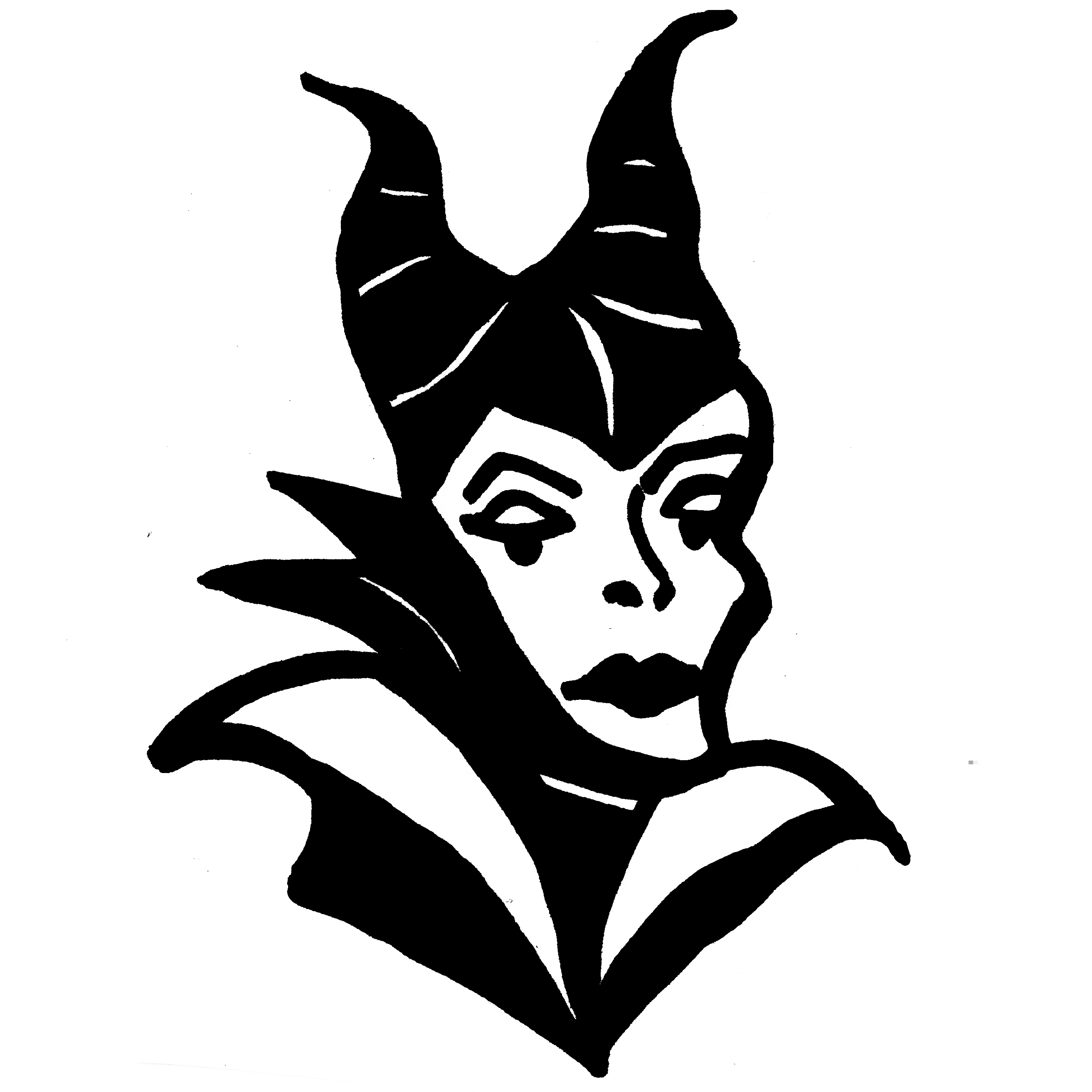
I have no interest in recounting Aurora’s troubled path to womanhood here. She’s cursed to die on her 16th birthday but is saved by a good nap and a classic case of puppy love. The rest is all arranged royal marriages, goofy sidekick antics, and sitcom-level mistaken identity hijinks. Even the mighty Maleficent is more memorable for her visual design than for her words or actions. We love the drag queen pageantry of her devil-horned headpiece. We love the green-on-black color scheme of her magic spells. We love her climactic transformation into a purple, fire-breathing dragon — another grand achievement in classic, hand-drawn animation. When the evil witch is defeated and Aurora is saved by the kiss of her sweetheart prince, the picture ends with the young couple dancing in the clouds. That’s also where the audience’s heads are supposed to be, not sweating the details of the storytelling on the ground.
When was the last time Disney was more focused on the visual majesty of it’s animation than on the marketability of its characters? Every in-house Disney production is now shrewdly designed to stock some toy shelf, amusement park attraction, or T-shirt screen press with fresh, sellable IP. It’s difficult to imagine an instance where they’d set aside character quirks & catchphrases to wow an audience with a return to classic, elegant animation. At this point, the company’s animation wing is a product delivery mechanism, like an assembly line conveyor belt. It used to be their entire raison d’être.
While viewing the recent political satire Mountainhead, I kept thinking about that frequent online refrain that people use as a response whenever someone posts something conspiracy-addled or which otherwise blows the mind of the poster: “This must hit so hard if you’re stupid.” Mountainhead itself is not one of those movies, as for whatever issues one may have with it, it’s certainly not meant to appeal to the kind of people whose ignorance gives them delusions of intelligence; it’s a mockery of those people. Many lines that came out of the mouths of those characters felt like exactly the kind of thing that probably sounds very smart to very stupid people. I was also reminded of the phrase while watching the new action flick Ballerina, advertised as being “from the world of John Wick.” I’m fairly partial to the John Wick series, lumping the first three films together in the #40 slot on a list of my 100 favorite films of the 2010s (and later giving John Wick 4 a 4.5 star rating when it came out a couple of years ago). Even with that being said, that series and this spin-off are exactly the kind of films in which the plot exists solely to put the protagonist through the ringer and have them face off against hordes of killers, setting them up and mowing them down. The narrative choice of introducing a whole underworld society of assassins with their own rules, regulations, and responsibilities in the first film allowed for the franchise to let that choice of mythos grow (and perhaps even balloon and bloat). By the fourth film, we were introduced to the concept of “The Table” that oversees the whole masquerade, “Harbingers” who enforce their rules and customs, “Adjudicators” who investigate potential violations of the house rules of the Continental hotels, a vast network of intelligence operatives posing as panhandlers and led by “The Bowery King,” and the Ruska Roma, the organization that trained John Wick in his youth and which presents itself to the world as a premier dance theater and academy while disguising its role as a school for assassins. All of which probably hits so hard . . . if, well, you know the rest. But sometimes, it’s okay to dare to be stupid.
The last of these was introduced in John Wick 3, when Wick (Keanu Reeves) meets with The Director (Anjelica Huston) to call in a favor. Ballerina has been in the works since before that time, when Lionsgate purchased the first script from screenwriter Shay Hatten with the intent to adapt it as part of the John Wick series. Hatten was then brought on to write both JW3 and JW4, which allowed him to plant the seeds for Ballerina, with the film eventually being produced nearly ten years after initial conception, with Len Wiseman, director of the first two Underworld films and former husband of their star Kate Beckinsale. Wiseman also directed that Total Recall remake that everyone hated, which, when placed alongside the duds in Hatten’s writing resume (which includes three Zack Snyder partnerships, for Army of the Dead and parts one and two of Rebel Moon), does not give one the impression that Ballerina was destined for greatness. It more than succeeds, however, at carrying the torch of this series, and is the first big dumb blockbuster of the summer, which I mean with all due respect.
Javier Macarro (David Castañeda) is raising his daughter, Eve, in a large waterfront mansion home, where he dotes on and adores her. One night, their home is invaded by a man (Gabriel Byrne) who intends to kill Javier and return Eve to her mother’s family, citing that Javier had no right to steal her away. Javier manages to kill all of the man’s henchmen but their leader escapes, and Javier succumbs to his wounds. This prompts the arrival of Winston (Ian McShane), the manager of the New York Continental, who delivers Eve to the Tartakovsky Theatre and its Director, in the hopes that she might find her place in the world of assassins in which her father was raised. Twelve years later, Eve (Ana de Armas) has spent all of this time learning both ballet and the art of delivering death, although she’s struggling with the latter more than the former. After a pep talk from mentor Nogi (Sharon Duncan-Brewster) in which she is encouraged to “fight like a girl” (i.e., dirty), and when she eavesdrops on the conversation between John Wick and The Director in JW3 and then asks the man himself for advice, Eve starts to gain the upper hand over her opponents. After passing her final test, gets her first field deployment as an escort for the daughter of a rich man whose enemies may attempt to abduct and ransom her. After an impressive action sequence in an icy nightclub called -11, her getaway is foiled by the sudden appearance of an assassin whom she manages to subdue, discovering that he has the same scarification that her father’s would-be killers had. The Director refuses to reveal any information, which leads Eve to cash in on her connection to Winston, who points her in the direction of a mysterious man hiding out at the Continental in Prague (Norman Reedus) who might be able to tell her more.
Strangely enough for these movies, the mythbuilding that has occasionally been a stumbling block for the series as it grew is hamstrung here. We eventually learn that Byrne’s character is the “Chancellor” of a cult that makes its home in the seemingly quaint European mountain town of Hallstedt, but while we hear about this cult over and over again, we never get any real idea about what their beliefs or goals are. There’s an electrifying scene early on in which Eve is put to her final graduation test at the dance academy, which sees her put in a room at a table with two disassembled guns, and another woman (played by Rila Fukushima, who is always welcome on my screen) enters, clearly furious and distraught that she’s been reduced to “a test.” When Eve asks her who she is, she tells her that she’s Eve, “in ten years.” Then a timer starts and she starts assembling the gun and … all we know is that Eve passed. When arriving at Hallstedt, all we learn about the people living there is that (a) no one is allowed to leave, and (b) it appears to serve the purpose of some kind of retirement home for past killers, where they can settle down and raise children. Other than the fact that you can check out any time you like but can never leave, there’s no indication that the so-called “cult” has any foundational beliefs or ideologies, and there’s a real missed opportunity there. Also, since most of us have seen John Wick 4, we know that John is destined to die, and sooner than later. Here, the film gives us two potential endpoints for Eve’s journey that show she doesn’t have to follow the same path that he does—retirement or “retirement”—but the film doesn’t seem all that interested in developing either of these ideas. They might be saving it for the sequel, but as a man who always loves fiction with cults in it, I was a mite disappointed that we never learned that the cult worships a personification of Death or is preparing for some kind of evil version of the Rapture, or anything else that would make them a “cult” and not a convenience for the narrative. Even the familial connections that we learn Eve has in Hallstadt are pretty obvious and end up being pretty irrelevant within minutes of learning them, and it wouldn’t be a Hollywood script if Eve wasn’t offered something tempting to her followed by someone making the obvious joke (which probably hits so hard if you’re stupid).
The action here is stellar, as always. I was hoping that we would get to spend a little more time with Eve’s learning curve, and that is an element. The thing about John Wick is that he’s an unstoppable force. You might be able to slow him down a little but, but you can never stop him, and the franchise is built entirely around watching him utterly destroy everything that gets placed in front of him. It’s like the Mission: Impossible or Final Destination films in that way; you’re here to watch the same movie as last time and the time before that, and you’re going to like it. When I mentioned to a friend of mine that I was going to see this one, he said that he had tried to get into the first one and couldn’t, complaining “It’s just Keanu Reeves killing people,” and I replied that these are movies that are more concerned with the ballet of violence. Ballerina, naturally, is no different from the other John Wicks in that way, as we get to see Eve use a pair of ice skates in a way that Hans Brinker could never have imagined, tear through cultists with a flamethrower (ho ho ho), and utterly destroy a kill team that was foolish enough to bring guns to a grenade fight. While we do get to see her improve, it’s done in a fairly trite way, as Eve initially struggles to gain the upper hand in matches against her larger, male sparring partners, until Nogi tells her to “fight like a girl,” at which point she starts kicking dudes in the nuts and becomes the class’s top dog. It feels like a very 90s line and a very 90s cliché, but at least it gets a fun callback later when Eve, armed only with rubber bullets, shoots one of her attackers in the groin. Her evolution to killer happens fairly quickly over the course of a montage and by the time we see her in the field after a two-month jump, she’s almost unstoppable.
I suppose that this is better than watching her struggle a lot more than John does in his films, because the audience for these movies can trend a little toxic. I’m sure that the people who are already calling her a Mary Sue in some dark, roach-infested corner of the internet would have been complaining about her being a weak and ineffective hero in comparison to the unflappable Chad John Wick if we had gotten to see her spend a little more time on the road to becoming a finely tuned killing machine. Instead, the film plays it smart by showing us that Eve is fully dedicated and will push herself past her limits even when she falls short in her academic environment, such as it is, and then cuts to her displaying an almost John Wick-level of hypercompetence in the field of dealing death. Later, when her quest to avenge her father (and rescue a young girl whose father was willing to die to get her away from Hallstedt but who wasn’t as successful as Eve’s father) triggers a sharp exchange between the cult and the Roma Ruska with the promise of a war between them if Eve isn’t stopped, the Director calls in the favor John Wick owes her and sends him to Hallstedt. For her part, Eve is brave enough to try and fight him when he shows up on the scene, and although she’s giving it her all, it’s immediately clear that she’s completely outclassed by him. She’d be dead within moments if John wasn’t willing to hear her out and, sympathetic to her story, he gives her until midnight before he hunts her down. It’s a good balance that Eve seems just as implacable as John until she’s actually face-to-face with him in a combat situation and he’s completely unfazed, dodging her attacks without breaking a sweat.
Beyond the aforementioned lack of depth given to the cult, my other big complaint about this film is that there’s just not enough ballet for a movie called Ballerina. We see Eve dance as a child and her tragic memento of her dead father is a wind-up ballerina, but after the opening credits, the ballet doesn’t come up again until the end, when Eve wistfully watches a performance by a former classmate who washed out (and fell back on her dream career of being a ballerina). I was really hoping that there would be a lot more dance-inspired action happening here, as would befit the title and concept. The film does seem more hesitant to show de Armas shooting people while Reeves was doing lots of gun-fu in his outings, which stood out to me a lot when her kit for her first mission is a non-lethal gun. We get to see her shoot a few people in Hallstedt, but until that point, we’re mostly limited to hand-to-hand combat, improvised weapons, and a whole lot of grenadery. I initially thought that this might be some old-fashioned Hollywood sexism happening in that they presume we won’t tolerate women being as violent as we allow men to be, but later in the film she burns dozens of men and women to death without flinching, which is even more horrific, so I’m not really sure. But given how much combat happened in the first half of the movie, would it have hurt to have Eve doing some pirouettes or en pointes somewhere to make her fighting style more distinct from John’s? In the moment in which she finds herself with a pair of skates in a boathouse and standing on the ice below the dock, I got terribly excited that we were about to see some ice dancing/fighting, but instead she just slices and dices. That’s all well and good (and hits hard if stupid), but it felt like a missed opportunity. This film could have been called Equestrian: From the World of John Wick and been about a girl’s riding academy that was secretly a cover for murder training and the effect on both the plot and the action would be negligible. If we go back to this well again, maybe we’ll get to see it next time.
Welcome to Episode #235 of The Swampflix Podcast. For this episode, Brandon, James, Britnee, and Hanna discuss a grab bag of low-budget horror films about ballerinas in crisis, starting with the 1989 Supsiria knockoff Étoile, starring Jennifer Connelly.
00:00 Concerts 07:21 Two English Girls (1971) 10:32 Adolescence (2025) 15:37 Down with Love (2003) 19:20 Chocolate Babies(1996)
The earliest press releases for the Universal Pictures horror Abigailreported it as a reimagining of the 1936 classic Dracula’s Daughter, citing Leigh Whannell’s 2020 remake of The Invisible Man and last year’s Nic-Cage-as-Dracula comedy Renfield as similar examples of what the studio is currently doing with its Classic Monsters brand. Technically, Abigail does feature a vampire’s daughter in its main cast, but that titular, bloodsucking brat’s similarities to Countess Marya Zaleska end there. No matter what the original pitch for Abigail might have been in first draft, it’s clear that the final product was more directly inspired by last year’s killer-doll meme comedy M3GAN than anything related to the original Dracula series. Anytime its little-girl villain does a quirky, TikTok friendly dance in her cutesy ballerina outfit, you can practically hear echoes of some producer yelling “Get me another M3GAN!” in the background. The Radio Silence creative team kindly obliged, churning out another M3GAN with the same dutiful, clock-punching enthusiasm that they’ve been using to send another Scream sequel down the conveyor belt every year. The movie is less a reimagining of a 90-year-old classic than it is a rerun of a novelty that just arrived last January.
To juice the premise for as many TikTokable moments as possible, Abigail never changes out of her tutu. The seemingly innocent little girl (Alisha Weir) is kidnapped after ballet practice and held ransom in an old dark house to extort millions out of her mysterious, dangerous father. She naps for a bit while her captors bicker & banter downstairs, so that each of the likeable, sleepwalking stars (Dan Stevens, Melissa Barrera, Kathryn Newton, the late Angus Cloud, etc.) can all get in their MCU-style quips before they’re ceremoniously slaughtered one at a time. Then Abigail wakes up, reveals her fangs, and throws in some pirouettes & jetés between ripping out throats with her mouth. The violence is bloody but predictable, especially if you’ve happened to see the movie’s trailers, which plainly spell out every single image & idea from the second hour while conveniently skipping over the tedious hangout portion of the first. There is no element of surprise or novelty here beyond your very first glimpse of an adolescent vampire in a tutu, which you already get just by walking past the poster in the lobby.
In short, Abigail is corporate slop. The best way to enjoy it is either chopped up into social media ads or screening on the back of an airplane seat headrest, wherever your attention is most often held hostage. I attended its world premiere at this year’s Overlook Film Festival, which likely should have heightened its fanfare through pomp & exclusivity but instead had the opposite effect. Screening in a festival environment among dozens of no-name productions with much smaller budgets and infinitely bigger ideas really highlighted how creatively bankrupt this kind of factory-line horror filmmaking can be. Using the legacy of something as substantial as Dracula’s Daughter to rush out a M3GAN follow-up before a proper M3GAN 2.0 sequel is ready for market conveys a depressingly limited scope of imagination in that context, especially since horror is the one guaranteed-profit genre where audiences are willing to go along with pretty much anything you throw at them. At the very least, Universal & Radio Silence could have better capitalized off the production’s one distinct, exciting idea by flooding the house with dozens, if not hundreds, of ballerina vampires instead of relying on just one. That way, it wouldn’t be so boring to wait for her to wrap up her nap.
I’ve been hearing the term “dream ballet” tossed around with unusual frequency lately, due to that glamorous Old Hollywood indulgence enjoying a resurgence in the Oscar nominees Maestro & Barbie. Both films feature an abrupt break from reality in which their male leads slip into a dream dimension to express their abstract emotional state through the art of balletic, interpretive dance – something much more common to the grand movie musicals of Hollywood’s Golden Era than to the overly cynical, logical filmmaking landscape we’re currently trudging through. It shouldn’t have surprised me, then, that all of this “dream ballet” chatter was echoed in my recent thrift store Blu-ray purchase of the Old Hollywood classic Party Girl, which stops its real-world story of doomed lovers on a mobsters’ payroll in its tracks to indulge in a few escapist sequences of fantastical dance. Where Party Girl‘s otherworldly dance numbers tripped me up, though, is in the way they subvert & pervert the most timelessly iconic dream ballet sequence in the Old Hollywood canon (the same one visually referenced in the “I’m Just Ken” dream ballet interlude of Greta Gerwig’s Barbie movie). In Party Girl, dancer-turned-actress Cyd Charisse reworks her breakout performance in the dream ballet sequence from Singing in the Rain into a show girl strip tease. The ethereal pinks & purples of Singing in the Rain‘s infinite studio set are retrofitted to the stage of a Prohibition-era Chicago gangster hangout called The Golden Rooster, and Charisse takes a moment in that otherworldly void to flirt with the camera instead of the audience in the room with her. She’s initially costumed in a showgirl outfit with an eccentrically long train that flows behind her movements—until she removes it in classic burlesque tease—recalling the gorgeous white fabric that trailed her movements in Singing in the Rain. It turns out her brief dance with Gene Kelley in that film was so instantly iconic that it was already being lovingly referenced just a few years later (decades before Ryan Gosling was even born).
Unfortunately, Party Girl peaks early with that balletic strip tease, and Charisse is given little to do off-stage, despite playing the titular moll. She stars as 1930s Chicago showgirl Vicky Gaye, who earns extra cash between shows at The Golden Rooster by making paid appearances at mobster parties in private residences (a light, Hays Code-approved form of prostitution). While working one of these pop-up speakeasy parties, she falls for the mobsters’ suave attorney, a “guardian angel for punks & gunmen” played by a disappointingly stiff Robert Taylor. Their romance is a dully dignified one, with both parties pushing each other to get out of The Life even though they’re both on the same mobster’s payroll. Courtroom debates, backroom negotiations, boat trips overseas, and medical crises ensue at a leisurely pace, occasionally interrupted by Tommy-gun fire & mildly salacious dance numbers. Director Nicholas Ray brings the same eye for lurid beauty that elevates much more essential classics in his catalog like Johnny Guitar, especially in the way he puts the Metrocolor film processing to use in his splashes of gold & red. Unfortunately, his flair for full-glam Old Hollywood magic is the wrong approach for noir, a genre that would’ve been much better suited for his scrappier early pictures like Rebel Without a Cause. As a major studio noir, Party Girl is hopelessly bloated, something that’s apparent as soon as it widens the frame into CinemaScope. It’s still beautiful nonetheless, whether it’s gawking at the vivid reds of a blood-filled bathtub or gawking at the glittering gold & pink sequins of Cyd Charisse’s dance costumes. By the time she reappears onstage for a second dance break from reality in a leopard print gown, all of the energy of the picture has already bled out in one too many courtroom scenes, which are always death for late-period, major studio noir.
I don’t know that Cyd Charisse’s first big dance number in Party Girl technically counts as a dream ballet, since it’s narratively set up as a nightclub stage act instead of an expressionistic break from reality. I do know that it’s referencing the go-to standard of dream ballet sequences, though, a connection to Singing in the Rain that’s made apparent enough by Charisse’s casting before it’s underlined in her costuming. That dance routine also deliberately disregards the physical boundaries of its stage the same way Busby Berkeley used to in his own fantastical dance sequences, treating the camera as the audience POV instead of staying anchored to the extras seated in the room. It’s the most alive Ray ever feels behind the camera, and it’s the one stretch of the film where Charisse’s screen presence feels irreplaceable. I haven’t seen Maestro myself, nor am I likely to unprompted, but I can report that I was equally thrilled by the visual Singing in the Rain callback in Barbie‘s dream ballet sequence last summer. In that moment, I felt the high-artifice movie magic of Old Hollywood return in full force, a sensibility echoed in the over-stylized set & costume design throughout Barbieland. Hopefully, a third dream ballet sequence in a major motion picture will continue the trend after its repetition in Maestro; it’s one of the most genius tropes invented by the Hollywood dream machine, the kind of overwhelming sensory indulgence that inspires nerds with TCM & Criterion subscriptions to mutter “pure cinema” under our breath.
One of the more uniquely impressive strengths of cinema as an artform is its ability to mimic the loopy, transcendent quality of dreams like no other medium. My favorite films tend to be the most highly-stylized, shamelessly artificial indulgences in cinematic fantasy, the ones that disregard the limitations of real-world logic to instead achieve something distinctly subliminal & surreal. The 40-minute mini-feature Electric Swan taps into that subliminal dream space with an impressive sense of ease. It’s a quiet, low-key drift through a retro-futurist dystopia that’s just as mesmerizing & frustratingly unresolved as any nightmare you’ve had during a mid-afternoon nap. It doesn’t have anything especially novel or pointed to say about the class disparity conflicts that give shape to its story, but the hypnotic, dissociative filter it processes those themes through help them to upset & resonate in a way only a movie or a nightmare could allow.
Almost the entirety of Electric Swan is confined to a retro-futurist apartment building in Buenos Aires. Like in a lot of dystopian sci-fi, the wealthiest residents live on the top floor of the building, with levels of class descending with the floor levels all the way to the basement – where the building’s Indigenous, impoverished security guard lives alone. We mostly watch the guard make his daily rounds, acting as a doorman, handyman, therapist, and babysitter at the beck and call of the building’s residents. Both the wealthy and the working class children he serves describe their dreams to him while he struggles to keep up with his daily duties without assistance. Meanwhile, the building itself takes on a menacing presence, as if it were literally haunted by the class divisions it upholds. The wealthy on the top floors become mysteriously nauseous with motion sickness as the building sways; the security guard’s humble basement dwelling floods from an unknown water source; and everyone in-between acts as if the world’s about to end at any minute. Then, same as if in a dream, their shared reality abruptly shifts entirely in a way that cannot be explained by logic or by narrative tradition.
Electric Swan might only get away with its subliminal loopiness because it’s so firmly tethered to familiar genre tropes. The whole thing plays as if someone explained the plot of High-Riseto you as a bedtime fairy tale and then you scrambled all the details in a half-remembered dream. The ease in which it distorts its matter-of-fact portrait of class disparity through a surrealist dream lens is only really paralleled in recent post-Buñuel oddities from South America like Zama, Icaros: A Vision, and Good Manners. Its style vs. substance balance is more befitting of a music video than a feature film, which is likely to agitate anyone who looks to movies for “a good story” rather than a transcendent sensory experience. If you’re typically drawn to movies that play like dreams or to the eerie space where dystopian sci-fi meets fairy tale fantasy, this is one of the most vivid class allegories you’re likely to find this year. And even if you don’t fall under its spell, it’s too short to truly waste your time.
Welcome to Episode #19 of The Swampflix Podcast! For our nineteenth episode, Brandon & CC are joined by Alli Hobbs to discuss five classic examples of ballet horror cinema. Also, Brandon makes CC watch the brutal fairy tale fantasy piece Tale of Tales(2016) for the first time. Enjoy!
Director Guy Maddin is a weird little cookie. Admittedly I’ve only seen a small sampling of his work, but I’ve yet to fall in love with another one of his features quite as hard as I did with his beer-themed black comedy The Saddest Music in the World. His films are always interesting, though, if a little exhausting. Last year’s The Forbidden Roomwas a beautiful set of interconnected, humorous vignettes that worked really well for me as isolated short films, kind of like high art sketch comedy, but were especially tiring as a full-length collection. Looking a little further into Maddin’s catalog, though, the director has plenty of full-length experiments dedicated to a single idea; his ballet horror Dracula: Pages from a Virgin’s Diary, for instance, is a much more focused & disciplined effort that matches his trademark visual aesthetic to its most logical genre structure. By fully committing to a single narrative & matching Maddin’s deliberately aged visuals to a silent horror era aesthetic, Dracula: Pages from a Virgin’s Diary proves to be a much more digestible exhibition of the director’s peculiar talents than any of his vignette-structured works. This is a film with extremely limited commercial appeal and it’s one that might take the full context of his career to fully appreciate what he’s doing with the material, but it’s just as beautiful and amusing and flippantly high brow as anything he’s ever accomplished. I love seeing him indulge a single idea at a feature’s length and Pages from a Virgin’s Diary exemplifies exactly why that kind of extended focus is ideal for his directorial style, even when the main conceit is so narrowly minded.
Pages from a Virgin’s Diary is not a ballet-themed horror so much as a horror-themed ballet. The film finds Maddin shooting a straightforward ballet production of the Dracula story in a cinematic context. Instead of hanging back to display the dancers’ full bodies & artistry, he cuts the frame in very tightly and adds silent film era intertitles to advance the plot instead of conveying story entirely through dance. The playing-to-the-back-row stage play expressiveness of the ballet works really well in tandem with Maddin’s style, though, which requires a broad physical performance to recall the vaudevillian days of early cinema. Often, Pages from a Virgin’s Diary plays like a high art horror comedy. It makes a weird joke out of the details of Dracula lore: drowning the frame in cartoonishly large piles of garlic, mirroring Love & Friendship‘s character introduction gags with details like “Eater of Bugs,” playing the bumbling hubris of men for humor (like when Van Helsing performs the most inefficient & smugly disgusted gynecological exam of all time on Dracula’s prime victim). Maddin’s sly humor is contrasted with the dead babies, decapitations, and sexual violence of the source material to make for a truly horrifying, but strikingly flippant viewing experience, one that’s sex jokes & vampire kills are made oddly delicate by its very nature as a ballet. Dracula: Pages from a Virgin’s Diary might be the kind of high faulting art film pretension that rolls eyes & changes channels at first glance, but it’s also playfully subversive in its prankster humor & genuine horror thrills, making for a very worthy entry in the director’s catalog, despite its deceptively slight premise.
Of course, as with all Guy Maddin projects, the flashiest aspect of Pages from a Virgin’s Diary is the director’s dedication to visual craft. Deliberately degraded film, tinted color changes, a screen segmented into tight parallel lines: Maddin seems to be working in a digital medium here, but his trademark throwback to ancient cinema past matches the material exceedingly well, making me desperately curious about what a high budget version of this movie would look like. The ballet aspect of the film is the only dynamic that distinguishes it from a genuine silent horror, but that aspect does feed into Maddin’s aesthetic as a traditionalist. I also had great appreciation for the way he played with the film’s pacing, speeding up comedic bits to a movie trailer tempo for greater humorous effect and slowing down certain ballet flourishes for moments of lyrical contrast. You won’t find many horror comedies this visually interesting or poetically minded, with giant pipe organs spewing green gas & perverted sex demons filling the frame between subtle gags about modesty & desire. Even if it isn’t his best film, you also won’t find a much more concise argument for Maddin’s distinct talents as a director, as he transforms traditional mediums like ballet, silent film, and Bram Stoker’s Dracula into something entirely new & oddly fresh. I’d love to dig up more of his features that are dedicated to exploring a single concept for the entirety of their runtimes. He seems like a director who has too many ideas at once and too little time or funding to follow them all at length, so I should probably be exceedingly grateful for the times such as this, when he finds inspiration to break out of his usual short film format and follow one spectacularly weird idea (say, a traditional ballet shot as a high art horror comedy) to a feature length. It’s his best self.
I’m not sure how much of my ecstatic reaction to the 1960 Italian horror cheapie The Vampire and the Ballerina had to do with my pitifully low expectations going in, but the film bowled me over. Where I expected lazy, thoughtless schlock, I happened to find something deliriously strange and carefully made. The Vampire and the Ballerina resembles so much cheaply made cult classic trash of its era, from the burlesque horror of Cat Women of the Moon to the vampiric kills & stock footage reliance of Plan 9 from Outer Space to the rubber mask monsters of The Brainiac. And yet, for a film so silly & so rooted in the context of its time, this throwaway horror title paradoxically feels ahead of the crowd in terms of where horror was going to go in the future. Hammer House horror, style over substance giallo, and, especially, over-sexed European vampire films of the 60s & 70s all feel somewhat indebted to the weirdly off-kilter shocks, scares, and titillation lurking in this strange little genre film. This is the exact kind of rare gem I’m looking for when I’m digging through piles of trash cinema and, as usual, I found it in a place I least expected it.
A group of young, attractive, scantily clad dancers are “preparing a ballet” while guests at a wealthy man’s estate near a remote village. There are several mysterious murders coinciding with their stay, explained by local superstitions to be the work of a vampire. The film’s rules adhere to traditional vampire lore: deadly sunlight, stakes through the heart, garlic, crosses, the whole deal. It only adds the caveat of the monsters needing to feed under a full moon to that dynamic, a little flavor borrowed from werewolf pictures. At first, the girls’ wealthy host (who wears capes & seems to know an awful lot about vampire history) or one of their macho beaus seem like prime suspects for these murders, but this film is anything but a murder mystery. As soon as the vampires appear onscreen, posing as gracious hosts of a crypt-like castle, you know for a fact that they’re the perpetrators. Where The Vampire and the Ballerina (a title that really should be pluralized) gets weird is in the strange revelation of how the two vampires’ relationship works. It’s a bizarre glimpse into one of cinema’s most toxic codependent relationships, a weirdly unromantic back & forth that’s far more satisfying than any who’s-the-undead-killer mystery could have possibly been.
The film’s thematic weirdness is only amplified by its strikingly thoughtful (although cheaply produced) cinematography. Images of silhouettes growing on cave walls, passing sky & falling dirt seen from the POV of a freshly bit victim being buried “alive,” and the vampire’s legitimately upsetting rubber mask & plaster visage all combine to make for a much more striking visual experience than you’d typically expect from this kind of work. Where The Vampire and the Ballerina shines best, though, is when it combines this visual thoughtfulness with the tawdry horniness that drives its most base thrills. The movie makes no excuse for oggling at the dancers as they lounge around in flimsy underwear and perform in revealing tights.The shameless butt shots in the dance scenes, which fuse ballet with world music & burlesque, crowd the screen in a leering cacophony of hip shaking, leg flashing filth. This combines in other scenes with the film’s more lyrical ambitions to make for some truly strange, sexually charged imagery: a victim shot from between her killer’s legs (a la Slumber Party Massacre), stock footage trees thrashing in the wind as hypnotized women writhe in sexual frustration, a woman sunbathing on a rock as a background waterfall flows the frame’s attention directly to her crotch. The Vampire and the Ballerina is in every way cheap, artful filth and I’m in awe of how much memorable imagery it was able to generate in spite of being such a slack jawed work of horror-minded eroticism.
I don’t want to make this sound as if it’s some long lost masterpiece that could rival the heights of a Bava or a Corman-Cycle Poe. It’s a deeply silly movie, one that features several nonsensical minutes of women chasing each other through the woods to big band music for reasons I couldn’t explain if I tried. I do, however, believe that The Vampire and the Ballerina has some strong, untapped cult classic potential. Cynically made as a cash grab in the wake of Christopher Lee’s Dracula finding popularity in Italy, this is a deliberately over-sexed work that anyone under the age of 16 was banned from watching at the theater. You can feel those trashy origins in every frame of The Vampire and the Ballerina, but the film still manages to be a surprisingly artful experience for me. Anyone who regularly enjoys a slice of cheap black & white schlock should get a kick out of the film’s creature designs & shameless, theremin-scored burlesque. What’ll really stick with you if you’re on that wavelength, though, is the strange relationship dynamics between its vampiric killers & the artfully odd images the film manages to pull out of a seemingly nonexistent budget. If you watch enough of these kinds of horror titles, they start to blend together and everything begins to feel monotonous; The Vampire and the Ballerina is an exciting reminder that there’s still weirdo outliers out there waiting to be discovered. There’s still gems lurking in cinema’s discarded trash.
I first became aware of Dario Argento during my freshman year of college. At the time, television channel Bravo was still transitioning from the arts-oriented channel that it was when it was first incepted into the reality-TV landfill that it is now; I was visiting home and caught the re-airing of their 2004 miniseries 100 Scariest Movie Moments. It’s a smart list, even if the ascending algorithm of fright is contentious (I adore Nightmare on Elm Street, but scarier than Jacob’s Ladder or Rosemary’s Baby? Please.), and it was from that list that I learned the name “Suspiria.” It ranked relatively high, coming in at number 24, and was the second-highest rated non-domestic feature on the roster (Japan’s Audition claimed the number 11 spot), which also included thrillers like Deliverance and Night of the Hunter, films that wouldn’t normally fall under the banner of “horror” per se.
Thus, I didn’t begin my journey into the Dario Argento oeuvre with his earliest work, I started with Suspiria. In fact, before beginning this project, I had not seen Argento’s films that preceded this, his most well-known picture. I Netflix’d the DVD of Crystal Plumage sometime in 2008, but never got around to watching it before sending it back, a casualty in my mad, gluttonous rush to consume every episode of Veronica Mars. The other films of his that I did uncover and watch, like Phenomena and Opera, all came from the middle of his career, after he had forsaken pure giallo and before he moved on to making the mediocre miscellanea of his later career. And, at the risk of sounding cliche, Suspiria was a revelation to me then and a revelation to me now.
The story follows young American ballet student Suzy Bannion (Jessica Harper), who has been accepted to a prestigious dance academy in the Black Forest of Germany. She arrives during a torrential downpour, and makes her way to the school just in time to see another young student flee into the woods, screaming about secrets. This same young woman is later murdered, brutally, and the friend with whom she took refuge is also killed. The following morning, Suzy meets school’s vice-directress, Madame Blanc (Joan Bennett in her final film role), and dance instructor Miss Tanner (Alida Valli), who appear to be strict but matronly. She also befriends Sarah (Stefania Casini), who was friends with the murdered girl and continues her investigation into the strange goings-on about the academy. Strange events begin to happen: Sarah experiences an unusual fainting spell that forces her to relocate to the school’s dormitories from an off-campus apartment, maggots rain from the ceiling after having infiltrated “spoiled food” being kept in the attic, and disoriented bats fly into open windows while faithful service dogs turn on their owners. It’s hard to describe the film’s plot without it sounding like a standard haunted house movie, but it’s so, so much more than that.
What is a movie? Or, perhaps a better question, what should a movie be? In the West, we have been trained to have certain expectations of films, to be receptive to a particular cinematic style with a mostly-linear structure, to recognize certain constants and feel secure in them. As a comparison, think about how you were first introduced to poetry as a student: poems were words arranged in a particular pattern, with meter and rhyme. You were likely given something palatable to read, something not too dissimilar from nursery rhymes, with an easily-identifiable structure. Then, you were introduced to something completely different, something that wasn’t recognizable as a “poem” within the limited context that you were taught. Films are much the same, as studios make the majority of their money from regurgitating the same kind of mediocre pablum over and over again across all genres: Meg Ryan is a relatable career-oriented everywoman who doesn’t realize that there’s something missing from her life, every superhero has to learn the hard way that with great power blah blah (I won’t even bother finishing that thought because you’re already ahead of me), and every generation has a raunchy sex comedy to mislead them about the birds and the bees. But sometimes, a movie comes along that doesn’t just repeat the same ABAB CDCD EE rhyme scheme of other movies you’ve seen before. Auteurs earn their credibility by taking the same things we’ve seen over and over again and tearing them to pieces, or forsaking them altogether, or using them in a transcendent way by playing with or manipulating audience expectation.
All this is a roundabout way of saying that movies which forego some element of cinema in order to exalt another aspect of film can be a worthwhile endeavor, and that putting narrative consistency on the backburner in order to focus on aesthetics or mood doesn’t necessarily make a film less successful than the median anymore than ee cummings was a lesser poet than Robert Browning. Suspiria is a movie that does just this, by honing in on atmosphere and tone rather than plot, and the film is well-served by this attention to detail. That’s not to say that the plot is irrelevant (this isn’t The Five Days, after all), but color and immersion are much more important here than they are in a lot of other films from the same period (or today). Contemporary critics took issue with the film’s plot structure, apparently failing to realize that Suspiria is intentionally dreamlike, influenced by fairy tales and nightmares more than monomyth. Even the opening narration, which others consider to be out of place and somewhat silly, contributes to the film by acting as a kind of horror-tinged “once upon a time.”
Daria Nicolodi, who has a co-writer credit on the film, stated that she based her contribution on stories her grandmother had told her as a child, like the misadventures of Lewis Carroll’s Alice and, supposedly, the elder woman’s discovery that the faculty of a school she attended was secretly into occultism. Argento has claimed that this story is false, but I prefer her whimsical lie to his pragmatic honesty, as it’s a fun and intriguing fiction that’s better than the truth; that’s one of the things art is for, in my opinion. Argento has also said that he initially wanted the film to star adolescents, but that this was quickly nixed (watch that first murder scene and imagine that the victim is twelve years old, and you can see why this change was necessary); to maintain that viewpoint, the set was designed with all doorknobs at eye level so that the subconscious recognizes the actors as being smaller and more childlike. This kind of set detail, along with the omnipresence of bright, vivid colors, contributes to the film’s overall surreal ambiance. It’s a movie that’s experienced and felt more than it is one which is interpreted, and it’s all the better for it.
This is perhaps best encapsulated by the experience of the main character, Suzy. Suzy spends a great deal of her screentime being sedated each night while the heavy-lifting of the mystery is largely performed by others around her. Pat, the girl who flees the school in the opening, kept notes about the faculty’s suspicious behavior and practices; Sarah listens to the steps being taken by the teachers at night and records them so Suzy can use this information to discover the coven later; Suzy’s disappearance leads Sarah to Dr. Mendel (Udo Kier, of all people), who introduces her to exposition-laden Professor Milius (Rudolf Schundler). Suzy is a character who is acted upon more often than she is one who has agency, but isn’t that so often the case with dreams? In another movie, this would be a detraction, but here it’s actually a feature. If you haven’t seen this movie already, what are you doing here? Stop whatever you’re doing and go watch it, right now.
Additional notes:
I can’t believe I didn’t address this above, but this was prog-rock band Goblin’s second time collaborating with Argento, and the movie’s score is absolutely phenomenal. Anchor Bay’s DVD release of Suspiria includes a copy of the soundtrack, which has long been out of print but must be heard. It’s like the apotheosis of what a horror film score should be, at once delicate and disquieting, unsettling but eerily beautiful and vaguely mystical. Halloween’s may be the best-known horror score, but Suspiria‘s is technically and thematically superior and one of the best scores of all time.
When I first saw this movie, I had never seen any previous Argento films, so I didn’t know what his recurring motifs were. Although this is not a giallo film in the strictest sense of the word (obviously, the “mystery” here is much less important than visuals and mood), his trope of a character witnessing something at the beginning of the film that they struggle to comprehend is present here. As in Deep Red, a mirror holds an important clue and plays a key role in the resolution of an investigation. Most amusing to me, however, was the fact that Suzy’s ultimate defeat of the evil coven queen requires her to use a crystal-handed dagger that is part of a sculpture of a peacock, presumably the same genus as titular Bird with the Crystal Plumage.
He doesn’t factor into the film all that much, but Suzy’s love interest Mark (Miguel Bosé) is a total babe. Yowza.
A minor quibble: Why do the witches even care to bring Suzy into the school in the first place? In a more standard Hollywood film, they would probably be looking to use her in some way (see: Rosemary’s Baby) or convince her to join the coven, but there’s no real reason given or explored here, further adding to the dreamlike atmosphere. We never get an answer, but if this frustrates you, you may be missing the point.











 Swampflix