Movies Screening in New Orleans This Week 10/25/18 – 10/31/18

Here’s a quick rundown of the movies we’re most excited about that are screening in New Orleans this week, focusing on some spooky selections to help boost your Halloween celebrations.

Movies We Haven’t Seen (Yet)

Halloween (2018) – 40 years (!!!!) after the John Carpenter original helped Shape the early stirrings of the slasher genre, this timeline-resetting sequel promises to return the series back to its grounded, horrifying roots. The early buzz is strong, the creative team (fronted by David Gordon Green & Danny McBride, of all people) seems genuinely passionate, Jamie Lee Curtis is back to afford it legitimacy, and it’s the exact right time of the year to see this kind of thing big & loud with a first-weekend crowd. Hell yeah.

Bad Times at the El Royale Six whole years ago, Drew Goddard’s debut feature Cabin in the Woods brought the meta-horror of Wes Craven works like New Nightmare & Scream to a new level of comedic what-the-fuckery. His only credits as a director since have been a couple (excellent) episodes of The Good Place, so this twisty, star-studded neo-noir follow-up feature is much-anticipated (and is supported by one of the year’s best trailers).

Hell Fest It’s the final week of October, which means it’s time to indulge in as many gimmicky, mainstream horrors as possible before Halloween comes & goes. This one is set at a haunted house amusement park, appearing to fall halfway between the grime of The Funhouse & the slick production of the Final Destination series in its basic aesthetic. It almost doesn’t even matter if it ends up being any good; it’s just the exact right season to see a ridiculous horror movie big & loud with a multiplex crowd.

Goosebumps 2: Haunted Halloween I didn’t expect to love 2015’s Goosebumps movie nearly as much as I did, but it ended up excelling as a children’s primer for life-long horror fandom, like a Monster Squad update for a generation raised on CGI.  I’m going into this sequel with a much higher level of anticipation, for better or for worse.

The House with the Clock in Its Walls Eli Roth made a name for himself in one of horror’s worst creative slumps: the torture porn nu-metal aughts. He hasn’t been of much interest to me as a result, but recent tongue-in-cheek pranks like the Keanu Reeves head-scratcher Knock Knock have been slowly changing my mind on that, so his directing a PG-rated haunted house comedy for children certainly has an unignorable allure to it. I’m foolishly optimistic.

Movies We Already Enjoyed

Psycho (1960) – Alfred Hitchcock’s infamous proto-slasher is likely the classiest way you can celebrate Halloween on the big screen. The Prytania’s semi-regular screenings of The Master of Suspense’s greatest works are always worth attending, but rarely are they this seasonally appropriate. Playing Sunday 10/28 & Wednesday 10/31 as part of Prytania’s Classic Movies series.

Hocus Pocus (1993) – Returning for its 25th Anniversary (via AMC Theatres), this horror-themed Disney comedy has become something of a Halloween-season standard, but it can rarely be seen in a proper theatrical setting. Comedic performances from Bette Midler, Kathy Najimi, and (my personal favorite) Sarah Jessica Parker as the Sanderson Sister witches are obviously the main draw, but may I suggest that the brief cameo from Mr. Gary Marshall as Satan is the secret highlight?

Ghostbusters (1984) –  Another big-budget horror-comedy crowd-pleaser that most of us likely grew up with on VHS instead of experiencing it on the big screen in its initial run.  Playing Saturday 10/27 & Sunday 10/28 as the final events of Prytania’s fantastic Kill-o-Rama series.

Venom A C-grade superhero movie that treads water for at least a half-hour, then mutates into an A+ slapstick body-horror comedy with an outright Nic Cagian lead performance from Tom Hardy. Venom is a less satirically pointed, big-budget version of Upgrade or a modernized Henenlotter, but its highs are also much funnier (and surprisingly queerer) than either of those reference points. It’s a lot of fun if you maintain your patience through the first act.

Rocky Horror Picture Show (1975) – Even if you’re not the kind of person who regularly attends audience-participation Rocky Horror happenings, there’s no better time than Halloween to give it a go, as it’s pretty much a self-contained horror/sci-fi costume party. Playing (at midnight!) Friday 10/26, Saturday 10/27, and Wednesday 10/31 (with an extra 10pm showing added for Halloween night).

Happy hauntings!

-Brandon Ledet

Tra-la-logs vs. Hoonies: Finding Gooby in The Pit

When initially discussing our current Movie of the Month, the 1981 Canuxploitation curio The Pit, Boomer lamented the loss of its screenplay’s original subtext about childhood struggles with Autism. In its conceptual phases, The Pit was intended to be a thoughtful insight into the mind of a child on the spectrum. Jamie’s misunderstanding of personal boundaries and fantastic obsessions with his “talking” teddy bear and the Tra-la-logs (troglodytes) that live in a pit in the nearby woods were originally intended to be empathetic teaching points about the internal processes of a child on the spectrum struggling with the emotional & sexual discomforts of early puberty. Realizing that kind of subtle, thoughtful child psychology drama wouldn’t make nearly as much money as a bonkers horror film with the same basic premise, producers pushed for a different story altogether. In The Pit as a final product, the woods-dwelling troglodytes & telepathic teddy bear are demonstrated to be real, and really dangerous. Jamie himself makes a leap from a misunderstood, bullied child with boundary issues to a full-on perverted menace who even out-creeps the flesh-eating Tra-la-logs as the film’s most hideous monster. I understand some of Boomer’s mixed feelings on this shift from empathetic child psychology drama to exploitative horror cheapie, but ultimately, I gotta say the producers made the right call (at least in terms of The Pit’s entertainment value). I’ve already seen a movie with The Pit’s budgetary & creative means attempt to recapture the imaginations & frustrations of a child on the spectrum through their relationship with a talking teddy bear. It was 2009’s Gooby, a film that’s only notable for its unintended terror & laughable absurdity (thanks largely to being covered on the “bad movie” podcast How Did This Get Made?); It’s the same fate I believe The Pit would have suffered if it had attempted sincere melodrama about Jamie’s troubled psyche.

Once you consider them as a pair, the parallels between Gooby & The Pit are unmistakable. A G-rated (presumably Christian-targeted) children’s film, Gooby follows a small child struggling to adjust to his family’s move into a new home, not his burgeoning sexuality, but the ways his anxieties manifest are very similar to Jamie’s. Instead of fearing Tra-la-logs, the pint-sized protagonist of Gooby fears “Hoonies”: two-headed CGI bird-beasts that only he can see. He also processes the emotional stress of his changing life and the threat of the Hoonies through his relationship with an anthropomorphic teddy bear. In The Pit, the teddy bear is a telepathic communicator who encourages Jamie to explore his sexuality and enact his revenge on perceived enemies in increasingly unsavory ways. In Gooby, the titular teddy bear transforms into a six-foot tall imaginary friend (voiced by Robbie Coltrane, of Hagrid fame) who provides his corresponding troubled child with emotional support in a time when he’s isolated from the humans in his life. Gooby is, in theory, the wholesome version of The Pit, with all the icky sex & violence replaced with tender, empathetic insight into the mental processes of an outsider child on the spectrum struggling to adapt to a new reality and to relate to the other humans in his social circle. Yet, Gooby is deeply disturbing in its own, unintended way both because of its lighthearted, sanitized exploration of deeply troubling emotional issues and because Gooby himself is a goddamn nightmare to look at. By leaning into its genre film potential and making its monstrous threats “real,” The Pit transcends so-bad-it’s good mockery to become something undeniably captivating & unnerving. Gooby, by contrast, risks the child psychology sincerity of The Pit’s original form and falls flat on its face because of its shortcomings in budget, dialogue, and character design. By trying to make the imaginary teddy bear friend of The Pit’s basic dynamic a lovable goofball, Gooby only succeeded in creating a new kind of horror, one that plays as an embarrassing mistake instead of a successful attempt at small-budget genre filmmaking. Both films are equally fascinating & unnerving, but only one’s effect feels successful in its intent – the one that asks to be treated as a horror film to begin with.

There are plenty of successful, well-considered children’s films about processing mental & emotional anxiety through imaginary devices – Paperhouse, MirriorMask, The Lady in White, A Monster Calls, I Kill Giants, to name a few we’ve covered here. Gooby & The Pit attempt a very specific, shared angle on that formula in their teddy bear vs. imaginary monsters (whether they be Hoonies or Tra-la-logs) interpretation of childhood Autism conflicts. The difference is that Gooby fully commits to the “It was all in their head” metaphor originally intended but abandoned by The Pit, to disastrous results. Whether a limitation in talent or budget, Gooby never had a chance to be anything but an absurd, unnerving embarrassment headlined by a nightmarish teddy bear goon. The producers of The Pit likely saw their own project heading in that direction when they decided to bail from the original child psychology melodrama script to pursue a more marketable cheapo horror genre payoff. The results are largely the same. The Pit & Gooby are both deeply uncomfortable curios that reach a very peculiar level of terror you might not expect given how goofy they appear from the outside. The difference is that The Pit comes out looking ingenious for framing that effect as its intent, whereas Gooby persists only as a how-did-this-get-made mockery, an abomination & an embarrassment. They’re basically the same movie, but only The Pit was self-aware enough to realize its own horrific effect.

For more on October’s Movie of the Month, the horned-up Canuxploitation horror curio The Pit, check out our Swampchat discussion of the film and last week’s look at its big-budget equivalent, The Gate (1987).

-Brandon Ledet

Robbing William Castle’s Grave: The Slow Decline of Nu-Metal Horror

From the top down, it’s such a great time for horror cinema, big-budget & small, that it’s difficult to remember how grim the genre was looking in not-too-distant memory. Wes Craven reinvigorated the horror movie industry with Scream in the mid-90s, unwittingly giving birth to a new wave of slick, big-budget, teen-marketed monstrosities with nu-metal tie-in soundtracks that festered on the big screen until the (even worse) trends of found footage cheapies & torture-porn gross-outs took over a decade later. Occasionally, an interesting deviation within the big budget nu-metal horror trend would amount to something novel (Final Destination, The Craft, The Faculty, Valentine) but it’s a genre that’s more so typified by slickly produced, routine dreck (I Know What You Did Last Summer, Disturbing Behavior, Urban Legend, Halloween: Resurrection). I was the exact right age to appreciate the 90s teen horror cycle while it was still fresh in the theaters (including the worst of the dreck), but just like how nu-metal rotted on hard rock radio long after it was culturally relevant, its cinematic equivalent stuck around long after I grew out of it. Part of the reason I’m so pleased with the state of recent major studio horror releases like A Quiet Place, Split, and IT, is that there was a period of nu-metal hangover in the 2000s when most well-funded horror films in wide release were about as appetizing as room temperature oatmeal. I was mentally transported back to this time in my recent (re)discovery of a string of nu-metal era William Castle remakes produced by Robert Zemeckis & Joel Silver under the label Dark Castle Entertainment. In the span of just three William Castle remakes, Silver & Zemeckis covered the entire trajectory of big-budget 90s horror’s descent from slick slashers to torture porn grotesqueries & beyond, all while maintaining a distinct nu-metal tinge.

The first film in the Dark Castle remake trilogy starts off as a perfectly distilled mission statement of what Silver & Zemeckis were attempting to accomplish. 1999’s House on Haunted Hill remake stars Geoffrey Rush as a William Castle type in broad Vincent Price drag (in a role originated by Price). An eccentric millionaire amusement park owner, Rush’s evil horror host offers a million-dollar prize to any party guest who can survive the night in his recently purchased old-timey L.A. mental hospital (which is, naturally, haunted by the ghosts of past patients). An art deco space flavored by dramatic organ music & matte painting backgrounds, the house in question is a wonder of detailed set design, a perfect application of Robert Zemeckis’s career-long obsession with special effects wizardry. Rush is also a great heel for the scenario, going big as a carnival barker-type huckster who turns the “haunted house” into a spooky amusement park rigged to scare off his guests – only *gasp* some of the scares are revealed to be “real” and the guests start dying off one by one, not by his hands. This self-described “spook house boogey man bullshit,” combined with Rush’s campy combo of Vincent Price & William Castle showmanship and 90s-specific casting of actors like Taye Diggs & Lisa Loeb, should make for a perfectly entertaining big-budget diversion. Yet, House on Haunted Hill somehow manages to shit the bed. Watching the film devolve from delightful novelty to miserable mess is like watching the 90s die onscreen in real time. Rush’s caustically bitchy rapport with his gold-digging wife (Vera Farmiga) sours the fun early on, a hint of nu-metal era misogyny that’s only intensified by the film’s open leering at gratuitous nudity. Most notably, there’s a terribly rendered Rorschach Test-shaped CGI ghost made up of greyed-out naked women that only exists because the presumed audience is ten-year-old boys starving to see some tits by any means necessary. It’s a bafflingly juvenile choice that’s somehow even more boneheaded than having a CGI Chris Kattan ghost save the day (seriously), the exact moment you’re reminded that Zemeckis’s special effects obsessions are most often used for Evil, not Good.

While House on Haunted Hill starts with the potential to succeed as an over-the-top horror diversion before it devolves into juvenile misogyny, its follow-up begins & ends completely within the bounds of that film’s worst tendencies. 2001’s Thir13en Ghosts (ugh, even the title is miserable) is a relentless assault of all the worst CGI grotesqueries & slack-jawed leering that gradually sinks its predecessor. Matthew Lillard revives his Scream schtick as an overly enthusiastic ghost hunter who attempts to guide several unwitting inhabitants of a haunted house through a night of supernatural terror. A slumming-it Tony Shalhoub, professional Jessica Biel understudy Shannon Elizabeth, and rapper Rah Digga constitute most of the cast of unfortunates under Lillard’s wing, each to varying levels of embarrassment. The underlying tones of racism, misogyny, and general misanthropy that gradually sour House on Haunted Hill are on constant, full-volume blast in Thir13en Ghosts, making for a miserable experience throughout. There’s an early potential for winking, William Castle camp in the film’s setup of an eccentric adventurer/ghost collector who wills a haunted house to his family (another role originated by Vincent Price, naturally), but the film’s hideous CGI, hyperactive editing, and amoral nu-metal aesthetic pummels that glimmer of hope out of existence at every turn. As with House on Haunted Hill, THir13en Ghosts is a special effects wonder of over-the-top, detailed set design – containing all of its haunted house mayhem inside an impossible mechanized structure that resembles a blown-up version of the Hellraiser puzzle box. It even improves on the CGI Rorschach ghost of the previous film with a cast of undead characters that, when not sexually objectified even in their bloodied state, strike a distinctly spooky image worthy of a high-end haunted house attraction. The problem is that any minor progress in production design is drastically outweighed by the film’s hideous nu-metal aesthetics, most notably in hyperactive editing & CGI camera movements that exhaust more than delight. The worst part is that haunted house tour guide Matthew Lillard is on hand to constantly remind you how far this mainstream horror cycle had fallen since its Scream roots.

The third William Castle remake from Dark Castle’s early run stretched beyond the outermost boundaries of the nu-metal teen cycle to spill into the found footage & torture porn aesthetics it replaced. It’s also, confusingly, the best film of the batch. 2005’s House of Wax remake starts like a conventional post-Scream slasher, with the world’s most hateable group of college-age idiots being stalked & hunted by local yokels while camping in the woods. The ways the film attempts to update the 90s slasher aesthetic for the evolving post-90s landscape are universally embarrassing: mixing in shaky-cam found footage techniques to adopt a Blair Witch patina, constructing elaborate torture devices to feed off the popularity of titles like Saw & Hostel and, most cruelly, stunt-casting Paris Hilton as one of the victims only to exploit her real-life tabloid persona by matching the night vision digicam footage of the 1 Night in Paris sex tape that helped make her notorious. The film doubles down on its juvenile titties-leering and even adds casual homophobia to Dark Castle’s list of moral shortcomings in a nonstop barrage of no-homo style jock humor. These are a few of the many sins weighing against House of Wax, but I can’t help but consider it the best of its studio’s big budget William Castle remakes, the only one I’d even consider solidly entertaining. If there’s anything these films share as a common virtue, it’s that the set design of their respective haunted houses is admirably detailed & wonderfully bizarre. House of Wax is the only film of the batch to fully exploit that asset for all it’s worth, accentuating the amusement park quality of its titular attraction at length. Recalling the horrifying 70s curio Tourist Trap, the film is set in a fake town populated almost entirely by wax figure statues, the centerpiece of which is a mansion-like museum entirely made of wax. The Zemeckis special effects machinery is pushed to its most glorious extreme here, with all of the wax figures and the titular wax house of its setting warping & melting in a climactic fire that transforms the amusement park-like town into a cartoonish vision of Hell worthy of both Dante and Joe Dante. House of Wax is far from a great film, but it’s weird enough to be an entertaining one and, although it suffers the worst trappings of its era in mainstream horror, it leans too hard into its strengths to be fully denied.

I obviously wouldn’t recommend that anyone repeat this journey into Zemeckis & Silver’s nu-metal era William Castle remakes; of the three films in the bunch only House of Wax squeaks by as satisfactory entertainment (and then just barely). However, I did find the experience illustrative of mainstream horror’s transformation in the past couple decades from slick post-Scream slashers to more adventurous, thoughtful experiments in genre. House on Haunted Hill devolves mainstream 90s horror from delightful camp to CGI-leaden misanthropy over the course of a single picture. THir13en Ghosts gleefully revels in the Hellish depths where that first film sank, indulging in the worst nu-metal hangover sins of horned-up male angst & hyperactive editing booth antics. House of Wax starts as a desperate attempt for the genre to stay relevant by coopting tropes from its found footage & torture porn successors before instead pushing through to find new, weird territory in its Zemeckis-flavored special effects majesty. It’s with that film that Dark Castle Entertainment abandoned its original mission of robbing William Castle’s grave to instead fund better, more modern pictures. House of Wax director Jaume Collet-Serra even went on to direct Orphan (the to-date best film of his career) for the same company just a few years later, a bizarre-free-for-all that feels much more up to date with the creative mainstream horror boon we’re living in now. You can even feel the nu-metal aesthetic struggling to hold on in the House of Wax’s soundtrack, which interrupts mainstay modern rock knuckleheads like Marilyn Manson, Deftones, and Disturbed with jarring sore-thumb inclusions like Interpol, Joy Division, and Har Mar Superstar. As a collection of big-budget horror remakes of once-campy cult classics, Dark Castle’s initial run of William Castle remakes is a grim, grueling experience. As a snapshot of how post-Scream mainstream horror gradually transformed into the spoil-of-riches horror media landscape we’re living in today, however, they’re extremely useful, functioning practically as a step-by-step guided tour of the nu-metal 90s dying out & fading away. Just like how many corners of modern rock radio are still stuck in this exact nu-metal rut, you can still find modern movies that revert those old ways, but this damned trio paints a picture of a time when this was the majority & the norm – the nu-metal Dark Ages.

-Brandon Ledet

When The Pit Got Bigger, So Did Its Scares

When initially discussing our current Movie of the Month, the 1981 Canuxploitation curio The Pit, Britnee mentioned that the film’s premise stoked her déjà vu of another 80s horror gem she had seen in her teens: The Gate. At the time I had never heard of The Gate, but catching up with it since I totally understand the confusion. A Canadian horror oddity about children releasing demons from a hole in their backyard, The Gate shares many basic attributes with The Pit’s DNA. At first glance, it almost seems like a more conventional take on the exact same material. While The Pit follows an oversexed, vengeful monster child who terrorizes his own community like a prurient Rhoda Penmark, with the pit-dwelling troglodytes he releases serving as his flesh-eating pets, The Gate echoes a more traditional dynamic where innocent children face supernatural dangers through no real fault of their own. The hole-dwelling demons of The Gate are described as “minions,” but they’re minions of The Devil, not the children who unwittingly release them. The Pit also boasts a grimy, microbudget quality that finds its scares in emotional & sexual discomfort, recalling other small-budget creepouts like The Baby or Pin, while The Gate is much more reliant on the physical scares of special effects work – depicting its demonic threats through traditional means like rubber monster costumes, forced perceptive photography, and stop motion animation. While The Gate blows up The Pit’s basic aesthetic to a grander, more traditional stage, however, it maintains the earlier film’s basic strangeness & willingness to throw as may varied, plentiful scares at the screen as it can manage in its 80min runtime. If anything, the increase in budget & ability to produce literal, physical dangers in the same childish headspace as The Pit only makes The Gate more terrifying.

Writer Michael Nankin explained that he constructed The Gate around “the nastiest thoughts from [his] childhood,” a tone that’s nailed perfectly in the final product. By its overwhelming finale, the film feels like a sky-high pile of varied demonic monstrosities, but each scare is generated from the detailed-fixated nightmare logic of any & all childhood anxieties. The premise is simple: two young friends discover a hole in a suburban backyard and unwittingly perform a Satanic ritual that transforms it into a gate to Hell. While being babysat on a parents-free weekend, they’re forced to contend with a wide range of hideous beasts & impossible supernatural oddities that emerge from the hole until they seal the gate with another ritual. Where The Gate excels is in finding its scares in small, detail-fixated childhood moments of fears of the unknown: dead pets, shadows cast from bugs & toys, parents rotting & collapsing into goo, treehouses struck down by lighting while children are inside, heavy metal albums unleashing demonic rituals when played backwards, a creature living behind bedroom walls, arms grabbing ankles from beneath the bed, etc. The brilliant gimmick of the tiny minions released from the backyard hole is that they can form together into a shapeshifted, larger gestalt threat that, when defeated, only re-separates into the tiny, unkillable demons. Defeating & re-containing the forces of Hell released through the gate before they overtake the world feels like an impossible task for the two young boys who face it, which only heightens the childhood-specific fear of having too much responsibility and no power or control. It’s a far cry from the telepathic teddy bear & rubber monster suits simplicity of The Pit, but the same loopy adherence to nightmare logic & willingness to escalate the extent of the threat on an exponential trajectory remains.

I’d be curious to know if The Pit was a direct influence on The Gate, which seems likely given their release dates, Canuxploitation origins, and childlike fascination with hole-dwelling monsters. It’s possible that this is a case of parallel thinking, where two 1980s filmmakers tried to recreate what inspired their worst nightmares as children and used the same starting point (a backyard hole) as their initial writing prompt. The better-funded special effects work of The Gate pushed that premise to its scariest extreme, but both films tap into the darkest corners of childhood anxiety in their own impressive, respective ways. As Britnee stated when she first compared the two: “I love that there are multiple 80s movies about kids messing with creatures living in holes.” I imagine there are entire subcults of children who were traumatized by catching either title (or both!) on late-night cable at just the right age. These are the kinds of uneasy horror films that look & feel like they were made for children . . . until they very much don’t. The Pit subverts its children’s media aesthetic by tapping into menacing sexual discomfort. The Gate goes for much more traditional, physical scares in its own depictions of hole-dwelling Evil, but its nightmare logic & gleeful sense of cruelty leads to even bigger scares than what’s lurking in The Pit. I’m not sure what was going on in 1980s Canadian holes that inspired these two terrifying oddities, but I’m grateful that it was immortalized onscreen. I just wish I had seen both films at the age when they really would have burrowed into my subconscious, when I would have been too young to fully comprehend why they’re terrifying, but just the right age to share their sensibilities.

For more on October’s Movie of the Month, the horned-up Canuxploitation horror curio The Pit, check out our Swampchat discussion of the film.

-Brandon Ledet

Movies Screening in New Orleans This Week 10/18/18 – 10/25/18

There’s a wonderful overlap of goings-on in the city this week, as New Orleans Film Fest is descending upon us just as we approach Halloween. There are hundreds of titles screening all over the city for NOFF and we plan to cover at least a dozen or so of all types and shapes and genres for the site in the coming weeks. For the purposes of keeping our weekly Now Playing feature spooky all October, I’m only going to highlight a few horror-related NOFF titles here, so you can work the festival into your regular Halloween-season movie binging. Happy hauntings!

Spooky Movies Screening at New Orleans Film Fest

Pig Film A vision of a post-Apocalyptic hellscape that accentuates its microbudget production values with Eraserhead-quality industrial grime, set on a rust-coated hog farm. Of the few Halloween-adjacent selections I found in NOFF’s lineup, this one appears to fall closest to pure horror. Pig Film is screening (for free!) in its US Premiere at the The Advocate’s headquarters Sunday 10/21, 4:15pm, and at the Contemporary Arts Center Tuesday 10/23, 3:45pm.

Empty Metal Another psychedelic dystopian nightmare, this time about a punk band that gets recruited by a violent, revolutionary militia of gun-toting weirdos. Early descriptions of the film position its aesthetic somewhere between Green Room & Born in Flames, a combo that easily has me on the hook. Empty Metal is screening at The Advocate’s Headquarters Saturday 10/20, 8:30pm, and Tuesday 10/23, 3:45 pm.

Chained for Life This one’s inclusion is a bit of a cheat, as it’s clearly a drama, not a horror film. However, it’s a drama that’s reported to explore the way horror cinema has historically exploited & objectified disabled & disfigured performers on the screen, with particular connections to Under the Skin and Tod Browning’s Freaks (even borrowing its title from a thriller starring Freaks-standouts The Hilton Sisters). Chained for Life is screening (for free!) at the Contemporary Arts Center Thursday 10/18, 3:00pm, and at The Advocate’s headquarters Sunday 10/21, 9:00pm.

The “Late Night” Shorts Program I’m going to try my best to attend more short-film programs this year, as it’s a branch of the film fest experience I usually miss out on. The “Late Night” Shorts program seems to lean closer to Halloween-adjacent content more than most of the other packages, including films about nervous breakdowns, murderous cheerleaders, unicorn-eating dinosaurs, and zombie-like gentrification invasions. The “Late Night” Shorts are screening at the Contemporary Arts Center 10/19, 9:00pm, and at The Advocate’s headquarters Tuesday 10/23, 8:15pm.

Spooky Movies Screening Elsewhere

Halloween (2018) – 40 years (!!!!) after the John Carpenter original helped Shape the early stirrings of the slasher genre, this timeline-resetting sequel promises to return the series back to its grounded, horrifying roots. The early buzz is strong, the creative team (fronted by David Gordon Green & Danny McBride, of all people) seems genuinely passionate, Jamie Lee Curtis is back to afford it legitimacy, and it’s the exact right time of the year to see this kind of thing big & loud with a first-weekend crowd. Hell yeah.

Venom A C-grade superhero movie that treads water for at least a half-hour, then mutates into an A+ slapstick body-horror comedy with an outright Nic Cagian lead performance from Tom Hardy. Venom is a less satirically pointed, big-budget version of Upgrade or a modernized Henenlotter, but its highs are also much funnier (and surprisingly queerer) than either of those reference points. It’s a lot of fun if you maintain your patience through the first act.

Bad Times at the El Royale Six whole years ago, Drew Goddard’s debut feature Cabin in the Woods brought the meta-horror of Wes Craven works like New Nightmare & Scream to a new level of comedic what-the-fuckery. His only credits as a director since have been a couple (excellent) episodes of The Good Place, so this twisty, star-studded neo-noir follow-up feature is much-anticipated (and is supported by one of the year’s best trailers).

Goosebumps 2: Haunted Halloween I didn’t expect to love 2015’s Goosebumps movie nearly as much as I did, but it ended up excelling as a children’s primer for life-long horror fandom, like a Monster Squad update for a generation raised on CGI.  I’m going into this sequel with a much higher level of anticipation, for better or for worse.

-Brandon Ledet

Episode #67 of The Swampflix Podcast: The Blade Trinity & Night of the Creeps (1986)

Welcome to Episode #67 of The Swampflix Podcast! For our sixty-seventh episode, Brandon & Britnee continue the crew’s month-long look at the superhero-horror subgenre by discussing all three films in the Blade franchise. Brandon also makes Britnee watch Fred Dekker’s sci-fi horror comedy Night of the Creeps (1986) for the first time. Enjoy!

You can stay up to date with our podcast through SoundCloud, iTunes, Stitcher, TuneIn, or by following the links on this page.

– Brandon Ledet & Britnee Lombas

Venom (2018)

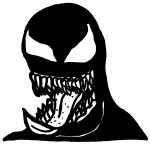
The latest cinematic dispatch from the Spider-Verse, Venom, is paradoxically one of the blandest superhero movies of the year and one of the year’s best comedies. These two conflicting modes mix like water & oil, with at least the first half hour of the film treading water as a C-grade superhero origin story before it then mutates into an A+ slapstick body-horror comedy. If those two halves arrived in reverse order, it’d be understandable to walk away from Venom dejected & exhausted, feeling as if you’d finally been ground into dust by the oft-cited affliction of superhero fatigue, maintaining no interest in the future of the genre. As is, the resulting effect is much more enjoyably bizarre. The origin story doldrums of Venom’s first hour lull you into a false complacency. The film’s macho leather-and-guitar-riffs aesthetic feels like it’s been rotting in stasis on the big screen at least since the gritty genre cinema that arrived in the wake of The Dark Knight a decade ago. Then, once its sci-fi body horror hijinks finally get started, it transforms into something much goofier, much rarer, and (most surprisingly) much queerer than what we’ve come to expect from mainstream superhero blockbusters. It arrives cumbersome, but it leaves you in a great mood.

Tom Hardy stars in Venom as Eddie Brock, an unemployed loser who once worked for a VICE News-type media outlet before ruining his engagement to Michelle Williams by incurring the wrath of an Elon Musk-type (Riz Ahmed) with a boneheaded act of gotcha journalism. I could recount in mundane detail how Eddie’s feud with Not Elon Musk results in him gaining superpowers through a parasitic alien creature (named Venom) that effectively snatches his body & causes city-wide havoc, but it’s those exact origin story checkpoints that risk tanking the entire film’s entertainment value in familiar, leaden plot machinery. That’s not really what’s important about Venom; what matters here is how fully committed Tom Hardy is to the role once the parasite (or, in the movie’s parlance, “symbiote”) infects his body and the movie decides to become fun. Hardy gives a downright Nic Cagian performance in Venom, dialing the intensity to a constant 11 in a movie where everything else is set to a comfortable 7. Hardy sweats, pukes, gnaws on live crustaceans, and rants at top volume throughout Venom as if he were in a modern big-budget remake of an 80s Henenlotter body-horror comedy instead of a run-of-the-mill superhero picture. He singlehandedly elevates the movie through stubborn force of will; it’s a performance that demands awe and rewards it with increasingly grotesque, uncomfortable laughs.

The only aspect of Venom that matches the absurdly committed, manic-comic energy of Hardy’s physical performance in his own vocal work as the titular space alien symbiote, who he banters with telepathically throughout the movie (once it gets fun, anyway). Venom’s voice falls somewhere between Scooby-Doo, Audrey II, and Tim Curry’s performance as Hexxus (the toxic ooze from FernGully), so it’s a blessing upon us all that the film does not ask you to take the voice seriously. When Venom and his fellow space alien symbiotes ooze around the ground as sentient collections of grotesque, black goo, they’re appropriately horrific. As a voice in Eddie’s head, however, Venom is a laugh riot. He admits to Eddie, “I’m kind of a loser on my planet,” so it makes sense that all his menacing threats come across as embarrassingly dorky, such as when he promises to rip off a criminal’s limbs so that they roll around “like a turd in the wind.” He’s also got a Scooby-Doo appetite to match the voice, driving Eddie to eat straight-up trash & copious amounts of tater tots (always frozen or burnt, never the proper temperature). Their relationship as parasite & host even becomes oddly sweet, if not outright romantic, over the course of the picture – with Venom inventing an elaborate scheme to win Eddie back after a passionate separation by making out with him through Michelle Williams’s surrogate. Hardy does an excellent job of portraying both losers – Eddie & Venom – as separate, distinct goofballs who often share one absurd body so that neither is ever alone again. It’d almost be beautiful if it weren’t so goddamn silly.

Full disclosure: there was already a comedic body-horror this year where a Tom Hardy type (Logan Marshall-Green) transformed into a superhero via an implanted sci-fi parasite that telepathically struck up humorous banter with its host and helped them wage war on an Elon Musk archetype. Upgrade is a smarter, grittier, more satirically pointed version of Venom, a superior film on every count. Still, and this pains me to admit, Venom’s highs are much funnier. It’s a Herculean task on Tom Hardy’s part that this otherwise drab, by-the-numbers superhero pic is even watchable, but his dual performance as Venom & Eddie is so weirdly, consistently funny that the movie achieves legitimate comedic greatness once it gets its genre requirements out of the way. The back half of Venom is so thoroughly absurd that the grim, guitar-riffing machismo of the first half almost plays like parody in retrospect. Upgrade wastes no time getting into the comedic genre payoffs of its premise and is one of the best films of the year for it. Still, the surprise of the delayed buffoonery of Venom almost bests that film in genuine laughs, likely because there’s so much tension built up & relieved in the contrast between its warring halves. It’s a dumb, misshapen, big-budget beast that doesn’t deserve to be half as entertaining as Tom Hardy makes it. Yet, it would fit just as well on any midnight-movie docket as Upgrade would, even with frozen tater tots as a built-in, themed snack that could be thrown at the screen Rocky Horror style in drunken excess. It just requires a little patience before those bizarre, comedic payoffs arrive.

-Brandon Ledet


Morgan (2016)

Ever since Anya Taylor-Joy made her grand entrance as a name to watch in her stunning, starring role in The Witch (Swampflix’s 2016 Movie of the Year), she’s continued to be a compelling presence in modern genre cinema. Perhaps typecast for her wide-eyed, witchy visage that appears as if she just stepped out of a Victorian oil painting, Taylor-Joy has continued to dwell in genre cinema corners ranging from the Gothic horror vibes of Marrowbone & The Miniaturist to the highly stylized modernist thrillers Split & Thoroughbreds. I’m unsure if that reflects her personal taste in choosing roles or just the range of options being made available to her, but it seems constant to her career path stretching back even before her name became synonymous with The Witch. The same year The Witch was released to wide audiences, Taylor-Joy starred as the titular character in a more mainstream production that made much less of a splash. The sci-fi horror Morgan, directorial debut of Ridley Scott’s son Luke Scott, was largely dismissed in its initial run as merely being an obvious, Hollywood-style rehashing of the superior work Ex Machina, perhaps rightfully so. As hyperbolically negative as I find the film’s general critical reputation to be, I somewhat understand that dismissal and can mount no defense of the mediocre-at-best thriller as some great lost work worthy of reclamation. After recently falling in love with Anya Taylor-Joy’s screen presence all over again in the BBC miniseries The Miniaturist, however, I did find Morgan worthy of a revisit, if not solely for the merits of her performance.

Like Ex Machina, Morgan is a Turing Test thriller where an outside party is hired to determine the commercial viability of a femme A.I. creation in captivity at a remotely located science facility. Toby Jones, Michelle Yeoh, Rose Leslie, Paul Giamatti, and Jennifer Jason Leigh round out an over-qualified cast of scientists & staffers assigned to this A.I. experiment, but they mostly amount to archetypes who hang around to get slaughtered once things inevitably go wrong. Only two characters really matter in this movie: Anya Taylor-Joy as the titular, dangerous A.I. creation and Kate Mara as a corporate “risk management consultant” hired to assess the artificial creature’s commercial viability. A very human-like creation with a recent history of violent episodes with the staff, Morgan presents two ethical questions the movie only pretends to wrestle with: “Is her advancement of technology worth the risk of her potential violence?” and “Is she a person or is it property?” These very basic sci-fi concerns are mostly just time-wasters in the lead-up to the film’s true payoff: Morgan’s escape & horrific slaughter of every human that held her captive, even the ones she once considered close friends & family (as much as an A.I. creature could). These horror genre leanings are reinforced by the sci-fi lab’s locale in a spooky Gothic mansion & a few last-minute, telegraphed twists that are much more concerned about in-the-moment thrills then they are philosophical ponderings. Morgan’s main concern is an attempt to be coldly creepy, and it’s something the movie often pulls off well thanks to the seething animosity that binds Mara & Taylor-Joy’s performances.

As a sci-fi horror about an A.I. creation that escapes captivity & erupts into bloodshed, Morgan doesn’t offer much of interest that can’t be found elsewhere. As a showcase for Anya Taylor-Joy’s acting range, the film does feature some deviating touches in performance that feels like a far cry from her more typical modes in The Miniaturist & The Witch. Although often cast in spooky genre fare, Taylor-Joy typically plays a traumatized, delicate victim, batting her giant doe eyes to convey innocence in a world ruled by evil (deceptively so in Thoroughbreds). Here, she’s allowed to be fierce & dangerous throughout, even opening the film in a vicious lunge to tear out one of her captor’s eyes. Taylor-Joy plays Morgan with the brooding anger of a teenage girl who’s been wronged and stripped of her agency, expressing a quiet, violent anger halfway between explosive emotional outburst & cold, machine-like calculation of who exactly to strike. You can even sense this atypical use of her screen presence in her costuming, which forsakes her usual period-specific garb for a modernist sweatpants & hoodie combo – the comfy outfit of a pissed off teen locked in their room by parents who Just Don’t Understand. Her striking looks are intensified by a cold makeup effect that almost renders her silver, as if she’s in black & white while the rest of the film is in color. It’s a different approach to how her appearance & talents are typically deployed in genre films and that deviation is largely what makes Morgan a worthwhile watch. As a Hollywood companion piece to Ex Machina the film could only suffer through comparison, but as a demonstration of explosive teenage anger from a compelling actor who doesn’t often get to express it, it finds a way to feel worthwhile.

You’re unlikely to walk away from Morgan with any intense interest in whatever follow-up project Luke Scott has in the works. The film is competent enough to get by as a passable sci-fi horror diversion about a Killer A.I., but it’s ultimately nothing special in terms of style or texture. The takeaway is more the question of what other sides of Anya Taylor-Joy’s abilities as a performer are we not yet privy to this early in her career. I appreciated seeing her as a teenage killing machine here, but I’m even more excited by what that indicates about what she might be able to unleash in future roles. It’s a career worth keeping a (gigantic, doe-like) eye on, to say the least.

-Brandon Ledet
Orphan (2009)

Jaume Collet-Serra is an interesting fella. I’ve gotten to know the Spanish-born Hollywood director through his recent string of high-concept, single-location thrillers like The Shallows, where Blake Lively fights a vengeful shark while stuck alone on a rock, and The Commuter, where Liam Neeson takes down a global conspiracy network from a pedestrian commuter train. However, before Collet-Serra was making over-the-top Liam Neeson thrillers that could be reductively described as Taken on a Train (The Commuter) or Taken on a Train (Non-Stop), he got his start directing mainstream horror productions for Hollywood bigshot Joel Silver. The first was a fairly innocuous remake of the Vincent Price classic House of Wax, best remembered for its stunt casting of Paris Hilton. Collet-Serra’s sophomore effort was something much more novel, an aughts perversion of The Bad Seed that leaned heavily into shocking twists & children being depicted in sinister, adult scenarios. 2009’s Orphan was a modest hit that has been largely forgotten in the decade since, only remembered by those most incensed by its controversial amorality & head-on dedication to tastelessness. It’s also quite possibly Collet-Serra’s best work to date, as it allows the director to chase a new bonkers idea every few minutes instead of tying him to a single concept at feature length. As much as I’ve come to respect Collet-Serra for essentially remaking Speed with a new novelty conceit in every subsequent picture, Orphan is wildly entertaining for setting him loose and allowing him to indulge in whatever silly idea inspires him from minute to minute. It’s a movie that deserves to be forgotten for its sins against good taste, but I can’t help but be tickled by it.

Vera Farmiga stars as a grieving mother whose third child was miscarried, stillborn. Nightmares about horrific, gory childbirth scenarios and guilt over past relapses into alcoholism plague her marriage with an insensitive oaf played by Peter Sarsgaard. To help alleviate the trauma of losing her would-be youngest daughter in childbirth, she decides to adopt – turning a family tragedy into an act of charity. The adopted child is a precocious, morose little girl with a cold Russian accent & a mysterious past, coming across like a 90s Goth update to Rhoda Penmark. The titular orphan’s old-fashioned wardrobe (including a ribbon choker she refuses to be seen without) looks like it belongs to a fairy tale princess, teasing a supernatural twist in its gradual reveal of her background. Whatever the cause, she’s deliciously evil, taking perverse pleasure in staging “accidents” that harm other children, purposefully spying on her new parents mid-coitus, and eventually just full-on murdering adults with guns, knives, and hammers. The reveal of her true biography & motivation to kill is astoundingly tasteless, ludicrous, and easy to guess well before it’s explained; the journey to get there is still a perversely fun ride. Collet-Serra turns each set piece & heinous act into a new toy to play with, the same way he’d later gleefully fool around with all possibly novelties offered by the planes, trains, and bloodthirsty sharks of his subsequent thrillers. The ill-considered morality of Orphan suggests that there is great danger in adopting an unknown orphan with a foreign-born past, which is a much more harmful angle to take than movies like Cooties, The Children, and We Need to Talk About Kevin, which reflect parents’ fears of their own kids. My guess is that neither Collet-Serra nor fist-time screenwriter David Leslie Johnson paused long enough to consider that morality as they chased this preposterous scenario’s potential for over-the-top, in-the-moment thrills. To be honest, the movie is all the more entertaining for it.

I’ve come to associate Collet-Sera most closely with over-the-top visual gimmickry, which is his most consistent auteurist tell. As absurd as their basic premises can be, some of the things that most stand out to me about the director’s post-Taken thrillers will be the way he constructs a time-lapse montage in The Commuter or the way he makes text messages appear visually dynamic in Non-Stop. Orphan’s best quality is in the freedom it allows Collet-Serra to indulge in this visual gimmickry in a variety of locales. The way he shoots kitchen window reflections, POV angles from car doors & paintings, and (in an early precursor to A Quiet Place) children communicating via American Sign Language is endlessly fun, as there’s a new toy for the director to play with in every new set piece. The pinnacle of this over-stylized visual artistry is a sequence set on a children’s jungle gym in a public park, which Collet-Serra shoots like a Gothic horror set in a maze. The menace of children-at-play on plastic slides & monkey bars is delightfully handled with a straight-faced terror, concluding with a genuine jump scare despite the tableau’s built-in absurdity. If made a decade later, Orphan might have been entirely set in that single jungle gym set piece, with the titular villain chasing around the same pint-sized victim (presumably not played by Liam Neeson) at feature length in a challenge to see how far the premise of that chase could be stretched. Here, it’s allowed to thrive for just a few minutes as an isolated novelty before the film moves onto its next ridiculous indulgence (and there are plenty more to come). It’s a willingness to visually experiment & indulge that keep the movie perversely fun despite the amoral implications of its twisty, ill-considered plot.

There’s a generous reading of Orphan that sees its fear of adopted children gone murderously rogue only as a reflection of Vera Farmiga’s character struggling with her own anxieties as a “flawed” mother with a shaky past. Farmiga sells the emotional core of that conflict as best she can, especially in arguments with a husband (Sarsgaard) and a therapist (esteemed character actress Margot Martindale) who are cruelly dismissive of her skepticism over her new adopted daughter. The film just has too much gleeful, amoral fun for that reading to fully play out, especially in scenarios where the orphan is beating victims to death with a hammer or inserting herself into adult, sexual scenarios with a perverse curiosity. The Babadook is a film about a mother who is unsure of her own stability & value as a nurturing parent. This film is more of an update to The Bad Seed, where it’s the kid who’s clearly at fault & taking pleasure in the chaotic violence that surrounds them. It’s a set-up with some disturbing, half-cooked implications about the adoption process as a result, something I wouldn’t fault any viewer for finding too distasteful to be entertaining. Personally, I consider Orphan to be an exquisite slice of mainstream-horror trash and a thoroughly entertaining showcase for a visually-skilled director who can’t help himself whenever afforded an opportunity to over-indulge in a set-specific gimmick. I’d love to see Collet-Serra return to this style of filmmaking, where his tones & gimmickry are allowed to be more free-wheeling & varied in their minute-to-minute whims instead of being dedicated to a single concept for an entire film. It’s a looseness in premise & morality than I believe has produced his best work to date.

-Brandon Ledet

Movies Screening in New Orleans This Week 10/11/18 – 10/17/18

Here’s a quick rundown of the movies we’re most excited about that are screening in New Orleans this week, focusing on some spooky selections to help kickstart your Halloween celebrations.

Movies We Haven’t Seen (Yet)

Bad Times at the El Royale Six whole years ago, Drew Goddard’s debut feature Cabin in the Woods brought the meta-horror of Wes Craven works like New Nightmare & Scream to a new level of comedic what-the-fuckery. His only credits as a director since have been a couple (excellent) episodes of The Good Place, so this twisty, star-studded neo-noir follow-up feature is much-anticipated (and is supported by one of the year’s best trailers).

Goosebumps 2: Haunted Halloween I didn’t expect to love 2015’s Goosebumps movie nearly as much as I did, but it ended up excelling as a children’s primer for life-long horror fandom, like a Monster Squad update for a generation raised on CGI.  I’m going into this sequel with a much higher level of anticipation, for better or for worse.

The House with the Clock in Its Walls Eli Roth made a name for himself in one of horror’s worst creative slumps: the torture porn nu-metal aughts. He hasn’t been of much interest to me as a result, but recent tongue-in-cheek pranks like the Keanu Reeves head-scratcher Knock Knock have been slowly changing my mind on that, so his directing a PG-rated haunted house comedy for children certainly has an unignorable allure to it. I’m foolishly optimistic.

Hell Fest It’s October, which means it’s time to indulge in as many gimmicky, mainstream horrors as possible before Halloween comes & goes. This one is set at a haunted house amusement park, appearing to fall halfway between the grime of The Funhouse & the slick production of the Final Destination series in its basic aesthetic. It almost doesn’t even matter if it ends up being any good; it’s just the exact right season to see a ridiculous horror movie big & loud with an early-run crowd.

Movies We Already Enjoyed

Halloween (1978) – Catch John Carpenter’s genre-pioneering slasher on the big screen before its latest decades-late sequel hits the multiplexes next week.  ‘Tis the season! Playing Friday 10/12, Saturday 10/13, and Sunday 10/14 as part of Prytania’s Kill-o-rama series.

Dracula (1931) – Tod Browning’s Universal Monsters classic is mostly notable for its killer lead performance from Bela Lugosi as its titular vampire (and most enjoyable when accompanied by Philip Glass’s 1990s score, which likely won’t be included with these screenings), but it’s also too legendary to be missed in a proper theatrical setting. Playing Sunday 10/14 & Wednesday 10/17 as part of Prytania’s Classic Movies series.

Mandy Panos Cosmatos’s follow-up to Beyond the Black Rainbow is being sold as a badass psychedelic freakout starring an unhinged Nic Cage in a heavy metal revenge fantasy. The truth is much stranger than that, as the film is in actuality a slow descent into the Hell of personal grief, much more grotesque & distressing than anything that could be considered feel-good badassery. It’s metal. It’s psychedelic. It deserves to be seen as big & as loud as possible. Just don’t expect it to be a party. Only screening at The Broad Theater.

Venom A C-grade superhero movie that treads water for at least a half-hour, then mutates into an A+ slapstick body-horror comedy with an outright Nic Cagian lead performance from Tom Hardy. Venom is a less satirically pointed, big-budget version of Upgrade or a modernized Henenlotter, but its highs are also much funnier (and surprisingly queerer) than either of those reference points. It’s a lot of fun if you maintain your patience through the first act.

-Brandon Ledet